Download 50+ Issues of Legendary West Coast Punk Music Zines from the 1970–80s: Damage, Slash & No Mag
If your understanding of early punk derives mainly from documentaries, you’re sorely missing out. As I wrote in a post yesterday on international treasure John Peel—the BBC DJ who exposed more than a couple generations to carefully-curated punk rock—finding such music before the internet could be a daunting, and exciting, adventure. Without a doubt the best way die-hard fans and curious onlookers could get a feel for the music, manners, and personalities of any number of local scenes was through magazine culture, which disseminated trends pre-Tumblr with a special kind of intensity and aesthetic personalization. Punk publications documented firsthand the doings of not only musicians, but visual artists, activists, promoters, managers, and, of course, the fans, offering points of view unavailable anywhere else.
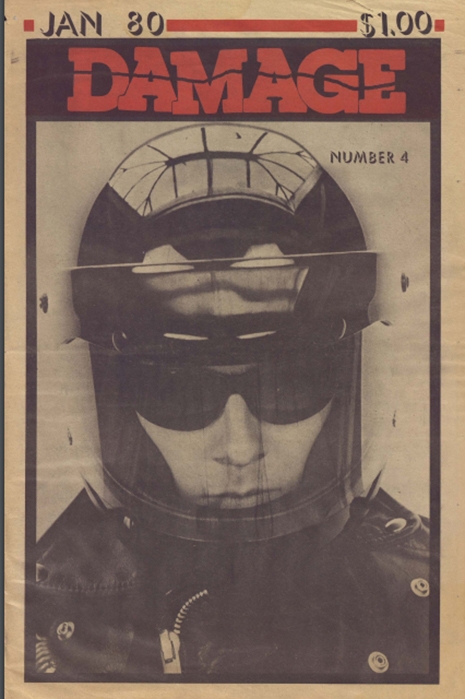
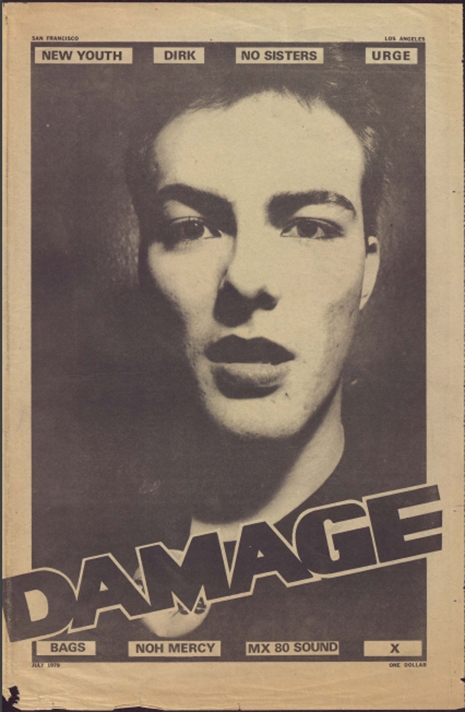
The breadth and range of local punk rock fanzines, from the UK, the States, and elsewhere, can seem staggering, and the quality curve is a steep one—from barely legible, mimeographed broadsheets to large-format newsprint affairs with professional layout and typesetting, like legendary titles Touch & Go and Search & Destroy. The latter publication emerged from the rich, but often overlooked San Francisco scene and featured frequent contributions from Dead Kennedys’ singer Jello Biafra, who appears on the cover of another San Francisco ‘zine, Damage (top), “as fine an example of the [punk ‘zine] form as any you care to name,” writes Dangerous Minds. Thanks to Austin-based archivist Ryan Richardson, you can download 13 complete issues of Damage, from 1979 to 1981, in one large PDF.
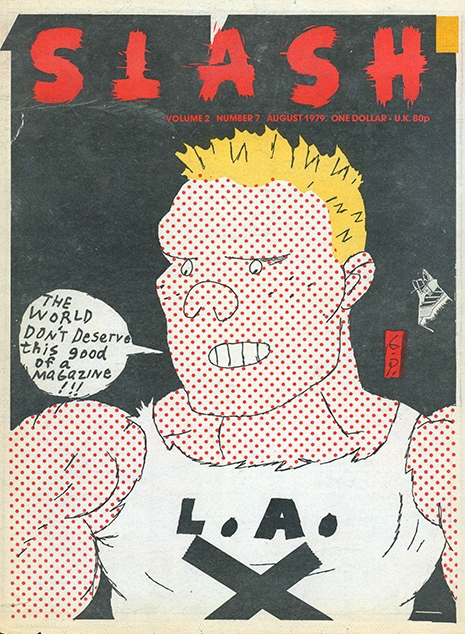
Through his project Circulation Zero, Richardson has made other punk magazine collections available as well, in “an attempt to answer some questions…. Are collections better off inside institutional libraries or in the hands of collectors? Should ancient in-fighting prevent bringing the punk print hey-day to a new generation?” Obviously on that account, he’s come to terms with “eggshell walking over copyright issues” and decided to deliver not only Damage but two more seminal titles from the West Coast punk scene’s golden age: Slash and No Mag. Each download is fairly large, including as they do “single searchable PDFs” of print runs over several years. In the case of Slash, we get a whopping 29 issues, from 1977 to 1980, and Richardson gives us 14 issues of No Mag, from 1978 to 1985. Because “some publications stuck around for a long time,” he writes, “I’ve picked a reasonable stopping point based mostly on when my fascination precipitously declines heading into the mid-80s.”
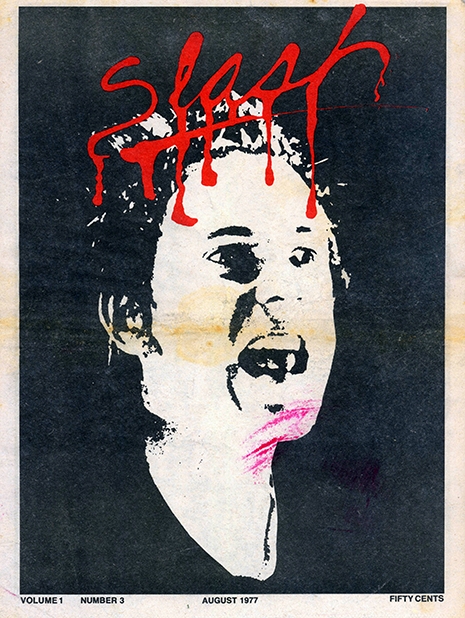
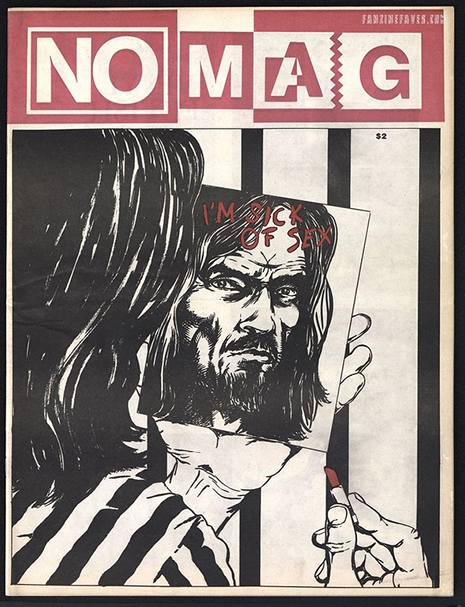
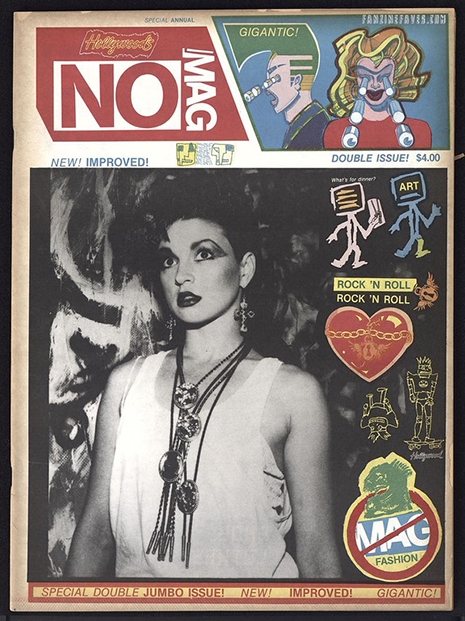
Even so, these collections are magnificent representations of the most fertile years of the movement, and they capture some of the most necessary publications for fans and scholars seeking to understand punk culture. “The importance of Slash,” Dangerous Minds writes, “to the L.A. punk scene, and really to the worldwide punk scene in general, cannot be overstated.” The edgier, “filthier” No Mag’s “transgressive art and photography, along with the interviews of now-legendary bands, make this run a crucial historical resource.”
Founded in 1978 by Bruce Kalberg and Michael Gira—before he moved to New York and started punishing noise-rock band Swans—No Mag’s catalog included the usual roundup of L.A. punk heroes: X, Fear, the Germs, Suicidal Tendencies, along with several forgotten local stalwarts as well. This particular rag—as an L.A. Weekly piece detailed—“frequently bordered on the pornographic… forcing [Kalberg] to manufacture it in San Francisco, where printers are apparently more tolerant.” It may go without saying, but we say it all the same: many of these pages make for unsafe work viewing.
Circulation Zero generously makes these invaluable collections available to all, ostensibly free of charge, but with the understanding that readers will “decide what your experience was worth and then donate” to charities of Richardson’s choice, including the Electronic Frontier Foundation and Doctors Without Borders. You’ll find download links for all three titles on this page, and donation links here. However much, or little, you’re able to give (on your honor!), it’s worth the time and cost. Whether you’re an old-school punk, a new fan learning the history, or an academic cultural historian or theorist, you’ll glean an inestimable amount of knowledge and pleasure from these archives.
Related Content:
The Cramps Play a Mental Hospital in Napa, California in 1978: The Punkest of Punk Concerts
Josh Jones is a writer and musician based in Durham, NC. Follow him at @jdmagness
Read More...New Web Comic Revisits the Artists & Writers at the Bloody ’68 Convention: Jean Genet, William S. Burroughs & More
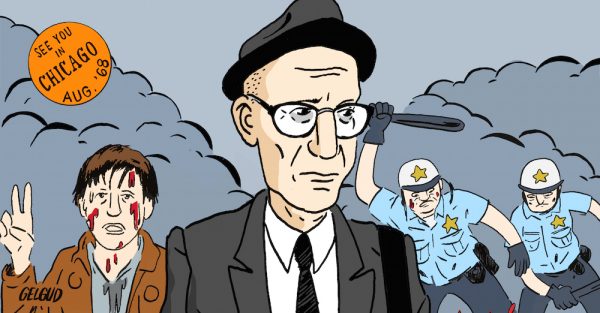
Drawing of William S. Burroughs by Nathan Gelgud/The Paris Review
America’s political circus will soon roll through Cleveland and then Philadelphia–the sites of the Republican and Democratic National Conventions. And, not without some merit, there’s concern that the carnivals could turn violent, as happened in 1968, when Chicago’s mayor Richard Daley, backed by 23,000 police and National Guardsmen, assaulted protesters in the streets. A federal report later called it a display of “unrestrained and indiscriminate police violence.”
This week, that tumultuous ’68 convention is being commemorated in a comic over at The Paris Review. Issued in daily installments by illustrator Nathan Gelgud, the comic–simply titled “Unconventional”–looks at the writers, artists, and demonstrators who attended the convention. Part 1 features poet, singer, activist Ed Sanders. Part 2 puts Jean Genet center stage (who knew he was there?). Part 3 focuses on Norman Mailer, who was always ready for a fight. Part 4 gives us the inimitable William S. Burroughs, and Part 5, Terry Southern. You can follow the series here.
To learn more about what happened at that historic convention, you can read Battleground Chicago: The Police and the 1968 Democratic National Convention.
If you would like to support the mission of Open Culture, consider making a donation to our site. It’s hard to rely 100% on ads, and your contributions will help us continue providing the best free cultural and educational materials to learners everywhere. You can contribute through PayPal, Patreon, and Venmo (@openculture). Thanks!
Read More...Orson Welles Presents Thornton Wilder’s Our Town, the Most Popular High School Play of All Time (1939)
If you went to high school in America, you almost certainly saw a production of Our Town. If you participated in your high school’s drama program, you almost certainly acted in a production of Our Town. I myself built sets for a production of Our Town, doing what I could to properly realize the fictional, small early 20th-century American town of Grover’s Corners on my high school’s stage while remaining within its long-respected tradition of minimalist scenery. Sometimes I wonder if it would have taken the wind out of my sails had I known that no less an auteur than the 24-year-old Orson Welles had produced his own Our Town more than sixty years before using no sets or props at all — using, in fact, nothing but sound.
Since its first performance in 1938, Thornton Wilder’s quaint yet dark, sentimental yet metafictional signature dramatic work has become the most popular high-school play of them all (though George S. Kaufman and Moss Hart’s comedy You Can’t Take It with You gives it a run for its money). Welles adapted it for radio in 1939, the year after its premiere on stage as well as the year after the broadcast of his much more infamous radio adaptation of H.G. Wells’ The War of the Worlds (and, notably, the year before Citizen Kane). Welles and Wilder had first met at a party in 1933, not long after Welles had put in a performing stint at Dublin’s Gate Theatre. “To Welles’ amazement,” writes Charles Higham in Orson Welles: The Rise and Fall of an American Genius, “Wilder knew all about his career at the Gate,” recalling praise the young actor received from the New York Times.
“Wilder whisked Welles away from the party on a round of late night speakeasies,” Higham continues, “and as dawn broke, Wilder scribbled out notes of introduction to friends in New York, all of whom were influential in the theater.” Given Wilder’s non-trivial role in facilitating the development of Welles’ early career, it makes sense that Welles would want to do right by Wilder’s work, and it still holds up well against the versions of Our Town in any form that have followed. For a taste of how the play translates to the cinema, you could do worse than Sam Wood’s 1940 adaptation starring William Holden, free to watch at the Internet Archive, although it uses relatively elaborate production design and turns the original tragic ending into a happy one. For a purer Our Town, you’ll want to stick with Welles’ interpretation — or that of an American high school near you.
Related Content:
The War of the Worlds: Orson Welles’ 1938 Radio Drama That Petrified a Nation
Orson Welles Turns Heart of Darkness Into a Radio Drama, and Almost His First Great Film
Orson Welles’ Radio Performances of 10 Shakespeare Plays
A Christmas Carol, A Vintage Radio Broadcast by Orson Welles and Lionel Barrymore (1939)
Hear 22-Year-Old Orson Welles Star in The Shadow, the Iconic 1930s Super Crimefighter Radio Show
Based in Seoul, Colin Marshall writes and broadcasts on cities and culture. He’s at work on a book about Los Angeles, A Los Angeles Primer, the video series The City in Cinema, the crowdfunded journalism project Where Is the City of the Future?, and the Los Angeles Review of Books’ Korea Blog. Follow him on Twitter at @colinmarshall or on Facebook.
Read More...Download All 8 Issues of Dada, the Arts Journal That Publicized the Avant-Garde Movement a Century Ago (1917–21)
Surrealism, Discordianism, Frank Zappa, Situationism, punk rock, the Residents, Devo… the anarchists of counterculture in all their various guises may never have come into being—or into the being they did—were it not for an anti-art movement that called itself Dada. And like many of those anarchist countercultural movements and artists, Dada came about not as a playful experiment in “disrupting” the art world for fun and profit—to use the current jargon—but as a politically-charged response to rationalized violence and complacent banality. In this case, as a response to European culture’s descent into the mass-murder of World War One, and to the domestication of the avant-garde’s many proliferating isms.
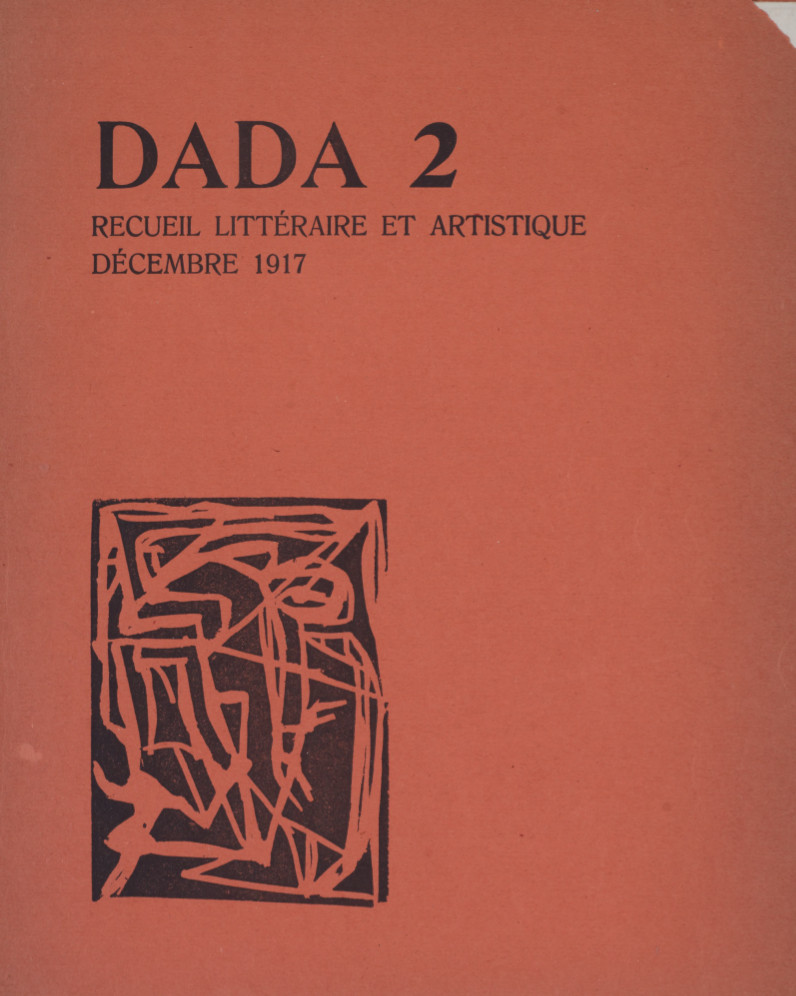
The explicit tenets of Dada, in their intentionally scrambled way, were ecumenical, international, anti-elitist, and concerned with questions of craft. “The hospitality of the Swiss is something to be profoundly appreciated,” wrote poet Hugo Ball in his 1916 Dada manifesto, “And in questions of aesthetics the key is quality.” Ball conceived Dada as a means of reaching back toward primal origins, “to show how articulated language comes into being…. I shall be reading poems that are meant to dispense with conventional language, no less, and to have done with it.” Risking a lapse into solipsism, Ball sneered at “The word, the word, the word outside your domain, your stuffiness, this laughable impotence, your stupendous smugness, outside all the parrotry of your self-evident limitedness.” And yet, he concluded, “The word, gentlemen, is a public concern of the first importance.”
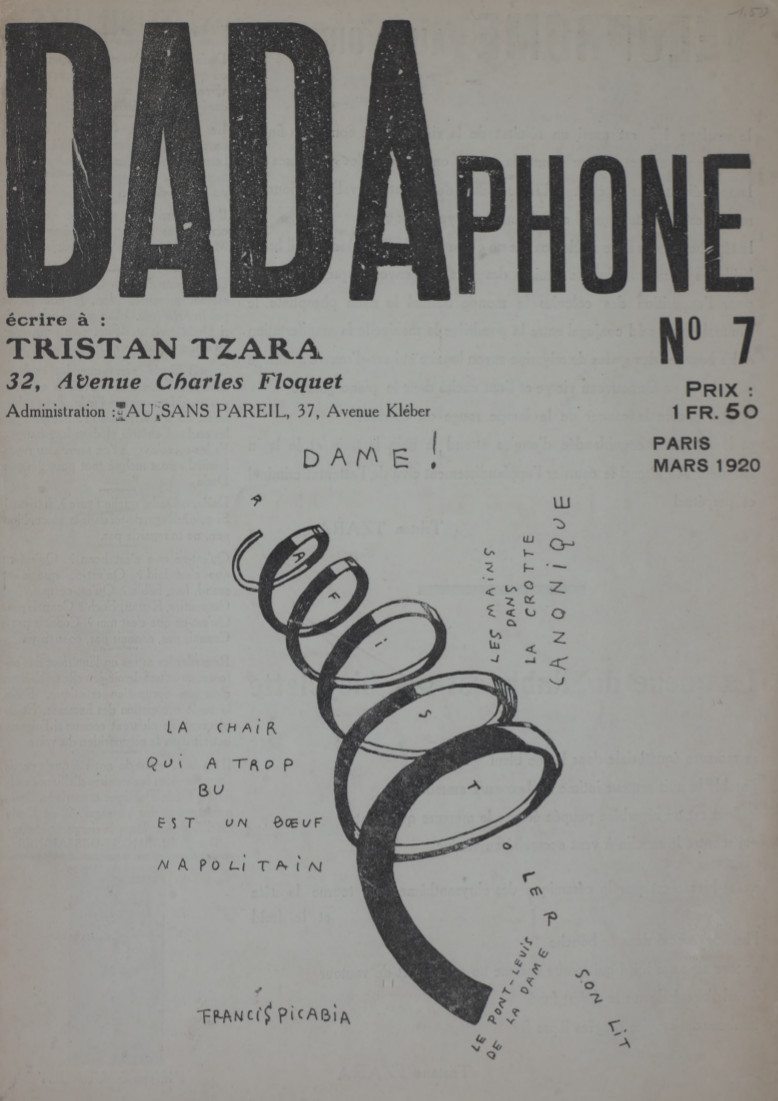
Two years later, artist Tristan Tzara issued a more bilious Dada manifesto with similar intent: “a need for independence… a distrust toward unity.” At once intensely political and anti-theoretical, he wrote, “Those who are with us preserve their freedom…. Here we are dropping our anchor in fertile ground.” How right he was, we can say 100 years later. “However short-lived,” writes Corinna da Fonseca-Wollheim in a New York Times celebration of Dada’s 100th anniversary, “Dada constitutes something like the Big Bang of Modernism.” Both Ball and Tzara positioned Dada as a collective, international movement. As such, it needed a publication to both centralize and spread its anti-establishment messages: thus Dada, the arts journal, first published in 1917 and printing 8 issues in Zurich and Paris until 1921.
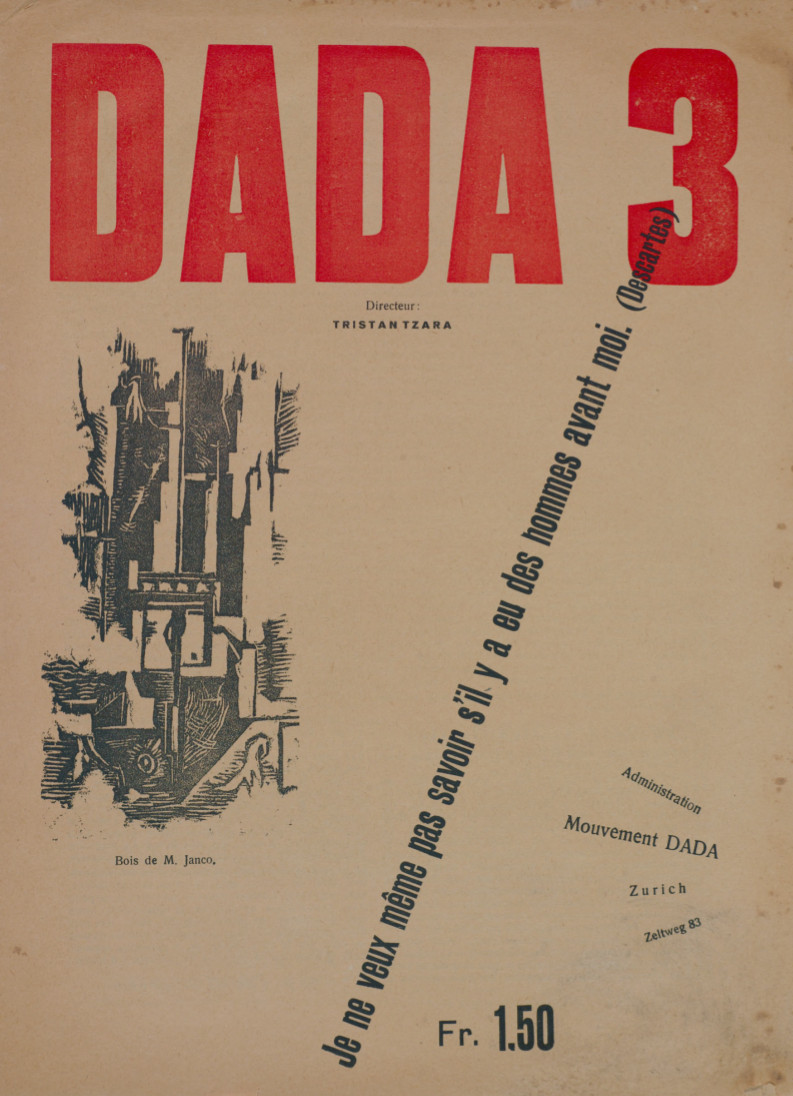
Edited by Tzara and including his manifesto in issue 3, the magazine “served to distinguish and define Dada in the many cities it infiltrated,” writes the Art Institute of Chicago, “and allowed its major figures to assert their power and position.” Dada succeeded a previous attempt by Ball at a journal called Cabaret Voltaire—named for his Zurich theater—which survived for one issue in 1917 before folding, along with the first version of the cabaret. That year, Tzara, “an ambitious and skilled promoter… began a relentless campaign to spread the ideas of Dada…. As Dada gained momentum, Tzara took on the role of a prophet by bombarding French and Italian artists and writers with letters about Dada’s activities.” Whatever Dada was, it wasn’t shy about promoting itself.
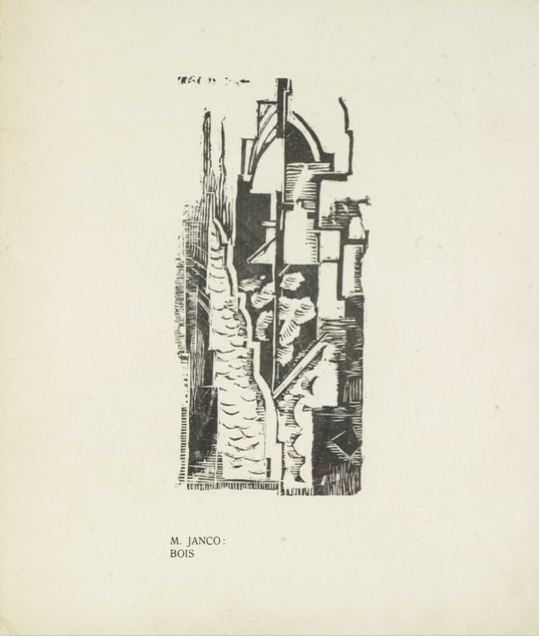
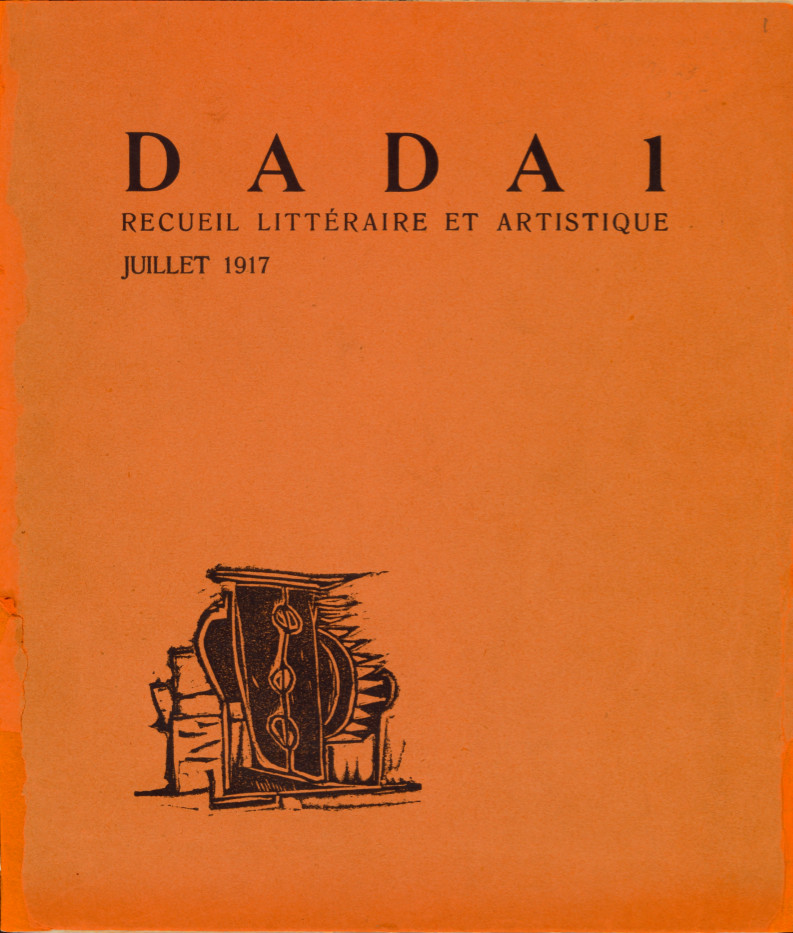
The first issue (cover at the top), contained commentary and poetry in French and Italian, and artwork like that above by important Romanian Dada artist, architect, and theorist Marcel Janco. Issues 4 and 5 were published together as an anthology, then World War I ended, and with travel again possible, Tzara, several Dada compatriots, and the journal moved to Paris. The final issue, Number 8, appeared in a truncated form. You can download each issue as a PDF from Monoskop or from Princeton University’s Blue Mountain Project, which also has an online viewer that allows you to preview each page before downloading.
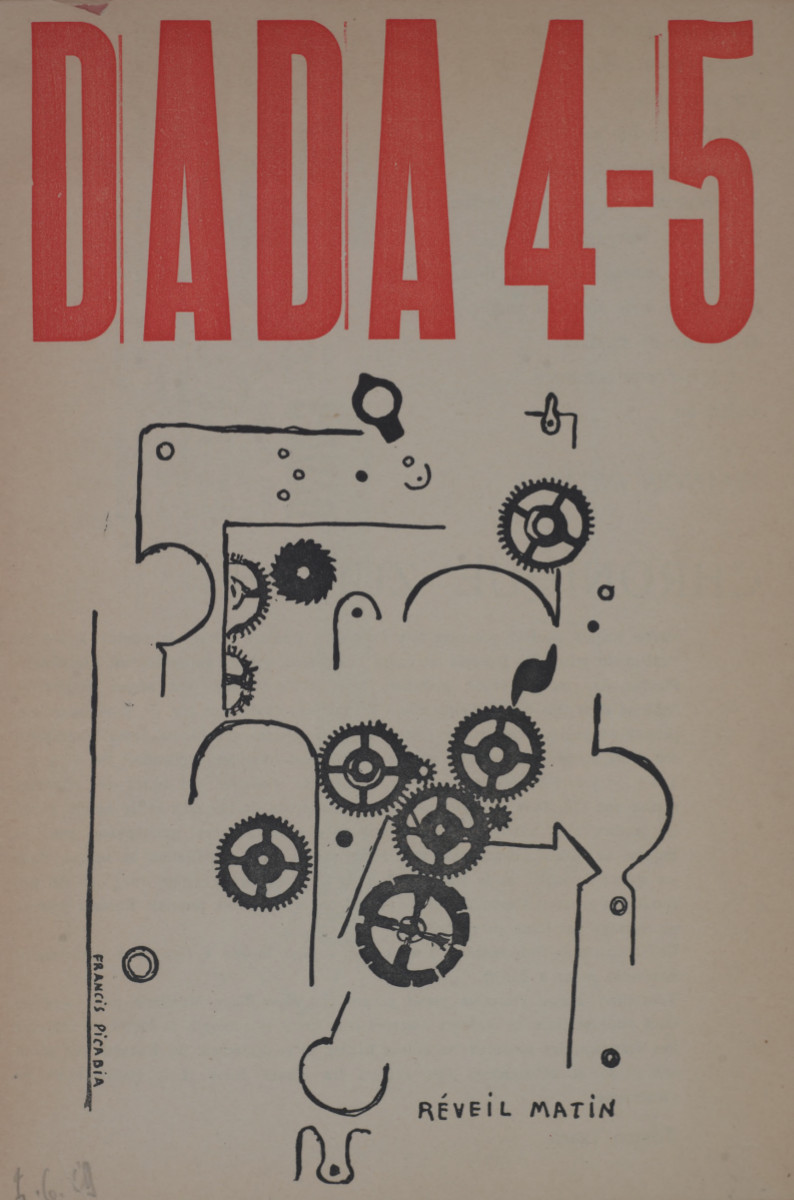
Ball and Tzara were not the only assertive disseminators of Dada’s art and aims. The Art Institute of Chicago notes that in Berlin a “highly aggressive and politically involved Dada group” published its own short-lived journal, Der Dada, from 1919–1920. Download all three issues of that publication from the University of Iowa here.
Related Content:
Hear the Experimental Music of the Dada Movement: Avant-Garde Sounds from a Century Ago
Extensive Archive of Avant-Garde & Modernist Magazines (1890–1939) Now Available Online
Josh Jones is a writer and musician based in Durham, NC. Follow him at @jdmagness
Read More...Stream 15 Hours of the John Peel Sessions: 255 Tracks by Syd Barrett, David Bowie, Siouxsie and the Banshees & Other Artists
For fans of what came to be called “alternative music,” the discovery of new artists and bands felt like a genuine adventure before the internet irrevocably changed music consumption. A few official venues acted as guides—magazines like Trouser Press and NME, shows like 120 Minutes, MTV’s late-night showcase of post-punk, new wave, industrial, etc. Word of mouth, local zines, college radio, mixtape gifts, and the purloined contents of older brothers and sisters’ record collections went a long way. Many of us had access to independent record stores that stocked all sorts of underground oddities, often run by obsessive know-it-alls like High Fidelity’s Rob Gordon.
Venturing into that world could be an intimidating experience. But one dependable marker of quality hardly ever let young seekers down: the name of BBC DJ and curator extraordinaire John Peel. Peel’s influence on the musical trends of the last forty years is incalculable, and impossible to summarize in brief. (Learn about his legacy at this BBC tribute page.) From 1967 to his death in 2004, he recorded up and coming and underground bands in intimate sessions at BBC studios, and many of these classic recordings came out on his Strange Fruit label.
No matter the band, no matter the genre, the mysterious gray cover of a Peel Sessions release always promised something worth forking over one’s hard-earned lawnmowing money to hear. Peel broadcast and recorded Nirvana before “Smells Like Teen Spirit” hit the mainstream; introduced his listeners to now-legends like Joy Division, The Smiths, and The Specials; gave Bowie his first break before his Ziggy Stardust fame; and played Bob Marley before Catch a Fire made him world famous.
These sessions and many more have been lovingly compiled in one Spotify playlist by Sebastien Vanblaere. If you have nostalgic memories of putting on a Peel Sessions record or cassette and having your mind blown by music the likes of which you’d never heard before, you may find your favorites here. My personal touchstone is Siouxsie and the Banshees’ Peel Session recordings, which to this day I prefer to their still excellent studio releases (hear “Love in a Void” at the top). Something about the way those focused live sessions were recorded, and the immediacy of their raw, uncluttered mixes, make them feel very personal, like a concert in your living room.
While I associate Peel’s name mainly with the post-punk niche of my youth, his eclectic tastes spanned the gamut. Before he gave the Ramones, The Damned, and other punk bands their first major play in the mid-seventies, Peel championed the psychedelic spacerock of Pink Floyd, the droning krautrock of Neu!, and the uncategorizable weirdness of Captain Beefheart; “he was among the first (and only) DJs anywhere,” writes the Houston Press, “to broadcast reggae, punk, hardcore, grindcore, grime and dubstep music over the radio.”
Peel’s relevance never waned because his interest in finding, broadcasting, and recording new music never did either, but the playlist here mostly represents his pre-1990 favs, and sticks closely to rock, punk, new wave, and folk. See this page for a full listing of every John Peel session, from 1967 to three posthumous releases in 2004. And for a sense of the incredible breadth and eclectic inclusiveness of Peel’s musical tastes, visit the John Peel Archive, an online project cataloguing every single record in Peel’s collection. They’re currently up to 2679 of over 100,000 records total.
Related Content:
Revisit the Radio Sessions and Record Collection of Groundbreaking BBC DJ John Peel
Josh Jones is a writer and musician based in Durham, NC. Follow him at @jdmagness
Read More...A Young Nora Ephron Gets Animated About Breasts, Feminism, Journalism & New Possibilities (1975)
In 1975, Nora Ephron sat down with Studs Terkel to talk about Crazy Salad, her collection of essays about women and the women’s rights movement during the 1970s. If the excerpts animated by Blank on Blank above reflect the entirety of the conversation (listen here), then you can’t help but notice that the gender issues being discussed then, during that late stage of second wave feminism, haven’t gone away today. They’re still very much out there. The difference is the enthusiasm, the sense of possibility, that Ephron couldn’t contain then. “It’s exciting.” “It’s ok being a woman now. I like it. Try it some time!” Indeed.
If you would like to support the mission of Open Culture, consider making a donation to our site. It’s hard to rely 100% on ads, and your contributions will help us continue providing the best free cultural and educational materials to learners everywhere. You can contribute through PayPal, Patreon, and Venmo (@openculture). Thanks!
Related Content:
Simone de Beauvoir Tells Studs Terkel How She Became an Intellectual and Feminist (1960)
11 Essential Feminist Books: A New Reading List by The New York Public Library
Nora Ephron’s Lists: “What I Will Miss” and “What I Won’t Miss”
Read More...The Soviets Who Bootlegged Western Music on X‑Rays: Their Story Told in New Video & Audio Documentaries
When you learn that Soviet music-lovers bootleged Western rock, pop, jazz, and more on the surfaces of discarded x‑ray plates, you can’t help but want to learn a bit about it. We posted about that curious Cold War phenomenon back in 2014, but much more material on this culture of “bone music” has emerged in the years since, including Stephen Coates and Paul Heartfield’s book X‑Ray Audio: The Strange Story of Soviet Music on the Bone. They also put together the fourteen-minute companion documentary above, featuring conversations with some of the actual participants in this forbidden musical scene which lasted roughly from the late 1940s to the mid-1960s, when tape recorders came around and the censors loosened up.
“This is a truly fascinating subject that seems to captivate people by combining pain and suffering reflected in the X‑rays with the pleasure of listening to music,” writes filmmaker and photographer Michael Dzierza, who produced the short video above on Coates and Hartfield’s work with x‑ray audio in which they discuss the origins of their fascination with this illicit medium and how that fascination turned into a subject for a long-term multimedia research project.
The world of bone music also became the highly suitable subject for an episode of Fugitive Waves, the podcast by radio producers the Kitchen Sisters on “lost recordings and shards of sound, along with new tales from remarkable people around the world — people with a mission, a purpose, a story to tell”:
Related Content:
Soviets Bootlegged Western Pop Music on Discarded X‑Rays: Hear Original Audio Samples
How to Spot a Communist Using Literary Criticism: A 1955 Manual from the U.S. Military
Louis Armstrong Plays Historic Cold War Concerts in East Berlin & Budapest (1965)
Based in Seoul, Colin Marshall writes and broadcasts on cities and culture. He’s at work on a book about Los Angeles, A Los Angeles Primer, the video series The City in Cinema, the crowdfunded journalism project Where Is the City of the Future?, and the Los Angeles Review of Books’ Korea Blog. Follow him on Twitter at @colinmarshall or on Facebook.
Read More...Dada Was Born 100 Years Ago: Celebrate the Avant-Garde Movement Launched by Hugo Ball on July 14, 1916
What is Dada? The curious may start, as with any subject, at its Wikipedia page. But that entry on “the World War I–era ‘anti-art’ movement characterized by random nonsense words, bizarre photocollage, and the repurposing of pre-existing material to strange and disturbing effect,” the Onion once comedically reported, “may or may not have been severely vandalized” into a state of mysterious and seemingly deliberate chaos. But “the fact that the web page continually reverts to a ‘normal’ state, observers say, is either evidence that ongoing vandalization is being deleted through vigilant updating, or a deliberate statement on the impermanence of superficial petit-bourgeois culture in the age of modernity.”
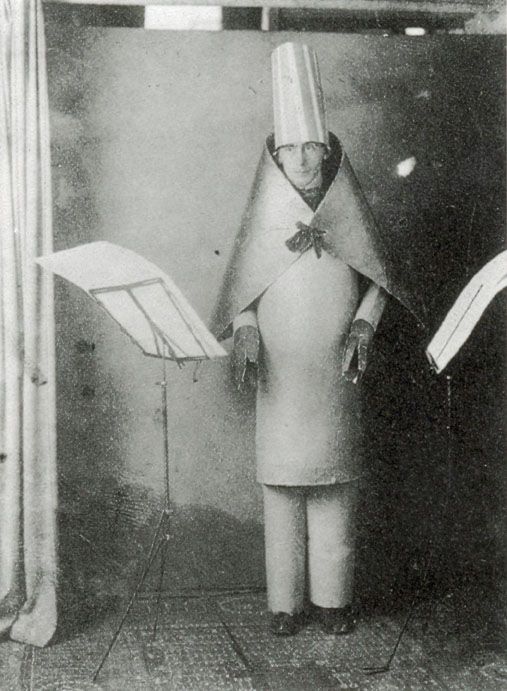
This raises a more interesting question: how has Dada remained relevant enough to make fun of? Whatever its condition, its Wikipedia entry should inform you that it began in July 1916, making it — whatever, exactly, “it” is — a century old this month. On July 14th, 1916, writes the New York Times’ Corinna da Fonseca-Wollheim, “the poet Hugo Ball proclaimed the manifesto for a new movement. Its name: Dada. Its aim: to ‘get rid of everything that smacks of journalism, worms, everything nice and right, blinkered, moralistic, europeanised, enervated.’ ” Meeting at Zurich’s Cabaret Voltaire, Ball and a group of collaborators labored, briefly but excitingly, to create “poetry shorn of intelligible words, music devoid of melodies and statements in which the message was cannibalized by the absurdity of the language” as “a protest against a European civilization hellbent on war.”
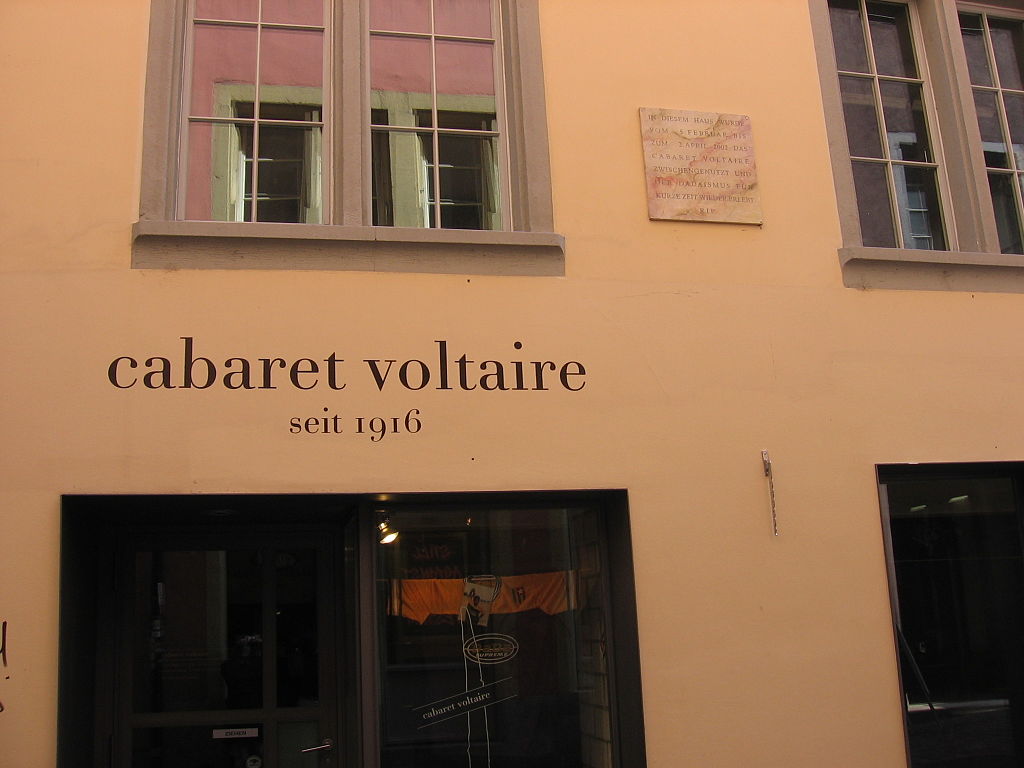
The Onion began having fun with Dada’s mission almost eighty years after the original movement itself dispersed at the armistice of November 1918 (though the Cabaret Voltaire itself still exists, as you can see just above), imagining a war on art launched jointly by Dadaists and Republicans “calling for the elimination of federal funding for the National Endowment for the Arts; the banning of offensive art from museums and schools; and the destruction of the ‘hoax of reason’ in our increasingly random, irrational and meaningless age.” The firebrands of Dada didn’t hate art so much as they hated what they diagnosed as the “logical” and “rational” ways of thinking that had led Europe into a period of self-destruction and theretofore unheard-of brutality, and arrived at the direct opposition to the supposed fruits of Western civilization as the only meaningful response.
Enthusiasm for Dada traveled well beyond the boundaries of Zürich to Berlin, Cologne, New York, Paris, the Netherlands, Italy, eastern Europe, Russia, and even Japan (where it inspired a well-known television monster), an impressive development indeed for a highly provocative, absurdity-venerating creative shout into the darkness well before the advent of anything like modern communication technology. You can get a clearer sense — as clear as anything about Dada gets, anyway — of how that happened from The ABCs of Dada, the half-hour documentary just below:
If you really want to connect to the spirit of Hugo Ball, Tristan Tzara, George Grosz, Hans Richter and the rest of the Dadaists, start with their modern descendants and work backward: any movement that opened the space for artists like Captain Beefheart, Devo, and even, according to Ben Ratliff in the aforementioned New York Times article, Kanye West in his MTV Video Music Awards speech last year was certainly on to something. Given how many observers of the political scene in Europe and elsewhere say we’ve entered a grim but inevitable era — one where Kanye running for president as he promised on MTV might actually improve matters — Dada’s pronouncements may soon come in handier than they have in… oh, about a hundred years.
Find more good Dada material in the Relateds below.
Related Content:
Three Essential Dadaist Films: Groundbreaking Works by Hans Richter, Man Ray & Marcel Duchamp
Hear the Experimental Music of the Dada Movement: Avant-Garde Sounds from a Century Ago
Entr’Acte: René Clair’s Dadaist Masterpiece (1924)
Based in Seoul, Colin Marshall writes and broadcasts on cities and culture. He’s at work on a book about Los Angeles, A Los Angeles Primer, the video series The City in Cinema, the crowdfunded journalism project Where Is the City of the Future?, and the Los Angeles Review of Books’ Korea Blog. Follow him on Twitter at @colinmarshall or on Facebook.
Read More...The Source Code for the Apollo 11 Moon Landing Mission Is Now Free on Github

If you listen to the conspiracy theorists, they’ll tell you that Stanley Kubrick helped fake the Apollo 11 moon landing mission in 1969. Remember the vintage moon landing footage you’ve seen? Kubrick apparently shot the breathtaking video on a sound stage in Huntsville, Alabama, drawing on the special effects he perfected while shooting 2001: A Space Odyssey (1968).
That’s how they explain that artifact. I wonder how they deal with this?: On Github, you can now download the source code for Apollo 11’s command and lunar modules. Originally written by programmers at the MIT Instrumentation Laboratory in the mid-1960s, the code, according to Quartz, was recently put online by NASA intern Chris Garry, making it freely available to the coding community. You can find it all here and start hacking your way through the reams of obscure, vintage code. Skeptics can put their theories in the comments section below.
Related Content
Michio Kaku & Noam Chomsky School Moon Landing and 9/11 Conspiracy Theorists
8,400 Stunning High-Res Photos From the Apollo Moon Missions Are Now Online
Stanley Kubrick Faked the Apollo 11 Moon Landing in 1969, Or So the Conspiracy Theory Goes
Free Online Computer Science Courses
Read More...Hunter S. Thompson Gets Confronted by The Hell’s Angels: Where’s Our Two Kegs of Beer? (1967)
In 1965, the editor of The Nation asked Hunter S. Thompson to write a story about the Hell’s Angels Motorcycle Club, as they’re officially known. The assignment eventually yielded the article, “The Motorcycle Gangs” (read it online), which became the basis for the 1966 book, Hell’s Angels: A Strange and Terrible Saga. It was Thompson’s first book, and America’s first real introduction to Thompson’s Gonzo-style journalism. Reviewing the book for The New York Times, Leo Litwak wrote:
Hunter Thompson entered this terra incognita [the world of the Hell’s Angels] to become its cartographer. For almost a year, he accompanied the Hell’s Angels on their rallies. He drank at their bars, exchanged home visits, recorded their brutalities, viewed their sexual caprices, became converted to their motorcycle mystique, and was so intrigued, as he puts it, that “I was no longer sure whether I was doing research on the Hell’s Angels or being slowly absorbed by them.” At the conclusion of his year’s tenure the ambiguity of his position was ended when a group of Angels knocked him to the ground and stomped him…
Hunter Thompson has presented us with a close view of a world most of us would never dare encounter, yet one with which we should be familiar. He has brought on stage men who have lost all options and are not reconciled to the loss. They have great resources for violence which doesn’t as yet have any effective focus. Thompson suggests that these few Angels are but the vanguard of a growing army of disappropriated, disaffiliated and desperate men. There’s always the risk that somehow they may force the wrong options into being.
This clip above, which aired on Canadian television in 1967, describes the circumstances that led to the Angels giving HST a beat down. The misogyny that’s on display as the biker tells the story will make you shudder. Even worse are the laughs from the 1960s, buttoned-down crowd.
As for whether the Angels ever got their two kegs of beer, I don’t know.
Note: You can download Thompson’s Hell’s Angels: A Strange and Terrible Saga as a free audiobook if you sign up for a 30-Day Free Trial with Audible. Find more information on that program here.
Related Content
Read 18 Lost Stories From Hunter S. Thompson’s Forgotten Stint As a Foreign Correspondent
Read 11 Free Articles by Hunter S. Thompson That Span His Gonzo Journalist Career (1965–2005)
Free Online: Hunter S. Thompson’s Fear and Loathing in Las Vegas
Read More...Support Us
We're hoping to rely on loyal readers, rather than erratic ads. Please click the Donate button and support Open Culture. You can use Paypal, Venmo, Patreon, even Crypto! We thank you!

About Us

Open Culture scours the web for the best educational media. We find the free courses and audio books you need, the language lessons & educational videos you want, and plenty of enlightenment in between.
Advertise With Us

FREE UPDATES!
GET OUR DAILY EMAIL
Get the best cultural and educational resources on the web curated for you in a daily email. We never spam. Unsubscribe at any time.
FOLLOW ON SOCIAL MEDIA

Open Culture editor Dan Colman scours the web for the best educational media. He finds the free courses and audio books you need, the language lessons & movies you want, and plenty of enlightenment in between.
Advertise With Us

