The Creativity of Female Graffiti & Street Artists Will Be Celebrated in Street Heroines, a New Documentary
Street art is a frequently dangerous game. The threat of arrest pales in comparison to some of the hazards long time practitioners describe. While other artists sketch in pleasant cafes, creators of large-scale street pieces often have no choice but to wriggle through ragged holes in chain link fences and climb to vertiginous heights to get to their canvases.
There’s a popular conception of graffiti artist as lone wolf, but when it comes to the perils of the street, there’s safety in numbers. You need a crew. Female street artists must draw on the power of sisterhood.
As photojournalist Martha Cooper notes in the trailer for director Alexandra Henry’s Street Heroines, above:
I think bringing women together empowers them and there’s been some resistance on the part of men…it has to do with camaraderie too. It’s not that they’re saying, “You can’t do it,” but they’re just not allowing them in to their inner group.
Apparently, street art is something of an old boy’s club.
“What!?” gasps Lady Pink, a well known veteran with over 35 years’ experience. “You need a penis to climb a ladder? Does it help you hold on?”
The female camaraderie Cooper cites extends to the successful funding of a Kickstarter campaign to complete this documentary on “the courage and creativity of female graffiti & street artists from around the world.” As the deadline loomed, Lexi Bella & Danielle Mastrion, two of the women featured in the documentary, issued an open invitation to New York City-based female artists to join them in creating a spur-of-the-moment mural in Brooklyn, surrendering artistic control to embrace community spirit.

Many of the 25 artists Henry has profiled thus far speak of using their work to bring beauty to the street, and to advocate on behalf of the oppressed. Such earnestness may diminish them even further in the eyes of the old school He Man Woman Haters Club. Lexi Bella counterbalances the laughably soft image certain macho practitioners may assign to them by speaking unapologetically of the thrill of making one’s work as big as possible “so millions of people can see it.”
Street Heroines is aiming for release in 2017.
Related Content:
Google Puts Online 10,000 Works of Street Art from Across the Globe
The Odd Couple: Jean-Michel Basquiat and Andy Warhol, 1986
Ayun Halliday is an author, illustrator, and Chief Primatologist of the East Village Inky zine. Follow her @AyunHalliday
Read More...David Lynch Despises Product Placement & Watching Movies on iPhones (NSFW)
When one first encounters the surreal sensibilities of David Lynch on film, it’s hard to know what to expect of the man behind them. Is he a tortured recluse, working out his demons onscreen? A demented auteur with issues? But Lynch’s explorations of the violence and sadism lurking beneath America’s shiny veneer come to us too leavened by absurdist humor to be the product of a man who takes himself too seriously.
And when you first encounter Lynch—in interviews or his own cameo role, say, on Twin Peaks—you find exactly that: he’s an affable, seemingly well-adjusted-if-eccentric gentleman from Missoula, Montana who doesn’t at all seem beset by dark forces in the way that many of his memorable characters have been over many decades of filmmaking. Lynch seems instead remarkably free from anxiety, as his work is free from the pernicious influences of a venal Hollywood studio culture he eviscerates in Mulholland Drive.
Lynch would credit his psychological and creative good health to meditation, but there are other reasons that his body of work feels so consistently elevated to the level of purist high art: the filmmaker himself is a purist when it comes to film—perhaps one of the last few high-profile directors to remain almost fully independent of the dictates of commercialism. Witness his attitude toward such crude, invasive compromises as product placement in the interview clip at the top of the post (Lynch’s verdict in a word: “bullshit”).
Or, just above, see him opine on the phenomenon of the iPhone, or smartphone equivalent, as media platform. “If you’re playing the movie on a telephone,” says Lynch, “you will never in a million years experience the film. You may think you have experienced it. But you’ll be cheated…. Get real.” Like the interview clip at the top, the iPhone mini-rant—an extra from the Inland Empire DVD, Lynch’s last feature film—shows us the director at his crankiest, a side that of him that seems to emerge only when the subject of artistic compromise for commerce’s sake arises.
But should we consider Lynch a Luddite, an opponent of the digital revolution in filmmaking? Far from it. Lynch shot Inland Empire on a small digital camera, as you can hear him discuss above in another clip from the film’s DVD. And if we were to assume that he hates Hollywood and the studio system, we’d be wrong there as well. He goes on to explain what he loves about L.A.: the dream, the light, the smell, the feel of the “golden age of Hollywood,” the sound stages (“factories for making cinema”), and even the star system. Keep watching for more of Lynch’s idiosyncratic opinions—on his favorite actress Laura Dern, on “making films for a particular audience,” and on a subject very dear to him: “dreams influencing thoughts.”
Related Content:
David Lynch Explains How Meditation Enhances Our Creativity
David Lynch Creates a Very Surreal Plug for Transcendental Meditation
9 New Episodes of David Lynch’s Twin Peaks to Air in 2016
Josh Jones is a writer and musician based in Durham, NC. Follow him at @jdmagness
Read More...The Secret Link Between Jazz and Physics: How Einstein & Coltrane Shared Improvisation and Intuition in Common
Scientists need hobbies. The grueling work of navigating complex theory and the politics of academia can get to a person, even one as laid back as Dartmouth professor and astrophysicist Stephon Alexander. So Alexander plays the saxophone, though at this point it may not be accurate to call his avocation a spare time pursuit, since John Coltrane has become as important to him as Einstein, Kepler, and Newton.
Coltrane, he says in a 7‑minute TED talk above, “changed my whole research direction… led to basically a discovery in physics.” Alexander then proceeds to play the familiar opening bars of “Giant Steps.” He’s no Coltrane, but he is a very creative thinker whose love of jazz has given him a unique perspective on theoretical physics, one he shares, it turns out, with both Einstein and Coltrane, both of whom saw music and physics as intuitive, improvisatory pursuits.
Alexander describes his jazz epiphany as occasioned by a complex diagram Coltrane gave legendary jazz musician and University of Massachusetts professor Yusef Lateef in 1967. “I thought the diagram was related to another and seemingly unrelated field of study—quantum gravity,” he writes in a Business Insider essay on his discovery, “What I had realized… was that the same geometric principle that motivated Einstein’s theory was reflected in Coltrane’s diagram.”
The theory might “immediately sound like untestable pop-philosophy,” writes the Creators Project, who showcase Alexander’s physics-inspired musical collaboration with experimental producer Rioux (sample below). But his ideas are much more substantive, “a compelling cross-disciplinary investigation,” recently published in a book titled The Jazz of Physics: The Secret Link Between Music and the Structure of the Universe.
Alexander describes the links between jazz and physics in his TED talk, as well as in the brief Wired video further up. “One connection,” he says, is “the mysterious way that quantum particles move.… According to the rules of quantum mechanics,” they “will actually traverse all possible paths.” This, Alexander says, parallels the way jazz musicians improvise, playing with all possible notes in a scale. His own improvisational playing, he says, is greatly enhanced by thinking about physics. And in this, he’s only following in the giant steps of both of his idols.
It turns out that Coltrane himself used Einstein’s theoretical physics to inform his understanding of jazz composition. As Ben Ratliff reports in Coltrane: The Story of a Sound, the brilliant saxophonist once delivered to French horn player David Amram an “incredible discourse about the symmetry of the solar system, talking about black holes in space, and constellations, and the whole structure of the solar system, and how Einstein was able to reduce all of that complexity into something very simple.” Says Amram:
Then he explained to me that he was trying to do something like that in music, something that came from natural sources, the traditions of the blues and jazz. But there was a whole different way of looking at what was natural in music.
This may all sound rather vague and mysterious, but Alexander assures us Coltrane’s method is very much like Einstein’s in a way: “Einstein is famous for what is perhaps his greatest gift: the ability to transcend mathematical limitations with physical intuition. He would improvise using what he called gedankenexperiments (German for thought experiments), which provided him with a mental picture of the outcome of experiments no one could perform.”
Einstein was also a musician—as we’ve noted before—who played the violin and piano and whose admiration for Mozart inspired his theoretical work. “Einstein used mathematical rigor,” writes Alexander, as much as he used “creativity and intuition. He was an improviser at heart, just like his hero, Mozart.” Alexander has followed suit, seeing in the 1967 “Coltrane Mandala” the idea that “improvisation is a characteristic of both music and physics.” Coltrane “was a musical innovator, with physics at his fingertips,” and “Einstein was an innovator in physics, with music at his fingertips.”
Alexander gets into a few more specifics in his longer TEDx talk above, beginning with some personal background on how he first came to understand physics as an intuitive discipline closely linked with music. For the real meat of his argument, you’ll likely want to read his book, highly praised by Nobel-winning physicist Leon Cooper, futuristic composer Brian Eno, and many more brilliant minds in both music and science.
Related Content:
The Musical Mind of Albert Einstein: Great Physicist, Amateur Violinist and Devotee of Mozart
CERN’s Cosmic Piano and Jazz Pianist Jam Together at The Montreux Jazz Festival
Bohemian Gravity: String Theory Explored With an A Cappella Version of Bohemian Rhapsody
Josh Jones is a writer and musician based in Durham, NC. Follow him at @jdmagness
Read More...An 1585 Recipe for Making Pancakes: Make It Your Saturday Morning Breakfast
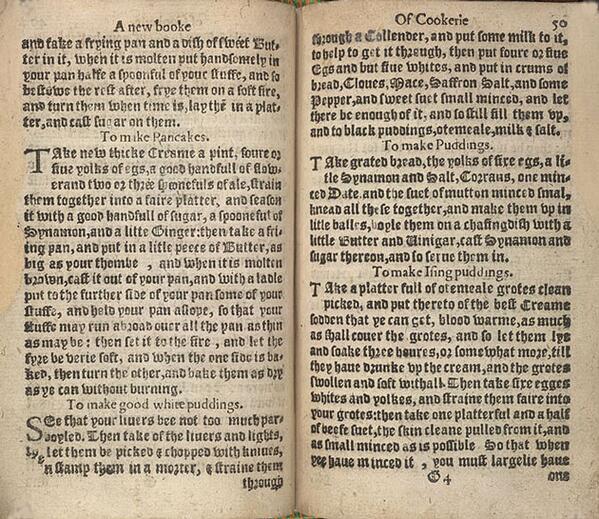
Earlier this week, Colin Marshall highlighted a trove of 3,000 vintage cookbooks on Archive.org, many of which date back to the 19th century.
Cookbooks, however, first arrived on the scene well before that. According to the venerable British Library, the “late 16th century was the first time that cookery books began to be published and acquired with any sort of regularity.” “It is also the first time that cookery books were directed at a female audience.” That is, privileged women who could read and had access to sugar, spices and other then rare ingredients.
Above you can find a recipe for making pancakes, straight from 1585. To make Pancakes, the text reads:
Take new thicke Creame a pine, foure or five yolks of egs, a good handful of flower and two or three spoonefuls of ale, strain them together into a faire platter, and season it with a good handfull of sugar, a spooneful of synamon, and a little Ginger: then take a friing pan, and put in a litle peece of Butter, as big as your thumbe, and when it is molten brown, cast it out of your pan, and with a ladle put to the further side of your pan some of your stuffe, and hold your pan …, so that your stuffe may run abroad over all the pan as thin as may be: then set it to the fire, and let the fyre be verie soft, and when the one side is baked, then turn the other, and bake them as dry as ye can without burning.
It’s Saturday morning. What are you waiting for? Give it a try. The page above also offers recipes for various puddings. Find those recipes transcribed here.
If you would like to support the mission of Open Culture, consider making a donation to our site. It’s hard to rely 100% on ads, and your contributions will help us continue providing the best free cultural and educational materials to learners everywhere. You can contribute through PayPal, Patreon, and Venmo (@openculture). Thanks!
Related Content:
An Archive of 3,000 Vintage Cookbooks Lets You Travel Back Through Culinary Time
Archive of Handwritten Recipes (1600 – 1960) Will Teach You How to Stew a Calf’s Head and More
Cook Real Recipes from Ancient Rome: Ostrich Ragoût, Roast Wild Boar, Nut Tarts & More
Discover the Oldest Beer Recipe in History From Ancient Sumeria, 1800 B.C.
Read More...Jane Austen’s Music Collection, Now Digitized and Available Online
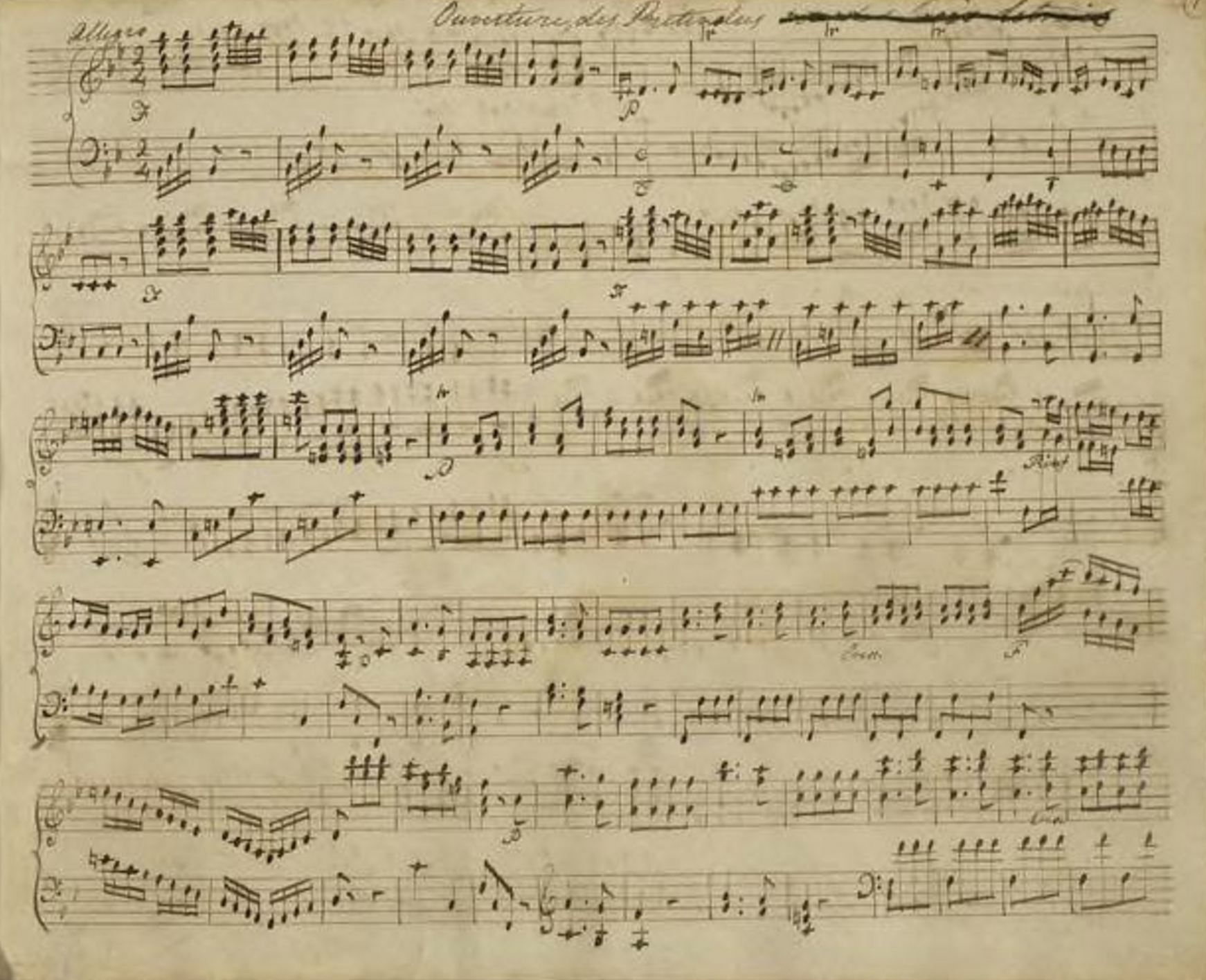
“What really matters is what you like, not what you are like,” says the narrator of Nick Hornby’s High Fidelity. “It’s no good pretending that any relationship has a future if your record collections disagree violently.” That master English social novelist of the late 20th century made a point with which Jane Austen, the master English social novelist in the early 19th century, may well have agreed. Hornby, like his character, loves and collects music, even into this 21st century when the very definition of a music collection has expanded into unrecognizability. Jane Austen did as well, though collecting music in her day meant something else again: collecting sheet music.
“The Pride and Prejudice author, who also played piano and sang, copied music by hand into personal albums and collected sheet music,” says the BBC about Austen’s personal music collection, part of the Austen family music library now digitized by the University of Southampton’s Hartley Library and made available at the Internet Archive. The article quotes project leader and professor of music Jeanice Brooks as saying these 18 albums of music (the bound kind, not the kind over which High Fidelity’s London thirtysomethings obsess) could not just help explain the “musical environment that fed the novelist’s imagination” and led to novels “full of musical scenes,” but provide a “unique glimpse of the musical life of an extended gentry family in the years around 1800.”
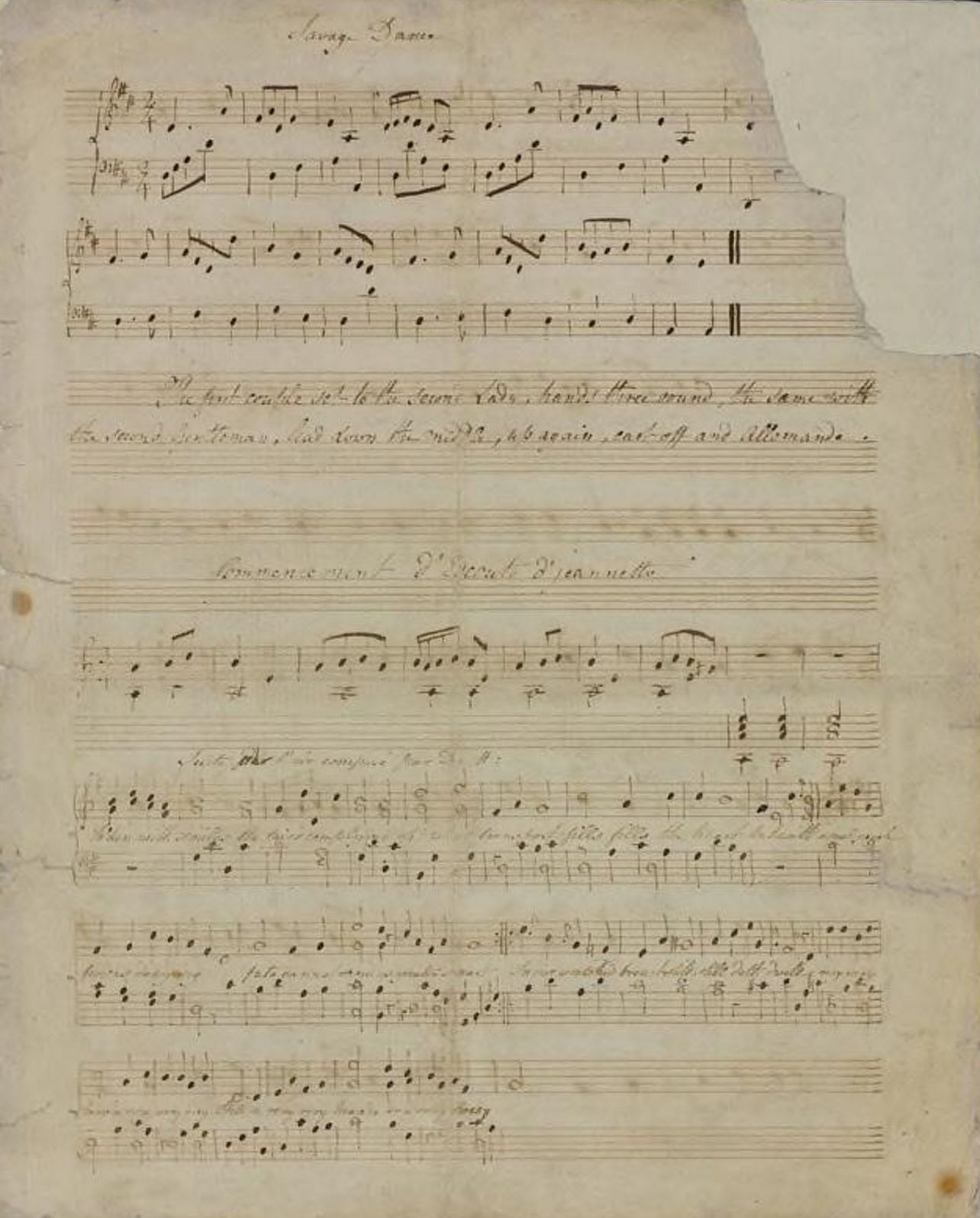
If, as a university spokesman says, a 19th-century sheet music collection reflects the personality of its owner “just as a digital music collection on a mobile phone or MP3 device would today,” what does Jane Austen’s say about her? The items in the collection identified as belonging to Austen herself include one volume containing “two songs from Dalayrac’s Les deux Savoyards, one song, and the ‘Savage Dance,’ ” another containing “Juvenile Songs & Lessons” for “for young beginners who don’t know enough to practise,” and another, according to the BBC, containing “the traditional Welsh song Nos Galan, better known today as Christmas song ‘Deck the Halls.’ ”
Not quite a does-she-like-the-Beatles-or-does-she-like-the-Stones situation, certainly. But Internet Archive allows you to flip at your leisure through these albums, all of them once kept in the Austen family home and some or all once handled by Austen herself, which ought to provide a satisfaction for many of the countless fans always seeking to get a little closer to the writer whose books they’ve read and reread so enjoyably. Some of them have no doubt drawn the inspiration from her work to start writing themselves, composing stories in her style. Those who go so far as to copy out pieces of her beloved prose in their own hand, can now try not just writing the words she wrote, but playing the notes she played as well.
Related Content:
An Animated Introduction to Jane Austen
Jane Austen Used Pins to Edit Her Abandoned Manuscript, The Watsons
Download the Major Works of Jane Austen as Free eBooks & Audio Books
Based in Seoul, Colin Marshall writes and broadcasts on cities and culture. He’s at work on a book about Los Angeles, A Los Angeles Primer, the video series The City in Cinema, the crowdfunded journalism project Where Is the City of the Future?, and the Los Angeles Review of Books’ Korea Blog. Follow him on Twitter at @colinmarshall or on Facebook.
Read More...Can You Solve These Animated Brain Teasers from TED-Ed?
Zombies, alien overlords, sharks, a mad dictator…math is a dangerous proposition in the hands of TED Ed script writer Alex Gendler.
The recreational mathematics puzzles he retrofits for TED’s educational initiative have been around for hundreds, even thousands of years. In the past, storylines tended to rely on biases 21st-century puzzle solvers would find objectionable. As mathematician David Singmaster told Science News:
One must be a little careful with some of these problems, as past cultures were often blatantly sexist or racist. But such problems also show what the culture was like.… The river crossing problem of the jealous husbands is quite sexist and transforms into masters and servants, which is classist, then into missionaries and cannibals, which is racist. With such problems, you can offend everybody!
Gendler’s updates, animated by Artrake studio, derive their narrative urgency from the sort of crowd pleasing sci fi predicaments that fuel summer blockbusters.
And fortunately for those of us whose brains are permanently stuck in beach mode, he never fails to explain how the characters prevail, outwitting or outrunning the aforementioned zombies, aliens, sharks, and mad dictator.
(No worries if you’re determined to find the solution on your own. Gendler gives plenty of fair warning before each reveal.)
Put your brain in gear, pull the skull-embossed lever, and remember, teamwork — and inductive logic — carry the day!
The prisoner hat riddle, above, hinges on a hierarchy of beliefs and the alien overlord’s willingness to give its nine captives a few minutes to come up with a game plan.
Go deeper into this age old puzzle by viewing the full lesson.
Gendler’s spin on the green-eyed logic puzzle, above, contains two brain teasers, one for the hive mind, and one for an individual acting alone, with a strategy culled from philosopher David Lewis’ Common Knowledge playbook. Here’s the full lesson.
Raring for more? You’ll find a playlist of TED-Ed puzzles by Gendler and others here. The full lesson for the bridge problem at the top of the post is here.
Related Content:
200 Free Textbooks: A Meta Collection
Dangerous Knowledge: 4 Brilliant Mathematicians & Their Drift to Insanity
Ayun Halliday, author, illustrator, and Chief Primatologist of the East Village Inky zine, will be leading a free collaborative zine workshop at the Gluestick Fest in Indianapolis Saturday, July 9. Follow her @AyunHalliday
Read More...Animated: Frank Zappa on Why the Culturally-Bereft United States Is So Susceptible to Fads (1971)
Frank Zappa was always frank. You gotta give him that.
Speaking with Village Voice journalist Howard Smith in 1971, Zappa talked candidly about the tastes, opinions, and beliefs of most Americans, whether they apply to music or politics or anything else. “You have a nation of people who are waiting for the next big thing to happen.” “I see a lot of changes. But I think they’re all temporary things and any change for the good is always subject to cancellation upon the arrival of the next fad. And the same thing with any change for the worst.”
Maybe it’s like this everywhere. But it’s particularly so in America says Zappa:
I think that’s a reasonable way to look at it because [the U.S.] doesn’t have any real sort of values, you know? And a fad provides you with a temporary occupation for your imagination. Really, [America] doesn’t have any real culture. It doesn’t have any real art. It doesn’t have any real anything. It’s just got fads and a gross national product and a lot of inflation.
It’s not a flattering portrait of the States. But know this. Zappa didn’t see himself being above it all: “I’m an American. I was born here. I automatically got entered in a membership in the club.” Yeah, Frank could be frank.
The video above was animated by Blank on Blank. You can read a transcript of the conversation here.
If you would like to support the mission of Open Culture, consider making a donation to our site. It’s hard to rely 100% on ads, and your contributions will help us continue providing the best free cultural and educational materials to learners everywhere. You can contribute through PayPal, Patreon, and Venmo (@openculture). Thanks!
Related Content:
Stream 82 Hours of Frank Zappa Music: Free Playlists of Songs He Composed & Performed
Frank Zappa Debates Censorship on CNN’s Crossfire (1986)
A Young Frank Zappa Turns the Bicycle into a Musical Instrument on The Steve Allen Show (1963)
Read More...An Archive of 3,000 Vintage Cookbooks Lets You Travel Back Through Culinary Time
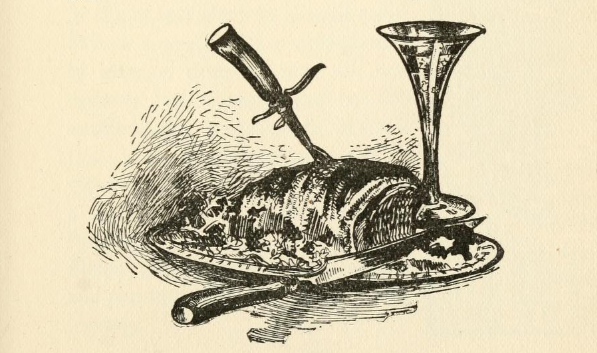
By the time I got to high school, home economics classes had fallen out of favor: the boys, of course, considered them too “girly,” and the girls considered them enforcers of traditional gender roles wholly out of place in modern society. At that time, America’s widespread obsession with food still had a few years before its full bloom, and now I imagine that learning to cook has regained a certain cachet even among teenagers. But what of “home economics” itself, that curious banner that combines a definition of economics nobody now quite recognizes with the less-than-fashionable concepts of domesticity, practicality, and necessity?
You can get a sense of the field’s history with a visit to the Cookbook and Home Economics Collection at the Internet Archive. Its items, drawn from the Young Research Library Department of Special Collections at UCLA, the Bancroft Library at The University of California, Berkeley, and the Prelinger Library, “take us back to an America in the early decades of the 20th century covering topics on cookery, textiles, family and home, budgeting, domestic sciences, and many other delightful topics.” Some will find them more inherently delightful than will others, but the historical value remains undeniable: each and every book in the collection takes us back to a different time and place with its own interests and priorities, in the kitchen as well as elsewhere in the home.
At the Internet Archive blog, Jeff Kaplan highlights such works as the Pilgrim Cook Book, published by Chicago’s Pilgrim Evangelical Lutheran Church Ladies’ Aid Society in 1921 and including recipes for Sausage in Potato Boxes, Blitz Torte, Cough Syrup, and Sauerkraut Candy; 1912’s more subdued Food for the invalid and the convalescent, with its Beef Juice, Meat Jelly, Cracker Gruel, and advice that, “among other things, beer and pickles are bad for children”; and even older, 1906’s A bachelors cupboard; containing crumbs culled from the cupboards of the great unwedded which, warning that “the day of of the ‘dude’ has passed and the weakling is relegated to his rightful sphere in short order,” offers methods for the making of dishes with names like Bed-Spread For Two, Indian Devil Mixture, Hot Birds, and Finnan Haddie.
If we dismissed whatever they taught in high school Home Ec as old-fashioned, then boy, the wisdom preserved in this corner of the Internet Archive exists on a whole other plane. But it also contains more than laughs: the serious student of cuisine and its history will also find the likes of 1907’s A Guide to Modern Cookery, the work of French “king of chefs and chef of kings” Auguste Escoffier, as well as — sticking, sensibly, to that most Epicurean of all nations — Le grand dictionnaire de cuisine, a 1200-page encyclopedia-cookbook published just after the death of its author, The Three Musketeers author Alexandre Dumas. As relevance goes, both of them of them surely hold up far better than, say, The whole duty of a woman, or, An infallible guide to the fair sex: containing rules, directions, and observations, for their conduct and behavior through all ages and circumstances of life, as virgins, wives, or widows.
Enter the archive of 3,000+ cookbooks and home ec texts here.
Related Content:
Cookpad, the Largest Recipe Site in Japan, Launches New Site in English
1967 Cookbook Features Recipes by the Rolling Stones, Simon & Garfunkel, Barbra Streisand & More
Archive of Handwritten Recipes (1600 – 1960) Will Teach You How to Stew a Calf’s Head and More
Based in Seoul, Colin Marshall writes and broadcasts on cities and culture. He’s at work on a book about Los Angeles, A Los Angeles Primer, the video series The City in Cinema, the crowdfunded journalism project Where Is the City of the Future?, and the Los Angeles Review of Books’ Korea Blog. Follow him on Twitter at @colinmarshall or on Facebook.
Read More...Watch “The Corridor,” a Tribute to the Music Video Stanley Kubrick Planned to Make Near the End of His Life
When Stanley Kubrick died, he left behind numerous film ideas that would never see the light of day. There was his epic Napoleon film; an adaptation of a Jim Thompson novel; his long-talked about Holocaust film Aryan Papers; and so much more.
But this was a new one to hear about: in 1996 Kubrick agreed to direct a music video for UNKLE’s upcoming Psyence Fiction album. You may recall, back when MTV played music videos, seeing Jonathan Glazer’s “Rabbit in Your Headlights” video, or Jake Scott’s “Be There,” both from UNKLE’s album. Alas, Kubrick’s video never got made. He had started filming Eyes Wide Shut and then passed away upon its release.
Now “The Corridor,” a glimpse of which you can see above, is an attempt to bring Kubrick and UNKLE back together. It’s not what actually might have been filmed by the director, but something that captures the project in spirit. It’s also a loving tribute to Kubrick’s career and his love of single-point perspective, which has been video essayed elsewhere.
Director Toby Dye, who has directed videos like “Paradise Circus” for Massive Attack and “Another Night Out” for UNKLE, took on the job of bringing “The Corridor” to the screen, co-designed by Ridley Scott Associates, working with Dye’s Black Dog Films.
“The Corridor” uses the one song off Psyence Fiction that never got a video, the Richard Ashcroft-sung “Lonely Souls,” as its backdrop. Dye has created four narratives that play on Kubrick’s iconic films–The Shining, A Clockwork Orange, Barry Lyndon,and 2001–but then interweaves time and character along a long corridor tracking shot, starring Joanna Lumley and Aiden Gillen.
In addition, “The Corridor” is a video centerpiece to what sounds like a very cool exhibition. Curated by Mo’Wax and UNKLE founder James Lavelle, “Daydreaming with Stanley Kubrick” opened yesterday at Somerset House in London and runs through August 24, 2016. Along with the video, the exhibition features artworks celebrating Kubrick’s influence on generations of artists. (The stack of heaters on top of the Overlook carpet is great.)
Said Dye:
‘For me, the unblinking red eye of 2001 A Space Odyssey’s HAL 9000 perfectly encapsulates the cinema of Stanley Kubrick. For all his films share that same coolly analytical gaze, studying from afar mankind and all its many foibles. Kubrick’s camera never appeared to follow the action, it was as if it moved of its own accord and the tableau of life simply unfurled before it. It was his seemingly never-ending camera zooms from Barry Lyndon that first sparked the seed of the idea behind “The Corridor,” before that idea grew, and grew into something that was, at times, infuriatingly ambitious, but I hope in the best tradition of the man who inspired it.’
Those who can’t attend will have to wait and see if and when the full video for “The Corridor” appears online. In the meantime, Somerset House awaits.
Related Content:
Napoleon: The Greatest Movie Stanley Kubrick Never Made
A Tour of Stanley Kubrick’s Prized Lens Collection
The Shining and Other Complex Stanley Kubrick Films Recut as Simple Hollywood Movies
Lost Kubrick: A Short Documentary on Stanley Kubrick’s Unfinished Films
Ted Mills is a freelance writer on the arts who currently hosts the artist interview-based FunkZone Podcast. You can also follow him on Twitter at @tedmills, read his other arts writing at tedmills.com and/or watch his films here.
Read More...32 Animated Videos by Wireless Philosophy Teach You the Essentials of Critical Thinking
Do you know someone whose arguments consist of baldly specious reasoning, hopelessly confused categories, archipelagos of logical fallacies buttressed by seawalls of cognitive biases? Surely you do. Perhaps such a person would welcome some instruction on the properties of critical thinking and argumentation? Not likely? Well, just in case, you may wish to send them over to this series of Wireless Philosophy (or “WiPhi”) videos by philosophy instructor Geoff Pynn of Northern Illinois University and doctoral students Kelley Schiffman of Yale, Paul Henne of Duke, and several other philosophy and psychology graduates.
What is critical thinking? “Critical thinking,” says Pynn, “is about making sure that you have good reasons for your beliefs.” Now, there’s quite a bit more to it than that, as the various instructors explain over the course of 32 short lessons (watch them all at the bottom of the post), but Pynn’s introductory video above lays out the foundation. Good reasons logically support the beliefs or conclusions one adopts—from degrees of probability to absolute certainty (a rare condition indeed). The sense of “good” here, Pynn specifies, does not relate to moral goodness, but to logical coherence and truth value. Though many ethicists and philosophers would disagree, he notes that it isn’t necessarily “morally wrong or evil or wicked” to believe something on the basis of bad reasons. But in order to think rationally, we need to distinguish “good” reasons from “bad” ones.
“A good reason for a belief,” Pynn says, “is one that makes it probable. That is, it’s one that makes the belief likely to be true. The very best reasons for a belief make it certain. They guarantee it.” In his next two videos, above and below, he discusses these two classes of argument—one relating to certainty, the other probability. The first class, deductive arguments, occur in the classic, Aristotelian form of the syllogism, and they should guarantee their conclusions, meaning that “it’s impossible for the premises to be true while the conclusion is false” (provided the form of the argument itself is correct). In such an instance, we say the argument is “valid,” a technical philosophical term that roughly corresponds to what we mean by a “good, cogent, or reasonable” argument. Some properties of deductive reasoning—validity, truth, and soundness—receive their own explanatory videos later in the series.
In abductive arguments (or what are also called “inductive arguments”), above, we reason informally to the best, most probable explanation. In these kinds of arguments, the premises do not guarantee the conclusion, and the arguments are not bound in rigid formal syllogisms. Rather, we must make a leap—or an inference—to what seems like the most likely conclusion given the reasoning and evidence. Finding additional evidence, or finding that some of our evidence or reasoning is incorrect or must be rethought, should force us to reassess the likelihood of our conclusion and make new inferences. Most scientific explanations rely on abductive reasoning, which is why they are subject to retraction or revision. New evidence—or new understandings of the evidence—often requires new conclusions.
As for understanding probability—the likelihood that reasons provide sufficient justification for inferring particular conclusions—well… this is where we often get into trouble, falling victim to all sorts of fallacies. And when it comes to interpreting evidence, we’re prey to a number of psychological biases that prevent us from making fair assessments. WiPhi brings previous video series to bear on these problems of argumentation, one on Formal and Informal Fallacies and another on Cognitive Biases.

When it comes to a general theory of probability itself, we would all benefit from some understanding of what’s called Bayes’ Theorem, named for the 18th century statistician and philosopher Thomas Bayes. Bayes’ Theorem can seem forbidding, but its wide application across a range of disciplines speaks to its importance. “Some philosophers,” says CUNY graduate student Ian Olasov in his video lesson above, “even think it’s the key to understanding what it means to think rationally.”
Bayesian reasoning, informal logic, sound, valid, and true arguments… all of these modes of critical thinking help us make sense of the tangles of information we find ourselves caught up in daily. Though some of our less rationally-inclined acquaintances may not be receptive to good introductory lessons like these, it’s worth the effort to pass them along. And while we’re at it, we can sharpen our own reasoning skills and learn quite a bit about where we go right and where we go wrong as critical thinkers in Wireless Philosophy’s thorough, high quality series of video lessons.
Find more helpful resources in the Relateds below.
If you would like to support the mission of Open Culture, consider making a donation to our site. It’s hard to rely 100% on ads, and your contributions will help us continue providing the best free cultural and educational materials to learners everywhere. You can contribute through PayPal, Patreon, and Venmo (@openculture). Thanks!
Related Content:
Carl Sagan Presents His “Baloney Detection Kit”: 8 Tools for Skeptical Thinking
How to Spot Bullshit: A Primer by Princeton Philosopher Harry Frankfurt
Michael Shermer’s Baloney Detection Kit: What to Ask Before Believing
Daniel Dennett Presents Seven Tools For Critical Thinking
1,700 Free Online Courses from Top Universities
Josh Jones is a writer and musician based in Durham, NC. Follow him at @jdmagness
Read More...
Support Us
We're hoping to rely on loyal readers, rather than erratic ads. Please click the Donate button and support Open Culture. You can use Paypal, Venmo, Patreon, even Crypto! We thank you!

About Us

Open Culture scours the web for the best educational media. We find the free courses and audio books you need, the language lessons & educational videos you want, and plenty of enlightenment in between.
Advertise With Us

FREE UPDATES!
GET OUR DAILY EMAIL
Get the best cultural and educational resources on the web curated for you in a daily email. We never spam. Unsubscribe at any time.
FOLLOW ON SOCIAL MEDIA

Open Culture editor Dan Colman scours the web for the best educational media. He finds the free courses and audio books you need, the language lessons & movies you want, and plenty of enlightenment in between.
Advertise With Us

