Brian Eno Answers Deep Questions from Music Journalist Dick Flash: The Best Eno Interview You’ll See
Surely you’re familiar with the work of Dick Flash, the tireless writer for Pork magazine who asks the most brilliant minds in music today the deepest, most serious, most probing questions. Take, for instance, his interview of artist/producer/ambient-music-inventor Brian Eno. “I was going to ask you whether you thought technology had affected music very deeply,” Flash begins, “but then I thought, ‘Well, that’s a bloody stupid question to ask Brian Eno. I know you’ll agree that you just can’t imagine rock music without all the technology which goes into making it and getting it heard. How do you think that process has affected what you’re doing?”
“Well —”
“I mean, when you’re making music, what eventually comes out has almost nothing to do with performance at all. I mean, I wonder if you sometimes feel more like a painter than a composer.”
“The thing about this new record —”
“Because after all, your music is basically scenic. It’s not only that you make it more like a painter than a composer, but also, it doesn’t have a narrative. There’s no sort of teleological structure to it. It’s not goal-directed. Instead it’s a bit like a sort of emotional microclimate, a place more than an event. Does that make any sense to you?”
“Yeah, well, I —”
“I mean, I’m not trying to put words into your mouth, but the real question is, should this stuff be called music at all, or is it a new art form? Do you think that this and other media suffer from the carryover of their original names, when in fact they’ve changed into something completely different.”
“Well, I like painting, yeah. I really like it. Um…”
The interview, conducted at the time of the release of Eno’s album Small Craft on a Milk Sea (which Flash calls Milk Crate on a Small Sea) constitutes a true meeting of the minds. The conversation covers all the subjects that matter: ecology, film scores, the 1956 Copyright Act, the human need for surrender, “the internet and all that,” the Edge’s hat, and why Eno does so much collaboration in the studio. As to that last, the interviewer has a theory: “You love playing with what somebody else is playing as much as you enjoy playing with yourself.”
But wait — you say you’ve never heard of Dick Flash? Watch the interview again: doesn’t he sound and look, behind that hip hair and spectacles, at least a little bit familiar? And doesn’t Eno himself, confusing Malcolm McLaren with Marshall McLuhan and going on about Annie Lennox’s neck, seem uncharacteristically inarticulate, almost as if he’s poking fun at himself? (And who’s that in the picture on his computer desktop, anyway?) Like all the finest interviews throughout the history of journalism, this one leaves us with more questions than answers.
Related Content:
Brian Eno on Why Do We Make Art & What’s It Good For?: Download His 2015 John Peel Lecture
The Genius of Brian Eno On Display in 80 Minute Q&A: Talks Art, iPad Apps, ABBA, & More
Jump Start Your Creative Process with Brian Eno’s “Oblique Strategies”
Brian Eno on Creating Music and Art As Imaginary Landscapes (1989)
David Bowie & Brian Eno’s Collaboration on “Warszawa” Reimagined in Comic Animation
Based in Seoul, Colin Marshall writes and broadcasts on cities, language, and style. He’s at work on a book about Los Angeles, A Los Angeles Primer, the video series The City in Cinema, the crowdfunded journalism project Where Is the City of the Future?, and the Los Angeles Review of Books’ Korea Blog. Follow him on Twitter at @colinmarshall or on Facebook.
Read More...Go Inside the First 30 Minutes of Kubrick’s The Shining with This 360º Virtual Reality Video
Apologies to Stephen King, but when I think of The Shining, I think of Stanley Kubrick’s 1980 film. While King has long and vigorously objected to Kubrick’s liberties in adapting the story, I’d argue it’s one of those oft-listicled cases where the film is better than the book. Granted, the horror writer has made several justified criticisms of the film’s misogynistic portrayal of Shelly Duvall’s character, but he has also confessed to a total indifference to movies, telling Rolling Stone, “I see [film] as a lesser medium than fiction, than literature, and a more ephemeral medium.” In this instance, at least, he’s dead wrong. Movie lovers have been obsessing over every blessed detail of Kubrick’s The Shining for 36 years and show no signs of stopping.
Part of the reason the story works better on film than on the page is that The Shining is what one might call an architectural horror—its monster is a building, the Overlook Hotel, and Kubrick wisely exploited the idea to its maximum potential, adding an additional structure, the topiary maze, as a further instantiation of the story’s themes of isolation, entrapment, and existential dead ends. Video game designers—many the same age as the film’s young protagonist Danny when the movie came out—surely paid attention. The long takes of Danny’s exploration of the ominous, empty mountain lodge now, in hindsight, resemble any number of virtual console and PC worlds in many a first-person game.
Now joining the architecturally-obsessed reimaginings of The Shining is “Shining 360,” a project by digital artist Claire Hentschker. She describes it as:
a 30-minute audio-visual experiment for VR derived from the physical space within Stanley Kubrick’s film ‘The Shining.’ Using photogrammetry, 3D elements are extracted and extruded from the original film stills, and the subsequent fragments are stitched together and viewed along the original camera path.
In other words, the project allows viewers to move around, using 360-degree Youtube video, in a digitally fragmented space built out of the first 30 minutes of the film. Be aware that there are browser restrictions, but if you open the video in Chrome, Firefox, Internet Explorer, or Opera, you’ll be able to navigate through the space using your mouse or the WASD keys.
It’s a very weird experience. The Overlook’s interior exists in contiguous 3D photographic blobs suspended in black nothingness—giving one the feeling of reaching the edge of some previously-believable video game world and finding out there’s nothing beyond it. And it’s made all the creepier by the near-exclusion of the very few people the hotel does contain—with the exception of a kind of residue of partial bodies—and by a droning, one-note ambient synthesizer score. This isn’t the first time Hentschker has used the film’s spatial uniqueness as computer art. In the short student video above from 2015, she introduces a wonky technical precursor to “Shining 360” that also thematically addresses the movie’s misogyny: “Mapping the Female Gaze in Horror Movies.”
Related Content:
Download & Play The Shining Board Game
Stanley Kubrick’s The Shining Reimagined as Wes Anderson and David Lynch Movies
Josh Jones is a writer and musician based in Durham, NC. Follow him at @jdmagness
Read More...Live Stream the World Science Festival, Starting (Now) with This Tribute to Oliver Sacks
A quick heads up: The World Science Festival is getting underway today in New York City. Throughout the week (June 1–5), the festival will stage 50 live programs that bring together great minds in science and the arts. A number of them you can stream free online, including “Awakening the Mind: A Celebration of the Life and Work of Oliver Sacks.” Watch it now (5pm CA time) right above. For a complete list of streamable events, click here.
If you would like to support the mission of Open Culture, consider making a donation to our site. It’s hard to rely 100% on ads, and your contributions will help us continue providing the best free cultural and educational materials to learners everywhere. You can contribute through PayPal, Patreon, and Venmo (@openculture). Thanks!
Read More...Free: Download 5.3 Million Images from Books Published Over Last 500 Years
Back in 2014, we brought to your attention an image archive rivaling the largest of its kind on the web: the Internet Archive Book Images collection at Flickr. There, you’ll find millions of “public domain images, all extracted from books, magazines and newspapers published over a 500 year period.”
At the time, the collection contained 2.6 million public domain images, but “eventually,” we noted in a previous post, “this archive will grow to 14.6 million images.” Well, it has almost doubled in size since our first post, and it now features over 5.3 million images, thanks again to Kalev Leetaru, who headed the digitization project while on a Yahoo-sponsored fellowship at Georgetown University.
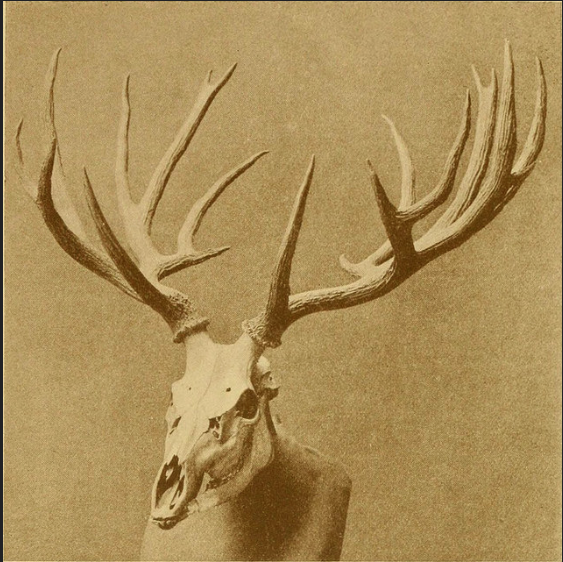
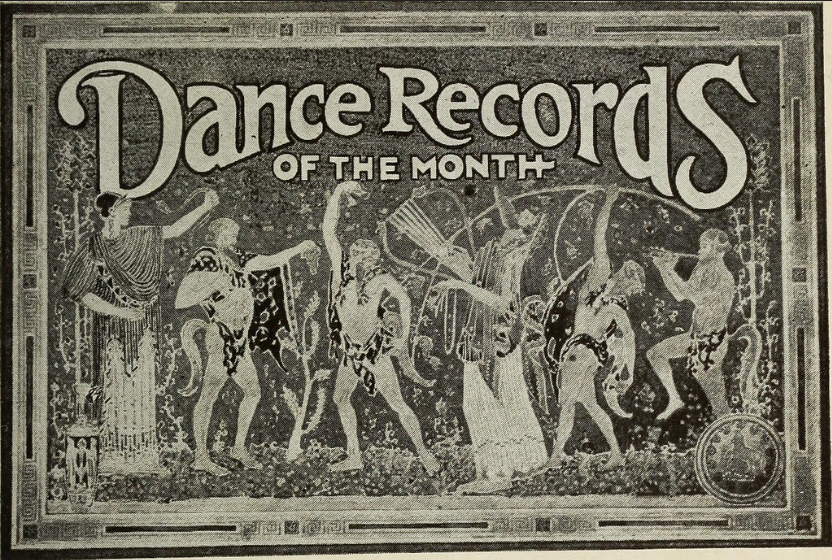
Rather than using optical character recognition (OCR), as most digitization software does to scan only the text of books, Leetaru’s code reversed the process, extracting the images the Internet Archive’s OCR typically ignores. Thousands of graphic illustrations and photographs await your discovery in the searchable database. Type in “records,” for example, and you’ll run into the 1917 ad in “Colombia Records for June” (top) or the creepy 1910 photograph above from “Records of big game: with their distribution, characteristics, dimensions, weights, and horn & tusk measurements.” Two of many gems amidst utilitarian images from dull corporate and government record books.
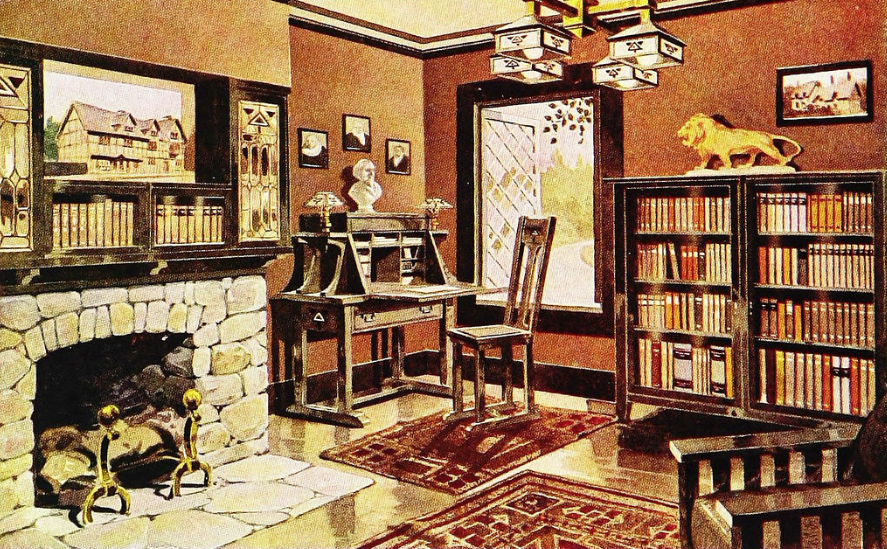
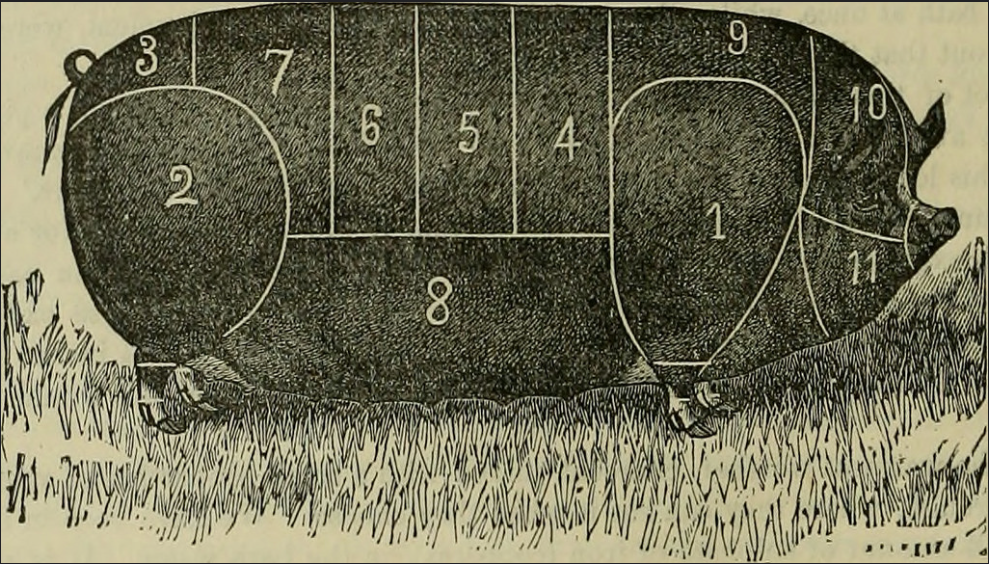
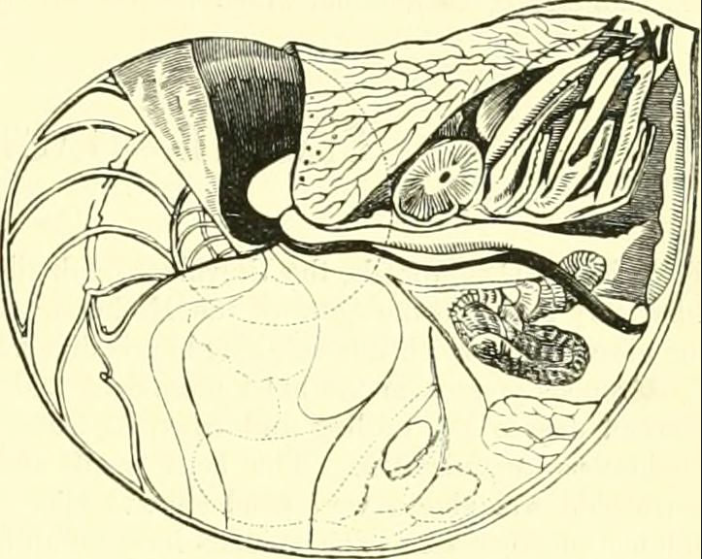
Search “library” and you’ll arrive at a fascinating assemblage, from the fashionable room above from 1912’s “Book of Home Building and Decoration,” to the rotund, mournful, soon-to-be carved pig below from 1882’s “The American Farmer: A Complete Agricultural Library,” to the nifty Nautilus drawing further down from an 1869 British Museum of Natural History publication. To see more images from any of the sources, simply click on the title of the book that appears in the search results. The organization of the archive could use some improvement: as yet millions of images have not been organized into thematic albums, which would greatly streamline browsing through them. But it’s a minor gripe given the number and variety of free, public domain images available for any kind of use.
Moreover, Leetaru has planned to offer his code to institutions, telling the BBC, “Any library could repeat this process. That’s actually my hope, that libraries around the world run this same process of their digitized books to constantly expand this universe of images.” Scholars and archivists of book and art history and visual culture will find such a “universe of images” invaluable, as will editors of Wikipedia. “What I want to see,” Leetaru also said, “is… Wikipedia have a national day of going through this [collection] to illustrate Wikipedia articles.”
Short of that, individual editors and users can sort through images of all kinds when they can’t find freely available pictures of their subject. And, of course, sites like Open Culture—which rely mainly on public domain and creative commons images—benefit greatly as well. So, thanks, Internet Archive Book Images Collection! We’ll check back later and let you know when they’ve grown even more.
Related Content:
Download for Free 2.6 Million Images from Books Published Over Last 500 Years on Flickr
The Getty Adds Another 77,000 Images to its Open Content Archive
Josh Jones is a writer and musician based in Durham, NC. Follow him at @jdmagness
Read More...The British Library Digitizes 300 Literary Treasures from 20th Century Authors: Virginia Woolf, T.S. Eliot, James Joyce & More
As a young college student, I spent hours wandering through my university’s library, looking in a state of awe at the number of books contained therein by writers whose names I knew or who seemed vaguely familiar, and by hundreds, thousands, more I’d never heard of. Always content to immerse myself in secluded corners for days on end with a good book, I couldn’t have felt more at home.
The internet was in its infancy, and my online life at the time consisted of awkward, plain-text emails sent once or twice a week and the occasional clunky, slow-loading website, promising much but delivering little. Excitable futurists made extravagant predictions about how hypertext and interactivity would revolutionize the book. These seemed like intriguing but unnecessary solutions in search of a problem.
To the bookish, the book is a perfected technology that cannot be improved upon except by the publishing of more books. While interactive texts—with linked annotations, biographies, historical precis, critical essays, and the like—have much enhanced life for students, they have not in any way improved upon the simple act of reading for pleasure and edification—an activity, wrote Virginia Woolf, requiring nothing more than “the rarest qualities of imagination, insight, and judgment.”
Though Woolf would likely have been unimpressed with all that talk of hypertextual innovation, I imagine she would have marveled at the online world for offering something to the reader we have never had until the past couple decades: free and instant access to thousands of books, from literary classics to biographies to histories to poetry—all genres upon which Woolf offered advice about how to read on their own terms. Without the anxious admissions process and costly tuition, anyone with a computer now has access to a significant portion of the average college library.
And now anyone with a computer has access to a significant portion of the British Library’s rare collections as well, thanks to the venerable institution’s new online collection: “Discovering Literature: 20th Century.”
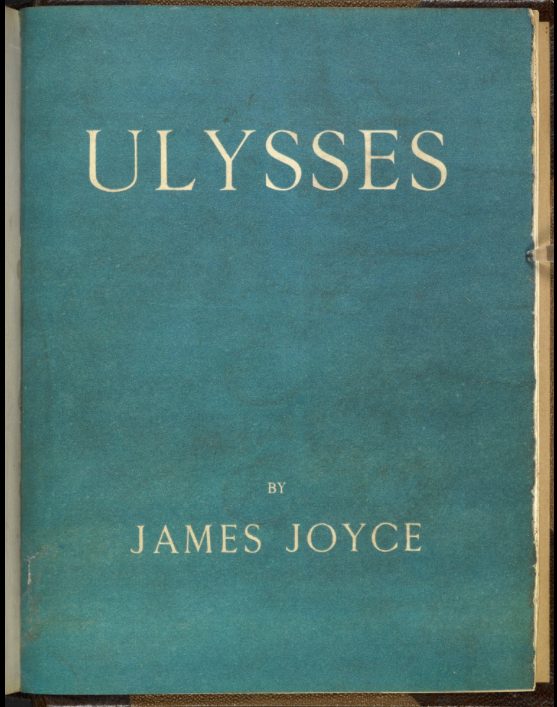
Readers of our site will know of Open Culture’s affinity for 20th century modernist literature, like that of Virginia Woolf, and for the dystopian fiction of George Orwell. These authors and greats of more recent vintage are all well-represented in the British Library collection. You’ll find such treasures as a scanned first edition of James Joyce’s Ulysses, first American edition of Anthony Burgess’ A Clockwork Orange, and first edition of Woolf’s A Room of One’s Own. These are just a few of the classic novels available in the “over 300 treasures” of the collection, writes the British Library.
The online library offers a paradise for readers, certainly. And also a heaven for scholars. Included among the rare first editions and critical essays and interviews on the site’s main page are “online for the first time… literary drafts… notebooks, letters, diaries, newspapers and photographs from Virginia Woolf, Ted Hughes, Angela Carter and Hanif Kureishi among others.”
Some incredible highlights include:
- Typescript of T.S. Eliot’s The Waste Land with Ezra Pound’s Handwritten annotations
- George Orwell’s Notes for 1984
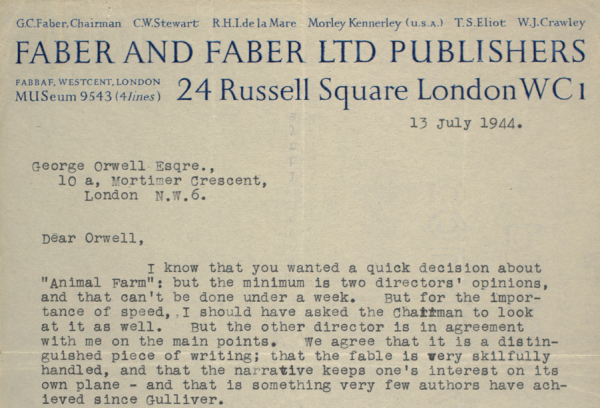
- T.S. Eliot’s Faber & Faber Letter Rejecting Orwell’s Animal Farm (featured on Open Culture previously)
- Typescript Second Draft of Sylvia Plath’s The Bell Jar
- Letters on the Printing of James Joyce’s A Portrait of the Artist as a Young Man and Ulysses
- Typescript Notes of J.G. Ballard’s High-Rise, with a Draft of the Novel
- Notebook Drafts of Virginia Woolf’s Mrs. Dalloway
- Notebook of Research and Ideas for Angela Carter’s Wise Children
- Ezra Pound’s 1914 Poetry Anthology Des Imagistes
And as if all this—and so many more 20th century literary treasures—weren’t enough, the collection also tucks in some wonderful artifacts from previous eras, such as a collection of manuscript poems by John Keats, including the Odes and Robert Burton’s encyclopedic 1628 study of depression, The Anatomy of Melancholy.
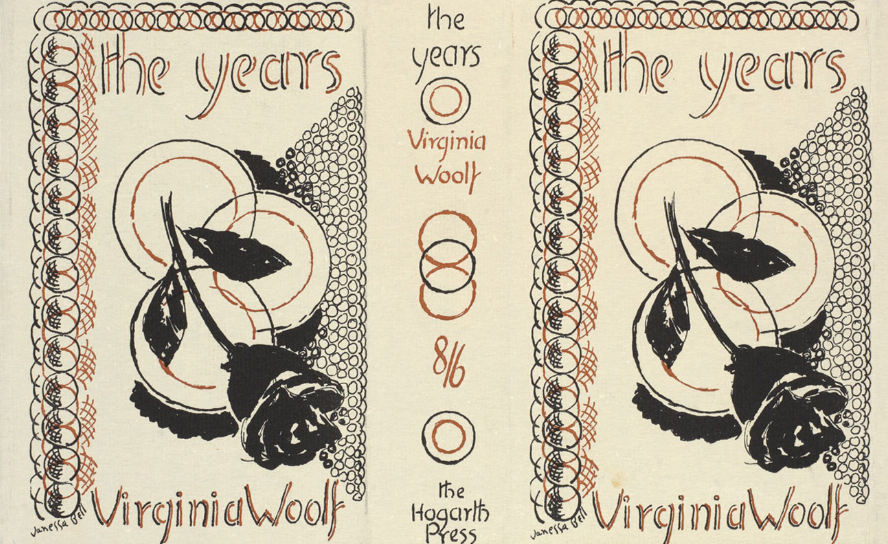
“Until now,” says Anna Lobbenberg, the Library’s Digital Programmes Manager, “these treasures could only be viewed in the British Library Reading Rooms or on display in exhibitions—now Discovery Literature: 20th Century will bring these items to anyone in the world with an internet connection.” It truly is, for the lover of books, a brave new world (a book whose 1932 original dust jacket you can see here).
Related Content:
Virginia Woolf Offers Gentle Advice on “How One Should Read a Book”
Josh Jones is a writer and musician based in Durham, NC. Follow him at @jdmagness
Read More...Get a Sneak Peek of Archangel, the New Comic Book by Cyberpunk Author William Gibson
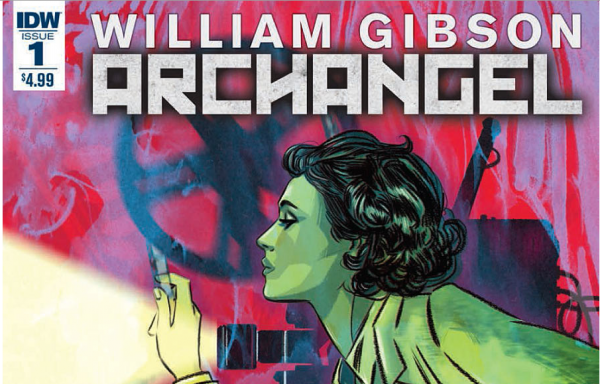
“The world is in ruins. The White House relocated to the ominous-sounding National Emergency Federal District in Montana. They have technology that far outstrips our own.” A dystopian vision of the distant future? Nope, a dystopian vision of February 2016 — the February 2016 of Archangel, a new comic-book series from actor-writer Michael St. John Smith, artist Butch Guice, and none other than novelist William Gibson, author of such sui generis works of science fiction, pillars of cyberpunk, or prophecies of the present as Neuromancer, All Tomorrow’s Parties, Pattern Recognition, and most recently The Peripheral, a predecessor, in a way, of Archangel’s story that plays out on more than one timeline.
“A father and son occupy the new White House as President and Vice President,” writes Ars Technica’s Jonathan M. Gitlin. The younger overlord of America “has been surgically altered to resemble his grandfather, because Junior is about travel to an alternate Earth in 1945 to take grandpa’s place, with the intent of remaking that world more to his liking.” In response, “a pair of tattooed Marines go back in time to stop him, but things start to unravel when their stealth plane materializes in a formation of B‑17s in the skies above Berlin.” In that alternate 1945, “British intelligence officer Naomi Givens is tasked with finding out what just fell out of the skies of Berlin.” If you feel your curiosity piqued — and how couldn’t you? — you can read through (above) pages of Archangel’s first issue, whose paper version quickly sold out. (You can also purchase the digital one here.)
As the series goes on, it will surely deliver more of the “alternate-history/cross-worlds story” that Gibson describes as “Band Of Brothers vs. Blackwater,” not to mention plenty of heroics on the part of another one of his signature protagonists, the “over-the-top female character who just never gets killed.” Enthusiasts of both comic books and William Gibson have long and patiently waited for those worlds to collide, and they’ll presumably wait a little less patiently for Archangel’s next issue, since its first one holds out enough promise to make them want to time-travel back to an alternate 1984, the year of Neuromancer’s publication, and get its author writing comics right away.
via Ars Technica
Related Content:
William Gibson Reads Neuromancer, His Cyberpunk-Defining Novel (1994)
Based in Seoul, Colin Marshall writes and broadcasts on cities, language, and style. He’s at work on a book about Los Angeles, A Los Angeles Primer, the video series The City in Cinema, the crowdfunded journalism project Where Is the City of the Future?, and the Los Angeles Review of Books’ Korea Blog. Follow him on Twitter at @colinmarshall or on Facebook.
Read More...10 Most Popular MOOCs (Massive Open Online Courses) Getting Started in June: Enroll Free Today

Like everything else these days, education has become a 24/7 affair. Yes, things are slowing down on college campuses this summer. But, on the internet, it’s full steam ahead. This June alone, over 300 free MOOCs (Massive Open Online Courses) are getting underway. They’re all neatly catalogued by the education web site Class Central, which also tracks the most popular MOOCS offered each month. What’s hot in June? Find the top 10 below. And don’t hesitate to enroll in any of the courses. They’re all free.
Personal Finance Planning
Purdue University via edX
Manage your money more effectively by learning practical solutions to key investment, credit, insurance and retirement questions.
Bookmark | Next Session : 15th Jun, 2016
Nutrition and Health: Food Safety
Wageningen University via edX
Learn about bacteria, pesticides and health hazards present in food.
Bookmark | Next Session : 1st Jun, 2016
Islam Through Its Scriptures
Harvard University via edX
Learn about the Quran, the central sacred text of Islam, through an exploration of the rich diversity of roles and interpretations in Muslim societies.
Bookmark | Next Session : 1st Jun, 2016
History of Graphic Design
California Institute of the Arts via Coursera
This condensed survey course focuses on four major areas of design and their history: Typography, Image-Making, Interactive Media, and Branding.
Bookmark | Next Session : 20th Jun, 2016
Big Data: Data Visualisation
Queensland University of Technology via FutureLearn
Data visualisation is vital in bridging the gap between data and decisions. Discover the methods, tools and processes involved.
Bookmark | Next Session : 27th Jun, 2016
Microeconomics: When Markets Fail
University of Pennsylvania via Coursera
Perfect markets achieve efficiency: maximizing total surplus generated. But real markets are imperfect. This course will explore a set of market imperfections to understand why they fail and to explore possible remedies, including antitrust policy, regulation, and government intervention.
Bookmark | Next Session : 6th Jun, 2016
Single Page Web Applications with AngularJS
Johns Hopkins University via Coursera
Do you want to write powerful, maintainable, and testable front end applications faster and with less code? Then consider joining this course to gain skills in one of the most popular Single Page Application (SPA) frameworks today, AngularJS
Bookmark | Next Session : 20th Jun, 2016
Machine Learning: Clustering & Retrieval
University of Washington via Coursera
A reader is interested in a specific news article and you want to find similar articles to recommend. What is the right notion of similarity? Moreover, what if there are millions of other documents?
Bookmark | Next Session : 15th Jun, 2016
Introduction to Engineering
University of Texas at Arlington via edX
The application of knowledge to design and build devices, systems, materials and processes in engineering.
Bookmark | Next Session : 8th, Jun, 2016
Social Norms, Social Change
University of Pennsylvania via Coursera
This is a course on social norms, the rules that glue societies together. It teaches how to diagnose social norms, and how to distinguish them from other social constructs, like customs or conventions.
Bookmark | Next Session : 20th Jun, 2016
For a complete list of courses starting in June, click here.
If you would like to support the mission of Open Culture, consider making a donation to our site. It’s hard to rely 100% on ads, and your contributions will help us continue providing the best free cultural and educational materials to learners everywhere. You can contribute through PayPal, Patreon, and Venmo (@openculture). Thanks!
Read More...How to Spot Bullshit: A Primer by Princeton Philosopher Harry Frankfurt
We live in an age of truthiness. Comedian Stephen Colbert coined the word to describe the Bush administration’s tendency to fudge the facts in its favor.
Ten years after the American Dialect Society named it Word of the Year, former president Bush’s calendar is packed with such leisure activities as golf and painting portraits of world leaders, but “truthiness” remains on active duty.
It’s particularly germane in this election year, though politicians are far from its only practitioners.
Take global warming. NASA makes a pretty rock solid case for both its existence and our role in it:
97 percent or more of actively publishing climate scientists agree: Climate-warming trends over the past century are extremely likely due to human activities. In addition, most of the leading scientific organizations worldwide have issued public statements endorsing this position.
In view of such numbers, its understandable that a suburban Joe with a freezer full of factory-farmed beef and multiple SUVs in his garage would cling to the position that global warming is a lie. It’s his last resort, really.
But such self-rationalizations are not truth. They are truthiness.
Or to use the old-fashioned word favored by philosopher Harry Frankfurt, above: bullshit!
Frankfurt–a philosopher at Princeton and the author of On Bullshit–allows that bullshit artists are often charming, or at their very least, colorful. They have to be. Achieving their ends involves engaging others long enough to persuade them that they know what they’re talking about, when in fact, that’s the opposite of the truth.
Speaking of opposites, Frankfurt maintains that bullshit is a different beast from an out-and-out lie. The liar makes a specific attempt to conceal the truth by swapping it out for a lie.
The bullshit artist’s approach is far more vague. It’s about creating a general impression.
There are times when I admit to welcoming this sort of manure. As a maker of low budget theater, your honest opinion of any show I have Little Red Hen’ed into existence is the last thing I want to hear upon emerging from the cramped dressing room, unless you truly loved it.
I’d also encourage you to choose your words carefully when dashing a child’s dreams.
But when it comes to matters of public policy, and the public good, yes, transparency is best.
It’s interesting to me that filmmakers James Nee and Christian Britten transformed a portion of their learned subject’s thoughts into voiceover narration for a lightning fast stock footage montage. It’s diverting and funny, featuring such ominous characters as Nosferatu, Bill Clinton, Charlie Chaplin’s Great Dictator, and Donald Trump, but isn’t it also the sort of misdirection sleight of hand at which true bullshitters excel?
Frankfurt expands upon his thoughts on bullshit in his aptly titled bestselling book, On Bullshit and its followup On Truth.
Related Content:
Noam Chomsky Schools 9/11 Truther; Explains the Science of Making Credible Claims
Stephen Colbert Explains How The Colbert Report Is Made in a New Podcast
Ayun Halliday is an author, illustrator, and Chief Primatologist of the East Village Inky zine. Follow her @AyunHalliday
Read More...Noam Chomsky on Whether the Rise of Trump Resembles the Rise of Fascism in 1930s Germany
No matter where you are in the world, you must by now be well-acquainted with the political chaos in the United States. No one can confidently predict what’s going to happen next. A certain privileged few still find the situation amusing; a certain few have found a tremendous opportunity to increase profit and standing, embracing the madness by embracing Donald Trump, the celebrity real estate mogul some on the right have dubbed their “Great White Hope.”
A column last week by the far-right nationalist Pat Buchanan— whom Trump once denounced as a “Hitler-Lover”—ran with the idea, expressing the paranoiac fantasies of thousands of white supremacists who have rallied behind the Republican nominee. Rhetoric like Buchanan’s and David Duke’s—another supporter Trump once disavowed (then famously didn’t, then eventually did again)—has demolished the “Overton window,” we hear. America’s racist table talk is now a major party platform: the proverbial crank uncle who immiserates Christmas dinner with wild conspiracy theories now airs grievances 24 hours a day on cable news, unbound by “political correctness” or standards of accuracy of any kind.
Granted, a majority of the electorate is hardly thrilled by the likely alternative to Trump, but as even conservative author P.J. O’Rourke quipped in his backhanded endorsement of Hillary Clinton, “She’s wrong about absolutely everything, but she’s wrong within normal parameters.” There’s nothing “normal” about Donald Trump’s candidacy. Its freakishness enthralls his adoring fans. But the millions of Americans who aren’t among them have legitimate cause for alarm.
Comparisons to Hitler and Mussolini may have worn out their usefulness in elections past—frivolous as they often were—but the Trump campaign’s overt demagoguery, vicious misogyny, racism, violent speech, actual violence, complete disregard for truth, threats to free speech, and simplistic, macho cult of personality have prompted plausible shouts of fascism from every corner.
Former Republican Massachusetts governor (and recently rejected Libertarian vice-presidential candidate) William Weld equated Trump’s immigration plan with Kristallnacht, an analogy, writes Peter Baker in The New York Times that is “not a lonely one.” (“There is nobody less of a fascist than Donald Trump,” the candidate retorted.) Likewise, conservative columnist Robert Kagan recently penned a Times op-ed denouncing Trump as a fascist, a position, he writes, without a “coherent ideology” except its nationalist attacks on racial and religious others and belief in “the strongman, the leader (Il Duce, Der Führer), in whom could be entrusted the fate of the nation.”
On the liberal left, figures like former labor secretary Robert Reich and actor and Democratic Party organizer George Clooney have made the charge, as well as columnists in the New Republic and elsewhere. In the video above from Democracy Now, Mexican president Enrique Pena Nieto compares Trump to Hitler, and Columbia University’s Robert Paxton—who has written articles and a book on his theory of fascism—discusses the possibility of Trump-as-fascist.
At the top of the post, Noam Chomsky (MIT professor and author of the new book, Who Rules the World?) weighs in, with his analysis of the “generalized rage” of “mainly working class, middle class, and poor white males” and their “traditional families” coalescing around Trump. (Anyone who objects to Chomsky’s characterization of Trump as a circus clown should take a moment to revisit his reality show career and performance in the WWE ring, not to mention those debates.)
In Chomsky’s assessment, we need only look to U.S. history to find the kind of “strong” racialized nativism Trump espouses, from Benjamin Franklin’s aversion to German and Swedish immigrants, who were “not pure Anglo-Saxons like us,” to later parties like the 19th century Know Nothings. Perhaps, as John Cassidy wrote in The New Yorker last year, that’s what Trump represents.
The history of nativism, Chomsky goes on, “continues into the 20th century. There’s a myth of Anglo-Saxonism. We’re pure Anglo-Saxons. (If you look around, it’s a joke.)” Now, there’s “the picture of us being overwhelmed by Muslims and Mexicans and the Chinese. Somehow, they’ve taken our country away.” This notion (which people like David Duke call “white genocide”) is
Based on something objective. The white population is pretty soon going to become a minority (whatever ‘white’ means)…. The response to this is generalized anger at everything. So every time Trump makes a nasty comment about whoever, his popularity goes up. Because it’s based on hate, you know. Hate and fear. And it’s unfortunately kind of reminiscent of something unpleasant: Germany, not many years ago.
Chomsky discusses Germany’s plummet from its cultural and political heights in the 20s—when Hitler received 3% of the vote—to the decay of the 30s, when the Nazis rose to power. Though the situations are “not identical,” they are similar enough, he says, to warrant concern. Likewise, the economic destruction of Greece, says Chomsky may (and indeed has) lead to the rise of a fascist party, a phenomenon we’ve witnessed all over Europe.
The fall of the Weimar Republic has a complicated history whose general outlines most of us know well enough. Germany’s defeat in WWI and the punitive, post-Treaty of Versailles’ reparations that contributed to hyperinflation and total economic collapse do not parallel the current state of affairs in the U.S.—anxious and agitated as the country may be. But Hitler’s rise to power is instructive. Initially dismissed as a clown, he struggled for political power for many years, and his party barely managed to hold a majority in the Reichstag in the early 30s. The historical question of why few—in Germany or in the U.S.—took Hitler seriously as a threat has become a commonplace. (Partly answered by the amount of tacit support both there and here.)
Hitler’s struggle for dominance truly catalyzed when he allied with the country’s conservatives (and Christians), who made him Chancellor. Thus began his program of Gleichschaltung—“synchronization” or “bringing into line”—during which all former opposition was made to fully endorse his plans. In similar fashion, Trump has fought for political relevance on the right for years, using xenophobic bigotry as his primary weapon. It worked. Now that he has taken over the Republican Party—and the religious right—we’ve seen nearly all of Trump’s opponents on the right, from politicians to media figures, completely fold under and make fawning shows of support. Even some Bernie Sanders supporters have found ways to justify supporting Trump.
But Trump is “not Hitler,” as his wife Melania claimed in his defense after his supporters swarmed journalist Julia Ioffe with grotesque anti-Semitic attacks. Although he has an obvious affinity for white nationalists and neo-Nazis (see his activity on social media and elsewhere) and perhaps a fondness for Hitler’s speeches, the comparison has serious drawbacks. Trump is something else—something perhaps more farcical and bumbling, but maybe just as dangerous given the forces he has unified and elevated domestically, and the dangers of such an unstable, petty, vindictive person taking over the world’s largest military, and nuclear arsenal.
Perhaps he’s just a tasteless, cynical con-man entertainer using hate as another means of self-advancement. He has non-white and Jewish supporters!, his voters claim. He holds “corrupt and liberal New York values”! say conservative detractors. These objections ring hollow given all Trump has said and done in recent years. His campaign, and the response it has drawn, looks enough like those of previous far-right racist leaders that calling Trump a fascist doesn’t seem far-fetched at all. That should seriously alarm any honest person who isn’t a far-right xenophobic nationalist.
Related Content:
Noam Chomsky Defines What It Means to Be a Truly Educated Person
Noam Chomsky Slams Žižek and Lacan: Empty ‘Posturing’
How to Spot Bullshit: A Primer by Princeton Philosopher Harry Frankfurt
Rare 1940 Audio: Thomas Mann Explains the Nazis’ Ulterior Motive for Spreading Anti-Semitism
Josh Jones is a writer and musician based in Durham, NC. Follow him at @jdmagness
Read More...4 Simple Ways You Can Personally Reduce Your Risk of Getting Cancer
A quick public service announcement. According to a new study published in the journal JAMA Oncology, we have a good measure of control over whether cancer rates actually rise or fall. And if we take four practical steps, we could see cancer rates decline by as much as 40–60%. Here’s what the new study recommends:
- No smoking. It’s that simple. (Bill Plympton’s “25 Ways To Quit Smoking” video above offers some light-hearted ways to rid yourself of that bad habit.)
- Drink in moderation. One drink or less per day for women; two or less for men. Not more.
- Maintain a healthy body weight, a Body Mass Index between 18.5 and 27.5. Learn how to calculate your BMI here.
- Exercise often. During a given week, exercise moderately for at least 150 minutes, or vigorously for at least 75 minutes.
There are no great revelations here. It’s common sense really. But maybe you could improve in one of these areas, and maybe now is the time to get going.
You can find more details on the study in this press release.
And, just for good measure, eat well (no processed foods) and get a good night of sleep.
If you would like to support the mission of Open Culture, consider making a donation to our site. It’s hard to rely 100% on ads, and your contributions will help us continue providing the best free cultural and educational materials to learners everywhere. You can contribute through PayPal, Patreon, and Venmo (@openculture). Thanks!
Related Content:
Why Sitting Is The New Smoking: An Animated Explanation
John Cleese Explores the Health Benefits of Laughter
Read More...Support Us
We're hoping to rely on loyal readers, rather than erratic ads. Please click the Donate button and support Open Culture. You can use Paypal, Venmo, Patreon, even Crypto! We thank you!

About Us

Open Culture scours the web for the best educational media. We find the free courses and audio books you need, the language lessons & educational videos you want, and plenty of enlightenment in between.
Advertise With Us

FREE UPDATES!
GET OUR DAILY EMAIL
Get the best cultural and educational resources on the web curated for you in a daily email. We never spam. Unsubscribe at any time.
FOLLOW ON SOCIAL MEDIA

Open Culture editor Dan Colman scours the web for the best educational media. He finds the free courses and audio books you need, the language lessons & movies you want, and plenty of enlightenment in between.
Advertise With Us

