Download Issues of Landmark UK Feminist Magazine Spare Rib Free Online
The feminism we associate with the mythically bra-burning sixties and seventies—with Betty Friedan and Gloria Steinem—falls under the so-called Second Wave of the movement. And it has sometimes been cast by its critics and successors since the 1980s as overwhelmingly white and middle class, excluding from its canons working class women, women of color, and the LGBTQ community.
Advocates of intersectionality—the term coined by law professor Kimberlé Crenshaw in the 80s to describe, writes the New Statesman, “how different power structures interact in the lives of minorities”—have made concerted efforts to broaden and diversify the movement. But as Crenshaw herself admits, the concept is not a new one. Its antecedents are “as old as Anna Julia Cooper, and Maria Stewart in the 19th century in the US, all the way through Angela Davis and Deborah King.”
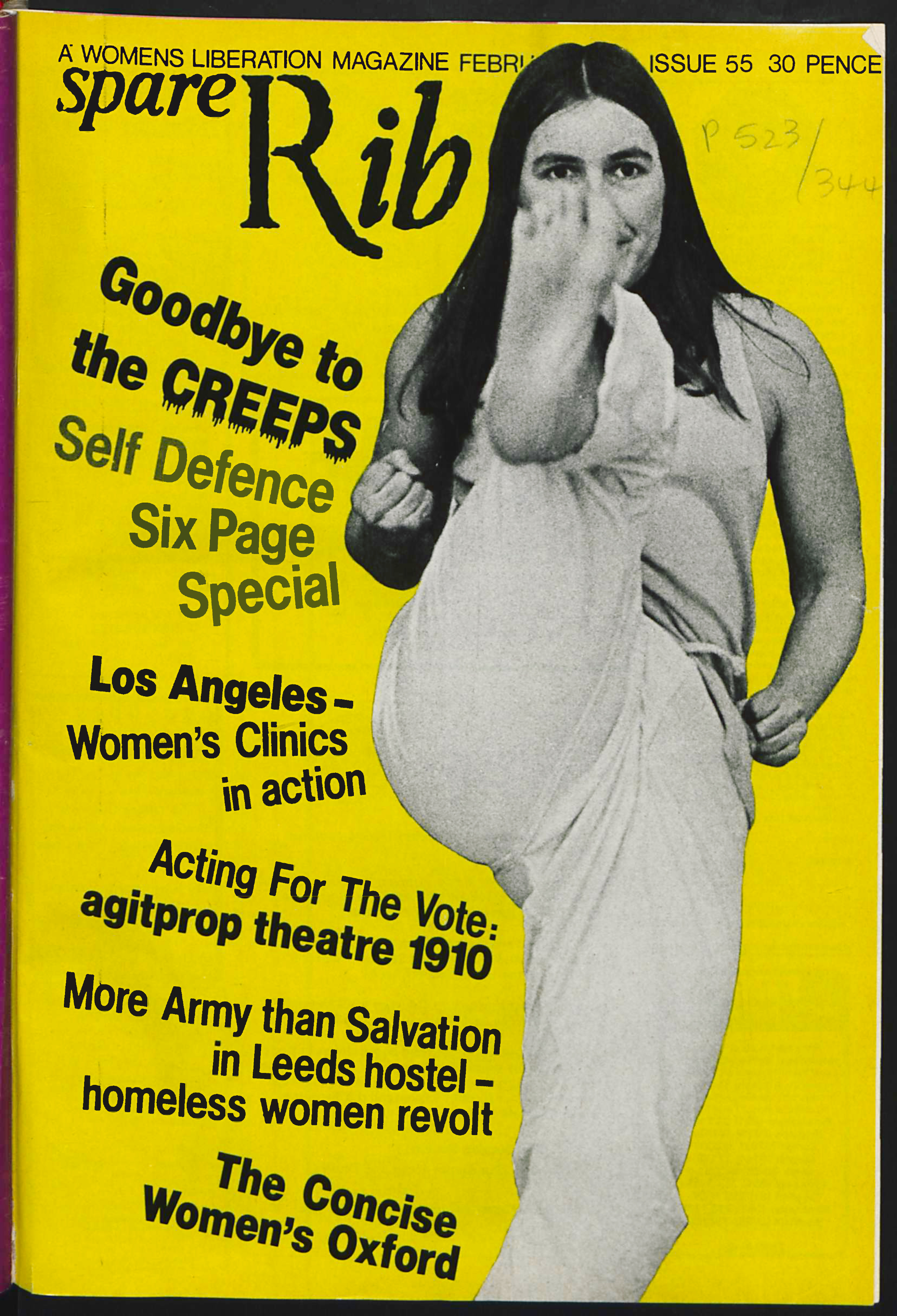
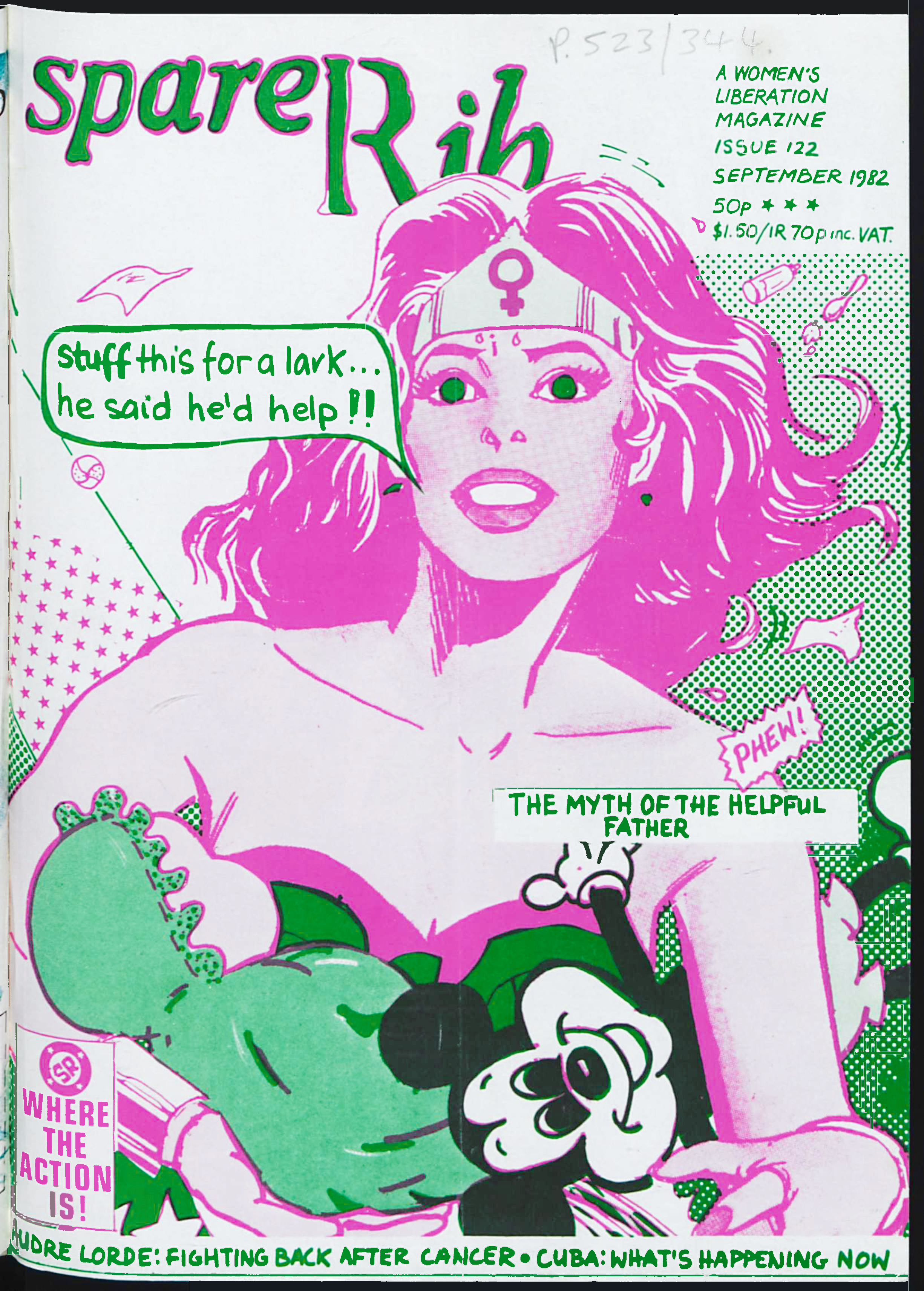
We can see many of these discussions and debates around intersectionality in Second Wave feminism and beyond firsthand in British feminist magazine Spare Rib, which is now available online. The Guardian offers a concise summary of the magazine’s attempts to “provide an alternative to traditional gender roles” by covering
…subjects such as “liberating orgasm,” “kitchen sink racism,” anorexia and the practice of “cliterectomy,” now called female genital mutilation. Cover headlines included “Doctor’s Needles Not Knitting Needles” and “Cellulie—the slimming fraud” and articles featured women such as country and western singer Tammy Wynette and US political activist Angela Davis.
Founded in ’72 by Marsha Rowe and Rosie Boycott (pictured below), and run as a collective, the magazine featured a “breadth of voices.” Early issues “involved big-name contributors including Betty Friedan, Germaine Greer, Margaret Drabble and Alice Walker, but alongside these were the voices of ordinary women telling their stories.” As we see in hundreds of pages of Spare Rib, the often very heated arguments around issues of race, class, and sexuality in the feminist community were no less heated in the past than today.

One woman who helped push the boundaries of the conversation before Spare Rib’s “conscious effort to diversify the collective membership” was Roisin Boyd, an Irish broadcaster and writer who joined in 1980. Boyd describes some of the magazine’s challenges in a British Library retrospective essay, “Race, place and class: who’s speaking for who?” “Over the three years I worked on the collective,” she writes, “I was often puzzled by the fact that although we were all women and all feminists, how difficult it was for us to negotiate our differences, let alone recognise them.”
Boyd found that “some collective members were upper class and wealthy” and “distanced from the reality of post colonialism.” Likewise, The Guardian describes many of the debates in the magazine as “acrimonious,” given its representation of “so many different threads of feminism.” Spare Rib “reflected the sometimes ‘painful’ discussions between the collective on how best to tackle issues such as sexuality and racism.”
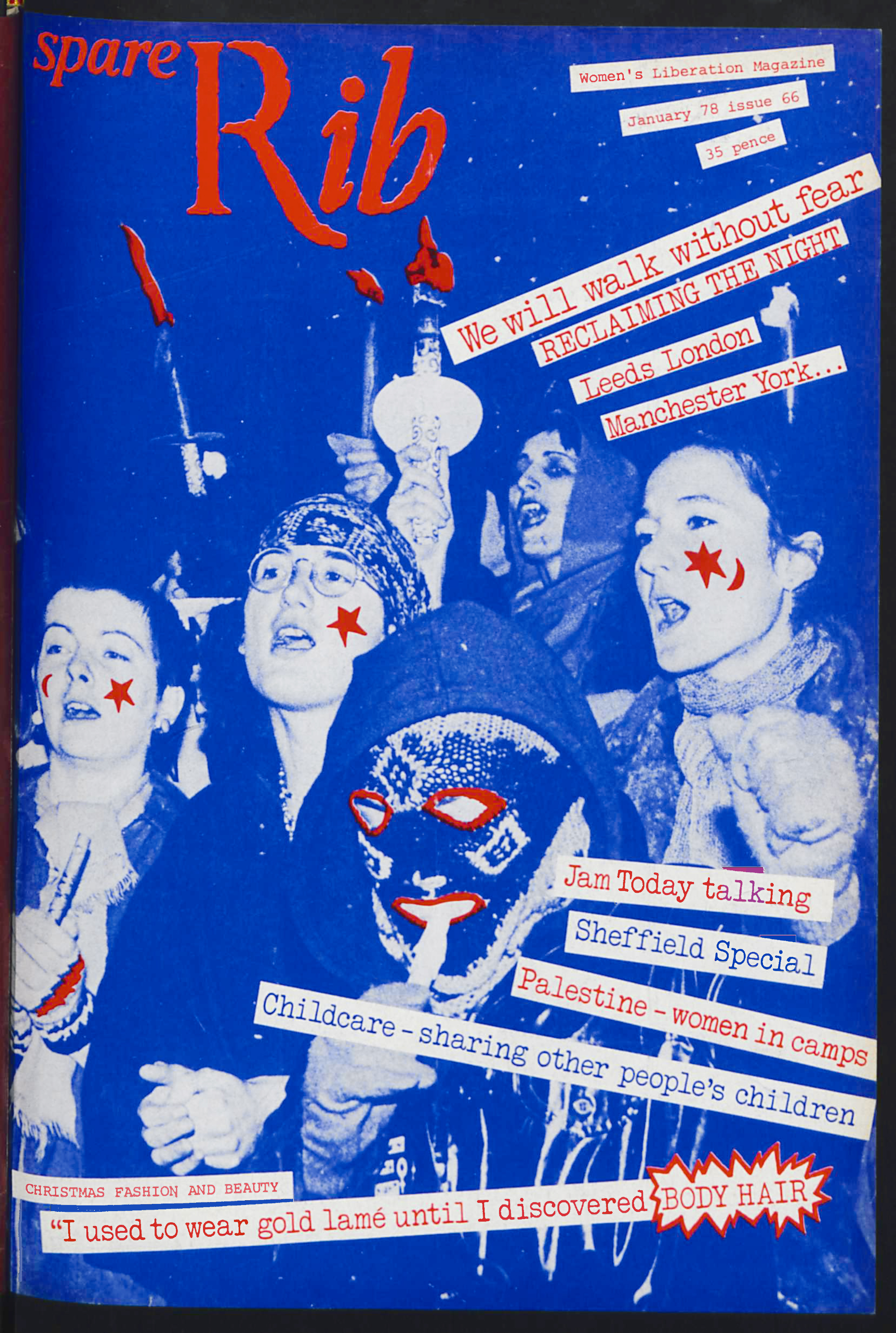
In spite of, or perhaps because of, these disagreements, the magazine “was a highly visible part of the Women’s Liberation movement,” says former collective member Sue O’Sullivan, “and a tool for reaching thousands of women every single month for over 20 years.” Now with the digitization of its catalog, it can be “a wonderful resource for younger historians and feminist activists, researchers and all the women (and men) who wonder what their mothers, aunts, grannies and older friends got up to all those years ago.” Known for its irreverent humor, intelligence, and eye-catching covers, Spare Rib preserves a record of the many ways feminist issues and debates have changed over the decades—as well as the many ways they haven’t.
Related Content:
11 Essential Feminist Books: A New Reading List by The New York Public Library
Simone de Beauvoir Tells Studs Terkel How She Became an Intellectual and Feminist (1960)
The First Feminist Film, Germaine Dulac’s The Smiling Madame Beudet (1922)
Josh Jones is a writer and musician based in Durham, NC. Follow him at @jdmagness
Read More...“Muhammad Ali, This Is Your Life!”: Celebrate Ali’s Life & Times with This Touching 1978 TV Tribute
Tonight, we pass along the sad news that Muhammad Ali, one of the great athletes and personalities of our time, has passed away at the age of 74. Having battled Parkinson’s Disease for decades, his passing doesn’t come as a complete surprise. But, for anyone who remembers Ali in his prime, this news will certainly come as a blow. There is perhaps not a better way to remember Ali’s life and times than to watch the 1978 episode of This Is Your Life, the long-running TV show that followed this format:
Each week, an unsuspecting celebrity would be lured by some ruse to a location near the studio. The celebrity would then be surprised with the news that they are to be the featured guest. Next, the celebrity was escorted into the studio, and one by one, people who were significant in the guest’s life would be brought out to offer anecdotes. At the end of the show, family members and friends would surround the guest, who would then be presented with gifts.
This show (recorded in England in this case) is an endearing tribute to the champ, all the more moving to watch now because Ali is gone. The highlight comes around the 38 minute mark, when Smokin Joe Frazier, Ali’s great rival, pays a surprising visit.
Muhammad you will be missed.
If you would like to support the mission of Open Culture, consider making a donation to our site. It’s hard to rely 100% on ads, and your contributions will help us continue providing the best free cultural and educational materials to learners everywhere. You can contribute through PayPal, Patreon, and Venmo (@openculture). Thanks!
Related Content:
Muhammad Ali Sings in Broadway’s First Black Power Musical (1970)
Muhammad Ali Plans to Fight in Mars in Lost 1966 Interview
Muhammad Ali Gives a Dramatic Reading of His Poem on the Attica Prison Uprising
Read More...Color Footage of America’s First Shopping Mall Opening in 1956: The Birth of a Beloved and Reviled Institution
What do we do with all the dead malls? Anyone with an eye on the years-long spate of unambiguous headlines — “The Death of the American Mall,” “The Economics (and Nostalgia) of Dead Malls,” “America’s Shopping Malls Are Dying A Slow, Ugly Death” — knows that the question has begun to vex American cities, and more so American suburbs. But just twenty years ago (which I remember as the time of my own if not mall-centric then often mall-oriented adolescence), nobody could have foreseen the end of the large, enclosed shopping mall as an American institution — nobody except Douglas Coupland.
“On August 11 1992 I was in Bloomington, Minnesota, close to Minneapolis,” remembers the Generation X author in a recent Financial Times column. “I was on a book tour and it was the grand opening day of Mall of America, the biggest mall in the US.” He took the stage to give a live radio interview and the host said, “I guess you must think this whole mall is kind of hokey and trashy.” No such thing, replied Coupland: “I feel like I’m in another era that we thought had vanished, but it really hasn’t, not yet. I think we might one day look back on photos of today and think to ourselves, ‘You know, those people were living in golden times and they didn’t even know it.’”
Golden times or not, they now look unquestionably like the high watermark of the era when “malls used to be cool.” Coupland describes the shopping mall as “the internet shopping of 1968,” but they go back a bit farther: 1956, to be precise, the year the Southdale Center, the very first enclosed, department store-anchored mall of the form that would spread across America and elsewhere over the next forty years, opened in Edina, Minnesota. You can see vintage color footage of the Southdale Center in all its midcentury glory — its auto showroom, its playground, its full-service Red Owl grocery, its umbrella-tabled cafés under a vast atrium, and outside, of course, its even vaster parking lot — at the top of the post.
“You have no idea what an innovation this was in the 1950s,” says writer and midcentury Minnesota enthusiast James Lileks. “There wasn’t any place where you could sit ‘outside’ in your shirt-sleeves in January.” I used that quote when I wrote a piece for the Guardian on the Southdale Center, an institution easily important enough for their History of Cities in 50 Buildings (as well as PBS’ television series Ten Buildings that Changed America), whether you love them or hate them. The Austrian architect Victor Gruen, who came to America in flight from the Nazis, hated them, but he also created them; or rather, he envisioned the oases of rich Viennese urbanity for his new country that would, corrupted by American reality, quickly become shorthand for “consumerist” suburban life at its blandest.
Malcolm Gladwell tells that story in full in his New Yorker profile of Gruen and the creation he disowned: “He revisited one of his old shopping centers, and saw all the sprawling development around it, and pronounced himself in ‘severe emotional shock.’ Malls, he said, had been disfigured by ‘the ugliness and discomfort of the land-wasting seas of parking’ around them.” Given Gruen’s final pronouncement on the matter — “I refuse to pay alimony for those bastard developments” — one imagines he would applaud the shopping mall’s present day devolution.
“Where is the gracious Muzak’ed trance of yore?” asks Coupland as he surveys America’s blighted mallscape today. “Where is the civility? The calm covered with plywood sheeting and graffiti, and filled with dead tropical plants and shopping carts missing wheels, they’ve basically entered the realm of backdrops for science fiction novels and movies and I’m OK with that. Change happens.” Change, in the form of thorough remodeling and modernization, has also happened to the Southdale Center, but the mall that started it all remains in business today, all rumors of its own imminent demise seemingly exaggerated.
Related Content:
Ten Buildings that Changed America: Watch the Debut Episode from the New PBS Series
Watch Stewart Brand’s 6‑Part Series How Buildings Learn, With Music by Brian Eno
Based in Seoul, Colin Marshall writes and broadcasts on cities, language, and style. He’s at work on a book about Los Angeles, A Los Angeles Primer, the video series The City in Cinema, the crowdfunded journalism project Where Is the City of the Future?, and the Los Angeles Review of Books’ Korea Blog. Follow him on Twitter at @colinmarshall or on Facebook.
Read More...The Instrument Benjamin Franklin Invented, the Glass Armonica, Plays Tchaikovsky’s “Dance of the Sugar Plum Fairy”
Must we ever see another portly, bespectacled re-enactor dragging a kite with key attached to represent the ingenuity of rakish founding father and avatar of cash wealth, Benjamin Franklin? Why, when he invented so many wondrous things—including those bifocal specs—should we only memorialize him for this silly (but very scientific) stunt? Though it may be a true story, unlike Washington and his cherry tree, the familiarity of the image breeds a certain indifference to the man behind it. I’m not suggesting that we remember him for, say, his invention of the catheter, though that’s quite a useful thing. Or for his invention, according to How Stuff Works, of “American Celebrity”—surely no friend to humanity these two hundred-plus years hence.
But maybe swim fins, eh? That’s a pretty neat invention. Imagine your fifth-grader in bald cap and ruffled shirt, plodding across the school stage in a pair of flippers. Or maybe the odometer? Or those reachy, grabby things at the grocery store that pull items down from high shelves? Boring. How about the Glass Armonica? The what? The glass armonica, I say, or—as Franklin originally called it—the “glassychord.” What is it? Well, Franklin, inspired by a concert by Royal Academy colleague Edmund Delaval on a set of water tuned wineglasses, decided to improve upon the instrument. An amateur musician himself, writes William Zeitler as Glassarmonica.com, Franklin left the concert “determined to invent and build ‘a more convenient’ arrangement.”
Thus, after two years of experimentation, “Franklin debuted his glass armonica,” which How Stuff Works describes as “a collection of different-sized glass bowls arranged on a rotating shaft. By spinning the shaft with a foot pedal and running wetted fingers over the rotating bowls, Franklin found he could coax out chords and melodies that Delaval could only dream of.” You needn’t use your imagination. Just watch the video above to see a Franklin re-enactor play a beauteous rendition of Tchaikovsky’s “Dance of the Sugar Plum Fairy” on a glass armonica. Lovely, no? Surely we wouldn’t expect children to pull this off in the school play, but they could mime along to a recording. (Don’t start yelling about revisionist history just yet. We can still tell the kite and key story, too. Just watch these adorable children tell it in this video.)
Franklin premiered the invention in 1762, though he didn’t play it himself but enlisted London musician Marianne Davis. It was an instant hit, “particularly in Germany,” Zeitler writes, where “Mozart was introduced to it by Dr. Franz Mesmer, who used it to ‘mesmerize’ his patients, and later Mozart wrote two works for it (a solo armonica piece, and a larger quintet for armonica, flute, oboe, viola and cello).” Above, hear Mozart’s Rondo for Glass Armonica and Quartet, performed by Thomas Bloch. Impressed? It gets better: “Beethoven also wrote a little piece for armonica and narrator (!), and many of their colleagues of the day composed for it as well—some 200 pieces for armonica… survive from that era.”
What happened? Tastes changed, put simply, and the glass armonica fell out of fashion. That, and the lack of amplification meant it was drowned out in increasingly larger ensembles. I propose we bring it back, maybe in a hip Ben Franklin Broadway musical. Who’s with me?
Learn much more about this fascinating instrument, and see several more video demonstrations, at Glassarmonica.com.
Related Content:
Ben Franklin’s List of 200 Synonyms for “Drunk”: “Moon-Ey’d,” “Hammerish,” “Stew’d” & More (1737)
Josh Jones is a writer and musician based in Durham, NC. Follow him at @jdmagness
Read More...Hear Amanda Palmer’s Cover of “Purple Rain,” a Gorgeous Stringfelt Send-Off to Prince

Dearly beloved, we are gathered here today to get through this thing called life…
It must have crossed Prince’s mind that the day would surely come when fans would mine his eternally memorable opener to 1984’s “Let’s Go Crazy” to eulogize him.
But could he have anticipated the heights to which fellow singer-songwriter Amanda Palmer would take this most understandable of impulses?
Brace yourself for the above, the most mournfully emotional cover of “Purple Rain” you’re ever likely to hear. Yes, it shares an intro with “Let’s Go Crazy,” but this is no ordinary medley.
As with Strung Out In Heaven, her five-track tribute to the recently deceased David Bowie, Palmer teamed with a string quartet and pop polymath producer Jherek Bischoff. The quick turnaround result is both lush and heartfelt.
With no disrespect, hopefully Palmer’s exquisite string elegies will not become a thing.
In other words, we all have rock stars whose passing we dread as an indicator of our own mortality.…
The proceeds from the name-your-price purchase of Palmer’s “Purple Rain” will be donated to Elevate Hope Foundation, the non-profit project co-founded by frequent Prince collaborator, Sheila E, to provide music therapy for abused and abandoned children.
As recently as mid-March, Palmer was characteristically mouthy online about her philosophical differences with the Purple One, whom she described as the yang to her yin:
We want connection but disagree about the wires, the channels, the ingredients.
After he passed, she showed more restraint in an interview with Pitchfork, in which she shared some personal recollections about Prince’s role in her (electric word) life.
Related Content:
This Is What It Sounds Like When 1999 People Sing Prince’s “When Doves Cry”
Ayun Halliday is an author, illustrator, and Chief Primatologist of the East Village Inky zine. Follow her @AyunHalliday
Read More...Download 336 Issues of the Avant-Garde Magazine The Storm (1910–1932), Featuring the Work of Kandinsky, Klee, Moholy-Nagy & More
It’s easy to think of Expressionism—the art form that flourished in Germany during the early decades of the 20th century—as a kind of inchoate release of emotion onto the canvas. The name itself suggests the common idea of art as a means of “expressing oneself.” Often intensely childlike, such as the work of Paul Klee, or completely abstract, such as Wassily Kandinsky’s many geometric compositions, expressionist styles influenced artists throughout the century whom we tend to associate with emotion over reason, passion over restraint: Willem de Kooning and Jackson Pollack, Jean-Michel Basquiat and Francis Bacon.
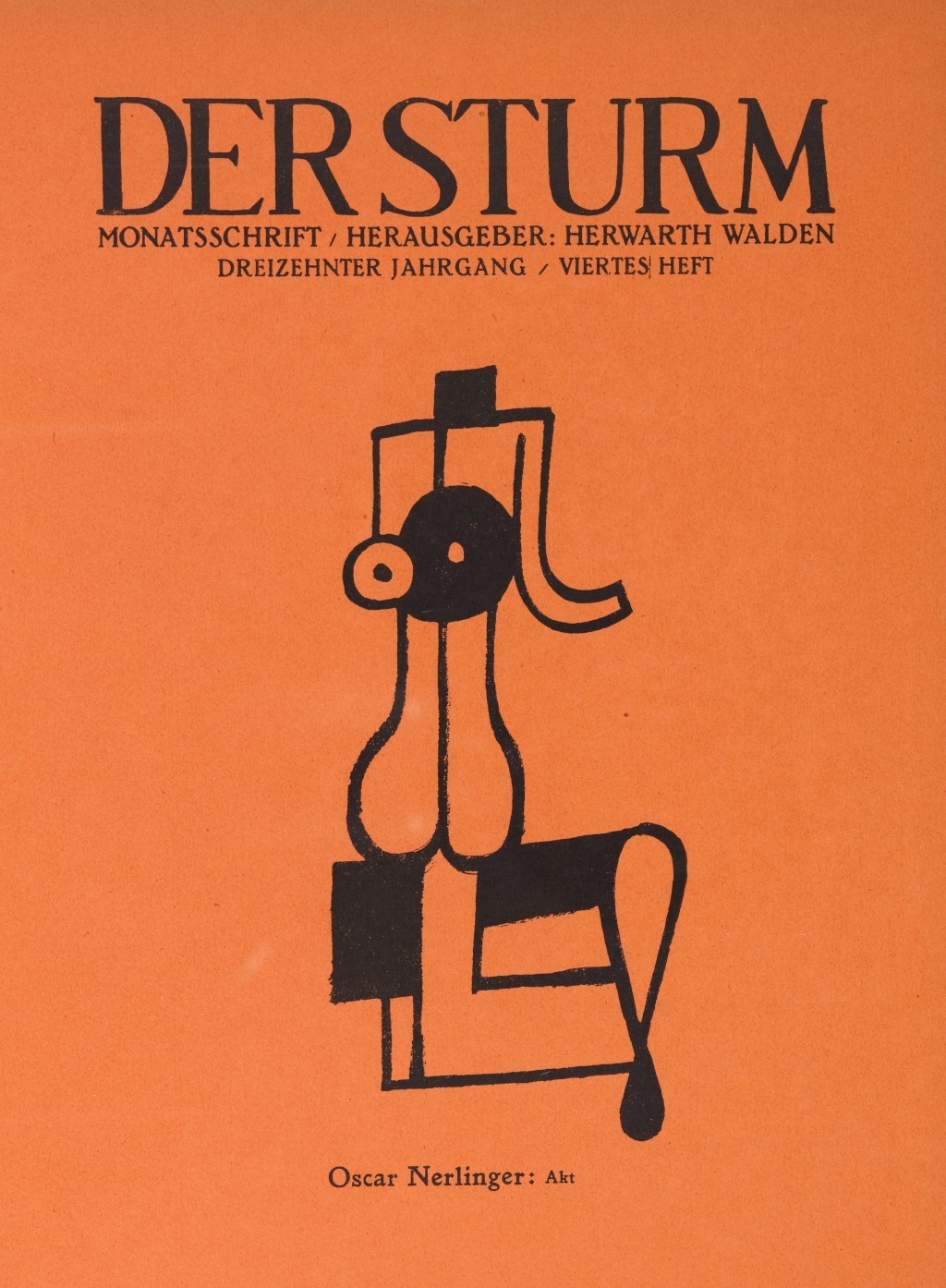
But let us return to the movement’s roots and we see from its very beginnings that Expressionism was highly theoretical in its emotionalism. Its high priest, Kandinsky, pioneered non-representational painting, and explained his method in coolly analytical terms in his treatise Concerning the Spiritual in Art. Expressionism—not only in painting, but in drama, sculpture, dance, film, and literature—early on communicated its ideas in a weekly magazine, Der Sturm (The Storm), founded in 1910 by artist and critic Herwarth Walden and running weekly until 1914, then quarterly from 1924 to 1932. In that time, the publication amassed quite a few issues, and you can read (in German) and download all 336 of them here.
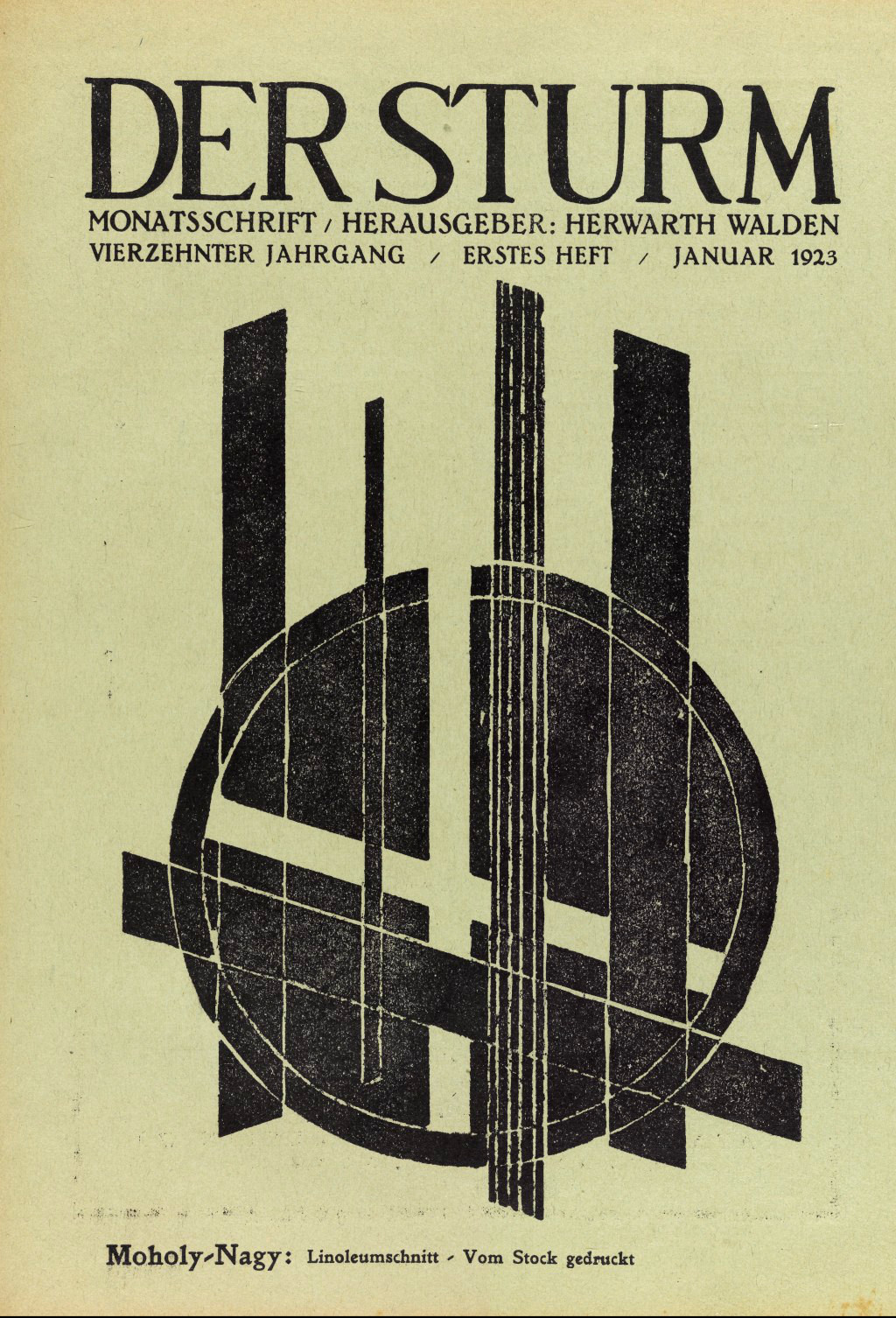
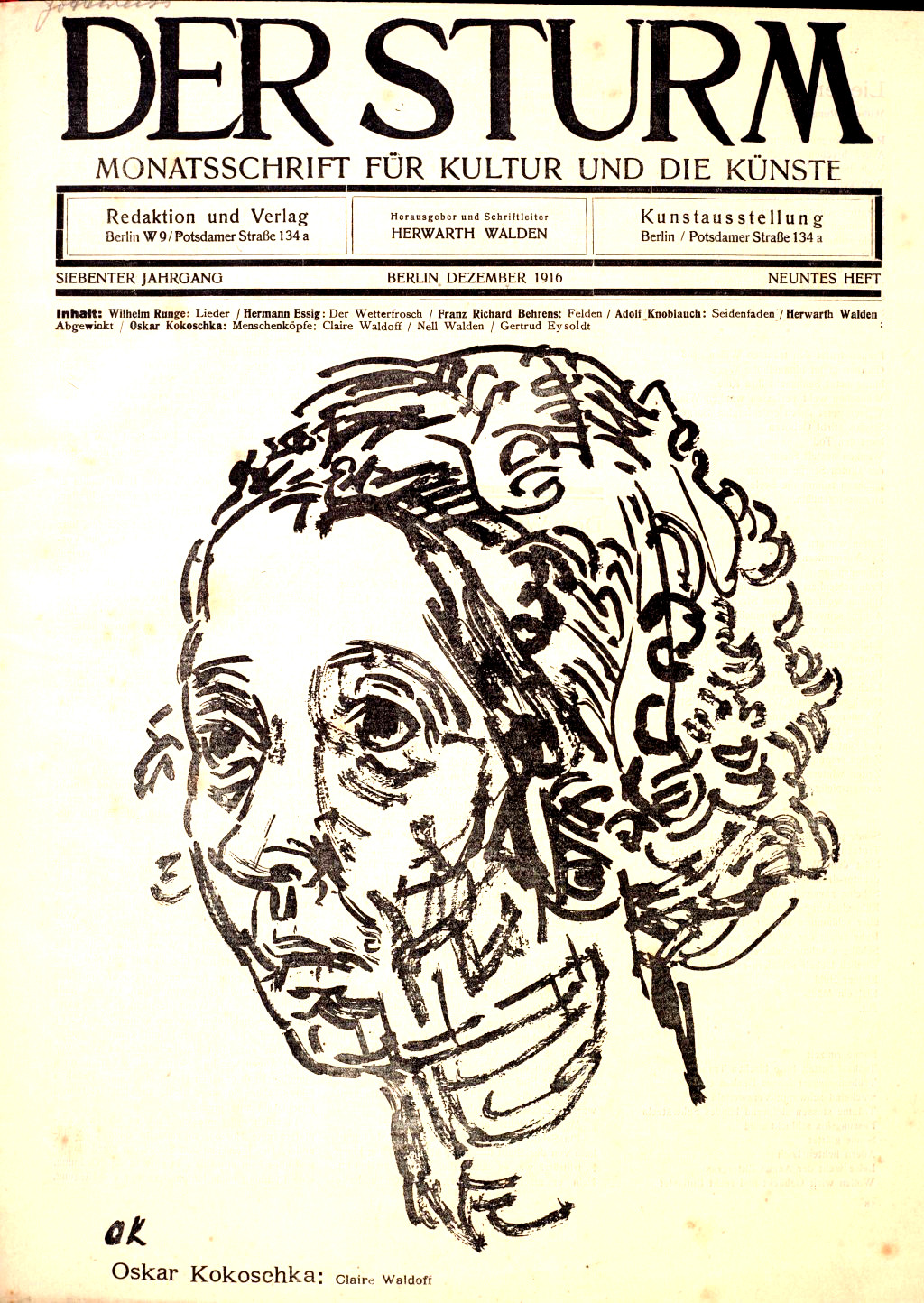
You can also see some of the inspired cover designs Der Sturm used over its decades of publication. “The magazine became well known for the inclusion of woodcuts and linocuts,” writes the Guggenheim, “including works by Guggenheim collection artists Marc Chagall,Vasily Kandinsky, Paul Klee, Oscar Kokoschka, Franz Marc, László Moholy-Nagy, and others.” The museum site features several of Der Sturm’s graphic designs by Moholy-Nagy, such as the cover above, and Monoskop adds the covers further up and at the top of the post, by Oscar Nerlinger and Oskar Kokoschka, respectively. Monoskop also provides a good deal of historical context for the magazine and the gallery it fostered, Galerie Der Sturm, “started by Walden to celebrate its 100th edition, in 1912.”
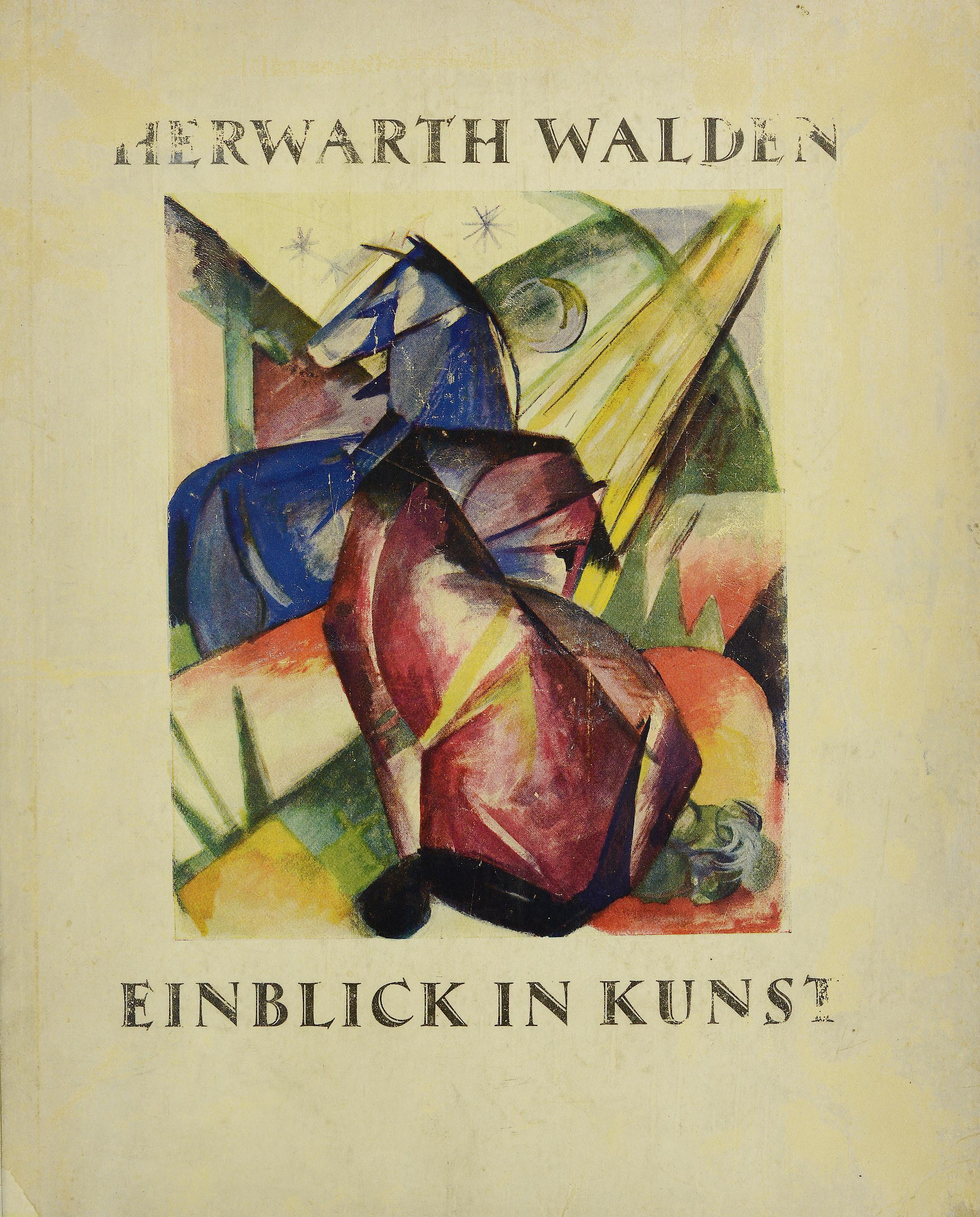
The gallery’s many exhibitions demonstrate how much Expressionism overlapped with a host of other modernist –isms of the period. It started “with an exhibition of Fauves and Der Blaue Reiter [a group including Kandinsky and Paul Klee that formed the core of first Expressionist painters], followed by the introduction in Germany of the Italian Futurists, Cubists and Orphists.” Edvard Munch exhibited there, as did Georges Braque and Pablo Picasso. Walden expanded the gallery’s activities after WWI to include lectures and a theater, and he began publishing books and portfolios by Expressionist artists. Just above see the cover of Walden’s own book Einblick in Kunst, and see several more book covers and a bibliography at Monoskop.
A product of the Weimar Republic’s high culture, the German Expressionist movement largely came to an end, along with Der Sturm and its associated work, as the Nazis came to power. But the current of Expressionism moved powerfully through the century, inspiring among others the mid-century American Abstract Expressionists, who often broke away from detached, theoretical understandings of art and engaged in direct and sometimes brutal ways with paint and canvas. But one can’t imagine these later painters taking the subjective license they did without the groundwork laid by the tireless Kandinsky and his contemporaries or Walden’s expansive Der Sturm movement.
You can peruse the entire collection of Der Sturm here.
via Monoskop
Related Content:
Extensive Archive of Avant-Garde & Modernist Magazines (1890–1939) Now Available Online
Josh Jones is a writer and musician based in Durham, NC. Follow him at @jdmagness
Read More...Philosophy Prof Illustrates Nietzsche’s Zarathustra in the Style of Dr. Seuss
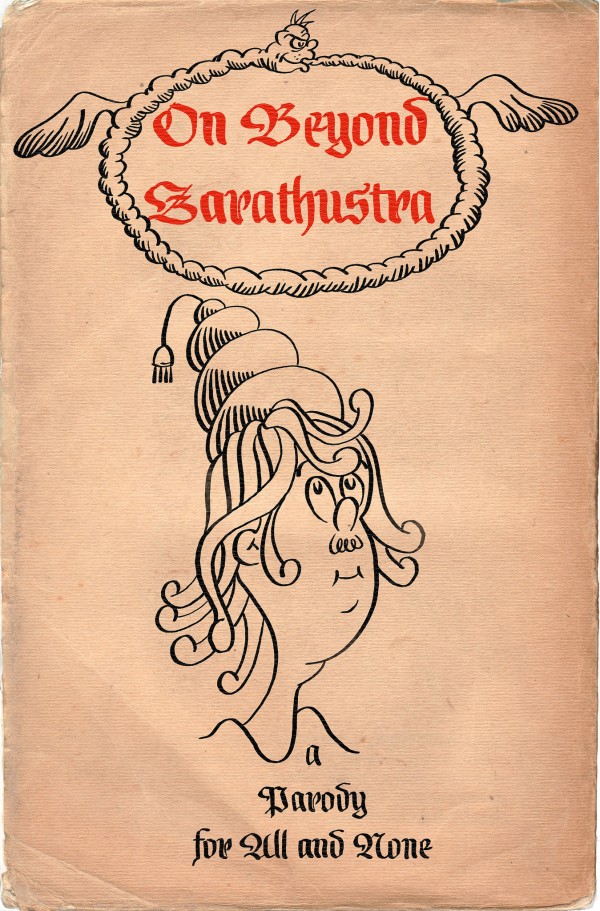
John Holbo, a philosophy prof at the National University of Singapore, recently gave the world a free illustrated edition of three dialogues by Plato (get it as a free PDF, or via Amazon). Now he’s embarking on a new creative project called On Beyond Zarathustra.
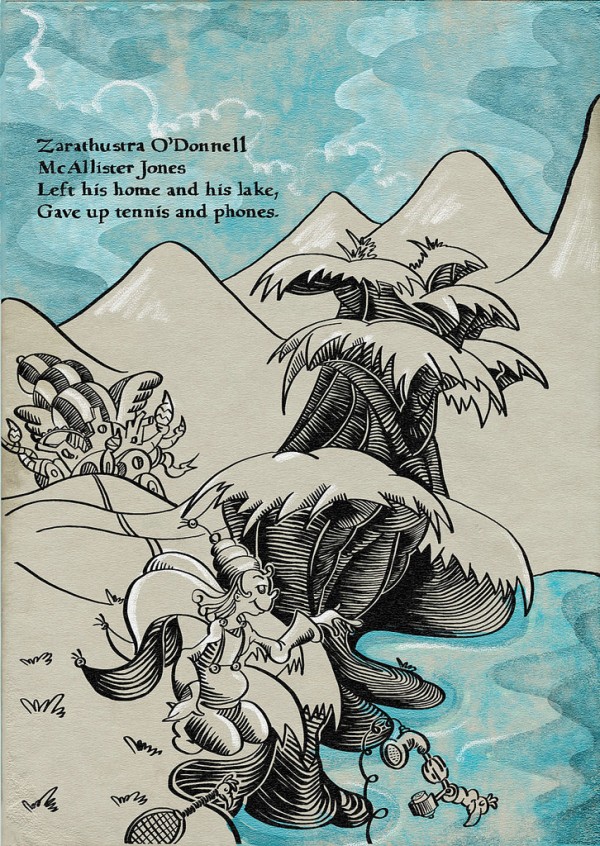
Over on the Crooked Timber blog, Holbo light-heartedly launched the project with these words:
Ever since Plato wrote Socrates “Will You Please Go Now!” and “If I Ran The Polis!” great philosophers have mostly started out as authors of (what we would now call) Dr. Seuss-style children’s books. A lot of this old stuff has been lost. Scholars have neglected it. But I’m undertaking a project of restoration and study, starting with Nietzsche.
I’ll be posting updates regularly to the Flickr page – few pages a week as my work proceeds. We’re just getting to the good bits: The Rope Dancer and the Last Man!
Please do feel to share with any friends who may have a scholarly interest in the historiography of philosophy. (I’ll have some more notes about that soon.)
We’ve posted here the first four pages of Holbo’s new graphical project.
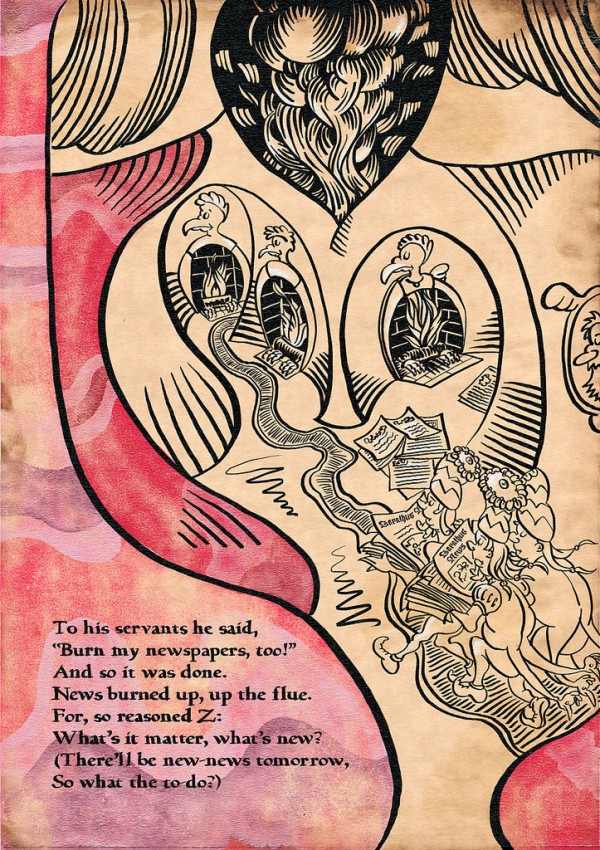
To see how the project unfolds, you can regularly visit this album on Flickr. The are currently 22 pages, with the promise of many more to come soon.
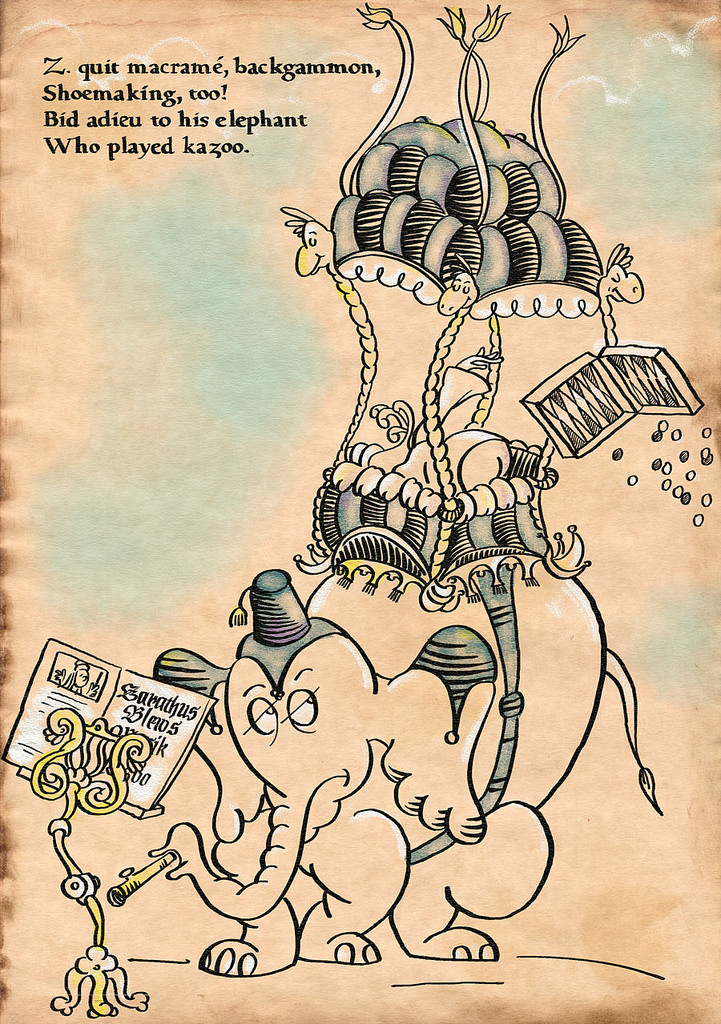
And, take note, once he’s done with Friedrich, Holbo promises to turn to Descartes and Kierkegaard and give them the same Dr. Seuss treatment. Enjoy the ride.
If you would like to support the mission of Open Culture, consider making a donation to our site. It’s hard to rely 100% on ads, and your contributions will help us continue providing the best free cultural and educational materials to learners everywhere. You can contribute through PayPal, Patreon, and Venmo (@openculture). Thanks!
Related Content:
Dr. Seuss Draws Anti-Japanese Cartoons During WWII, Then Atones with Horton Hears a Who!
Hear Classical Music Composed by Friedrich Nietzsche: 43 Original Tracks
Free Online Philosophy Courses
Read More...Virginia Woolf Watches The Cabinet of Dr. Caligari & Writes “The Cinema,” a Seminal Attempt to Understand the Power of Movies (1926)
“A shadow shaped like a tadpole suddenly appeared at one corner of the screen,” recalls Virginia Woolf. “It swelled to an immense size, quivered, bulged, and sank back again into nonentity. For a moment it seemed to embody some monstrous diseased imagination of the lunatic’s brain. For a moment it seemed as if thought could be conveyed by shape more effectively than by words. The monstrous quivering tadpole seemed to be fear itself, and not the statement ‘I am afraid.’ ” She witnessed this at a screening of the silent German Expressionist horror film The Cabinet of Dr. Caligari (which you can watch for yourself above), and in it glimpsed the future of cinema itself.
Woolf elaborates on this glimpse in her essay “The Cinema,” first published in a 1926 issue of the journal The Nation and Athenaeum. (The British Library has a scan from the publication here.) “People say that the savage no longer exists in us, that we are at the fag-end of civilization, that everything has been said already, and that it is too late to be ambitious,” she begins. “But these philosophers have presumably forgotten the movies.” She goes on, in this short piece, to come to grips with this new artistic medium, to articulate her experience of it (as “the eye licks it up all instantaneously”) as well as its potential and then-current limitations, such as an over-reliance on literary material.
“The alliance is unnatural,” the author of Mrs. Dalloway (filmed in 1997, and two years later more imaginatively used as the basis for Michael Cunningham’s novel The Hours, turned into cinema itself in 2002) declares about the adaptation of novels into movies. “Eye and brain are torn asunder ruthlessly as they try vainly to work in couples. The eye says ‘Here is Anna Karenina.’ A voluptuous lady in black velvet wearing pearls comes before us. But the brain says, ‘That is no more Anna Karenina than it is Queen Victoria.’ ” She complains, as New Yorker film critic Richard Brody puts it, “that moviemakers, instead of relying on the inherent properties of cinema, harness the making of images to storytelling by way of literature,” presumably failing to understand that “the cinema’s distinctive power involves creating a new kind of visual experience.”
“It is only when we give up trying to connect the pictures with the book,” writes Woolf, “that we guess from some accidental scene — like the gardener mowing the lawn — what the cinema might do if left to its own devices.” Ninety years later, many cinephiles still dream of that gardener mowing the lawn, awaiting the day that cinema gets left to its own devices to fulfill the vast creative and artistic promise only occasionally explored by the filmmakers. Woolf likens them to a “savage tribe” who, “instead of finding two bars of iron to play with, had found scattering the seashore fiddles, flutes, saxophones, trumpets, grand pianos by Erard and Bechstein, and had begun with incredible energy, but without knowing a note of music, to hammer and thump upon them all at the same time.” Cinema developed rapidly in the day of Dr. Caligari, and has developed in certain ways since, but its greatest expressions lie ahead — an observation as true now as when Woolf, with slight disappointment but nevertheless great expectation, first made it. You can read here seminal essay, “The Cinema,” here.
Related Content:
Watch The Cabinet of Dr. Caligari, the Influential German Expressionist Film (1920)
Virginia Woolf Offers Gentle Advice on “How One Should Read a Book”
An Animated Introduction to Virginia Woolf
Based in Seoul, Colin Marshall writes and broadcasts on cities, language, and style. He’s at work on a book about Los Angeles, A Los Angeles Primer, the video series The City in Cinema, the crowdfunded journalism project Where Is the City of the Future?, and the Los Angeles Review of Books’ Korea Blog. Follow him on Twitter at @colinmarshall or on Facebook.
Read More...Speak and Read French, by Armand and Louise Bégué
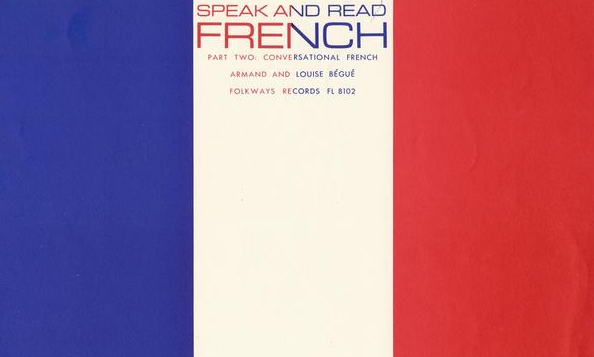
Speak and Read French, Part 1: Basic and Intermediate
“This album is the first of three volumes of a French language course: Speak and Read French, created by Armand Bégué, a professor at Brooklyn College and his wife, Louise Bégué, in 1959. The recording, for basic and intermediate levels, focuses on words and expressions frequently used in French.”
Speak and Read French, Vol. 2: Basic and Intermediate
“This album is the second part of a basic French language lesson developed by Armand Bégué, a professor at Brooklyn College and his wife, Louise Bégué, in 1959. This recording focuses on words and expressions frequently used in French.”
Speak and Read French, Part 3: French Literature
“This album is the third of three volumes in a French language course: Speak and Read French, created by Armand Bégué, a professor at Brooklyn College and his wife, Louise Bégué, in 1959. The speaker reads excerpts from great texts written by famous French authors such as: “Thoughts” by Blaise Pascal, “Discourse on the Method” by René Descartes and “The Wolf and the Stork” by Jean de La Fontaine.”
Find them all in our collection, Free Lessons in Foreign Languages.
Read More...The Opening of King Tut’s Tomb, Shown in Stunning Colorized Photos (1923–5)

Inquiring minds want to know, immediately and without any egghead qualifications: Does King Tut’s tomb have hidden rooms or does it not have hidden rooms? Answer? Well, it depends who you ask….
That’s unsatisfying isn’t it? If real life were directed by Spielberg, there would be no question: of course there are hidden rooms, and they’re filled with ingenious, deadly booby traps and priceless magical objects.
CNN reports a “90% chance of hidden chambers,” perhaps containing the remains of Queen Nefertiti. But archaeologist and former reality TV star Zahi Hawass—Egypt’s own Indiana Jones, as he’s been called—doubts it, as do several other archaeological experts. Bummer.

If you need some Tomb-Raider-style drama, however, you could do worse than to read the original accounts of Howard Carter (above, with anonymous worker), the English Egyptologist who originally opened Tut’s tomb in 1922 after five years of fruitless searching.
Slowly, desperately slowly it seemed to us as we watched, the remains of passage debris that encumbered the lower part of the doorway were removed, until at last we had the whole door clear before us. The decisive moment had arrived. With trembling hands I made a tiny breach in the upper left hand corner. Darkness and blank space… not filled like the passage we had just cleared.… For the moment —an eternity it must have seemed to the others standing by—I was struck dumb with amazement, and when Lord Carnarvon, unable to stand the suspense any longer, inquired anxiously, ‘Can you see anything?’ it was all I could do to get out the words, ‘Yes, wonderful things.’
Pair this narrative with the photographs you see here of the treasure horde Carter and his aristocratic benefactors stole, er, discovered in the tomb, and you’ve got yourself one heck of a real-life-adventure. Taken between 1923–25, the photos document many of the 5,298 items that needed to be “recorded, sketched, and in some cases documented photographically,” the short video below tells us, the first in a 15-part mini video series created for a huge New York exhibition, The Discovery of King Tut, which just closed on May 15th.
You may have missed the big show—with its life-sized recreations of the tomb’s chambers— but you can still experience much of the grandeur at its website. And Mashable brings us these photographs, colorized for the event by a company called Dynamichrome. The photos were taken by Metropolitan Museum of Art photographer Harry Burton (aka The Pharaoh’s Photogarpher), the exhibition website informs us (“Only in Burton’s photographs did the young pharaoh achieve true immortality”!), and the story of their creation is integral to the opulent tomb’s excavation.
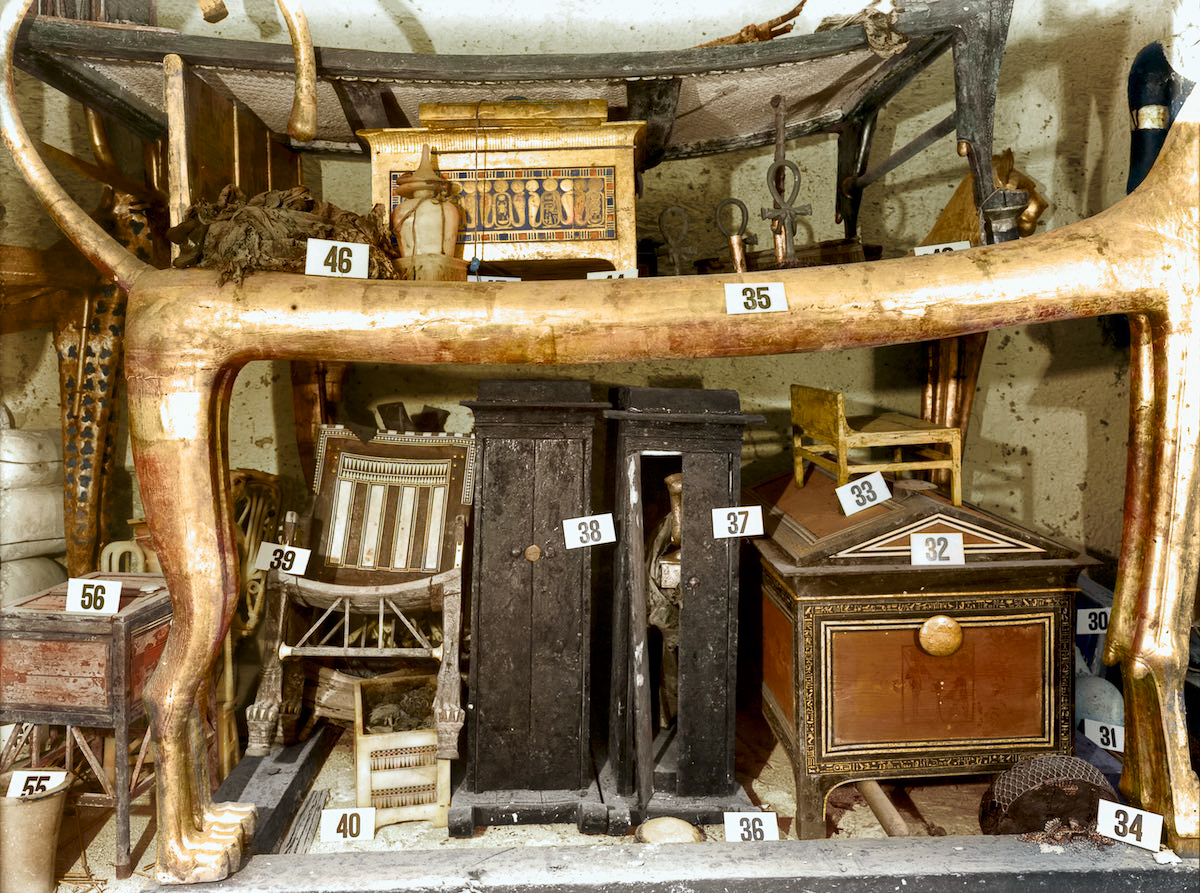
Acting as “Carter’s eyes and memory,” Burton “trekked between the discovery site, his laboratory (which he had set up in the tomb of King Seti II) and improvised darkroom in the neighboring tomb KV 55.”
The results of Burton’s labors are 2,800 large-format glass negatives, which document all of the finds, their location in the tomb and every single step of the excavators’ work with the utmost precision. Carter patiently and unconditionally encouraged him like no other member of his team and, thanks to his photos, Burton was the first and only archaeological photographer to achieve worldwide fame.
The entire process of removing the ancient treasures from Tut’s tomb took ten years, partly due to the difficulty of preserving organic artifacts like textiles, fragile wood furniture, and footwear.
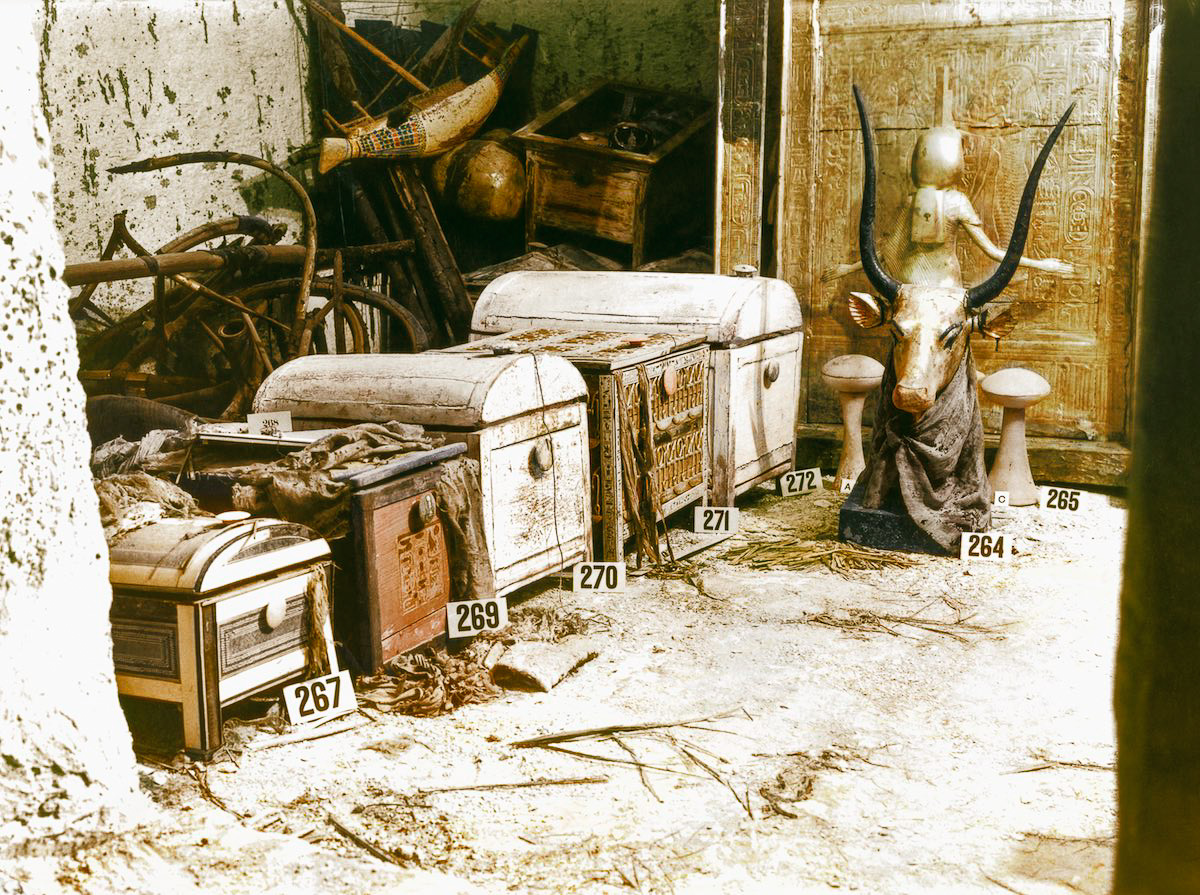
Thankfully for us museumgoers and lovers of ancient history, the tomb’s discoverers treated the artifacts with great care. This has not always been the case. Throughout the nineteenth and twentieth centuries, actual tomb raiders, whose motives were less noble, took whatever they could find from ancient burial sites in order to make a quick sale, without regard for the careful cataloguing and conservation efforts Carter and his team observed. Theft and trafficking of artifacts is still rampant today.

In an interview with U.S. News & World Report, Hawass describes not only how the ravages of time and neglect have damaged some of Egypt’s precious history—including Tut’s burial mask—but also how “nearly two thirds of Egyptian antiquities were smuggled abroad in 2011, 2012, and 2013.” Such trafficking, he says, “is ongoing, but to a lesser degree.” Much of it was the result of “museum-looting” during the revolution. Hawass also disputes the hidden chambers theory, contending that “Nefertiti could not have been buried in the Valley of the Kings, as she used to worship King Tut. The High Priests of Amun would not have allowed it.”

Unfortunately, says Hawass, the only way to know for sure is to “dig through the northern wall” of the tomb, causing it to collapse. But we should not give up hope yet of Tut’s tomb yielding more secrets. Archaeologist Nicholas Reeves, who published a paper in 2015 on the existence of hidden chambers, has further validated his conclusions with scans that suggest metal and organic materials beyond the tomb’s north wall. Maybe Hawass is wrong, and we’ll soon be posting pictures of the treasures gathered from Nefertiti’s tomb. See many more of the colorized Tut photos at Mashable.
Related Content:
Try the Oldest Known Recipe For Toothpaste: From Ancient Egypt, Circa the 4th Century BC
The Turin Erotic Papyrus: The Oldest Known Depiction of Human Sexuality (Circa 1150 B.C.E.)
Josh Jones is a writer and musician based in Durham, NC. Follow him at @jdmagness
Read More...Support Us
We're hoping to rely on loyal readers, rather than erratic ads. Please click the Donate button and support Open Culture. You can use Paypal, Venmo, Patreon, even Crypto! We thank you!

About Us

Open Culture scours the web for the best educational media. We find the free courses and audio books you need, the language lessons & educational videos you want, and plenty of enlightenment in between.
Advertise With Us

FREE UPDATES!
GET OUR DAILY EMAIL
Get the best cultural and educational resources on the web curated for you in a daily email. We never spam. Unsubscribe at any time.
FOLLOW ON SOCIAL MEDIA

Open Culture editor Dan Colman scours the web for the best educational media. He finds the free courses and audio books you need, the language lessons & movies you want, and plenty of enlightenment in between.
Advertise With Us

