The Online Knitting Reference Library: Download 300 Knitting Books Published From 1849 to 2012
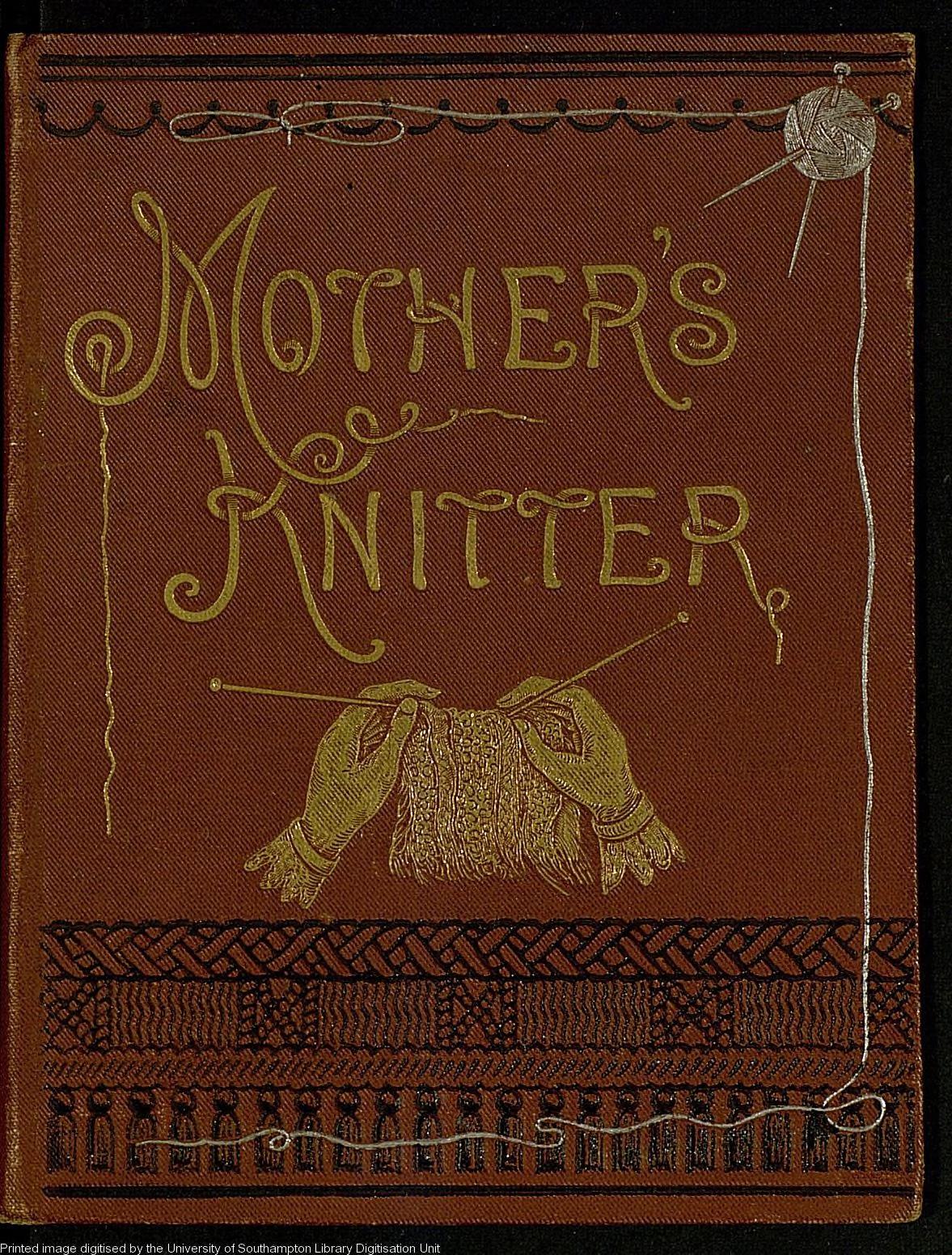
No need to scramble to the fallout shelter, friends.
That massive boom you just heard is merely the sound of thousands of crafters’ minds being blown en masse by the University of Southhampton’s Knitting Reference Library, an extensive resource of books, catalogues, patterns, journals and magazines—over seventeen decades worth.
Viva la Handmade Revolution!
The basics of the form—knitting, purling, increasing, decreasing, casting on and off—have remained remarkably consistent throughout the generations. No wonder there’s an enduring tradition of learning to knit at grandma’s knee…
What has evolved is the nature of the finished products.
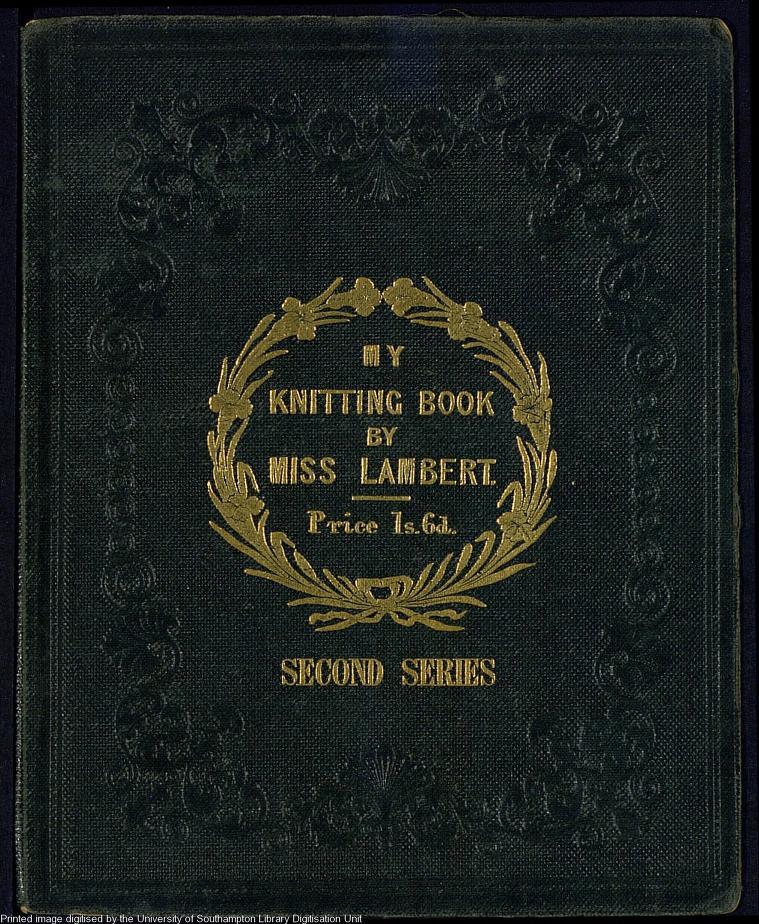
Miss Lambert’s “Baby Quilt in Stripes of Alternate Colors” from her 1847 Knitting Book could still hold its own against any other handcrafted shower gift, but even the most hardcore modern crafter would find it challenging to find takers for her “Carriage Sock,” which is meant to be worn over the shoe.
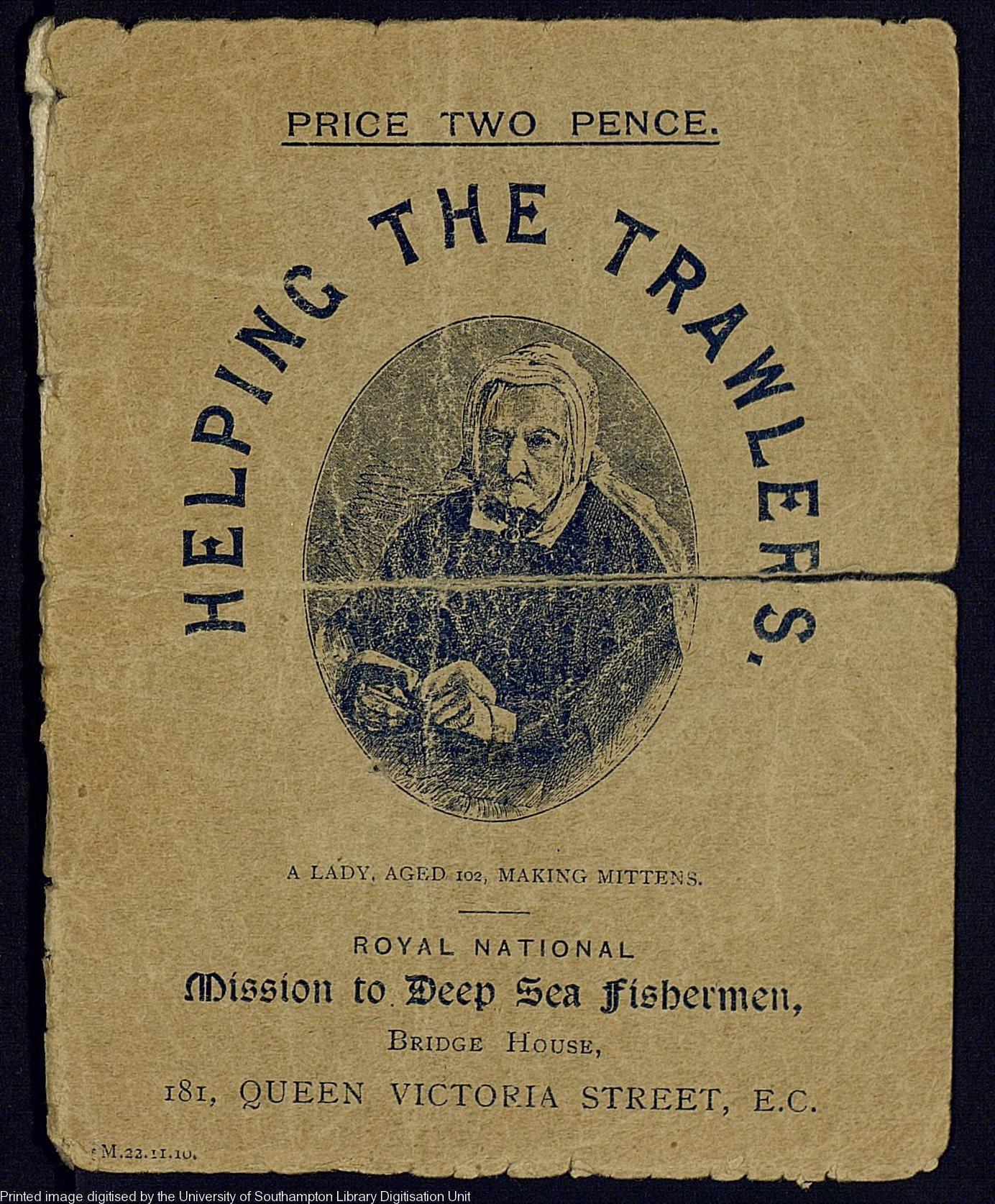
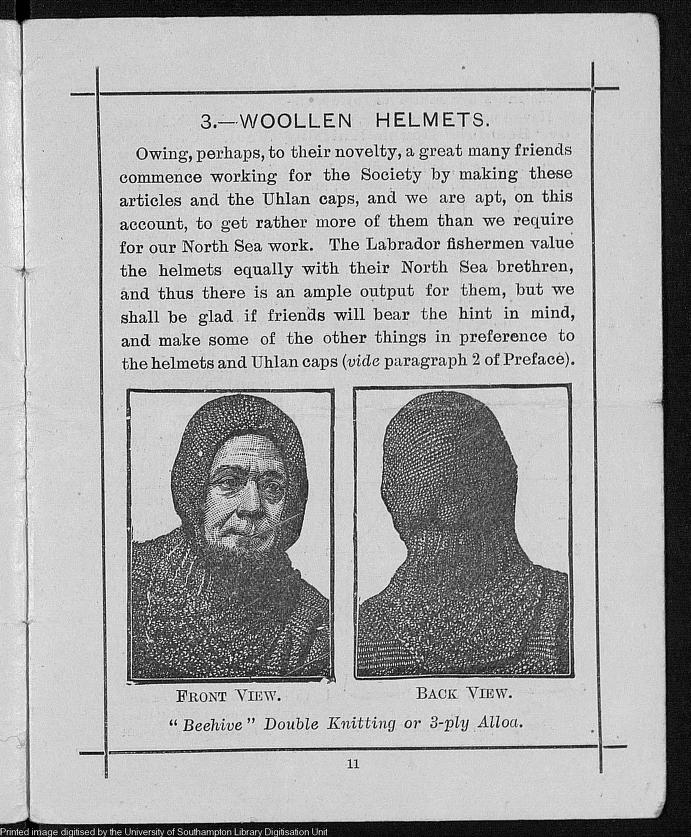
Ditto the “Woolen Helmets” in Helping the Trawlers, a 32-page pamphlet published by the Royal National Mission to Deep Sea Fishermen. The hope was that civic-minded knitters might be moved to donate handmade socks, mittens, and other items to combat the chill faced by poor working men facing the elements on freezing decks.
Not surprisingly, the eager volunteer knitting force gravitated toward the pamphlet’s most baroque item, putting the publisher in a delicate position:
Owing, perhaps, to their novelty, a great many friends commence working for the Society by making these articles and the Uhlan caps, and we are apt, on this account, to get rather more of them than we require for our North Sea work. The Labrador fishermen value the helmets equally with their North Sea breathren, and thus there is an ample output for them, but we shall be glad if friends will bear the hint in mind, and make some of the other things in preference to the helmets and Uhlan caps.
All of the books in the Knitting Reference Library are open access, though many of the patterns and magazines are dependent on copyright clearance. Give a prowl, and you’ll find that a few of the older patterns are available as downloadable, printable PDFs , such as this handsome gent’s cable knit pullover or the tricky 50’s bison cardigan, below.
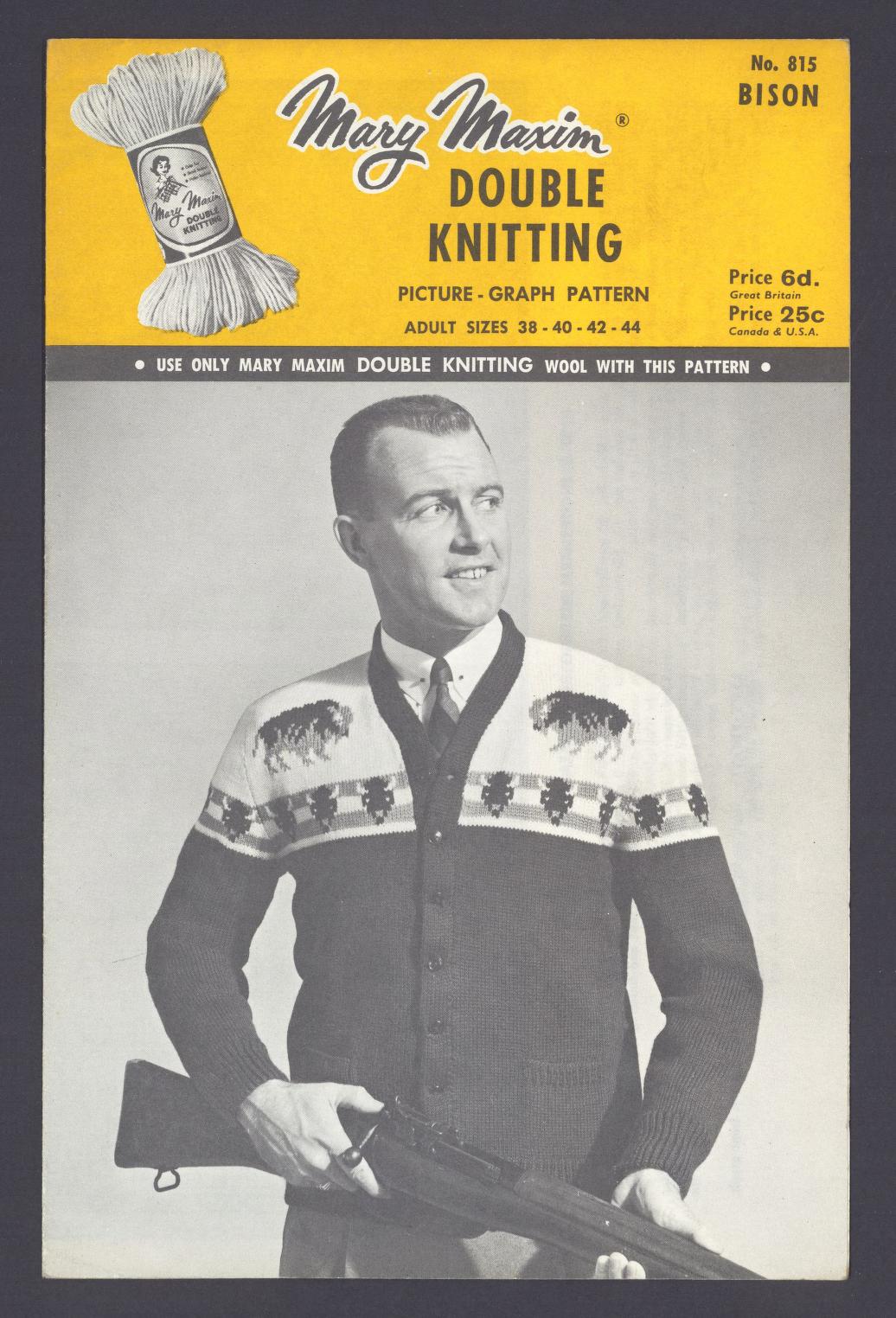
Even without step-by-step instructions, the pattern envelopes’ cover images can still provide inspiration…and no small degree of amusement. Some enterprising librarian should get cracking on a sub-collection, Fashion Crimes Against Male Knitwear Models, 1960–1980:
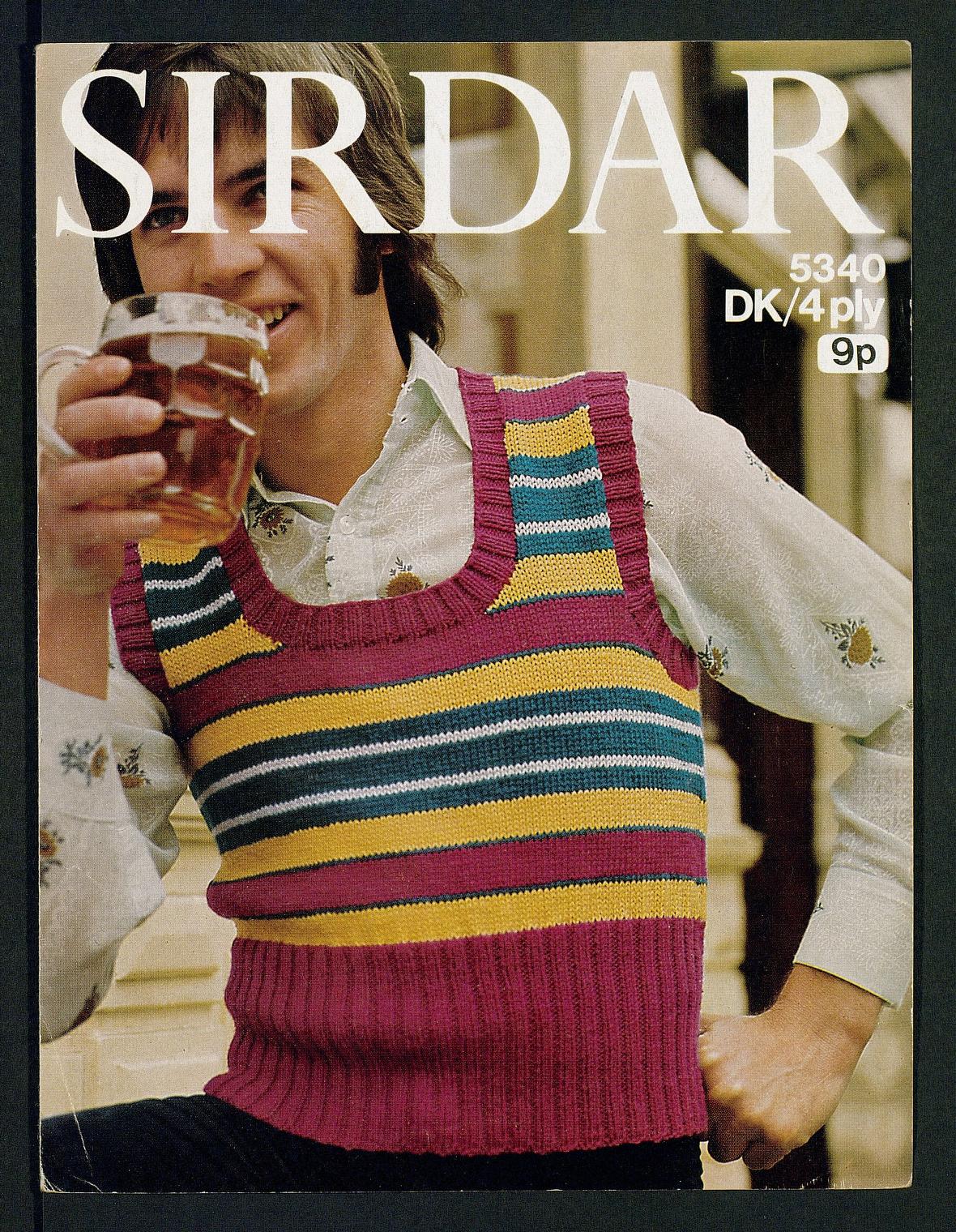
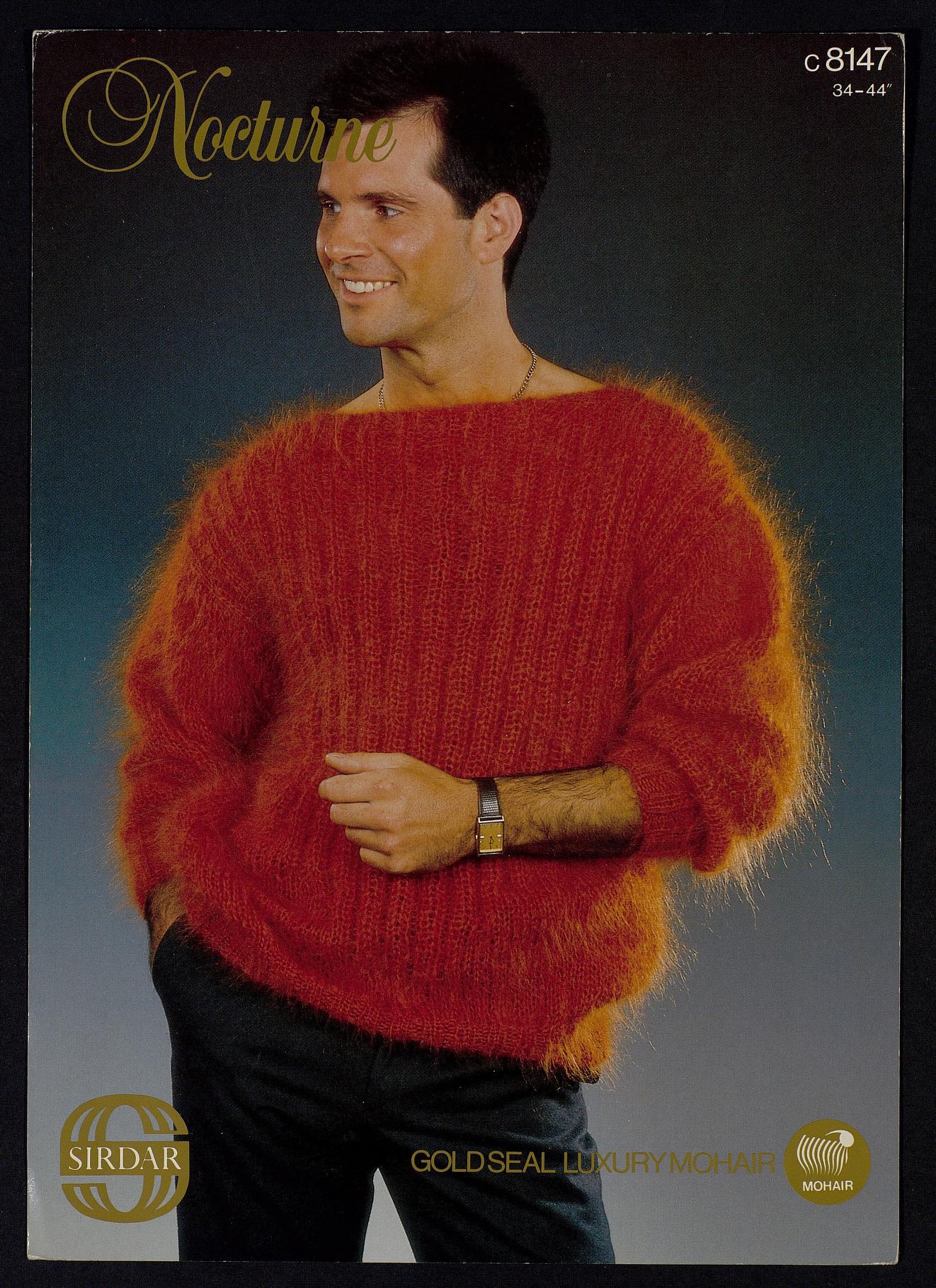
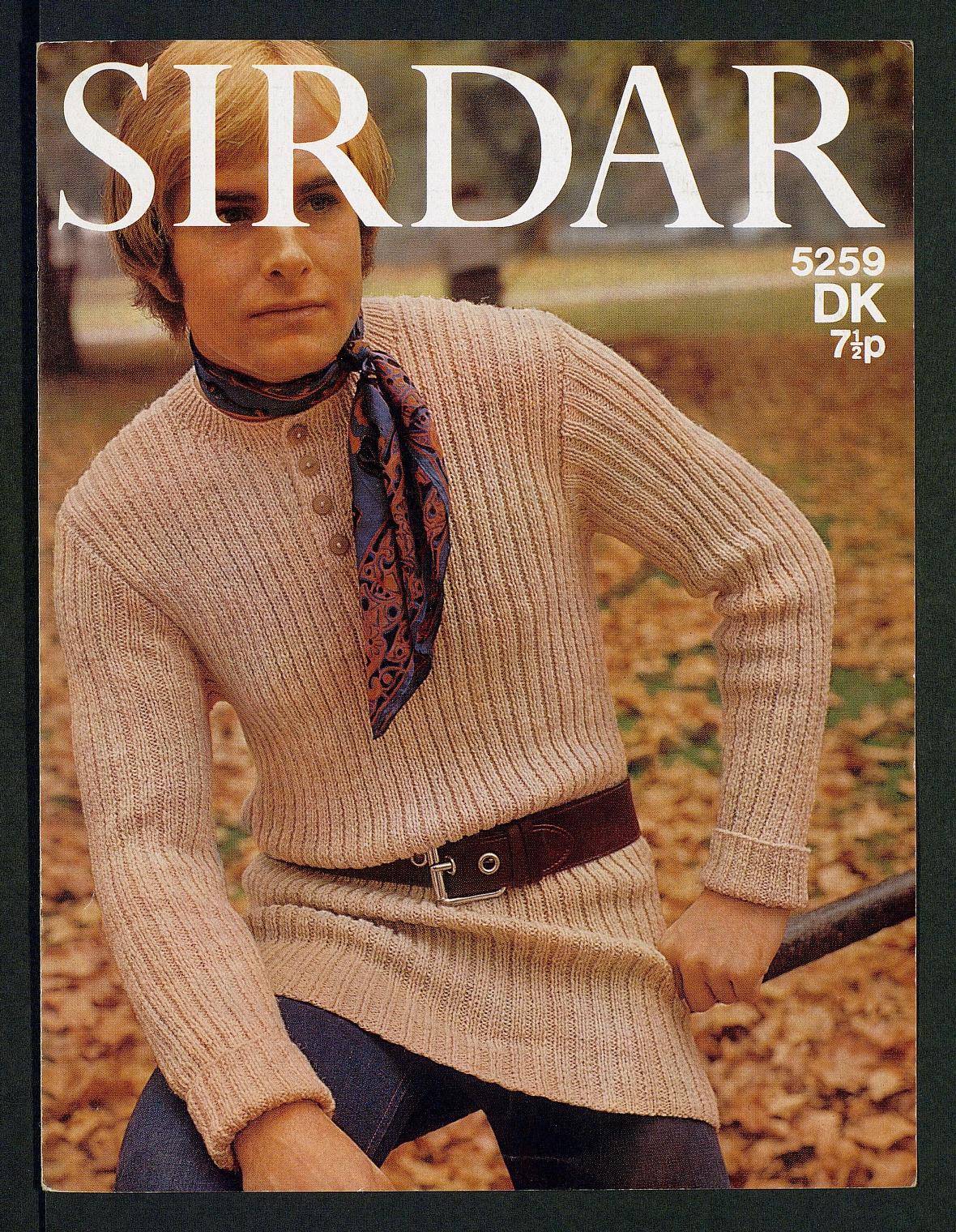
There’s even something for the latter day Labrador trawler...
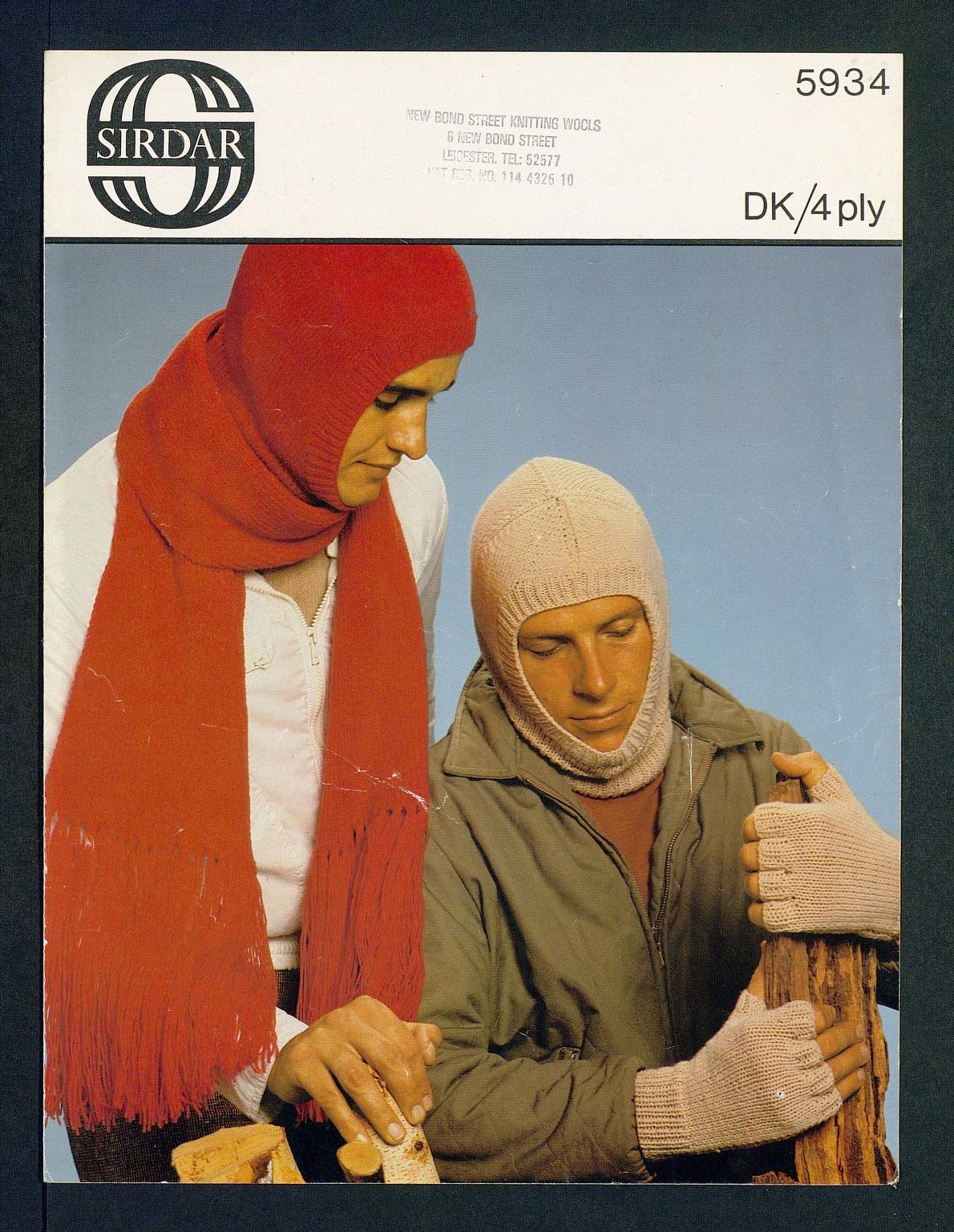
The entire collection can be viewed here. For viewing and printing patterns, we recommend selecting “PDF” from the list of download options.
Related Content:
See Penguins Wearing Tiny “Penguin Books” Sweaters, Knitted by the Oldest Man in Australia
The Whole Earth Catalog Online: Stewart Brand’s “Bible” of the 60s Generation
Ayun Halliday is an author, illustrator, and Chief Primatologist of the East Village Inky zine. Follow her @AyunHalliday
Read More...Lolita Book Covers: 200+ Designs From 40 Countries Since 1955, Including Nabokov’s Favorite Design
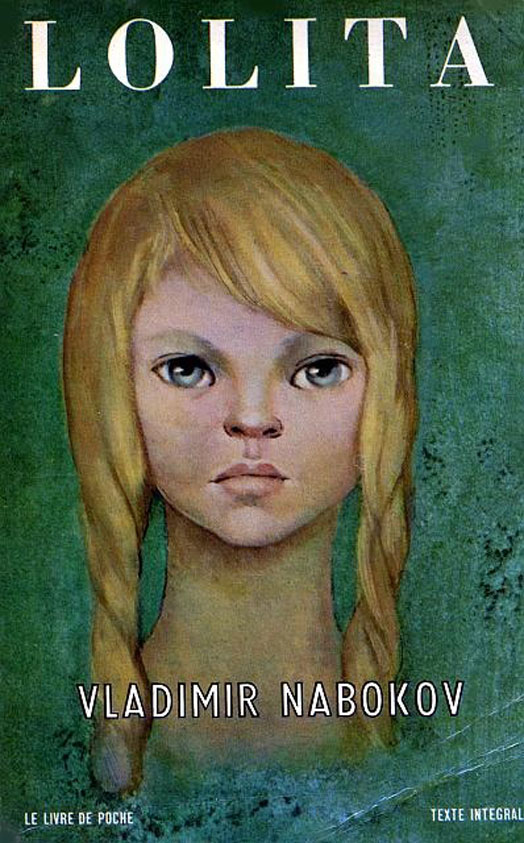
How to market a book like Lolita, which, upon its publication in 1955, promptly found itself banned in France, Britain, New Zealand, Argentina and other countries? Carefully. At least at first.
Over at Covering Lolita, you can see an archive of the designs that have adorned the cover of the famously controversial book. It all starts with the original 1955 edition, which was the most vanilla cover imaginable. Lolita and Humbert Humbert — they were nowhere to be seen.
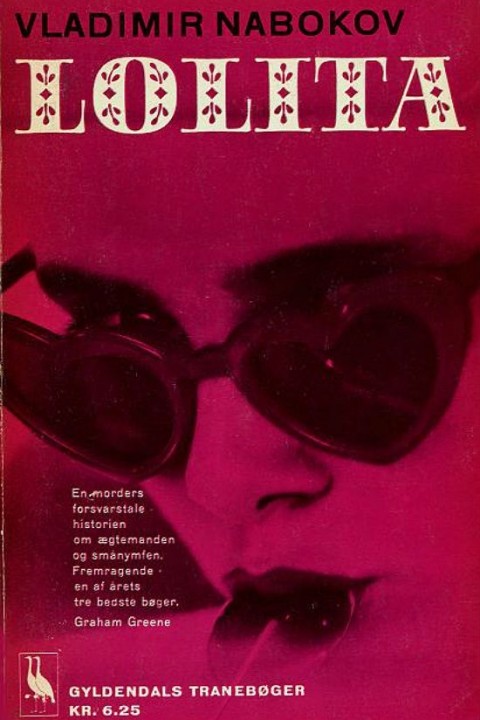
By the 1960s, publishers got a little less gun shy, and the covers, more risqué. See this 1964 Turkish version as an example. Or the second image above, a Danish cover from 1963.
So what cover did Nabokov personally favor? Glad you asked. Long ago, we showed you some footage of Nabokov marveling over different “Lolita” cover designs. And, in it, he points to his favorite: a French sketch from 1963, which appears up top.
This just a small sampling of what you will find in the Covering Lolita Archive, a gallery that currently contains 210 book and media covers from 40 countries, spanning 58 years.
The archive brings you right up to 2014. (2015 and 2016 will likely be accounted for pretty soon.) If you have a favorite design, please let us know in the comments section below.
Note: You can download essential works by Vladimir Nabokov as free audiobooks (including Jeremy Irons reading Lolita) if you sign up for a 30-Day Free Trial with Audible. Find more information on that program here.
If you would like to support the mission of Open Culture, consider making a donation to our site. It’s hard to rely 100% on ads, and your contributions will help us continue providing the best free cultural and educational materials to learners everywhere. You can contribute through PayPal, Patreon, and Venmo (@openculture). Thanks!
Related Content:
Vladimir Nabokov Names the Greatest (and Most Overrated) Novels of the 20th Century
Vladimir Nabokov (Channelled by Christopher Plummer) Teaches Kafka at Cornell
Vladimir Nabokov Marvels Over Different “Lolita” Book Covers
The Notecards on Which Vladimir Nabokov Wrote Lolita: A Look Inside the Author’s Creative Process
Read More...Hear 22-Year-Old Orson Welles Star in The Shadow, the Iconic 1930s Super Crimefighter Radio Show
Who knows what evil lurks in the hearts of men? Every fan of old-time radio, the fruit of a “golden age” on the American airwaves which lasted from the 1920s until television took hold, can tell you the answer: The Shadow knows. Though he’s appeared in pulp-era magazines and novels as well as comics, movies, and even video games, the mysterious crimefighter, known by day as “wealthy young man about town” Lamont Cranston, made his biggest mark on the good old wireless, around which listeners gathered to hear him dispense his own brand of psychologically delivered justice from 1937 to 1954.
The Shadow became, in many ways, the prototype of the superhero, especially Batman and others who do their job not with fantastical superpowers but with their wits, their wealth, and the host of advanced devices and obscure techniques at their disposal. (Assuming, of course, you don’t consider the Shadow’s never-fully-explained ability to “cloud men’s minds” fantastical.) This also makes him something of a proto-James Bond, the technically human but seemingly invincible British Secret Service agent who debuted on the page the year before The Shadow ended his run on the radio. Like James Bond, The Shadow exists independently of the many actors who have portrayed him, but just as most acknowledge Sean Connery as the definitive Bond, Orson Welles stands as The Shadow to beat.
In fact, the New Yorker’s Alex Ross titled his profile of Welles’ career, looking back from the 100th anniversary of the radio-theater-film auteur’s birth, “The Shadow,” acknowledging aspects of the man’s creative persona as well as the program on which he, at the tender age of 22, “achieved radio stardom as a hypnosis-inducing vigilante” — and also found a source of money to funnel straight into his own higher-brow and more socially conscious productions under the New Deal’s Federal Theatre Project. (Ross quotes Franklin Delano Roosevelt jokingly calling Welles the “only operator in history who ever illegally siphoned money into a Washington project.”)
Now you can listen to more than 30 Welles-starring episodes of The Shadow free at the Internet Archive. When the show made its debut, it ran for 26 episodes sponsored by Blue Coal, a name fans will know as well as they know Lamont Cranston’s. Then came a summer series sponsored by Goodrich Safety Silver-Town Tires. “For many years it was believed that the syndicated Goodrich series had run for 15 episodes,” say the accompanying notes, “until a complete collection of recordings surfaced in the estate of a former Goodrich executive and it was realized that the summer season had been a full 26 episodes — and that 11 full episodes starring Welles had been discovered that had not been heard since they originally aired 70 years ago.” A sudden, dramatic appearance by The Shadow just when we least expected it — how very like him.
Related Content:
The War of the Worlds: Orson Welles’ 1938 Radio Drama That Petrified a Nation
Orson Welles Turns Heart of Darkness Into a Radio Drama, and Almost His First Great Film
Orson Welles’ Radio Performances of 10 Shakespeare Plays
A Christmas Carol, A Vintage Radio Broadcast by Orson Welles and Lionel Barrymore (1939)
Based in Seoul, Colin Marshall writes and broadcasts on cities, language, and style. He’s at work on a book about Los Angeles, A Los Angeles Primer, the video series The City in Cinema, the crowdfunded journalism project Where Is the City of the Future?, and the Los Angeles Review of Books’ Korea Blog. Follow him on Twitter at @colinmarshall or on Facebook.
Read More...Question: Where Can You Watch 65 Charlie Chaplin Films Free Online?
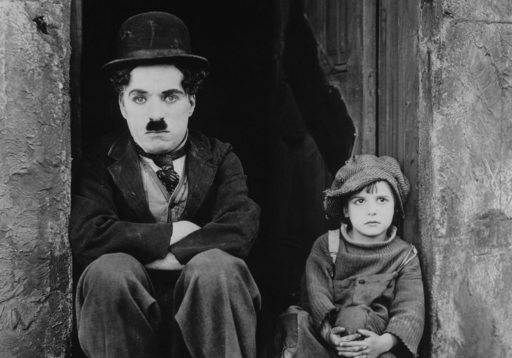
Answer: Why, in our collection 65 Charlie Chaplin Films Free Online. Just didn’t want you to forget :)
If you would like to support the mission of Open Culture, consider making a donation to our site. It’s hard to rely 100% on ads, and your contributions will help us continue providing the best free cultural and educational materials to learners everywhere. You can contribute through PayPal, Patreon, and Venmo (@openculture). Thanks!
Read More...Watch the First Episode of Vinyl: Mick Jagger & Martin Scorsese’s Series on the 1970s Music Scene
A quick note: HBO recently premiered Vinyl, which takes a Goodfellas-style look at the seedy 1970s rock music and record-making scene. Here’s a quick snapshot of what the show’s all about:
Created by Mick Jagger & Martin Scorsese & Rich Cohen and Terence Winter, this new drama series is set in 1970s New York. A ride through the sex- and drug-addled music business at the dawn of punk, disco, and hip-hop, the show is seen through the eyes of a record label president, Richie Finestra, played by Bobby Cannavale, who is trying to save his company and his soul without destroying everyone in his path. Additional series regulars include Olivia Wilde, Ray Romano, Ato Essandoh, Max Casella, P.J. Byrne, J.C. MacKenzie, Birgitte Hjort Sørensen, Juno Temple, Jack Quaid, James Jagger and Paul Ben-Victor. Scorsese, Jagger and Winter executive produce along with Victoria Pearman, Rick Yorn, Emma Tillinger Koskoff, John Melfi, Allen Coulter and George Mastras. Winter serves as showrunner. The 10-episode first season debuts February 14th.
The first pilot episode–directly by Scorsese himself–is currently streaming free on HBO’s website. It runs two good hours. And if you want to watch the remaining episodes on the cheap, you can start a monthlong free trial of HBO NOW. Just look for the “Start Your Free Month” button at the top of HBO’s site.
Note: The video up top is only a trailer for Episode 1. To watch the complete episode, click here.
If you would like to support the mission of Open Culture, consider making a donation to our site. It’s hard to rely 100% on ads, and your contributions will help us continue providing the best free cultural and educational materials to learners everywhere. You can contribute through PayPal, Patreon, and Venmo (@openculture). Thanks!
Read More...
30 Days of Shakespeare: One Reading of the Bard Per Day, by The New York Public Library, on the 400th Anniversary of His Death
April 23 is the 400th anniversary of Shakespeare’s death, an event so far in the past that it can be celebrated as a second birthday of sorts.
The New York Public Library’s contribution to the festivities has an endearingly homemade quality.
This august institution boasts over 500 audio recordings of the Bard’s work, not to mention 40 years’ worth of the New York Shakespeare Festival’s records. But rather than drawing on the collection to highlight the work of such supreme interpreters as John Gielgud, John Barrymore, or Edwin Booth, the library has invited thirty of its staffers to recite their favorite Shakespearean speech, monologue, or sonnet.
Sean Ferguson, of Chinatown’s Chatham Square branch, tackles the opening of Richard III from a dignified remove.
Grand Central’s managing librarian, Genoveve Stowell, goes for it with a lusty rendition of King Lear’s third act rage against the storm.
Liz Denlinger, who helms the main branch’s Carl H. Pforzheimer Collection of Shelley and His Circle went with Shakespeare’s temporally-obsessed 12th sonnet.
Make no mistake these are librarians, not trained actors, but their amateurishness is part of the fun.
The library plans to release one recording daily throughout the month of April, adding to the playlist until the tracks number thirty.
We are hoping that the project’s architects will define “staff” to include supporting departments. We would love to hear a member of the security or maintenance team take a stab—pardon the pun—at Othello or Juliet.
For more Shakespeare readings, see our post: A 68 Hour Playlist of Shakespeare’s Plays Being Performed by Great Actors: Gielgud, McKellen & More.
Related Content:
The Late, Great Alan Rickman Reads Shakespeare, Proust & Thomas Hardy
Read All of Shakespeare’s Plays Free Online, Courtesy of the Folger Shakespeare Library
Ayun Halliday is an author, illustrator, and Chief Primatologist of the East Village Inky zine. Her 15-year-old son will be playing Puck later this month in the world premiere of Mark York’s musical staging of A Midsummer Night’s Dream. Meanwhile, his mother dreams of being cast as the Nurse. Follow her @AyunHalliday
Read More...40,000 Film Posters in a Wonderfully Eclectic Archive: Italian Tarkovsky Posters, Japanese Orson Welles, Czech Woody Allen & Much More
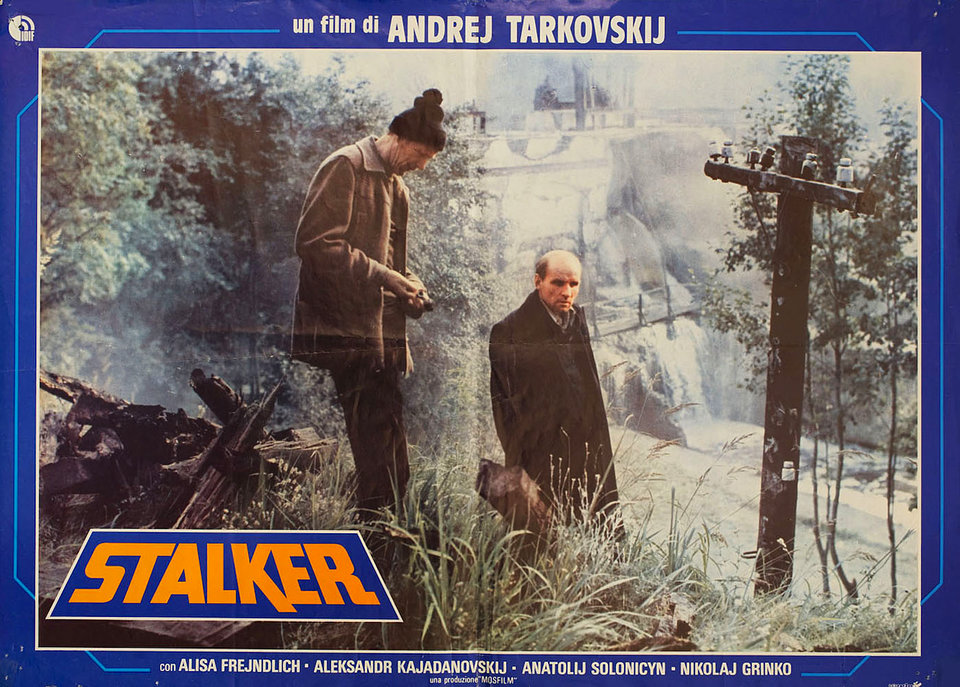
Here we have a poster for a film many of you will have heard of, and some of you will have watched right here on Open Culture: Stalker, widely considered the most masterful of Soviet auteur Andrei Tarkovsky’s career full of masterpieces. Needless to say, the film has inspired no small amount of cinephile enthusiasm in the 37 years since its release, and if it has inspired the same in you, what better way to express it than to hang its poster on your wall? And why not take it to the next level by hanging a Stalker poster from another country, such as the Italian one here?
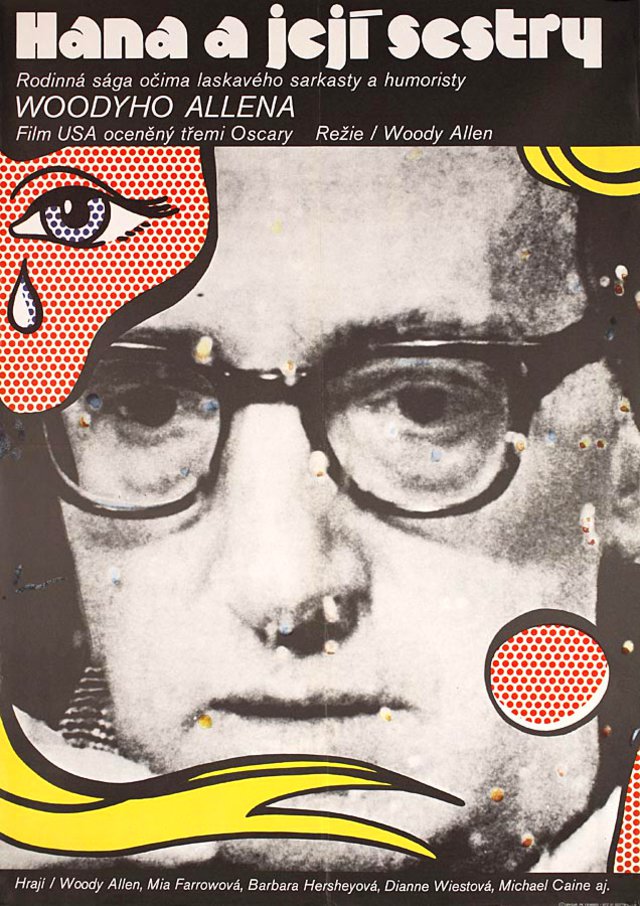
We found it on Posteritati, a New York movie poster gallery whose online store also functions as a digital archive of over 40,000 of these commercial-cinematic works of art, all conveniently sorted into categories: not just Tarkovsky posters, but posters from the former East Germany and Iran, posters from the Czech New Wave, and posters designed by the Japanese artist Tadanori Yokoo (whose works, said no less an observer of the human condition than Yukio Mishima, “reveal all of the unbearable things which we Japanese have inside ourselves”). And that’s just a small sampling of what Posteritati has to offer. If you dig deep enough, you can even find posters from Poland and the Czech Republic with cats in them.
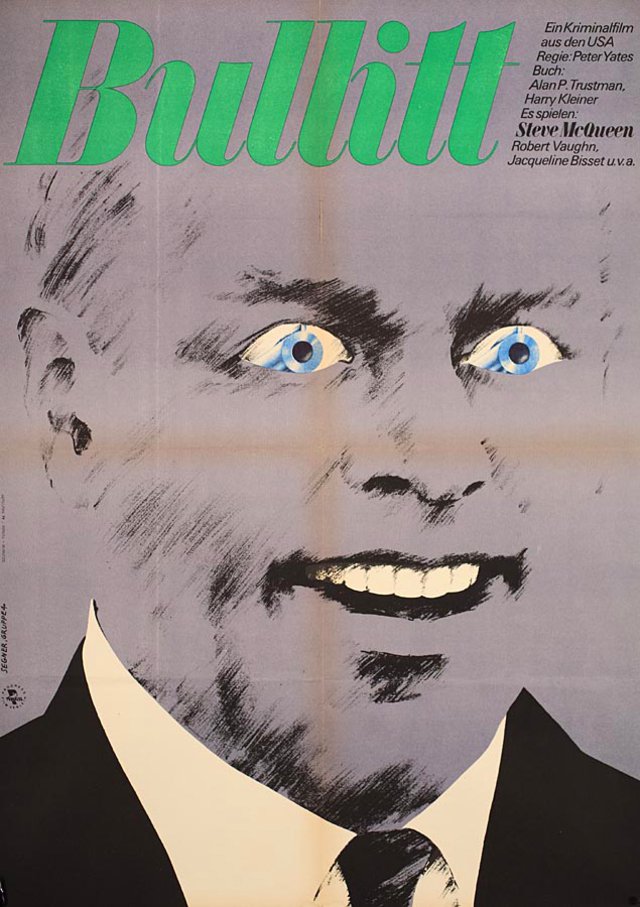
Avid Open Culture readers might find Posteritati’s philosophy section especially worthwhile, containing as it does posters for movies we’ve previously featured and movies about thinkers we like to write about, like Derrida, Examined Life, Wittgenstein, and of course the Slavoj Žižek-starring The Pervert’s Guide to Ideology and Žižek!
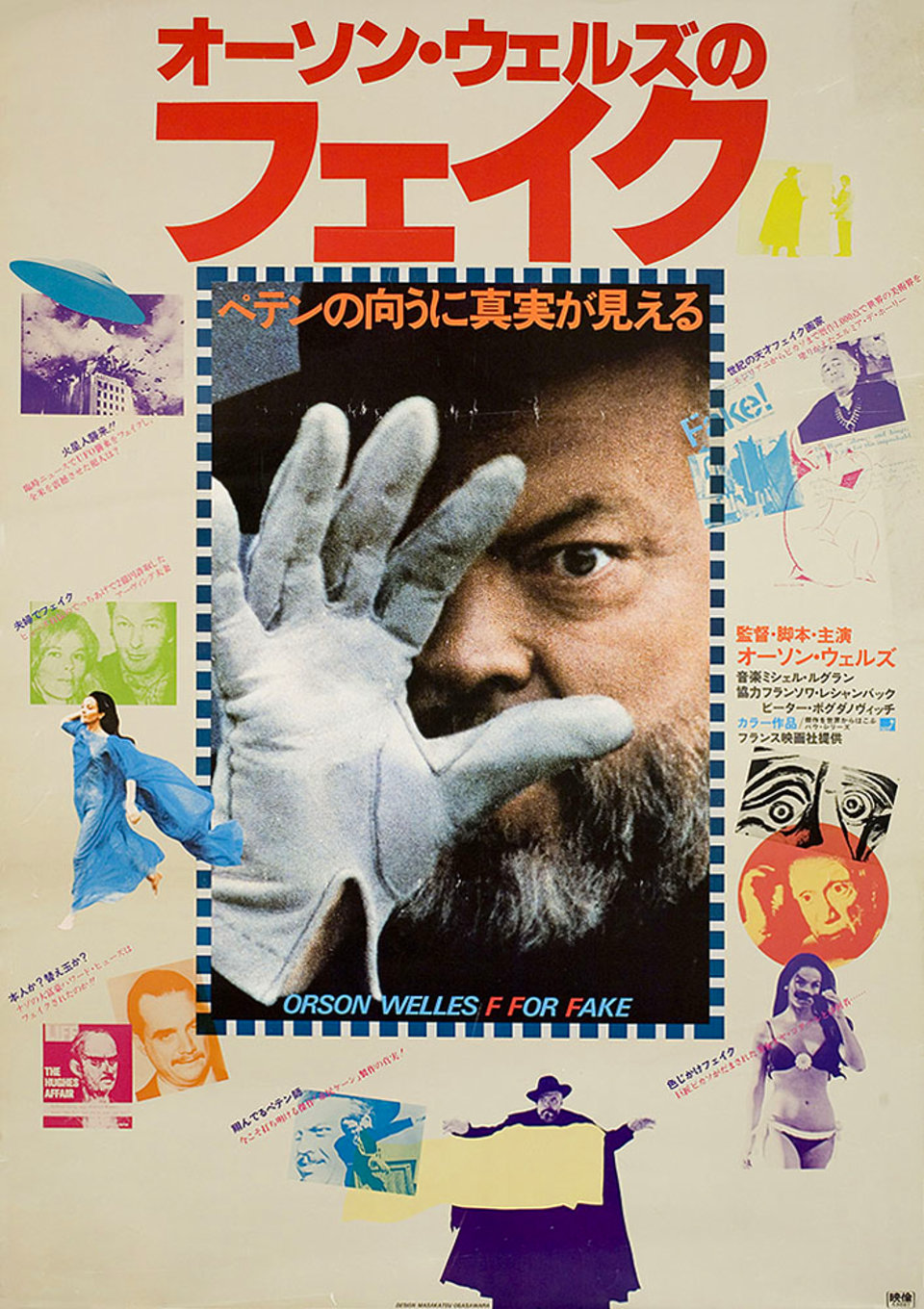
They also sell posters at the site, though even the ones not in stock remain available to view as images: just toggle the “IN STOCK ONLY” switch to the OFF position, and you can then see all of the posters in the collection. No matter what your cinematic, intellectual, or aesthetic interests, you’ll find at least a few posters that pique your interest. The Japanese poster for Orson Welles’ F for Fake just above, for instance, represents a near-perfect intersection of most of my own interests. Just as well Posteritati doesn’t have it in stock — I’d probably pay anything.
Related Content:
50 Film Posters From Poland: From The Empire Strikes Back to Raiders of the Lost Ark
The Strange and Wonderful Movie Posters from Ghana: The Matrix, Alien & More
Japanese Movie Posters of 10 David Lynch Films
A Look Inside Martin Scorsese’s Vintage Movie Poster Collection
100 Greatest Posters of Film Noir
Striking French, Russian & Polish Posters for the Films of Andrei Tarkovsky
Watch Stalker, Andrei Tarkovsky’s Mind-Bending Masterpiece Free Online
F for Fake: Orson Welles’ Short Film & Trailer That Was Never Released in America
Based in Seoul, Colin Marshall writes and broadcasts on cities, language, and style. He’s at work on a book about Los Angeles, A Los Angeles Primer, the video series The City in Cinema, the crowdfunded journalism project Where Is the City of the Future?, and the Los Angeles Review of Books’ Korea Blog. Follow him on Twitter at @colinmarshall or on Facebook.
Read More...Monty Python’s John Cleese Worries That Political Correctness Will Lead Us into a Humorless World, Reminiscent of Orwell’s 1984
As with all of our political debates, those over “political correctness” have become even more polarized, vitriolic, and outsized than when I was in college at the height of the first culture wars, when it often seemed to me like just new etiquette for increasingly pluralist campuses and workplaces. Now, people use the phrase to refer to any call for basic human decency and intellectual honesty—and use it to dismiss such calls out of hand. On the other hand, many efforts at curbing or criticizing certain kinds of speech can seem genuinely, unnecessarily, repressive. Whether it’s an illiberal college group pressuring their university to disinvite entertainers or shut down debates, or fanatical gunmen threatening, and taking, the lives of journalists or bloggers, the stakes over what can and can’t be said have grown exponentially.
Have we reached a crisis of “Orwellian” proportions in the U.S.? I’d hesitate to say so, given the overuse and abuse of Orwell’s name and ideas as a catch-all for societal dysfunction. We have rallies in which tens of thousands gather to cheer for the demonization and slander of entire people groups. It hardly seems to me that anyone’s losing their freedom of speech any time soon. But John Cleese in the Big Think video above makes an argument about a particular kind of political correctness that he defines as “the idea that you have to be protected from any kind of uncomfortable emotion.” Describing this kind of speech policing as pathological, Cleese refers to a theory of a psychiatrist friend, Robin Skinner, that people who can’t control their own emotions “have to start to control other people’s behavior.”
Cleese doesn’t blanketly impugn the motives of all activists for politically correct speech. He notes a similar trajectory as I have when it comes to college campuses. “Political correctness,” he says, “has been taken from being a good idea, which is ‘let’s not be mean, and particularly to people who are not able to look after themselves very well,’ to the point where any kind of criticism of any individual or group can be labeled cruel.” Perhaps he’s right. (And Cleese is by no means the first comic to say so—and to swear off college campuses.) In any case, his observations about the necessary relationship of comedy to criticism or offense are dead on, as well as his conclusion that once the humor’s gone, so “goes a sense of proportion, and… you’re living in 1984.” I can’t think of a book, or a society, with less humor in it.
One point of interest: Political Correctness means a great many things to a great many people. For some it is about agency and self-determination, and righting historical wrongs so as not to perpetuate them in the present. For others, it tends more toward a patronizing activist crusade on behalf, as Cleese says in his definition of the term, of “people who are not able to look after themselves.” While he calls a little of this latter attitude a good thing, George Carlin saw it as condescending and disingenuous. By no means a respecter of any party ideology, Carlin described even seemingly innocuous forms of politically correct language as fascism masquerading as manners.
In my experience, few people can make arguments against politically correct language without occasionally falling into the trap of proving its point. But Carlin and Cleese make thoughtful cases, especially when they use humor—as Carlin did over an entire career of railing against the speech police. In his bit above on the increasing insistence on ungainly euphemisms and puffed-up jargon, he demonstrates what Cleese calls the effective antidote to a political movement run riot: a sense of proportion—as well as a sense of compassion.
Related Content:
Slavoj Žižek Calls Political Correctness a Form of “Modern Totalitarianism”
What “Orwellian” Really Means: An Animated Lesson About the Use & Abuse of the Term
Josh Jones is a writer and musician based in Durham, NC. Follow him at @jdmagness
Read More...Spike Lee Interviews Bernie Sanders: Two Guys from Brooklyn Talk About Education, Inequality & More
With the New York primary coming up, Spike Lee and Bernie Sanders–the filmmaker and the politician–sat down and talked about politics and the state of our nation. At the 15 minute mark, the two Brooklyn natives turned to education (something that undoubtedly concerns many readers here) and the importance of making our public universities actually accessible to the public. Such a radical thought? You can read a transcript of the conversation over at The Hollywood Reporter.
If you would like to support the mission of Open Culture, consider making a donation to our site. It’s hard to rely 100% on ads, and your contributions will help us continue providing the best free cultural and educational materials to learners everywhere. You can contribute through PayPal, Patreon, and Venmo (@openculture). Thanks!
Related Content:
Bernie Sanders: I Will Be an Arts President
Spike Lee’s List of 95 Essential Movies – Now with Women Filmmakers
Allen Ginsberg’s Handwritten Poem For Bernie Sanders, “Burlington Snow” (1986)
Read More...Pink Floyd Performs on US Television for the First Time: American Bandstand, 1967
You may have noticed we’ve been in the midst of a mini-sixties revival for the past decade or so—what with the retro soul of Alabama Shakes or the late Amy Winehouse, the garage rock of Ty Segall, and the California psych of Australia’s Tame Impala. That’s to name but just a few students of sixties’ sounds; many hundreds more populate events like the Psych Fests of Austin and Liverpool. And before these bands, late eighties/early nineties brought us a British re-invasion of sixties garage rock and pop like the Jesus and Mary Chain, the Chameleons, the Stone Roses, Oasis, and many other jangly, fuzzy, dreamy bands.
All of that is to say it’s nearly impossible to hear anything sixties rock with fresh ears. Not only has the incessant nostalgia dimmed our senses, but we’ve seen the ideas of the sixties evolve into myriad subcultures variously indebted to the decade, but no longer even in need of direct reference. What would it mean, however, to hear the far-out sounds of a band like Pink Floyd for the first time, a band who may at times sound dated now, but much of whose more obscure catalog remains shocking. And it’s easy to forget that when Pink Floyd—or “The Pink Floyd” as they tended to be called—got their start with original singer and songwriter Syd Barrett, they made a much different sound than those we’re familiar with from The Wall or Dark Side of the Moon.
If you haven’t heard the sound of the band circa 1967, when they recorded their first album Piper at the Gates of Dawn, then you may nod along with Dick Clark’s ambivalent introduction of them to U.S. audiences in the ’67 American Bandstand appearance above—their first visit to the States and first time of TV. They do indeed make “very interesting sounds”: specifically, “Apples and Oranges,” the third single and the final song Barrett wrote for the band before he suffered a psychotic break onstage and was replaced by David Gilmour. There isn’t much in the way of performance. (But stick around for the interviews around 3:25.) As pretty much everyone did at the time, Barrett, Roger Waters, Nick Mason, and Richard Wright mime to a prerecorded track. And Barrett looks particularly out of it. He was close by this point to the crippling mental health crisis that would eventually end his career.
But Syd Barrett did not disappear from music right away. The unreleased “Scream Thy Last Scream,” slated to be the next single released after Piper at the Gates of Dawn, gave much indication of the musical direction he took in two 1970 solo albums, The Madcap Laughs and Barrett. Like later Barrett, early Pink Floyd is not music for everyone. Instead of the familiar stomping funk of “The Wall” or the soaring blues of “Comfortably Numb,” the songs meander, twist, turn, and wobble, often indicating the state of Barrett’s troubled soul, but just as often showcasing his brilliant compositional mind. Barrett is gone, as is keyboardist Richard Wright, and Pink Floyd is no more. But their legacy is secure. And we still have mad geniuses like Austin psych legend Roky Erickson to kick around, as well as all the many thousands of musicians he and Barrett inspired.
Related Content:
Pink Floyd Plays With Their Brand New Singer & Guitarist David Gilmour on French TV (1968)
Pink Floyd’s David Gilmour Sings Shakespeare’s Sonnet 18
Josh Jones is a writer and musician based in Durham, NC. Follow him at @jdmagness
Read More...Support Us
We're hoping to rely on loyal readers, rather than erratic ads. Please click the Donate button and support Open Culture. You can use Paypal, Venmo, Patreon, even Crypto! We thank you!

About Us

Open Culture scours the web for the best educational media. We find the free courses and audio books you need, the language lessons & educational videos you want, and plenty of enlightenment in between.
Advertise With Us

FREE UPDATES!
GET OUR DAILY EMAIL
Get the best cultural and educational resources on the web curated for you in a daily email. We never spam. Unsubscribe at any time.
FOLLOW ON SOCIAL MEDIA

Open Culture editor Dan Colman scours the web for the best educational media. He finds the free courses and audio books you need, the language lessons & movies you want, and plenty of enlightenment in between.
Advertise With Us

