How Do They Get Caffeine Out of Coffee Beans?
It’s one of those questions I’ve always wondered about. And maybe you have too. Just how do they extract caffeine from coffee beans? In the first episode of a new Mental Floss series, “Big Questions,” a guy named Craig, rocking a tight t shirt, gives us some answers. If I’m guessing right, the video relies fairly heavily on this Scientific American article from 1999. It helps demystify the process a little more.
Related Content:
The (Beautiful) Physics of Adding Cream to Your Coffee
Men In Commercials Being Jerks About Coffee: A Mashup of 1950s & 1960s TV Ads
Read More...
Georges Bataille: An Introduction to The Radical Philosopher’s Life & Thought Through Film and eTexts
Charles Baudelaire’s decadent visions pushed the Victorian cult of beauty toward modernism, Henry Miller’s lurid epics pushed a then staid modernism toward anarchic beat writing, and Georges Bataille and the surrealists of his arts journal Documents gave us much of the culture we have today, call it what you will if postmodern is too passé. Obsessed with torture, pornography, horror, and bodily fluids, Bataille “wanted to bring art down to the base level of other physical phenomena,” says surrealist scholar Dawn Ades. Where other transgressive figures of the past have mostly been tamed, Bataille, I submit, is still quite dangerous. The Bataille quote that opens the film above, A perte de vue (“As far as the eye can see”), won’t go down easily with almost anyone: “The world,” reads narrator Jean-Claude Dauphin, “is only inhabitable on the condition that nothing in it is respected.” This, the documentary suggests, is Bataille’s philosophy, one he defines as “a need for sensibility to call up disturbance.”
Bataille, a failed priest and sometime librarian, founded surrealist flagship Documents in 1929, published 15 issues, then went on to write novels, poems, and essays for the next thirty years. But his most famous work has remained his first, The Story of the Eye, originally published under the pseudonym Lord Auch in 1928. It’s a book that even today can seem like “social anthrax,” as novelist John Wray put it, in a way that other once taboo-breaking works like Joyce’s Ulysses, for example, certainly do not. It’s an apt comparison, not on literary grounds, but given that both writers were haunted by once fervent Catholicism turned to fervent rejection. Writes Mark Hudson in The Guardian, “he did believe in his own transgressive philosophies in a quasi-religious sense.” Like Joyce, “there’s a powerful dualism in his thought, a profound religious impulse.” Unlike Joyce—or Bataille’s fellow surrealists for that matter, who “excommunicated” him from the movement—“there is still much in his work that is difficult to redeem and far from being accommodated by the mainstream—if indeed it ever can be.”
You can read four of Bataille’s challenging pieces at Supervert’s elibrary: The Story of the Eye and three essays, “The Use Value of D.A.F. de Sade,” “The Big Toe,” and “The Cruel Practice of Art.” Bataille’s philosophy, writes Supervert, “apparently lay in personal experience—in particular his childhood with a suicidal mother and a blind, syphilitic father.” This kind of psychologizing may seem superfluous, yet Bataille introduces himself to us, in his own words—through audio interviews in the first few minutes of A pert de vue—as the product of “a sad place to be.” Personal origins aside, Bataille’s philosophy has resonated widely and “helped pave the way to contemporary critical theory.” By embracing everything rejected, feared, or held in contempt, Bataille reclaimed everyday parts of human existence—those we euphemize or seek to contain—for literature, philosophy… and well, the internet. If some of Bataille’s preoccupations are irredeemable for mainstream tastes, you may find as you watch the film above and read Bataille’s writing that this is for good reason.
Related Content:
Extensive Archive of Avant-Garde & Modernist Magazines (1890–1939) Now Available Online
Human, All Too Human: 3‑Part Documentary Profiles Nietzsche, Heidegger & Sartre
David Lynch Presents the History of Surrealist Film (1987)
Josh Jones is a writer and musician based in Durham, NC. Follow him at @jdmagness
Read More...The Beatles Saturday Morning Cartoon Show (1965–1969)
We’ve become so accustomed to thinking of the Beatles as Serious Artists™ that it’s easy to forget—at least for those of us who weren’t there—how highly commercial a franchise they were in the mid-sixties. It’s no wonder Joe Strummer’s line about “phony Beatlemania” in the Clash’s “London Calling” resonated so strongly for those disaffected with the reign of the Fab Four. The real thing was overwhelming enough, but the slew of official, unofficial, and bootleg merchandising that followed it, much of it aimed at children, makes the band’s dominance seem, well, kinda juvenile. Before they escaped pop stardom and retreated to the studio to record their psychedelic masterpieces, the Beatles received every possible commercial treatment, from lunchboxes and cereal bowls to jigsaw puzzles, lampshades, and a Ringo Starr bubble bath. Perusing an online auction of Beatles merch is a bit like touring Graceland.
There’s one artifact from the height of Beatlemania that you won’t find, however. Instead, you can watch it for free on Youtube. I refer to The Beatles, a half-hour Saturday morning cartoon show that ran on ABC from September, 1965 to September 1969 and produced a total of 39 episodes. The band themselves had almost nothing to do with the show, other than appearing in an odd promotion. Trading entirely in broad slapstick comedy of the Scooby-Doo variety, the show saw the four mates tumble into one goofy situation after another, some supernatural, some musical, some theatrical. Although all natural performers themselves, no Beatle ever voiced his character on the show. Instead, American actor Paul Frees, as John and George, and British actor Lance Percival, as Paul and Ringo, imitated them, very badly. The Beatles cartoon show aired at a time when the kids TV landscape was just beginning to resemble the one we have today, with ABC competitor CBS running superhero shows like Space Ghost, Superman, and Mighty Mouse, but the surreal plots and musical numbers on The Beatles were an attempt to reach adults as well. Watch clips from Season 1 above.
Related Content:
The Beatles Perform a Fun Spoof of Shakespeare’s A Midsummer Night’s Dream (1964)
Peter Sellers Performs The Beatles “A Hard Day’s Night” in Shakespearean Voice
Josh Jones is a writer and musician based in Durham, NC. Follow him at @jdmagness
Read More...U2’s Album Songs of Innocence Released for Free on iTunes Today

Apple had lots of big announcements today — a new watch, a new iPhone, and payment system. But wait, there’s more! On its big day, Apple also announced that anyone with an iTunes account can download for free Songs of Innocence, U2’s first album in 5 years. The album will remain free on iTunes until October 13, 2014, after which time it will be released on CD and maybe vinyl. You can access the album in several ways.
1.) On your iOS device, go to the Music app and select the Albums tab. Select Songs of Innocence. Tap a track to listen or tap the iCloud icon to download.
2.) On your Mac or PC, open iTunes, then select the Albums tab. Select Songs of Innocence. Select a track to listen or click the iCloud icon to download.
3.) On any of your devices, go to Featured Stations and select Songs of Innocence to listen. Starting September 10.
If you have any issues finding the free download, you might want to look through some of the troubleshooting suggestions found on this page.
Read More...The First Color Portrait of Leo Tolstoy, and Other Amazing Color Photos of Czarist Russia (1908)
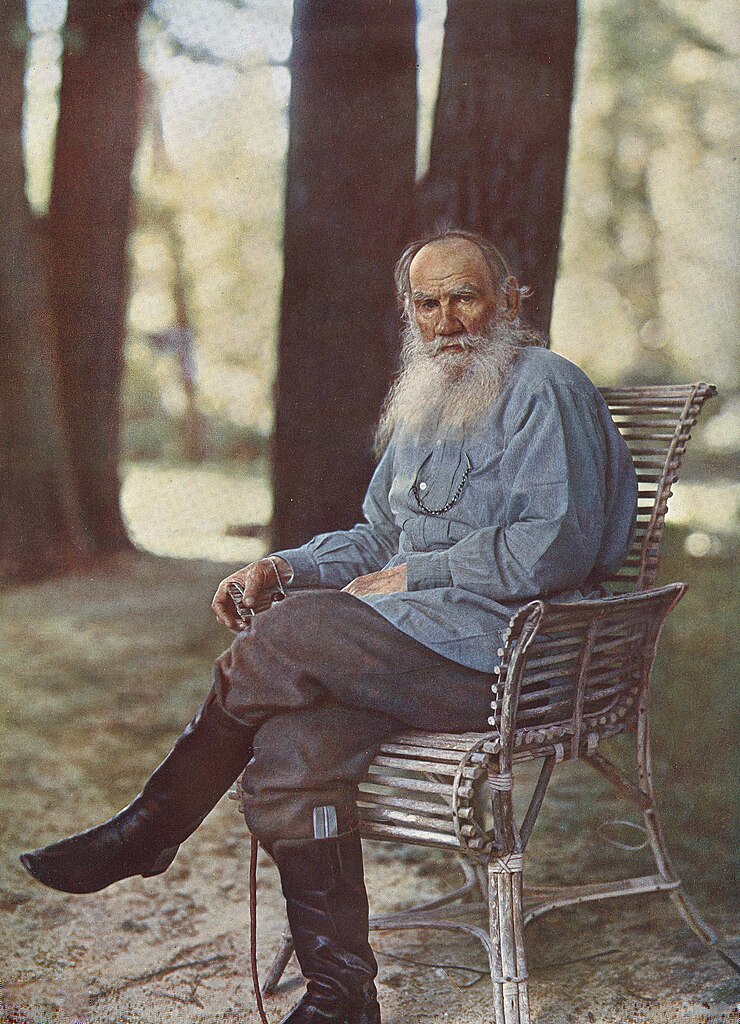
A good few people objected to a recent project that colorized old photos of Walt Whitman, Charlie Chaplin, Helen Keller, Mark Twain, and other historical characters. Leave them alone! they grumped. The past, they wanted left in black and white. But this is not so easily done when some photos—whether of august personages like Leo Tolstoy above, or of ordinary anonymous peasants below—were always processed in color. The Tolstoy image dates from 1908, two years before his death, but the process is much older, and successful color photographs, not simply hand-painted colorizations, go back at least to the Lumiere Brothers’ Autochromes from the late 19th century.

The method that gave us Tolstoy in color involved taking three photographs—with a red, a green, and a blue filter—then projecting the resulting prints through filters of the same color. It’s a procedure that dates to Scottish scientist James Clerk Maxwell’s 1861 experiments, which put to the test several earlier theories. The photographs you see here are the work of scientist and inventor Sergei Prokudin-Gorsky, who had perfected the projection method to such a degree that—as he wrote in a letter to Tolstoy asking him to pose—he only needed “from 1 to 3 seconds to take the photograph.” Thus it would not be “overly tiresome” for the soon-to-be eighty-year-old novelist.
Tolstoy, of course, was a national institution, and had warranted an earlier attempt at a color portrait by an anonymous amateur to whom Prokudin-Gorsky refers in his letter of request. The first attempt, the inventor implies, was a botched job. Billing himself as a specialist in “photography ‘in natural colors,’” the self-confident entrepreneur assured the writer he could produce “excellent results” with “accurate colors.” “My colored projections,” he wrote, “are known in both Europe and in Russia.” Prokudin-Gorsky was received and given two days to take several color photographs, though whether the others have survived, I do not know. We do know that the portrait appeared in the August, 1908 issue of The Proceedings of the Russian Technical Society as “the first Russian color photoportrait.” The journal offered the image in tribute to Tolstoy’s upcoming 80th birthday celebration, writing:
Our periodical, as a purely technical one, cannot honor this venerable representative of Russian thought and word with special articles. Desiring, however, to take part in the general festivities, the editorial staff […] decided to publish in this, its August issue, the newest portrait of Tolstoy, which is the dernier mot in photographic technology. The portrait was taken on location and in natural colors, achieved through technical methods alone, without any use of the artist’s brush or tool.
Prokudin-Gorsky expressed his gratitude to the novelist by mailing him a photographic periodical containing “many pictures produced in my workshops from my photographs.” Perhaps the other photos we see here were contained in that journal. Prokudin-Gorsky had every reason to be proud of his work, and the Russian Technical Society every reason to endorse it. The pictures are stunning.

Some of the photographs, like the Tolstoy portrait, have a painterly, almost impressionistic quality. Others, like the 1911 village scene with the Nikolaevskii Cathedral in the distance, have almost the depth of field and fine-grained clarity of 35mm film. And some, like that of the already cartoonish structure below, have an almost hallucinatory CGI quality. The method wasn’t perfect—even with such short exposures, subjects had to remain absolutely still. If they moved, the result was an eerie double exposure effect you see in the middle distance of the field workers photographed above. But overall, these photographs simply astonish in their crispness and fidelity.

You can see many more of Prokudin-Gorsky’s images at this online gallery, which includes over a dozen early-twentieth century photos of Russian laborers, landscapes, and self portraits. Prokudin-Gorsky’s work also preserves images of various Eastern European peoples in traditional dress—like the final Emir of Bukhara, now Uzbekistan, below in 1910. Many of these groups were on the verge of cultural extinction in the coming years of Soviet imperialism. Unwittingly, Prokudin-Gorsky managed to beautifully capture the very end of tsarist Russia, most poignantly symbolized for so many Russians by their aged literary hero, whose birthday we celebrate again today. Google decided to do so in full color as well, with fancy doodles of his major works. You may accuse them of tampering with the past, but those who find these color photographs too modern may need to expand their definition of modernity.

Related Content:
Colorized Photos Bring Walt Whitman, Charlie Chaplin, Helen Keller & Mark Twain Back to Life
Rare Recording: Leo Tolstoy Reads From His Last Major Work in Four Languages, 1909
Vintage Footage of Leo Tolstoy: Video Captures the Great Novelist During His Final Days
Josh Jones is a writer and musician based in Durham, NC. Follow him at @jdmagness
Read More...Watch Humorous Phases of Funny Faces, the First Animated Movie (1906)
August and Louis Lumière might have made the first film – a simple, static shot of workers leaving their factory for the day – but George Méliès invented the art form of cinema. Through his experiments, Méliès discovered that magic happened when he turned the camera off and on. People suddenly disappeared into thin air. Objects appeared out of nowhere. A famed magician, Méliès knew he was on to something. His discovery planted the seeds for just about every cinematic technique in the book — including animation. You can watch six of Méliès’ films here, including his landmark 1902 short A Trip to the Moon.
The person credited with making the first film-based animation, however, is James Stuart Blackton with his film Humorous Phases of Funny Faces (1906). You can watch it above. The short starts with the artist’s hand drawing on a chalkboard. Soon, however, the drawing starts to move on its own. The film is as primitive as it is fun. A man in a top hat blows cigar smoke into a woman’s face. A clown dances. Imagine the shock and awe of an audience not weaned on Pixar and Mickey Mouse watching a picture come to life for the first time.
Blackton started his career as a journalist and a vaudeville cartoonist. In 1896, he was assigned to cover Thomas Edison’s brand new invention – the Vitascope, an early film projector. Edison proved to be such a good salesman that Blackton ended up buying one. Soon he, along with his vaudeville partner Albert Smith, founded one of the first ever movie studios — the American Vitagraph Company. The company eventually became known for creating some of the first movie adaptations of Shakespeare and Charles Dickens, but before that, they made short “trick” movies — flashy shorts to be shown during vaudeville shows. One of those movies, The Enchanted Drawing (1900) is essentially a filmic version of Blackton’s act with some cinematic sleight-of-hand thrown in. And as you can see below, it points the way to Blackton’s breakthrough with Humorous Phases.
In 1911, Blackton, along with his co-director, the spectacularly talented Winsor McCay, made Little Nemo, a movie that hints at the true potential of animation. Sure, their movie has way too much half-hearted live action slap stick, which pads out the running time to an over-stuffed 10 minutes, but the actual animation, which starts around 8:30, is utterly gorgeous. Watch it below.
Related Content:
Gertie the Dinosaur: The Mother of all Cartoon Characters
Early Experiments in Color Film (1895–1935)
How Walt Disney Cartoons are Made
Jonathan Crow is a Los Angeles-based writer and filmmaker whose work has appeared in Yahoo!, The Hollywood Reporter, and other publications. You can follow him at @jonccrow. And check out his blog Veeptopus, featuring one new drawing of a vice president with an octopus on his head daily.
Read More...
William Gibson Reads Neuromancer, His Cyberpunk-Defining Novel
With 1984’s Neuromancer, William Gibson may not have invented cyberpunk, but he certainly crystallized it. The novel exemplifies the tradition’s mandate to bring together “high tech and low life,” or, in the words of Gibson himself, to explore what “any given science-fiction favorite would look like if we could crank up the resolution.”
It may have its direct predecessors, but Gibson’s tale of hackers, street samurai, conspiracists, and shadowy artificial intelligences against virtual reality, dystopian urban Japan, and a variety of other international and technological backdrops remains not just archetypal but, unusually for older technology-oriented fiction, exciting.
Now you can not only read Gibson’s cyberpunk-defining words, but hear them in Gibson’s voice: a 1994 abridged edition, released only on cassette tapes and now long out of print, resides in MP3 form online here .
You can get a taste of this particular Neuromancer audiobook and its production in the clip above. I always appreciate hearing authors read their own work, but people will surely disagree about whether the laid-back tones of a man who often describes himself as thoroughly un-cutting-edge ideally suit the material. If you think it doesn’t, or if you don’t like the abridged-ness of this edition, you suffer no lack of alternatives: Arthur Addison read an unabridged one for Books on Tape in 1997, in 2011 Robertson Dean read another one for Penguin Audiobooks, and in 2012 Jeff Harding did yet another. (Note: You can download the Dean edition for free via Audible if you enroll in their 30 Day Free Trial. We have more details on that here.) Those who have found themselves hooked on the internet, in any of its modern forms, will certainly hear a lot of prescience in Gibson’s conception of technology as addictive drug. But in my experience, cyberpunk stories, too, can prove fiercely habit forming. Rather than the first cyberpunk novel, or the most important one, or the genre’s blueprint, let’s just call Neuromancer the gateway.
Related Content:
William Gibson, Father of Cyberpunk, Reads New Novel in Second Life
Colin Marshall hosts and produces Notebook on Cities and Culture and writes essays on cities, language, Asia, and men’s style. He’s at work on a book about Los Angeles, A Los Angeles Primer. Follow him on Twitter at @colinmarshall or on Facebook.
Read More...178,000 Images Documenting the History of the Car Now Available on a New Stanford Web Site

The Revs Program at Stanford, dedicated to producing scholarship about the past, present and future of the automobile, recently advanced its cause by launching a new website featuring 178,000 images of cars. Divided into 12 collections, the Revs Digital Library features lots of race cars, and then some more race cars. But there are some more everyday models too — like the Beetle, Citroën, Corvette, Mini and even the Gremlin. You won’t find, however, any trace of the much-maligned Edsel.
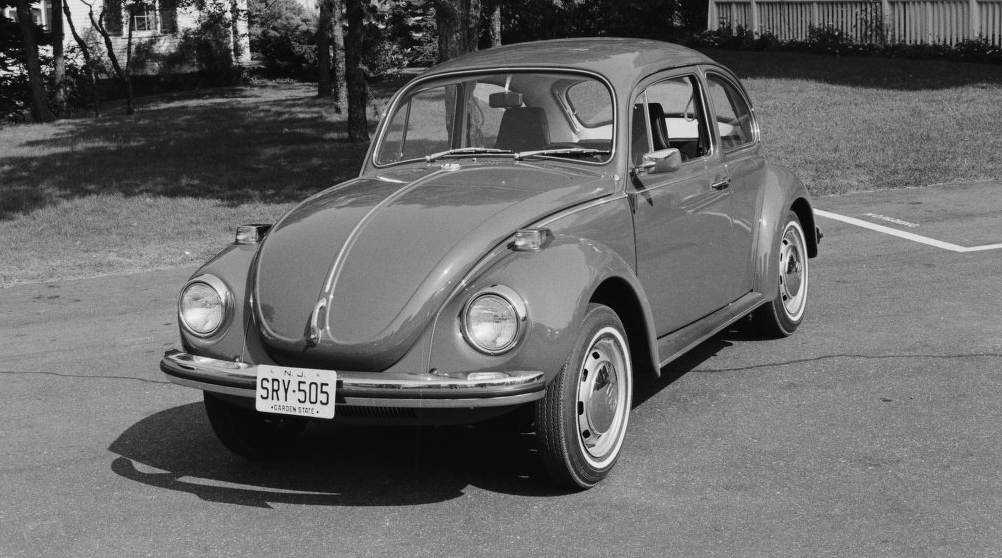
The images came to Stanford as a gift from the Revs Institute for Automotive Research, located in Naples, Florida. If you’d like a quick primer on finding and gathering information about vintage cars in the archive, watch the introductory video below. It’ll teach you how to sift through the digital library in rapid fashion.
The images above come from the Revs Digital Library.
via Stanford News/Coudal
Related Content:
Yale Launches an Archive of 170,000 Photographs Documenting the Great Depression
UC Santa Cruz Opens a Deadhead’s Delight: The Grateful Dead Archive is Now Online
Young Robert De Niro Appears in 1969 AMC Car Commercial
Read More...
The History of Rock n Roll in 10 Songs: A List Created by Legendary Rock Critic Greil Marcus
Rock critic and scholar Greil Marcus has just released a book with Yale Press called The History of Rock ‘n’ Roll in Ten Songs, and it appears to be an unusual take on a very hackneyed subject, as Marcus admits in the video trailer above: “Everybody knows the history of rock ‘n’ roll,” he says, “What if it was just about a few songs?” “Unlike all previous versions of rock ‘n’ roll,” writes Yale, “this book omits almost every iconic performer and ignores the storied events and turning points that everyone knows.” This is not entirely true—you’ve got your Beatles, you’ve got your Buddy Holly, but you’ve also got… Joy Division. And a number of other surprising, offbeat choices that don’t necessarily sound like rock ‘n’ roll history, but certainly tell it their various ways. “At any given moment,” Marcus says above, any of these songs “could contain the whole history […] the whole DNA of rock ‘n’ roll.”
Some of the choices seem like personal quirks. Nothing to get too bent out of shape about, if that’s your tendency, but odd nonetheless. The Flaming Groovies would not be a band I’d choose as representative of garage rock, if that’s what they represent. Their song “Shake Some Action” above may be better known for some from Cracker’s workmanlike cover on the Clueless soundtrack than as a genuine hit in its own right. But the single sure had a cool cover.
It also has some excellent guitar work and a perfectly distinctive tone that Marcus can’t forget. Its lyrics are by turns vapid and creepy, which, now that I think of it, perhaps makes this a perfect track to define much of rock ‘n’ roll history.
No one bested post-punk darlings Joy Division when it came to boyish good looks and relentless despair. In an oblique rock history sense, they were pivotal, taking the obscurantist minimalist experiments of bands like Wire and making them viable options for an entire genre of music. Marcus chooses “Transmission” instead of the much more popular “Love Will Tear Us Apart,” which has become almost a musical rite of passage for certain bands to cover. This was the last single the band released before singer Ian Curtis killed himself. “It’s sort of fitting then,” writes Consequence of Sound, “that this would be both one of the band’s most popular songs and also pave the way for New Order, specifically in terms of its sound and direction.” Little live footage of the band exists. See them above in 1979 on UK retro television program The Wedge (originally broadcast on Something Else with the Jam).
Marcus’ third choice is not really what we think of as rock and roll, but it’s a close cousin, and without doo wop, we’d have had no Lou Reed. 1956’s “In the Still of the Night,” written by Fred Parris and recorded by his Five Satins in a Catholic school basement, was a hit in the 90s for Boyz II Men on the R&B and Adult Contemporary charts and reliably appears in films about the fifties. Marcus also refers to a version recorded by the Slades, a white vocal group. The pairing illustrates the familiar fifties practice of white groups recording black artists—and often outselling them, though certainly not in this case—for presumably segregated audiences.
Etta James’ 1960 soaring lament “All I Could Do Was Cry” again seems a world away from rock and roll, with its lush studio string section and spacious, spare production. The song lacks the bite and growl of “At Last!” from the same album, but Marcus makes a weighty allusion in referring to two different versions. By including Beyoncé’s take on the song, the list hauls in the history of Chicago’s Chess records and Knowles’ outstanding performance as James in 2008’s Cadillac Records, a film that takes us from Muddy Waters’s electric blues to Chuck Berry’s hybrid crossover sound.
Yes, we have Buddy Holly, but we don’t have “Peggy Sue” or “Not Fade Away.” Instead Marcus gives us the B‑side to the posthumously released “Peggy Sue Got Married,” a song called “Crying, Waiting, Hoping.” Originally recorded by Holly alone in a Manhattan apartment and mixed with studio backing tracks by producer Jack Hansen in 1959, the song had nothing to do with Holly’s fame in life—hence the bad vocal sync in the video above. The band’s playing an entirely different song. Marcus chose this as symbolic of the Holly mythos after his death, which spread across the ocean to Merseybeat bands like the Beatles, who often covered this song and recorded it live on the BBC. Like the musicians who played on the first record, they aren’t just covering Holly, writes Marcus, “they’re conducting a kind of séance with him.”
Speaking of the Beatles: everyone knows their “Money (That’s What I Want),” but did you know that the song, performed in 1959 by Barrett Strong (above), was the first hit for Berry Gordy’s Motown records (then Tamla)? A direct link between American R&B and the UK variety, “Money” was a staple for British invasion bands in the early 60s.
I had never heard of The Brains before reading Marcus’ list. That’s not saying a whole lot, but I had also never heard Cyndi Lauper’s 1983 hit cover of their minor hit “Money Changes Everything,” or even the rare Smiths’ instrumental version, ardent fan though I am. So chalk that up to a musical blind spot, if you will, or take it as evidence of the song’s outlier status. Hear the 1978 original above. Marcus has said elsewhere of its raw, cynical honesty that “there’s no other way the decade could end.”
“This Magic Moment,” the 1960 hit by Ben E. King and the Drifters, sounds like the perfect choice of song for nostalgic boomers, not so much for jaded rock writers telling a new story of rock ‘n’ roll, but there you have it. Marcus also refers to a version by “Ben E. King with Lou Reed.” As far as I can tell, no such recording exists, but we do have a version by Reed alone. Hear it above.
The only way perhaps to discuss this ninth “song” in any rock ‘n’ roll context is by way of Lou Reed, it so happens. Reed’s “thoroughly alienating” Metal Machine Music consists of 64 minutes of feedback and distortion caused, some legends have it, by Reed recording the sound of his guitar leaning against a cranked-up amp. Artist Christian Marclay does him one better. “Guitar Drag” is exactly what it advertises, the sound—and video, above—of a guitar dragged behind a truck. Representing the pure noise of Metal Machine Music and the general destructiveness of rock ‘n’ roll, it also re-enacts the absolutely horrifying 1998 dragging death of James Byrd, Jr, one of the lowest moments in American racial history. Does this disturbing piece of sound/video art aestheticizing a racist murder, chilling and gruesome beyond words, belong on any list about rock ’n’ roll history? Greil Marcus thinks it does.
We return to familiar, if cloying territory with “To Know Is to Love Him,” an early hit for Phil Spector and his Teddy Bears in 1958 (above)—written not about a crush but about Spector’s deceased father after the words on his headstone. Next to the quaintness of this recording, Marcus also lists Amy Winehouse’s 2007 cover (below). Maybe he hears them at once, both songs haunting each other. Writing on the song in The Guardian after Winehouse’s death, Marcus says “it took 48 years to find its voice.” It’s a story of two incredibly talented, and tragically disturbed, rock ‘n’ roll characters, and one of the pain and loss that lie behind even the most bubblegum of hits. See Yale Press’s website for more on Marcus’ The History of Rock ‘n’ Roll in Ten Songs.
Related Content:
A History of Rock ‘n’ Roll in 100 Riffs
100 Years of Rock in Less Than a Minute: From Gospel to Grunge
Revisit The Life & Music of Sister Rosetta Tharpe: ‘The Godmother of Rock and Roll’
Josh Jones is a writer and musician based in Durham, NC. Follow him at @jdmagness
Read More...
How Languages Evolve: Explained in a Winning TED-Ed Animation
Language. It’s as adaptable as Darwin’s finches.
It’d be interesting to know how the Internet changes the game. Seems like it would go a long way toward democratizing the process by which lingo gets mingled.
Alex Gendler’s TED-Ed lesson, winningly animated by Igor Coric, rolls back the clock to a time when communal groups would subdivide and strike out on their own, usually in order to beef up the food supply.
This sort of geographic and temporal separation was bound to take a toll, linguistically. Evolution is need-based. Vocabulary and pronunciation eventually betray the specifics of the speaker’s surroundings, their circumstances and needs.
It takes some forensics to figure out how, or, even if, various languages relate to each other. A cunning linguist (forgive me) will also have the power to fill in historical gaps, by identifying words that have been borrowed from neighboring cultures, as well as more transient acquaintances.
As a little experiment, look at the way you talk! Those of us without royal blood or a stick up our heinies tend to speak a mongrel patois custom tailored by our own experience. A little bit of regionalism, some professional jargon, a few colorful words gleaned from life’s characters, lines from long ago entertainments deployed as if the references were fresh.
I’ll bet a linguist would have a field day with you, Bub.
Even if you’re the most straightforward conversationalist on the planet, the people who can’t understand a word you say would greatly outnumber those who can.
Maybe we should all “speak Mandarin,” as per the billboards I saw in Singapore on a post-collegiate trip. (As a Western backpacker in Birkenstocks and a wrap-around hippie skirt, I was exempt, leaving me plenty of time to worry about being caned for spitting gum on the sidewalk, a thing I’d never do, by the way.)
Back to the animated lesson, above. While I agree that political and national interests can be hugely influential with regard to language development, I’m not sure a pig is the wisest choice when depicting this linguistic phenomenon as an animal’s worth of re-zoned primal cuts, labelled a la the former Yugoslavia.
Pork is haraam, and treif, and ‘pig,’ in and of itself, is hardly a flattering epithet, a situation that’s sort of insulting to a naturally intelligent and fastidious beast.
I digress.
As does language, which explains why there could be as many as 8000 of them in use. A more conservative estimate puts the number at 3000. Not to alarm you, but if the number of people who speak your language is what the foodie hipsters of Brooklyn would refer to as “small batch,” there are linguists who would downgrade your tongue to mere dialect.
In which case, this list of obscene gestures from around the world might well come in handy.
Related Content:
Learn 48 Languages Online for Free: Spanish, Chinese, English & More
Ali G and Noam Chomsky Talk Linguistics
The Ideas of Noam Chomsky: An Introduction to His Theories on Language & Knowledge (1977)
Ayun Halliday’s highly idiosyncratic approach to language can be studied in seven books, a number of anthologies, and her long suffering zine, the East Village Inky. Follow her @AyunHalliday
Read More...Support Us
We're hoping to rely on loyal readers, rather than erratic ads. Please click the Donate button and support Open Culture. You can use Paypal, Venmo, Patreon, even Crypto! We thank you!

About Us

Open Culture scours the web for the best educational media. We find the free courses and audio books you need, the language lessons & educational videos you want, and plenty of enlightenment in between.
Advertise With Us

FREE UPDATES!
GET OUR DAILY EMAIL
Get the best cultural and educational resources on the web curated for you in a daily email. We never spam. Unsubscribe at any time.
FOLLOW ON SOCIAL MEDIA

Open Culture editor Dan Colman scours the web for the best educational media. He finds the free courses and audio books you need, the language lessons & movies you want, and plenty of enlightenment in between.
Advertise With Us


