Sound Effects Genius Michael Winslow Performs the Sounds of 32 Typewriters (1898–1983)
“When forced to leave my house for an extended period of time, I take my typewriter with me,” once wrote essayist-humorist David Sedaris. “Together we endure the wretchedness of passing through the X‑ray scanner. The laptops roll merrily down the belt, while I’m instructed to stand aside and open my bag. To me it seems like a normal enough thing to be carrying, but the typewriter’s declining popularity arouses suspicion and I wind up eliciting the sort of reaction one might expect when traveling with a cannon. ‘It’s a typewriter,’ I say. ‘You use it to write angry letters to airport security.’ ” But Sedaris, one of the last high-profile hold-outs against electronic word processing, wrote those words almost fifteen years ago — even before airport security really cracked down in our post‑9/11 reality. Surely he has since picked up and presumably learned to use a computer. We now find ourselves in an age when typewriter usage has transcended the status of an act of nostalgia and attained the status of an act of rebellion; if you insist on using a classic old Underwood Remington, or an Invicta, or a Continental Standard, or Olympia Monika Deluxe, well, you must really have a statement to make.
Yet I daresay that for all their mechanical heft, freedom from internet-borne distraction, and thoroughly analog aesthetic appeal, typewriters bring with them a number of burdens. We have their difficulty in clearing TSA lines, yes, but also their thirst for physical ink and paper (“I can always look at my loaded wastepaper basket and tell myself that if I failed,” said Sedaris, “at least I took a few trees down with me”), and their noise — oh my, their noise. You can hear the varying sounds of 32 models belonging to many successive typewriter generations in the video at the top of the post. They don’t come as straight recordings, but as sounds reproduced by mouth to perfection by that one-in-a-million mimic Michael Winslow, best known from the Police Academy movies as Sergeant Larvell “Motor Mouth” Jones. “The History of the Typewriter Recited by Michael Winslow” originated in the mind of Spanish artist Ignacio Uriarte, who, according to Frieze, “has employed standard office supplies such as Biros, highlighters and jotters,” not to mention “the ubiquitous spreadsheet tool Microsoft Excel, perhaps soon facing its own obsolescence.” This production “tellingly culminates with the sounds of a machine from 1983, the year before the arrival of the first home computer with a graphical interface.” Which leads one to wonder: can Winslow do hard drive noises?
We’ll definitely add “The History of the Typewriter Recited by Michael Winslow” to our collection, 4,000+ Free Movies Online: Great Classics, Indies, Noir, Westerns, Documentaries & More.
via Kottke
Related Content:
The Enduring Analog Underworld of Gramercy Typewriter
Woody Allen’s Typewriter, Scissors and Stapler: The Great Filmmaker Shows Us How He Writes
Discover Friedrich Nietzsche’s Curious Typewriter, the “Malling-Hansen Writing Ball”
Mark Twain Wrote the First Book Ever Written With a Typewriter
Disruptive Technology: Student Brings Typewriter to Class
Colin Marshall hosts and produces Notebook on Cities and Culture and writes essays on cities, language, Asia, and men’s style. He’s at work on a book about Los Angeles, A Los Angeles Primer. Follow him on Twitter at @colinmarshall or on Facebook.
Read More...Study 40+ Languages with Free Lessons from the U.S. Foreign Service Institute
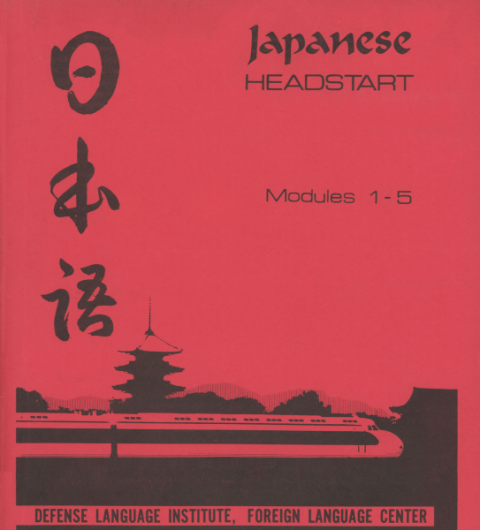
I spent this afternoon chatting with a travel writer about how we first allowed ourselves to start learning foreign languages. That notion may sound a bit odd, especially to those of you living in countries where everyone grows up trilingual. But Americans — even American travelers — have struggled with the concept of mastering languages other than English. Sometimes it has seemed merely unnecessary; at other times, downright impossible. But no matter our nationality, our increasingly globalized 21st-century lives have put to rest any and all excuses in which we might dress up our linguistic parochialism. Technology has also done more than its share, given the ever-growing abundance of free and effective language-learning resources on the internet. Take for example, our pretty massive list of Free Foreign Language Lessons. Or discover this trove of language learning resources from the U.S. Foreign Service Institute, a government agency long tasked with teaching the widest possible variety of tongues to diplomats and other officials stationed abroad. Though produced several decades ago, the lessons are still relevant .… and, more importantly, they’re in the public domain.
Most of the downloadables available for each of the over 40 languages on the site include include text lessons in PDF form and audio lessons, suitable for loading onto your mobile audio device of choice, in MP3 form. Naturally, you’ll find a more robust store of FSI resources for the much-spoken Chinese, Spanish, and French than you will for, say, Chinyanja, Lingala, and Sinhala — but how often do you run across means of learning that latter class of languages at all? I’ve found Japanese and Korean, my own East Asian languages of choice, decently represented; in fact, preparation for an extended trip to South Korea this week has seen me go into studying overdrive, making use of every online resource available. You can find more of them in our full list of free language lessons, where, if you’d like to learn any of the languages mentioned here — or maybe Arabic, Finnish, Swahili, or many tongues besides — you can get a painless start. We live in too big (and too interesting) a world not to take advantage of it.
Related Content:
Learn 47 Languages Online for Free: Spanish, Chinese, English & More
Learn Latin, Old English, Sanskrit, Classical Greek & Other Ancient Languages in 10 Lessons
Colin Marshall hosts and produces Notebook on Cities and Culture and writes essays on cities, language, Asia, and men’s style. He’s at work on a book about Los Angeles, A Los Angeles Primer. Follow him on Twitter at @colinmarshall or on Facebook.
Read More...Glenn Gould: Off and On the Record: Two Short Films About the Life & Music of the Eccentric Musician
Canadian pianist Glenn Gould was one of those child prodigies whose spectacular talents were matched by some serious eccentricities. As an infant, Gould reportedly hummed rather than cried, he had perfect pitch at age 3, and he graduated at the age of 12 from the Royal Conservatory of Music in Toronto. Unlike just about every other musician on the planet, Gould reportedly didn’t seem to need to spend hour upon hour practicing his instrument. Instead, he had the enviable ability to practice in his head. His interpretations of Brahms, Beethoven and especially Bach were hailed as genius.
Gould also tended to dress in a winter coat and gloves no matter what the temperature was outside. This resulted in Gould getting arrested in Miami for being a suspected vagrant. While performing, he would fall into something close to an ecstatic state, shaking his head and twisting his torso in a manner that raised more than a few eyebrows in the buttoned-down world of classical music. But perhaps his most famous eccentricity was that, like Jazz pianist Thelonious Monk, Gould had a habit of humming along as he played.
Wolf Koenig and Roman Kroitor made a pair of gorgeously shot documentaries about the pianist in 1959. Glenn Gould – Off the Record, which you can see above, shows Gould relaxing at his lakeside cottage north of Toronto. In the movie, we see that he leads a solitary life — his only companions are his piano and his pet dog – where he can focus completely on his music.
In Glenn Gould – On the Record, below, Koenig and Kroitor show Gould in the studio trying to get a recording to match his precise vision. It also focuses on the harried recording engineers who struggle to record the music coming out of Gould’s piano and not his mouth. Both films released by the National Film Board of Canada will be added to our list of Free Documentaries, part of our larger collection, 4,000+ Free Movies Online: Great Classics, Indies, Noir, Westerns, Documentaries & More.
Related Content:
Glenn Gould Explains the Genius of Johann Sebastian Bach (1962)
The Art of Fugue: Gould Plays Bach
Jonathan Crow is a Los Angeles-based writer and filmmaker whose work has appeared in Yahoo!, The Hollywood Reporter, and other publications. You can follow him at @jonccrow.
Read More...
Rik Mayall Voices the Animation “Don’t Fear Death” Just Months Before His Untimely Passing
To paraphrase an acquaintance’s tribute to Rik Mayall (legendary British comedian who died yesterday at age 56), the cult comedy The Young Ones turned a generation of American misfits into Anglophiles before they’d ever set foot in Britain. I was one of those kids, staying up late to catch the riotously slapstick show about four slacker roommates who mercilessly abused each other to insane degrees while attending “Scumbag College.” Featuring musical appearances by British alternative heroes like Madness, Dexys Midnight Runners, Motörhead, and The Damned, the show only ran for 12 episodes, but it had an enormous influence on both sides of the Atlantic as a Monty Python for absurdist post-punk 80s brats.
Mayall co-created and co-wrote the show, and his anarchic gallows humor permeated every episode. He later went on to write and/or star in sitcoms Bottom and The New Statesman, and had a beloved, if brief, role in the Rowan Atkinson comedy Blackadder. Shortly before his death, Mayall voiced the animation above, “Don’t Fear Death,” for Channel 4. Written and produced by Louis Hudson and Ian Ravenscroft, this perfect vehicle for Mayall’s snide sensibilities explores “the benefits of being dead,” including never having to “waste one more single, soul-crushing hour in your mindless dead-end job.” Luckily for his fans, Mayall avoided that horrible fate and instead created some of the most memorably obnoxious characters in British comedy history, although writer Laurence Marks tells the BBC he was “the antithesis” of those characters, “a quiet, polite, caring gentleman.”
See Mayall below do an early version of his Young Ones character in a classic 80s stand-up routine .
Related Content:
New Animated Film Tells the Life Story of Monty Python’s Graham Chapman
Josh Jones is a writer and musician based in Durham, NC. Follow him at @jdmagness.
Read More...Pablo Neruda’s Historic First Reading in the US (1966)
Few public figures of the 20th century are as dear to the hearts and minds of Latin America as Chilean poet Neftali Ricardo Reyes Basoalto — AKA Pablo Neruda. He became famous for his writing before he was 20 years old and he won the Nobel Prize for Literature in 1971. In between, he wrote surrealist poems, Whitmanesque epics and political manifestos. Fellow Nobel Prize winner Gabriel García Marquez called him “the greatest poet of the 20th century in any language.”
Yet Neruda was known almost as much for his politics as for his writing. After Franco’s forces executed his friend Federico García Lorca during the Spanish Civil War, Neruda shifted hard to the left. In the 30s and 40s, he publically supported Joseph Stalin at a time when his triumphs were obvious and his crimes were hidden. Neruda even wrote a couple odes to the strongman. When Neruda was stationed as a diplomat in Mexico City, he reportedly helped muralist David Alfaro Siqueiros flee the country after he led an assassination attempt against Stalin’s rival Leon Trotsky.
So it isn’t surprising that Neruda’s politics would make him unpopular in some corners of Washington. He was officially barred from coming to the United States and he was reportedly at the center of a CIA smear campaign. But, in 1966, the poet was invited to the International PEN conference in New York City by Arthur Miller. When the playwright beseeched the White House, President Johnson, displaying far more political courage than is imaginable today, granted Neruda a visa.
The poet was treated like a rock star. He gave a reading of his poems with translation, at the 96th St. Y. in Manhattan to a packed audience on June 11th of that year. You can listen to it above, or download the audio here. After an introduction by Archibald MacLeish, Neruda begins speaking at the 9:00 mark.
When the New York Times asked what he thought of America, he said, “Your country – how shall I say it? – seems more prepared for peace than for war. Peace and poetry…”
Neruda died in 1973, twelve days after a CIA-backed coup in Chile overthrew Neruda’s political ally Salvador Allende and installed General Augusto Pinochet.
You can find other poetry readings in our collection, 1,000 Free Audio Books: Download Great Books for Free.
Related Content:
“The Me Bird” by Pablo Neruda: An Animated Interpretation
Poems as Short Films: Langston Hughes, Pablo Neruda and More
Read 10 Short Stories by Gabriel García Márquez Free Online (Plus More Essays & Interviews)
Jonathan Crow is a Los Angeles-based writer and filmmaker whose work has appeared in Yahoo!, The Hollywood Reporter, and other publications. You can follow him at @jonccrow.
Read More...Terry Gilliam, Guy Ritchie & Alejandro González Iñárritu Direct Soccer Ads for Nike
Even if you don’t hail from one of the world’s many soccer-loving countries (you know, the ones that don’t call it “soccer”) surely you can get on board for the World Cup. Here in the United States, I often hear “I just watch it for the ads” said about the Super Bowl. And if that game’s breaks showcase some pretty cool spots, then its non-American football equivalent offers an even higher level of promotional spectacle. Last year, we featured Brazil and 12 Monkeys auteur Terry Gilliam’s two ventures into the form of the World Cup commercial, “The Secret Tournament” and “The Rematch,” the first of which you can watch at the top of the post. They came commissioned by Nike in 2002, and six years later the formidable shoe manufacturer put a presumably decent chunk of its marketing budget behind another feature filmmaker with a vision: Lock, Stock, and Two Smoking Barrels and Snatch director Guy Ritchie. The result, “The Next Level,” appears below:
“The entire film is seen as if through the eyes of an amateur footballer fast-tracked into the big time,” says the web site of The Mill, the advertising agency behind the spot. “We see what he sees in the thick of the action, on and off the pitch: the footwork, the fouls, the goals and the girls. Filming in London, Manchester and Barcelona with perhaps the world’s smallest camera (SI 2K) took a month. The Mill pushed post production to the extreme, venturing into some unchartered FX territory, setting up a new data pipeline for the camera (used here for the first time in commercial production) and to track shots previously considered impossible.” These hyperkinetic, celebrity footballer-filled two minutes certainly do take the wish-fulfillment aspect of sports fandom to the next level, or at least a more literal one. The Mill and Nike would then step up to a three-minute production with Alejandro González Iñárritu, he of Amores Perros and Babel, for 2010’s “Write the Future,” a meditation on how, in sports as elsewhere, one good move might lock in a destiny, or one bad move might shatter it:
The Mill calls it “one of our biggest jobs to date,” with “a staggering 236 VFX shots made up of 106 football shots which included a CG stadium complete with flags and banners, crowd replication using Massive, grass clean up and replacement, and full rotoscope of all the players.” Impressive, sure, but some surely feel that such a degree of labor and attention placed on advertising during televised matches takes away from the beauty of the Beautiful Game itself. “Soccer is a lie,” says the disappointed would-be footballer protagonist of Eduardo Sacheri’s new novel Papers in the Wind. “It’s all a farce … And yet … somehow … there’s still a ‘but.’” You may also consider the advertising enterprise a lie, but when it can bring together rare talents from cinema as well as the rest of the cultural world for high-impact moments like these, well, somehow… there’s still a “but.” Just think back twenty years to another Nike ad, the one with the classic turn by none other than William S. Burroughs:
Related Content:
Watch “The Secret Tournament” & “The Rematch,” Terry Gilliam’s Star-Studded Soccer Ads for Nike
Beat Writer William S. Burroughs Spreads Counterculture Cool on Nike Sneakers, 1994
Video: The Day Bob Marley Played a Big Soccer Match in Brazil, 1980
Colin Marshall hosts and produces Notebook on Cities and Culture and writes essays on cities, language, Asia, and men’s style. He’s at work on a book about Los Angeles, A Los Angeles Primer. Follow him on Twitter at @colinmarshall or on Facebook.
Read More...Free Audio: Go the F–k to Sleep Narrated by Samuel L. Jackson
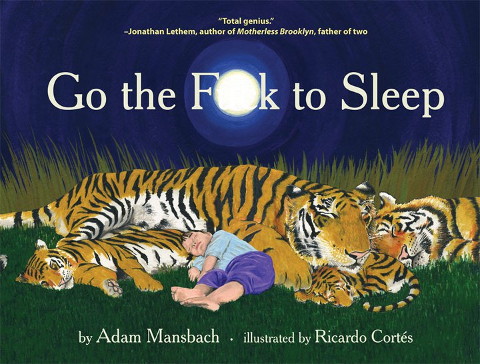
Published back in 2011, Go the F–k to Sleep, the playful children’s storybook meant for adults, became a big besteller. It topped Amazon’s bestseller list for a while. And, before you knew it, celebrities were giving public readings of the book. Perhaps you’ll recall Werner Herzog’s fun reading at The New York Public Library.
Samuel L. Jackson did the honors when the book was released in its official audio format. Now that reading is free to download thanks to Audible.com. Unabridged, it runs a mere 6 minutes. To download the audio, you will need to register with Audible. We hope you’ll get a good laugh out of it.
[PS: If you’re interested in other ways to download a free audio book from Audible, be sure to see their a 30-day free trial program. We have more info on that here.]
Related Content:
1,000 Free Audio Books: Download Great Books for FreeWerner Herzog Reads “Go the F**k to Sleep” in NYC (NSFW)
The First Children’s Picture Book, 1658′s Orbis Sensualium Pictus
Bob Dylan Classic, “Forever Young,” Animated for Children
Read More...
Deleted Scene from Almost Famous: Mom, “Stairway to Heaven” is Based on the Literature of Tolkien
If you came of age during the 1980s, you might associate Led Zeppelin’s “Stairway to Heaven” with junior high school dances — an awkward phase of life you’d just as soon forget. For me, it’s hard to think of “Stairway to Heaven” and not cringe. But if you first heard the song in 1971 (when it was released) or soon thereafter, perhaps you have better associations. That’s what filmmaker Cameron Crowe was partly trying to get across in this deleted scene from his 2000 film Almost Famous. In the clip, a high-school boy tries to coax his mother (played by the great Frances McDormand) into letting him write for Rolling Stone. Central to his pitch is the idea that rock music is intellectual, that “Stairway to Heaven” is based on the literature of Tolkien — something that has been debated by critics and scholars. As for why the scene didn’t make it into the movie, you’d think that it’s because of the song’s length. 8 minutes is a long time for a film to go without any dialogue. But apparently it came down to permissions. Crowe told Coming Soon.Net : “Led Zeppelin had already given us four songs at a nice price but they said, ‘Stairway to Heaven’ we’re not going to give to anybody, and we had already shot a scene that was to ‘Stairway to Heaven’ so what was great was we ended up putting the scene on the DVD and saying ‘Put your record on NOW and score it yourself.’ ” You can try that at home and see if it changes your thoughts on “Stairway to Heaven,” for better or for worse.
via Metafilter
Related Content:
Dutchman Masters the Art of Singing Led Zeppelin’s “Stairway to Heaven” Backwards
‘Stairway to Heaven’: Watch a Moving Tribute to Led Zeppelin at The Kennedy Center
Led Zeppelin Plays One of Its Earliest Concerts (Danish TV, 1969)
Hear Led Zeppelin’s Mind-Blowing First Recorded Concert Ever (1968)
Read More...Dimension X: The 1950s SciFi Radio Show That Dramatized Stories by Asimov, Bradbury, Vonnegut & More
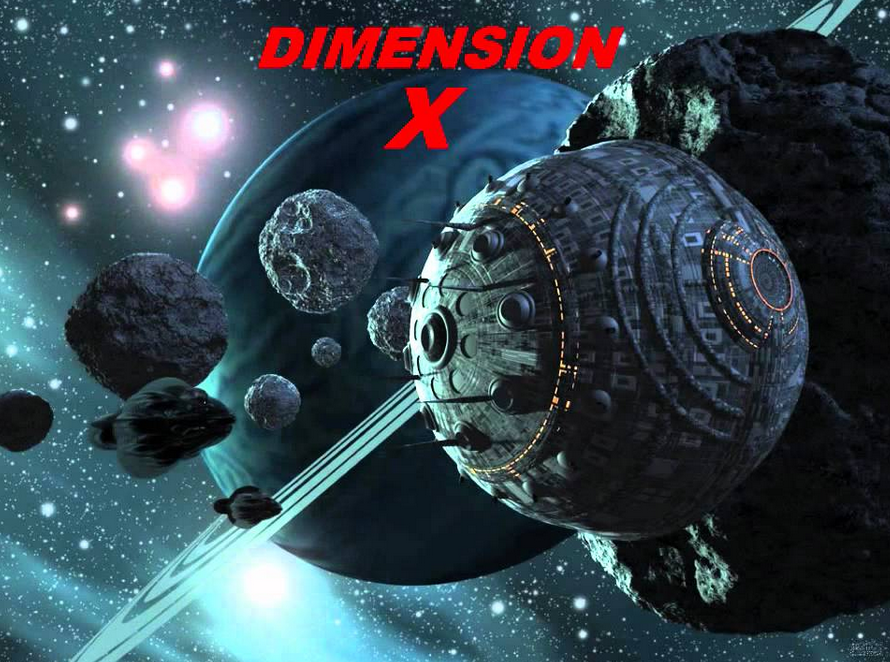
Enthusiasts of American radio drama usually place the form’s “Golden Age” as beginning in the 1920s and ending, almost at the stroke of television’s mass adoption, in the 1950s. NBC’s Dimension X, which ran in 1950 and 1951, came somewhat late to the game, but it did more than its part to give “old time radio” a strong last decade — indeed, perhaps its strongest. Other famous “serious” science-fiction programs had aired in the 20s, 30s, and 40s, but Dimension X made its mark by adapting short stories by acknowledged masters of the craft: Isaac Asimov, Ray Bradbury, Robert Heinlein, and even a non-genre-bound literary mind like Kurt Vonnegut. All of these world-creators knew well the value of imagination, and radio, in its way, stood then and remains today the most evocative, imagination-driven medium of them all. At the Internet Archive (certainly a more convenient old time radio source than the bootleg cassette tapes I used to have to buy) you can download all of Dimenson X’s “adventures in time and space, transcribed in future tense.”
If you don’t know where in this speculative field of time and space to begin, we’ve highlighted a few Dimension X episodes drawn from works of the most notable authors. June 10, 1950’s “The Green Hills of Earth”, based upon the Robert Heinlein story of the same name, relates the life of “Noisy” Rhysling, a blind space-age troubadour who realizes he must pay tribute to the planet he long ago left behind. The very next week’s “There Will Come Soft Rains”, one of Ray Bradbury’s many works adapted for the show, describes the apocalypse through the processes of the self-maintaining high-tech miracle house. June 17, 1951’s “Pebble in the Sky” takes its theme from the eponymous Isaac Asimov novel that thrusts a 20th-century everyman into a complex future of a galactic empire, a radioactive Earth, and mandatory euthanasia at age sixty. And in February 11, 1950’s “Report on the Barnhouse Effect”, only the show’s third broadcast, we hear the testimony of a telekinetic — one who, given that Kurt Vonnegut wrote the original story, it won’t surprise you to hear the government immediately (and haplessly) tries to weaponize.
“The Green Hills of Earth” (Robert Heinlein)
“There Will Come Soft Rains” (Ray Bradbury)
“Pebble in the Sky” (Isaac Asimov)
“Report on the Barnhouse Effect” (Kurt Vonnegut)
Related content:
Orson Welles Vintage Radio: The War of the Worlds That Petrified a Nation
Isaac Asimov’s Science Fiction Classic, The Foundation Trilogy, Dramatized for Radio (1973)
Colin Marshall hosts and produces Notebook on Cities and Culture and writes essays on cities, language, Asia, and men’s style. He’s at work on a book about Los Angeles, A Los Angeles Primer. Follow him on Twitter at @colinmarshall or on Facebook.
Read More...Botticelli’s 92 Surviving Illustrations of Dante’s Divine Comedy (1481)
Every true Renaissance man needed a wealthy patron, and many Italian artist-inventor-scholar-poets found theirs in Lorenzo de’Medici, scion of a Florentine dynasty and himself a scholar and poet. Lorenzo either sponsored directly or helped secure commissions for such 15th century art stars as Michelangelo Buonaroti and Leonardo da Vinci.
Among Lorenzo’s many artist friends was a painter who mostly disappeared from history until the late nineteenth century, when the rediscovery of his Primavera and Birth of Venus made him one of the most popular of Renaissance artists. I’m referring of course, to Sandro Botticelli, portraitist of Lorenzo de’Medici, his father, and grandfather and also, it turns out, illustrator of Dante Alighieri’s Divine Comedy.
In 1550, the so-called “father of art history” Giorgio Vasari recorded that “since Botticelli was a learned man, he wrote a commentary on part of Dante’s poem, and after illustrating the Inferno, he printed the work.” The painter also made a portrait of Dante, Vasari tells us, and drew sketches for engravings in the first Florentine edition of The Divine Comedy in 1481.
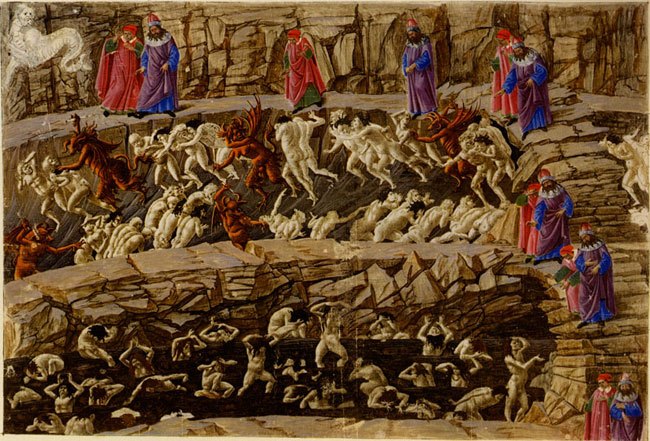
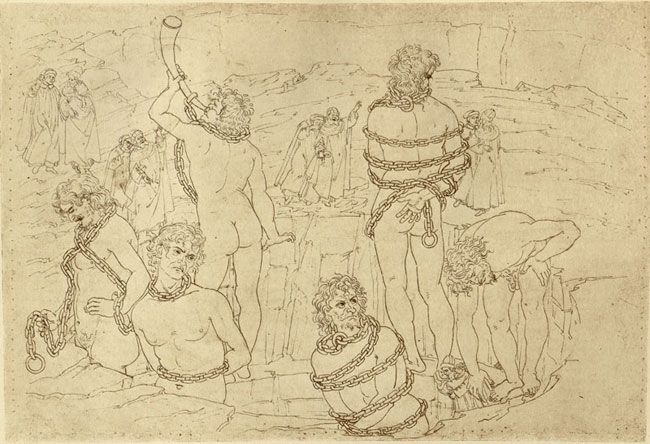
It seems, however, that Botticelli’s interest in Dante went much further than even Vasari knew. Sometime late in his career—after he had already achieved local renown in Florence—Botticelli promised his patron Lorenzo an illustrated Divine Comedy on sheepskin with a separate image for each Canto, something no artist had yet attempted. 92 of those illustrations survive, in various stages of completion, such as the two above, “Panderers, Flatterers” (top–the only drawing in color) and “Giants” (above), both from the Inferno.
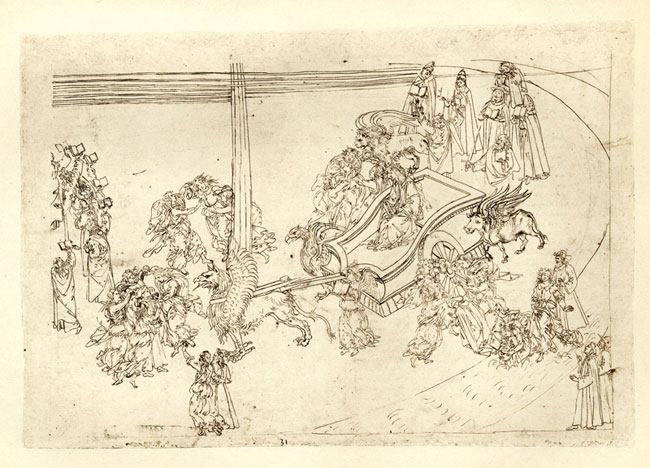
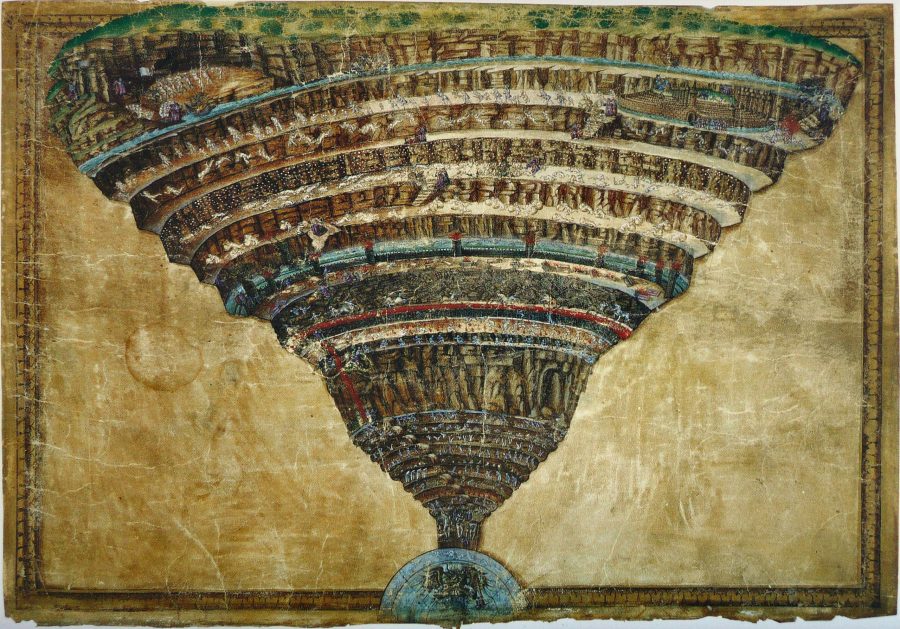
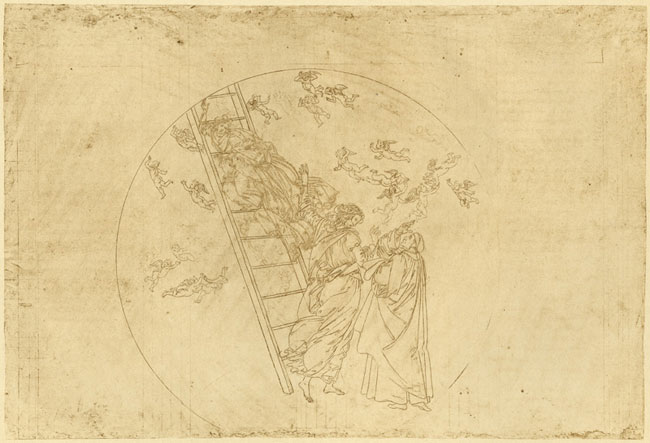
These are two of the most fully realized of the collection. According to art historian Jonathan K. Nelson, “Botticelli completed the outline drawings for nearly all the cantos, but only added colors for a few. The artist shows his ‘learning’ and artistic skill by representing each of the three realms each in a distinctive way.” Many of Botticelli’s drawings for the Purgatorio and Paradiso survive as well, but—like the books themselves—these are increasingly less detailed (and arguably less interesting). See “Dante’s Confession” from the Purgatorio above, his “Map of Hell” at the top, “Jacob’s Ladder” from the Paradiso below, and the remaining 88 illustrations at World of Dante.
Related Content:
Gustave Doré’s Dramatic Illustrations of Dante’s Divine Comedy
Alberto Martini’s Haunting Illustrations of Dante’s Divine Comedy (1901–1944)
Salvador Dalí’s 100 Illustrations of Dante’s The Divine Comedy
Josh Jones is a writer and musician based in Durham, NC. Follow him at @jdmagness.
Read More...Support Us
We're hoping to rely on loyal readers, rather than erratic ads. Please click the Donate button and support Open Culture. You can use Paypal, Venmo, Patreon, even Crypto! We thank you!

About Us

Open Culture scours the web for the best educational media. We find the free courses and audio books you need, the language lessons & educational videos you want, and plenty of enlightenment in between.
Advertise With Us

FREE UPDATES!
GET OUR DAILY EMAIL
Get the best cultural and educational resources on the web curated for you in a daily email. We never spam. Unsubscribe at any time.
FOLLOW ON SOCIAL MEDIA

Open Culture editor Dan Colman scours the web for the best educational media. He finds the free courses and audio books you need, the language lessons & movies you want, and plenty of enlightenment in between.
Advertise With Us

