Get Ancient Advice on Losing Weight, Sobering Up, Removing a Tattoo & More at Ask The Past
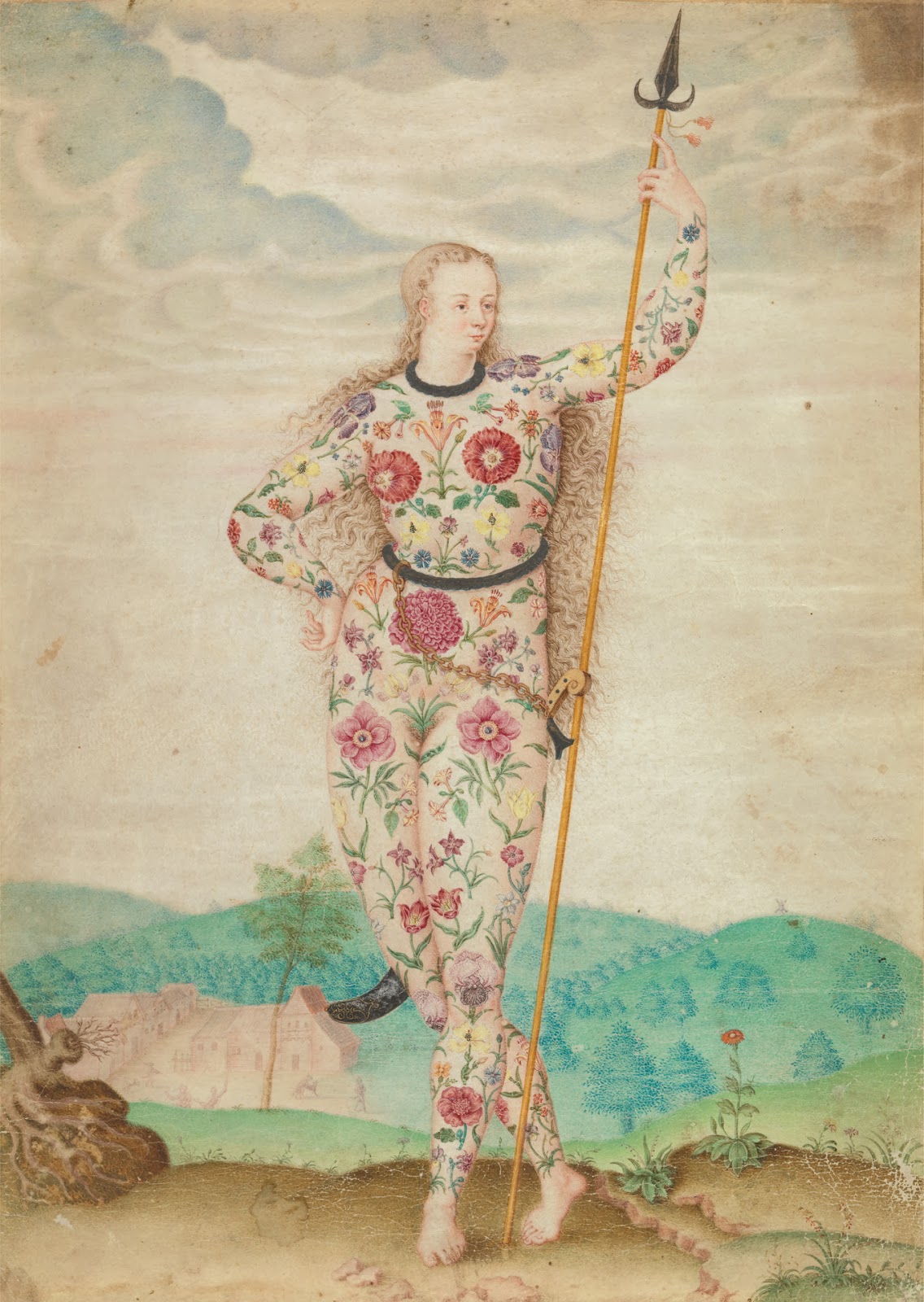
It may seem that we live in an era so technologically advanced that our daily concerns differ vastly from those of our ancestors. Nothing could be farther from the truth: we still wonder about the best ways to talk to the opposite sex, still devise outlandish hangover cures, and still obsess over how to lose weight. Considering that our forebears have, by now, repeatedly faced these niggling problems, would it not be wise to consult their wisdom? If you’re more inclined to take the advice of an ancient monk than write Dear Abby, you’re in luck. Ask The Past is here to help.
Run by Johns Hopkins’ Elizabeth Archibald, Ask The Past is a compendium of wisdom from the history books. Below, we’ve selected several pieces of ancient wisdom that may (or may not) help our readers overcome some common problems:
How To Remove A Tattoo (c. 500)
“They call stigmata things inscribed on the face or some other part of the body, for example on the hands of soldiers… In cases where we wish to remove such stigmata, we must use the following preparation… When applying, first clean thestigmata with niter, smear them with resin of terebinth, and bandage for five days… The stigmata are removed in twenty days, without great ulceration and without a scar.”
Aetius of Amida, Tetrabiblion (c. 500)
“That one shall not be drunke. Drink the iuyce of Yerrow fasting, and ye shall not be drunke, for no drinke; and if you were drunke it will make you sober: or else take the marrow of porke fasting, and ye shall not be drunke; and if you be drunke annoint your privie members in vineger, and ye shall waxe sober.”
The Booke of Pretty Conceits (1628)
The 16th Century “How To Lose That Belly In 14 Days!” (1595)
“An excellent and approved thing to make them slender, that are grosse. Let them eate three or foure cloves of Garlick, with as much of Bread and butter every morning and evening, first and last, neither eating nor drinking of three or foure howres after their taking of it in the morning for the space of fourteene days at the least: and drinke every day three draughts of the decoction of Fennell: that is, of the water wherein Fennell is sod, and well strained, fourteene dayes after the least, at morning, noone and night. I knewe a man that was marveilous grosse, & could not go a quarter of a mile, but was enforst to rest him a dosen times at the least: that with this medicine tooke away his grossenesse, and after could iourney verye well on foote.”
Thomas Lupton, A Thousand Notable Things (1595)
“To make hair and beard grow. Take honeybees in quantity and dry them in a basket by the fire, then make a powder of them, which you thin out with olive oil, and with this ointment, dab several times the place where you would like to have hair, and you will see miracles.”
Traicté nouveau, intitulé, bastiment de receptes (1539)
How to Make Someone Die of Laughter (13th century)
“Beneath the armpits are certain veins called “ticklish” which, if they are cut, cause a man to die of laughter.”
Richardus Salernitanus (13th c.?)
For more pearls of wisdom, including How To Walk On Water, How To Garden With Lobsters, and How To Tell Jokes, head over to Ask The Past.
Ilia Blinderman is a Montreal-based culture and science writer. Follow him at @iliablinderman, or read more of his writing at the Huffington Post.
Related Content:
George Washington’s 110 Rules for Civility and Decent Behavior
Lewis Carroll’s 8 Still-Relevant Rules For Letter-Writing
Read More...Watch Steven Soderbergh’s Creative Mashup of Hitchcock and Gus Van Sant’s Psycho Films
Last year, I had a chance to interview Steven Soderbergh for Side Effect, his final theatrical feature before his supposed retirement. During our discussion, he mused on the future of cinema.
There’s a new grammar of cinema out there. I’m convinced that there’s another sort of iteration to be had, and I don’t know what it is … I feel like we’re not taking advantage of how sophisticated we’ve gotten at reading the images. It’s not about the number of images or how fast those images come. It’s about loading each one with so many preexisting associations that the audience is doing a lot of work. No one has really challenged them before to mine all of these associations they have from seeing the images their whole lives.
When he was saying this, I confess that I had a hard time imagining what he was describing. But last week, Soderbergh uploaded a video to his website that might be what he had in mind – a mashup of Alfred Hitchcock’s masterpiece Psycho (1960) and Gus Van Sant’s shot-by-shot remake (1998). (You can watch a fragment above and the long, complete mashup here.)
For much of the piece, Soderbergh alternates between a scene from the original and one from the remake – Anne Heche, who plays Marion Crane in Van Sant’s version leaves her apartment for work and in the next scene, Janet Leigh shows up at the office. At other moments, he cuts back and forth within the scene; at one point the Marion from the remake is at a traffic light and sees her boss from the original movie. And during a few key points in the film — like the famed shower scene, which you can see above — Soderbergh does something different. That sequence opens with Heche disrobing and lathering up. But when the killer starts stabbing, Soderbergh jarringly overlays the original movie over top the remake, creating a disconcerting kaleidoscopic effect.
If there were any movie laden with “many preexisting associations,” it would be Psycho. All of Hitchcock’s simmering voyeurism, fetishism and general psychosexual weirdness come to a boil in this movie. Ever since it came out, filmmakers from Douglas Gordon to Brian De Palma have been trying to unpack its power.
When Van Sant unveiled his movie in 1998, audiences and critics alike were baffled. “Why bother,” seemed the general consensus. Indeed, Van Sant seems to have pulled off the enviable feat of snookering a Hollywood studio into funding a big-budget conceptual art film.
By intercutting the original with the copy, Soderbergh forces the audience to reappraise both by casting the greatness of Hitchcock’s movie and the oddness of Van Sant’s effort in a new light. You can watch the entire mashup here.
Related Content:
Who Directed the Psycho Shower Scene?: Hitchcock’s Film & Saul Bass’ Storyboards Side by Side
Alfred Hitchcock’s Rules for Watching Psycho (1960)
Alfred Hitchcock Tantalizes Audiences with a Playful Trailer for Psycho (1960)
21 Free Hitchcock Movies Online
Jonathan Crow is a Los Angeles-based writer and filmmaker whose work has appeared in Yahoo!, The Hollywood Reporter, and other publications. You can follow him at @jonccrow.
Read More...Oxford’s Free Course A Romp Through Ethics for Complete Beginners Will Teach You Right from Wrong
Oxford University professor Marianne Talbot has a number of excellent philosophy podcasts online, some of which we’ve previously featured on the site. Today, we bring you Talbot’s A Romp Through Ethics for Complete Beginners (Web — iTunesU — YouTube), which addresses one of philosophy’s central questions: what is the right way to conduct yourself in life?
The problem may, at first, seem somewhat trivial. “Live whichever way you want, as long as you’re going to be a good person,” you might say, shrugging off the question. But it’s really a great deal more complicated than that. What does being a “good” person entail? Should we emulate the actions of someone widely considered virtuous?
Does being good mean living by absolute rules? Say, never murder another human being? Or should we tailor our actions according to each situation, with the aim of achieving the greatest quantity of good as our only hard-and-fast rule? If the possibilities are making your head spin, you’re not alone: philosophers have done their best to figure out precisely what constitutes moral rights and wrongs since the days of Socrates.
Luckily, Talbot is ready to guide us through the complexities. True to its title, A Romp Through Ethics for Complete Beginners walks students through seven comprehensive lectures (watch them all above) on moral thought, providing a neatly-packaged survey of the field. Talbot begins by discussing some preconditions to moral reasoning, and then sets out Aristotle’s conception of righteous living, which consists of acting in a virtuous manner (if you smell something fishy about that statement, you’re on the right track). Talbot then proceeds to guide the class through some of philosophy’s most significant ethical paradigms, explaining Immanuel Kant’s idea of the inviolable categorical imperative and the moral calculus behind John Stuart Mill’s utilitarian thought.
A Romp Through Ethics for Complete Beginners is currently available on the University of Oxford website in both audio and video formats, and also on iTunesU and YouTube. You can find it listed in our collection of Free Online Philosophy Courses, alongside classes like Ancient and Medieval Philosophy, Aristotle: Ethics, and Bioethics: An Introduction, all part of our collection 1,700 Free Online Courses from Top Universities.
Ilia Blinderman is a Montreal-based culture and science writer. Follow him at @iliablinderman, or read more of his writing at the Huffington Post.
Related Content:
The Partially Examined Life: A Philosophy Podcast
The History of Philosophy Without Any Gaps – Peter Adamson’s Podcast Still Going Strong
Philosophy Bites: Podcasting Ideas From Plato to Singularity Since 2007
Read More...
The Strange and Wonderful Movie Posters from Ghana: The Matrix, Alien & More
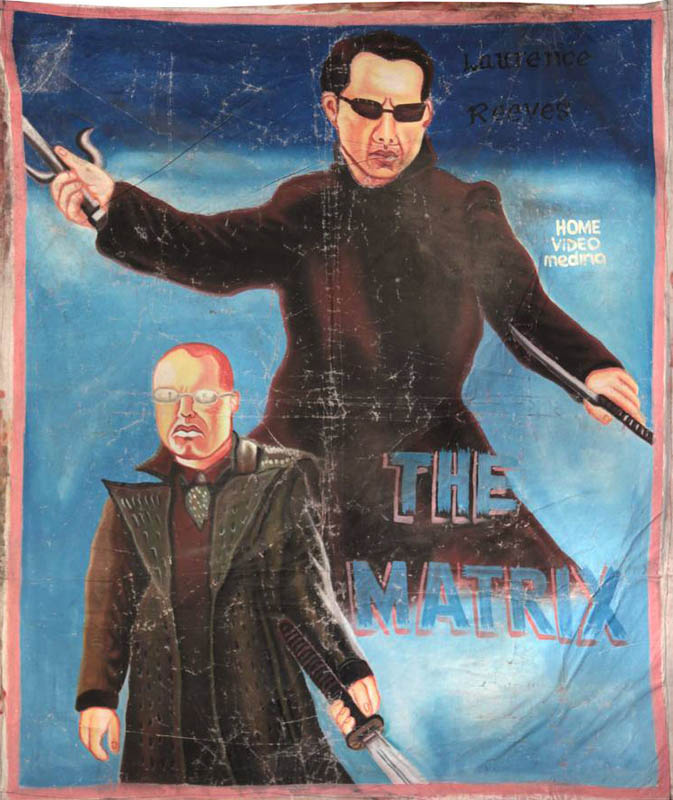
A cottage industry quickly sprang up in the early 80s when the first videocassettes made their way to the West African nation of Ghana. Armed with a TV, a VCR and a portable generator, mobile cinema operators set up shop in city neighborhoods and in rural berg and began to screen Hong Kong action flicks, Bollywood musicals, Nigerian movies and Hollywood blockbusters.
In order to pack their mobile theaters, promoters hired artists to design movies posters — usually the sole means of advertisement for a screening. As with a lot of advertisements in Sub-Saharan Africa, the posters were hand painted on large pieces of canvas or used flour bags. The artists – many of whom seem to have only a tenuous grasp on perspective and human anatomy — were oftentimes commissioned to design a poster without having seen the movie or even really knowing what a given movie star looks like.
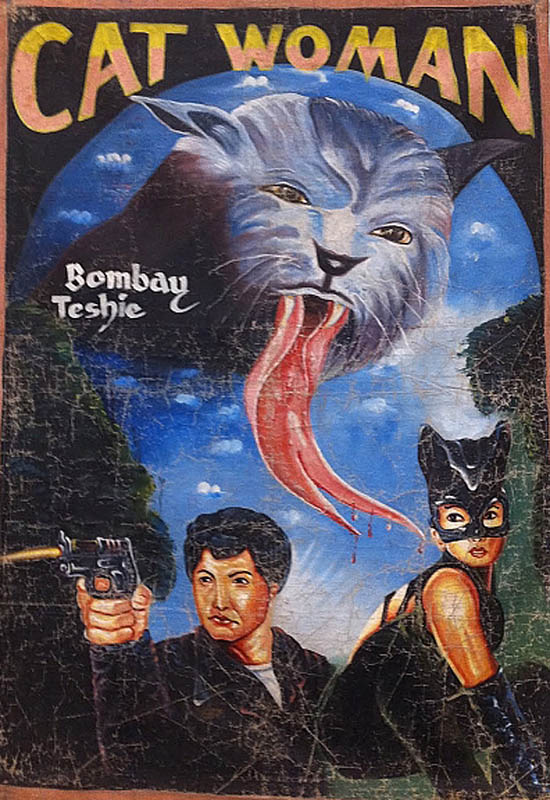
The resulting work is garish, lurid and wonderfully strange. In an age when the posters coming out of Hollywood are bland and forgettable, the rough-hewn style of these posters is a real joy — movie art with a pulse. The version of Catwoman as advertised in the Ghanaian poster above looks way more interesting than the actual movie.
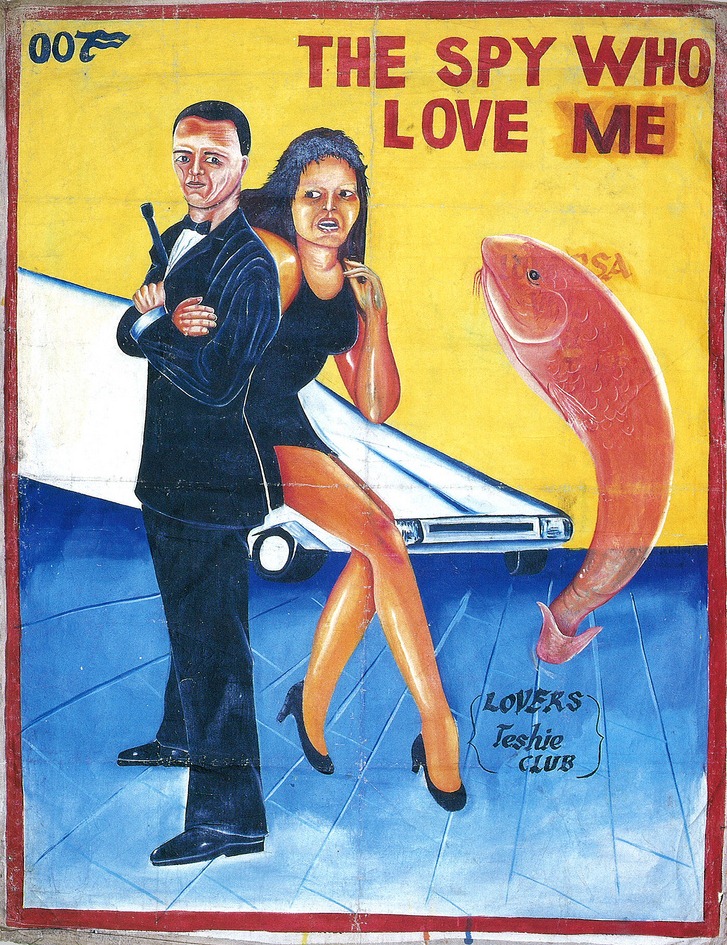
The golden age of the mobile movie theaters started to decline in the 90s when more and more people were able to buy their own equipment. About that same time, Western collectors started to buy and collect the posters.
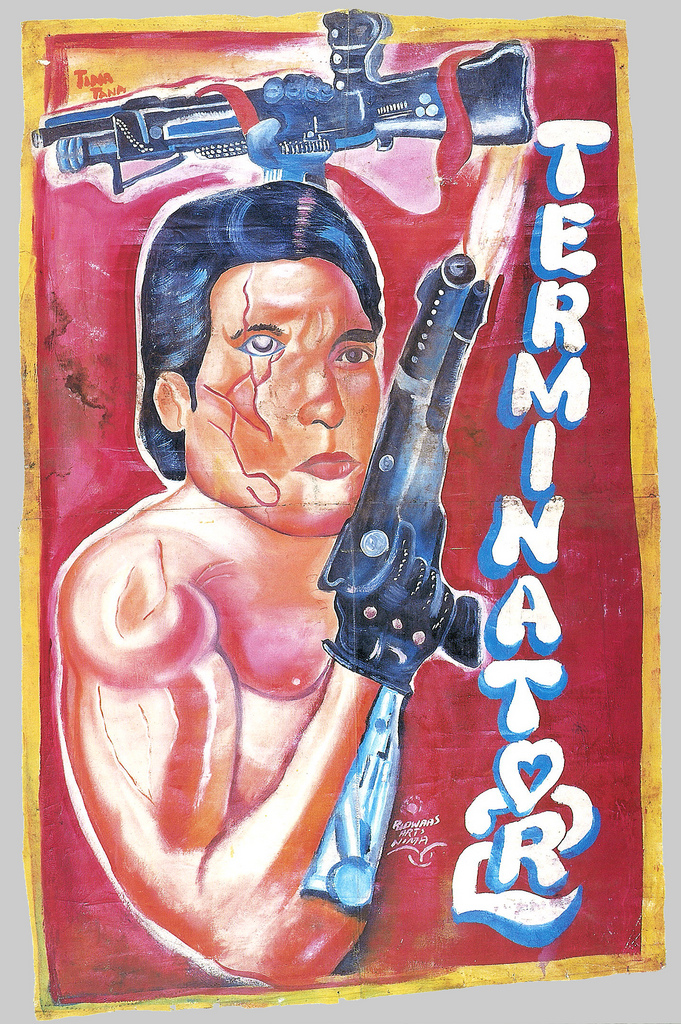
Jeaurs Oka Afutu, a veteran poster designer who got his start when he was a teenager, reflects on his work. “Action and war works a lot … and women too: both actually,” he said in an interview with CNN. “It all depends on what the audience prefers.”
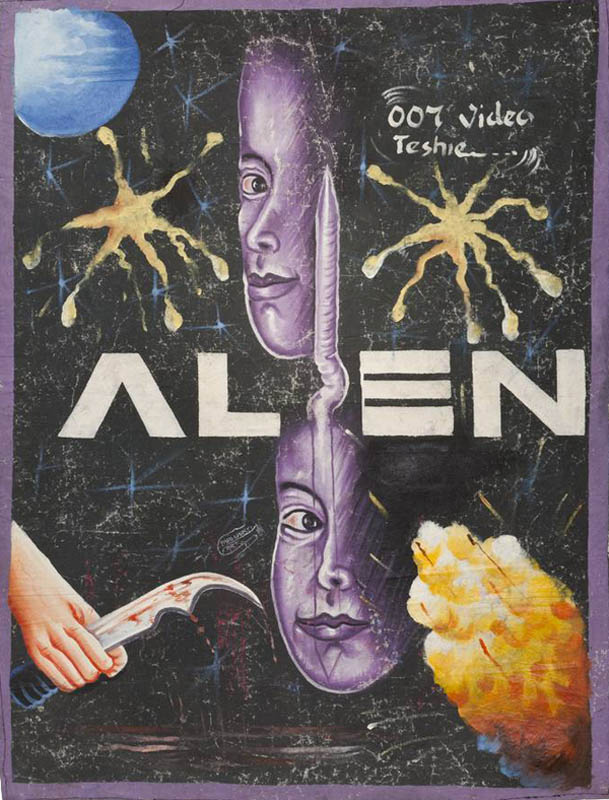
On this page, you’ll also find posters for The Matrix, The Terminator, The Spy Who Love Me [sic] and Alien. Find more of these remarkable posters at Twisted Sifter.
via CNN
Related Content:
Gaze at Global Movie Posters for Hitchcock’s Vertigo: U.S., Japan, Italy, Poland & Beyond
See Ottoman-Style Posters of Star Wars, The Godfather, Scarface and Other Classic Movies
50 Film Posters From Poland: From The Empire Strikes Back to Raiders of the Lost Ark
Jonathan Crow is a Los Angeles-based writer and filmmaker whose work has appeared in Yahoo!, The Hollywood Reporter, and other publications. You can follow him at @jonccrow.
Read More...Louis Armstrong Plays Historic Cold War Concerts in East Berlin & Budapest (1965)
In its effort to undermine the Soviet Union’s claims to cultural supremacy during the Cold War, the CIA founded the Congress of Cultural Freedom (CCF), which sponsored literary journals, ballet and modernist musical performances, and modern art exhibitions. The CCF also sent jazz musicians like Benny Goodman, Dizzy Gillespie, Dave Brubeck, and Duke Ellington to Europe, Latin America, and Africa. Foremost among the “Goodwill Jazz Ambassadors” was Louis Armstrong.
From 1955 on, Armstrong traveled the world, performing with his All Stars in support of U.S. interests abroad. Armstrong and his All Stars began their tours in Europe, where he became known as “Ambassador Satch.” His popularity among soldiers and civilians on both sides of the Berlin wall was legendary: “No boundary was closed to Louis,” said bassist Arvell Shaw. In a 1955 interview, Armstrong recalled that during a concert in West Berlin fans “slipped over the Iron Curtain” to hear him play.
Armstrong and the All Stars returned to Berlin several times in the following years. Ten years after their first European tour, they appeared in East Berlin in March of 1965, playing two sets, including popular tunes like “Hello, Dolly,” “How High the Moon,” and “Mack the Knife.” Jazz historian Ricky Riccardi observes that this was “a historic tour as it marked the first—and only—time Louis cracked the Iron Curtain.” Riccardi also calls Armstrong’s ensemble “one of the finest editions of Armstrong’s All Stars.” See the full East Berlin performance at the top of the post.
That same year, Armstrong and band brought their jazz diplomacy to Budapest, contributing to the longstanding love of American jazz in the Hungarian city, which now hosts a Louis Armstrong Festival in the nearby town of Vác (and once had its own “Satchmo Jazz Café”). You can hear a recording of the Budapest concert in two parts, above and below.
Despite the lasting impression Armstrong left all over the world, his tours involved some controversy. He faced criticism from African-American press at home when, during his 1965 East Berlin appearance, he “refused to be drawn into a discussion of the race problem in the United States.” He is quoted as saying “I’ve got no grievances… I have been treated fine in the South.” The censure was perhaps a little unfair. According to Riccardi, Armstrong reacted angrily to the violent abuse of protesters in Selma earlier that month, making headlines with the comment “They would beat Jesus if he was black and marched.” Nevertheless, once on the other side of the wall, Armstrong stayed mum on racial conflict in the Deep South.
Armstrong also took a very pointed stand for civil rights a few years earlier. In 1957, furious over Arkansas governor Orval Faubus’ use of National Guard troops to block the integration of Central High School in Little Rock, Armstrong famously canceled a tour to the Soviet Union and only resumed his ambassador tours after Eisenhower intervened. At first, learning of events in Little Rock, Armstrong told Larry Lubenow, a 21-year-old journalism student, “it’s getting almost so bad a colored man hasn’t got any country.” Eisenhower, he said, was “two faced” and had “no guts.”
It was in part this protest—and the hypocritical U.S. deployment of black performers abroad as representatives of rights they were denied at home—that inspired Dave Brubeck and his wife Iola to write a satirical jazz musical called The Real Ambassadors, featuring Louis Armstrong as a performer and main character of the drama (hear an excerpt above). In the musical “Pops,” Armstrong’s nickname in the business, travels to a fictional African country to spread the gospel of American democracy, well aware of the irony of his situation: “though he represents the government, the government don’t represent him.” Armstrong saw the musical—which had only one live performance, at the Monterey Jazz Festival in 1962—as an opportunity to address the complex racial issues surrounding his role as an ambassador for a segregated nation.
The setting of the Brubecks’ musical—where “Pops” the character is made “king or a day”—came from Armstrong’s tours in Africa, particularly his 1956 trip to Ghana as a guest of Kwame Nkrumah. As you can see in the film above—shot by CBS and Edward R. Murrow—Armstrong was indeed treated like a king on his arrival to the newly-independent West African country. Audiences, including Prime Minister Nkrumah, to whom Armstrong dedicates “Black and Blue,” sit rapt as the All Stars perform at the Opera House in Accra.
On his flight home after the tour, Armstrong rubbed elbows with another world leader, then-vice president Richard Nixon. Nixon, writes KCRW’s Tom Schnabel, “was a big fan, and chatted with Satchmo throughout the flight back.” Other versions of the story have Nixon meeting Armstrong at Dulles Airport, and some say the two met in Paris. In each version, however, Armstrong—who “loved marijuana and smoked it everyday”—gets Nixon to unwittingly carry a trumpet case full of “fine Ghanaian weed” through customs. The story may well be apocryphal, but it speaks to Armstrong’s canny, subversive role as America’s foremost “goodwill jazz ambassador.”
Related Content:
Dizzy Gillespie Runs for US President, 1964. Promises to Make Miles Davis Head of the CIA
How the CIA Secretly Funded Abstract Expressionism During the Cold War
Josh Jones is a writer and musician based in Durham, NC. Follow him at @jdmagness
Read More...Springsteen Plays Lorde’s “Royals” & AC/DC’s “Highway to Hell” in Down Under Concerts
Bruce Springsteen played in Auckland, New Zealand this past weekend and gave a big nod to Lorde, the country’s 17-year-old star. Above you can watch him perform a Springsteenian version of her mega hit, Royals. Then, in a little bit of a contrast, we have the Boss paying tribute to another great local act, AC/DC and their rock anthem “Highway to Hell.” That was at a show in Perth, Australia. And, if you want a little more contrast, don’t miss the Brisbane performance of the Bee Gee’s Stayin’ Alive. No joke. Stay tuned for some Men at Work.…
via Devour
Related Content:
Bruce Springsteen’s Personal Journey Through Rock ‘n’ Roll (Slightly NSFW But Simply Great)
Watch Bruce Springsteen Perform “Growin’ Up” as an Opening Act for Dave Van Ronk (1972)
Heat Mapping the Rise of Bruce Springsteen: How the Boss Went Viral in a Pre-Internet Era
Read More...
Twelve Years a Slave: Free eBook and Audio Book of the Memoir Behind the Film (1853)
On Sunday night, 12 Years a Slave was named best picture at the 86th Academy Awards. And John Ridley, the film’s screenwriter, won the Oscar for best adapted screenplay. Ridley’s screenplay was based, of course, on Twelve Years a Slave, the 1853 memoir by Solomon Northup. Published not long after Harriet Beecher Stowe wrote her famous novel about slavery, Uncle Tom’s Cabin, Northup’s book became something of a bestseller, selling around 30,000 copies, before falling into relative obscurity for the next century and a half. The 2013 film obviously put the memoir back into the spotlight, and it inspired someone (we’re not sure exactly who) to put the book on the web in a handsome, readable format. You can head over to 12years.org to read Northup’s dramatic personal account, free online. Or find somewhat less attractive (though still serviceable and downloadable) versions at Archive.org. For anyone interested in downloading Twelve Years a Slave as a free audio book, Librivox has you covered here: Free on iTunes — Free MP3 Stream/Download. Also, if you care to sign up for Audible.com’s 30-Day Free Trial you can download a version professionally narrated by Louis Gossett Jr. at no cost. Find more details on Audible’s Free Trial program here.
H/T @brainpicker
Related Content:
550 Free Audio Books: Download Great Books for Free
600 Free eBooks for iPad, Kindle & Other Devices
635 Free Movies Online: Great Classics, Indies, Noir, Westerns, etc.
Read More...Sketches by Guillermo del Toro Take You Inside the Director’s Wildly Creative Imagination
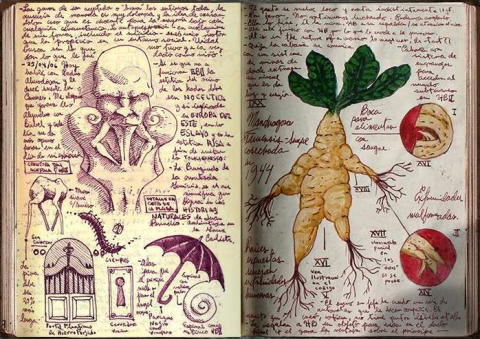
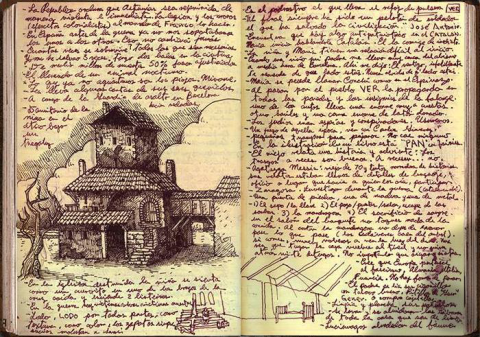
Guillermo del Toro is perhaps the most visually imaginative director alive today. Unlike Paul Thomas Anderson, with his infuriatingly perfect sense of visual balance, or Alfonso Cuarón, whose Oscar-sweeping Gravity required the invention of a novel, hyper-realistic filming method, del Toro doesn’t deal with real life. His domain is the fantastical. There’s a chance you may not have liked Pan’s Labyrinth, and even the distinct possibility that you’ve forgotten whatever it is that happens in Hellboy, (something about monsters? Saving the world?), but I’d wager that its menagerie of hellish demons has been seared into your memory.
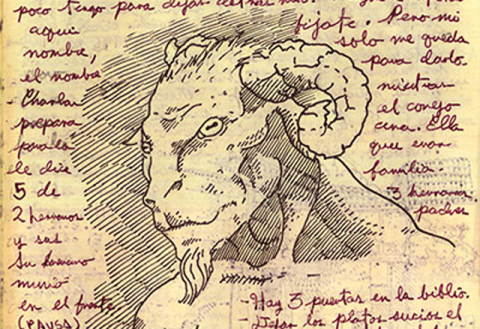
Late in 2013, del Toro released a voluminous book, entitled Cabinet of Curiosities: My Notebooks, Collections, and Other Obsessions. As he explains in the video above, the 256-page hardcover is a selection from his notebooks, where the director developed many of the monstrosities we’ve seen on screen.
The Guardian Sket notes that there’s something of da Vinci’s notebooks in del Toro’s records: the small, neat script, mixed in with the wonderfully detailed sketches, combine to give the impression of del Toro doing his best to record the torrent of his imagination before the thoughts disappear. In this post, we include a number of these images. The first three sketches, including the one above, depict del Toro’s drawings for Pan’s Labyrinth. The fourth is a page from his work on Hellboy, and the fifth is art for his most recent film, Pacific Rim.
From Pan’s Labyrinth
From Pacific Rim
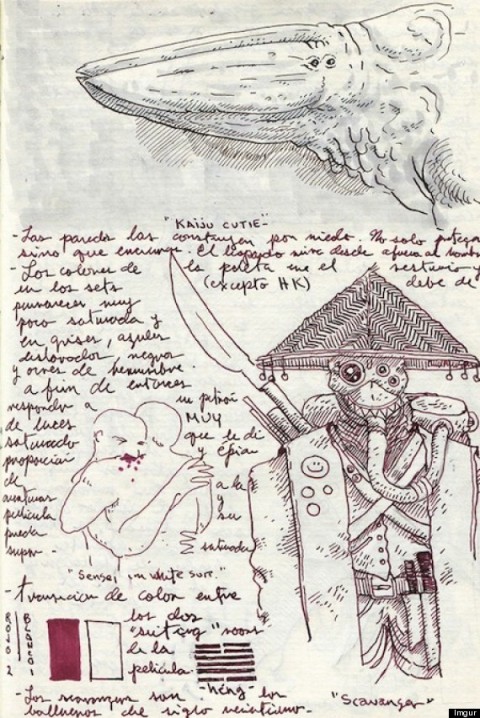
For those interested in viewing more of del Toro’s wonderfully bizarre sketches, a somewhat larger gallery is available here. The complete Cabinet of Curiosities: My Notebooks, Collections, and Other Obsessions is available at Amazon.com.
Ilia Blinderman is a Montreal-based culture and science writer. Follow him at @iliablinderman, or read more of his writing at the Huffington Post.
Related Content:
Filmmaking Advice from Quentin Tarantino and Sam Raimi
Lovecraft: Fear of the Unknown (Free Documentary)
Read More...The First Episode of The Johnny Cash Show, Featuring Bob Dylan & Joni Mitchell (1969)
Whether you hate-watched, love-watched, or ignored last night’s Academy Awards, you may be tired today of Oscar talk. Take a break, unplug yourself from Facebook and Twitter, and travel with me back in TV time. It’s June 7th, 1969, and The Johnny Cash Show makes its debut on ABC, recorded—where else?—at the Grand Ole Opry (“I wouldn’t do it anywhere but here”). Featuring Cash ensemble regulars June Carter, the Carter family, Carl Perkins, the Statler Brothers, and the Tennessee Three, the musical variety show has a definite showbiz feel. Even the opening credits give this impression, with a decidedly kitschy big band rendition of “Folsom Prison Blues.” This seems a far cry from the defiant Johnny Cash who gave the world the finger in a photo taken that same year during his San Quentin gig (where inmate Merle Haggard sat in attendance).
But showbiz Johnny Cash is still every inch the man in black, with his rough edges and refined musical tastes (in fact, Cash debuted the song “Man in Black” on a later episode). As daughter Rosanne showed us, Cash was a musicologist of essential Americana. His choice of musical guests for his debut program—Bob Dylan, Joni Mitchell, and Cajun fiddler Doug Kershaw—makes plain Cash’s love for folk songcraft. The appearance on the Cash show was Kershaw’s big break (two months later his “Louisiana Man” became the first song broadcast from the moon by the Apollo 12 astronauts). Mitchell, who plays “Both Sides Now” from her celebrated second album Clouds, was already a rising star. And Dylan was, well, Dylan. Even if all you know of Johnny Cash comes from the 2005 film Walk the Line, you’ll know he was a huge Dylan admirer. In the year The Johnny Cash Show debuted, the pair recorded over a dozen songs together, one of which, “Girl from the North Country,” appeared on Dylan’s country album Nashville Skyline. They play the song together, and Dylan plays that album’s “I Threw it All Away,” one of my all-time favorites.
Initially billed as “a lively new way to enjoy the summer!” The Johnny Cash Show had a somewhat rocky two-year run, occasionally running afoul of nervous network executives when, for example, Cash refused to censor the word “stoned” from Kris Kristofferson’s “Sunday Morning Coming Down” and brought on Pete Seeger, despite the furor his anti-war views caused elsewhere. Ever the iconoclast, Cash was also ever the consummate entertainer. After watching the first episode of his show, you might agree that Cash and friends could have carried the hour even without his famous guests. Cash opens with a spirited “Ring of Fire” and also plays “Folsom Prison Blues,” “The Wall,” and “Greystone Chapel.” And above, watch Johnny and June sing a sweet duet of Dylan’s “It Ain’t Me Babe.”
Related Content:
The 1969 Bob Dylan-Johnny Cash Sessions: Twelve Rare Recordings
Johnny Cash: Singer, Outlaw, and, Briefly, Television Host
Johnny Cash Sings “Man in Black” for the First Time, 1971
Josh Jones is a writer and musician based in Durham, NC. Follow him at @jdmagness
Read More...Read The Coming of Jap Herron, the Novel Mark Twain “Wrote” Through a Ouija Board After His Death (1917)
“You’re moving it!” “No I’m not; you’re moving it!” Thus spake the excitedly anxious preteen voices of an-early 1990s Parker Brothers Ouija board commercial I must have seen a hundred times in childhood. Though by then such devices had scant import outside the realm of sleepover parties, people took them more seriously in the early twentieth century, especially around the time of the First World War. While some must, alas, have regarded them as functional channels to the great beyond, others saw in them the potential to gin up major publishing events. Here we have one of the most curious, 1917’s small-town Missouri bildungsroman The Coming of Jap Herron, allegedly written Mark Twain, at that point seven years dead. A misplaced manuscript the executors of Twain’s estate found amid his papers, perhaps? Nothing of the sort: he began writing the book in 1915, as a disembodied spirit, through a Ouija board. So claimed, at least, one Emily Grant Hutchings, who brought Jap Herron to publication, presenting herself as a mere scribe taking dictation from the deceased icon of American literary humor.
She’d even had some contact, albeit through the mail, with the living one: “In their exchange of letters he had given her advice and, interestingly, also marked one of her letters with the words: ‘Idiot! Must preserve.’ ” That priceless find comes from The Public Domain Review’s post on Jap Herron, where you can read the short book in full, a much easier option than struggling to find a copy that survived the ceasing of publication and subsequent pulping ordered by Twain’s daughter. (You can also access it by clicking on the image above.) And how does this “final work,” whether composed as a pastiche or paranormally, hold up? “The humor impresses as a feeble attempt at imitation,” said a contemporary New York Times review, “and while there is now and then a strong sure touch of pathos or a swift and true revelation of human nature, the ‘sob stuff’ that oozes through many of the scenes, and the overdrawn emotions are too much for credulity. If this is the best that ‘Mark Twain’ can do by reaching across the barrier, the army of admirers that his works have won for him will all hope that he will hereafter respect that boundary.”
Related Content:
Mark Twain Plays With Electricity in Nikola Tesla’s Lab (Photo, 1894)
Mark Twain Wrote the First Book Ever Written With a Typewriter
Mark Twain Shirtless in 1883 Photo
Find Major Works by Twain in our Collection of Free eBooks and Free Audio Books
Colin Marshall hosts and produces Notebook on Cities and Culture and writes essays on cities, aesthetics, Asia, and men’s style. He’s at work on a book about Los Angeles, A Los Angeles Primer. Follow him on Twitter at @colinmarshall or on Facebook.
Read More...Support Us
We're hoping to rely on loyal readers, rather than erratic ads. Please click the Donate button and support Open Culture. You can use Paypal, Venmo, Patreon, even Crypto! We thank you!

About Us

Open Culture scours the web for the best educational media. We find the free courses and audio books you need, the language lessons & educational videos you want, and plenty of enlightenment in between.
Advertise With Us

FREE UPDATES!
GET OUR DAILY EMAIL
Get the best cultural and educational resources on the web curated for you in a daily email. We never spam. Unsubscribe at any time.
FOLLOW ON SOCIAL MEDIA

Open Culture editor Dan Colman scours the web for the best educational media. He finds the free courses and audio books you need, the language lessons & movies you want, and plenty of enlightenment in between.
Advertise With Us

