David Niven Presents an Oscar and Gets Interrupted by a Streaker (1974)
While Academy Awards will no doubt have its share of drama and surprises tonight, there will likely be few incidents of public nudity. That wasn’t always the case with the Oscars.
Back in 1974, co-host David Niven was about to introduce Elizabeth Taylor when a long-haired, mustached nude man sprinted out on stage and flashed a peace sign (among other things) before a shocked audience. He jogged from one side of the stage to the other before slipping off into the wings, as Henry Mancini cued his orchestra to start playing music.
After he regained his composure, Niven quipped, “Well, ladies and gentlemen, that was almost bound to happen… But isn’t it fascinating to think that probably the only laugh that man will ever get in his life is by stripping off and showing his shortcomings?”
Right from the beginning, however, some wondered if the incident wasn’t in fact planned by producers hoping to give the audience a jolt. Instead of arresting the streaker (and carting him directly to a Super Max prison, as would happen today), he was given a press conference.
At the press conference, he said that his name was Robert Opel and falsely described himself as an “advertising executive” during the press conference. When asked why he did the deed, Opel responded, “You know, people shouldn’t be ashamed of being nude in public. Besides — it is a hell of a way to launch a career.”
The incident did turn Opel briefly into a celebrity. He appeared (clothed) on the Mike Douglas Show and he was even hired to repeat the stunt at a party for Rudolph Nureyev and Marvin Hamlisch.
Though he was destined to go down in history as the naked Oscar guy, he was also an avant-garde artist and a leader in the nascent gay rights movement. After his brush with fame, Opel moved to the Bay Area where he founded Fey-Wey Studios, which was one of the first art galleries to showcase artists like Robert Mapplethorpe and Tom of Finland. He also staged an Anita Bryant look-alike contest at the height of the former beauty queen’s anti-gay public campaign. He was murdered in his gallery in 1979 during a bungled robbery.
Bay Area artist and photographer BIRON, who was friends with Opel during his San Francisco days, remembered him fondly. “Uncompromising and unapologetic, he blurred the lines between art and life as he traveled beyond the confines of accepted behavior. Harvey Milk and then Robert Opel both killed within a few months.”
Related Content:
Spielberg Reacts to the 1975 Oscar Nominations: ‘Commercial Backlash!’
33 Free Oscar Winning Films Available on the Web
80 Years of Academy Award Winning Films in Posters
Jonathan Crow is a Los Angeles-based writer and filmmaker whose work has appeared in Yahoo!, The Hollywood Reporter, and other publications. You can follow him at @jonccrow.
Read More...
Billy Corgan Performs an 8+ Hour Ambient Interpretation of Herman Hesse’s Siddhartha
Billy Corgan, the frontman of The Smashing Pumpkins, made this announcement on his Facebook page last week:
On 2/28 I’ll be doing a show at Madame ZuZu’s Teahouse [in Chicago]; start time noon, and due to nature of performance it’ll last 8–9 hours… As with all our events there is no charge. Performance will be centered around an ambient/musical interpretation of Hermann Hesse’s Siddhartha; built by modular synthesis, on the fly. Readings of the text to go hand in hand with whatever is created; + the first @Hexistential poster, and event t‑shirts too. Hope to see you there.
One fan quickly responded: “Film this, please. This sounds like a truly special event, one that I’d be humbled to take in, even if a recording is the only way to do so.” Luckily, his wish was granted.
Above and below, you can watch Corgan’s long ambient interpretation. And, in our Free eBooks and Free Audio Books collections, you can find a copy of Herman Hesse’s existential novel from 1922. As you watch the video, you’ll encounter what SPIN describes as “a reading of the book itself, combined with modular synth blips, bloops, and textures.” Settle in and enjoy.
R.E.M Plays “Radio Free Europe” on Their National Television Debut on The David Letterman Show (1983)
It’s hard for me to believe that we now live in a post‑R.E.M. world. Also a post-Sonic Youth world, post-Pixies world (as far as I’m concerned), etc. The bands of my errant youth are no more; sometimes it feels like all I can do is toss out the occasional, half-hearted “get off my lawn” or mumble bemusedly, “what’s a Lorde?” when contemplating the current state of music.
Yet all is not lost for “aging hipsters”—in the parlance of the blog Rock Turtleneck!. Though our pop culture may seem to slip into an irrelevant ice age, we can at least warm ourselves at the flickering screen, where Youtube caches troves of footage of our bygone heroes—like the video above of R.E.M. playing “Radio Free Europe” for their first appearance on TV in 1983.
Now, this was before the time of my fandom, which dates from the later 80s. Still, it’s always a joy to see one of my all time favorites roaring in their lionhearted youth.
The band appeared on Letterman, promoting their debut, Murmur. The venue is no surprise, given Dave’s consistent championing of instant-classic American artists. But after this appearance, they would not return to his show for another 12 years, this time to play “Crush With Eyeliner” in the midst of their 1995 Monster tour (above). I loved R.E.M. no less then, but they were pros by that time, not the scrappy, jangly Southern alt-rockers boldly challenging the orthodoxy of bloated stadium rock.
I think Rock Turtleneck! does not overstate its case in claiming that the band’s national television debut “was the college rock equivalent of The Beatles playing the Ed Sullivan Show in 1964.” Well, maybe just a little, but it’s still a pivotal moment in the history of alt-rock. Murmur appears as number 1 on this list of the “best albums of 1983”—calculated from “overall rankings in over 13,000 greatest album charts”—followed by other new wave and alternative classics like the Violent Femmes’s eponymous debut, The Police’s Synchronicity, U2’s War, Tom Wait’s Swordfishtrombones, and New Order’s Power, Corruption and Lies. Simpler times, simpler times….
If you would like to support the mission of Open Culture, consider making a donation to our site. It’s hard to rely 100% on ads, and your contributions will help us continue providing the best free cultural and educational materials to learners everywhere. You can contribute through PayPal, Patreon, and Venmo (@openculture). Thanks!
Related Content:
Two Very Early Concert Films of R.E.M., Live in ‘81 and ‘82
R.E.M.’s Final Encore (and an Early Concert from Germany)
R.E.M.’s “Losing My Religion” Reworked from Minor to Major Scale
Josh Jones is a writer and musician based in Durham, NC. Follow him at @jdmagness
Read More...Free App Lets You Play Chess With 23-Year-Old Norwegian World Champion Magnus Carlsen
Chess has been experiencing a surprising revival as of late, with the World Championships making headlines for the first time in years. As it was during the days of Bobby Fischer and later Garry Kasparov, the resurgence is largely the doing of one man: Norway’s 23-year-old chess phenom, Magnus Carlsen. After having attained the level of a grandmaster at the age of 13, Carlsen had a string of spectacular victories that culminated in his win over India’s Viswanathan Anand in the world championships this past November. Carlsen also holds the highest rating in the game’s history. Oh, and he beat Bill Gates in 79 seconds (here’s a video). What’s next for the reigning king of chess? A free iOS chess app, of course.
The Magnus Plays app, which allows users to play against a simulated Carlsen, was released this past Tuesday. If you’re worried that your technical prowess may not stack up against the new face of chess, don’t worry: the app relies on a vast database of moves that Carlsen used throughout the years, allowing you to play him anywhere from the ages of 5 to 23. I’m not a particularly adept chess player, but I didn’t have too much trouble with Carlsen at his youngest. The victory bolstered my confidence, so I decided to skip to Carlsen’s current 23-year-old self. As much as I’d like to discuss the outcome of the second game, it’s probably best to skim over the results. Suffice it to say that I have room for improvement. Luckily, the app also has a “Train With Me” section, where Carlsen provides video tutorials (some free, and some paid) on how to improve your game. If you’re feeling like you’ve lost a few IQ points after repeated bouts with Flappy Bird, Magnus Plays is a great alternative.
via Kottke.org
Ilia Blinderman is a Montreal-based culture and science writer. Follow him at @iliablinderman, or read more of his writing at the Huffington Post.
Related Content:
Watch Bill Gates Lose a Chess Match in 79 Seconds to the New World Chess Champion Magnus Carlsen
A Famous Chess Match from 1910 Reenacted with Claymation
Chess Rivals Bobby Fischer and Boris Spassky Meet in the ‘Match of the Century’
Read More...Oxford’s Free Course Critical Reasoning For Beginners Will Teach You to Think Like a Philosopher
 When I was younger, I often found myself disagreeing with something I’d read or heard, but couldn’t explain exactly why. Despite being unable to pinpoint the precise reasons, I had a strong sense that the rules of logic were being violated. After I was exposed to critical thinking in high school and university, I learned to recognize problematic arguments, whether they be a straw man, an appeal to authority, or an ad hominem attack. Faulty arguments are all-pervasive, and the mental biases that underlie them pop up in media coverage, college classes, and armchair theorizing. Want to learn how to avoid them? Look no further than Critical Reasoning For Beginners, the top rated iTunesU collection of lectures led by Oxford University’s Marianne Talbot.
Talbot builds the course from the ground up, and begins by explaining that arguments consist of a set of premises that, logically linked together, lead to a conclusion. She proceeds to outline the way to lay out an argument logically and clearly, and eventually, the basic steps involved in assessing its strengths and weaknesses. The six-part series, which was recorded in 2009, shows no sign of wear, and Talbot, unlike some philosophy professors, does a terrific job of making the content digestible. If you’ve got some time on your hands, the lectures, which average just over an hour in length, can be finished in less than a week. That’s peanuts, if you consider that all our knowledge is built on the foundations that this course establishes. If you haven’t had the chance to be exposed to a class on critical thought, I can’t recommend Critical Reasoning For Beginners with enough enthusiasm: there are few mental skills that are as underappreciated, and as central to our daily lives, as critical thinking.
Critical Reasoning For Beginners is currently available on the University of Oxford website in both audio and video formats, and also on iTunesU and YouTube. You can find it listed in our collection of Free Online Philosophy Courses, part of our collection of 1100 Free Online Courses.
Ilia Blinderman is a Montreal-based culture and science writer. Follow him at @iliablinderman, or read more of his writing at the Huffington Post.
Related Content:
The Partially Examined Life: A Philosophy Podcast
The History of Philosophy Without Any Gaps – Peter Adamson’s Podcast Still Going Strong
Philosophy Bites: Podcasting Ideas From Plato to Singularity Since 2007
Read More...Gaze at Global Movie Posters for Hitchcock’s Vertigo: U.S., Japan, Italy, Poland & Beyond

Alfred Hitchcock’s Vertigo might have been a critical disappointment when it came out in 1958, but it definitely had one of the most eye-catching poster designs in cinema history.
The poster was designed by Saul Bass who also did the movie’s groundbreaking title sequence. It features hand-drawn male and female figures that are standing before a massive white spiral against a striking orange background. It might be one of the few movie posters out there that you can identify from 100 yards away.

Vertigo played around the world and, as you can see below, the movie’s poster changed greatly to appeal to a local audience. The differences are fascinating.
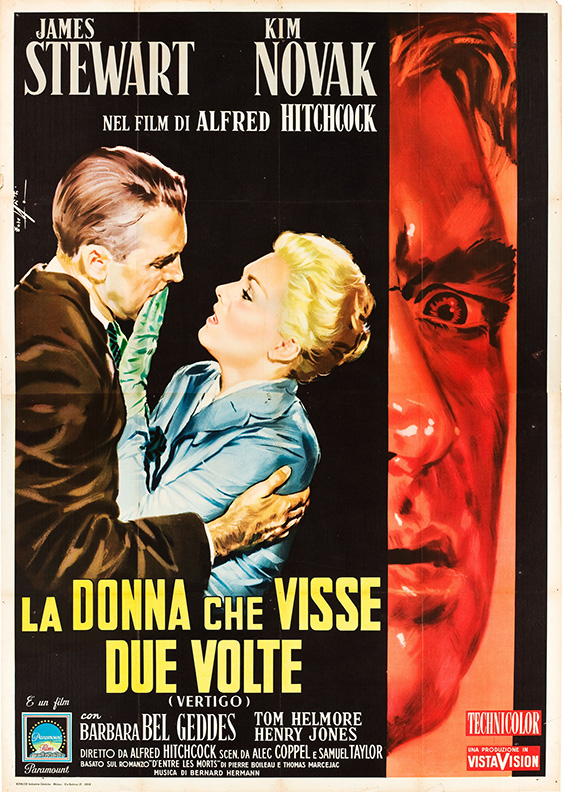
English-speaking countries tended to keep Bass’s spiral while foreign-language markets largely did not. The Japanese poster plays up the romantic elements of Vertigo while the Italian poster focuses on the psychological weirdness of the movie. And the Polish poster – which ditches all references to Saul Bass’s design and, really, anything from the film itself – is pretty damned awesome.

Of course, in the years since Vertigo’s release, its reputation has only grown. And in a 2012, Sight and Sound magazine put Vertigo at the top of their list for Greatest Films of All Time, unseating Citizen Kane. Maybe the poster had something to do with that.
Bonus Poster from Belgium

Related Content:
Who Directed the Psycho Shower Scene?: Hitchcock’s Film & Saul Bass’ Storyboards Side by Side
Alfred Hitchcock’s Rules for Watching Psycho (1960)
A Brief Visual Introduction to Saul Bass’ Celebrated Title Designs
21 Free Hitchcock Movies Online
Jonathan Crow is a Los Angeles-based writer and filmmaker whose work has appeared in Yahoo!, The Hollywood Reporter, and other publications. You can follow him at @jonccrow.
Read More...Enter the Hannah Arendt Archives & Discover Rare Audio Lectures, Manuscripts, Marginalia, Letters, Postcards & More

The work of Hannah Arendt has been in the press recently for two reasons in particular: first, the 50th anniversary of her book Eichmann in Jerusalem, published in 1963 from reports she filed for The New Yorker on the 1961 trial of the archetypal Nazi bureaucrat. Then there is Margarethe von Trotta’s 2012 biopic Hannah Arendt, starring German actress Barbara Sukowa as the German Jewish philosopher. Recent coverage of the book and the film have focused on Arendt’s reputation as a philosophical journalist most closely identified with the famous descriptive phrase “the banality of evil,” a comment on Adolf Eichmann as an exemplar of genocidal murderers who, as the well-worn defense goes, were “just following orders.”
Arendt scholar Roger Berkowitz argues that this reading of Arendt’s book is a profound misreading. Eichmann in Jerusalem was divisive, setting critics against each other in efforts to vindicate or castigate its author. The controversy, however, at the time of publication and again in the recent re-evaluation, has the unfortunate effect of obscuring the breadth of Arendt’s philosophical thinking apart from Eichmann and Nazism. Those interested in connecting with Arendt’s life, scholarship, and philosophical insight can find a wealth of archival materials online from the collections of Bard College and the Library of Congress. Today, we highlight several items in those collections that may be of interest, including the Library of Congress’s scanned copy of the final typescript of Eichmann in Jerusalem.
First, directly above, hear Arendt’s speech “Power & Violence.” The lecture re-iterates ideas Arendt expressed more fully in a lengthy 1969 essay published by the New York Review of Books as “Reflections on Violence” and as a book titled On Violence. In the lecture and the essay, Arendt references the work of thinkers like Friedrich Engels and, especially, Frantz Fanon in a critical discussion of the roles racism and ideology play in state violence.
That same year Arendt delivered a series of lectures for a Spring semester course at The New School for Social Research called “Philosophy and Politics: What is Political Philosophy.” This fascinating investigation grapples not only with political philosophy, but philosophy in general as a meaningful activity. You can view the full typescripts of her course lectures here.
The Library of Congress has also digitized much of Arendt’s correspondence and uploaded images of her letters, including some to and from such well-known figures as W.H. Auden, Lionel Trilling, and Alfred Kazin (most of Arendt’s letters are only available for viewing onsite at the Library of Congress, The New School University, or the University of Oldenburg).

In addition to the “Arendt Marginalia” section, Bard hosts a gallery that includes “inscribed books, journals & manuscripts,” “artwork & photographs,” and “postcards and other correspondence” (such as the above postcard from Walter Benjamin, addressed to “Hannah Stern,” her married name at the time).
Lastly, for an excellent overview of Arendt’s life and work that puts all of the above materials in context, see the Library of Congress’s “Biographical Note” and be sure to read “Three Essays: The Role of Experience in Hannah Arendt’s Political Thought” by Jerome Kohn, director of the New School’s Hannah Arendt Center. As many know, Arendt, and many other German Jewish intellectuals who fled the Nazis, found a home at New York’s New School for Social Research (now New School University). And we have the New School (and an Andrew W. Mellon Foundation grant) to thank for the Library of Congress’s vast, digitized collection of Arendt’s papers, which preserves her legacy for generations to come.
Related Content:
Hannah Arendt Discusses Philosophy, Politics & Eichmann in Rare 1964 TV Interview
Hannah Arendt’s Original Articles on “the Banality of Evil” in the New Yorker Archive
The Trial of Adolf Eichmann at 50
Josh Jones is a writer and musician based in Durham, NC. Follow him at @jdmagness
Read More...Rare Audio: William Faulkner Names His Best Novel, And the First Faulkner Novel You Should Read
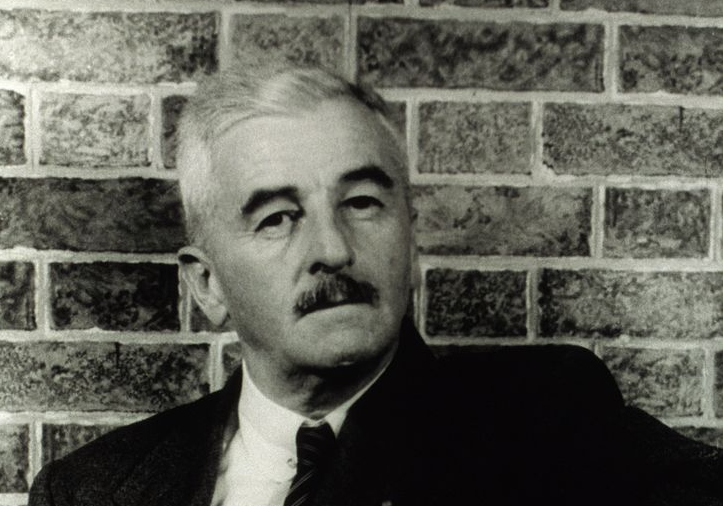
Image by Carl Van Vechten, via Wikimedia Commons
My two favorite William Faulkner novels are, without a doubt, Absalom, Absalom! and The Sound and The Fury. After readers get thrust into the narrators’ dizzying streams of consciousness, both books mount in tension to a frightful, almost unbearable pitch, before reaching their grim, cathartic climaxes. I’ve always felt that the white-hot intensity of the novels meant that, somehow, they had meant more to Faulkner than his other writings. According to an audio recording of Faulkner himself, it turns out that I was half right.
In 1957 and 1958, Faulkner served as the Writer-in-Residence at the University of Virginia at Charlottesville, and today the school retains what is likely to be the largest Faulkner archive in the world. In addition to Faulkner’s private library, original manuscripts, letters, and personal effects, the archive also contains hours upon hours of Faulkner’s Q & A sessions, speeches, and readings. In April of 1957, during a class lecture, a student asked Faulkner about his favorite novel. Listen to the audio clip here:
Unidentified participant: Mr. Faulkner, what do you consider your best book?
William Faulkner: The one that—that failed the most tragically and the most splendidly. That was The Sound and the Fury—the one I worked at the longest, the hardest, that was to me the—the most passionate and moving idea, and made the most splendid failure. That’s the one that’s my—I consider the best, not—well, best is the wrong word—that’s the one that I love the most.
The recordings themselves are a fascinating resource, with Faulkner commenting widely on his novels and stories. Where else could one hear, for example, what the author considered the best book to start with when reading him? Listen here.
Unidentified participant: Do you think that there’s a particular order in which your works should be read […]? Many people have offered a sequence. Do you think there’s a particular sequence that your books should be read in?
William Faulkner: Probably to begin with a book called Sartoris. That has the germ of my apocrypha in it. A lot of the characters are postulated in that book. I’d say that’s a good one to begin with.
For those interested in learning more about Faulkner and his writing, the Southeast Missouri State University’s Center for Faulkner Studies is offering a promising MOOC called Faulkner 101, led by the Center’s founder, Dr. Robert Hamblin, as well as its current director, Dr. Chris Rieger. You can sign up now. Or find countless other MOOCs in our big, ever-expanding list of MOOCs.
Ilia Blinderman is a Montreal-based culture and science writer. Follow him at @iliablinderman, or read more of his writing at the Huffington Post.
Related Content:
William Faulkner Reads from As I Lay Dying
William Faulkner Audio Archive Goes Online
The Art of William Faulkner: Drawings from 1916–1925
Read More...George Washington’s 110 Rules for Civility and Decent Behavior

In “George Washington’s Extreme Makeover,” novelist Douglas Coupland imagines the first President of the United States of America science-fictionally transported “from atop his horse somewhere in the Virginia countryside into a Level 3 clean room 500ft beneath that exact same spot some 230-odd years later, circa 2014” where “a crew of doctors, dentists and exodontists wearing hazmat suits” would heal his every 18th-century ailment and replace his every failing 18th-century body part. All of Washington’s military and political accomplishments sound even more impressive in light of his lifetime of severe bodily (and especially dental, though not involving wood) discomfort, but even if his admirers can’t yet pull him ahead in time for such thorough physical adjustments, they can, right here and now, pay the best-known founding father tribute by following his recommended behavioral adjustments, codified in his rules of civility.
“As a young schoolboy in Virginia,” says an NPR feature on the subject, “George Washington took his first steps toward greatness by copying out by hand a list of 110 ‘Rules of Civility & Decent Behavior in Company and Conversation.’ Based on a 16th-century set of precepts compiled for young gentlemen by Jesuit instructors, the Rules of Civility were one of the earliest and most powerful forces to shape America’s first president, says historian Richard Brookhiser.” Brookhiser’s book Rules of Civility: The 110 Precepts That Guided Our First President in War and Peace appeared a decade ago, but you can still read the rules themselves (“for ease of reading, punctuation and spelling have been modernized”) below:
1. Every action done in company ought to be with some sign of respect to those that are present.
2. When in company, put not your hands to any part of the body not usually discovered.
3. Show nothing to your friend that may affright him.
4. In the presence of others, sing not to yourself with a humming voice, or drum with your fingers or feet.
5. If you cough, sneeze, sigh or yawn, do it not loud but privately, and speak not in your yawning, but put your handkerchief or hand before your face and turn aside.
6. Sleep not when others speak, sit not when others stand, speak not when you should hold your peace, walk not on when others stop.
7. Put not off your clothes in the presence of others, nor go out of your chamber half dressed.
8. At play and attire, it’s good manners to give place to the last comer, and affect not to speak louder than ordinary.
9. Spit not into the fire, nor stoop low before it; neither put your hands into the flames to warm them, nor set your feet upon the fire, especially if there be meat before it.
10. When you sit down, keep your feet firm and even, without putting one on the other or crossing them.
11. Shift not yourself in the sight of others, nor gnaw your nails.
12. Shake not the head, feet, or legs; roll not the eyes; lift not one eyebrow higher than the other, wry not the mouth, and bedew no man’s face with your spittle by approaching too near him when you speak.
13. Kill no vermin, or fleas, lice, ticks, etc. in the sight of others; if you see any filth or thick spittle put your foot dexterously upon it; if it be upon the clothes of your companions, put it off privately, and if it be upon your own clothes, return thanks to him who puts it off.
14. Turn not your back to others, especially in speaking; jog not the table or desk on which another reads or writes; lean not upon anyone.
15. Keep your nails clean and short, also your hands and teeth clean, yet without showing any great concern for them.
16. Do not puff up the cheeks, loll not out the tongue with the hands or beard, thrust out the lips or bite them, or keep the lips too open or too close.
17. Be no flatterer, neither play with any that delight not to be played withal.
18. Read no letter, books, or papers in company, but when there is a necessity for the doing of it, you must ask leave; come not near the books or writtings of another so as to read them unless desired, or give your opinion of them unasked. Also look not nigh when another is writing a letter.
19. Let your countenance be pleasant but in serious matters somewhat grave.
20. The gestures of the body must be suited to the discourse you are upon.
21. Reproach none for the infirmities of nature, nor delight to put them that have in mind of thereof.
22. Show not yourself glad at the misfortune of another though he were your enemy.
23. When you see a crime punished, you may be inwardly pleased; but always show pity to the suffering offender.
24. Do not laugh too loud or too much at any public spectacle.
25. Superfluous compliments and all affectation of ceremonies are to be avoided, yet where due they are not to be neglected.
26. In putting off your hat to persons of distinction, as noblemen, justices, churchmen, etc., make a reverence, bowing more or less according to the custom of the better bred, and quality of the persons. Among your equals expect not always that they should begin with you first, but to pull off the hat when there is no need is affectation. In the manner of saluting and resaluting in words, keep to the most usual custom.
27. ‘Tis ill manners to bid one more eminent than yourself be covered, as well as not to do it to whom it is due. Likewise he that makes too much haste to put on his hat does not well, yet he ought to put it on at the first, or at most the second time of being asked. Now what is herein spoken, of qualification in behavior in saluting, ought also to be observed in taking of place and sitting down, for ceremonies without bounds are troublesome.
28. If any one come to speak to you while you are are sitting stand up, though he be your inferior, and when you present seats, let it be to everyone according to his degree.
29. When you meet with one of greater quality than yourself, stop and retire, especially if it be at a door or any straight place, to give way for him to pass.
30. In walking, the highest place in most countries seems to be on the right hand; therefore, place yourself on the left of him whom you desire to honor. But if three walk together the middest place is the most honorable; the wall is usally given to the most worthy if two walk together.
31. If anyone far surpasses others, either in age, estate, or merit, yet would give place to a meaner than himself in his own lodging or elsewhere, the one ought not to except it. So he on the other part should not use much earnestness nor offer it above once or twice.
32. To one that is your equal, or not much inferior, you are to give the chief place in your lodging, and he to whom it is offered ought at the first to refuse it, but at the second to accept though not without acknowledging his own unworthiness.
33. They that are in dignity or in office have in all places precedency, but whilst they are young, they ought to respect those that are their equals in birth or other qualities, though they have no public charge.
34. It is good manners to prefer them to whom we speak before ourselves, especially if they be above us, with whom in no sort we ought to begin.
35. Let your discourse with men of business be short and comprehensive.
36. Artificers and persons of low degree ought not to use many ceremonies to lords or others of high degree, but respect and highly honor then, and those of high degree ought to treat them with affability and courtesy, without arrogance.
37. In speaking to men of quality do not lean nor look them full in the face, nor approach too near them at left. Keep a full pace from them.
38. In visiting the sick, do not presently play the physician if you be not knowing therein.
39. In writing or speaking, give to every person his due title according to his degree and the custom of the place.
40. Strive not with your superior in argument, but always submit your judgment to others with modesty.
41. Undertake not to teach your equal in the art himself professes; it savors of arrogancy.
42. Let your ceremonies in courtesy be proper to the dignity of his place with whom you converse, for it is absurd to act the same with a clown and a prince.
43. Do not express joy before one sick in pain, for that contrary passion will aggravate his misery.
44. When a man does all he can, though it succeed not well, blame not him that did it.
45. Being to advise or reprehend any one, consider whether it ought to be in public or in private, and presently or at some other time; in what terms to do it; and in reproving show no signs of cholor but do it with all sweetness and mildness.
46. Take all admonitions thankfully in what time or place soever given, but afterwards not being culpable take a time and place convenient to let him know it that gave them.
47. Mock not nor jest at any thing of importance. Break no jests that are sharp, biting, and if you deliver any thing witty and pleasant, abstain from laughing thereat yourself.
48. Wherein you reprove another be unblameable yourself, for example is more prevalent than precepts.
49. Use no reproachful language against any one; neither curse nor revile.
50. Be not hasty to believe flying reports to the disparagement of any.
51. Wear not your clothes foul, or ripped, or dusty, but see they be brushed once every day at least and take heed that you approach not to any uncleaness.
52. In your apparel be modest and endeavor to accommodate nature, rather than to procure admiration; keep to the fashion of your equals, such as are civil and orderly with respect to time and places.
53. Run not in the streets, neither go too slowly, nor with mouth open; go not shaking of arms, nor upon the toes, kick not the earth with your feet, go not upon the toes, nor in a dancing fashion.
54. Play not the peacock, looking every where about you, to see if you be well decked, if your shoes fit well, if your stockings sit neatly and clothes handsomely.
55. Eat not in the streets, nor in the house, out of season.
56. Associate yourself with men of good quality if you esteem your own reputation; for ’tis better to be alone than in bad company.
57. In walking up and down in a house, only with one in company if he be greater than yourself, at the first give him the right hand and stop not till he does and be not the first that turns, and when you do turn let it be with your face towards him; if he be a man of great quality walk not with him cheek by jowl but somewhat behind him, but yet in such a manner that he may easily speak to you.
58. Let your conversation be without malice or envy, for ’tis a sign of a tractable and commendable nature, and in all causes of passion permit reason to govern.
59. Never express anything unbecoming, nor act against the rules moral before your inferiors.
60. Be not immodest in urging your friends to discover a secret.
61. Utter not base and frivolous things among grave and learned men, nor very difficult questions or subjects among the ignorant, or things hard to be believed; stuff not your discourse with sentences among your betters nor equals.
62. Speak not of doleful things in a time of mirth or at the table; speak not of melancholy things as death and wounds, and if others mention them, change if you can the discourse. Tell not your dreams, but to your intimate friend.
63. A man ought not to value himself of his achievements or rare qualities of wit; much less of his riches, virtue or kindred.
64. Break not a jest where none take pleasure in mirth; laugh not aloud, nor at all without occasion; deride no man’s misfortune though there seem to be some cause.
65. Speak not injurious words neither in jest nor earnest; scoff at none although they give occasion.
66. Be not froward but friendly and courteous, the first to salute, hear and answer; and be not pensive when it’s a time to converse.
67. Detract not from others, neither be excessive in commanding.
68. Go not thither, where you know not whether you shall be welcome or not; give not advice without being asked, and when desired do it briefly.
69. If two contend together take not the part of either unconstrained, and be not obstinate in your own opinion. In things indifferent be of the major side.
70. Reprehend not the imperfections of others, for that belongs to parents, masters and superiors.
71. Gaze not on the marks or blemishes of others and ask not how they came. What you may speak in secret to your friend, deliver not before others.
72. Speak not in an unknown tongue in company but in your own language and that as those of quality do and not as the vulgar. Sublime matters treat seriously.
73. Think before you speak, pronounce not imperfectly, nor bring out your words too hastily, but orderly and distinctly.
74. When another speaks, be attentive yourself and disturb not the audience. If any hesitate in his words, help him not nor prompt him without desired. Interrupt him not, nor answer him till his speech be ended.
75. In the midst of discourse ask not of what one treats, but if you perceive any stop because of your coming, you may well entreat him gently to proceed. If a person of quality comes in while you’re conversing, it’s handsome to repeat what was said before.
76. While you are talking, point not with your finger at him of whom you discourse, nor approach too near him to whom you talk, especially to his face.
77. Treat with men at fit times about business and whisper not in the company of others.
78. Make no comparisons and if any of the company be commended for any brave act of virtue, commend not another for the same.
79. Be not apt to relate news if you know not the truth thereof. In discoursing of things you have heard, name not your author. Always a secret discover not.
80. Be not tedious in discourse or in reading unless you find the company pleased therewith.
81. Be not curious to know the affairs of others, neither approach those that speak in private.
82. Undertake not what you cannot perform but be careful to keep your promise.
83. When you deliver a matter do it without passion and with discretion, however mean the person be you do it to.
84. When your superiors talk to anybody hearken not, neither speak nor laugh.
85. In company of those of higher quality than yourself, speak not ’til you are asked a question, then stand upright, put off your hat and answer in few words.
86. In disputes, be not so desirous to overcome as not to give liberty to each one to deliver his opinion and submit to the judgment of the major part, especially if they are judges of the dispute.
87. Let your carriage be such as becomes a man grave, settled and attentive to that which is spoken. Contradict not at every turn what others say.
88. Be not tedious in discourse, make not many digressions, nor repeat often the same manner of discourse.
89. Speak not evil of the absent, for it is unjust.
90. Being set at meat scratch not, neither spit, cough or blow your nose except there’s a necessity for it.
91. Make no show of taking great delight in your victuals. Feed not with greediness. Eat your bread with a knife. Lean not on the table, neither find fault with what you eat.
92. Take no salt or cut bread with your knife greasy.
93. Entertaining anyone at table it is decent to present him with meat. Undertake not to help others undesired by the master.
94. If you soak bread in the sauce, let it be no more than what you put in your mouth at a time, and blow not your broth at table but stay ’til it cools of itself.
95. Put not your meat to your mouth with your knife in your hand; neither spit forth the stones of any fruit pie upon a dish nor cast anything under the table.
96. It’s unbecoming to heap much to one’s mea. Keep your fingers clean and when foul wipe them on a corner of your table napkin.
97. Put not another bite into your mouth ’til the former be swallowed. Let not your morsels be too big for the jowls.
98. Drink not nor talk with your mouth full; neither gaze about you while you are drinking.
99. Drink not too leisurely nor yet too hastily. Before and after drinking wipe your lips. Breathe not then or ever with too great a noise, for it is uncivil.
100. Cleanse not your teeth with the tablecloth, napkin, fork or knife, but if others do it, let it be done with a pick tooth.
101. Rinse not your mouth in the presence of others.
102. It is out of use to call upon the company often to eat. Nor need you drink to others every time you drink.
103. In company of your betters be not longer in eating than they are. Lay not your arm but only your hand upon the table.
104. It belongs to the chiefest in company to unfold his napkin and fall to meat first. But he ought then to begin in time and to dispatch with dexterity that the slowest may have time allowed him.
105. Be not angry at table whatever happens and if you have reason to be so, show it not but on a cheerful countenance especially if there be strangers, for good humor makes one dish of meat a feast.
106. Set not yourself at the upper of the table but if it be your due, or that the master of the house will have it so. Contend not, lest you should trouble the company.
107. If others talk at table be attentive, but talk not with meat in your mouth.
108. When you speak of God or His attributes, let it be seriously and with reverence. Honor and obey your natural parents although they be poor.
109. Let your recreations be manful not sinful.
110. Labor to keep alive in your breast that little spark of celestial fire called conscience.
Related Content:
The Smithsonian Picks “101 Objects That Made America”
A Short History of America, According to the Irreverent Comic Satirist Robert Crumb
Colin Marshall hosts and produces Notebook on Cities and Culture and writes essays on cities, aesthetics, Asia, and men’s style. He’s at work on a book about Los Angeles, A Los Angeles Primer. Follow him on Twitter at @colinmarshall or on Facebook.
Read More...Paul McCartney Offers a Short Tutorial on How to Play the Bass Guitar
It sounds like a cliché, but if I learned anything in grad school, it’s that I know very little. I apply the same insight to music. While I’ve played guitar—six string and bass—with some consistency for over twenty years, I’d be the first to say that my room for improvement is infinitely large, and I’m always keen to sit at the feet of a master and beg, borrow, or steal whatever I can. So when I discovered that Paul McCartney had an instructional video on Youtube I leapt at the chance to see what I could pick up.
Rightly renowned for his mastery of every rock instrument, McCartney plays nearly all the parts on most of his solo albums (and on many Beatles tracks as well). He does so on “Ever Present Past” from 2007’s Memory Almost Full, and he released tutorial videos for each part of the song as part of the promo for the album. In the video above, Sir Paul teaches the bass part, casual in jeans and t‑shirt and wielding his classic Hofner violin bass (“me little baby”). The overarching lesson? Keep it simple.
As McCartney says, the bass part is “really simple,” and gloriously so. While McCartney has written some very complex music, his playing style is on the whole very straightforward and melodic. On “Ever Present Past,” he plays mostly root notes on the bass, eschewing flourishes and “fiddly bits,” though he encourages you to add them if you wish. First, he shows us the notes on bass alone, and an inset in the video shows their position on the fretboard. Then, a full track comes in, and he plays along (hear the studio version in the official video above).
The tutorial was produced by “Now Play It,” a “new and exciting way to learn and play your favorite songs” by artists like KT Tunstall, Blondie, Coldplay, Radiohead, and many more, often with the original musicians as teachers. You’ll have to pay for most of the content on the site, though there are some nifty free previews. Unfortunately, it appears that the full “Ever Present Past” lesson—with McCartney teaching his drum and rhythm and lead guitar parts—is no longer available on the “Now Play It” site (you can see a teaser trailer here). But you can watch a snippet of the acoustic guitar lesson above. And if you’re eager to see more of McCartney’s range of instrumental skill, check out the clip below from a 1997 episode of Oprah in which he plays the song “Young Boy” from that year’s Flaming Pie, while projected on screens behind him are three more McCartneys on bass, drums, and lead guitar.
Related Content:
James Taylor Gives Free Acoustic Guitar Lessons Online
Learn to Play Instruments (and Also Some Music Theory) Online
“Hummingbird,” A New Form of Music Notation That’s Easier to Learn and Faster to Read
Josh Jones is a writer and musician based in Durham, NC. Follow him at @jdmagness
Read More...Support Us
We're hoping to rely on loyal readers, rather than erratic ads. Please click the Donate button and support Open Culture. You can use Paypal, Venmo, Patreon, even Crypto! We thank you!

About Us

Open Culture scours the web for the best educational media. We find the free courses and audio books you need, the language lessons & educational videos you want, and plenty of enlightenment in between.
Advertise With Us

FREE UPDATES!
GET OUR DAILY EMAIL
Get the best cultural and educational resources on the web curated for you in a daily email. We never spam. Unsubscribe at any time.
FOLLOW ON SOCIAL MEDIA

Open Culture editor Dan Colman scours the web for the best educational media. He finds the free courses and audio books you need, the language lessons & movies you want, and plenty of enlightenment in between.
Advertise With Us


