Artists Turn Weather Data into Swirling “Living Portraits” of Continental U.S. Wind Patterns
Like an invisible sculptor, the wind slowly shapes the natural world, bending Monterey Pines along California’s coast to reach horizontally towards the land, and whipping dry beach dunes into peaks.
Artists Fernanda Viégas and Martin Wattenberg, working as HintFM, used the aerial view of wind blowing around the United States as the template for a dynamic art piece, Wind Map. About every hour, Wind Map downloads wind circulation data from the National Digital Forecast Database. The site’s image of the continental U.S. refreshes with new data, showing the most current traces of wind patterns, in varying shades of white depending on wind speed.
Like grass on an expanse of hillside, the wind becomes visible against the dark background of the country. It’s possible to see, vividly, the wind’s strength as it swoops from the north west and the south, up into a single corridor that blasts up from Mobile Bay in Louisiana to Chicago and beyond.
HintFM calls the site a “living portrait” of the wind’s footprints at any given moment, but they make sure we know it’s art, not science. Please, they note, do not use the map or its data to fly a plane, sail a boat, or fight wildfires.
But the Wind Map archive can’t help but offer meteorological value. Watch the wind patterns as Hurricane Sandy brewed off the Eastern seaboard in October and again when it hit land. Other images in the archive gallery include days that produced some beautiful whorls of wind.
The site includes links to information about wind power. Made visible, the wind can be seen as the force it is, beautiful, powerful, harnessable.
Related Content:
Watch a Cool and Creepy Visualization of U.S. Births & Deaths in Real-Time
Perpetual Ocean: A Van Gogh-Like Visualization of our Ocean Currents
Kate Rix writes about digital media and education. Read more of her work at .
Read More...From The Stooges to Iggy Pop: 1986 Documentary Charts the Rise of Punk’s Godfather
Now Little Johnny Jewel,
Oh, he’s so cool,
He has no decision,
He’s just trying to tell a vision
So go the first lines of “Little Johnny Jewel,” the first single from brilliant New York free-jazz punk band Television, written in tribute to James Newell Osterberg, better known as Iggy Pop. The song’s release in 1975 sadly coincided with the final breakup of Pop’s groundbreaking Detroit proto-punk garage band The Stooges, after which the self-destructive frontman checked himself into a mental institution to get clean. Maybe it seemed that the vision was spent, and might have been had David Bowie not stepped in, swept Pop away to Berlin, and helped him produce his first solo album, 1977’s The Idiot, quickly followed by the return to raw form, Lust for Life (with its demented cover art of a grinning Pop, looking for all the world like the high school yearbook photo of a burned-out future serial killer).
By 1986, Pop had cemented his status as a solo artist, Bowie collaborator, and esteemed forefather of punk and new wave, releasing the Bowie-produced Blah Blah Blah, with its single “Real Wild Child.” It’s at this point in his career that the Dutch film above, Lust for Life, caught up with him. The documentary opens with a captivating live performance of the title song from an ’86 show in Utrecht. Pop describes his sound as emanating from Motor City’s “industrial hum” and his encounter with Chicago blues. Later, Stooges guitarist Ron Asheton takes us on a tour of a University of Michigan ballroom where Elektra records scout, rock journalist, and punk impressario Danny Fields discovered and signed The Stooges in 1968. The late Asheton plays a significant role in the film, demonstrating the Stooges guitar sound and opening up about the band’s rise and demise. From there, we’re transported via some vintage, grainy footage to a Stooges gig, with a shirtless Iggy emerging from the crowd after a stage-dive (he gets credit for inventing the move).
The Stooges material provides crucial context for the emergence of Iggy Pop from the gritty Detroit garage-rock scene (which included another seminal proto-punk band, the MC5, with whom the Stooges often played). In one interview clip Pop explains in detail how he developed his songwriting with Asheton, drawing from Johnny Cash, the Rolling Stones, Velvet Underground, his own experiments with poetry, and the dull grind of Midwestern life. These animated interviews are priceless windows on the early influences of the so-called “godfather of punk,” situating The Stooges as emerging directly from late-sixties psychedelic rock. In some ways, Detroit bands like The Stooges and the MC5 (like Black Sabbath in England)—with their abrasive noise-rock cacophony, near-metal crunch, and minimalist blues foundations—provide the missing link between sixties rock and roll and punk. Stripping the former of its excesses and drawing on raw blues and country sentiment and loads of late-20th century disaffection, they took the nihilism in songs like The Stones’ “Street Fighting Man” to its logical conclusion. That seems, at least, the underlying premise of the film, and it makes a good case.
While the documentary’s few minutes of narration are in Dutch, the majority of Lust for Life is cut together from English-language interviews and old performance footage of Iggy and The Stooges. One rare clip has Pop in a black-and-white TV talk show interview comparing Johnny Rotten to Sigmund Freud, then standing and taking a bow to a guffawing audience. It’s a classic Iggy Pop moment, that alluring combination of erudition, showmanship, unsettling weirdness, and sheer taking-the-piss. Underneath the seemingly unhinged chaos and madness of Iggy Pop’s stage show has always lay a wicked intelligence, uncompromising work ethic, and pummeling drive to “tell a vision.”
Nearly thirty years after Television’s nod to Jim Osterberg, Henry Rollins—another usually-shirtless, hyperkinetic punk frontman—vividly described the qualities above in his spoken word tribute to Iggy, the survivor who still puts most rock stars to shame (from Rollins’ 2004 DVD Live at Luna Park). Rollins tells a hilarious story of how Pop blew his mind (and destroyed the stage) in a 1992 show opening for the Beastie Boys, which sparked Rollins many attempts to compete with his idol. After hearing the real thing, tell me what you think of Rollins’ Iggy Pop impression.
Related Content:
The Story of Ziggy Stardust: How David Bowie Created the Character that Made Him Famous
Christopher Walken, Iggy Pop, Debbie Harry & Other Celebs Read Tales by Edgar Allan Poe
Sid Vicious and Nancy Spungen Take Phone Calls on New York Cable TV (1978)
Josh Jones is a writer, editor, and musician based in Washington, DC. Follow him @jdmagness
Read More...The History of Music Told in Seven Rapidly Illustrated Minutes
Your senses do deceive you, my friends. This is not the latest, greatest video from RSA Animate. No, this video comes to us via Pablo Morales de los Rios, a Spanish artist, who has artistically narrated the history of music — or the Historia de la Música – in a shade less than seven minutes. 6:59, to be precise. You don’t need much Spanish under your belt to realize that the story starts 50,000 years ago, then moves quickly from the Ancient Greeks, Romans and Egyptians, to the troubadours of the Middle Ages. The video gives disproportionate attention to classical music during the following periods — Renacimiento, Barroco, Classicismo and Romanticismo. But before wrapping up, we tack over to America and witness the birth of jazz and the blues, before heading back across the pond for the Invasión británica. Artistically speaking, it all culminates in a pretty interesting way. But we’ll let you see how things play out.
If you would like to support the mission of Open Culture, consider making a donation to our site. It’s hard to rely 100% on ads, and your contributions will help us continue providing the best free cultural and educational materials to learners everywhere. You can contribute through PayPal, Patreon, and Venmo (@openculture). Thanks!
Related Content:
All the Great Operas in 10 Minutes
85,000 Classical Music Scores Online
A Big Bach Download – All Bach Organ Works for Free
How a Bach Canon Works. Brilliant
Read More...Hear Gertrude Stein Read Works Inspired by Matisse, Picasso, and T.S. Eliot (1934)
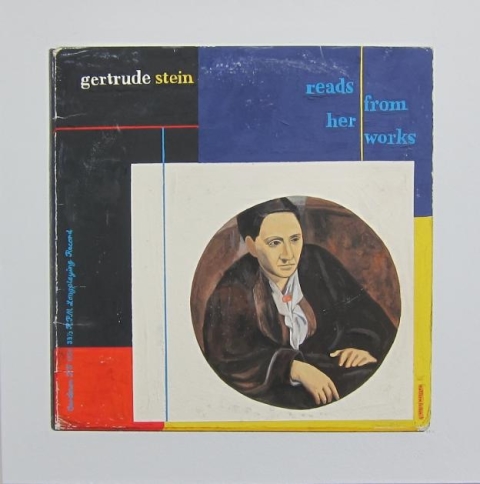
eBay prices for the album Gertrude Stein Reads Her Own Work range from $20 to $200. Vinyl purists, and Stein purists, may long for one of the still-sealed copies at the upper end of that range. The rest of us can enjoy hearing its recordings as mp3s, free on the internet courtesy of PennSound. These clips, recorded between 1934 and 1935 (which came out in album form in 1956) let you put yourself in the presence of the poet. Much of the work she reads aloud here comes inspired by observing other creative luminaries. The record’s producers included these homages along with a piece of an interview, variants of well-known poems such as “How She Bowed to Her Brother” (which often appears under the name “She Bowed to Her Brother”), and an excerpt from her novel The Making of Americans.
But to get straight into the textual substance, listen to “The Fifteenth of November… T.S. Eliot,” her portrait of her colleague in letters. Then hear her capturing a certain well-known painter in “If I Told Him: a Completed Portrait of Picasso.” And on painter Henri Matisse, she begins her remarks as follows: “One was quite certain that for a long part of his being one being living he had been trying to be certain that he was wrong in doing what he was doing and then when he could not come to be certain that he had been wrong in doing what he had been doing, when he had completely convinced himself that he would not come to be certain that he had been wrong in doing what he had been doing he was really certain then that he was a great one and he certainly was a great one.” If you feel proud of reading that whole sentence in one go, wait until you hear Stein speak it.
Related content:
Gertrude Stein Recites ‘If I Told Him: A Completed Portrait of Picasso’
The Dead Authors Podcast: H.G. Wells Comically Revives Literary Greats with His Time Machine
James Joyce in Paris: “Deal With Him, Hemingway!”
Find works by Gertrude Stein in our Free Audio Books and Free eBooks collections.
Colin Marshall hosts and produces Notebook on Cities and Culture and writes essays on literature, film, cities, Asia, and aesthetics. He’s at work on a book about Los Angeles, A Los Angeles Primer. Follow him on Twitter at @colinmarshall.
Read More...The Unbelievers, A New Film Starring Richard Dawkins, Lawrence Krauss, Werner Herzog, Woody Allen, & Cormac McCarthy
The so-called New (or “Gnu”) Atheism arrived at a time when fear, anger, and confusion over extremist religion had hit a fever pitch. Suddenly, people who didn’t pay much attention to religion—their own or anyone else’s—became intensely interested in religious criticism and debate; it was the perfect climate for a publishing storm, and that’s essentially how the movement began. It was also, of course, predated by thousands of years of philosophical atheism of some variety or another, but “new” atheism had something different to offer: while its proponents largely hailed from the same worlds as their intellectual predecessors—the arts, political journalism and activism, the sciences and academic philosophy—after September 11, these same people took the discussion to the popular press and a proliferation of internet outlets and well-organized conferences, debates, and meetings. And their expressions were uncompromising and polemical (though not “militant”—no shots were fired nor bombs detonated).
In the wake of over a decade of controversy unleashed by “new atheism,” a new film The Unbelievers (trailer above) follows two prominent scientists and stars of the movement–evolutionary biologist Richard Dawkins and theoretical physicist Lawrence Krauss—as they trek across the globe and explain their views. Dawkins and Krauss receive support from a cast of celebrity interviewees including Ricky Gervais, Werner Herzog, Woody Allen, Cormac McCarthy, Sarah Silverman, Ayaan Hirsi-Ali, and several more. The film’s website has no official release date (other than “2013”), but it does feature links to online buzz, both glib—Krankie snarks that the trailer makes it look like Dawkins and Krauss have packed in the science and started a band—and subdued; the evangelical Christian Post does little but quote from the press package.
These champions of reason-over-religion have always had powerful critics, even among those who might otherwise seem sympathetic (take Marxist literary critic Terry Eagleton’s charge that new atheism is nothing but counter-fundamentalism). Then there is the host of religious detractors, many of them respected scientists and philosophers themselves. One notable name in this camp is famed geneticist Francis Collins, who headed the Human Genome Project. Obviously no denier of the explanatory power of science, Collins nonetheless argues for faith as a distinct kind of knowledge, as he does in the interview excerpt below from an appearance on The Charlie Rose Show.
The debates seem like they could rage on interminably, and probably will. I, for one, am grateful they can happen openly and in relative peace in so many places. But as the same sets of issues arise, some of the questions become just a bit more nuanced. British presenter Nicky Campbell, for example, recently presided over a large debate among several prominent scientists and clergy about whether or not all religions should accept evolution (below). While Dawkins and Krauss ultimately advocate a world without religion, the participants of this debate try to shift the terms to how scientific discovery and religious identity can coexist with minimal friction.
Related Content:
Richard Dawkins Explains Why There Was Never a First Human Being
Alain de Botton Wants a Religion for Atheists: Introducing Atheism 2.0
Josh Jones is a writer, editor, and musician based in Washington, DC. Follow him @jdmagness
Read More...Color Footage of Winston Churchill’s Funeral in 1965
On January 24 1965, Sir Winston Churchill, the man who led Britain through the dark hours of the Second World War, died aged 90 at his London home. By decree of Queen Elizabeth II, his body lay in state for three days in the Palace of Westminster and a state funeral was held at St Paul’s Cathedral on January 30. Churchill was the first statesman to be given a state funeral in the 2oth century — a funeral that saw the largest assemblage of statesmen in the world until the funeral of Pope John Paul II in 2005. That day, the BBC reported that “silent crowds lined the streets to watch the gun carriage bearing Sir Winston’s coffin leave Westminster Hall as Big Ben struck 09:45. The procession travelled slowly through central London to St. Paul’s Cathedral for the funeral service.” After the service, his coffin was taken by boat to Waterloo Station, where a specially prepared railway carriage took Churchill to his final resting place at Bladon near Woodstock, close to his birthplace at Blenheim Palace.
This color footage of Churchill’s funeral is narrated by Walter Thompson, Churchill’s former bodyguard.
Bonus material:
- A draft script for Winston Churchill’s obituary to be broadcast by the BBC World Service, prepared in 1962
- Churchill’s obituary in the New York Times
- More BBC footage of the funeral
- A selection of Churchill’s most famous quotes
By profession, Matthias Rascher teaches English and History at a High School in northern Bavaria, Germany. In his free time he scours the web for good links and posts the best finds on Twitter.
Read More...John Cleese’s Eulogy for Graham Chapman: ‘Good Riddance, the Free-Loading Bastard, I Hope He Fries’
The British comedian Graham Chapman delighted in offending people. As a writer and actor with the legendary Monty Python troupe, he pushed against the boundaries of propriety and good taste. When his writing partner John Cleese proposed doing a sketch on a disgruntled man returning a defective toaster to a shop, Chapman thought: Broken toaster? Why not a dead parrot? And in one particularly outrageous sketch written by Chapman and Cleese in 1970, Chapman plays an undertaker and Cleese plays a customer who has just rung a bell at the front desk:
“What can I do for you, squire?” says Chapman.
“Um, well, I wonder if you can help me,” says Cleese. “You see, my mother has just died.”
“Ah, well, we can ‘elp you. We deal with stiffs,” says Chapman. “There are three things we can do with your mother. We can burn her, bury her, or dump her.”
“Dump her?”
“Dump her in the Thames.”
“What?”
“Oh, did you like her?”
“Yes!”
“Oh well, we won’t dump her, then,” says Chapman. “Well, what do you think? We can bury her or burn her.”
“Which would you recommend?”
“Well, they’re both nasty.”
From there, Chapman goes on to explain in the most graphic detail the unpleasant aspects of either choice before offering another option: cannibalism. At that point (in keeping with the script) outraged members of the studio audience rush onto the stage and put a stop to the sketch.
Chapman and Cleese had been close friends since their student days at Cambridge University, and when Chapman died of cancer at the age of 48 on October 4, 1989, Cleese was at his bedside. Out of respect for Chapman’s family, the members of Monty Python decided to stay away from his private funeral and avoid a media circus. Instead, they gathered for a memorial service on October 6, 1989 in the Great Hall at St. Bartholomew’s Hospital in London. When Cleese delivered his eulogy for Chapman, he recalled his friend’s irreverence: “Anything for him, but mindless good taste.” So Cleese did his best to make his old friend proud. His off-color but heartfelt eulogy that evening has become a part of Monty Python lore, and you can watch it above. To see a longer clip, with moving words from Michael Palin and a sing-along of “Always Look on the Bright Side of Life” led by Eric Idle, watch below:
Related Content:
Monty Python’s Best Philosophy Sketches
Monty Python’s Life of Brian: Religious Satire, Political Satire, or Blasphemy?
John Cleese, Monty Python Icon, on How to Be Creative
Read More...Finding Vivian Maier: New Documentary Reveals the Vision of Obscure Chicago Street Photographer
The posthumous discovery of Vivian Maier’s photographs is an art world stunner on the order of Henry Darger’s massive In the Realms of the Unreal.
The synchronicity makes one wonder.
He was a Chicago-based custodian.
She was a Chicago-based nanny.
They shared a compulsion to create—some might say document—but were so intensely private, the revelations of their respective lives’ work threw everyone for a loop.
Employers and neighbors found it hard to believe they’d had it in them. (View an online gallery of her work here.)
Curators, marveling at the quantity of their output and quality of the vision, piled on superlatives.
Something tells me the prickly Ms. Maier would not have appreciated any comparisons to a man whose work featured so many representations of naked, hermaphroditic girl-warriors being bayonetted, but death makes it difficult to keep hold of the reins gripped so tightly in life.
For the foreseeable future, Maier’s legacy rests in the hands of John Maloof, the young Chicagoan who bought her negatives from an unpaid storage unit for less than $400, hoping he might find something of relevance for a neighborhood history project. He got more than he bargained for, obviously, but the years spent scanning the unknown artist’s work is beginning to pay off in exhibitions, gallery representation, and a book. Now he is nearing completion of Finding Vivian Maier, a documentary film that promises to shed more light on this fascinating tale.
Would the subject have wanted this?
Perhaps that’s a question for the Henry Darger Study Center at the American Folk Art Museum…
Related Content:
David Lynch Talks About His 99 Favorite Photographs at Paris Photo 2012
1972 Diane Arbus Documentary Interviews Those Who Knew the American Photographer Best
Photography of Ludwig Wittgenstein Released by Archives at Cambridge
Ayun Halliday, a point and shoot hack, is related by marriage to another female street photographer with an interesting lens on history. Follow her @AyunHalliday
Read More...Start Your Startup with Free Stanford Courses and Lectures
Last spring, Ken Auletta wrote a profile of Stanford University in the pages of The New Yorker, which started with the question: “There are no walls between Stanford and Silicon Valley. Should there be?” It’s perhaps an unavoidable question when you consider a startling fact cited by the article. According the university itself, five thousand companies “trace their origins to Stanford ideas or to Stanford faculty and students.” The list includes tech giants like Google, Hewlett-Packard, Yahoo, Cisco Systems, Sun Microsystems, eBay, Netflix, Electronic Arts, Intuit, Silicon Graphics, LinkedIn, and E*Trade. And stay tuned, there’s more to come.
Stanford is one of America’s leading incubators, and the rearing of young entrepreneurs doesn’t take place by mere osmosis. No, Stanford students can take courses focused on entrepreneurship, which give them access to seasoned entrepreneurs and financiers. If you head over to eCorner, short for Entrepreneurship Corner (Web — iTunes — YouTube), you can watch “2000 free videos and podcasts featuring entrepreneurship and innovation thought leaders” who have paid visits to Stanford. Perhaps you’ll recognize a few of the names: Mark Zuckerberg? Larry Page? Marissa Mayer? Reid Hoffman (above)?
Or, if you go to YouTube and iTunes, you’ll gain access to entire courses dedicated to teaching students the modern art of starting startups. Two courses (both housed in our collection of 650 Free Online Courses and our collection of 150 Free Online Business Courses) warrant your attention. First, Chuck Eesley’s course, Technology Entrepreneurship (YouTube — iTunes Video) introduces students to “the process used by technology entrepreneurs to start companies. It involves taking a technology idea and finding a high-potential commercial opportunity, gathering resources such as talent and capital, figuring out how to sell and market the idea, and managing rapid growth.” The course features 28 video lectures in total.
Once you have a broad overview, you can dial into an important part of getting a new venture going — raising capital. Hence the course Entrepreneurship Through the Lens of Venture Capital (iTunes Video — YouTube), a course currently taking place at Stanford that “explores how successful startups navigate funding, managing, and scaling their new enterprise.” It features guest speakers from the VC world that fuels Silicon Valley.
It goes without saying that Stanford offers many world-class courses across other disciplines, from philosophy and physics to history and literature. You can find 68 courses from Stanford in our ever-growing collection of Free Courses Online.
Related Content:
Stanford Launches iPhone/iPad App Course on iTunesU
Biology That Makes Us Tick: Free Stanford Course by Robert Sapolsky
The Stanford Mini Med School: A Free Course Now Online
The Art of Living: A Free Stanford Course Explores Timeless Questions
Read More...In Under Three Minutes, Hans Rosling Visualizes the Incredible Progress of the “Developing World”
Hans Rosling knows how to make a concise, powerful point. His mastery of statistics and visual aids doesn’t hurt. Behold, for instance, the Karolinska Institute Professor of International Health visualizing the health of 200 countries over 200 years with 120,000 data points. His ability to condense vast amounts of information into short bursts while providing the widest possible context for his points naturally endears him to the TED audience, which values counterintuitive intellectual impact delivered with the utmost succinctness. We previously featured a TED Talk from wherein the excitable professor explains world population growth and prosperity with props bought at IKEA. (The man comes from Sweden, after all. One must represent.) Now, on Bill Gates’ Youtube channel, you can watch Rosling’s shortest and slickest video yet: “The River of Myths.”
Opening with a visualization of 1960’s world child mortality numbers graphed against the number of children born per woman, Rosling uses his signature method of statistical-animation showmanship to explode myths about the potential of developing nations. We see that, as a country’s wealth rises, its health rises; as its health rises, its child mortality drops; and as its child mortality drops, so does its number of children born per woman, which leads to a sustainable overall population size. He then examines the separate regions of Ethiopia, formerly a developmental laggard, showing that the capital Addis Ababa ranks reproductively among the developed nations, while only remote regions lag behind. “Most people think the problems in Africa are unsolvable, but if the poorest countries can just follow the path of Ethiopia, it’s fully possible that the world will look like this by 2030.” We then see a projection of all the world’s nations clustered in the small-family, low-mortality corner of the graph. “But to ensure this happens, we must measure the progress of countries. It’s only by measuring we can cross the river of myths.” Have you heard a more powerful argument for the usefulness of statistics lately?
Related content:
Hans Rosling Uses Ikea Props to Explain World of 7 Billion People
200 Countries & 200 Years in 4 Minutes, Presented by Hans Rosling
Colin Marshall hosts and produces Notebook on Cities and Culture and writes essays on literature, film, cities, Asia, and aesthetics. He’s at work on a book about Los Angeles, A Los Angeles Primer. Follow him on Twitter at @colinmarshall.
Read More...Support Us
We're hoping to rely on loyal readers, rather than erratic ads. Please click the Donate button and support Open Culture. You can use Paypal, Venmo, Patreon, even Crypto! We thank you!

About Us

Open Culture scours the web for the best educational media. We find the free courses and audio books you need, the language lessons & educational videos you want, and plenty of enlightenment in between.
Advertise With Us

FREE UPDATES!
GET OUR DAILY EMAIL
Get the best cultural and educational resources on the web curated for you in a daily email. We never spam. Unsubscribe at any time.
FOLLOW ON SOCIAL MEDIA

Open Culture editor Dan Colman scours the web for the best educational media. He finds the free courses and audio books you need, the language lessons & movies you want, and plenty of enlightenment in between.
Advertise With Us

