Hunter S. Thompson’s Many Strange, Unpredictable Appearances on The David Letterman Show
?si=JtttMzoKK6_IzBVA
An old quote from Joseph de Maistre gets thrown around a lot lately: Toute nation a le gouvernement qu’elle mérite—“every nation gets the government it deserves.” As a historical claim it is impossible to verify. But the aphorism has an authoritative ring, the unmistakable sound of truism.
What if we put it another way? Every age gets the journalism it deserves. How does that sound?
I offer as exhibit one Hunter S. Thompson. Only a gonzo time like the late 60s and 70s could have produced the gonzo journalist, just as only such a time could have nurtured the journalistic writing of Tom Wolfe, Terry Southern, Joan Didion, James Baldwin, etc.
Do we find our current crop of journalists lacking in moral courage, righteous fury, death-defying risk-taking, gallows humor, literary reach, thoroughgoing independence of thought? The failing industry may be to blame, one might argue, and with good reason.
Or perhaps, with deference to de Maistre, we have not deserved better.
The New Journalism from which Thompson emerged dispensed with any pretense to “polite neutrality,” as novelist Hari Kunzru writes at the London Review of Books. And “no one took the voice of the journalist further away from ‘neutral background’ (or seemed less able to stop himself from doing it) than Hunter S. Thompson.” He exemplified Esquire editor Lee Eisenberg’s description of the sixties New Journalist as “a liberated army of one.”
Thompson’s “ability to articulate the undercurrent of ‘fear and loathing’ running through America”—not as a cynical spokesperson, but as somehow both an embodiment and a surprisingly lucid, moralistic observer—“ultimately led to his adoption as a kind of soothsaying holy fool for the counterculture.” In his later years, the legend turned his reputation for excess into a kind of schtick. Or maybe it’s more accurate to say that the culture changed but Hunter didn’t, for better or worse.
As Kunzru points out, “later in his career the ‘story’ as independent entity was to disappear almost entirely from his work, which became a fractured series of tales about Hunter (mad, bad and dangerous) and his behavior (inspired, erratic, paranoid).” While this shift (and his daily diet) may have dulled his journalistic edge, it made him an ideal late-night talk show guest, and such he remained, reliably, on the David Letterman show for many years.
In the clips here, you can see many of those appearances, first, at the top, from 1987, then below it, from 1988. Further up, see Letterman interview Thompson in an ‘87 episode inexplicably conducted in a Times Square hotel room. The show was “a strange beast,” writes Vulture’s Ramsey Ess. “For most of the episode it feels unruly, nerve-wracking, and a little dangerous,” all adjectives Thompson could have trademarked. Just above, Thompson meets Letterman to discuss his just-published The Rum Diary, the novel he worked on for forty years, “a hard-bitten story,” writes Kunzru, “of love, journalism and heavy drinking.”
All of Thompson’s appearances are unpredictable and slightly unnerving, and become more so in later years. “Thompson would become more dramatic and more twisted,” writes Jason Nawara. “Whatever led up to the moment Thompson stepped on stage was probably far more astonishing (or terrifying) than anything caught on camera. Why is his hand bandaged? Why is he so paranoid? What is happening? When have you slept last, Hunter?” If late night television has become safe and boring, full of pandering patter largely devoid of true surprises, perhaps it is because Hunter S. Thompson has passed on. And perhaps, as Nawara seems to suggest, every generation gets the late-night TV it deserves.
Related Content:
Read 11 Free Articles by Hunter S. Thompson That Span His Gonzo Journalist Career (1965–2005)
Josh Jones is a writer and musician based in Durham, NC. Follow him at @jdmagness
Read More...Rare Photos of Frida Kahlo, Age 13–23

“Before they were famous” photos are a clickbait staple, especially if they reveal a heretofore unseen side of someone whose image is tightly controlled:
The smoldering activist-actress-director as a gawky, open-faced sophomore, her hair moussed to the very limits of her modeling school test shots?
The rising political star, pimple-faced and center-parted, posing with the other three members of his high school’s Dungeons and Dragons Club?
What about evergreen art star Frida Kahlo?
Though her husband, muralist Diego Rivera, was the one who urged her to adopt the traditional Tehuana dress of their native Mexico as a uniform of sorts, Frida engineered her image by placing herself center stage in dozens of allegorical, intimate self-portraits.
Much of her work alludes to the horrific accident she suffered at 18, and the tortuous treatments and surgeries she underwent as a result for the rest of her life.
It shaped the way she saw herself, and, in turn, the way we see her. Her enduring appeal is such that even those who aren’t overly familiar with her work feel they have a pretty good handle on her, thanks to her ubiquity on totebags, apparel, and various gift related items—even Frida Kahlo action figures and paper dolls.
We know this lady, right?
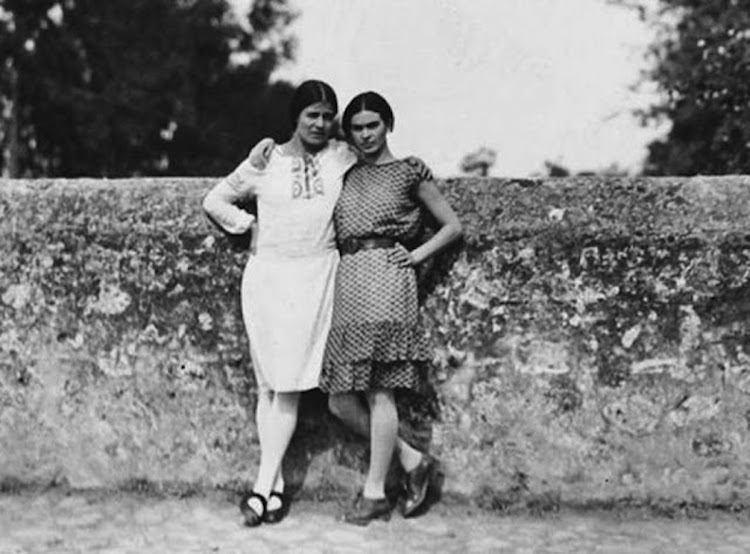
What a pleasure to get to know her better. A collection of photos that has recently come to light introduces us to a younger, more candid Frida—both before and after the accident, when she returned to her studies at National Preparatory School.

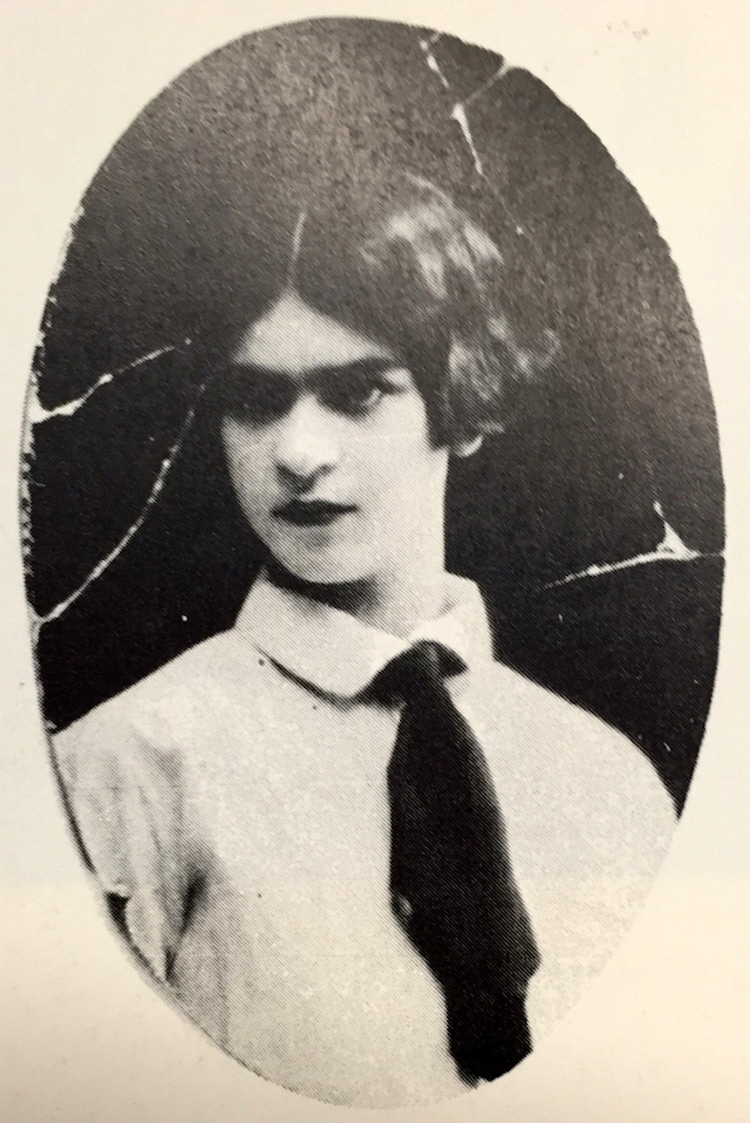
Taken together with the portraits made by her photographer father, they show early evidence of the forceful personality that would dominate and define her public image, Mary Jane-style pumps with socks, a middy blouse, and a variety of blunt bobs aside.
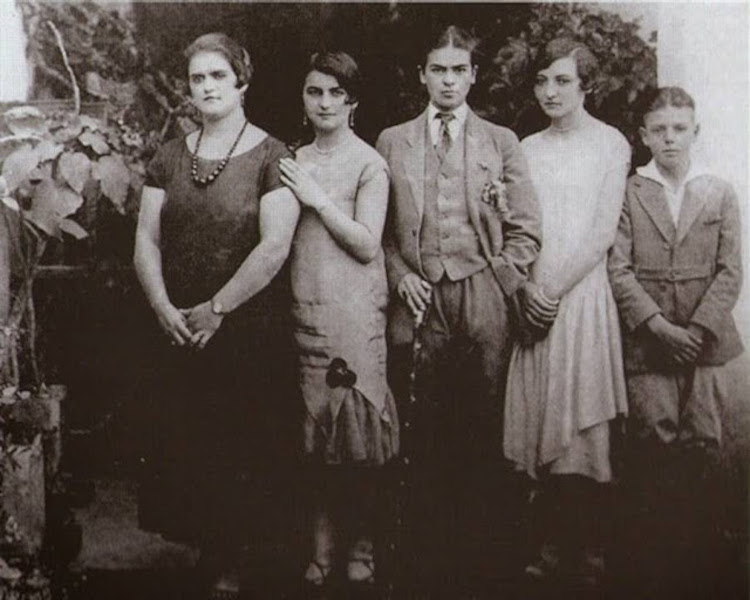
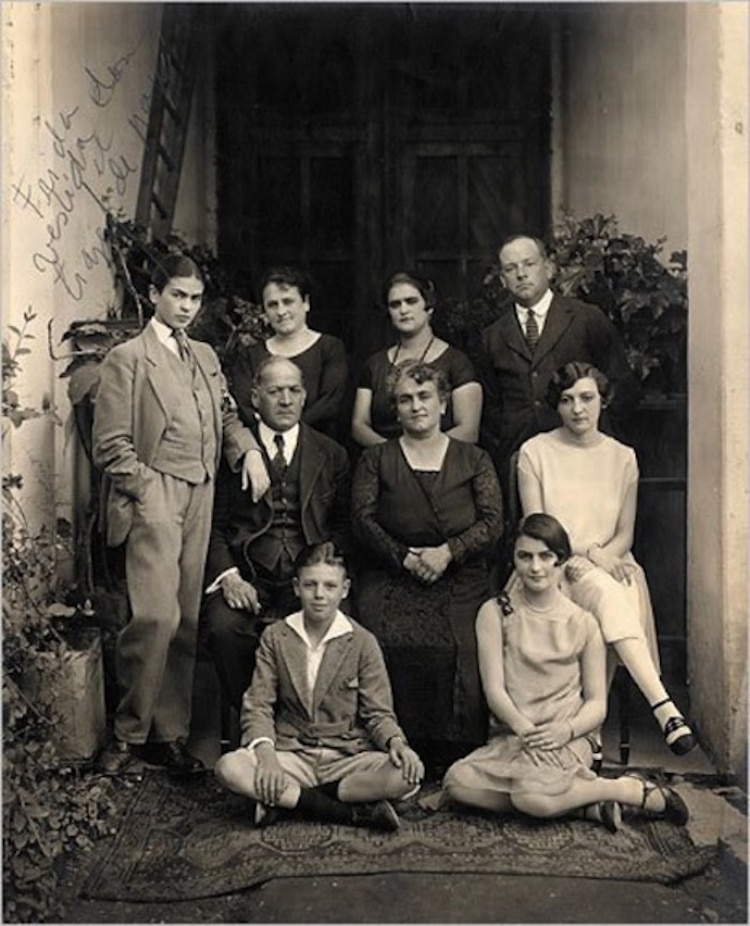
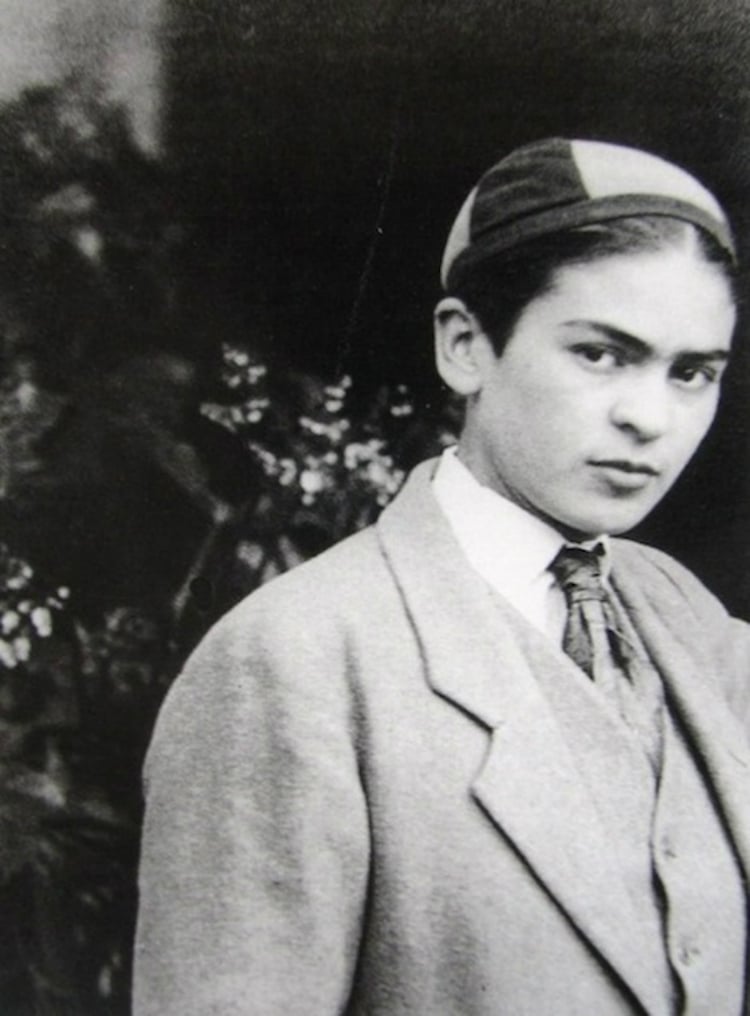
Some of the later photos in this batch speak to her increasing interest in distinguishing herself from her female peers. Her experiments in cross dressing ensured she would stand out in every group photo, a dashing figure in suit, tie, and slicked back hair.
Though this period of her life is less a matter of public record, it gets its due in the 2017 graphic novel Frida: The Story of Her Life by Vanna Vinci. Some of the others in these photos, including her sisters and her first boyfriend, Alejandro Gómez Arias, appear as characters, as does Death in the form of printmaker José Guadalupe Posada’s La Calavera Catrina—perhaps the only image formidable enough to hold its own against the fabulous Frida.
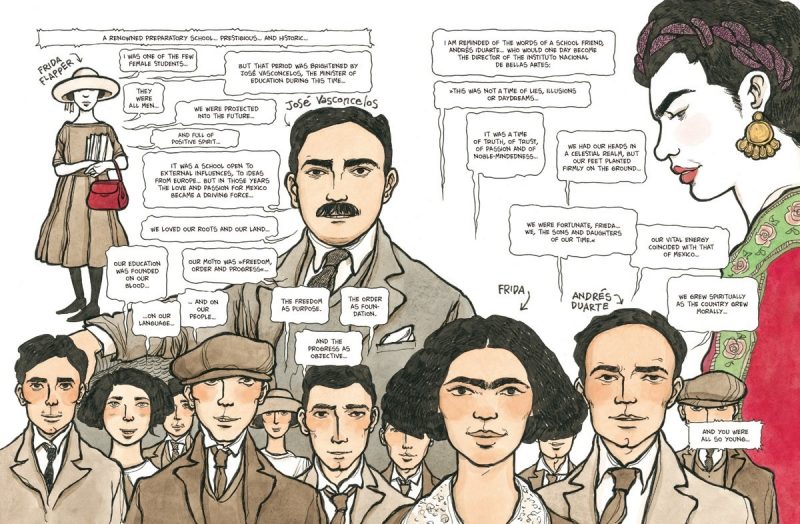
Frida Kahlo The Story of Her Life p. 22–23
Related Content:
The Frida Kahlo Action Figure
Ayun Halliday is an author, illustrator, theater maker and Chief Primatologist of the East Village Inky zine. Follow her @AyunHalliday.
Read More...Noam Chomsky Defines The Real Responsibility of Intellectuals: “To Speak the Truth and to Expose Lies” (1967)

Image by Andrew Rusk, via Wikimedia Commons
The novel medium of social media—and the novel use of Twitter as the official PR platform for public figures—allows not only for endless amounts of noise and disinformation to permeate our newsfeeds; it also allows readers the opportunity to refute statements in real time. Whether corrections register or simply get drowned in the sea of information is perhaps a question for a 21st century Marshall McLuhan to ponder.
Another prominent theorist of older forms of media, Noam Chomsky, might also have an opinion on the matter. In his 1988 book Manufacturing Consent, written with Edward Herman, Chomsky details the ways in which governments and media collude to deliberately mislead the public and socially engineer support for wars that kill millions and enrich a handful of profiteers.
Moreover, in mass media communications, those wars, invasions, “police actions,” regime changes, etc. get conveniently erased from historical memory by public intellectuals who serve the interests of state power. In one recent example on the social medium of record, Twitter, Richard N. Haas, President of the Council on Foreign Relations, expressed dismay about the disturbingly cozy state of affairs between the U.S. Administration and Putin’s Russia by claiming that “International order for 4 centuries has been based on non-interference in the international affairs of others and respect for sovereignty.”
One recent critique of foreign policy bodies like CFR would beg to differ, as would the history of hundreds of years of colonialism. In a very Chomsky-like rejoinder to Haas, journalist Nick Turse wrote, “This might be news to Iraqis and Afghans and Libyans and Yemenis and Vietnamese and Cambodians and Laotians and Koreans and Iranians and Guatemalans and Chileans and Nicaraguans and Mexicans and Cubans and Dominicans and Haitians and Filipinos and Congolese and Russians and….”
Genuine concerns about Russian election tampering notwithstanding, the list of U.S. interventions in the “affairs of others” could go on and on. Haas’ initial statement offers an almost perfect example of what Chomsky identified in another essay, “The Responsibility of Intellectuals,” as not only a “lack of concern for truth” but also “a real or feigned naiveté about American actions that reaches startling proportions.”
“It is the responsibility of intellectuals to speak the truth and to expose lies,” wrote Chomsky in his 1967 essay. “This, at least, may seem enough of a truism to pass over without comment. Not so, however. For the modern intellectual, it is not at all obvious.” Chomsky proceeds from the pro-Nazi statements of Martin Heidegger to the distortions and outright falsehoods issued routinely by such thinkers and shapers of foreign policy as Arthur Schlesinger, economist Walt Rostow, and Henry Kissinger in their defense of the disastrous Vietnam War.
The background for all of these figures’ distortions of fact, Chomsky argues, is the perpetual presumption of innocence on the part of the U.S., a feature of the doctrine of exceptionalism under which “it is an article of faith that American motives are pure, and not subject to analysis.” We have seen this article of faith invoked in hagiographies of past Administrations whose domestic and international crimes are conveniently forgotten in order to turn them into foils, stock figures for an order to which many would like to return. (As one former Presidential candidate put it, “America is great, because America is good.”)
Chomsky would include the rhetorical appeal to a nobler past in the category of “imperialist apologia”—a presumption of innocence that “becomes increasingly distasteful as the power it serves grows more dominant in world affairs, and more capable, therefore, of the unconstrained viciousness that the mass media present to us each day.”
We are hardly the first power in history to combine material interests, great technological capacity, and an utter disregard for the suffering and misery of the lower orders. The long tradition of naiveté and self-righteousness that disfigures our intellectual history, however, must serve as a warning to the third world, if such a warning is needed, as to how our protestations of sincerity and benign intent are to be interpreted.
For those who well recall the events of even fifteen years ago, when the U.S. government, with the aid of a compliant press, lied its way into the second Iraq war, condoning torture and the “extraordinary rendition” of supposed hostiles to black sites in the name of liberating the Iraqi people, Chomsky’s Vietnam-era critiques may sound just as fresh as they did in the mid-sixties. Are we already in danger of misremembering that recent history? “When we consider the responsibility of intellectuals,” Chomsky writes, the issue at hand is not solely individual morality; “our basic concern must be their role in the creation and analysis of ideology.”
What are the ideological features of U.S. self-understanding that allow it to recreate past errors again and again, then deny that history and sink again into complacency, perpetuating crimes against humanity from the Cambodian bombings and My Lai massacre, to the grotesque scenes at Abu Ghraib and the drone bombings of hospitals and weddings, to supporting mass killings in Yemen and murder of unarmed Palestinian protestors, to the kidnapping and caging of children at the Mexican border?
The current ruling party in the U.S. presents an existential threat, Chomsky recently opined, on a world historical scale, displaying “a level of criminality that is almost hard to find words to describe.” It is the responsibility of intellectuals, Chomsky argues in his essay—including journalists, academics, and policy makers and shapers—to tell the truth about events past and present, no matter how inconvenient those truths may be.
Read Chomsky’s full essay, “The Responsibility of Intellectuals,” at The New York Review of Books.
Related Content:
Noam Chomsky Defines What It Means to Be a Truly Educated Person
Josh Jones is a writer and musician based in Durham, NC. Follow him at @jdmagness
Read More...What It Would Look Like If Wes Anderson, Quentin Tarantino & Other Directors Filmed Cooking Videos
I usually chafe when director Wes Anderson is labelled “twee,” but as an enthusiastic, sticky-fingered gobbler of bark and ash encrusted campfire s’mores, I did enjoy a rather rowdy laugh at his expense while watching the above video.
Each entry in filmmaker David Ma’s #FoodFilms series starts with a hypothesis that pairs a simple, familiar dish with a director whose visual style is well established.
What if Wes Anderson made S’mores?
Ma’s early marination in the realms of food styling and advertising is a recipe for success here.
Anderson’s beloved God shot has become a staple of online cooking videos, but Ma’s attention to subtler details would pass muster with a Cordon Bleu chef.
The formally engraved card! The ribbon motif! The costumes!
The look is more Grand Budapest Hotel than the camp-themed Moonrise Kingdom, but no matter. That more obvious pairing started tasting a tad over-chewed around the time of the Moonrise Kingdom-inspired wedding photo shoot.
Ma’s homage to Quentin Tarantino is a butch and bloody take on spaghetti and meatballs.
To paraphrase Jean-Luc Godard, “It’s not blood. It’s red sauce.”
The soundtrack suggests that Ma’s ear is just as keen as his eye.
45 seconds in, there’s a Part 2, as an extra treat for QT fans.
Big budget action king Michael Bay and a Gravity-centric Alfonso Cuarón round out #FoodFilms’ four-course tasting menu.
However satisfied viewers may feel with these hijinks, their appetite for the project is far from satiated. Sequel requests are piling up:
What if Kubrick made Toast?
What if Tim Burton made a grilled cheese sandwich?
What if Woody Allen made pizza?
What if Steven Spielberg made cupcakes?
What if Kurosawa made scrambled eggs?
What if Guy Ritchie did a Full English Fry-Up?
Gives me a hankering to see what Sofia Coppola would do with my grandmother’s favorite layered Jell‑o salad.
While we’re waiting for Ma to serve up his next dish we can tide ourselves over with some of his other highly stylized recipe videos, like the Incredible Hulk’s Smashed Potatoes.
Readers, what director-dish pairing would you order up? Let us know in the comments.
via W Magazine
Related Content:
The Power of Food in Quentin Tarantino’s Films
Forrest Gump Directed by Wes Anderson: Here’s What It Would Look Like
A Complete Collection of Wes Anderson Video Essays
Ayun Halliday is an author, illustrator, theater maker and Chief Primatologist of the East Village Inky zine. Follow her @AyunHalliday.
Read More...Steely Dan Creates the Deadhead/Danfan Conversion Chart: A Witty Guide Explaining How You Can Go From Loving the Dead to Idolizing Steely Dan

To the naked eye — or at least to the naked eye of anyone born after about 1990 — fans of the Grateful Dead and fans of Steely Dan may look basically the same. Both bands emerged from the 1960s-forged counterculture of America’s “Baby Boom” generation, broadly defined, and both have drawn unusually dedicated listenerships. Yet few bodies of musical work could project such different sets of artistic sensibilities: on one side Steely Dan has the handful of meticulously recorded studio albums filled with esoteric wisecracks and literary references, and on the other the Grateful Dead has the vast archives of live performance heavy on both extended improvisations and good vibes.
Close inspection reveals that the deeper differences in the music of the Grateful Dead and Steely Dan also manifest in the lifestyles of “Deadheads” and “Danfans.” You can see how in this handy Deadhead/Danfan Conversion Chart available on Steely Dan’s official site. (View it in a larger format here.) Where the accoutrements of the Grateful Dead’s crowd include granny glasses, VW buses, and tattooing, it shows us, Steely Dan’s has its LA Eyeworks clip-ons, BMW 353s, and cosmetic laser surgery.
Deadheads read beat poetry, receive cosmic visions, and enjoy the guitar playing of the late Jerry Garcia; Danfans read the MacMall catalog, send erotic e‑mails, and enjoy the guitar playing of the late Walter Becker (among that of the dozens of other professionals called into the studio).
The Deadhead/Danfan Conversion Chart also includes a middle column describing the transitional stage separating Deadhead from Danfan. Between the Grateful Dead fan’s sense of oneness and the Steely Dan fan’s sense of entitlement comes a sense of despair; between the Deadhead’s takeout Indian food and the Danfan’s northern Italian cuisine comes freeze-dried pot roast and gravy. Laid out in this way, the journey from the Grateful Dead to Steely Dan mirrors the life journey taken by many a Baby Boomer: from blissed-out utopianism, consciousness-expanding substances, and free love to creative cynicism, antidepressants, and high-end personal electronics. Or perhaps, to use a metaphor popular in 1960s America, the yin of the Deadhead and the yang of the Danfan inhabits us all, regardless of generation.
Click here to view the Deadhead/Danfan Conversion Chart.
Related Content:
How Steely Dan Wrote “Deacon Blues,” the Song Audiophiles Use to Test High-End Stereos
11,215 Free Grateful Dead Concert Recordings in the Internet Archive
Based in Seoul, Colin Marshall writes and broadcasts on cities and culture. His projects include the book The Stateless City: a Walk through 21st-Century Los Angeles and the video series The City in Cinema. Follow him on Twitter at @colinmarshall or on Facebook.
Read More...Nearly 1,000 Paintings & Drawings by Vincent van Gogh Now Digitized and Put Online: View/Download the Collection
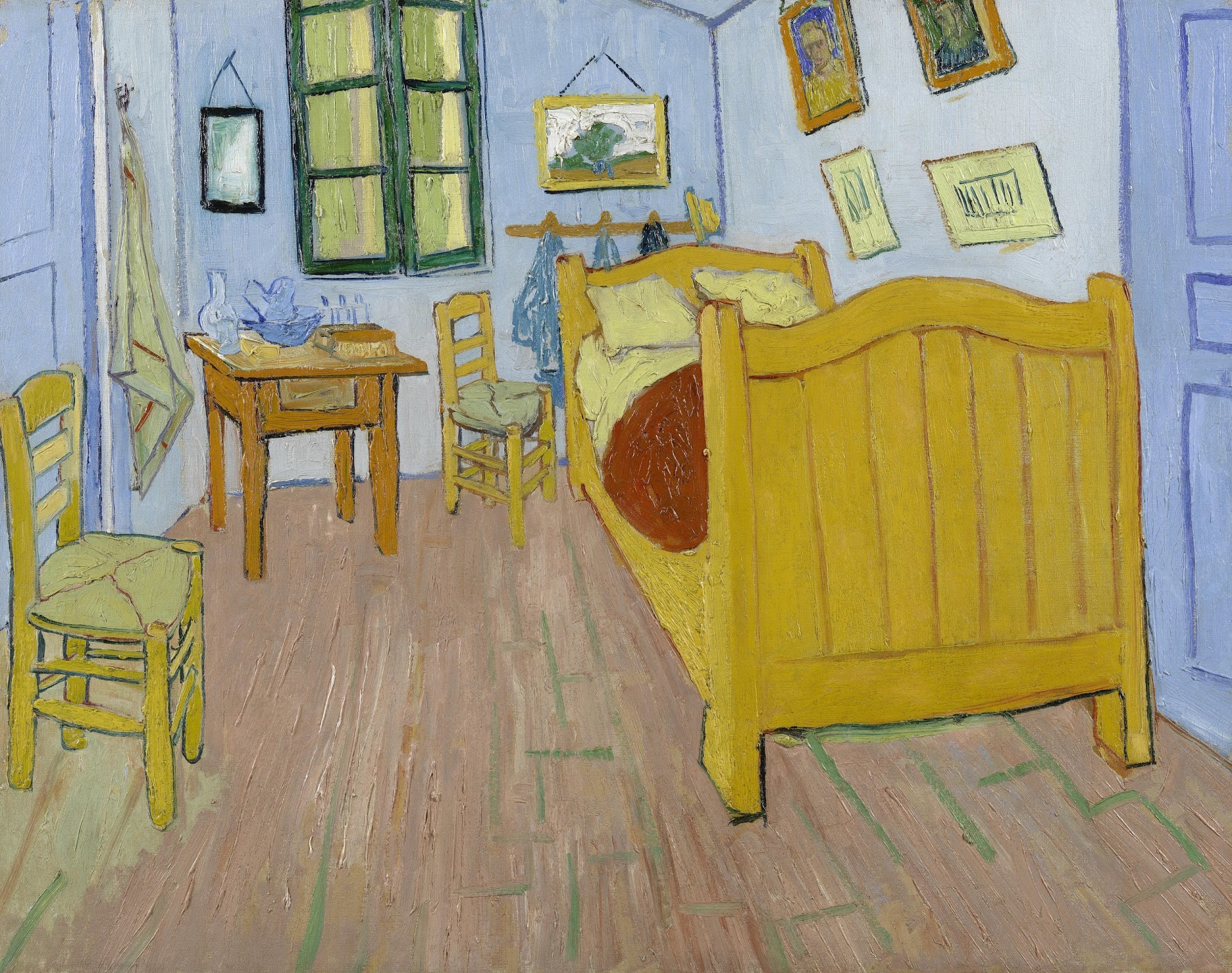
Every artist explores dimensions of space and place, orienting themselves and their works in the world, and orienting their audiences. Then there are artists like Vincent van Gogh, who make space and place a primary subject. In his early paintings of peasant homes and fields, his figures’ muscular shoulders and hands interact with sturdy walls and gnarled trees. Later country scenes—whether curling and delicate, like Wheatfield with a Reaper, or heavy and ominous, like Wheatfield with Crows (both below)—give us the sense of the landscape as a single living entity, pulsating, writhing, blazing in brilliant yellows, reds, greens, and blues.
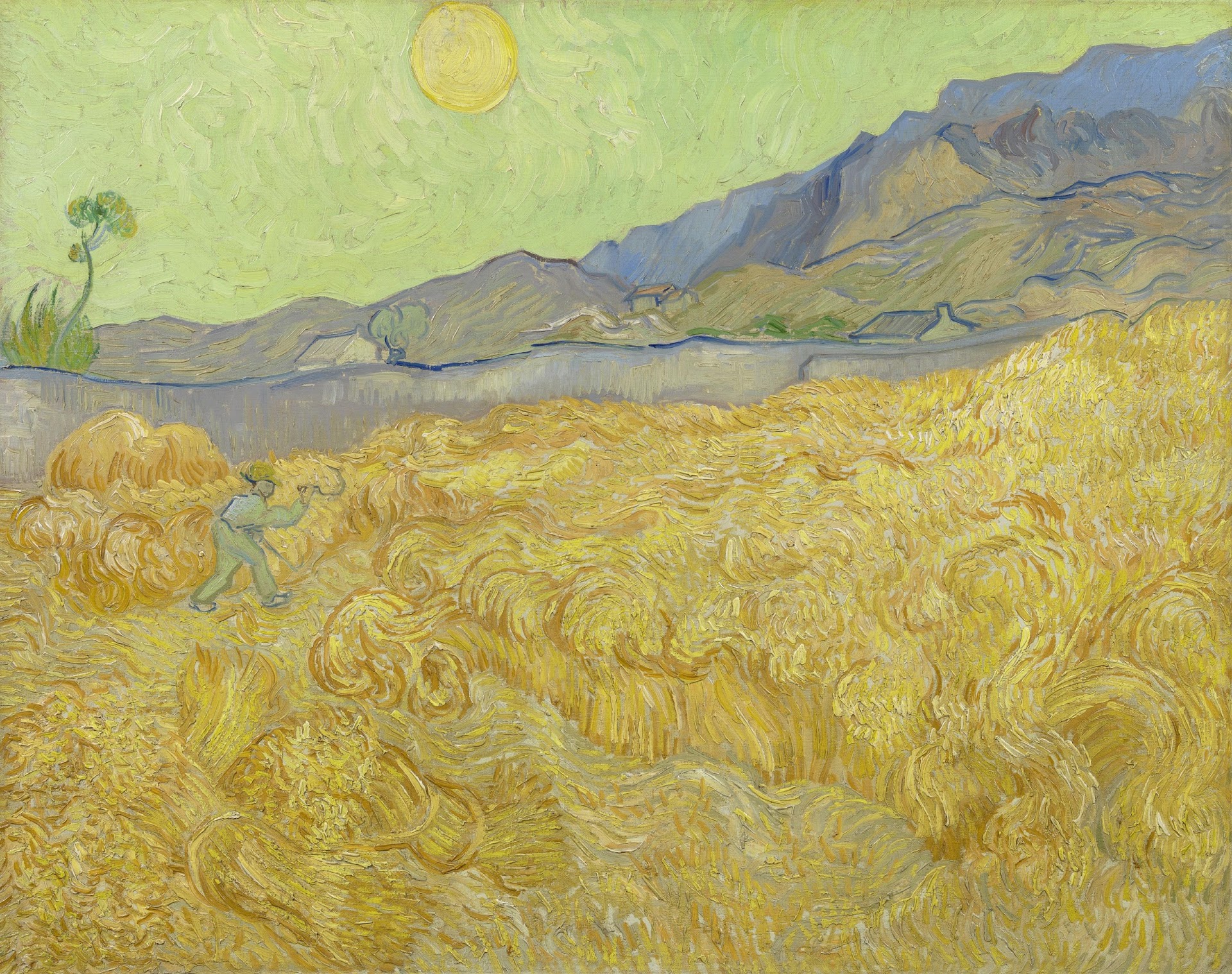
Van Gogh painted interior scenes, such as his famous The Bedroom, at the top (the first of three versions), with an eye toward using color as the means of making space purposeful: “It’s just simply my bedroom,” he wrote to Paul Gauguin of the 1888 painting, “only here color is to do everything… to be suggestive here of rest or of sleep in general. In a word, looking at the picture ought to rest the brain, or rather the imagination.”
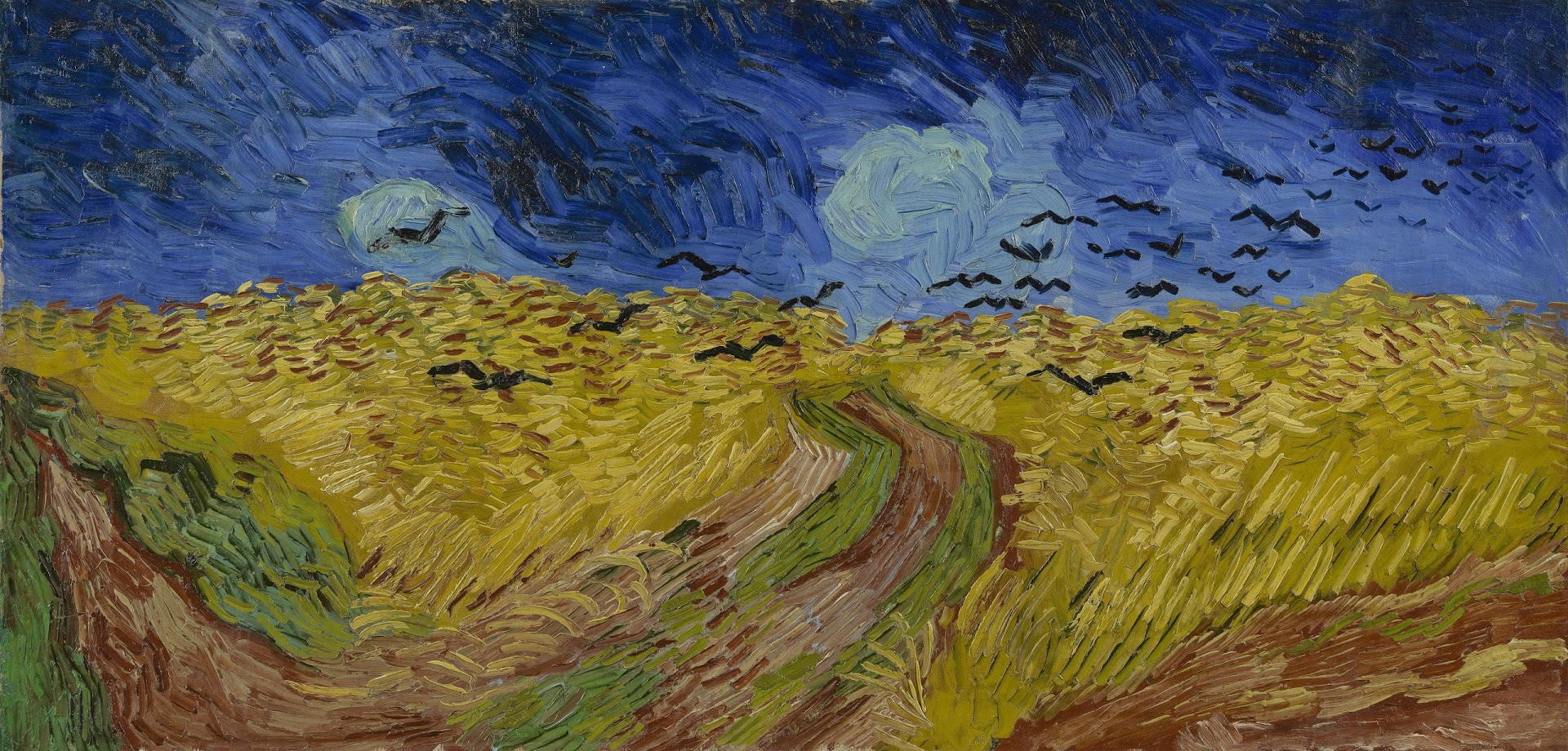
So taken was the painter with the concept of using color to induce “rest or sleep” in his viewers’ imaginations that when water damage threated the “stability” of the first painting, Chicago’s Art Institute notes, “he became determined to preserve the composition by painting a second version while at an asylum in Saint-Rémy in 1889,” then demonstrated the deep emotional resonance this scene had for him by painting a third, smaller version for his mother and sister.
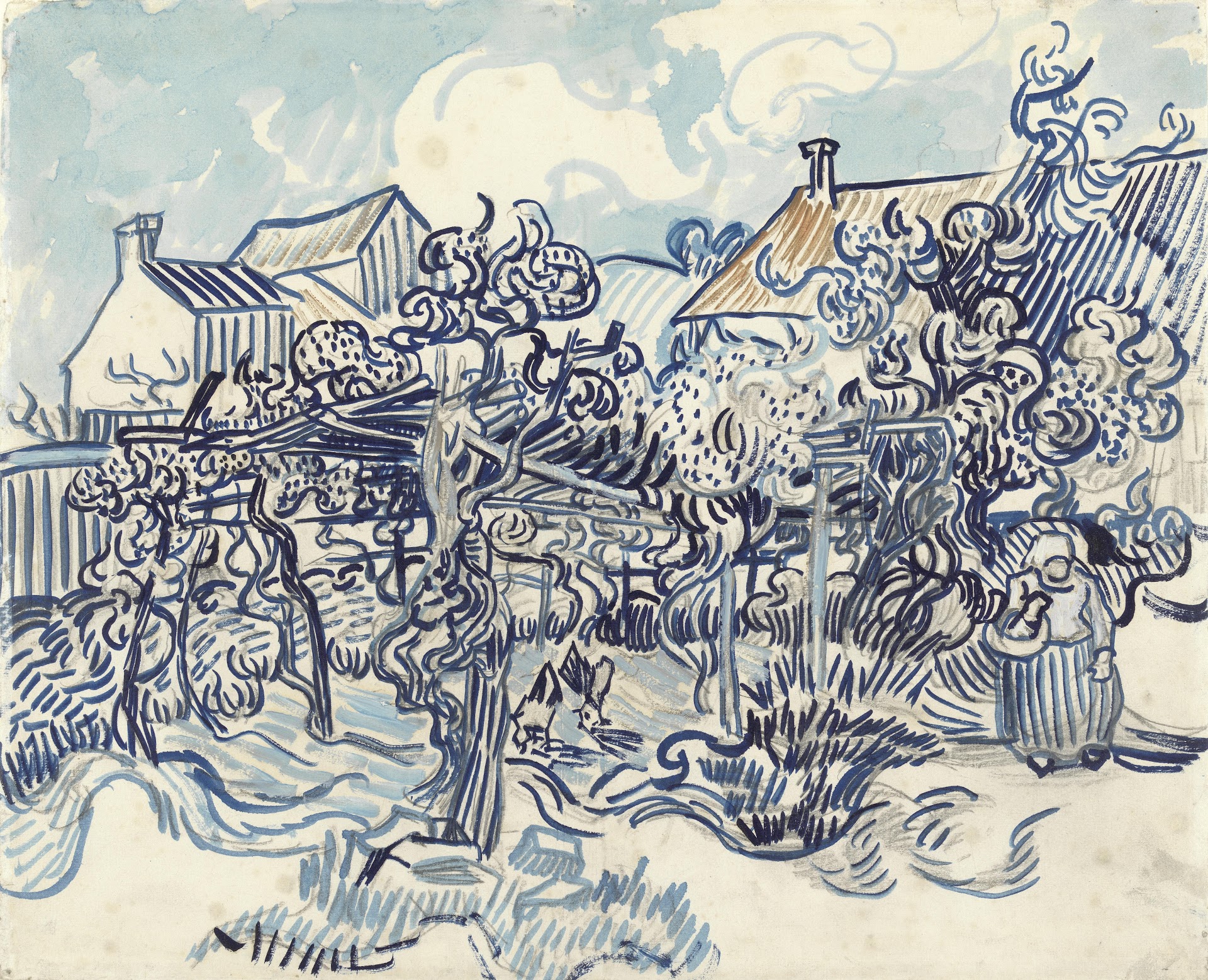
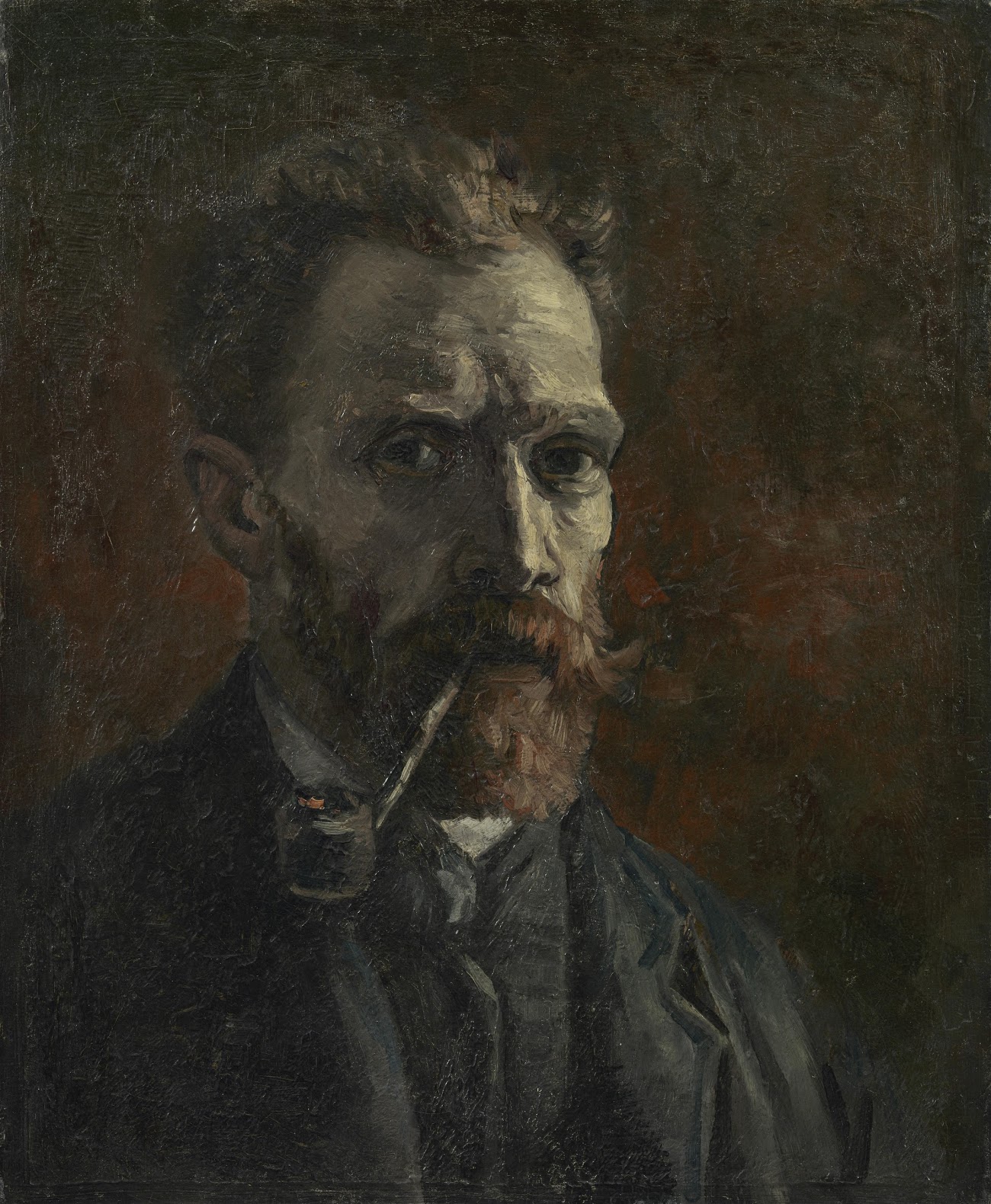
The opportunity to see all of Van Gogh’s bedroom paintings in one place may have passed us by for now—an exhibit in Chicago brought them together in 2016. But we can see the original bedroom at the yellow house in Arles in a virtual space, along with almost 1,000 more Van Gogh paintings and drawings, at the Van Gogh Museum in Amsterdam’s site. The digitized collection showcases a vast amount of Van Gogh’s work—including not only landscapes, but also his many portraits, self-portraits, drawings, city scenes, and still-lifes.
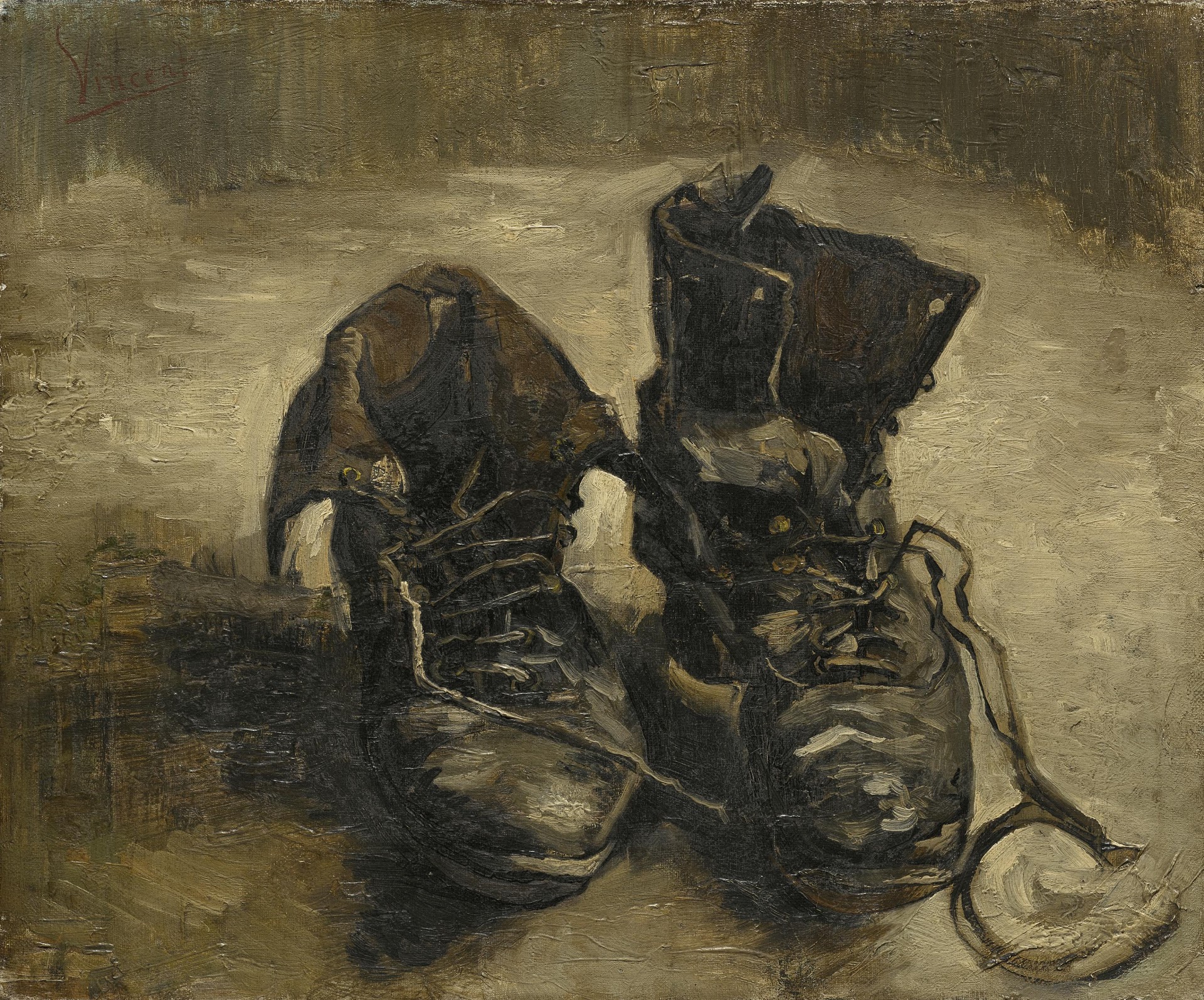
One way to approach these works is through the unifying themes above: how does van Gogh use color to communicate space and place, and to what effect? Even in portraits and still-lifes, his figures compete with the ground. The scored and scalloped paintings of walls, floors, and wallpaper force our attention past the staring eyes of the painter or the finely-rendered fruits and shoes, and into the depths and textures of shadow and light. We begin to see people and objects as inseparable from their surroundings.
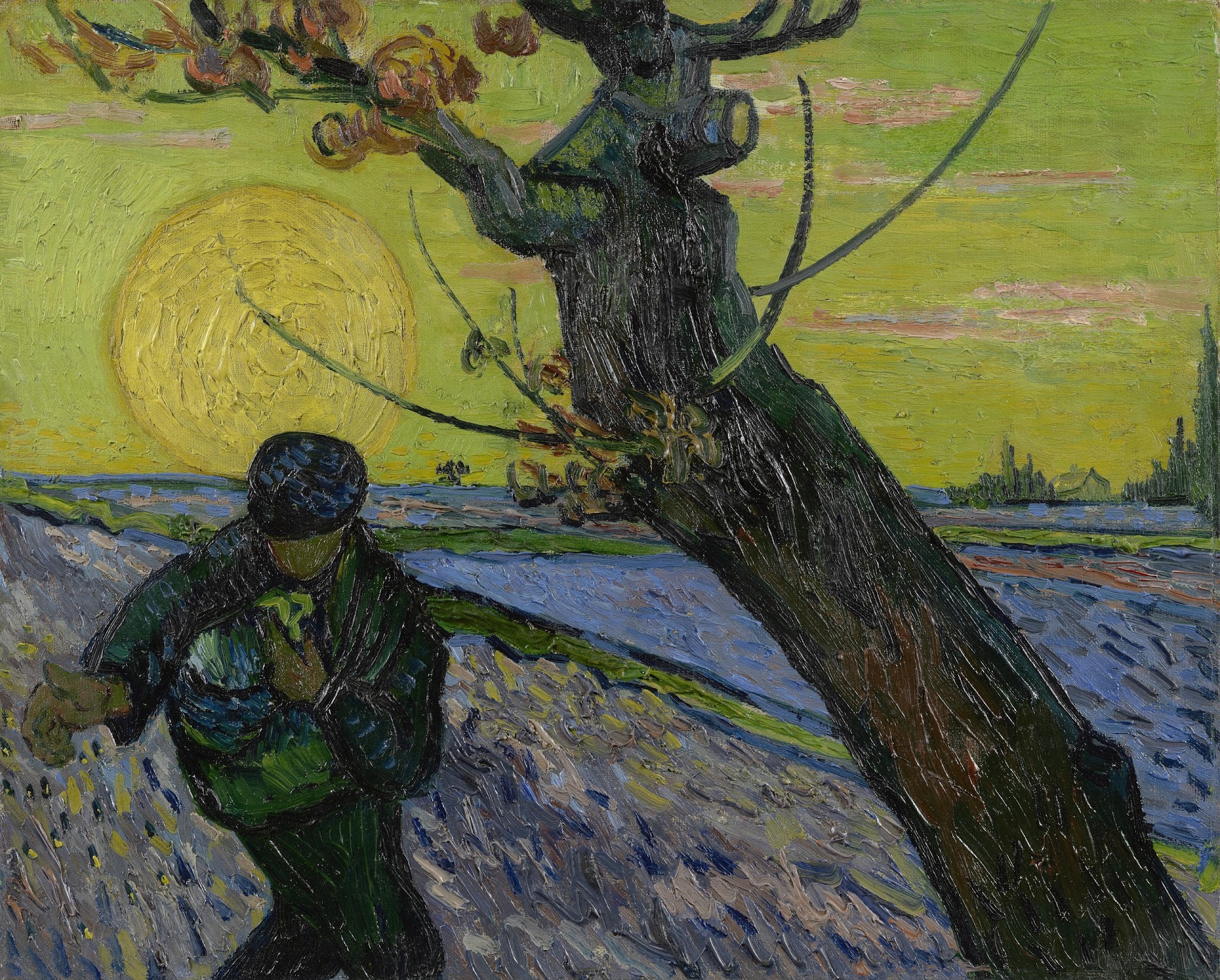
“Painting is a faith,” Van Gogh once wrote, and it is as if his paintings ask us to contemplate the spiritual unity of all things; the same animating flame brings every object in his blazing worlds to life. The Van Gogh Museum houses the largest collection of the artist’s work in the world. On their website you can read essays about his life and work, plan a visit, or shop at the online store. But most importantly, you can experience the stunning breadth of his art through your screen—no replacement for the physical spaces of galleries, but a worthy means nonetheless of communing with Van Gogh’s vision.
Related Content:
Simon Schama Presents Van Gogh and the Beginning of Modern Art
Josh Jones is a writer and musician based in Durham, NC. Follow him at @jdmagness
Read More...When Jean-Paul Sartre Had a Bad Mescaline Trip and Then Hallucinated That He Was Being Followed by Crabs
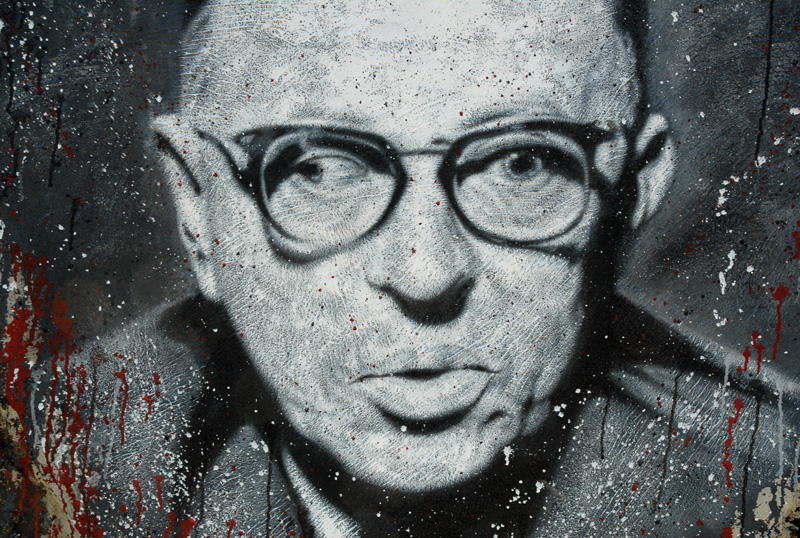
Image by Thierry Ehrmann via Flickr Commons
Sometimes when confronted with strange new ideas, people will exclaim, “you must be on drugs!”—a charge often levied at philosophers by those who would rather dismiss their ideas as hallucinations than take them seriously. But, then, to be fair, sometimes philosophers are on drugs. Take Jean-Paul Sartre. “Before Hunter S. Thompson was driving around in convertibles stocked full of acid, cocaine, mescaline and tequila,” notes Critical Theory, Sartre almost approached the gonzo journalist’s habitual intake.
According to Annie Cohen-Solal, who wrote a biography of Sartre, his daily drug consumption was thus: two packs of cigarettes, several tobacco pipes, over a quart of alcohol (wine, beer, vodka, whisky etc.), two hundred milligrams of amphetamines, fifteen grams of aspirin, a boat load of barbiturates, some coffee, tea, and a few “heavy” meals (whatever those might have been).
These details should not unduly influence our reading of Sartre’s work. Like Thompson, no matter how physically debilitating the booze and drugs might have been for him, they didn’t seem to cramp his productivity or intellectual vigor. But his one and only experience with mescaline almost sent him careening over the edge, and certainly contributed to an important motif in his work afterward.
While working on a book about the imagination, Sartre sought to have an hallucinatory experience. He got the chance in 1935 when an old friend, Dr. Daniel Lagache, invited him into an experiment at Sainte-Anne’s hospital in Paris, where he was injected with mescaline and observed under controlled conditions. “Sartre does not appear to have had a bad trip in the classic sense of suffering a major and prolonged panic attack,” Gary Cox writes in his Sartre biography. “But it was not a good trip and he did not enjoy it.”
The most ill effects came afterward: “His visual faculties remained distorted for weeks.” Sartre saw houses with “leering faces, all eyes and jaws.” Clock faces took on the features of owls. He confided in his partner Simone de Beauvoir that “he feared that one day he would no longer know” whether or not these were hallucinations. They were, however, not the worst aftereffects. As Sartre told political science professor John Gerassi in a 1971 interview, crabs began to follow him around. He described the experience as “a nervous breakdown.” The crabs followed him “all the time,” he said, “I mean they followed me in the streets, into class.”
I got used to them. I would wake up in the morning and say, “Good morning, my little ones, how did you sleep?” I would talk to them all the time, or I would say, “OK guys, we’re going into class now, so we have to be still and quiet,” and they would be there, around my desk, absolutely still, until the bell rang.
This went on for a year before Sartre went to see his friend Jacques Lacan for psychoanalysis. “We concluded, “ he says, “that it was a fear of becoming alone.” While he had previously confessed a fear of sea creatures, especially crabs, that went back to his childhood, after the mescaline trip, crabs featured prominently in his work, as Peter Royle shows at Philosophy Now.
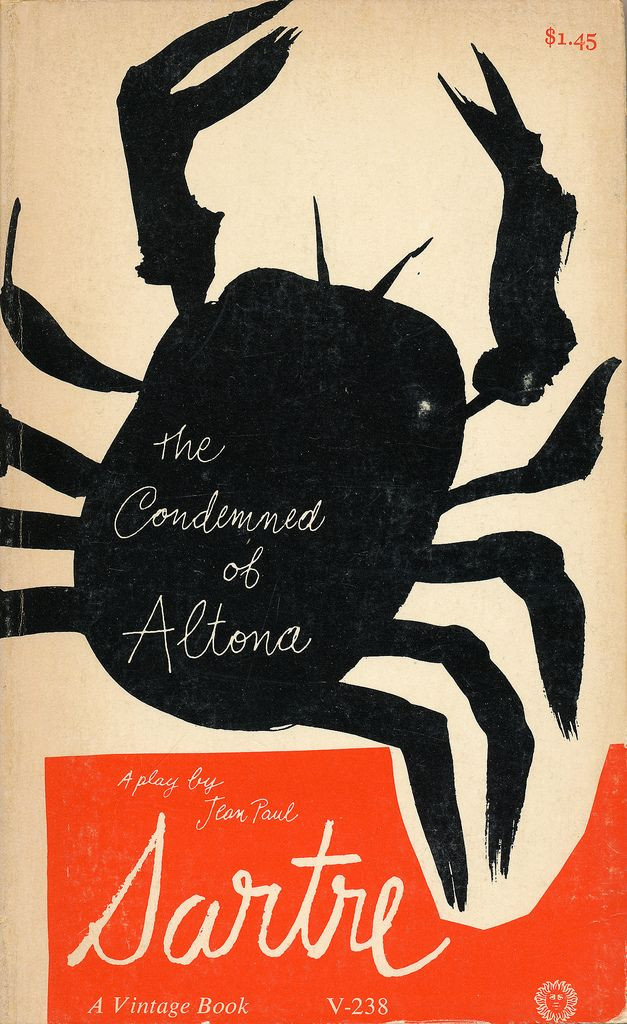
We find several references to crabs in his short story collection The Wall and in his famous essay “Existentialism is a Humanism.” Samir Chopra quotes crab passages in Sartre’s first novel Nausea. (“At first I avoided them by writing about them,” he told Gerassi, “in effect, by defining life as nausea.”) “In one of his short stories, ‘Erostratus,’” notes Royle, “Sartre creates a character, Paul Hilbert, who looks down on human beings from a height and sees them as crabs.” The most striking use of the “crab motif” comes from his 1959 play The Condemned of Altona, in which the protagonist Frantz imagines that by the Thirtieth Century, humans have become crabs sitting in judgment of the people of the Twentieth.
Crab images, Royle argues, “point to important philosophical ideas,” including “the possibility of ignominy inherent in the concept of freedom itself” and the “reprehensible ‘crabs’ who decline to assume their freedom” and thus scuttle around mindlessly in groups. Crustaceans continued to haunt the philosopher. While the effects of the mescaline eventually dissipated, “when he was feeling down,” writes Cox, Sartre would get the “recurrent feeling, the delusion, that he was being pursued by a giant lobster, always just out of sight… perpetually about to arrive.”
One of the “great, darkly comic features of Sartre folklore,” the huge, invisible lobster invites much speculation about Sartre’s mental health. But perhaps it was only the monstrous embodiment of his own feelings of mauvaise foi, given vivid form by a lingering psychotropic hangover and a daily diet of uppers and downers—a reminder of the “anxiety, anguish, dread, apprehension, fear of pain, fear of death… [and] fundamental absurdity of existence.” As Royle writes, Sartre, always fond of puns, “could only have been intrigued” by the French word for lobster, homard, which sounds like “homme-ard,” a coinage that might suggest something like “a bad man.”
Related Content:
The Drawings of Jean-Paul Sartre
Josh Jones is a writer and musician based in Durham, NC. Follow him at @jdmagness
Read More...Read George Washington’s “110 Rules of Civility”: The Code of Decency That Guided America’s First President

Contrary to a thoroughly abused political metaphor, Washington, DC was not in fact built on a swamp, though anyone who has visited in the summer will find that story plausible. Having just returned to my hometown for a few days, I’ve had ample reminder of its stickiness, and have experienced its figuratively overheated atmosphere firsthand. I needn’t go over the political and moral crises turning the capital into a cauldron of “incivility.”
But what exactly is “civility” and what does it entail? Is it just another word for politeness, or a hypocritically insidious code for silencing dissent? Oxford Dictionaries recently chose the word for its Weekly Word Watch, citing an Oxford English Dictionary entry defining it as “the minimum degree” of decorum in social situations. Deriving from the Latin civis, or “citizen,” and related to “civics” and “civilization,” the word first meant “citizenship,” and connoted the treatment supposedly due a person with said status. As often happens, connotation became denotation, and civility came to stand for basic respect.
Nervous columnists now worried about civility’s decline have pinned the problem on citizen protesters exercising civil disobedience and their first amendment rights, rather than on the torrents of abuse, threats, and lies that pour forth daily from the executive, who seems incapable of treating anyone with minimal decency. But the very first holder of the office—faced with a fractious and uncivil populace (some of whom toasted to his “speedy death”)—believed it was his duty to set “a standard to which the wise and honest can repair.”
What, we might wonder, would George Washington, builder of DC, have thought of the city’s current state? We can speculate by reference to his “Farewell Address,” in which the departing president wrote:
The alternate domination of one faction over another, sharpened by the spirit of revenge natural to party dissention, which in different ages & countries has perpetrated the most horrid enormities, is itself a frightful despotism. But this leads at length to a more formal and permanent despotism. The disorders & miseries, which result, gradually incline the minds of men to seek security & repose in the absolute power of an Individual: and sooner or later the chief of some prevailing faction more able or more fortunate than his competitors, turns this disposition to the purposes of his own elevation, on the ruins of Public Liberty.
Washington, argues historian and conservative columnist Richard Brookhiser, governed his own behavior with a strict code of conduct based on “The Rules of Civility & Decent Behavior in Company and Conversation,” a list he carefully copied out by hand as a schoolboy in Virginia. “Based on a 16th-century set of precepts compiled for young gentlemen by Jesuit instructors,” notes NPR, “the Rules of Civility were one of the earliest and most powerful forces to shape America’s first president,” as Brookhiser claims in his 2003 book Rules of Civility: The 110 Precepts That Guided Our First President in War and Peace.
Many of these “rules” are outmoded etiquette, many are baroque in their level of detail, some should never go out of style, and many would be mocked and derided today as “political correctness.” Brookhiser “warns against dismissing the maxims” as mere politeness, noting that they “address moral issues, but they address them indirectly. Maybe they can work on us in our century as the Jesuits intended them to work in theirs—indirectly—by putting us in a more ambitious frame of mind.” Or maybe they could induce some humility among the already politically ambitious.
See all of the 110 “Rules of Civility” below, with modernized spelling and punctuation, courtesy of NPR:
- Every action done in company ought to be with some sign of respect to those that are present.
- When in company, put not your hands to any part of the body not usually discovered.
- Show nothing to your friend that may affright him.
- In the presence of others, sing not to yourself with a humming voice, or drum with your fingers or feet.
- If you cough, sneeze, sigh or yawn, do it not loud but privately, and speak not in your yawning, but put your handkerchief or hand before your face and turn aside.
- Sleep not when others speak, sit not when others stand, speak not when you should hold your peace, walk not on when others stop.
- Put not off your clothes in the presence of others, nor go out of your chamber half dressed.
- At play and attire, it’s good manners to give place to the last comer, and affect not to speak louder than ordinary.
- Spit not into the fire, nor stoop low before it; neither put your hands into the flames to warm them, nor set your feet upon the fire, especially if there be meat before it.
- When you sit down, keep your feet firm and even, without putting one on the other or crossing them.
- Shift not yourself in the sight of others, nor gnaw your nails.
- Shake not the head, feet, or legs; roll not the eyes; lift not one eyebrow higher than the other, wry not the mouth, and bedew no man’s face with your spittle by approaching too near him when you speak.
- Kill no vermin, or fleas, lice, ticks, etc. in the sight of others; if you see any filth or thick spittle put your foot dexterously upon it; if it be upon the clothes of your companions, put it off privately, and if it be upon your own clothes, return thanks to him who puts it off.
- Turn not your back to others, especially in speaking; jog not the table or desk on which another reads or writes; lean not upon anyone.
- Keep your nails clean and short, also your hands and teeth clean, yet without showing any great concern for them.
- Do not puff up the cheeks, loll not out the tongue with the hands or beard, thrust out the lips or bite them, or keep the lips too open or too close.
- Be no flatterer, neither play with any that delight not to be played withal.
- Read no letter, books, or papers in company, but when there is a necessity for the doing of it, you must ask leave; come not near the books or writtings of another so as to read them unless desired, or give your opinion of them unasked. Also look not nigh when another is writing a letter.
- Let your countenance be pleasant but in serious matters somewhat grave.
- The gestures of the body must be suited to the discourse you are upon.
- Reproach none for the infirmities of nature, nor delight to put them that have in mind of thereof.
- Show not yourself glad at the misfortune of another though he were your enemy.
- When you see a crime punished, you may be inwardly pleased; but always show pity to the suffering offender.
- Do not laugh too loud or too much at any public spectacle.
- Superfluous compliments and all affectation of ceremonies are to be avoided, yet where due they are not to be neglected.
- In putting off your hat to persons of distinction, as noblemen, justices, churchmen, etc., make a reverence, bowing more or less according to the custom of the better bred, and quality of the persons. Among your equals expect not always that they should begin with you first, but to pull off the hat when there is no need is affectation. In the manner of saluting and resaluting in words, keep to the most usual custom.
- ‘Tis ill manners to bid one more eminent than yourself be covered, as well as not to do it to whom it is due. Likewise he that makes too much haste to put on his hat does not well, yet he ought to put it on at the first, or at most the second time of being asked. Now what is herein spoken, of qualification in behavior in saluting, ought also to be observed in taking of place and sitting down, for ceremonies without bounds are troublesome.
- If any one come to speak to you while you are are sitting stand up, though he be your inferior, and when you present seats, let it be to everyone according to his degree.
- When you meet with one of greater quality than yourself, stop and retire, especially if it be at a door or any straight place, to give way for him to pass.
- In walking, the highest place in most countries seems to be on the right hand; therefore, place yourself on the left of him whom you desire to honor. But if three walk together the middest place is the most honorable; the wall is usally given to the most worthy if two walk together.
- If anyone far surpasses others, either in age, estate, or merit, yet would give place to a meaner than himself in his own lodging or elsewhere, the one ought not to except it. So he on the other part should not use much earnestness nor offer it above once or twice.
- To one that is your equal, or not much inferior, you are to give the chief place in your lodging, and he to whom it is offered ought at the first to refuse it, but at the second to accept though not without acknowledging his own unworthiness.
- They that are in dignity or in office have in all places precedency, but whilst they are young, they ought to respect those that are their equals in birth or other qualities, though they have no public charge.
- It is good manners to prefer them to whom we speak before ourselves, especially if they be above us, with whom in no sort we ought to begin.
- Let your discourse with men of business be short and comprehensive.
- Artificers and persons of low degree ought not to use many ceremonies to lords or others of high degree, but respect and highly honor then, and those of high degree ought to treat them with affability and courtesy, without arrogance.
- In speaking to men of quality do not lean nor look them full in the face, nor approach too near them at left. Keep a full pace from them.
- In visiting the sick, do not presently play the physician if you be not knowing therein.
- In writing or speaking, give to every person his due title according to his degree and the custom of the place.
- Strive not with your superior in argument, but always submit your judgment to others with modesty.
- Undertake not to teach your equal in the art himself professes; it savors of arrogancy.
- Let your ceremonies in courtesy be proper to the dignity of his place with whom you converse, for it is absurd to act the same with a clown and a prince.
- Do not express joy before one sick in pain, for that contrary passion will aggravate his misery.
- When a man does all he can, though it succeed not well, blame not him that did it.
- Being to advise or reprehend any one, consider whether it ought to be in public or in private, and presently or at some other time; in what terms to do it; and in reproving show no signs of cholor but do it with all sweetness and mildness.
- Take all admonitions thankfully in what time or place soever given, but afterwards not being culpable take a time and place convenient to let him know it that gave them.
- Mock not nor jest at any thing of importance. Break no jests that are sharp, biting, and if you deliver any thing witty and pleasant, abstain from laughing thereat yourself.
- Wherein you reprove another be unblameable yourself, for example is more prevalent than precepts.
- Use no reproachful language against any one; neither curse nor revile.
- Be not hasty to believe flying reports to the disparagement of any.
- Wear not your clothes foul, or ripped, or dusty, but see they be brushed once every day at least and take heed that you approach not to any uncleaness.
- In your apparel be modest and endeavor to accommodate nature, rather than to procure admiration; keep to the fashion of your equals, such as are civil and orderly with respect to time and places.
- Run not in the streets, neither go too slowly, nor with mouth open; go not shaking of arms, nor upon the toes, kick not the earth with your feet, go not upon the toes, nor in a dancing fashion.
- Play not the peacock, looking every where about you, to see if you be well decked, if your shoes fit well, if your stockings sit neatly and clothes handsomely.
- Eat not in the streets, nor in the house, out of season.
- Associate yourself with men of good quality if you esteem your own reputation; for ’tis better to be alone than in bad company.
- In walking up and down in a house, only with one in company if he be greater than yourself, at the first give him the right hand and stop not till he does and be not the first that turns, and when you do turn let it be with your face towards him; if he be a man of great quality walk not with him cheek by jowl but somewhat behind him, but yet in such a manner that he may easily speak to you.
- Let your conversation be without malice or envy, for ’tis a sign of a tractable and commendable nature, and in all causes of passion permit reason to govern.
- Never express anything unbecoming, nor act against the rules moral before your inferiors.
- Be not immodest in urging your friends to discover a secret.
- Utter not base and frivolous things among grave and learned men, nor very difficult questions or subjects among the ignorant, or things hard to be believed; stuff not your discourse with sentences among your betters nor equals.
- Speak not of doleful things in a time of mirth or at the table; speak not of melancholy things as death and wounds, and if others mention them, change if you can the discourse. Tell not your dreams, but to your intimate friend.
- A man ought not to value himself of his achievements or rare qualities of wit; much less of his riches, virtue or kindred.
- Break not a jest where none take pleasure in mirth; laugh not aloud, nor at all without occasion; deride no man’s misfortune though there seem to be some cause.
- Speak not injurious words neither in jest nor earnest; scoff at none although they give occasion.
- Be not froward but friendly and courteous, the first to salute, hear and answer; and be not pensive when it’s a time to converse.
- Detract not from others, neither be excessive in commanding.
- Go not thither, where you know not whether you shall be welcome or not; give not advice without being asked, and when desired do it briefly.
- If two contend together take not the part of either unconstrained, and be not obstinate in your own opinion. In things indifferent be of the major side.
- Reprehend not the imperfections of others, for that belongs to parents, masters and superiors.
- Gaze not on the marks or blemishes of others and ask not how they came. What you may speak in secret to your friend, deliver not before others.
- Speak not in an unknown tongue in company but in your own language and that as those of quality do and not as the vulgar. Sublime matters treat seriously.
- Think before you speak, pronounce not imperfectly, nor bring out your words too hastily, but orderly and distinctly.
- When another speaks, be attentive yourself and disturb not the audience. If any hesitate in his words, help him not nor prompt him without desired. Interrupt him not, nor answer him till his speech be ended.
- In the midst of discourse ask not of what one treats, but if you perceive any stop because of your coming, you may well entreat him gently to proceed. If a person of quality comes in while you’re conversing, it’s handsome to repeat what was said before.
- While you are talking, point not with your finger at him of whom you discourse, nor approach too near him to whom you talk, especially to his face.
- Treat with men at fit times about business and whisper not in the company of others.
- Make no comparisons and if any of the company be commended for any brave act of virtue, commend not another for the same.
- Be not apt to relate news if you know not the truth thereof. In discoursing of things you have heard, name not your author. Always a secret discover not.
- Be not tedious in discourse or in reading unless you find the company pleased therewith.
- Be not curious to know the affairs of others, neither approach those that speak in private.
- Undertake not what you cannot perform but be careful to keep your promise.
- When you deliver a matter do it without passion and with discretion, however mean the person be you do it to.
- When your superiors talk to anybody hearken not, neither speak nor laugh.
- In company of those of higher quality than yourself, speak not ’til you are asked a question, then stand upright, put off your hat and answer in few words.
- In disputes, be not so desirous to overcome as not to give liberty to each one to deliver his opinion and submit to the judgment of the major part, especially if they are judges of the dispute.
- Let your carriage be such as becomes a man grave, settled and attentive to that which is spoken. Contradict not at every turn what others say.
- Be not tedious in discourse, make not many digressions, nor repeat often the same manner of discourse.
- Speak not evil of the absent, for it is unjust.
- Being set at meat scratch not, neither spit, cough or blow your nose except there’s a necessity for it.
- Make no show of taking great delight in your victuals. Feed not with greediness. Eat your bread with a knife. Lean not on the table, neither find fault with what you eat.
- Take no salt or cut bread with your knife greasy.
- Entertaining anyone at table it is decent to present him with meat. Undertake not to help others undesired by the master.
- If you soak bread in the sauce, let it be no more than what you put in your mouth at a time, and blow not your broth at table but stay ’til it cools of itself.
- Put not your meat to your mouth with your knife in your hand; neither spit forth the stones of any fruit pie upon a dish nor cast anything under the table.
- It’s unbecoming to heap much to one’s mea. Keep your fingers clean and when foul wipe them on a corner of your table napkin.
- Put not another bite into your mouth ’til the former be swallowed. Let not your morsels be too big for the jowls.
- Drink not nor talk with your mouth full; neither gaze about you while you are drinking.
- Drink not too leisurely nor yet too hastily. Before and after drinking wipe your lips. Breathe not then or ever with too great a noise, for it is uncivil.
- Cleanse not your teeth with the tablecloth, napkin, fork or knife, but if others do it, let it be done with a pick tooth.
- Rinse not your mouth in the presence of others.
- It is out of use to call upon the company often to eat. Nor need you drink to others every time you drink.
- In company of your betters be not longer in eating than they are. Lay not your arm but only your hand upon the table.
- It belongs to the chiefest in company to unfold his napkin and fall to meat first. But he ought then to begin in time and to dispatch with dexterity that the slowest may have time allowed him.
- Be not angry at table whatever happens and if you have reason to be so, show it not but on a cheerful countenance especially if there be strangers, for good humor makes one dish of meat a feast.
- Set not yourself at the upper of the table but if it be your due, or that the master of the house will have it so. Contend not, lest you should trouble the company.
- If others talk at table be attentive, but talk not with meat in your mouth.
- When you speak of God or His attributes, let it be seriously and with reverence. Honor and obey your natural parents although they be poor.
- Let your recreations be manful not sinful.
- Labor to keep alive in your breast that little spark of celestial fire called conscience.
Related Content:
The Poetry of Abraham Lincoln
John Green’s Crash Course in U.S. History: From Colonialism to Obama in 47 Videos
Josh Jones is a writer and musician based in Durham, NC. Follow him at @jdmagness
Read More...The History of Rock Musically Told in 100 Guitar Riffs and 100 Bass Riffs
Rare exceptions may only underline the rule: a good rock riff should be simple, primal—two, three, maybe four notes. What makes a riff so distinctive you can’t stop humming it in the shower? Personality. Bends, slides, double-stops, etc, put in exactly the right places. How do you write such a riff? Given how most famous guitar players talk about it: entirely by accident, a frustrating answer for would-be hitmakers, though it shouldn’t stop anyone from trying. The best riff-writers wrote hundreds of riffs before they stumbled upon that just-right collection of notes. Or they just ripped off a lesser-known riff and made it their own. All’s fair in love and riffs.
Articulating what we already intuitively know, Chicago Tribune critic Greg Kot writes at BBC.com, “a riff, when done right, can shape a song and often rule it. It’s a brief statement—sometimes only a handful of notes or chords—that recurs throughout the arrangement and can become the song’s central hook. Many of the greatest songs of the rock era begin with a riff—the Rolling Stones ‘(I Can’t Get No) Satisfaction,’ Deep Purple’s ‘Smoke on the Water,’ Aerosmith’s ‘Walk this Way,’ The Smith’s ‘How Soon is Now,’ Nirvana’s ‘Smells Like Teen Spirit,’ The Isley Brother’s ‘Who’s that Lady?’ And when done that spectacularly, the riff becomes the core of the tune, its most memorable feature when listeners play it back in their head.”
Indeed, so central is the riff to the catchiness of a song that one could write an entire history of rock ‘n’ roll in riffs, which is exactly what Alex Chadwick has done in the video above, opening with the groovy jazz lick of 1953’s “Mr. Sandman” and wrapping up with St. Vincent’s “Cruel.” Though the more recent riffs might elude many people—having not yet become classic rock hits played at hockey games—nearly all of these 100 riffs from 100 rock ‘n’ roll songs will be instantly familiar. The video comes from music store Chicago Music Exchange, where employees likely hear many of these tunes played all day long, but never in chronological succession with such perfect intonation.
And lest we think guitarists deserve all the riffage glory, the folks at Chicago Music Exchange put together a follow-up video of 100 bass (and drum) riffs, “A Brief History of Groove.” Here, bassist Marc Najjar and drummer Nate Bauman cover 60 years of music history in under 20 minutes. As noted a few years back, these impressive medleys were performed “in one continuous take.” See the full guitar riff tracklist here and bass riff tracklist here.
Related Content:
The Evolution of the Rock Guitar Solo: 28 Solos, Spanning 50 Years, Played in 6 Fun Minutes
The History of Rock Told in a Whirlwind 15-Minute Video
Josh Jones is a writer and musician based in Durham, NC. Follow him at @jdmagness
Read More...Do Our Dreams Predict the Future? Vladimir Nabokov Spent Three Months Testing That Theory in 1964
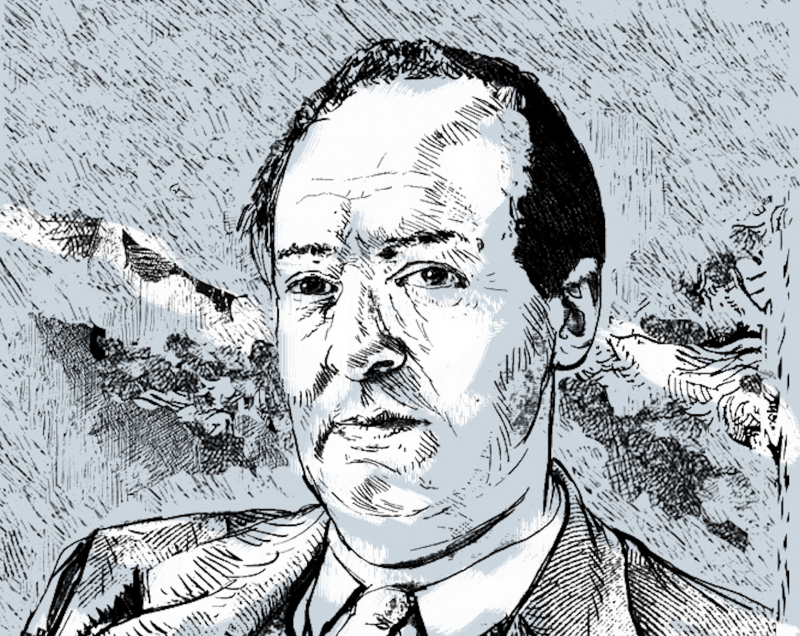
Photo by NC Mallory via Flickr Commons
Why keep a dream journal? There’s probably amusing befuddlement and even a kind of roundabout enlightenment to be had in looking back over one’s subconscious visions, so vivid during the night, that vanish so soon after waking. But now we have another, more compelling reason to write down our dreams: Vladimir Nabokov did it. This we know from the recently published Insomniac Dreams, a collection of the entries from the Lolita and Pale Fire author’s dream journal — written, true to his compositional method, on index cards— edited and contextualized by Nabokov scholar Gennady Barabtarlo.
“On October 14, 1964, in a grand Swiss hotel in Montreux where he had been living for three years, Vladimir Nabokov started a private experiment that lasted till January 3 of the following year, just before his wife’s birthday (he had engaged her to join him in the experiment and they compared notes),” writes Barabtarlo in the book’s first chapter, which you can read online. “Every morning, immediately upon awakening, he would write down what he could rescue of his dreams. During the following day or two he was on the lookout for anything that seemed to do with the recorded dream.”
He wanted to “test a theory according to which dreams can be precognitive as well as related to the past. That theory is based on the premise that images and situations in our dreams are not merely kaleidoscoping shards, jumbled, and mislabeled fragments of past impressions, but may also be a proleptic view of an event to come.” That notion, writes Dan Piepenbring at the New Yorker, “came from J. W. Dunne, a British engineer and armchair philosopher who, in 1927, published An Experiment with Time, arguing, in part, that our dreams afforded us rare access to a higher order of time.” The book’s fan base included such other literary notables as James Joyce, T.S. Eliot, and Aldous Huxley.
Nabokov had his own take on Dunne’s theory: “The waking event resembling or coinciding with the dream event does so not because the latter is a prophecy,” he writes on the first notecard in the stack produced by his own three-month experiment with time, “but because this would be the kind of dream that one might expect to have after the event.” But Nabokov’s dream data seem to have provided little in the way in absolute proof of what he called “reverse memory.” In the strongest example, a dream about eating soil samples at a museum precedes his real-life viewing of a television documentary about the soil of Senegal. And as Barabtarlo points out, the dream “distinctly and closely followed two scenes” of a short story Nabokov had written 25 years before.
And so we come to the real appeal of Insomniac Dreams: Nabokov’s skill at rendering evocative and memorable images in language — or rather, in his polyglot case, languages – as well as dealing with themes of time and memory. You can read a few samples at Lithub involving not just soil but sexual jealousy, a lecture hastily scrawled minutes before class time, the Red Army, and “a death-sign consisting of two roundish golden-yellow blobs with blurred edges.” They may bring to mind the words of the narrator of Ada, the novel Nabokov published the following year, who in his own consideration of Dunne guesses that in dreams, “some law of logic should fix the number of coincidences, in a given domain, after which they cease to be coincidences, and form, instead, the living organism of a new truth.”
Related Content:
The Notecards on Which Vladimir Nabokov Wrote Lolita: A Look Inside the Author’s Creative Process
Take Vladimir Nabokov’s Quiz to See If You’re a Good Reader–The Same One He Gave to His Students
Vladimir Nabokov (Channelled by Christopher Plummer) Teaches Kafka at Cornell
Alfred Hitchcock and Vladimir Nabokov Trade Letters and Ideas for a Film Collaboration (1964)
How a Good Night’s Sleep — and a Bad Night’s Sleep — Can Enhance Your Creativity
Based in Seoul, Colin Marshall writes and broadcasts on cities and culture. His projects include the book The Stateless City: a Walk through 21st-Century Los Angeles and the video series The City in Cinema. Follow him on Twitter at @colinmarshall or on Facebook.
Read More...Support Us
We're hoping to rely on loyal readers, rather than erratic ads. Please click the Donate button and support Open Culture. You can use Paypal, Venmo, Patreon, even Crypto! We thank you!

About Us

Open Culture scours the web for the best educational media. We find the free courses and audio books you need, the language lessons & educational videos you want, and plenty of enlightenment in between.
Advertise With Us

FREE UPDATES!
GET OUR DAILY EMAIL
Get the best cultural and educational resources on the web curated for you in a daily email. We never spam. Unsubscribe at any time.
FOLLOW ON SOCIAL MEDIA

Open Culture editor Dan Colman scours the web for the best educational media. He finds the free courses and audio books you need, the language lessons & movies you want, and plenty of enlightenment in between.
Advertise With Us


