A History of Ideas: Animated Videos Explain Theories of Simone de Beauvoir, Aristotle & Other Philosophers
The UK’s Open University has become a dependable source of very short, online video introductions to all sorts of things, from weighty subjects like religion, economics, and literary theory to lighter, but no less interesting fare like the art and science of bike design. With breezy tone and serious intent, their animated “60-Second Adventures” make seemingly arcane academic ideas accessible to laypeople with no prior background. Now they’ve teamed up with writer and BBC broadcaster Melvyn Bragg of In Our Time fame for a series of video shorts that run just a little over 60 seconds each, with animations by Andrew Park of Cogni+ive, and narration by comedic actor Harry Shearer from Spinal Tap, The Simpsons, and, most recently, Nixon’s the One.
Drawn from Bragg’s BBC 4 radio program “A History of Ideas,” the shorts introduce exactly that—each one a précis of a longstanding philosophical problem like Free Will vs. Determinism (top) or the Problem of Evil (above). Unlike some similarly rapid outlines, these videos—like the tie-in Bragg radio program—don’t simply sketch out the issues in abstract; they draw from specific approaches from fields as diverse as neuroscience, moral philosophy, theology, and feminist theory. In the video on free will at the top, for example, Shearer introduces us to the Libet experiments, performed in the 1980s by neurologist Benjamin Libet to test our ability to make voluntary, conscious decisions. The “Free Will Defense” video above references—at least visually—Bertrand Russell’s notorious teapot in its rather skeptical presentation of this theological bugbear.
Some of the videos get even more specific, focusing in on the work of one thinker whose contributions are central to our understanding of certain concepts. Just above in “Feminine Beauty,” we have an introduction to existential philosopher Simone de Beauvoir’s argument that feminine beauty, and gender presentation more generally, is socially constructed by prevailing patriarchal norms—a concept central to the feminist work of later thinkers like Judith Butler. And below, we have the 18th century concept of the “Sublime,” a supposedly higher, more threatening and ineffable aesthetic mode, as discussed in the work of conservative political philosopher Edmund Burke (also a subject dear to Immanuel Kant, who had his own take on the idea).
See more “A History of Ideas” short, animated videos—including “Diotima’s Ladder,” “The Golden Ratio,” and “The Harm Principle”—on Youtube or the BBC Radio 4 site. The scripts for the clips, we should add, were written by Nigel Warburton, whose Philosophy Bites podcast you should never miss.
And for much more extensive discussions of these age-old philosophical questions with real living “philosophers, theologians, lawyers, neuroscientists, historians and mathematicians,” download episodes of Melvyn Bragg’s “A History of Ideas” show here or on iTunes.
Related Content:
120+ Free Online Philosophy Courses
8‑Bit Philosophy: Plato, Sartre, Derrida & Other Thinkers Explained With Vintage Video Games
The History of Philosophy Without Any Gaps – Peter Adamson’s Podcast Still Going Strong
Josh Jones is a writer and musician based in Durham, NC. Follow him at @jdmagness
Read More...Jump Into the “Podcasting Renaissance” with These Intelligent Shows (and Tell Us Your Favorites)

You may have heard that podcasting has a renaissance going on. As a podcaster since the beginning stages of the medium — and one slightly surprised to find that the medium has now reached ten years of age — I can only welcome the news, though I never knew podcasting had gone into a dark age. New York Magazine’s Kevin Roose tells the story of the appearance of Apple’s iPod, followed by a flowering of “podcasts about politics, sports, literature, comedy,” “podcasts that sounded like NPR, and ones that sounded like Rush Limbaugh,” some that “lacked polish,” but most possessed of “a kind of energy to them that suited their audiences well.” But then, “sometime around 2009 or 2010, the podcast scene seemed to wither. The stalwarts (This American Life, Radiolab) stayed around at the top of the iTunes charts, but there wasn’t much else happening. Download numbers fell. Interest waned.” But ah, in this year of our Pod 2014, things have changed: “Today, a very different problem exists: There are too many great podcasts to keep up with.”
Roose, and hundreds upon hundreds of other people on the internet, recommends first and foremost Serial (iTunes — RSS — Soundcloud), “the true-crime drama hosted by This American Life producer Sarah Koenig,” a show sometimes credited with reviving podcasting itself. The New Yorker’s Sarah Larson calls it “the podcast we’ve been waiting for” in a piece giving a look into the reasons behind its success. Roos also gives special mention to another new show involving a name you might recognize from the This American Life orbit: Alex Blumberg’s StartUp (iTunes — RSS), a running document of the creator’s attempt to launch a podcasting business, the kind of venture that sounds less quixotic all the time. And Roose also names a personal favorite of mine, the well-known podcast about architecture and design — but Really, About Life Itself — 99% Invisible (iTunes — RSS).
If you feel like getting into this podcast renaissance, or if you’ve spent years as a podcast listener and just need some new material in your rotation, you could do much worse than starting with the three shows above. To add to that list, I can suggest no podcast more suited to the interests of Open Culture readers than In Our Time (iTunes — RSS), the long-running BBC Radio 4 program about the history of ideas wherein veteran broadcaster Melvyn Bragg interviews groups of Oxbridge experts on subjects like nuclear fusion, the Haitian revolution, Rudyard Kipling, the Battle of Talas, and the female pharaoh Hatshepsut — just in the past month. Personally, I so enjoy In Our Time that I went to interview Melvyn Bragg on my own podcast Notebook on Cities and Culture earlier this year.
Interviews and comedy have proven two of the most durable forms of content in podcasting, and anyone who hasn’t dipped into comedian Marc Maron’s in-depth and introspective interview show WTF (iTunes — RSS) — not that many haven’t at this point — has missed out on a sterling example of the kind of listening experiences podcasting, and only podcasting, has made possible. (You might consider also listening to my interview with Maron on The Los Angeles Review of Books podcast.) And while not necessarily comedy, I can’t imagine Open Culture readers not getting a laugh, and all other kinds of intellectual stimulation besides, out of the podcasting of Benjamen Walker. Walker, formerly the host of Too Much Information on the beloved independent radio station WFMU, recently launched a new show called Benjamen Walker’s Theory of Everything (iTunes — Soundcloud), a show of personal stories that explores all things to which those stories connect.
True, one complaint about podcasting in its early years held that the shows podcasters made went too personal — the old charge of “two or three guys sitting in basement talking about nothing” — but now that this decade-old medium has found more mature forms, the personal has become its art and its craft. I never hesitate to promote XO (iTunes — RSS), a show by Keith McNally, a podcast auteur whom I believe has done more to master the creative personal-story podcast than almost anybody, and he began doing it earlier. (As with Bragg, I went to his hometown of Toronto to interview him too.) But enough about my favorite podcasts; which ones do you tirelessly champion? Make your recommendations, and we’ll round them up in a post soon.
Related Content:
Shakespeare’s Restless World: A Portrait of the Bard’s Era in 20 Podcasts
Colin Marshall hosts and produces Notebook on Cities and Culture and writes essays on cities, language, Asia, and men’s style. He’s at work on a book about Los Angeles, A Los Angeles Primer. Follow him on Twitter at @colinmarshall or on Facebook.
Read More...135 Free Philosophy eBooks
This page features a growing list of Free Philosophy eBooks, presenting essential works by Aristotle, Hegel, Kant, Nietzsche, Wittgenstein and many other philosophers. You can generally read these texts on your Kindle, iPad & iPhone, or web browser. For those interested in philosophy, you won’t want to miss our collection of Free Online Philosophy Courses.
- Aquinas, Thomas — Summa Theologiae
- Aristotle — Collected Works
- Aristotle — Nicomachean Ethics
- Aristotle — Physics
- Aristotle - Politics
- Aristotle — The Categories
- Aurelius, Marcus - Meditations
- Ayer, Alfred — Language, Truth and Logic
- Bacon, Sir Francis — Novum Organum
- Benjamin, Walter — “The Work of Art in the Age of Mechanical Reproduction”
- Bentham, Jeremy — An Introduction to the Principles of Morals and Legislation
- Berkeley, George — Three Dialogues between Hylas and Philonous
- Boethius — Consolation of Philosophy
- Burke, Edmund - On the Sublime and Beautiful
- Carroll, Lewis — Symbolic Logic
- Carroll, Lewis — The Game of Logic
- Confucius — The Analects
- Confucius — The Great Learning
- Derrida, Jacques — “Structure, Sign, and Play in the Discourse of the Human Sciences”
- Descartes, Rene - Discourse on the Method
- Dewey, John - Democracy & Education
- Dostoevsky, Fyodor - Brothers Karamazov
- Dostoevsky, Fyodor - Crime and Punishment
- Eliot, Charles - The Harvard Classics (51 Volumes)
- Emerson, Ralph Waldo – Essays
- Emerson, Ralph Waldo - The Complete Works
- Foucault, Michel - Die Ordnung des Diskurses
- Gramsci, Antonio — Selected Writings
- Hegel, GWF — Lectures on the History of Philosophy
- Hegel, GWF — Philosophy of Mind
- Hegel, GWF — Philosophy of Right
- Hegel, GWF — The Phenomenology of the Spirit
- Hobbes, Thomas - Leviathan
- Hume, David - A Treatise of Human Nature
- Hume, David - Dialogues Concerning Natural Religion
- Hume, David - Enquiry into the Principles of Morals
- Hume, David — An Enquiry Concerning Human Understanding
- Hume David — Political Discourses
- James, William — Essay in Radical Empiricism
- James, William - Pragmatism
- James, William - Varieties of Religious Experience
- Kant, Immanuel - Critique of Judgement
- Kant, Immanuel - Critique of Practical Reason
- Kant, Immanuel - Critique of Pure Reason
- Kant, Immanuel - Groundwork for the Metaphysics of Morals
- Kant, Immanuel - Perpetual Peace
- Kant, Immanuel - What is Enlightenment?
- Kierkegaard, Søren - Fear and Trembling
- Kierkegaard, Søren — Philosophical Fragments
- Kierkegaard, Søren - Purity of Heart Is to Will One Thing
- Kierkegaard, Søren — The Sickness Unto Death
- Kierkegaard, Søren - Two Discourses on God and Man
- Leibniz — Theodicy
- Locke, John — An Essay on Human Understanding
- Locke, John - Second Treatise on Government
- Lucretius - On the Nature of the Things
- Machiavelli, Niccolò - The Prince
- Madison, Hamilton & Jay - The Federalist Papers
- Maimonides — Guide for the Perplexed
- Marx and Engels - The Communist Manifesto
- Marx, Karl — Das Kapital
- Mencken, H.L. — The Philosophy of Friedrich Nietzsche
- Mill, John Stuart- On Liberty
- Mill, John Stuart - Utilitarianism
- Montaigne — Essays
- Montesquieu - The Persian Letters
- Montesquieu - The Spirit of the Laws
- More, Thomas - Utopia
- Nietzsche, Friedrich - Beyond Good and Evil
- Nietzsche, Friedrich- Ecce Homo
- Nietzsche, Friedrich — Genealogy of Morals
- Nietzsche, Friedrich - Homer and Classical Philology
- Nietzsche, Friedrich - Human, All Too Human
- Nietzsche, Friedrich - Selected Letters
- Nietzsche, Friedrich - The Anti Christ
- Nietzsche, Friedrich — The Birth of Tragedy
- Nietzsche, Friedrich - The Case Against Wagner
- Nietzsche, Friedrich — The Dawn of Day
- Nietzsche, Friedrich - The Gay Science
- Nietzsche, Friedrich - Thus Spake Zarathustra
- Nietzsche, Friedrich - Twilight of the Idols
- Paine, Thomas - Common Sense
- Paine, Thomas - Rights of Man
- Paine, Thomas — The Age of Reason
- Pascal, Blaise — The Pensées
- Pascal, Blaise — The Provincial Letters
- Plato — Collected Works
- Plato - Symposium
- Plato - The Apology, Phaedo, and Crito of Plato
- Plato - The Republic
- Popper, Karl — The Logic of Scientific Discovery
- Read Online Now
- Rousseau, Jean Jacques — Emile
- Rousseau, Jean Jacques — Julie; ou, la Nouvelle Héloïse
- Rousseau, Jean-Jacques - The Confessions
- Rousseau, Jean-Jacques - The Social Contract & Discourses
- Russell, Bertrand — Free Thought and Official Propaganda
- Russell, Bertrand - Introduction to Mathematical Philosophy
- Russell, Bertrand — Mysticism and Logic and Other Essays
- Russell, Bertrand - Political Ideals
- Russell, Bertrand — The Conquest of Happiness
- Russell, Bertrand - The Problems of Philosophy
- Russell, Bertrand - Western Philosophy
- Russell, Bertrand — Why I Am Not a Christian
- Santayana, George — Some Turns of Thought in Modern Philosophy: Five Essays
- Santayana, George — The Life of Reason
- Santayana, George — These Sense of Beauty
- Santayana, George — Three Philosophical Poets: Lucretius, Dante and Goethe
- Sartre, Jean-Paul - Existentialism Is a Humanism
- Sartre, Jean-Paul — Nausea
- Read Online Now (French versions)
- Schopenhauer, Arthur - The World as Will and Representation
- Schopenhauer, Arthur — The Essays of Arthur Schopenhauer; On Human Nature
- iPad/iPhone — Kindle + Other Formats (find German version here)
- Schopenhauer, Arthur — Studies in Pessimism
- Seneca - On Benefits
- Smith, Adam - The Theory of Moral Sentiments
- Smith, Adam - The Wealth of Nations
- Spinoza — The Chief Works of Benedict de Spinoza, 2 vols.
- Spinoza — Ethics
- St. Augustine — Confessions
- Sun Tzu - The Art of War
- Tocqueville, Alexis de - Democracy in America Vol 1.
- Tocqueville, Alexis de - Democracy in America Vol 2.
- Thoreau, Henry David - Walden
- Tolstoy, Leo — What is Art?
- Voltaire - Candide
- Voltaire — Micromégas
- Voltaire — The Philosophical Dictionary
- Voltaire — The Works of Voltaire
- Wittgenstein, Ludwig — The Blue Book
- Wittgenstein, Ludwig — The Brown Book
- Wittgenstein, Ludwig - Notebooks, 1914–1916
- Wittgenstein, Ludwig — Notes on Logic
- Wittgenstein, Ludwig — Philosophical Investigations (German)
- Wittgenstein, Ludwig - Tractatus Logico-Philosophicus
- Wittgenstein, Ludwig - Tractatus Logico-Philosophicus (German-English Side by Side Edition)
- Wollstonecraft, Mary — A Vindication of the Rights of Women
General Resources
- 80 Philosophy ebooks from UC Press
- 70 Philosophy eBooks from University of Pittsburgh Press
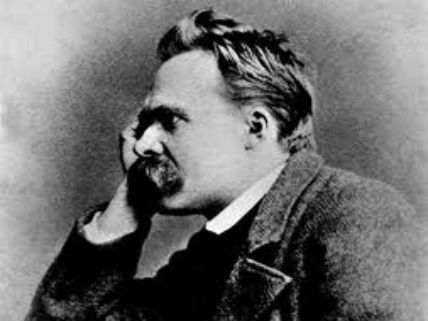
44 Essential Movies for the Student of Philosophy
What comes to mind when you hear the phrase “philosophical film”? The Matrix, most likely, an obvious example of a movie—or franchise—that explores timeless questions: Who are we? What is reality? Are our lives nothing more than elaborate simulations programmed by hyperintelligent supercomputers? Okay, that last one may be of more recent vintage, but it’s closely related to that ancient cave allegory of Plato’s that asks us to consider whether our experiences of the world are nothing more than illusions emanating from a “real” world that lies hidden from view. Another influence on The Matrix is Rene Descartes, whose dualistic separation of consciousness and body receives the maximum of dramatic treatment.
But The Matrix is only one film among a great many that concern themselves with classic problems of philosophy. In a 2010 post for Mubi, Matt Whitlock compiled a list of 44 “Essential Movies for a Student of Philosophy.” Along with The Matrix, other films of the past couple decades get mentions—Richard Linklater’s Waking Life, The Truman Show (“the true home of Plato’s Cave in modern movies”), Eternal Sunshine of the Spotless Mind, I Heart Huckabees, Being John Malkovich, Inception. Also appearing on the list are classics like Akira Kurosawa’s Rashomon and Ingmar Bergman’s The Seventh Seal—which illustrates, Whitlock writes, “The Angst of The Absurd.” All of these films appear under the subheading “Famous thought experiments or discussion of a famous philosophical problem.”
Another category on the list is “Movies featuring a philosopher.” The media-savvy Slavoj Žižek gets two mentions, for 2006’s The Pervert’s Guide to Cinema and 2005’s Žižek! (excerpt above). Since Whitlock compiled the list, Žižek has received yet another feature-length treatment—2012’s The Pervert’s Guide to Ideology. Astra Taylor, director of Žižek!, also included him in 2009’s The Examined Life, alongside Peter Singer, Michael Hardt, Judith Butler, Sunaura Taylor, and Cornel West. After the documentaries, we have “Movies with philosopher as a character,” including Derek Jarman’s Wittgenstein, with Clancy Chassay as the irascible logician, Roberto Rossellini’s 1958 Socrates, starring Jean Sylvere in the title role, and, of course, Bill and Ted’s Excellent Adventure, with Tony Steedman as “So-Crates.”
The final three subcategories in Whitlock’s list are “Movies featuring the ideas of particular philosophers,” “Movies based on Novels written by famous philosophers,” and “Other.” In the last basket, Whitlock places the PBS string-theory documentary The Elegant Universe and Finnish performance artist M.A. Numminen’s bizarre adaptation of Wittgenstein’s Tractatus. Whitlock narrows the field by ruling out “movies that make you think deep crazy stuff” or those with “some new ‘existential twist’ on common topics.” Instead, he sticks to those films “that (seem to be) incarnations of classic philosophical thought experiments or movies that have a major philosophical problem as a main theme… that include topics that a serious student of philosophy needs to understand.”
Like most such lists, this one doesn’t claim to be definitive, and the four years since its compilation have produced several films that might warrant inclusion. Yet another reference from 2010—William G. Smith’s Socrates and Subtitles: A Philosopher’s Guide to 95 Thought-Provoking Movies from Around the World—casts a wider net. But Whitlock’s list seems to me a very useful starting point for thinking about the relationship between philosophy and film. Below, see the first ten films on the list:
Zizek! (2005)
Examined Life (2008)
Derrida (2002)
The Ister (2004)
The Pervert’s Guide To Cinema (2009)
Being In The World (2010)
Bill And Ted’s Excellent Adventure (2001)
When Nietzsche Wept (2007)
The Last Days Of Immanuel Kant (1994)
The Alchemist Of Happiness (2004)
Take a look at his full list here, and by all means, offer your own suggestions for films that fit the criteria in the comments section below.
Related Content:
Wittgenstein: Watch Derek Jarman’s Tribute to the Philosopher, Featuring Tilda Swinton (1993)
Watch The Reality of the Virtual: 74 Minutes of Pure Slavoj Žižek (2004)
Watch The Idea, the First Animated Film to Deal with Big, Philosophical Ideas (1932)
Daniel Dennett and Cornel West Decode the Philosophy of The Matrix in 2004 Film
The Drinking Party, 1965 Film Adapts Plato’s Symposium to Modern Times
Download 100 Free Philosophy Courses and Start Living the Examined Life
Josh Jones is a writer and musician based in Durham, NC. Follow him at @jdmagness
Read More...
Maya Angelou Tells Studs Terkel How She Learned to Count Cards & Hustle in a New Animated Video
Blank on Blank returns with another one of their visually-distinctive animated videos. This one lets us time travel back to 1970 when Studs Terkel, the great American author, historian, and radio broadcaster, sat down with acclaimed poet Maya Angelou. The interview took place shortly after Angelou published her 1969 autobiography, I Know Why the Caged Bird Sings, and the conversation turns, amusingly, to her childhood years, when she learned how to hustle and count cards from her step father, Daddy Clidell. I bet Bukowski is applauding wherever he is. Blank on Blank made this video in partnership with the Studs Terkel Radio Archive, which we featured on our site late last year.
Related Content:
Maya Angelou Reads “Still I Rise” and “On the Pulse of the Morning”
Studs Terkel Interviews Bob Dylan, Shel Silverstein, Maya Angelou & More in New Audio Trove
Read More...The Groundbreaking Art of Alex Steinweiss, Father of Record Cover Design
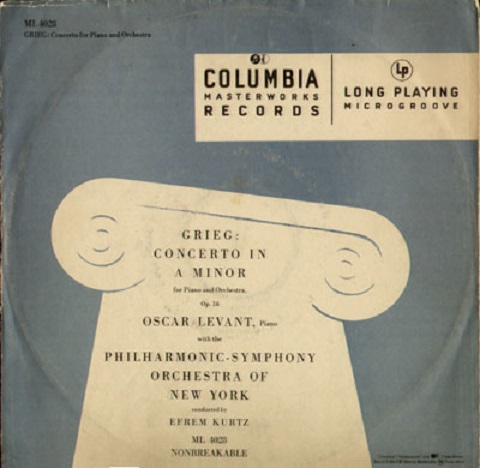
Given the visual perfection and ubiquity of album covers by designers like Storm Thorgerson and Peter Saville—given the popularity of blogs featuring monumentally bad album covers—it’s hard to feature a time when records came wrapped in plain brown paper like cheap booze or covered in nondescript bindings like business ledgers. But this was the case, before another widely admired designer, Alex Steinweiss, more or less invented the album cover in 1939 at the age of 22.
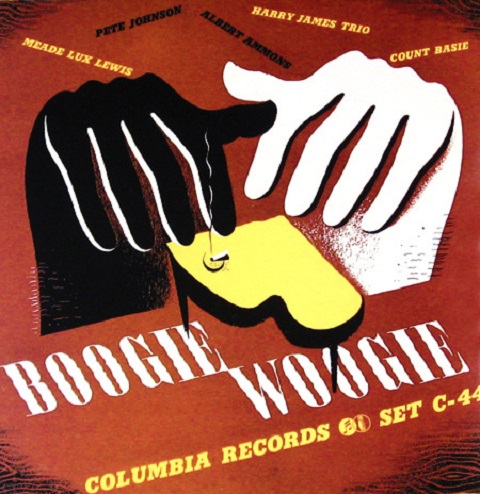
There had been cover art before, during the age of the 78 rpm record, but only for the rare special release. Most music came stamped with its contents and little else. Initially contracted by Columbia Records to produce better jackets for the unwieldy 78, Steinweiss soon became the label’s art director and convinced them to try out several full color designs inspired by French and German modernist poster art. When Columbia released the first vinyl LP in 1948, Steinweiss not only designed the cover, but he invented the paperboard jacket that still surrounds records today.
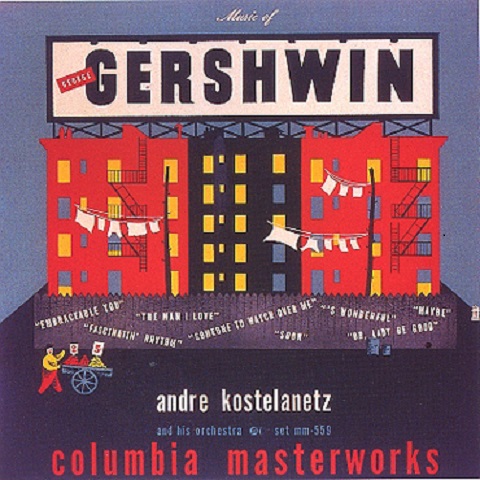
You can see a few of Steinweiss’ covers for classical and jazz albums here. At the top of the post, see that first LP cover, for a recording of Grieg’s Violin Concerto in E Minor. The design may seem pretty restrained, but Steinweiss quickly broadened his palette. Just below the Grieg cover is a classic design for the jazz compilation Boogie Woogie, and just above, we have a colorful block design for a Gershwin album. Steinweiss also drew inspiration from abstract expressionist painters like Wassily Kandinsky, as you can see in the Bartok cover below.
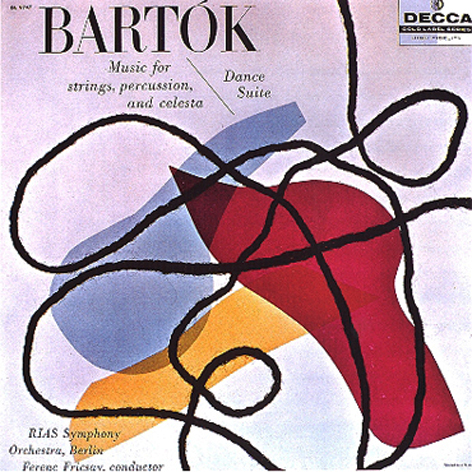
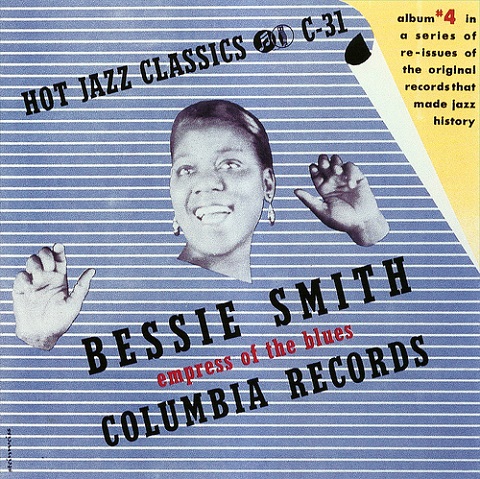
Steinweiss’ designs were extremely popular and sent record sales soaring. In one instance, Newsweek reported that sales of a recording of Beethoven’s “Eroica” symphony “increased 895% with its new Steinweiss cover.” A savvy, fearless artist, Steinweiss left the field with the same ease and grace with which he’d entered it. After designing album covers, movie posters, and graphics for “countless other products” for 33 years, writes Jeff Newelt for the Art Directors Club, Steinweiss retired to become a painter, “noting the rise of Swiss Modernism and minimalism, and the increasing preference for photography in the field” of graphic design. While Steinweiss wasn’t afraid to incorporate photos into his designs on occasion—as you can see in a 1940 Bessie Smith cover below—it was the rare occasion. Mostly what interested him were bold colors and geometrical shapes.
Though it’s certain that someone would have come along and created record covers eventually, it’s hard to underestimate the tremendous influence Steinweiss had on the form—the way his work has guided our experience of staring in awe at a mysterious album cover, even in the MP3 age, and trying to imagine the kind of music it describes. For much, much more on Steinweiss, you could purchase this enormous, and enormously expensive, Taschen book. Or save a few bucks and browse through some extensive online collections of his work, like this Steinweiss tribute site, this six part biography, and the Birka Jazz Archive from Columbia, which also features iconic covers by such artists as Jim Flora, Neil Fujita, and Saul Bass. Steven Heller, who teaches at the School of Visual Arts in NYC, presents a talk on Steinweiss’ art here.
Related Content:
Andy Warhol Creates Album Covers for Jazz Legends Thelonious Monk, Count Basie & Kenny Burrell
Classic Jazz Album Covers Animated, or the Re-Birth of Cool
Underground Cartoonist R. Crumb Introduces Us to His Rollicking Album Cover Designs
Josh Jones is a writer and musician based in Durham, NC. Follow him at @jdmagness
Read More...Hear The Flaming Lips Cover All of The Beatles’ Sgt. Pepper’s: Streaming Free for a Limited Time
In 2012, Rolling Stone issued a revised list of the 500 Greatest Albums of All Time, at the very top of which sits The Beatles’ 1967 record, Sgt. Pepper’s Lonely Hearts Club Band. Justifying making the album its number one pick, Rolling Stone wrote:
Sgt. Pepper’s Lonely Hearts Club Band is the most important rock & roll album ever made, an unsurpassed adventure in concept, sound, songwriting, cover art and studio technology by the greatest rock & roll group of all time. From the title song’s regal blasts of brass and fuzz guitar to the orchestral seizure and long, dying piano chord at the end of “A Day in the Life,” the 13 tracks on Sgt. Pepper’s Lonely Hearts Club Band are the pinnacle of the Beatles’ eight years as recording artists. John Lennon, Paul McCartney, George Harrison and Ringo Starr were never more fearless and unified in their pursuit of magic and transcendence.…
Sgt. Pepper formally ushered in an unforgettable season of hope, upheaval and achievement: the late 1960s and, in particular, 1967’s Summer of Love. In its iridescent instrumentation, lyric fantasias and eye-popping packaging, Sgt. Pepper defined the opulent revolutionary optimism of psychedelia and instantly spread the gospel of love, acid, Eastern spirituality and electric guitars around the globe. No other pop record of that era, or since, has had such an immediate, titanic impact. This music documents the world’s biggest rock band at the very height of its influence and ambition.
Given Sgt. Pepper’s iconic status, it’s hard to imagine a contemporary band deciding to cover the entire album. (Can you really improve upon it?) But that’s just what The Flaming Lips have done with With a Little Help From My Fwends. Scheduled to be released next week, the album features contributions by fwends like Moby, My Morning Jacket, Miley Cyrus, and others. Proceeds from the album — which is now streaming free for a limited time at NPR — will go to the Bella Foundation, a non-profit that assists low-income, elderly or terminally ill pet owners with the cost of veterinary care when it cannot be afforded. You can pre-order the Flaming Lips album on Amazon and iTunes.
In other news, Paul McCartney announced today that he has unearthed a Wings’ song he played (back in the day) with John Bonham on drums. An intriguing idea. Catch it here.
Read More...Kevin Spacey Is the Rainforest, Julia Roberts is Mother Nature: Actors Play Nature in Environmental Shorts
When Hollywood’s formidable promotional wing discovered it could announce a movie by not just telling you a big star is in it, but that a big star is it, they had a decades-long field day with the idea that continues, tiresomely, to the present moment. Right now, many of the billboards up around Los Angeles insist upon telling me that “Keanu Reaves is John Wick,” but give it a few weeks and they’ll tell us someone else we know is someone else we don’t (unless, of course, we buy a ticket). Conservation International has taken this marketing trope and spun it into a series of shorts featuring “A‑list” actors, the most famous of the famous, playing the earthly entities with which we should, perhaps, have more familiarity than we do. At the top of the post, Kevin Spacey is the rainforest. Just below, Julia Roberts is Mother Nature. At the bottom, Harrison Ford is the ocean.
“I’m most of this planet,” Ford-as-ocean intones with his signature (and increasingly gruff) gruffness. “I shaped it. Every stream, every cloud, and every raindrop — it all comes back to me.” But as Mother Nature, Roberts makes impressive claims of her own: “I’ve been here for over four and a half billion years — 22,500 times longer than you. I don’t really need people, but people need me.” Not to be outdone, Kevin Spacey’s ever-giving rainforest issues a challenge to us all: “Humans, they’re so smart. So smart. Such big brains and opposable thumbs. They know how to make things — amazing things. Now why would they need an old forest like me anymore? Well, they do breathe air, and I make air. Have they thought about that?”
You can watch the entire series of films, entitled “Nature is Speaking,” on a single Youtube playlist. The rest of the lineup includes Edward Norton as the soil, Penelope Cruz as water (o, hablando en español, como Agua), and Robert Redford as, suitably, the redwood. (You can also see clips from behind the scenes featuring Norton and Ford assuming their elemental roles in the recording studio.) They all combine this considerable amount of vocal star power with equally striking footage of the part of the environment from whom we hear, and sometimes of its destruction. They carry one overall message, which Conversation International has unshyly spelled out: “Nature doesn’t need people. People need nature.” Still, it comes off less heavy-handed than most of the environmental messages I remember from the films of my 1990s youth. If, for the next series, they get Reeves on board (speaking of pieces of my 90s youth), can they find a suitably laid-back element to pair him with? For more information on the campaign, please visit the Nature is Speaking site.
Related Content:
Environment & Natural Resources: Free Online Courses
E.O. Wilson’s Life on Earth Released as a Free eBook and Free Course on iTunes
Harvard Thinks Green: Big Ideas from 6 All-Star Environment Profs
Colin Marshall hosts and produces Notebook on Cities and Culture and writes essays on cities, language, Asia, and men’s style. He’s at work on a book about Los Angeles, A Los Angeles Primer. Follow him on Twitter at @colinmarshall or on Facebook.
Read More...Bill Murray, the Struggling New SNL Cast Member, Apologizes for Not Being Funny (1977)
In 1977, after a few underwhelming months as the first new guy in Saturday Night Live’s then-brief history, a 26-year-old Bill Murray reached out to home viewers with the emotional equivalent of a Kickstarter campaign. The audience expected the Not Ready for Prime Time Players to be funny, and in everyday life, Murray claims above, he was. It just wasn’t coming together in front of the cameras yet.
It didn’t help that he was replacing audience favorite, Chevy Chase.
He was also an unknown quantity in the eyes of the writers. Rather than entrust their precious material to a guy who’d yet to prove himself, they saved their plum assignments for the likes of John Belushi and Dan Aykroyd.
Murray was relegated to the sort of pallid supporting roles that require no particular talent—“the second cop, the second FBI agent, the guy holding the mop…” is how he described them to Howard Stern in an interview last week. It’s a story that’s also recounted in the book, Live From New York: The Complete, Uncensored History of Saturday Night Live as Told by Its Stars, Writers, and Guests.
Back in ’77, he wisely chose not to blame the material.
Instead he curried favor with references to his late father, his hard working mom, and his nine siblings, one of whom was a nun. (Another had polio, but he left that out. Apparently, some things are sacred.)
Later in his career, he’d become celebrated for his smirking insincerity, but his direct appeal, as producer Lorne Michaels dubbed it, had none of that.
He wasn’t looking for viewers to write in on his behalf, just an assurance that they’d root for him (and his large, fatherless Catholic family) during his tenure at Rockefeller Plaza (“New York City, New York 10020”).
It’s doubtful whether a similar gambit would’ve paid off for Garrett Morris or Laraine Newman. Comedy, like life, is not fair.
Now that he’s rich and famous, he advises people who dream of similar glories to check if the first part alone won’t be sufficient to cover the bulk of their fantasies.
But we, the public, need Bill Murray to be famous, too, in order to crash our parties, and help us understand Shakespeare, and read poetry to construction workers.
Turns out he’s not the only one to reap long term medicinal benefits from those two “tablespoons of humility” he swallowed live on air, all those years ago.
Related Content:
Bill Murray Sings the Poetry of Bob Dylan: Shelter From the Storm
Bill Murray Gives a Delightful Dramatic Reading of Twain’s Huckleberry Finn (1996)
Watch Bill Murray Perform a Satirical Anti-Technology Rant (1982)
Ayun Halliday is the creator of The Mermaid’s Legs, a trauma-filled Hans Christian Andersen reboot debuting in the shadow of Rockefeller Center in less than two weeks. See it! And follow her @AyunHalliday
Read More...Ben Franklin’s List of 200 Synonyms for “Drunk”: “Moon-Ey’d,” “Hammerish,” “Stew’d” & More (1737)

How many Americans could, off the top of their heads, tell you exactly why history remembers Benjamin Franklin? Not many, I suspect, though we all know that he did a great deal worth remembering, even by the standards of a Founding Father. (Something got him on the $100 bill, after all.) Of course, only his biographers could remember the every accomplishment of this “First American,” from helping unite the colonies, to publishing newspapers, to serving as Ambassador to France, to putting US national security at risk, to co-founding the University of Pennsylvania, to inventing bifocals and everything in between. Most Americans can, I suspect, summon to mind the image of Franklin flying a kite with a key on it as well.
It also turns out that Franklin could indulge in a vice as heartily as he could a virtue; the man who wrote Poor Richard’s Almanack knew how to have a good time. In 18th-century America, this seems often as not to have meant to know how to drink — and, in Franklin’s case, also to know how to identify the drunk. His reputation as a bon vivant and a man of letters converged in a January 13, 1737 edition of the Pennsylvania Gazette, wherein he published this “Drinkers Dictionary” consisting of 200 synonyms for wasted, blotto, half in the bag, three sheets to the wind, and others that would emerge over the following centuries. See them all below.
A
He is Addled,
He’s casting up his Accounts,
He’s Afflicted,
He’s in his Airs.B
He’s Biggy,
Bewitch’d,
Block and Block,
Boozy,
Bowz’d,
Been at Barbadoes,
Piss’d in the Brook,
Drunk as a Wheel-Barrow,
Burdock’d,
Buskey,
Buzzey,
Has Stole a Manchet out of the Brewer’s Basket,
His Head is full of Bees,
Has been in the Bibbing Plot,
Has drank more than he has bled,
He’s Bungey,
As Drunk as a Beggar,
He sees the Bears,
He’s kiss’d black Betty,
He’s had a Thump over the Head with Sampson’s Jawbone,
He’s Bridgey.C
He’s Cat,
Cagrin’d,
Capable,
Cramp’d,
Cherubimical,
Cherry Merry,
Wamble Crop’d,
Crack’d,
Concern’d,
Half Way to Concord,
Has taken a Chirriping-Glass,
Got Corns in his Head,
A Cup to much,
Coguy,
Copey,
He’s heat his Copper,
He’s Crocus,
Catch’d,
He cuts his Capers,
He’s been in the Cellar,
He’s in his Cups,
Non Compos,
Cock’d,
Curv’d,
Cut,
Chipper,
Chickery,
Loaded his Cart,
He’s been too free with the Creature,
Sir Richard has taken off his Considering Cap,
He’s Chap-fallen,D
He’s Disguiz’d,
He’s got a Dish,
Kill’d his Dog,
Took his Drops,
It is a Dark Day with him,
He’s a Dead Man,
Has Dipp’d his Bill,
He’s Dagg’d,
He’s seen the Devil,E
He’s Prince Eugene,
Enter’d,
Wet both Eyes,
Cock Ey’d,
Got the Pole Evil,
Got a brass Eye,
Made an Example,
He’s Eat a Toad & half for Breakfast.
In his Element,F
He’s Fishey,
Fox’d,
Fuddled,
Sore Footed,
Frozen,
Well in for’t,
Owes no Man a Farthing,
Fears no Man,
Crump Footed,
Been to France,
Flush’d,
Froze his Mouth,
Fetter’d,
Been to a Funeral,
His Flag is out,
Fuzl’d,
Spoke with his Friend,
Been at an Indian Feast.G
He’s Glad,
Groatable,
Gold-headed,
Glaiz’d,
Generous,
Booz’d the Gage,
As Dizzy as a Goose,
Been before George,
Got the Gout,
Had a Kick in the Guts,
Been with Sir John Goa,
Been at Geneva,
Globular,
Got the Glanders.H
Half and Half,
Hardy,
Top Heavy,
Got by the Head,
Hiddey,
Got on his little Hat,
Hammerish,
Loose in the Hilts,
Knows not the way Home,
Got the Hornson,
Haunted with Evil Spirits,
Has Taken Hippocrates grand Elixir,I
He’s Intoxicated,
Jolly,
Jagg’d,
Jambled,
Going to Jerusalem,
Jocular,
Been to Jerico,
Juicy.K
He’s a King,
Clips the King’s English,
Seen the French King,
The King is his Cousin,
Got Kib’d Heels,
Knapt,
Het his Kettle.L
He’s in Liquor,
Lordly,
He makes Indentures with his Leggs,
Well to Live,
Light,
Lappy,
Limber,M
He sees two Moons,
Merry,
Middling,
Moon-Ey’d,
Muddled,
Seen a Flock of Moons,
Maudlin,
Mountous,
Muddy,
Rais’d his Monuments,
Mellow,N
He’s eat the Cocoa Nut,
Nimptopsical,
Got the Night Mare,O
He’s Oil’d,
Eat Opium,
Smelt of an Onion,
Oxycrocium,
Overset,P
He drank till he gave up his Half-Penny,
Pidgeon Ey’d,
Pungey,
Priddy,
As good conditioned as a Puppy,
Has scalt his Head Pan,
Been among the Philistines,
In his Prosperity,
He’s been among the Philippians,
He’s contending with Pharaoh,
Wasted his Paunch,
He’s Polite,
Eat a Pudding Bagg,Q
He’s Quarrelsome,R
He’s Rocky,
Raddled,
Rich,
Religious,
Lost his Rudder,
Ragged,
Rais’d,
Been too free with Sir Richard,
Like a Rat in Trouble.S
He’s Stitch’d,
Seafaring,
In the Sudds,
Strong,
Been in the Sun,
As Drunk as David’s Sow,
Swampt,
His Skin is full,
He’s Steady,
He’s Stiff,
He’s burnt his Shoulder,
He’s got his Top Gallant Sails out,
Seen the yellow Star,
As Stiff as a Ring-bolt,
Half Seas over,
His Shoe pinches him,
Staggerish,
It is Star-light with him,
He carries too much Sail,
Stew’d
Stubb’d,
Soak’d,
Soft,
Been too free with Sir John Strawberry,
He’s right before the Wind with all his Studding Sails out,
Has Sold his Senses.T
He’s Top’d,
Tongue-ty’d,
Tann’d,
Tipium Grove,
Double Tongu’d,
Topsy Turvey,
Tipsey,
Has Swallow’d a Tavern Token,
He’s Thaw’d,
He’s in a Trance,
He’s Trammel’d,V
He makes Virginia Fence,
Valiant,
Got the Indian Vapours,W
The Malt is above the Water,
He’s Wise,
He’s Wet,
He’s been to the Salt Water,
He’s Water-soaken,
He’s very Weary,
Out of the Way.
Franklin’s glossary also appears in Lists of Note, the brand new, highly recommended book from Letters of Note’s Shaun Usher. Wherever you consult it, bear in mind Franklin’s introductory note that all these terms come “gather’d wholly from the modern Tavern-Conversation of Tiplers. [ … ] I was tempted to add a new one my self under the Letter B, to wit, Brutify’d: But upon Consideration, I fear’d being guilty of Injustice to the Brute Creation, if I represented Drunkenness as a beastly Vice, since, ’tis well-known, that the Brutes are in general a very sober sort of People.” Which brings to mind a few better-known words attributed to the man: “Beer is proof that god loves us and wants us to be happy.” He actually said it about wine, but either way, let’s give Franklin credit: he was Wise — in moderation, of course.
Related Content:
Drunk History: An Intoxicated Look at the Famous Alexander Hamilton – Aaron Burr Duel
Drunk Shakespeare: The Trendy Way to Stage the Bard’s Plays in the US & the UK
Colin Marshall hosts and produces Notebook on Cities and Culture and writes essays on cities, language, Asia, and men’s style. He’s at work on a book about Los Angeles, A Los Angeles Primer. Follow him on Twitter at @colinmarshall or on Facebook.
Read More...Support Us
We're hoping to rely on loyal readers, rather than erratic ads. Please click the Donate button and support Open Culture. You can use Paypal, Venmo, Patreon, even Crypto! We thank you!

About Us

Open Culture scours the web for the best educational media. We find the free courses and audio books you need, the language lessons & educational videos you want, and plenty of enlightenment in between.
Advertise With Us

FREE UPDATES!
GET OUR DAILY EMAIL
Get the best cultural and educational resources on the web curated for you in a daily email. We never spam. Unsubscribe at any time.
FOLLOW ON SOCIAL MEDIA

Open Culture editor Dan Colman scours the web for the best educational media. He finds the free courses and audio books you need, the language lessons & movies you want, and plenty of enlightenment in between.
Advertise With Us

