Back in 1990, Voyager 1 snapped a photo of planet Earth from a record distance – 3.7 billion miles away. And there we saw it, our home, Planet Earth, a small blue dot almost swallowed by the vastness of space. This image inspired the title of Carl Sagan’s 1994 book, The Pale Blue Dot: A Vision of the Human Future in Space, which captivated millions of readers then, and still many more now.
A quarter century later, The Pale BlueDot continues to give creative inspiration to many, including filmmakers who have produced animations that sync with Sagan’s narration of a famous passage from his book. The latest animation comes from a class of students at the Ringling College of Art and Design, located in Sarasota, Florida. Give it a watch. It will help you put everything in perspective.
If you would like to sign up for Open Culture’s free email newsletter, please find it here. It’s a great way to see our new posts, all bundled in one email, each day.
If you would like to support the mission of Open Culture, consider making a donation to our site. It’s hard to rely 100% on ads, and your contributions will help us continue providing the best free cultural and educational materials to learners everywhere. You can contribute through PayPal, Patreon, and Venmo (@openculture). Thanks!
For decades, outside of feminist scholarship and readerships, French-Cuban-American diarist, novelist, and essayist Anaïs Nin was primarily known through her famous friends—most notably the experimental novelist Henry Miller, but also psychoanalyst Otto Rank. She had affairs with both men, and inspired some of their work, but Nin has always deserved much wider appreciation as an artist in her own right, whose surrealist explorations of sexuality, and sexual abuse, and posthumous collections of erotica rival Miller’s body of work—and for many readers far surpass his talents.
Now Nin’s expressive face and oracular quotations have taken over the Tumblr-sphere, such that she has been called the “patron saint of social media” and compared to Lena Dunham. Whether one finds these terms flattering or not comes down to matters of taste and, probably even more so, of age. But those who wish for a short introduction to Nin outside of the world of memes and macros will surely take an interest in the 1952 film above, “Bells of Atlantis,” shot and edited by her then-husband Ian Hugo (also known as banker High Guiler), with Nin in the starring role as the queen of Atlantis. Coilhouse offers this succinct description:
Over cascading experimental footage, Nin reads aloud from her novella House of Incest. We catch glimpses of her nude form swinging in a hammock, and we see her shadow undulating over sheer fabric blowing in the wind, but for the most part, the imagery, captured by Nin’s husband Ian Hugo, remains very abstract.
But it is not only the rare, hazy glimpses of Nin and the snippets of her reading that should draw our attention, but also the burbling, whistling, hypnotic electronic score, composed and created by the husband-and-wife-hobbyist team of Louis and Bebe Barron. Over a decade before Delia Derbyshire wowed audiences with her Dr. Who theme, the Barrons were making unheard-of experimental sounds using the technology available at the time—tape machines, oscillators, microphones, and other such low-tech analog devices.
“The Barrons were true pioneers of electronic music,” writes Messy Nessy, “and one of the crown jewels of their auditory collection is the soundtrack for the 1956 thriller sci-fi film, Forbidden Planet,” the first major motion picture with an all-electronic score. “Bells of Atlantis” breaks ground as an even earlier example of the form, and its hallucinatory visual journey recalls the surrealist filmmaking of decades past and looks forward to the psychedelic 60s.
Both the sounds the Barrons produced and the visions of Hugo turn out to be, in my humble opinion, the perfect setting for a brief introduction to Nin’s voice. After watching “Bells of Atlantis,” put on some more early electronica, and read Nin’s 1947 House of Incest for yourself, a hallucinatory prose-poem about, in Nin’s description, the “escape from a woman’s season in hell.”
This week, the artificial intelligence community Botnik published a 2018 Coachella Lineup poster composed entirely of performer names generated by neural networks. It does get one wondering what the music of “Lil Hack,” “House of the Gavins,” or “Paper Cop” might sound like — or, given the direction of technology these days, how long it will take before another neural network can actually compose it. But why use AI to create yet another millennial-minded Coachella act, you might ask, when it could create another Johann Sebastian Bach?
“One form of music that Bach excelled in was a type of polyphonic hymn known as a chorale cantata,” says the MIT Technology Review. “The composer starts with a well-known tune which is sung by the soprano and then composes three harmonies sung by the alto, tenor, and bass voices.” Such compositions “have attracted computer scientists because the process of producing them is step-like and algorithmic. But doing this well is also hard because of the delicate interplay between harmony and melody.” Hence the fascination of the question of whether a computer could ever compose a truly Bach-like chorale.
The video at the top of the post offers a listening experience that points toward an answer. The minute-long piece you hear, and whose score you see, comes not from Bach himself, nor from any human Bach imitator, but from a neural network called DeepBach, a system developed by Gaetan Hadjeres and Francois Pachet at the Sony Computer Science Laboratories in Paris.
Like any such deep learning system, the more existing material it has to “learn” from, the more convincing a product it can produce on its own: just as Botnik’s network could learn from all the band names featured on Coachella posters since 1999, DeepBach could learn from the more than 300 short chorale compositions the real Bach wrote in his lifetime.
“About half the time,” says the MIT Technology Review, “these compositions fool human experts into thinking they were actually written by Bach.” But of course, this sort of artificial intelligence has a greater and more diverse potential than tricking its listeners, as other experiments at Sony CSL-Paris suggest: the AI-composed “Beatles” song “Daddy’s Car,” for instance, or the “Flow Machine” that re-interprets Beethoven’s “Ode to Joy” in the style of the Beatles, Take 6, and even electronic lounge music. But we won’t know the technology has matured until the day we find ourselves booking tickets for artificial intelligence-composed music festivals.
Based in Seoul, Colin Marshall writes and broadcasts on cities and culture. His projects include the book The Stateless City: a Walk through 21st-Century Los Angeles and the video series The City in Cinema. Follow him on Twitter at @colinmarshall or on Facebook.
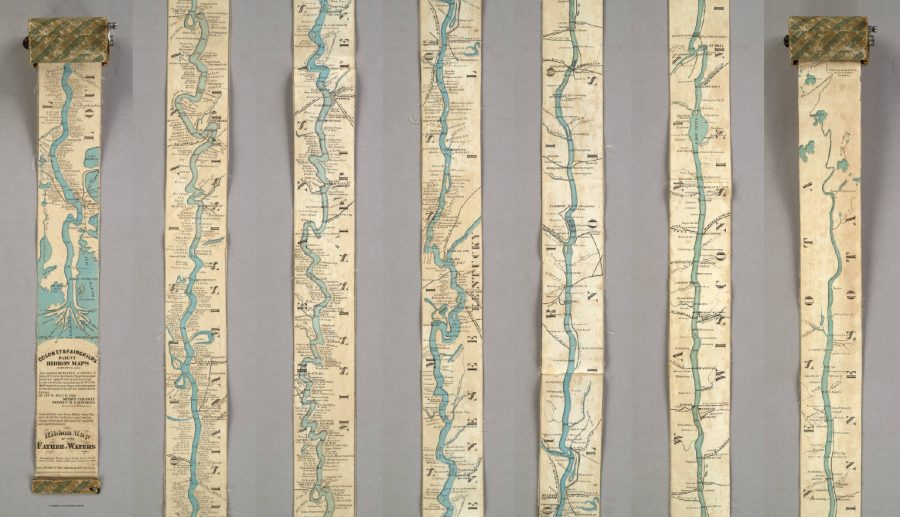
We in the early 21st century can call up detailed maps of almost any place on Earth with little more effort than typing its name. Most of us can dimly recall a time when it wasn’t quite so easy, but imagine trying to satisfy your geographical curiosity in not just decades but centuries past. For the 16th-century Milanese gentleman scholar Urbano Monte, figuring out what the whole world looked like turned into an enormous project, in terms of both effort and sheer size. In 1587, he created his “planisphere” map as a 60-page manuscript, and only now have researchers assembled it into a single piece, ten feet square, the largest known early map of the world. View it above, or in a larger format here.
“Monte appears to have been quite geo-savvy for his day,” writes National Geographic’s Greg Miller, noting that “he included recent discoveries of his time, such as the islands of Tierra del Fuego at the tip of South America, first sighted by the Portuguese explorer Ferdinand Magellan in 1520,” as well as an uncommonly detailed Japan based on information gathered from a visit with the first official Japanese delegation to Europe in 1585.
And in accordance with the mapmaking style of the time, he got more fanciful in the less-understood spaces: “Animals roam the land, and his oceans teem with ships and monsters. King Philip II of Spain rides what looks like a floating throne off the coast of South America, a nod to Spanish prominence on the high seas.”
“Monte’s map reminds us of why historical maps are so important as primary resources,” says Stanford University’s David Rumsey Map Collection, which holds one of only three extant versions of the map and which conducted the digital project of scanning each of its pages and assembling them into a whole. Not only does its then-unusual (but now long standard in aviation) north polar azimuthal projection show Monte’s use of “the advanced scientific ideas of his time,” but the “the artistry in drawing and decorating the map embodies design at the highest level; and the view of the world then gives us a deep historical resource with the listing of places, the shape of spaces, and the commentary interwoven into the map.”
You can see/download Monte’s planisphere in detail at the David Rumsey Map Collection, both as a collection of individual pages and as a fully assembled world map. There you can also read, in PDF form, cartographic historian Dr. Katherine Parker’s “A Mind at Work: Urbano Monte’s 60-Sheet Manuscript World Map.” And to bring this marvel of 16th-century cartography around to a connection with a marvel of 21st-century cartography, they’ve also taken Monte’s planisphere and made it into a three-dimensional model in Google Earth, a mapping tool that Monte could scarcely have imagined — even though, as a close look at his work reveals, he certainly didn’t lack imagination.
Based in Seoul, Colin Marshall writes and broadcasts on cities and culture. His projects include the book The Stateless City: a Walk through 21st-Century Los Angeles and the video series The City in Cinema. Follow him on Twitter at @colinmarshall or on Facebook.
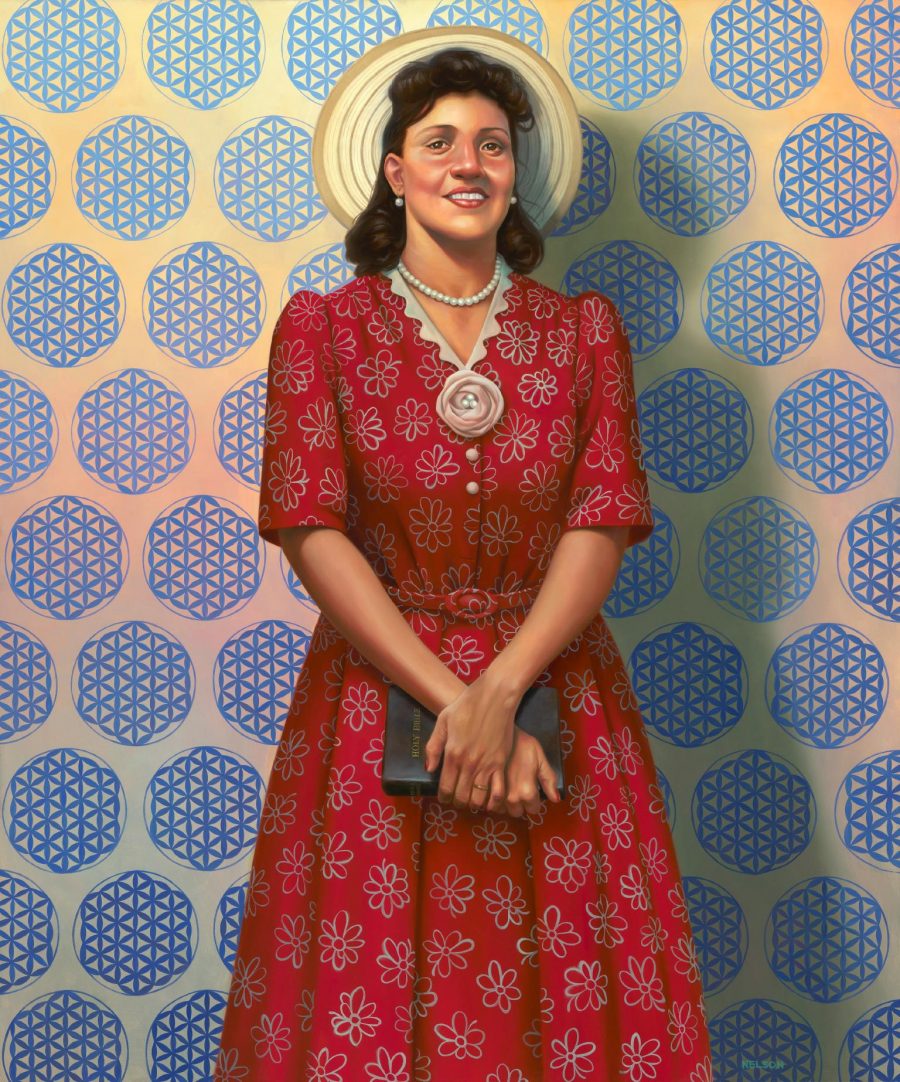
Throughout the history of the so-called “New World,” people of African descent have faced a yawning chasm where their ancestry should be. People bought and sold to labor on plantations lost not only their names but their connections to their language, tradition, and culture. Very few who descend from this painful legacy know exactly where their ancestors came from. The situation contributes to what Toni Morrison calls the “dehistoricizing allegory” of race, a condition of “foreclosure rather than disclosure.” To compound the loss, most descendants of slaves have been unable to trace their ancestry further back than 1870, the first year in which the Census listed African Americans by name.
But the recent work of several enterprising scholars is helping to disclose the histories of enslaved people in the Americas. For example, The Freedman’s Bureau Project has made 1.5 million documents available to the public, in a searchable database that combines traditional scholarship with digital crowdsourcing.
“By linking data collections from multiple universities,” writes MSU Today, the resulting website “will allow people to search millions of pieces of slave data to identify enslaved individuals and their descendants from a central source. Users can also run analyses of enslaved populations and create maps, charts and graphics.” The project is headed by MSU’s Dean Rehberger, director of Matrix: The Center for Digital Humanities and Social Sciences at MSU; Ethan Watrall, assistant professor of anthropology; and Walter Hawthorne, professor and chair of MSU’s history department and a specialist in African and African American history.
In addition to publishing several books on the Atlantic slave trade, Hawthorne has worked on previous digital history projects like the website Slave Biographies, which compiles information on the “names, ethnicities, skills, occupations, and illnesses” of enslaved individuals in Maranhão, Brazil and colonial Louisiana. In the video above, you can see him describe this latest project, which coincides with MSU’s “Year of Global Africa,” an 18-month celebration of the university’s many partnerships on the continent and “throughout the African Diaspora.”
Digital history projects like those spearheaded by Hawthorne and other researchers help not only scholars but also the general public develop a much more nuanced understanding of the history of slavery. These tools provide a wealth of information, but they cannot truly capture the emotional and psychological impact of the history. For such an understanding, Morrison said in the first of her 2016 Harvard Norton lectures, “I look to literature for guidance.”
The artists of medieval Europe, at least according to the impression we get in history class, gave far less consideration to the world around them than the world above. Historians argue about how much that general attitude hindered the improvement of the human lot during those ten centuries or so, but even we denizens of the 21st century can feel that the imaginations of the Middle Ages did tap into something resonant — and in the domain of music quite literally resonant, since the sacred songs of that time still create a properly otherworldly sonic atmosphere when they echo through cathedrals.
If you don’t happen to live near a cathedral, you can experience something of that atmosphere through your headphones anywhere you happen to be with Callixtus, a channel on the not normally sacred space of Youtube. “Perhaps named in honor of either Pope Callistus or Xanothopoulos Callistus, Patriarch of Constantinople,” writes Catholic web site Aleteia’s Daniel Esparza, it offers “an impressive collection of sacred music, mostly medieval, including choral works belonging to both Western Christianity and the Eastern tradition.”
How did this still-haunting style of music come about? According to former Talking Heads frontman David Byrne, who laid out these ideas in a popular TED Talk, it evolved alongside the houses of worship themselves, the architecture shaping the music and the music shaping the architecture: “In a gothic cathedral, this kind of music is perfect,” says Byrne. “It doesn’t change key, the notes are long, there’s almost no rhythm whatsoever, and the room flatters the music. It actually improves it.” So familiarize yourself with all this sacred music through Callixtus, but as soon as you get the chance, hie thee to a gothic cathedral: no matter your religious sensibilities, it will certainly enrich your aesthetic ones.
Based in Seoul, Colin Marshall writes and broadcasts on cities and culture. His projects include the book The Stateless City: a Walk through 21st-Century Los Angeles and the video series The City in Cinema. Follow him on Twitter at @colinmarshall or on Facebook.
From ESRI, the maker of geographic software, comes the London Time Machine, an interactive map that lets you see how London has changed over the past 330+ years, moving from a city left in ruins by the Great Fire of 1666, to the sprawling metropolis that it is today. Here’s how ESRI describes the map:
On Sunday the 2nd of September 1666, the Great Fire of London began reducing most of the capital to ashes. Among the devastation and the losses were many maps of the city itself.
The Morgan Map of 1682 was the first to show the whole of the City of London after the fire. Produced by William Morgan and his dedicated team of Surveyors and Cartographers it took 6 years to produce, and displayed a brighter perspective on city life for a population still mourning their loved ones, possessions, and homes.
But how much of this symbolised vision of a hoped-for ideal city remains today? What now lies on the lush green fields to the south of the river Thames? And how have the river’s banks been eaten into by the insatiable appetite of urban development? Move the spyglass to find out, and remember to zoom-in to fully interrogate finer details!
If you would like to sign up for Open Culture’s free email newsletter, please find it here. It’s a great way to see our new posts, all bundled in one email, each day.
If you would like to support the mission of Open Culture, consider making a donation to our site. It’s hard to rely 100% on ads, and your contributions will help us continue providing the best free cultural and educational materials to learners everywhere. You can contribute through PayPal, Patreon, and Venmo (@openculture). Thanks!
On his way to sainthood as an avatar of love and justice, Martin Luther King, Jr. lost too much of his complexity. Whether deliberately sanitized or just drawn in broad strokes for easy consumption, the Civil Rights leader we think we know, we may not know well at all. King himself ruefully noted the tendency of his audiences to box him in when he began publicly and forcefully to challenge U.S. involvement in the Vietnam War and the perpetuation of widespread poverty in the wealthiest country on earth. “I am nevertheless greatly saddened,” he remarked in 1967, “that the inquirers have not really known me, my commitment, or my calling.”
As WBUR notes in its introduction to a discussion on King’s political philosophy, the “specifics of his radical politics often go unexamined when celebrating his legacy…. His political and economic ideas are clear in his speeches against the Vietnam War and his call to work toward economic equality.”
His radical stances did not sit well with the FBI, nor with many of his former supporters, but their roots are evident in his most-published work, the 1963 “Letter from Birmingham Jail,” in which he coined the famous phrase, “injustice anywhere is a threat to justice everywhere.”
We know of King’s indebtedness to the thought of Mahatma Gandhi and Henry David Thoreau, and of his theological education. He was also steeped in the political philosophy of the West, from Plato to John Stuart Mill. In his graduate work at Boston University and Harvard in the 50s, he read and wrote on Hegel, Kant, Marx, and other philosophers. And as a visiting professor at Morehouse College—one year before his arrest in Birmingham and the composition of his letter—King taught a seminar in “Social Philosophy,” examining the ideas of Plato, Aristotle, Augustine, Aquinas, Machiavelli, Hobbes, Locke, Rousseau, Kant, Hegel, Bentham, and Mill.
At the top of the post, you can see his handwritten syllabus (view in a larger format here), a sweeping survey of the European tradition in political philosophy. Further up (or here in a larger format) see a typewritten exam with seven questions from the reading (students were to answer any five). King not only asked his students to connect these thinkers in the abstract to present concerns for justice, but, in question 3, he specifically asks them to “appraise the Student Movement in its practice of law-breaking in light of Aquinas’ Doctrine of Law” (referring to the Catholic theologian/philosopher’s distinctions between human and natural law).
The syllabus and exam give us a sense of how King situated his own radical politics both within and against a long tradition of philosophical thought. For more on King’s political philosophy, listen to Harvard professors Tommie Shelby and Brandon Terry discuss their new collection of essays—To Shape a New World: Essays on the Political Philosophy of Martin Luther King, Jr.—in the WBUR interview above.
If you would like to know more about modern art, but have difficulty wrapping your head around the Futurists, Neo-Impressionists, Abstract Expressionists, and the myriad other ‑ists and ‑isms of this vast subject, perhaps you should untether yourself from timelines.
Modern Art & Ideas, a free online course from the Museum of Modern Art (aka MoMA), shifts the focus away from period and movement, instead grouping works according to four themes: Places & Spaces, Art & Identity, Transforming Everyday Objects, and Art & Society.
It’s an approach that’s worked well for MoMA’s Education Department. (Another upcoming online class, Art & Ideas: Teaching with Themes, is recommended for professional educators looking to develop the pedagogical skills the department employs to get visitors to engage with the art.)
The course, which begins today, is taught by Lisa Mazzola, Assistant Director of the museum’s School and Teacher Programs and a veteran of their previous forays into Massive Open Online Courses.
An early lesson on how artists capture environments considers three works: Vincent van Gogh’s The Starry Night (1889), Piet Mondrian’s Broadway Boogie Woogie (1942–43), and Gordon Matta-Clark’s Bingo. Vintage photos and footage conspire with period music to whisk students to the settings that inspired these works—a bucolic French mental hospital, New York City’s bustling, WWII-era Times Square, and a derelict house in down on its luck Niagara Falls.
Regular readers of Open Culture are likely to have a handle on some of the ways art stars Frida Kahlo and Andy Warhol explored identity, the course’s third week theme, but what about Glenn Ligon, a living African American conceptual artist?
Ligon may not have the renown or tote bag appeal of his lessonmates, but his 1993 series, Runaways, is powerful enough to hold its own against Kahlo’sSelf-Portrait with Cropped Hairand Warhol’s Gold Marilyn Monroe.
In fact, teachers looking to expand their Black History Month curriculum could spark some lively discussions by showing students the extremely accurate facsimiles of 19th-century runaway slave ads featuring physical descriptions of Ligon, solicited from friends who’d been told they were supplying details for a hypothetical Missing Person poster.
Ligon’s series is also a good starting place for discussing conceptual art with a friend who thinks conceptual art is best defined as White Cow in a Snowstorm.
Offered on Coursera, the 5‑week course requires approximately 2 hours of study and one quiz per week. Enroll here, or browse MoMAs other current offerings also on Coursera.
Note: To take the courses for free, selection the Audit (as opposed to paid) option during the enrollment process.
Who hasn’t pinned one of Saul Bass’s elegant film posters on their wall—with either thumbtacks above the dormroom bed or in frame and glass in grown-up environs? Or maybe it’s 70s kitsch you prefer—the art of the grindhouse and sensationalist drive-in exploitation film? Or 20s silent avant-garde, the cool noir of the 30s and 40s, 50s B‑grade sci-fi, 60s psychedelia and French new wave, or 80s popcorn flicks…? Whatever kind of cinema grabs your attention probably first grabbed your attention through the design of the movie poster, a genre that gets its due in novelty shops and specialist exhibitions, but often goes unheralded in popular conceptions of art.
Despite its utilitarian and unabashedly commercial function, the movie poster can just as well be a work of art as any other form. Failing that, movie posters are at least always essential archival artifacts, snapshots of the weird collective unconscious of mass culture: from Saul and Elaine Bass’s minimalist poster for West Side Story (1961), “with its bright orange-red background over the title with a silhouette of a fire escape with dancers” to more complex tableaux, like the baldly neo-imperialist Africa Texas Style! (1967), “which features a realistic image of the protagonist on a horse, lassoing a zebra in front of a stampede of wildebeest, elephants, and giraffes.”
The bulk of the collection comes from the Interstate Theater Circuit—a chain that, at one time, “consisted of almost every movie theater in Texas”—and encompasses not only posters but film stills, lobby cards, and press books from “the 1940s through the 1970s with a particular strength in the films of the 1950s and 60s, including musicals, epics, westerns, sword and sandal, horror, and counter culture films.” Other individual collectors have made sizable donations of their posters to the center, and the result is a tour of the many spectacles available to the mid-century American mind: lurid, violent excesses, maudlin moralizing, bizarre erotic fantasies, dime-store adolescent adventures.…
Some of the films are well-known examples from the period; most of them are not, and therein lies the thrill of browsing this online repository, discovering obscure oddities like the 1956 film Barefoot Battalion, in which “teen-age wolf packs become heroes in a nation’s fight for freedom!” The number of quirks and kinks on display offer us a prurient view of a decade too often flatly characterized by its penchant for grey flannel suits. The Mad Men era was a period of institutional repression and rampant sexual harassment, not unlike our own time. It was also a laboratory for a libidinous anarchy that threatened to unleash the pent-up energy and cultural anxiety of millions of frustrated teenagers onto the world at large, as would happen in the decades to come.
What we see in the marketing of films like Five Branded Women (1960) will vary widely depending on our orientations and political sensibilities. Is this cheap exploitation or an empowering precursor to Mad Max: Fury Road? Maybe both. For cultural theorists and film historians, these pulpy advertisements offer windows into the psyches of their audiences and the filmmakers and production companies who gave them what they supposedly wanted. For the ordinary film buff, the Ransom Center collection offers eye candy of all sorts, and if you happen to own a high-quality printer, the chance to hang posters on your wall that you probably won’t see anywhere else. Enter the online collection here.
In 2016, Reinhold Hanning, a former SS guard at the Auschwitz concentration camp, was tried and convicted for being an accessory to at least 170,000 deaths. In making their case, prosecutors did something novel–they relied on a virtual reality version of the Auschwitz concentration camp, which helped undermine Hanning’s claim that he wasn’t aware of what happened inside the camp. The virtual reality headset let viewers see the camp from almost any angle, and established that “Hanning would have seen the atrocities taking place all around him.”
The high-tech prosecution of Hanning gets well documented in “Nazi VR,” the short documentary above. It comes from MEL Films, and will be added to our collection of online documentaries.
If you would like to sign up for Open Culture’s free email newsletter, please find it here. It’s a great way to see our new posts, all bundled in one email, each day.
If you would like to support the mission of Open Culture, consider making a donation to our site. It’s hard to rely 100% on ads, and your contributions will help us continue providing the best free cultural and educational materials to learners everywhere. You can contribute through PayPal, Patreon, and Venmo (@openculture). Thanks!
We're hoping to rely on loyal readers, rather than erratic ads. Please click the Donate button and support Open Culture. You can use Paypal, Venmo, Patreon, even Crypto! We thank you!
Open Culture scours the web for the best educational media. We find the free courses and audio books you need, the language lessons & educational videos you want, and plenty of enlightenment in between.

