Briefly noted: If you’re interested in entrepreneurship and marketing, you’ve likely encountered Seth Godin and his ever popular blog. Or perhaps you’ve read some of his bestselling books? But maybe you’ve never come across this: the “Startup School” where Godin guides 30 entrepreneurs through “how to build and run their dream business.” On his blog, Godin wrote back in 2012:
I love startups. Not only do they bring the promise of rapid growth and real change, but everything is up for grabs. Organizations that start with a clean sheet of paper have the difficult task of paying the bills, but they also have the luxury of ignoring yesterday in order to focus exclusively on tomorrow.
Through the years, I’ve started a bunch of companies and enjoyed brainstorming with the people who have launched companies big and small, from AOL when they only had a dozen employees to some of the very cool organizations that come through the doors of NY Techstars.
Next month, I’m going to be running a small school–a few days for a few dozen startup founders… For those that won’t be able to make it, I’ll be recording the session and editing it down into something I can share here on the blog for free a few months later.
Below, you can stream those 15 free recordings, each of which runs 18–25 minutes. We’ve embedded the first segment, “Freelancer or Entrepreneur?.” Further down you’ll find links to the remaining ones, or you can get them on SoundCloud and iTunes. Godin’s “Startup School” will be added to our collection of Free Online Business Courses, where you’ll also find the useful YCombinator course, How to Start a Startup.
A black quarterback refuses to stand during the national anthem—a song, incidentally, written by a “patriot” who was also a “bigot” and slaveowner, “vehemently opposed to abolition.” The quarterback declares that he will not “show pride in a flag for a country that oppresses black people and people of color.” The quarterback is told he has disrespected the country, the police, and the military. His critics become enraged, apoplectic. He is told he should leave the country. He is mocked by thousands of people who point to his wealth and privileged, adoptive upbringing. An upbringing among white people. Such success, the underlying logic goes, and such a childhood should have made the quarterback patriotic, grateful, colorblind.…
What if the quarterback had not grown up privileged, but in one of many communities of color that bear the brunt of well-documented but mostly ignored police violence and institutional discrimination and impoverishment? How would his actions be received then? We can imagine much the same, given the reaction to earlier, less-privileged sports figures, to Black Lives Matter protesters around the country, and to movements of the past. (Until last year, nine men in South Carolina still bore convictions for trespassing after their sit-in protests in 1961.) Protesting the country’s racist past and present—like protesting the country’s wars, inequality, or environmental depredations—is criminal, we’re told, blasphemous, tantamount to treason… or terrorism. The nation is innocent of all charges, and the protestors are bitter, naive, hateful, and worse. For readers of James Baldwin, it all sounds terribly familiar.
Baldwin’s is a difficult literary legacy: while we rejoice that he is still so often read, we lament that so many of his contemporary observations remain relevant. In 1962, Baldwin published an essay in The Progressive in the form of a letter to his nephew, James. Later collected in The Fire Next Time, the letter provided the inspiration for Ta-Nehisi Coates’ recent bestseller, Between the World and Me, written as a letter to his then 15-year-old son. In the video above—from this January’s star-studded MLK Now celebration—Chris Rock reads Baldwin’s passionate letter, itself an act of protest, unpatriotic, if you like, in which he levies the same charges against the nation as Colin Kaepernick has fifty-four years later.
“This is the crime of which I accuse my country and my countrymen,” writes Baldwin, “and for which neither I nor time nor history will ever forgive them, that they have destroyed and are destroying hundreds of thousands of lives and do not know it and do not want to know it.”
Now, my dear namesake, these innocent and well meaning people, your countrymen, have caused you to be born under conditions not far removed from those described for us by Charles Dickens in the London of more than a hundred years ago. I hear the chorus of the innocents screaming, “No, this is not true. How bitter you are,” but I am writing this letter to you to try to tell you something about how to handle them, for most of them do not yet really know that you exist. I know the conditions under which you were born for I was there. Your countrymen were not there and haven’t made it yet. Your grandmother was also there and no one has ever accused her of being bitter. I suggest that the innocent check with her. She isn’t hard to find. Your countrymen don’t know that she exists either, though she has been working for them all their lives.
Baldwin’s ironic insistence on the country’s “innocence” is complex, his language filled with the cosmic imagery of the jeremiad. The people Baldwin speaks of really are in a sense “innocent,” in that they too are victims, “still trapped in a history which they do not understand and until they understand it, they cannot be released from it.” People, as Coates put it, trapped in an unreal dream. “We cannot be free,” he writes, “until they are free.” With the coming of civil rights-era fights against racism, however, “those innocents who believed that your imprisonment made them safe are losing their grasp of reality.”
Nonetheless, he urges his nephew to stay and “with love… force our brothers to see themselves as they are, to cease fleeing from reality and begin to change it.” Despite the grim, prophetic tenor of his message, Baldwin ends on a note of hope, one that recognizes love of country not as sentimental, ritualized loyalty pledges, but as a struggle and a reckoning with that country’s ugly truths:
For this is your home, my friend. Do not be driven from it. Great men have done great things here and will again and we can make America what America must become.
The art of audio engineering is mostly a dark one, an alchemy performed behind closed studio doors by people who speak a technical language most of us don’t recognize. That is until recently. Musicians amateur and professional have had to get behind the controls themselves and learn how to record their own music, a function of decimated studio budgets and easily available digital versions of once rarified and prohibitively expensive analog equipment. As with all technological developments that put more control into the hands of laypeople, the results are mixed: a proliferation of quirky, interesting, homemade music, yes, and artists with total control over their production methods and the means to release their music when and how they please…
But with the democratization of recording technology, I fear we may begin to forget what really great, really expensive, audio engineering sounds like, an unheard-of consideration in the fifties and sixties, when the process may as well have been magic to most record buyers, and when engineer Rudy Van Gelder recorded some of the greatest—and best sounding—jazz albums ever made. A Love Supreme? That was Van Gelder. Also Miles Davis’ Walkin’, Herbie Hancock’s Maiden Voyage, Sonny Rollins’ Saxophone Colossus, Horace Silver’s Song for My Father… Dexter Gordon, Donald Byrd, Wayne Shorter, Art Blakey…. You’re getting the idea. “Thelonious Monk composed a tribute to Van Gelder’s home studio,” writes The Guardian, and “recorded it there in 1954.”
What made Van Gelder’s albums so amazing, his skills so in-demand? Hear for yourself, in the incredible playlist below featuring 508 hours of music recorded by the man. (Need Spotify? Download it here.) We can also let the engineer—who died at his New Jersey home and studio at 91 last Thursday—tell us himself in rare interviews, and demystify some of the intrinsic properties of the recording process. “When people talk about my albums,” Van Gelder said, “they often say the music has ‘space.’ I tried to reproduce a sense of space in the overall sound picture.” His use of “specific microphones” located around the room to create “a sensation of dimension and depth” show us that recording isn’t simply reproducing the sound of the instruments and players, but of the space around them, which is why studio owners spend millions to build acoustically treated rooms.
But for all his professionalism and pioneering use of top equipment like German-made Neumann microphones, we should note that Van Gelder got his start, and did some of his best work, in his bedroom, so to speak. The fastidious recording engineer, who wore gloves while recording and dressed like a corporate accountant, actually worked as an optometrist by day for over a decade, making records, The New York Times writes, “out of a studio in his parents’ living room in Hackensack, N.J. Not until 1959—by which time he had already engineered some of the most celebrated recordings in jazz history—could he afford to make engineering his full-time occupation.”
That same studio in Van Gelder’s parents’ living room is the one to which Monk paid homage in ’54. Not only that, but like many of today’s self-taught home engineers, Van Gelder “was involved in every aspect of making records, from preparation to mastering.” Which goes to show, perhaps, that maybe great engineering, like great musicianship, isn’t about access to expensive gear or highly specialized training. Maybe it’s about something else. Van Gelder “had the final say in what the records sounded like, and he was, in the view of countless producers and listeners, better at that than anyone.” How? Aside from vague talk of “space” and “dimension,” writes Tape Op, Van Gelder “never discussed his techniques,” even in an interview with the respected recording magazine. Maybe there really was a kind of magic involved.
We can learn much about how a historical period viewed the abilities of its children by studying its children’s literature. Occupying a space somewhere between the purely didactic and the nonsensical, most children’s books published in the past few hundred years have attempted to find a line between the two poles, seeking a balance between entertainment and instruction. However, that line seems to move closer to one pole or another depending on the prevailing cultural sentiments of the time. And the very fact that children’s books were hardly published at all before the early 18th century tells us a lot about when and how modern ideas of childhood as a separate category of existence began.
Grenby notes that “the reasons for this sudden rise of children’s literature” and its rapid expansion into a booming market by the early 1800s “have never been fully explained.” We are free to speculate about the social and pedagogical winds that pushed this historical change.
Or we might do so, at least, by examining the children’s literature of the Victorian era, perhaps the most innovative and diverse period for children’s literature thus far by the standards of the time. And we can do so most thoroughly by surveying the thousands of mid- to late 19th century titles at the University of Florida’s Baldwin Library of Historical Children’s Literature. Their digitized collectioncurrently holds over 6,000 books free to read online from cover to cover, allowing you to get a sense of what adults in Britain and the U.S. wanted children to know and believe.
Several genres flourished at the time: religious instruction, naturally, but also language and spelling books, fairy tales, codes of conduct, and, especially, adventure stories—pre-Hardy Boys and Nancy Drew examples of what we would call young adult fiction, these published principally for boys. Adventure stories offered a (very colonialist) view of the wide world; in series like the Boston-published Zig Zag and English books like Afloat with Nelson, both from the 1890s, fact mingled with fiction, natural history and science with battle and travel accounts. But there is another distinctive strain in the children’s literature of the time, one which to us—but not necessarily to the Victorians—would seem contrary to the imperialist young adult novel.
For most Victorian students and readers, poetry was a daily part of life, and it was a central instructional and storytelling form in children’s lit. The A.L.O.E.’s Bible Picture Book from 1871, above, presents “Stories from the Life of Our Lord in Verse,” written “simply for the Lord’s lambs, rhymes more readily than prose attracting the attention of children, and fastening themselves on their memories.” Children and adults regularly memorized poetry, after all. Yet after the explosion in children’s publishing the former readers were often given inferior examples of it. The author of the Bible Picture Book admits as much, begging the indulgence of older readers in the preface for “defects in my work,” given that “the verses were made for the pictures, not the pictures for the verses.”
This is not an author, or perhaps a type of literature, one might suspect, that thinks highly of children’s aesthetic sensibilities. We find precisely the opposite to be the case in the wonderful Elfin Rhymes from 1900, written by the mysterious “Norman” with “40 drawings by Carton Moorepark.” Whoever “Norman” may be (or why his one-word name appears in quotation marks), he gives his readers poems that might be mistaken at first glance for unpublished Christina Rossetti verses; and Mr. Moorepark’s illustrations rival those of the finest book illustrators of the time, presaging the high quality of Caldecott Medal-winning books of later decades. Elfin Rhymes seems like a rare oddity, likely published in a small print run; the care and attention of its layout and design shows a very high opinion of its readers’ imaginative capabilities.
This title is representative of an emerging genre of late Victorian children’s literature, which still tended on the whole, as it does now, to fall into the trite and formulaic. Elfin Rhymes sits astride the fantasy boom at the turn of the century, heralded by hugely popular books like Frank L. Baum’s Wizard of Oz series and J.M. Barrie’s Peter Pan. These, the Harry Potters of their day, made millions of young people passionate readers of modern fairy tales, representing a slide even further away from the once quite narrow, “remorselessly instructional… or deeply pious” categories available in early writing for children, as Grenby points out.
Where the boundaries for kids’ literature had once been narrowly fixed by Latin grammar books and Pilgrim’s Progress, by the end of the 19th century, the influence of science fiction like Jules Verne’s, and of popular supernatural tales and poems, prepared the ground for comic books, YA dystopias, magician fiction, and dozens of other children’s literature genres we now take for granted, or—in increasingly large numbers—we buy to read for ourselves. Enter the Baldwin Library of Historical Children’s Literature here, where you can browse several categories, search for subjects, authors, titles, etc, see full-screen, zoomable images of book covers, download XML versions, and read all of the over 6,000 books in the collection with comfortable reader views. Find more classics in our collection, 800 Free eBooks for iPad, Kindle & Other Devices.
In the winter of 2012, just before Christmas, a carful of Britons made their way through the snow to a house in rural France. The roads would soon close, but no matter; they’d planned to make some apple crumbles, do some drawing, and enjoy some conversation. This may all sound normal enough, but the car didn’t contain your average cottage-staying holidaymakers: the critic and filmmaker Colin MacCabe rode in it, as did Tilda Swinton, the actress as famed for her performances as for her range of artistic and intellectual interests. They’d come to shoot a documentary on the occupant of the house at which they’d arrived: artist, critic, writer, and self-described “storyteller” John Berger.
The novel G.won Berger the Booker prize in 1972 (half of the prize money from which he famously donated to Britain’s Black Panther Party), but most of his readers encounter him through that same year’s Ways of Seeing, a text on the ideology of images that ranks among the twenty most influential academic books of all time.
He and Swinton first became friends in the late 1980s, when she played a small part in a film based on one of his short stories, in which he himself also appeared. “The old intellectual and the young actress immediately formed a close bond,” writes The Independent’s Geoffrey McNab.
“Both were born in London, on 5 November — Berger in 1926, Swinton in 1960 — and their shared birthday has, as Swinton puts it, ‘formed a bedrock to our complicity, the practical fantasy of twinship.’ ” This they discuss in the McCabe-directed “Ways of Listening,” the first of a quartet of segments that constitute the new documentary The Seasons In Quincy: Four Portraits of John Berger, a co-production of Birkbeck, University of London’s Derek Jarman Lab.“Sometimes I think it’s as though, in another life, we met or did something,” says Berger as he draws Swinton’s portrait. “We are aware of it in some department which isn’t memory, although it’s quite close to memory. Maybe, in another life, we… touched together.”
“Ways of Listening” captures an extended conversation between Berger and Swinton, though it also features their narration. In this scene, Berger reads from his recent meditation on the practice of drawing for his book Bento’s Sketchbook: “We who draw do so not only to make something visible to others, but also to accompany something invisible to its incalculable destination.” (Swinton, for her part, reads from Spinoza.) But the talk returns to what brought them together in the first place. “Maybe we made an appointment to see each other again, in this life,” Berger proposes. “The fifth of November. But it wasn’t the same year. That didn’t matter. We weren’t in that kind of time.”
We’d grown accustomed to his face—that wry, distinctive mug, smirking at us from beneath his Willy Wonka purple top hat in millions of proliferating Condescending Wonka memes, the epitome of archness and smug condescension. Apologies to Johnny Depp, but no one else could have so perfectly inhabited Roald Dahl’s mercurial candyman like Gene Wilder, who passed away yesterday from Alzheimer’s at the age of 83. Wilder’s Wonka may casually torture his spoiled child guests, but we remember him as a sadist with a heart of gold.
Willy Wonka and the Chocolate Factory, like Pee Wee’s Big Adventure, is one of those rare films beloved both by children and adults (or at least I remember them that way); many future generations will discover Wilder’s manic brilliance in his collaborations with Mel Brooks—Blazing Saddles, Young Frankenstein, The Producers—and with Richard Pryor, his friend and frequent comic foil. And those who lived through the 80s will also remember Wilder for one of the great romances of the decade.
Wilder and Gilda Radner were a comedy power couple whose marriage ended tragically with her death from ovarian cancer in 1989. That same year he received a diagnosis of non-Hodgkin’s lymphoma. “Wilder was devastated by Radner’s death,” writes Variety, “and only worked intermittently after that.” But he never lost his sharp, madcap sense of humor and deep well of genuine vulnerability as his career shifted into lower gears in the ensuing decades. (He won an Emmy in 2003 for a guest role on Will & Grace and published a novel in 2007).
Wilder was always happy to share his creative insights and stories with fans, giving frequent interviews in the last few years and appearing on panels like that above, a 1999 forum on “The Wonders of Creativity” with Jane Alexander, Danny Glover, and others. Wilder shares a hilariously irreverent story from his childhood about how he learned to consciously make other people laugh by practicing on his mother after she’d had a heart attack.
This anecdote gives way to another, both laugh out loud funny and heartbreaking at once, of young, 1st-grade Gene (then Jerry Silberman) facing rejection from a teacher (“That stupid lady”) who told him his artwork wasn’t good enough to hang on the wall. The hurt stayed with him, so that in 1984, he tells us, “I began painting. Now I try to paint every day of my life.” Wilder communicates his creative philosophy through personal vignettes like these, colorfully illustrating how he became an actor Pauline Kael called “a superb technician… [and] an inspired original.”
In the animated Blank on Blank interview clip above—taken from his 2007 conversation with Letty Cottin Pogrebin at the 92nd Street Y after the debut of his novel—Wilder opens with another version of the story about his mother, the source, he says of his confidence as an actor. He began his career in the theater in the early sixties, and says he “felt on stage, or in the movies, I could do whatever I wanted to. I was free.” He also talks about actors’ mysterious motivations:
If you ask an actor, “Why do you want to act?,” I don’t think most of them know the real reasons. After seven and a half years of analysis, I have a fairly good idea why. My analyst said, “Well, it’s better than running around naked in Central Park, isn’t it?”
Wilder then tells the story of how he suggested Willy Wonka’s dramatic entrance to the film’s director—insisted on it, in fact, as a condition for taking the part. “From that time on,” he said of the character’s first moments on screen, “no one will know if I’m lying or telling the truth.” That was the comedic genius of Gene Wilder, may it live forever in some of the most sweetly hysterical and wickedly funny characters in film history. Learn more about Wilder’s life and long career in the retrospective documentary below.
Just when you thought you’ve seen it all, we give you this: Aryeh and Gil Gat, two once fairly-secular brothers-turned-ultra orthodox rabbis, playing Pink Floyd’s “Wish You Were Here” on the streets of Jerusalem. Intrigued? Ready for more? Watch them play Dire Straits “Sultans of Swing,” Clapton’s “Tears in Heaven,” The Beatles’ “Come Together,” The Eagles’ “Hotel California,” and Floyd’s “Shine On You Crazy Diamond.”
If you live in Israel, the brothers probably won’t be strangers to you. In 2013, they became stars on the top-rated TV talent show Rising Star. And, defying stereotypes about the ultra orthodox, they proved that rock and orthodox religion can go together. For Aryeh, “the power of music is above everything.” For Gil, it’s “holy, it’s God’s work, because it creates love and connection.” Watch them play Simon and Garfunkel’s “Sound of Silence” and let me know if you disagree.
If you would like to sign up for Open Culture’s free email newsletter, please find it here. It’s a great way to see our new posts, all bundled in one email, each day.
If you would like to support the mission of Open Culture, consider making a donation to our site. It’s hard to rely 100% on ads, and your contributions will help us continue providing the best free cultural and educational materials to learners everywhere. You can contribute through PayPal, Patreon, and Venmo (@openculture). Thanks!
If you tend to drive slowly in the left lane, then take note. At best, you’re creating more traffic. At worst, you’re increasing the chances of an accident. That’s what research indicates. And that’s why the authorities are now trying to discourage the practice. Above, you can watch a quick public service announcement from Vox. Read more on the cons of left-lane driving here.
If you would like to sign up for Open Culture’s free email newsletter, please find it here. It’s a great way to see our new posts, all bundled in one email, each day.
If you would like to support the mission of Open Culture, consider making a donation to our site. It’s hard to rely 100% on ads, and your contributions will help us continue providing the best free cultural and educational materials to learners everywhere. You can contribute through PayPal, Patreon, and Venmo (@openculture). Thanks!
The story of the U.S.’s national parks isn’t one story, but many. These have been told and retold since the founding of the National Park Service, a century ago this past Thursday. And they stretch back even further, to the Civil War, the conquering and settling of the west, and the beginnings of the American conservation movement. Nearly every one of us who grew up within a cramped, contentious family car ride from one (or more) of those parks has our own story to tell. But our nostalgic memories can conflict with the history. Virginia and North Carolina’s Blue Ridge Parkway, for example—the park closest to my childhood home—offers visitors an idyllic vision of Appalachian life and landscape. But the founding and construction of the park in the 1930s and 40s was anything but.
On the one hand, the building of the gorgeously scenic, 469-mile highway provided jobs for out-of-work civilians and, later, conscientious objectors under FDR’s Works Progress Administration, Emergency Relief Administration, and Civilian Conservation Corps. On the other hand, the federal government’s seizure of the land created hardships for existing farmers and landowners, forced sometimes to sell their property or to obtain permission for building and development. The Park Service project also engendered resentment among the Eastern Cherokee, who fought the Parkway, and won some concessions. (In one story that represents both of these hardships, a Cherokee man Jerry Wolfe tells WRAL what it was like to work on the road, one that ran directly through the cabin he once shared with his parents.)
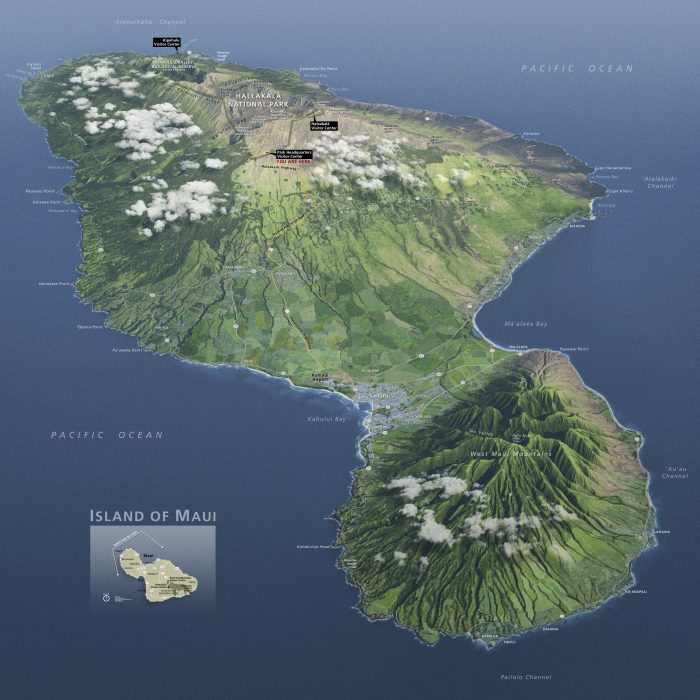
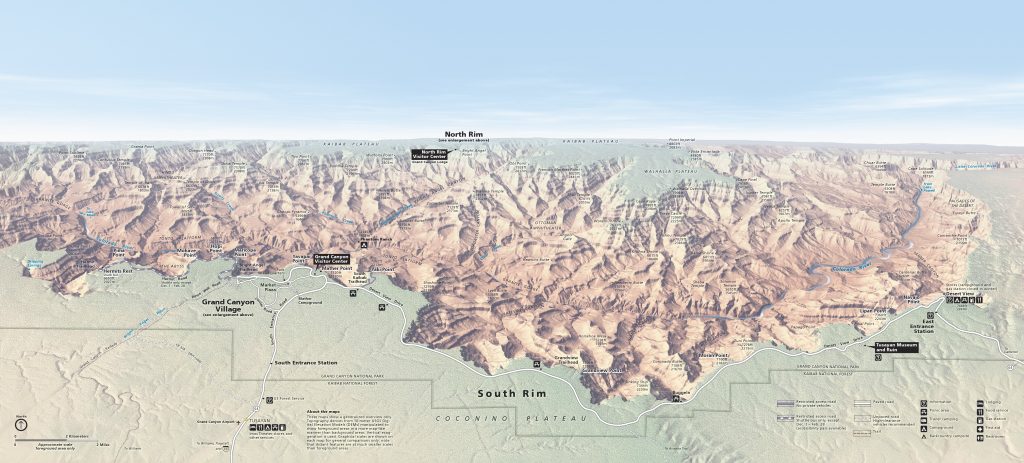
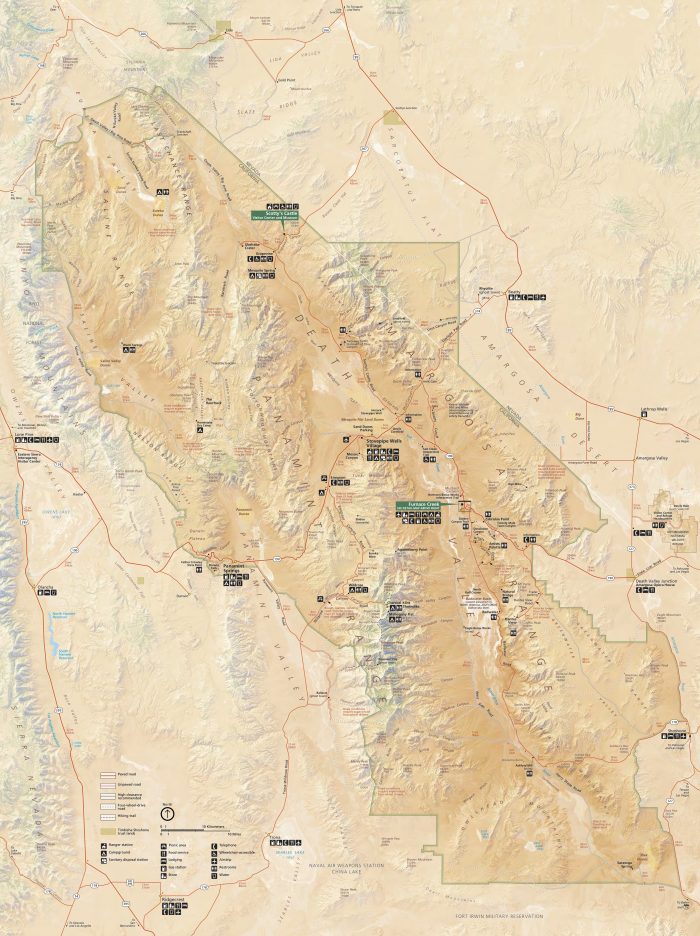
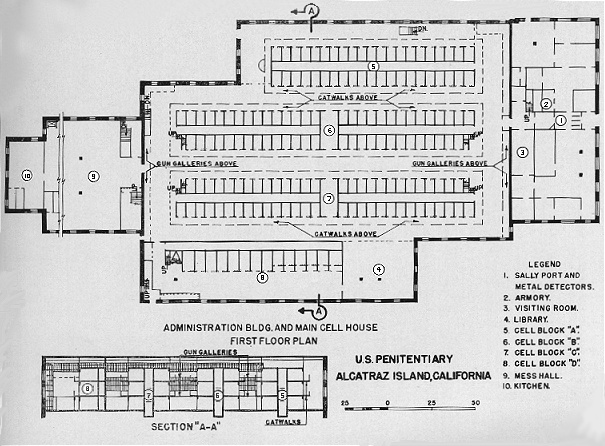
To celebrate their 100 years of existence, the National Park Service has launched what it calls its Open Parks Network, a portal to thousands of photographs and documents dating from the very beginnings of many of its parks—some of which, like Yosemite and Yellowstone, came under federal protection before the NPS existed, and some, like New York’s Stonewall Inn, only given protected monumental status this year. The Open Parks Network includes over 20 different parks and several dozen collections that document specific periods.
In the case of Blue Ridge Parkway, we have only one—a collection of the park’s engineering plans. One might hope for images of those toiling Depression-era crews, or of the anxious faces of the region’s residents. But instead we can piece together the story of the park through fascinating documents like the “Planting Plan” further up, from 1965, which reminds us how much the natural beauty of the Parkway is achieved through human intervention. And we can imagine what many of those early-20th century Appalachian folks looked like in historic photos like that above, from a collection of Great Smokey Mountains photographs taken in the teens and 20s by Jim Shelton.
Each image, like that of Yosemite Falls, above, has options for viewing full-screen and zooming in and out. So absorbing are these archives, you may find yourself getting lost in them, and any one of these beautifully-preserved parks and their incredible histories offer welcome places to get lost for several hours, or several days. For even more historic photography from the nation’s many parks, see selections online from the Eastman Museum’s current exhibit, Photography and America’s National Parks, “designed,” writes Johnny Simon at Quartz, “to inspire people to look at national landscape just as Teddy Roosevelt once did, a century ago.”
Many of us have a fraught relationship with what medical illustrator Vanessa Ruiz, above, refers to as our anatomical selves.
You may have received the Visible Man for your 8th birthday, only to forget, some thirty years later, what your spleen looks like, where it’s located and what it does.
We know more about the inner workings of our appliances than we do our own bodies. Why? Largely because we saved the manual that came with our dishwasher, and refer to it when our glassware is covered in spots.
As Ruiz noted in her TED-Med talk last November, there’s a wealth of easily accessible detailed anatomical illustrations, but we tend to keep them out of sight, and thus out of mind. Once a student is finished with his or her medical textbook or app, he or she rarely seeks those pictures out again. Those of us outside the medical profession have spent very little time considering the way our bodily systems are put together.
This lack of engagement prompted Ruiz to found the aggregate blog Street Anatomy, devoted to ferreting out the intersection between anatomical illustration and public art. Exposure is key. In creating startling, body-based images—and what is more startling than a flayed human or piece thereof?—the artist reminds viewers of what lurks beneath their own skin.
But let us not presume all viewers are in total ignorance of their bodies’ workings. A woman whose ankle had been smashed in a roller skating accident commissioned architect Federico Carbajal to document its reconstruction with one of his anatomically accurate wire sculptures. Carbajal incorporated his benefactor’s surgical screws.
Ayun Halliday is an author, illustrator, theater maker and Chief Primatologist of the East Village Inky zine. Her latest script, Fawnbook, is available in a digital edition from Indie Theater Now. Follow her @AyunHalliday.
For about a quarter of a millennium, Japan had a policy called sakoku, literally meaning “closed country,” which put to death foreigners who dared enter to Japan, or Japanese who dared to leave it. It came to an end with the Meiji Restoration, the period between 1868 to 1912, during which Japan put the Emperor back in charge and, as historians often say, began to “open up” to the outside world, lighting out on the path to its own kind of modernity. Foreigners would still have had only a vague idea of Japanese life at the time — at least those without access to a stereoscope, and who thus couldn’t lay eyes on the vivid 3D photography of Yokohama’s T. Enami.
“To many whose lives revolved around photography — including both Japanese and foreign professionals, as well as serious amateurs — Enami was not just a photographer, but a ‘photographer’s photographer,’ ” writes Enami enthusiast Rob Oechsle on his site t‑enami.org. He also dubs his photographic hero (who was born Nobukuni Enami in 1859 and lived until 1929, seeing the end of the Meiji era but not the beginning of the second world war) “King of the Stereoview, Master of the Lantern-Slide, Prolific, Anonymous Contributor To the World of Meiji-era Yokohama Album Views, Dedicated Street Photographer, and Honored Alumnus of National Geographic Magazine.”
That first title has granted a portion of Enami’s large body of work a surprising recent afterlife. Following in his teacher’s footsteps, Enami refined the Japanese use of the stereographic camera, a device that produced, writes the Victoria and Albert Museum’s Zoe Clayton, a stereograph: “two pictures mounted next to each other, viewed with a set of lenses known as a stereoscope. Taken around 7cm apart, roughly corresponding to the spacing of the eyes, the left picture represents what the left eye would see, and likewise for the right, so when observing the pictures through a stereoscopic viewer, the pair of photographs converge into a single three-dimensional image.”
Advertised with slogans like “See the world from your parlor!,” this “optical marvel took the world by storm in the mid 19th century, becoming the first ever mass-produced photographic images sold,” their popularity such that “every Victorian home — regardless of class — had a stereoscope and a collection of views.” And though the years have made stereoscopes a little hard to come by, the internet has discovered that you can enjoy something like the same 3D effect Victorian viewers did by looking at an animated GIF that oscillates quickly between the left picture and the right one. Enami hand-tinted many of his stereographs, resulting in colored historical images that look, even in two dimensions, startlingly realistic today.
Here we present only a few of Enami’s stereographs, but you can see a much fuller collection at Oeschle’s “Old Japan in 3D” Flickr page. He survived 1923’s Great Kantō earthquake, but his studio didn’t; he rebuilt it and later passed it on to his son, who ran the place until it underwent a second destruction in 1945 by Allied bombs. Though Enami’s name remains known primarily to fans of Meiji-era photography, his posthumous reputation has slowly but steadily grown: one of his photos even appeared on the cover of the first edition of Odyssey: the Art of Photography at National Geographic. These GIFs have already sparked an interest in Enami’s work among a new generation. When 3D monitors catch on, perhaps he’ll rise to his true place in the photographic pantheon.
We're hoping to rely on loyal readers, rather than erratic ads. Please click the Donate button and support Open Culture. You can use Paypal, Venmo, Patreon, even Crypto! We thank you!
Open Culture scours the web for the best educational media. We find the free courses and audio books you need, the language lessons & educational videos you want, and plenty of enlightenment in between.