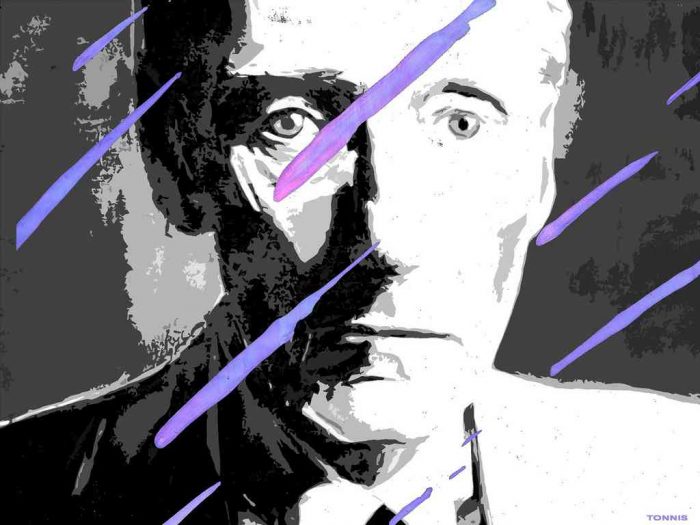
David Bowie Sings “Fame” & “Golden Years” on Soul Train (1975)

Just before his death this year, David Bowie revealed that what turned out to be his final album, Black­star, was large­ly inspired by the exper­i­men­tal sounds of Kendrick Lamar’s To Pimp a But­ter­fly. And just this past August, Bowie’s name appeared in the cred­its of the much-antic­i­pat­ed Blonde from Frank Ocean (as an “influ­ence”). This meld­ing of style and influ­ence between rock, pop, hip-hop, and R&B giants is a hall­mark of 2016, but in 1975 such crossovers were rare. When David Bowie began work­ing with Luther Van­dross and Car­los Alo­mar on his Philly soul-inspired Young Amer­i­cans album, “no oth­er estab­lished rock musi­cian had yet tried to do any­thing sim­i­lar,” writes Dou­glas Wolk at Pitch­fork, “and Bowie pulled it off in a way that not only didn’t seem crass but gave Luther Van­dross his big break.”

The album’s first big sin­gle, “Fame,” (above) “land­ed Bowie on Soul Train,” Wolk notes, and though “he wasn’t the first white solo per­former to play the show [that would be Den­nis Cof­fey] he was damn close.” Bowie and Alomar’s hip con­fec­tion lat­er inspired George Clinton’s “Give Up the Funk,” and James Brown released an instru­men­tal track in 1976 that was a “note-for-note dupli­cate of ‘Fame.’”

That kind of gen­uine admi­ra­tion for Bowie’s deft take on funk and soul extend­ed to ordi­nary fans as well. In a Q&A before his Soul Train per­for­mances, one audi­ence mem­ber asked him “when did you actu­al­ly start get­ting into soul music? You know, when did you start want­i­ng to do soul music? I mean you’re doin’ it now!” Bowie gives a some­what gar­bled answer, then launch­es into mim­ing “Gold­en Years” (below).

Fan­site Bowie Gold­en Years claims he “had been drink­ing to calm his nerves before his per­for­mance” and “spoke thick­ly with dis­con­nect­ed sen­tences.” We can see him flub a few lines as he lip-synchs. This was also the year Bowie pre­sent­ed the best female R&B vocal Gram­my to Aretha Franklin appar­ent­ly so high on coke that he didn’t remem­ber being there after­ward. A lot of Young Amer­i­cans, espe­cial­ly “Fame,” address­es exact­ly the state he was in, “at a moment,” writes Wolk, “when [pop star­dom] seemed like­ly to destroy him.” Bowie’s appear­ance on Soul Train coin­cid­ed with the release of the “Gold­en Years” sin­gle from 1976’s Sta­tion to Sta­tion, the album on which he bridged his obses­sions with soul music and krautrock, and adopt­ed the per­sona of the Thin White Duke, “a nasty char­ac­ter indeed,” as he once said.

Vast num­bers of Bowie fans con­sid­er his sub­se­quent three albums, known as The Berlin Tril­o­gy, to be the best work of the artist’s career, but for a brief moment in the mid-sev­en­ties, he was ful­ly immersed in black Amer­i­can music, and those influ­ences con­tin­ued to inform his work through the decade and through­out the rest of his life. Bowie also gave back as much as he bor­rowed: “black radio sta­tions that nev­er thought twice about ‘The Man Who Sold the World’ or ‘Changes’ ate up ‘Fame’ and ‘Gold­en Years,’” writes Renée Gra­ham at the Boston Globe, and artists like Clin­ton, Brown, and a few dozen future hip-hop DJs took note.

Relat­ed Con­tent:

David Bowie and Cher Sing Duet of “Young Amer­i­cans” and Oth­er Songs on 1975 Vari­ety Show

David Bowie Sings Impres­sions of Bruce Spring­steen, Lou Reed, Iggy Pop, Tom Waits & More In Stu­dio Out­takes (1985)

David Bowie Becomes a DJ on BBC Radio in 1979; Intro­duces Lis­ten­ers to The Vel­vet Under­ground, Talk­ing Heads, Blondie & More

Josh Jones is a writer and musi­cian based in Durham, NC. Fol­low him at @jdmagness

What Did Nietzsche Really Mean When He Wrote “God is Dead”?

nietzsche habits

The quote inspired an anx­ious 1966 Time mag­a­zine cov­er, and a preachy 2016 movie fran­chise that works hard to inoc­u­late the faith­ful against atheism’s threat­en­ing seduc­tions: “God is Dead,” wrote Friedrich Niet­zsche in his 1882 book of inci­sive apho­risms, The Gay Sci­ence, and unwit­ting­ly coined a phrase now insep­a­ra­ble from 20th cen­tu­ry cul­ture wars. Of course, Niet­zsche knew he was toss­ing a Molo­tov cock­tail into the fraught cul­ture wars of his own time, but he didn’t blow things up for the sheer plea­sure of it. Instead, his blunt asser­tion lay at the heart of what Niet­zsche saw as both a tremen­dous prob­lem and a nec­es­sary real­iza­tion.

To clar­i­fy, Niet­zsche nev­er meant to say that there had been some sort of god but that he had died in recent his­to­ry. “Rather,” writes Scot­ty Hen­dricks at Big Think, “that our idea of one had” been ren­dered a rel­ic of a pre-sci­en­tif­ic age. The philoso­pher, “an athe­ist for his adult life,” found no place for Chris­t­ian belief in a post-Enlight­en­ment world: “Europe no longer need­ed God as the source for all moral­i­ty, val­ue, or order in the uni­verse; phi­los­o­phy and sci­ence were capa­ble of doing that for us.” Accept­ing this brute fact can impose a heavy exis­ten­tial­ist bur­den, as well as a heavy philo­soph­i­cal and eth­i­cal one: the­o­log­i­cal think­ing is deeply embed­ded in West­ern phi­los­o­phy and lan­guage, or as Niet­zsche wrote, “I am afraid we are not rid of God because we still have faith in gram­mar.”

A com­mit­ted meta­phys­i­cal nat­u­ral­ist, Niet­zsche nonethe­less saw that just as he was haunt­ed by his strict reli­gious upbring­ing, unable to eas­i­ly rid him­self of the traces of the Chris­t­ian God, so too was Euro­pean civ­i­liza­tion haunt­ed, par­tic­u­lar­ly the bour­geois Ger­man soci­ety he often sav­aged. “God is dead; but giv­en the way peo­ple are, there may still for mil­len­nia be caves in which they show his shadow.—And we—we must still defeat his shad­ow as well!” The “shad­ow” of god trails our ideas about moral­i­ty. Fear­ing to give up reli­gious thought, we cling to it even in the absence of reli­gion. What is to take its place, we won­der, except for wide­spread, destruc­tive nihilism, a con­di­tion Niet­zsche feared inevitable?

Niet­zsche even saw sci­en­tif­ic dis­course as haunt­ed by ideas of divine agency. “Let us beware of say­ing that there are laws in nature,” he writes in The Gay Sci­ence, “There are only neces­si­ties: there is no one who com­mands, no one who obeys, no one who trans­gress­es. Once you know that there are no pur­pos­es, you also know that there is no acci­dent; for only against a world of pur­pos­es does the word ‘acci­dent’ have a mean­ing.” Far from pulling away the source of human mean­ing, how­ev­er, Niet­zsche seeks to lib­er­ate his read­ers from the idea that “death is opposed to life”—or that los­ing a cher­ished belief is a cat­a­stro­phe.

On the contrary—as philoso­pher Simon Critch­ley apt­ly para­phras­es in a brief video at Big Think— Niet­zsche  thought that belief in God made us “cring­ing, cow­ard­ly, sub­mis­sive crea­tures,” and pro­found­ly unfree. He believed we would con­tin­ue to be so until we accept­ed our place in nature—no easy feat in an age so steeped in god-think. “When will we be done with our cau­tion and care?” Niet­zsche won­dered, “When will all these shad­ows of god no longer dark­en us? When will we have com­plete­ly de-dei­fied nature? When will we begin to nat­u­ral­ize human­i­ty with a pure, new­ly dis­cov­ered, new­ly redeemed nature?”

For Niet­zsche, the mass of peo­ple may nev­er do so. He reserves his redemp­tion for “the kind of peo­ple who alone mat­ter; I mean the hero­ic.” Fail­ing to become heroes, ordi­nary peo­ple in moder­ni­ty are fat­ed to go the way of “the Last Man,” a fig­ure, writes Hen­dricks, “who lives a qui­et life of com­fort, with­out thought for indi­vid­u­al­i­ty or per­son­al growth.” A pas­sive con­sumer. We can read Nietzsche’s phi­los­o­phy as thor­ough­go­ing elit­ism, or as a call to the read­er to per­son­al hero­ism. Either way, the anx­i­ety he tapped into has per­sist­ed for 134 years, and shows lit­tle sign of abat­ing for many peo­ple. For oth­ers, the nonex­is­tence of a supreme being has no effect on their psy­cho­log­i­cal health.

For bil­lions of Daoists and Bud­dhists, for exam­ple, the prob­lem has nev­er exist­ed. Niet­zsche knew per­haps as much about East­ern reli­gion as his con­tem­po­raries, much of his knowl­edge taint­ed by Arthur Schopen­hauer’s pes­simistic take on Bud­dhism. “Com­pared to [Schopenhauer’s] world view,” writes Peter Abel­son, “which is very severe, Bud­dhism seems almost cheer­ful.” Niet­zsche could be equal­ly severe, often as a mat­ter of polemic, often as mat­ter of mood, some­times dis­miss­ing oth­er reli­gious sys­tems with only slight­ly less con­tempt than he did Chris­tian­i­ty. But he sums up one of his key athe­is­tic val­ues in a sup­posed quote from the Bud­dha: “Don’t flat­ter your bene­fac­tors! Repeat this say­ing in a Chris­t­ian church, and it will instant­ly clear the air of every­thing Chris­t­ian.” To live with­out belief in god, he sug­gests over and over, is to be ful­ly free from servi­tude, and ful­ly respon­si­ble for one­self.

Relat­ed Con­tent:

Niet­zsche, Wittgen­stein & Sartre Explained with Mon­ty Python-Style Ani­ma­tions by The School of Life

Wal­ter Kaufmann’s Clas­sic Lec­tures on Niet­zsche, Kierkegaard and Sartre (1960)

The Dig­i­tal Niet­zsche: Down­load Nietzsche’s Major Works as Free eBooks

Josh Jones is a writer and musi­cian based in Durham, NC. Fol­low him at @jdmagness

Stephen King’s The Shining Is Now an Opera: Hear a Recording of the Entire Production (for a Limited Time)

the-shining-opera-cropped

A quick update: Back in May, Col­in Mar­shall told you about how The Shin­ing–first a Stephen King nov­el, then a Stan­ley Kubrick film–was get­ting adapt­ed into an opera. Fast for­ward six months, and you can now hear a com­plete record­ing of that pro­duc­tion, thanks to Min­neso­ta Pub­lic Radio. The MPR web site, where you can stream the record­ing through Novem­ber 30, includes a scene-by-scene guide to the com­plete opera. You can also find the dig­i­tal pro­gram for the opera here. Enjoy.

via Fla­vor­wire

Relat­ed Con­tent:

Stephen King’s The Shin­ing Is Now an Opera, and The Tick­ets Are All Sold Out

Down­load & Play The Shin­ing Board Game

The Shin­ing and Oth­er Com­plex Stan­ley Kubrick Films Recut as Sim­ple Hol­ly­wood Movies

Watch a Shot-by-Shot Remake of Kubrick’s The Shin­ing, a 48-Minute Music Video Accom­pa­ny­ing the New Album by Aesop Rock

Watch The Simp­sons’ Hal­loween Par­o­dy of Kubrick’s A Clock­work Orange and The Shin­ing

Stan­ley Kubrick’s Anno­tat­ed Copy of Stephen King’s The Shin­ing

Georgia O’Keeffe: A Life in Art, a Short Documentary on the Painter Narrated by Gene Hackman

On a road trip across Amer­i­ca last year, I made a stop in San­ta Fe, New Mex­i­co, and thus had the chance to vis­it the Geor­gia O’Ke­effe Muse­um. Though I’d already known some­thing of the influ­en­tial Amer­i­can painter’s life and work, I had­n’t under­stood the depth of her con­nec­tion to, and the extent of the inspi­ra­tion she drew from, the Amer­i­can South­west. “This is O’Ke­effe coun­try,” says Gene Hack­man, nar­ra­tor of the thir­teen-minute doc­u­men­tary Geor­gia O’Ke­effe: A Life in Art that screens per­pet­u­al­ly at the muse­um but which you can also watch just above, “a land the painter made indeli­bly her own. North­ern New Mex­i­co trans­formed the artist’s work and changed her life.”

“As soon as I saw it, that was my coun­try,” says the artist her­self. “I’d nev­er seen any­thing like it before, but it fit­ted to me exact­ly. There’s some­thing in the air; it’s just dif­fer­ent. The sky is dif­fer­ent, the stars are dif­fer­ent, the wind is dif­fer­ent.”

I have to agree with her; my own great Amer­i­can road trip showed me not only that the states real­ly do look dif­fer­ent from each oth­er, but that New Mex­i­co — which at first struck me as a Krazy Kat land­scape come to life — looks most dif­fer­ent of all. O’Ke­effe first went to New Mex­i­co for a year and a half in 1929, in her ear­ly for­ties, and returned each year over the next two decades, mov­ing there per­ma­nent­ly in 1949 and dying in San­ta Fe in 1986, at the age of 98.

Though she remains best known in art his­to­ry for her paint­ings of flow­ers that make their view­ers see them in a way they’ve nev­er seen flow­ers before, New Mex­i­co intro­duced a whole new sen­si­bil­i­ty into O’Ke­ef­fe’s body of work. This holds espe­cial­ly true of her time at Ghost Ranch, whose loca­tion in an area called Piedra Lum­bre, or “Shin­ing Rock,” pro­vid­ed the painter with the strik­ing­ly col­ored cliffs and oth­er almost unre­al-look­ing nat­ur­al forms that made their way into her equal­ly sub­lime land­scapes. “The best place in the world,” she called it, and if we can mea­sure places by what they move human beings to cre­ate, her words hard­ly sound like an exag­ger­a­tion.

Geor­gia O’Ke­effe: A Life in Art will be added to our list of Free Doc­u­men­taries, a sub­set of our col­lec­tion, 4,000+ Free Movies Online: Great Clas­sics, Indies, Noir, West­erns, Doc­u­men­taries & More.

Relat­ed Con­tent:

The Art of Hand­writ­ing as Prac­ticed by Famous Artists: Geor­gia O’Keeffe, Jack­son Pol­lock, Mar­cel Duchamp, Willem de Koon­ing & More

The Real Geor­gia O’Keeffe: The Artist Reveals Her­self in Vin­tage Doc­u­men­tary Clips

Fri­da Kahlo Writes a Per­son­al Let­ter to Geor­gia O’Keeffe After O’Keeffe’s Ner­vous Break­down (1933)

Based in Seoul, Col­in Mar­shall writes and broad­casts on cities and cul­ture. He’s at work on a book about Los Ange­les, A Los Ange­les Primer, the video series The City in Cin­e­ma, the crowd­fund­ed jour­nal­ism project Where Is the City of the Future?, and the Los Ange­les Review of Books’ Korea Blog. Fol­low him on Twit­ter at @colinmarshall or on Face­book.

The Power of Conformity: 1962 Episode of Candid Camera Reveals the Strange Psychology of Riding Elevators

Watch tele­vi­sion cre­ator Allen Funt pre­dict flash mobs in the 1962 episode of Can­did Cam­era above, filmed some forty years before Harp­er’s mag­a­zine edi­tor, Bill Wasik, found­ed the move­ment with anony­mous­ly e‑mailed instruc­tions for a coor­di­nat­ed pub­lic action.

The stunt, enti­tled “Face the Rear,” was pulled off by a hand­ful of “agents”—a phrase coined by Improv Everywhere’s founder Char­lie Todd to describe the pok­er-faced par­tic­i­pants con­jur­ing a secret­ly agreed upon alter­nate real­i­ty to con­found (and not always delight) its tar­get sub­ject, along with unsus­pect­ing bystanders.

Com­pared to the grand-scale the­atrics that have trans­formed an upscale mar­ket into a scene from La Travi­a­ta and infil­trate sub­ways world­wide with thou­sands of pants-less rid­ers every year, this prank is quite sub­tle in the exe­cu­tion.

It suc­ceeds on our tac­it under­stand­ing of what con­sti­tutes prop­er ele­va­tor behav­ior when oth­ers pas­sen­gers are present. Left to our own devices, we can sing, dance, and let the mask of pro­pri­ety slip in any num­ber of ways. Once oth­ers enter? We share the space and face for­ward.

But what if every­one who enters inex­plic­a­bly faces the back wall?

What would you do?

As hypo­thet­i­cals go, this one’s not near­ly so weighty as con­sid­er­ing whether you’d have fol­lowed the script of Stan­ley Milgram’s obe­di­ence exper­i­ments or put your own fam­i­ly at risk by hid­ing Anne Frank.

Still…

For the sub­jects of Can­did Cam­era’s ele­va­tor gag, the pres­sure to suc­cumb to group think quick­ly over­ruled years of learned phys­i­cal behav­ior.

And nor­ma­tive ele­va­tor phys­i­cal­i­ty def­i­nite­ly springs from social cues, as John Dono­van, host of NPR’s “Around the Nation” said, in an inter­view with Lee Gray, author of From Ascend­ing Rooms to Express Ele­va­tors: A His­to­ry of the Pas­sen­ger Ele­va­tor in the 19th Cen­tu­ry:

I know a psy­chol­o­gist who works with teenagers who have autism who—he uses encour­ag­ing to learn skills that will allow them to be inde­pen­dent in the world to get out on their own. And one of his lessons with some of the teenagers is what to do in an ele­va­tor because he says that the typ­i­cal kid that he works with, when the door is opened, and he’s been told that he should step inside, will step inside and face the back wall because nobody has told him that every­body else in the ele­va­tor is going to turn around and face the front doors…

Can­did Camera’s stunts were always framed as com­e­dy, though its cre­ator, Funt, was well versed in psy­chol­o­gy, hav­ing served as child psy­chol­o­gist Kurt Lewin’s research assis­tant at Cor­nell Uni­ver­si­ty.

In an arti­cle for the Archive of Amer­i­can Tele­vi­sion, writer Amy Loomis iden­ti­fied five premis­es into which the aver­age Can­did Cam­era gag could fall:

  1. Revers­ing nor­mal or antic­i­pat­ed pro­ce­dures
  2. Expos­ing basic human weak­ness­es such as igno­rance or van­i­ty
  3. Using the ele­ment of sur­prise
  4. Ful­fill­ing fan­tasies
  5. Plac­ing some­thing in a bizarre or inap­pro­pri­ate set­ting

“Face the Rear” was a case where con­for­mi­ty born of an unex­pect­ed rever­sal in nor­mal pro­ce­dure yield­ed laughs, at the gen­tle expense of a series of unsus­pect­ing sub­jects, whose solo rides were dis­rupt­ed by a bunch of Can­did Cam­era oper­a­tives.

Relat­ed Con­tent:

Watch Footage from the Psy­chol­o­gy Exper­i­ment That Shocked the World: Milgram’s Obe­di­ence Study (1961)

The Lit­tle Albert Exper­i­ment: The Per­verse 1920 Study That Made a Baby Afraid of San­ta Claus & Bun­nies

This is Your Brain on Sex and Reli­gion: Exper­i­ments in Neu­ro­science

Ayun Hal­l­i­day is an author, illus­tra­tor, the­ater mak­er and Chief Pri­ma­tol­o­gist of the East Vil­lage Inky zine.  Her play Zam­boni Godot is open­ing in New York City in March 2017. Fol­low her @AyunHalliday.


Patti Smith Reads from Oscar Wilde’s De Profundis, the Love Letter He Wrote From Prison (1897)

Just last month, the U.K. announced the so-called “Tur­ing Law,” a pol­i­cy U.K.’s jus­tice min­is­ter Sam Gyimah describes as par­don­ing “peo­ple con­vict­ed of his­tor­i­cal sex­u­al offens­es who would be inno­cent of any crime today.” The law is named for Alan Tur­ing, the bril­liant gay com­put­er sci­en­tist whose work on A.I. gave the arti­fi­cial intel­li­gence test its name.

Tur­ing was also instru­men­tal in break­ing the Nazi Enig­ma code, and the Min­istry of Justice’s press release iden­ti­fies Tur­ing only as an “Enig­ma code­break­er,” sug­gest­ing that his patri­ot­ic duty may have made him some­thing of an offi­cial mar­tyr; Tur­ing was one thou­sands of men unjust­ly con­vict­ed over many decades. But “does par­don­ing those men unlucky enough to get caught,” asks Jonathan Coop­er, “actu­al­ly address the trau­ma to which the British state sub­ject­ed LGBT peo­ple?”

I couldn’t pos­si­bly say. But the “unlucky ones” who were arrest­ed, con­vict­ed, and impris­oned for crimes of “gross inde­cen­cy” have left often poignant records of their mis­treat­ment, and of the psy­cho­log­i­cal toll it took on them. Tur­ing wrote a very pained let­ter to a friend, Nor­man Rut­ledge, after his con­vic­tion (hear Bene­dict Cum­ber­batch read it here).

Around six­ty years ear­li­er, an even more well-known con­vict, one of the first to be con­vict­ed of “gross inde­cen­cy” laws, Oscar Wilde, left an even more pro­found expres­sion of his emo­tion­al tur­moil. Called De Pro­fundis (from the depths) and addressed to his lover Lord Alfred Dou­glas, the hun­dred-page doc­u­ment, with its lengthy digres­sions and rumi­na­tions, can­not sole­ly be read as a let­ter, although it con­tains a wealth of ten­der and angry expres­sions for Dou­glas.

De Pro­fundis, writes Colm Tóibín, “can­not be read for its accu­rate account of their rela­tion­ship, nor tak­en at its word.” This is in part because Wilde had no oth­er choice but to write a let­ter, or write noth­ing at all. The suc­ces­sion of pris­ons in which he was held between 1895 and 1897 allowed no writ­ing of plays, nov­els, or essays.

Over the last four months of Wilde’s incar­cer­a­tion, he and the gov­er­nor of Read­ing prison came up with a scheme. Since “reg­u­la­tions did not spec­i­fy how long a let­ter should be,” Wilde would be giv­en pen and ink each day and be allowed com­pose cor­re­spon­dence as long as he liked. The let­ter would then be his per­son­al prop­er­ty when he left. Despite its lit­er­ary den­si­ty, the let­ter remains, writes Tóibín, “one of the great­est love let­ters ever writ­ten.”

Read­ing prison has just been opened to the pub­lic for the first time this year. Since July, artists, writ­ers, and per­form­ers have gath­ered with audi­ences inside the prison to cel­e­brate and com­mune with the spir­it of Wilde. Among the events have been read­ings of De Pro­fundis by Tóibín, who read the let­ter in its entire­ly last month, as did Pat­ti Smith.

At the top of the post, you can see an excerpt of Smith’s read­ing. “The edit­ed ver­sion of De Pro­fundis” from which she reads “was the first one to be pub­lished in 1905, in a lim­it­ed edi­tion of 200, five years after Wilde’s death.” In-between clips of her read­ing, there are inter­views with a Read­ing prison care­tak­er and oth­ers, and voice-over nar­ra­tion telling us Wilde’s trag­ic sto­ry of impris­on­ment, as well as the gen­er­al out­lines of those who left no record of their per­se­cu­tion.

Once released, Wilde went right back to writ­ing lit­er­a­ture, begin­ning with the long, vio­lent poem, “The Bal­lad of Read­ing Gaol.” The video up top comes from The Guardian.

via Vin­tage Anchor

Relat­ed Con­tent:

Hear Oscar Wilde Recite a Sec­tion of The Bal­lad of Read­ing Gaol (1897)

Oscar Wilde Offers Prac­ti­cal Advice on the Writ­ing Life in a New­ly-Dis­cov­ered Let­ter from 1890

Bene­dict Cum­ber­batch Reads a Let­ter Alan Tur­ing Wrote in “Dis­tress” Before His Con­vic­tion For “Gross Inde­cen­cy”

Josh Jones is a writer and musi­cian based in Durham, NC. Fol­low him at @jdmagness

Benedict Cumberbatch Reads Kurt Vonnegut’s Incensed Letter to the High School That Burned Slaughterhouse-Five

If you’ve kept up with Open Cul­ture for a while, you know that Kurt Von­negut could write a good let­ter, whether home from World War II, to high school stu­dents, to oth­er writ­ers, to John F. Kennedy, or to the future. You also know that Bene­dict Cum­ber­batch can give a good read­ing, whether of lit­er­a­ture like The Meta­mor­pho­sis and Moby Dick or more direct­ly per­son­al words from Alan Tur­ing or a Guan­tá­namo pris­on­er. It must have seemed like only a mat­ter of time, then, before this mas­ter read­er of let­ters (in the broad sense) took on the work of a mas­ter let­ter-writer, and here we have a clip of Cum­ber­batch at the Hay Fes­ti­val 2014 read­ing a Von­negut let­ter — and a par­tic­u­lar­ly impas­sioned Von­negut let­ter at that.

“I am among those Amer­i­can writ­ers whose books have been destroyed in the now famous fur­nace of your school,” Von­negut writes to Charles McCarthy, head of the school board at North Dako­ta’s Drake High School, who in 1973 ordered its copies of Von­negut’s Slaugh­ter­house-Five and oth­er nov­els burned for their “obscene lan­guage.” “Cer­tain mem­bers of your com­mu­ni­ty have sug­gest­ed that my work is evil. This is extra­or­di­nar­i­ly insult­ing to me. The news from Drake indi­cates to me that books and writ­ers are very unre­al to you peo­ple. I am writ­ing this let­ter to let you know how real I am.”

After assur­ing McCarthy that “my pub­lish­er and I have done absolute­ly noth­ing to exploit the dis­gust­ing news,” Von­negut goes on to describe him­self not as one of the “rat­like peo­ple who enjoy mak­ing mon­ey from poi­son­ing the minds of young peo­ple” that McCarthy may imag­ine, but as a “large, strong per­son, fifty-one years old, who did a lot of farm work as a boy, who is good with tools. I have raised six chil­dren, three my own and three adopt­ed. They have all turned out well. Two of them are farm­ers. I am a com­bat infantry vet­er­an from World War II, and hold a Pur­ple Heart. I have earned what­ev­er I own by hard work.”

And as for the prod­ucts of that labor, “if you were to both­er to read my books, to behave as edu­cat­ed per­sons would, you would learn that they are not sexy, and do not argue in favor of wild­ness of any kind. They beg that peo­ple be kinder and more respon­si­ble than they often are. It is true that some of the char­ac­ters speak coarse­ly. That is because peo­ple speak coarse­ly in real life.” Von­negut acknowl­edges the school’s right to decide what books its stu­dents should read, “but it is also true that if you exer­cise that right and ful­fill that respon­si­bil­i­ty in an igno­rant, harsh, un-Amer­i­can man­ner, then peo­ple are enti­tled to call you bad cit­i­zens and fools. Even your own chil­dren are enti­tled to call you that.”

More that forty years have passed, and hard­ly any­where does Slaugh­ter­house-Five now count as con­tro­ver­sial read­ing mate­r­i­al. But Von­negut’s words to McCarthy, which you can read in full at Let­ters of Note web site (or in the Let­ters of Note book), still bear not just repeat­ing but breath­ing new life into by a per­former like Cum­ber­batch, one of the most respect­ed of his gen­er­a­tion. At the Let­ters Live Youtube chan­nel, you can see his inter­pre­ta­tion of more let­ters orig­i­nal­ly writ­ten by Sol LeWitt, William Safire, and oth­er peo­ple known pri­mar­i­ly for their work, but the read­ing of whose let­ters make them, in Von­negut’s words, “very real.”

Relat­ed Con­tent:

In 1988, Kurt Von­negut Writes a Let­ter to Peo­ple Liv­ing in 2088, Giv­ing 7 Pieces of Advice

22-Year-Old P.O.W. Kurt Von­negut Writes Home from World War II: “I’ll Be Damned If It Was Worth It”

Kurt Von­negut Urges Young Peo­ple to Make Art and “Make Your Soul Grow”

Kurt Vonnegut’s Tips for Teach­ing at the Iowa Writ­ers’ Work­shop (1967)

Kurt Von­negut to John F. Kennedy: ‘On Occa­sion, I Write Pret­ty Well’

Bene­dict Cum­ber­batch Reads a Let­ter Alan Tur­ing Wrote in “Dis­tress” Before His Con­vic­tion For “Gross Inde­cen­cy”


Based in Seoul, Col­in Mar­shall writes and broad­casts on cities and cul­ture. He’s at work on a book about Los Ange­les, A Los Ange­les Primer, the video series The City in Cin­e­ma, the crowd­fund­ed jour­nal­ism project Where Is the City of the Future?, and the Los Ange­les Review of Books’ Korea Blog. Fol­low him on Twit­ter at @colinmarshall or on Face­book.

What Character Traits Do Geniuses Share in Common?: From Isaac Newton to Richard Feynman

Back in 1993, James Gle­ick wrote Genius: The Life and Sci­ence of Richard Feyn­man. A decade lat­er came his biog­ra­phy on Isaac New­ton. As Gle­ick men­tions above, the two scientists–who lived, of course, cen­turies apart–shared very lit­tle in com­mon. New­ton (1643–1727) was “soli­tary, anti­so­cial, unpleas­ant, bit­ter.” Richard Feyn­man (1918–1988) could be best described as “gre­gar­i­ous, fun­ny, a great dancer.” Watch him joy­ous­ly play the bon­gos to see what Gle­ick means.

So the ques­tion remains: What did they have in com­mon? And par­tic­u­lar­ly what char­ac­ter traits con­tributed to their “sci­en­tif­ic genius”? Gle­ick goes on to explain:

They were both, as I tried to get in their heads, under­stand their minds, the nature of their genius, I sort of felt I was see­ing things that they had in com­mon, and they were things that had to do with alone­ness. New­ton was much more obvi­ous­ly alone than Feyn­man, but Feyn­man did­n’t par­tic­u­lar­ly work well with oth­ers. He was known as a great teacher, but he was­n’t a great teacher, I don’t think, one on one. I think he was a great lec­tur­er. I think he was a great com­mu­ni­ca­tor. But when it came time to make the great dis­cov­er­ies of sci­ence, he was alone in his head. Now, when I say he, I mean both Feyn­man and New­ton, and this applies, also, I think, to the genius­es that I write about in The Infor­ma­tion, Charles Bab­bage, Alan Tur­ing, Ada Byron. They all had the abil­i­ty to con­cen­trate with a sort of inten­si­ty that is hard for mor­tals like me to grasp, a kind of pas­sion for abstrac­tion that does­n’t lend itself to easy com­mu­ni­ca­tion, I don’t think.

Soli­tude. Con­cen­tra­tion. Abstrac­tion. In a nut­shell, that’s what goes into the mak­ing of a genius.

If you would like to sign up for Open Culture’s free email newslet­ter, please find it here. It’s a great way to see our new posts, all bun­dled in one email, each day.

If you would like to sup­port the mis­sion of Open Cul­ture, con­sid­er mak­ing a dona­tion to our site. It’s hard to rely 100% on ads, and your con­tri­bu­tions will help us con­tin­ue pro­vid­ing the best free cul­tur­al and edu­ca­tion­al mate­ri­als to learn­ers every­where. You can con­tribute through Pay­Pal, Patre­on, and Ven­mo (@openculture). Thanks!

Relat­ed Con­tent:

Neil deGrasse Tyson on the Stag­ger­ing Genius of Isaac New­ton

Sir Isaac Newton’s Papers & Anno­tat­ed Prin­cip­ia Go Dig­i­tal

Free Physics Cours­es (From Our Col­lec­tion of 1200 Free Online Cours­es)

Richard Feyn­man Cre­ates a Sim­ple Method for Telling Sci­ence From Pseu­do­science (1966)

‘The Char­ac­ter of Phys­i­cal Law’: Richard Feynman’s Leg­endary Course Pre­sent­ed at Cor­nell, 1964

The Feyn­man Lec­tures on Physics, The Most Pop­u­lar Physics Book Ever Writ­ten, Now Com­plete­ly Online

by | Permalink | Make a Comment ( 2 ) |

When Vladimir Nabokov Taught Ruth Bader Ginsburg, His Most Famous Student, To Care Deeply About Writing

There are a few ways to get a glimpse of Vladimir Nabokov as a teacher, a role he occu­pied for almost twen­ty years at Welles­ley and Cor­nell. We can take the “good read­er” quiz he gave to his stu­dents. We can lis­ten to his inter­views on life and lit­er­a­ture, though they won’t give us any sense of spon­tane­ity. The Russ­ian-émi­gré writer insist­ed on care­ful­ly script­ed ques­tions and answers “to ensure a dig­ni­fied beat of the mandarin’s fan.”

We can see also see Nabokov, as played by Christo­pher Plum­mer, teach his sec­ond favorite nov­el, Kafka’s The Meta­mor­pho­sis, at a Cor­nell lec­ture above. Plum­mer, who intro­duces him­self in the role, tells us, “this urbane, world­ly Russ­ian aris­to­crat spent a large part of his pro­duc­tive life in Itha­ca, New York.” And the char­ac­ter­i­za­tion, if not a like­ness, is a con­vinc­ing dra­mat­ic inter­pre­ta­tion of a very urbane, and wit­ty, Pro­fes­sor, not a man who “speak[s] like a child,” as the real Nabokov once wrote of him­self in 1973.

What of his stu­dents? What can they tell us about Nabokov as a teacher? One of his most famous, Thomas Pyn­chon, won’t say much. But per­haps his best known pupil, Ruth Bad­er Gins­burg, has paid him trib­ute many times, telling The Scribes Jour­nal of Legal Writ­ing in 2011, “I attribute my car­ing about writ­ing” to Nabokov, who “was a man in love with the sound of words. He taught me the impor­tance of choos­ing the right word and pre­sent­ing it in the right word order.”

Gins­burg, who stud­ied under Nabokov as an under­grad­u­ate in the ear­ly fifties, still sings his prais­es over six­ty years lat­er. “He was mag­net­i­cal­ly engag­ing,” she told The Cul­ture Trip this week. “He stood alone, not com­pa­ra­ble to any oth­er lec­tur­er.” And last month, the Supreme Court Jus­tice wrote a New York Times Op-Ed titled “Ruth Bad­er Ginsburg’s Advice for Liv­ing.” Sec­ond on the list, “teach­ers who influ­enced or encour­aged me in my grow­ing-up years.” Her first exam­ple, Nabokov, who “changed the way I read and the way I write.”

If Nabokov so pro­found­ly influ­enced Ginsburg’s read­ing and writ­ing, and made such a dra­mat­ic impres­sion on her as a pro­fes­sor, would we find any traces of that influ­ence in her jurispru­dence? Per­haps. As Jen­nifer Wil­son notes in the Los Ange­les Review of Books, Nabokov pro­nounced him­self “res­olute­ly ‘anti-seg­re­ga­tion­ist.’” This was among the “few issues he spoke out against strong­ly and unambiguously—Marxism, fas­cism, anti-Semi­tism, and racism.”

You may or may not see some influ­ence of Nabokov—of his repug­nance for legal­ized dis­crim­i­na­tion or of his metic­u­lous wording—in Ginsburg’s pas­sion­ate dis­sent to the 2013 gut­ting of the Vot­ing Rights Act, for exam­ple. There, Gins­burg called vot­er sup­pres­sion “the most con­sti­tu­tion­al­ly invid­i­ous form of dis­crim­i­na­tion” and wrote “giv­en a record replete with exam­ples of denial or abridge­ment of a para­mount fed­er­al right, the Court should have left the mat­ter where it belongs: in Con­gress’ baili­wick.” With­in their con­straints of legal writ­ing, I’d argue Ginsburg’s best sen­tences con­tain the cut­ting pre­ci­sion and wit of Nabokov’s scathing, deeply con­sid­ered obser­va­tions.

via The Cul­ture Trip/Vin­tage Anchor

Relat­ed Con­tent:

Take Vladimir Nabokov’s Quiz to See If You’re a Good Reader–The Same One He Gave to His Stu­dents

Vladimir Nabokov Names the Great­est (and Most Over­rat­ed) Nov­els of the 20th Cen­tu­ry

Vladimir Nabokov Talks About Life, Lit­er­a­ture & Love in a Metic­u­lous­ly Pre­pared Inter­view, 1969

Vladimir Nabokov (Chan­nelled by Christo­pher Plum­mer) Teach­es Kaf­ka at Cor­nell

Josh Jones is a writer and musi­cian based in Durham, NC. Fol­low him at @jdmagness


Sal Khan & the Muppets’ Grover Explain the Electoral College

Grover, the more intel­lec­tu­al­ly-aspi­rant of Sesame Street’s two blue mon­sters, is a self-appoint­ed expert on anato­my (“the head is cov­ered with this long stringy stuff”), hygiene, and Span­ish, but the work­ings of the Unit­ed States Elec­toral Col­lege elud­ed him, until Salman Khan, founder of the Khan Acad­e­my wan­dered into the frame.

The pairing’s not as odd as you might think. The Khan Academy’s mis­sion is in many ways quite sim­i­lar to that of Sesame Street—free edu­ca­tion for the peo­ple, dis­trib­uted on a glob­al scale. Both are non-prof­it. The Khan Acad­e­my uses white­board screen­cast­ing where Sesame Street uses Mup­pets, but the goal is the same.

The ener­getic and high­ly dis­tractible Grover would be a chal­leng­ing pupil in any set­ting. Khan, whose teacher-stu­dent inter­ac­tions are rarely so face-to-face, han­dles him like a pro, wise­ly par­ing down a stan­dard issue Khan Acad­e­my les­son on the Elec­toral Col­lege to an eas­i­ly digestible three-and-a-half min­utes.

The take­away?

The Unit­ed States is an indi­rect democ­ra­cy.

Each state awards its elec­toral votes to the can­di­date who wins the pop­u­lar vote in that state.

The num­ber of elec­toral votes in any giv­en state is equal to its num­ber of con­gress­peo­ple plus its two Sen­a­tors.

There are a total of 538 elec­toral votes. In order to win the pres­i­den­tial elec­tion, a can­di­date must win at least 270 of those votes.

Sim­ple enough, but this mea­sured expla­na­tion does not com­pute with Grover.

So Khan employs an edu­ca­tion­al Nin­ja tech­nique. “How can I explain it in a way that you might under­stand?” he asks.

It turns out Grover is some­thing of a visu­al learn­er, who’s not at all shy about the work­ings of his own per­son­al brain. He’s prob­a­bly not ready for 8th grade alge­bra, but the Khan Acad­e­my sub­sti­tu­tion method pro­vides a water­shed moment, when Khan replaces elec­toral votes with chick­ens.

(If your frag­ile grasp of the Elec­toral Col­lege process would be mud­dled by the intro­duc­tion of chick­ens, stop watch­ing at the two minute mark. As the pro­lif­er­at­ing com­ments on the Khan Academy’s fifth Amer­i­can Civics les­son prove, some­times the sim­ple approach cre­ates more ques­tions than it answers.)

Relat­ed Con­tent:

Free Online Polit­i­cal Sci­ence Cours­es 

Mor­gan Free­man Teach­es Kids to Read in Vin­tage Elec­tric Com­pa­ny Footage from 1971

Elec­tion 2012: Your Free Tick­et to a Pop­u­lar Stan­ford Course

Ayun Hal­l­i­day is an author, illus­tra­tor, the­ater mak­er and Chief Pri­ma­tol­o­gist of the East Vil­lage Inky zine.  Her play Zam­boni Godot is open­ing in New York City in March 2017. Fol­low her @AyunHalliday.

The Graceful Movements of Kung Fu & Modern Dance Revealed in Stunning Motion Visualizations

When I first saw what was then the height of motion cap­ture in 1999—The Matrix’s “bul­let time” and kung fu sequences—I was suit­ably impressed, and yet… the extreme manip­u­la­tion of the real (which couldn’t have hap­pened in a more appro­pri­ate film, grant­ed) also seemed a lit­tle like a cheat. In the days before com­put­ers ren­dered 99% of spe­cial effects, part of the fun of watch­ing an effects film was spot­ting the seams. The short “Kung Fu Visu­al­iza­tion” above, from Ger­man dig­i­tal artist Tobias Gremm­ler, deft­ly com­bines both of these aes­thet­ic inclinations—the love of arti­fice and the awe of liq­uid-smooth dig­i­tal motion—in rustling, swirling, shim­mer­ing ani­mat­ed art that para­dox­i­cal­ly shows us the seams of flu­id move­ment.

Recall­ing Mar­cel Duchamp’s famous nude or the dynam­ic sculp­ture of Umber­to Boc­cioni, Gremm­ler ani­mates these mod­ernist dreams using grace­ful motions cap­tured from two Kung Fu mas­ters. Each sin­u­ous mar­tial arts rou­tine is ren­dered with a dif­fer­ent mate­r­i­al tex­ture, with accom­pa­ny­ing sound effects and dra­mat­ic music. “Visu­al­iz­ing the invis­i­ble is always fas­ci­nat­ing,” writes Gremm­ler, “and motion visu­al­iza­tions have been cre­at­ed even in pre-dig­i­tal times with light, pho­tog­ra­phy, cos­tumes or paint­ings.” (Nor­man McLaren’s 1968 “Pas de deux” offers a strik­ing his­tor­i­cal exam­ple.) Gremm­ler’s stun­ning ani­ma­tion was com­mis­sioned for a Hong Kong Kung Fu exhi­bi­tion and “focus­es on the lega­cy of Hak­ka mar­tial arts in Hong Kong.”

Gremmler’s film may show us process in motion, but he remains coy about his own tech­no­log­i­cal means (unless, pre­sum­ably, you buy his book.) Anoth­er motion cap­ture mas­ter­piece, “Asphyx­ia,” above, uses hum­ble, yet high­ly advanced meth­ods unimag­in­able in 1999, “two inex­pen­sive Xbox One Kinect sen­sors,” writes This is Colos­sal, “to cap­ture the move­ments of dancer Shi­ho Tana­ka.” Film­mak­ers Maria Takeuchi and Fred­eri­co Phillips then “ren­dered the data inside a near pho­to-real­is­tic envi­ron­ment,” mak­ing cre­ative use of low­er-res tics and glitch­es. Com­bined with a love­ly elec­tron­ic score from Takeuchi, the result­ing video’s visu­al poet­ry is impos­si­ble to ade­quate­ly con­vey in words.

What “Asphyx­ia” does show us is a scal­ing back of tech­ni­cal wiz­ardry that reveals a deep lev­el of ges­tur­al sophis­ti­ca­tion under­neath. “The project,” write the film­mak­ers, “is an effort to explore new ways to use and/or com­bine tech­nolo­gies… with­out many of the com­mer­cial lim­i­ta­tions. The per­for­mance is cen­tered in an elo­quent chore­og­ra­phy that stress­es the desire to be expres­sive with­out bounds.” Although “Asphyx­ia” is obvi­ous­ly a lower-quality—digitally speaking—work than Gremmler’s Kung Fu Visu­al­iza­tion, it is none the worse for it. Both use motion cap­ture tech­nol­o­gy in inno­v­a­tive ways that fore­ground the artistry, rather than the mim­ic­ry, of dig­i­tal ani­ma­tion. (Some­what like the much-praised dig­i­tal stop-motion Kubo and the Two Strings.) If you want to see how the mak­ers of “Asphyx­ia” cre­at­ed their exper­i­ment, watch their mak­ing-of film below.

via This is Colos­sal

Relat­ed Con­tent:

Soft­ware Used by Hayao Miyazaki’s Ani­ma­tion Stu­dio Becomes Open Source & Free to Down­load

13 Van Gogh’s Paint­ings Painstak­ing­ly Brought to Life with 3D Ani­ma­tion & Visu­al Map­ping

Take a Free Online Course on Mak­ing Ani­ma­tions from Pixar & Khan Acad­e­my

Josh Jones is a writer and musi­cian based in Durham, NC. Fol­low him at @jdmagness


  • Great Lectures

  • Sign up for Newsletter

  • About Us

    Open Culture scours the web for the best educational media. We find the free courses and audio books you need, the language lessons & educational videos you want, and plenty of enlightenment in between.


    Advertise With Us

  • Archives

  • Search

  • Quantcast