Every director who casts Cate Blanchett—whether in period blockbusters like Elizabeth or Australian indies like Little Fishes—lets the camera dwell on her face for several silent beats in almost every scene she’s in. It’s almost a way of establishing her face as a character all its own, with its sharp features and consuming stare. Just above, Massive Attack’s video for their new song, “The Spoils,” takes this tendency deep into the uncanny valley.
Opening with a shot of Blanchett’s eyes, then several long, lingering looks at her face in close-up and deep chiaroscuro, the video quickly becomes more abstract and alien as it deconstructs her beauty into various kinds of artifice. It’s an art-house motif we’ve seen used effectively with other actresses known for their striking good looks—Scarlett Johansson in 2013’s Under the Skin, for example, or last year’s Ex Machina with Alicia Vikander.
These are films that defamiliarize their famous actresses and disrupt our comfortably shallow ideas about beauty and gender. “The Spoils”—scored by a band known for their cinematic sound (and occasionally Oscar-winning film soundtracks) and their political stances—functions beautifully as a mini-experimental film that takes us into profound and unsettling territory. This should come as no surprise; its director, John Hillcoat, also adapted Cormac McCarthy’s The Road into a film from which, for all its bleakness, we can hardly look away.
Massive Attack is also known for working with some of the most soulful of UK singers, including Shara Nelson, Tracey Thorn, Elizabeth Fraser, and Sinead O’Connor. In “The Spoils,” they collaborate with an American, another name we associate with the best of hazy, atmospheric 90s chill-out music, Mazzy Star’s Hope Sandoval. The results are hypnotic, as in all Sandoval’s work, and lushly, meticulously produced.
That said, taken separately, the song loses some of the arresting emotional power it has accompanying HIllcoat’s Twilight Zone images. You may be put in mind of the House intro with its x‑rays and organs shrouded in darkness, scored to Massive Attack’s “Teardrop.” But we can also compare “The Spoils” to “Teardrop”’s official video, above, another lingering meditation on human identity and personality.
I remember being a teen in the UK when the news broke that Bob Geldof was assembling a group of pop stars to record a Christmas single to help the starving in Africa, particularly Ethiopia, which had been ravaged by famine since 1983. It was presented like “breaking news” around tea time—possibly during one of the music shows airing then—and made to sound like something world changing was about to happen. The super group of British pop singers was dubbed Band Aid.
I’ll never know whether that reporter was getting an accurate sense of the future, or was trying to do her best to promote Band Aid’s single, but just over half a year later, on July 13, 1985 Band Aid had turned into Live Aid, a massive dual-venue concert held at Wembley Stadium in London and at John F. Kennedy Stadium in Philadelphia. (Phil Collins played one set, backing Sting, in London and then hopped on a Concorde over to New York to play his solo hits.) The set list for both sides of the Atlantic is a who’s who of mid-80s pop and rock–Madonna, Led Zeppelin, U2, Queen, David Bowie all played that day–though the American side was both more eclectic in genre and more middlebrow in taste. For television viewers, it took up an entire day of broadcasting (I should know, I watched it at my friend’s house during a very hot summer day.)
Created as part of a series of mini-documentaries by master filmmaker Errol Morris, the short film above puts Geldof center stage and revisits what Geldof calls “the best day of my life,” stepping onstage at the beginning of Live Aid.
It’s an odd interview. Geldof says he’s still a man disappointed in himself—Morris calls him out on it at one point—and gets emotional when he remembers visiting Africa and how he was asked to appear in photographs alongside the dying victims of starvation. Band Aid had given him the fame to do something about the problems in the world, but it has made him self-conscious about being turned into just another celebrity. (His pal Bono handles it much differently, as he says.)
He talks about his poor upbringing—with dead or absentee parents, he was raised by the radio and it was rock music that saved him. He saw those rock legends and rock’s fans as a lobbying base to get change to happen, and made it happen through will power. He wanted to use the platform that arena rock afforded and did so. From an initial guess of raising $100,000 from the sale of the single, the entire Live Aid event raised $140 million instead and was viewed by 1.5 billion viewers.
Though others have questioned the effectiveness of charity events like Live Aid, Geldof’s takeaway is still positive and broader than assuming one concert can change events—it’s more about how a concert can promote an issue and give organizers the money to change the world.
“The paradox at the heart of individualism,” Geldof says, “is that it only works when we act in concert for the common good.”
Ted Mills is a freelance writer on the arts who currently hosts the FunkZone Podcast. You can also follow him on Twitter at @tedmills, read his other arts writing at tedmills.com and/or watch his films here.
Law school graduates always ask themselves the same question: after all this, what have I learned? The commencement speaker at University of California, Hastings College of Law’s class of 1983 told them exactly what they’d learned. “You’ve learned to hear at twice the speed of sound, listening to the criminal law lectures of Amy Wilson,” he said, to loud applause and laughter. And “who will ever forget professor Rudy Schlesinger? They say the man is a wonderful combination of Walter Brennan and Otto Preminger.” He then launches into not just an impression of the professor calling on one of his students, but the student as well.
Few commencement speakers can keep their audience in stitches, much less throw out a wide range of cultural references at the same time — and do all the voices. Robin Williams could, and while the students to whom he delivered the ten-minute talk above receive it as a tour de force, the rest of us can study it as an example of how to craft a speech with your audience in mind. Not only did the young San Franciscan comedian, then just out of his career-making role on Mork & Mindy, quickly establish his local credibility (at one point referring to the school as “UC Tenderloin”), he filled his remarks, swerving from high to low and dialect to dialect, with jokes only a Hastings student would get.
“ ‘He spent several days on campus preparing,’ remembers one alumna,” according to the video’s notes, “and offered up flawless, hilarious parodies of both students and faculty members as part of a message about the value of education and the importance of the legal system in society.” Hastings’ graduating classes get to choose their own commencement speakers, and 1983’s chose Williams with virtual unanimity. Knowing his comic persona from television, movies, and stand-up, they surely knew he’d turn up and make them laugh. But how many could have imagined that he would so handily demonstrate that knowledge is, indeed, power? All of them can now rest assured that Williams, who died two years ago today, has become the most in-demand speaker in that great San Francisco Civic Audtorium in the sky.
The past three decades have seen an exponential growth in the understanding and treatment options for depression, despite the fact that for much of that time, mental illness has remained a taboo subject in popular discourse. This was indeed the case, even as almost two-and-a-half million prescriptions were written for Prozac in the U.S. in 1988, the year after its FDA approval. But much has changed since then. For one thing, we’ve seen a full-on backlash against the pharmaceutical revolution in mental health treatment, leading to the popularity of non-drug treatments like cognitive behavioral therapy and meditation for less severe forms of depression.
We’ve also seen a popularization of candid discussions about the illness, leading to a spate of clickbait‑y articles like “20 Celebrities Who Battled Depression” and serious, seemingly weekly features on social media depression. We can credit actor and writer Stephen Fry for a lot of our current familiarity and comfort level with the disease.
Ten years ago, Fry “came out” in his BBC documentary The Secret Life of the Manic Depressive, and since then, he’s openly discussed his struggle with his illness and his suicide attempts. In the videos here, you can see him do just that. At the top, in an interview immediately after the documentary came out, Fry discusses the “morbid” seriousness of his disease, which he compares to having “your own personal weather.” In dealing with it, he says, there are “two mistakes… to deny that it’s raining… and to say, ‘therefore my life is over. It’s raining and the sun will never come out.’”
Since making his diagnosis public, Fry has always sounded a note of hope. But his story, which he tells in more personal detail in the clip further up, illustrates the incredible travails of living with depression and mental illness, even under treatment that has brought him stability and success. Like the weather, storms come. He revealed his “black stages” in his 2006 documentary. Now, ten years on, Fry has revisited the struggle in a follow-up piece, The Not So Secret Life of the Manic Depressive, in which he opens up about more recent incidents, like his suicide attempt after interviewing Simon Lokodo, Uganda’s Minister for Ethics and Integrity and sponsor of the country’s notorious “Kill the Gays” bill. (Fry, who is gay, describes Lokodo as a “foaming frothing homophobe of the worst kind.”)
The “message” of his most recent film, writes The Independent, “was clear across the board: there is no quick fix for mental health and no catch-all solution.” As Fry says, “It’s never going to get off my back, this monkey, it’s always going to be there.” But as he re-iterates strongly in the Big Think interview above, “if the weather’s bad, one day it will get better.” This can’t happen in a sustained way, as it has for Fry, if we personally deny we’re depressed and don’t get help, or if we publically deny the disease, and force people living with it into a life of shame and needless suffering. “The stigma of mental illness,” argues clinical psychologist Michael Friedman, “is making us sicker.” But Fry, who has in the last ten years become the president of a mental health non-profit called Mind, is optimistic. “It’s in the culture more,” he says, “and it’s talked about more.” One hopes we see that talk turned into more action in the coming years.
Briefly noted: National Geographic has built a web interface that allows anyone to find any quad in the United States, and then download and print it. During past decades, these quads (topographic maps) were printed by the United States Geological Survey (USGS) on giant bus-sized presses. But now they’ve been pre-processed to print on standard printers found in most homes.
To access the maps, click here, pick a location, then start zooming in until you see red icons. Then choose the geographically-appropriate icon and print/download a map in PDF format.
If you would like to support the mission of Open Culture, consider making a donation to our site. It’s hard to rely 100% on ads, and your contributions will help us continue providing the best free cultural and educational materials to learners everywhere. You can contribute through PayPal, Patreon, and Venmo (@openculture). Thanks!
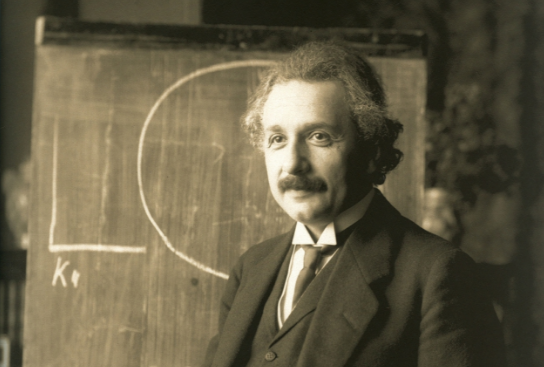
We all have a mental image of Albert Einstein. For some of us, that mental image doesn’t get much more detailed than the mustache, the unruly hair, and the rumpled dress, all of which, thanks to his achievements in theoretical physics, have become visual signifiers of forbidding intelligence. But when we imagine this image of Einstein actually speaking, what does he sound like? Beyond guessing at a reasonably suitable Germanic accent, many of us will realize that we’ve never actually heard the man who came up with the Theory of Relativity speak.
Einstein left behind plenty of writing in addition to that piece, but often, to really understand how a mind works, you need to hear its owner talk. (And few minds, or in any case brains, have drawn as much attention as Einstein’s.) “I speak to everyone in the same way, whether he is the garbage man or the president of the university,” he once said, presumably including the sorts of audiences he spoke to in these recordings. Having heard Albert Einstein in His Own Voice, you’ll understand much more fully the intellectual interest to which Einstein, when not sticking it out in order to become the world’s dorm-room icon of wacky genius, could put the use of his tongue.
So maybe you didn’t take a class on James Joyce’s Ulysses in college with a wizened professor from Dublin who explained in excruciating detail, week after week, why the famed modernist writer is the greatest novelist that ever lived and also some kind of secular sage and conduit of the collective genius of humanity. Maybe your encounter with Joyce began and ended with a few stories from Dubliners or with the thinly veiled memoir, A Portrait of an Artist as a Young Man. In that case, you may wonder why he inspires such cult-like devotion, even to the point of having his own holiday, Bloomsday, in which, Jonathan Goldman writes, “academics and professionals mingle with obsessives and cranks”—many of either camp-dressed in period garb, quoting Ulysses from memory, and re-enacting major scenes from the novel.
If you don’t know Joyce at all, or haven’t read Ulysses, there’s no time like the present to discover why you should. In his short School of Life animated video above, Alain de Botton lays out just a few of the reasons for the Joyce-worship, including the writer’s “devotion to some crucial themes” like “the idea of the grandeur of ordinary life” and “his determination to portray what actually goes on through our heads moment by moment, what we now know, partly thanks to him, as the ‘stream-of-consciousness.’” That phrase did not originate with Joyce, however, but with William James in the 1890s and his description of the collective characteristics of “personal consciousness.”
But since Joyce’s literary use of interior monologues that mimic the random associations of thought, we use “stream-of-consciousness” to mean “the presentation of thoughts and sense impressions in a lifelike fashion.” The “lifelikeness” of Joyce’s approach explains its appeal to so broad a range of readers, and its influence upon so many writers. Ulysses may principally be a novel about Dublin, as are all of Joyce’s books, but it also retells the epic story of the Odyssey, a “pinnacle of high culture,” Botton pronounces, through the workaday meanderings, routines, and distractions of ordinary, undistinguished people.
Ancient literature like Homer gives us great men of action—archetypes ruled by fate—and the Victorian novel Joyce replaced offers extremes of aristocracy and destitution. In Ulysses, shopkeepers, bartenders, seamstresses, students, and advertising men become three-dimensional, psychologically real actors in a historical drama, simply by being who they are. Ulysses’ protagonist, Leopold Bloom, is “very unlike a traditional hero, but he is representative of our average, unimpressive, fragile, but still rather likeable everyday selves.”
The novel’s catalogue of Bloom’s thoughts and actions over the course of an unexceptional day communicate to us that “the apparently little things that happen in daily life… aren’t really little things at all. If we look at them through the right lens, they are revealed as beautiful, serious, deep and fascinating. Our own lives are just as fascinating as those of the traditional heroes.” We must also note, however, that Ulysses makes huge demands on its reader. As one early reviewer of the novel wrote, “few intuitive, sensitive visionaries may understand and comprehend ‘Ulysses’… without going through a course of training or instruction.” Like Dante’s Divine Comedy, which greatly influenced Joyce, Ulysses is laden with local and historical references, poetic allusions, and arcane philosophical and theological debates… one may need a Virgil to finish the tour.
If we’re speculating about Joyce’s intentions in giving us ordinary characters through extraordinary literary means, they may have been less didactic than pedagogical. Yes, we can see our ordinary selves—the shape and form of our “personal consciousness”—looking back at us from Ulysses’ pages. To use a current buzzword, Joyce was a “master of literary mindfulness.” We must become better, more patient and diligent readers to appreciate the epic scope of human interiority in his best known novel. In that regard, Joyce teaches us not only to think of ourselves as heroes, but also to move through our seemingly banal modern environment with the same level of curiosity, excitement, and awe that moves us through the world of Odysseus. They are ultimately, he suggests, the same world.
The literary voice of Virginia Woolf comes to us from a life lived fully in the service of literature, a life devoted, we might say, to the “craft of writing.” That earnest expression gets tossed around innocently enough in various grammatical forms. Writers craft sentences and paragraphs and set about crafting worlds for characters to inhabit. Describing writing as a craft seems a corollary to our current utilitarian thinking that literature should serve us, not we it; that we should justify our time spent reading and writing by talking about the use-value of these activities. Virginia Woolf had little use for these sentiments.
In an essay offering guidance on how to read literature, for example, she asks rhetorically whether there are “not some pursuits that we practice because they are good in themselves, and some pleasures that are final?” Is not reading among these? Just as she decries reading as a professional task, Woolf critiques the idea of writing as a form of “Craftsmanship” in an essay with that title that she delivered as a talk on BBC radio in 1937 as part of a series called “Words Fail Me.” In the excerpt above, the only surviving recording of Woolf’s voice, she reads the opening paragraphs of her essay, stating upfront that she finds “something incongruous, unfitting, about the term ‘craftsmanship’ when applied to words.”
“Craft,” ways Woolf, applies to “making useful objects out of solid matter,” and it also stands as a synonym for “cajolery, cunning, deceit.” In either usage, the word mischaracterizes the act of writing. “Words,” Woolf says, echoing her contemporary Oscar Wilde, “never make anything that is useful.” She offers us many colorful examples to make the point, and argues also that words cannot be deceitful since “they are the truest” of all things and “seem to live forever.” These qualities of language, it’s uselessness and truthfulness, make the practice of writing as “craft” impossible, since writers do not work by “finding the right words and putting them in the right order,” like one would build a house.
Words do not cooperate in neat and tidy ways. Indeed, “to lay down any laws for such irreclaimable vagabonds is worse than useless,” says Woolf, “A few trifling rules of grammar and spelling are all the constraint we can put on them.” Rather than thinking of words as raw material we assemble by rote, or as incantatory symbols in magical formulae, we should think of words as sentient entities who “like people to think and feel before they use them.” Words, says Woolf in her mellifluous voice, “are highly sensitive, easily made self-conscious” and “highly democratic, too.”
Against modern conceptions of writing as a practical craft, in her time and ours, Woolf tells us that words “hate being useful; they hate making money; they hate being lectured about in public. In short, they hate anything that stamps them with one meaning or confines them to one attitude, for it is in their nature to change.” At best, she suggests, we can change with them, but we cannot control them or shape and bend them to our ends.
In the past, we’ve told you about Werner Herzog’s Rogue Film School, which offers an unconventional crash-course in auteurship, teaching students everything from “the art of lock-picking,” to “the creation of one’s own shooting permits,” to the “athletic side of filmmaking.” As with any good curriculum, Herzog provides a required reading list, which asks students to pore over some unexpected books. When was the list time a film professor asked students to read Virgil’s Georgics, Hemingway’s “The Short Happy Life of Francis Macomber,” or J.A. Baker’s The Peregrine?
If you haven’t heard of it, Herzog considers The Peregrineone of the great masterpieces of the 20th century. First published in 1967, this classic of British nature writing has “an intensity and beauty of prose that is unprecedented, it is one of the finest pieces of prose you can ever see anywhere,” says Herzog. Earlier this year, the filmmaker paid a visit to Stanford University and had a wide-ranging conversation with Prof. Robert Harrison (host of the podcast Entitled Opinions) about what makes The Peregrinesuch a wondrous work. The event was hosted by Stanford Continuing Studies and “Another Look Book Club,” which introduces you to the best books you’ve never read.
The conversation with Herzog officially begins at the 3:00 minute mark.
If you would like to support the mission of Open Culture, consider making a donation to our site. It’s hard to rely 100% on ads, and your contributions will help us continue providing the best free cultural and educational materials to learners everywhere. You can contribute through PayPal, Patreon, and Venmo (@openculture). Thanks!
Video games, the world has come to realize, can do good. Twenty or thirty years ago, people had a harder time accepting this, much to the frustration of daily-gaming youngsters such as myself. I remember deciding, for a school science project, to demonstrate that video games improve “hand-eye coordination,” the go-to benefit in those days to explain why they weren’t all bad. But as our understanding of video games has become more sophisticated, as have video games themselves, it’s become clear that we can engineer them to improve much more about ourselves than that.
The New Yorker’s Dan Hurley recently wrote about findings from a study called Advanced Cognitive Training for Independent and Vital Elderly (ACTIVE), which began with three thousand participants back in 1998. “The participants, who had an average age of 73.6 at the beginning of the trial, were randomly divided into four groups. The first group, which served as control, received no brain training at all. The next two were given ten hours of classroom instruction on how to improve memory or reasoning. The last group performed something called speed-of-processing training” by playing a kind of video game for ten hour-long sessions spread over five weeks.
A decade into the study, some of the participants received extra training. 14 percent of the group who received no training met the criteria for dementia, 12.1 percent did in the group who received speed-of-processing training, and only 8.2 percent did in the group who received all possible training. “In all, the researchers calculated, those who completed at least some of these booster sessions were forty-eight-per-cent less likely to be diagnosed with dementia after ten years than their peers in the control group.”
Intriguing findings, and ones that have set off a good deal of media coverage. What sort of video game did ACTIVE use to get these results? The Wall Street Journal’s Sumathi Reddy reports that “the exercise used in the study was developed by researchers but acquired by Posit Science, of San Francisco, in 2007,” who have gone on to market a version of it called Double Decision. In it, the player “must identify an object at the center of their gaze and simultaneously identify an object in the periphery,” like cars, signs, and other objects on a variety of landscapes. “As players get correct answers, the presentation time speeds up, distractors are introduced and the targets become more difficult to differentiate.”
You can see that game in action, and learn a little more about the study, in the Wall Street Journal video above. Effective brain-training video games remain in their infancy (and a few of the articles about ACTIVE’s findings fail to mention Lumos Labs’ $2 million payment to the government to settle charges that the company falsely claimed that their games could stave off dementia) but if the ones that work can harness the addictive power of an Angry Birds or a Candy Crush, we must prepare ourselves for a sharp generation of senior citizens indeed.
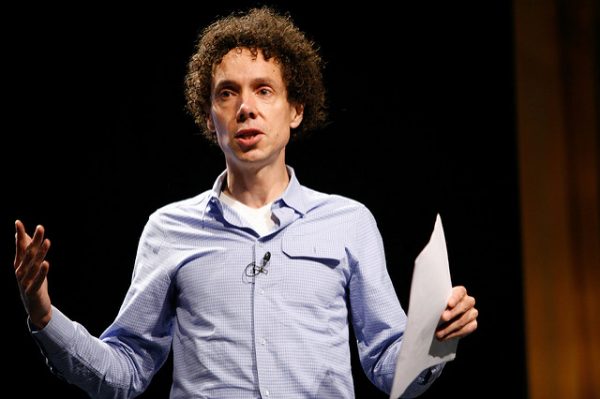
Malcolm Gladwell’s Revisionist History podcast kicked off this summer and in his very first episode, he took on the question of how women have broken into male-dominated fields, and the many reasons that so often hasn’t happened. Having set this tone, Gladwell asks in a more recent inquiry—a three-part series spanning Episodes 4 through 7—a similar question about what we might call meritocracy in education, a value fundamental to liberal democracy, however that’s interpreted. As Gladwell puts it in “Carlos Doesn’t Remember,” “This is what civilized societies are supposed to do: to provide opportunities for people to make the most of their ability. So that if you’re born poor, you can move up. If you work hard, you can improve your life.”
Over some sentimental, homespun orchestration, Gladwell points out that Americans have told ourselves that this is our birthright, “that every kid can become president.” We have seen ourselves this way despite the fact that at the country’s origin, higher offices were solely the property of propertied men, a small minority even then. Lest we forget, for all their good intentions, Ben Franklin’s Poor Richard’s Almanack and later collection, “The Way to Wealth,” were written as satires, “relentlessly scathing social and political commentary,” writes Jill Lepore, that mock wishful thinking and exaggerated ambition even as they offer helpful hints for organized, diligent living. Americans, the more cynical of us might think, have always believed impossible things, and the myth of meritocracy is one of them.
But Gladwell, skimming past the cultural history, wants to genuinely ask the question, “is it true? Is the system geared to serve the poor smart kid, or the rich smart kid?” Apart from our beliefs and political ideologies, what can we really say about what he calls, in economics terms, “the rate of capitalization” in the U.S.? This number, Gladwell explains, measures “the percentage of people in any group who are able to reach their potential.” Better than “its GDP, or its growth rate, or its per-capita income,” a society’s capitalization rate, he says, allows us to judge “how successful and just” a country is—and in the case of the U.S. in particular, how much it lives up to its ideals.
The first episode in the series (Episode 4 of the podcast, stream it above) introduces us to Gladwell’s first subject, Carlos, a very bright high school student in Los Angeles, and Eric Eisner, a retired entertainment lawyer who devotes his time to scouting out talented kids from low income families and helping them get into private schools. Eisner did exactly that for Carlos, finding him a place in an upscale private Brentwood school in the fifth grade. Early in Gladwell’s interview with Carlos, the question of what James Heckman at Boston Review identifies as the “non-cognitive characteristics” that inhibit social success comes up. These are as often “physical and mental health” and the soft skills of social interaction as they are access to something as seemingly mundane as a pair of tennis shoes that fit.
Carlos, a “really, really gifted kid,” Gladwell reiterates, cannot make it into and through the complicated social system of private school without Eisner, who bought him new tennis shoes, and who provides other material and social forms of support for the students he mentors. Students like Carlos, Gladwell argues, need not only mentors, but patrons in the mold of an ancient Roman patrician: “not just any advocate: a high-powered guy with lots of connections, who can get you in and watch over you.” The key to class mobility, in other words, lies with the arbitrary noblesse oblige of those who have already made it, generally with some considerable advantages of their own. The remainder of the episode explores the obvious and non-obvious problems with this modern-day patronage system.
In “Food Fight,” the next part of the mini-series on “capitalization,” Gladwell and his colleagues open the door on the world of prestigious liberal arts colleges’ dining services, starting at Bowdoin College in Maine, a place where the food services are “in a whole different class.” Bowdoin’s excellent food, Gladwell argues, represents a “moral problem.” To help us understand, he makes a direct comparison with Bowdoin’s elite competitor, Vassar College, whose student dining is more in line with what most of us experienced at college; in one student’s understated phrase, there’s “room for improvement.” What the food comparison illustrates is this: when many elite institutions doubled their financial aid budgets a decade or so ago to increase enrollment of low-income students, other budget lines, so Vassar’s president claims, took such a hit that food, facilities, and other services suffered.
Vassar’s current president transformed the student body from primarily full-tuition-paying students to primarily students “who pay very little.” The egalitarian move means the college must lean too heavily on its endowment and on the paying students. Gladwell doesn’t delve into what we’ve also been hearing about for at least the last decade: as institutions like Vassar accept and fund increasing numbers of low-income students, other schools charged legally with providing for the public good, like the University of California system, have raised tuition to levels unaffordable to thousands of prospective students.
Colleges across the country may have raised tuition rates to their current astronomical levels in part to better fund poorer applicants, but they have also faced stiff criticism for spending huge amounts on athletics, building projects, and exorbitant administrative salaries. The food comparison presents us with an either/or scenario, but the moral problem inhabits a much grayer reality than Gladwell acknowledges. Likewise, in the story of Carlos, we come to understand why smart kids from poor neighborhoods face so many impediments once they arrive at elite institutions. But we don’t hear about why so many poor kids fail to achieve at all due to what what Heckman calls “the principle source of inequality today”—children born into poverty begin life at a severe disadvantage from the very start, leading to social divisions of the “skilled and unskilled” even in early childhood.
We do get a broader picture in the final episode in the series, “My Little Hundred Millions,” in which Gladwell looks into another moral problem: In the story of Henry Rowan, who in the early ‘90s donated $100 million to a tiny university in New Jersey, we see a stark contrast to the way most philanthropists operate, almost as a rule making their generous gifts to elite, already wealthy schools like Harvard, Stanford, and Yale. This system of philanthropy perpetuates inequality in higher education and keeps elite institutions elite, even as—in places like Vassar—it gives them the reserve capital they need to fund lower-income students. Like any complex institutional system with a long, tangled history of exclusion and privilege, higher education in the U.S. offers us a very good model for studying inequality.
To hear Gladwell’s full assessment of meritocracy or “capitalization,” you’ll need to listen to the full series as it builds on each example to make its larger point. Each episode’s webpage also includes links to reference documents and featured books so that you can continue the investigation on your own, correcting for the podcast’s blind spots and biases. What Gladwell’s series does well, as do many of his pop sociological bestsellers, is give us concrete examples that run up against many of our abstract preconceptions. It’s an interesting approach—structuring an extended look at exceptionalism and its problems around three exceptional cases. But it is these cases, with all their complications and complexity, that often get lost in over-generalized discussions about higher education and the myths and realities of social mobility.
We're hoping to rely on loyal readers, rather than erratic ads. Please click the Donate button and support Open Culture. You can use Paypal, Venmo, Patreon, even Crypto! We thank you!
Open Culture scours the web for the best educational media. We find the free courses and audio books you need, the language lessons & educational videos you want, and plenty of enlightenment in between.