So how did you do?
Thanks Scott for the tip on that one.
Jared Diamond, the Pulitzer Prize-winning author of Guns, Germs & Steel (and Collapse: How Societies Choose to Fail or Succeed), offers some timely thoughts on why Haiti, once a fairly prosperous country, has sunk into enduring poverty — a condition not comparatively shared by its neighbor on the same island, the Dominican Republic. According to Diamond, Haiti’s environmental conditions offer a partial explanation. But you will also find clues in the country’s language, and in the legacy of slavery that has shaped Haiti’s economic relationship with Europe and the US. This interview — quite a good one — aired this morning in San Francisco. You can listen to it below, or access it via MP3, iTunes or RSS Feed.
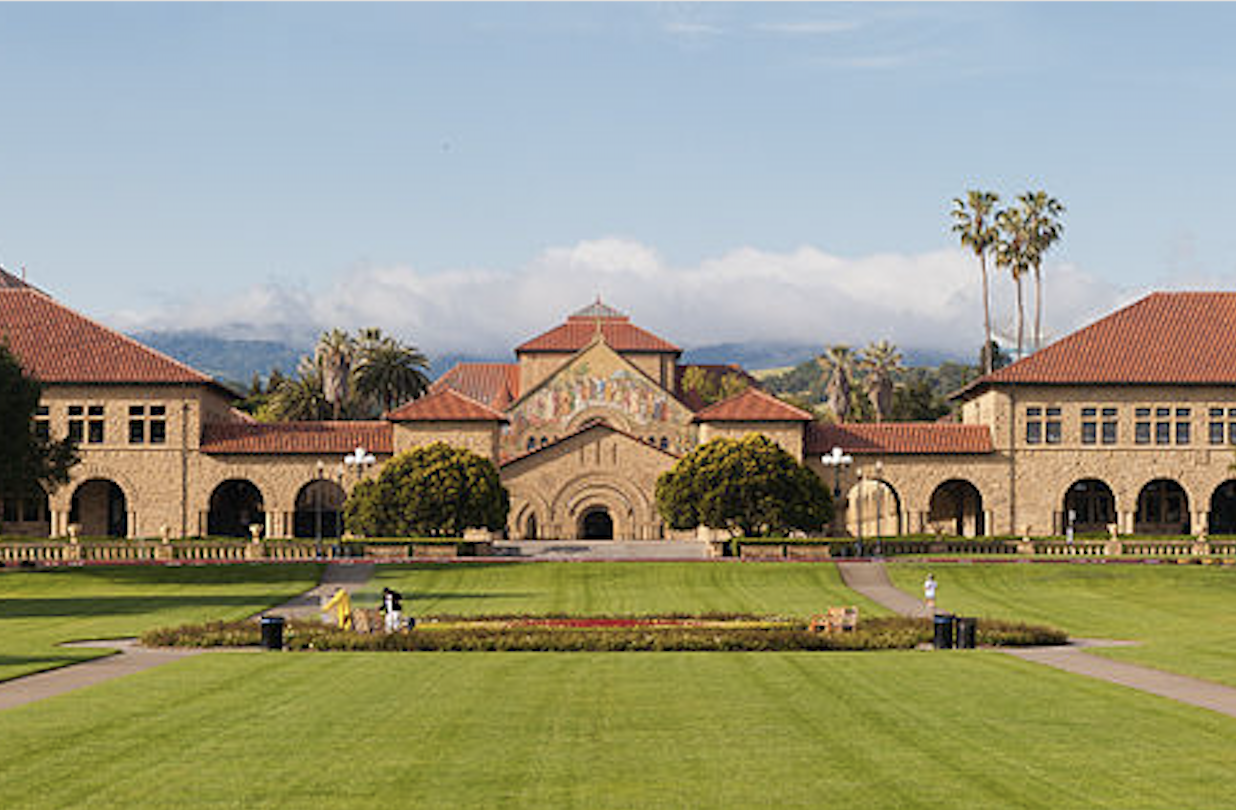
Image by King of Hearts, via Wikimedia Commons
Starting this past fall, Stanford’s School of Medicine and Stanford Continuing Studies (my day job) teamed up to offer The Stanford Mini Med School. Featuring more than thirty distinguished faculty, scientists, and physicians, this yearlong series of courses (three in total) offers students a dynamic introduction to the world of human biology, health and disease, and the groundbreaking changes taking place in medical research and health care. 250 lifelong learners (like yourself) attended the first course on Stanford’s campus this fall. And you can now access it on iTunes. We’ve posted the first two lectures (in video), and eight more lectures will soon be coming online. (Update: You can now find the videos on YouTube too.) Below, I’ve added the course description for the fall course, and you can also find it listed in the Biology Section of our ever-growing collection of Free Online Courses. When the winter and spring courses arrive, I’ll be sure to give you a heads up.
This Fall, the Stanford Mini Med School will get started with a journey inside human biology. We will start by familiarizing ourselves with the world of very small things. We will take a close look at DNA, stem cells, and microbes, and see how these and other small players form the building blocks of the human body. This will allow us to understand how human organs develop (and can also regenerate), how our nervous and immune systems work, and how diseases can afflict us. From there, the course will move beyond the individual and take a more global view of health. How do pandemics take shape? How does the environment affect our collective health? And how can we finally implement a healthcare system that makes sense for our nation? Various experts from the Stanford School of Medicine will address these and other big picture questions during the first course in the Stanford Mini Med School.
For a description of the current Mini Med School course (which we will eventually post online) please
As we’ve mentioned in the past, Archive.org hosts some wonderful free, public domain media. Many of their classic films appear in our collection of Free Online Movies. And they also provide access to lots of free public domain music (including a large Grateful Dead concert archive). Thanks to a new site, Dewey Music, you can now sort through this extensive music catalogue with greater ease and find the free gems faster. Dewey Music was created by six industrious college students, and we thank them.
via BoingBoing
Last week, Jaron Lanier, the father of virtual reality, published his new book (You Are Not a Gadget) and an accompanying op-ed in The Wall Street Journal. The WSJ piece begins:
All too many of today’s Internet buzzwords— including “Web 2.0,” “Open Culture,” “Free Software” and the “Long Tail”—are terms for a new kind of collectivism that has come to dominate the way many people participate in the online world. The idea of a world where everybody has a say and nobody goes unheard is deeply appealing. But what if all of the voices that are piling on end up drowning one another out?
Lanier goes on to make the case against Web 2.0. Using “crowdsourcing” to build free products (think Wikipedia), Web 2.0 ends up producing inferior content and software code. It slows down innovation. It destroys intellectual property and the financial structure that incentivizes creative individuals and institutions. And finally it disempowers the individual, the real source of innovation. (Lanier says, “I don’t want our young people aggregated, even by a benevolent social-networking site. I want them to develop as fierce individuals, and to earn their living doing exactly that.”) If you think this sounds like Ayn Rand philosophy (see vintage clip) grafted onto tech talk, you’re probably right. And from here, you can decide whether you want to buy the book or not.
On a personal note, I find it amusing that “Open Culture” qualified as an “Internet buzzword,” according to Lanier. As you can imagine, I track the use of the expression fairly closely, and quite frankly, it didn’t register on any radar until Lanier’s piece came out (and we got a simultaneous mention in AARP’s magazine). All you have to do is look at this Google Trends chart. It maps the usage of “open culture,” and you can see how it goes from nowhere to vertical in 2010, right when Lanier’s op-ed gets published. So what can I say to Jaron Lanier, but thanks (in a thanks, but no thanks kind of way) and may you sell a million copies of You Are Not a Gadget…
Robert Shiller, who predicted the stock market crash earlier this decade and the bursting of the housing bubble in 2008, has a unique understanding of the financial markets and behavioral economics. In this free course provided by Yale University, Shiller demystifies the financial markets and explains “the theory of finance and its relation to the history, the strengths and imperfections of such institutions as banking, insurance, securities, futures, and other derivatives markets, and the future of these institutions over the next century.” It’s a course for our shaky financial times. The first lecture appears above, and the full course can be accessed on YouTube, iTunes and Yale’s web site. The course is also listed in our meta collection of Free Courses and our targeted selection of Free Economics Courses.
Peter Singer, an Australian-born philosopher who teaches at Princeton, created the animal rights movement back in the 1970s, and, more recently, launched a campaign to end world poverty. One can’t contemplate poverty without also considering greed, and that brings us to the clip above. Interviewed in 2009, Singer suggests that greed drives us biologically (as does social collaboration fortunately). Greed helps us survive and innovate. But there is also a point where it becomes pointless and pathological, and that’s what we have witnessed in the financial world. Greed brought us Bernie Madoff. But it has also brought us (my inferences) bankers who create a catastrophe one year and take record bonuses the next. And it has brought us to the point where our country has dangerously slipped off of its democratic moorings. Lloyd Blankfein, this clip is for you. Thanks Ted for sending this one along.
Looking for free philosophy courses? Visit the Philosophy section of our Free Course collection.
The lines below are taken from Voltaire’s “Poème sur le désastre de Lisbonne,” written in response to the Lisbon earthquake of 1755. Then, as now, there’s a little wisdom here for those (hint: Pat Robertson) inclined to infer moral superiority from the suffering of others.
What crime, what sin, had those young hearts conceived
That lie, bleeding and torn, on mother’s breast?
Did fallen Lisbon deeper drink of vice
Than London, Paris, or sunlit Madrid?
In these men dance; at Lisbon yawns the abyss.
Tranquil spectators of your brothers’ wreck,
Unmoved by this repellent dance of death,
Who calmly seek the reason of such storms,
Let them but lash your own security;
Your tears will mingle freely with the flood.
Note: Pat Robertson’s controversial remarks contained one basic historical fact, and it was wrong. He asserted that the Haitians brought disaster upon themselves when they broke free from “Napoleon III.” Robertson got the wrong guy here. It wasn’t Napoleon Lite (1808–1873). It was Napoleon Bonaparte (1769–1821) who coopted the French Revolution 50 years earlier and tried to impose his will on Haiti. But, whatever…
via The Sun Times
For MLK’s birthday, we bring back the full “I Have a Dream” speech, delivered at The Lincoln Memorial on August 28, 1963. Seventeen eloquent and brave minutes that changed the world and made it a better place.
Rod Serling, the American screenwriter & television producer best known for The Twilight Zone, fielded questions from students about the whole art of writing for television. In the clip above, he gives a rather dramatic response to the question, “Where do ideas come from?” (They come from the Earth… They’re in the air. And, to put them on paper, you bleed!) If you keep watching, the conversation with Serling continues for a good while.
This contribution was sent to us by Elan, who dates the clip to around 1972. You can always write us and suggest a link here.
If you would like to sign up for Open Culture’s free email newsletter, please find it here. It’s a great way to see our new posts, all bundled in one email, each day.
If you would like to support the mission of Open Culture, consider making a donation to our site. It’s hard to rely 100% on ads, and your contributions will help us continue providing the best free cultural and educational materials to learners everywhere. You can contribute through PayPal, Patreon, and Venmo (@openculture). Thanks!



Open Culture scours the web for the best educational media. We find the free courses and audio books you need, the language lessons & educational videos you want, and plenty of enlightenment in between.

©2006-2026 Open Culture, LLC.
All rights reserved.

