Club owner Hillel Kristal’s legendary CBGB died a slow death. A long, drawn-out affair that, when it came on October 15, 2006, seemed inevitable. The old venue’s state then was perfectly described by Ben Sisario in the New York Times as “the famously crumbling rock club that has been in continuous, loud operation since December 1973, serving as the casual headquarters and dank incubator for some of New York’s most revered groups.”
But CBGB’s still had some life in it, as did all of the old New York haunts that folded under Giuliani and Bloomberg. CBGB outlasted so much of old New York that it seemed indestructible, and thus slightly annoying until it was gone. Yet it needed to be seen into the next world in real style, and so it was, all thanks to Patti Smith.
On the club’s closing night, Smith and band convened to pay tribute to that “dank incubator” by playing not only the bands it birthed but those who came before. At the top, see their live take on the Stones’ “Gimme Shelter.” It lacks the strange delicacy of the original, but once Smith takes off her glasses and Flea, who sat in for a few tunes, cuts loose, it’s a serious rocker. Smith’s ad-lib at the end is as captivating as her announcement—“Rolling Stones!”—is unnecessary.
Smith’s band also played a Ramones medley (above) more than worthy of the formidable Queens foursome. Sure, anyone could play these songs—that was the point. But not many could so well capture the Ramones’ tuneful enthusiasm in the New York band’s ancestral home.
Lastly we bring you Smith and band’s “Pale Blue Eyes.” Although this footage predates Reed’s passing by seven years, it’s still a poignant tribute to the man who perhaps more than any other musician and writer inspired the ethos of the old CBGB. Without Lou Reed, we would have no… better not to finish that sentence. Enjoy the CBGB tribute above and see more of the final night’s celebration here.
Albert Camus—political dissident, journalist, novelist, playwright, and philosopher—was born 100 years ago today in French Algeria. Camus’ modest childhood circumstances, marked by the death of his father in WWI when Camus was an infant, and his devotion to his deaf, illiterate mother, seem to have instilled in him a modesty that shrank from his unavoidable literary fame. In his 1957 Nobel acceptance speech (above, in French with English subtitles), Camus opens with an expression of modesty. After thanking the dignitaries present, he says:
I have not been able to learn of your decision without comparing its repercussions to what I really am. A man almost young, rich only in his doubts and with his work still in progress, accustomed to living in the solitude of work or in the retreats of friendship: how would he not feel a kind of panic at hearing the decree that transports him all of a sudden, alone and reduced to himself, to the centre of a glaring light? And with what feelings could he accept this honour at a time when other writers in Europe, among them the very greatest, are condemned to silence, and even at a time when the country of his birth is going through unending misery?
Camus’ concerns display another defining characteristic: his sense of writing as a political act, which he honed as a journalist for leftist and anti-colonial newspapers, most notably France’s resistance paper Combat, edited by Camus from 1943 to 1947. It was during these war years that Camus produced some of his most well-known work, including his essay The Myth of Sisyphus and novel The Stranger, and struck up a friendship with Jean-Paul Sartre, who also wrote for Combat. The friendship eventually went sour, in part due to Camus’ unwillingness to accept the persecutions and abuses of state power manifested by Communist regimes (Camus had been kicked out of the Communist party years before, in 1937, for refusing its dogmas).
Just as Camus could not place party over people, he would not elevate art to a special status above the political. Says Camus in his Nobel speech above: “I cannot live without my art. But I have never placed it above everything. If, on the other hand, I need it, it is because it cannot be separated from my fellow men… it obliges the artist not to keep himself apart; it subjects him to the most humble and the most universal truth.” Believing strongly in the social duty of the artist, Camus describes his writing as a “commitment” to bear witness to “an insane history.” After outlining the special mission of writing, the “nobility of the writer’s craft,” Camus returns near the end of his speech to modesty and puts the writer “in his proper place” among “his comrades in arms.” For a writer who identified himself solely with his “limits and debts,” Camus left a singularly rich body of work that stands outside of party politics while actively engaging with the political in its most radical form—the duties of people to each other in spite of, or because of, the absurdity of human existence.
In receiving the distinction with which your free Academy has so generously honoured me, my gratitude has been profound, particularly when I consider the extent to which this recompense has surpassed my personal merits. Every man, and for stronger reasons, every artist, wants to be recognized. So do I. But I have not been able to learn of your decision without comparing its repercussions to what I really am. A man almost young, rich only in his doubts and with his work still in progress, accustomed to living in the solitude of work or in the retreats of friendship: how would he not feel a kind of panic at hearing the decree that transports him all of a sudden, alone and reduced to himself, to the centre of a glaring light? And with what feelings could he accept this honour at a time when other writers in Europe, among them the very greatest, are condemned to silence, and even at a time when the country of his birth is going through unending misery?
I felt that shock and inner turmoil. In order to regain peace I have had, in short, to come to terms with a too generous fortune. And since I cannot live up to it by merely resting on my achievement, I have found nothing to support me but what has supported me through all my life, even in the most contrary circumstances: the idea that I have of my art and of the role of the writer. Let me only tell you, in a spirit of gratitude and friendship, as simply as I can, what this idea is.
For myself, I cannot live without my art. But I have never placed it above everything. If, on the other hand, I need it, it is because it cannot be separated from my fellow men, and it allows me to live, such as I am, on one level with them. It is a means of stirring the greatest number of people by offering them a privileged picture of common joys and sufferings. It obliges the artist not to keep himself apart; it subjects him to the most humble and the most universal truth. And often he who has chosen the fate of the artist because he felt himself to be different soon realizes that he can maintain neither his art nor his difference unless he admits that he is like the others. The artist forges himself to the others, midway between the beauty he cannot do without and the community he cannot tear himself away from. That is why true artists scorn nothing: they are obliged to understand rather than to judge. And if they have to take sides in this world, they can perhaps side only with that society in which, according to Nietzsche’s great words, not the judge but the creator will rule, whether he be a worker or an intellectual.
By the same token, the writer’s role is not free from difficult duties. By definition he cannot put himself today in the service of those who make history; he is at the service of those who suffer it. Otherwise, he will be alone and deprived of his art. Not all the armies of tyranny with their millions of men will free him from his isolation, even and particularly if he falls into step with them. But the silence of an unknown prisoner, abandoned to humiliations at the other end of the world, is enough to draw the writer out of his exile, at least whenever, in the midst of the privileges of freedom, he manages not to forget that silence, and to transmit it in order to make it resound by means of his art.
None of us is great enough for such a task. But in all circumstances of life, in obscurity or temporary fame, cast in the irons of tyranny or for a time free to express himself, the writer can win the heart of a living community that will justify him, on the one condition that he will accept to the limit of his abilities the two tasks that constitute the greatness of his craft: the service of truth and the service of liberty. Because his task is to unite the greatest possible number of people, his art must not compromise with lies and servitude which, wherever they rule, breed solitude. Whatever our personal weaknesses may be, the nobility of our craft will always be rooted in two commitments, difficult to maintain: the refusal to lie about what one knows and the resistance to oppression.
For more than twenty years of an insane history, hopelessly lost like all the men of my generation in the convulsions of time, I have been supported by one thing: by the hidden feeling that to write today was an honour because this activity was a commitment – and a commitment not only to write. Specifically, in view of my powers and my state of being, it was a commitment to bear, together with all those who were living through the same history, the misery and the hope we shared. These men, who were born at the beginning of the First World War, who were twenty when Hitler came to power and the first revolutionary trials were beginning, who were then confronted as a completion of their education with the Spanish Civil War, the Second World War, the world of concentration camps, a Europe of torture and prisons – these men must today rear their sons and create their works in a world threatened by nuclear destruction. Nobody, I think, can ask them to be optimists. And I even think that we should understand – without ceasing to fight it – the error of those who in an excess of despair have asserted their right to dishonour and have rushed into the nihilism of the era. But the fact remains that most of us, in my country and in Europe, have refused this nihilism and have engaged upon a quest for legitimacy. They have had to forge for themselves an art of living in times of catastrophe in order to be born a second time and to fight openly against the instinct of death at work in our history.
Each generation doubtless feels called upon to reform the world. Mine knows that it will not reform it, but its task is perhaps even greater. It consists in preventing the world from destroying itself. Heir to a corrupt history, in which are mingled fallen revolutions, technology gone mad, dead gods, and worn-out ideologies, where mediocre powers can destroy all yet no longer know how to convince, where intelligence has debased itself to become the servant of hatred and oppression, this generation starting from its own negations has had to re-establish, both within and without, a little of that which constitutes the dignity of life and death. In a world threatened by disintegration, in which our grand inquisitors run the risk of establishing forever the kingdom of death, it knows that it should, in an insane race against the clock, restore among the nations a peace that is not servitude, reconcile anew labour and culture, and remake with all men the Ark of the Covenant. It is not certain that this generation will ever be able to accomplish this immense task, but already it is rising everywhere in the world to the double challenge of truth and liberty and, if necessary, knows how to die for it without hate. Wherever it is found, it deserves to be saluted and encouraged, particularly where it is sacrificing itself. In any event, certain of your complete approval, it is to this generation that I should like to pass on the honour that you have just given me.
At the same time, after having outlined the nobility of the writer’s craft, I should have put him in his proper place. He has no other claims but those which he shares with his comrades in arms: vulnerable but obstinate, unjust but impassioned for justice, doing his work without shame or pride in view of everybody, not ceasing to be divided between sorrow and beauty, and devoted finally to drawing from his double existence the creations that he obstinately tries to erect in the destructive movement of history. Who after all this can expect from him complete solutions and high morals? Truth is mysterious, elusive, always to be conquered. Liberty is dangerous, as hard to live with as it is elating. We must march toward these two goals, painfully but resolutely, certain in advance of our failings on so long a road. What writer would from now on in good conscience dare set himself up as a preacher of virtue? For myself, I must state once more that I am not of this kind. I have never been able to renounce the light, the pleasure of being, and the freedom in which I grew up. But although this nostalgia explains many of my errors and my faults, it has doubtless helped me toward a better understanding of my craft. It is helping me still to support unquestioningly all those silent men who sustain the life made for them in the world only through memory of the return of brief and free happiness.
Thus reduced to what I really am, to my limits and debts as well as to my difficult creed, I feel freer, in concluding, to comment upon the extent and the generosity of the honour you have just bestowed upon me, freer also to tell you that I would receive it as an homage rendered to all those who, sharing in the same fight, have not received any privilege, but have on the contrary known misery and persecution. It remains for me to thank you from the bottom of my heart and to make before you publicly, as a personal sign of my gratitude, the same and ancient promise of faithfulness which every true artist repeats to himself in silence every day.
Prior to the speech, B. Karlgren, Member of the Royal Academy of Sciences, addressed the French writer: «Mr. Camus – As a student of history and literature, I address you first. I do not have the ambition and the boldness to pronounce judgment on the character or importance of your work – critics more competent than I have already thrown sufficient light on it. But let me assure you that we take profound satisfaction in the fact that we are witnessing the ninth awarding of a Nobel Prize in Literature to a Frenchman. Particularly in our time, with its tendency to direct intellectual attention, admiration, and imitation toward those nations who have – by virtue of their enormous material resources – become protagonists, there remains, nevertheless, in Sweden and elsewhere, a sufficiently large elite that does not forget, but is always conscious of the fact that in Western culture the French spirit has for centuries played a preponderant and leading role and continues to do so. In your writings we find manifested to a high degree the clarity and the lucidity, the penetration and the subtlety, the inimitable art inherent in your literary language, all of which we admire and warmly love. We salute you as a true representative of that wonderful French spirit.
Joni Mitchell turns 70 today. A child of rural western Canada, Mitchell endured a series of early hardships that might have crushed a more timid soul — polio, teen pregnancy, an unhappy marriage — but she always managed to follow her muse.
Mitchell made a lifelong habit of guarding her artistic freedom and turning adversity into advantage. When a childhood piano teacher slapped her on the wrist with a ruler for the offense of playing by ear, Mitchell decided she didn’t want any more formal music education. When she found it difficult to form guitar chords with her polio-weakened left hand, she learned to explore alternative, open-chord tunings that have given her music an extra dimension of richness and variation.
As a folk singer in the 1960s, Mitchell managed to fulfill both sides of the Bob Dylan/Joan Baez dichotomy: In one person she was both the songwriter of genius and the woman with the golden voice. And like Dylan, Mitchell didn’t remain a folk singer for long. “I looked like a folk singer,” she once said, “even though the moment I began to write, my music was not folk music. It was something else that had elements of romantic classicism to it.” She went on to explore jazz, collaborating with Charles Mingus, Jaco Pastorius, Wayne Shorter, Herbie Hancock and others. “Impossible to classify,” says her biography at the Rock and Roll Hall of Fame, “Mitchell has doggedly pursued avenues of self-expression, heedless of commercial outcomes.”
As a musician, Mitchell is mostly retired now. She continues to paint and write poetry. To celebrate today’s milestone we bring you a pair of great performances from her younger years. In the clip above, from the January 21, 1968 episode of the CBC’s The Way it Is, a 25-year-old Mitchell plays her classic early songs “Both Sides Now” and “The Circle Game.” Even after 45 years, the songs can send a shiver down your spine. And below, from the 1970 Isle of Wight Festival, Mitchell’s evolution as a writer and performer are evident in the lilting, melodically inventive “Big Yellow Taxi.” In a previous post, we have also highlighted Mitchell playing a 30-minute set on British TV in 1970.
On this day in 1932, the Buck Rogers in the 25th Century radio program hit the airwaves. Following the success of the character in the comic strip format, it was natural to adapt Rogers for the nation’s latest craze: radio.
Few fictional characters have had such a profound and prolonged impact on American culture as Buck Rogers. He first appeared in Amazing Stories magazine as Anthony Rogers, and then in Philip Francis Nowlan’s novella Armageddon 2419 A. D. and its sequel The Airlords of Han. The story caught the attention of National Newspaper Syndicate’s John F. Dille, who contracted Nowlan to adapt the character into a comic strip, changing “Anthony” to “Buck.”
In 1932, the radio program premiered, making it the first science fiction program on radio. Initially broadcasted as a fifteen-minute show on CBS on a Monday through Thursday schedule, the show stayed on the air for the next fifteen years with varying schedules.
Now, thanks to Archive.org, you can travel back to 1932 and follow the adventures of “Buck and Wilma and all their fascinating friends and mysterious enemies in the super-scientific 25th century” (as stated in the show’s introduction).
Buck Rogers is largely credited with bringing into popular culture the concept of space exploration, not to mention ray guns and robots. Ray Bradbury may have stated it best in his introduction to The Collected Works of Buck Rogers in the 25th Century, when discussing its comic strip form:
There you are, waiting, trembling, in fevers; so full of life that if you were a volcano you’d come up in someone’s cornfield and bury the silo. There you are, as afternoon slides toward warm dusk, eyes shut, listening…
And there’s the sound, whistling through the air, crashing along the shingles, sliding down the roof, falling to the porch. You fling the door wide. You bend to touch that incredible newspaper with a hot hand. Buck Rogers had just been born. And you a single wise small boy, are there alone to welcome him to a world he will help change forever.
Has any political party in Western history had as vexed a relationship with art as the German National Socialists? We’ve long known, of course, that their uses of and opinions on art constituted the least of the Nazi party’s problems. Still, the artistic proclivities of Hitler and company compel us, perhaps because they seem to promise a window into the mindset that resulted in such ultimate inhumanity. We can learn about the Nazis from the art they liked, but we can learn just as much (or more) from the art they disliked — or even that which they suppressed outright.
Current events have brought these subjects back to mind; this week, according to TheNew York Times, “German authorities described how they discovered 1,400 or so works during a routine tax investigation, including ones by Matisse, Chagall, Renoir, Toulouse-Lautrec, Picasso and a host of other masters,” most or all previously unknown or presumed lost amid all the flight from Nazi Germany. Hitler himself, more a fan of racially charged Utopian realism, wouldn’t have approved of most of these newly rediscovered paintings and drawings.
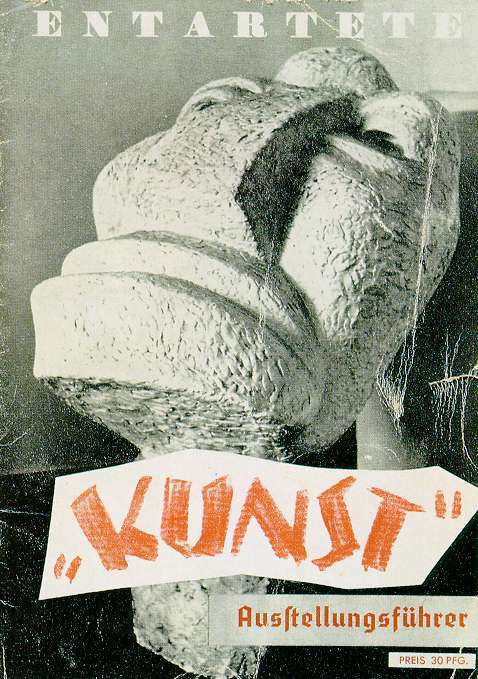
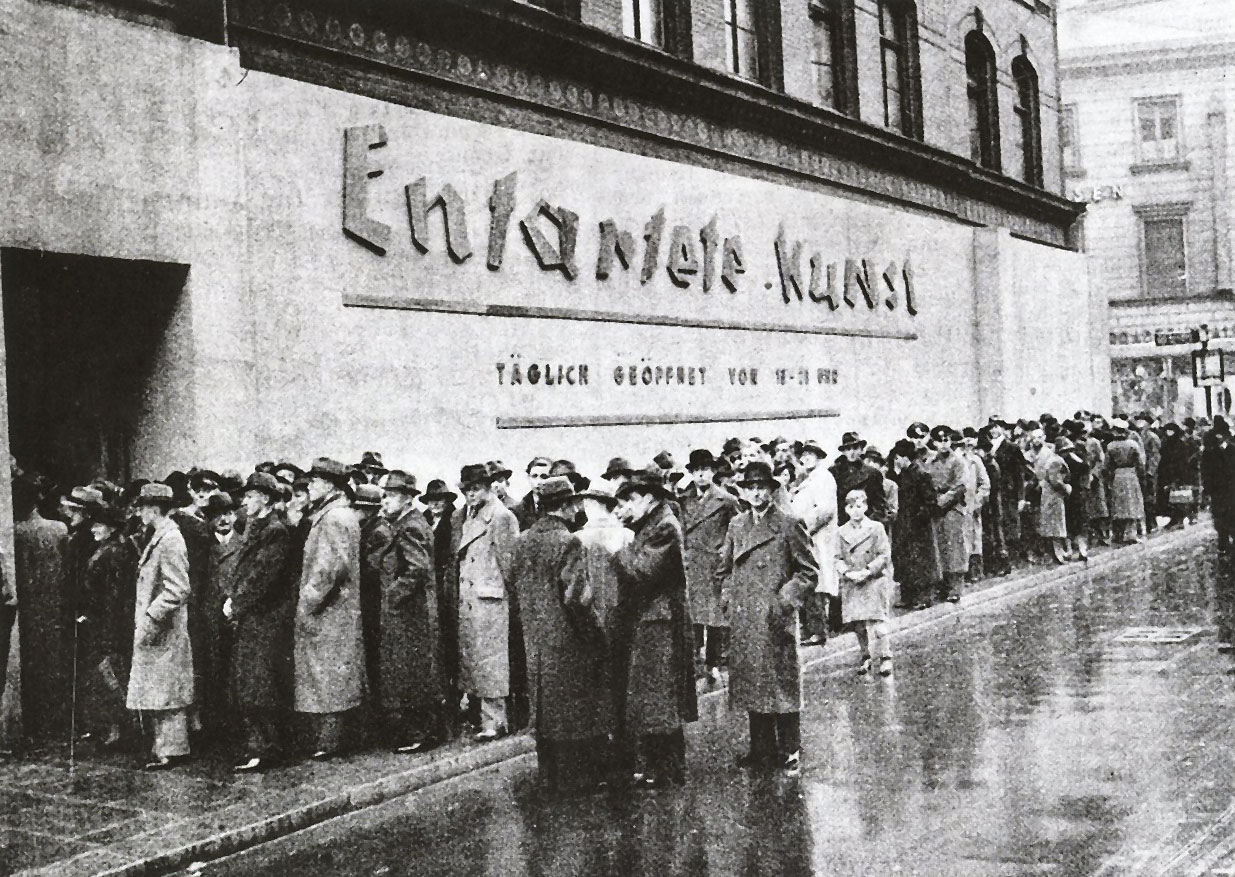
In fact, he may well have thrown them into 1937’s Degenerate Art Exhibition. Four years after it came to power,” writes the BBC’s Lucy Burns, “the Nazi party put on two art exhibitions in Munich. The Great German Art Exhibition [the Große Deutsche Kunstausstellung] was designed to show works that Hitler approved of — depicting statuesque blonde nudes along with idealised soldiers and landscapes. The second exhibition, just down the road, showed the other side of German art — modern, abstract, non-representational — or as the Nazis saw it, ‘degenerate.’ ” This Degenerate Art Exhibition (Die Ausstellung “Entartete Kunst”), the much more popular of the two, featured Paul Klee, Oskar Kokoschka, Wassily Kandinsky, Max Beckmann, Emil Nolde and George Grosz. There the Nazis quarantined these confiscated abstract, expressionistic, and often Jewish works of art, those that, according to the Führer, “insult German feeling, or destroy or confuse natural form or simply reveal an absence of adequate manual and artistic skill” and “cannot be understood in themselves but need some pretentious instruction book to justify their existence.” And if that sounds rigid, you should see how that Nazis dealt with jazz.
Note: For more on this subject, you can watch the 1993 documentary Degenerate Art.
In daily life, Woody Allen is far from the delicate bundle of cerebral nerves he so often portrays in his films. He was a successful track runner in high school, and, according to Eric Lax’s biography, trained for several months to participate in the Golden Gloves. But, as with so many young pugilists, parental concern got in the way—his parents refused to sign the consent form to let him box.
On screen, however, Woody Allen remains Hollywood’s reigning nebbish. Jesse Eisenberg once seemed poised to take the title, but while he is sometimes nervous and introverted, his performance in The Social Network confirmed that he can harness the flashes of intensity seen in teenage films like The Squid and The Whale and Adventureland.Michael Cera, meanwhile, the second most prominent of the contenders, is a wholly different actor to Allen—while Allen is insecure and all-too-voluble, Cera is simply all-too-nice.
Allen’s unabashed delight in his insecurities and his hypochondriac concern with neuroses is the platform for much of his humor. He has honed the persona’s mannerisms to perfection, and the clip above provides a master class in just one: the Allen stammer. By the end of this staggeringly impressive 44-minute supercut, containing every single one of Allen’s verbal stumbles and foot-drags from all of his movies, you should have laughed, cried, and fallen into a stupor. Please enjoy responsibly.
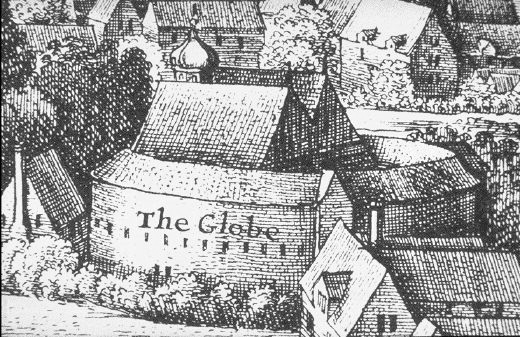
Last week, we featured a Prize-Winning Animation of 17th Century London. In many ways, it could be paired with these short virtual tours of the Globe Theatre. Built in 1599 by Shakespeare’s playing company, the Lord Chamberlain’s Men, the original theatre hosted some of the Bard’s greatest plays until it burned down 14 years later. In 1613, during a performance of Henry VIII, a stage cannon ignited the thatched roof and the theatre burned to the ground in less than two hours. Rebuilt with a tile roof, the theatre re-opened in 1614, and remained active until England’s Puritan administration closed all theatres in 1642. A modern reconstruction of the Globe, named “Shakespeare’s Globe,” was built in 1997, just a few feet away from the original structure. If you want to get a feel for what Shakespeare’s theatre looked like, then look no further than this virtual tour. All you need is this free Quicktime plugin for your browser and you can take a 360 tour of the stage, the yard, the middle gallery, and the upper gallery … all without leaving your seat.
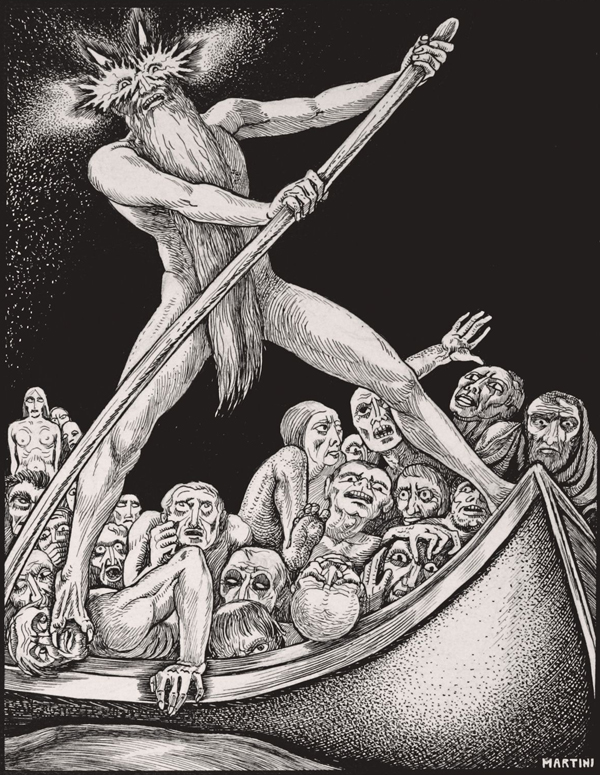
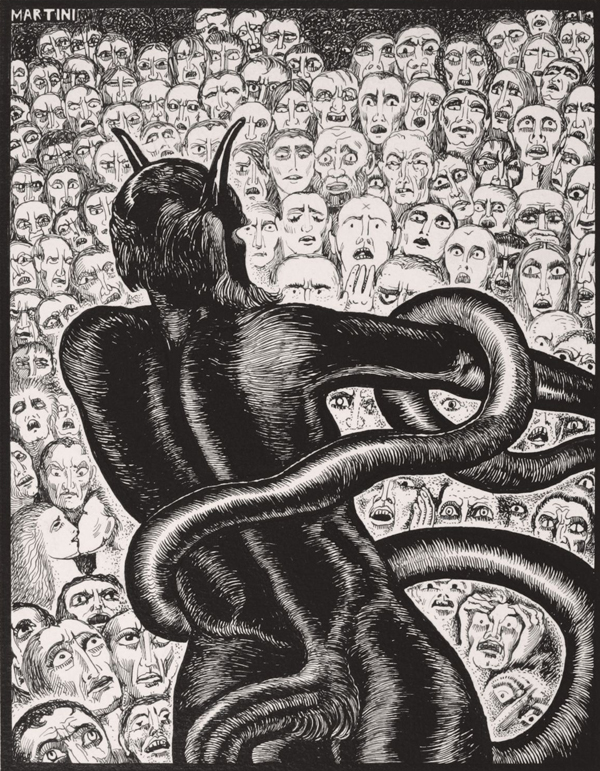
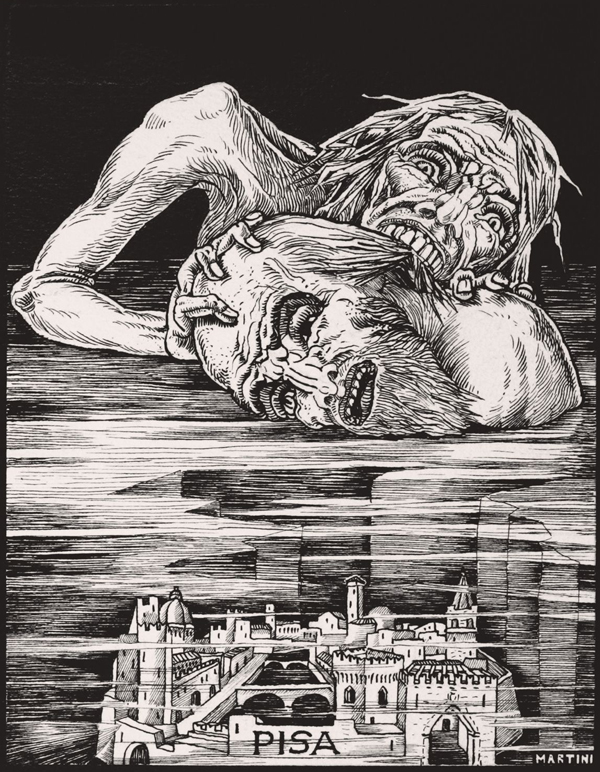
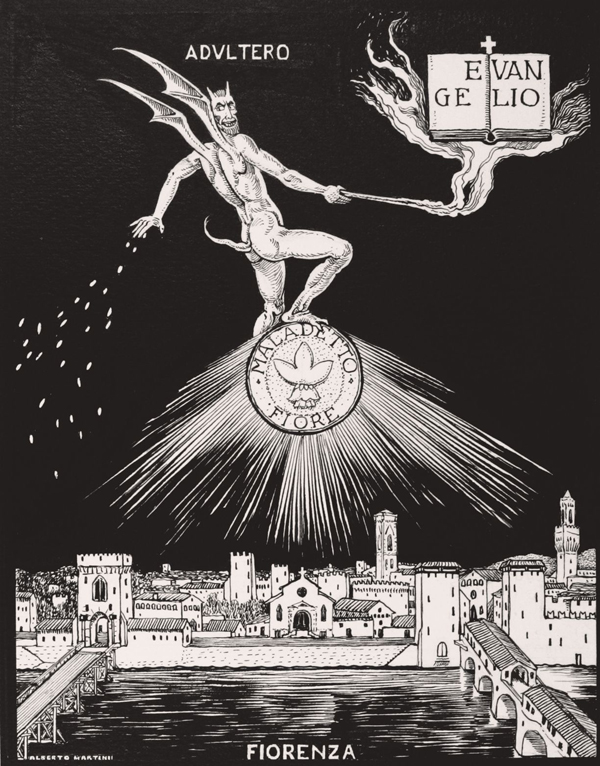
In 1901, Vittorio Alinari, head of Fratelli Alinari, the world’s oldest photographic firm, decided to publish a new illustrated edition of Dante’s Divine Comedy. To do so, Alinari announced a competition for Italian artists: each competitor had to send illustrations of at least two cantos of the epic poem, which would result in one winner and a public exhibition of the drawings. Among the competitors were Alberto Zardo, Armando Spadini, Ernesto Bellandi, and Alberto Martini.
While Martini did not win the competition, he, as Vittorio Sgarbi wrote in his foreword to Martini’s La Divina Commedia, “seemed born to illustrate the Divine Comedy.” The 1901 contest was followed by two more sets of illustrations between 1922 and 1944, which produced altogether almost 300 works in a wide range of styles, including pencil and ink to the watercolor tables painted between 1943 and 1944. While repeatedly rejected publication during his lifetime, a comprehensive edition of Martini’s La Divinia Commedia is available today.
With his feeling for the grotesque and the macabre, Martini’s work was much more influenced by the Northern Mannerism movement than Italian art and is often seen as a precursor to Surrealism, as Martini was a favorite of André Breton. However, while steeped in the surrealism of Odilon Redon and Aubrey Beardsley black and white counterpoints, Martini’s Divine Comedy is filled with an original sense of fantasy and beautifully conveys Dante’s more abstract imagery. Needless to say, Martini’s interpretation was very much in a world apart from the Italian Futurist and Metaphysical movements of the day.
Ignored by Italian critics most his life, Martini continued to produce a large number of illustrations and painting until his death in 1954. As he wrote in his autobiography, “Only the true great artists do not age, because they are able to innovate and invent new forms, new colors, genuine inventions.” Martini’s Divine Comedy is as shocking and beautiful today as it was in the early twentieth century, and is the best example of Martini’s progression as an artist throughout his career.
For a very different artistic interpretation of the Divine Comedy, see our posts on editions by Salvador Dalí and Gustave Doré.
“The following film describes an unusual motion picture now being produced in London for release all over the world starting in 1967.” We hear and see this announcement, which precedes A Look Behind the Future, the promotional documentary above, delivered by a pomade-haired, horn-rimmed middle-aged fellow. He has much else to say about our need to prepare ourselves through edifying entertainment for the “radical revisions in our total society” fast ushered in by the Space Age. Another, even more official-sounding announcer introduces this man as “the publisher of Look magazine, Mr. Vernon Myers.” This could happen at no time but the mid-1960s, and Myers could refer to no other “unusual motion picture” than Stanley Kubrick’s 2001: A Space Odyssey.
Modern-day examinations of 2001 usually celebrate the film’s still-striking artistic vision and its influence on so much of the science fiction that followed. But when this short appeared, not only did the year 2001 lay far in the future, so did the movie itself. Contemporary with Kubrick’s production, it touts how thoroughly researchers have rooted the speculative devices of the story in the thrilling technologies then in real-life development (whether ultimately fruitful or otherwise), and how the picture thus offers the most accurate prediction of mankind’s high-tech future yet. It even brings in co-author Arthur C. Clarke himself to comment upon the NASA lunar exploration gear under construction. The Apollo 11 moon landing would, of course, come just three years later. A Look Behind the Future reflects the enterprising if square technological optimism of that era, a tone that perhaps hasn’t aged quite as well as the haunting, bottomlessly ambiguous film it pitches.
If you would like to support the mission of Open Culture, consider making a donation to our site. It’s hard to rely 100% on ads, and your contributions will help us continue providing the best free cultural and educational materials to learners everywhere. You can contribute through PayPal, Patreon, and Venmo (@openculture). Thanks!
Marcus Gavius Apicius, who lived in the first century AD, was as fine an embodiment of Rome’s insatiable excess as any of his fellow citizens. While some men gained infamy for wanton cruelty or feats of courage, Apicius came to be known as Rome’s most prodigious glutton, with Pliny calling him “the most riotous glutton and bellie-god of his time.” (An alternative, and equally delectable translation, is the “most gluttonous gorger of all spendthrifts.”)
Hearing too that [the crawfish] were very large in Africa, he sailed thither, without waiting a single day, and suffered exceedingly on his voyage. But when he came near the place, before he disembarked from the ship, (for his arrival made a great noise among the Africans,) the fishermen came alongside in their boats and brought him some very fine crawfish; and he, when he saw them, asked if they had any finer; and when they said that there were none finer than those which they brought, he, recollecting those at Minturnæ, ordered the master of the ship to sail back the same way into Italy, without going near the land.
Some would say that sailing all the way to Libya for fish and refusing to set foot ashore because you weren’t impressed with some fishermen’s wares might be called petulant. They would be wrong. It is gastronomically discerning. No less, however, would be expected of a man who ended his life when, as Martial remarks, his purse could no longer support his stomach:
Apicius, you have spent 60 million [sesterces] on your stomach, and as yet a full 10 million remained to you. You refused to endure this, as also hunger and thirst, and took poison in your final drink. Nothing more gluttonous was ever done by you, Apicius.
Only fitting, then, that one of Rome’s best known gourmands became the attributed author of the oldest surviving cookbook. Apicius’ De re coquinaria, which emerged between the 4th and 5th centuries AD,is a compilation of almost 500 Roman recipes arranged, much like contemporary cookbooks, by ingredients. This culinary goldmine, which includes instructions on preparing brains and udders, was inaccessible to English speakers until the advent of Barbara Flower and Elizabeth Rosenbaum’s The Roman cookery book: A critical translation of “The art of cooking” by Apicius, for use in the study and kitchen (1958). Here’s a sample from Book 9, From The Sea:
- Mussels: liquamen, chopped leeks, passum, savory, wine. Dilute the mixture with water, and boil the mussels in it.
- (Sauce) for oysters: pepper, lovage, yolk of egg, vinegar, liquamen, oil and wine. If you wish, add honey.
- (Sauce) for all kinds of shellfish: pepper, lovage, parsley, dried mint, lots of cumin, honey, vinegar, liquamen. If you wish, add a bay leaf and folium indicum.
Unfortunately for the aspiring Roman chef, neither De re coquinaria nor Mmes. Flower and Rosenbaum included the necessary quantities of the ingredients. While one may choose to parse the translation independently to arrive at the appropriate meaning of “lots of cumin,” there is help for those looking for a quick fix.
In 2003, a chef and food historian named Patrick Faas published Around the Roman Table: Food and Feasting in Ancient Rome. While some of the content concerns Roman table manners, the heart of the book lies in the recipes. Faas provides over 150 recipes, most of which he sources from Flower and Rosenbaum’s translation (alongside a few dishes mentioned by Pliny and Cato). Eight are freely available on the University of Chicago Press website, and we’ve provided a few as an amuse-bouche:
Roast Wild Boar
Aper ita conditur: spogiatur, et sic aspergitur ei sal et cuminum frictum, et sic manet. Alia die mittitur in furnum. Cum coctus fuerit perfundutur piper tritum, condimentum aprunum, mel, liquamen, caroenum et passum.
Boar is cooked like this: sponge it clean and sprinkle with salt and roast cumin. Leave to stand. The following day, roast it in the oven. When it is done, scatter with ground pepper and pour on the juice of the boar, honey, liquamen, caroenum, and passum. (Apicius, 330)
For this you would need a very large oven, or a very small boar, but the recipe is equally successful with the boar jointed. Remove the bristles and skin, then scatter over it plenty of sea salt, crushed pepper and coarsely ground roasted cumin. Leave it in the refrigerator for 2–3 days, turning it occasionally.
Wild boar can be dry, so wrap it in slices of bacon before you roast it. At the very least wrap it in pork caul. Then put it into the oven at its highest setting and allow it to brown for 10 minutes. Reduce the oven temperature to 180°C/350°F/Gas 4, and continue to roast for 2 hours per kg, basting regularly.
Meanwhile prepare the sauce. To make caroenum, reduce 500ml wine to 200ml. Add 2 tablespoons of honey, 100ml passum, or dessert wine, and salt or garum to taste. Take the meat out of the oven and leave it to rest while you finish the sauce. Pour off the fat from the roasting tin, then deglaze it with the wine and the honey mixture. Pour this into a saucepan, add the roasting juices, and fat to taste.
Carve the boar into thin slices at the table, and serve the sweet sauce separately.
Ostrich Ragoût
Until the 1980s the ostrich was considered as exotic as an elephant, but since then it has become available in supermarkets. Cooking a whole ostrich is an enormous task, but Apicius provides a recipe for ostrich:
In struthione elixo: piper, mentam, cuminum assume, apii semen, dactylos vel caryotas, mel, acetum, passum, liquamen, et oleum modice et in caccabo facies ut bulliat. Amulo obligas, et sic partes struthionis in lance perfundis, ete desuper piper aspargis. Si autem in condituram coquere volueris, alicam addis.
For boiled ostrich: pepper, mint, roast cumin, celery seed, dates or Jericho dates, honey, vinegar, passum, garum, a little oil. Put these in the pot and bring to the boil. Bind with amulum, pour over the pieces of ostrich in a serving dish and sprinkle with pepper. If you wish to cook the ostrich in the sauce, add alica. (Apicius, 212)
You may prefer to roast or fry your ostrich, rather than boil it. Whichever method you choose, this sauce goes with it well. For 500g ostrich pieces, fried or boiled, you will need:
2 teaspoon flour
2 tablespoons olive oil
300ml passum (dessert wine)
1 tablespoon roast cumin seeds
1 teaspoon celery seeds
3 pitted candied dates
3 tablespoons garum or a 50g tin of anchovies
1 teaspoon peppercorns
2 tablespoons fresh chopped mint
1 teaspoon honey
3 tablespoons strong vinegar
Make a roux with the flour and 1 tablespoon of the olive oil, add the passum, and continue to stir until the sauce is smooth. Pound together in the following order: the cumin, celery seeds, dates, garum or anchovies, peppercorns, chopped mint, the remaining olive oil, the honey, and vinegar. Add this to the thickened wine sauce. Then stir in the ostrich pieces and let them heat through in the sauce.
Nut Tart
Patina versatilis vice dulcis: nucleos pineos, nuces fractas et purgatas, attorrebis eas, teres cum melle, pipere, liquamine, lacte, ovis, modico mero et oleo, versas in discum.
Try patina as dessert: roast pine nuts, peeled and chopped nuts. Add honey, pepper, garum, milk, eggs, a little undiluted wine, and oil. Pour on to a plate. (Apicius, 136)
400g crushed nuts—almonds, walnuts or pistachios
200g pine nuts
100g honey
100ml dessert wine
4 eggs
100ml full-fat sheep’s milk
1 teaspoon salt or garum
pepper
Preheat the oven to 240°C/475°F/Gas 9.
Place the chopped nuts and the whole pine nuts in an oven dish and roast until they have turned golden. Reduce the oven temperature to 200°C/400°F/Gas 6. Mix the honey and the wine in a pan and bring to the boil, then cook until the wine has evaporated. Add the nuts and pine nuts to the honey and leave it to cool. Beat the eggs with the milk, salt or garum and pepper. Then stir the honey and nut mixture into the eggs. Oil an oven dish and pour in the nut mixture. Seal the tin with silver foil and place it in roasting tin filled about a third deep with water. Bake for about 25 minutes until the pudding is firm. Take it out and when it is cold put it into the fridge to chill. To serve, tip the tart on to a plate and pour over some boiled honey.
Columella Salad
Columella’s writings suggest that Roman salads were a match for our own in richness and imagination:
Addito in mortarium satureiam, mentam, rutam, coriandrum, apium, porrum sectivum, aut si non erit viridem cepam, folia latucae, folia erucae, thymum viride, vel nepetam, tum etiam viride puleium, et caseum recentem et salsum: ea omnia partier conterito, acetique piperati exiguum, permisceto. Hanc mixturam cum in catillo composurris, oleum superfundito.
Put savory in the mortar with mint, rue, coriander, parsley, sliced leek, or, if it is not available, onion, lettuce and rocket leaves, green thyme, or catmint. Also pennyroyal and salted fresh cheese. This is all crushed together. Stir in a little peppered vinegar. Put this mixture on a plate and pour oil over it. (Columella, Re Rustica, XII-lix)
A wonderful salad, unusual for the lack of salt (perhaps the cheese was salty enough), and that Columella crushes the ingredients in the mortar.
100g fresh mint (and/or pennyroyal)
50g fresh coriander
50g fresh parsley
1 small leek
a sprig of fresh thyme
200g salted fresh cheese
vinegar
pepper
olive oil
Follow Columella’s method for this salad using the ingredients listed.
In other salad recipes Columella adds nuts, which might not be a bad idea with this one.
Apart from lettuce and rocket many plants were eaten raw—watercress, mallow, sorrel, goosefoot, purslane, chicory, chervil, beet greens, celery, basil and many other herbs.
Philosophers are quirky creatures. Some become household names, in certain well-educated households, without anyone knowing a thing about their lives, their loves, their apartments. The life of the mind, after all, rarely makes for good theater (or TV). And prior to the creation of whole academic departments devoted to contemplation and regional conferences, a philosopher’s life could be a very lonely one. Or so it would seem to those who shun solitude. But for the bookish among us, the glimpses we have here into the well-kept homes and studies of several famous dead male European thinkers may elicit sighs of wonder, or envy even. It was so much easier to keep a room of one’s own neat before computer paraphernalia and tiny sheaves of Post-it notes cluttered everything up, no?
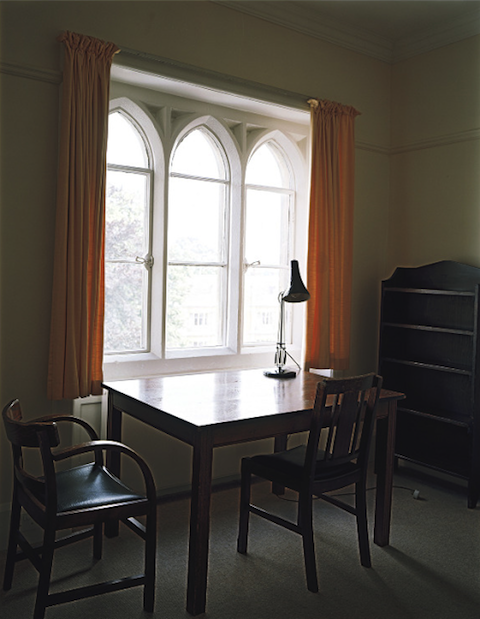
At the top of the post, we have an austere space for a severely austere thinker, Ludwig Wittgenstein. His desk in Cambridge faces a vaulted triptych of sunlit windows, but the bookshelf has clearly been emptied since his stay, unless Herr Wittgenstein preferred to work free of the distraction of other people’s published work. Above, another angle reveals comfortable seating near the fireplace, since blocked up with what appears to be an electric heater, an appliance the ultra-minimalist Wittgenstein may have found superfluous.
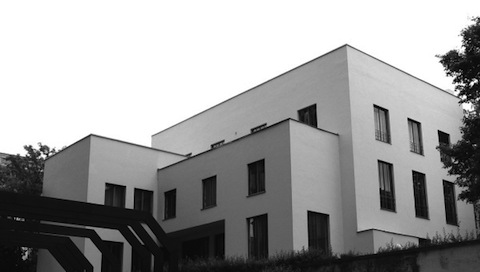
In addition to his philosophy, the German scion of a wealthy and eccentric family had an interest in photography and architecture, and he built his sister Margaret a house (above) that became known for “for its clarity, precision, and austerity—and served as a foil for his written work.” Wittgenstein’s eldest sister Hermione pronounced the house unlivable, as it “seemed indeed to be much more a dwelling for the gods than for a small mortal like me.”
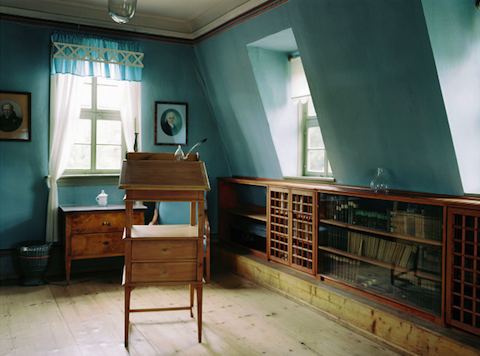
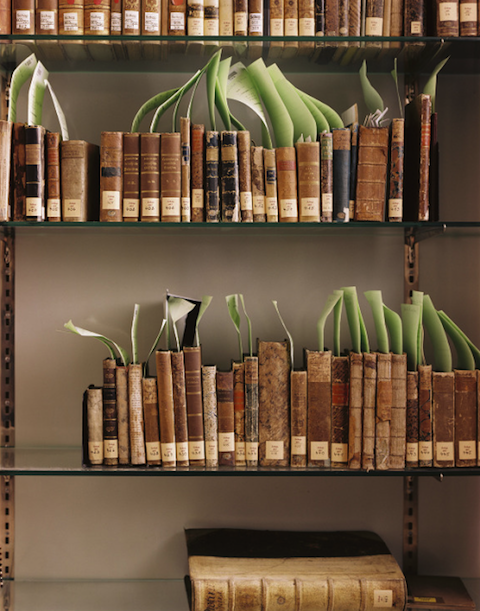
Another polymath, credited along with Goethe for a phase of German thought called Weimar Classicism, poet and philosopher Friedrich Schiller’s studio in his Weimar house above presents us with a light, airy space, a standing desk, and some surprisingly well-tended furnishings. Whether they are original or not I do not know, but the space befits the man who wrote Letters Upon the Aesthetic Education of Man, in which (Fordham University informs us) he “gives the philosophic basis for his doctrine of art, and indicates clearly and persuasively his view of the place of beauty in human life.” The entire house is a study in beauty. A much gloomier character, whose view of humankind’s capacity for rational development was far less optimistic than Schiller’s, Arthur Schopenhauer lived a solitary existence, surrounded by books—a life much more like the caricature of philosophy. Below, see Schopenhauer’s book collection lined up neatly and catalogued.
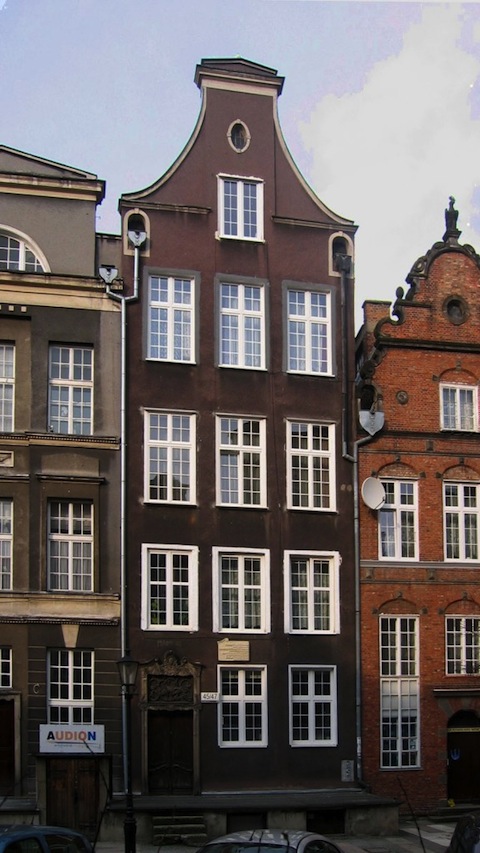
The façade of Schopenhauer’s birth house in Gdansk, below, doesn’t stand out much from its neighbors, none of whom could have guessed that the strange child inside would prepare the way for Nietzsche and other scourges of the good Christian bourgeoisie. No doubt little Arthur received his portion of ridicule as he shuffled in and out, an odd boy with an odd haircut. And if Schopenhauer didn’t actually write the words attributed to him about the “three stages of truth”—ridicule, violent opposition, and acceptance—he may have fully agreed with the sentiment.
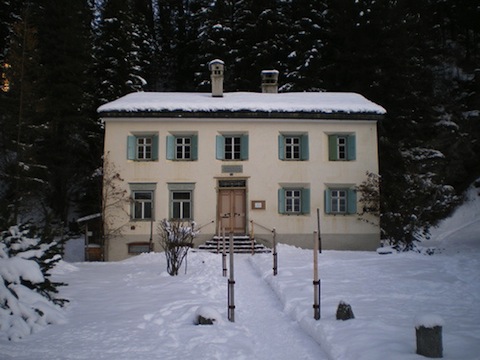
Finally, speaking of Nietzsche, we have below the Nietzsche-Haus in Sils-Maria, Switzerland, where the lover of mountainous climes and hater of the vulgar rabble’s noise holed away to work in the summers of 1881, 1883, and 1888. The house now contains an open library, one of the world’s largest collections of books on Nietzsche. Trip Advisor gives the site four-and-a-half stars, a crowd-sourced score, of course, of which Nietzsche, I’m sure, would be proud.
We're hoping to rely on loyal readers, rather than erratic ads. Please click the Donate button and support Open Culture. You can use Paypal, Venmo, Patreon, even Crypto! We thank you!
Open Culture scours the web for the best educational media. We find the free courses and audio books you need, the language lessons & educational videos you want, and plenty of enlightenment in between.