A quick fyi: IndieWire has made available on its YouTube channel “Heaven Is a Traffic Jam on The 405,” a 40-minute documentary directed by Frank Stiefel. A portrait of a brilliant 56 year old artist, the film won the Oscar for Best Documentary (Short Subject) at the recent Academy Awards. Here’s the gist of what it’s about:
Mindy Alper is a tortured and brilliant 56 year old artist who is represented by one of Los Angeles’ top galleries. Acute anxiety, mental disorder and devastating depression have caused her to be committed to mental institutions undergo electro shock therapy and survive a 10 year period without the ability to speak. Her hyper self awareness has allowed her to produce a lifelong body of work that expresses her emotional state with powerful psychological precision. Through interviews, reenactments, the building of an eight and a half foot papier-mache’ bust of her beloved psychiatrist, and examining drawings made from the time she was a child, we learn how she has emerged from darkness and isolation to a life that includes love, trust and support.
If you would like to sign up for Open Culture’s free email newsletter, please find it here. It’s a great way to see our new posts, all bundled in one email, each day.
If you would like to support the mission of Open Culture, consider making a donation to our site. It’s hard to rely 100% on ads, and your contributions will help us continue providing the best free cultural and educational materials to learners everywhere. You can contribute through PayPal, Patreon, and Venmo (@openculture). Thanks!
Howard Phillips Lovecraft, as his ever-growing fan base knows, seldom spared his characters — or at least their sanity — from the vast, unspeakable horrors lurking beneath his imagined reality. Not that he showed much more mercy as a critic either, as his assessment of “The Waste Land” (1922) reveals. Though now near-universally respected, T.S. Eliot’s best-known poem failed to impress Lovecraft, who, in his journal The Conservative, wrote in 1923 that
We here behold a practically meaningless collection of phrases, learned allusions, quotations, slang, and scraps in general; offered to the public (whether or not as a hoax) as something justified by our modern mind with its recent comprehension of its own chaotic triviality and disorganisation. And we behold that public, or a considerable part of it, receiving this hilarious melange as something vital and typical; as “a poem of profound significance”, to quote its sponsors.
Eliot’s work, Lovecraft argued, simply couldn’t hold up in the modern world, where “man has suddenly discovered that all his high sentiments, values, and aspirations are mere illusions caused by physiological processes within himself, and of no significance whatsoever in an infinite and purposeless cosmos.” Science, in his view, has made nonsense of tradition and “a rag-bag of unrelated odds and ends” of the soul. A poet like Eliot, it seems, “does not know what to do about it; but compromises on a literature of analysis, chaos, and ironic contrast.”
Looking on even this hatchet job, Lovecraft must have felt he’d failed to slay the beast, and so he composed a parody of “The Waste Land” entitled “Waste Paper” in late 1922 or early 1923. This “Poem of Profound Insignificance,” which Lovecraft scholar S.T. Joshi calls the writer’s “best satirical poem,” begins thus:
Out of the reaches of illimitable light
The blazing planet grew, and forc’d to life
Unending cycles of progressive strife
And strange mutations of undying light
And boresome books, than hell’s own self more trite
And thoughts repeated and become a blight,
And cheap rum-hounds with moonshine hootch made tight,
And quite contrite to see the flight of fright so bright
You can read the whole thing, including its probably apocryphal half-epigraph from the Greek poet Glycon, at the H.P. Lovecraft Archive. “In many parts of this quite lengthy poem,” Joshi writes, “he has quite faithfully parodied the insularity of modern poetry — its ability to be understood only by a small coterie of readers who are aware of intimate facts about the poet.”
Lovecraft also tried his hand at non-parodic poetry, though history remembers him much less for that than for striking a more primal chord with his sui generis “weird fiction,” whose parameters he was determining at the same time he was savaging his contemporary Eliot. And though scientific progress has marched much farther on since the 1920s, especially as regards the understanding of the human mind and whatever now passes for a soul, both men’s bodies of work have only gained in resonance.
Based in Seoul, Colin Marshall writes and broadcasts on cities and culture. His projects include the book The Stateless City: a Walk through 21st-Century Los Angeles and the video series The City in Cinema. Follow him on Twitter at @colinmarshall or on Facebook.

When it comes to the influence of the arts on everyday life, it can seem like our reality derives far more from Jeff Koons’ “augmented banality” than from the Fluxus movement’s playful experiments with chance operations, conceptual rigor, and improvisatory performance. But perhaps in a Jeff Koons world, these are precisely the qualities we need. Mainly based in New York, and “taking shape around 1959,” notes the University of Iowa’s Fluxus: A Field Guide, “the international cohort of artists known as Fluxus experimented with—or better yet between—poetry, theater, music, and the visual arts.” Big names like John Cage and Yoko Ono might give the uninitiated a sense of what the 60s art movement was all about. An “interdisciplinary aesthetic,” writes Ubuweb, that “brings together influences as diverse as Zen, science, and daily life and puts them to poetic use.”
Of course, there’s more to it than that… but Fluxus artists keep us wondering what that might be, suggesting that ordinary experience and the stuff of everyday life provide all the material we need. Japanese artist Mieko Shiomi describes Fluxus as a “pragmatic consciousness” that makes us “see things differently in everyday life after performing or seeing Fluxus works.”
The definitions of Fluxus, you might notice, can begin to sound a bit circular, maybe because they are entirely beside the point. George Maciunas, who named and co-founded the movement, called Fluxus “a way of doing things.” He called it a number of other things as well.
Maciunas’ 1963 “Fluxus Manifesto” makes all the right manifesto moves, paraphrasing Tristan Tzara’s “Dada Manifesto” in its promise to “purge the world of bourgeois sickness, ‘intellectual,’ professional & commercialized culture,” and so on. He begins with a dictionary definition of Fluxus, involving the symptoms of dysentery, and “the matter just discharged.” But the art of Fluxus, aiming at a “non art reality,” seems mild-mannered by contrast with this ironic bluster.
Though it could also be dangerous at times, Fluxus was always a form of play, often seemingly contentless, as in Nam June Paik’s “Zen for Film,” a silent, eight-minute film almost entirely composed of a fuzzy white screen or, in the most notorious example, John Cage’s “musical” composition, 4.33.
Fluxus has become so closely associated with the musical experiments and performance art of Cage and Ono that the centrality of poetry and the visual arts to the movement can go unremarked. Maciunas himself was a highly skilled graphic artist and an aspiring bourgeois proprietor: he first sought to turn Fluxus into a commercial corporation and designed a number of products such as chess sets, posters, and a wooden box filled with assemblages of small art objects created by his fellow Fluxus artists. He later admitted, “no one was buying it.” Of course, plenty of people did, just not in a way that returned on his sizable cash investment. See an “unboxing” of Maciunas’ Flux Box 2, above and try not to think of Wes Anderson.
At Ubuweb, you’ll find a Fluxfilm Anthology, dating from 1962–1970 and containing short films by Paik, Ono, Maciunas, George Brecht, and many more (including a 1966 short from John Cale). And at Ubuweb: Sound, you’ll find eight cassettes worth of Fluxus and Fluxus-inspired music, from 1962 to 1992, like the Wolf Vostell “music sculpture,” Le Cri / The Cry, from 1990, above. The Fluxus approach may seem puckishly quaint, even precious, next to the slick hyperreality of Snapchat, but you will experience the everyday world around you quite differently after immersing yourself in the conceptual process-world of Fluxus.
Stephen Hawking died last night at age of 76. I can think of no better, brief social media tribute than that from the @thetweetofgod: “It’s only been a few hours and Stephen Hawking already mathematically proved, to My face, that I don’t exist.” Hawking was an atheist, but he didn’t claim to have eliminated the idea with pure mathematics. But if he had, it would have been brilliantly elegant, even—as he used the phrase in his popular 1988 cosmology A Brief History of Time—to a theoretical “mind of God.”
Hawking himself used the word “elegant,” with modesty, to describe his discovery that “general relativity can be combined with quantum theory,” that is, “if one replaces ordinary time with so-called imaginary time.” In the bestselling A Brief History of Time, he described how one might possibly reconcile the two. His search for this “Grand Unified Theory of Everything,” writes his editor Peter Guzzardi, represented “the quest for the holy grail of science—one theory that could unite two separate fields that worked individually but wholly independently of each other.”
The physicist had to help Guzzardi translate rarified concepts into readable prose for bookbuyers at “drugstores, supermarkets, and airport shops.” But this is not to say A Brief History of Time is an easy read. (In the midst of that process, Hawking also had to learn how to translate his own thoughts again, as a tracheotomy ended his speech, and he transitioned to the computer devices we came to know as his only voice.) Most who read Hawking’s book, or just skimmed it, might remember it for its take on the big bang. It’s an aspect of his theory that piqued the usual creationist suspects, and thus generated innumerable headlines.
But it was the other term in Hawking’s subtitle, “from the Big Bang to Black Holes,” that really occupied the central place in his extensive body of less accessible scientific work. He wrote his thesis on the expanding universe, but gave his final lectures on black holes. The discoveries in Hawking’s cosmology came from his intensive focus on black holes, beginning in 1970 with his innovation of the second law of black hole dynamics and continuing through groundbreaking work in the mid-70s that his former dissertation advisor, eminent physicist Dennis Sciama, pronounced “a new revolution in our understanding.”
Hawking continued to revolutionize theoretical physics through the study of black holes into the last years of his life. In January 2016, he published a paper on arXiv.org called “Soft Hair on Black Holes,” proposing “a possible solution to his black hole information paradox,” as Fiona MacDonald writes at Science Alert. Hawking’s final contributions show that black holes have what he calls “soft hair” around them—or waves of zero-energy particles. Contrary to his previous conclusion that nothing can escape from a black hole, Hawking believed that this quantum “hair” could store information previously thought lost forever.
Hawking followed up these intriguing, but exceptionally dense, findings with a much more approachable text, his talks for the BBC’s Reith Lectures, which artist Andrew Park illustrated with the chalkboard drawings you see above. The first talk, “Do Black Holes Have No Hair?” walks us briskly through the formation of black holes and the big names in black hole science before moving on to the heavy quantum theory. The second talk continues to sketch its way through the theory, using striking metaphors and witticisms to get the point across.
Hawking’s explanations of phenomena are as profound, verging on mystical, as they are thorough. He doesn’t forget the human dimension or the emotional resonance of science, occasionally suggesting metaphysical—or meta-psychological—implications. Thanks in part to his work, we first thought of black holes as nihilistic voids from which nothing could escape. He left us, however with a radical new view, which he sums up cheerfully as “if you feel you are in a black hole, don’t give up, There’s a way out.” Or, even more Zen-like, as he proclaimed in a 2014 paper, “there are no black holes.”
In our tribute to Stephen Hawking earlier today, we discussed the intellectual legacy of the departed physicist, paying particular attention to his groundbreaking work on black holes. The video above is a bit lighter. It just lets you watch Hawking in a comedic exchange with his compatriot John Oliver. If I’m not mistaken, around the 3:46 mark, you can even see him crack a smile. Enjoy.
I am not a Deadhead nor an expert on the Grateful Dead, by any means. I am an occasional listener and, one might say, occasional enthusiast of Deadhead culture, in that I find it equal parts mystifying and fascinating. I mention all these qualifiers fully aware that thousands upon thousands of dedicated fans have spent lifetimes listening to, following, and taping the Dead. It is possible that those people have absolutely no need of what follows below, a chronological playlist of 346 hours of live Grateful Dead, tracking the band’s career on stage after stage, from their very beginnings in 1966 with the talented and tragic Pigpen to their tragic end with the death of Jerry Garcia in 1995.
Completists may scoff and quibble—I can’t tell what’s missing here. I speak for those who kind of get it and kind of don’t—somewhere between people “who believe that the Dead only ever stumbled,” as Nick Paumgarten writes at The New Yorker, and those who “believe that they only ever soared.” Sometimes, maybe a lot of times, the Grateful Dead just sounded awful, and I dare anyone to prove otherwise. But the same could be said of a lot of great bands, who have all had far less longevity and proficiency.
And so much depends on the quality of the recording, to be fair, not a given in most Dead tapes. Then there’s the “copious drug use, an aversion to rehearsal, and a genuine anarchic streak.” But when they were in phase and in time, and sometimes even when they weren’t, they could be “glorious”:
The chance at musical transcendence amid a tendency toward something less—was what kept us coming back. This argument is a little like the East Coaster’s on behalf of his weather: the nice days are nicer when there are crappy ones in between.
Writing, he says, as an “apologist,” Paumgarten claims that the Dead’s ups and downs were largely the result of their most talented and “charismatic figure” Jerry Garcia’s erratic performances. “When he had a bad night, you knew it. The others, when they were off, could sort of hide.” When he was on, his “iridescent guitar leads” were transporting (check out his effortless country licks at the top in “Big River”). But his strength waned, and the band lost much of its energy in later years.
Another Dead fan, Marc Weingarten, writes at Slate in praise of the “famously varied… architecture of band leader Jerry Garcia’s frequently transcendent guitar work,” and blames not Garcia’s decline for the band’s decline in general but, you probably guessed it, Deadhead fans, who harbor an “a priori assumption… that Dead shows were always magic and that the magic could be routinely summoned on a nightly basis.”
Perhaps unfair. Sometimes fans could make a bad show magical… ish. And it’s impossible to imagine the Grateful Dead without their rabid fanbase, who crucially allowed the band to grow, expand, and experiment, always assured of a packed house. But a large part of the Dead’s appeal, to casual fans, at least, is that they were only human. Dudes you could totally get high with (on the power of music!). That’s right, I’ll say it, take a long strange trip. Come back in 346 hours and tell us what you found.
We couldn’t possibly ignore, here at Open Culture, the glory of movie posters: from the film noir era, from Martin Scorsese’s predictably sizable collection, and even the deeply askew interpretations seen outside the theaters of Ghana. But somehow, the visual art-inclined cinephile’s attention returns again and again to one region of the world: Eastern Europe, especially in the Cold War era. Poland’s movie posters have long since accrued a fandom around the world, but we shouldn’t neglect the equal promotional wonders of its neighboring Czechoslovakia.
Or rather, as the even mildly geographically astute will note, the neighboring Czech Republic and Slovakia. But in this case, we really do mean Czechoslovakia, the movie posters featured here having hung in its movie houses between 1930 and 1989.
You can also browse Terry’s Czechoslovakian collection by year, by artist, by genre, by actor, and by the film’s country of origin. However you explore them, these posters offer a reminder of the way that cinema culture used to vary most starkly from region to region, even when dealing with the exact same movies. The “globalization” process in effect over the past thirty years has done much to make serious cinephilia possible everywhere (not least by defeating various once-formidable forms of censorship and suppression) but it may have brought an end to the multiplicity and variety of images on display here, all especially vivid pieces of a faded culture — and of a dismantled country. Enter the digital archive here.
Based in Seoul, Colin Marshall writes and broadcasts on cities and culture. His projects include the book The Stateless City: a Walk through 21st-Century Los Angeles and the video series The City in Cinema. Follow him on Twitter at @colinmarshall or on Facebook.
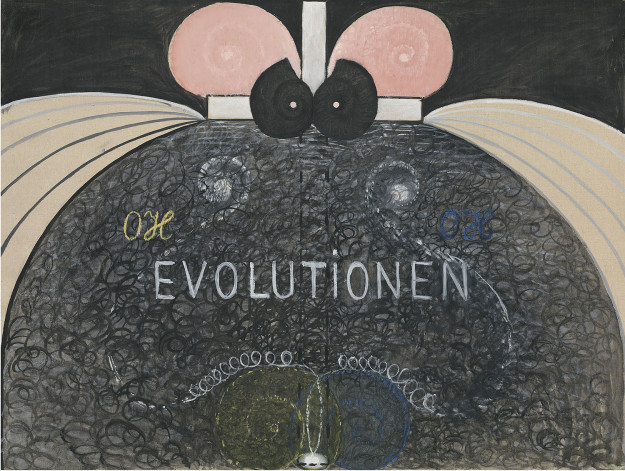
It is maybe easy for those unfamiliar with the study of religion to reduce the academic discipline to a ponderous exercise—self-serious, obsessed with tradition, rendered suspect by histories of violence and highly implausible, contradictory claims. But this is a mistake. For one thing, as scholar of religion Wilfred Cantwell Smith once wrote, “the study of religion is the study of persons”—quite broadly, he suggests, to study religion is to study humanity: anthropology, sociology, history, art, literature, philosophy, mythology, psychology, etc. Studying religion can also be—contrary to certain stereotypes—a great deal of fun.
But of course, not many an advanced scholar would find him or herself immersed in all of these texts, specializing, as they must, in one particular area. Those of us who are merely curious, however, or insatiably curious, can do as we please in the theology library, thumbing through whatever strikes our fancy.
Like many texts written by colonial observers and Orientalist scholars, some of these books may tell us as much or more about their authors than about the purported subjects—we encounter in religious scholarship no more nor less bias than in any other field, though piety is given license to take more overt forms. Unfortunately, as Cantwell Smith wrote, “the traditional form of Western scholarship in the study of other men’s religion was that of an impersonal presentation of an ‘it.’” But these outdated views are themselves instructive—as part of a process towards a wider humanist understanding, “the gradual recognition of what was always true in principle, but was not always grasped.”
For students and professional scholars, the Princeton digital library is obviously, well… a godsend. For the merely—or insatiably—curious, it is an open invitation to explore strange new worlds, so to speak, and to realize, again and again, that they’re all the same world, seen in innumerably different ways. In this archive, you’ll find primary texts and commentaries on Islam, Buddhism, Hinduism, Judaism, Zoroastrianism, Greek and Egyptian religions, indigenous faiths of all kinds, and, of course, given the source, plenty of Christianity (like the 1606, pre-King James Bible at the top). “The next step,” writes Cantwell Smith, in moving the study of religion forward, “is a dialogue.… If there is listening and mutuality… the culmination of this progress is when ‘we all’ are talking with each other about ‘us.’”
Design Kit: Prototypingwill help you learn how to build prototypes in “a low-cost and risk-averse way to get your ideas into the hands of the people you’re trying to change.” Running from March 12 through April 17, the course will teach you best practices for prototyping products, services, interactions, and environments.
If you would like to sign up for Open Culture’s free email newsletter, please find it here. It’s a great way to see our new posts, all bundled in one email, each day.
If you would like to support the mission of Open Culture, consider making a donation to our site. It’s hard to rely 100% on ads, and your contributions will help us continue providing the best free cultural and educational materials to learners everywhere. You can contribute through PayPal, Patreon, and Venmo (@openculture). Thanks!
Most anyone who regularly spends time in nature knows the name The North Face. For fifty years now, the company has furnished outdoorsmen and outdoorswomen with not just apparel but much else of the equally rugged gear they might conceivably need to go hiking, camping, or permanently off the grid. Some of their product designs have remained basically the same through the decades, while others have changed dramatically. Even early in the company’s life it knew that a better tent, for instance, would get the outdoorsy world beating a path to its door: hence its engagement of no less a design thinker than R. Buckminster Fuller.
Bruce Hamilton, who worked for the company from 1970 to 1989, recently wrote a few posts (part one, part two, part three) telling the story of the North Face/Buckminster Fuller connection. It began in his first year on the job, when the company’s owner Hap Klopp asked a friend whose family had connections to Fuller to send the already world-famous architect-systems theorist-inventor a letter. Describing The North Face as “a small company that produces what I believe to be the finest equipment presently available,” the friend asked Fuller for ideas on how to improve the “archaic designs” then used to construct tents. “I have thought a great deal in the past about your subject of the compact, lightweight, back-packable environment controlling device,” Fuller replied. “I am accepting your challenge.”
Hamilton, a fan of Fuller’s work, had already been thinking about how to use the principles of the light but sturdy triangle-and-dome-based “tensegrity structures” Fuller so often wrote and (as in the clip above) talked about. One day Hamilton showed Klopp a model of a Fullerian geodesic sphere, and “it was at that moment that he connected me with Bucky and with his drive to bring a new tent to life.” The result, the Oval Intention tent, first appeared in The North Face’s Fall 1975 catalog, accompanied by a photo of Hamilton relaxing inside one and a typically sweeping quote from Fuller himself: “It is no aesthetic accident that nature encased our brains and regenerative organs in compoundly curvilinear structures. There are no cubical heads, eggs, nuts, or planets.”
The North Face kept incorporating Fuller’s ideas into their tents, and they hammered out the terms of direct collaboration on a new model in 1983, a month before Fuller died. Judgments about other tensegrity structures — geodesic dome homes, for example — have varied over the years, but the Oval Intention lives on in the form of the new Geodome 4. “Thanks to the most spatially efficient shape in architecture, it can withstand winds of up to 60 mph as the force is spread evenly across the structure whilst even providing enough height for a six-foot person to stand comfortably inside,” writes Archdaily’s Ella Thorns. “The extremely efficient design has allowed the tent to weigh not much more than 11kg and comprise of 5 main poles and the equator for fast and easy assembly and storage.”
If this already has you excited about your improved prospects for more geometrically and structurally efficient camping on the surface of our Spaceship Earth, do be warned: at the moment The North Face has only made the Geodome 4 available in Japan (see its Japanese page here), and with a price tag equivalent to $1,635 at that. Even so, one hopes that Bucky — as Hamilton and many of the others who knew him called him — looks on with pride from whichever spaceship he now finds himself aboard.
Based in Seoul, Colin Marshall writes and broadcasts on cities and culture. His projects include the book The Stateless City: a Walk through 21st-Century Los Angeles and the video series The City in Cinema. Follow him on Twitter at @colinmarshall or on Facebook.
I spent a good part of a decade-long sojourn through New York City in Harlem—at the neighborhood’s threshold at the top of Central Park, just a short walk from its historic main attractions: jazz haunts, famed restaurants, theaters, architectural splendor and wide, vibrant avenues. After a while, I thought I knew Harlem well enough. Then I moved to Sugar Hill, at the very edge of the island, across the water from Yankee Stadium. Usually overlooked, leafy street after street of stately brownstones and pre-World War I apartment buildings, sometimes worse for wear but always regal. A few avenue blocks from my building: St. Nick’s Pub, which I became convinced, for good reason, was the city’s true remaining heart of jazz.
Shuttered, to the neighborhood’s dismay, in 2012, the humble bar—where, on any given night, Afro-jazz, hard bop, free jazz, and classic swing ensembles of the very finest musicians performed from dusk till dawn, passing the hat to an always appreciative crowd—was, as a New York Times obituary for the deceased nightspot wrote, “simply magical… one of the few remaining jazz clubs in Harlem.” But then, I didn’t visit Marjorie Eliot’s apartment. I remember seeing her play at St. Nick’s a time or two, but never made it over to 555 Edgecombe Avenue, Apartment 3‑F. This was to my great loss.
It’s not too late. Since 1994, Ms. Eliot, a jazz pianist, has carried on a grand tradition of Harlem’s from its golden ages, with weekly house concerts in her parlor, “Harlem’s secret jazz queen of Sugar Hill,” writes Angelika Pokovba, “single-handedly upholding the musical legacy of a neighborhood that nurtured legends like Duke Ellington and Billie Holiday.”
Except she isn’t single-handed, as you can see in the videos here, but always joined by a talented crew of players whom she handpicks and pays out of pocket. The hat is passed, but no one’s obligated to pay, there are no tickets, door charges, or drink minimums; all you’ve got to do is show up at 3:30 on a Sunday afternoon.
Marjorie greets each guest at the door. A full house is a crowd of up to 50 people. The atmosphere is reserved and family friendly, a far cry from the riotous rent parties of legend. But this is the place to be, say both the regulars and the musicians, like saxophonist Cedric Show Croon, who told NPR, “When you play here you have to be honest. You can only play in an honest way, you know.” You can get a small taste of the intimacy here, but to truly experience Parlor Jazz at Marjorie Eliot’s—as a Harlem culture guide notes—you’ve got to travel uptown yourself.
“Rain or shine, with no vacations,” the free concerts have gone on for 25 years now, beginning, as you’ll see in the video above, with a tragedy, the death of Eliot’s son Philip in 1992. The following year, on the anniversary of his death, she arranged an outdoor concert on the lawn of Morris-Jumel Mansion in Washington Heights. Then, the next year, the memorial moved to her apartment and became a weekly gig that carried her through more terrible loss—the death of another son and the disappearance of a third.
Eliot refused to give up on the music that kept her going, creating community in an easygoing, open-hearted way. “This idea of sharing and celebrating the music came real early,” she told NPR. “So I don’t do anything different now than when Aunt Margaret is coming over and come show what you did in your lessons.” As you’ll see in the videos here—and experience in full, no doubt, if you can make the trip: Parlor Jazz at Marjorie Eliot’s is anything but an ordinary Sunday afternoon with Aunt Margaret.
We're hoping to rely on loyal readers, rather than erratic ads. Please click the Donate button and support Open Culture. You can use Paypal, Venmo, Patreon, even Crypto! We thank you!
Open Culture scours the web for the best educational media. We find the free courses and audio books you need, the language lessons & educational videos you want, and plenty of enlightenment in between.