Friedrich Nietzsche & Existentialism Explained to Five-Year-Olds (in Comical Video by Reddit)

Who’s ready for a les­son on “Eggsalent­lal­ism?” How about “Exa­ten­talum?” Sound like fun? Great! Pull up a tiny chair, grab a toy, and get ready to have Niet­zsche explained like you’re five with “Explain Like I’m Five: Exis­ten­tial­ism and Friederich Niet­zsche.” A web series inspired by a sub­red­dit, “Explain Like I’m Five” has explained oth­er com­pli­cat­ed sub­jects to five year-olds, includ­ing the cri­sis in Syr­ia and the volatil­i­ty of the stock mar­ket. In this episode, our two pre­sen­ters prime their stu­dents for a dis­cus­sion on slave moral­i­ty with the ques­tion “who here thinks they’re a good boy or a good girl?”

All the kids eager­ly raise their hands, and after some Socrat­ic dia­logue are told that Exis­ten­tial­ism means “there is no uni­ver­sal moral­i­ty that gov­erns all of us.” I’ll leave it to the philoso­phers out there to assess this def­i­n­i­tion. The kids don’t respond well. They hate Niet­zsche. One vocif­er­ous young crit­ic pro­pos­es toss­ing him on the street and step­ping on him. Like good 19th cen­tu­ry Ger­man burghers, they can’t imag­ine a world with­out rules. I imag­ine these kids’ par­ents would also like to toss Niet­zsche in the street when their angels come home para­phras­ing Beyond Good and Evil.

Some of the pop­u­lar respons­es to Niet­zsche among adults can also be over­ly emo­tion­al. First there is fear: of the sup­posed nihilist who pro­claimed the death of God and who—thanks to the machi­na­tions of his unscrupu­lous and anti-Semit­ic sis­ter—became erro­neous­ly asso­ci­at­ed with Nazi ide­ol­o­gy after his death. Then there’s the enthu­si­as­tic embrace of Nietzsche’s work by unso­phis­ti­cat­ed read­ers who see him only as an anti­estab­lish­ment roman­tic rebel, hell­bent on under­min­ing all author­i­ty. Some of these impres­sions are valid as far as they go, but they tend to stop with the style and leave out the sub­stance.

What peo­ple tend to miss are Nietzsche’s sus­tained defense of a prag­mat­ic nat­u­ral­ism and his trag­ic embrace of indi­vid­ual human free­dom, which is not won with­out great per­son­al cost. The unusu­al thing about Exis­ten­tial­ism is that it’s a phi­los­o­phy so broad, or so gen­er­ous, it can include the anti-Chris­t­ian Niet­zsche, rad­i­cal­ly Chris­t­ian Kierkegaard, and the Marx­ist Sartre. A more seri­ous treat­ment of the subject—1999 three-part BBC doc­u­men­tary series “Human All Too Human”—also includes Mar­tin Hei­deg­ger, who actu­al­ly did truck with Nazi ide­ol­o­gy. The series, which pro­files Niet­zsche, Hei­deg­ger, and Sartre, begins with the Niet­zsche doc below (this one with Por­tuguese sub­ti­tles).

If you’re new to Niet­zsche, and not actu­al­ly a five-year-old, it’s worth an hour of your time. Then maybe head on over to our col­lec­tion of ven­er­a­ble Prince­ton pro­fes­sor Wal­ter Kaufmann’s lec­tures on Niet­zsche, Kierkegaard, and Sartre. For addi­tion­al seri­ous resources, Dr. Gre­go­ry B. Sadler has an exten­sive YouTube lec­ture series on Niet­zsche, Exis­ten­tial­ism, and oth­er philo­soph­i­cal top­ics. And if all you want is anoth­er good chuck­le at Nietzsche’s expense, check out Ricky Ger­vais’ take on the woe­ful­ly mis­un­der­stood philoso­pher.

Relat­ed Con­tent:

Exis­ten­tial­ism with Hubert Drey­fus: Four Free Phi­los­o­phy Cours­es

The Exis­ten­tial Star Wars: Sartre Meets Darth Vad­er

The Dead Authors Pod­cast: H.G. Wells Com­i­cal­ly Revives Lit­er­ary Greats with His Time Machine

Find Many Clas­sic Works by Niet­zsche in our Free eBooks Col­lec­tion

Josh Jones is a writer and musi­cian based in Wash­ing­ton, DC. Fol­low him @jdmagness

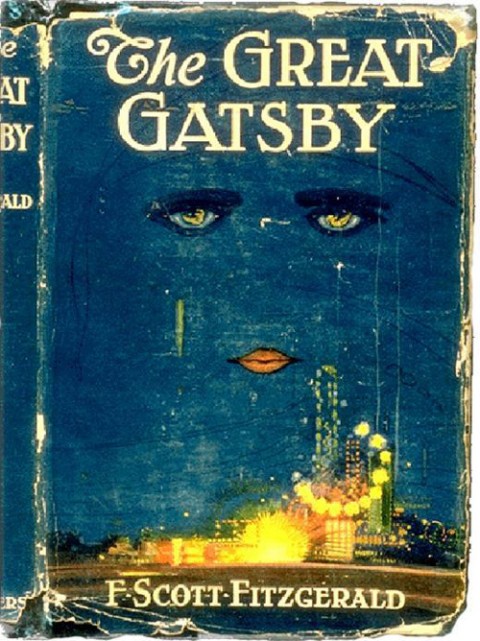
83 Years of Great Gatsby Book Cover Designs: A Photo Gallery

great gatsby cover designsEvery­body is famil­iar with Fran­cis Cugat’s orig­i­nal cov­er art for The Great Gats­by. It famous­ly gives expres­sion to lines from Fitzger­ald’s clas­sic work — lines that talk about Daisy Buchanan as the “girl whose dis­em­bod­ied face float­ed along the dark cor­nices and blind­ing signs.” Accord­ing to Charles Scrib­n­er III, the orig­i­nal pub­lish­er, Cugat cre­at­ed the design while Fitzger­ald was still writ­ing the nov­el, and when Fitzger­ald saw the dis­em­bod­ied face, he could­n’t resist writ­ing the imagery into the book. Scrib­n­er quotes the author as say­ing, “For Christ’s sake, don’t give any­one that jack­et you’re sav­ing for me. I’ve writ­ten it into the book.”

Today, Cugat’s orig­i­nal book jack­et fetch­es more at auc­tion than a first edi­tion of the nov­el itself. And even though many oth­er artists have tak­en a crack at design­ing cov­ers for The Great Gats­by, none holds a can­dle to Cugat’s 1925 design. Just take a look at this pho­to gallery at The New York Times. (Click on each cov­er to see them in a larg­er for­mat.)

The Gats­by book cov­ers all cur­rent­ly reside at the Uni­ver­si­ty of South Car­oli­na, which hous­es oth­er items that Fitzger­ald held near and dear to him â€” like his copy of Joyce’s Ulysses, his leather brief­caseflask, and more. You can also find orig­i­nal dust jack­ets for Fitzger­ald’s oth­er nov­els on the SC web site, includ­ing Ten­der is the Night, This Side of Par­adise, and The Last Tycoon.

Relat­ed Con­tent:

The Only Known Footage of the 1926 Film Adap­ta­tion of The Great Gats­by (Which F. Scott Fitzger­ald Hat­ed)

Sev­en Tips From F. Scott Fitzger­ald on How to Write Fic­tion

Loli­ta Book Cov­ers: 100+ Designs From 37 Coun­tries (Plus Nabokov’s Favorite Design)

Jack Kerouac’s Hand-Drawn Cov­er for On the Road

Find The Great Gats­by in our Free eBooks col­lec­tion

Find the Yale Course “Hem­ing­way, Fitzger­ald, Faulkn­er” in our Col­lec­tion of 700 Free Online Cours­es

Learn How Richard Feynman Cracked the Safes with Atomic Secrets at Los Alamos

The sto­ry has become part of physics lore: A young Richard Feyn­man, future Nobel win­ner, was bored with life in the remote New Mex­i­co desert while work­ing on the atom­ic bomb dur­ing World War II, so he amused him­self by learn­ing to pick the com­bi­na­tion locks in the sup­pos­ed­ly secure fil­ing cab­i­nets con­tain­ing Amer­i­ca’s nuclear secrets. As Feyn­man would lat­er write in his essay, “Safe­crack­er Meets Safe­crack­er”:

To demon­strate that the locks meant noth­ing, when­ev­er I want­ed some­body’s report and they weren’t around, I’d just go in their office, open the fil­ing cab­i­net, and take it out. When I was fin­ished I would give it back to the guy: “Thanks for your report.”

“Where’d you get it?”

“Out of your fil­ing cab­i­net.”

“But I locked it!”

“I know you locked it. The locks are no good.”

So the offi­cials at Los Alam­os installed cab­i­nets with bet­ter locks. But Feyn­man stud­ied the new ones sys­tem­at­i­cal­ly, and even­tu­al­ly, giv­en a lit­tle time, he could open any lock at will. As a joke, he left a note in one cab­i­net that said, “I bor­rowed doc­u­ment no. LA4312–Feynman the safe­crack­er.”

I opened the safes which con­tained all the secrets to the atom­ic bomb: the sched­ules for the pro­duc­tion of the plu­to­ni­um, the purifi­ca­tion pro­ce­dures, how much mate­r­i­al is need­ed, how the bomb works, how the neu­trons are gen­er­at­ed, what the design is, the dimensions–the entire infor­ma­tion that was known at Los Alam­os: the whole schmeer!

To learn a bit about how Feyn­man did it, watch this fas­ci­nat­ing lit­tle video by jour­nal­ist Brady Haran of the YouTube-fund­ed Num­ber­phile. Haran inter­views Roger Bow­ley, emer­i­tus pro­fes­sor of physics at the Uni­ver­si­ty of Not­ting­ham, who explains sev­er­al of the inge­nious meth­ods used by Feyn­man to solve the prob­lem of crack­ing a lock with (sup­pos­ed­ly) a mil­lion pos­si­ble com­bi­na­tions. And to learn more about Feyn­man’s adven­ture as a safe­crack­er, be sure to read “Safe­crack­er Meets Safe­crack­er,” which is includ­ed in his book Sure­ly You’re Jok­ing, Mr. Feyn­man! and can be read on PDF by click­ing here.

If you would like to sign up for Open Culture’s free email newslet­ter, please find it here. It’s a great way to see our new posts, all bun­dled in one email, each day.

If you would like to sup­port the mis­sion of Open Cul­ture, con­sid­er mak­ing a dona­tion to our site. It’s hard to rely 100% on ads, and your con­tri­bu­tions will help us con­tin­ue pro­vid­ing the best free cul­tur­al and edu­ca­tion­al mate­ri­als to learn­ers every­where. You can con­tribute through Pay­Pal, Patre­on, and Ven­mo (@openculture). Thanks!

Relat­ed Con­tent:

Free: Richard Feynman’s Physics Course from Cor­nell (1964)

Richard Feynman’s Ode to a Flower: A Short Ani­ma­tion

Abandoned Alternate Titles for Two Great Films: Kubrick’s Dr. Strangelove and Hitchcock’s Vertigo

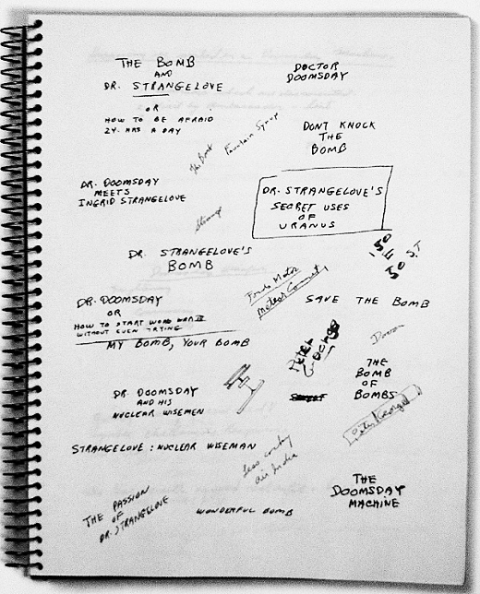
Kubrick notebook

We have here a page out of Stan­ley Kubrick­’s note­book, which Lists of Note—the sis­ter site of Let­ters of Note, always a favorite of ours here at Open Cul­ture—post­ed as a col­lec­tion of alter­na­tive titles for Dr. Strangelove. The list includes Dr. Dooms­day, The Dooms­day Machine, Dr. Doomsday and His Nuclear Women, Don’t Knock the Bomb: these ideas came not from an inter­fer­ing stu­dio, but from Kubrick­’s own mind as he worked his way toward the most suit­able name. You can see him get­ting clos­er; while this page does­n’t include the film’s final title, Dr. Strangelove: Or, How I Learned to Stop Wor­ry­ing and Love the Bomb, it does include Dr. Strangelove’s Bomb, Strangelove; Nuclear Wise­man, and the Gib­son­ian-sound­ing The Pas­sion of Dr. Strangelove. I myself will always won­der how Dr. Strangelove’s Secret Uses of Uranus would have played, but when you deal with cin­e­mat­ic crafts­men as detail-ori­ent­ed and reput­ed­ly “per­fec­tion­ist” as Kubrick, you know that their dri­ving desire to get things right extends all the way to their titles and beyond.

This holds just as true for Alfred Hitch­cock. Alone in the Dark, Behind the Mask, The Dark Tow­er, With­out a Trace, all pos­si­ble titles for the movie we now know as Ver­ti­go. When Hitch­cock­’s San Fran­cis­co psy­cho­log­i­cal thriller recent­ly topped Sight and Sound’s crit­ics poll of the great­est films of all time, it sure­ly did so for cin­e­mat­ic mer­its hav­ing noth­ing to do with its name.

But would a Ver­ti­go by any oth­er title feel quite as fresh and grip­ping today, 55 years after it first came out? This goes espe­cial­ly for the pre-thread­bare titles I rat­tled off above, which only account for four of 47 of the sug­ges­tions Para­mount Pic­tures exec­u­tive Sam Frey pitched to Hitch­cock, includ­ing Deceit, Deceit­ful, and, for good mea­sure, Decep­tion. You can read all of them below, or at Lists of Note. I quite like The Face Vari­a­tions, but Hitch­cock knew his project most inti­mate­ly, and thus knew that Ver­ti­go it had to be.

  1. Afraid to Love
  2. Alone in the Dark
  3. The Appari­tion
  4. Behind the Mask
  5. Car­lot­ta
  6. Check­mate
  7. Con­science
  8. Cry from the Rooftop
  9. The Dark Tow­er
  10. Deceit
  11. Deceit­ful
  12. Decep­tion
  13. Don’t Leave Me
  14. Dream With­out End­ing
  15. The Face Vari­a­tions
  16. Foot­steps
  17. For the Last Time
  18. The Hid­den life
  19. In the Shad­ows
  20. The Inves­ti­ga­tor
  21. A Life Is For­ev­er
  22. The Lure
  23. Mal­ice
  24. The Mask and the Face
  25. The Mask Illu­sion
  26. My Madeleine
  27. A Mat­ter of Fact
  28. Nev­er Leave Me
  29. Night Shade
  30. Noth­ing Is For­ev­er
  31. Past, Present and Future
  32. The Phan­tom
  33. The Sec­ond Chance
  34. The Shad­ow
  35. Shad­ow and Sub­stance
  36. Shad­ow on the Stairs
  37. Shock
  38. Steps on the Stairs
  39. Ter­ror
  40. To Live Again
  41. Tonight Is Ours
  42. Too Late My Love
  43. Two Kinds of Women
  44. The Unknown
  45. Want­ed
  46. With­out A Trace
  47. The Wit­ness

Relat­ed Con­tent:

Inside Dr. Strangelove: Doc­u­men­tary Reveals How a Cold War Sto­ry Became a Kubrick Clas­sic

Philoso­pher Slavoj Zizek Inter­prets Hitchcock’s Ver­ti­go in The Pervert’s Guide to Cin­e­ma (2006)

20 Free Hitch­cock Movies Online

Col­in Mar­shall hosts and pro­duces Note­book on Cities and Cul­ture and writes essays on lit­er­a­ture, film, cities, Asia, and aes­thet­ics. He’s at work on a book about Los Ange­lesA Los Ange­les Primer. Fol­low him on Twit­ter at @colinmarshall.

CERN Physicist Explains the Origins of the Universe for Beginners with a Short Animated Video

If you have kids, you’re going to get the inevitable ques­tion: Where did the uni­verse come from? And you’re like­ly going to take a long pause before try­ing to present the sci­ence of the big bang. Before you head down that path, know this: CERN physi­cist Tom Whyn­tie has cre­at­ed a new TED-ED video that explains, in three ani­mat­ed min­utes, how the uni­verse began, why it’s expand­ing, and oth­er basic phe­nom­e­na that con­cern cos­mol­o­gists and par­ti­cle physi­cists. Phew. By the time you’re done, you might be eager­ly await­ing a where-do-babies-come-from video. That’s hope­ful­ly some­where in TED-ED’s media pipeline too.

Relat­ed Con­tent:

200 Free Kids Edu­ca­tion­al Resources: Video Lessons, Apps, Books, Web­sites & More

Grow­ing Up in the Uni­verse: Richard Dawkins Presents Cap­ti­vat­ing Sci­ence Lec­tures for Kids (1991)

The Sto­ry Of Men­stru­a­tion: Walt Disney’s Sex Ed Film from 1946

by | Permalink | Make a Comment ( 4 ) |

Legendary Guitarist Andrés Segovia Plays J.S. Bach at the Alhambra, 1976

In 1976 the great clas­si­cal gui­tarist AndĂ©s Segovia returned to Grana­da, Spain, the city of his child­hood, to per­form a few pieces on film at the 14th cen­tu­ry Moor­ish palace, the Alham­bra.

In the scene above, the 84-year-old Segovia plays a pair of gavottes from his own tran­scrip­tion of Johann Sebas­t­ian Bach’s Suite for Solo Cel­lo No. 6 in D Major, BMV 1012. A gavotte is a kind of folk dance, orig­i­nal­ly from France, that was pop­u­lar dur­ing the Baroque peri­od. Bach often incor­po­rat­ed them into his suites and par­ti­tas. In this per­for­mance, Segovia tran­si­tions from the bright and live­ly Gavotte I to the more restrained Gavotte II at the 1:54 mark.

The scene is from the doc­u­men­tary AndrĂ©s Segovia: The Song of the Gui­tar, which is avail­able on a two-film DVD, AndrĂ©s Segovia: In Por­trait. For more on Segovia, includ­ing his per­for­mance of Isaac AlbĂ©niz’s “The Leg­end of Asturias” from the same film, see our 2011 post: â€śAndrĂ©s Segovia, Father of Clas­si­cal Gui­tar, at the Alham­bra.”

If you would like to sign up for Open Culture’s free email newslet­ter, please find it here. It’s a great way to see our new posts, all bun­dled in one email, each day.

If you would like to sup­port the mis­sion of Open Cul­ture, con­sid­er mak­ing a dona­tion to our site. It’s hard to rely 100% on ads, and your con­tri­bu­tions will help us con­tin­ue pro­vid­ing the best free cul­tur­al and edu­ca­tion­al mate­ri­als to learn­ers every­where. You can con­tribute through Pay­Pal, Patre­on, and Ven­mo (@openculture). Thanks!

Relat­ed Con­tent:

The Art of Mak­ing a Fla­men­co Gui­tar: 299 Hours of Blood, Sweat & Tears Expe­ri­enced in 3 Min­utes

The Genius of J.S. Bach’s “Crab Canon” Visu­al­ized on a Möbius Strip

Glenn Gould Explains the Genius of Johann Sebas­t­ian Bach (1962)

Sex Pistols Frontman Johnny Rotten Weighs In On Lady Gaga, Paul McCartney, Madonna & Katy Perry

Opin­ions may be like that oth­er thing every­one has, but nobody’s got opin­ions like John Lydon, a.k.a. John­ny Rot­ten of the Sex Pis­tols and Pub­lic Image Lim­it­ed. The punk tastemak­er nev­er holds back, and that’s why he’s so much fun in inter­views. Take the clip above, from an appear­ance on the UK’s Absolute Radio. Lydon offers his take on a few artists, some con­tem­po­rary, some aging pop stars. With no evi­dence of irony, he calls Lady Gaga “fan­tas­tic… wit­ty, clever,” and says her song­writ­ing is “bang up there.” Each to his own, I guess. Of Paul McCart­ney (who Lydon calls “McCarthy”), he says the for­mer Bea­t­le recent­ly sang “like an old don­key.” He opines that “Blondie” (does he mean Deb­bie Har­ry? Or are we back to Gaga?) “real­ly is a dob­bin,” and Madon­na is “kind of humor­less.”

It’s all off-the-cuff good fun, noth­ing for­mal, unlike the review above, where Lydon employs his con­sid­er­able crit­i­cal acu­men in a seri­ous review of a very seri­ous film: Katy Perry’s Part of Me. Although “not gen­er­al­ly a film crit­ic,” Lydon lets his gift for sar­cas­tic under­state­ment loose on a few clips from the movie. His review most­ly focus­es on Perry’s image, which seems appro­pri­ate. He’s pleased she shaves her armpits, but not with her var­i­ous dye jobs. He reach­es out to Per­ry in a very heart­felt way after see­ing her father, who is, he says, a “nut­ter.” And oh, there’s so much more, but you should watch it for your­self.

Pub­lic com­men­tary is not some­thing Lydon has only tak­en up in his old age, though he has made a sec­ond career of it late­ly. Last year, Dan­ger­ous Minds dug up a record­ing of a 20-year-old John­ny Rot­ten spin­ning his records for Cap­i­tal Radio in 1977 (below). He plays some Bowie (but he’s not a fan), Can, Cap­tain Beef­heart, John Cale, and plen­ty of dub reg­gae, intro­duc­ing each track with his char­ac­ter­is­tic wit. Appar­ent­ly, Sex Pis­tols man­ag­er Mal­colm McLaren didn’t want him to do it and hat­ed the inter­view and record selec­tions, but John­ny Rot­ten has nev­er been one to do what he’s told. Good for him—it’s an excel­lent lis­ten. You can find a full tran­script and track­list of the ses­sion here.

Relat­ed Con­tent:

“Joe Strummer’s Lon­don Call­ing”: All Eight Episodes of Strummer’s UK Radio Show Free Online

2009 Kate Bush Doc­u­men­tary Dubs Her “Queen of British Pop”

Mal­colm McLaren: The Quest for Authen­tic Cre­ativ­i­ty

Josh Jones is a writer and musi­cian based in Wash­ing­ton, DC. Fol­low him @jdmagness

Harvard Thinks Big 4 Offers TED-Style Talks on Stats, Milk, and Traffic-Directing Mimes

Despite hav­ing no expe­ri­ence with schools of its stature beyond what I’ve gleaned from Take Ivy, I do know that Har­vard Uni­ver­si­ty cul­ti­vates minds to dis­cuss the next big ideas. That, in fact, has pro­vid­ed the premise for Har­vard Thinks Big, a series that takes a hand­ful of Har­vard edu­ca­tors and the Har­vard-edu­cat­ed and has them talk about what’s next for human­i­ty. The fourth and most recent annu­al iter­a­tion of Har­vard Thinks Big brought sev­en speak­ers on stage, allow­ing each of them twelve min­utes to break down a top­ic of great impor­tance. Seem­ing­ly with an eye toward the widest intel­lec­tu­al vari­ety, Har­vard Thinks Big 4 fea­tures infor­ma­tion-dense mini-lec­tures from experts on sta­tis­tics, lit­er­a­ture, evo­lu­tion­ary biol­o­gy, law, clas­sics, Chi­nese his­to­ry, and jack­fruit. (That last one comes from Annemarie Ryu, cur­rent Har­vard junior and founder of Glob­al Vil­lage Fruits.) You can watch a col­lec­tion of Har­vard Thinks Big talks on Youtube or on iTunes. At either loca­tion, you’ll also find talks from past years includ­ing Jill Lep­ore on the mean­ing of life and, just below, Edward Glaeser on the ever-increas­ing impor­tance of cities.

There you can watch select­ed talks from Har­vard Thinks Big 4, to which the Crim­son offers a “tl;dr guide” here. “Accord­ing to Kant, art can com­mu­ni­cate that which does­n’t have a name yet,” writes the paper’s Lynn Miao, describ­ing pro­fes­sor Dor­ris Som­mer’s lec­ture, view­able at the top of this post. “That some­how involves the may­or of Bogo­ta replac­ing cops with pan­tomimes to direct traf­fic, which actu­al­ly cor­re­lat­ed with a decline in traf­fic acci­dents and homi­cide rates. Appar­ent­ly, the shock val­ue of clowns, and pub­lic art, reach­es across nations.” Or per­haps you’d pre­fer to hear why milk “can pre­vent obe­si­ty, save up to 1.5 mil­lion deaths from diar­rhea by con­tribut­ing healthy gut bac­te­ria, save pre­ma­ture babies — essen­tial­ly every­thing short of cur­dling when in con­tact with lemon,” for which check out pro­fes­sor Kather­ine J. Hin­de’s pre­sen­ta­tion below. It’s called “Why Mam­mals Suck.” We think of Har­vard as one of the most seri­ous places in Amer­i­ca, but clear­ly, at events like Har­vard Thinks Big, they know how to have a good time.

Relat­ed Con­tent:

Har­vard Thinks Big 2012: 8 All-Star Pro­fes­sors. 8 Big Ideas

Har­vard Thinks Green: Big Ideas from 6 All-Star Envi­ron­ment Profs

Har­vard and MIT Cre­ate EDX to Offer Free Online Cours­es World­wide

Col­in Mar­shall hosts and pro­duces Note­book on Cities and Cul­ture and writes essays on lit­er­a­ture, film, cities, Asia, and aes­thet­ics. He’s at work on a book about Los Ange­lesA Los Ange­les Primer. Fol­low him on Twit­ter at @colinmarshall.

« Go BackMore in this category... »
Quantcast