Filmmaker Kirby Ferguson Explains How Apple’s iPhone Was A Remixed Creation

In Every­thing is a Remix, dig­i­tal film­mak­er Kir­by Fer­gu­son has cre­at­ed a four-part seri­al­ized ode to remix­ing as inno­va­tion. Fer­gu­son sees all artis­tic pur­suits as deriv­a­tive of their pre­de­ces­sors to some degree, and in parts 1 and 2, he method­i­cal­ly demon­strates how cre­ative endeav­ors con­sid­ered rev­o­lu­tion­ary in their fields are often high­ly reliant on the ground­work laid by their fore­run­ners. It’s all about “stand­ing on the shoul­ders of giants.” Heavy met­al pio­neers Led Zep­pelin were thor­ough­ly indebt­ed to the blues, bor­row­ing lib­er­al­ly from Howl­in’ Wolf’s “Killing Floor” on “Lemon Song,” while Star Wars’ shots can be matched, with a sur­pris­ing­ly high degree of cor­re­spon­dence, to scenes from Flash Gor­don and Aki­ra Kuro­sawa films.

Fer­gu­son believes that all cre­ation is the result of copy­ing, trans­for­ma­tion, and com­bi­na­tion, and the series’ third and fourth install­ments show Apple to be the ide­al exam­ple of this process. Xerox had ini­tial­ly devel­oped the scroll bar, pop-up menus, and the desk­top-inspired inter­face. Apple, how­ev­er, copied Xerox’s work, trans­formed the inter­face by sim­pli­fy­ing the user expe­ri­ence, and com­bined the com­put­er with the idea of a home appli­ance, yield­ing its icon­ic Mac­in­tosh mod­el. It was Apple’s low­er price point and focus on every­day usabil­i­ty that made the Mac­in­tosh vast­ly more pop­u­lar.

In the most recent addi­tion to the Every­thing is a Remix series, above, Fer­gu­son returns to Apple, and uses its iPhone as a stand­alone case study in inno­va­tion. Apart from the size­able engi­neer­ing prob­lem of cre­at­ing a viable mul­ti-touch screen, Apple was forced into unchart­ed waters in phone design by remov­ing the iPhone’s key­pad and replac­ing it with screen area. To make the nov­el device seem acces­si­ble to con­sumers, Apple incor­po­rat­ed ele­ments of old tech­nolo­gies: users saw a reel to reel tape deck in the pod­cast app, heard type­writer clicks when they entered text, and flipped vir­tu­al pages in iBooks. Fer­gu­son demon­strates that it is pre­cise­ly the cou­pling of the iPhone’s pecu­liar new touch screen with famil­iar visu­als and inter­faces that allowed Apple to woo a lead­ing share of cus­tomers to its phone.

The most inter­est­ing devel­op­ment arrived by 2010, when mul­ti-touch screens had become a smart­phone stan­dard, and Apple was forced to inno­vate in dif­fer­ent ways. No longer need­ing to famil­iar­ize users with the tech­nol­o­gy, the com­pa­ny was free to work sole­ly with­in the medi­um, which allowed the lat­est iter­a­tion of its mobile oper­at­ing sys­tem, iOS 7, to have dra­mat­i­cal­ly few­er fea­tures ground­ed in real-world design. Instead of look­ing for mate­r­i­al inspi­ra­tion in tapes and type­writ­ers, Apple assessed its com­peti­tors and inte­grat­ed their phones’ best attrib­ut­es into iOS 7. This new iOS bor­rowed its con­trol cen­ter and pull-down noti­fi­ca­tions fea­tures from the Android oper­at­ing sys­tem, while its mul­ti­task­ing paid homage to Win­dows, Android, and per­haps even Palm Pre phones. The visu­als, too, were dra­mat­i­cal­ly sim­pler, flat­ter, and less real­is­tic, in line with a style that’s become large­ly asso­ci­at­ed with the Win­dows phone. All in all, just anoth­er exam­ple of remix­ing as inno­va­tion.

To watch Ferguson’s com­plete series on remix­ing as a form of cre­ativ­i­ty and inno­va­tion, as well as more of his work, head to our pre­vi­ous post Every­thing is a Remix.

Ilia Blin­d­er­man is a Mon­tre­al-based cul­ture and sci­ence writer. Fol­low him at @iliablinderman.

How to Follow Open Culture Posts: Daily Email & RSS Are Gold, Twitter Is an Option, Forget About Facebook

email facebookRead­ers often ask us, “What’s the best way to make sure that I don’t miss any of your posts?” The answer, right now, is pret­ty clear: Sign up for our dai­ly email. Each day, you will receive an email that tidi­ly wraps up every­thing we’ve fea­tured on the site over a 24 hour peri­od. Faith­ful­ly it will appear in your inbox each day. The oth­er great option is our trusty RSS feed: http://feeds.feedburner.com/OpenCulture

You can always fol­low us on Twit­ter (or Google Plus), where we high­light our dai­ly posts, plus many oth­er cul­tur­al curiosi­ties found on the web. The only down­side is that a riv­er of mate­r­i­al flows through Twit­ter, so you’ll have to keep a pret­ty close eye on things to spot our posts.

Final­ly there’s Face­book, but you can almost for­get about that. Although near­ly a quar­ter mil­lion peo­ple have liked our Face­book page, Face­book has his­tor­i­cal­ly shown our posts to a frac­tion of that audi­ence (some­thing they’re can­did about). And because of a new algo­rithm change, the frac­tion is get­ting sub­stan­tial­ly small­er. The unfor­tu­nate bot­tom line is that you can’t rely on Face­book to give you what you want. But you can rely on our dai­ly email and our feed. They’re 100% guar­an­teed. Now back to our reg­u­lar­ly sched­uled pro­gram.

by | Permalink | Make a Comment ( 7 ) |

Illustrated Etiquette Guide Explains How to Ride the Paris Metro in a Civilized Way

MUSIC

Fel­low rid­ers fail­ing to observe prop­er com­muter eti­quette ranks high on the pet peeves list of habit­u­al sub­way users world­wide. While pas­sen­gers play­ing music loud enough for oth­er com­muters to hear would be incon­ceiv­able in Osa­ka, Japan, most straphang­ers would­n’t bat an eye at iPods blast­ing in New York. Mean­while, New York­ers have their own spin on sub­way eti­quette. Gothamist, a New York City blog, fre­quent­ly posts pho­to­graph­ic vio­la­tions of the unspo­ken rid­ers’ code of con­duct; doc­u­ment­ed gaffes include bring­ing a Christ­mas tree on the sub­way and car­ry­ing a surf­board the wrong way.

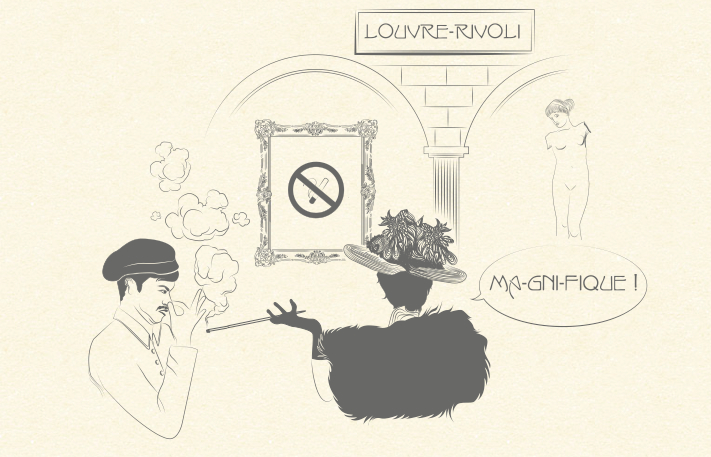
To pre­vent such faux pas from ruin­ing the sub­way-rid­ing expe­ri­ences of Parisian com­muters, France’s pub­lic trans­port oper­a­tor (the RATP) has decid­ed to nip such gauche behav­ior in the bud by issu­ing a short illus­trat­ed man­u­al on sub­way man­nersThe Savoir Vivre Guide For The Mod­ern Trav­elleravail­able here, is a quaint 1950s-style primer that pro­vides much-need­ed point­ers for hap­less for­eign­ers and rur­al French vis­i­tors alike. Its 12 guide­lines, five of which are illus­trat­ed here, are a dis­til­la­tion of some 2000 tips that the RATP received in its crowd­sourced eti­quette cam­paign. For the sake of your read­ing plea­sure and trav­el­ling know-how, we’ve includ­ed a num­ber of the illus­tra­tions and tips below:

SMOKING

“Those No Smok­ing signs aren’t con­tem­po­rary art — they mean no smok­ing”

(C’est com­pren­dre que l’énorme cig­a­rette bar­rée sur le quai n’est pas une œuvre d’art con­tem­po­rain, mais une inter­dic­tion de fumer)

PHONE

“Be con­sid­er­ate when using your cell­phone”

(French read­ers will enjoy the pun: C’est ne pas faire de son portable un insup­port­able)


CREEP

“Don’t be a creep and stare at peo­ple”

(C’est ne pas fix­er une pas­sagère avec insis­tance, quand bien même elle aurait les yeux revolver)


HOT

“On hot days, make like the emper­or pen­guin — keep your arms low, and hold on to the bot­tom of the pole.”

(C’est les jours de grosse chaleur, tel le man­chot empereur, bien garder les bras le long du corps et pren­dre sa meilleure prise en bas du poteau, pas tout en haut)

For all 12 tips, head over to Gothamist.

Ilia Blin­d­er­man is a Mon­tre­al-based cul­ture and sci­ence writer. Fol­low him at @iliablinderman.

Studs Terkel Interviews Bob Dylan, Shel Silverstein, Maya Angelou & More in New Audio Trove

The recent­ly-launched dig­i­ti­za­tion project Pop­Up Archive hosts a great selec­tion of Studs Terkel audio. The site’s archive of inter­views comes from Terkel’s 1952–1997 radio show, “The Studs Terkel Pro­gram,” on the Chica­go sta­tion WFMT.

While Terkel is famous for inter­view­ing every­day peo­ple for his oral his­to­ries of the Depres­sion, work, and World War II, and his radio show fea­tured its fair share of stu­dents, domes­tic work­ers, and vet­er­ans, this par­tic­u­lar archive is full of big names: Actress and come­di­an Lily Tom­lin. Lit­er­ary the­o­rist Edward Said. Actor and activist Sid­ney Poiti­er.

A short trip into the inter­views reveals Shel Sil­ver­stein telling Terkel the sto­ry of his as-yet-unpub­lished book Laf­ca­dio, The Lion Who Shot Back, in a rapid-fire Chica­go accent. Terkel inter­views the pho­tog­ra­ph­er Diane Arbus about the Depres­sion, try­ing in vain to elic­it any mem­o­ries at all per­tain­ing to finan­cial stress. (Even Terkel couldn’t win them all.) And an inter­view with James Bald­win is punc­tu­at­ed by the unmis­tak­able sound of a Zip­po lighter in use.

Cur­rent­ly, there are about twen­ty audio files avail­able, and the archive promis­es more to come, pend­ing dig­i­ti­za­tion and the clear­ing of rights. (Let’s hope they hur­ry up! Some of the place­hold­er entries for not-yet-avail­able interviews—Buckminster Fuller, Mar­garet Mead, Arthur C. Clarke—are most tan­ta­liz­ing.)

The one down­side to this archive is that you can’t down­load the interviews—a poten­tial draw­back for addict­ed pod­cast fans. How­ev­er, if you have a smart­phone and a good data con­nec­tion, it’s sim­ple enough to lis­ten to the files straight from your phone’s Chrome brows­er.

Above you can lis­ten to Terkel inter­view a young Bob Dylan in 1963. The remain­ing parts of the inter­view can be found here. Note: The Dylan inter­view isn’t actu­al­ly in the Pop Up archive. But it is anoth­er one of Terkel’s leg­endary inter­views. So we want­ed to add it to the mix.

Rebec­ca Onion is a writer and aca­d­e­m­ic liv­ing in Philadel­phia. She runs Slate.com’s his­to­ry blog, The Vault. Fol­low her on Twit­ter: @rebeccaonion.

Relat­ed Con­tent:

Studs Terkel Reads Poem “Blessed Be The Nation”

Voic­es from the Depres­sion: Studs Terkel Inter­views

Two Leg­ends Togeth­er: A Young Bob Dylan Talks and Plays on the Studs Terkel Pro­gram, 1963

An Interactive Map of Odysseus’ 10-Year Journey in Homer’s Odyssey

odyssey interactive map

The Odyssey, one of Home­r’s two great epics, nar­rates Odysseus’ long, strange trip home after the Tro­jan war. Dur­ing their ten-year jour­ney, Odysseus and his men had to over­come divine and nat­ur­al forces, from bat­ter­ing storms and winds to dif­fi­cult encoun­ters with the Cyclops Polyphe­mus, the can­ni­bal­is­tic Laestry­gones, the witch-god­dess Circe and the rest. And they took a most cir­cuitous route, bounc­ing all over the Mediter­ranean, mov­ing first down to Crete and Tunisia. Next over to Sici­ly, then off toward Spain, and back to Greece again.

If you’re look­ing for an easy way to visu­al­ize all of the twists and turns in The Odyssey, then we’d rec­om­mend spend­ing some time with the inter­ac­tive map host­ed on the Uni­ver­si­ty of Penn­syl­va­ni­a’s web­site. The map breaks down Odysseus’ voy­age into 14 key scenes and locates them on a mod­ern map.

Mean­while, if you’re inter­est­ed in the whole con­cept of ancient trav­el, I’d sug­gest revis­it­ing one of our pre­vi­ous posts: Play Cae­sar: Trav­el Ancient Rome with Stanford’s Inter­ac­tive Map. It tells you all about ORBIS, a geospa­tial net­work mod­el, that lets you sim­u­late jour­neys in Ancient Roman. You pick the points of ori­gin and des­ti­na­tion for a trip, and ORBIS will recon­struct the dura­tion and finan­cial cost of mak­ing the ancient jour­ney. Pret­ty cool stuff.

If you would like to sup­port the mis­sion of Open Cul­ture, con­sid­er mak­ing a dona­tion to our site. It’s hard to rely 100% on ads, and your con­tri­bu­tions will help us con­tin­ue pro­vid­ing the best free cul­tur­al and edu­ca­tion­al mate­ri­als to learn­ers every­where. You can con­tribute through Pay­Pal, Patre­on, and Ven­mo (@openculture). Thanks!

Relat­ed Con­tent:

Hear Homer’s Ili­ad Read in the Orig­i­nal Ancient Greek

What Ancient Greek Music Sound­ed Like: Hear a Recon­struc­tion That is ‘100% Accu­rate’

Dis­cov­er the “Brazen Bull,” the Ancient Greek Tor­ture Machine That Dou­bled as a Musi­cal Instru­ment

Learn­ing Ancient His­to­ry for Free

by | Permalink | Make a Comment ( 14 ) |

Mike Tyson Lists the Philosophy & History Books He’s Reading These Days

Mike_Tyson_Portrait

Last year, Mike Tyson staged a one-man Broad­way show, direct­ed by Spike Lee, called “Mike Tyson: The Undis­put­ed Truth.” In Novem­ber, the box­ing leg­end pub­lished an auto­bi­og­ra­phy by the same title. And now comes this: a short let­ter in The Wall Street Jour­nal where Iron Mike lists the phi­los­o­phy and his­to­ry texts he’s read­ing these days. The list includes:

  • The Quotable Kierkegaard, edit­ed by Gor­don Mari­no, “a col­lec­tion of awe­some quotes from that great Dan­ish philoso­pher.”

[Note: Niet­zsche is his favorite philoso­pher. Says Tyson, “He’s just insane. You have to have an IQ of at least 300 to tru­ly under­stand him.”

Why? Because “Alexan­der kept push­ing for­ward. He did­n’t want to have to go home and be dom­i­nat­ed by his moth­er.” The same impulse drove Tyson to box his way out of Brownsville, Brook­lyn. That’s all cov­ered in his auto­bi­og­ra­phy.

What else is Tyson read­ing? Love let­ters. He men­tions Napoleon’s love let­ters to Josephine, and Vir­ginia Woolf’s let­ter to her hus­band before com­mit­ting sui­cide. Tyson then quips “I don’t real­ly do any light read­ing, just deep, deep stuff. I’m not a light kind of guy.”

Get more at The Wall Street Jour­nal.

H/T Par­tial­ly Exam­ined Life

Relat­ed Con­tent:

Iron Mike Tyson Sings “The Girl From Ipane­ma”

The Phi­los­o­phy of Kierkegaard, the First Exis­ten­tial­ist Philoso­pher, Revis­it­ed in 1984 Doc­u­men­tary

Wal­ter Kaufmann’s Clas­sic Lec­tures on Niet­zsche, Kierkegaard and Sartre (1960)

Down­load 90 Free Phi­los­o­phy Cours­es and Start Liv­ing the Exam­ined Life

by | Permalink | Make a Comment ( 8 ) |

Kurt Vonnegut: Where Do I Get My Ideas From? My Disgust with Civilization

vonngeut ideas
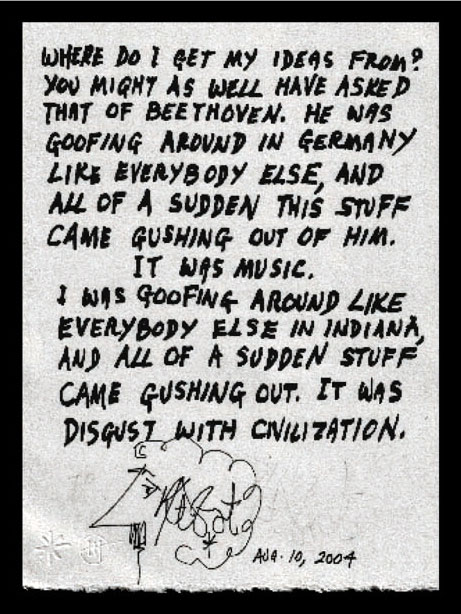
This past week, we referred you back to Neil Gaiman’s essay where he tried to explain the almost unex­plain­able: the source(s) of his great ideas. The sci-fi/­fan­ta­sy writer had always strug­gled to put his fin­ger on those sources, and he could nev­er real­ly find an ori­gin in one par­tic­u­lar spring. But, it turns out that Kurt Von­negut nev­er had that prob­lem. On Twit­ter, one of our fol­low­ers (@Iygia_Maria) flagged for us an illus­trat­ed quote by Von­negut. He writes:

Where do I get my ideas from? You might as well have asked that of Beethoven. He was goof­ing around in Ger­many like every­body else, and all of a sud­den this stuff came gush­ing out of him. It was music. I was goof­ing around like every­body else in Indi­ana, and all of a sud­den stuff came gush­ing out. It was dis­gust with civ­i­liza­tion. (Back­wards City Review, 2004.)

If you’re won­der­ing where that dis­gust was com­ing from, I prob­a­bly only need to a high­light a pre­vi­ous post of ours: 22-Year-Old P.O.W. Kurt Von­negut Writes Home from World War II: “I’ll Be Damned If It Was Worth It”. There you can read all about how he was tak­en pris­on­er dur­ing the Bat­tle of the Bulge; spent time in a Dres­den work camp known yes, as “Slaugh­ter­house Five;” sur­vived the Dres­den bomb­ing; saw many oth­er atroc­i­ties along the way, reveal­ing civ­i­liza­tion at its worst. You can hear Von­negut read from Slaugh­ter­house-Five here.

H/T @Iygia_Maria)

Relat­ed Con­tent:

Kurt Vonnegut’s Eight Tips on How to Write a Good Short Sto­ry

“Wear Sun­screen”: The Sto­ry Behind the Com­mence­ment Speech That Kurt Von­negut Nev­er Gave

Kurt Von­negut Writes an Off­beat Con­tract Out­lin­ing His Chores Around the House, 1947

by | Permalink | Make a Comment ( 6 ) |

The British Library Puts 1,000,000 Images into the Public Domain, Making Them Free to Reuse & Remix

brit library image

Ear­li­er this week, Oxford’s Bodleian Library announced that it had dig­i­tized a 550 year old copy of the Guten­berg Bible along with a num­ber of oth­er ancient bibles, some of them quite beau­ti­ful. Not to be out­done, the British Library came out with its own announce­ment on Thurs­day:

We have released over a mil­lion images onto Flickr Com­mons for any­one to use, remix and repur­pose. These images were tak­en from the pages of 17th, 18th and 19th cen­tu­ry books digi­tised by Microsoft who then gen­er­ous­ly gift­ed the scanned images to us, allow­ing us to release them back into the Pub­lic Domain. The images them­selves cov­er a star­tling mix of sub­jects: There are maps, geo­log­i­cal dia­grams, beau­ti­ful illus­tra­tions, com­i­cal satire, illu­mi­nat­ed and dec­o­ra­tive let­ters, colour­ful illus­tra­tions, land­scapes, wall-paint­ings and so much more that even we are not aware of.

The librar­i­ans behind the project freely admit that they don’t exact­ly have a great han­dle on the images in the col­lec­tion. They know what books the images come from. (For exam­ple, the image above comes from His­to­ria de las Indias de Nue­va-España y islas de Tier­ra Firme, 1867.) But they don’t know much about the par­tic­u­lars of each visu­al. And so they’re turn­ing to crowd­sourc­ing for answers. In fair­ly short order, the Library plans to release tools that will let will­ing par­tic­i­pants gath­er infor­ma­tion and deep­en our under­stand­ing of every­thing in the Flickr Com­mons col­lec­tion.

You can jump into the entire col­lec­tion here, or view a set of high­lights here. The lat­ter hap­pens to include a curi­ous image. (See below.) It’s from an 1894 book called The Unit­ed States of Amer­i­ca. A study of the Amer­i­can Com­mon­wealth, its nat­ur­al resources, peo­ple, indus­tries, man­u­fac­tures, com­merce, and its work in lit­er­a­ture, sci­ence, edu­ca­tion and self-gov­ern­ment. And the pic­ture fea­tures, accord­ing to the text, a “Typ­i­cal fig­ure, show­ing ten­den­cy of stu­dent life–stooping head, flat chest, and ema­ci­at­ed limbs.” It’s hard to know what to say about that.

To learn more about this British Library ini­tia­tive, read this oth­er Open Cul­ture post which takes a deep­er dive into the image col­lec­tion.

american student


Relat­ed Con­tent:

The Rijksmu­se­um Puts 125,000 Dutch Mas­ter­pieces Online, and Lets You Remix Its Art

The Get­ty Puts 4600 Art Images Into the Pub­lic Domain (and There’s More to Come)

The Dig­i­tal Pub­lic Library of Amer­i­ca Launch­es Today, Open­ing Up Knowl­edge for All

Cor­nell Launch­es Archive of 150,000 Bird Calls and Ani­mal Sounds, with Record­ings Going Back to 1929

by | Permalink | Make a Comment ( 47 ) |

« Go BackMore in this category... »
Quantcast