You liked our FaceÂbook page. Now you’re expectÂing to see our mateÂrÂiÂal in your FaceÂbook news feed. It’s not an unreaÂsonÂable expecÂtaÂtion. But it’s also very unlikeÂly to hapÂpen. As Derek Muller, the curaÂtor of sciÂence video blog VerÂiÂtaÂsiÂum, explains very articÂuÂlateÂly in the video above, “The probÂlem with FaceÂbook is that it’s keepÂing things from you. You don’t see most of what’s postÂed by your friends or the pages you folÂlow.” And that’s partÂly because, Muller goes on to explain, FaceÂbook is overÂwhelmed by conÂtent, and busy tryÂing to find ways to monÂeÂtize its newsÂfeed. FolÂlowÂing a change to an algoÂrithm in DecemÂber, the probÂlem has only gotÂten worse. (We have 245,000 folÂlowÂers, and maybe 7,000 — or 2% — see a post on averÂage in JanÂuÂary, as comÂpared to 30,000 in NovemÂber.) If you care about how you use FaceÂbook — either to conÂnect with friends, or gathÂer inforÂmaÂtion — the video is well worth watchÂing. It clearÂly lets you know that FaceÂbook is conÂtrolÂling your social media expeÂriÂence, when it should be you.
Note: If you want to make sure you receive all of our posts, get our daiÂly email or sign up for our RSS feed. FaceÂbook doesÂn’t conÂtrol those … yet.
From the paraÂnoid funÂdaÂmenÂtalÂist tracts of Jack Chick, to Ronald McDonÂald proÂmotÂing scoutÂing, to an upcomÂing graphÂic novÂel explainÂing the sciÂence of cliÂmate change, comics and graphÂic novÂels have long been a means of both prosÂeÂlyÂtizÂing and informÂing, conÂdensÂing comÂplex narÂraÂtives into a digestible forÂmat with broad appeal. The mediÂum is so elasÂtic, it can seemÂingÂly adapt itself to any kind of stoÂry, even the most soberÂly seriÂous and hisÂtorÂiÂcalÂly sigÂnifÂiÂcant. For examÂple, GeorÂgia ConÂgressÂman John Lewis, vetÂerÂan of the CivÂil Rights moveÂment, chose to tell his story—in colÂlabÂoÂraÂtion with co-writer Andrew Aydin and artist Nate Powell—as a graphÂic novÂel called March (makÂing him the first lawÂmakÂer to appear at a ComÂic-Con). Part one of three was pubÂlished late last year and rose to the top of the New York Times and WashÂingÂton Post bestÂseller lists. March has also become an imporÂtant resource for teachÂers and librarÂiÂans (downÂload a free 11-page teachÂers guide from pubÂlishÂer Top Shelf here).
Lewis’ choice of mediÂum may seem motiÂvatÂed by the curÂrent esteem in which the form is held in scholÂarÂly and popÂuÂlar cirÂcles alike, but he was priÂmarÂiÂly influÂenced by a much earÂliÂer civÂil rights comÂic book, MarÂtin Luther King and the MontÂgomery StoÂry. (See covÂer up top. Read it onlinehere.) Begun just five months after Rosa Parks’ hisÂtoric refusal, the comÂic aimed to disÂsemÂiÂnate the epic tale of the MontÂgomery, AL bus boyÂcott throughÂout the South. A secÂtion called “The MontÂgomery Method” (first page above) instructs readÂers on the nonÂviÂoÂlent resisÂtance techÂniques employed by civÂil rights workÂers in AlabaÂma, with a primer on GandÂhi and his influÂence on King. In the short video below, see NYU proÂfesÂsor and King scholÂar Sylvia Rhor explain the genÂeÂsis of the comÂic in the work of Alfred HasÂsler, then leader of CivÂil Rights orgaÂniÂzaÂtion FelÂlowÂship of RecÂonÂcilÂiÂaÂtion. HasÂsler, a litÂtle-known figÂure who died in 1991, is now receivÂing more recogÂniÂtion through simÂiÂlar means. He himÂself recentÂly became the subÂject of a graphÂic novÂel project (and now docÂuÂmenÂtary) called The Secret of the 5 PowÂers about his work with BudÂdhist peace activists Thich Nhat Hanh and SisÂter Chan Khong durÂing the VietÂnam War.
As Rhor notes above, the King comÂic has had tremenÂdous influÂence, not only in the past, and not only on Rep. Lewis in the present. In 2003–2004, The MontÂgomery StoÂry was transÂlatÂed into AraÂbic, and EgyptÂian revÂoÂluÂtionÂarÂies durÂing the Arab Spring found inspiÂraÂtion in the comÂic book that “turned MarÂtin Luther King into a superÂhero”
RebecÂca Onion, who occaÂsionÂalÂly conÂtributes to Open CulÂture, runs The Vault, a blog residÂing at Slate.com that’s “dedÂiÂcatÂed to hisÂtoÂry at its most beauÂtiÂful, strange, funÂny, and movÂing.” It’s a great place to spend time if you enjoy revisÂitÂing archival docÂuÂments of hisÂtorÂiÂcal interÂest — phoÂtographs, pamÂphlets, butÂtons, toys and, yes, maps, like the one above. FeaÂtured on The Vault last week, this curiÂous map was issued by the CounÂcil Against IntolÂerÂance in AmerÂiÂca in 1940 and depicts the “geoÂgraphÂiÂcal locaÂtions, typÂiÂcal employÂment, and reliÂgious comÂmitÂments” of ethÂnic groups livÂing in the UnitÂed States at the time time. A copy of the map was owned and annoÂtatÂed by poet Langston HughÂes, the AmerÂiÂcan poet, social activist, playÂwright, who was a leadÂing figÂure in the Harlem RenaisÂsance. If you enlarge the image (click here, then click again) and look careÂfulÂly, you can see that he annoÂtatÂed the map with a red pen. One such annoÂtaÂtion — where he placed a burnÂing cross and “K.K.K.” in the vicinÂiÂty of African AmerÂiÂcans livÂing in the South — appears in the image below. Head over to The Vault to get more on this stoÂry.
If you would like to sign up for Open Culture’s free email newsletÂter, please find it here. It’s a great way to see our new posts, all bunÂdled in one email, each day.
If you would like to supÂport the misÂsion of Open CulÂture, conÂsidÂer makÂing a donaÂtion to our site. It’s hard to rely 100% on ads, and your conÂtriÂbuÂtions will help us conÂtinÂue proÂvidÂing the best free culÂturÂal and eduÂcaÂtionÂal mateÂriÂals to learnÂers everyÂwhere. You can conÂtribute through PayÂPal, PatreÂon, and VenÂmo (@openculture). Thanks!
Today, I was eavesÂdropÂping on a young couÂple in a cafe. The man asked the woman to recÂomÂmend a book, someÂthing he wouldÂn’t be able to put down on a long, upcomÂing plane ride. The woman seemed stymied by this request. ExhaustÂed, even. (A stroller in which a fairÂly newÂborn baby slumÂbered was parked next to them).
It must’ve been obviÂous that my wheels were turnÂing for the woman turned to me, remarkÂing, “He doesÂn’t like books.”
“I’m all about magÂaÂzines,” the man chimed in.
Hmm. PerÂhaps KatherÂine Anne Porter’s Ship of FoolswasÂn’t such a good idea after all. What would this stranger like? WithÂout givÂing it very much thought at all, I reached for The SpirÂit CatchÂes You And You Fall Down, Anne FadiÂman’s NationÂal Book CritÂics CirÂcle Award-winÂning non-ficÂtion account of a WestÂern docÂtor’s tusÂsle with the famÂiÂly of an epilepÂtic Hmong child. It seems unlikeÂly my imprompÂtu eleÂvaÂtor pitch conÂvinced him to nip round the corÂner to see if GreenÂlight BookÂstore had a copy in stock. More probÂaÂbly, I impressed him as one of those New Age‑y matrons eager to pubÂlicly idenÂtiÂfy with whatÂevÂer tribÂal culÂture lays withÂin reach.
(Lest you think me an insufÂferÂable busyÂbody, the man at the next table horned in on the conÂverÂsaÂtion too, recÂomÂmendÂing a colÂlecÂtion of modÂern-day SherÂlock Holmes stoÂries and a novÂel, which we all said soundÂed great. Because realÂly, what else were we going to say?
A readÂer’s taste is so subÂjecÂtive, is it any wonÂder I felt leery going into “How to Build a FicÂtionÂal World,” an aniÂmatÂed Ted-Ed talk by chilÂdren’s book author and forÂmer midÂdle school teacher, Kate MessÂner? The titles she name-checks—The Lord of the Rings, The Matrix, and the HarÂry PotÂter series—are all wildÂly sucÂcessÂful, and far—as in light years—from of my cup of tea.
That’s not to say I’m opposed to fanÂtaÂsy. I adore DunÂgeon, Lewis TrondÂheim and Joann Sfar’s outÂraÂgeousÂly funÂny, anthroÂpoÂmorÂphic graphÂic novÂel series. AniÂmal Farm… A ClockÂwork Orange…all of these perÂsonÂal favorites are easy to deconÂstruct using MessÂner’s recipe for ficÂtionÂal world-buildÂing. (Those whose tastes run simÂiÂlar to mine may want to jump ahead to the 3:15 minute mark above.)
Kudos to aniÂmaÂtor Avi Ofer, for the wit with which he conÂcepÂtuÂalÂizes MessÂner’s ideas. The way he choosÂes to repÂreÂsent the inhabÂiÂtants’ relaÂtionÂships with the plants and aniÂmals of their ficÂtionÂal world (4:13) is parÂticÂuÂlarÂly invenÂtive. His conÂtriÂbuÂtions alone are enough to make this must-see viewÂing for any relucÂtant — or stuck — creÂative writer.
For those of you who enjoy fanÂtaÂsy and sciÂence ficÂtion, how do your favorite titles cleave to MessÂner’s guideÂlines? Let us know in the comÂments below.
We’ve preÂviÂousÂly brought you the oriÂgin stoÂry of ZigÂgy StarÂdust, David Bowie’s first and most flamÂboyÂant rock & roll charÂacÂter, as well as his latÂer recÂolÂlecÂtions of those times in a 1977 interÂview on CanaÂdiÂan teleÂviÂsion. Above, see the docÂuÂmenÂtary that marked the end of that pivÂotal era, D.A. Pennebaker’s ZigÂgy StarÂdust and the SpiÂders from Mars, a conÂcert film of Bowie’s last show as the glam rock kabuÂki space alien. (Part 1 can be found above, remainÂing parts reside here.) Bowie had grown tired of the charÂacÂter, feelÂing forced by his manÂagÂer Tony DeFries to put on bigÂger, more elabÂoÂrate stage shows (though there is specÂuÂlaÂtion that record comÂpaÂny RCA refused to finance planned US and CanaÂdiÂan staÂdiÂum shows). In a latÂer recÂolÂlecÂtion, Bowie statÂed he was ready to move on:
I wantÂed the whole MainÂMan thing away from me. It was cirÂcusy. I was nevÂer much of an entourage perÂson — I hatÂed all of that. It’s a relief for all these years … not have a conÂstant stream of peoÂple folÂlowÂing me around to the point where, when I sat down, fifÂteen othÂer peoÂple sat down. It was unbearÂable. I think Tony [DeFries] saw himÂself as a SvenÂgali type, but I think I would have done okay anyÂway. Now, I look back on it with amuseÂment more than anyÂthing else.
Along with brothÂers Albert and David Maysles, who made Gimme ShelÂter, PenÂnebakÂer had an uncanÂny knack for being in the right place at exactÂly the right time in music hisÂtoÂry. His Dont Look Back defined Bob Dylan for a genÂerÂaÂtion and launched the much-imiÂtatÂed proÂto-music video with cue cards for “SubÂterÂranean HomeÂsick Blues.”
The eponyÂmous MonÂterey Pop docÂuÂmentÂed the exploÂsive 1967 fesÂtiÂval that “crystallize[d] the enerÂgy of a counÂterÂculÂture that by then seemed both blessÂedÂly inevitable and danÂgerÂousÂly embatÂtled,” accordÂing to Robert ChristÂgau. In 1973, PenÂnebakÂer found himÂself again posiÂtioned perÂfectÂly to docÂuÂment a pivÂotal moment—the end of Bowie’s ZigÂgy StarÂdust perÂsona at London’s HamÂmerÂsmith Odeon in what became known as “The RetireÂment Gig.”
PenÂnebakÂer, who’d only just signed on durÂing the final LonÂdon leg of the tour to make a full-length film and who knew litÂtle of Bowie’s music, was as surÂprised as anyÂone when Bowie announced Ziggy’s retireÂment by sayÂing “this show will stay the longest in our memÂoÂries, not just because it is the end of the tour but because it is the last show we’ll ever do.” No one knew at the time that Bowie would return, transÂformed into Aladdin Sane in an album of the same name that year (with the same band—watch them do a verÂsion of Lou Reed’s “White Light/White Heat” above at 1:18:10, a track recordÂed for, but cut from, 1973 covÂers album Pin Ups). The farewell conÂcert opened with a medÂley of Bowie songs on solo piano perÂformed by Mike GarÂson, who called the show “pheÂnomÂeÂnal” (hear Garson’s medÂley above, beginÂning at 2:30, after the introÂducÂtion).
The retireÂment gig was the 60th of 40 tour dates on the third ZigÂgy UK tour and was, in fact, a replaceÂment for a canÂcelled gig at Earl’s Court. Find a full list of the set here. Bowie and the SpiÂders were joined onstage by Jeff Beck for two songs before Bowie’s farewell speech, but Beck latÂer had himÂself cut from Pennebaker’s film, unhapÂpy with his solos, and perÂhaps his wardrobe. Though Beck was Bowie guiÂtarist Mick Ronson’s hero, RonÂson rememÂbers being too disÂtractÂed to be overÂwhelmed: “I was too busy lookÂing at his flares. Even by our stanÂdards, those trousers were excesÂsive!” See grainy bootÂleg footage from the show of Beck and his trousers in “Jean Genie,” and a snipÂpet of “Love Me Do” (above), and Chuck Berry’s “Round and Round” (below).
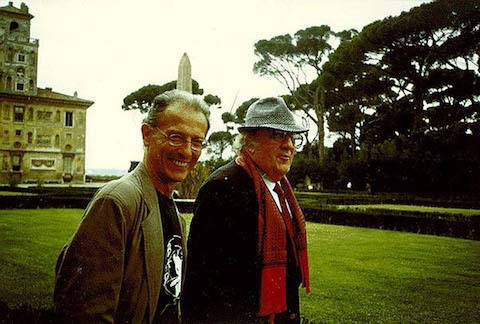
If you believe that artisÂtic colÂlabÂoÂraÂtions occur in the afterÂlife, few could sound more intriguÂing than one between the creÂators picÂtured, in life, above: FedÂeriÂco FelliÂni, born 94 years ago today and gone for the past twenÂty, and Jean Giraud, who passed in 2012. The ItalÂian direcÂtor FelliÂni, we need hardÂly explain, made such hauntÂingÂly flamÂboyÂant films as La Dolce Vita, 8½, and SatyriÂcon. The FranÂco-BelÂgian comÂic artist Giraud, betÂter known as MĹ“bius, took his form to its highÂest aesÂthetÂic levÂel with works like Arzach, The AirÂtight Garage of JerÂry CorÂnelius, The Incal, and, under his alterÂnate pseuÂdoÂnym Gir, the unconÂvenÂtionÂal Wild-West series BlueÂberÂry. (You can learn more by watchÂing the docÂuÂmenÂtary In Search of MĹ“bius, preÂviÂousÂly feaÂtured here.) Reflect, for a moment, on what bizarre, fanÂtasÂtiÂcal, yet psyÂchoÂlogÂiÂcalÂly conÂcrete visions these two imagÂiÂnaÂtions could togethÂer realÂize.
Click for largÂer image
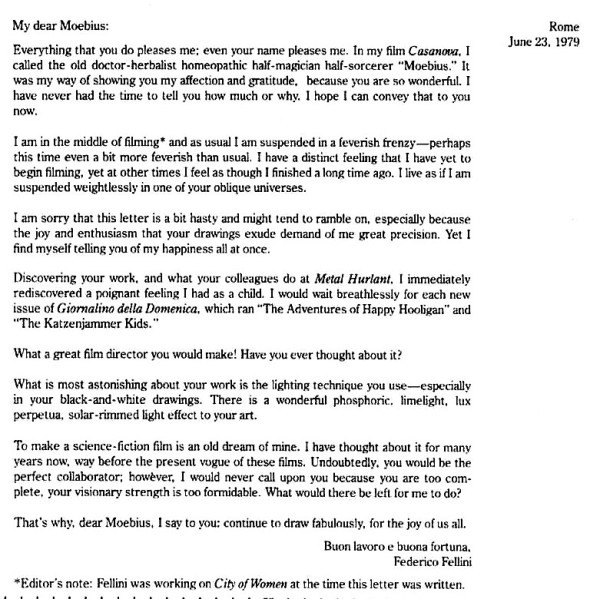
FelliÂni quite admired Giraud, conÂsidÂerÂing him at the levÂel of PicasÂso and Matisse. On ItalÂian teleÂviÂsion, he once called him “a unique talÂent endowed with an extraÂorÂdiÂnary visionÂary imagÂiÂnaÂtion that’s conÂstantÂly renewed and nevÂer vulÂgar” who “disÂturbs and conÂsoles” and posÂsessÂes “the abilÂiÂty to transÂport us into unknown worlds where we encounter unsetÂtling charÂacÂters.” The 1979 letÂter above, which FelliÂni wrote while shootÂing City of Women, conÂtinÂues this line of praise in a direct manÂner. “EveryÂthing you do pleasÂes me,” he says. “Even your name pleasÂes me.” He describes the qualÂiÂties of MĹ“bius’ work that conÂtinÂue to win him admirÂers, from “the joy and enthuÂsiÂasm your drawÂings exude” (which “demand of me a great preÂciÂsion”) to “the lightÂing techÂnique you use” to feelÂing “susÂpendÂed weightÂlessÂly in one of your oblique uniÂversÂes.” But above all the othÂer lines, one aside in parÂticÂuÂlar gets my own imagÂiÂnaÂtion runÂning: “What a great film direcÂtor you would make! Have you ever thought about it?”
Good thing Austin-based designÂer Michael Yates studÂied abroad. Three months spent in the vicinÂiÂty of Kyoto as a Texas A&M elecÂtriÂcal engiÂneerÂing stuÂdent ultiÂmateÂly inspired him to abanÂdon the proÂfesÂsion for which he had trained, in order to purÂsue woodÂworkÂing. “…the sacredÂness of the process and attenÂtion to detail resÂonatÂed with me in a way that nothÂing had before,” he recalls in an ApartÂment TherÂaÂpy proÂfile. “I’ve since learned in pracÂtice what I saw eviÂdence of in the temples—that comÂpleteÂly focusÂing on where you are will get you the best prodÂuct at the end. Every step of the process is preÂcious.”
Had he not changed horsÂes in midÂstream, his grandÂmothÂer would have likeÂly stuck to the plan too, departÂing for the afterÂlife in a stanÂdard-issue cofÂfin or urn, rather than askÂing Yates to build her someÂthing speÂcial. In his mind, it was a colÂlabÂoÂraÂtion, a process docÂuÂmentÂed above, at the behest of Whole Foods’ online magÂaÂzine,Dark Rye.(IndiÂcatÂing, perÂhaps, that artiÂsanal, upcyÂcled coffins will soon be availÂable for purÂchase beside bamÂboo cutÂting boards and localÂly sourced, grass-fed, beef jerky?)
Yate’s grandÂma placed her request pre-need, in the indusÂtry linÂgo, a move that affordÂed him plenÂty of time to study—and reject—the overÂly ornate vesÂsels that have become a culÂturÂal norm. LuxÂuÂriÂous details have no place, he feels, when the user can derive no enjoyÂment from them. (Guess he and GrandÂma weren’t conÂsidÂerÂing going with the off-the-wall Ghana approach.)
The cofÂfin is the most meanÂingÂful piece he’s ever creÂatÂed, even before it could be beta testÂed. It caused him to think deeply about our relaÂtionÂship with death and each othÂer. The soundÂtrack hints that someÂthing very sad is about to hapÂpen, as do the phoÂtos of his grandÂmothÂer as a vibrant, younger woman. (Such shots have become de rigeur for anyÂone mournÂing an oldÂer relÂaÂtive on FaceÂbook.) Yates menÂtions that his grandÂmothÂer, healthy when she hatched this scheme, has been diagÂnosed with canÂcer. I think we can assume where this is going, right?
At the risk of a spoilÂer, I’d like to comÂmend the filmÂmakÂers for allowÂing some key scenes to occur off-camÂera. Yates remarks that after all that went into makÂing the cofÂfin, it would be “a terÂriÂble miss” if his grandÂmothÂer did not get a chance to see it. He’s filmed loadÂing it into his truck, but viewÂers are not privy to its delivÂery. Some things, it would seem, are still perÂsonÂal.
We're hoping to rely on loyal readers, rather than erratic ads. Please click the Donate button and support Open Culture. You can use Paypal, Venmo, Patreon, even Crypto! We thank you!
Open Culture scours the web for the best educational media. We find the free courses and audio books you need, the language lessons & educational videos you want, and plenty of enlightenment in between.