David Bowie Dreamed of Turning George Orwell’s 1984 Into a Musical: Hear the Songs That Survived the Abandoned Project

David Bowie’s 1974 album Dia­mond Dogs intro­duced a new hodge­podge of musi­cal styles: “The music,” writes Nicholas Pegg, “was a four-way tus­sle between the reced­ing sounds of glam, the ris­ing influ­ence of black soul, the syn­the­sized night­mares of The Man Who Sold the World, and the ubiq­ui­tous rock’n’roll swag­ger of Jag­ger.” With its echoes of A Clock­work Orange and William S. Bur­roughs’ The Wild Boys, Bowie called the songs on the album part of a “glit­ter apoc­a­lypse” and described its con­cep­tu­al sce­nario as “the break­down of a city… a dis­af­fect­ed youth that no longer had home-unit sit­u­a­tions, but lived as gangs on roofs and real­ly had the city to them­selves.” His “frag­ment­ed lyrics and the por­trait of urban America’s sor­did melt­down,” writes Pegg, “were clear­ly indebt­ed to Bur­roughs.”

This was a mode in step with the late sixties/early 70s deca­dent ethos (and a con­cept antic­i­pat­ing lat­er cult films like The War­riors and Escape from New York.) And yet, far from soci­etal decay, one of Bowie’s orig­i­nal visions for the project was an adap­ta­tion of George Orwell’s nov­el of total­i­tar­i­an social con­trol, 1984. Dia­mond Dogs may work as a con­cept album in an oblique sort of way, but it came togeth­er, writes Bowie blog Push­ing Ahead of the Dame, as “a sal­vage job, a com­pi­la­tion of scraps from still­born Bowie projects.” In addi­tion to the “urban melt­down” sto­ry, an abort­ed Zig­gy Star­dust musi­cal pro­duced two of Dia­mond Dogs’ songs, “Rebel Rebel” and “Rock’n’Roll With Me.” And Bowie’s for­ay into Orwell gave us “We Are the Dead,” “Big Broth­er,” and, of course, the Isaac Hayes-crib­bing “1984.” (Hear the album ver­sion below and an ear­li­er ver­sion at the top of the post, with a few more Orwellian lyrics and joined with an ear­li­er song, “Dodo.”)

Per­haps his first pub­lic men­tion of the project came as “almost an aside,” notes Pegg, when he casu­al­ly men­tioned in a Rolling Stone inter­view with Bur­roughs, “I’m doing Orwell’s Nine­teen Eighty-Four on tele­vi­sion.” At first, the project had a much more ambi­tious scope. Chriso­pher Sand­ford describes Bowie’s planned adap­ta­tion as “a West End musi­cal, with an accom­pa­ny­ing album and film, lit­tle of which ever hap­pened.” Orwell’s wid­ow and execu­tor of his estate, Sonia Brownell con­sid­ered the project in poor taste and refused him the rights to the nov­el. (Her death in 1980 allowed direc­tor Michael Rad­ford to make his film ver­sion, and the Eury­th­mics to record their con­test­ed sound­track album.)

What sur­vives are the songs—as well as the visions of Orwell and Bur­roughs that con­tin­ued to res­onate in Bowie’s work. The mash-up of musi­cal styles and polit­i­cal con­cepts in Dia­mond Dogs sig­nals a kind of con­fu­sion of Bowie’s own politics—or those of his com­pet­ing personae—which his lat­er albums dogged­ly pur­sue.

On the one hand, Dia­mond Dogs sees Bowie hang­ing on to the role of alien dandy Zig­gy Star­dust. He had also embraced the avant-garde para­noia of Bur­roughs’ mag­i­cal belief sys­tem and Orwell’s night­mare of insti­tu­tion­al con­trol and sur­veil­lance. Odd­ly pulling these ten­den­cies togeth­er was the soul music that emerged ful­ly-fledged on Young Amer­i­cans. When it came to Orwell, “what fas­ci­nat­ed Bowie,” writes Push­ing Ahead of the Dame, “what was arguably the only thing that tru­ly inter­est­ed him in the mid-‘70s, was pow­er, and the schiz­o­phrenic man­ner of thinking—double-thought, basically—that allows, even encour­ages its abus­es.”

For a time, as Bowie moved into his Berlin phase, the fas­ci­na­tion with pow­er dom­i­nat­ed his aes­thet­ic, such that he got a lit­tle too car­ried away with his Thin White Duke char­ac­ter’s flir­ta­tions with fas­cism. (“By 1979,” writes Stereo Williams, “Bowie had dropped the Duke image and referred to it as ‘a nasty char­ac­ter for me.’”) But the theme of “dou­ble-thought,” the fas­ci­na­tion with Orwellian dystopias, and the influ­ence of Bur­roughs’ para­noia and cut-up tech­nique sur­vived the death of both the Thin White Duke and of Zig­gy, the inter­stel­lar flâneur.

Twen­ty years after Dia­mond Dogs, strains of Orwell and Bur­roughs came togeth­er in Bowie’s dystopi­an epic Out­side, whose lyrics, writes Sand­ford, “were sub­ject­ed to a spin in his com­put­er, indus­tri­al­iz­ing the tech­nique once lim­it­ed to scis­sors and paste.” Orwellian themes crop up again in oth­er lat­er Bowie con­cept albums, and in a way, he con­tin­ued to adapt the nov­el long after the lit­er­ary exper­i­ments on Dia­mond Dogs, only in cut-up fash­ion rather than as glam musi­cal the­ater.

Relat­ed Con­tent:

David Bowie’s Music Video “Jump They Say” Pays Trib­ute to Marker’s La Jetée, Godard’s Alphav­ille, Welles’ The Tri­al & Kubrick’s 2001

Hear the Very First Adap­ta­tion of George Orwell’s 1984 in a Radio Play Star­ring David Niv­en (1949)

George Orwell’s 1984 Staged as an Opera: Watch Scenes from the 2005 Pro­duc­tion in Lon­don

How David Bowie, Kurt Cobain & Thom Yorke Write Songs With William Bur­roughs’ Cut-Up Tech­nique

Josh Jones is a writer and musi­cian based in Durham, NC. Fol­low him at @jdmagness

330 Years of Female Printmakers (1570–1900) : Download Free Prints, Visit the Exhibit

Female Artists 1

Hen­ri­et­ta Louisa Koe­nen was born a cen­tu­ry before the Guer­ril­la Girls, but her col­lect­ing habits are a strong argu­ment for hon­orary, posthu­mous mem­ber­ship in the activist group.

The wife of the Rijksmuseum’s Print Room’s first direc­tor, Koe­nen spent over three decades acquir­ing prints by female artists, though dis­cour­ag­ing­ly few of the 827 women in her col­lec­tion achieved much in the way of recog­ni­tion for their work.

Renais­sance aris­to­crat­ic painter, Sofon­is­ba Anguis­so­la, and por­traitist (and found­ing mem­ber of London’s Roy­al Acad­e­my of ArtsAngel­i­ca Kauff­man, have the dis­tinc­tion of being namechecked in the Guer­ril­la Girl’s 1989 provo­ca­tion, below.

Female Artists 2

Nei­ther can be said to enjoy the muse­um tote bag celebri­ty of a Kahlo or O’Keeffe.

Female Artists 3

Self por­tait, Angel­i­ca Kauff­man

Their work can be expect­ed to attract some new fans, now that 80 some pieces from Koenen’s col­lec­tion are on dis­play as part of the New York Pub­lic Library’s exhib­it, Print­ing Women: Three Cen­turies of Female Print­mak­ers, 1570–1900.

(And it would be unseem­ly not to cred­it Amer­i­can art deal­er Samuel Put­nam Avery, for donat­ing Koe­nen’s col­lec­tion to the library at the turn of the last cen­tu­ry, twen­ty years after her death.)

Female Artists 4

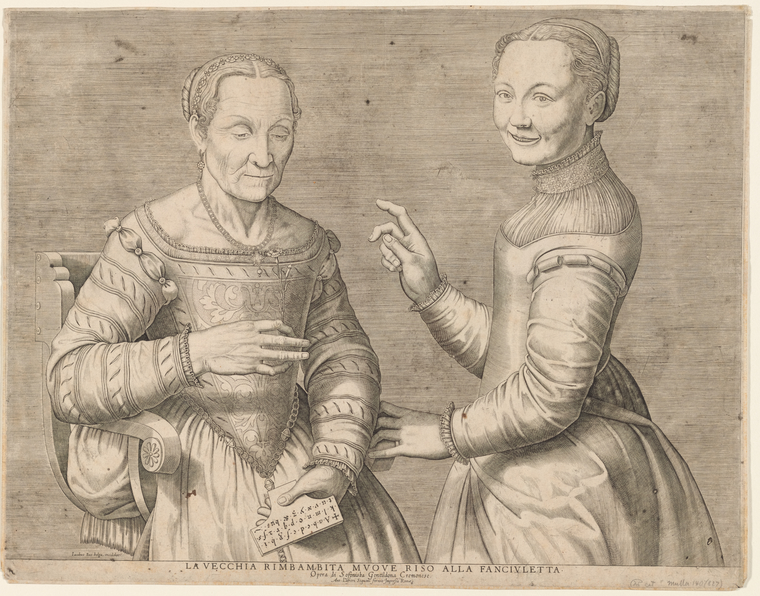
Print­mak­ing is a fre­quent­ly col­lab­o­ra­tive art. The droll Young Girl Laugh­ing at the Old Woman, above, was drawn by Anguis­so­la and engraved by Jacob Bos.

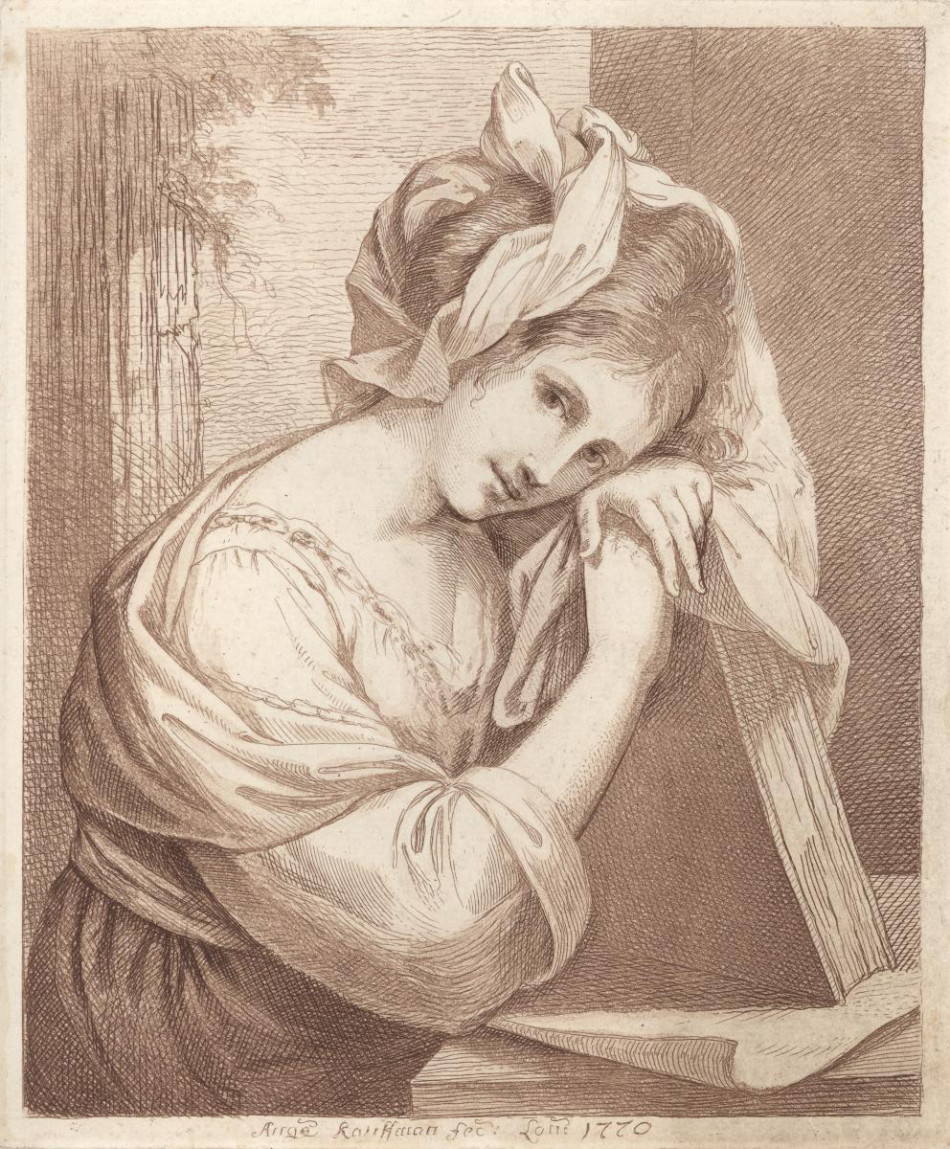
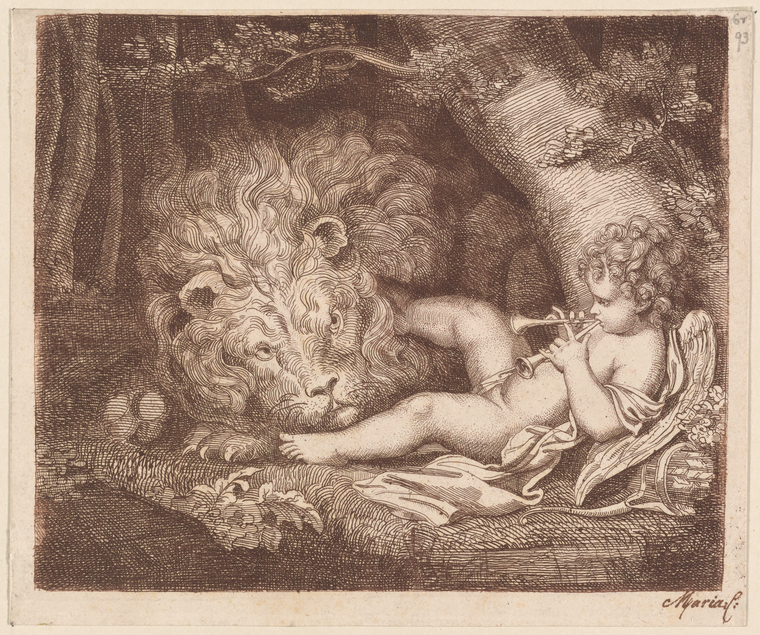
And Maria Cosway’s Music Has Charms, at the top of this post, was a fam­i­ly affair, with Cosway print­ing hus­band Richard’s celes­tial ren­der­ing of daugh­ter Louisa Paoli­na Angel­i­ca. (Mrs. Cosway was also an accom­plished com­pos­er and painter of minia­tures and mytho­log­i­cal scenes, though his­to­ry has decreed her most endur­ing claim to fame should be her hold over a besot­ted Thomas Jef­fer­son.)

The library high­lights the con­tin­u­um with an online gallery show­cas­ing the work of con­tem­po­rary female print­mak­ers, some of whom are con­tribut­ing guest posts to cura­tor Madeleine Viljoen’s Print­ing Women blog.

Female Artists 5

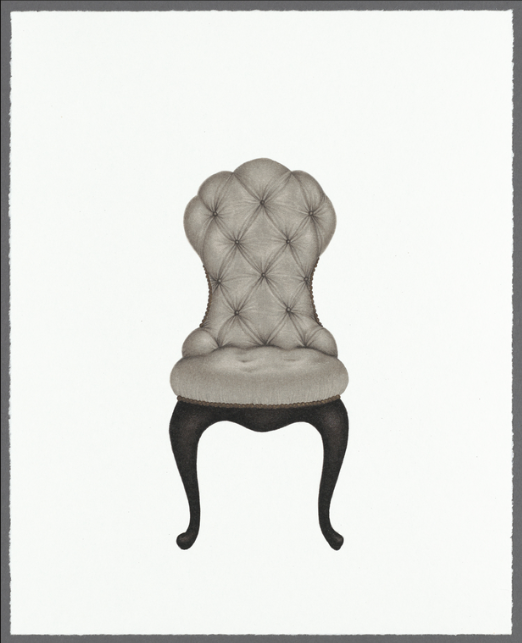
Sara Sanders, whose 2010 Lith­o­graph, Unti­tled Chair #5, above, is part of a larg­er series, writes:

I believe that the domes­tic objects with which we spend our lives retain traces of our his­to­ries and tell sto­ries about our pasts. These prints are part of an ongo­ing series of por­traits of chairs drawn in the way we imag­ine them to be. Two of the chairs in this series were drawn from exist­ing objects with a rich his­to­ry, while the rest are imag­ined char­ac­ter stud­ies.

Her thoughts seem par­tic­u­lar­ly ger­mane, when the “less­er gen­res” of orna­ment, still-life, and land­scape were by default fre­quent sub­jects for the female artists in Koenen’s col­lec­tion. Pro­pri­ety deemed the fair­er sex should not be par­ty to the nude fig­ure stud­ies that sig­nif­i­cant reli­gious and his­tor­i­cal scenes so often demand­ed.

(Chan­nel your inner Guer­ril­la Girl by per­form­ing an image search on Rape of the Sabine Women, and imag­in­ing the mod­els as aspi­rant artists them­selves, con­fined to such sub­ject mat­ter as vio­lets and laun­dry day.)

That’s not to say domes­tic sub­jects can’t prove divine.

Female Artists 6

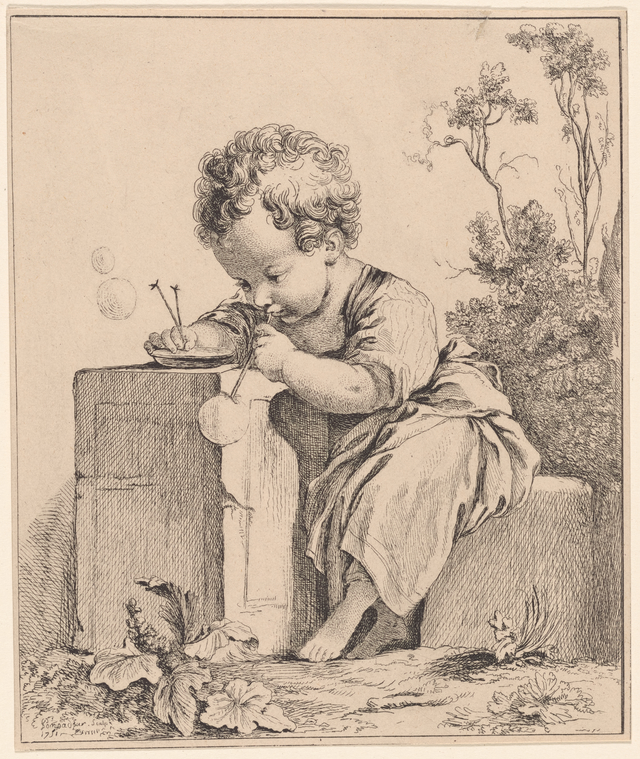
Wit­ness 1751’s A Child Seat­ed, Blow­ing Bub­bles by Madame de Pom­padour, an ama­teur artist and fre­quent­ly paint­ed beau­ty, who, the Nation­al Gallery’s web­site informs us, was “groomed from child­hood to become a play­thing for the King.”

View the online brochure for New York Pub­lic Library’s Print­ing Women: Three Cen­turies of Female Print­mak­ers, 1570–1900 exhi­bi­tion here. The exhi­bi­tion at The New York Pub­lic Library ends May 27th, 2016.

Relat­ed Con­tent:

11 Essen­tial Fem­i­nist Books: A New Read­ing List by The New York Pub­lic Library

The Women of the Avant-Garde: An Intro­duc­tion Fea­tur­ing Audio by Gertrude Stein, Kathy Ack­er, Pat­ti Smith & More

The New York Pub­lic Library Lets You Down­load 180,000 Images in High Res­o­lu­tion: His­toric Pho­tographs, Maps, Let­ters & More

Ayun Hal­l­i­day is an author, illus­tra­tor, and Chief Pri­ma­tol­o­gist of the East Vil­lage Inky zine. Fol­low her @AyunHalliday

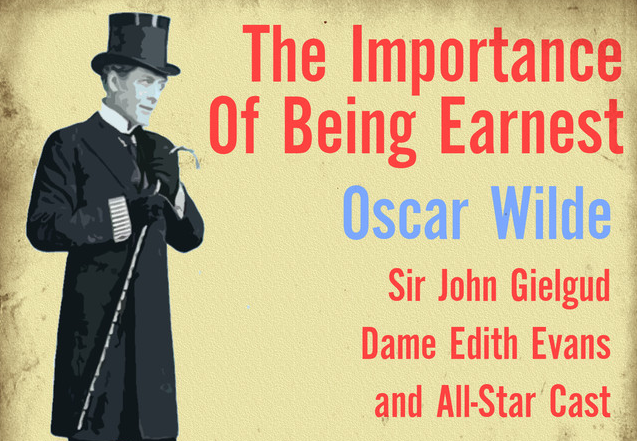
Hear Oscar Wilde’s The Importance of Being Earnest Performed by Sir John Gielgud & Other Legends (1953)

importance of being earnest

We here at Open Cul­ture hard­ly have to tell you that, when a play often called the wit­ti­est com­e­dy in the Eng­lish lan­guage meets the Eng­lish actor often called the great­est of his gen­er­a­tion, you won’t want to miss the result­ing per­for­mance. Unfor­tu­nate­ly, if you want­ed to catch Sir John Giel­gud’s turn as Jack Wor­thing in Oscar Wilde’s The Impor­tance of Being Earnest, you’d have had to do so in the 1930s or 1940s. Though it came decades after the Vic­to­ri­an-era play’s 1895 debut in Lon­don (as well as Wilde’s own death), it defined the sen­si­bil­i­ty of this “Triv­ial Com­e­dy for Seri­ous Peo­ple” for gen­er­a­tions to come.

That owes not just to Giel­gud’s Jack Wor­thing, but to Dame Edith Evans’ Lady Brack­nell. Look­ing back at The Impor­tance of Being Earnest’s 1939 revival at the Globe, the Guardian’s Saman­tha Ellis quotes a con­tem­po­rary Times crit­ic describ­ing Evans as “born to play the part … Her appear­ance is mas­ter­ly — per­fect­ly uphol­stered, with a fem­i­nine art now lost, before and behind; and her voice is cor­re­spond­ing­ly uphol­stered so that every phrase, harsh or drawl­ing, comes from the com­fort­able heart of Lady Brack­nel­l’s arro­gance.” The two togeth­er gave full life to the dynam­ic Wilde wrote for the char­ac­ters, seem­ing­ly under­stand­ing well the pains he took to craft a per­fect union of form and sub­stance, rais­ing social triv­i­al­i­ty to a kind of artis­tic sub­lim­i­ty.

But while the win­dow to see Giel­gud and Evans per­form live on stage has long since closed, you can still savor their mas­ter­ful exchange of these seri­ous­ly light lines — in this piece of the­ater where words are all — through this 1953 record­ing avail­able on Spo­ti­fy. (If you don’t have Spo­ti­fy’s free soft­ware, you can down­load it here. You can also hear the play on Youtube: Act 1 above, Act 2 here, Act 3 here.) Before these two mas­ter thes­pi­ans took it on, some crit­ics won­dered whether Wilde’s sig­na­ture work as a play­wright had grown dat­ed, the years hav­ing exposed its emp­ty friv­o­li­ty. But now that even more years have passed, The Impor­tance of Being Earnest has under­gone count­less new pro­duc­tions, adap­ta­tions, and inter­pre­ta­tions, becom­ing the most quot­ed Eng­lish-lan­guage play after the works of Shake­speare and, in a way, prov­ing one of its most oft-quot­ed lines: “In mat­ters of grave impor­tance, style, not sin­cer­i­ty, is the vital thing.”

You can find works by Oscar Wilde in our col­lec­tions of Free eBooks and Free Audio Books.

Relat­ed Con­tent:

Alice’s Adven­tures in Won­der­land Read by Sir John Giel­gud: A Great Way to Cel­e­brate the Novel’s 150th Anniver­sary

A 68 Hour Playlist of Shakespeare’s Plays Being Per­formed by Great Actors: Giel­gud, McK­ellen & More

Stephen Fry Reads Oscar Wilde’s Children’s Sto­ry “The Hap­py Prince”

Based in Seoul, Col­in Mar­shall writes and broad­casts on cities, lan­guage, and style. He’s at work on a book about Los Ange­les, A Los Ange­les Primer, the video series The City in Cin­e­ma, the crowd­fund­ed jour­nal­ism project Where Is the City of the Future?, and the Los Ange­les Review of Books’ Korea Blog. Fol­low him on Twit­ter at @colinmarshall or on Face­book.

How to Open a Wine Bottle with Your Shoe

Should you ever find your­self with a wine bot­tle and no bot­tle open­er, this French video might come in handy. It out­lines two meth­ods for remov­ing the cork with a shoe. Method 1: Remove the foil that cov­ers the cork, then start tap­ping on the bot­tom of the bot­tle with a shoe. Even­tu­al­ly, the nar­ra­tor tells us, the cork will make its way out. Next comes Method 2, the pre­ferred method we’re told, and it involves putting a bot­tle in a shoe, then tap­ping the shoe repeat­ed­ly against the wall–not too hard–until, voila, the cork can be removed by hand. Try this method at your own risk. And need­less to say start with a cheap bot­tle of wine, and far away from an expen­sive rug.

Update: And cov­er the bot­tle with cloth in case the bot­tle shat­ters. Appar­ent­ly that’s been known to hap­pen.

If you would like to sign up for Open Culture’s free email newslet­ter, please find it here. It’s a great way to see our new posts, all bun­dled in one email, each day.

If you would like to sup­port the mis­sion of Open Cul­ture, con­sid­er mak­ing a dona­tion to our site. It’s hard to rely 100% on ads, and your con­tri­bu­tions will help us con­tin­ue pro­vid­ing the best free cul­tur­al and edu­ca­tion­al mate­ri­als to learn­ers every­where. You can con­tribute through Pay­Pal, Patre­on, and Ven­mo (@openculture). Thanks!

Relat­ed Con­tent:

Storm: New Short Film Cap­tures the Artistry of Wine­mak­ing

Jane Austen Writes a Let­ter to Her Sis­ter While Hung Over: “I Believe I Drank Too Much Wine Last Night”

How to Clean Your Vinyl Records with Wood Glue

Vin­tage Wine in our Col­lec­tion of 1100 Free Online Cours­es

Patti Smith on Virginia Woolf’s Cane, Charles Dickens’ Pen & Other Cherished Literary Talismans

Oh to be eulo­gized by Pat­ti Smith, God­moth­er of Punk, poet, best-sell­ing author.

Her mem­oir, Just Kids, was born of a sacred deathbed vow to her first boyfriend, pho­tog­ra­ph­er Robert Map­plethor­pe.

Its fol­low up, M Train, start­ed out as an exer­cise in writ­ing about “noth­ing at all,” only to wind up as an ele­gy to her late hus­band, gui­tarist Fred “Son­ic” Smith. (Their daugh­ter sug­gest­ed that her dad  “was prob­a­bly annoyed that Robert got so much atten­tion in the oth­er book.”)

Cher­ish­ing the mem­o­ries comes eas­i­ly to Smith, as she reveals in a fas­ci­nat­ing con­ver­sa­tion with the New York Pub­lic Library’s Paul Hold­en­gräber, above.

She and hus­band Smith cel­e­brat­ed their first anniver­sary by col­lect­ing stones from the French Guiana penal colony, Saint-Lau­rent-du-Maroni, in an effort to feel clos­er to Jean Genet, one of her most revered authors.

She believes in the trans­mu­ta­tion of objects, unabashed­ly lob­by­ing to lib­er­ate the walk­ing stick that accom­pa­nied Vir­ginia Woolf to her death from the NYPL’s col­lec­tion in order to com­mune with it fur­ther. She may turn into a gib­ber­ing fan­girl in face to face meet­ings with the authors she admires, but inter­act­ing with relics of those who have gone before has a cen­ter­ing effect.

Need­less to say, her fame grants her access to items the rest of us are lucky to view though the walls of a vit­rine.

She has paged through Sylvia Plath’s child­hood note­books and gripped Charles Dick­ens’ sur­pris­ing­ly mod­est pen. She has ““per­pet­u­at­ed remem­brance” by com­ing into close con­tact with Bob­by Fis­ch­er’s chess table, Fri­da Kahlo’s leg braces, and a hotel room favored by Maria Callas. Her rec­ol­lec­tion of these events is both rev­er­en­tial and imp­ish, the stuff of a dozen anec­dotes.

“I would faint to use (sculp­tor Con­stan­tin) Brân­cuși’s tooth­brush,“ she quips. “I wouldn’t use it though.”

Where tan­gi­ble sou­venirs prove elu­sive, Smith takes pho­tographs.

Inter­view­er Hold­en­gräber is unique­ly equipped to share in Smith’s lit­er­ary pas­sions, egging her on with quotes recit­ed from mem­o­ry, includ­ing this beau­ty by Rain­er Maria Rilke:

Now loss, how­ev­er cru­el, is pow­er­less against pos­ses­sion, which it com­pletes, or even, affirms: loss is, in fact, noth­ing else than a sec­ond acquisition–but now com­plete­ly interiorized–and just as intense.

(The sen­ti­ment is so love­ly, who can blame him for invok­ing it in pre­vi­ous con­ver­sa­tion with NYPL guests, artist Edmund de Waal and pianist Van Cliburn.)

The top­ic can get heavy, but Smith is a con­sum­mate enter­tain­er whose clown­ish brinkman­ship leads her to cite Jimi Hen­drix: “Hooray, I wake from yes­ter­day.”

The com­plete tran­script of the con­ver­sa­tion is avail­able for down­load here, as is an audio pod­cast.

Note: You can down­load Just Kids or M Train as free audio books if you join Audible.com’s 30-day free tri­al.

Relat­ed Con­tent:

Mas­ter Cura­tor Paul Hold­en­gräber Inter­views Hitchens, Her­zog, Goure­vitch & Oth­er Lead­ing Thinkers

Pat­ti Smith’s List of Favorite Books: From Rim­baud to Susan Son­tag

Pat­ti Smith and David Lynch Talk About the Source of Their Ideas & Cre­ative Inspi­ra­tion

Ayun Hal­l­i­day is an author, illus­tra­tor, and Chief Pri­ma­tol­o­gist of the East Vil­lage Inky zine. Fol­low her @AyunHalliday

The Math Behind Beethoven’s Music

Almost all the biggest math enthu­si­asts I’ve known have also loved clas­si­cal music, espe­cial­ly the work of Bach, Mozart, and Beethoven. Of course, as San Fran­cis­co Sym­pho­ny music direc­tor Michael Tilson Thomas once put it, you can’t have those three as your favorite com­posers, because “they sim­ply define what music is.” But don’t tell that to the math­e­mat­i­cal­ly mind­ed, on whom all of them, espe­cial­ly Bach and Beethoven, have always exert­ed a strong pull.

But why? Do their musi­cal com­po­si­tions have some under­ly­ing quan­ti­ta­tive appeal? And by the way, “how is it that Beethoven, who is cel­e­brat­ed as one of the most sig­nif­i­cant com­posers of all time, wrote many of his most beloved songs while going deaf?” The ques­tion comes from a TED-Ed seg­ment and its accom­pa­ny­ing blog post by Natalya St. Clair which explains, using the exam­ple of the “Moon­light Sonata,” what the for­mi­da­ble com­pos­er did it using math. (You might also want to see St. Clair’s oth­er vides: The Unex­pect­ed Math Behind Van Gogh’s “Star­ry Night.”)

beethoven music gif

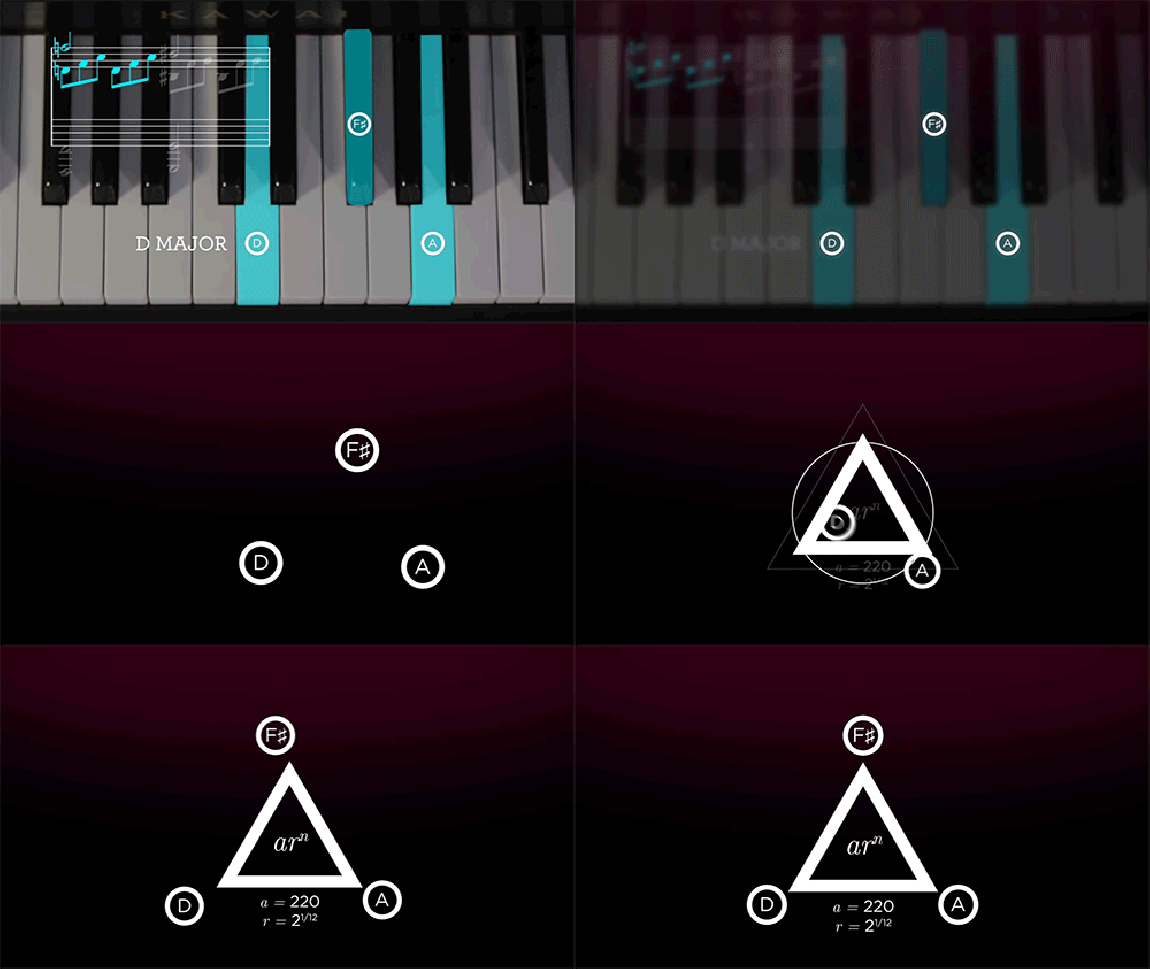
“The stan­dard piano octave con­sists of 13 keys, each sep­a­rat­ed by a half step,” St. Clair writes. “A stan­dard major or minor scale uses 8 of these keys with 5 whole step inter­vals and 2 half step ones.” So far, so good. “The first half of mea­sure 50 of ‘Moon­light Sonata’ con­sists of three notes in D major, sep­a­rat­ed by inter­vals called thirds that skip over the next note in the scale. By stack­ing the first, third, and fifth notes — D, F sharp, and A — we get a har­mon­ic pat­tern known as a tri­ad.” These three fre­quen­cies togeth­er cre­ate “ ‘con­so­nance,’ which sounds nat­u­ral­ly pleas­ant to our ears. Exam­in­ing Beethoven’s use of both con­so­nance and dis­so­nance can help us begin to under­stand how he added the unquan­tifi­able ele­ments of emo­tion and cre­ativ­i­ty to the cer­tain­ty of math­e­mat­ics.”

Explained in words, Beethoven’s use of math­e­mat­ics in his music may or may not seem easy to under­stand. But it all gets clear­er and much more vivid when you watch the TED-Ed video about it, which brings togeth­er visu­als of the piano key­board, the musi­cal score, and even the rel­e­vant geo­met­ric dia­grams and sine waves. Nor does it miss the oppor­tu­ni­ty to use music itself, break­ing it down into its con­stituent sounds and build­ing it back up again into the “Moon­light Sonata” we know and love — and can now, hav­ing learned a lit­tle more about what math­e­mati­cian James Sylvester called the “music of the rea­son” under­ly­ing the “math­e­mat­ics of the sense,” appre­ci­ate a lit­tle more deeply.

Relat­ed Con­tent:

Stream the Com­plete Works of Bach & Beethoven: 250 Free Hours of Music

Beethoven’s 5th: The Ani­mat­ed Score

Leonard Bern­stein Con­ducts Beethoven’s 9th in a Clas­sic 1979 Per­for­mance

Beethoven’s Ode to Joy Played With 167 Theremins Placed Inside Matryosh­ka Dolls in Japan

Man Hauls a Piano Up a Moun­tain in Thai­land and Plays Beethoven for Injured Ele­phants

Slavoj Žižek Exam­ines the Per­verse Ide­ol­o­gy of Beethoven’s Ode to Joy

Oliv­er Sacks’ Last Tweet Shows Beethoven’s “Ode to Joy” Mov­ing­ly Flash­mobbed in Spain

Does Math Objec­tive­ly Exist, or Is It a Human Cre­ation? A New PBS Video Explores a Time­less Ques­tion

Based in Seoul, Col­in Mar­shall writes and broad­casts on cities, lan­guage, and style. He’s at work on a book about Los Ange­les, A Los Ange­les Primer, the video series The City in Cin­e­ma, the crowd­fund­ed jour­nal­ism project Where Is the City of the Future?, and the Los Ange­les Review of Books’ Korea Blog. Fol­low him on Twit­ter at @colinmarshall or on Face­book.

« Go Back
Quantcast