A quick note: HBO recently premiered Vinyl, which takes a Goodfellas-style look at the seedy 1970s rock music and record-making scene. Here’s a quick snapshot of what the show’s all about:
Created by Mick Jagger & Martin Scorsese & Rich Cohen and Terence Winter, this new drama series is set in 1970s New York. A ride through the sex- and drug-addled music business at the dawn of punk, disco, and hip-hop, the show is seen through the eyes of a record label president, Richie Finestra, played by Bobby Cannavale, who is trying to save his company and his soul without destroying everyone in his path. Additional series regulars include Olivia Wilde, Ray Romano, Ato Essandoh, Max Casella, P.J. Byrne, J.C. MacKenzie, Birgitte Hjort Sørensen, Juno Temple, Jack Quaid, James Jagger and Paul Ben-Victor. Scorsese, Jagger and Winter executive produce along with Victoria Pearman, Rick Yorn, Emma Tillinger Koskoff, John Melfi, Allen Coulter and George Mastras. Winter serves as showrunner. The 10-episode first season debuts February 14th.
The first pilot episode–directly by Scorsese himself–is currently streaming free on HBO’s website. It runs two good hours. And if you want to watch the remaining episodes on the cheap, you can start a monthlong free trial of HBO NOW. Just look for the “Start Your Free Month” button at the top of HBO’s site.
Note: The video up top is only a trailer for Episode 1. To watch the complete episode, click here.
If you would like to sign up for Open Culture’s free email newsletter, please find it here. It’s a great way to see our new posts, all bundled in one email, each day.
If you would like to support the mission of Open Culture, consider making a donation to our site. It’s hard to rely 100% on ads, and your contributions will help us continue providing the best free cultural and educational materials to learners everywhere. You can contribute through PayPal, Patreon, and Venmo (@openculture). Thanks!
April 23 is the 400th anniversary of Shakespeare’s death, an event so far in the past that it can be celebrated as a second birthday of sorts.
The New York Public Library’s contribution to the festivities has an endearingly homemade quality.
This august institution boasts over 500 audio recordings of the Bard’s work, not to mention 40 years’ worth of the New York Shakespeare Festival’s records. But rather than drawing on the collection to highlight the work of such supreme interpreters as John Gielgud, John Barrymore, or Edwin Booth, the library has invited thirty of its staffers to recite their favorite Shakespearean speech, monologue, or sonnet.
Sean Ferguson, of Chinatown’s Chatham Square branch, tackles the opening of Richard III from a dignified remove.
Make no mistake these are librarians, not trained actors, but their amateurishness is part of the fun.
The library plans to release one recording daily throughout the month of April, adding to the playlist until the tracks number thirty.
We are hoping that the project’s architects will define “staff” to include supporting departments. We would love to hear a member of the security or maintenance team take a stab—pardon the pun—at Othello or Juliet.
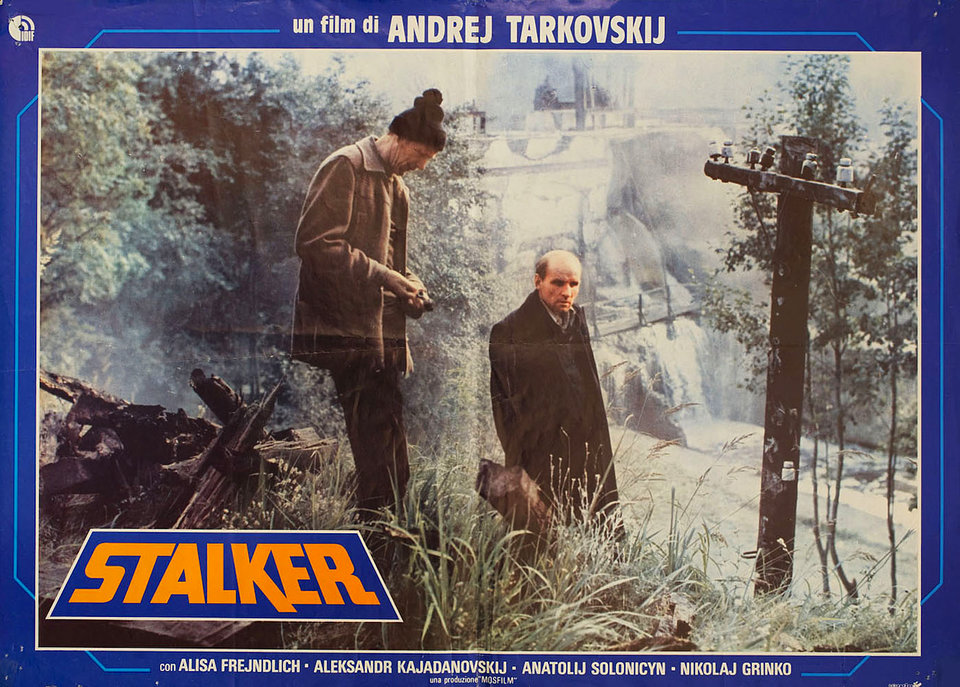
Here we have a poster for a film many of you will have heard of, and some of you will have watched right here on Open Culture: Stalker, widely considered the most masterful of Soviet auteur Andrei Tarkovsky’s career full of masterpieces. Needless to say, the film has inspired no small amount of cinephile enthusiasm in the 37 years since its release, and if it has inspired the same in you, what better way to express it than to hang its poster on your wall? And why not take it to the next level by hanging a Stalker poster from another country, such as the Italian one here?
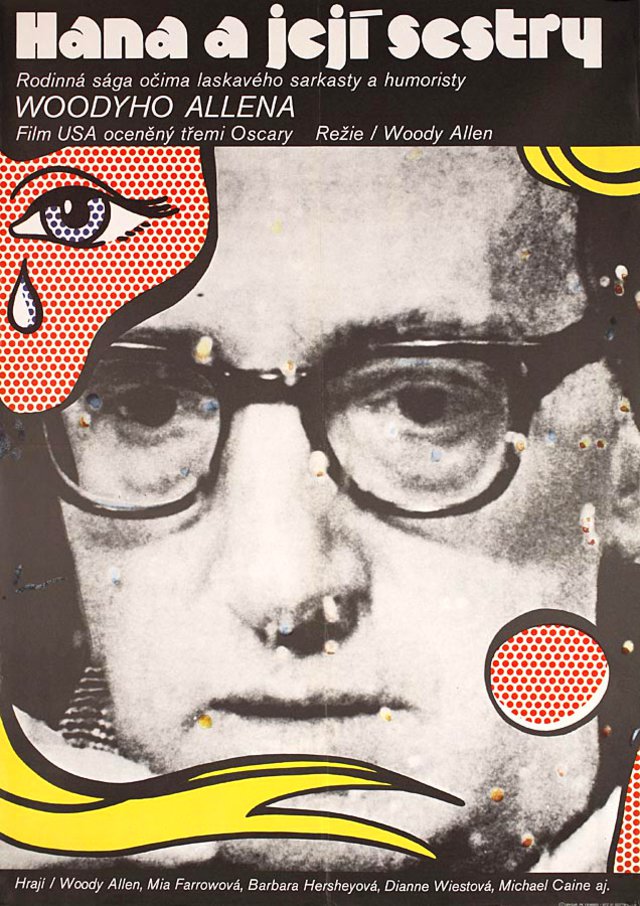
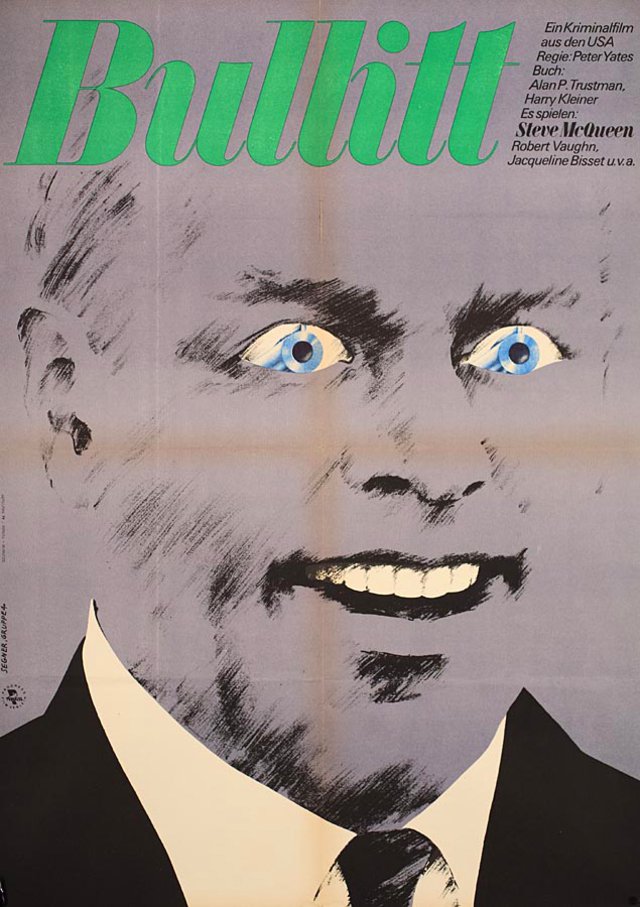
We found it on Posteritati, a New York movie poster gallery whose online store also functions as a digital archive of over 40,000 of these commercial-cinematic works of art, all conveniently sorted into categories: not just Tarkovsky posters, but posters from the former East Germany and Iran, posters from the Czech New Wave, and posters designed by the Japanese artist Tadanori Yokoo (whose works, said no less an observer of the human condition than Yukio Mishima, “reveal all of the unbearable things which we Japanese have inside ourselves”). And that’s just a small sampling of what Posteritati has to offer. If you dig deep enough, you can even find posters from Poland and the Czech Republic with cats in them.
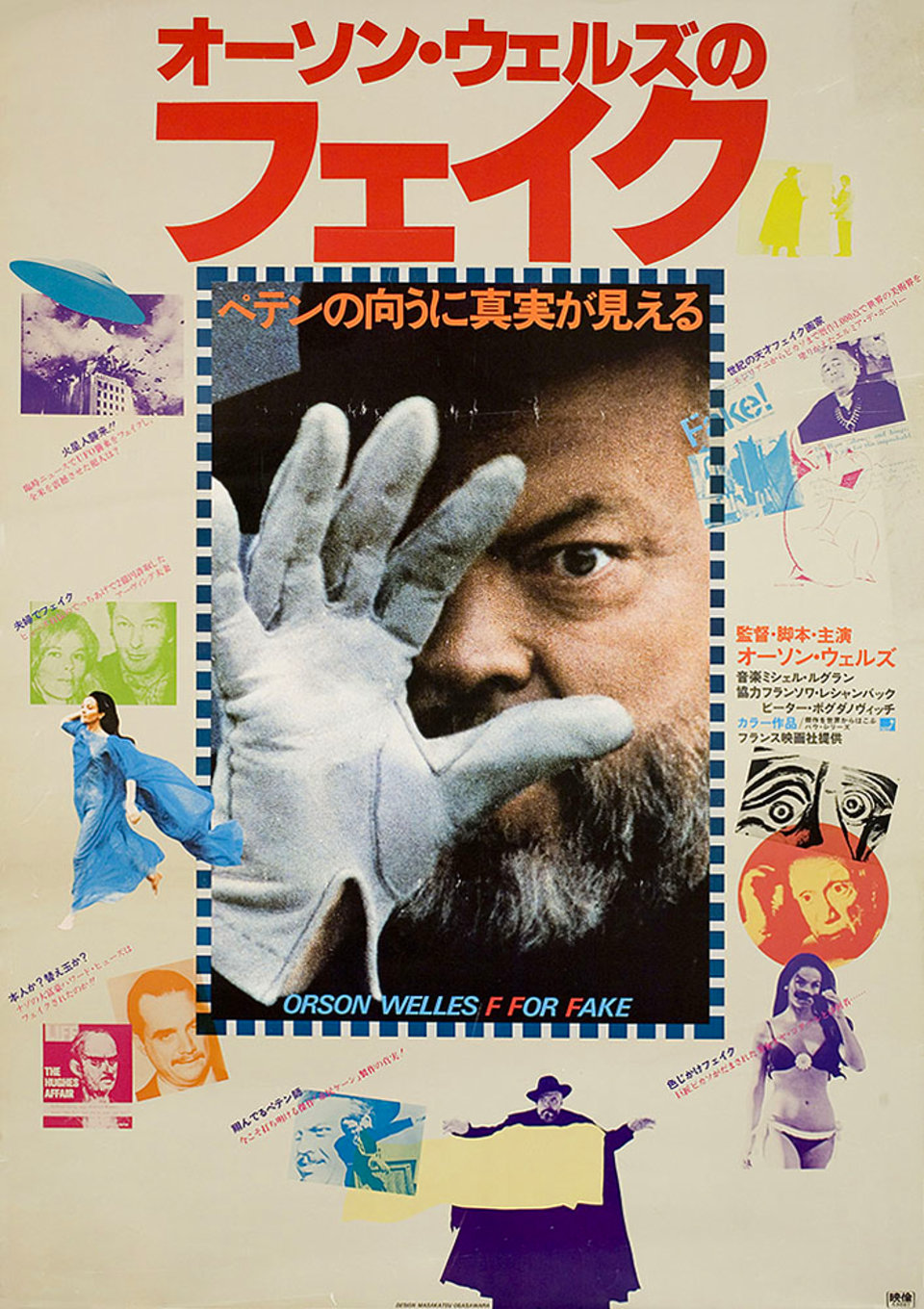
They also sell posters at the site, though even the ones not in stock remain available to view as images: just toggle the “IN STOCK ONLY” switch to the OFF position, and you can then see all of the posters in the collection. No matter what your cinematic, intellectual, or aesthetic interests, you’ll find at least a few posters that pique your interest. The Japanese poster for Orson Welles’ F for Fake just above, for instance, represents a near-perfect intersection of most of my own interests. Just as well Posteritati doesn’t have it in stock — I’d probably pay anything.
As with all of our political debates, those over “political correctness” have become even more polarized, vitriolic, and outsized than when I was in college at the height of the first culture wars, when it often seemed to me like just new etiquette for increasingly pluralist campuses and workplaces. Now, people use the phrase to refer to any call for basic human decency and intellectual honesty—and use it to dismiss such calls out of hand. On the other hand, many efforts at curbing or criticizing certain kinds of speech can seem genuinely, unnecessarily, repressive. Whether it’s an illiberal college group pressuring their university to disinvite entertainers or shut down debates, or fanatical gunmen threatening, and taking, the lives of journalists or bloggers, the stakes over what can and can’t be said have grown exponentially.
Have we reached a crisis of “Orwellian” proportions in the U.S.? I’d hesitate to say so, given the overuse and abuse of Orwell’s name and ideas as a catch-all for societal dysfunction. We have rallies in which tens of thousands gather to cheer for the demonization and slander of entire people groups. It hardly seems to me that anyone’s losing their freedom of speech any time soon. But John Cleese in the Big Think video above makes an argument about a particular kind of political correctness that he defines as “the idea that you have to be protected from any kind of uncomfortable emotion.” Describing this kind of speech policing as pathological, Cleese refers to a theory of a psychiatrist friend, Robin Skinner, that people who can’t control their own emotions “have to start to control other people’s behavior.”
Cleese doesn’t blanketly impugn the motives of all activists for politically correct speech. He notes a similar trajectory as I have when it comes to college campuses. “Political correctness,” he says, “has been taken from being a good idea, which is ‘let’s not be mean, and particularly to people who are not able to look after themselves very well,’ to the point where any kind of criticism of any individual or group can be labeled cruel.” Perhaps he’s right. (And Cleese is by no means the first comic to say so—and to swear off college campuses.) In any case, his observations about the necessary relationship of comedy to criticism or offense are dead on, as well as his conclusion that once the humor’s gone, so “goes a sense of proportion, and… you’re living in 1984.” I can’t think of a book, or a society, with less humor in it.
One point of interest: Political Correctness means a great many things to a great many people. For some it is about agency and self-determination, and righting historical wrongs so as not to perpetuate them in the present. For others, it tends more toward a patronizing activist crusade on behalf, as Cleese says in his definition of the term, of “people who are not able to look after themselves.” While he calls a little of this latter attitude a good thing, George Carlin saw it as condescending and disingenuous. By no means a respecter of any party ideology, Carlin described even seemingly innocuous forms of politically correct language as fascism masquerading as manners.
In my experience, few people can make arguments against politically correct language without occasionally falling into the trap of proving its point. But Carlin and Cleese make thoughtful cases, especially when they use humor—as Carlin did over an entire career of railing against the speech police. In his bit above on the increasing insistence on ungainly euphemisms and puffed-up jargon, he demonstrates what Cleese calls the effective antidote to a political movement run riot: a sense of proportion—as well as a sense of compassion.
With the New York primary coming up, Spike Lee and Bernie Sanders–the filmmaker and the politician–sat down and talked about politics and the state of our nation. At the 15 minute mark, the two Brooklyn natives turned to education (something that undoubtedly concerns many readers here) and the importance of making our public universities actually accessible to the public. Such a radical thought? You can read a transcript of the conversation over at The Hollywood Reporter.
If you would like to sign up for Open Culture’s free email newsletter, please find it here. It’s a great way to see our new posts, all bundled in one email, each day.
If you would like to support the mission of Open Culture, consider making a donation to our site. It’s hard to rely 100% on ads, and your contributions will help us continue providing the best free cultural and educational materials to learners everywhere. You can contribute through PayPal, Patreon, and Venmo (@openculture). Thanks!
You may have noticed we’ve been in the midst of a mini-sixties revival for the past decade or so—what with the retro soul of Alabama Shakes or the late Amy Winehouse, the garage rock of Ty Segall, and the California psych of Australia’s Tame Impala. That’s to name but just a few students of sixties’ sounds; many hundreds more populate events like the Psych Fests of Austin and Liverpool. And before these bands, late eighties/early nineties brought us a British re-invasion of sixties garage rock and pop like the Jesus and Mary Chain, the Chameleons, the Stone Roses, Oasis, and many other jangly, fuzzy, dreamy bands.
All of that is to say it’s nearly impossible to hear anything sixties rock with fresh ears. Not only has the incessant nostalgia dimmed our senses, but we’ve seen the ideas of the sixties evolve into myriad subcultures variously indebted to the decade, but no longer even in need of direct reference. What would it mean, however, to hear the far-out sounds of a band like Pink Floyd for the first time, a band who may at times sound dated now, but much of whose more obscure catalog remains shocking. And it’s easy to forget that when Pink Floyd—or “The Pink Floyd” as they tended to be called—got their start with original singer and songwriter Syd Barrett, they made a much different sound than those we’re familiar with from The Wall or Dark Side of the Moon.
If you haven’t heard the sound of the band circa 1967, when they recorded their first album Piper at the Gates of Dawn, then you may nod along with Dick Clark’s ambivalent introduction of them to U.S. audiences in the ’67 American Bandstand appearance above—their first visit to the States and first time of TV. They do indeed make “very interesting sounds”: specifically, “Apples and Oranges,” the third single and the final song Barrett wrote for the band before he suffered a psychotic break onstage and was replaced by David Gilmour. There isn’t much in the way of performance. (But stick around for the interviews around 3:25.) As pretty much everyone did at the time, Barrett, Roger Waters, Nick Mason, and Richard Wright mime to a prerecorded track. And Barrett looks particularly out of it. He was close by this point to the crippling mental health crisis that would eventually end his career.
But Syd Barrett did not disappear from music right away. The unreleased “Scream Thy Last Scream,” slated to be the next single released after Piper at the Gates of Dawn, gave much indication of the musical direction he took in two 1970 solo albums, The Madcap Laughs and Barrett. Like later Barrett, early Pink Floyd is not music for everyone. Instead of the familiar stomping funk of “The Wall” or the soaring blues of “Comfortably Numb,” the songs meander, twist, turn, and wobble, often indicating the state of Barrett’s troubled soul, but just as often showcasing his brilliant compositional mind. Barrett is gone, as is keyboardist Richard Wright, and Pink Floyd is no more. But their legacy is secure. And we still have mad geniuses like Austin psych legend Roky Erickson to kick around, as well as all the many thousands of musicians he and Barrett inspired.
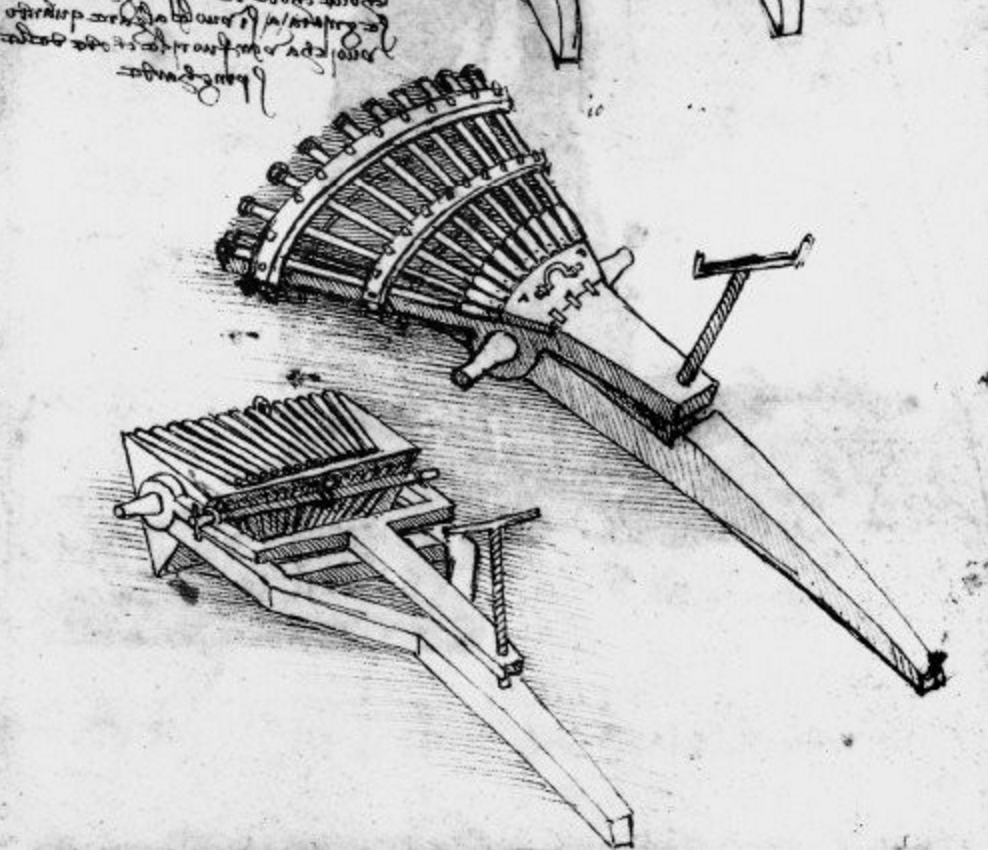
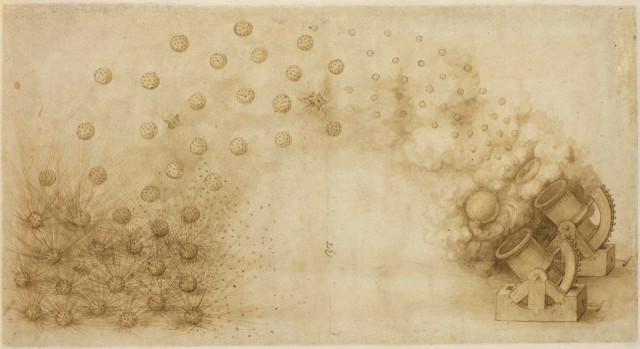
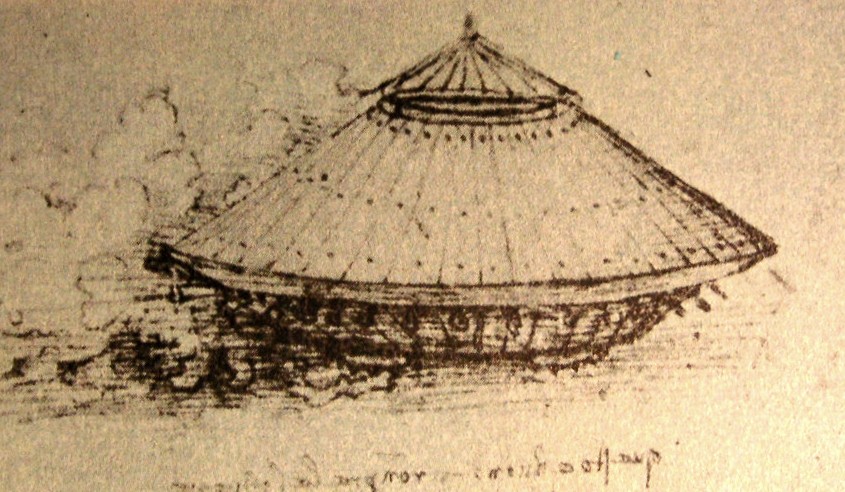
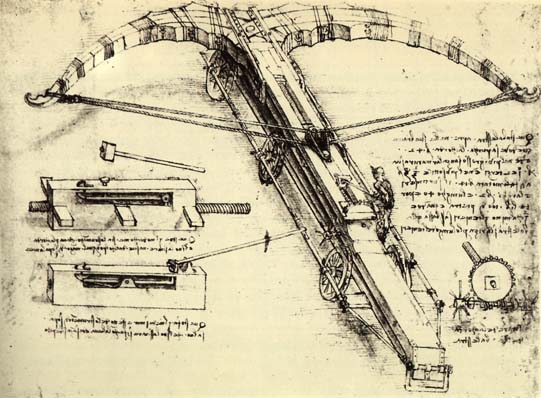
We think of Leonardo da Vinci as one of the great humanists, a thinker and creator whose achievements spanned the realms of art, architecture, natural science, engineering, and letters. We less often think of him as an innovator of the tools of as destructive a practice as war, but a true polymath — and the life of Leonardo more or less defines that concept — knows no boundaries. The website Leonardo da Vinci Inventions lists among the machines he came up with an armored car (“precursor to the modern tank”), an 86-foot crossbow, and a triple barrel cannon (at a time when even gunpowder itself hadn’t yet attained worldwide use).
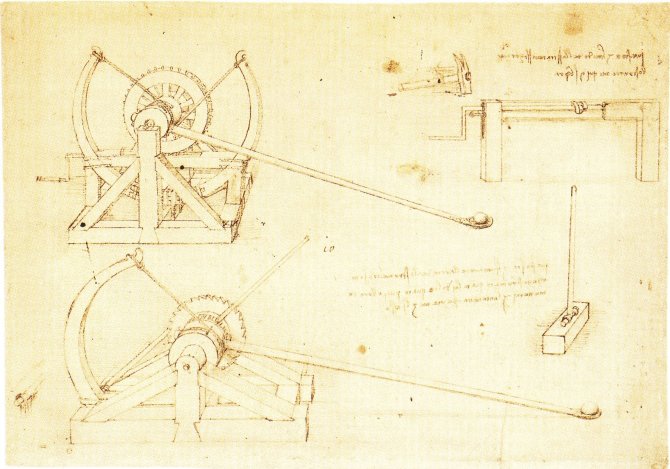
Many of Leonardo’s inventions, no matter how thoroughly he diagrammed their designs and mechanics in his notebooks, never got out of the realm of the theoretical in his lifetime — and some remain machines of the imagination. But as Nick Squires reported in the Telegraph a few years ago, a late 15th-century cannon dug up in Croatia “bears a striking resemblance to sketches drawn by the Renaissance inventor, notably in his Codex Atlanticus — the largest collection of his drawings and writing. Mounted on a wooden carriage and wheels, it would have allowed a much more rapid rate of fire than traditional single-barreled guns — in a precursor to modern day machine guns.”
He was a man of his time and the need for military engineers provided him with employment, travel opportunities, and the chance to continue his scientific work unhindered. Renaissance Italy was a collection of independent city states who became engaged in incessant warfare with each other.
“This provided a market for the technically advanced weapons needed to gain military advantage over the enemy” — and an opportunity for Leonardo to work out his ideas for “new weaponry, bridging, bombarding machines, trench draining,” and more. Leonardo’s work during this period included 15th-century blueprints for “an armored vehicle made from wood and operated by eight men” turning cranks, an antiquity-inspired “scythed chariot,” breech-loading and water-cooled guns not entirely different in concept from the steam cannons used in the World War II, and “a repeating ‘machine gun’ operated by a man-powered treadmill.”
You can see a real-life example of Leonardo’s leaf-spring catapult built by a Society for Creative Anachronism member here. But if you try to follow the instructions and assemble his other ingenious military devices, prepare for disappointment. The Telegraph’s Tom Leonard wrote up an early-2000s BBC documentary that claimed this Renaissance Man’s Renaissance Man “inserted a series of deliberate flaws into his inventions to make sure that they could never be used,” for instance, “when the tank, a tortoise-like contraption, was tested by the Army, it immediately became clear that its gears had been set against each other.”
Leonardo possibly crippled his own designs in order to serve the function of absent “patent laws to protect him from having his designs copied,” and possibly because he “was a pacifist who was aware that his warlord masters might try to find military uses for his inventions.” Either way, at least he died a few hundred years too early to witness the First World War, in which tanks, machine guns, and all the rest of it turned into surely more horrifying a spectacle than all the battles of Renaissance Italy put together.
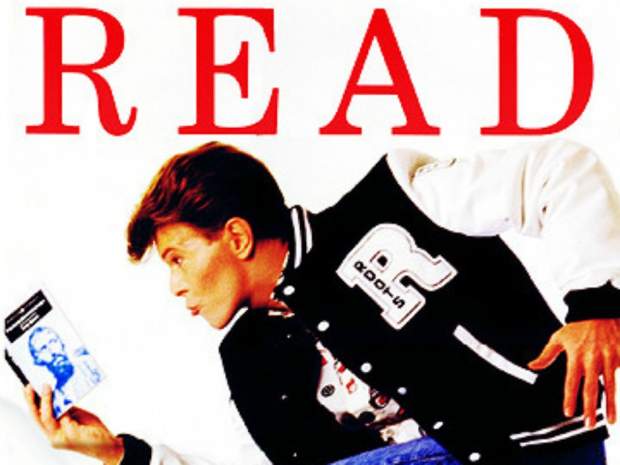
If you were American and in school during the late ‘80s and through the ‘90s, you would have seen the American Library Association’s series of promotional posters that paired a celebrity with his/her favorite book, and a simple command: READ. Need it be pointed out that the coolest of the batch, and one of the first to be shot for the series, was the one featuring David Bowie? (This also probably meant your librarian was cool too.)
Ted Mills is a freelance writer on the arts who currently hosts the artist interview-based FunkZone Podcast. You can also follow him on Twitter at @tedmills, read his other arts writing at tedmills.com and/or watch his films here.
We're hoping to rely on loyal readers, rather than erratic ads. Please click the Donate button and support Open Culture. You can use Paypal, Venmo, Patreon, even Crypto! We thank you!
Open Culture scours the web for the best educational media. We find the free courses and audio books you need, the language lessons & educational videos you want, and plenty of enlightenment in between.