How to Fill the Blank Page: Advice from Jonathan Franzen, Margaret Atwood, David Mitchell & 5 Other Authors

A cou­ple months ago we fea­tured a video of eight writ­ers on how to face the blank page pro­duced by Den­mark’s Louisiana Muse­um of Mod­ern Art. (And if you should ever find your­self in Copen­hagen with time for a bit of a train ride, I do rec­om­mend a vis­it to the muse­um itself.) Now, Louisiana has released eight sep­a­rate videos, each offer­ing one notable writer’s view­point on that scari­est of all con­fronta­tions in their pro­fes­sion. But as The Cor­rec­tions and Free­dom author Jonathan Franzen puts it, “the blank page in the mind has to be filled before you have the courage to face the actu­al blank page.”

“If you say, ‘I want to write,’ and turn on the com­put­er and look at the blank page, it’s over. It’s not going to hap­pen,” says the man who some­how man­ages to turn out his weighty, Amer­i­can-zeit­geist-cap­tur­ing nov­els faster as the years go by. “It’s when you have had a thought in the show­er before, you’ve wok­en in the mid­dle of the night, and sud­den­ly you have a sen­tence or two — you have some­thing. You’ve already writ­ten it in your mind.” In con­trast, the even more expe­ri­enced and pro­lif­ic Mar­garet Atwood, author of The Hand­maid­’s Tale and Oryx and Crake, sees “some­thing com­pelling about the blank page that beck­ons you in to write some­thing on it. It must be filled,” whether or not you’ve filled your mind already.

She likens this phe­nom­e­non to “an invi­ta­tion, but it’s an invi­ta­tion to some­thing like going swim­ming in a very cold lake. So you approach it in a sim­i­lar fash­ion: you put your toe in, you change your mind, ‘Maybe I won’t do that,’ you put your foot in, ‘Real­ly, do I want to do that?’ You come back, and final­ly you just run scream­ing and you plunge in. Unless you plunge in, you’re nev­er going to begin.” The immense­ly imag­i­na­tive number9dream and Cloud Atlas author David Mitchell uses a dif­fer­ent metaphor: “A blank page is a door. It con­tains infin­i­ty, like a night sky with a super­moon real­ly close to the Earth, with all the stars and the galax­ies you can see — it’s very, very clear, maybe at a high alti­tude. You know how that just makes your heart beat faster?”

If that image does­n’t get you writ­ing, Mitchell has anoth­er: “A slight­ly over­weight, bald boss say­ing, “It’s time to work. Get to work, come on. You’re sup­posed to be a writer, aren’t you? You can’t just sit around on your fat arse wait­ing to be inspired, wait­ing for cre­ativ­i­ty. You’re stuck? Fine. Why are you stuck? Why isn’t this work­ing? Why can’t you push on with this scene? What are you try­ing to hold on to what just isn’t work­ing here? Be more hon­est.’ ” Have a look at the series’ entire playlist (embed­ded above), which also fea­tures Joyce Car­ol Oates, Lydia Davis, and oth­ers, and you’ll find as many strate­gies for bat­tling the blank page as writ­ers who win that bat­tle. Whether you use ideas thought up in the show­er, plunge straight into the lake, or stare up at the night sky or a both­er­some boss, only one thing mat­ters: that your page ends up with some words on it.

Relat­ed Con­tent:

8 Writ­ers on How to Face Writer’s Block and the Blank Page: Mar­garet Atwood, Jonathan Franzen, Joyce Car­ol Oates & More

Stephen King Cre­ates a List of 96 Books for Aspir­ing Writ­ers to Read

The Dai­ly Habits of Famous Writ­ers: Franz Kaf­ka, Haru­ki Muraka­mi, Stephen King & More

Ray Brad­bury Gives 12 Pieces of Writ­ing Advice to Young Authors (2001)

21 Artists Give “Advice to the Young:” Vital Lessons from Lau­rie Ander­son, David Byrne, Umber­to Eco, Pat­ti Smith & More

Based in Seoul, Col­in Mar­shall writes and broad­casts on cities and cul­ture. He’s at work on a book about Los Ange­les, A Los Ange­les Primer, the video series The City in Cin­e­ma, the crowd­fund­ed jour­nal­ism project Where Is the City of the Future?, and the Los Ange­les Review of Books’ Korea Blog. Fol­low him on Twit­ter at @colinmarshall or on Face­book.

Twin Peaks Tarot Cards Now Available as 78-Card Deck

twin-peaks-tarot-1

Through the dark­ness of future’s past, the magi­cian longs to see…

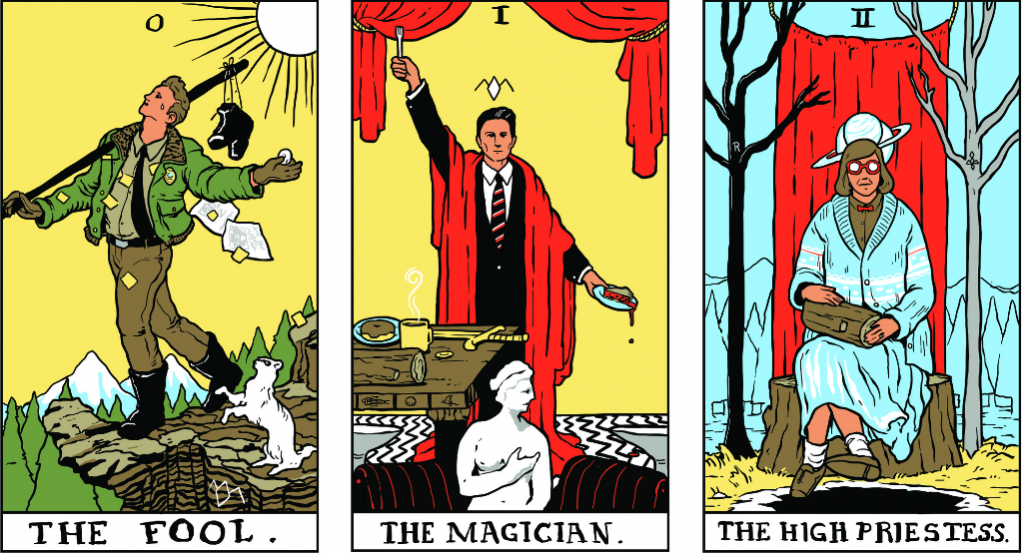
The incan­ta­tion that kicks off Detec­tive Cooper’s dream vision in Twin Peaks is part abstract clue and part div­ina­tion, and occult ele­ments reoc­cur through the David Lynch-Mark Frost cre­at­ed series. So it makes sense that pop artist Ben­jamin Mack­ey would look at com­bin­ing char­ac­ters from the show with the designs of the well known and well loved Rid­er-Waite-Smith Tarot deck from 1910.

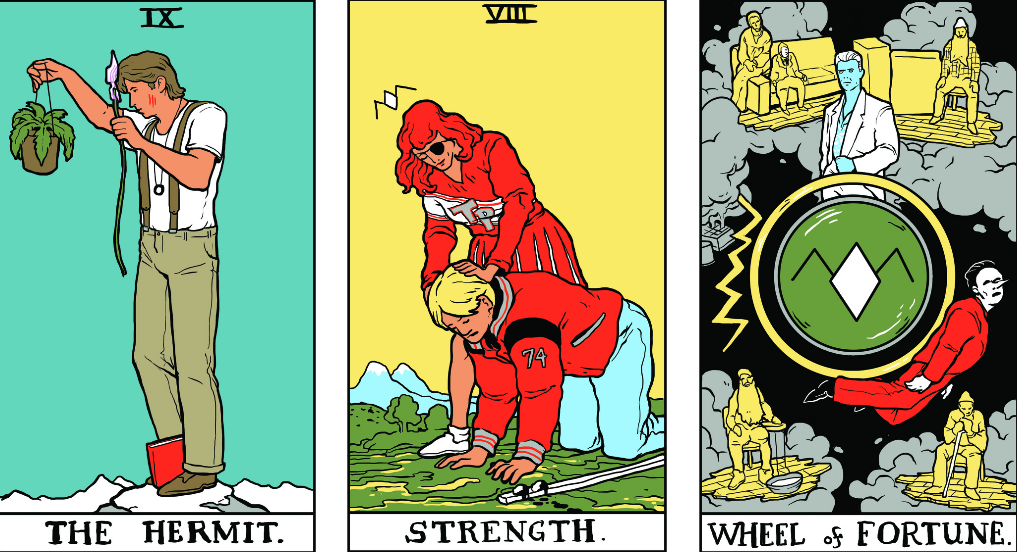
Ini­tial­ly, Mack­ey cre­at­ed just the 22 Major Arcana from the deck and sold them as prints. Detec­tive Coop­er is the Magi­cian, Sher­iff Tru­man is Jus­tice, the Log Lady is the High Priest­ess, Ben­jamin Horne is the Emper­or and so on. (Guess who the Dev­il is!)

Not too sur­pris­ing­ly con­sid­er­ing the show’s devot­ed fan-base, the Twin Peaks Tarot was a hit, and Mack­ey focused on com­plet­ing the full deck of 78 tarot cards (view them all here), riff­ing on the Rid­er-Waite-Smith deck’s pen­chant for enig­mat­ic and mys­tic tableaux. And now, 10 months lat­er, he’s offer­ing the entire deck for sale through an Indiegogo cam­paign for what looks like a very afford­able price.

twin-peaks-tarot-2

The ini­tial cam­paign ask of $5,000 was reached with­in days, and now is head­ing towards $50,000. There are also extra good­ies too for those who want to give more, includ­ing a book­let and an orig­i­nal sketch.

The Minor Arcana shows Mackey’s deep love for the tele­vi­sion show and film, and gives a chance for even minor char­ac­ters to have their own card, from Lili with the Blue Rose to Don­na Hayward’s sis­ter Har­ri­et.

“The Magi­cian Longs to See” decks are sched­uled to arrive by Decem­ber, just in time to help you tell your friends’ for­tunes while read­ing the upcom­ing Twin Peaks book, wait­ing for the new series, or drink­ing some damn fine cof­fee.

via Wel­come to Twin Peaks

Relat­ed Con­tent:

Ale­jan­dro Jodor­owsky Explains How Tarot Cards Can Give You Cre­ative Inspi­ra­tion

David Lynch Directs a Mini-Sea­son of Twin Peaks in the Form of Japan­ese Cof­fee Com­mer­cials

David Lynch’s Twin Peaks Title Sequence, Recre­at­ed in an Adorable Paper Ani­ma­tion

Ted Mills is a free­lance writer on the arts who cur­rent­ly hosts the artist inter­view-based FunkZone Pod­cast. You can also fol­low him on Twit­ter at @tedmills, read his oth­er arts writ­ing at tedmills.com and/or watch his films here.

The Night When Charlie Parker Played for Igor Stravinsky (1951)

parker-stravinsky

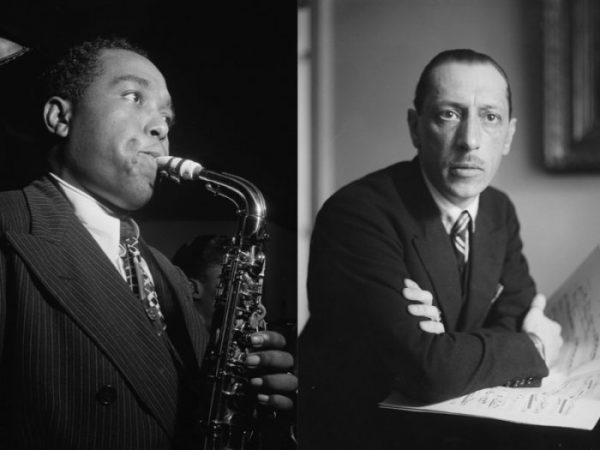
Image (left) by William P. Got­tlieb, image (right) by Library of Con­gress, via Wiki­me­dia Com­mons

The his­to­ry of 20th-cen­tu­ry music offers plen­ty of sto­ries of lumi­nar­ies meet­ing, play­ing togeth­er, and some­times even enter­ing into long-term col­lab­o­ra­tion. But it typ­i­cal­ly only hap­pened with­in tra­di­tions: encoun­ters between rock and rock, jazz and jazz, mod­ernism and mod­ernism. And so it still thrills to hear of the time in 1951 when Char­lie Park­er added one more sto­ry to the most sto­ried jazz club of all time by per­form­ing for Igor Stravin­sky at Bird­land. Alfred Appel tells it defin­i­tive­ly in his book Jazz Mod­ernism: From Elling­ton and Arm­strong to Matisse and Joyce:

The house was almost full, even before the open­ing set — Bil­ly Taylor’s piano trio — except for the con­spic­u­ous emp­ty table to my right, which bore a RESERVED sign, unusu­al for Bird­land. After the pianist fin­ished his forty-five-minute set, a par­ty of four men and a woman set­tled in at the table, rather clam­orous­ly, three wait­ers swoop­ing in quick­ly to take their orders as a rip­ple of whis­pers and excla­ma­tions ran through Bird­land at the sight of one of the men, Igor Stravin­sky. He was a celebri­ty, and an icon to jazz fans because he sanc­ti­fied mod­ern jazz by com­pos­ing Ebony Con­cer­to for Woody Her­man and his Orches­tra (1946) — a Covar­ru­bias “Impos­si­ble Inter­view” come true.

As Parker’s quin­tet walked onto the band­stand, trum­peter Red Rod­ney rec­og­nized Stravin­sky, front and almost cen­ter. Rod­ney leaned over and told Park­er, who did not look at Stravin­sky. Park­er imme­di­ate­ly called the first num­ber for his band, and, for­go­ing the cus­tom­ary greet­ing to the crowd, was off like a shot. At the sound of the open­ing notes, played in uni­son by trum­pet and alto, a chill went up and down the back of my neck.

They were play­ing “KoKo,” which, because of its epochal break­neck tem­po — over three hun­dred beats per minute on the metronome — Park­er nev­er assayed before his sec­ond set, when he was suf­fi­cient­ly warmed up. Parker’s phras­es were fly­ing as flu­ent­ly as ever on this par­tic­u­lar daunt­ing “Koko.” At the begin­ning of his sec­ond cho­rus he inter­po­lat­ed the open­ing of Stravinsky’s Fire­bird Suite as though it had always been there, a per­fect fit, and then sailed on with the rest of the num­ber. Stravin­sky roared with delight, pound­ing his glass on the table, the upward arc of the glass send­ing its liquor and ice cubes onto the peo­ple behind him, who threw up their hands or ducked.

Park­er did­n’t just hap­pen to know a few bits of Stravin­sky to whip out as a nov­el­ty; he had, at that point, already deeply inter­nal­ized the work of the man who com­posed The Rite of Spring (1913), the most rhyth­mi­cal­ly com­plex piece of orches­tral music to date.

“Jazz musi­cians sat up in their seats when Stravinsky’s music start­ed play­ing; he was speak­ing some­thing close to their lan­guage,” writes New York­er music crit­ic Alex Ross in his book The Rest Is Noise: Lis­ten­ing to the Twen­ti­eth Cen­tu­ry. “When Char­lie Park­er came to Paris in 1949, he marked the occa­sion by incor­po­rat­ing the first notes of the Rite into his solo on ‘Salt Peanuts’.”

In a piece on why jazz musi­cians love The Rite of Spring, NPR’s Patrick Jaren­wat­tananon dis­cuss­es oth­er instances where Park­er quot­ed (or paid musi­cal trib­ute to) Stravin­sky: “A per­son­al favorite comes from 1947, when Park­er was a guest soloist on trum­peter and arranger Neal Hefti’s ‘Rep­e­ti­tion,’ as heard on a com­pi­la­tion called The Jazz Scene. Not only does Hefti’s arrange­ment quote the tran­si­tion­al horn motif which sig­nals the sec­ond half of the ‘Augurs of Spring’ move­ment from The Rite, but Park­er riffs on the same motif to start his solo.”

Dylan Thomas: A Cen­te­nary Cel­e­bra­tion con­tains a chap­ter by Daniel G. Williams on Dylan Thomas and Char­lie Park­er, which, in estab­lish­ing Park­er’s engage­ment in “reviv­i­fy­ing the vocab­u­lary of jazz,” gets into how that got him draw­ing from Stravin­sky, whose work Park­er called “music at its best.” Williams quotes Park­er’s trum­peter Howard McGhee as remem­ber­ing that Park­er “knew every­thing, and he hipped me to, like, Stravin­sky and all those guys. I did­n’t know noth­in’ about Stravin­sky.” When Park­er brought The Rite of Spring over to lis­ten to at McGhee’s house, he pref­aced the expe­ri­ence with these words: “Yeah, this cat, he’s kind of cool, you know; he knows what he’s doing.” And the more we learn about what went into Park­er’s music, the more we real­ize that he, too, knew even more thor­ough­ly what he was doing than we’d ever real­ized.

via Jer­ry Jazz Musi­cian/Dan­ger­ous Minds

Relat­ed Con­tent:

Char­lie Park­er Plays with Dizzy Gille­spie in Only Footage Cap­tur­ing the “Bird” in True Live Per­for­mance

Ani­mat­ed Sheet Music of 3 Char­lie Park­er Jazz Clas­sics: “Con­fir­ma­tion,” “Au Pri­vave” & “Bloom­di­do”

Watch 82-Year-Old Igor Stravin­sky Con­duct The Fire­bird, the Bal­let Mas­ter­piece That First Made Him Famous (1965)

Hear 46 Ver­sions of Stravinsky’s Rite of Spring in 3 Min­utes: A Clas­sic Mashup

Stravinsky’s “Ille­gal” Arrange­ment of “The Star Span­gled Ban­ner” (1944)

Stravinsky’s The Rite of Spring, Visu­al­ized in a Com­put­er Ani­ma­tion for Its 100th Anniver­sary

Based in Seoul, Col­in Mar­shall writes and broad­casts on cities and cul­ture. He’s at work on a book about Los Ange­les, A Los Ange­les Primer, the video series The City in Cin­e­ma, the crowd­fund­ed jour­nal­ism project Where Is the City of the Future?, and the Los Ange­les Review of Books’ Korea Blog. Fol­low him on Twit­ter at @colinmarshall or on Face­book.

21 Artists Give “Advice to the Young:” Vital Lessons from Laurie Anderson, David Byrne, Umberto Eco, Patti Smith & More

Nev­er meet your idols, they say. It can put a cramp in your appre­ci­a­tion of their work. There are always excep­tions, but maybe Bill Mur­ray proves the rule. On the oth­er hand, you should always learn from your idols. There’s a rea­son you admire them, after all. Find out what it is and what they have to teach you. In the series we fea­ture here, Advice to the Young, many an idol of many an aspir­ing artist and musi­cian offers some broad, exis­ten­tial advice—ways to absorb a lit­tle of their process.

Lau­rie Ander­son, above, tells us to “be loose.” Widen our bound­aries, “make it vague,” because “there are so many forces that are try­ing to push us in cer­tain direc­tions, and they’re traps…. Don’t be caught in that trap of def­i­n­i­tion. It’s a cor­po­rate trap…. Be flex­i­ble.” Good advice, if you’re as eclec­tic and loose as Lau­rie Ander­son, or if you seek artis­tic lib­er­a­tion ahead of sales. “I became an artist because I want to be free,” she says.

Just above, Daniel Lanois, super­star slide gui­tarist and pro­duc­er of Bob Dylan, Neil Young, U2, Peter Gabriel, and Emmy­lou Har­ris, tells us what he learned from work­ing with Bri­an Eno. His advice is impres­sion­is­tic, allud­ing to the impor­tance of atmos­phere and envi­ron­ment, as one might expect. It’s about appre­ci­at­ing the process, he sug­gests. He does get con­crete about a dif­fi­cul­ty near­ly every artist faces: “if you have a finan­cial lim­i­ta­tion, that might be okay. You don’t have to have every­thing that the oth­er peo­ple have. I think a finan­cial lim­i­ta­tion or a tech­no­log­i­cal lim­i­ta­tion may free up the imag­i­na­tion.” In an age of home stu­dios, that’s always wel­come news.

David Byrne has always told it straight, in his cul­tur­al crit­i­cism and song­writ­ing, and in his seg­ment, above, he steers hope­ful musi­cians and artists away from the dream of Jay Z‑level fame. “Often the artists who are very suc­cess­ful that way” he says, “they don’t have much flex­i­bil­i­ty. In achiev­ing suc­cess, they lose a lit­tle bit of their cre­ative free­dom. They have to keep mak­ing the same thing over and over again.” Byrne’s advice solid­ly under­lines Ander­son­’s. If you want cre­ative free­dom, be pre­pared to fly under the radar and make much less mon­ey than the stars. End­ing on a stark­ly real­ist note, Byrne admits that in any case, you’ll prob­a­bly need a day job: “it’s very, very hard to make mon­ey in the music busi­ness.”

Nov­el­ist Umber­to Eco also brings us down to earth in his inter­view, say­ing “not to think you are inspired,” then sly­ly drop­ping a cliché: “genius is 10% inspi­ra­tion and 90% per­spi­ra­tion.” The old wis­dom is truest, I sup­pose. He also urges writ­ers to take their time with a book. “I can­not under­stand those nov­el­ists who pub­lish a book every year. They lose this plea­sure of spend­ing six, sev­en, eight years to tell a sto­ry.” Eco’s advice: rise through the ranks, “go step by step, don’t pre­tend imme­di­ate­ly to receive the Nobel prize, because that kills a lit­er­ary career.”

Pat­ti Smith, com­fort­ably address­ing an audi­ence from an out­door stage, urges them to “just keep doing your work” whether anyone’s lis­ten­ing, read­ing, etc. To those peo­ple who crit­i­cize her suc­cess as sell­ing out her punk rock roots, Smith says, to laughs, “fuck you.” She then trans­mits some advice she received from William S. Bur­roughs: “build a good name. Keep your name clean. Don’t’ make com­pro­mis­es, don’t wor­ry about mak­ing a lot of mon­ey or being suc­cess­ful; be con­cerned with doing good work.”

Easy per­haps for Bur­roughs the adding machine-heir to say, but good advice nonethe­less, and con­sis­tent with what each artist above tells us: do it your way, don’t get pigeon­holed, work with what you have, don’t wor­ry about suc­cess or mon­ey, keep your expec­ta­tions real­is­tic.

You can watch more inter­views with Mari­na Abramović,  Wim Wen­ders, Jonas Mekas, and many more on this Advice to the Young playlist assem­bled by The Louisiana Chan­nel. All 21 talks in the series can be viewed below:

Relat­ed Con­tent:

Ray Brad­bury Gives 12 Pieces of Writ­ing Advice to Young Authors (2001)

John Cleese’s Advice to Young Artists: “Steal Any­thing You Think Is Real­ly Good”

Walt Whit­man Gives Advice to Aspir­ing Young Writ­ers: “Don’t Write Poet­ry” & Oth­er Prac­ti­cal Tips (1888)

Ursu­la Le Guin Gives Insight­ful Writ­ing Advice in Her Free Online Work­shop

Aki­ra Kurosawa’s Advice to Aspir­ing Film­mak­ers: Write, Write, Write and Read

Josh Jones is a writer and musi­cian based in Durham, NC. Fol­low him at @jdmagness

Free Audio Book: Joseph Conrad’s Heart of Darkness, Read by British Actor Hayward Morse

free-heart-of-darkness-reading

Select­ed by the Mod­ern Library as one of the 100 best nov­els of all time, Joseph Con­rad’s Heart of Dark­ness was orig­i­nal­ly pub­lished as a three-part ser­i­al sto­ry in Black­wood’s Mag­a­zine in 1899, then lat­er as a novel­la in the 1902 col­lec­tion Youth: A Nar­ra­tive; and Two Oth­er Sto­riesA com­plex and con­tro­ver­sial “med­i­ta­tion on colo­nial­ism, evil, and the thin line between civ­i­liza­tion and bar­bar­i­ty,” Heart of Dark­ness gained lit­er­ary stature dur­ing the 1950s and 1960s, before peak­ing in the late 1970s–precisely around when Fran­cis Ford Cop­po­la released Apoc­a­lypse Now, a film loose­ly based on Con­rad’s tale. What halt­ed the novel­la’s momen­tum was a sting­ing rebuke from Chin­ua Achebe, father of mod­ern African lit­er­a­ture, who crit­i­cized the way it “projects the image of Africa as ‘the oth­er world,’ the antithe­sis of Europe and there­fore of civ­i­liza­tion…”

Despite the con­tro­ver­sies sur­round­ing the text, Heart of Dark­ness remains wide­ly read in Amer­i­can high schools and uni­ver­si­ties. And, notes Harold Bloom, it has “had a strik­ing influ­ence on writ­ers, artists, and thinkers from all over the globe.” Below, you can lis­ten to a read­ing of Heart of Dark­ness by British stage and voice actor Hay­ward Morse. It’s free on Spo­ti­fy and will be added to our list, 1,000 Free Audio Books: Down­load Great Books for Free. In Novem­ber, Ken­neth Branagh will release his own version–which you can down­load for free if you join Audible.com’s 30 free tri­al pro­gram. Oth­er free read­ings of Con­rad’s novel­la can be found on Lib­rivox.

Relat­ed Con­tent

Orson Welles Turns Heart of Dark­ness Into a Radio Dra­ma, and Almost His First Great Film

See the Orig­i­nal Mag­a­zine Pub­li­ca­tion of Heart of Dark­ness and Oth­er Great Works by Joseph Con­rad

800 Free eBooks for iPad, Kin­dle & Oth­er Devices

by | Permalink | Make a Comment ( 2 ) |

How to Raise Creative Children Who Can Change the World: 3 Lessons from Wharton Professor Adam Grant

Adam Grant, a pro­fes­sor at The Whar­ton School of the Uni­ver­si­ty of Penn­syl­va­nia, has been “rec­og­nized as Whar­ton’s top-rat­ed teacher for five straight years, and as one of the world’s 25 most influ­en­tial man­age­ment thinkers.” He’s also the author of the best­selling book Orig­i­nals: How Non-Con­formists Move the World, a study that exam­ines “what it takes to be cre­ative and cham­pi­on new ideas.”

Speak­ing at the 2016 Aspen Ideas Fes­ti­val ear­li­er this year, Grant asks the ques­tion: What do Nobel Prize-win­ning sci­en­tists do dif­fer­ent­ly than their more ordi­nary peers? The answer: They’re twice as like­ly to play musi­cal instru­ments. Sev­en times more like­ly to draw or paint. 12 times more like­ly to write fic­tion or poet­ry. And 22 times more like­ly to per­form as dancers, actors or magi­cians.

Case in point Ein­stein, who nev­er trav­eled with­out his beloved vio­lin and saw a direct cor­re­la­tion between his ground­break­ing work in physics and his musi­cal life.

For Grant, it’s nev­er too ear­ly to cul­ti­vate cre­ativ­i­ty. So above, he out­lines three things par­ents can do to encour­age their children’s cre­ative devel­op­ment.

1. Focus on val­ues over rules.
2. Praise their char­ac­ter, not their behav­ior. Get them to see them­selves as cre­ative at heart.
3. Help them draw cre­ative lessons from the books they read.

This all pre­sum­ably gets cov­ered in greater depth in Chap­ter 6 of Orig­i­nals: How Non-Con­formists Move the WorldThe chap­ter is enti­tled “Rebel with a Cause: How Sib­lings, Par­ents and Men­tors Nur­ture Orig­i­nal­i­ty.”

Below you can watch Grant’s TED Talk, “The sur­pris­ing habits of orig­i­nal thinkers.” The video above was shot by The Atlantic.

Relat­ed Con­tent:

Albert Ein­stein Tells His Son The Key to Learn­ing & Hap­pi­ness is Los­ing Your­self in Cre­ativ­i­ty (or “Find­ing Flow”)

The Musi­cal Mind of Albert Ein­stein: Great Physi­cist, Ama­teur Vio­lin­ist and Devo­tee of Mozart

The Long Game of Cre­ativ­i­ty: If You Haven’t Cre­at­ed a Mas­ter­piece at 30, You’re Not a Fail­ure

The Incredibly Strange Film Show: Revisit 1980s Documentaries on David Lynch, John Waters, Alejandro Jodorowsky & Other Filmmakers

Every film­mak­er, no mat­ter how main­stream or under­ground, has to get the inspi­ra­tion to become a film­mak­er some­where. “I used to watch the pro­gramme Jonathan Ross did in the late 80s called The Incred­i­bly Strange Film Show and they did a whole hour on Sam Rai­mi,” remem­bers Shaun of the Dead and Scott Pil­grim vs. the World direc­tor Edgar Wright, who in those days could­n’t imag­ine what it took to enter the impos­si­bly dis­tant world known as Hol­ly­wood. “I def­i­nite­ly hadn’t seen The Evil Dead as it was banned on video at the time – but I saw the Jonathan Ross doc­u­men­tary and I was stag­gered. I thought, ‘That’s what I want to do.’ ”

Although the show only ran 12 episodes, The Incred­i­bly Strange Film Show fea­tured doc­u­men­taries on not just Sam Rai­mi but David Lynch, John Waters, Ale­jan­dro Jodor­owsky, and oth­er direc­tors with fil­mo­gra­phies as dis­tinc­tive as their per­son­al­i­ties. (You’ll find oth­er episodes on this Youtube playlist.) Ross and his team go all out, inter­view­ing not just the auteurs behind Eraser­head, Pink Flamin­gos, and The Holy Moun­tain them­selves but their friends, fam­i­ly mem­bers, and col­lab­o­ra­tors in var­i­ous loca­tions impor­tant to their work and their lives. (Ross even takes the step of dress­ing like his sub­jects, but­ton­ing his shirt all the way up in the Lynch episode and so on.)

The Incred­i­bly Strange Film Show orig­i­nal­ly aired in 1988 and 1989, but after decades of cel­e­bra­tion in cin­e­ma cul­ture, does the work of the likes of Lynch, Waters, and Jodor­owsky still count as “incred­i­bly strange”? Their movies cer­tain­ly do endure, but not by sheer odd­i­ty alone. We’ve seen plen­ty of stranger or more extreme images than theirs com­mit­ted to cel­lu­loid in the years since, but we’ve arguably seen far few­er equal­ly coher­ent and per­son­al visions suc­cess­ful­ly make the tran­si­tion from obscu­ri­ty to influ­ence. These elder states­men of famous fringe film, in oth­er words, each in his own way made the zeit­geist itself a lit­tle more incred­i­bly strange. Long may that achieve­ment inspire.

Relat­ed Con­tent:

Moviedrome: Film­mak­er Alex Cox Pro­vides Video Intro­duc­tions to 100+ Clas­sic Cult Films

John Lan­dis Decon­structs Trail­ers of Great 20th Cen­tu­ry Films: Cit­i­zen Kane, Sun­set Boule­vard, 2001 & More

David Lynch Presents the His­to­ry of Sur­re­al­ist Film (1987)

Based in Seoul, Col­in Mar­shall writes and broad­casts on cities and cul­ture. He’s at work on a book about Los Ange­les, A Los Ange­les Primer, the video series The City in Cin­e­ma, the crowd­fund­ed jour­nal­ism project Where Is the City of the Future?, and the Los Ange­les Review of Books’ Korea Blog. Fol­low him on Twit­ter at @colinmarshall or on Face­book.

Hear Steve Reich’s Minimalist Compositions in a 28-Hour Playlist: A Journey Through His Influential Recordings

If you’re of a cer­tain vin­tage, you may at var­i­ous times have grooved to The Orb’s chill-out clas­sic “Lit­tle Fluffy Clouds,” the spaced-out sound­scapes of DJ Spooky, the avant-psych of Son­ic Youth, the locked grooves of Tor­toise, the bub­bling fugues of Björk, or the omi­nous rum­blings of postrock god­fa­thers God­speed You! Black Emper­or. And if so, you very like­ly know at least some of the work of min­i­mal­ist com­pos­er Steve Reich, which these artists either sam­pled or drew on for musi­cal inspi­ra­tion. Like many of his avant-garde col­leagues, Reich has “influ­enced gen­er­a­tions of pop, jazz and clas­si­cal musi­cians over the last half-cen­tu­ry,” writes Tom Ser­vice at The Guardian.

While many artists men­tion min­i­mal­ists like Ter­ry Riley, Philip Glass, or John Cage as sem­i­nal influ­ences, few of those com­posers have been as direct­ly woven into the fab­ric of mod­ern music through col­lab­o­ra­tion, sam­pling, and remix­ing as Reich. Ser­vice goes so far as to spec­u­late, “if you were to sub­tract Steve Reich from the total sum of today’s musi­cal cul­ture, I think you’d notice more of a dif­fer­ence than if you took away any oth­er sin­gle fig­ure.” That’s debatable—Reich’s influ­ence on pop­u­lar cul­ture is oblique. But it does describe the degree to which his musi­cal inno­va­tions have per­me­at­ed exper­i­men­tal, indie, and elec­tron­ic music and “giv­en the con­tem­po­rary musi­cal world a license to groove” while still get­ting plen­ty heady and push­ing con­cep­tu­al bound­aries.

Reich’s use of phas­ing effects, drone notes, polyrhyth­mic pat­terns, and “process music” lend each of his com­po­si­tions a trance-like atmos­phere that might be most famil­iar from his 1976 piece “Music for 18 Musi­cians” (top). Here, the “per­cus­sion­ists, string play­ers, clar­inetists, singers and pianists” cre­ate “an ever-chang­ing, kalei­do­scop­ic sound­world” that expands and aug­ments all of Reich’s pre­vi­ous tech­niques for sculpt­ing in time. If the piece sounds famil­iar, though you’ve nev­er heard it before, that’s because of the thor­ough incor­po­ra­tion of Reich into so much mod­ern music, includ­ing per­haps sev­er­al dozen sounda­like film scores and Bri­an Eno’s pio­neer­ing first man­i­fes­ta­tions of what came to be called ambi­ent music.

Reich con­ceived of music as a “per­cep­ti­ble process,” writ­ing in 1968, “I want to be able to hear the process hap­pen­ing through­out the sound­ing music… a musi­cal process should hap­pen extreme­ly grad­u­al­ly.” Indeed, stu­dents of his music have found ways to take apart and dupli­cate those process­es in their own work, some­thing Reich, who has worked with remix artists and Radio­head, appre­ci­ates. (Just above, see Radio­head­’s John­ny Green­wood per­form a solo ver­sion of Reich’s Elec­tric Coun­ter­point in 2011.) Like many of the artists he appre­ci­ates and inspires, much of Reich’s work deals direct­ly with sociopo­lit­i­cal themes, as Ser­vice notes, includ­ing “the Holo­caust, Mid­dle East­ern his­to­ry and pol­i­tics, and con­tem­po­rary con­flict” like the behead­ing of Amer­i­can jour­nal­ist Daniel Pearl.

In the Spo­ti­fy playlist fur­ther up, you’ll find a broad sam­pling of per­for­mances of Reich’s less­er-known ear­ly work—like the 1965 tape loop piece “It’s Gonna Rain”—and more famous com­po­si­tions like The Cave, Dif­fer­ent Trains, Music for 18 Musi­cians, Elec­tric Coun­ter­point, Drum­ming, Clap­ping Music, and much more. Just as we can hear the musi­cal process­es devel­op­ing with­in each com­po­si­tion, we can hear the process of Reich’s devel­op­ment over the course of his career as he incor­po­rates influ­ences from Bach to Coltrane to the songs of Kid A. As a con­se­quence of both his groovi­ness and his appeal to mod­ernists of every decade, Reich, writes Ivan Hewett at The Tele­graph, is “both aching­ly hip and a grand old man”—and a seem­ing­ly end­less source of musi­cal inspi­ra­tion since the 1960s.

If you need Spo­ti­fy’s free soft­ware, down­load it here. Below, you can see Reich talk­ing about his most influ­en­tial works in a CBC inter­view record­ed ear­li­er this year.

Relat­ed Con­tent:

The Music of Avant-Garde Com­pos­er John Cage Now Avail­able in a Free Online Archive

Björk Presents Ground­break­ing Exper­i­men­tal Musi­cians on the BBC’s Mod­ern Min­i­mal­ists (1997)

The Avant-Garde Project: An Archive of Music by 200 Cut­ting-Edge Com­posers, Includ­ing Stravin­sky, Schoen­berg, Cage & More

Josh Jones is a writer and musi­cian based in Durham, NC. Fol­low him at @jdmagness

« Go BackMore in this category... »
Quantcast