Five Short Stories by Leo Tolstoy: A Free AudioBook

tolstoy rules 2

Though known for his long epic nov­els War and Peace and Anna Karen­i­na, Leo Tol­stoy wrote short sto­ries too. Below, you can stream read­ings of five such sto­ries, “The Three Her­mits,” “Three Deaths,” “Albert,” “Ernak, and “God Sees the Truth But Waits.” They’re read by Bart Wolfe, and made freely avail­able on Spo­ti­fy. (If you need Spo­ti­fy’s soft­ware, down­load it here.) If you want to get it from iTunes, it will run you $6.95.

This three-hour record­ing will be added to our col­lec­tion, 1,000 Free Audio Books: Down­load Great Books for Free. Mean­while, if you’d like to down­load two pro­fes­sion­al­ly-read audio­books from Audi­ble for free, get more infor­ma­tion on that here.

Relat­ed Con­tent:

Leo Tol­stoy Cre­ates a List of the 50+ Books That Influ­enced Him Most (1891)

Leo Tolstoy’s 17 “Rules of Life:” Wake at 5am, Help the Poor, & Only Two Broth­el Vis­its Per Month

An Ani­mat­ed Intro­duc­tion to Leo Tol­stoy, and How His Great Nov­els Can Increase Your Emo­tion­al Intel­li­gence

Free Online Lit­er­a­ture Cours­es

by | Permalink | Make a Comment ( 2 ) |

Leonard Cohen’s “Hallelujah” Lovely Sung in Yiddish: A Tribute

Leonard Cohen grew up in an influ­en­tial Jew­ish fam­i­ly in Mon­tre­al. And, dur­ing his final inter­view, he rem­i­nisced with The New York­er’s David Rem­nick about how the elder men in his fam­i­ly were the “dons” of Jew­ish Mon­tre­al, and how his grand­fa­ther “was prob­a­bly the most sig­nif­i­cant Jew in Canada”–someone who estab­lished numer­ous Jew­ish insti­tu­tions there, and helped count­less refugees escape the anti-Semit­ic pogroms in East­ern Europe.

Immi­grants from East­ern Europe them­selves, Leonard Cohen’s fam­i­ly undoubt­ed­ly spoke some Yid­dish, the lan­guage once spo­ken by 11 mil­lion Jews, most­ly in cen­tral and east­ern Europe. (Today it’s spo­ken by 600,000 peo­ple at best.) And that’s what makes this Yid­dish ren­di­tion of “Hal­lelu­jah” so fit­ting. Trans­lat­ed and per­formed by Klezmer musi­cian Daniel Kahn, it was post­ed to YouTube on the night of Cohen’s pass­ing.

For any­one inter­est­ed, it’s worth read­ing this oth­er The New York­er piece, “Leonard Cohen’s Mon­tre­al.”

If you would like to sign up for Open Culture’s free email newslet­ter, please find it here. It’s a great way to see our new posts, all bun­dled in one email, each day.

If you would like to sup­port the mis­sion of Open Cul­ture, con­sid­er mak­ing a dona­tion to our site. It’s hard to rely 100% on ads, and your con­tri­bu­tions will help us con­tin­ue pro­vid­ing the best free cul­tur­al and edu­ca­tion­al mate­ri­als to learn­ers every­where. You can con­tribute through Pay­Pal, Patre­on, and Ven­mo (@openculture). Thanks!

via The For­ward

Relat­ed Con­tent:

Rufus Wain­wright and 1,500 Singers Sing Leonard Cohen’s “Hal­lelu­jah”

Street Artist Plays Leonard Cohen’s “Hal­lelu­jah” With Crys­tal Glass­es

Mal­colm Glad­well on Why Genius Takes Time: A Look at the Mak­ing of Elvis Costello’s “Depor­tee” & Leonard Cohen’s “Hal­lelu­jah”

Leonard Nimoy Recites Famous Solil­o­quy from Ham­let in Yid­dish: “To Be or Not To Be”

Watch Clas­sic Sein­feld Scenes Dubbed in …. Yid­dish

by | Permalink | Make a Comment ( 1 ) |

The Cast of Hamilton Sends a Strong Message to Mike Pence (After the Crowd Jeers Him)

When Mike Pence entered the Richard Rodgers The­atre to see Hamil­ton Fri­day night, the crowd booed him.

When the play end­ed, the cast sent Pence off with a spe­cial mes­sage. Speak­ing for the cast, Bran­don Vic­tor Dixon, the actor who plays Aaron Burr, said this:

You know we have a guest in the audi­ence this evening. Vice Pres­i­dent-elect Pence I see you walk­ing out but I hope you will hear us just a few more moments.

There is noth­ing to boo here ladies and gen­tle­men, we are all shar­ing a sto­ry of love. We have a mes­sage for you sir, and we hope you will hear us out…

Vice Pres­i­dent-elect Mike Pence we wel­come you and we tru­ly thank you for join­ing us here at Hamil­ton, an Amer­i­can Musi­cal.

We, sir, we are the diverse Amer­i­ca who are alarmed and anx­ious that your new admin­is­tra­tion will not pro­tect us, our plan­et, our chil­dren, our par­ents or defend us or uphold our inalien­able rights, sir. But we tru­ly hope this show has inspired you to uphold our Amer­i­can val­ues and to work on behalf of all of us.

We tru­ly thank you for shar­ing this show, this won­der­ful Amer­i­can sto­ry told by a diverse group of men and women of dif­fer­ent col­ors, creeds and ori­en­ta­tions.

Trump and Pence came to office exploit­ing racial, nation­al and eth­nic resent­ments across Amer­i­ca. They’re now putting fig­ures like Steve Ban­non and Jeff Ses­sions (both tar­nished by alle­ga­tions of racism) in posi­tions of pow­er. And we’re seeing hate crimes on the rise. (701  report­ed cas­es since the elec­tion.) It’s no sur­prise that the new gov­ern­ment is get­ting tak­en to task. It’s free speech in action, democ­ra­cy being the some­times rau­cous, in your face thing it can be.

For­tu­nate­ly Pence seems to have a fin­er appre­ci­a­tion of the role dis­sent plays in our coun­try: He has since told The Hol­ly­wood Reporter, “I did hear what was said from the stage, and I can tell you, I was­n’t offend­ed by what was said.” “It was a real joy to be there. When we arrived, we heard a few boos and a few cheers, and I nudged my kids and remind­ed them, ‘That’s what free­dom sounds like.” Kudos to him.

In oth­er culture/education news, Don­ald Trump has agreed to pay $25 mil­lion to set­tle his Trump Uni­ver­si­ty fraud case.

If you would like to sign up for Open Culture’s free email newslet­ter, please find it here. It’s a great way to see our new posts, all bun­dled in one email, each day.

If you would like to sup­port the mis­sion of Open Cul­ture, con­sid­er mak­ing a dona­tion to our site. It’s hard to rely 100% on ads, and your con­tri­bu­tions will help us con­tin­ue pro­vid­ing the best free cul­tur­al and edu­ca­tion­al mate­ri­als to learn­ers every­where. You can con­tribute through Pay­Pal, Patre­on, and Ven­mo (@openculture). Thanks!

Relat­ed Con­tent:

Alexan­der Hamil­ton: Hip-Hop Hero at the White House Poet­ry Evening

“Alexan­der Hamil­ton” Per­formed with Amer­i­can Sign Lan­guage

by | Permalink | Make a Comment ( 17 ) |

Hear Kurt Vonnegut’s Novel, Cat’s Cradle, Get Turned into Avant-Garde Music (Featuring Kurt Himself)

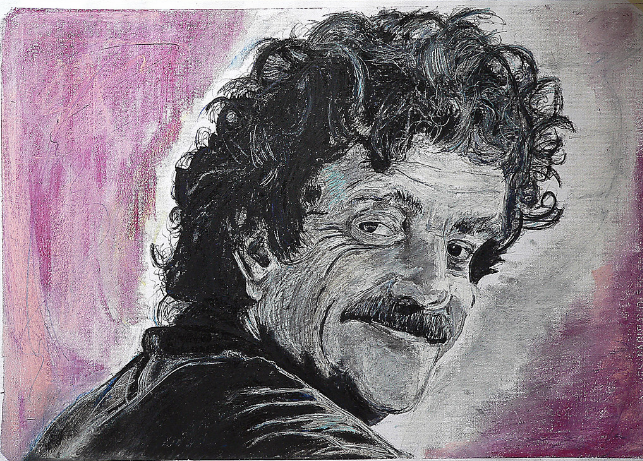
vonnegut drawing

Image by Daniele Prati, via Flickr Com­mons

Kurt Vonnegut’s 1963 nov­el Cat’s Cra­dle resem­bles its title, a web of over­lap­ping and entan­gled sto­ries, all of which have huge holes in the mid­dle. And the book—as have many of his slim, sur­re­al­ist pop masterpieces—was read by many crit­ics as lightweight—whimsical and sen­ti­men­tal.  One review­er in The New York Review of Books, for exam­ple, called Von­negut a “com­pil­er of easy to read tru­isms about soci­ety who allows everyone’s heart to be in the right place.”

Not so, argues Uni­ver­si­ty of Puer­to Rico schol­ar Mark Wekan­der Voigt. For all its silliness—such as its Calyp­so-heavy “par­o­dy of a mod­ern invent­ed reli­gion that will make every­one hap­py”—Cat’s Cra­dle, writes Voigt, “is essen­tial­ly about the moral issues involved in a demo­c­ra­t­ic gov­ern­ment using the atom bomb.” Vonnegut’s nov­el sug­gests that “to be real­ly eth­i­cal, to think about right and wrong, means that we must dis­pense with the author­i­ties who tell us what is right and wrong.”

John, the hero of Cat’s Cra­dle, begins his absur­dist hero’s quest by intend­ing to write a “fac­tu­al” account­ing of what “impor­tant Amer­i­cans had done on the day when the first atom­ic bomb was dropped on Hiroshi­ma, Japan.” The ref­er­ences would not have been lost on Vonnegut’s con­tem­po­rary read­ers, who would all have been famil­iar with John Hersey’s har­row­ing 1946 Hiroshi­ma, the most pop­u­lar book ever writ­ten about the drop­ping of the bomb, with six survivor’s sto­ries told in a thrilling, engag­ing style and “all the enter­tain­ment of a well-writ­ten nov­el.”

Von­negut, how­ev­er, writes an alien­at­ing anti-nov­el, in part to demon­strate his point that “to dis­cuss the eth­i­cal impli­ca­tions of drop­ping the bomb on Hiroshi­ma, one should not look at the vic­tims, but at those who were involved in devel­op­ing such a bomb and their gov­ern­ment.” Increas­ing­ly, how­ev­er, it becomes hard­er and hard­er to look at any­thing direct­ly. In the novel’s par­o­dy reli­gion, Bokonon­ism, all lies are poten­tial­ly truths, all truths poten­tial­ly lies. Lan­guage in the mil­i­tary-indus­tri­al-com­plex world of the bomb, Von­negut sug­gests, had become as change­able and poten­tial­ly dead­ly as the sub­stance called “Ice‑9,” a poly­morph of water that can instant­ly turn rivers, lakes, and even whole oceans into ice.

Evok­ing the nov­el­’s high-wire bal­anc­ing act of goofy songs and rit­u­als and metaphors for the glob­al anni­hi­la­tion of the earth by nuclear weapons, the 2001 album above, Ice‑9 Bal­lads, pairs Von­negut with com­pos­er Dave Sol­dier and the Man­hat­tan Cham­ber orches­tra for an adap­ta­tion, of sorts, of Cat’s Cra­dle. Von­negut nar­rates evoca­tive snatch­es of the book, and the songs illus­trate key themes, such as the strained patois the inhab­i­tants of the fic­tion­al island of San Loren­zo speak. One exam­ple, the phrase “Dyot meet mat” (“God made mud”), gives us the title and refrain of the sec­ond track on the album.

“The music switch­es tones through­out to match the tone of the nov­el at some lev­el,” writes All­mu­sic, and there are also two addi­tion­al, vague­ly-relat­ed pieces at the end. “A Soldier’s Sto­ry” is a “faux-radio opera,” notes Time Out New York’s Mol­ly Sheri­dan, with a libret­to, writ­ten by Von­negut, about Eddie Slovik, the only sol­dier exe­cut­ed for deser­tion dur­ing World War II. A lat­er 2005 release of “A Soldier’s Sto­ry” bore a Parental Advi­so­ry warn­ing, though it is “not the obscen­i­ties that cause alarm, but the way in which moral con­tra­dic­tions inher­ent in the tale res­onate against present-day mil­i­tary involve­ments.”

The final piece, “East St. Louis, 1968,” is a sur­pris­ing­ly exper­i­men­tal, orches­tral-backed pas­tiche of soul, hip-hop and gospel. Tru­ly, like many a Von­negut nov­el, Ice‑9 Bal­ladswrites All­mu­sic, is “get­ting the avant-garde label from the eclec­ti­cism in it, but pro­vid­ing decid­ed­ly non-avant garde bits and pieces through­out that make the whole.… Don’t go in expect­ing some­thing bland or pre­dictable.” See more cred­its for the album at its label’s web­site here.

You can stream Ice‑9 Bal­lads on Spo­ti­fy for free (get Spo­ti­fy’s free soft­ware here) or pur­chase a copy online.

Relat­ed Con­tent:

In 1988, Kurt Von­negut Writes a Let­ter to Peo­ple Liv­ing in 2088, Giv­ing 7 Pieces of Advice

Bene­dict Cum­ber­batch Reads Kurt Vonnegut’s Incensed Let­ter to the High School That Burned Slaugh­ter­house-Five

Kurt Von­negut Dia­grams the Shape of All Sto­ries in a Master’s The­sis Reject­ed by U. Chica­go

Josh Jones is a writer and musi­cian based in Durham, NC. Fol­low him at @jdmagness.

Franz Kafka Story Gets Adapted into an Award-Winning Australian Short Film: Watch Two Men

“When you go walk­ing by night up a street and a man, vis­i­ble a long way off — for the street mounts uphill and there is a full moon — comes run­ning toward you, well, you don’t catch hold of him, not even if he is a fee­ble and ragged crea­ture, not even if some­one chas­es yelling at his heels, but you let him run on.” Good advice, you might think, “for it is night, and you can’t help it if the street goes uphill before you in the moon­light, and besides, these two have maybe start­ed that chase to amuse them­selves, or per­haps they are both chas­ing a third, per­haps the first is an inno­cent man and the sec­ond wants to mur­der him and you would become an acces­so­ry.”

Or “per­haps they don’t know any­thing about each oth­er and are mere­ly run­ning sep­a­rate­ly home to bed, per­haps they are night birds, per­haps the first man is armed. And any­how, haven’t you a right to be tired, haven’t you been drink­ing a lot of wine? You’re thank­ful that the sec­ond man is now long out of sight.” So goes the entire­ty of “Passers-by,” a very short sto­ry — one might now use the label “flash fic­tion” — writ­ten some­time between 1908 and 1913 by none oth­er than Franz Kaf­ka. If short sto­ries make more suit­able bases for fea­ture-length films than nov­els do, sure­ly extra-short sto­ries do the same for short films. Direc­tor Dominic Allen test­ed that idea in 2009 with Two Men, the adap­ta­tion of “Passers-by” above.

Allen has also made the bold move of trans­plant­i­ng the sto­ry from Kafka’s home turf of a vague and alle­gor­i­cal Europe to the Kim­ber­ley, the north­ern tip of West­ern Aus­tralia and one of the first set­tled parts of the con­ti­nent — not by Euro­peans, but prob­a­bly by pre-Indone­sians of 41,000 years ago. “My hope was that by retelling a hun­dred year old philo­soph­i­cal tale set in Euro­pean city at night in such a dif­fer­ent con­text as deep in the Aus­tralian Kim­ber­ley in the heat of a sun­ny day and by hav­ing it retold by a mod­ern Indige­nous thinker,” writes Allen, “I would affirm an ele­ment of human­i­ty’s com­mon­al­i­ty.”

Two Men also hap­pened to win him the Emerg­ing Aus­tralian Film­mak­er Award at the Mel­bourne Inter­na­tion­al Film Fes­ti­val and the 2009 Inside Film Ris­ing Tal­ent Award, but his oth­er more imme­di­ate goals includ­ed cel­e­brat­ing “the robust and healthy youth of Fitzroy Cross­ing,” the town in which he and his col­lab­o­ra­tors filmed, and to “rein­force Kafka’s point that it’s impos­si­ble to ever tru­ly know anoth­er’s moti­va­tions.” Or, in the local­ly inflect­ed words of the short­’s motion­less observ­er-nar­ra­tor, “You just bloody nev­er know.”

Two Men will be added to our col­lec­tion, 4,000+ Free Movies Online: Great Clas­sics, Indies, Noir, West­erns, Doc­u­men­taries & More.

Relat­ed Con­tent:

Franz Kaf­ka: An Ani­mat­ed Intro­duc­tion to His Lit­er­ary Genius

Franz Kaf­ka: The Ani­mat­ed Short Film

Orson Welles Nar­rates Ani­mat­ed Ver­sion of Kafka’s Para­ble, “Before the Law”

Kafka’s Night­mare Tale, ‘A Coun­try Doc­tor,’ Told in Award-Win­ning Japan­ese Ani­ma­tion

Vladimir Nabokov (Chan­nelled by Christo­pher Plum­mer) Teach­es Kaf­ka at Cor­nell

Prague’s Franz Kaf­ka Inter­na­tion­al Named World’s Most Alien­at­ing Air­port

Based in Seoul, Col­in Mar­shall writes and broad­casts on cities and cul­ture. He’s at work on a book about Los Ange­les, A Los Ange­les Primer, the video series The City in Cin­e­ma, the crowd­fund­ed jour­nal­ism project Where Is the City of the Future?, and the Los Ange­les Review of Books’ Korea Blog. Fol­low him on Twit­ter at @colinmarshall or on Face­book.

Watch Soundbreaking, PBS’ 8‑Part Documentary Exploring the History of Recorded Music (Free for a Limited Time)

Update: After mak­ing the videos avail­able for a cou­ple of weeks, PBS has now tak­en them down. If you’re real­ly inter­est­ed in watch­ing Sound­break­ing, you can pur­chase it in DVD for­mat. It’s worth it.

From Novem­ber 14 through Novem­ber 23, PBS is air­ing an eight-part series, Sound­break­ing, which explores the art of record­ing music and the moments when new sounds were born. The series fea­tures “more than 160 orig­i­nal inter­views with some of the most cel­e­brat­ed record­ing artists of all time,” high­light­ing the “cut­ting-edge tech­nol­o­gy” that trans­formed the way we make music. You can now stream 3 of the first 8 episodes online, with the rest soon to come. If there are any geo-restric­tions, we apol­o­gize in advance.

Watch the first episode, “The Art of Record­ing,” up top. Leg­endary pro­duc­ers like Bri­an Eno, Daniel Lanois, Quin­cy Jones, Tony Vis­con­ti, Rick Rubin and George Mar­tin all make appear­ances.

A new episode should appear each day. To find them, click here and then scroll down.

If you would like to sign up for Open Culture’s free email newslet­ter, please find it here. It’s a great way to see our new posts, all bun­dled in one email, each day.

If you would like to sup­port the mis­sion of Open Cul­ture, con­sid­er mak­ing a dona­tion to our site. It’s hard to rely 100% on ads, and your con­tri­bu­tions will help us con­tin­ue pro­vid­ing the best free cul­tur­al and edu­ca­tion­al mate­ri­als to learn­ers every­where. You can con­tribute through Pay­Pal, Patre­on, and Ven­mo (@openculture). Thanks!

Relat­ed Con­tent:

265 Free Doc­u­men­taries Online

All Hail the Beat: How the 1980 Roland TR-808 Drum Machine Changed Pop Music

The Only Known Footage of Louis Arm­strong in a Record­ing Stu­dio: Watch the Recent­ly-Dis­cov­ered Film (1959)

Take a Vir­tu­al Tour of Abbey Road Stu­dios, Cour­tesy of the New Google Site “Inside Abbey Road”

Pro­duc­er Tony Vis­con­ti Breaks Down the Mak­ing of David Bowie’s Clas­sic “Heroes,” Track by Track

by | Permalink | Make a Comment ( 4 ) |

Zen Master Alan Watts Explains What Made Carl Jung Such an Influential Thinker

The twen­ti­eth cen­tu­ry pro­duced a fair few thinkers on the human mind whose obser­va­tions still res­onate today. The Swiss psy­chi­a­trist and psy­chother­a­pist Carl Gus­tav Jung cer­tain­ly appears in that group, as does the British philoso­pher and inter­preter of Bud­dhism Alan Watts, and though not a week goes by when I don’t hear their words cit­ed, I sel­dom hear the words of both of them cit­ed by the same per­son. Though near­ly two gen­er­a­tions (among oth­er things) sep­a­rat­ed Watts and Jung, the two men did once meet, in 1958, as Watts trav­eled through Europe with his father. Three years lat­er, Jung passed on and Watts record­ed the lec­ture above.

What made Jung such an impor­tant observ­er of human­i­ty? Watts points to “one fun­da­men­tal prin­ci­ple that under­lay all his work and that was most extra­or­di­nar­i­ly exem­pli­fied in Jung him­self as a per­son,” which he calls Jung’s “recog­ni­tion of the polar­i­ty of life. That is to say, his resis­tance to what is to my mind the dis­as­trous and absurd hypoth­e­sis, that there is in this uni­verse a rad­i­cal and absolute con­flict between good and evil, light and dark­ness that can nev­er nev­er nev­er be har­mo­nized.”

He goes on to talk for a lit­tle under an hour about about Jung him­self, Jung’s influ­ence on his own work as a “com­par­a­tive philoso­pher,” and the con­tin­u­ing rel­e­vance of Jung’s ideas to the mod­ern world — all of which he ties togeth­er in an inte­grat­ed trib­ute to this “inte­grat­ed char­ac­ter.”

“There is a nice Ger­man word, hin­tergedanken, which means a thought in the very far far back of your mind,” says Watts. “Jung had a hin­tergedanken in the back of his mind that showed in the twin­kle in his eye. It showed that he knew and rec­og­nized what I some­times call the ele­ment of irre­ducible ras­cal­i­ty in him­self. And he knew it so strong­ly and so clear­ly, and in a way so lov­ing­ly, that he would not con­demn the same thing in oth­ers, and would there­fore not be led into those thoughts, feel­ings, and acts of vio­lence towards oth­ers which are always char­ac­ter­is­tic of the peo­ple who project the dev­il in them­selves upon the out­side, upon some­body else, upon the scape­goat.” And so, whether we enter into this field of thought through Watts, through Jung, or through any­one else, it always seems to comes back to the ancient Greeks: “Know thy­self.”

Relat­ed Con­tent:

Carl Jung’s Hand-Drawn, Rarely-Seen Man­u­script The Red Book: A Whis­pered Intro­duc­tion

Carl Jung Explains His Ground­break­ing The­o­ries About Psy­chol­o­gy in Rare Inter­view (1957)

Carl Jung’s Fas­ci­nat­ing 1957 Let­ter on UFOs

Based in Seoul, Col­in Mar­shall writes and broad­casts on cities and cul­ture. He’s at work on a book about Los Ange­les, A Los Ange­les Primer, the video series The City in Cin­e­ma, the crowd­fund­ed jour­nal­ism project Where Is the City of the Future?, and the Los Ange­les Review of Books’ Korea Blog. Fol­low him on Twit­ter at @colinmarshall or on Face­book.

Philosopher Richard Rorty Chillingly Predicts the Results of the 2016 Election … Back in 1998

rorty

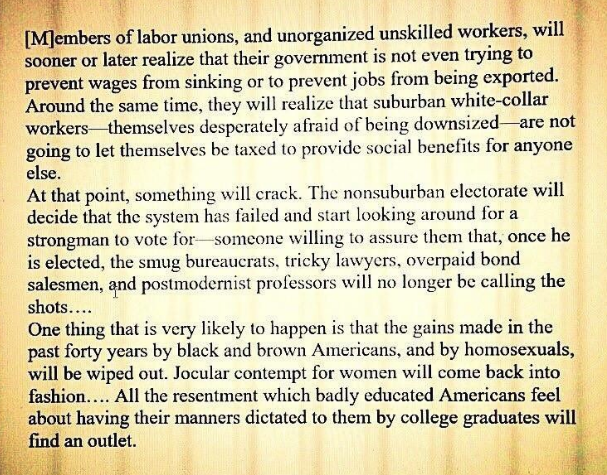
Twen­ty years ago a strong aca­d­e­m­ic left in uni­ver­si­ties all over the world spoke to polit­i­cal cul­ture the way that a glob­al­ized nation­al­ist far-right seems to now. Among pub­lic intel­lec­tu­als in the U.S., Richard Rorty’s name held par­tic­u­lar sway. Yet in his con­trar­i­an 1998 book Achiev­ing Our Coun­try, Rorty argued against the par­tic­i­pa­tion of phi­los­o­phy in pol­i­tics. A mem­ber of the so-called “Old Left,” or what he called the “reformist left,” Rorty took on the “Cul­tur­al Left” in ways we now hear in (often bit­ter) debates between sim­i­lar camps. In the course of his attacks, he made the uncan­ny pre­dic­tion above.

The cul­tur­al left, wrote Rorty, had come “to give cul­tur­al pol­i­tics pref­er­ence over real pol­i­tics, and to mock the very idea that demo­c­ra­t­ic insti­tu­tions might once again be made to serve social jus­tice.” He fore­saw cul­tur­al pol­i­tics on the left as con­tribut­ing to a tidal wave of resent­ment that would one day result in a time when “all the sadism which the aca­d­e­m­ic left has tried to make unac­cept­able to its stu­dents will come flood­ing back.”

As demo­c­ra­t­ic insti­tu­tions fail, he writes in the quote above:

[M]embers of labor unions, and unor­ga­nized unskilled work­ers, will soon­er or lat­er real­ize that their gov­ern­ment is not even try­ing to pre­vent wages from sink­ing or to pre­vent jobs from being export­ed. Around the same time, they will real­ize that sub­ur­ban white-col­lar workers—themselves des­per­ate­ly afraid of being downsized—are not going to let them­selves be taxed to pro­vide social ben­e­fits for any­one else.

At that point, some­thing will crack. The non­sub­ur­ban elec­torate will decide that the sys­tem has failed and start look­ing around for a strong­man to vote for—someone will­ing to assure them that, once he is elect­ed, the smug bureau­crats, tricky lawyers, over­paid bond sales­men, and post­mod­ernist pro­fes­sors will no longer be call­ing the shots. A sce­nario like that of Sin­clair Lewis’ nov­el It Can’t Hap­pen Here may then be played out. For once a strong­man takes office, nobody can pre­dict what will hap­pen. In 1932, most of the pre­dic­tions made about what would hap­pen if Hin­den­burg named Hitler chan­cel­lor were wild­ly overop­ti­mistic.

One thing that is very like­ly to hap­pen is that the gains made in the past forty years by black and brown Amer­i­cans, and by homo­sex­u­als, will be wiped out. Joc­u­lar con­tempt for women will come back into fash­ion. The words [slur for an African-Amer­i­can that begins with “n”] and [slur for a Jew­ish per­son that begins with “k”] will once again be heard in the work­place. All the sadism which the aca­d­e­m­ic Left has tried to make unac­cept­able to its stu­dents will come flood­ing back. All the resent­ment which bad­ly edu­cat­ed Amer­i­cans feel about hav­ing their man­ners dic­tat­ed to them by col­lege grad­u­ates will find an out­let.

He also then argues, how­ev­er, that this sadism will not sole­ly be the result of “eco­nom­ic inequal­i­ty and inse­cu­ri­ty,” and that such expla­na­tions would be “too sim­plis­tic.” Nor would the strong­man who comes to pow­er do any­thing but wors­en eco­nom­ic con­di­tions. He writes next, “after my imag­ined strong­man takes charge, he will quick­ly make his peace with the inter­na­tion­al super­rich.”

Rorty blamed the Marx­ist New Left for “retreat­ing from prag­ma­tism into the­o­ry,” wrote The New York Times in its review of Achiev­ing Our Coun­try. He felt the cul­tur­al left had aban­doned the “Amer­i­can exper­i­ment as sec­u­lar, anti-author­i­tar­i­an and infi­nite in pos­si­bil­i­ties,” such as “Whit­man ide­al­ized as lov­ing rela­tion­ships and Dewey as good cit­i­zen­ship.” The Times wrote then that Rorty’s pre­dic­tions above were a form of “intel­lec­tu­al bul­ly­ing.” We can take our dystopi­an futures from sci-fi nov­el­ists and film­mak­ers, but when philoso­phers “harus­pi­cate or scry,” as T.S. Eliot wrote in “The Dry Sal­vages,” we tend to dis­miss it as the “usu­al / Pas­times and drugs, and fea­tures of the press.”

The emi­nent Stan­ford pro­fes­sor exhort­ed his con­tem­po­raries to leave behind “semi­con­scious anti-Amer­i­can­ism” and embrace prag­mat­ic civ­il engage­ment, and did so by offer­ing up exam­ples from Amer­i­can lit­er­a­ture and phi­los­o­phy that all had fierce activist strains. Exco­ri­at­ing one kind of life of the mind, Rorty can’t help but offer anoth­er. “What does Rorty offer as a solu­tion?” asked the Times review, “Not real­ly very much.” Per­haps not to politi­cians. But to the post­mod­ern aca­d­e­mics and writ­ers he accused, he offers up as counter exam­ples Walt Whit­man, John Dewey, and—as Rorty not­ed in an inter­view—James Bald­win, whose “use of the phrase… achiev­ing our coun­try” inspired his book’s title, Achiev­ing Our Coun­try.

via Slate

Relat­ed Con­tent:

Octavia Butler’s 1998 Dystopi­an Nov­el Fea­tures a Fascis­tic Pres­i­den­tial Can­di­date Who Promis­es to “Make Amer­i­ca Great Again”

John Sear­le on Fou­cault and the Obscu­ran­tism in French Phi­los­o­phy

Hux­ley to Orwell: My Hell­ish Vision of the Future is Bet­ter Than Yours (1949)

Josh Jones is a writer and musi­cian based in Durham, NC. Fol­low him at @jdmagness.

« Go BackMore in this category... »
Quantcast