Introduction to Philosophy: A Free Online Course

From John Sanders, Pro­fes­sor of Phi­los­o­phy at the Rochester Insti­tute of Tech­nol­o­gy, comes Intro­duc­tion to Phi­los­o­phy. In 10 lec­tures, Sanders’ course cov­ers the fol­low­ing ground:

Phi­los­o­phy is about the rig­or­ous dis­cus­sion of big ques­tions, and some­times small pre­cise ques­tions, that do not have obvi­ous answers. This class is an intro­duc­tion to philo­soph­i­cal think­ing where we learn how to think and talk crit­i­cal­ly about some of these chal­leng­ing ques­tions. Such as: Is there a sin­gle truth or is truth rel­a­tive to dif­fer­ent peo­ple and per­spec­tives? Do we have free will and, if so, how? Do we ever real­ly know any­thing? What gives life mean­ing? Is moral­i­ty objec­tive or sub­jec­tive, dis­cov­ered or cre­at­ed? We’ll use his­tor­i­cal and con­tem­po­rary sources to clar­i­fy ques­tions like these, to under­stand the stakes, to dis­cuss pos­si­ble respons­es, and to arrive at a more coher­ent, more philo­soph­i­cal­ly informed, set of answers.

Thinkers cov­ered include Aris­to­tle, Pla­to, and Descartes, among oth­ers. And along the way, the course intro­duces you to empiri­cism, ratio­nal­ism, onto­log­i­cal and tele­o­log­i­cal arguments–essentially the nit­ty grit­ty of phi­los­o­phy.

You can stream all the lec­tures above, or find them all on this YouTube playlist.

Sanders has also made oth­er cours­es avail­able on YouTube, includ­ing Social and Polit­i­cal Phi­los­o­phy, Phi­los­o­phy of Sci­ence, Pro­fes­sion­al Ethics, and Sym­bol­ic Log­ic.

They’ve all been added to our list of Free Phi­los­o­phy Cours­es, a sub­set of our meta col­lec­tion, 1,700 Free Online Cours­es from Top Uni­ver­si­ties.

Relat­ed Con­tent:

Intro­duc­tion to Polit­i­cal Phi­los­o­phy: A Free Yale Course

Free: Lis­ten to John Rawls’ Course on “Mod­ern Polit­i­cal Phi­los­o­phy” (Record­ed at Har­vard, 1984)\

Oxford’s Free Course A Romp Through Ethics for Com­plete Begin­ner­sWill Teach You Right from Wrong

Oxford’s Free Course Crit­i­cal Rea­son­ing For Begin­ners Will Teach You to Think Like a Philoso­pher

The His­to­ry of Phi­los­o­phy With­out Any Gaps – Peter Adamson’s Pod­cast Still Going Strong

by | Permalink | Make a Comment ( 1 ) |

Albert Camus Explains Why Happiness Is Like Committing a Crime—“You Should Never Admit to it” (1959)

Note: You can read a trans­la­tion below.

Hap­pi­ness, as it has been con­ceived for at least the past cou­ple thou­sand years in West­ern phi­los­o­phy, is a prob­lem. For the Greeks, hap­pi­ness was only one com­po­nent of Eudai­mo­nia, a gen­er­al human flour­ish­ing that must be devel­oped along with ethics, per­son­al growth, and social and civic duty in order for a life to have pur­pose and mean­ing. “Pos­i­tive psy­chol­o­gy speak­er” Dr. Nico Rose reminds us that the con­cept con­trasts with Hedo­nia (as in “hedo­nism”), which relates sole­ly to per­son­al plea­sure and enjoy­ment, such as the kind famous­ly indulged in by many an ancient tyrant.

These are not mutu­al­ly exclu­sive cat­e­gories. “Mean­ing­ful expe­ri­ences can cer­tain­ly bring about plea­sure,” writes Rose, “and tak­ing care of our­selves can cer­tain­ly add mean­ing to our lives.” We should, he cau­tions “refrain from equat­ing the pur­suit of hedo­nia with shal­low­ness.”

The prob­lem, as the Greeks under­stood it—and as pro­po­nents of pos­i­tive psy­chol­o­gy like Jonathan Haidt and founder Mar­tin Selig­man rec­og­nize as well—is that sub­jec­tive hap­pi­ness for some can mean deep unhap­pi­ness, or tyran­ny, for oth­ers. It can mean pet­ti­ness, apa­thy, and emo­tion­al imma­tu­ri­ty, qual­i­ties that may not nec­es­sar­i­ly be immoral but are cer­tain­ly unpleas­ant and social­ly cor­ro­sive.

But we might refer to the dif­fer­ence between Hedo­nia and Eudai­mo­nia anoth­er way. Matthew Pianal­to at Phi­los­o­phy Now dis­cuss­es the con­trast as one between “psy­cho­log­i­cal and philo­soph­i­cal con­cepts of hap­pi­ness.”

When hap­pi­ness is equat­ed with sub­jec­tive well-being, the vast major­i­ty of peo­ple turn out to be rel­a­tive­ly hap­py. Aris­to­tle and the oth­er Greeks, how­ev­er, were not con­cerned with rel­a­tive or sub­jec­tive hap­pi­ness – they want­ed to know what the objec­tive fea­tures of a tru­ly hap­py life would be. Greek inquiries into the nature of the good life were real­ly inquiries into the nature of the best life. Thus, when the var­i­ous Greek philoso­phers rec­om­mend­ed the cul­ti­va­tion of virtue in order to live hap­pi­ly, and since the word we trans­late as ‘virtue’ real­ly means ‘excel­lence’, the Greeks were basi­cal­ly telling us that the hap­pi­est (and the best) life is the most excel­lent life.

Is this mor­al­iza­tion real­ly nec­es­sary for human flour­ish­ing, and does it actu­al­ly pro­mote a supe­ri­or form of hap­pi­ness? Or does it sim­ply intro­duce a means for con­trol­ling oth­er people’s behav­ior and sham­ing them for their sup­posed lack of virtue? If you were to ask Albert Camus this ques­tion, he might have sug­gest­ed the lat­ter, and any­one who has read The Stranger and thought about the social coer­cion the nov­el por­trays will hard­ly be sur­prised. In the video above, Camus strong­ly implies his own view with an imag­ined Stranger-like dia­logue, in French. A trans­la­tion (gen­er­ous­ly pro­vid­ed by @TOS1892) rough­ly reads:

“Today hap­pi­ness is like a crime—never admit it. Don’t say ‘I’m hap­py’ oth­er­wise you will hear con­dem­na­tion all around.”

“’So you’re hap­py, young man? What do you do with orphans from Kash­mir? Or the New Zealand lep­ers who aren’t “hap­py” as you say?’” 

“Yes what to do with the lep­ers? How to get rid of them as Ionesco would say? And all of a sud­den, we are sad as tooth­picks.”

As Maria Popo­va points out at Brain Pick­ings, Camus con­sid­ered this kind of labored, almost rig­or­ous, kind of unhap­pi­ness a “self-imposed prison,” writ­ing in a 1956 let­ter that “those who pre­fer their prin­ci­ples over their hap­pi­ness… refuse to be hap­py out­side the con­di­tions they seem to have attached to their hap­pi­ness. If they are hap­py by sur­prise, they find them­selves dis­abled, unhap­py to be deprived of their unhap­pi­ness.” (I can’t help but think of these lines: “And if the day came when I felt a nat­ur­al emo­tion / I’d get such a shock I’d prob­a­bly jump in the ocean.”)

Camus rec­og­nized emo­tions not as abstract prin­ci­ples, but as deeply con­nect­ed to “the sol­i­dar­i­ty of our bod­ies, uni­ty at the cen­ter of the mor­tal and suf­fer­ing flesh.” The cor­rec­tive to a shal­low hedo­nism that might over­ride our ethics is not a striv­ing after philo­soph­i­cal notions of “excel­lence,” but anoth­er emo­tion, unhap­pi­ness, which we should also not be ashamed to feel. “No,” wrote Camus, “it is not humil­i­at­ing to be unhap­py.” The philoso­pher wrote these words to a hos­pi­tal­ized friend who was suf­fer­ing phys­i­cal­ly, a con­di­tion, he admits, that is “some­times humil­i­at­ing.” But the more exis­ten­tial “suf­fer­ing of being can­not be” a humil­i­a­tion. “It is life,” and it forces us to see things we would rather not see.

Do these alter­na­tions of hap­pi­ness and unhap­pi­ness point toward some­thing larg­er than the fleet­ing whims of phys­i­cal pain or per­son­al sat­is­fac­tion? Yes, Camus thought, but the fact that we need them does not speak espe­cial­ly well of peo­ple in what he called a “servile cen­tu­ry.” In his note­books, Camus con­sid­ered how, through sor­row, Oscar Wilde came to under­stand art as some­thing that “must blend with all” rather than tran­scend ordi­nary life. “It is the cul­pa­bil­i­ty of this era,” he writes, “that it always need­ed sor­row… to catch a glimpse of a truth also found in hap­pi­ness.”

It is entire­ly pos­si­ble to be hap­py and vir­tu­ous, authen­tic, and truth­ful, Camus sug­gests, “when the heart is wor­thy.” In some ways, it seems, he reframed the ancient Greeks’ idea of Eudai­mo­nia from an abstract philo­soph­i­cal prin­ci­ple to a sub­jec­tive psy­cho­log­i­cal state, since there is no clear, objec­tive way in an absurd uni­verse, he thought, to know what an “excel­lent” life should look like. Still, like Aris­to­tle, Camus sug­gests that pur­su­ing mean­ing­ful hap­pi­ness is a “moral oblig­a­tion” writes Popo­va. But he under­stands this pur­suit as per­ilous and poten­tial­ly dev­as­tat­ing, neces­si­tat­ing “an equal capac­i­ty for con­tact with absolute despair.”

via @pbkauf

Relat­ed Con­tent:

Albert Camus, Edi­tor of the French Resis­tance News­pa­per Com­bat, Writes Mov­ing­ly About Life, Pol­i­tics & War (1944–47)

Hear Albert Camus Read the Famous Open­ing Pas­sage of The Stranger (1947)

Albert Camus Talks About Nihilism & Adapt­ing Dostoyevsky’s The Pos­sessed for the The­atre, 1959

Josh Jones is a writer and musi­cian based in Durham, NC. Fol­low him at @jdmagness

Pink Floyd’s “Echoes” Provides a Soundtrack for the Final Scene of Kubrick’s 2001: A Space Odyssey

What hap­pens when you cue up The Wiz­ard of Oz (1939) and Pink Floy­d’s Dark Side of the Moon (1973), and play them togeth­er? You get some­thing mag­i­cal. Or, to be more pre­cise, you get “Dark Side of the Rain­bow,” a mashup that first began cir­cu­lat­ing in 1995, back when the inter­net first went com­mer­cial. Watch “Dark Side of the Rain­bow” (here) and you could believe that Floyd wrote Dark Side as a stealth Wiz­ard of Oz soundtrack–though that’s some­thing the band firm­ly denies. And, we believe them.

But bury one rumor, and anoth­er takes its place. The Vimeo cap­tion accom­pa­ny­ing the oth­er mashup above reads as fol­lows:

It has long been rumoured that Pink Floyd set ‘Echoes’ to the final sequence of Stan­ley Kubrick­’s, ‘2001: A Space Odyssey’. Two years before pro­duc­ing their album ‘Med­dle’, fea­tur­ing the 23 minute piece ‘Echoes’, Pink Floyd worked on the ‘More’ French film sound­track, where they worked with film syn­chro­ni­sa­tion equip­ment. From there the rumours blos­somed, with Roger Waters being mis­quot­ed as say­ing the band were orig­i­nal­ly offered to do the sound­track (they in fact turned down an offer to fea­ture the ‘Atom Heart Moth­er’ suite in ‘A Clock­work Orange’). Whether or not the rumours have any basis in fact, there is an unde­ni­able beau­ty when watch­ing the com­bi­na­tion of Kubrick­’s intri­cate stop-motion uni­verse, cou­pled with the psy­che­del­ic won­ders of Pink Floyd.

This last thought is sec­ond­ed by phi­los­o­phy pro­fes­sor Joe Steiff, who, writ­ing in the edit­ed col­lec­tion, Pink Floyd and Phi­los­o­phy, adds this:

A less­er-known mashup is the sync­ing of “Echoes” (from Med­dle) with the final twen­ty min­utes of Stan­ley Kubrick­’s 1968 film 2001: A Space Odyssey (begin­ning with “Jupiter and Beyond the Infi­nite”)… [T]he mashup is coher­ent and cohe­sive. The emo­tion­al tone of the music and the images work in near-har­mo­ny, result­ing in a mashup that stands up to repeat­ed view­ings.… Both the movie and the music feed into and expand the sense of mys­tery and unknowa­bil­i­ty that each explores inde­pen­dent­ly.

Watch “Echoes Odyssey” above and see for your­self.

If you would like to sign up for Open Culture’s free email newslet­ter, please find it here. It’s a great way to see our new posts, all bun­dled in one email, each day.

If you would like to sup­port the mis­sion of Open Cul­ture, con­sid­er mak­ing a dona­tion to our site. It’s hard to rely 100% on ads, and your con­tri­bu­tions will help us con­tin­ue pro­vid­ing the best free cul­tur­al and edu­ca­tion­al mate­ri­als to learn­ers every­where. You can con­tribute through Pay­Pal, Patre­on, and Ven­mo (@openculture). Thanks!

Relat­ed Con­tent:

Dark Side of the Rain­bow: Pink Floyd Meets The Wiz­ard of Oz in One of the Ear­li­est Mash-Ups

Hear Lost Record­ing of Pink Floyd Play­ing with Jazz Vio­lin­ist Stéphane Grap­pel­li on “Wish You Were Here”

Pink Floyd’s David Gilmour Sings Shakespeare’s Son­net 18

by | Permalink | Make a Comment ( 8 ) |

Download Russian Futurist Book Art (1910–1915): The Aesthetic Revolution Before the Political Revolution

Giv­en the image of Com­mu­nist Rus­sia we’ve most­ly inher­it­ed from Cold War Hol­ly­wood pro­pa­gan­da and cher­ry-picked TV doc­u­men­taries, we tend to think of Com­mu­nist art as ster­ile, bru­tal­ist, devoid of expres­sive emo­tion and exper­i­ment. But this has nev­er been entire­ly so. While Par­ty-approved social real­ism dom­i­nat­ed in cer­tain decades, exper­i­men­tal Russ­ian ani­ma­tion, film, design, and lit­er­a­ture flour­ished, even under extreme­ly harsh con­di­tions one wouldn’t wish on any artist.

In the ear­ly days of the Rev­o­lu­tion, one of the most influ­en­tial forms of expres­sion, Russ­ian Futur­ism, brought its avant-gardism to the mass­es, and praised the Rev­o­lu­tion while for­mal­ly chal­leng­ing every received idea or doc­trine. Begin­ning in the ear­ly 20th cen­tu­ry and work­ing until the Sovi­et Union was formed and Trot­sky ban­ished, Futur­ist poets and artists like Vladimir Mayakovsky, Kaz­imir Male­vich, Nalia Gon­charo­va, and Velimir Khleb­nikov con­tributed to a style called “Zaum,” a word, as we not­ed in a pre­vi­ous post, that can mean “tran­srea­son” or “beyond sense.” (A very unsci­en­tif­ic, bour­geois approach, it would lat­er be alleged by the Cen­tral Com­mit­tee.)

Like mod­ernist move­ments all over Europe, Russ­ian Futur­ism took risks in every medi­um, but took a much more Dadaist approach than the Ital­ian Futur­ists who had part­ly inspired them. They pub­lished prolifically—creating hun­dreds of books and jour­nals between 1910 and 1930. A new book from Get­ty Research Insti­tute cura­tor Nan­cy Perloff, Explodi­ty: Sound, Image, and Word in Russ­ian Futur­ist Book Art, cov­ers the first five years of that period—pre-Revolutionary but no more nor less rad­i­cal. Her book is accom­pa­nied by an “inter­ac­tive com­pan­ion,” a site that allows users to see the pub­li­ca­tions and poems Perloff exam­ines. If you scroll down to the bot­tom of the page, you’ll find a link to “dig­i­tized Russ­ian avant-garde books from the Get­ty Research Insti­tute.”

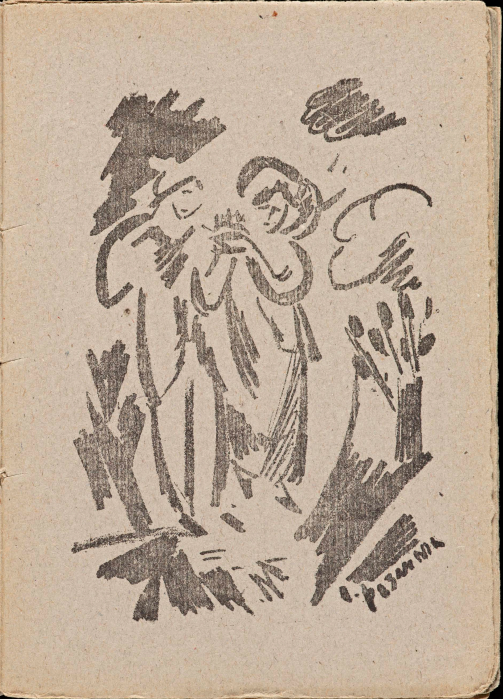
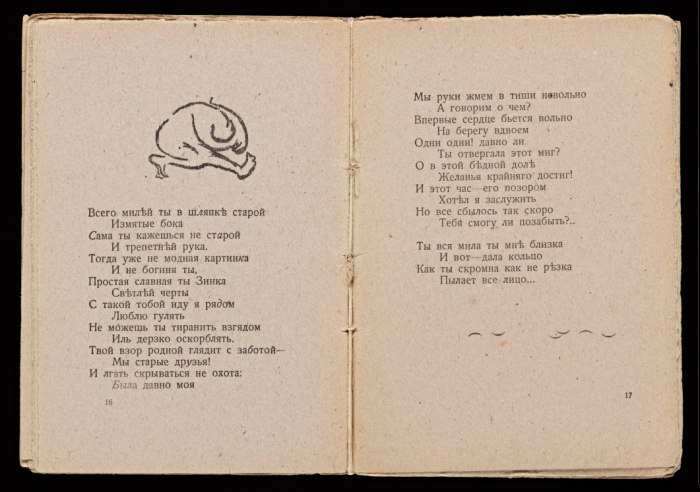
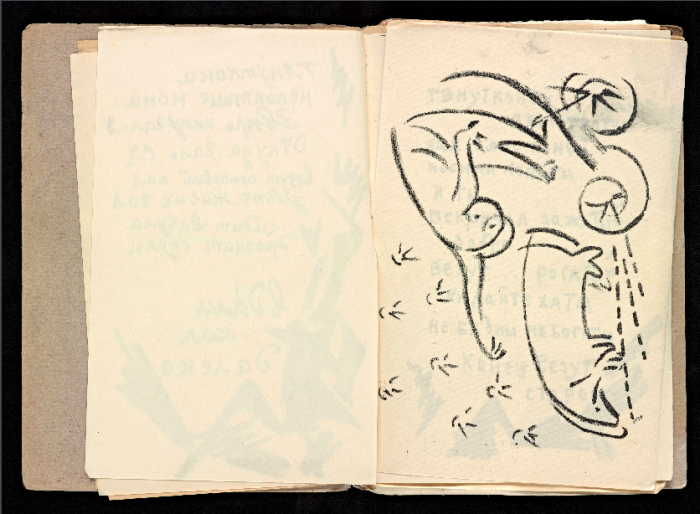
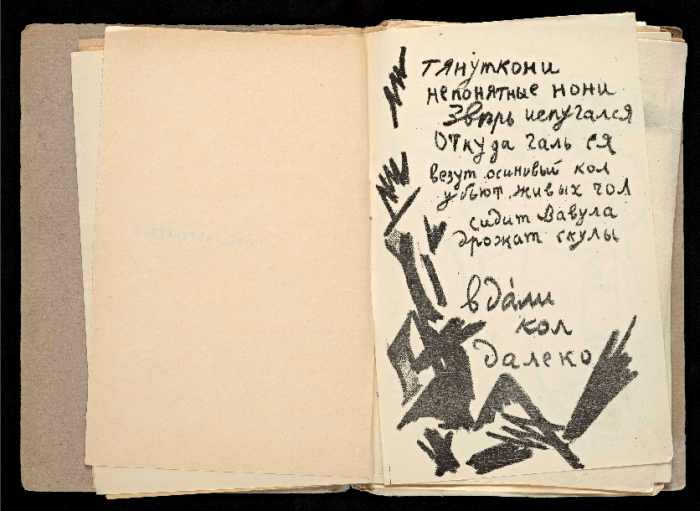
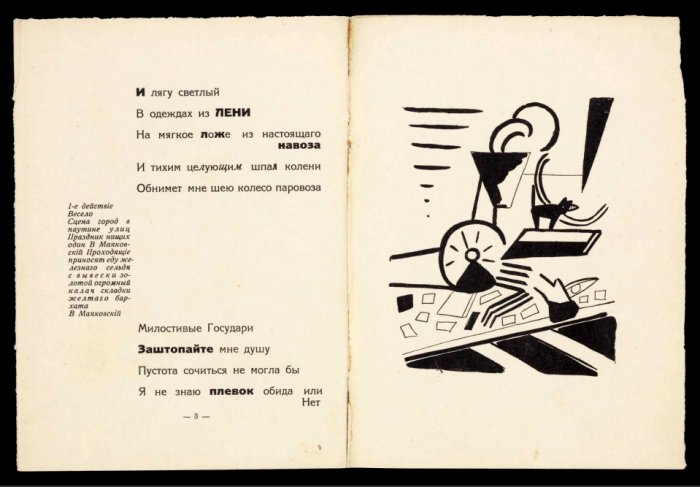
This archive con­tains about four dozen books by artist/poets like Khleb­nikov whose 1914 Old-Fash­ioned Love; Forest­ly Boom, you can see pages from at the top of the post. Fur­ther up and just above, we see excerpts from Alex­ei Kruchenykh’s 1913 Vzor­val’ (Explodi­ty), a most­ly hand-let­tered pub­li­ca­tion with whim­si­cal, dynam­ic draw­ings alter­nat­ing with and sur­round­ing the text. You’ll find over four dozen of these books at the Get­ty Research Insti­tute. As you browse or search their cat­a­logue, then click on an entry, you’ll want to click on the “View Online” but­ton to see scanned images.

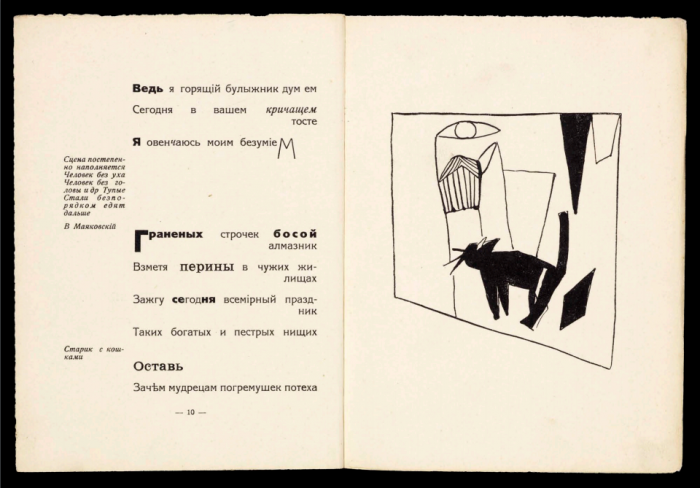
Each of these books—like Vladimir Mayakovsky’s 1913 play, Vladimir Mayakovsky: A Tragedy, above and below—makes a force­ful visu­al impres­sion even if we can­not under­stand the text. But in many ways, this is beside the point. Zaum poet­ry was meant to be heard as sound, not sense, and looked at as a phys­i­cal arti­fact. Perloff’s book, writes the Get­ty, “uncov­ers a wide-rang­ing lega­cy in the mid­cen­tu­ry glob­al move­ment of sound and con­crete poet­ry (the Brazil­ian Noigan­dres group, Ian Hamil­ton Fin­lay, and Hen­ri Chopin), con­tem­po­rary West­ern con­cep­tu­al art, and the artist’s book.” In many ways, these artists rep­re­sent a par­al­lel tra­di­tion in mod­ernism to the one we gen­er­al­ly learn of in West­ern Europe and the U.S., and one just as rich and fas­ci­nat­ing.

Relat­ed Con­tent:

Down­load 144 Beau­ti­ful Books of Russ­ian Futur­ism: Mayakovsky, Male­vich, Khleb­nikov & More (1910–30)

Hear Russ­ian Futur­ist Vladimir Mayakovsky Read His Strange & Vis­cer­al Poet­ry

Hear the Exper­i­men­tal Music of the Dada Move­ment: Avant-Garde Sounds from a Cen­tu­ry Ago

Josh Jones is a writer and musi­cian based in Durham, NC. Fol­low him at @jdmagness

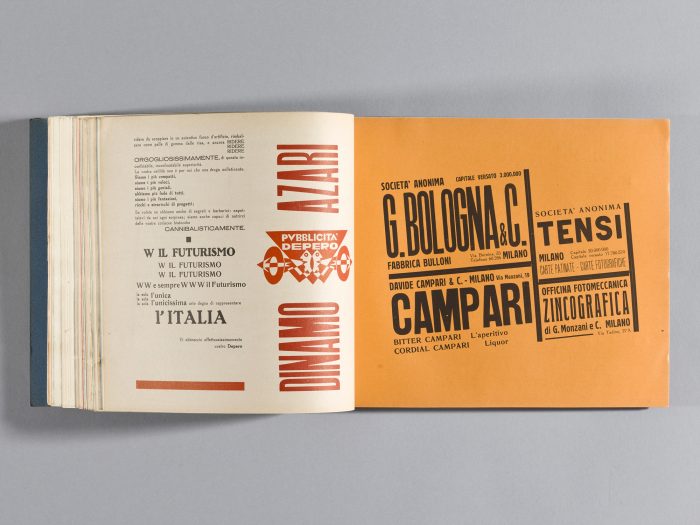
Every Page of Depero Futurista, the 1927 Futurist Masterpiece of Graphic Design & Bookmaking, Is Now Online

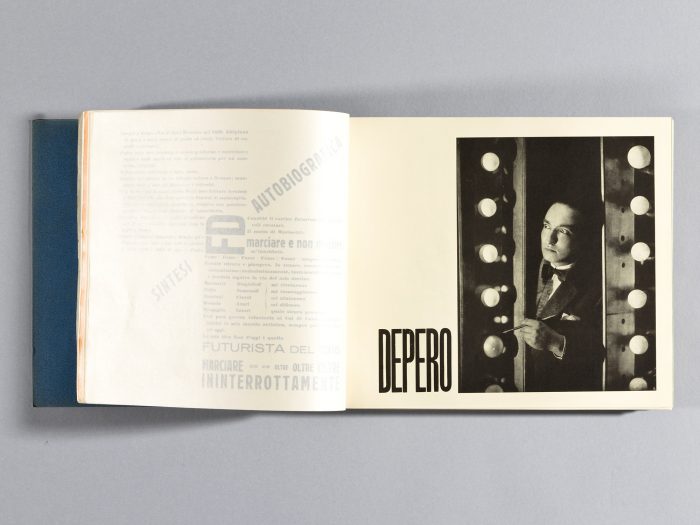
You can try to dis­man­tle your e‑reader, but you can’t unscrew an eBook. Despite hav­ing cast his artis­tic mind, as did his fel­low 20th-cen­tu­ry Ital­ian Futur­ists, force­ful­ly into the world to come, could For­tu­na­to Depero have imag­ined that such a ques­tion would arise in the 21st? The Trenti­no-born painter, writer, sculp­tor, and graph­ic design­er, led a high­ly cre­ative life, pro­duc­ing no work more endur­ing than the instant­ly rec­og­niz­able Cam­pari Soda bot­tle. But just last year, a group of enthu­si­asts suc­cess­ful­ly raised more than $250,000 on Kick­starter to bring back into print Deper­o’s sec­ond-best-known cre­ation: Depero Futur­ista, also known as “The Bolt­ed Book.”

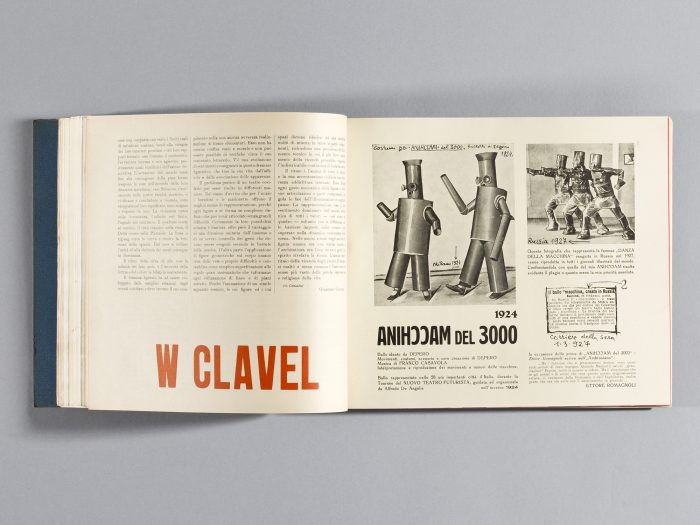
Designed by Depero as “a kind of portable muse­um or call­ing card, a port­fo­lio of his career to date — includ­ing paint­ings, sculp­tures, tex­tile and archi­tec­tur­al designs, the­ater and adver­tis­ing work, word­plays, man­i­festoes, and reviews he received in many dif­fer­ent lan­guages,” Depero Futur­ista, as described by the reprint pro­jec­t’s web site, also shows off his “skills as a design­er and typo­graph­i­cal wiz­ard.”

These impress as much in 2017 as they must have at the time of the book’s first pub­li­ca­tion nine­ty years ago in Milan, and the bind­ing method remains as dis­tinc­tive: “Com­pris­ing 240 pages, the book is secured by two large indus­tri­al alu­minum bolts that when removed allow for the pages to be removed, rearranged, or exhib­it­ed indi­vid­u­al­ly.”

You may nev­er have heard of Depero, but today’s most respect­ed design­ers cer­tain­ly have, and some of them appear in the pro­jec­t’s Kick­starter pro­mo video giv­ing tes­ti­mo­ni­als not just to the impor­tance of Deper­o’s aes­thet­ic achieve­ments in gen­er­al but The Bolt­ed Book in par­tic­u­lar. It offers a “bridge between the past and the future” in design, an inno­v­a­tive, iron­ic, and play­ful use of the “machine aes­thet­ic,” and evi­dence that “Depero, despite his idio­syn­crasies, was one of the most cre­ative of the Futur­ists.” (It also, of course, holds the title of the first-ever book “bolt­ed by two giant clasps.”) But per­haps the most com­pelling comes from Ste­fan Sag­meis­ter: “This book con­tains the favorite pack­ag­ing of my favorite drink, Cam­pari Soda. For this alone, it should be con­tributed at prop­er­ly — Kick­start­ed.”

Suc­cess­ful­ly Kick­start­ed, the new and 100 per­cent faith­ful reprint of Depero Futur­ista (whose few sur­viv­ing orig­i­nals sit most­ly in insti­tu­tion­al col­lec­tions) should arrive in July of this year. Even if you can’t get your hands on a real, bolt­ed copy just yet, you can view each and every one of its pages on the reprint pro­jec­t’s site. All the bril­liance on dis­play does make one regret that the Futur­ist move­ment end­ed with the tar­nish of Fas­cism. But now that ref­er­ences to the lat­ter seems to have re-entered the pub­lic con­ver­sa­tion, maybe the time has come to bring back the vig­or­ous, for­ward-look­ing artis­tic inven­tive­ness of the for­mer as a kind of coun­ter­vail­ing inspi­ra­tion.

Relat­ed Con­tent:

Down­load 144 Beau­ti­ful Books of Russ­ian Futur­ism: Mayakovsky, Male­vich, Khleb­nikov & More (1910–30)

Down­load Orig­i­nal Bauhaus Books & Jour­nals for Free: Gropius, Klee, Kandin­sky, Moholy-Nagy & More

Down­load 20 Free eBooks on Design from O’Reilly Media

Based in Seoul, Col­in Mar­shall writes and broad­casts on cities and cul­ture. He’s at work on a book about Los Ange­les, A Los Ange­les Primer, the video series The City in Cin­e­ma, the crowd­fund­ed jour­nal­ism project Where Is the City of the Future?, and the Los Ange­les Review of Books’ Korea Blog. Fol­low him on Twit­ter at @colinmarshall or on Face­book.

How to Tell a Good Story, as Explained by George Saunders, Ira Glass, Ken Burns, Scott Simon, Catherine Burns & Others

All of us instinc­tive­ly respond to sto­ries. This has both pos­i­tive and neg­a­tive effects, but if we don’t under­stand it about our­selves, we’ve won’t ful­ly under­stand why peo­ple believe what they believe and do what they do. Even giv­en the deep human attach­ment to nar­ra­tive, can we clear­ly explain what a sto­ry is, or how to tell one? Acclaimed author George Saun­ders has giv­en the sub­ject a great deal of thought, some of which he lets us in on in the short film above, which Josh Jones pre­vi­ous­ly wrote about here on Open Cul­ture. “A good sto­ry,” he tells us, says “at many dif­fer­ent lev­els, ‘We’re both human beings. We’re in this crazy sit­u­a­tion called life that we don’t real­ly under­stand. Can we put our heads togeth­er and con­fer about it at a very high, non-bull­shit­ty lev­el?’ ”

At this point in his career, Saun­ders has tried out that approach to sto­ry using numer­ous dif­fer­ent tech­niques and in a vari­ety of dif­fer­ent con­texts, most recent­ly in his new nov­el Lin­coln in the Bar­do, which takes place in the after­math of the assas­si­na­tion of the tit­u­lar six­teenth Pres­i­dent of the Unit­ed States. Few liv­ing cre­ators under­stand the appeal of Amer­i­can his­to­ry as a trove of sto­ry mate­r­i­al bet­ter than Ken Burns, author of long-form doc­u­men­taries like JazzBase­ball, and The Civ­il War, who finds that its “good guys have seri­ous flaws and the vil­lains are very com­pelling.”

And though he osten­si­bly works with only the facts, he acknowl­edges that “all sto­ry is manip­u­la­tion,” some of it desir­able manip­u­la­tion and some of it not so much, with the chal­lenge of telling the dif­fer­ence falling to the sto­ry­teller him­self.

“The com­mon sto­ry,” Burns says, “is ‘one plus one equals two.’ We get it. But all sto­ries — the real, gen­uine sto­ries — are about one and one equal­ing three.” Where his math­e­mat­i­cal for­mu­la for sto­ry­telling empha­sizes the impor­tance of the unex­pect­ed, the one offered by Andrew Stan­ton, direc­tor of Pixar films like Find­ing NemoWALL‑E, and John Carter, empha­sizes the impor­tance of a “well-orga­nized absence of infor­ma­tion.” In the TED Talk just above  (which opens with a poten­tial­ly NSFW joke), he sug­gests always giv­ing the audi­ence “two plus two” instead of four, encour­ag­ing the audi­ence to do the sat­is­fy­ing work of putting the details of the sto­ry togeth­er them­selves while nev­er let­ting them real­ize they’re doing any work at all.

“Dra­ma is antic­i­pa­tion min­gled with uncer­tain­ty,” said the play­wright William Archer. Stan­ton quotes it in his talk, and the notion also seems to under­lie the views on sto­ry­telling held by This Amer­i­can Life cre­ator Ira Glass. In the inter­view above, he describes the process of telling a sto­ry as recount­ing a sequence of actions, of course, but also con­tin­u­al­ly throw­ing out ques­tions and answer­ing them all along the way, oscil­lat­ing between actions in the sto­ry and moments of reflec­tion on those actions which cast a lit­tle light on their mean­ing — a form sure­ly famil­iar to any­one who’s heard so much as a seg­ment of his radio show. And how do you become as skilled as he and his team at telling sto­ries? Do what he did: tell a huge num­ber of them, telling and telling and telling until you devel­op the killer instinct to mer­ci­less­ly sep­a­rate the tru­ly com­pelling ones from the rest.

Glass illus­trates the ben­e­fits of his lessons by play­ing some tape of a news report he pro­duced ear­ly in his career, high­light­ing all the ways in which he failed to tell its sto­ry prop­er­ly. He turned out to be cut out for some­thing slight­ly dif­fer­ent than straight-up report­ing, a job of which reporters like Scott Simon of Nation­al Pub­lic Radio’s Week­end Edi­tion have made an art. Simon takes his sto­ry­telling process apart in three and a half min­utes in the video just above: beyond pro­vid­ing such essen­tials as a strong begin­ning, vivid details, and a point lis­ten­ers can take away, he says, you’ve also got to con­sid­er the way you deliv­er the whole pack­age. Ide­al­ly, you’ll tell your sto­ry in “short, breath­able sec­tions,” which cre­ates an over­all rhythm for the audi­ence to fol­low, whether they’re sit­ting on the barstool beside you or tuned in on the oth­er side of the world.

What else does a good sto­ry need? Con­flict. Ten­sion. The feel­ing of “see­ing two oppos­ing forces col­lide.” Hon­esty. Grace. The ring of truth. All these qual­i­ties and more come up in the Atlantic’s “Big Ques­tion” video above, which asks a vari­ety of nota­bles to name the most impor­tant ele­ment of a good sto­ry. Respon­ders include House of Cards writer and pro­duc­er Beau Willimon, The Moth artis­tic direc­tor Cather­ine Burns, PBS pres­i­dent Paula Kerg­er, and for­mer Dis­ney CEO Michael Eis­ner. Since humans have told sto­ries since we first began, as Saun­ders put it, con­fer­ring about this crazy sit­u­a­tion called life, all man­ner of sto­ry­telling rules, tips, and tricks have come and gone, but the core prin­ci­ples have remained the same. As to whether we now under­stand life any bet­ter… well, isn’t that one of those unan­swered ques­tions that keeps us on the edge of our seats?

Relat­ed Con­tent:

George Saun­ders Demys­ti­fies the Art of Sto­ry­telling in a Short Ani­mat­ed Doc­u­men­tary

Ira Glass, the Host of This Amer­i­can Life, Breaks Down the Fine Art of Sto­ry­telling

Ken Burns on the Art of Sto­ry­telling: “It’s Lying Twen­ty-Four Times a Sec­ond”

Kurt Vonnegut’s 8 Tips on How to Write a Good Short Sto­ry

Kurt Von­negut Dia­grams the Shape of All Sto­ries in a Master’s The­sis Reject­ed by U. Chica­go

Pixar & Khan Acad­e­my Offer a Free Online Course on Sto­ry­telling

John Berg­er (RIP) and Susan Son­tag Take Us Inside the Art of Sto­ry­telling (1983)

Based in Seoul, Col­in Mar­shall writes and broad­casts on cities and cul­ture. He’s at work on a book about Los Ange­les, A Los Ange­les Primer, the video series The City in Cin­e­ma, the crowd­fund­ed jour­nal­ism project Where Is the City of the Future?, and the Los Ange­les Review of Books’ Korea Blog. Fol­low him on Twit­ter at @colinmarshall or on Face­book.

NASA’s New Online Archive Puts a Wealth of Free Science Articles Online

Since our web­site took flight a decade ago, we’ve kept you apprised of the free offer­ings made avail­able by NASA–every­thing from col­lec­tions of pho­tog­ra­phy and space sounds, to soft­ware, ebooks, and posters. But there’s one item we missed last sum­mer (blame it on the heat!). And that’s NASA Pub­Space, an online archive that gives you free access to sci­ence jour­nal arti­cles fund­ed by the space agency. Pre­vi­ous­ly, these arti­cles were hid­den behind pay­walls. Now, “all NASA-fund­ed authors and co-authors … will be required to deposit copies of their peer-reviewed sci­en­tif­ic pub­li­ca­tions and asso­ci­at­ed data into” NASA Pub­Space.

This project grew out of the Oba­ma admin­is­tra­tion’s Open Sci­ence Ini­tia­tive, designed to increase pub­lic access to fed­er­al­ly fund­ed research and make it eas­i­er for sci­en­tists to build upon exist­ing research. You can search through NASA’s archive here.

If you would like to sign up for Open Culture’s free email newslet­ter, please find it here. It’s a great way to see our new posts, all bun­dled in one email, each day.

If you would like to sup­port the mis­sion of Open Cul­ture, con­sid­er mak­ing a dona­tion to our site. It’s hard to rely 100% on ads, and your con­tri­bu­tions will help us con­tin­ue pro­vid­ing the best free cul­tur­al and edu­ca­tion­al mate­ri­als to learn­ers every­where. You can con­tribute through Pay­Pal, Patre­on, and Ven­mo (@openculture). Thanks!

via TheV­erge

Relat­ed Con­tent:

NASA Its Soft­ware Online & Makes It Free to Down­load

NASA Puts Online a Big Col­lec­tion of Space Sounds, and They’re Free to Down­load and Use

Down­load 14 Free Posters from NASA That Depict the Future of Space Trav­el in a Cap­ti­vat­ing­ly Retro Style

NASA Releas­es 3 Mil­lion Ther­mal Images of Our Plan­et Earth

Free NASA eBook The­o­rizes How We Will Com­mu­ni­cate with Aliens

NASA Archive Col­lects Great Time-Lapse Videos of our Plan­et

Great Cities at Night: Views from the Inter­na­tion­al Space Sta­tion

NASA Presents “The Earth as Art” in a Free eBook and Free iPad App

by | Permalink | Make a Comment ( 1 ) |

Hear Nirvana’s “Smells Like Teen Spirit” Shifted from Minor to Major Key, and Radiohead’s “Creep” Moved from Major to Minor

A few years ago, we shared a ver­sion of R.EM.’s 1991 alter­na­tive hit “Los­ing My Reli­gion” as reworked from a minor to a major key through dig­i­tal pro­cess­ing by Ukran­ian musi­cian Oleg Berg and his daugh­ter Diana. Many peo­ple thought the project a trav­es­ty and railed against its vio­la­tion of R.E.M.’s emo­tion­al intent. But the stronger the reac­tions, the more they seemed to val­i­date Berg’s tac­it argu­ment about the impor­tant dif­fer­ences between major and minor keys. We know that, in gen­er­al, minor keys con­vey sad­ness, dread, or moody inten­si­ty, all famil­iar col­ors in the R.E.M. palate. Major keys, on the oth­er hand—as in the band’s inex­plic­a­bly boun­cy “Shiny Hap­py People”—tend to evoke… shini­ness and hap­pi­ness.

Why is this? Gold­smiths Uni­ver­si­ty Music Psy­chol­o­gy Pro­fes­sor Vicky Williamson has an ambiva­lent expla­na­tion at the NME blog. Her answer: the asso­ci­a­tion seems to be cul­tur­al but also, per­haps, bio­log­i­cal. “Sci­en­tists have shown that the sound spectra—the pro­file of sound ingredients—that make up hap­py speech are more sim­i­lar to hap­py music than sad music and vice ver­sa.”

This the­sis may reduce down to a “water is wet” obser­va­tion. A more inter­est­ing way of think­ing of it comes from Aris­to­tle, who “sus­pect­ed that the emo­tion­al impact of music was at least part­ly down to the way it mim­ic­ked our own vocal­iza­tions when we squeal for joy or cry out in anger.”


Do these expres­sions always cor­re­spond to major or minor scales or inter­vals? No. Emo­tions, like col­ors, have sub­tleties of shad­ing, con­trast, and hue. Williamson names some notable excep­tions, like The Smiths’ “I Know It’s Over,” a song in a major key that is almost com­i­cal­ly mor­bid and maudlin. These may serve to prove the rule, achiev­ing their unset­tling effect by play­ing with our expec­ta­tions. In gen­er­al, as you will learn from the video above from Min­neso­ta Pub­lic Radio—in which a lum­ber­jack explains the dis­tinc­tions to an ani­mat­ed blue bird—major and minor keys, scales, inter­vals, and chords are “tools com­posers use to give their music a cer­tain mood, atmos­phere, and strength.”

If you were to ask for a song that con­tains these qual­i­ties in abun­dance, you might get in reply Nirvana’s “Smells Like Teen Spir­it,” which, like Beethoven’s 9th Sym­pho­ny or most clas­si­cal opera, relies on exag­ger­at­ed qui­et-to-loud dynam­ics for its dra­mat­ic effect. But it also uses a minor key as an essen­tial vehi­cle for its anx­i­ety and rage. So impor­tant to the song is this ele­ment, in fact, that when shift­ed into a major key, as Berg has done at the top of the post, it sounds near­ly inco­her­ent. The clar­i­ty with which “Smells Like Teen Spir­it” com­mu­ni­cates angst and con­fu­sion evap­o­rates, espe­cial­ly in the song’s vers­es. The dig­i­tal arti­facts of Berg’s pro­cess­ing become more evi­dent here, per­haps because the change in key is so destruc­tive to the melody.

Can we close­ly cor­re­late this loss of melod­ic integri­ty to the crit­i­cal impor­tance the minor scale plays in this song in par­tic­u­lar? I would assume so, but let’s look at the exam­ple of a sim­i­lar type of moody, qui­et-loud alt-rock song from around the same time peri­od, Radiohead’s “Creep.” Here’s one of those excep­tions, orig­i­nal­ly writ­ten in a major key, which may account for the pleas­ant, dream­like qual­i­ty of its vers­es. That qual­i­ty does­n’t nec­es­sar­i­ly dis­ap­pear when we hear the song ren­dered in a minor key. But the cho­rus, under­neath the dig­i­tal dis­tor­tion, los­es the sense of anguished tri­umph with which Thom Yorke imbued his defi­ant dec­la­ra­tion of creepi­ness.

In the case of the orig­i­nal “Creep,” the G major key seems to push against our expec­ta­tions, and gives a song about self-loathing an unset­tling sweet­ness that is indeed kin­da creepy. (And per­haps helped Prince to turn the song into a gen­uine­ly uplift­ing gospel hymn). What seems clear in the Nir­vana and Radio­head exam­ples is that the choice of key deter­mines in large part not only our emo­tion­al respons­es to a song, but also our respons­es to devi­a­tions from the norm.  But those norms are “most­ly down to learned asso­ci­a­tions,” writes Williamson, “both ancient and mod­ern.”

Per­haps she’s right. Uni­ver­si­ty of Toron­to Music Psy­chol­o­gist Glenn Schel­len­berg has noticed that con­tem­po­rary music has trend­ed more toward minor keys in the past few decades, and that “peo­ple are respond­ing pos­i­tive­ly to music that has these char­ac­ter­is­tics that are asso­ci­at­ed with neg­a­tive emo­tions.” Does this mean we’re get­ting sad­der? Schel­len­berg instead believes it’s because we asso­ciate minor scales with sophis­ti­ca­tion and major scales with “unam­bigu­ous­ly hap­py-sound­ing music” like “The Wheels on the Bus” and oth­er children’s songs. “The emo­tion of unam­bigu­ous hap­pi­ness is less social­ly accept­able than it used to be,” notes NPR. “It’s too Brady Bunch, not enough Mod­ern Fam­i­ly.”

Maybe we’ve grown cyn­i­cal, but the trend allows bril­liant rock com­posers like Radiohead’s John­ny Green­wood to do all sorts of odd, unset­tling things with major and minor mod­u­la­tion. And it made “Shiny Hap­py Peo­ple” stick out like a shock­ing­ly joy­ful sore thumb upon its release in 1991, though at the time the mope of grunge and 90s alt-rock had not yet dom­i­nat­ed the air­waves. Now we rarely hear such earnest, “unam­bigu­ous­ly hap­py-sound­ing” music these days out­side of Sesame Street. Find more of Berg’s major-to-minor and vice ver­sa rework­ings at his Youtube chan­nel.

Relat­ed Con­tent:

R.E.M.’s “Los­ing My Reli­gion” Reworked from Minor to Major Scale

The Bea­t­les’ “Hey Jude” Reworked from Major to Minor Scale; Ella’s “Sum­mer­time” Goes Minor to Major

Pat­ti Smith’s Cov­er of Nirvana’s “Smells Like Teen Spir­it” Strips the Song Down to its Heart

Josh Jones is a writer and musi­cian based in Durham, NC. Fol­low him at @jdmagness


« Go BackMore in this category... »
Quantcast