How an 18th-Century Monk Invented the First Electronic Instrument

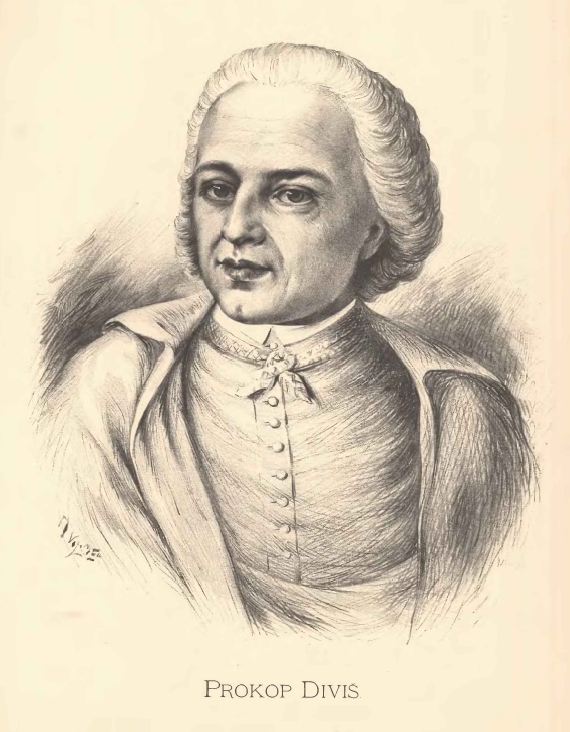
We tend to think of elec­tron­ic music as a mod­ern phe­nom­e­non, dat­ing back only to the 20th cen­tu­ry, but the inven­tion of the first instru­ment made to use elec­tric­i­ty occurred a cou­ple cen­turies deep­er than that. The man pic­tured above, Czech the­olo­gian and sci­en­tist Václav Prokop Diviš, “is now regard­ed as the ear­li­est vision­ary of elec­tron­ic music,” writes Moth­er­board­’s Becky Fer­reira, owing to the fact that “his dual inter­ests in music and elec­tric­i­ty had merged into a sin­gle obses­sion with cre­at­ing an elec­tri­cal­ly enhanced musi­cal instru­ment.” Around the year 1748, that obses­sion pro­duced the “Denis d’or,” or “Gold­en Diony­sus,” a “key­board-based instru­ment out­fit­ted with 790 iron strings that were posi­tioned to be struck like a clavi­chord rather than plucked like a gui­tar.” Through the elec­tro­mag­net­ic exci­ta­tion of the piano strings, the monk could “imi­tate the sounds of a whole vari­ety of oth­er instru­ments.”

“Diviš was an inter­est­ing char­ac­ter, hav­ing also invent­ed the light­ning rod at the same time as, but inde­pen­dent­ly of, Ben­jamin Franklin,” says the Cam­bridge Intro­duc­tion to Elec­tron­ic Music. He designed the Denis d’or with “an inge­nious and com­plex sys­tem of stops” that report­ed­ly allowed it to “imi­tate an aston­ish­ing array of instru­ments, includ­ing, it was claimed, aero­phones.” The same applied to “chor­do­phones such as harp­si­chords, harps and lutes, and even wind instru­ments.”

The term aero­phone (which denotes any musi­cal instru­ment that makes a body of air vibrate) might not sound famil­iar to many of us, but the func­tion­al­i­ty of Diviš’ inven­tion will. Don’t we all remem­ber the thrill of sit­ting down to our first syn­the­siz­er and dis­cov­er­ing how many dif­fer­ent instru­men­tal sounds it could make, vague though the son­ic approx­i­ma­tion might have been?

Whether the Denis d’or counts as the found­ing instru­ment of all elec­tron­ic music or a mere ear­ly curios­i­ty, you can learn more about it at 120 Years of Elec­tron­ic Music and Elec­tro­spec­tive Music. The pre-his­to­ry of elec­tron­ic music (since its his­to­ry prop­er begins around 1800) has remem­bered it as a prac­ti­cal-joke device as much as an instru­ment. “Diviš devised a nov­el method of tem­porar­i­ly charg­ing the strings with elec­tric­i­ty in order to ‘enhance’ the sound,” says the Cam­bridge Intro­duc­tion. “What effect this had is unclear (unfor­tu­nate­ly only one instru­ment was made and this did not sur­vive), but it appar­ent­ly allowed Diviš to deliv­er an elec­tric shock to the per­former when­ev­er he desired.” Nobody ever said a poly­math could­n’t also be a prankster.

via Moth­er­board

Relat­ed Con­tent:

The His­to­ry of Elec­tron­ic Music in 476 Tracks (1937–2001)

Meet the “Tel­har­mo­ni­um,” the First Syn­the­siz­er (and Pre­de­ces­sor to Muzak), Invent­ed in 1897

The His­to­ry of Elec­tron­ic Music Visu­al­ized on a Cir­cuit Dia­gram of a 1950s Theremin: 200 Inven­tors, Com­posers & Musi­cians

Moog This!: Hear a Playlist Fea­tur­ing 36 Hours of Music Made with the Leg­endary Ana­log Syn­the­siz­er

Based in Seoul, Col­in Mar­shall writes and broad­casts on cities, lan­guage, and cul­ture. His projects include the book The State­less City: a Walk through 21st-Cen­tu­ry Los Ange­les and the video series The City in Cin­e­ma. Fol­low him on Twit­ter at @colinmarshall or on Face­book.

Take a Free Animation Course from a Renowned French Animation School

An FYI for any aspir­ing ani­ma­tors who hap­pen to speak some French…

A free course that cov­ers the basics of com­put­er ani­ma­tion has just got­ten under­way. Called Ani­ma Podi, the free course is offered by the Gob­elins, L’É­cole de L’Im­age, the famed Parisian school of visu­al arts.

Accord­ing to Car­toon Brew, the “MOOC [Mas­sive Open Online Course] is aimed at first-time or self-taught ani­ma­tors. The first week of the course will be ded­i­cat­ed to intro­duc­to­ry prepa­ra­tion, while each sub­se­quent week will focus on a new ani­ma­tion exer­cise.” “Ani­ma Podi will also ded­i­cate a sig­nif­i­cant amount of time to ani­ma­tion his­to­ry … and delve into styles and tra­di­tions from around the world ‘so that peo­ple under­stand what is ani­ma­tion beyond Dis­ney.’ ” Ani­ma­tion exer­cis­es will be com­plet­ed with a soft­ware called Rum­ba.

The free course (reg­is­ter here) is cur­rent­ly offered in French, but an Eng­lish ver­sion will appear down the road.

If you would like to sign up for Open Culture’s free email newslet­ter, please find it here. It’s a great way to see our new posts, all bun­dled in one email, each day.

If you would like to sup­port the mis­sion of Open Cul­ture, con­sid­er mak­ing a dona­tion to our site. It’s hard to rely 100% on ads, and your con­tri­bu­tions will help us con­tin­ue pro­vid­ing the best free cul­tur­al and edu­ca­tion­al mate­ri­als to learn­ers every­where. You can con­tribute through Pay­Pal, Patre­on, and Ven­mo (@openculture). Thanks!

via Car­toon Brew

Relat­ed Con­tent:

Take a Free Online Course on Mak­ing Ani­ma­tions from Pixar & Khan Acad­e­my

Pixar’s 22 Rules of Sto­ry­telling … Makes for an Addic­tive Par­lor Game

Down­load 15,000+ Free Gold­en Age Comics from the Dig­i­tal Com­ic Muse­um

1300 Free Online Cours­es from Top Uni­ver­si­ties

Free Guided Imagery Recordings Help Kids Cope with Pain, Stress & Anxiety

I don’t have to tell you mod­ern life is full of stres­sors that exac­er­bate hyper­ten­sion, depres­sion, and every­thing in-between. Ther­a­peu­tic stress reduc­tion tech­niques based in mind­ful­ness med­i­ta­tion, trau­ma research, and a num­ber of oth­er fields have pro­lif­er­at­ed in our dai­ly lives and every­day con­ver­sa­tion, help­ing peo­ple cope with chron­ic pain, career anx­i­ety, and the tox­ic mias­ma of our geopol­i­tics.

These meth­ods have been very suc­cess­ful among adult populations—of monks, vet­er­ans, clin­i­cal sub­jects, etc.—but adults process infor­ma­tion very dif­fer­ent­ly than chil­dren. And as every par­ent knows, kids get major­ly stressed out too, whether they’re absorb­ing our anx­i­eties sec­ond-hand or feel­ing the pres­sures of their own social and edu­ca­tion­al envi­ron­ments.

We can’t expect young chil­dren to sit still and pay atten­tion to their breath for thir­ty min­utes, or to change their men­tal scripts with cog­ni­tive behav­ioral ther­a­py. It’s far eas­i­er for kids to process things through their imag­i­na­tion, chan­nel­ing anx­i­ety through play, or art, or—as pedi­atric psy­chol­o­gists at the Children’s Hos­pi­tal of Orange Coun­ty (CHOC) explain—guided men­tal visu­al­iza­tion, or “guid­ed imagery,” as they call it. How does it work?

Guid­ed imagery involves envi­sion­ing a cer­tain goal to help cope with health prob­lems or the task or skill a child is try­ing to learn or mas­ter. Guid­ed imagery is most often used as a relax­ation tech­nique that involves sit­ting or lying qui­et­ly and imag­in­ing a favorite, peace­ful set­ting like a beach, mead­ow or for­est.

The ther­a­pists at CHOC “teach patients to imag­ine sights, sounds, smells, tastes or oth­er sen­sa­tions to cre­ate a kind of day­dream that ‘removes’ them from or gives them con­trol over their present sit­u­a­tion.” In the video at the top, Dr. Cindy Kim describes the tech­nique as “akin to biofeed­back,” and it has been espe­cial­ly help­ful for chil­dren fac­ing a scary med­ical pro­ce­dure.

While all of us might need to go to our hap­py place once in a while, most kids find it hard to relax with­out some form of cre­ative redi­rec­tion, like the guid­ed imagery pro­gram above from Johns Hop­kins All Children’s Hos­pi­tal. At the CHOC web­site, you’ll find over a dozen oth­er audio pro­grams tai­lored for pain and stress man­age­ment and relax­ation, for both young chil­dren and ado­les­cents. Lifehacker’s par­ent­ing edi­tor Michelle Woo describes a rep­re­sen­ta­tive sam­pling of the pro­grams:

  • For pain man­age­ment for young kids, lis­ten to “The Spe­cial Cake.” Sam­ple line: “With your next deep breath in, notice the sweet smell of the yum­my frost­ing.”
  • For pain man­age­ment for teens, lis­ten to “Climb­ing a Lad­der.” Sam­ple line: “Let’s have a look at the first step. As you put your foot on it, you begin to remem­ber a time when you real­ize that you can have con­trol over your body.”
  • For anx­i­ety, lis­ten to “The Mag­ic Kite.” Sam­ple line: “All of the uncom­fort­able feel­ings or sad­ness or anger or pain or wor­ry are all on the ground and you are fly­ing away from it.”

As kids lis­ten to audio, Woo writes, “have them notice how their body feels—their breath­ing may slow and their mus­cles might relax.” And hey, there’s no rea­son guid­ed imagery can’t work for grown-ups too. Try it if you’re feel­ing stressed and let us know how it works for you.

via Life­hack­er

Relat­ed Con­tent:

Moby Lets You Down­load 4 Hours of Ambi­ent Music to Help You Sleep, Med­i­tate, Do Yoga & Not Pan­ic

Dai­ly Med­i­ta­tion Boosts & Revi­tal­izes the Brain and Reduces Stress, Har­vard Study Finds

How Stress Can Change Your Brain: An Ani­mat­ed Intro­duc­tion

Med­i­ta­tion 101: A Short, Ani­mat­ed Beginner’s Guide

Josh Jones is a writer and musi­cian based in Durham, NC. Fol­low him at @jdmagness.

Roger Waters Adapts and Narrates Igor Stravinsky’s Theatrical Piece, The Soldier’s Story

Roger Waters has always had an ego to match the size of his musi­cal ambi­tions, a char­ac­ter trait that didn’t help him get along with his Pink Floyd band­mates. But it gave him the con­fi­dence to write dar­ing oper­at­ic albums like The Wall and stage the mas­sive the­atri­cal shows for which the band became well-known. He’s a nat­ur­al sto­ry­teller, eager to use music to com­mu­ni­cate not only tren­chant polit­i­cal cri­tique, but the emo­tion­al lives of char­ac­ters caught up in the machi­na­tions of war­mon­gers and prof­i­teers.

Through­out the auto­bi­o­graph­i­cal The Wall runs a nar­ra­tive of wartime trau­ma, a thread that turned into The Final Cut, essen­tial­ly a solo album that brought togeth­er Waters’ cri­tique of Mar­garet Thatch­er and the Falk­lands War with a memo­r­i­al for WWII British ser­vice­men, so many of whom, like his father, gave their lives for a coun­try Waters felt betrayed their mem­o­ry. While his solo career and activism have focused square­ly on anti-war mes­sages, he has shown much sym­pa­thy for the com­mon sol­dier.

Waters’ lat­est project, then, is fit­ting­ly called The Soldier’s Sto­ry, but this time, he is nei­ther author nor com­pos­er. Rather, the piece comes from 100 years ago, adapt­ed by Igor Stravin­sky from an old Russ­ian folk tale. In Stravin­sky’s ver­sion, a WWI sol­dier relin­quish­es his violin—and his musi­cal ability—to the dev­il in exchange for a book that pre­dicts the future econ­o­my. The sol­dier uses the book to get rich, then gives up his for­tune to regain his tal­ent, heal a dying princess, and beat the dev­il, for a time.

In its time­less, arche­typ­al way, the sto­ry evokes some of the sprawl­ing themes Waters has tak­en on many times, with a sim­i­lar­ly sar­don­ic tone. But unlike the rock star’s big the­atri­cal pro­duc­tions, Stravin­sky’s piece is a sim­ple moral­i­ty play, full of humor and an inno­v­a­tive use of jazz and rag­time ele­ments in a clas­si­cal set­ting. There are three speak­ing parts—the sol­dier, the dev­il, and the nar­ra­tor. Waters has added oth­ers to this updat­ed ver­sion: “the bloke in the pub” and the king, who remains mute in the orig­i­nal. He not only nar­rates the piece, but plays all of the char­ac­ters as well.

Work­ing with “sev­en musi­cians asso­ci­at­ed with the Bridge­hamp­ton Cham­ber Music Fes­ti­val,” reports Con­se­quence of Sound. The ensem­ble seeks to “hon­or Stravinsky’s work while rein­ter­pret­ing it for a new audi­ence.” Stravin­sky him­self record­ed the piece three times, “first in 1932,” notes James Leonard at All­Mu­sic, “then again in 1954, and final­ly in 1961.” The last record­ing saw a re-release in 2007 with Jere­my Irons dubbed in as nar­ra­tor. Oth­er famous actors who have record­ed it include John Giel­gud as the nar­ra­tor in a set of per­for­mances from the ear­ly 70s and Dame Har­ri­et Wal­ter in the role in a 2017 release.

These are huge dra­mat­ic shoes to fill. A press release for the new adap­ta­tion, dis­play­ing Waters’ char­ac­ter­is­tic self-con­fi­dence (or maybe hubris), assures us that he felt up to the task: “He has want­ed for a long time to engage more deeply with the work of a com­pos­er whose weight and occa­sion­al inac­ces­si­bil­i­ty may per­haps have much in com­mon” with his own, we’re told. What­ev­er affini­ties might exist between Waters’ pro­gres­sive rock operas and the rad­i­cal mod­ernist sym­phonies of Stravin­sky, The Soldier’s Sto­ry seems like a nat­ur­al fit for Waters’ lit­er­ary sen­si­bil­i­ties.

See the offi­cial trail­er above, and order the album here.

via Con­se­quence of Sound

Relat­ed Con­tent:

How Pink Floyd’s “Com­fort­ably Numb” Was Born From an Argu­ment Between Roger Waters & David Gilmour

Igor Stravin­sky Remem­bers the “Riotous” Pre­miere of His Rite of Spring in 1913: “They Were Very Shocked. They Were Naive and Stu­pid Peo­ple.”

The Night When Char­lie Park­er Played for Igor Stravin­sky (1951)

Josh Jones is a writer and musi­cian based in Durham, NC. Fol­low him at @jdmagness.

Why Read Waiting For Godot?: An Animated Case for Samuel Beckett’s Classic Absurdist Play

Iseult Gille­spie’s lat­est lit­er­a­ture themed TED-Ed les­son—Why should you read Wait­ing For Godot?—pos­es a ques­tion that’s not too dif­fi­cult to answer these days.

The mean­ing of this sur­pris­ing­ly stur­dy Absur­dist play is famous­ly open for debate.

Author Samuel Beck­ett told Roger Blin, who direct­ed and act­ed in its first pro­duc­tion at the Théâtre de Baby­lon in 1953, that all he knew for cer­tain was that the two main char­ac­ters, Vladimir and Estragon, wore bowler hats.

(Anoth­er thing he felt sure of was that they were male, and should only be brought to life by those in pos­ses­sion of a prostate gland, a spec­i­fi­ca­tion that ran­kles female the­ater artists eager to take a crack at char­ac­ters who now seem as uni­ver­sal as any in Shake­speare. The Beck­ett estate’s vig­or­ous enforce­ment of the late playwright’s wish­es is itself the sub­ject of a play, The Under­pants Godot by Dun­can Pflaster.)

A “tragi­com­e­dy in two acts,” accord­ing to Beck­ett, Wait­ing for Godot emerged dur­ing a vibrant moment for exper­i­men­tal the­ater, as play­wrights turned their backs on con­ven­tion to address the dev­as­ta­tion of WWII.

Com­e­dy got dark­er. Bore­dom, reli­gious dread, and exis­ten­tial despair were major themes.

Per­haps we are on the brink of such a peri­od our­selves?

Crit­ics, schol­ars, and direc­tors have found Godot a mean­ing­ful lens through which to con­sid­er the Cold War, the French resis­tance, England’s col­o­niza­tion of Ire­land, and var­i­ous forms of apoc­a­lyp­tic near-future.

Per­haps THAT is why we should read (and/or watch) Wait­ing for Godot.

Vladimir:

Was I sleep­ing, while the oth­ers suf­fered? Am I sleep­ing now? Tomor­row, when I wake, or think I do, what shall I say of today? That with Estragon my friend, at this place, until the fall of night, I wait­ed for Godot? That Poz­zo passed, with his car­ri­er, and that he spoke to us? Prob­a­bly. But in all that what truth will there be? (Estragon, hav­ing strug­gled with his boots in vain, is doz­ing off again. Vladimir looks at him.) He’ll know noth­ing. He’ll tell me about the blows he received and I’ll give him a car­rot. (Pause.) Astride of a grave and a dif­fi­cult birth. Down in the hole, lin­ger­ing­ly, the grave dig­ger puts on the for­ceps. We have time to grow old. The air is full of our cries. (He lis­tens.) But habit is a great dead­en­er. (He looks again at Estragon.) At me too some­one is look­ing, of me too some­one is say­ing, He is sleep­ing, he knows noth­ing, let him sleep on. (Pause.) I can’t go on! (Pause.) What have I said?

Gillespie’s les­son, ani­mat­ed by Tomás Pichar­do-Espail­lat, above, includes a sup­ple­men­tal trove of resources and a quiz that edu­ca­tors can cus­tomize online.

Relat­ed Con­tent:

Samuel Beck­ett Directs His Absur­dist Play Wait­ing for Godot (1985)

Hear Wait­ing for Godot, the Acclaimed 1956 Pro­duc­tion Star­ring The Wiz­ard of Oz’s Bert Lahr

An Ani­mat­ed Intro­duc­tion to Samuel Beck­ett, Absur­dist Play­wright, Nov­el­ist & Poet

“Try Again. Fail Again. Fail Bet­ter”: How Samuel Beck­ett Cre­at­ed the Unlike­ly Mantra That Inspires Entre­pre­neurs Today

The Books Samuel Beck­ett Read and Real­ly Liked (1941–1956)

Watch the Open­ing Cred­its of an Imag­i­nary 70s Cop Show Star­ring Samuel Beck­ett

Ayun Hal­l­i­day is an author, illus­tra­tor, the­ater mak­er and Chief Pri­ma­tol­o­gist of the East Vil­lage Inky zine.  Her play Zam­boni Godot pre­miered in New York City in 2017. Join her in NYC on Mon­day, Octo­ber 15 for anoth­er month­ly install­ment of her book-based vari­ety show, Necro­mancers of the Pub­lic Domain. Fol­low her @AyunHalliday.

The Big Lebowski at 20: Jeff Bridges, John Goodman & Steve Buscemi Reunite to Discuss the Coen Brothers’ Beloved Film

The Big Lebows­ki came out 20 years ago. State­ments of that kind are often pre­ced­ed by the ques­tion of whether you want to feel old, but this one would­n’t have quite the same effect: on some lev­el, The Big Lebows­ki feels as old as, or maybe even old­er than, cin­e­ma itself. In their half-hour con­ver­sa­tion look­ing back at the film and its lega­cy, NBC’s Har­ry Smith asks actors John Good­man, Steve Busce­mi, and Jeff Bridges, bet­ter known to the movie’s legions of fans as Wal­ter Sobchak, Don­ny Ker­abat­sos, and of course Jeff Lebows­ki — also known as His Dude­ness, Dud­er, El Dud­eri­no if you’re not into the whole brevi­ty thing, but above all as the Dude — whether it felt like 20 years have passed. More than one of them come right back with just the right response: “It does and does­n’t.”

The con­ver­sa­tion touch­es on such sub­jects as what they first thought of the script (“Right on the page, it felt like it was impro­vi­sa­tion,” says Bridges), the spir­i­tu­al impli­ca­tions of the sto­ry and char­ac­ters (Bridges tells of the encounter with a Bud­dhist teacher that led to the book The Dude and the Zen Mas­ter in 2013), how many “F‑bombs” the final prod­uct end­ed up con­tain­ing (275), and what usu­al­ly hap­pens in the still extreme­ly com­mon event of an encounter with a Lebows­ki fan on the street.

All three actors evince great plea­sure at the oppor­tu­ni­ty to remem­ber work­ing with Joel and Ethan Coen on what would become the direct­ing broth­ers’ most beloved film, one that has inspired its own fes­ti­val, its own reli­gion, and much more besides. But as many of the movie’s cur­rent enthu­si­asts (per­haps due to their youth, per­haps due to their indul­gence in mem­o­ry-cloud­ing sub­stances) won’t remem­ber, The Big Lebows­ki did­n’t become a phe­nom­e­non right away.

“So you make a movie like this, you love the script, you love work­ing togeth­er,” as Smith puts it, “and then nobody goes to see it.” Indeed, the moviego­ing pub­lic of 1998 did­n’t quite know what to make of the fact that, as a fol­low-up to the Acad­e­my Award-win­ning Far­go, the Coen broth­ers served up what Good­man describes as “Philip Mar­lowe meets The Trip.” As Busce­mi remem­bers, “it took like five or six years before peo­ple start­ed com­ing up to me and say­ing that they loved it.” Then came the col­lege kids, who would tell him not just that they loved it, but that they’d seen it eight, nine, ten times. The first time peo­ple saw The Big Lebows­ki they came out in bewil­der­ment ask­ing what it means, but “what the movie does so bril­liant­ly is, once you know what it is, then you real­ly enjoy, like, every moment of it.”

Among the few view­ers attuned enough to its fre­quen­cy to enjoy it right away was Roger Ebert: “Some may com­plain The Big Lebows­ki rush­es in all direc­tions and nev­er ends up any­where,” he wrote in his ini­tial review. “That isn’t the film’s flaw, but its style.” But even his appre­ci­a­tion grew over time, and in 2010 he anoint­ed it one of his offi­cial Great Movies, describ­ing it as involv­ing “kid­nap­ping, ran­som mon­ey, a porno king, a reclu­sive mil­lion­aire, a run­away girl, the Mal­ibu police, a woman who paints while nude and strapped to an over­head har­ness, and the last act of the dis­agree­ment between Viet­nam vet­er­ans and Flower Pow­er,” all held togeth­er by “a plot and dia­logue that per­haps only the Coen broth­ers could have devised.” Hence Bridges’ wor­ries about get­ting the music of the script down cold before shoot­ing: “Did I get the ‘man’ in the right place? Did I add anoth­er F‑bomb?”

Relat­ed Con­tent:

Is The Big Lebows­ki a Great Noir Film? A New Way to Look at the Coen Broth­ers’ Icon­ic Movie

What Makes a Coen Broth­ers Movie a Coen Broth­ers Movie? Find Out in a 4‑Hour Video Essay of Bar­ton Fink, The Big Lebows­ki, Far­go, No Coun­try for Old Men & More

The Big Lebows­ki Reimag­ined as a Clas­sic 8‑Bit Video Game

Tui­leries: The Coen Broth­ers’ Short Film About Steve Buscemi’s Very Bad Day in the Paris Metro

The City in Cin­e­ma Mini-Doc­u­men­taries Reveal the Los Ange­les of Blade Run­ner, Her, Dri­ve, Repo Man, and More

Based in Seoul, Col­in Mar­shall writes and broad­casts on cities, lan­guage, and cul­ture. His projects include the book The State­less City: a Walk through 21st-Cen­tu­ry Los Ange­les and the video series The City in Cin­e­ma. Fol­low him on Twit­ter at @colinmarshall or on Face­book.

Rembrandt’s Masterpiece, The Night Watch, Will Get Restored and You Can Watch It Happen Live, Online

Many of the world’s most admired paint­ings don’t look the same now as when the artists com­plet­ed them. Time, espe­cial­ly when it adds up to cen­turies and cen­turies, takes its toll on paints and the can­vas­es to which they’re applied, or at least it changes them in ways human­i­ty has­n’t pre­dict­ed or ful­ly under­stood. Take Rem­brandt’s 1642 Mili­tia Com­pa­ny of Dis­trict II under the Com­mand of Cap­tain Frans Ban­ninck Cocq, much bet­ter known as The Night Watch — but only because a lay­er of var­nish on top of the paint dark­ened over time, giv­ing the scene an unin­tend­ed noc­tur­nal qual­i­ty. The var­nish came off in the 1940s, but much more work remains to return Rem­brandt’s mas­ter­piece to the state in which Rem­brandt him­self beheld it.

Start­ing next sum­mer, the Rijksmu­se­um will launch a mul­ti-year, mul­ti­mil­lion-dol­lar project to give The Night Watch its long-await­ed thor­ough­go­ing restora­tion. (The three restora­tions the paint­ing received in the 20th cen­tu­ry repaired dam­ages inflict­ed by the occa­sion­al vis­i­tor bent, for rea­sons known only to them­selves, on destroy­ing it.)

The insti­tu­tion “plans to first study the paint­ing for about eight months, using new scan­ning tech­nolo­gies that were not avail­able dur­ing pre­vi­ous restora­tions, such as macro X‑ray flu­o­res­cence scan­ning, which can explore dif­fer­ent lay­ers of the paint sur­face to deter­mine what needs to be done.” Through­out the whole process, “a trans­par­ent show­case will be built around the paint­ing, the sci­en­tists and the restor­ers, so that vis­i­tors can view the progress.”

Art con­ser­va­tors have tra­di­tion­al­ly done their metic­u­lous work away from pub­lic eyes, but in the 21st cen­tu­ry pub­lic restora­tion has become, as we now say, a thing. Ear­li­er this month, Art­net’s Janelle Zara wrote about var­i­ous oth­er muse­um projects that have put “a pub­lic face on this nor­mal­ly closed-door pro­fes­sion,” even involv­ing social media plat­forms like Insta­gram in the process. The Rijksmu­se­um, as its direc­tor Taco Dib­bits announces in the video above, will take it a step fur­ther by stream­ing all the restora­tion work online, pro­vid­ing view­ers around the world a clos­er look at the paint­ing than they’ve ever had before, no mat­ter how many times they’ve vis­it­ed the Rijksmu­se­um’s Night Watch Hall in per­son. The first stages of the process will deter­mine how, exact­ly, The Night Watch has changed over the past 376 years. Dur­ing it we’ll no doubt find that Rem­brandt, whose finest work seems to grow rich­er with each exam­i­na­tion, still has a few sur­pris­es in store for us.

Relat­ed Con­tent:

300+ Etch­ings by Rem­brandt Now Free Online, Thanks to the Mor­gan Library & Muse­um

Rijksmu­se­um Dig­i­tizes & Makes Free Online 361,000 Works of Art, Mas­ter­pieces by Rem­brandt Includ­ed!

What Makes The Night Watch Rembrandt’s Mas­ter­piece

Flash­mob Recre­ates Rembrandt’s “The Night Watch” in a Dutch Shop­ping Mall

The Art of Restor­ing a 400-Year-Old Paint­ing: A Five-Minute Primer

How an Art Con­ser­va­tor Com­plete­ly Restores a Dam­aged Paint­ing: A Short, Med­i­ta­tive Doc­u­men­tary

Rijksmu­se­um Dig­i­tizes & Makes Free Online 361,000 Works of Art, Mas­ter­pieces by Rem­brandt Includ­ed!

Based in Seoul, Col­in Mar­shall writes and broad­casts on cities, lan­guage, and cul­ture. His projects include the book The State­less City: a Walk through 21st-Cen­tu­ry Los Ange­les and the video series The City in Cin­e­ma. Fol­low him on Twit­ter at @colinmarshall or on Face­book.

Behold Kurt Vonnegut’s Drawings: Writing is Hard. Art is Pure Pleasure.

I see hints of blue­prints, tile work, lead­ed-glass win­dows, William Blake, Paul Klee, Saul Stein­berg, Al Hirschfeld, Edward Gorey, my mother’s wasp waist, cats and dogs. I see my father, at age four, forty, and eighty-four, doo­dling his heart out.

—Nanette Von­negut

Car­toon­ist, edu­ca­tor, and neu­rol­o­gy buff Lyn­da Bar­ry believes that doo­dling is good for the cre­ative brain.

In sup­port of that the­o­ry, we sub­mit author Kurt Von­negut, a very con­vinc­ing case.

His daugh­ter, Nanette, notes that he was drawn by the human face—his own and those of oth­ers.

Por­traits include one of his best-known fic­tion­al char­ac­ters, the unsuc­cess­ful sci­ence fic­tion author Kil­go­re Trout. It’s a rev­e­la­tion, espe­cial­ly to those of us who imag­ined Trout as some­thing  clos­er to vet­er­an char­ac­ter actor Sey­mour Cas­sel.

In addi­tion to his humor­ous doo­dles, Von­negut was known to chis­el out a sculp­ture or two on the kitchen counter.

As a Cape Cod year-rounder, he paint­ed seascapes.

He had a one-man show of his felt tip draw­ings in Green­wich Vil­lage in 1980 (“not because my pic­tures were any good but because peo­ple had heard of me”).

But the doo­dles are what cap­tured the pub­lic’s imag­i­na­tion, from the illus­tra­tions of Break­fast of Cham­pi­ons to his numer­ous self por­traits.

The son and grand­son of archi­tects, Von­negut pre­ferred to think of him­self less as an artist than as a “pic­ture design­er.” Work­ing on a nov­el was a “night­mare,” but draw­ing was pure plea­sure.

Per­fec­tion was not the goal. Von­negut real­ized a sym­pa­thet­ic com­mu­ni­ty would spring up around an artist strug­gling with­in his lim­i­ta­tions, and act­ed accord­ing­ly.

To that end, he rec­om­mend­ed that peo­ple prac­tice art “no mat­ter how bad­ly because it’s known to make a soul grow.”


See a book of 145 Von­negut draw­ings curat­ed by his daugh­ter, Nanette Von­negut here.

Relat­ed Con­tent:

Kurt Von­negut Maps Out the Uni­ver­sal Shapes of Our Favorite Sto­ries

22-Year-Old P.O.W. Kurt Von­negut Writes Home from World War II: “I’ll Be Damned If It Was Worth It”

Kurt Von­negut Offers 8 Tips on How to Write Good Short Sto­ries (and Amus­ing­ly Graphs the Shapes Those Sto­ries Can Take)

Ayun Hal­l­i­day is an author, illus­tra­tor, the­ater mak­er and Chief Pri­ma­tol­o­gist of the East Vil­lage Inky zine.  Join her in NYC on Mon­day, Octo­ber 15 for anoth­er month­ly install­ment of her book-based vari­ety show, Necro­mancers of the Pub­lic Domain. Fol­low her @AyunHalliday.

« Go BackMore in this category... »
Quantcast