Tom Waits Releases a Timely Cover of the Italian Anti-Fascist Anthem “Bella Ciao,” His First New Song in Two Years

La Com­plaine du Par­ti­san,” a song about the French Resis­tance writ­ten in 1943 by Emmanuel d’Astier de la Vigerie with music by Anna Marly, was adapt­ed into Eng­lish as “The Par­ti­san” by Hy Zaret, author of the Right­eous Brother’s “Unchained Melody.” Cov­ered by artists like Joan Baez and, most famous­ly, Leonard Cohen, the song’s folk melody and melan­choly lyri­cism have become so close­ly asso­ci­at­ed with Cohen that it has often been cred­it­ed to him. Even Cohen him­self remarked “I kind of re-intro­duced [“The Par­ti­san”] into the world of pop­u­lar music. I feel I wrote it, but I actu­al­ly didn’t.”

Now anoth­er artist of Cohen’s stature, Tom Waits, may do the same for those who have nev­er heard the World War II Ital­ian anti-fas­cist song, “Bel­la Ciao,” which has been cov­ered for decades in many lan­guages and now appears as the first release on gui­tarist and com­pos­er Marc Ribot’s Songs of Resis­tance: 1942–2018, an album of protest music that comes out today and fea­tures guest vocals by Waits, Steve Ear­le, Meshell Nde­geo­cel­lo, Justin Vivian Bond, and more. You can stream and buy the album here at Ribot’s Band­camp page. Waits’ track is the first song he has released in two years, and it’s a hel­lu­va return.

The song comes from an old Ital­ian folk bal­lad that was “revised and re-writ­ten dur­ing World War II for the Ital­ian anti-fas­cist resis­tance fight­ers,” notes Sam Barsan­ti at The Onion’s A.V. Club. It has “since become an anthem of sorts for any­one look­ing to stick it to fas­cists.” Ribot and his col­lab­o­ra­tors fit the descrip­tion. Waits’ “Bel­la Ciao” was released with a video, direct­ed by Jem Cohen, “that makes its par­al­lels with mod­ern life very explic­it,” Barsan­ti writes, “pair­ing Waits’ vocals with footage of police and sol­diers guard­ing bar­ri­cades at anti-Trump protests. It may sound heavy-hand­ed, but fuck it, nobody said fight­ing fas­cists had to be sub­tle.”

Sub­tle it isn’t, but nei­ther is the ban­ning of Mus­lim refugees, the kid­nap­ping and deten­tion in camps of hun­dreds of migrant chil­dren, the trans­fer of $169 mil­lion dol­lars from oth­er pro­grams—includ­ing FEMA and the Coast Guard dur­ing yet anoth­er fatal hur­ri­cane season—for even more camps and ICE raids, the lying denial that thou­sands were left to die in Puer­to Rico last year, and so on and so on.

Oth­er songs on the album draw from the U.S. civ­il rights move­ment and Mex­i­can protest bal­lads. At his site, Ribot acknowl­edges the peren­ni­al prob­lem of the protest song. “There’s a lot of con­tra­dic­tion in doing any kind of polit­i­cal music, how to act against some­thing with­out becom­ing it, with­out resem­bling what you detest… I imag­ine we’ll make mis­takes,” he avows, but says the stakes are too high not to speak out. “From the moment Don­ald Trump was elect­ed,” he decid­ed “I’m not going to play down­town scene Furt­wan­gler to any orange-comb-over dic­ta­tor wannabe.” (The ref­er­ence is to Wil­helm Furtwän­gler, lead­ing clas­si­cal con­duc­tor in Ger­many under the Nazi regime.)

Like so many folk songs, “Bel­la Ciao” has a com­plex and murky his­to­ry: the orig­i­nal ver­sion, a peas­ant work song, may have a Yid­dish ori­gin, or in any case—explains the blog Poe­mas del rio wang—emerged from a region “where Jews, Roma­ni­ans, Rusyns, Gyp­sies, Ukra­ni­ans, Hun­gar­i­ans, Ital­ians, Rus­sians, Slo­va­kians, Pol­ish, Czech, Arme­ni­ans, [and] Taters lived togeth­er” and where “melodies did not remain the exclu­sive prop­er­ty of only one eth­nic group.” This sub­merged back­ground gives the re-writ­ten “Bel­la Ciao” an even deep­er res­o­nance with the anti-fas­cism of the 1940s and that of today.

See the video and hear Waits and Ribot’s hag­gard yet deter­mined “Bel­la Ciao (Good­bye Beau­ti­ful)” at the top; hear Ital­ian singer Gio­van­na Daffini’s record­ing above (hear her ver­sion of the orig­i­nal folk song here); read more about the song’s long his­to­ry here; and read Waits’ lyrics, slight­ly revised from ear­li­er ver­sions to be even more explic­it­ly anti-fas­cist, below. All pro­ceeds from Ribot’s album will be donat­ed to the Indi­vis­i­ble Project.

One fine morn­ing
I woke up ear­ly
o bel­la ciao, bel­la ciao
bel­la ciao, ciao, ciao
One fine morn­ing
I woke up ear­ly
to find the fas­cists at my door

Oh par­ti­giano
take me with you
bel­la ciao, bel­la ciao
good­bye, beau­ti­ful
oh par­ti­giano
please take me with you
I’m not afraid any­more

And if I die
a par­ti­giano
bel­la ciao, bel­la ciao
good­bye, beau­ti­ful
Bury me
up on that moun­tain
beneath the shad­ow of the flower

So all the peo­ple
the peo­ple pass­ing
bel­la ciao, bel­la ciao
good­bye, beau­ti­ful
So all the peo­ple
the peo­ple pass­ing
will say: “What a beau­ti­ful flower”

This is the flower
of the par­ti­san
bel­la ciao, bel­la ciao
bel­la ciao
this is the flower
of the par­ti­san
who died for free­dom

this is the flower
of the par­ti­san
who died for free­dom

Relat­ed Con­tent:

Hear a 4 Hour Playlist of Great Protest Songs: Bob Dylan, Nina Simone, Bob Mar­ley, Pub­lic Ene­my, Bil­ly Bragg & More

Rebec­ca Sol­nit Picks 13 Songs That Will Remind Us of Our Pow­er to Change the World, Even in Seem­ing­ly Dark Times

Stream All of Tom Waits’ Music in a 24 Hour Playlist: The Com­plete Discog­ra­phy

Josh Jones is a writer and musi­cian based in Durham, NC. Fol­low him at @jdmagness

Jocelyn Bell Burnell Discovered Radio Pulsars in 1974, But the Credit Went to Her Advisor; In 2018, She Gets Her Due, Winning a $3 Million Physics Prize

Say you made a Nobel-wor­thy sci­en­tif­ic dis­cov­ery and the prize went to your the­sis super­vi­sor instead. How would you take it? Prob­a­bly not as well as Joce­lyn Bell Bur­nell, dis­cov­er­er of the first radio pul­sars, to whom that very thing hap­pened in 1974. “Demar­ca­tion dis­putes between super­vi­sor and stu­dent are always dif­fi­cult, prob­a­bly impos­si­ble to resolve,” she said a few years lat­er. “It is the super­vi­sor who has the final respon­si­bil­i­ty for the suc­cess or fail­ure of the project. We hear of cas­es where a super­vi­sor blames his stu­dent for a fail­ure, but we know that it is large­ly the fault of the super­vi­sor. It seems only fair to me that he should ben­e­fit from the suc­cess­es, too.”

But now, 44 years lat­er, Bell Bur­nel­l’s achieve­ment has brought a dif­fer­ent prize her way: the Spe­cial Break­through Prize in Fun­da­men­tal Physics, to be pre­cise, and the $3 mil­lion that comes with it, all of which she will donate “to fund women, under-rep­re­sent­ed eth­nic minor­i­ty and refugee stu­dents to become physics researchers.” “Like the stars of Hid­den Fig­ures and DNA researcher Ros­alind Franklin, Bell Burnell’s per­son­al sto­ry embod­ies the chal­lenges faced by women in sci­en­tif­ic fields,” write the Wash­ing­ton Post’s Sarah Kaplan and Anto­nia Noori Farzan. “Bell Bur­nell, who was born in North­ern Ire­land in 1943, had to fight to take sci­ence class­es after age 12.”

Reject­ing an expect­ed life of cook­ery and needle­work, Bell Bur­nell “read her father’s astron­o­my books cov­er to cov­er, teach­ing her­self the jar­gon and grap­pling with com­plex con­cepts until she felt she could com­pre­hend the uni­verse. She com­plained to her par­ents, who com­plained to the school, which ulti­mate­ly allowed her to attend lab along with two oth­er girls. At the end of the semes­ter, Bell Bur­nell ranked first in the class.” Still, by the time she arrived at Cam­bridge Uni­ver­si­ty for grad­u­ate school, she “was cer­tain some­one had made a mis­take admit­ting her.” Her sub­se­quent work there on one of “the most impor­tant astro­nom­i­cal finds of the 20th cen­tu­ry,” which you can see her talk about in the clip above, should have dis­pelled that notion.

But as Josh Jones wrote here on Open Cul­ture last month, Bell Bur­nell was a vic­tim of the “Matil­da effect,” named for suf­frag­ist and abo­li­tion­ist Matil­da Joslyn Gage, which iden­ti­fies the “denial of recog­ni­tion to women sci­en­tists” seen through­out the his­to­ry of sci­ence. The new gen­er­a­tion of prizes like the Break­through Prize in Fun­da­men­tal Physics, found­ed in 2012 by physi­cist-entre­pre­neur Yuri Mil­ner, have the poten­tial to coun­ter­act the Matil­da effect, but many oth­er Matil­das have yet to be rec­og­nized. “I am not myself upset about it,” as Bell Bur­nell put it in 1977 when asked about her non-recep­tion of the Nobel. “After all, I am in good com­pa­ny, am I not!”

Relat­ed Con­tent:

“The Matil­da Effect”: How Pio­neer­ing Women Sci­en­tists Have Been Denied Recog­ni­tion and Writ­ten Out of Sci­ence His­to­ry

Read the “Don’t Let the Bas­tards Get You Down” Let­ter That Albert Ein­stein Sent to Marie Curie Dur­ing a Time of Per­son­al Cri­sis (1911)

Marie Curie Attend­ed a Secret, Under­ground “Fly­ing Uni­ver­si­ty” When Women Were Banned from Pol­ish Uni­ver­si­ties

Pop Art Posters Cel­e­brate Pio­neer­ing Women Sci­en­tists: Down­load Free Posters of Marie Curie, Ada Lovelace & More

Based in Seoul, Col­in Mar­shall writes and broad­casts on cities and cul­ture. His projects include the book The State­less City: a Walk through 21st-Cen­tu­ry Los Ange­les and the video series The City in Cin­e­ma. Fol­low him on Twit­ter at @colinmarshall or on Face­book.

Why We Say “OK”: The History of the Most Widely Spoken Word in the World

Ok, not to be con­trary, but any­one else wor­ry that we may be get­ting punked here?

Is Cole­man Lown­des’ clever col­lage-style video on the ubiq­ui­ty and ori­gins of the word “ok” a bit too clever for its own good?

His asser­tion that the word “ok” was the inven­tion of wag­gish Boston­ian hip­sters in the late 1830s sounds like an Onion head­line.

It’s hard to believe that clever young adults once amused them­selves by bandy­ing about delib­er­ate­ly mis­spelled abbre­vi­a­tions.

Also does any­one else remem­ber hear­ing that “OK” could be traced to the 1840 reelec­tion cam­paign of Pres­i­dent Mar­tin “Old Kinder­hook” Van Buren?

Or folksinger Pete Seeger’s salute to the lin­guis­tic melt­ing pot, “All Mixed Up,” which per­pet­u­at­ed the notion of OK as a cor­rup­tion of the Choctaw word “okeh.”

Both of those expla­na­tions sound a lot more prob­a­ble than a jokey bas­tardiza­tion of “all cor­rect.”

Aka “oll kor­rect.”

As in OK, pal, what­ev­er you say.

(That was the wit­ti­est jape of the sea­son?)

Ety­mol­o­gist Dr. Allen Walk­er Read’s con­sid­er­able research sup­port­ed “ok” as the lone sur­vivor of 19th-cen­tu­ry smart set word­play, to the point where it was the lede in his obit­u­ary.

(The writer not­ed, as Lown­des does, how “ok” was among the first words out of astro­naut Buzz Aldrin’s mouth when he set foot on the moon.)

Oookay…

If you’d like to know more, you can always delve into Eng­lish pro­fes­sor Allan Met­calf”s book, OK: The Improb­a­ble Sto­ry of America’s Great­est Word, which cites the telegraph’s role in the pop­u­lar­iza­tion of everyone’s favorite neu­tral affir­ma­tive, as well as our pow­er­ful psy­cho­log­i­cal attrac­tion to the let­ter “k.”

(Kare for a Krispy Kreme with that Kool-Aid? … The answer is an emphat­ic yes, I mean, OK, in any lan­guage.)

Relat­ed Con­tent:

The Largest His­tor­i­cal Dic­tio­nary of Eng­lish Slang Now Free Online: Cov­ers 500 Years of the “Vul­gar Tongue”

Read A Clas­si­cal Dic­tio­nary of the Vul­gar Tongue, a Hilar­i­ous & Infor­ma­tive Col­lec­tion of Ear­ly Mod­ern Eng­lish Slang (1785)

The His­to­ry of the Eng­lish Lan­guage in Ten Ani­mat­ed Min­utes

Ayun Hal­l­i­day is an author, illus­tra­tor, the­ater mak­er and Chief Pri­ma­tol­o­gist of the East Vil­lage Inky zine.  Join her in NYC on Mon­day, Sep­tem­ber 24 for anoth­er month­ly install­ment of her book-based vari­ety show, Necro­mancers of the Pub­lic Domain. Fol­low her @AyunHalliday.

94-Year-Old Stroke Survivor Plays Jazz Piano for the First Time in Years

French musi­cian Fred Yon­net post­ed on Insta­gram an ever so poignant video. He writes: “Great day today — took my men­tor Don Bur­rows to vis­it our old mate Julian Lee in Moss­vale 🎺🎹. He hasn’t played piano for many years since his stroke — he turns 95 this year and we share the same birth­day.”

The scene that unfolds will make your day…

via @TedGioia

If you would like to sign up for Open Culture’s free email newslet­ter, please find it here. It’s a great way to see our new posts, all bun­dled in one email, each day.

If you would like to sup­port the mis­sion of Open Cul­ture, con­sid­er mak­ing a dona­tion to our site. It’s hard to rely 100% on ads, and your con­tri­bu­tions will help us con­tin­ue pro­vid­ing the best free cul­tur­al and edu­ca­tion­al mate­ri­als to learn­ers every­where. You can con­tribute through Pay­Pal, Patre­on, and Ven­mo (@openculture). Thanks!

Relat­ed Con­tent:

81-Year-Old Man Walks into a Gui­tar Shop & Starts Play­ing a Sub­lime Solo: Ignore the Tal­ents of the Elder­ly at Your Own Per­il

96-Year-Old Holo­caust Sur­vivor Fronts a Death Met­al Band

Dis­cov­er the Retire­ment Home for Elder­ly Musi­cians Cre­at­ed by Giuseppe Ver­di: Cre­at­ed in 1899, It Still Lives On Today

by | Permalink | Make a Comment ( 2 ) |

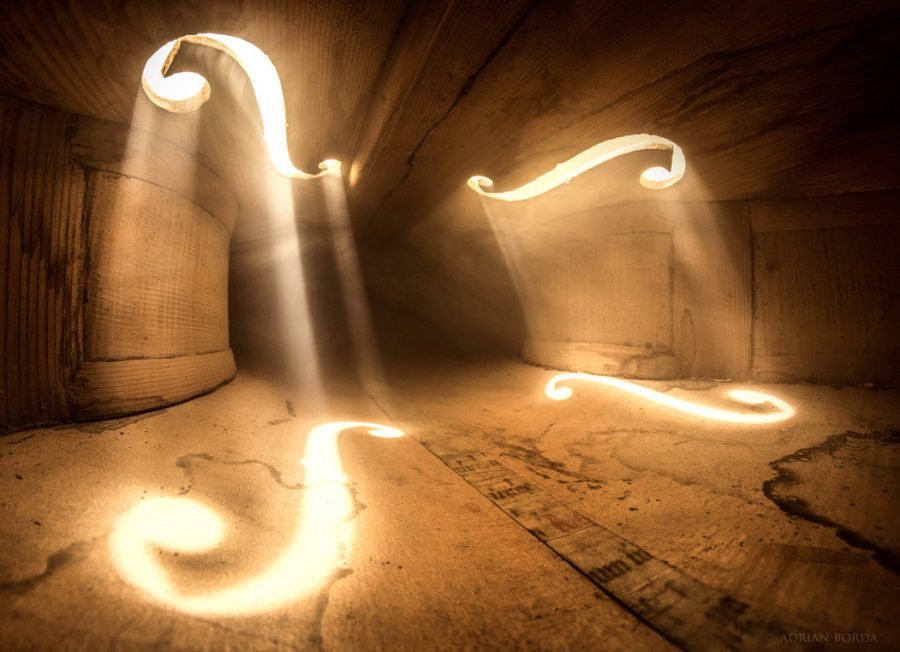
Behold Mystical Photographs Taken Inside a Cello, Double Bass & Other Instruments

“If God had designed the orches­tra,” remarks a char­ac­ter in Rick Moody’s Hotels of North Amer­i­ca, “then the cel­lo was His great­est accom­plish­ment.” I couldn’t agree more. The cel­lo sounds sub­lime, looks state­ly… even the word cel­lo evokes regal poise and grace. If orches­tral instru­ments were chess pieces, the cel­lo would be queen: shape­ly and dig­ni­fied, prime mover on the board, majes­tic in sym­phonies, quar­tets, cham­ber pop ensem­bles, post rock bands….

With all its many son­ic and aes­thet­ic charms, I didn’t imag­ine it was pos­si­ble to love the cel­lo more. Then I saw Roman­ian artist Adri­an Bor­da’s mag­nif­i­cent pho­tos tak­en from inside one. The pho­to above, Bor­da tells us at his Deviant Art page, was tak­en from inside “a very old French cel­lo made in Napoleon’s times.” It looks like the bel­ly of the HMS Vic­to­ry mat­ed with the nave of Chartres Cathe­dral. The light descend­ing through the f‑holes seems of some divine ori­gin.

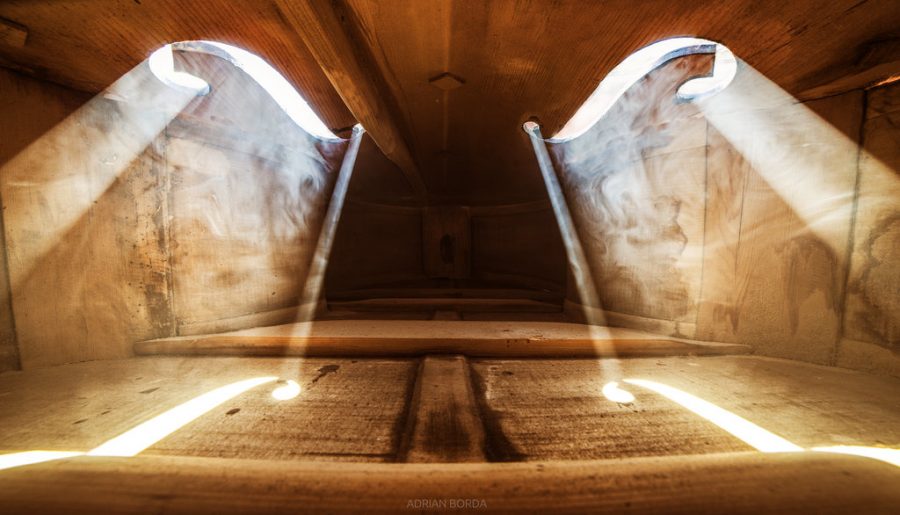
Bor­da has also tak­en pho­tos from inside an old dou­ble bass (above), as well as a gui­tar, sax, and piano. The stringed orches­tral instru­ments, he says, yield­ed the best results. He was first inspired by a 2009 ad cam­paign for the Berlin­er Phil­har­moniker that “cap­tured the insides of instru­ments,” writes Twist­ed Sifter, “reveal­ing the hid­den land­scapes with­in.” With­out any sense of how the art direc­tor cre­at­ed the images, Bor­da set about exper­i­ment­ing with meth­ods of his own.

He was lucky enough to have a luthi­er friend who had a con­tra­bass open for repairs. Lat­er he trav­eled to Amiens, where he found the French cel­lo, also open. “To achieve these shots,” Twist­ed Sifter notes, “Bor­da fit a Sony NEX‑6 cam­era equipped with a Samyang 8mm fish­eye lens inside the instru­ment and then used a smart remote so he could pre­view the work­flow on his phone.” Depend­ing on the angle and the play of light with­in the instru­ment, the pho­tos can look eerie, somber, omi­nous, or angelic—mirroring the cello’s expres­sive range.

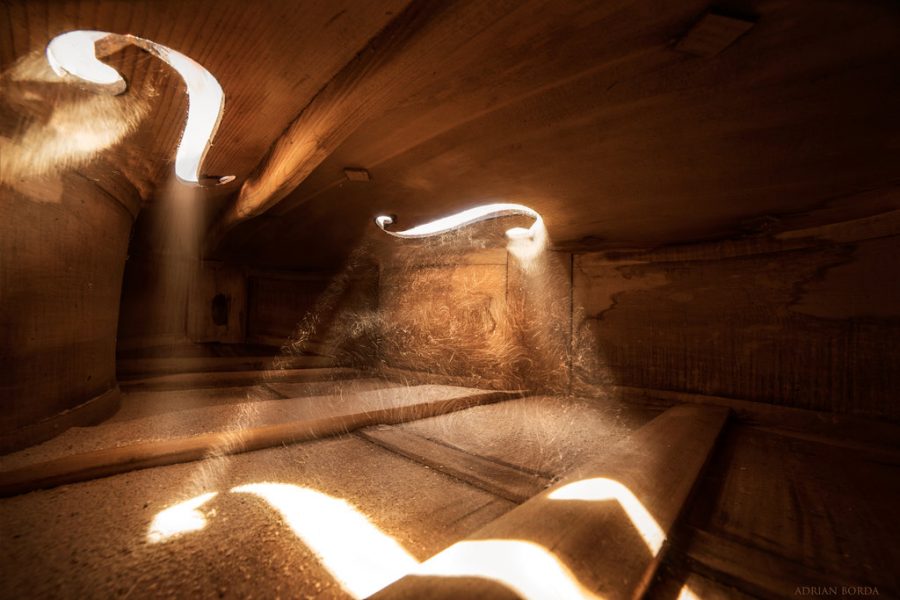
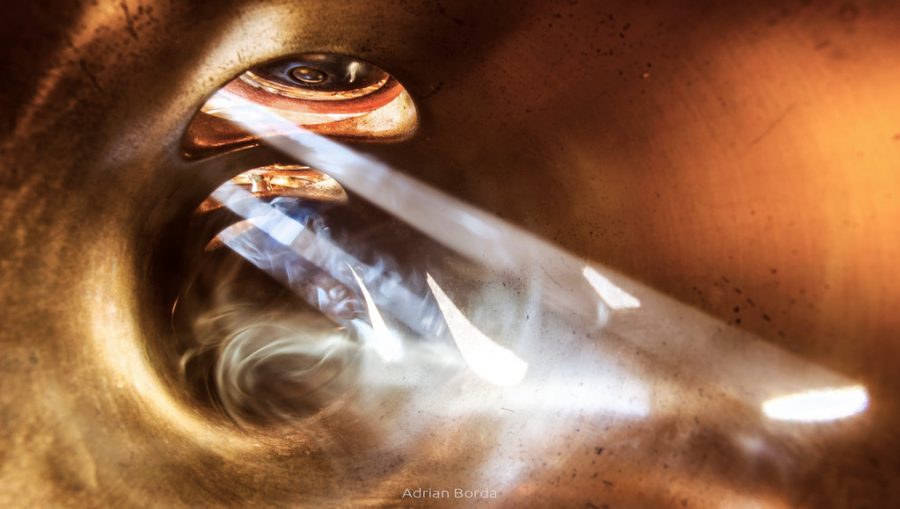
Bor­da gives the cel­lo inte­ri­or shot above the per­fect title “A Long, Lone­ly Time….” Its play of smoke and light is ghost­ly noir. His pho­to below, of the inside of a sax­o­phone, pulls us into a haunt­ed, alien tun­nel. If you want to know what’s on the oth­er side, con­sid­er the strange sur­re­al­ist worlds of Borda’s main gig as a sur­re­al­ist painter of warped fan­tasies and night­mares. Unlike these pho­tos, his paint­ings are full of lurid, vio­lent col­or, but they are also filled with mys­te­ri­ous musi­cal motifs. See more of Bor­da’s inte­ri­or instru­ment pho­tos at Deviant Art and Twister Sifter.

via Twist­ed Sifter

Relat­ed Con­tent:

Watch a Luthi­er Birth a Cel­lo in This Hyp­not­ic Doc­u­men­tary

Why Vio­lins Have F‑Holes: The Sci­ence & His­to­ry of a Remark­able Renais­sance Design

Nine Tips from Bill Mur­ray & Cel­list Jan Vogler on How to Study Intense­ly and Opti­mize Your Learn­ing

Josh Jones is a writer and musi­cian based in Durham, NC. Fol­low him at @jdmagness

One Second from Each Episode of Twin Peaks: Experience David Lynch’s Groundbreaking TV Drama in Less than a Minute

Even if you watched Twin Peaks dur­ing its orig­i­nal broad­cast on ABC in 1990 and 1991 and have nev­er revis­it­ed the show since, you’ll vivid­ly remem­ber a great many moments from it: some because of their emo­tion­al impact, some because of their aes­thet­ic impact, and some because you had no idea what to make of them. But despite the incom­pre­hen­sion it famous­ly caused its view­ers, Twin Peaks nev­er­the­less slow­ly and inex­orably drew them into its real­i­ty: the real­i­ty of the epony­mous small Wash­ing­ton log­ging town whose home­com­ing queen has been mur­dered and in which FBI Spe­cial Agent Dale Coop­er has arrived to inves­ti­gate.

David Lynch and Mark Frost planned it that way: peo­ple who tuned in week after week to find out who killed Lau­ra Palmer would, in the­o­ry, keep watch­ing even after that unsolved part of the sto­ry had long since fad­ed into the back­ground. But pres­sure from ABC even­tu­al­ly forced the cre­ators to resolve that mys­tery, at which point even many die-hard Peaks-heads won­dered whether the show had lost its way.

You’ll see that peri­od, as well as every every oth­er, rep­re­sent­ed in the video above, which com­press­es the entire run of Twin Peaks — the thir­ty episodes of the orig­i­nal two sea­sons plus the eigh­teen episodes of Twin Peaks: The Return, which aired last year on Show­time — into less than a minute, draw­ing one sec­ond from each episode.

Oth­er respect­ed tele­vi­sion shows, like Sein­feld and Curb Your Enthu­si­asm, have under­gone this treat­ment before. But to watch Lynch and Frost’s ground­break­ing dra­ma as an assem­bly of par­tic­u­lar­ly pow­er­ful indi­vid­ual sec­onds pro­vides an entire­ly dif­fer­ent kind of expe­ri­ence, one that may well bring back mem­o­ries of sur­prise, con­fu­sion, hilar­i­ty, and even a kind of awe. Per­haps it does­n’t allow you to inhab­it the dis­tinc­tive long-form Lynchi­an (and Fros­t­ian) vision in the way that the series itself does, but this con­densed, sin­gle-shot ver­sion may well get you want­i­ng to vis­it Twin Peaks again, whether you last vis­it­ed 27 years ago or just yes­ter­day.

Relat­ed Con­tent:

Watch an Epic, 4‑Hour Video Essay on the Mak­ing & Mythol­o­gy of David Lynch’s Twin Peaks

David Lynch Draws a Map of Twin Peaks (to Help Pitch the Show to ABC)

Ange­lo Badala­men­ti Reveals How He and David Lynch Com­posed the Twin Peaks‘ “Love Theme”

David Lynch Directs a Mini-Sea­son of Twin Peaks in the Form of Japan­ese Cof­fee Com­mer­cials

The Late Alan Thicke Hosts a Twin Peaks Behind-the-Scenes Spe­cial (1990)

David Lynch Falls in Love: A Clas­sic Scene From Twin Peaks

Based in Seoul, Col­in Mar­shall writes and broad­casts on cities and cul­ture. His projects include the book The State­less City: a Walk through 21st-Cen­tu­ry Los Ange­les and the video series The City in Cin­e­ma. Fol­low him on Twit­ter at @colinmarshall or on Face­book.

Watch the Sex Pistols Play a Gig on a Thames River Barge During the Queen’s Silver Jubilee, and Get Shut Down by the Cops (1977)

Get­ting your gig shut down by the cops is always excel­lent pub­lic­i­ty–just ask the Bea­t­les. But there’s a world of dif­fer­ence between the 1969 rooftop con­cert and this June 7, 1977 boat par­ty to pub­li­cize the Sex Pis­tols’ sec­ond sin­gle “God Save the Queen.” It shows how quick­ly the hip­pie dream of the ‘60s had cur­dled into the grim eco­nom­ics of mid-‘70s Lon­don, where race riots and police bru­tal­i­ty, along with numer­ous nation­al strikes, had made the UK fer­tile ground for the birth of punk.

This film above, low in qual­i­ty but a marked improve­ment over oth­er ver­sions cir­cu­lat­ing, is the longest doc­u­men­ta­tion yet of the infa­mous and antag­o­nis­tic trip.

The brain­child of man­ag­er and provo­ca­teur Mal­colm McLaren, the riv­er boat ride was a satire of the Queen’s roy­al riv­er pro­ces­sion that was due to take place two days lat­er, cel­e­brat­ing the Queen’s Sil­ver Jubilee. The flotil­la was just one event in a jubilee year that had been going on since Feb­ru­ary. It was all pomp and cer­e­mo­ny, and many saw it as an insult­ing dis­trac­tion from the real prob­lems fac­ing the coun­try.

But there was the oth­er rea­son, one that ani­mat­ed McLaren: The band had been dropped by EMI and then picked up by Vir­gin. The sin­gle had been banned and kept out of the offi­cial BBC charts and radio, despite sell­ing enough to send it shoot­ing up the charts. They were already con­tro­ver­sial, and McLaren want­ed to stoke that fire.

On board the Queen Eliz­a­beth, the band and their man­ag­er, music press writ­ers, fel­low artists, punk fans, and a film crew direct­ed by Julien Tem­ple set off in the after­noon, with some pub­licly avail­able beer to drink and some speed to do in secret.

Jon Sav­age, who would go on to write one of the sem­i­nal books about the Pis­tols and punk, England’s Dream­ing, was on board and pro­vides one of the best descrip­tions of the day:

The atmos­phere on the boat was para­noid and claus­tro­pho­bic, but also very excit­ing. They were by far the best I ever saw them that day. You can’t beat the Sex Pis­tols, jubilee week­end, “Anar­chy in the UK,” out­side Par­lia­ment.

While the sun was up and peo­ple milled about, it was just like any oth­er relax­ing cruise up the Thames. You can hear the lilt of reg­gae being played over the P.A. sys­tem. Also see some great pho­tos from the day here.

But once the sun went down, the Sex Pis­tols were ready to rock, and so they did, blast­ing out a furi­ous set, releas­ing a lot of built up ten­sion, not just per­son­al­ly, but as Sav­age sug­gests, all the frus­tra­tions of that year.

It wasn’t long till the police sur­round­ed the boat on the water and forced it back to dock, and then pulled the pow­er. Despite protes­ta­tions the par­ty was over, and the police took out their own frus­tra­tions on a com­bat­ive McLaren, beat­ing the hell out of him before arrest­ing him and cart­ing him away. (The Pis­tols escaped in the chaos.)

(The video ends with a fas­ci­nat­ing record­ing from Capi­tol Radio explain­ing why, despite being num­ber one, the sta­tion can’t play the song.)

It was per­fect the­ater for McLaren, who was always a Sit­u­a­tion­al­ist at heart. And along with the sin­gle it announced the main­stream arrival of punk music, despite the establishment’s protes­ta­tions. Punk was nev­er meant to last. And in a bizarre cap­per on events, the son of McLaren and punk fash­ion design­er Vivi­enne West­wood set fire to around $8 mil­lion of punk mem­o­ra­bil­ia in 2016…on a barge in the Riv­er Thames.

Joe Corre, the man in ques­tion, explained it this way: “Punk was nev­er, nev­er meant to be nos­tal­gic.”

Relat­ed Con­tent:

Watch the Sex Pis­tols’ Christ­mas Par­ty for Children–Which Hap­pened to Be Their Final Gig in the UK (1977)

The Sex Pis­tols’ 1976 Man­ches­ter “Gig That Changed the World,” and the Day the Punk Era Began

When the Sex Pis­tols Played at the Chelms­ford Top Secu­ri­ty Prison: Hear Vin­tage Tracks from the 1976 Gig

Ted Mills is a free­lance writer on the arts who cur­rent­ly hosts the artist inter­view-based FunkZone Pod­cast and is the pro­duc­er of KCR­W’s Curi­ous Coast. You can also fol­low him on Twit­ter at @tedmills, read his oth­er arts writ­ing at tedmills.com and/or watch his films here.

Wikipedia Leads Effort to Create a Digital Archive of 20 Million Artifacts Lost in the Brazilian Museum Fire

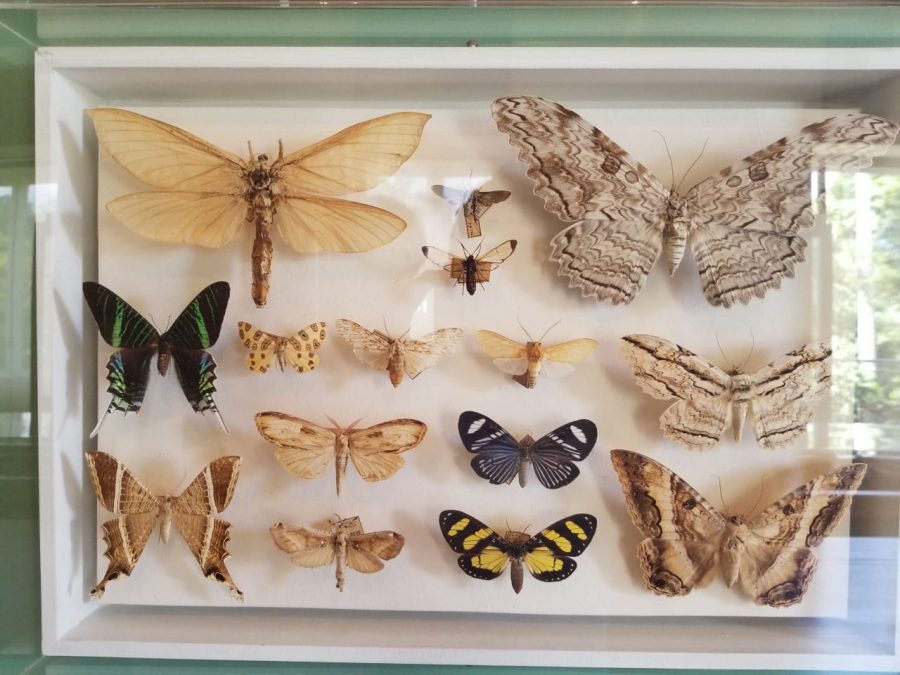
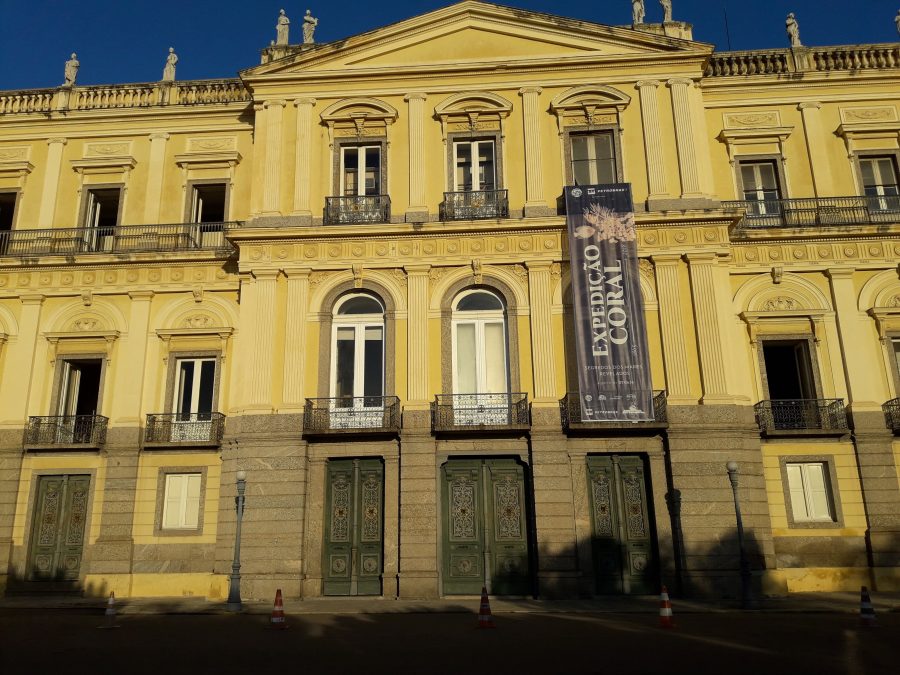
The stag­ger­ing loss of a pos­si­ble 20 mil­lion arti­facts in the fire that con­sumed Brazil’s Museu Nacional in Rio bog­gles the mind—dinosaur fos­sils, the old­est human remains found in the coun­try, and, as Emi­ly Drey­fuss reports at Wired, “audio record­ings and doc­u­ments of indige­nous lan­guages. Many of those lan­guages, already extinct, may now be lost for­ev­er.” For­mer Brazil­ian envi­ron­ment min­is­ter called the destruc­tion of Latin Amer­i­ca’s biggest nat­ur­al his­to­ry muse­um “a lobot­o­my of the Brazil­ian mem­o­ry.”

The incal­cu­la­ble loss of cul­ture and his­to­ry seems all the more trag­ic giv­en that it might have been slowed or stopped but for gov­ern­ment cuts that left the muse­um with crum­bling infra­struc­ture and with­out a sprin­kler sys­tem or even water for the hydrants out­side (fire­fight­ers had to get water from a near­by lake). But assign­ing blame, while nec­es­sary to pre­vent future cat­a­stro­phes, will not restore the museum’s trea­sures or the many years of research its staff lost when their offices went up in flames.

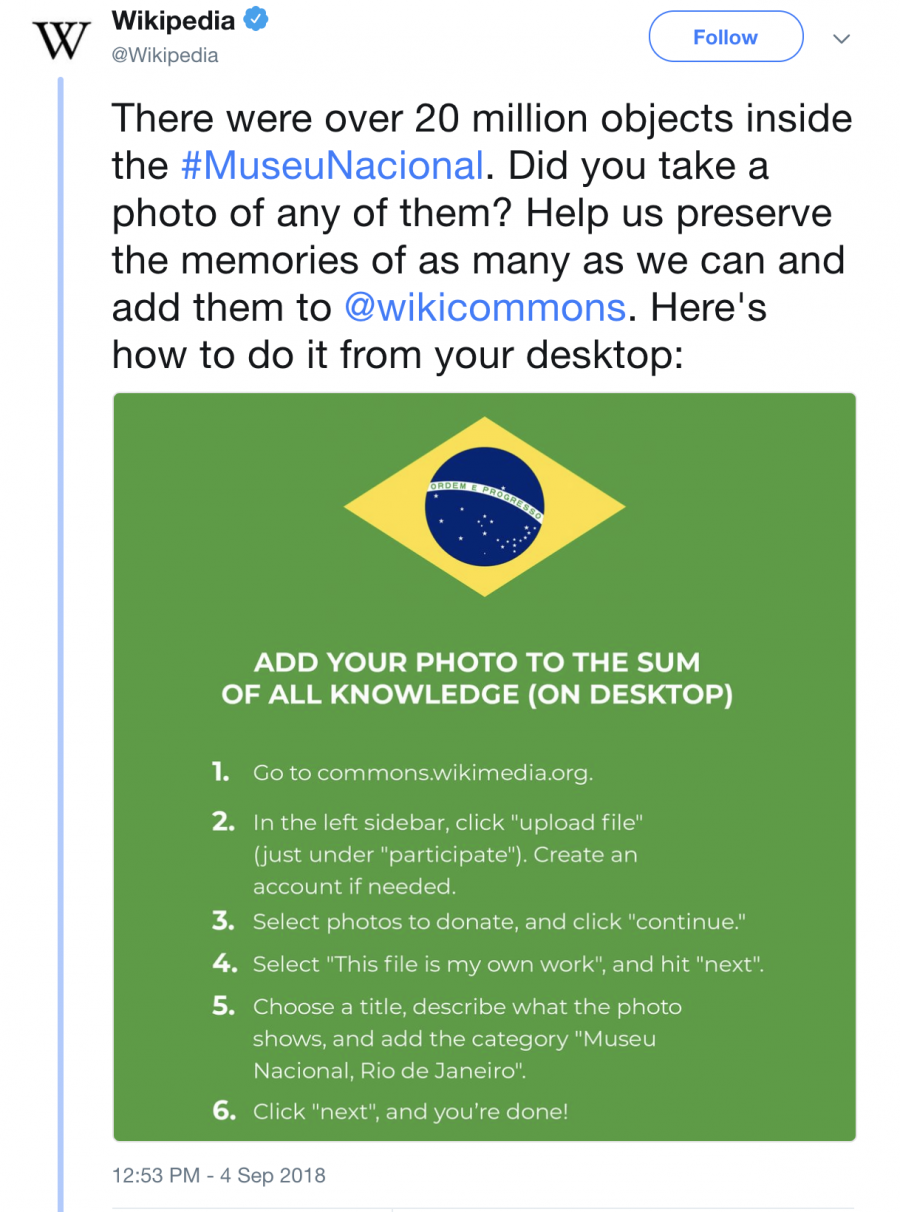
Sad­ly, as Drey­fuss points out, like many muse­ums around the world, the Museu Nacional had not begun to back up its col­lec­tion dig­i­tal­ly. But it may not be entire­ly too late for that, in some small part at least. In an announce­ment last week, Wikipedia called for a post fac­to crowd­sourced back­up in the form of user-sub­mit­ted pho­tos.

“We’re ask­ing peo­ple every­where to join our glob­al com­mu­ni­ty,” wrote exec­u­tive direc­tor of the Wiki­me­dia Foun­da­tion, Kather­ine Maher, “and help the world recov­er from this col­lec­tive tragedy.” Maher describes the fire as a “dev­as­tat­ing loss of 200 years of his­to­ry,” but of course, it’s much more than that. The muse­um con­tained not only pre­his­toric arti­facts, but also Egypt­ian sar­copha­gi and mum­mies, Greek vas­es, and many oth­er ancient trea­sures. You can get a sense of the scope of its col­lec­tions at the museum’s web­site and browse the vis­i­tor-sub­mit­ted pho­tos at Wiki­me­dia.

“Thou­sands of images have already been uploaded,” reports Brazil’s O Globo. Few of them con­tain any iden­ti­fy­ing infor­ma­tion, and it will fall to schol­ars or knowl­edge­able Wikipedia edi­tors to pro­vide it. Oth­er insti­tu­tions around the world are also respond­ing. Geek­Wire notes that “Nation­al Geo­graph­ic, UNESCO and the French gov­ern­ment have offered sup­port for restor­ing the muse­um and recon­sti­tut­ing its col­lec­tion.” It may rise from the ash­es, but most of the museum’s for­mer con­tents will only exist through the pho­to­graph­ic doc­u­men­ta­tion of its many thou­sands of vis­i­tors.

If you were one of those vis­i­tors, you can sub­mit your pho­tos to Wiki­me­dia Com­mons (see the instruc­tions above, or at the tweet here). Stu­dents from the Uni­ver­si­dade Fed­er­al do Esta­do do Rio de Janeiro are also “head­ing up their own crowd­sourc­ing effort,” Geek­Wire notes. “They’re even solic­it­ing self­ies from past vis­its.” Here’s hop­ing this tragedy spurs gov­ern­ments to pro­vide the need­ed fund­ing for muse­ums in the future, and push­es muse­ums that are not doing so to make dig­i­tal archiv­ing a pri­or­i­ty.

Relat­ed Con­tent:

1.8 Mil­lion Free Works of Art from World-Class Muse­ums: A Meta List of Great Art Avail­able Online

25 Mil­lion Images From 14 Art Insti­tu­tions to Be Dig­i­tized & Put Online In One Huge Schol­ar­ly Archive

Free: Down­load 70,000+ High-Res­o­lu­tion Images of Chi­nese Art from Taipei’s Nation­al Palace Muse­um

Josh Jones is a writer and musi­cian based in Durham, NC. Fol­low him at @jdmagness

« Go BackMore in this category... »
Quantcast