Download Classic Japanese Wave and Ripple Designs: A Go-to Guide for Japanese Artists from 1903

Tra­di­tion­al Japan­ese art may please so many of us, even those of us with lit­tle inter­est in Japan itself, because of the way it inhab­its the realm between rep­re­sen­ta­tion and abstrac­tion. But then, it does­n’t just inhab­it that realm: it has set­tled those bor­der­lands, made them its own, for much longer than most cul­tures have been doing any­thing at all. The space between art, strict­ly defined, and what we now call design has also seen few achieve­ments quite so impres­sive as those made in Japan, going all the way back to the rope mark­ings on the clay ves­sels used by the islands’ Jōmon peo­ple in the 11th cen­tu­ry BC.

Those ancient rope-on-clay mark­ings can eas­i­ly look like pre­de­ces­sors of the “wave pat­terns” still seen in Japan­ese art and design today. Since time almost immemo­r­i­al they have appeared on “swords (both blades and han­dles) and asso­ci­at­ed para­pher­na­lia (known as ‘sword fur­ni­ture’), as well as lac­quer­ware, Net­suke, reli­gious objects, and a host of oth­er items.”

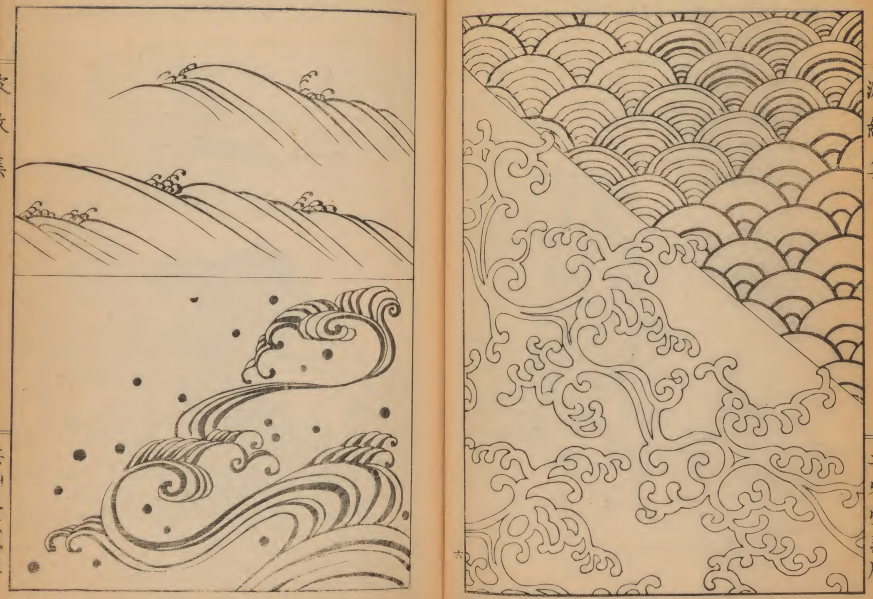
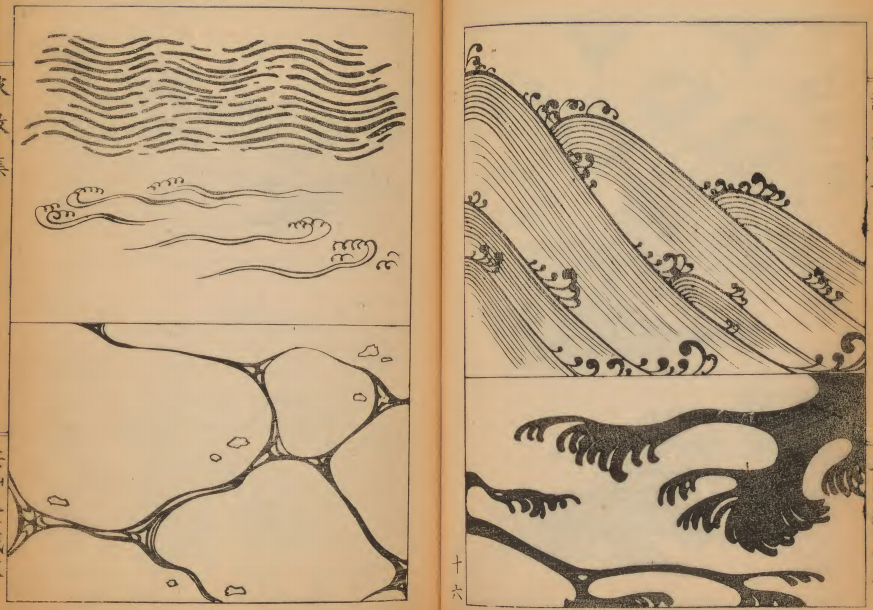
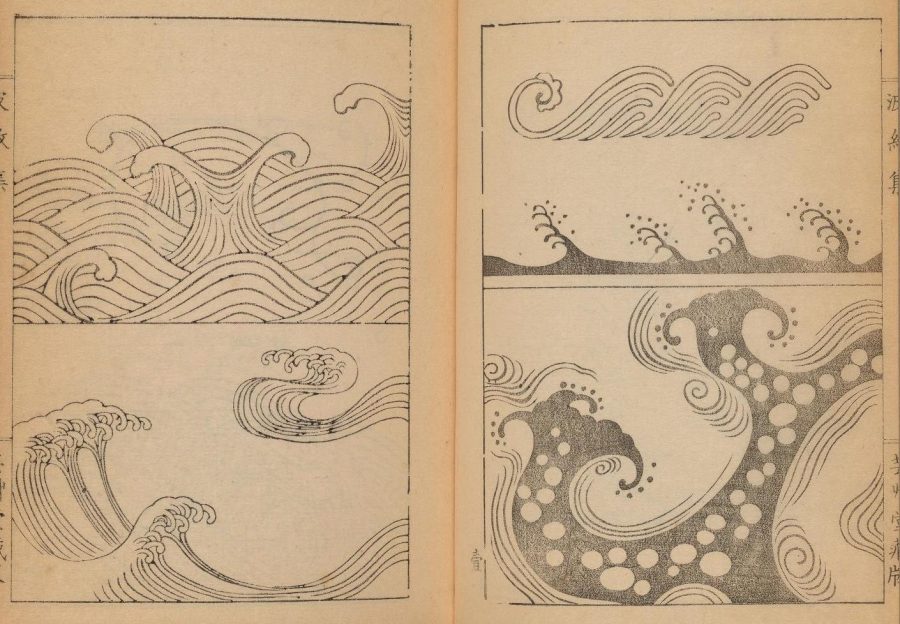
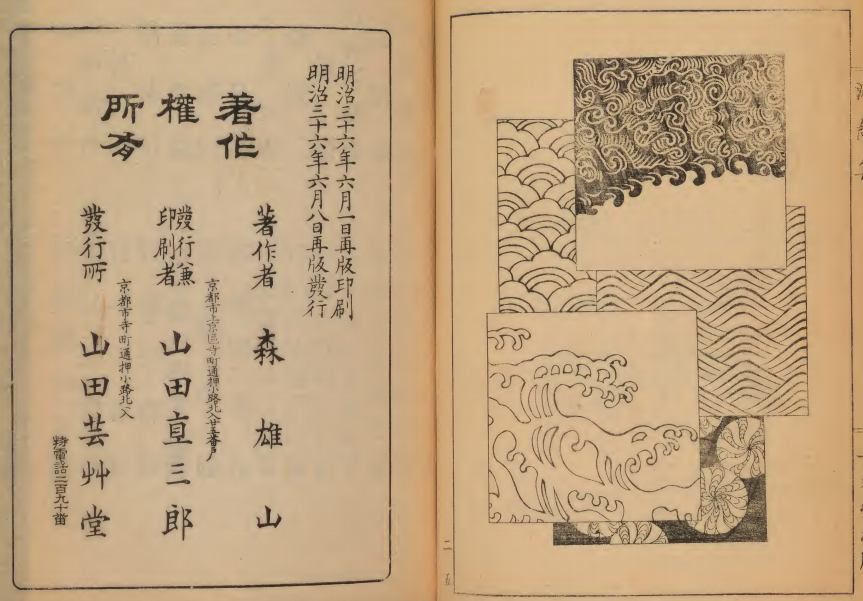
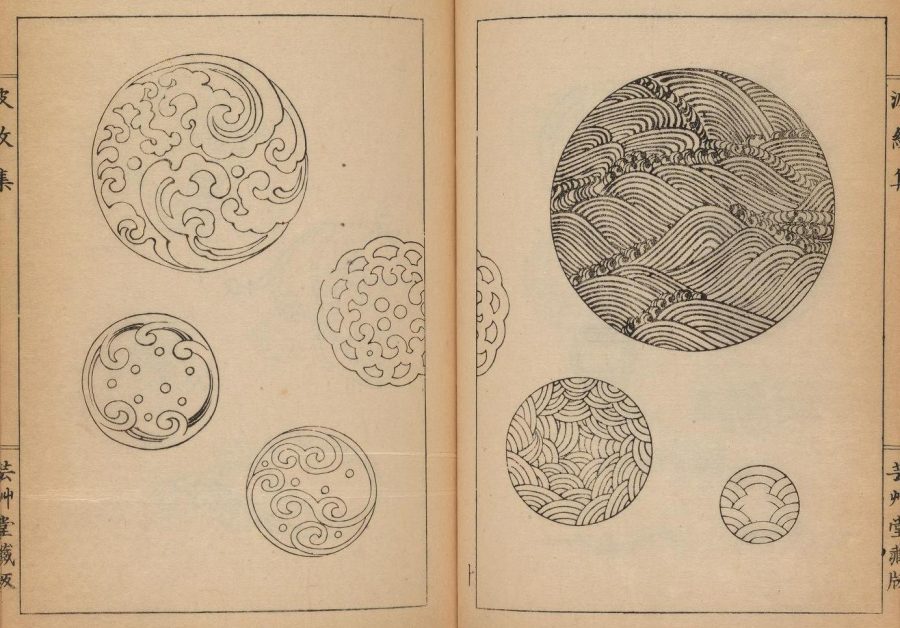
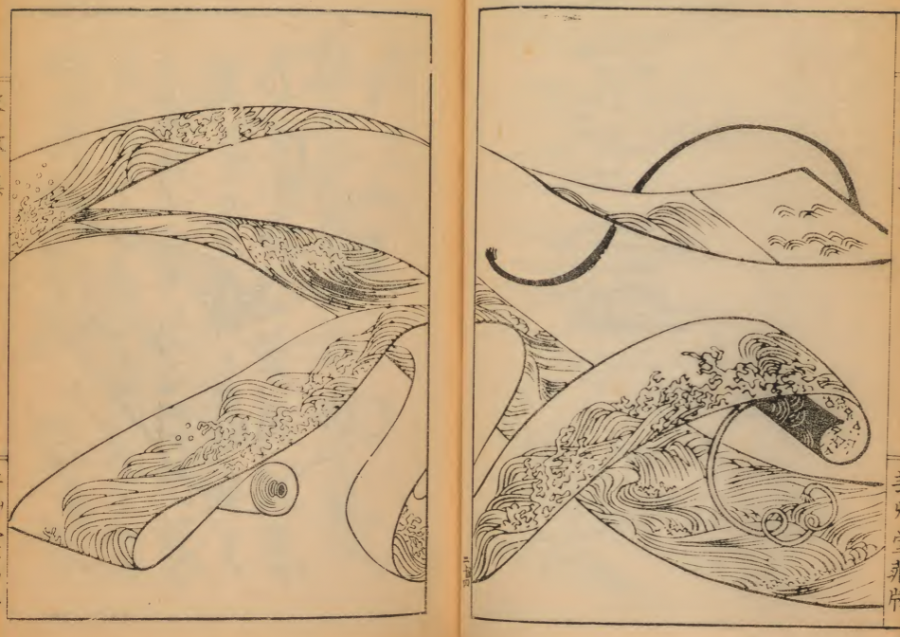
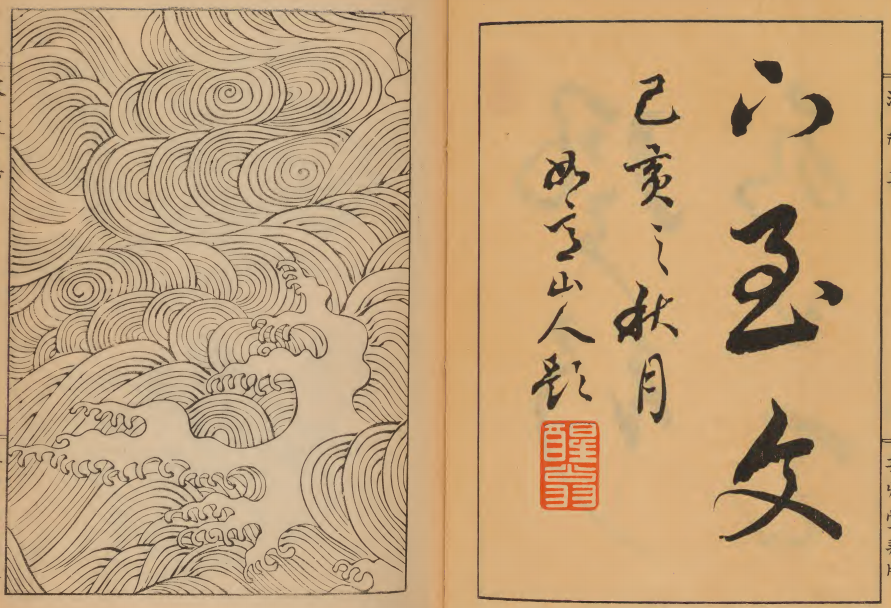
So says the Pub­lic Domain Review, which has fea­tured a series of three books full of ele­gant wave and rip­ple designs orig­i­nal­ly pub­lished in 1903 and now avail­able to down­load free at the Inter­net Archive (vol­ume onevol­ume twovol­ume three).

Called Hamon­shū, the books were pro­duced by the artist Mori Yuzan, “about whom not a lot is known,” adds the Pub­lic Domain review, “apart from that he hailed from Kyoto, worked in the Nihon­ga style” — or the “Japan­ese paint­ing” style of Japan­ese paint­ing, which emerged dur­ing the Mei­ji peri­od, a time of rapid West­ern­iza­tion in Japan.

He “died in 1917. The works would have act­ed as a kind of go-to guide for Japan­ese crafts­men look­ing to adorn their wares with wave and rip­ple pat­terns.” Though they do con­tain text, they require no knowl­edge of the Japan­ese lan­guage to appre­ci­ate the many illus­tra­tions they present.

Tak­en togeth­er, Mori’s books offer a com­plete spec­trum from tra­di­tion­al Japan­ese-style rep­re­sen­ta­tion — espe­cial­ly of land, water, moun­tains, sky, and oth­er nat­ur­al ele­ments — to a taste of the infi­nite vari­ety of abstract pat­terns that result. Such imagery remains preva­lent in Japan more than a cen­tu­ry after the pub­li­ca­tion of Hamon­shū, as any vis­i­tor to Japan today will see.

But now that the Inter­net Archive has made the books freely avail­able online (vol­ume onevol­ume twovol­ume three), they’ll sure­ly inspire work not just between rep­re­sen­ta­tion and abstrac­tion as well as between art and design, but between Japan­ese aes­thet­ics and those of every oth­er cul­ture in the world as well.

via Pub­lic Domain Review

Relat­ed Con­tent:

Watch Japan­ese Wood­work­ing Mas­ters Cre­ate Ele­gant & Elab­o­rate Geo­met­ric Pat­terns with Wood

Mes­mer­iz­ing GIFs Illus­trate the Art of Tra­di­tion­al Japan­ese Wood Join­ery — All Done With­out Screws, Nails, or Glue

Down­load 2,500 Beau­ti­ful Wood­block Prints and Draw­ings by Japan­ese Mas­ters (1600–1915)

1,000+ His­toric Japan­ese Illus­trat­ed Books Dig­i­tized & Put Online by the Smith­son­ian: From the Edo & Meji Eras (1600–1912)

The Art of Col­lo­type: See a Near Extinct Print­ing Tech­nique, as Lov­ing­ly Prac­ticed by a Japan­ese Mas­ter Crafts­man

Based in Seoul, Col­in Mar­shall writes and broad­casts on cities and cul­ture. His projects include the book The State­less City: a Walk through 21st-Cen­tu­ry Los Ange­les and the video series The City in Cin­e­ma. Fol­low him on Twit­ter at @colinmarshall or on Face­book.

R. Crumb Illustrates Jean-Paul Sartre’s Nausea: Existentialism Meets Underground Comics

Sartre’s nov­el Nau­sea intro­duced his philo­soph­i­cal view as a form of ill­ness to a WWII read­er­ship. “Nau­sea is exis­tence reveal­ing itself—and expe­ri­ence is not pleas­ant to see,” he wrote in his own sum­ma­ry of his first book, pub­lished in 1938. The novel’s drama­ti­za­tion of His­to­ri­an Roquentin’ s cri­sis presents a case of exis­ten­tial sick­ness as most­ly invol­un­tary.

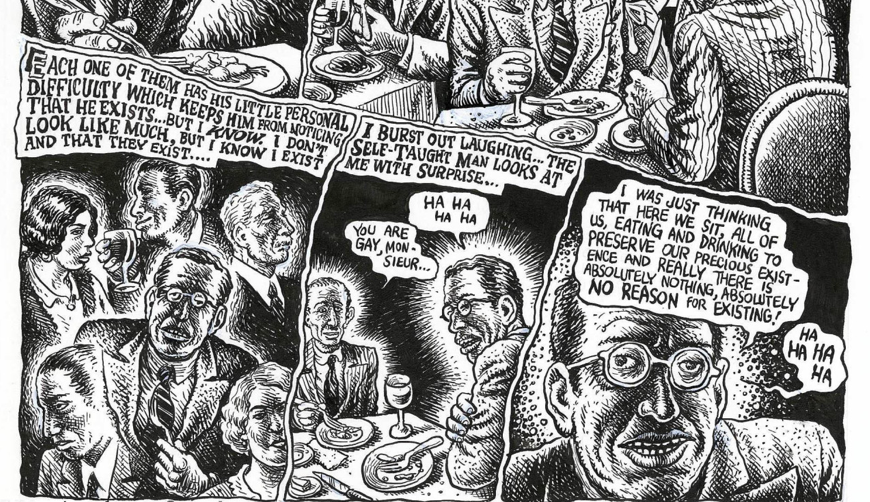
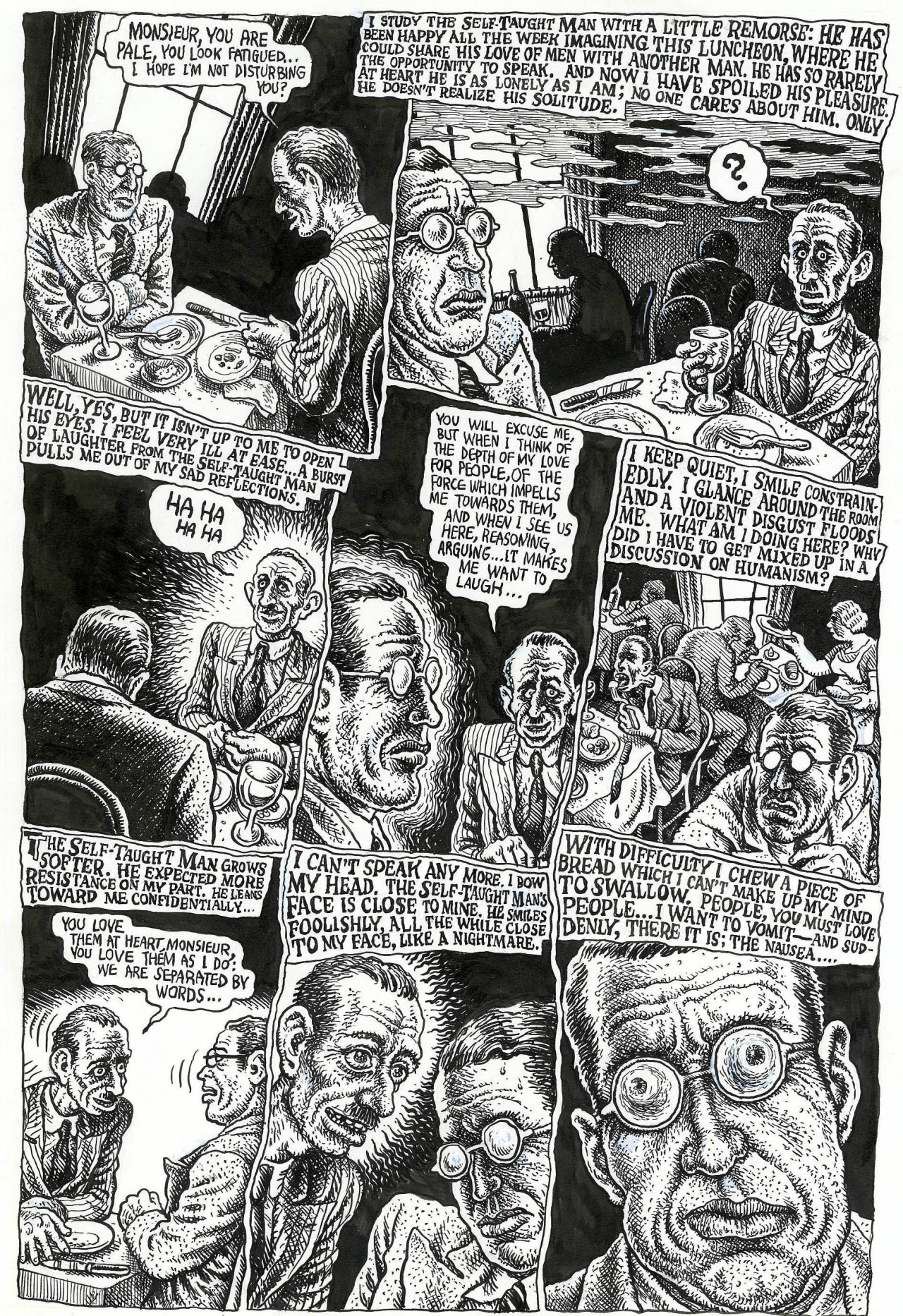
Though pub­lished before his many Marx­ist books and essays, Nau­sea con­nects the malaise to a cer­tain class expe­ri­ence. “I have no trou­bles,” thinks Roquentin in Robert Crumb’s short adap­ta­tion of the book above, “I have mon­ey like a cap­i­tal­ist, no boss, no wife, no chil­dren; I exist, that’s all…. And that trou­ble is so vague, so meta­phys­i­cal that I am ashamed of it.” Nau­sea, in one sense, is bour­geoise alien­ation, while Roquentin’s con­ver­sa­tion part­ner, the Self-Taught Man, con­fess­es a naïve human­ist ide­al­ism.

The char­ac­ters alone, some crit­ics sug­gest, imbue the book with a sub­tle par­o­dy. As he lis­tens to the Self-Taught Man’s trou­bles and rumi­nates on his own, Crumb’s Roquentin grows more Sartre-like. Sig­nif­i­cant­ly, the Self-Taught Man takes on a Crumb-like demeanor and aspect. Their dia­logue moves briskly, the scene resem­bling My Din­ner with Andre with less ban­ter and more neu­ro­sis. Sartre’s tone lends itself well to Crumb’s obses­sive, tight­ly-com­posed pan­els.

Crumb’s lit­er­ary inter­pre­ta­tions have grav­i­tat­ed toward oth­er anx­ious writ­ers like Charles Bukows­ki and Franz Kaf­ka, as well as the mur­der and incest of the book of Gen­e­sis. The under­ground comics leg­end is right at home with Sartre­an dread and despair. Crumb became famous for Fritz the Cat, an ani­mat­ed film ver­sion of his raunchy hip­ster, what many called his gross­ly sex­ist and racist sex fan­tasies, and the draw­ing and slo­gan “Keep on Truckin’.” He was a fig­ure of 60s and 70s coun­ter­cul­ture, but that’s nev­er where he belonged.

Crumb was a Sartre­an pro­tag­o­nist , even when he “often por­trayed him­self in his work as naked… and pri­apic.” In an an inter­view with Crumb The Guardian describes him:

his words are depres­sive and lugubri­ous, and yet he appears mel­low, laugh­ing eas­i­ly through his exis­ten­tial nau­sea. The most ter­ri­ble sto­ries amuse him as much as they pain him. He tells me how a best friend killed him­self by swal­low­ing four bot­tles of paper cor­rec­tion flu­id, and he chor­tles. He talks of his own despair, and gig­gles. He admits that he could nev­er have imag­ined a life quite so fulfilled—with Aline, and his beloved daugh­ter Sophie, also a car­toon­ist, and suc­cess and money—and says he’s still mis­er­able as hell, and laughs.

He is a lit­tle Roquentin, a lit­tle bit Sartre, a lit­tle bit Self-Taught man, apply­ing to his read­ing of lit­er­a­ture and phi­los­o­phy an LSD-assist­ed, sex-pos­i­tive, and unavoid­ably con­tro­ver­sial and depres­sive sen­si­bil­i­ty. See the full Crumb-illus­trat­ed Nau­sea here.

Relat­ed Con­tent:

R. Crumb Describes How He Dropped LSD in the 60s & Instant­ly Dis­cov­ered His Artis­tic Style

R. Crumb Shows Us How He Illus­trat­ed Gen­e­sis: A Faith­ful, Idio­syn­crat­ic Illus­tra­tion of All 50 Chap­ters

Three Charles Bukows­ki Books Illus­trat­ed by Robert Crumb: Under­ground Com­ic Art Meets Out­sider Lit­er­a­ture

Under­ground Car­toon­ist Robert Crumb Cre­ates an Illus­trat­ed Intro­duc­tion to Franz Kafka’s Life and Work

Josh Jones is a writer and musi­cian based in Durham, NC. Fol­low him at @jdmagness

Paul McCartney Breaks Down His Most Famous Songs and Answers Most-Asked Fan Questions in Two New Videos

Paul McCart­ney has played it safe for decades, rely­ing on the bril­liance of his song­writ­ing and musi­cian­ship, which no one ever doubts and so he nev­er has to prove. His songs usu­al­ly fall into a for­mu­la famil­iar from Bea­t­les’ days: “sil­ly love songs,” writes Stephen Ear­lewine at Pitch­fork, “mini-suites… polite polit­i­cal protests, and old-fash­ioned rock­ers.” But while the Bea­t­les had each oth­er, the exper­i­ments of George Mar­tin, LSD, tran­scen­den­tal med­i­ta­tion, and a moment of per­fect cul­tur­al kismet to twist and warp their music into all sorts of weird shapes, McCartney’s solo releas­es tend to stick to his estab­lished strengths, some­times to the detri­ment of what can hap­pen when he moves out of his com­fort zone to get deep­er and more vul­ner­a­ble.

Yet as near­ly every crit­ic has so far not­ed of his newest album, Egypt Sta­tion—which he heav­i­ly pro­mot­ed, for exam­ple, with an appear­ance on Car­pool Karaoke and a “secret” show at Grand Cen­tral Sta­tion—McCart­ney lets lis­ten­ers in on some sur­pris­ing con­fes­sion­al dark­ness. The Nick Drake-like lyrics of open­er “I Don’t Know” show him earnest­ly con­fronting aging, mor­tal­i­ty, and depres­sion, with­out any of the usu­al sun­ni­ness or comedic turns of phrase: “I got crows at my window/Dogs at my door/I don’t think I can take any­more.” The can­did admis­sion, Erlewine writes, “would be star­tling in any con­text, but what stings most is the tac­it acknowl­edg­ment that 76-year-old McCart­ney real­izes he’s near­ing the end of his long, wind­ing road.”

In inter­views, like his lat­est with Rolling Stone, how­ev­er, McCart­ney sounds as upbeat as ever. He describes sit­ting in Apple meet­ings after the breakup of the Bea­t­les as “like see­ing the death of your favorite pet,” but he also enthus­es about his patched-up rela­tion­ship with Yoko (“Now it’s like we’re mates”), love for his band—who have now been play­ing togeth­er longer than both the Bea­t­les and Wings—and his pride in his musi­cal lega­cy (“It’s a damn good job I did”). He sounds just as pleased to be onstage in his mid-70s as he was in his 20s—the gen­uine love of per­form­ing and engag­ing with fans hasn’t dulled one bit with age, just as his abil­i­ty to write and sell hit records remains sol­id.

As for his time-test­ed for­mu­la, Erlewine com­ments, it only “makes the moments where Paul attempts some­thing slight­ly new seem all the more appar­ent.” One new thing he’s game­ly tried in recent years is mak­ing online videos for fans. A few years back, he dropped a few lessons show­ing how to play the bass and gui­tar parts on “Ever Present Past” from 2007’s Mem­o­ry Almost Full. This year, McCartney’s fan ser­vice includes the two videos here. First at the top, he spends almost a half an hour dis­cussing the best-known songs in his 60-year-career for GQ: “I Lost My Lit­tle Girl,” “Yes­ter­day,” “I Saw Her Stand­ing There,” “And I Love Her,” “Eleanor Rig­by,” “A Day in the Life,” “Hey Jude,” “Hel­ter Skel­ter,” “Black­bird,” “Let It Be,” “Hi Hi Hi,” “Here Today,” “Jet,” and Egypt Sta­tion’s “I Don’t Know.”

Above, McCart­ney accept’s Wired’s “auto­com­plete chal­lenge,” answer­ing the internet’s most searched ques­tions about him­self, such as “Why is Paul McCartney’s nick­name ‘Mac­ca’?” and “Why did Paul McCart­ney write ‘Let it Be’?” (Answers: “Cause I’m from Liv­er­pool, and they abbre­vi­ate every­thing in Liv­er­pool” and he was “a bit stressed out”—and a lit­tle high—and his moth­er came to him in a dream with the advice: “just let it be.”) Is there always more learn about Paul McCart­ney? Yes, appar­ent­ly there is. But even when he repeats him­self, he’s still great fun to watch.

Relat­ed Con­tent:

Chaos & Cre­ation at Abbey Road: Paul McCart­ney Revis­its The Bea­t­les’ Fabled Record­ing Stu­dio

The Genius of Paul McCartney’s Bass Play­ing in 7 Iso­lat­ed Tracks

Paul McCart­ney Offers a Short Tuto­r­i­al on How to Play the Bass Gui­tar

Josh Jones is a writer and musi­cian based in Durham, NC. Fol­low him at @jdmagness

This Man Flew to Japan to Sing ABBA’s “Mamma Mia” in a Big Cold River

Austin Weber trav­eled to Kyoto and sang ABBA’s “Mam­ma Mia” in a big cold riv­er. What made the result­ing video so strange­ly com­pelling? Maybe, as one YouTube com­menter not­ed, it’s that the “video has about 100 pix­els but every one is used to their full poten­tial.” Or maybe, as anoth­er YouTu­ber said, “it’s the syn­thy ABBA, the goofy zooms and edit­ing, or the bit­ter­sweet premise com­bined with the song.” Or maybe it’s that the video sim­ply “brings us back to the mid 2000’s,” when our YouTube cul­ture all got start­ed. It’s hard to know. But maybe we should­n’t over­think it and just enjoy.

If you would like to sign up for Open Culture’s free email newslet­ter, please find it here. It’s a great way to see our new posts, all bun­dled in one email, each day.

If you would like to sup­port the mis­sion of Open Cul­ture, con­sid­er mak­ing a dona­tion to our site. It’s hard to rely 100% on ads, and your con­tri­bu­tions will help us con­tin­ue pro­vid­ing the best free cul­tur­al and edu­ca­tion­al mate­ri­als to learn­ers every­where. You can con­tribute through Pay­Pal, Patre­on, and Ven­mo (@openculture). Thanks!

by | Permalink | Make a Comment ( 2 ) |

Umberto Eco Explains Why We Make Lists

Cre­ative Com­mons image by Rob Bogaerts, via the Nation­al Archives in Hol­land

We hate lists, which have told us what to do since at least the days Leonar­do da Vin­ci, and which now, as “lis­ti­cles,” con­sti­tute one of the low­est stra­ta of inter­net con­tent. But we also love lists: a great many of us click on those lis­ti­cles, after all, and one might argue that the list, as a form, rep­re­sents the begin­ning of writ­ten texts. “The list is the ori­gin of cul­ture,” said Umber­to Eco in a 2009 Der Spiegel inter­view about the exhi­bi­tion on the his­to­ry of the list he curat­ed at the Lou­vre. “It’s part of the his­to­ry of art and lit­er­a­ture. What does cul­ture want? To make infin­i­ty com­pre­hen­si­ble. It also wants to cre­ate order  — not always, but often.”

How, as mere human beings, do we impose order when we gaze up into infin­i­ty, down into the abyss — pick your metaphor of the sub­lime­ly, incom­pre­hen­si­bly vast? We do it, Eco thought, “through lists, through cat­a­logs, through col­lec­tions in muse­ums and through ency­clo­pe­dias and dic­tio­nar­ies.” The breadth as well as depth of the knowl­edge he accu­mu­lat­ed through­out his 84 years — which itself could seem sub­lime­ly and incom­pre­hen­si­bly vast, as any­one who has read one of his list-filled nov­els knows — placed him well to explain the ori­gins, func­tions, and impor­tance of the list. In the Spiegel inter­view he names Don Gio­van­ni’s 2,063 lovers, the con­tents of Leopold Bloom’s draw­ers, and the many ships and gen­er­als spec­i­fied in the Ili­ad as just a few of the clas­sic lists and enu­mer­a­tions of West­ern cul­ture.

Eco’s research into and/or obses­sion with lists pro­duced not just the exhi­bi­tion at the Lou­vre but also a book, The Infin­i­ty of Lists: An Illus­trat­ed Essay. Did it also lead him to any oth­er answers about why, whether in the Mid­dle Ages with its “very clear image of the uni­verse,” the Renais­sance and Baroque eras with their “world­view based on astron­o­my,” the “post­mod­ern age” in which we live today, or any oth­er time, “the list has pre­vailed over and over again?” Ulti­mate­ly, we make lists when­ev­er we expe­ri­ence a “defi­cien­cy of lan­guage,” such as when lovers describe one anoth­er (“Your eyes are so beau­ti­ful, and so is your mouth, and your col­lar­bone”) or when we remem­ber the “very dis­cour­ag­ing, humil­i­at­ing lim­it” of death. Mak­ing lists of things that seem infi­nite is “a way of escap­ing thoughts about death. We like lists because we don’t want to die.”

Hav­ing died in 2016 him­self, Eco left behind an immense per­son­al library (his walk­through of which we’ve pre­vi­ous­ly fea­tured here on Open Cul­ture). “It might actu­al­ly be 50,000 books,” he said to the Spiegel inter­view­er, but he refused to put them on a list and find out for sure: “When my sec­re­tary want­ed to cat­a­logue them, I asked her not to. My inter­ests change con­stant­ly, and so does my library.” If he were to try to list his inter­ests, he would have had to keep scrap­ping the list and draw­ing up a new one; more than pro­vid­ing abun­dant mate­r­i­al for his writ­ing, this con­stant and life­long cir­cu­la­tion of fas­ci­na­tions (he men­tioned first lov­ing Chopin at 16, and again in his sev­en­ties) con­firmed his engage­ment with the infi­nite world around him: “If you inter­act with things in your life, every­thing is con­stant­ly chang­ing. And if noth­ing changes, you’re an idiot.”

Relat­ed Con­tent:

Umber­to Eco Explains the Poet­ic Pow­er of Charles Schulz’s Peanuts

Umber­to Eco Makes a List of the 14 Com­mon Fea­tures of Fas­cism

Watch Umber­to Eco Walk Through His Immense Pri­vate Library: It Goes On, and On, and On!

Umber­to Eco Dies at 84; Leaves Behind Advice to Aspir­ing Writ­ers

Leonar­do Da Vinci’s To Do List (Cir­ca 1490)

Based in Seoul, Col­in Mar­shall writes and broad­casts on cities and cul­ture. His projects include the book The State­less City: a Walk through 21st-Cen­tu­ry Los Ange­les and the video series The City in Cin­e­ma. Fol­low him on Twit­ter at @colinmarshall or on Face­book.

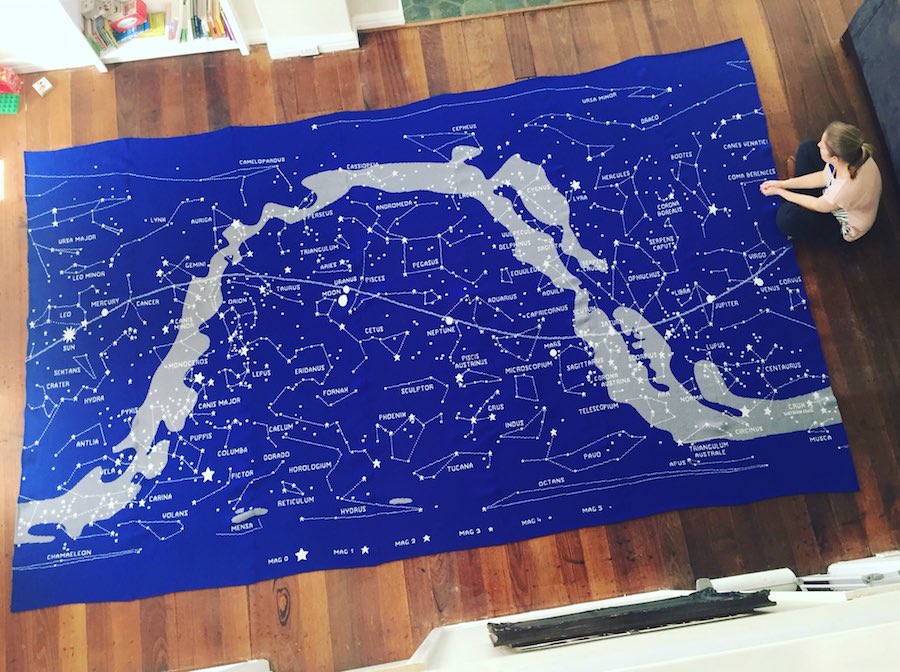
A Massive, Knitted Tapestry of the Galaxy: Software Engineer Hacks a Knitting Machine & Creates a Star Map Featuring 88 Constellations

The next time some non-crafty type dis­par­ages your hob­by as a frumpy pur­suit, show them soft­ware engi­neer Sarah Spencer’s “Stargaz­ing.”

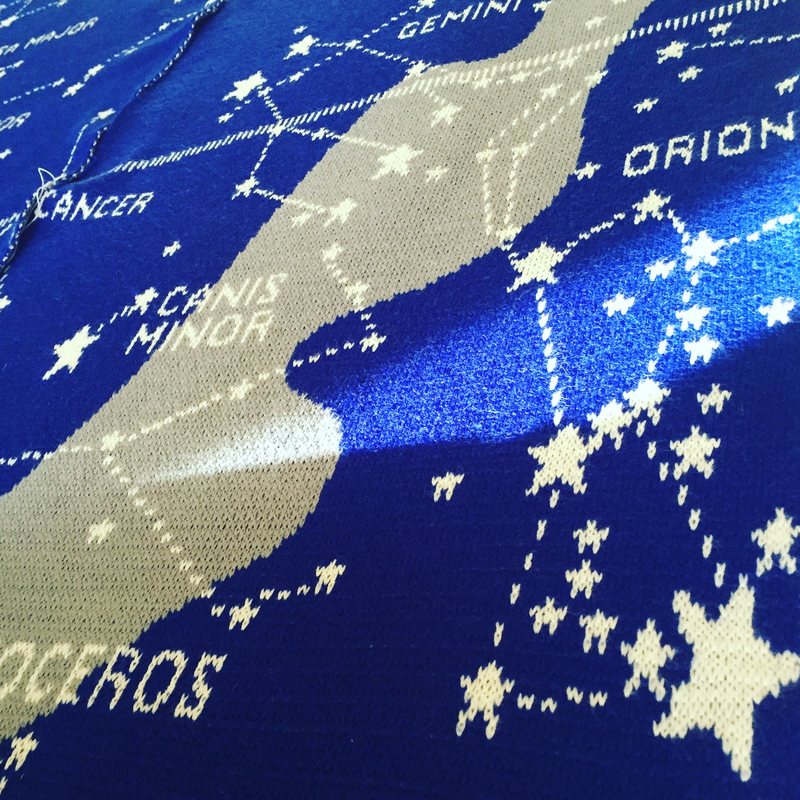
The 9’x 15’ knit­ted tapes­try is an accu­rate equa­to­r­i­al star map fea­tur­ing all 88 con­stel­la­tions as viewed by the naked eye, includ­ing the Milky Way and the South­ern Cross, the best known star group in Spencer’s native Aus­tralia.

The project ate up 33 pounds of Aus­tralian wool in three shades, includ­ing the same ultra­ma­rine blue sport­ed by a num­ber of accom­plished Aus­tralian women whose por­traits are on dis­play as part of the 2018 Archibald Prize.

While “Stargaz­ing” is machine knit, its cre­ation took longer than most hand-knit­ted projects.

What start­ed as a lark, hack­ing and pro­gram­ming a 40-year-old, sec­ond­hand Emp­isal knit­ting machine, grew into some­thing much larg­er when Spencer devel­oped a com­put­er algo­rithm that allowed one tri-col­ored knit stitch per pix­el.

Years lat­er, she was ready to start knit­ting her star map, a reflec­tion of her inter­est in STEM—science, tech­nol­o­gy, engi­neer­ing, and math­e­mat­ics.

“Stargaz­ing” is actu­al­ly com­prised of sev­en pan­els, each the result of dusk-to-dawn labor on the part of the hacked machine. Stitch­ing them togeth­er required many more human hours.

The piece was unveiled at the UK’s tech-and-arts fes­ti­val, Elec­tro­mag­net­ic Field, on August 31. Spencer had cal­i­brat­ed the place­ment of the tapestry’s plan­ets to cor­re­spond with their celes­tial coun­ter­parts’ loca­tions that night.

For now, the tapes­try is one-of-a-kind, but giv­en its indus­tri­al ori­gins, it’s not hard to fore­see a future in which cou­ples can cud­dle under astro­nom­i­cal­ly cor­rect afghans, while gaz­ing up at the stars.

via Atlas Obscu­ra

Relat­ed Con­tent:

Free Online Astron­o­my Cours­es

The Ancient Astron­o­my of Stone­henge Decod­ed

The His­to­ry of Car­tog­ra­phy, “the Most Ambi­tious Overview of Map Mak­ing Ever Under­tak­en,” Is Free Online

Ayun Hal­l­i­day is an author, illus­tra­tor, the­ater mak­er and Chief Pri­ma­tol­o­gist of the East Vil­lage Inky zine.  Join her in NYC on Mon­day, Sep­tem­ber 24 for anoth­er month­ly install­ment of her book-based vari­ety show, Necro­mancers of the Pub­lic Domain. Fol­low her @AyunHalliday.

How the Grateful Dead’s “Wall of Sound”–a Monster, 600-Speaker Sound System–Changed Rock Concerts & Live Music Forever

There is a scene in Return of the Jedi when Luke Sky­walk­er defeats the mon­strous, man-eat­ing Ran­cor, crush­ing its skull with a por­tullis, and we see the beast’s keep­er, a port­ly shirt­less gen­tle­man in leather breech­es and head­gear, weep­ing over the loss of his beloved friend. I think of this scene when I read about a night in 1974 at San Francisco’s Win­ter­land Ball­room when Grate­ful Dead drum­mer Mick­ey Hart walked on the stage and found the band’s sound engi­neer Owsley “Bear” Stan­ley stand­ing in front of “a sol­id wall of over 600 speak­ers.”

As Enmore Audio tells it:

Tears streamed down his face and he whis­pered to the mass of wood, met­al, and wiring, with the ten­der­ness of any par­ent wit­ness­ing their child’s first recital, “I love you and you love me—how could you fail me?”

The sto­ry sums up Owsley’s total ded­i­ca­tion to what became known as “The Wall of Sound,” a feat of tech­ni­cal engi­neer­ing that “changed the way tech­ni­cians thought about live engi­neer­ing.” The “three-sto­ry behe­moth… was free of all dis­tor­tion… served as its own mon­i­tor­ing sys­tem and solved many, if not all of the tech­ni­cal prob­lems that sound engi­neers faced at that time.” But, while it had required much tri­al and error and many refine­ments, it did not fail, as you’ll learn in the Poly­phon­ic video above.

Live sound prob­lems not only bedev­iled engi­neers but bands and audi­ences as well. Through­out the six­ties, rock con­certs grew in size and scope, audi­ences grew larg­er and loud­er, yet ampli­fi­ca­tion did not. Low-wattage gui­tar amps could hard­ly be heard over the sound of scream­ing fans. With­out mon­i­tor­ing sys­tems, bands could bare­ly hear them­selves play. This “noise cri­sis,” writes Moth­er­board, “con­front­ed musi­cians who went elec­tric at the height of the war in Viet­nam,” but it has been “rou­tine­ly snuffed from the annals of mod­ern music.”

In dra­mat­ic recre­ations of the peri­od, drums and gui­tars boom and wail over the noise of sta­di­um and fes­ti­val crowds. For ears accus­tomed to the pow­er of mod­ern sound sys­tems, the actu­al expe­ri­ence, by con­trast, would have been under­whelm­ing. Most Bea­t­les fans know the band quit tour­ing in 1966 because they couldn’t hear them­selves over the audi­ence. Things improved some­what, but the Dead, “obsessed with their sound to com­pul­sive degrees,” could not abide the noisy, feed­back-laden, under­pow­ered sit­u­a­tion. Still, they weren’t about to give up play­ing live, and cer­tain­ly not with Owsley on board.

“A Ken­tucky-born crafts­man and for­mer bal­let dancer”—and a man­u­fac­tur­er and dis­trib­uter of “mass quan­ti­ties of high-grade LSD,” whose prof­its financed the Dead for a time—Owsley applied his obses­sion with “sound as both a con­cept and a phys­i­cal thing.” To solve the noise cri­sis for the Dead, he first built an inno­v­a­tive sound sys­tem in 1973 (after serv­ing a cou­ple stints in prison for sell­ing acid). The fol­low­ing year, he sug­gest­ed putting the PA sys­tem behind the band, “a crazy idea at the time.”

His exper­i­ments in ‘74 evolved to include line arrays—“columns of speak­ers… designed to con­trol the dis­per­sion of sound across the fre­quen­cy range”—noise-canceling micro­phones to clear up mud­dy vocals, six sep­a­rate sound sys­tems that could iso­late eleven chan­nels, and a quadra­phon­ic encoder for the bass, “which took a sig­nal,” Enmore notes, “from each string and pro­ject­ed it through its own set of speak­ers.” The mas­sive Wall of Sound could not last long. It had to be stream­lined into a far more man­age­able and cost-effec­tive tour­ing rig. All the same, Owsley and the band’s will­ing­ness take ideas and exe­cu­tion to extreme lengths changed live sound for­ev­er for the bet­ter.

Relat­ed Con­tent:

11,215 Free Grate­ful Dead Con­cert Record­ings in the Inter­net Archive

Jer­ry Gar­cia Talks About the Birth of the Grate­ful Dead & Play­ing Kesey’s Acid Tests in New Ani­mat­ed Video

The Grate­ful Dead’s Final Farewell Con­certs Now Stream­ing Online

Josh Jones is a writer and musi­cian based in Durham, NC. Fol­low him at @jdmagness

Queen’s “Bohemian Rhapsody” Played by 28 Trombone Players

28 trom­bone play­ers got togeth­er and played Queen’s beloved 1975 hit, “Bohemi­an Rhap­sody.” They call it, “Bone­hemi­an Rhap­sody.” Enjoy.

Con­trib­u­tors in the video above include:

Jig­gs Whigh­am — Glenn Miller, Stan Ken­ton

Den­son Paul Pol­lard — Met Opera / Jacobs School of Music

Jen­nifer Whar­ton — Leader Bone­gasm — https://jenniferwharton.com/

Thomas Hultén — Hous­ton Grand Opera/Houston Bal­let

Josi­ah Williams — Blast: The Music of Dis­ney

Joseph L. Jef­fer­son — South­east Mis­souri State Uni­ver­si­ty — http://www.josephljefferson.com/

Ger­ry Pagano — Sym­pho­ny — http://gerrypagano.org/

Javier Stup­pard — Fresh2Def Horns/ Rath Artist

Peter Moore — Lon­don Sym­pho­ny Orches­tra

Mar­shall Gilkes — New Album! https://www.marshallgilkes.com/

Mar­tin McCain — Texas State Uni­ver­si­ty — https://www.martinmccain.com/

Zsolt Szabo — West­ern Car­oli­na Uni­ver­si­ty

Jere­my Wil­son — Van­der­bilt Uni­ver­si­ty — https://jeremywilsonmusic.com/

Isabelle Lavoie — Thun­der Bay Sym­pho­ny

Aman­da Stew­art — St. Louis Sym­pho­ny — http://amandatrombone.com/

Dr. Natal­ie Man­nix — UNT — http://www.nataliemannix.com/

Zoltan Kiss — Mnzoil Brass — http://www.zoltankiss.com/

Matyas Veer — Essen­er Phil­har­moniker Saat­sop­er Stuttgart — http://www.matyasveer.com/

Paul The Trom­bon­ist — The Inter­net — https://www.youtube.com/channel/UCJ6e…

Karen Marston — Mt San Anto­nio College/Omni Brass

Javier Nero — Jazz Soloist / Com­pos­er — https://www.javiernero.com/

Dr. Deb Scott — Stephen F. Austin State Uni­ver­si­ty — https://sfatrombones.wordpress.com/

Tol­ga Akman — Lätzsch Per­form­ing Artist

Domeni­co Cata­lano — Slide­Sticks Trio/Basel Symphony/Haag Artist

José Mil­ton Vieira — Orches­tra Brazil

Györ­gy Gyivic­san — Szeged Trom­bone Ensem­ble — http://szegedtrombones.com/en

Bri­an Hecht — Atlanta Sym­pho­ny — http://www.brianhecht.com/

by | Permalink | Make a Comment ( 8 ) |

« Go BackMore in this category... »
Quantcast