Download Beautiful Panoramic Paintings of U.S. National Parks by H.C. Berann: Maps That Look Even More Vivid Than the Real Thing

The Unit­ed States of Amer­i­ca’s nation­al parks have been inspir­ing artists even before they were offi­cial­ly declared nation­al parks. That goes not just for Amer­i­can artists such as the mas­ter land­scape pho­tog­ra­ph­er Ansel Adams, but for­eign artists as well. Take the Aus­tri­an painter Hein­rich C. Berann, described by his offi­cial web site as “the father of the mod­ern panora­ma map,” a dis­tinc­tive form that allowed him to hybridize “old Euro­pean paint­ing tra­di­tion with mod­ern car­tog­ra­phy.”

Berann found his way to car­tog­ra­phy after win­ning a com­pe­ti­tion to paint a map of Aus­tri­a’s Gross­glock­n­er High Alpine Road, which opened in 1934, a cou­ple years after Beran­n’s grad­u­a­tion from art school. “In the fol­low­ing years,” says the artist’s bio, “he improved this tech­nique, cre­at­ed the mod­ern panora­ma map and became famous all over the world for his maps that are in a class of their own.” Maps in a class of their own need geo­graph­i­cal sub­jects in a class of their own, and Amer­i­ca’s nation­al parks fit that bill neat­ly.

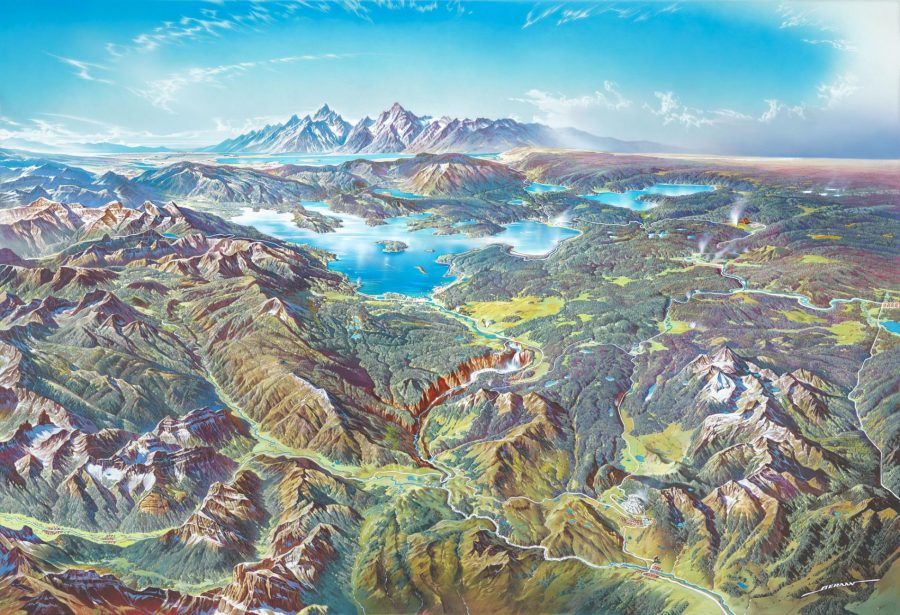
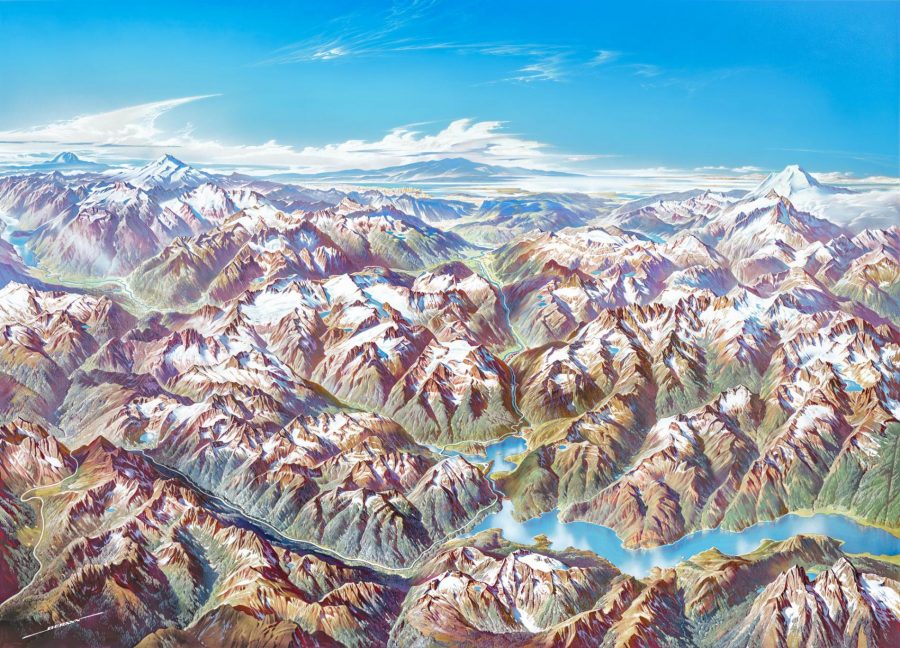
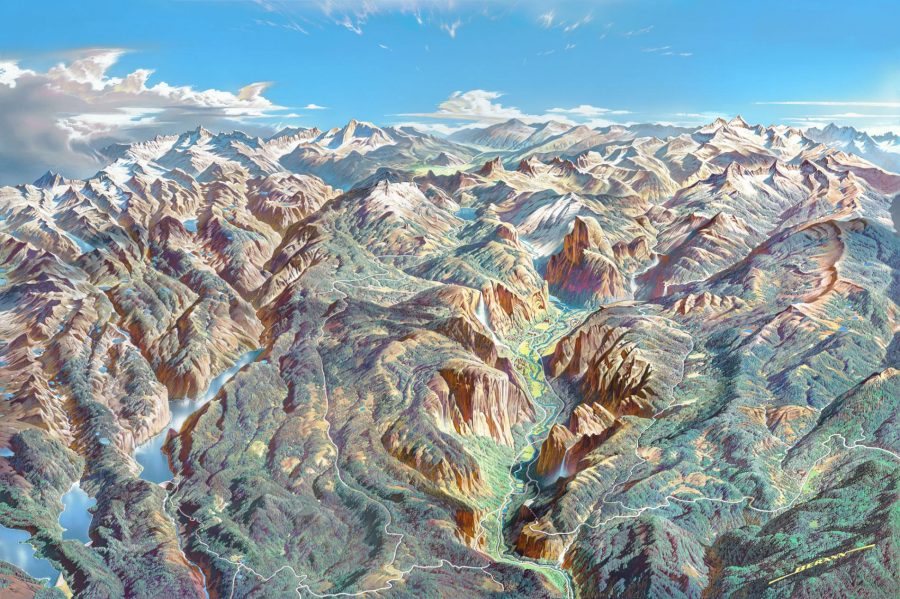
Beran­n’s panora­mas of Denali, North Cas­cades, Yel­low­stone, and Yosemite “were cre­at­ed in the 1980s and 90s as part of a poster pro­gram to pro­mote the nation­al parks,” writes Nation­al Geo­graph­ic’s Bet­sy Mason. Just a few years ago, U.S. Nation­al Park Ser­vice senior car­tog­ra­ph­er Tom Pat­ter­son got to work on scan­ning the art­works in high res­o­lu­tion. When the project was com­plete, “the Nation­al Park Ser­vice released the new images on their new­ly redesigned online map por­tal, which also has more than a thou­sand maps that are freely avail­able for the pub­lic to down­load.”

Beran­n’s 1994 paint­ing of Denali Nation­al Park just above was his final work before retire­ment. It came at the end of a long and var­ied career in art that saw him paint not just the Alps, the Himalayas, the Vir­gin Islands, and the floor of the Pacif­ic Ocean (as well as oth­er impres­sive parts of the world under com­mis­sion from the Nation­al Geo­graph­ic soci­ety and six dif­fer­ent Olympic Games) but trav­el posters and draw­ings of every­thing from land­scapes to por­traits to nudes.

But it is Beran­n’s panoram­ic paint­ings of Amer­i­ca’s nation­al parks, which you can down­load in high res­o­lu­tion here, that have done the most to make peo­ple see their sub­jects in a new way. Not least because, with an artis­tic sleight-of-hand that com­bines as many land­marks as pos­si­ble into sin­gle vis­tas ren­dered with a strik­ing­ly wide range of col­ors, Berann pro­vides them a series of van­tage points entire­ly unavail­able in real life. In one sense, these are all real nation­al parks, but they’re nation­al parks cap­tured in a way even Ansel Adams nev­er could have done.

via Boing Boing

Relat­ed Con­tent:

Browse & Down­load 1,198 Free High Res­o­lu­tion Maps of U.S. Nation­al Parks

Down­load 100,000 Pho­tos of 20 Great U.S. Nation­al Parks, Cour­tesy of the U.S. Nation­al Park Ser­vice

Dis­cov­er Ansel Adams’ 226 Pho­tos of U.S. Nation­al Parks (and Anoth­er Side of the Leg­endary Pho­tog­ra­ph­er)

Down­load Icon­ic Nation­al Park Fonts: They’re Now Dig­i­tized & Free to Use

Yosemite Nation­al Park in All of Its Time-Lapse Splen­dor

Artist Re-Envi­sions Nation­al Parks in the Style of Tolkien’s Mid­dle Earth Maps

Based in Seoul, Col­in Mar­shall writes and broad­casts on cities, lan­guage, and cul­ture. His projects include the book The State­less City: a Walk through 21st-Cen­tu­ry Los Ange­les and the video series The City in Cin­e­ma. Fol­low him on Twit­ter at @colinmarshall, on Face­book, or on Insta­gram.

Remembering the “Father of Bossa Nova” João Gilberto (RIP) with Four Classic Live Performances: “The Girl From Ipanema,” “Corcovado” & More

If you first heard the work of great Brazil­ian gui­tarist and singer João Gilber­to in a lit­tle tune called “The Girl From Ipane­ma,” you’re in the com­pa­ny of mil­lions, whose intro­duc­tion to Gilber­to and the sounds of bossa nova jazz came from that song, record­ed with sax­o­phon­ist Stan Getz. When the L.A. Times’ Ran­dall Roberts com­pares their col­lab­o­ra­tive album Getz/Gilberto to the arrival of the Bea­t­les in the U.S., this may sound like an exag­ger­a­tion. But bossa nova, like rock and roll, was already huge­ly pop­u­lar, and sound of this record was a qui­et rev­o­lu­tion.

Gilber­to, who died this past Sat­ur­day at age 88, was “one of the most influ­en­tial musi­cians of the 20th cen­tu­ry.” He and “his peer and col­lab­o­ra­tor Anto­nio Car­los Jobim helped cre­ate and pop­u­lar­ize bossa nova, a toned-down and roman­ti­cized take on Brazil­ian sam­ba music.” Jobim may have writ­ten “The Girl From Ipane­ma,” but Gilber­to first turned Amer­i­cans on to its charms, and to what Allmusic’s John Dougan calls “the sig­na­ture pop music of Brazil.”

Called O Mito, “the leg­end,” in his home coun­try, Gilberto’s influ­ence is incal­cu­la­ble and has “res­onat­ed in the work of artists includ­ing Cae­tano Veloso, Sade, Gal Cos­ta, Leonard Cohen, Joni Mitchell, Stere­o­lab, Seu Jorge  and pret­ty much every Brazil­ian song­writer since 1960,” writes Roberts. His coun­try­man Veloso has said, “I owe João Gilber­to every­thing I am today. Even if I were some­thing else and not a musi­cian, I would say that I owe him every­thing.”

Many peo­ple have said sim­i­lar things over the years about John Lennon or George Har­ri­son, but an unas­sum­ing acoustic croon­er singing in Por­tuguese? Could he real­ly have that kind of cul­tur­al sway world­wide? It may be hard to see it now, but “bossa nova inte­grat­ed itself into the glob­al con­ver­sa­tion in much the same way rock ‘n’ roll did.” Yet instead of rebelling, it dressed up; rather than “upping the tem­po, atti­tude and ener­gy,” it “soothed and seduced.”

Bossa nova pro­vid­ed a coun­ter­point to the raw ener­gy of Amer­i­can and British rock, but not in the com­fort­ing, nos­tal­gic way of soft, soporif­ic music like that of Lawrence Welk. Rather—partly through its influ­ence on jazz musi­cians like Getz, Dizzy Gille­spie, and Char­lie Byrd—bossa nova became its own kind of hip pop­u­lar idiom, cool instead of hot, but still sexy and new. Elvis even tried to cash in on the music’s grow­ing pop­u­lar­i­ty in 1963 with his “rol­lick­ing ‘Bossa Nova Baby’” from the movie Fun in Aca­pul­co.

The shoes didn’t quite fit. Bossa nova was sub­dued and sub­tle, a sound cre­at­ed for small spaces and small moves. It’s said that Gilberto’s qui­et style of play­ing “devel­oped in 1955 when he sequestered him­self inside of a bath­room at his sister’s house so as not to dis­turb her fam­i­ly,” writes Felix Con­tr­eras at NPR, “and to take advan­tage of the acoustics pro­vid­ed by the bath­room tiles.” This inti­mate ori­gin sto­ry aside, his was also a style that demar­cat­ed class lines in pop music.

Pop­u­lar among a slight­ly old­er set of lis­ten­ers, in Brazil bossa nova first attract­ed “a new mon­eyed class eager to move away from the more tra­di­tion­al sam­ba sound of explo­sive drums and group singing.” In its influ­ence on Amer­i­can jazz, bossa nova also telegraphed lux­u­ry, with its deeply relaxed atmos­phere and lush, unhur­ried tex­tures. It is the sound of sea­side resort hotels and upscale night­clubs, of yacht par­ties, art gal­leries, and pent­house apart­ments. “The Girl from Ipane­ma” sounds like the singing six­ties worlds of James Bond and Hugh Hefn­er, not Haight Ash­bury.

Nonethe­less, the song is an absolute clas­sic for good rea­son, with Gilberto’s then-wife Astrud “on a sul­try vocal” in Eng­lish, repeat­ing his under­stat­ed Por­tuguese, and a “now-icon­ic tenor sax solo” by Getz. “It was a world­wide hit and won the 1965 Gram­my for record of the year. Getz/Gilberto won album of the year and would go on to become one of the high­est-sell­ing jazz albums of all time.” For a time, bossa nova was every­where, then it gave way to the hard­er-edged Trop­i­calia move­ment of younger musi­cians like Veloso and Gilber­to Gil, and its vocab­u­lary became absorbed into so many dif­fer­ent kinds of music that we are hard­ly aware of its pres­ence any­more.

If “The Girl from Ipane­ma” was the first, and maybe, the last, you heard of João Gilber­to, you owe it to your­self to learn more of his work. And, if you’re already a life­long fan, you’ll appre­ci­ate all the more these live per­for­mances from Gilberto’s career. At the top, see him per­form “The Girl From Ipane­ma” with the song’s com­pos­er and his old col­lab­o­ra­tor Jobim; fur­ther up, Gilber­to plays “Desa­fi­na­do” and “Car­in­hoso” live in con­cert,” and, just above, see him play “Cor­co­v­a­do.”

Gilber­to was cut out of his biggest glob­al hit for the 1964 TV per­for­mance above. Pro­duc­ers opt­ed to make Astrud the face and voice of “The Girl from Ipane­ma.” But the mil­lions who bought the record heard his mes­mer­iz­ing vocal and gui­tar work, and then kept hear­ing their influ­ence on records released for decades after­ward around the world.

Relat­ed Con­tent:

“The Girl from Ipane­ma” Turns 50; Hear Its Bossa Nova Sound Cov­ered by Sina­tra, Krall, Methe­ny & Oth­ers

The Strange His­to­ry of Smooth Jazz: The Music We All Know and Love … to Hate

The Exis­ten­tial Adven­tures of Icon­o­clas­tic Brazil­ian Musi­cian Tim Maia: A Short Ani­mat­ed Film

Josh Jones is a writer and musi­cian based in Durham, NC. Fol­low him at @jdmagness

The Secret Language of Trees: A Charming Animated Lesson Explains How Trees Share Information with Each Other

Shel Silverstein’s bit­ter­sweet clas­sic The Giv­ing Tree paints an inac­cu­rate view of trees as sim­ple, eas­i­ly vic­tim­ized lon­ers.

If only the tit­u­lar char­ac­ter had had a same-species best friend around to talk some sense into her when her human pal start­ed help­ing him­self to her branch­es… You’ve Got­ta Be Kid­ding Me Tree, or maybe No Bull­shit Tree.

You’ve Got­ta Be Kid­ding Me Tree could’ve passed some vital nutri­ents to The Giv­ing Tree, whose self care reg­i­men is clear­ly not cut­ting it, via the myc­or­rhizae sys­tem, a vast net­work of fil­a­ment-like tree roots and sym­bi­ot­ic soil fun­gi.

That same sys­tem could serve as the switch­board by which You’ve Got­ta Be Kid­ding Me Tree could alert the extend­ed Tree fam­i­ly to the dan­gers of pro­longed asso­ci­a­tion with cute, but needy kids.

Imag­ine the upbeat end­ing, had Sil­ver­stein gone light—The Giv­ing Tree N’ Friends.

Not as poignant per­haps, but not entire­ly inac­cu­rate from a sci­en­tif­ic stand­point.

As for­est ecol­o­gists Suzanne Simard and Camille Defrenne point out in the ani­mat­ed TED-Ed les­son, “The Secret Lan­guage of Trees,” above, trees have large fam­i­ly (for­give me) trees, whose liv­ing mem­bers are in con­stant com­mu­ni­ca­tion, using the myc­or­rhizae sys­tem.

Host­ing mul­ti­ple fun­gal species allows each tree to con­nect with a wider net­work, as each group of sym­bi­ot­ic shrooms spreads infor­ma­tion to their own per­son­al crews, par­ty line style.

On the oth­er end, the receiv­ing tree can iden­ti­fy its rela­tion to the tree of ori­gin, whether they are both mem­bers of what we humans refer to as a nuclear fam­i­ly, or much more dis­tant rela­tions.

And while this giant sub­ter­ranean sys­tem for shar­ing infor­ma­tion and resources is spe­cif­ic to trees, when we con­sid­er how many oth­er for­est denizens depend on trees for food and shel­ter, the mes­sage sys­tem seems even more vital to the planet’s health.

Defrenne and Simard’s full TED-Ed les­son, com­plete with quiz, cus­tomiz­able les­son plan, and dis­cus­sion top­ics, can be found here.

Simard delves more deeply into the top­ic in the 18-minute TED Talk, “How Trees Talk to Each Oth­er,” below.

View more of ani­ma­tor Avi Ofer’s charm­ing work here.

Relat­ed Con­tent:

The Social Lives of Trees: Sci­ence Reveals How Trees Mys­te­ri­ous­ly Talk to Each Oth­er, Work Togeth­er & Form Nur­tur­ing Fam­i­lies

This 392-Year-Old Bon­sai Tree Sur­vived the Hiroshi­ma Atom­ic Blast & Still Flour­ish­es Today: The Pow­er of Resilience

3,000-Year-Old Olive Tree on the Island of Crete Still Pro­duces Olives Today

Ayun Hal­l­i­day is an author, illus­tra­tor, the­ater mak­er and Chief Pri­ma­tol­o­gist of the East Vil­lage Inky zine.  Fol­low her @AyunHalliday.

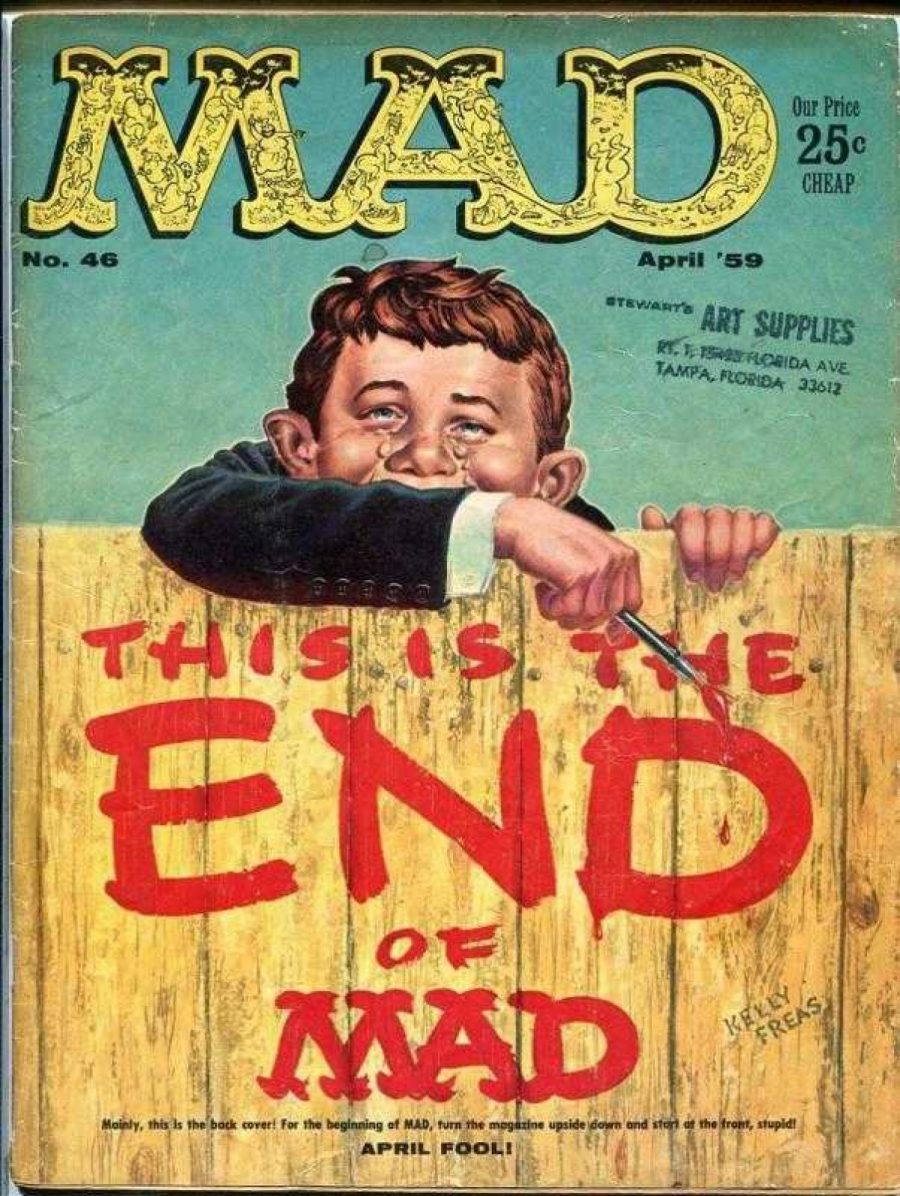
The End of an Era: MAD Magazine Will Publish Its Last Issue With Original Content This Fall

As a cul­tur­al ref­er­ence, MAD mag­a­zine may have died decades ago. This is a not a dis­par­age­ment, but a state­ment of fact. The kind of satire the august, anar­chic com­ic first unleashed on the world of 1952 debuted in a cul­tur­al milieu that is no more, and a form—the illus­trat­ed, satir­i­cal periodical—that is increas­ing­ly niche. MAD left an indeli­ble impres­sion on Amer­i­can publishing’s past, but as the magazine’s leg­endary car­toon­ist Al Jaf­fee tells The Wash­ing­ton Post, “it’s most­ly nos­tal­gia now.”

Respond­ing to the market’s cues, MAD will more or less dis­ap­pear from news­stands, pub­lish­ing lega­cy con­tent on a sub­scrip­tion-only basis and on the direct mar­ket, “a.k.a. spe­cial­ty and com­ic book stores,” writes Giz­mo­do, “like the vast major­i­ty of DC’s comics out­put is already.” MAD shaped itself in oppo­si­tion to Cold War para­noia and nev­er seemed to find a new edge after favorite tar­gets like Richard Nixon and Ronald Rea­gan left the scene. The mag­a­zine turned almost exclu­sive­ly to pop cul­ture par­o­dy in the 90s. As ABC News reports, MAD “peaked at 2.8 mil­lion sub­scribers in 1973,” then began its decline, with only “140,000 left as of 2017.”

The magazine’s found­ing edi­tor, car­toon­ist Har­vey Kurtz­man, passed away in 1993. His suc­ces­sor Al Feld­stein, who brought the mag­a­zine to inter­na­tion­al promi­nence, died in 2014. MAD’s long­time, tight-knit staff of writ­ers and car­toon­ists are most­ly retired, and most are san­guine about the wind­ing down. “It’s been a log­i­cal devel­op­ment,” com­ments anoth­er MAD car­toon­ing leg­end, Ser­gio Aragonés. To wit, after Issue 10 (MAD re-num­bered last June) comes out this fall, there will be no new con­tent, “except for the end-of-year spe­cials,” notes The Post. “All issues after that will be repub­lished con­tent culled from 67 years of pub­li­ca­tion.”

This still rep­re­sents a great way for new­com­ers to MAD to catch up on its wild­ly skewed view of the last half of the 20th cen­tu­ry, though some imag­i­na­tion is required to appre­ci­ate how sub­ver­sive their humor was for much of its run. MAD inspired count­less off­shoots in the decade after its found­ing, set­ting the tone for rad­i­cal cam­pus pub­li­ca­tions, coun­ter­cul­tur­al car­toon­ists, and com­ic writ­ers, some of whom went on to become Stephen Col­bert and Judd Apa­tow, who both wrote in the pages of MAD about how much the mag­a­zine meant to them dur­ing their appren­tice years.

The list of MAD devo­tees, both famous and not (I count myself among the lat­ter), runs into the mil­lions, but it runs along some obvi­ous demo­graph­ic divides. As the mag­a­zine is poised to become a gift-shop ver­sion of itself, trib­utes have poured in for its edi­tors, writ­ers, and cartoonists—all of them, to a man, well, men. And most of those tributes—those from promi­nent car­toon­ists and writ­ers claim­ing MAD as a for­ma­tive influ­ence, at least—are also from men of a cer­tain gen­er­a­tion, most of them straight and white.

Such mar­ket seg­men­ta­tion, one might say, speaks to the way MAD’s brand of polit­i­cal satire remained embed­ded in its hey­day. As laid-back car­toon­ists Jaf­fee and Aragonés rec­og­nize, you can’t stay young and rel­e­vant forever—though MAD had a remark­ably good run. The Post offers a notable exam­ple of Mad’s pas­sage into his­to­ry. When the cur­rent pres­i­dent “mock­ing­ly referred to Demo­c­ra­t­ic pres­i­den­tial can­di­date Pete Buttigieg as Alfred E. Neuman”—the once-ubiq­ui­tous, gap-toothed sym­bol of take-no-pris­on­ers irreverence—the 37-year-old Buttigieg replied, “I’ll be hon­est. I had to Google that.”

Relat­ed Con­tent:

A Gallery of Mad Magazine’s Rol­lick­ing Fake Adver­tise­ments from the 1960s

Al Jaf­fee, the Longest Work­ing Car­toon­ist in His­to­ry, Shows How He Invent­ed the Icon­ic “Folds-Ins” for Mad Mag­a­zine

Mad Magazine’s Al Jaf­fee & Oth­er Car­toon­ists Cre­ate Ani­ma­tions to End Dis­tract­ed Dri­ving

Josh Jones is a writer and musi­cian based in Durham, NC. Fol­low him at @jdmagness

The Walkman Turns 40: See Every Generation of Sony’s Iconic Personal Stereo in One Minute

Do you remem­ber your first Walk­man? If you grew up after the cas­sette era, of course, you might have owned a CD-play­ing Dis­c­man instead, or maybe — just maybe — even a Mini­disc Walk­man. Nowa­days you prob­a­bly have an iPod or iPod-like dig­i­tal audio play­er as well as a cell­phone equipped to serve the same pur­pose. But all the ways in which you’ve ever tak­en your tunes on the go evolved from a com­mon tech­no­log­i­cal ances­tor: Sony’s TPS-L2, which debuted on the mar­ket 40 years ago this month. First mar­ket­ed in the Unit­ed States as the Sound­about and the Unit­ed King­dom as the Stow­away, it did­n’t take long to achieve world­wide suc­cess under the Japan­ese-Eng­lish brand name that long ago became a byword for the per­son­al stereo.

“To cel­e­brate the Walk­man’s 40th anniver­sary, Sony has opened an exhi­bi­tion in Tokyo’s bustling Gin­za dis­trict,” writes design­boom’s Juliana Neira. “Titled #009 WALKMAN IN THE PARK 40 Years Since ‘the Day the Music Walked,’ the exhi­bi­tion focus­es on the peo­ple for whom the Walk­man has been a part of their every­day life.”

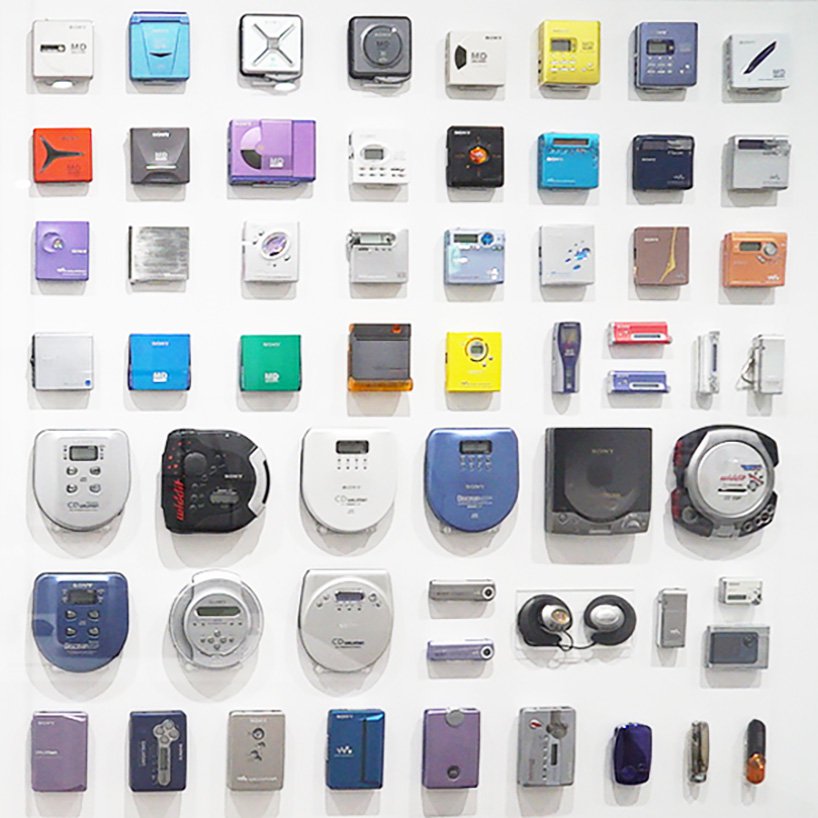
It also includes a wall “fea­tur­ing around 230 ver­sions of the Walk­man through­out its 40-year his­to­ry. From the nos­tal­gic old­er mod­els, all the way up to the lat­est mod­els, the exhib­it allows vis­i­tors to take in the changes in designs, spec­i­fi­ca­tions, and media for­mats over the years.” You can see all the rep­re­sen­ta­tive Walk­man mod­els from through­out the device’s four decades of his­to­ry in the minute-long offi­cial video above.

The Walk­man defined an era of per­son­al tech­nol­o­gy, but its brand has­n’t weath­ered so well in the 21st cen­tu­ry. “The beau­ti­ful­ly designed, easy-to-use TPS-L2 was the device that lib­er­at­ed the cas­sette from liv­ing room hi-fis and car tape decks to tru­ly make music portable,” writes Quartz’s Mike Mur­phy. But “a great many of the prod­ucts that Sony once dom­i­nat­ed with have been replaced, or have been con­sol­i­dat­ed into oth­er devices. Over the years, Sony has made fan­tas­tic cam­corders, stereo com­po­nents, cam­eras, portable media play­ers, and phones. Rel­a­tive­ly few peo­ple buy most of these prod­ucts any­more, with the smart­phone usurp­ing many of these devices’ func­tions.” Today’s Walk­man devices don’t reflect “the influ­en­tial (and often exper­i­men­tal) Sony of yes­ter­day. And with Apple grap­pling with its own exis­ten­tial ques­tions about its future, who is left to take up the man­tle of the king of con­sumer elec­tron­ics?”

Still, when we put on our head­phones or pop in our ear­buds on the morn­ing com­mute and see that every­one else around us has done the same, we have to admit that we live in the world the Walk­man cre­at­ed. This has its down­sides, as Aman­da Petru­sich acknowl­edges in a New York­er piece on pub­lic head­phone-wear­ing: these include “the dis­con­nec­tion they facil­i­tate” (and the hand-wring­ing about that dis­con­nec­tion they encour­age) as well as the engi­neer­ing of music itself to accom­mo­date low-qual­i­ty audio repro­duc­tion. But then, “ambling down a city street with head­phones on — you know, maybe it’s dusk, maybe it’s mid­sum­mer, maybe you had a real­ly nice day — is, with­out a doubt, one of life’s sim­plest and most per­fect joys.” Sony’s music-lov­ing co-founder Masaru Ibu­ka, com­mis­sion­er of the orig­i­nal Walk­man’s design, must have known sim­i­lar joys him­self. But what would he make of pod­casts?

via design­boom

Relat­ed Con­tent:

How Good Are Your Head­phones? This 150-Song Playlist, Fea­tur­ing Steely Dan, Pink Floyd & More, Will Test Them Out

Con­serve the Sound, an Online Muse­um Pre­serves the Sounds of Past Technologies–from Type­writ­ers, Elec­tric Shavers and Cas­sette Recorders, to Cam­eras & Clas­sic Nin­ten­do

Lis­ten to Audio Arts: The 1970s Tape Cas­sette Arts Mag­a­zine Fea­tur­ing Andy Warhol, Mar­cel Duchamp & Many Oth­ers

City of Eight Mil­lion Sound­tracks

Based in Seoul, Col­in Mar­shall writes and broad­casts on cities, lan­guage, and cul­ture. His projects include the book The State­less City: a Walk through 21st-Cen­tu­ry Los Ange­les and the video series The City in Cin­e­ma. Fol­low him on Twit­ter at @colinmarshall, on Face­book, or on Insta­gram.

How Intellectual Humility Can Boost Our Curiosity & Ability to Learn: Read the Findings of a New Study

Pho­to via Wiki­me­dia Com­mons

When I think about the times I def­i­nite­ly knew what I was talk­ing about, ver­sus the times I kin­da, sor­ta, might have, maybe did… well…. Let’s just say that wis­dom doesn’t always come with age, but hind­sight cer­tain­ly does. We may cringe when we remem­ber the moments we were over­con­fi­dent, out of our depth, etcetera, and so forth—when we lacked the crit­i­cal capac­i­ty known as intel­lec­tu­al humil­i­ty. It’s a qual­i­ty that can save us a lot of shame, for sure, if we’re the type of peo­ple capa­ble of feel­ing that emo­tion.

But there’s more to know­ing what you don’t know than avoid­ing regret, as impor­tant a con­sid­er­a­tion as that may be. With­out intel­lec­tu­al humil­i­ty, we can’t acquire new knowl­edge. Still, though we might find “open mind­ed” list­ed on many an online dat­ing pro­file, being flex­i­ble in one’s think­ing and will­ing to say “I don’t know” are also social­ly stig­ma­tized, says Pep­per­dine Uni­ver­si­ty pro­fes­sor of psy­chol­o­gy Eliz­a­beth J. Krum­rei-Man­cu­so:

When it comes to beliefs, peo­ple tend to appre­ci­ate oth­ers being open-mind­ed, yet they may also view peo­ple who are unsure about their beliefs as weak or they may view those who change their view­point as unsta­ble or manip­u­la­tive. These social per­cep­tions might make peo­ple afraid to admit the fal­li­bil­i­ty in their think­ing. They may believe they should be con­fi­dent in their view­points, which can lead peo­ple to be afraid to change their minds.

Fun­da­men­tal­ist reli­gion and polar­ized polit­i­cal bat­tle-royales played out in social media stoke the fires of this ten­den­cy day in and out, cre­at­ing a ver­i­ta­ble con­fla­gra­tion of will­ful igno­rance. Krum­rei-Man­cu­so and her col­leagues set out to inves­ti­gate the oppo­site, “accept­ing one’s intel­lec­tu­al fal­li­bil­i­ty in an open and lev­el-head­ed way,” writes Peter Dock­rill at Sci­ence Alert.

Their find­ings were some­what sim­i­lar to those pop­u­lar­ized by the Dun­ning-Krueger Effect. In one find­ing, for exam­ple, the researchers dis­cov­ered that “intel­lec­tu­al­ly hum­ble peo­ple underesti­mat­ed their cog­ni­tive abil­i­ty,” per­haps not work­ing up to their full poten­tial. The intel­lec­tu­al­ly over­con­fi­dent, as we might expect, over­es­ti­mat­ed their abil­i­ties. On the whole, how­ev­er, the con­clu­sions tend to be quite pos­i­tive.

In a series of five stud­ies, which sur­veyed 1,200 indi­vid­u­als, the authors found that the intel­lec­tu­al­ly hum­ble are far more moti­vat­ed to learn for its own sake, more like­ly to enjoy chal­leng­ing cog­ni­tive tasks, more will­ing to con­sid­er dif­fer­ent per­spec­tives and alter­na­tive evi­dence, and less threat­ened by aware­ness of their own lim­i­ta­tions.

The Har­vard Busi­ness Review points out the Pep­per­dine stud­ies’ impor­tance in defin­ing the fuzzy con­cept of open-mind­ed­ness, with a four­fold mea­sure to assess indi­vid­u­als’ intel­lec­tu­al humil­i­ty:

  1. Hav­ing respect for oth­er view­points
  2. Not being intel­lec­tu­al­ly over­con­fi­dent
  3. Sep­a­rat­ing one’s ego from one’s intel­lect
  4. Will­ing­ness to revise one’s own view­point

Becom­ing intel­lec­tu­al­ly hum­ble can take us into some uncom­fort­able ter­ri­to­ry, places where we don’t know what to say or do when every­one around us seem so cer­tain. But it can also give us the push we need to actu­al­ly learn the things we might have kin­da, sor­ta pre­tend­ed to under­stand. Read Pep­perdine’s study, “Links between intel­lec­tu­al humil­i­ty and acquir­ing knowl­edge” at The Jour­nal of Pos­i­tive Psy­chol­o­gy.

Relat­ed Con­tent:

Why Incom­pe­tent Peo­ple Think They’re Amaz­ing: An Ani­mat­ed Les­son from David Dun­ning (of the Famous “Dun­ning-Kruger Effect”)

Research Finds That Intel­lec­tu­al Humil­i­ty Can Make Us Bet­ter Thinkers & Peo­ple; Good Thing There’s a Free Course on Intel­lec­tu­al Humil­i­ty

How to Argue With Kind­ness and Care: 4 Rules from Philoso­pher Daniel Den­nett

24 Com­mon Cog­ni­tive Bias­es: A Visu­al List of the Psy­cho­log­i­cal Sys­tems Errors That Keep Us From Think­ing Ratio­nal­ly

Josh Jones is a writer and musi­cian based in Durham, NC. Fol­low him at @jdmagness

A Documentary Introduction to Nick Drake, Whose Haunting & Influential Songs Came Into the World 50 Years Ago Today

“All smok­ers will recog­nise the mean­ing of the title — it refers to five leaves left near the end of a pack­et of cig­a­rette papers. It sounds poet­ic and so does com­pos­er, singer, and gui­tarist Nick Drake. His debut album for Island is inter­est­ing.” There, in its entire­ty, is Melody Mak­er’s review of Nick Drake’s Five Leaves Left, which came out fifty years ago today. Drake now stands in music his­to­ry as some­thing of a doomed roman­tic hero, an artist who craft­ed a few dozen strik­ing­ly beau­ti­ful, haunt­ing songs and deliv­ered them into a world in which he nev­er felt at home. Unable to make that world appre­ci­ate his work, Drake depart­ed from it at the ear­ly age of 26, and only decades lat­er would Five Leaves Left and the oth­er two albums he record­ed in his life­time find their lis­ten­ers.

Sim­pli­fied though it is, that con­cep­tion adheres to the broad con­tours of Drake’s life. Born in Bur­ma to an Eng­lish civ­il engi­neer and the musi­cal­ly inclined daugh­ter of a high­er-up in the Indi­an Civ­il Ser­vice, he played in school orches­tras and cov­er bands grow­ing up and signed to Island Records while still a stu­dent at Cam­bridge.

By that point, hav­ing expe­ri­enced the music of pre­de­ces­sors like Bob Dylan and Van Mor­ri­son, stints in Moroc­co and the south of France, and the mind-alter­ing sub­stances pop­u­lar in the late 1960s, Drake had fash­ioned him­self into an acoustic gui­tar-play­ing singer-song­writer who must have seemed well suit­ed to the transat­lantic folk-music boom then in effect. He cer­tain­ly man­aged to impress Joe Boyd, the young Amer­i­can record pro­duc­er respon­si­ble for bring­ing acts like Fair­port Con­ven­tion, John Mar­tyn, and the Incred­i­ble String Band into the main­stream.

Boyd did­n’t need to hear much of Drake’s demo tape before he decid­ed to pro­duce a prop­er album, and in the 2014 event above he remem­bers the expe­ri­ence of bring­ing Drake into the stu­dio and record­ing what would become Five Leaves Left. Accom­pa­ny­ing Drake’s voice and gui­tar with a string sec­tion, the album show­cas­es all the qual­i­ties that set him apart from most singer-song­writ­ers then and still do now, from his unusu­al com­po­si­tion­al struc­tures and gui­tar tun­ings to the unapolo­getic Eng­lish­ness of his pro­nun­ci­a­tion and cadence. And unlike so many of the much big­ger records that came out in 1969, it all sounds like it could have been record­ed yes­ter­day — an achieve­ment whose tech­niques engi­neer John Wood has, for the past half-cen­tu­ry, declined to explain. But Drake’s shy­ness and sen­si­tiv­i­ty made him tem­pera­men­tal­ly unsuit­ed to live per­for­mance; he strug­gled to pro­mote him­self, and died of an anti­de­pres­sant over­dose five years and two albums lat­er.

For some time there­after it looked as if Drake’s music might have died with him. But Five Leaves Left and its fol­low-ups remained in Island’s back cat­a­log and by the ear­ly 1980s had built up a cult fol­low­ing, espe­cial­ly among oth­er musi­cians. (The Cure’s Robert Smith has cred­it­ed his band’s name to a line from Drake’s “Time Has Told Me.”) The 1997 pub­li­ca­tion of Patrick Humphries’ Nick Drake: The Biog­ra­phy opened the peri­od of wide-rang­ing dis­cov­ery of Nick Drake, fur­thered by the BBC Radio 2 doc­u­men­tary Fruit Tree: The Nick Drake Sto­ry, the BBC2 tele­vi­sion doc­u­men­tary Nick Drake: A Stranger Among Us, the Dutch doc­u­men­tary A Skin Too Few: The Days of Nick Drake, and the many oth­er books about him pub­lished since. (Ten years ago, for Five Leaves Left’s 40th anniver­sary, I myself inter­viewed Humphries and two oth­er authors of books about Drake; you can down­load the pro­gram as an MP3 here.)

In 2004 BBC2 pro­duced a sec­ond radio doc­u­men­tary called Lost Boy: In Search Of Nick Drake, and to nar­rate it brought in a fan by the name of Brad Pitt. “I was intro­duced to Nick Drake’s music about five years ago, and am a huge admir­er of his records,” the actor said at the time, and it may not be a coin­ci­dence that the year 1999 saw the high­est-pro­file use of one of Drake’s songs by far — as the sound­track to a Volk­swa­gen com­mer­cial. Two decades after that big break, and near­ly 45 years after his death, Nick Drake is at the height of his pop­u­lar­i­ty, both in terms of how many lis­ten­ers claim his songs as favorites and how many cur­rent singer-song­writ­ers claim him as an influ­ence. Yet to this day, no oth­er per­former sounds quite like him; in all prob­a­bil­i­ty, none ever will. And no mat­ter how many times one has heard it, Five Leaves Left remains more “inter­est­ing” than ever.

Relat­ed Con­tent:

Ladies and Gen­tle­men… Mr. Leonard Cohen: The Poet-Musi­cian Fea­tured in a 1965 Doc­u­men­tary

Paul McCart­ney Breaks Down His Most Famous Songs and Answers Most-Asked Fan Ques­tions in Two New Videos

James Tay­lor Per­forms Live in 1970, Thanks to a Lit­tle Help from His Friends, The Bea­t­les

89 Essen­tial Songs from The Sum­mer of Love: A 50th Anniver­sary Playlist

Joni Mitchell: Singer, Song­writer, Artist, Smok­ing Grand­ma

Tom Pet­ty Takes You Inside His Song­writ­ing Craft

Based in Seoul, Col­in Mar­shall writes and broad­casts on cities, lan­guage, and cul­ture. His projects include the book The State­less City: a Walk through 21st-Cen­tu­ry Los Ange­les and the video series The City in Cin­e­ma. Fol­low him on Twit­ter at @colinmarshall, on Face­book, or on Insta­gram.

Anton Chekhov’s Six Rules For Writing Fiction

Whether due to inse­cu­ri­ty, inex­pe­ri­ence, or just intel­lec­tu­al curios­i­ty, writ­ers of fic­tion can some­times priv­i­lege sound­ing smart over con­nect­ing with their read­ers. The result is the dread­ed “infor­ma­tion dump,” an attempt to include every­thing: every­thing, that is, but that which makes fic­tion com­pelling: minute­ly detailed descrip­tions of char­ac­ters we care about; sharply observed sit­u­a­tions that move us; moral com­plex­i­ty that feels earned and gen­uine…

All qual­i­ties that might fall under the adjec­tive “Chekhov­ian.”

Anton Pavlovich Chekhov, coun­try doc­tor and mas­ter­ful short sto­ry writer, put him­self through med­ical school by writ­ing fic­tion read­ers could not put down. He has since become a stan­dard for real­ist concision—the short sto­ry ana­logue to Gus­tave Flaubert’s mas­tery of the nov­el form.

And like Flaubert, Chekhov mas­tered his art by plac­ing strict lim­its on him­self. These he out­lined in an 1886 let­ter to his broth­er Alek­san­dr in a con­cise six-point list, which you’ll find below.

  1. Absence of lengthy ver­biage of polit­i­cal-social-eco­nom­ic nature;
  2. Total objec­tiv­i­ty;
  3. Truth­ful descrip­tion of per­sons and objects;
  4. Extreme brevi­ty;
  5. Audac­i­ty and orig­i­nal­i­ty: flee the stereo­type;
  6. Com­pas­sion

Many of these pre­scrip­tions can sound like the CIA-approved rules infor­mal­ly enforced by the 20th-cen­tu­ry Iowa Writer’s Work­shop. One can draw a line from Chekhov to Ray­mond Carv­er, Flan­nery O’Connor, John Updike, and oth­er writ­ers like­ly to have appeared in The New York­er. But many writ­ers besides Chekhov have com­plained of over­ly ver­bose, opin­ion­at­ed fic­tion.

19th cen­tu­ry writer Hen­ry James dis­par­aged what he called the “large loose bag­gy mon­sters” of Fyo­dor Dos­to­evsky and oth­er ser­i­al nov­el­ists, for exam­ple. Anoth­er nov­el­ist, Jay McIn­er­ney takes a phrase from Renais­sance schol­ar Wal­ter Pater to describe the brevi­ty of the short sto­ry: the form, he writes, cre­ates a “hard, gem­like flame.” This seems to be what Chekhov strove for in his mature work.

But three years ear­li­er, he had per­fect­ed a very dif­fer­ent kind of sto­ry, and issued a very dif­fer­ent list of pre­scrip­tions to his broth­er. In 1883, Chekhov advised that if Alek­san­dr wished to get pub­lished in the mag­a­zine Frag­ments, he should observe the fol­low­ing: “1. The short­er, the bet­ter; 2. A bit of ide­ol­o­gy and being up to date is most à pro­pos; 3. Car­i­ca­ture is just fine, but igno­rance of civ­il ser­vice ranks and of the sea­sons is strict­ly pro­hib­it­ed.”

We can see the author’s not­ed con­cern for accu­ra­cy, but not the ulti­mate and most con­cise item on his mature list: Com­pas­sion, a qual­i­ty that eclipses typol­o­gy and ide­ol­o­gy. Chekhov may not always have adhered close­ly to some of his own rules, as ethno­graph­ic writer Kirin Narayan shows. After all, who can achieve “total objec­tiv­i­ty”? But “embed­ded” in this ide­al is “the recog­ni­tion” writes Maria Popo­va at Brain Pick­ings, “that no depic­tion of real­i­ty is real­is­tic unless it includes an empath­ic account of all per­spec­tives.”

via Brain Pick­ings

Relat­ed Con­tent:

Flan­nery O’Connor Explains the Lim­it­ed Val­ue of MFA Pro­grams: “Com­pe­tence By Itself Is Dead­ly”

Kurt Von­negut Offers 8 Tips on How to Write Good Short Sto­ries (and Amus­ing­ly Graphs the Shapes Those Sto­ries Can Take)

Toni Mor­ri­son Dis­pens­es Sound Writ­ing Advice: Tips You Can Apply to Your Own Work

Josh Jones is a writer and musi­cian based in Durham, NC. Fol­low him at @jdmagness

« Go BackMore in this category... »
Quantcast