Watch “Critical Living,” a Stop-Motion Film Inspired by the 1960s Movement That Rejected Modern Ideas About Mental Illness

Along with Michel Fou­cault’s cri­tique of the med­ical mod­el of men­tal ill­ness, the work of Scot­tish psy­chi­a­trist R.D. Laing and oth­er influ­en­tial the­o­rists and crit­ics posed a seri­ous intel­lec­tu­al chal­lenge to the psy­chi­atric estab­lish­ment. Laing’s 1960 The Divid­ed Self: An Exis­ten­tial Study in San­i­ty and Mad­ness the­o­rized schiz­o­phre­nia as a philo­soph­i­cal prob­lem, not a bio­log­i­cal one. Oth­er ear­ly works like Self and Oth­ers and Knots made Laing some­thing of a star in the 1960s and ear­ly 70s, though his star would fade once French the­o­ry began to take over the acad­e­my.

Glas­gow-born Laing is described as part of the so-called “anti-psy­chi­a­try movement”—a loose col­lec­tion of psy­chi­a­trists and char­ac­ters like L. Ron Hub­bard, Gilles Deleuze and Felix Guat­tari, Fou­cault, and Erv­ing Goff­man, pio­neer­ing soci­ol­o­gist and author of The Pre­sen­ta­tion of Self in Every­day Life. For his part, Laing did not deny the exis­tence of men­tal ill­ness, nor oppose treat­ment. But he ques­tioned the bio­log­i­cal basis of psy­cho­log­i­cal dis­or­ders and opposed the pre­vail­ing chem­i­cal and elec­troshock cures. He was seen not as an antag­o­nist of psy­chi­a­try but as a “crit­i­cal psy­chi­a­trist,” con­tin­u­ing a tra­di­tion begun by Freud and Jung: “the alienist or ‘head shrinker’ as pub­lic intel­lec­tu­al,” as Duquesne University’s Daniel Burston writes.

Like many oth­er philo­soph­i­cal­ly-mind­ed intel­lec­tu­als in his field, Laing not only offered com­pelling alter­na­tive the­o­ries of men­tal ill­ness but also pio­neered alter­na­tive ther­a­pies. He was inspired by Exis­ten­tial­ism; the many hours he had spent “in padded cells with the men placed in his cus­tody” while appren­ticed in psy­chi­a­try in the British Army; and to a large extent by Fou­cault. (Laing edit­ed the first Eng­lish trans­la­tion of Foucault’s Mad­ness and Civ­i­liza­tion.) Armed with the­o­ry and clin­i­cal expe­ri­ence, he co-found­ed the Philadel­phia Asso­ci­a­tion in 1965, an orga­ni­za­tion “cen­tred on a com­mu­nal approach to well­be­ing,” writes Aeon, “where peo­ple who are expe­ri­enc­ing acute men­tal dis­tress live togeth­er in a Philadel­phia Asso­ci­a­tion house, with rou­tine vis­its from ther­a­pists.”

Based not in the Penn­syl­va­nia city, but in Lon­don, the Philadel­phia Asso­ci­a­tion still operates—along with sev­er­al sim­i­lar orgs influ­enced by Laing’s vision of ther­a­peu­tic com­mu­ni­ties. In “Crit­i­cal Liv­ing,” the ani­mat­ed stop-motion film above, film­mak­er Alex Wid­dow­son excerpts inter­views with “a cur­rent house ther­a­pist, a for­mer house res­i­dent, and the UK author and cul­tur­al his­to­ri­an Mike Jay, to explore the think­ing behind the organization’s method­ol­o­gy and con­tex­tu­al­ize its lega­cy.” For Laing, men­tal ill­ness­es, even extreme psy­choses like schiz­o­phre­nia, are per­son­al strug­gles that can best be worked through in inter­per­son­al set­tings which elim­i­nate dis­tinc­tions between doc­tor and patient and abol­ish meth­ods Laing called “con­fronta­tion­al.”

Laing’s work began to be dis­cred­it­ed in the mid-sev­en­ties, as break­throughs in brain imag­ing pro­vid­ed neu­ro­log­i­cal evi­dence for main­stream psy­chi­atric the­o­ries, and as the cul­ture changed and left his the­o­ries behind. A friend of Tim­o­thy Leary, Ram Dass, and Allen Gins­berg, and an intel­lec­tu­al hero to many in the coun­ter­cul­ture, Laing began to move into stranger ter­ri­to­ry, hold­ing work­shops for “rebirthing” ther­a­pies and giv­ing peo­ple around him rea­son to doubt his own grasp on real­i­ty. Burston lists a num­ber of oth­er rea­sons his exper­i­ments with “ther­a­peu­tic com­mu­ni­ty” large­ly fell into obscu­ri­ty, includ­ing the sig­nif­i­cant invest­ment of time and effort required. “We want a quick fix: some­thing clean and cost-effec­tive, not messy and time con­sum­ing.”

But for many, Laing’s ideas of men­tal ill­ness as an exis­ten­tial problem—one which could be just as much a break­through as a breakdown—continue to res­onate, as do the many polit­i­cal and social cri­tiques he and his con­tem­po­raries raised. “In the sys­tem of psy­chi­a­try,” says one inter­vie­wee in the video above, “there’s a huge empha­sis on goals, and on an end­ing. In the more in-depth ther­a­pies, they’re more sen­si­tive to the fact that the psy­che can’t be rushed, it takes time.”

via Aeon

Relat­ed Con­tent:

Free Online Psy­chol­o­gy & Neu­ro­science Cours­es

When Michel Fou­cault Tripped on Acid in Death Val­ley and Called It “The Great­est Expe­ri­ence of My Life” (1975)

How to Use Psy­che­del­ic Drugs to Improve Men­tal Health: Michael Pollan’s New Book, How to Change Your Mind, Makes the Case

Sun Ra Plays a Music Ther­a­py Gig at a Men­tal Hos­pi­tal; Inspires Patient to Talk for the First Time in Years

Josh Jones is a writer and musi­cian based in Durham, NC. Fol­low him at @jdmagness

Would You Go Back to 1889 and Take Out Baby Hitler?: Time-Travel Expert James Gleick Answers the Philosophical Question

The vast major­i­ty of us have no incli­na­tion to kill any­one, much less a small child. But what if we had the chance to kill baby Adolf Hitler, pre­vent­ing the Holo­caust and indeed the Sec­ond World War? That hypo­thet­i­cal ques­tion has endured for a vari­ety of rea­sons, touch­ing as it does on the con­cepts of geno­cide and infant mur­der in forms even more high­ly charged than usu­al. It also presents, in the words of Time Trav­el: A His­to­ry author James Gle­ick, “two prob­lems at once. There’s a sci­en­tif­ic prob­lem — you can set your mind to work imag­in­ing, ‘Could such a thing be pos­si­ble and how would that work?’ And then there’s an eth­i­cal prob­lem. ‘If I could, would I, should I?’ ”

By the sim­plest analy­sis, writes Vox’s Dylan Matthews, the ques­tion comes down to, “Is it eth­i­cal to kill one per­son to save 40-plus mil­lion peo­ple?” But time-trav­el fic­tion has been around long enough that we’ve all inter­nal­ized the mes­sage that it’s not quite so sim­ple. We can even ques­tion the assump­tion that killing baby Hitler would pre­vent the Holo­caust and World War II in the first place.

Maybe those ter­ri­ble events hap­pen on any time­line, regard­less of whether Hitler lives or dies: that would align with the Novikov self-con­sis­ten­cy prin­ci­ple, which holds that “time trav­el could be pos­si­ble, but must be con­sis­tent with the past as it has already tak­en place,” and which has been dra­ma­tized in time-trav­el sto­ries from La Jetée to The Ter­mi­na­tor.

Gle­ick does­n’t have a straight answer in the Vox video on the killing-baby-hitler ques­tion above as to whether he him­self would go back to 1889 and put baby Hitler out of action. “When you change his­to­ry,” he says of the moral of the count­less many time trav­el sto­ries he’s read, “you don’t get the result you’re look­ing for. Every day, every­thing we do is a turn­ing point in his­to­ry, whether it’s obvi­ous to us or not.” This in con­trast to for­mer Flori­da gov­er­nor and Unit­ed States pres­i­den­tial can­di­date Jeb Bush, who, when he had the big baby-Hitler ques­tion put to him by the Huff­in­g­ton Post, returned a hearty “Hell yea I would.” But giv­en time to reflect, even he con­clud­ed that such an act “could have a dan­ger­ous effect on every­thing else.” It appears that some of the lessons of time-trav­el sto­ries have been learned, but as for what human­i­ty will do if it actu­al­ly devel­ops time-trav­el tech­nol­o­gy — maybe we’d rather not peer into the future to find out.

Relat­ed Con­tent:

What’s the Ori­gin of Time Trav­el Fic­tion?: New Video Essay Explains How Time Trav­el Writ­ing Got Its Start with Charles Dar­win & His Lit­er­ary Peers

What Hap­pened When Stephen Hawk­ing Threw a Cock­tail Par­ty for Time Trav­el­ers (2009)

Pro­fes­sor Ronald Mal­lett Wants to Build a Time Machine in this Cen­tu­ry … and He’s Not Kid­ding

Carl Jung Psy­cho­an­a­lyzes Hitler: “He’s the Uncon­scious of 78 Mil­lion Ger­mans.” “With­out the Ger­man Peo­ple He’d Be Noth­ing” (1938)

How Did Hitler Rise to Pow­er? : New TED-ED Ani­ma­tion Pro­vides a Case Study in How Fas­cists Get Demo­c­ra­t­i­cal­ly Elect­ed

The New York Times’ First Pro­file of Hitler: His Anti-Semi­tism Is Not as “Gen­uine or Vio­lent” as It Sounds (1922)

Based in Seoul, Col­in Mar­shall writes and broad­casts on cities, lan­guage, and cul­ture. His projects include the book The State­less City: a Walk through 21st-Cen­tu­ry Los Ange­les and the video series The City in Cin­e­ma. Fol­low him on Twit­ter at @colinmarshall, on Face­book, or on Insta­gram.

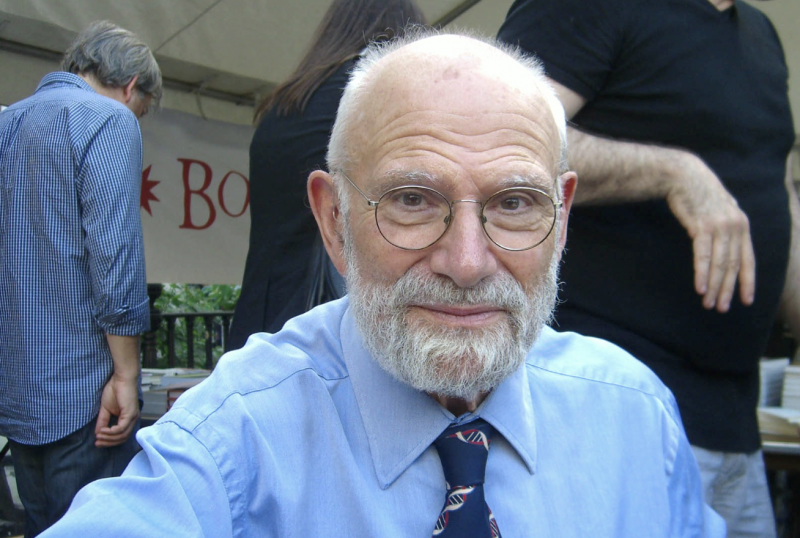
Oliver Sacks’ Recommended Reading List of 46 Books: From Plants and Neuroscience, to Poetry and the Prose of Nabokov

Image by Lui­gi Novi. Licensed under CC BY 3.0 via Wiki­me­dia Com­mons

We remem­ber Oliv­er Sacks as a neu­rol­o­gist, but we remem­ber him not least because he wrote quite a few books as well. If you read those books, you’ll get a sense of Sacks’ wide range of inter­ests — inven­tion, per­cep­tion and mis­per­cep­tion, hal­lu­ci­na­tion, and more — few of which lack a con­nec­tion to the human mind. His pas­sion for ferns, the core sub­ject of a trav­el­ogue he wrote in Oax­a­ca as well as an unex­pect­ed­ly fre­quent object of ref­er­ence in his oth­er writ­ings and talks, may seem an out­lier. But for Sacks, ferns offered one more win­dow into the king­dom of nature that pro­duced human­i­ty, and which through­out his life he tried to under­stand by observ­ing from as many dif­fer­ent angles as pos­si­ble.

No small amount of evi­dence of that pur­suit appears in Sacks’ list of 46 book rec­om­men­da­tions com­mis­sioned for The Strand’s “Author’s Book­shelf” series. (See the full list below.) A fair few of its selec­tions, includ­ing William James’ The Prin­ci­ples of Psy­chol­o­gyA.R. Luri­a’s The Mind of a Mnemonistand Anto­nio Dama­sio’s The Feel­ing of What Hap­pens, seem like nat­ur­al favorites for a writer so end­less­ly fas­ci­nat­ed by human cog­ni­tion and con­scious­ness.

Trac­ing the devel­op­ment of the human brain and mind would, of course, lead to an inter­est in biol­o­gy and evo­lu­tion, here result­ing in such picks as Edward O. Wilson’s Nat­u­ral­ist, Carl Zim­mer’s Evo­lu­tion: The Tri­umph of an Ideaand the jour­nals Charles Dar­win kept aboard the Bea­gle.

But Sacks was­n’t just an observ­er of the brain: some of his most inter­est­ing writ­ings come out of the times he used him­self as a kind of research sub­ject — as when he found out what he could learn on amphet­a­mines and LSD. A sim­i­lar line of inquiry no doubt showed him the val­ue of Aldous Hux­ley’s The Doors of Per­cep­tion and Heav­en and Hell, and in less altered states the likes of Sig­mund Freud’s The Inter­pre­ta­tion of Dreams. But whichev­er paths took Sacks toward his knowl­edge, he ulti­mate­ly had to get that knowl­edge down on paper him­self, and the prose of Vladimir Nabokov, the poet­ry of W.H. Auden and the phi­los­o­phy of David Hume sure­ly did their part to inspire his inci­sive and evoca­tive style. We would all, what­ev­er our inter­ests, like to write like Oliv­er Sacks: if these books shaped him as a writer and thinker, who are we to demur from, say, A Nat­ur­al His­to­ry of Ferns?

  • A Nat­ur­al His­to­ry of Ferns by Rob­bin C. Moran
  • A Rum Affair: A True Sto­ry of Botan­i­cal Fraud by Karl Sab­bagh
  • A Trea­tise of Human Nature by David Hume
  • A Vision­ary Mad­ness: The Case of James Tilly Matthews and the Influ­enc­ing Machine by Mike Jay
  • Actu­al Minds, Pos­si­ble Worlds by Jerome Bruner
  • Being Mor­tal: Med­i­cine and What Mat­ters in the End by Atul Gawande
  • Can­nery Row (Stein­beck Cen­ten­ni­al Edi­tion (1902–2002)) by John Stein­beck
  • Chal­lenger & Com­pa­ny: the Com­plete Adven­tures of Pro­fes­sor Chal­lenger and His Intre­pid Team-The Lost World, The Poi­son Belt, The Land of Mists, The Dis­in­te­gra­tion Machine and When the World Screamed by Arthur Conan Doyle
  • Col­lect­ed Poems by W.H. Auden
  • Curi­ous Behav­ior: Yawn­ing, Laugh­ing, Hic­cup­ping, and Beyond by Robert R. Provine
  • Dar­win and the Bar­na­cle: The Sto­ry of One Tiny Crea­ture and His­to­ry’s Most Spec­tac­u­lar Sci­en­tif­ic Break­through by Rebec­ca Stott
  • Dis­turb­ing the Uni­verse by Free­man Dyson
  • Earth Abides by George R. Stew­art
  • Evo­lu­tion: The Tri­umph of an Idea by Carl Zim­mer
  • Eye of the Behold­er: Johannes Ver­meer, Antoni van Leeuwen­hoek, and the Rein­ven­tion of See­ing by Lau­ra J. Sny­der
  • God’s Hotel: A Doc­tor, a Hos­pi­tal, and a Pil­grim­age to the Heart of Med­i­cine by Vic­to­ria Sweet
  • Igno­rance: How It Dri­ves Sci­ence by Stu­art Firestein
  • Imag­in­ing Robert: My Broth­er, Mad­ness, and Sur­vival by Jay Neuge­boren
  • In Search of Mem­o­ry: The Emer­gence of a New Sci­ence of Mind by Eric R. Kan­del
  • Inward Bound: Of Mat­ter and Forces in the Phys­i­cal World by Abra­ham Pais
  • Lise Meit­ner: A Life in Physics by Ruth Lewin Sime
  • Lost in Amer­i­ca: A Jour­ney with My Father by Sher­win B. Nuland
  • Music, Lan­guage, and the Brain by Anirud­dh D. Patel
  • Nat­u­ral­ist by Edward O. Wil­son
  • Phan­toms in the Brain: Prob­ing the Mys­ter­ies of the Human Mind by V.S. Ramachan­dran
  • Plu­to­ni­um: A His­to­ry of the World’s Most Dan­ger­ous Ele­ment by Jere­my Bern­stein
  • Same and Not the Same by Roald Hoff­mann
  • Select­ed Poems by Thom Gunn
  • Silent Thun­der: In the Pres­ence of Ele­phants by Katy Payne
  • Speak, Mem­o­ry: An Auto­bi­og­ra­phy Revis­it­ed by Vladimir Nabokov
  • Swim­ming to Antarc­ti­ca: Tales of a Long-Dis­tance Swim­mer by Lynne Cox
  • The Age of Won­der: How the Roman­tic Gen­er­a­tion Dis­cov­ered the Beau­ty and Ter­ror of Sci­ence by Richard Holmes
  • The Anatomist: A True Sto­ry of Gray’s Anato­my by Bill Hayes
  • The Doors of Per­cep­tion and Heav­en and Hell by Aldous Hux­ley
  • The Ele­phan­ta Suite by Paul Ther­oux
  • The Feel­ing of What Hap­pens: Body and Emo­tion in the Mak­ing of Con­scious­ness by Anto­nio Dama­sio
  • The Inter­pre­ta­tion of Dreams by Sig­mund Freud
  • The Lunar Men: Five Friends Whose Curios­i­ty Changed the World by Jen­ny Uglow
  • The Mind of a Mnemonist: A Lit­tle Book about a Vast Mem­o­ry by A. R. Luria
  • The Prin­ci­ples of Psy­chol­o­gy (Vol­ume Two) by William James
  • The World With­out Us by Alan Weis­man
  • Think­ing in Pic­tures: And Oth­er Reports from My Life with Autism by Tem­ple Grandin
  • Time, Love, Mem­o­ry: A Great Biol­o­gist and His Quest for the Ori­gins of Behavior by Jonathan Wein­er
  • Voy­age of the Bea­gle: Charles Dar­win’s Jour­nals of Research­es by Charles Dar­win
  • What a Plant Knows: A Field Guide to the Sens­es by Daniel Chamovitz
  • What Mad Pur­suit: A Per­son­al View of Sci­en­tif­ic Dis­cov­ery by Fran­cis Crick
  • Won­der­ful Life: The Burgess Shale and the Nature of His­to­ry by Stephen Jay Gould

To pur­chase books on this list, vis­it The Strand’s web­site.

Relat­ed Con­tent:

This is What Oliv­er Sacks Learned on LSD and Amphet­a­mines

Oliv­er Sacks Con­tem­plates Mor­tal­i­ty (and His Ter­mi­nal Can­cer Diag­no­sis) in a Thought­ful, Poignant Let­ter

A First Look at The Ani­mat­ed Mind of Oliv­er Sacks, a Fea­ture-Length Jour­ney Into the Mind of the Famed Neu­rol­o­gist

Oliv­er Sacks Explains the Biol­o­gy of Hal­lu­ci­na­tions: “We See with the Eyes, But with the Brain as Well”

Oliv­er Sacks’ Final Inter­view: A First Look

29 Lists of Rec­om­mend­ed Books Cre­at­ed by Well-Known Authors, Artists & Thinkers: Jorge Luis Borges, Pat­ti Smith, Neil DeGrasse Tyson, David Bowie & More

Based in Seoul, Col­in Mar­shall writes and broad­casts on cities, lan­guage, and cul­ture. His projects include the book The State­less City: a Walk through 21st-Cen­tu­ry Los Ange­les and the video series The City in Cin­e­ma. Fol­low him on Twit­ter at @colinmarshall, on Face­book, or on Insta­gram.

An Animated Introduction to the World’s Five Major Religions: Hinduism, Judaism, Buddhism, Christianity & Islam

No mat­ter the strength of par­tic­u­lar beliefs, or dis­be­liefs, reli­gions of every kind are all equal­ly fun­da­men­tal to the human expe­ri­ence. This was so for thou­sands of years before the advent of the world’s big five reli­gions, and for thou­sands of years after. “Reli­gion has been an aspect of cul­ture for as long as it has exist­ed, and there are count­less vari­a­tions of its prac­tice,” says Epis­co­pal priest and anthro­pol­o­gist John Bel­laimey in the TED-Ed video above. “Com­mon to all reli­gions is an appeal for mean­ing beyond the emp­ty van­i­ties and low­ly real­i­ties of exis­tence.”

Reli­gions par­tic­u­lar­ize a set of arche­typ­al human respons­es to uni­ver­sal meta­phys­i­cal ques­tions like “Where do we come from?” and “How do I live a life of mean­ing?” and “What hap­pens to us after we die?” Such ques­tions find answers out­side the bound­aries of reli­gious faith. For an increas­ing num­ber of peo­ple, sci­ence and sec­u­lar phi­los­o­phy offer com­fort­ing, even beau­ti­ful nat­u­ral­is­tic expla­na­tions. And mil­lions more feel the pull of intu­itions about a high­er pow­er or “a source from which we all come and to which we must return.”

Reli­gion gives the big ques­tions faces and names, of divini­ties, demons, and holy men (in the five big, it has been almost entire­ly men). Whether these fig­ures exist­ed or not, their leg­ends shape cul­ture and his­to­ry and are shaped and changed in turn. Bel­lamy sur­veys the big five world reli­gions with an overview of their cen­tral nar­ra­tives, illus­trat­ed with mon­tages of reli­gious art. The infor­ma­tion is at the lev­el of a 101 course intro­duc­tion, but the num­ber of peo­ple in the world who know lit­tle to noth­ing about oth­er reli­gions is like­ly quite high, giv­en the num­bers of peo­ple who know so lit­tle about their own. We can prob­a­bly all learn some­thing here we didn’t know before.

Bellamy’s approach broad­ly sug­gests that what mat­ters most in reli­gion is sto­ry. But to dis­miss reli­gions as “just sto­ries” miss­es the point. Pure­ly at the lev­el of nar­ra­tive, we can think of reli­gions as cre­ative ways to tell the sto­ries we find untellable. This says noth­ing about religion’s effects on the world. Is it a force for good or ill? Giv­en its role in every stage of human cul­tur­al devel­op­ment, both pos­i­tive and neg­a­tive, maybe the ques­tion is unan­swer­able. There are too many vari­eties of reli­gious expe­ri­ence over too great a span of time to reck­on with.

Bellamy’s char­i­ta­ble expla­na­tions of the major five reli­gions high­light their con­tin­gent nature—he locates each faith in its par­tic­u­lar time and place of ori­gin. But he also shows the uni­ver­sal­iz­ing ten­den­cies of each tra­di­tion, qual­i­ties that made them so portable. He does not, how­ev­er, men­tion that more inclu­sive inter­pre­ta­tions usu­al­ly came from revolts against more lim­it­ed orig­i­nal designs. Reli­gions and cul­tures evolved togeth­er, mate­ri­al­ly and cul­tur­al­ly. As they spread and occu­pied more ter­ri­to­ry with wider pop­u­la­tions, they grew and adapt­ed.

In his book The Tree of World Reli­gions, Bel­lamy devel­ops such his­tor­i­cal mate­r­i­al into an explo­ration of twen­ty world reli­gions from Hin­duism to Rasta­far­i­an­ism, show­ing each one as a col­lec­tive act of sto­ry­telling. Com­piled from a 25-year high school world reli­gions class Bel­lamy taught, the book cov­ers the Mayans, the Norse, and Socrates, Laozi, the Hebrew Prophets, and the Bud­dha. In what Karl Jaspers called “the Axi­al Age,” writes Ama­zon, these lat­er sages “moved reli­gion from most­ly-super­nat­ur­al to most­ly-human­is­tic, shift­ing the focus on God’s inscrutable oth­er­ness to God’s increas­ing insis­tence on eth­i­cal behav­ior as the high­est form of wor­ship.”

Relat­ed Con­tent:

A Visu­al Map of the World’s Major Reli­gions (and Non-Reli­gions)

Chris­tian­i­ty Through Its Scrip­tures: A Free Course from Har­vard Uni­ver­si­ty 

Take Harvard’s Intro­duc­to­ry Course on Bud­dhism, One of Five World Reli­gions Class­es Offered Free Online

Josh Jones is a writer and musi­cian based in Durham, NC. Fol­low him at @jdmagness

The Artistry of the Mentally Ill: The 1922 Book That Published the Fascinating Work of Schizophrenic Patients, and Influenced Paul Klee, Wassily Kandinsky & Other Avant Garde Artists

It’s an endur­ing irony of art his­to­ry: artists whose work has come to define high cul­ture are often char­ac­ter­ized by var­i­ous men­tal health issues. But the art­work of ordi­nary, anony­mous peo­ple who strug­gle with those same issues is regard­ed as ther­a­py, maybe, or a diver­sion, or a mean­ing­less form of busy work. Though the art world has cre­at­ed a mar­ket for “out­sider art,” it can seem like such work and its cre­ators get viewed through an ethno­graph­ic lens rather than human­iz­ing por­traits of the artist.

As Michel Fou­cault demon­strat­ed in Mad­ness and Civ­i­liza­tion, insti­tu­tions sprung over the course of mod­ern Euro­pean his­to­ry to quar­an­tine cer­tain class­es of peo­ple from the rest of soci­ety, even if it is trou­bling­ly clear to many of us that the dis­tinc­tions can­not hold—hence, per­haps, the mor­bid fas­ci­na­tion with the mad­ness of famous pro­fes­sion­al artists. In 1922, Ger­man psy­chi­a­trist Hans Prinzhorn chal­lenged this reign­ing ortho­doxy with the pub­li­ca­tion of Artistry of the Men­tal­ly Ill.

The book, writes the Pub­lic Domain Review, “reflect­ed a break­down of high culture’s claim to ‘civ­i­liza­tion,’ expos­ing the mis­ery and tur­moil at the heart of mod­ern life.… Against the grain, the book grant­ed voice to the pre­vi­ous­ly mar­gin­alised: those incar­cer­at­ed, those deemed insane, those suf­fer­ing under pover­ty, those untrained, those in the wrong type of insti­tu­tion.”

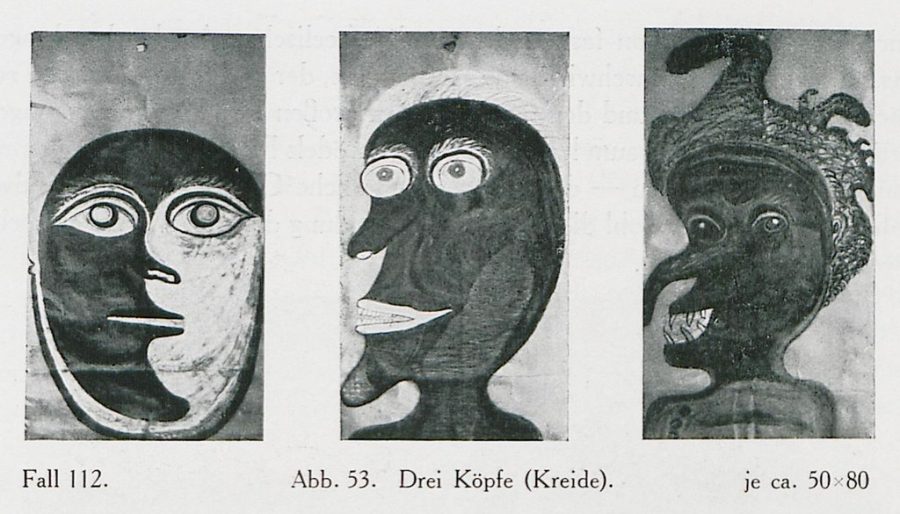
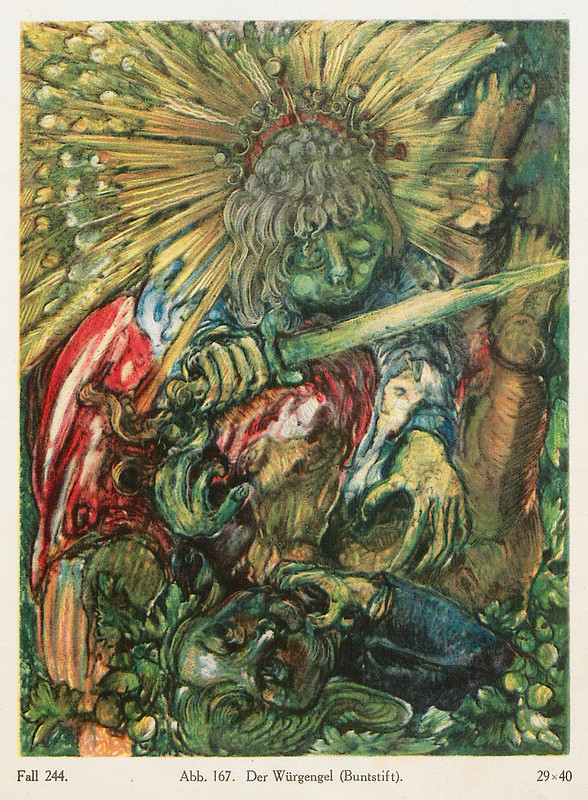
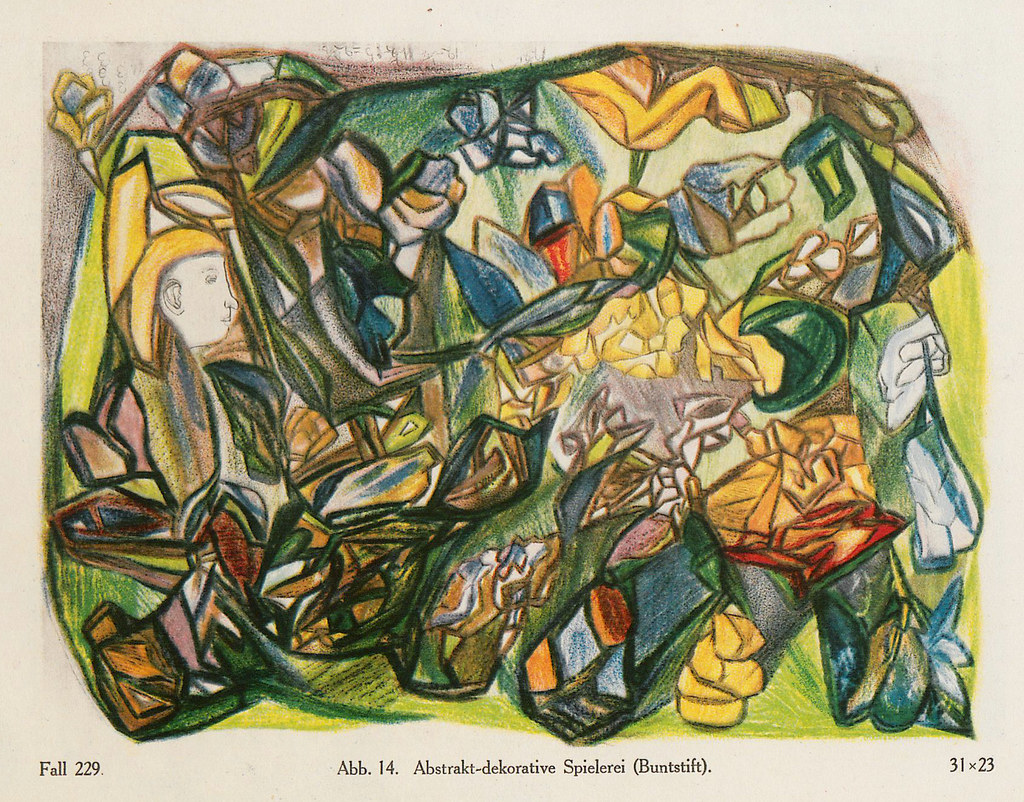
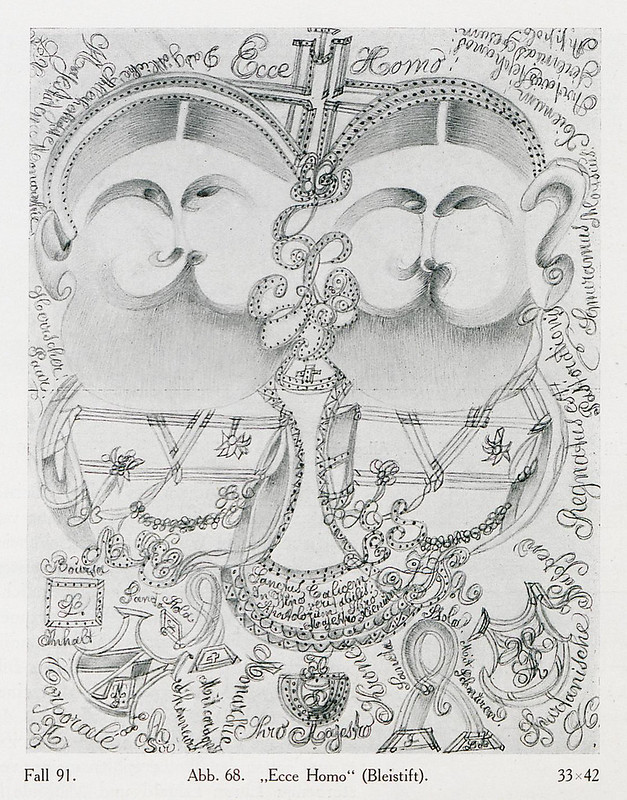
It grant­ed those artists an audi­ence, more to the point, of appre­cia­tive fel­low artists like Paul Klee, Max Ernst, and Jean Debuf­fet (who would coin the term Art Brut in response). As should be abun­dant­ly clear from the small sam­pling of images here from the book, mod­ernists took much from the images they saw in Prinzhorn’s book, most of it the unat­trib­uted and anony­mous work of schiz­o­phrenic artists, some of whom them­selves draw from ear­li­er mod­ernist trends.

When the Nazis held their “Degen­er­ate Art” exhi­bi­tions in 1937, a por­tion of Prinzhorn’s col­lec­tion of “over 5000 paint­ings, draw­ings, and carv­ings” was includ­ed next to the avant-garde artists it influ­enced. Art his­to­ri­an Stephanie Bar­ron argues that “one quar­ter of the illus­tra­tion pages in the [Degen­er­ate Art Exhibiton’s] guide fea­tured repro­duc­tions of the work of these psy­chi­atric patients.” Mod­ernists iden­ti­fied, in com­pli­cat­ed ways, with those exclud­ed from civ­i­liza­tion, and they were sub­ject­ed to the same treatment—“the insane and the avant-garde were here equat­ed, both equal­ly pathol­o­gized.”

Prinzhorn’s book reced­ed into obscu­ri­ty, along with the artists it care­ful­ly col­lect­ed and pub­lished. It deserves to be far bet­ter known, both for its own sake and for its sig­nif­i­cant influ­ence on the ear­ly 20th cen­tu­ry avant-garde, and hence all sub­se­quent avant-garde art. The book takes the work it presents seriously—not as child­like attempts or ther­a­peu­tic inter­ven­tions, but as expres­sions of six basic dri­ves “that give rise to image mak­ing,” as the Pub­lic Domain Review sum­ma­rizes.

Those uni­ver­sal dri­ves include “an expres­sive urge, the urge to play, an orna­men­tal urge, an order­ing ten­den­cy, a ten­den­cy to imi­tate, and the need for sym­bols. For Prinzhorn, image mak­ing is dri­ven by our intense desire to leave traces.” Art, wrote Prinzhorn, rep­re­sents “an urge in man not to be absorbed pas­sive­ly into his envi­ron­ment, but to impress on it traces of his exis­tence beyond those of pur­pose­ful activ­i­ty.”

The the­o­ries of artists like Kandin­sky and Debuf­fet expressed some sim­i­lar ideas. The for­mer ascend­ed to the realm of spir­it and sym­bol, and the lat­ter acer­bical­ly cas­ti­gat­ed the emp­ty, out-of-touch ven­er­a­tion of high cul­ture. Who knows what the artists here had in mind when cre­at­ing their work? In Prinzhorn’s analy­sis, the­o­ret­i­cal con­cerns may be large­ly irrel­e­vant. The cre­ation of art, by any­one, is a uni­ver­sal human dri­ve that requires no spe­cial train­ing, no social sanc­tion, no web of bro­kers, cura­tors, and col­lec­tors. Maybe this is a threat­en­ing mes­sage to peo­ple who police the bound­aries of cul­ture.

The mid­dle class­es of his day, wrote Debuf­fet, were “con­vinced that [their] fash­ion­able knowl­edge legit­imizes the preser­va­tion of their caste. They work at per­suad­ing the low­er class­es of this, at con­vinc­ing some of them of the neces­si­ty to safe­guard art, that is to say arm­chairs, that is to say the bour­geois who know with which silk it is prop­er to uphol­ster these arm­chairs.” Reduc­ing art to a sta­tus sym­bol turns it into so much fur­ni­ture, he argued; a “recourse to antique styles takes the place of good taste.” In the “raw art” of the men­tal­ly ill, Debuf­fet and oth­er mod­ernists saw a renew­al of a pri­mal human dri­ve, the cre­ative act.

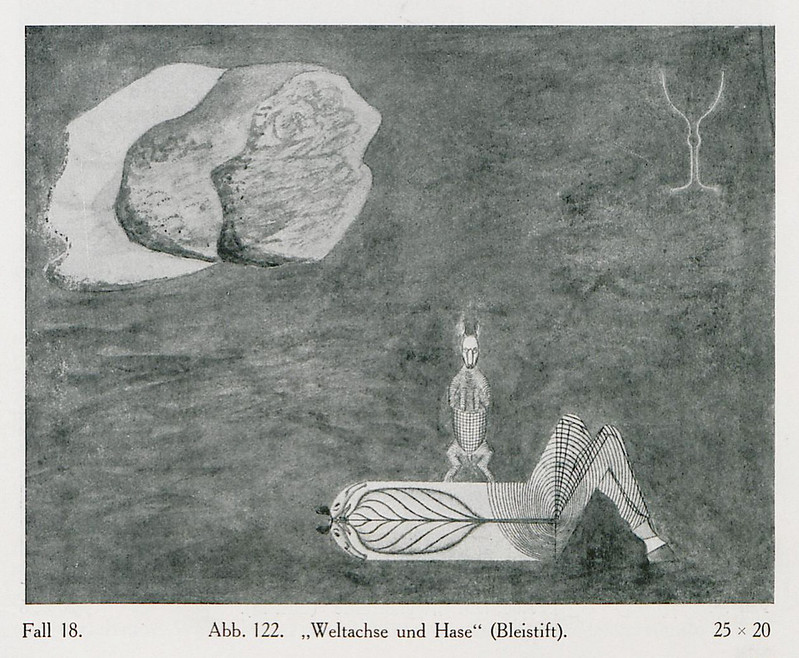
Prinzhorn’s neglect­ed book is out of print, though you can pur­chase an expen­sive 1972 edi­tion on Ama­zon, and even an expen­sive Kin­dle ver­sion. See much more of this incred­i­ble art­work at the Pub­lic Domain Review and read brief pro­files from the ten schiz­o­phrenic artists Prinzhorn iden­ti­fied in a lat­er sec­tion of the book. Artists like Karl Bren­del, an amputee for­mer brick­lay­er from Turingian, who carved haunt­ing wood sculp­tures and began his art career sculpt­ing with chewed bread, and August Neter, to whom 10,000 fig­ures once appeared in a sin­gle vision that lat­er became the sub­ject of enig­mat­ic pen­cil draw­ings like World Axis and Rab­bit, below.

via Pub­lic Domain Review

Relat­ed Con­tent:

Artist Draws Nine Por­traits on LSD Dur­ing 1950s Research Exper­i­ment

Sun Ra Plays a Music Ther­a­py Gig at a Men­tal Hos­pi­tal; Inspires Patient to Talk for the First Time in Years

A Uni­fied The­o­ry of Men­tal Ill­ness: How Every­thing from Addic­tion to Depres­sion Can Be Explained by the Con­cept of “Cap­ture”

Josh Jones is a writer and musi­cian based in Durham, NC. Fol­low him at @jdmagness

Star Trek’s Nichelle Nichols Creates a Short Film for NASA to Recruit New Astronauts (1977)

Imag­ine grow­ing up in the late 1960s, wit­ness­ing at an impres­sion­able age the hey­day of the orig­i­nal Star Trek fol­lowed by the real-life moon land­ing. (If you actu­al­ly did grow up in the late 1960s, just remem­ber your child­hood.) How could you not have dreamed of work­ing on some­thing to do with out­er space, or indeed in out­er space itself? It seems that both the pro­mot­ers of NASA and the cre­ators of Star Trek know that both their projects draw from the same well of won­der about the world beyond our plan­et. As we’ve pre­vi­ous­ly fea­tured here on Open Cul­ture, William Shat­ner has nar­rat­ed a doc­u­men­tary on the space shut­tle as well as a Mars land­ing video, and Leonard Nimoy nar­rat­ed a short about NASA’s space­craft Dawn.

Nichelle Nichols, who played Lieu­tenant Uhu­ra in the orig­i­nal series, also did her NASA-pro­mot­ing bit — or per­haps more than her bit — by star­ring in the agen­cy’s 1977 recruit­ment film. In the years since the end of Star Trek, she had already been vol­un­teer­ing with NASA’s push to recruit more women and minori­ties.

“I am going to bring you so many qual­i­fied women and minor­i­ty astro­naut appli­cants for this posi­tion that if you don’t choose one… every­body in the news­pa­pers across the coun­try will know about it,” she has since remem­bered telling NASA at the time. In the event, NASA chose more than a few, includ­ing astro­nauts like Sal­ly Ride, Guion Blu­ford, Judith Resnik, and Ronald McNair.

“I still feel a lit­tle bit like Lieu­tenant Uhu­ra on the star­ship Enter­prise,” Nichols says at the begin­ning of the film. “You know, now there’s a 20th-cen­tu­ry Enter­prise, an actu­al space vehi­cle built by NASA and designed to put us in the busi­ness of space, and not mere­ly space explo­ration.” NASA’s Enter­prise, she explains, is “a space shut­tle built to make reg­u­lar­ly sched­uled runs into space and back, just like a com­mer­cial air­line,” one that “may even be used to build a space sta­tion in orbit around the Earth, and this would require the ser­vices of peo­ple with a vari­ety of skills and qual­i­fi­ca­tions.” At the very end, she empha­sizes a dif­fer­ent sense of vari­ety: “I’m speak­ing to the whole fam­i­ly of humankind, minori­ties and women alike. If you qual­i­fy and would like to be an astro­naut, now is the time. This is your NASA, a space agency embarked on a mis­sion to improve the qual­i­ty of life on plan­et Earth right now” — an even wor­thi­er mis­sion, some might say, than bold­ly going where no man has gone before.

via Boing Boing

Relat­ed Con­tent:

Star Trek Celebri­ties William Shat­ner and Wil Wheaton Nar­rate Mars Land­ing Videos for NASA

William Shat­ner Nar­rates Space Shut­tle Doc­u­men­tary

William Shat­ner Puts in a Long Dis­tance Call to Astro­naut Aboard the Inter­na­tion­al Space Sta­tion

Leonard Nimoy Nar­rates Short Film About NASA’s Dawn: A Voy­age to the Ori­gins of the Solar Sys­tem

NASA Cre­ates Movie Par­o­dy Posters for Its Expe­di­tion Flights: Down­load Par­o­dies of Metrop­o­lis, The Matrix, The Hitchhiker’s Guide to the Galaxy and More

Based in Seoul, Col­in Mar­shall writes and broad­casts on cities, lan­guage, and cul­ture. His projects include the book The State­less City: a Walk through 21st-Cen­tu­ry Los Ange­les and the video series The City in Cin­e­ma. Fol­low him on Twit­ter at @colinmarshall, on Face­book, or on Insta­gram.

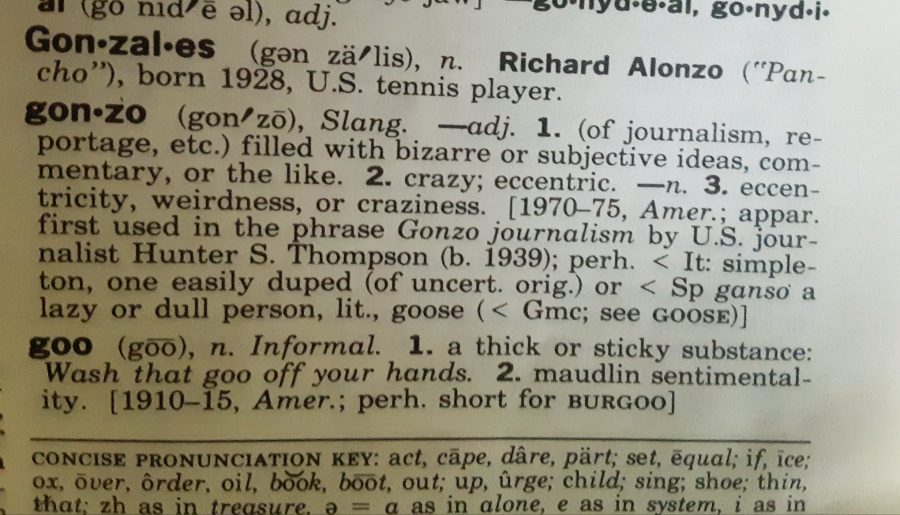
“Gonzo” Defined by Hunter S. Thompson’s Personal Copy of the Random House Dictionary

via The Hunter S. Thomp­son Face­book Page

Relat­ed Con­tent:

How Hunter S. Thomp­son Gave Birth to Gonzo Jour­nal­ism: Short Film Revis­its Thompson’s Sem­i­nal 1970 Piece on the Ken­tucky Der­by

Hunter S. Thomp­son, Exis­ten­tial­ist Life Coach, Presents Tips for Find­ing Mean­ing in Life

Read 10 Free Arti­cles by Hunter S. Thomp­son That Span His Gonzo Jour­nal­ist Career (1965–2005)

Hunter S. Thompson’s Deca­dent Dai­ly Break­fast: The “Psy­chic Anchor” of His Fre­net­ic Cre­ative Life

Hunter S. Thomp­son Chill­ing­ly Pre­dicts the Future, Telling Studs Terkel About the Com­ing Revenge of the Eco­nom­i­cal­ly & Tech­no­log­i­cal­ly “Obso­lete” (1967)

Tangled Up in Blue: Deciphering a Bob Dylan Masterpiece

Dylan’s “Tan­gled Up in Blue” strikes a mid­dle point between his more sur­re­al lyrics of the ‘60s and his more straight­for­ward love songs, and as Polyphonic’s recent video tak­ing a deep dive into this “musi­cal mas­ter­piece” shows, that com­bi­na­tion is why so many count it as one of his best songs.

It is the open­ing track of Blood on the Tracks, the 1975 album that crit­ics hailed as a return to form after four mid­dling-at-best albums. (One of them, Self-Por­trait, earned Dylan one of crit­ic Greil Mar­cus’ best known open­ing lines: “What is this shit?”–in the pages of Rolling Stone no less.)

Blood on the Tracks is one of the best grumpy, mid­dle-age albums, post-rela­tion­ship, post-fame, all reck­on­ing and account­abil­i­ty, a sur­vey of the dam­age done to one­self and oth­ers, and “Tan­gled” is the entry point. Dylan’s mar­riage to Sara Lown­des Dylan was floun­der­ing after eight years–affairs, drink, and drugs had estranged the cou­ple. Dylan would lat­er say that “Tan­gled” “took me ten years to live and two years to write.”

It would also take him two stu­dios, two cities, and two band line-ups to get work­ing. A ver­sion record­ed in New York City is slow­er, low­er (in key), and more like one of his gui­tar-only folk tunes. In Decem­ber of 1974, Dylan returned home to Min­neso­ta and played the songs to his broth­er, who wasn’t impressed and sug­gest­ed he rere­cord. The ver­sion we know is faster, brighter, jan­gli­er, and as Poly­phon­ic explains, sung at a key near­ly too high for Dylan. But it’s that wild, near exas­per­a­tion of reach­ing those notes that gives the song its lifeblood.

And he also reworked the lyrics, remov­ing whole vers­es and chang­ing oth­ers, until the fin­ished ver­sion is, indeed, tan­gled. It jumps back and forth from present to past to wish­ful future, verse to verse, and even line to line.

The pro­nouns change too–the “she” is some­times the lost love, some­times a woman who reminds the singer of the for­mer. The fur­ther he goes to get away from his first love, the more he meets visions of her else­where.

Then there’s the details of the trav­els and the jobs the nar­ra­tor takes on, leav­ing fans to parse which are true and which are not (Sara Lown­des, for exam­ple, was work­ing at a Play­boy club–the “top­less place”–when he met her). And even if we could know who the man is in verse six who “start­ed into deal­ing with slaves”…would it make any dif­fer­ence?

In the end the song feels uni­ver­sal because it is both so spe­cif­ic and so inten­tion­al­ly con­found­ing. “Tan­gled Up in Blue” affects so many of its lis­ten­ers, yours tru­ly includ­ed, because it recre­ates the way mem­o­ries nes­tle in our minds, not as a lin­ear sequence but as a kalei­do­scope of images and feel­ings.

Relat­ed Con­tent:

How Talk­ing Heads and Bri­an Eno Wrote “Once in a Life­time”: Cut­ting Edge, Strange & Utter­ly Bril­liant

Clas­sic Songs by Bob Dylan Re-Imag­ined as Pulp Fic­tion Book Cov­ers: “Like a Rolling Stone,” “A Hard Rain’s A‑Gonna Fall” & More

Watch Joan Baez Endear­ing­ly Imi­tate Bob Dylan (1972)

Hear Bob Dylan’s New­ly-Released Nobel Lec­ture: A Med­i­ta­tion on Music, Lit­er­a­ture & Lyrics

Ted Mills is a free­lance writer on the arts who cur­rent­ly hosts the artist inter­view-based FunkZone Pod­cast and is the pro­duc­er of KCR­W’s Curi­ous Coast. You can also fol­low him on Twit­ter at @tedmills, read his oth­er arts writ­ing at tedmills.com and/or watch his films here.

« Go BackMore in this category... »
Quantcast