When Shostakovich Adapted Gogol’s “The Nose” Into an Opera: Watch Giant Noses Tap Dancing on the Stage

The first-time read­er of a sto­ry called “The Nose” may expect any num­ber of things: a char­ac­ter with a keen sense of smell; a mur­der evi­denced by the tit­u­lar organ, dis­em­bod­ied; a broad­er iron­ic point about the things right in front of our faces that we some­how nev­er see. But giv­en its con­cep­tion in the imag­i­na­tion of Niko­lai Gogol, “The Nose” is about a nose — a nose that, on its own, lives, breathes, walks, and dress­es in fin­ery. The nose does this, it seems, in order to rise in rank past that of its for­mer own­er, the run-of-the-mill St. Peters­burg civ­il ser­vant Col­le­giate Asses­sor Kova­ly­ov.

Writ­ten in 1835 and 1836, “The Nose” sat­i­rizes the long era in Impe­r­i­al Rus­sia after Peter the Great intro­duced the Table of Ranks. Meant to ush­er in a kind of pro­to-mer­i­toc­ra­cy, that sys­tem assigned rank to mil­i­tary and gov­ern­ment offi­cers accord­ing, at least in the­o­ry, to their abil­i­ty and achieve­ments. The fact that those who attained high enough ranks would rise the to the lev­el of hered­i­tary nobles cre­at­ed an all-out sta­tus war across many sec­tions of soci­ety — a war, to the mind of Gogol the mas­ter observ­er of bureau­cra­cy, that could pit a man not just against his col­leagues and friends but against his own body parts.

Near­ly a cen­tu­ry after the sto­ry’s pub­li­ca­tion, a young Dmitri Shostakovich took it upon him­self to adapt “The Nose” into his very first opera. In col­lab­o­ra­tion with Alexan­der Preis, Geor­gy Ion­in, and Yevge­ny Zamy­atin (author of the endur­ing dystopi­an nov­el We), the com­pos­er ren­dered even more out­ra­geous­ly this tale of a nose gone rogue. Incor­po­rat­ing pieces of Gogol’s oth­er sto­ries like the “The Over­coat” and “Diary of a Mad­man” as well as the play Mar­riage and the diary Dead Souls — not to men­tion the writ­ings of oth­er Russ­ian mas­ters, includ­ing Dos­toyevsky’s The Broth­ers Kara­ma­zov — the 1928 opera com­bines a wide vari­ety of musi­cal styles both tra­di­tion­al and exper­i­men­tal, and among its set pieces includes a num­ber per­formed by giant tap-danc­ing noses.

You can see that part per­formed in the video above. The venue is Lon­don’s Roy­al Opera House, the direc­tor is Bar­rie Kosky of Berlin’s Komis­che Oper, and the year is 2016, half a cen­tu­ry after The Nose’s revival. Though com­plet­ed in the late 1920s, it did­n’t pre­miere on stage in full until 1930, when Sovi­et cen­sor­ship con­cen­trat­ed its ener­gies on quash­ing such non-rev­o­lu­tion­ary spec­ta­cles. It would­n’t be staged again in the Sovi­et Union until 1974, near­ly a decade after its pre­miere in the Unit­ed States. (Just a cou­ple years before, Alexan­der Alex­eieff and Claire Park­er had adapt­ed the sto­ry into the pin­screen ani­ma­tion pre­vi­ous­ly fea­tured here on Open Cul­ture.) The sociopo­lit­i­cal con­cerns of Gogol’s ear­ly 19th cen­tu­ry and Shostakovich’s ear­ly 20th may have passed, but the appeal of the for­mer’s sharp satire — and the sheer Pythonesque weird­ness of the lat­ter’s oper­at­ic sen­si­bil­i­ty — cer­tain­ly haven’t.

Relat­ed Con­tent:

Niko­lai Gogol’s Clas­sic Sto­ry, “The Nose,” Ani­mat­ed With the Aston­ish­ing Pin­screen Tech­nique (1963)

Revered Poet Alexan­der Pushkin Draws Sketch­es of Niko­lai Gogol and Oth­er Russ­ian Artists

The Bizarre, Sur­viv­ing Scene from the 1933 Sovi­et Ani­ma­tion Based on a Pushkin Tale and a Shostakovich Score

George Saun­ders’ Lec­tures on the Russ­ian Greats Brought to Life in Stu­dent Sketch­es

Why You Should Read The Mas­ter and Mar­gari­ta: An Ani­mat­ed Intro­duc­tion to Bulgakov’s Rol­lick­ing Sovi­et Satire

Based in Seoul, Col­in Mar­shall writes and broad­casts on cities, lan­guage, and cul­ture. His projects include the Sub­stack newslet­ter Books on Cities, the book The State­less City: a Walk through 21st-Cen­tu­ry Los Ange­les and the video series The City in Cin­e­ma. Fol­low him on Twit­ter at @colinmarshall, on Face­book, or on Insta­gram.

An Animated Reading of “The Jabberwocky,” Lewis Carroll’s Nonsense Poem That Somehow Manages to Make Sense

“I can explain all the poems that ever were in­ vented—and a good many that haven’t been invent­ed just yet.” —Hump­ty Dump­ty

“The Jab­ber­wocky,” Lewis Carroll’s clas­sic poem from Through the Look­ing Glass, and What Alice Found There—the sec­ond install­ment of the most famous­ly non­sen­si­cal adven­ture in lit­er­ary history—is “full of seem­ing­ly non­sen­si­cal words that some­how man­age to make sense,” says nar­ra­tor Jack Cut­more-Scott in the ani­mat­ed read­ing above from TED-Ed Ani­ma­tion. That word, non­sense, is asso­ci­at­ed with Carroll’s fan­ta­sy world more than any oth­er, but what does it mean for a sto­ry to be non­sense and be intel­li­gi­ble at the same time?

Car­roll, a math­e­mati­cian by train­ing, under­stood the fun­da­men­tal prin­ci­ple of non­sense, which “T.S. Eliot remind­ed us, is not an absence of sense but a par­o­dy of it,” as J. Patrick Lewis writes at The New York Times. “Some of the port­man­teau words Car­roll invented—chortle, bur­ble, frab­jous and others—are now ful­ly vest­ed mem­bers of the lex­i­con. And the verse’s struc­ture is a mir­ror, as Alice dis­cov­ered, of clas­si­cal Eng­lish poet­ry.” Car­roll com­posed the first four lines ten years before Through the Look­ing Glass, as a par­o­d­ic “Stan­za of Anglo-Sax­on Poet­ry” to amuse his fam­i­ly.

It may help, or not, to keep in mind that Car­roll is not only mock­ing Eng­lish poet­ic forms and con­ven­tions, but a par­tic­u­lar his­tor­i­cal form of Eng­lish that is most­ly unrec­og­niz­able to mod­ern read­ers, and cer­tain­ly to Alice. But the poem’s syn­tax and struc­ture are so famil­iar that we can eas­i­ly piece togeth­er a mon­ster-slay­ing nar­ra­tive in which, as Alice remarks, “some­body killed some­thing.”

The ever-hum­ble Hump­ty Dump­ty is hap­py to explain, as was Car­roll in his orig­i­nal com­po­si­tion, to which he attached a glos­sary very sim­i­lar to the egg’s def­i­n­i­tions and gave “the lit­er­al Eng­lish” of the first stan­za as:

“It was evening, and the smooth active bad­gers were scratch­ing and bor­ing holes in the hill side; all unhap­py were the par­rots, and the grave tur­tles squeaked out“.

There were prob­a­bly sun dials on the top of the hill, and the “boro­goves” were afraid that their nests would be under­mined. The hill was prob­a­bly full of the nests of “raths”, which ran out squeak­ing with fear on hear­ing the “toves” scratch­ing out­side. This is an obscure, but yet deeply affect­ing, rel­ic of ancient Poet­ry.

Does this help? It does explain the mood Car­roll is after, and he achieves it. The Jab­ber­wocky is fun­ny and play­ful and all the rest, but it is also deeply unset­tling in its obscure mys­ter­ies and fright­en­ing descrip­tions of its title char­ac­ter.

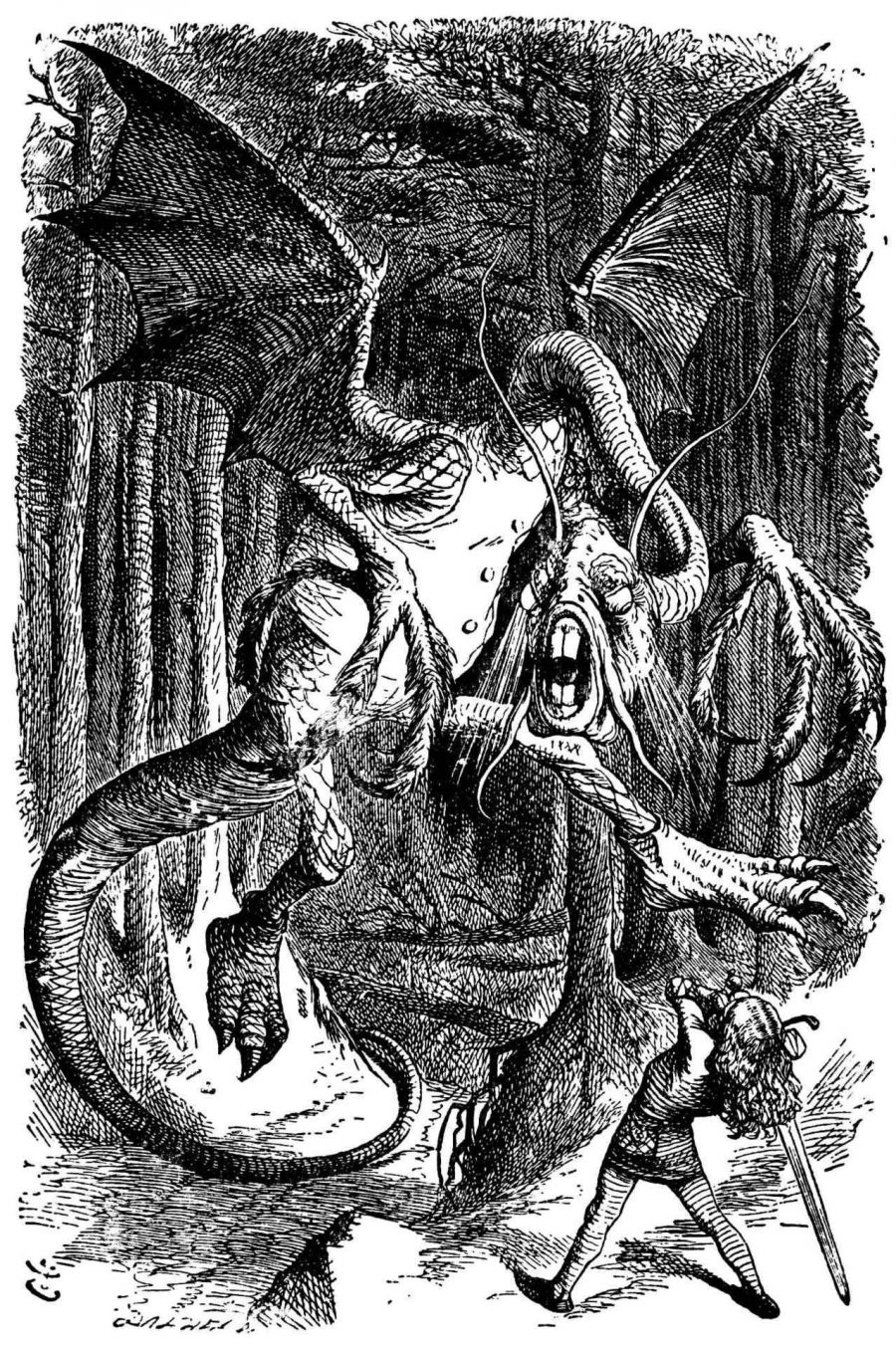
In John Tenniel’s famous illus­tra­tion of the beast, it appears as a scaly, leath­ery drag­on with a face some­where between a deep-sea fish and an over­grown sew­er rat. The ani­ma­tion by Sjaak Rood gives it a more clas­si­cal­ly drag­on-like appear­ance, in the crazed style of Ralph Stead­man, while the Ban­der­snatch looks like some­thing Paul Klee would have invent­ed. The choice of artis­tic influ­ences here shows Rood con­nect­ing deeply with the non­sense tra­di­tion in mod­ern art, one which also turns famil­iar forms into night­mar­ish beings that fill our heads with ideas.

Relat­ed Con­tent:

O Frab­jous Day! Neil Gaiman Recites Lewis Carroll’s “Jab­ber­wocky” from Mem­o­ry

Behold Lewis Carroll’s Orig­i­nal Hand­writ­ten & Illus­trat­ed Man­u­script for Alice’s Adven­tures in Won­der­land (1864)

Lewis Carroll’s Pho­tographs of Alice Lid­dell, the Inspi­ra­tion for Alice in Won­der­land

Alice’s Adven­tures in Won­der­land, Illus­trat­ed by Sal­vador Dalí in 1969, Final­ly Gets Reis­sued

Josh Jones is a writer and musi­cian based in Durham, NC. Fol­low him at @jdmagness

Hear Readings of Albert Einstein’s Love Letters (and Chilly Divorce Letters) to His First Wife Mileva

Beware the fake quo­ta­tion. They have become so ubiq­ui­tous they often appear in books and speech­es by politi­cians and their fam­i­ly mem­bers, not that any­one seems to care much. But most of us feel a mea­sure of shame at being duped, as Katharine Rose did when she found her­self moved by a let­ter sup­pos­ed­ly writ­ten by Albert Ein­stein to his daugh­ter, Lieserl, “regard­ing the ‘uni­ver­sal force’ of love.” The let­ter is a “beau­ti­ful read,” and it’s a fake. But many admir­ers of Ein­stein were eager to believe it.

Why? Like oth­er famous fig­ures to whom spu­ri­ous words are attrib­uted, Ein­stein isn’t just well-known, he is revered, a celebri­ty, and celebri­ties are peo­ple we feel we know inti­mate­ly. (A com­mon defense for fake-quote-shar­ing goes: “Well, if he didn’t say it, then it’s exact­ly the kind of thing he would say.”) Dis­cussing the theft of Einstein’s brain after his death, Ross Ander­son at Aeon observes that “an ordi­nary per­son can live and die pri­vate­ly, but a genius—and his grey matter—belongs to the world.” We might add, “and so do the inti­mate details of his pri­vate life.”

The details of Einstein’s mar­riage, and of his very unpleas­ant sep­a­ra­tion and divorce, from Mil­e­va Mar­ić have long been pub­lic knowl­edge. “Few pub­lic mar­riages have been sub­ject­ed to a more unnu­anced ver­dict,” Maria Popo­va writes at Brain Pick­ings. Their love let­ters first came to light in 1986, dis­cov­ered by Einstein’s grand­daugh­ter Eve­lyn. They were pub­lished in 1992 as The Love Let­ters, “a col­lec­tion of fifty-four mis­sives exchanged between the begin­ning of their romance” when they met as stu­dents in 1897 to their mar­riage in 1903. Dozens more are avail­able at Prince­ton Uni­ver­si­ty’s online col­lec­tion of Ein­stein’s papers.

The let­ters are real, and they are “spicy,” as YouTu­ber Tibees shows us in the video at the top. No awk­ward pri­vate expres­sion is safe: we begin with let­ters Ein­stein wrote to his high school girl­friend, Marie Win­tel­er, includ­ing a breakup let­ter at 3:13. The excerpts here are all time­stamped on the video’s YouTube page, with help­ful sum­maries like “Einstein’s mom try­ing to break them up” (them being Albert and Mil­e­va), “Ein­stein hav­ing an affair with his cousin Elsa,” “Break­ing up with Elsa,” and “Get­ting back with Elsa.”

Elsa, you may know, was Einstein’s sec­ond wife, in addi­tion to being his cousin, and the cause of his sep­a­ra­tion and divorce from Mil­e­va, to whom he had pro­fessed undy­ing devo­tion. In the inter­est of ful­ly invad­ing the genius’s pri­va­cy, we have, above, some read­ings of his harsh “divorce let­ters” to Mil­e­va, with hits like “Sep­a­ra­tion,” “Propos­ing divorce,” and “Court pro­ceed­ings.” Love may or may not be a “uni­ver­sal force”—we do not, sad­ly, have Einstein’s thoughts on the matter—but we do know he found it a trou­bling­ly chaot­ic, unpre­dictable one.

Relat­ed Con­tent:

Albert Ein­stein Impos­es on His First Wife a Cru­el List of Mar­i­tal Demands

Hear Albert Ein­stein Read “The Com­mon Lan­guage of Sci­ence” (1941)

Albert Ein­stein Explains Why We Need to Read the Clas­sics

Josh Jones is a writer and musi­cian based in Durham, NC. Fol­low him at @jdmagness

Explore a Digital Archive of Student Notebooks from Around the World (1773-Present)

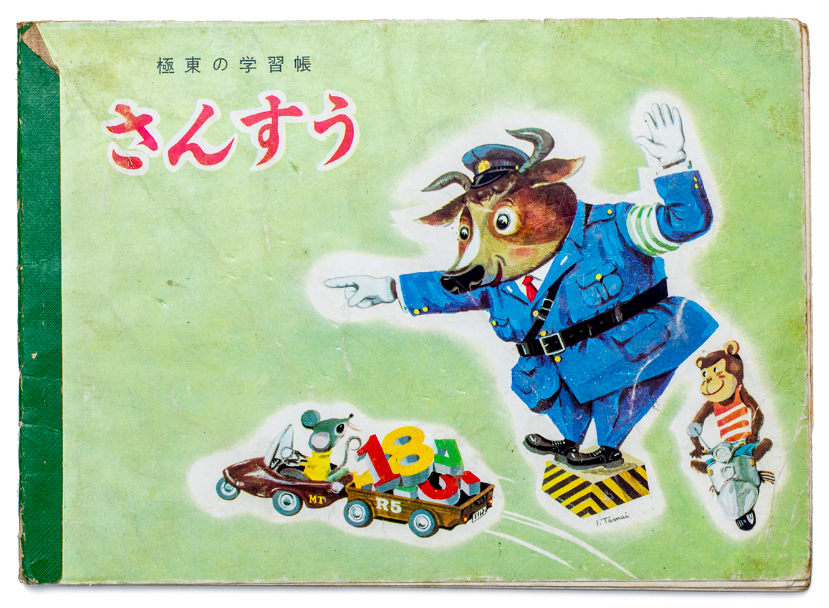
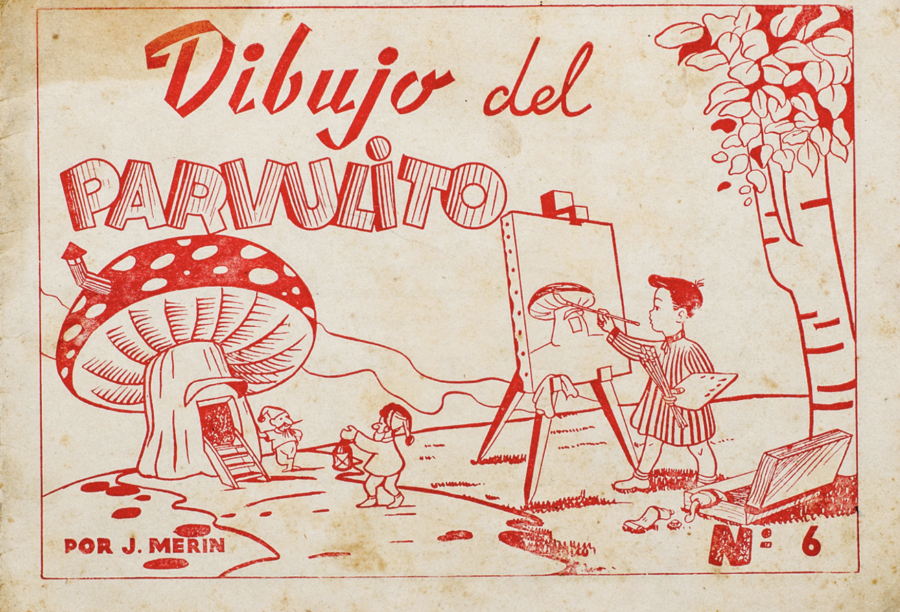
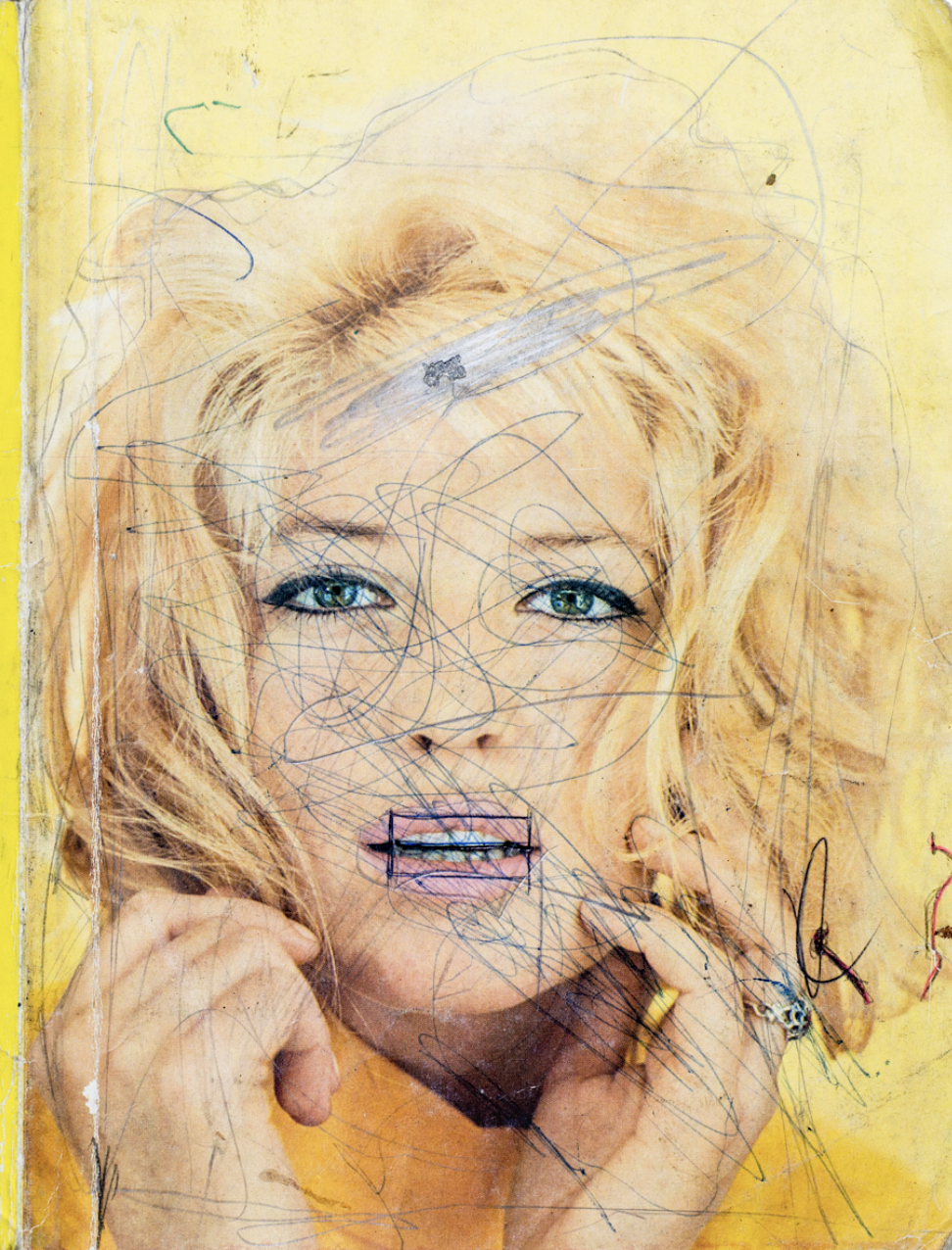
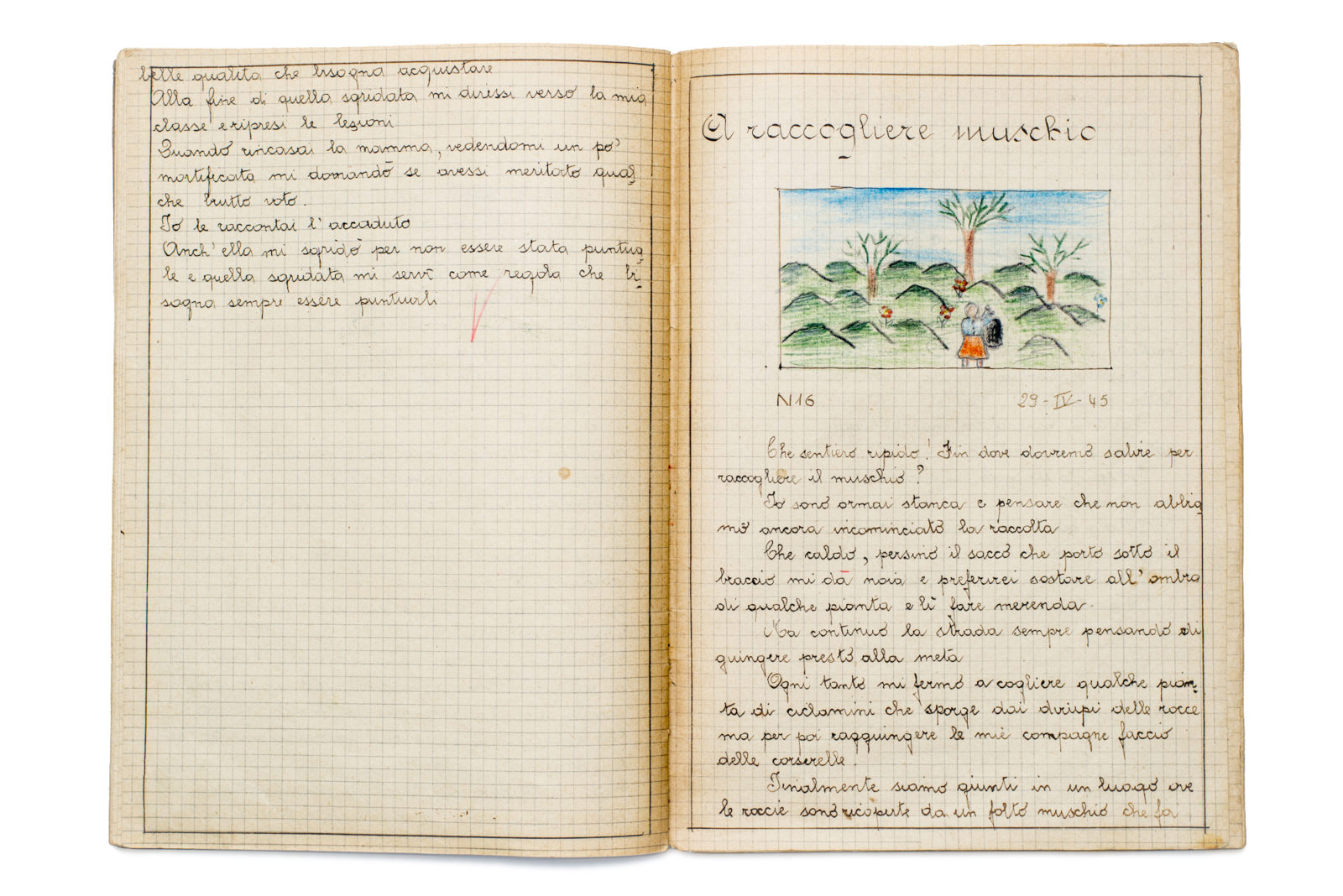
To bring back mem­o­ries of your school­days, there’s noth­ing quite like the sight of your old exer­cise books. This holds true whether you went to school in Ghana in the 2010sItaly in the 90s, France in the 80sChi­na in the 70sJapan in the 60s, or India in the 50s. All of these exam­ples and many more have come avail­able to view at the Exer­cise Book Archive, an “ever-grow­ing, par­tic­i­pa­to­ry archive of old exer­cise books that allows every­one to dis­cov­er the his­to­ry, edu­ca­tion, and dai­ly life of chil­dren and youth of the past.” All of the entries include the rel­e­vant book’s front cov­er — already a Prous­t­ian view­ing expe­ri­ence for any who had them grow­ing up — and some fea­ture scans of the inte­ri­or pages, stu­dent writ­ing and all.

One girl’s note­book describes the bomb­ing of her small town in 1940s Switzer­land,” writes Col­lec­tors Week­ly’s Hunter Oat­man-Stan­ford. “Anoth­er boy’s jour­nal chron­i­cles dai­ly life in rur­al Penn­syl­va­nia dur­ing the 1890s; the diary of a Chi­nese teenag­er recounts his expe­ri­ences in prison dur­ing the 1980s.” The arti­cle quotes Thomas Pololi, co-founder of the orga­ni­za­tion behind the Exer­cise Book Archive, on the his­tor­i­cal val­ue of books con­tain­ing “com­po­si­tions about war, pro­pa­gan­da, or polit­i­cal events that we now rec­og­nize as ter­ri­ble.

But in the nar­ra­tion of chil­dren, there is often enthu­si­asm about the swasti­ka in Ger­many, or the Duce in Italy (dic­ta­tor Ben­i­to Mus­soli­ni), or for Mao in Chi­na.” (Thanks to the work of vol­un­teers, these and oth­er exer­cise-book writ­ings have been tran­scribed and trans­lat­ed into Eng­lish.)

These young stu­dents “tend­ed to see the pos­i­tive side of trau­mat­ic things, per­haps because their main goal is to grow up, and they need­ed to do it the world they lived in.” Their exer­cise books thus offer reflec­tions of their soci­eties, in not just con­tent but design as well: “In Spain or in Chi­na,” for exam­ple, “you see beau­ti­ful illus­tra­tions of pro­pa­gan­da themes. They are often aes­thet­i­cal­ly appeal­ing because they were meant to per­suade chil­dren to do or think some­thing.” Edu­ca­tion­al trends also come through: “Before, there were main­ly exer­cis­es of cal­lig­ra­phy with dic­tat­ed sen­tences about how you have to behave in your life, with phras­es like ‘Emu­la­tion sel­dom fails,’ ” which to Pololi’s mind “implies that if you are your­self, you risk fail­ing. That’s the oppo­site of what we teach chil­dren nowa­days.”

Some­how the most mun­dane of these stu­dent com­po­si­tions can also be among the most inter­est­ing. Take the jour­nal of a group of Finnish girl scouts from the ear­ly 1950s. “The train to Lep­pä­vaara arrived quick­ly,” writes the author of one entry from April 1950. “At the sta­tion it start­ed to rain. We walked to the youth house, where we sang ‘Exalt the joy’ etc. Then we went to the sauna where we had to be. We sang and prayed. We then ate some sand­wich­es.” Could she have pos­si­bly imag­ined peo­ple all around the world read­ing of this girl-scout day trip with great inter­est sev­en­ty years lat­er? And what would the young man doing his pen­man­ship near­ly a quar­ter-mil­len­ni­um ago in Shrop­shire think if he know how eager we were to look at his exer­cise book? Bet­ter us than his school­mas­ter, no doubt. Enter the Exer­cise Book Archive here.

via Col­lec­tors Week­ly

Relat­ed Con­tent:

An Ancient Egypt­ian Home­work Assign­ment from 1800 Years Ago: Some Things Are Tru­ly Time­less

Muse­um Dis­cov­ers Math Note­book of an 18th-Cen­tu­ry Eng­lish Farm Boy, Adorned with Doo­dles of Chick­ens Wear­ing Pants

Down­load 20 Pop­u­lar High School Books Avail­able as Free eBooks & Audio Books

200 Free Kids Edu­ca­tion­al Resources: Video Lessons, Apps, Books, Web­sites & More

Based in Seoul, Col­in Mar­shall writes and broad­casts on cities, lan­guage, and cul­ture. His projects include the Sub­stack newslet­ter Books on Cities, the book The State­less City: a Walk through 21st-Cen­tu­ry Los Ange­les and the video series The City in Cin­e­ma. Fol­low him on Twit­ter at @colinmarshall, on Face­book, or on Insta­gram.

Chris Frantz Breaks Down How He Crafted Songs for Talking Heads & Tom Tom Club: A Nakedly Examined Music Interview

Chris found­ed Talk­ing Heads in the ear­ly ’70s with his wife Tina Wey­mouth and David Byrne, and he focus­es heav­i­ly on these ear­ly years of his career in his new mem­oir Remain in Love, describ­ing it as very much a group effort, even though they inten­tion­al­ly put the spot­light on David, who in turn pret­ty ear­ly on announced that he had to write all the lyrics, that he could­n’t sing oth­er peo­ple’s songs.

On the Naked­ly Exam­ined Music Pod­cast, Mark Lin­sen­may­er inter­views song­writ­ers about their cre­ative deci­sion-mak­ing, and in this inter­view, Chris tells how he and Tina and David col­lab­o­rat­ed on lyrics for their ear­ly sin­gle “Psy­cho Killer,” and then how Chris’ lyrics were used for “Warn­ing Sign,” a song (played in full as part of the pod­cast) that appeared on the Heads’ sec­ond album, 1978’s More Songs About Build­ings and Food.

Also sur­pris­ing is that Chris and Tina’s spin-off band, Tom Tom Club, formed in an inter­val when both David and the Heads’ lead gui­tarist Jer­ry Har­ri­son want­ed to pause Talk­ing Heads to record solo albums, actu­al­ly had its best-sell­ing sin­gle, “Genius of Love,” pri­or to the Talk­ing Heads real finan­cial suc­cess with hits like “Burn­ing Down the House” and “And She Was.”

The inter­view includes a detailed treat­ment of the com­po­si­tion and arrange­ment of two Tom Tom Club songs that are also played in full: “Bam­boo Town,” a reg­gae-inspired track from their sec­ond album Close to the Bone (1983); and “Who Feel­in’ It,” a dance track replete with record scratch per­cus­sion from The Good the Bad and the Funky (2000). This song was lat­er remixed by The inter­view con­cludes with a song that Chris sings: the title track from Tom Tom Club’s most recent release, Down­town Rock­ers (2012).

Both these last two tracks have as their main lyrics lists of artists that Chris and Tina want­ed to pay trib­ute to, both in influ­enc­ing their musi­cal sen­si­bil­i­ties and/or play­ing shows with them at CBG­B’s dur­ing their for­ma­tive years as Talk­ing Heads in New York City. Chris’ book gives us a vivid glimpse of that scene, as well as the excite­ment of their first album, work­ing with Bri­an Eno, their first Euro­pean tour, and oth­er mile­stones all the way up to their induc­tion into the Rock and Roll Hall of Fame in 2002, which was their first time play­ing togeth­er since the group’s split in 1991.

For more Naked­ly Exam­ined Music in-depth inter­views about song­writ­ing, arrange­ment, and the musi­cal life, vis­it nakedlyexaminedmusic.com.

Mark Lin­sen­may­er is also the host of The Par­tial­ly Exam­ined Life Phi­los­o­phy Pod­cast and Pret­ty Much Pop: A Cul­ture Pod­cast. He releas­es music under the name Mark Lint.


« Go Back
Quantcast