Former Ballerina with Dementia Gracefully Comes Alive to Tchaikovsky’s Swan Lake

Accord­ing to dance/movement ther­a­pist Eri­ca Horn­thal, “dance/movement ther­a­py oper­ates on the premise that our life expe­ri­ences are held in the body, and that through the use of move­ment, mem­o­ries and emo­tions can be recalled and re-expe­ri­enced despite cog­ni­tive, psy­cho­log­i­cal, or phys­i­cal impair­ment.” The video above of for­mer dancer Mar­ta C. González shows in effect how music might acti­vate those mus­cle mem­o­ries, as a record­ing of Tchaikovsky’s Swan Lake sends Ms. González, a for­mer bal­let dancer, into an ele­gant rever­ie when she had been bare­ly respon­sive moments before.

The video was report­ed­ly tak­en in Valen­cia, Spain in 2019 and “recent­ly shared by the Aso­ciación Músi­ca para Des­per­tar, a Span­ish orga­ni­za­tion that pro­motes music ther­a­py for those afflict­ed by mem­o­ry loss, demen­tia and Alzheimer’s dis­ease,” writes Anas­ta­sia Tsioul­cas at NPR. It has since been shared by celebri­ties and non­celebri­ties around the world, an “undoubt­ed­ly mov­ing and uplift­ing” scene that “speaks to the pow­er of music and dance for those suf­fer­ing from mem­o­ry loss.”

Many such videos have made head­lines, illus­trat­ing the find­ings of neu­ro­science with mov­ing sto­ries of recov­ered mem­o­ry, if only for a brief, shin­ing instant, in the pres­ence of music. The González video doesn’t just warm hearts, how­ev­er; it also serves as a cau­tion­ary tale about shar­ing viral videos with­out doing dili­gence. As Tsioul­cas reports, “Alas­tair Mac­caulay, a promi­nent dance crit­ic for­mer­ly with The New York Times, has been chas­ing González’s his­to­ry and post­ing his find­ings on Insta­gram.” His most recent post pos­si­bly iden­ti­fies Ms. González as a dancer from Cuba, but the details are murky.

The video’s text iden­ti­fies her as the pri­ma bal­le­ri­na of the “New York Bal­let” in the 1960s, yet “there is no such known com­pa­ny and the New York City Bal­let does not list any­one by that name as one of its alum­ni.” To com­pli­cate the mys­tery of her iden­ti­ty even fur­ther, Macauley says the clips that appear to show a young Mar­ta González, who passed away in 2019, are actu­al­ly “a for­mer pri­ma bal­le­ri­na from Russia’s Mari­in­sky Bal­let, Uliana Lopatk­i­na.” So who was Mar­ta C. González? Sure­ly some­one will iden­ti­fy her, if she was a promi­nent bal­let dancer. But no mat­ter her per­son­al his­to­ry, Tchaikovsky “clear­ly evoked a strong, tru­ly vis­cer­al response,” as well as a grace­ful­ly mus­cu­lar one.

via Kot­tke

Relat­ed Con­tent: 

How Music Can Awak­en Patients with Alzheimer’s and Demen­tia

The Restau­rant of Mis­tak­en Orders: A Tokyo Restau­rant Where All the Servers Are Peo­ple Liv­ing with Demen­tia

How Yoga Changes the Brain and May Guard Against Alzheimer’s and Demen­tia

Josh Jones is a writer and musi­cian based in Wash­ing­ton, DC. Fol­low him @jdmagness

How the Beach Boys Created Their Pop Masterpieces: “Good Vibrations,” Pet Sounds, and More

If you ever decide to lis­ten through the Beach Boys’ entire stu­dio discog­ra­phy, one album per week, it will take about six months. I know because I just fin­ished doing it myself, begin­ning with their sim­ple celebration/exploitation of ear­ly-60s youth beach-and-car cul­ture Surfin’ Safari and end­ing, six months yet half a cen­tu­ry lat­er, with the lush­ly ele­giac That’s Why God Made the Radio. Between those points, of course, came the songs every­one knows, the hits that made the Beach Boys “Amer­i­ca’s Band.” But as many times as we hap­pen to have heard them, how well do we real­ly know, say, “Good Vibra­tions” or “God Only Knows” — let alone the defin­i­tive artis­tic state­ment of an album that is Pet Sounds?

We can get to know them bet­ter through the work of the music-ori­ent­ed video essay­ists of Youtube, who in recent years have turned their atten­tion to the Beach Boys cat­a­log. Not that true pop-music obses­sives ever real­ly turned away from it: sure­ly, at some point in your life, you’ve met the kind of exegete intent on con­vinc­ing you of the artis­tic glo­ries of the minia­ture sym­phonies to teenage long­ing com­posed by the band’s mas­ter­mind Bri­an Wil­son. But today they can incor­po­rate visu­als into their argu­ment, as well as pas­sages from and ele­ments of the music itself, to more clear­ly reveal the for­mi­da­ble inspi­ra­tion and crafts­man­ship that went into these osten­si­bly straight­for­ward odes to love and good times.

Whether in 1966 or today, even an inat­ten­tive lis­ten­er can sense the scale of ambi­tion present in a song like “Good Vibra­tions.” As not­ed in Poly­phon­ic’s analy­sis, its pro­duc­tion cost between $50,000 and $75,000 ($370,000-$550,000 today), mak­ing it the most expen­sive sin­gle record­ing to date. But in its three min­utes and 39 sec­onds, “Bri­an Wil­son man­aged to put togeth­er a song dense enough that you could teach an entire course on it, all while main­tain­ing a devo­tion to radio-friend­ly, ear-catch­ing hooks.” The moti­va­tion to do this, so the leg­end has it, came from the Bea­t­les, who ear­li­er that year had rede­fined the very form of the album with Revolver — a response in part to Pet Sounds, itself fired by the ear­li­er inno­va­tions of the Bea­t­les’ Rub­ber Soul.

This friend­ly (if high-stakes) com­pe­ti­tion con­sti­tutes the back­ground of the nor­mal­ly Bea­t­les-ori­ent­ed chan­nel The Hol­ly­Hobs’ video essay on “God Only Knows,” a song so glo­ri­ous that even Paul McCart­ney names it among the best of all time. And it counts as but one of the high­lights on Pet Sounds, an overview of which you can hear in this Pitch­fork “Lin­er Notes” video. That video empha­sizes Wilson’s cen­tral role in the pro­duc­tion, some­thing that would be dif­fi­cult to over-empha­size: when for­mer Bea­t­les pub­li­cist Derek Tay­lor signed on with with Beach Boys, he based his whole cam­paign on the claim that “Bri­an Wil­son is a genius.”

What makes that true is the sub­ject of the video above by music-and-film Youtu­ber Jef­frey Still­well (He’s also cre­at­ed anoth­er video look­ing at the “lost years,” when a psy­cho­log­i­cal­ly strug­gling Wil­son began to with­draw from the band, but kept on mak­ing music.) Only those who lis­ten to the the entire Beach Boys discog­ra­phy can ful­ly appre­ci­ate what Wil­son brought to the band, and per­haps more impor­tant­ly, how his work was enriched by the con­tri­bu­tions of the oth­er mem­bers. These include, among oth­ers, the orig­i­nal core of Wilson’s broth­ers Carl and Den­nis, Al Jar­dine, and even the oft-vil­i­fied yet ulti­mate­ly indis­pens­able Mike Love — not that “Koko­mo” is going to inspire a video essay any time soon.

Relat­ed Con­tent:

Enter Bri­an Wilson’s Cre­ative Process While Mak­ing The Beach Boys’ Pet Sounds 50 Years Ago: A Fly-on-the Wall View

Hear the Beach Boys’ Angel­ic Vocal Har­monies in Four Iso­lat­ed Tracks from Pet Sounds: “Wouldn’t It Be Nice,” “God Only Knows,” “Sloop John B” & “Good Vibra­tions”

John Belushi and Dan Aykroyd Get Bri­an Wil­son Out of Bed and Force Him to Go Surf­ing, 1976

The Sto­ry of “Wipe Out,” the Clas­sic Surf Rock Instru­men­tal

How “Straw­ber­ry Fields For­ev­er” Con­tains “the Cra­zi­est Edit” in Bea­t­les His­to­ry

Based in Seoul, Col­in Mar­shall writes and broad­casts on cities, lan­guage, and cul­ture. His projects include the Sub­stack newslet­ter Books on Cities, the book The State­less City: a Walk through 21st-Cen­tu­ry Los Ange­les and the video series The City in Cin­e­ma. Fol­low him on Twit­ter at @colinmarshall, on Face­book, or on Insta­gram.

The Last Video Store: A Short Documentary on How the World’s Oldest Video Store Still Survives Today

When was the last time you went to a video store? Per­haps your habit died with the major rental out­lets like Block­buster Video, all of whose loca­tions closed by ear­ly 2014. Or rather, almost all of them: as fans of retro video cul­ture know, the sole Block­buster store on this Earth rents on in Bend, Ore­gon. But for all the nos­tal­gic appeal of its blue-and-yel­low brand liv­ery, the “last Block­buster” is at its heart the local oper­a­tion it had been before the once-mighty inter­na­tion­al chain assim­i­lat­ed it in 2000. Back then, recall, we cinephiles saw Block­buster and its like as remorse­less cor­po­rate preda­tors ready to swal­low every inde­pen­dent video store, hard­ly spar­ing the ones at which we’d received our own film edu­ca­tion.

My own teenage induc­tion into cinephil­ia hap­pened at Scare­crow Video, which con­tin­ues to serve Seat­tle’s film obses­sives today. Indeed, of all video stores that have ever exist­ed, only the eccen­tric inde­pen­dents still stand. This holds true on both sides of the pond: though Lon­don now has no video stores at all, Bris­tol boasts the old­est video store in the world, one with the expe­ri­en­tial­ly apt name of 20th Cen­tu­ry Flicks. You can have a look at this tena­cious oper­a­tion in Arthur Cau­ty’s doc­u­men­tary short “The Last Video Store,” which in the words of the shop’s own­ers and staff explains just how Flicks (as they refer to it) has man­aged to carve out an eco­nom­ic and cul­tur­al space in the 21st cen­tu­ry.

“Flicks, because it’s got this very strange, idio­syn­crat­ic col­lec­tion of trash to extreme high-brow movies, we just had this niche that we man­aged to sur­vive in,” says co-own­er David Tay­lor. Since its found­ing in 1982 (and through a few moves in that time), the store has amassed “the biggest col­lec­tion in the U.K. by quite a long way. It’s over 20,000 movies,” which by Tay­lor’s reck­on­ing is “about five times more than Net­flix.” This gets at an unex­pect­ed but now com­mon com­plaint about the stream­ing-media future in which we now live: despite their tech­ni­cal capac­i­ty to offer film libraries of Bor­ge­sian vast­ness, lib­er­at­ed as they are from the increas­ing­ly con­strained spaces of tra­di­tion­al video stores, even the most suc­cess­ful stream­ing plat­forms main­tain dis­ap­point­ing­ly lim­it­ed selec­tions.

“There’s some good stuff as well, admit­ted­ly, but it’s hid­den behind all of the trash,” Flicks clerk Daisy Stein­hardt says of Net­flix, refer­ring to a very dif­fer­ent kind of “trash” than that proud­ly stocked by her store. “If you come here, then you can talk to some­one who knows about or at least likes film, and then actu­al­ly have a con­ver­sa­tion rather than just trust­ing an algo­rithm.” It is this sense of com­mu­ni­ty — which Block­buster-style chains failed to offer, and which inter­net-based ser­vices can hard­ly hope to repli­cate — on which sur­viv­ing video stores have cap­i­tal­ized. 20th Cen­tu­ry Video have even built a pair of small the­aters in the store, which cus­tomers can book to view any­thing in its far-reach­ing col­lec­tion. Should a bold investor come along, co-own­er David White envi­sions “a bar, a lit­tle restau­rant, a retro arcade,” even an entire “empo­ri­um for an old-school type of expe­ri­ence.” And who among us would­n’t enjoy the occa­sion­al night out in the 20th cen­tu­ry?

via Messy Nessy

Relat­ed Con­tent:

The Inter­net Archive Hosts 20,000 VHS Record­ings of Pop Cul­ture from the 1980s & 1990s: Enter the VHS Vault

The Beau­ty of Degrad­ed Art: Why We Like Scratchy Vinyl, Grainy Film, Wob­bly VHS & Oth­er Ana­log-Media Imper­fec­tion

A Beau­ti­ful Short Doc­u­men­tary Takes You Inside New York City’s Last Great Chess Store

The Last Book­store: A Short Doc­u­men­tary on Per­se­ver­ance & the Love of Books

An Inter­ac­tive Map of Every Record Shop in the World

Feel Strange­ly Nos­tal­gic as You Hear Clas­sic Songs Reworked to Sound as If They’re Play­ing in an Emp­ty Shop­ping Mall: David Bowie, Toto, Ah-ha & More

Based in Seoul, Col­in Mar­shall writes and broad­casts on cities, lan­guage, and cul­ture. His projects include the Sub­stack newslet­ter Books on Cities, the book The State­less City: a Walk through 21st-Cen­tu­ry Los Ange­les and the video series The City in Cin­e­ma. Fol­low him on Twit­ter at @colinmarshall, on Face­book, or on Insta­gram.

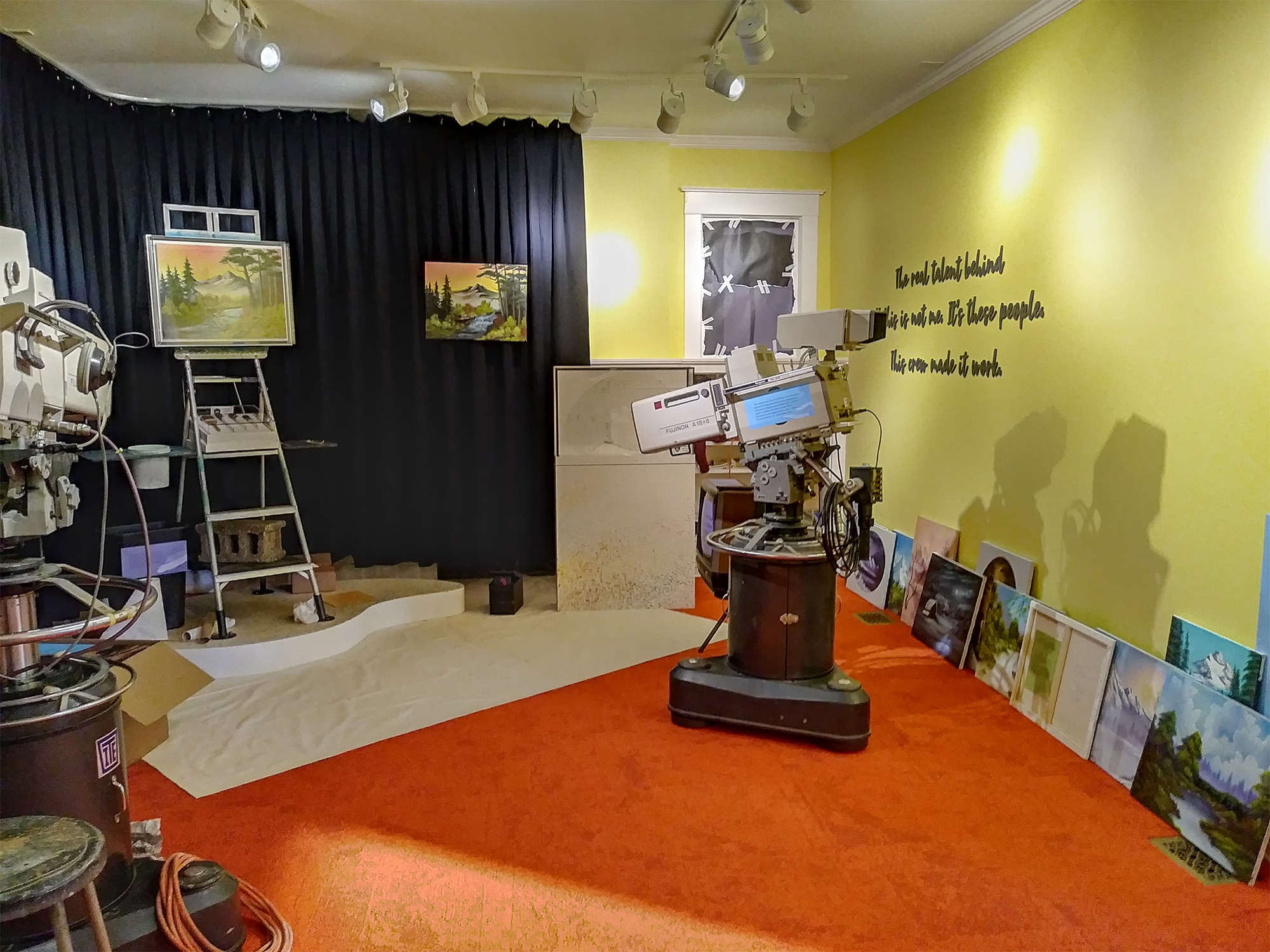
Experience the Bob Ross Experience: A New Museum Open in the TV Painter’s Former Studio Home

Bob Ross is as renowned for the gen­tle encour­age­ment of his voice as for his speedy tech­nique: indeed, these very qual­i­ties are syn­ony­mous with the name “Bob Ross.” His revival in recent years has as much to do with the de-stress­ing effects of his permed onscreen per­sona as with our awe, iron­ic or oth­er­wise, at his kitschy pic­ture-per­fect land­scapes in under an hour. He’s become as much a saint of pub­lic tele­vi­sion as Mr. Rogers and even more of an inter­net icon.

But unlike most oth­er fan­doms, the devot­ed lovers of Bob Ross have had no place to call their own. They might show up in Bob Ross cos­play at com­ic con. Yet no Bob Ross Con has made the scene. Leave it to Ross’s orig­i­nal Joy of Paint­ing stu­dio to fill the gap with a muse­um ded­i­cat­ed to the paint­ing instruc­tor. The Bob Ross Expe­ri­ence is part of a larg­er cam­pus of build­ings called Min­netrista in Muncie, Indi­ana, found­ed by the Ball fam­i­ly of Ball mason jars. It’s an “immer­sive exhib­it,” fea­tur­ing “orig­i­nal paint­ings and arti­facts” and “inspir­ing vis­i­tors with Bob’s mes­sage of fear­less cre­ativ­i­ty.”

What more could you want from a Bob Ross muse­um? Well, maybe a ful­ly-online expe­ri­ence these days. For now, you’ll have to make the trip to Muncie, where locals pay $8 a tick­et (kids $6, 3 & under are free) and non-res­i­dents shell out $15 ($12 per kid, etc). There may be nowhere else you can see Ross’s hap­py lit­tle trees in per­son. As Ayun Hal­l­i­day wrote here recent­ly, “sales of his work hov­er around zero.” Almost all of his paint­ings, save a few owned by the Smith­son­ian and a few pri­vate indi­vid­u­als, reside in stor­age in North­ern Vir­ginia, where an exhib­it came and went last year.

Ross him­self, who honed his method dur­ing short breaks in the Air Force, hard­ly ever exhib­it­ed in his life­time; he was a made-for-TV painter with a small mer­chan­dis­ing empire to match. Now, fans can make the pil­grim­age to his cre­ative TV home at the Lucius L. Ball house. Swoon over per­son­al relics like his keys and hair pick and, of course, “the artist’s palette knife, easel, and brush­es,” writes Colos­sal. “Many of the arti­facts are free to touch.” A cur­rent exhi­bi­tion at the Expe­ri­ence, “Bob Ross at Home” through August 15, 2021, show­cas­es “a few dozen of the artist’s can­vas­es, many on loan from Muncieans who got the works direct­ly from Ross.”

Not only can you hang out on set and view Ross’s paint­ings and per­son­al effects, but you can also, Art­net reports, “sign up for $70 mas­ter class­es with cer­ti­fied Bob Ross instruc­tors.” That’s $70 more than it costs to watch the mas­ter him­self on YouTube, but if you’ve already made the trip…. One only hopes the instruc­tors can chan­nel what George Buss, vice pres­i­dent of the Expe­ri­ence, calls Ross’s best qual­i­ty, his gen­tle fear­less­ness: “He takes what looks like a mis­take and turns it into some­thing beau­ti­ful.” And that, friends, is the true joy of the Bob Ross expe­ri­ence.

via Colos­sal

Relat­ed Con­tent:  

Watch Every Episode of Bob Ross’ The Joy Of Paint­ing Free Online: 403 Episodes Span­ning 31 Sea­sons

What Hap­pened to the 1200 Paint­ings Paint­ed by Bob Ross? The Mys­tery Has Final­ly Been Solved

Watch 13 Come­di­ans Take “The Bob Ross Chal­lenge” & Help Raise Mon­ey for The Leukemia & Lym­phoma Soci­ety

Josh Jones is a writer and musi­cian based in Durham, NC. Fol­low him at @jdmagness

Watch the Making of Japanese Woodblock Prints, from Start to Finish, by a Longtime Tokyo Printmaker

There are a few names any­one inter­est­ed in Japan­ese wood­block print­ing today can’t help but hear soon­er or lat­er: Uta­gawa Hiroshige, Kat­sushi­ka Hoku­sai, Kita­gawa Uta­maro, David Bull. That last, you may have guessed, is not the name of an 18th-cen­tu­ry Japan­ese man. In fact, David Bull still walks among us today, espe­cial­ly if we hap­pen to live in the old Asakusa sec­tion of Tokyo, where he keeps his wood­block-print stu­dio Mokuhankan.

Born in Eng­land and raised in Cana­da, Bull dis­cov­ered the world of ukiyo‑e, those Japan­ese “pic­tures of the float­ing world,” in his late twen­ties. Just a few years after first try­ing his hand, with­out for­mal train­ing, at mak­ing his own prints, he moved to the Japan­ese cap­i­tal to ded­i­cate him­self to the form. Today, on his per­son­al site and Youtube chan­nel, he offers a wealth of Eng­lish-lan­guage resources on the art and craft of the Japan­ese wood­block print.

In the video up top, he pro­vides expert com­men­tary on the mak­ing of one par­tic­u­lar print by a young Mokuhankan print­er named Nat­su­ki Suga. The work is bro­ken into ten stages, begin­ning with the appli­ca­tion of the basic orange back­ground col­or, mov­ing on through the addi­tion of sky blues and tea-field greens (not to men­tion shad­ows, shad­ows, and “more shad­ows”), all the way through to the final emboss­ing of the title and artist’s name. The result, revealed at the end in a stage-by-stage time lapse, is a vivid and idyl­lic scene aes­thet­i­cal­ly bal­anced between ukiyo‑e tra­di­tion and the present-day art styles.

In the video just above, you can see Bull him­self pro­vide com­men­tary as he makes a wood­block print of his own — in real time, from start to fin­ish, with no cuts. Orig­i­nal­ly shot as a live Twitch stream, it shows Bul­l’s entire process from blank block to com­plet­ed print, which takes near­ly three and a half hours. That may actu­al­ly seem like a sur­pris­ing­ly short time in which to cre­ate a work of art, but then, Bull has been at this for near­ly 40 years.

Bul­l’s expe­ri­ence also comes through in his abil­i­ty to explain his tech­niques and tell sto­ries about the Japan­ese wood­block­’s artis­tic devel­op­ment as well as his own. What may seem like a video of inter­est only to ukiyo‑e spe­cial­ists has in fact racked up, as of this writ­ing, more than 1.2 mil­lion views on Youtube alone. But then, it isn’t entire­ly unknown for a soft-spo­ken artist ded­i­cat­ed to a high­ly spe­cif­ic form to win a wide audi­ence with his edu­ca­tion­al pro­duc­tions. “I’m com­plete­ly cer­tain that Bob Ross has­n’t died,” as one com­menter puts it. “He just got a new hair­cut.”

Relat­ed Con­tent:

Enter a Dig­i­tal Archive of 213,000+ Beau­ti­ful Japan­ese Wood­block Prints

Down­load 2,500 Beau­ti­ful Wood­block Prints and Draw­ings by Japan­ese Mas­ters (1600–1915)

Down­load Hun­dreds of 19th-Cen­tu­ry Japan­ese Wood­block Prints by Mas­ters of the Tra­di­tion

See Clas­sic Japan­ese Wood­blocks Brought Sur­re­al­ly to Life as Ani­mat­ed GIFs

Watch an Art Con­ser­va­tor Bring Clas­sic Paint­ings Back to Life in Intrigu­ing­ly Nar­rat­ed Videos

Watch Every Episode of Bob Ross’ The Joy Of Paint­ing Free Online: 403 Episodes Span­ning 31 Sea­sons

Based in Seoul, Col­in Mar­shall writes and broad­casts on cities, lan­guage, and cul­ture. His projects include the Sub­stack newslet­ter Books on Cities, the book The State­less City: a Walk through 21st-Cen­tu­ry Los Ange­les and the video series The City in Cin­e­ma. Fol­low him on Twit­ter at @colinmarshall, on Face­book, or on Insta­gram.

Hear a Rare First Recording of Janis Joplin’s Hit “Me and Bobby McGee,” Written by Kris Kristofferson

“You can’t think of that song with­out think­ing of Janis,” says Kris Kristof­fer­son of Janis Joplin’s raw, bit­ter­sweet, posthu­mous­ly released “Me and Bob­by McGee.” Kristof­fer­son, who wrote the song, only heard Joplin’s ver­sion after her death, when he returned to Cal­i­for­nia after play­ing the Isle of Wight in 1970. He met the pro­duc­er of Joplin’s last album, Pearl, in L.A., who told him to come to the stu­dio “to play me her record­ing of ‘Bob­by McGee.’ And it just blew me away. Just blew me away.” Above, you can hear a rare record­ing, pos­si­bly the first take, and pos­si­bly one of the ear­ly ver­sions Kristof­fer­son heard in the stu­dio.

Many peo­ple have assumed Kristof­fer­son wrote the song for Joplin, but that’s not the case: he didn’t know she was record­ing it at all. It was writ­ten, in 1969, about a woman, Bar­bara “Bob­by” McK­ee, who worked as a sec­re­tary in song­writer Fred Foster’s build­ing. Fos­ter gave Kristof­fer­son the title “Me and Bob­by McK­ee,” Kristof­fer­son mis­heard the last name, assumed it was a man, and wrote the famous lyrics, inspired not by Bar­bara but by Fed­eri­co Fellini’s La Stra­da, in which Antho­ny Quinn and Giuli­et­ta Masi­na trav­el togeth­er on a motor­cy­cle as a per­form­ing duo. (The Louisiana ref­er­ences come in because Kristof­fer­son was work­ing as a heli­copter pilot in the Gulf at the time.)

In La Stra­da, Quinn “got to the point where he couldn’t put up with [Masi­na] any­more and left her by the side of the road while she was sleep­ing,” says Kristof­fer­son. Lat­er, when he finds out she has died, he “goes to a bar and gets in a fight. He’s drunk and ends up howl­ing at the stars on the beach.” In a par­al­lel to this mourn­ful scene, Tom Brei­han at Stere­ogum describes how Kristof­fer­son, after hear­ing Joplin’s ver­sion of the song, “spent the rest of the day walk­ing around Los Ange­les, cry­ing. He prob­a­bly wasn’t alone. A lot of peo­ple prob­a­bly cried when they heard Joplin singing ‘Me and Bob­by McGee.’” A lot of peo­ple still do.

A long list of famous singers has cov­ered the song, orig­i­nal­ly record­ed by Roger Miller—just about any­one you might name in folk and coun­try. But Joplin “made it her own,” Kristof­fer­son says, and it’s no emp­ty cliché. Writ­ten as a coun­try song, Joplin doesn’t quite sing it that way, and she “doesn’t real­ly sing it as blues or psy­che­del­ic rock either,” writes Brei­han. “Instead, she just lets it rip, her phras­ing imme­di­ate and instinc­tive,” howl­ing at the stars like Antho­ny Quinn. “Joplin might’ve nev­er hitch­hiked across the coun­try with any­one named Bob­by McGee,” but she “did what great inter­preters do.” She made the song “about Janis Joplin, because that’s what Janis Joplin made it.”

Relat­ed Con­tent:

Watch Janis Joplin’s Final Inter­view Get Reborn as an Ani­mat­ed Car­toon

Janis Joplin’s Last TV Per­for­mance & Inter­view: The Dick Cavett Show (1970)

Janis Joplin & Tom Jones Bring the House Down in an Unlike­ly Duet of “Raise Your Hand” (1969)

Josh Jones is a writer and musi­cian based in Wash­ing­ton, DC. Fol­low him @jdmagness

When ABBA Wrote Music for the Cold War-Themed Musical, Chess: “One of the Best Rock Scores Ever Produced for the Theatre” (1984)

Chess is amaz­ing. The sim­plic­i­ty of its char­ac­ters and plot (cap­ture the king!) can be appre­ci­at­ed and under­stood by chil­dren; the com­plex­i­ty of its tac­tics can con­sume an adult life. Despite its medieval origins—and stumpers for us mod­erns like the strate­gic impor­tance of a bish­op on the battlefield—chess remains as much a potent alle­go­ry for pow­er and its tac­tics as it was 1,500 years ago in India when it was called “chat­u­ran­ga.” 

The game has inspired great works of lit­er­a­ture, film, and arguably every cre­ative move made by Mar­cel Duchamp. So why not a musi­cal? A musi­cal with a Cold War-era chess bat­tle between a Bob­by Fis­ch­er-like char­ac­ter and a Russ­ian grand­mas­ter loose­ly based on Boris Spassky, with music by the guys from ABBA and lyrics by Tim Rice?

The dra­ma is inher­ent, both with­in the game itself and its geopo­lit­i­cal sig­nif­i­cance in 1984, the year the con­cept album above debuted in advance of the show’s first Euro­pean tour, a fundrais­ing maneu­ver also employed before the open­ing of much bet­ter-known Rice shows like Jesus Christ Super­star and Evi­ta. While Andrew Lloyd Web­ber may be an excel­lent stage com­pos­er, though not to everyone’s taste, par­ti­sans of Mam­ma Mia! might agree with crit­ic William Hen­ry, who wrote at Time that Chess, the musi­cal is “one of the best rock scores ever pro­duced for the the­atre.”

The show itself, Hen­ry wrote, was “dif­fi­cult, demand­ing and reward­ing” and pushed “the bound­aries of the form.” Accord­ing to a site doc­u­ment­ing its his­to­ry:

Chess at Lon­don’s Prince Edward The­atre was a love sto­ry set amid a world cham­pi­onship chess match, the ten­sions of the Cold War, and a media cir­cus. It ran for three years. When the Berlin Wall fell, a rad­i­cal­ly altered ver­sion of the show was pre­sent­ed on Broad­way and failed.

The new ver­sion, with lyrics by Richard Nel­son, ran for only two months. Its unpop­u­lar­i­ty did not tar­nish the rep­u­ta­tion of Chess, which was revived to great acclaim sev­er­al times after­ward. The show may not have had the wide­spread cul­tur­al res­o­nance of Hamil­ton or the grav­i­tas of Nixon in Chi­na, but Chess has inspired devo­tion among musi­cal fans, rank­ing sev­enth in a recent BBC lis­ten­er poll on the top ten essen­tial musi­cals. It is now, 34 years after its Lon­don debut, run­ning in Moscow, in a Russ­ian trans­la­tion, with “rewrites,” notes MetaFil­ter user Shakhmaty, “that human­ize its KGB antag­o­nist.”

Chess pro­duced the hit “I Know Him So Well,” a duet by Elaine Paige and Bar­bara Dick­son that “held the Num­ber One spot on the UK sin­gles charts for 4 weeks and won the Ivor Nov­el­lo Award as the Best Sell­ing Sin­gle,” Ice the Site writes. A VHS video appeared in 1985 fea­tur­ing the per­form­ers on the album singing that song and oth­ers from the show like “One Night in Bangkok” (above), which also became a “world­wide smash.”

Like Mam­ma Mia!, Chess is a med­ley, of sorts— in this case of musi­cal styles rather than great­est pop hits. A con­tem­po­rary New York Times review called the con­cept album “a sump­tu­ous­ly record­ed… grandiose pas­tiche that touch­es half a dozen bases, from Gilbert and Sul­li­van to late Rodgers and Ham­mer­stein, from Ital­ian opera to trendy syn­the­siz­er-based pop, all of it lav­ish­ly arranged for the Lon­don Sym­pho­ny Orches­tra with splashy elec­tron­ic embell­ish­ments.” Hear the full album the top of the post, read a sum­ma­ry of the show’s plot here, and see Tim Rice and ABBA’s Bjorn Ulvaeus pro­mote the show in 1986 on a British morn­ing show just above.

Relat­ed Con­tent: 

When John Cage & Mar­cel Duchamp Played Chess on a Chess­board That Turned Chess Moves Into Elec­tron­ic Music (1968)

A Beau­ti­ful Short Doc­u­men­tary Takes You Inside New York City’s Last Great Chess Store

Gar­ry Kas­parov Now Teach­ing an Online Course on Chess

Josh Jones is a writer and musi­cian based in Durham, NC. Fol­low him at @jdmagness

Powell’s Books Unveils a New Perfume That Smells Like Old Books

Miss­ing the scent of used book stores dur­ing quar­an­tine? Pow­ell’s Books has you cov­ered with their new uni­sex fra­grance: “Like the crim­son rhodo­den­drons in Rebec­ca, the heady fra­grance of old paper cre­ates an atmos­phere ripe with mood and pos­si­bil­i­ty. Invok­ing a labyrinth of books; secret libraries; ancient scrolls; and cognac swilled by philoso­pher-kings, Powell’s by Powell’s deliv­ers the wear­er to a place of won­der, dis­cov­ery, and mag­ic hereto­fore only known in lit­er­a­ture.” You can pre-order it here

via Boing Boing

Relat­ed Con­tent:

The Chem­istry Behind the Smell of Old Books: Explained with a Free Info­graph­ic

Spike Jonze Presents a Stop Motion Film for Book Lovers

Wear­able Books: In Medieval Times, They Took Old Man­u­scripts & Turned Them into Clothes

Old Book Illus­tra­tions: An Online Data­base Lets You Down­load Thou­sands of Illus­tra­tions from the 19th & 20th Cen­turies

« Go BackMore in this category... »
Quantcast