John Cleese Presents His 5‑Step Plan for Shorter, More Productive Meetings (1976)

Let’s face it, meet­ings are bor­ing at best and at worst, chaot­ic, volatile, and poten­tial­ly vio­lent. And let’s also face it: to get through life as func­tion­ing adults, we’re going to have to sit through one or two of them — or even one or two of them a week.

Maybe we’re the one who calls the meet­ings, and maybe they all feel like a waste of time. One solu­tion is to have more infor­mal meet­ings. This can be espe­cial­ly tempt­ing in the age of work-from-home, when it’s impos­si­ble to know how many meet­ing atten­dees are wear­ing pants. Few­er rules can raise the spon­tane­ity quo­tient, but allow­ing for the unex­pect­ed can invite dis­as­ter as well as epiphany.

On the oth­er end of the scale, we have the for­mal­i­ty of par­lia­men­tary rules of order, such as those intro­duced by U.S. Army offi­cer Hen­ry Mar­tyn Robert in 1876. Robert, whose father was the first pres­i­dent of More­house Col­lege, gained a wealth of expe­ri­ence with unpro­duc­tive meet­ings as he trav­eled around the coun­try with the Army. One par­tic­u­lar meet­ing became a defin­ing expe­ri­ence, as one account has it:

While in San Fran­cis­co, the local leader of his com­mu­ni­ty didn’t show up for a church meet­ing. Hen­ry Robert was asked to pre­side over the town hall (with­out any pri­or notice). Let’s just say that on this par­tic­u­lar evening in 1876, he did a bad job. An hour into the meet­ing, peo­ple were scream­ing and the church actu­al­ly erupt­ed into open con­flict.

Sad­ly, this sort of thing has become almost rou­tine at town halls and school board meet­ings. But it needn’t be so at the office. Nor, says John Cleese in the brief video above, do meet­ings need to fol­low the for­mal­i­ty of par­lia­men­tary pro­ce­dure.

Cleese’s rules are sim­pler even than the sim­pli­fied Roberts or Rosen­berg’s Rules of Order, an even more sim­pli­fied ver­sion of Robert’s Rules. Fur­ther­more, Cleese avoids using words like “Rules” which can be a turn-off in our egal­i­tar­i­an times. Instead, he presents us with a “5‑Step Plan” for hold­ing bet­ter and short­er meet­ings.

1. Plan — Clear your mind about the pre­cise objec­tives of the meet­ing. Be clear why you need it and list the sub­jects.
2. Inform — Make sure every­one knows exact­ly what is being dis­cussed, why, and what you want from the dis­cus­sion. Antic­i­pate what infor­ma­tion and peo­ple may be need­ed and make sure they’re there.
3. Pre­pare — Pre­pare the log­i­cal sequence items. Pre­pare the time allo­ca­tion to each item on the basis of its impor­tance not its urgency.
4. Struc­ture and Con­trol — Take the evi­dence stage before the inter­pre­ta­tion stage and that before the action stage and stop peo­ple jump­ing ahead or going back over ground.
5. Sum­ma­rize all deci­sion and record them straight away with the name of the per­son respon­si­ble for any action

Easy, right? Well, maybe not so easy in prac­tice, but these steps can, at the very least, illu­mi­nate what’s wrong with your meet­ings, which may cur­rent­ly resem­ble one of Cleese’s many par­o­dies of busi­ness cul­ture. Nobody video­phoned it in at the time, but try­ing to fig­ure out who’s sup­posed to be doing what can still take up an after­noon. Let Cleese’s five steps bring order to the chaos.

Relat­ed Con­tent: 

John Cleese on How “Stu­pid Peo­ple Have No Idea How Stu­pid They Are” (a.k.a. the Dun­ning-Kruger Effect)

John Cleese Revis­its His 20 Years as an Ivy League Pro­fes­sor in His New Book, Pro­fes­sor at Large: The Cor­nell Years

Mon­ty Python’s John Cleese Cre­ates Ads for the Amer­i­can Philo­soph­i­cal Asso­ci­a­tion

John Cleese’s Very Favorite Com­e­dy Sketch­es

Josh Jones is a writer and musi­cian based in Durham, NC. Fol­low him at @jdmagness

Watch the Jackson 5’s First Appearance on The Ed Sullivan Show (1969)

Who dis­cov­ered the Jack­son 5?

Motown founder Berry Gordy?

Empress of Soul Gladys Knight?

Diva Diana Ross?

Every­one in atten­dance for Ama­teur Night at the Apol­lo on August 13, 1967?

For many unsus­pect­ing Amer­i­cans, the answer may as well have been tele­vi­sion host Ed Sul­li­van, who intro­duced the “sen­sa­tion­al group” of five young broth­ers from Gary, Indi­ana to view­ers in Decem­ber 1969, two years after their Ama­teur Night tri­umph. Thir­teen years ear­li­er, a wall of sound ema­nat­ing from a live in-stu­dio audi­ence of teenage girls told Sullivan’s home view­ers that anoth­er young sen­sa­tion — Elvis Pres­ley — must be some­thing spe­cial.

The Jack­son 5 need­ed no such help.

While there are many close-ups of their fresh young faces, the con­trol room wise­ly chose to zoom out much of the time, in appre­ci­a­tion of the broth­ers’ pre­ci­sion chore­og­ra­phy.

The bright­est star was the youngest, eleven-year-old Michael, tak­ing lead vocals in pur­ple fedo­ra and fringed vest on a cov­er of Sly and the Fam­i­ly Stone’s “Stand.”

Jack­ie, Tito, Jer­maine, and Mar­lon pro­vide sup­port for a bit of hokum that posi­tions Michael at the cen­ter of an ele­men­tary school romance, by way of intro­duc­tion to a full throat­ed cov­er of Smokey Robinson’s “Who’s Lov­ing You”:

We toast­ed our love dur­ing milk break. I gave her my cook­ies! We fell out dur­ing fin­ger­paint­ing. 

Author Carvell Wal­lace reflects on this moment in his 2015 New York­er review of Steve Knopper’s biog­ra­phy MJ: The Genius of Michael Jack­son:

Halfway through, he for­gets his lines and freezes, look­ing back at his old­er broth­ers for help. It’s an alarm­ing­ly vul­ner­a­ble moment, one only pos­si­ble in the era of live tele­vi­sion. You feel bad for him. It sud­den­ly doesn’t seem right that a kid should be made to per­form live in front of an entire coun­try. Yet he some­how finds his way back and stum­bles through.

When the music starts, we see some­thing else entire­ly. The first note he sings is as con­fi­dent, sure, and pur­pose­ful as any adult could ever be. He trans­forms from ner­vous child at a tal­ent show into time­less embod­i­ment of long­ing. Not only does he sing exact­ly on key but he appears to sing from the very bot­tom of his heart. He stares into the cam­era, shakes his head, and blinks back tears in per­fect imi­ta­tion of a six­ties soul man. And it feels, for a moment, as though there are two dif­fer­ent beings here. One is a child—a smart kid, to be sure, and cute, but not more spe­cial than any oth­er child. He is sub­ject to the same laws of life—pain, age, con­fu­sion, fear—as we all are. The oth­er being seems to be a spir­it of sorts, one who knows only the truest expres­sion of human feel­ing. And this spir­it appears to have ran­dom­ly inhab­it­ed the body of this par­tic­u­lar mor­tal kid. In so doing, it has sen­tenced him to a life­time of inde­scrib­able enchant­ment and con­sum­mate suf­fer­ing.

Michael’s explo­sive per­for­mance of the Jack­son 5’s first nation­al sin­gle, “I Want You Back,” released just two months before their Sul­li­van Show appear­ance, gives us that “spir­it” in full force.

It’s also not hard to imag­ine that the broth­ers’ thrilling­ly exe­cut­ed chore­og­ra­phy is the result of a lit­er­al­ly pun­ish­ing rehearsal reg­i­men, a fac­tor of the King of Pop’s trou­bled lega­cy.

The Sul­li­van Show appear­ance ensured that there would be no stop­ping this train. Five months lat­er, when the Jack­sons returned to the Sul­li­van Show, “I Want You Back” had sold over a mil­lion copies, as had “ABC,” which they per­formed as a med­ley.

Boy­hood is fleet­ing, mak­ing Jack­son­ma­nia a carpe diem type sit­u­a­tion.

The peri­od from 1969 to 1972 saw an onslaught of Jack­son 5‑related merch and a funky Sat­ur­day morn­ing car­toon whose pilot tart­ed up the Diana Ross ori­gin sto­ry with an escaped pet snake.

It was good while it last­ed.

Relat­ed Con­tent:

Elvis’ Three Appear­ances on The Ed Sul­li­van Show: Watch His­to­ry in the Mak­ing and from the Waist Up (1956)

The Ori­gins of Michael Jackson’s Moon­walk: Vin­tage Footage of Cab Cal­loway, Sam­my Davis Jr., Fred Astaire & More

The Cho­rus Project Fea­tures Teenagers Per­form­ing Hits by the Kinks, David Byrne, the Jack­son 5 & More

Ayun Hal­l­i­day is the Chief Pri­maol­o­gist of the East Vil­lage Inky zine and author, most recent­ly, of Cre­ative, Not Famous: The Small Pota­to Man­i­festo.  Fol­low her @AyunHalliday.

Board Game Ideology — Pretty Much Pop: A Culture Podcast #108

As board games are becom­ing increas­ing­ly pop­u­lar with adults, we ask: What’s the rela­tion­ship between a board game’s mechan­ics and its nar­ra­tive? Does the “mes­sage” of a board game mat­ter?

Your host Mark Lin­sen­may­er is joined by game design­er Tom­my Maranges, edu­ca­tor Michelle Par­rinel­lo-Cason, and ex-philoso­pher Al Bak­er to talk about re-skin­ning games, design­ing play­er expe­ri­ences, play styles, game com­plex­i­ty, and more.

Some of the games we men­tion include Puer­to Rico, Monop­oly, Set­tlers of Catan, Sor­ry, Munchkin, Sushi Go, Wel­come To…, Code­names, Pan­dem­ic, Occam Hor­ror, Ter­ra Mys­ti­ca, chess, Tick­et to Ride, Splen­dor, Pho­to­syn­the­sis, Spir­it Island, Escape from the Dark Cas­tle, and Wingspan.

Some arti­cles that fed our dis­cus­sion includ­ed:

The two games Tom­my cre­at­ed that we bring up are Secret Hitler and Inhu­man Con­di­tions.

This episode includes bonus dis­cus­sion you can access by sup­port­ing the pod­cast at patreon.com/prettymuchpop or by choos­ing a paid sub­scrip­tion through Apple Pod­casts. This pod­cast is part of the Par­tial­ly Exam­ined Life pod­cast net­work.

Pret­ty Much Pop: A Cul­ture Pod­cast is the first pod­cast curat­ed by Open Cul­ture. Browse all Pret­ty Much Pop posts.

Wunderkind Musician Nandi Bushell Pays Tribute to Charlie Watts, Playing All of the Tracks on “Gimme Shelter”

We’ve fea­tured 11-year-old Nan­di Bushell here before. Per­haps you’ll recall her epic drum bat­tle with Dave Grohl. Today she’s back, pay­ing trib­ute to Char­lie Watts and per­form­ing the indi­vid­ual tracks on the Stones’ “Gimme Shel­ter.” First comes the gui­tar; then the bass, per­cus­sion and vocals; and next the drums–all the while she’s hav­ing fun. And you will too. Enjoy.

If you would like to sup­port the mis­sion of Open Cul­ture, con­sid­er mak­ing a dona­tion to our site. It’s hard to rely 100% on ads, and your con­tri­bu­tions will help us con­tin­ue pro­vid­ing the best free cul­tur­al and edu­ca­tion­al mate­ri­als to learn­ers every­where. You can con­tribute through Pay­Pal, Patre­on, and Ven­mo (@openculture). Thanks!

Relat­ed Con­tent

The Rolling Stones’ “Gimme Shel­ter” Played by Musi­cians Around the World

Watch an Epic Drum Bat­tle, Pit­ting a 9‑Year-Old Girl Against Foo Fight­er Dave Grohl

Mick Jag­ger Tells the Sto­ry Behind ‘Gimme Shel­ter’ and Mer­ry Clayton’s Haunt­ing Back­ground Vocals

Mer­ry Clay­ton Tells the Sto­ry of Her Amaz­ing Back­ing Vocal on The Rolling Stones’ “Gimme Shel­ter”

Richard Pryor & George Carlin Appear Together on a Classic Episode of The Tonight Show Starring Johnny Carson

George Car­lin and Richard Pry­or nev­er got to star in a film togeth­er, so this appear­ance of the two on this 1981 Tonight Show clip is a great, rare chance to see two giants togeth­er. Actu­al­ly, make that three, because host John­ny Car­son shows why he set the stan­dard in that very Amer­i­can genre, the late night talk show. It’s also an oppor­tu­ni­ty to see how much has changed in the world of late night.

Late night talk shows are almost exclu­sive­ly a polit­i­cal affair these days. For many Amer­i­cans, this is the place to get their satir­i­cal take on the news in the open­ing mono­logue, pos­si­bly their only take. Some nights you can watch the three main net­works and sev­er­al pre­mi­um cable/streaming chan­nels and find the same news item, riffed on a dozen dif­fer­ent ways.

The Tonight Show with John­ny Carson wasn’t a “sim­pler time,” but it was very dif­fer­ent. More casu­al, def­i­nite­ly, and more per­son­able. I think that’s what comes across in this clip. Car­son knows both Car­lin and Pry­or and their par­tic­u­lar tal­ents.

Carlin’s rou­tine is pure­ly obser­va­tion­al. Cur­rent­ly he is a meme on many a boomer’s feed, but always late-stage Car­lin, the angry, nihilis­tic polit­i­cal come­di­an. (That’s not a bad thing, and inter­est­ing that he’s being claimed these days by both the Left and the Right). Here he’s still Class Clown Car­lin, with an elas­tic face, deliv­er­ing a ver­sion of his “stuff vs. crap” rou­tine, capped off with an out-of-nowhere abor­tion joke. It’s polit­i­cal in the vaguest sense.

His sit down with Car­son is more of a chance to riff on char­i­ty orga­ni­za­tion names, and Car­son lets him at it.

Pry­or is on to pro­mote Bustin’ Loose, his odd­ly sen­ti­men­tal 1981 com­e­dy. But all that’s on Carson’s and the audience’s mind is the after­math of the free­bas­ing inci­dent, where he doused him­self with rum and set him­self on fire while high on cocaine. He near­ly died.

The del­i­cate inter­change between Carson—who legit­i­mate­ly wants to know how Pry­or is doing—and Pry­or, who both mocks him­self, admits too much, and retreats behind a wall of humor, makes this essen­tial view­ing. Pry­or rem­i­nisces about his father and his time com­ing up through standup with Car­lin at Green­wich Village’s Cafe au Go-Go. He even admits, because why not, to lift­ing his ear­ly jokes as a com­ic from Bill Cos­by and Dick Gre­go­ry. The lat­ter “used to have stuff in Jet Mag­a­zine, you know, and that’s how I start­ed, read­ing his mate­r­i­al. I’d do it on stage. And that was my first break­through. I got a lot of laughs with his mate­r­i­al.”

Pry­or rides that line between telling on your­self and telling a fib.

And that last fas­ci­nat­ing shot: cred­its rolling over Car­son, the guests, and Ed McMa­hon, stand­ing around, hav­ing a chat, as if they’re wait­ing for the coat check atten­dant in the lob­by.

Ram­sey Ess, who wrote about the whole episode—includ­ing Carson’s decid­ed­ly non-polit­i­cal mono­logue— on Vul­ture in 2012, not­ed about the Pry­or inter­view:

When John­ny asks Richard about his dreams, you for­get about the audi­ence, you for­get about George Car­lin sit­ting over there and you sud­den­ly are brought into a place where this is an impor­tant ques­tion and you need to hear that answer, even though you nev­er would have thought to won­der about such a thing on your own. This inti­ma­cy, for me, is what made Car­son dif­fer­ent.

If you would like to sup­port the mis­sion of Open Cul­ture, con­sid­er mak­ing a dona­tion to our site. It’s hard to rely 100% on ads, and your con­tri­bu­tions will help us con­tin­ue pro­vid­ing the best free cul­tur­al and edu­ca­tion­al mate­ri­als to learn­ers every­where. You can con­tribute through Pay­Pal, Patre­on, and Ven­mo (@openculture). Thanks!

Relat­ed Con­tent:

George Carlin’s “Mod­ern Man” Rap

New Dig­i­tal Archive, “Richard Pryor’s Peo­ria,” Takes You Inside the Dark, Live­ly World That Shaped the Pio­neer­ing Come­di­an

George Car­lin Per­forms His “Sev­en Dirty Words” Rou­tine: His­toric and Com­plete­ly NSFW

Carl Sagan Tells John­ny Car­son What’s Wrong with Star Wars: “They’re All White” & There’s a “Large Amount of Human Chau­vin­ism in It” (1978)

Ted Mills is a free­lance writer on the arts who cur­rent­ly hosts the Notes from the Shed pod­cast and is the pro­duc­er of KCR­W’s Curi­ous Coast. You can also fol­low him on Twit­ter at @tedmills, and/or watch his films here.

What Makes the Mona Lisa a Great Painting: A Deep Dive

This past sum­mer we fea­tured a short video intro­duc­tion to the Mona Lisa here on Open Cul­ture. You’d think that if any paint­ing did­n’t need an intro­duc­tion, that would be the one. But the video’s cre­ator James Payne showed many of us just how much we still have to learn about Leonar­do’s most famous work of art — and indeed, per­haps the most famous work by any artist. On his Youtube chan­nel Great Art Explained, Payne offers clear and pow­er­ful analy­ses of paint­ings from van Gogh’s The Star­ry Night and Hop­per’s Nighthawks to Warhol’s Mar­i­lyn Dip­tych and Picas­so’s Guer­ni­ca. But there are some images to which a fif­teen-minute video essay can’t hope to do jus­tice.

In those cas­es, Payne has been known to fol­low up with a deluxe expand­ed edi­tion. Tak­ing on Hierony­mus Bosch’s The Gar­den of Earth­ly Delights, he fol­lowed up three indi­vid­ual fif­teen-minute videos — for a trip­tych, a neat union of form and sub­stance — with a full-length treat­ment of the whole work.

Payne’s full-length ver­sion of his Mona Lisa video more than dou­bles the length of the orig­i­nal. “This is the more com­pre­hen­sive ver­sion I always want­ed to do,” he notes, adding that it “uses some of the infor­ma­tion from the first film (but in high­er res­o­lu­tion with bet­ter sound and with clear­er graph­ics), as well as answer­ing the hun­dreds of ques­tions: Why does­n’t she have eye­brows? Is it a self-por­trait? Is she only famous because she was stolen? How do we know what he was think­ing?”

This time around, Payne has more to say about how Leonar­do cre­at­ed such a com­pelling por­trait on a tech­ni­cal lev­el, but also why he came to paint it in the first place. On top of that, the expand­ed for­mat gives him time to exam­ine the much more con­ven­tion­al por­traits Leonar­do’s con­tem­po­raries were paint­ing at the time, as well as what’s known as the Pra­do Mona Lisa. A depic­tion of the same sit­ter that may even have been paint­ed simul­ta­ne­ous­ly by one of Leonar­do’s stu­dents, it makes for an illu­mi­nat­ing object of com­par­i­son. Payne also gets into the 1911 theft and recov­ery that ulti­mate­ly did a great deal for the paint­ing’s rep­u­ta­tion, as well as its 1963 exhi­bi­tion in Amer­i­ca that, thanks to tele­vi­sion, turned it into a mass-media icon. By now we’ve all had more glimpses of the Mona Lisa more times than we can remem­ber, but it takes enthu­si­asm like Payne’s to remind us of all the ways we can tru­ly see it.

Relat­ed Con­tent:

What Makes Leonardo’s Mona Lisa a Great Paint­ing?: An Expla­na­tion in 15 Min­utes

Why Leonar­do da Vinci’s Great­est Paint­ing is Not the Mona Lisa

How the Mona Lisa Went From Being Bare­ly Known, to Sud­den­ly the Most Famous Paint­ing in the World (1911)

Orig­i­nal Por­trait of the Mona Lisa Found Beneath the Paint Lay­ers of da Vinci’s Mas­ter­piece

Great Art Explained: Watch 15 Minute Intro­duc­tions to Great Works by Warhol, Rothko, Kahlo, Picas­so & More

Based in Seoul, Col­in Mar­shall writes and broad­casts on cities, lan­guage, and cul­ture. His projects include the Sub­stack newslet­ter Books on Cities, the book The State­less City: a Walk through 21st-Cen­tu­ry Los Ange­les and the video series The City in Cin­e­ma. Fol­low him on Twit­ter at @colinmarshall or on Face­book.

An Introduction to the Chrysler Building, New York’s Art Deco Masterpiece, by John Malkovich (1994)

No old stuff for me, no bes­tial copy­ings of arch­es and columns and cor­nices. Me, I’m new.  
             — archi­tect William Van Alen, design­er of the Chrysler Build­ing

Many peo­ple claim the Chrysler Build­ing as their favorite New York City edi­fice and actor John Malkovich is one such:

It’s so crazy and vig­or­ous in its exe­cu­tion, so breath­tak­ing in its vision, so bril­liant­ly eccen­tric.

Malkovich, who’s not shy about tak­ing pot­shots at the city’s “vio­lence and filth” in the BBC doc­u­men­tary short above, rhap­sodizes over Detroit indus­tri­al­ist Wal­ter P. Chrysler’s “lat­ter day pyra­mid in Man­hat­tan.”

Malkovich’s unmis­tak­able voice, pegged by The Guardian as “waft­ing, whis­pery, and reedy” and which he him­self poo poos as sound­ing like it belongs to some­one who’s “labored under heavy nar­cotics for years,” pairs well with descrip­tions so plum­my, one has to imag­ine he penned them him­self. (No writer is cred­it­ed.)

After show­ing us the open-to-the-pub­lic lobby’s “deli­cious Art Deco fit­tings,” ceil­ing mur­al, and intri­cate, veneered ele­va­tor doors, Malkovich gives us a tour of some off-lim­its upper floors.

Unlike the Empire State Build­ing, which best­ed the Chrysler Building’s brief record as the world’s tallest build­ing (1046 feet, 77 sto­ries), you can’t pur­chase tick­ets to admire the view from the top.

But Malkovich has the star pow­er to gain access to Celes­tial, the sev­en­ty-first floor obser­va­to­ry that has been closed to the pub­lic since 1945 and is cur­rent­ly occu­pied by a pri­vate firm.

He also has a wan­der around the bar­ren Cloud Club, a sup­per club and speakeasy for gen­tle­man one per­centers. Its mish­mash of styles rep­re­sent­ed a con­ces­sion on archi­tect Van Alen’s part. The build­ing’s exte­ri­or was an ele­gant mod­ernist homage to Chrysler’s hub­caps and hood orna­ments, but between the 66th and 68th floor, the Cloud Club catered to the promis­cu­ous tastes of the rich and pow­er­ful — Tudor, Olde Eng­lish, Neo-Clas­si­cal…

The New York Times reports that it boast­ed what “was reput­ed to be the grand­est men’s room in all of New York.”

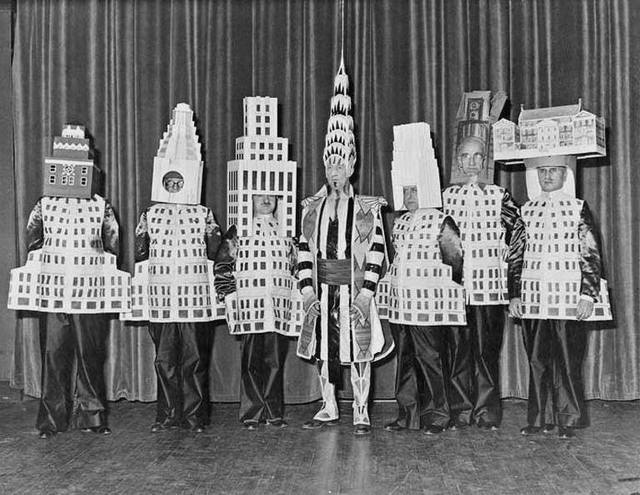
Duke Elling­ton sound­track and vin­tage footage fea­tur­ing Van Alen cos­tumed to resem­ble his famous cre­ation sup­ply a taste of the excite­ment that her­ald­ed the building’s 1930 open­ing, even if those with a fear of heights may swoon at the sight of pret­ty young things reclin­ing on high beams and per­form­ing oth­er feats of der­ring-do.

Malkovich, ever the cool cus­tomer, dis­plays his lack of ver­ti­go by casu­al­ly prop­ping a foot on the rooftop’s edge to com­mune with the icon­ic eagle-head­ed gar­goyles.

The building’s unique flour­ish­es caused a sen­sa­tion, but not every­one was a fan.

Malkovich clear­ly savors his swipe at crit­ics who decried the new build­ing as too shiny:

For­tu­nate­ly these crit­ics are long dead so we can’t even call their offices and taunt them as they should be taunt­ed.

He’s more tem­per­ate when it comes to author and social philoso­pher Lewis Mum­ford, whose beef with the sky­scraper is under­stand­able, giv­en the his­toric con­text — the stock mar­ket crashed the day after the secret­ly con­struct­ed spire was riv­et­ed into place:

Such build­ings show one of the real dan­gers of a plu­toc­ra­cy: it gives the mas­ters of our civ­i­liza­tion an unusu­al oppor­tu­ni­ty to exhib­it their bar­barous egos, with no sense of restraint or shame.

Near­ly one hun­dred years lat­er, bar­barous egos con­tin­ue to erect sky­scrap­ing tem­ples to their own van­i­ty, but as Malkovich points out, they’re far bland­er, if taller.

The Chrysler Build­ing is now wide­ly rec­og­nized as one of New York City’s most mag­nif­i­cent jew­els, and the Land­marks Preser­va­tion Com­mis­sion recent­ly approved plans to con­struct a pub­lic obser­va­tion deck on the Chrysler Building’s 61st floor, just above its icon­ic Art Deco eagles, though it’s too ear­ly to tell if it will be ready in time for a cen­ten­ni­al cel­e­bra­tion.

Until then, the gen­er­al pub­lic must con­tent itself with explor­ing the Chrysler Building’s lob­by dur­ing week­day busi­ness hours.

Relat­ed Con­tent: 

Why Do Peo­ple Hate Mod­ern Archi­tec­ture?: A Video Essay

Famous Archi­tects Dress as Their Famous New York City Build­ings (1931)

A New Inter­ac­tive Map Shows All Four Mil­lion Build­ings That Exist­ed in New York City from 1939 to 1941

Ayun Hal­l­i­day is the Chief Pri­ma­tol­o­gist of the East Vil­lage Inky zine and author, most recent­ly, of Cre­ative, Not Famous: The Small Pota­to Man­i­festo.  Fol­low her @AyunHalliday.

Michelangelo Entered a Competition to Put a Missing Arm Back on Laocoön and His Sons — and Lost

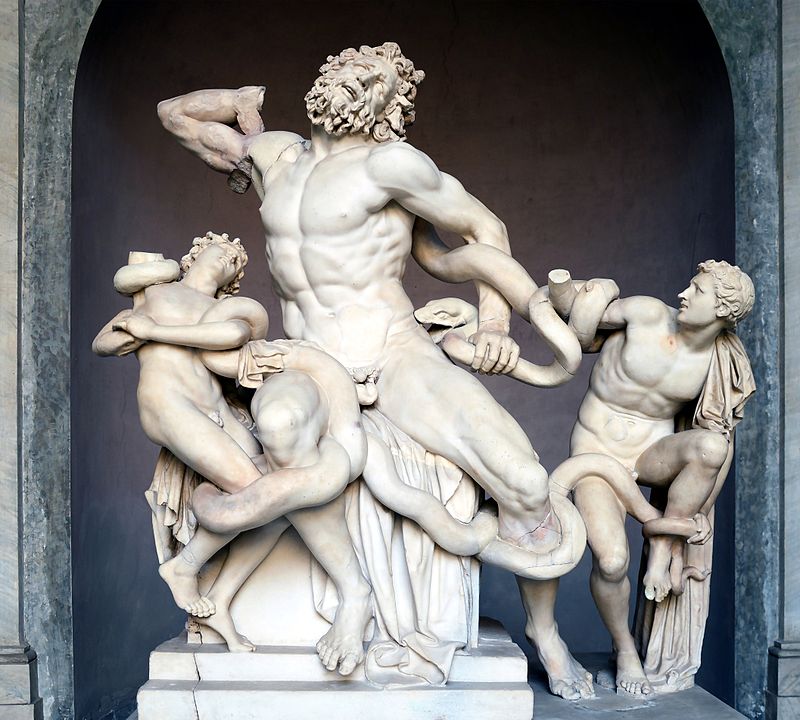
Not many ancient stat­ues are as well-known as Lao­coön and His Sons. Mas­ter­ful­ly sculpt­ed some time between the first cen­tu­ry BC and the first cen­tu­ry AD, it depicts the epony­mous Tro­jan priest in an ago­niz­ing strug­gle with the ser­pents that will kill one or both of his sons. The details of the tale vary depend­ing on the teller: Vir­gil describes Lao­coön as a priest of Posei­don who dared to attempt expos­ing the famous Tro­jan Horse ruse, and Sopho­cles describes him as a priest of Apol­lo who vio­lat­ed his vow of celiba­cy. Whichev­er ver­sion of the sto­ry he heard, the sculp­tor clear­ly drew from it pow­er­ful enough inspi­ra­tion to impress Pliny the Elder, in whose Nat­ur­al His­to­ry the piece fig­ures.

Even among the more artis­ti­cal­ly sophis­ti­cat­ed behold­ers of the Renais­sance, Lao­coön and His Sons proved a cap­ti­vat­ing piece of work. Unearthed from a Roman vine­yard in 1506, it looked to have weath­ered the inter­ven­ing mil­len­ni­um and half with much less wear and tear than most large arti­facts from antiq­ui­ty — though Lao­coön him­self was, con­spic­u­ous­ly, miss­ing an arm. Com­mis­sioned by Pope Julius II, Vat­i­can archi­tect Dona­to Bra­mante “held a con­test to see who could come up with the best ver­sion of the arm restora­tion,” writes Kaushik Pato­wary at Amus­ing Plan­et. “Michelan­ge­lo sug­gest­ed that Laocoön’s miss­ing arm should be bent back as if the Tro­jan priest was try­ing to rip the ser­pent off his back.”

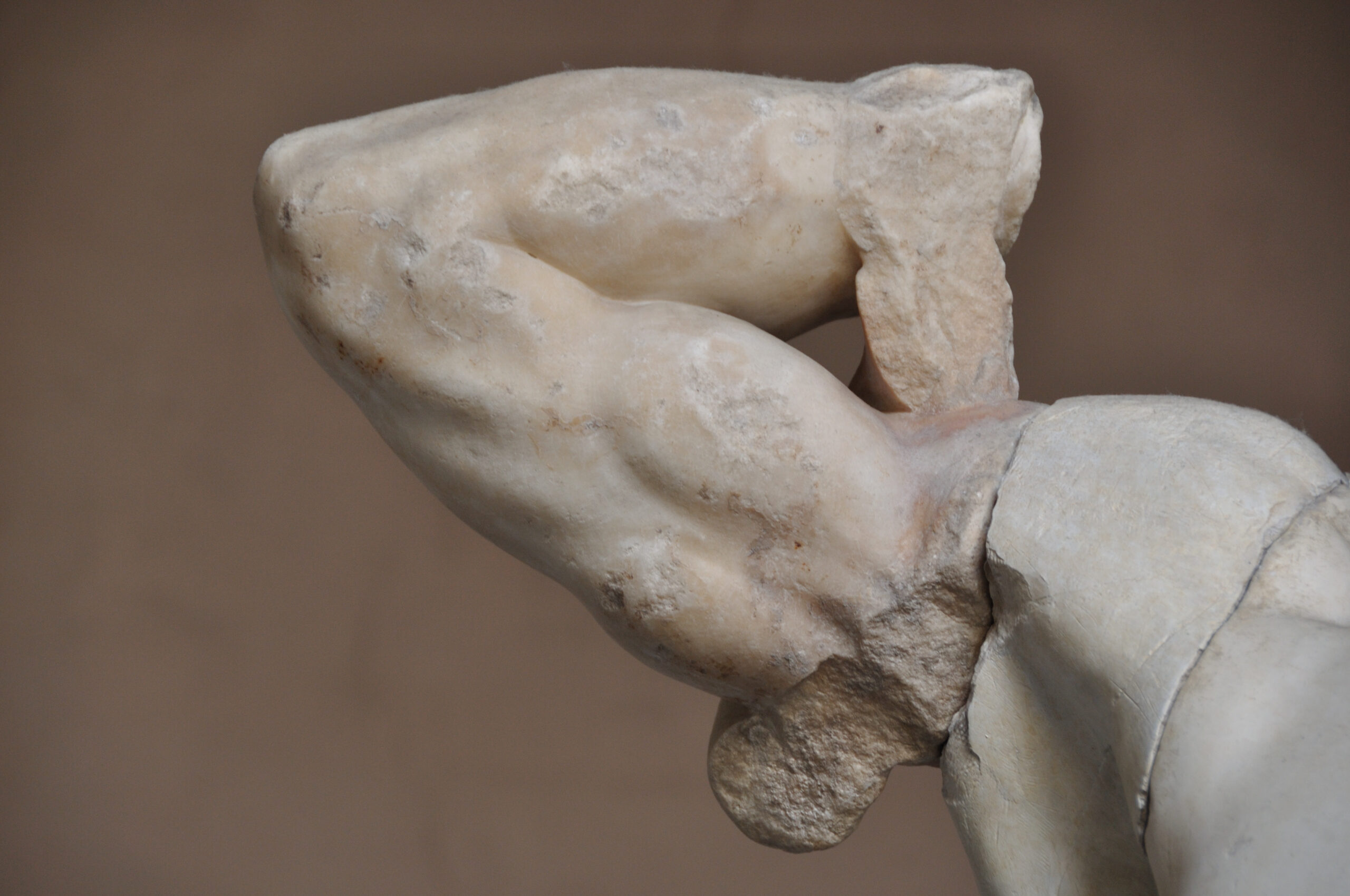
Michelan­ge­lo was­n’t the only Renais­sance man in com­pe­ti­tion: “Raphael, who was a dis­tant rel­a­tive of Bra­mante, favored an extend­ed arm. In the end, Jacopo Sanso­vi­no was declared the win­ner, whose ver­sion with an out­stretched arm aligned with Raphael’s own vision of how the stat­ue should look.” Lao­coön was thus even­tu­al­ly restored with his arm out­streched, and kept that way until, “in a strange twist of fate, an antique back­ward-bent arm was dis­cov­ered in a Roman work­shop in 1906, a few hun­dred meters from where the stat­ue group had been found four hun­dred years ear­li­er.” Posi­tioned just as Michelan­ge­lo had sug­gest­ed, this dis­em­bod­ied mar­ble limb turned out unmis­tak­ably to have come from Lao­coön and His Sons — but about three and a half cen­turies too late, alas, for Michelan­ge­lo to lord it over Raphael.

Relat­ed Con­tent:

A Creepy 19th Cen­tu­ry Re-Cre­ation of the Famous Ancient Roman Stat­ue, Lao­coön and His Sons

Michelangelo’s David: The Fas­ci­nat­ing Sto­ry Behind the Renais­sance Mar­ble Cre­ation

New Video Shows What May Be Michelangelo’s Lost & Now Found Bronze Sculp­tures

3D Scans of 7,500 Famous Sculp­tures, Stat­ues & Art­works: Down­load & 3D Print Rodin’s Thinker, Michelangelo’s David & More

Based in Seoul, Col­in Mar­shall writes and broad­casts on cities, lan­guage, and cul­ture. His projects include the Sub­stack newslet­ter Books on Cities, the book The State­less City: a Walk through 21st-Cen­tu­ry Los Ange­les and the video series The City in Cin­e­ma. Fol­low him on Twit­ter at @colinmarshall or on Face­book.

« Go BackMore in this category... »
Quantcast