“Using new technology, recently discovered documents and sophisticated investigative techniques, an international team—led by an obsessed retired FBI agent—has [seemingly] solved the mystery that has haunted generations since World War II: Who betrayed Anne Frank and her family? And why?” That retired FBI agent, Vince Pankoke, gets interviewed by 60 Minutes above. The story behind this new investigation also gets documented in a new book, The Betrayal of Anne Frank: A Cold Case Investigation.
Thi Nguyen (pronounced “TEE NWEEN”) teaches at the University of Utah, and his first book, 2020’s Games: Agency as Art, makes a case for games being treated as a serious object of study for philosophy. Thi sees game analysis as not just a sub-division in the philosophy of art (aesthetics), but in the philosophy of action. How do games relate to other human activities with constraints, like customs, language, and more specifically performative acts within language (like saying “I do” during a marriage ceremony, where you’re not just describing that you do something, but actually taking action)?
On this recording (episode 24 of the podcast), Thi joins philosophy podcaster Mark Linsenmayer of The Partially Examined Life and improvisational comedy coach Bill Arnett of the Chicago Improv Studio to talk about games and improv, and to engage in a couple of improv scenes that explore the connection between the two.
This is the third philosophy guest for the Philosophy vs. Improv podcast, which alternates between guests from the improv world, guests from the philosophy world, and no guest at all. The overall format involves a lesson from each host, which they teach to each other (and the guest) simultaneously. This often results in unexpected synchronicity given the connections between two disciplines that stress the analysis of language, living deliberately, and quick thinking.
For another philosophically rich episode, see episode #20 in which St. Lawrence University’s Jennifer L. Hansen appeared to discuss the many aspects of the concept of “The Other” in philosophy.
The importance of a good night’s sleep has been featured now and again here on Open Culture. But were a medieval European to visit our time, he’d probably ask — among other questions — if we didn’t mean a good night’s sleeps, plural. The evidence suggests that the people of the Middle Ages slept not straight through the night but in two distinct stretches. This practice has come back to light in recent years thanks to the research of historian Roger Ekirch, author of At Day’s Close: Night in Times Past. “Both phases of sleep lasted roughly the same length of time,” he writes in that book, “with individuals waking sometime after midnight before returning to rest.”
But “not everyone, of course, slept according to the same timetable. The later at night that persons went to bed, the later they stirred after their initial sleep; or, if they retired past midnight, they might not awaken at all until dawn. Thus, in ‘The Squire’s Tale’ in The Canterbury Tales, Canacee slept ‘soon after evening fell’ and subsequently awakened in the early morning following ‘her first sleep’; in turn, her companions, staying up much later, ‘lay asleep till it was fully prime’ (daylight).” Proof widespread “biphasic sleep” exists not just in Chaucer, but — for those who know where to look — all over the surviving documents from medieval Europe.
“In France, the initial sleep was the premier somme,” writes BBC.com’s Zaria Gorvett. “In Italy, it was primo sonno. In fact, Eckirch found evidence of the habit in locations as distant as Africa, South and Southeast Asia, Australia, South America and the Middle East”; the earliest reference he turned up comes from Homer’s Odyssey. Whatever their era of history, biphasic sleepers seem to have made good use of their intervals of wakefulness, known in English as “the watch.” During it, peasants worked, Christians prayed, and thieves thieved, “but most of all, the watch was useful for socializing – and for sex.” After a long day’s work, “the first sleep took the edge off their exhaustion and the period afterwards was thought to be an excellent time to conceive copious numbers of children.”
Biphasic sleep and its attendant habits didn’t survive the 19th century. The reasons, as Ekirch explains in the interview above, have to do with the Industrial Revolution, that great disruption of traditions followed since time immemorial. Along with “the increasing prevalence of artificial illumination both within homes and outside,” he says, “bedtimes were pushed back, even though people still awakened at the same time in the morning.” Apart from introducing new technologies, the Industrial Revolution “also changed peoples’ attitudes toward work,” making humanity “increasingly time-conscious: productivity, efficiency were the hallmarks of the 19th century.” We continue to set store by them today, though we also handle the disruption of sleep in our own, distinctively 21st-century ways. Would anyone care to explain to our medieval time-traveler the practice of midnight Twitter-scrolling?
Based in Seoul, Colin Marshall writes and broadcasts on cities and culture. His projects include the book The Stateless City: a Walk through 21st-Century Los Angeles and the video series The City in Cinema. Follow him on Twitter at @colinmarshall or on Facebook.
Khipus, the portable information archives created by the Inca, may stir up memories of 1970s macrame with their long strands of intricately knotted, earth-toned fibers, but their function more closely resembled that of a densely plotted computerized spreadsheet.
As Cecilia Pardo-Grau, lead curator of the British Museum’s current exhibitionPeru: a journey in time explains in the above Curators Corner episode, khipus were used to keep track of everything from inventories and census to historical narratives, using a system that assigned meaning to the type and position of knot, spaces between knots, cord length, fiber color, etc.
Much of the information preserved within khipus has yet to be deciphered by modern scholars, though the Open Khipu Repository — computational anthropologist Jon Clindaniel’s open-source database — makes it possible to compare the patterns of hundreds of khipus residing in museum and university collections.
Even in the Incan Empire, few were equipped to make sense of a khipu. This task fell to quipucamayocs, high born administrative officials trained since childhood in the creation and interpretation of these organic spreadsheets.
Fleet messengers known as chaskis transported khipus on foot between administrative centers, creating an information superhighway that predates the Internet by some five centuries. Khipus’ sturdy organic cotton or native camelid fibers were well suited to withstanding both the rigors of time and the road.
A 500-year-old composite khipu that found its way to British Museum organics conservator Nicole Rode prior to the exhibition was intact, but severely tangled, with a brittleness that betrayed its age. Below, she describes falling under the khipu’s spell, during the painstaking process of restoring it to a condition whereby researchers could attempt to glean some of its secrets.
Visit Museo Chileno de Arte Precolombino’s website to learn more about khipu in a series of fascinating short articles that accompanied their groundbreaking 2003 exhibit QUIPU: counting with knots in the Inka Empire.
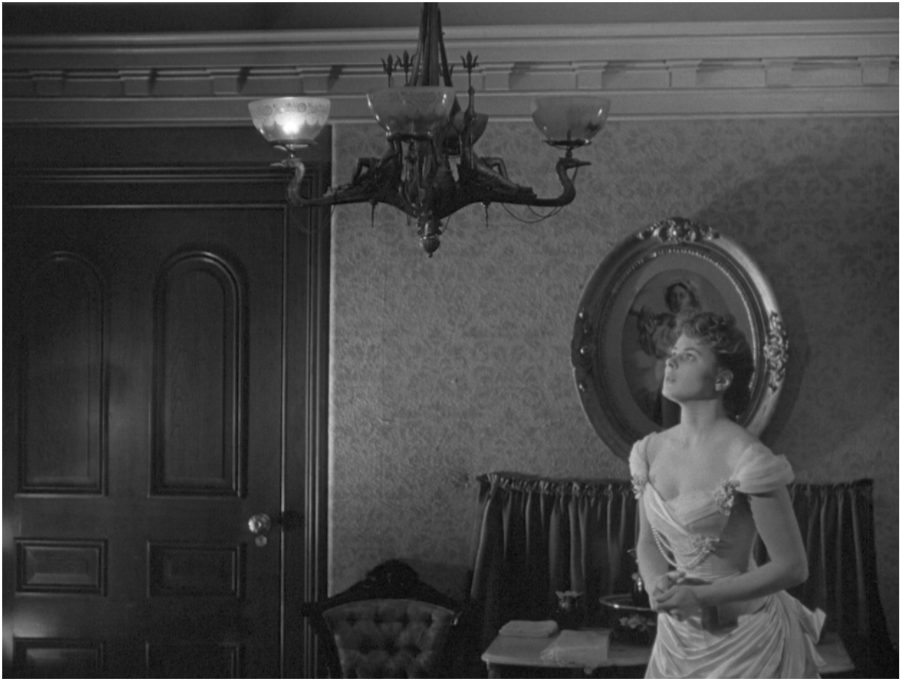
You’re not going out of your mind. You’re slowly and systematically being driven out of your mind. — Joseph Cotton to Ingrid Bergman in the 1944 film Gaslight.
Remember when the word “gaslighting” elicited knowing nods from black and white film buffs… and blank stares from pretty much everyone else?
Then along came 2016, and gaslighting entered the lexicon in a big way.
Merriam-Webster defines it as the “psychological manipulation of a person usually over an extended period of time that causes the victim to question the validity of their own thoughts, perception of reality, or memories and typically leads to confusion, loss of confidence and self-esteem, uncertainty of one’s emotional or mental stability, and a dependency on the perpetrator.”
Of course, you knew that already!
“Gaslighting” is unavoidable these days, five years after it was named 2016’s “most useful” and “likely to succeed” word by the American Dialect Society.
(“Normalize” was a runner up.)
As long as we’re playing word games, are you familiar with “denominalization”?
Also known as “verbing” or “verbification,” it’s the process whereby a noun is retooled as a verb.
Both figure prominently in Gaslight.
Have you seen the film?
Ingrid Bergman, playing opposite Charles Boyer, won an Academy award for her performance. A teenaged Angela Lansbury made her big screen debut.
In his review, The New York Times’ film critic Bosley Crowther steered clear of spoilers, while musing that the bulk of the theater-going public was probably already hip to the central conceit, following the successful Broadway run of Angel Street, the Patrick Hamilton thriller on which the film was based:
We can at least slip the information that the study is wholly concerned with the obvious endeavors of a husband to drive his wife slowly mad. And with Mr. Boyer doing the driving in his best dead-pan hypnotic style, while the flames flicker strangely in the gas-jets and the mood music bongs with heavy threats, it is no wonder that Miss Bergman goes to pieces in the most distressing way.
In the same review, Crowther sniped that Gaslight was “a no more illuminating title” than Angel Street.
Maybe that was true in 1944. Not anymore!
(Cunning linguists that we are, had the film retained the play’s title, 2022 may well have found us complaining that some villain tried to Angel Street us…)
In a column on production design for The Film Experience, critic Daniel Walber points out how Boyer destabilizes Bergman by fooling with their gas-powered lamps, and also how the film’s Academy Award-winning design team used the “constricting temporality” of a Victorian London lit by gas to set a foreboding mood:
Between the streetlights outside and the fixtures within, the mood is forever dimmed. The heaviness of the atmosphere brings us even closer to Paula’s mental state, trapping us with her. The detail is so precise, so committed that every flicker crawls under the skin, projecting terrible uncertainty and fear to the audience.
Readers who’ve yet to see the film may want to skip the below clip, as it does contain something close to a spoiler.
Those who’ve been on the receiving end of a vigorous gaslighting campaign?
No sooner did Pulp Fiction open in theaters than its director, a young former video-store clerk named Quentin Tarantino, became the new auteur to beat. Drawing from a variety of cinematic traditions both high and low, Tarantino’s breakout film showed mainstream audiences things they’d never seen before, or at least in combinations they’d never seen before. Its dialogue in particular was often cited as an example of Tarantino’s sheer filmmaking vitality. And so it remains: recall how many times, over the past few decades, you’ve heard lines quoted just from the conversation early in Pulp Fiction between John Travolta and Samuel L. Jackson’s black-suited hit men Vincent Vega and Jules Winnfield.
It’s thanks to this passage of Tarantino’s script that even Americans know the name of the French equivalent of McDonald’s Quarter Pounder. But a bit later, and with a bit more subtlety, it also demonstrated to viewers what’s known as the Socratic method. Such is the premise, anyway, of the Practicable video at the top of the post.
Named for its first practitioner, the peripatetic Greek of the fifth-century B.C. who has since lived in on dialogues composed by his student Plato, the Socratic method has come to be regarded as an effective means of getting to the truth through conversation, either with others or with oneself — or rather, as an effective means of getting away with falsehoods: false opinions, false convictions, false beliefs.
Socrates, says Practicable’s narrator, “would start off asking people for a definition of a term like wisdom, courage, or justice, and through repeatedly pointing out contradictions in their definition, and then the contradictions in their adjustments to their original definition, they would eventually reach a state of admitted ignorance.” Such a process occurs in Pulp Fiction when Vincent and Jules discuss their gangster boss Marsellus Wallace’s recent killing of a man who dared to give his wife a foot massage. “Jules believes Marsellus overreacted, and Vincent believes that Antoine Roccamora got what was coming to him. At this point, we see Vincent try to get to the root of why Jules thinks it was an overreaction.”
Consciously or unconsciously, Vincent does so using the Socratic method, which requires first establishing an argument, then raising an exception or contradiction, then re-formulating the argument, and repeating those steps as truth is approached or falsehood escaped. At issue is the inherently sexual nature of foot massages. By bringing out contradictions in Jules’ own beliefs about them — he gives them to his mother, he argues, though he also takes pride in his advanced technique, which he’s never applied to the feet of a man — Vincent “can finally establish that Marsellus’ use of violence was, in fact, justified.” The dialogue could continue, but Tarantino leaves it there, with Jules in the state of internal contradiction Socrates called aporia. After all, like most of Tarantino’s talkative characters, they’ve got a a job to do.
Based in Seoul, Colin Marshall writes and broadcasts on cities and culture. His projects include the book The Stateless City: a Walk through 21st-Century Los Angeles and the video series The City in Cinema. Follow him on Twitter at @colinmarshall or on Facebook.
Did it make sense for Steven Spielberg to remake one of our nation’s most beloved musicals (with music by Bernstein and Sondheim!), attempting to fix the parts that did not age well politically? Is the new version a modern classic or a doomed Frankenstein?
Ron regales us with facts about the original 1957 musical and the 1961 acclaimed film version. We consider the choices for the new film in filming, choreography, casting, and how the script was completely rewritten by playwright Tony Kushner with lots of consultation with the Puerto Rican community to ensure that the representational mistakes of the older versions were corrected. Also, why is this not doing so well at the box office, and what does this mean?
We also touch on other recent movie musicals including In the Heights and Cats, and think about in general how genres and tropes popular in the past are faring today.
Some of the articles we considered in preparing for this episode included:
I don’t think I’m tangible to myself. I mean, I think one thing today and I think another thing tomorrow. I change during the course of a day. I wake and I’m one person, and when I go to sleep I know for certain I’m somebody else. I don’t know who I am most of the time. It doesn’t even matter to me. – Bob Dylan, 1997 Newsweek interview
A too-cool-for-school rock star emerged from seemingly nowhere when Bob Dylan went electric at Newport with his touring band, the Band — a Dylan unrecognizable to the earnest folkies who followed Bob Dylan the Greenwich Village troubadour and protest singer. Where did the real Dylan go — the Dylan every singer/songwriter with an acoustic guitar tried to become, until the coffee shop scene sagged with thousands of Dylan-wannabees? Dont Look Back, warned D.A. Pennebaker’s 1967 documentary on Dylan in his mid-sixties heyday.
“Don’t look back. Something might be gaining on you,” said Satchel Paige, giving Pennebaker his title and Dylan a career outlook. Those who stay stuck in the past — even the very recent past — would never get it, like Mr. Jones in “Ballad of a Thin Man,” a song critic Andy Gill described as “a furious, sneering, dressing-down of a hapless bourgeois intruder into the hipster world of freaks and weirdoes which Dylan now inhabited.” Those who looked for answers found them blowing in the wind, even when they went straight to the source.
Just above, see the only fully televised press conference Dylan ever gave, for KQED, the educational TV station in San Francisco. In attendance were members of the local and national press, reporters from several high school papers, Dylan’s entourage, and famous friends like Allen Ginsberg and promoter Bill Graham. It’s as much a performance as the next night’s show at the Berkeley Community Theater would be. “The questions,” notes Jonathan Cott, editor of The Essential Interviews, “ranged from standard straight press and TV reporters’ questions to teenage fan club questions to in-group personal queries and put ons, to questions by those who really had listened to Dylan’s songs.”
Dylan’s demeanor during the interview was perfectly captured by Cate Blanchett’s Oscar-nominated performance of a character named “Jude Quinn” in Todd Haynes’ 2007 art-house biopic, I’m Not There. In scenes inspired by the KQED press conference, Blanchett-as-Quinn toys with the press, just as Dylan threw labels like “folk rock” back at them and refused to get drawn into discussions of philosophy or politics. “I think of myself more as a song and dance man, y’know,” he says in mock self-effacement, his gaze impenetrable behind Ray-Bans and clouds of cigarette smoke.
Dylan liked I’m Not There, a film that tells his story through six fictional characters, played by six different actors. (“Do you think that the director was worried that people would understand it or not?” he said. “I don’t think he cared one bit.”) Unlike “Jude Quinn,” his post-folk manifestation in the mid-sixties did not burn out and die in a motorcycle accident, and he didn’t sneer at every question, though he did say he wrote “Ballad of a Thin Man” as a “response to people who ask me questions all the time. You just get tired of that every once in a while.… I figure a person’s life speaks for itself, right?”
But precisely what we do not find in Dylan’s music is biography. He keeps his interviewers (including Ginsberg, at 33:00 and Graham, at 25:31 ) guessing, often grasping after a soundbite that will sum up the new sound and image. Perhaps the most truthful one he gives them comes in response to the question, “What are you thinking about right now?” Dylan stares down at his cigarette, and the now-Nobel-prize-winning singer/songwriter says, “I’m thinking about this ash… the ash is creeping up on me somewhere — I’ve lost — lost touch with myself so I can’t tell where exactly it is.”
Read a full transcript of the press conference here.
We're hoping to rely on loyal readers, rather than erratic ads. Please click the Donate button and support Open Culture. You can use Paypal, Venmo, Patreon, even Crypto! We thank you!
Open Culture scours the web for the best educational media. We find the free courses and audio books you need, the language lessons & educational videos you want, and plenty of enlightenment in between.