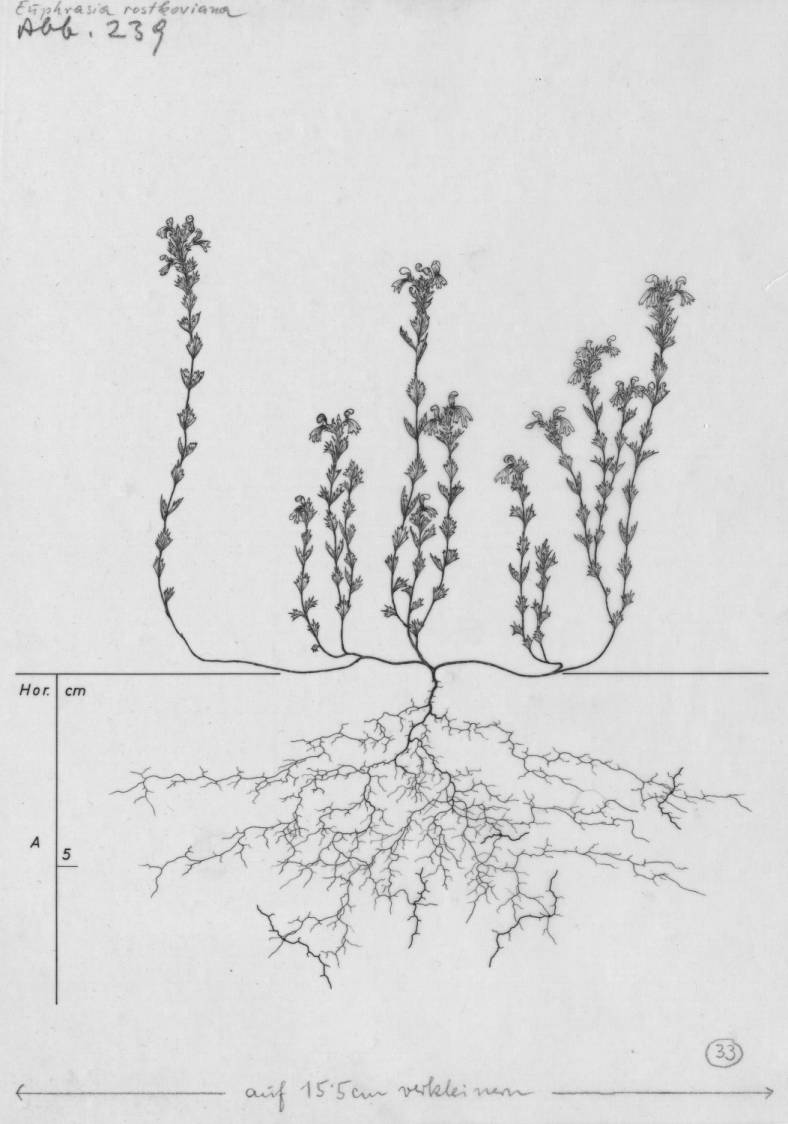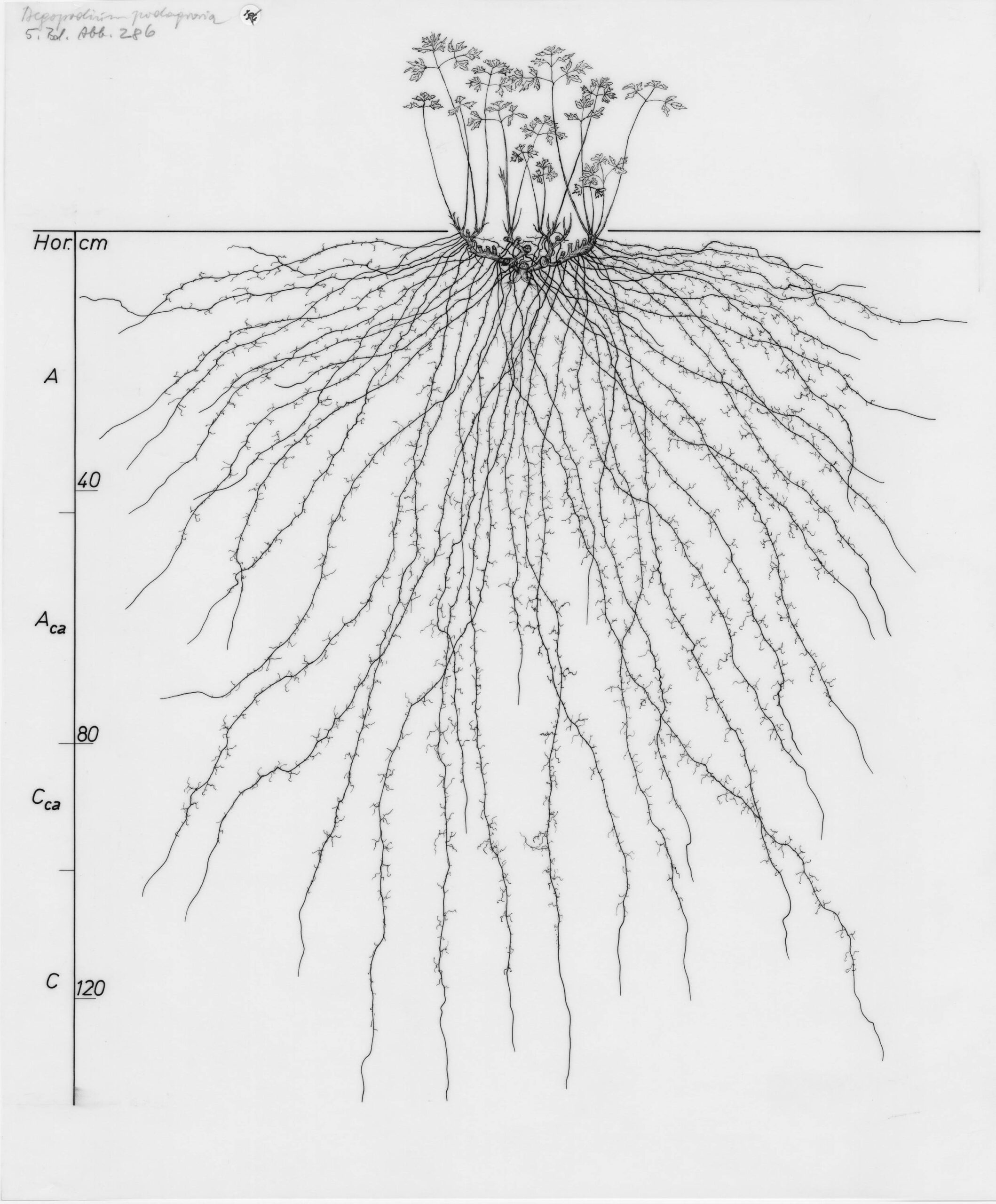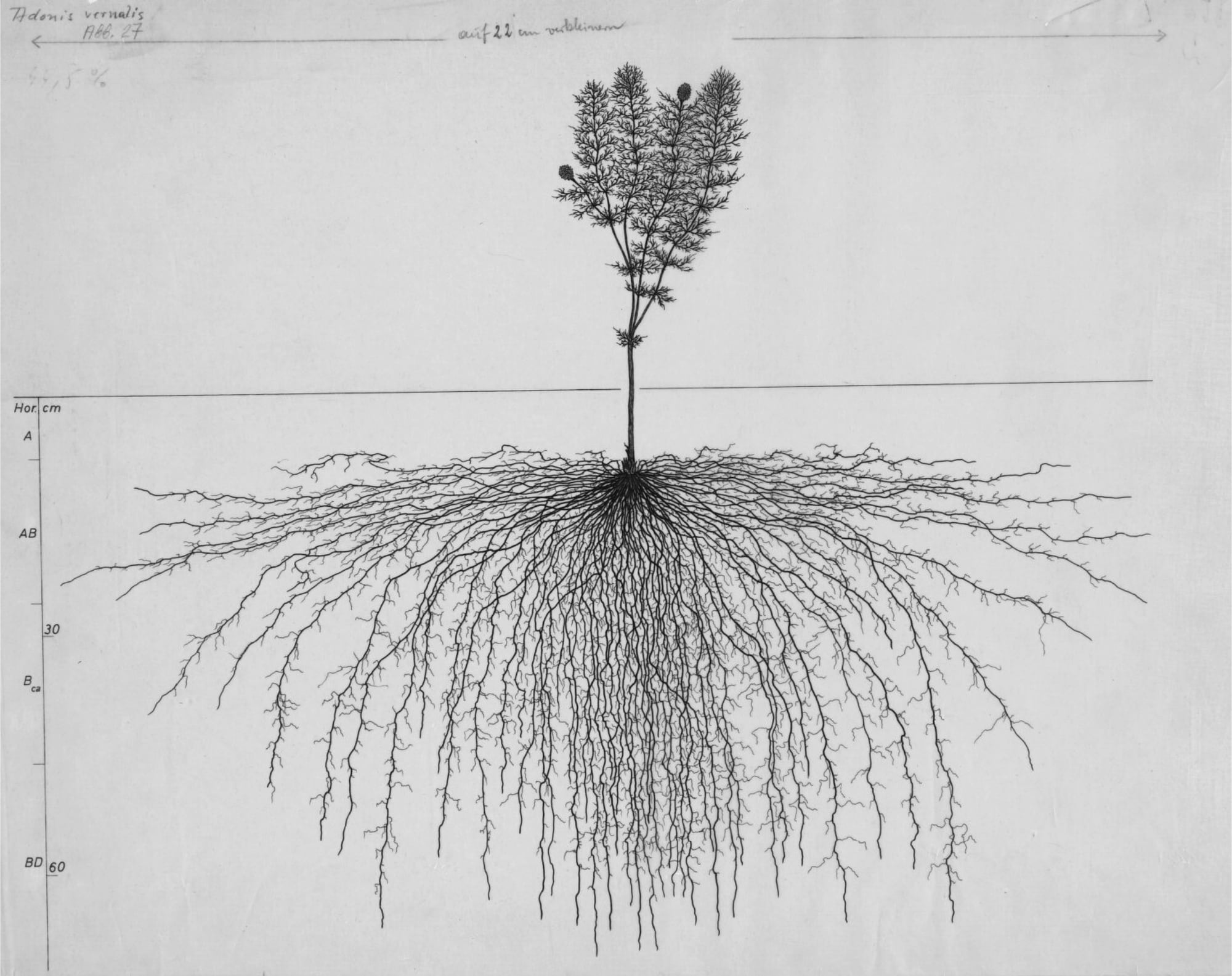
1,100 Delicate Drawings of Root Systems Reveals the Hidden World of Plants

We know that plants can inspire art. If you, per­son­al­ly, still require con­vinc­ing on that point, just have a look at Eliz­a­beth Twining’s Illus­tra­tions of the Nat­ur­al Orders of Plants, the draw­ings of Ernst Hein­rich Haeck­el, Eliz­a­beth Black­well’s A Curi­ous Herbal, and Nan­cy Anne Kings­bury Woll­stonecraft’s Spec­i­mens of the Plants and Fruits of the Island of Cuba — not to men­tion the paint­ings of Geor­gia O’ Keeffe — all pre­vi­ous­ly fea­tured here on Open Cul­ture. But those works con­cern them­selves only with plant life as it exists above ground.
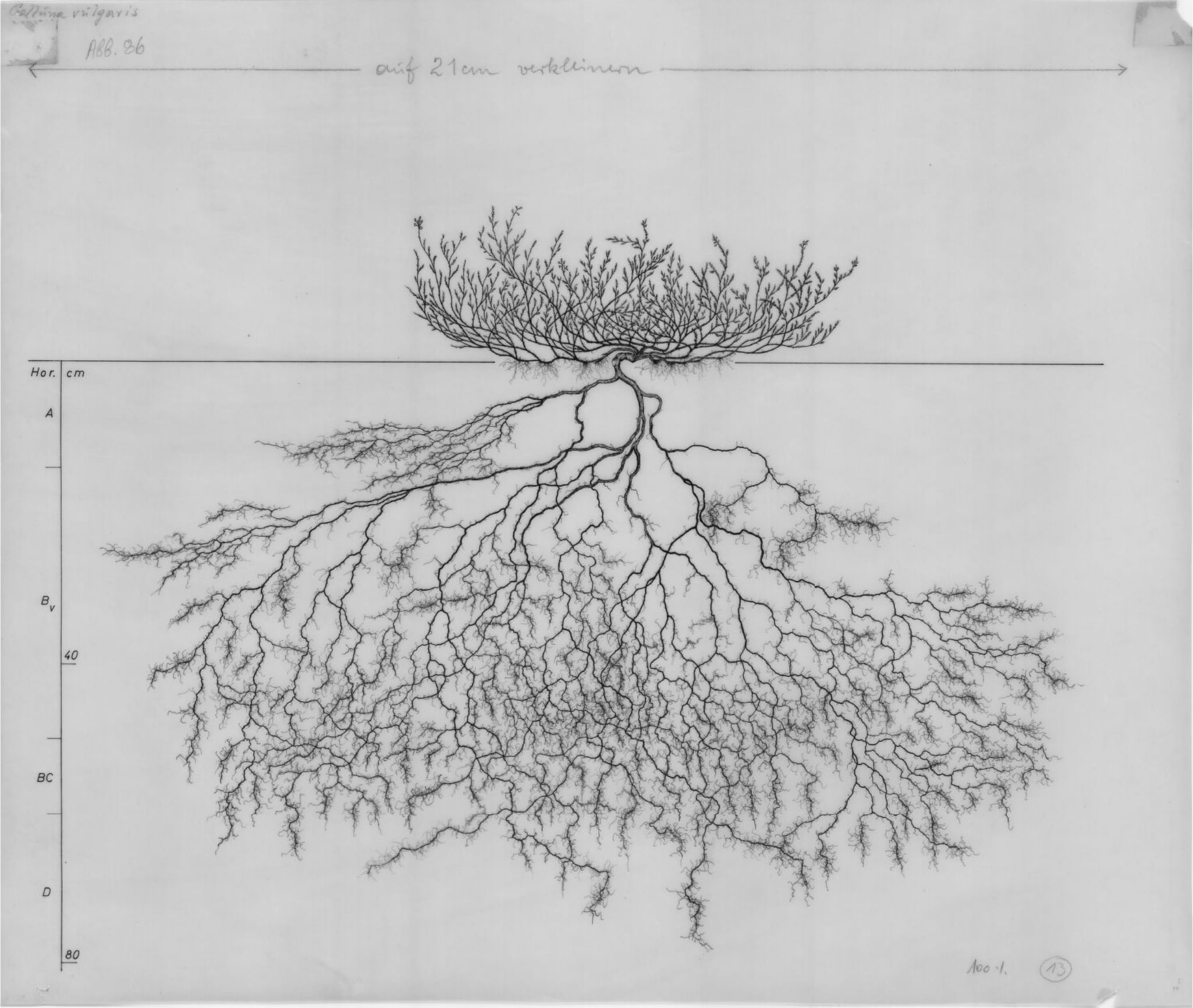
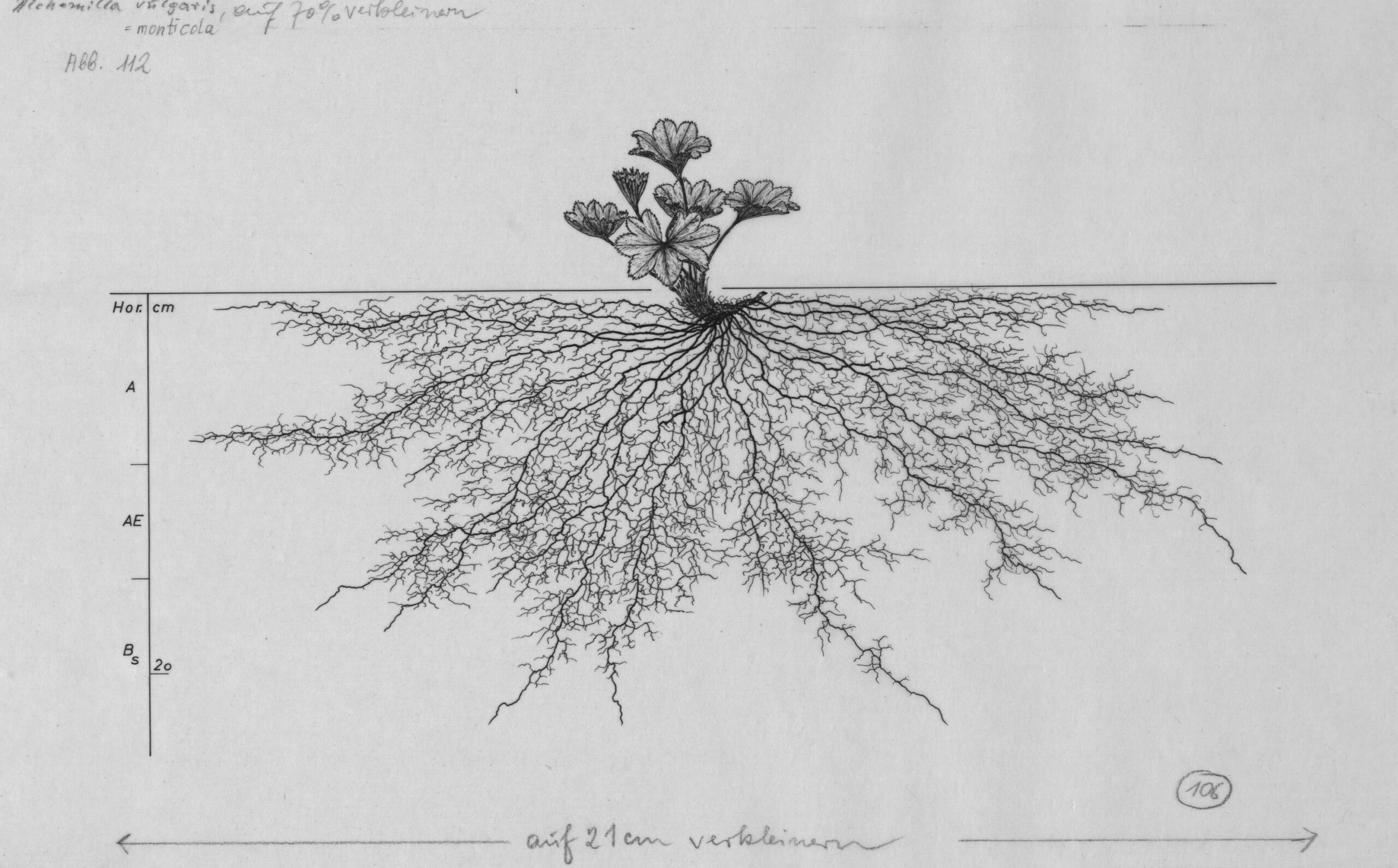
What goes on down below, under­neath the soil? That you can see for your­self — and with­out hav­ing to pull up one of our fine flow­er­ing (or non-flow­er­ing) friends to do so — at Wagenin­gen Uni­ver­si­ty’s online archive of root sys­tem draw­ings. “The out­come of 40 years of  root sys­tem exca­va­tions in Europe,” says that site, the col­lec­tion con­tains 1,180 dia­grams of species from Abies alba (best known today as a kind of Christ­mas tree) to Zygo­phyl­lum xan­thoxy­lon (a faint­ly scrub­by-look­ing native of the arid and semi-arid regions of con­ti­nents like Africa and Aus­tralia).

The site explains that “the draw­ings, their analy­sis and descrip­tion were done by Univ. Prof. Dr. Erwin Licht­eneg­ger (1928–2004) and Univ. Prof. Dr. Lore Kutschera (1917–2008), leader of Pflanzen­sozi­ol­o­gis­ches Insti­tut, Kla­gen­furt, (now in Bad Gois­ern, Aus­tria).”

Over the course of 40 years, writes The Wash­ing­ton Post’s Erin Blake­more, Licht­eneg­ger and Kustchera “col­lab­o­rat­ed on an enor­mous ‘root atlas’ that maps the under­ground tra­jec­to­ries of com­mon Euro­pean plants.” Cre­at­ed through “a labo­ri­ous sys­tem of dig­ging up and doc­u­ment­ing the intri­cate sys­tems,” these draw­ings are “also art in their own right, hon­or­ing the beau­ty of a part of plants most nev­er give that much thought.”

Even the least botan­i­cal­ly aware among us knows that plants have roots, but how many of us are aware of the scale and com­plex­i­ty those roots can attain? “Root sys­tems allow plants to gath­er the water and min­er­als they use to grow,” writes Blake­more. “As the root sys­tem grows, it cre­ates more and more path­ways that allow water to get into the deep sub­soil, and fos­ter­ing the growth of microbes that ben­e­fit oth­er life. Strong root sys­tems can pre­vent ero­sion, pro­tect­ing the land on which they grow. And the struc­tures allow the soil to cap­ture car­bon.” Thus root sys­tems, nev­er a par­tic­u­lar locus of cool­ness, have the dis­tinc­tion of doing their part to fight cli­mate change. And thanks to Licht­eneg­ger and Kustcher­a’s draw­ings, they under­score the capac­i­ty of art to reveal worlds hid­den to most of us. View all of the images here.
via Colos­sal

Relat­ed Con­tent:

Behold an Inter­ac­tive Online Edi­tion of Eliz­a­beth Twining’s Illus­tra­tions of the Nat­ur­al Orders of Plants (1868)

His­toric Man­u­script Filled with Beau­ti­ful Illus­tra­tions of Cuban Flow­ers & Plants Is Now Online (1826)

Ernst Haeckel’s Sub­lime Draw­ings of Flo­ra and Fau­na: The Beau­ti­ful Sci­en­tif­ic Draw­ings That Influ­enced Europe’s Art Nou­veau Move­ment (1889)

A Curi­ous Herbal: 500 Beau­ti­ful Illus­tra­tions of Med­i­c­i­nal Plants Drawn by Eliz­a­beth Black­well in 1737 (to Save Her Fam­i­ly from Finan­cial Ruin)

Two Mil­lion Won­drous Nature Illus­tra­tions Put Online by The Bio­di­ver­si­ty Her­itage Library

The Social Lives of Trees: Sci­ence Reveals How Trees Mys­te­ri­ous­ly Talk to Each Oth­er, Work Togeth­er & Form Nur­tur­ing Fam­i­lies

Based in Seoul, Col­in Mar­shall writes and broad­casts on cities and cul­ture. His projects include the book The State­less City: a Walk through 21st-Cen­tu­ry Los Ange­les and the video series The City in Cin­e­ma. Fol­low him on Twit­ter at @colinmarshall or on Face­book.

Watch the Destruction of Pompeii by Mount Vesuvius, Re-Created with Computer Animation (79 AD)

A good dis­as­ter sto­ry nev­er fails to fas­ci­nate — and, giv­en that it actu­al­ly hap­pened, the sto­ry of Pom­peii espe­cial­ly so. Buried and thus frozen in time by the erup­tion of Mount Vesu­vius in 79 AD, the ancient Roman town of 11,000 has pro­vid­ed an object of great his­tor­i­cal inter­est ever since its redis­cov­ery in 1599. Baths, hous­es, tools and oth­er pos­ses­sions (includ­ing plen­ty of wine bot­tles), fres­coes, graf­fi­ti, an amp­ithe­ater, an aque­duct, the “Vil­la of the Mys­ter­ies”: Pom­peii has it all, as far as the stuff of first-cen­tu­ry Roman life goes.

The ash-pre­served ruins of Pom­peii, more than any oth­er source, have pro­vid­ed his­to­ri­ans with a win­dow into just what life in that time and place was like. A Day in Pom­peii, an exhi­bi­tion held at the Mel­bourne Muse­um in 2009, gave its more than 330,000 vis­i­tors a chance to expe­ri­ence Pom­pei­i’s life even more vivid­ly. The exhi­bi­tion includ­ed a 3D the­ater instal­la­tion that fea­tured the ani­ma­tion above. Watch it, and you can see Pom­peii brought back to life with com­put­er-gen­er­at­ed imagery — and then, in snap­shots over the course of 48 hours, entombed by Vesu­vius again.

As inher­ent­ly com­pelling as we find the sto­ry of Pom­peii, mod­ern dra­ma has strug­gled to cap­ture the pow­er of the dis­as­ter that defines it. The late-1960s BBC show Up Pom­peii! offered a comedic ren­der­ing of life in the city before the explo­sion, but more seri­ous inter­pre­ta­tions, like the 2014 Hol­ly­wood movie Pom­peii, met with only luke­warm crit­i­cal recep­tion. Best, it seems, to stick to the words of Pliny the Younger, wit­ness to the destruc­tion and still its most evoca­tive describer:

You could hear the shrieks of women, the wail­ing of infants, and the shout­ing of men; some were call­ing their par­ents, oth­ers their chil­dren or their wives, try­ing to rec­og­nize them by their voic­es. Peo­ple bewailed their own fate or that of their rel­a­tives, and there were some who prayed for death in their ter­ror of dying. Many besought the aid of the gods, but still more imag­ined there were no gods left, and that the uni­verse was plunged into eter­nal dark­ness for ever­more.

If you would like to sign up for Open Culture’s free email newslet­ter, please find it here. It’s a great way to see our new posts, all bun­dled in one email, each day.

If you would like to sup­port the mis­sion of Open Cul­ture, con­sid­er mak­ing a dona­tion to our site. It’s hard to rely 100% on ads, and your con­tri­bu­tions will help us con­tin­ue pro­vid­ing the best free cul­tur­al and edu­ca­tion­al mate­ri­als to learn­ers every­where. You can con­tribute through Pay­Pal, Patre­on, and Ven­mo (@openculture). Thanks!

via Metafil­ter

Relat­ed Con­tent:

Vis­it Pom­peii (also Stone­henge & Ver­sailles) with Google Street View

Pom­peii Rebuilt: A Tour of the Ancient City Before It Was Entombed by Mount Vesu­vius

How the Sur­vivors of Pom­peii Escaped Mount Vesu­vius’ Dead­ly Erup­tion: A TED-Ed Ani­ma­tion Tells the Sto­ry

See the Expan­sive Ruins of Pom­peii Like You’ve Nev­er Seen Them Before: Through the Eyes of a Drone

by | Permalink | Make a Comment ( 4 ) |

Martin Heidegger Talks Philosophy with a Buddhist Monk on German TV (1963)

Mar­tin Hei­deg­ger is often called the most impor­tant philoso­pher of the 20th cen­tu­ry. I’m not in a posi­tion to eval­u­ate this claim, but his influ­ence on con­tem­po­rary and suc­ces­sive Euro­pean and Amer­i­can thinkers is con­sid­er­able. That influ­ence spread all the way to Thai­land, where Bud­dhist monk and uni­ver­si­ty pro­fes­sor Bhikku Maha Mani came to think of Hei­deg­ger as “the Ger­man philoso­pher.” (A con­cep­tion, writes Otto Poggel­er in an essay on Hei­deg­ger and East­ern thought, that may have “per­vert­ed the monk’s want­i­ng to talk” to the philoso­pher, “since phi­los­o­phy nev­er lets itself be embod­ied in an idol.”) The Bud­dhist monk, also a radio pre­sen­ter who lat­er left his order to work for Amer­i­can tele­vi­sion, met the Ger­man philoso­pher in 1963 for an inter­view on Ger­man TV sta­tion SWR. Maha Mani asks his ques­tions in Eng­lish, Hei­deg­ger responds in Ger­man. See the first part of the inter­view above, the sec­ond below.

This was not at all the first time the Ger­man philoso­pher had dia­logued with an East Asian thinker. In a study on the Bud­dhist and Taoist influ­ences on Heidegger’s work, Rein­hold May writes that Heidegger’s “direct con­tact with East Asian thought dates back at least as far as 1922” when he began con­ver­sa­tions with sev­er­al major Japan­ese thinkers. Nonethe­less, Hei­deg­ger appar­ent­ly had lit­tle to say on the cor­re­spon­dences between his ideas and those of East­ern philoso­phers until the 1950s, and the lit­tle that he did say seems mar­gin­al at best to his main body of work.

May’s claims of “hid­den influ­ence” may be high­ly exag­ger­at­ed, yet Hei­deg­ger was famil­iar with Bud­dhist thought, and, in the inter­view, he makes some inter­est­ing dis­tinc­tions and com­par­isons. In answer to the Bhikku’s first, very gen­er­al, ques­tion, Hei­deg­ger launch­es into his famil­iar refrain—“one ques­tion was nev­er asked [in “Occi­den­tal” phi­los­o­phy], that is, the ques­tion of Being.” Hei­deg­ger defines “the human being” as “this essence, that has lan­guage,” in con­trast to “the Bud­dhist teach­ings,” which do not make “an essen­tial dis­tinc­tion, between human beings and oth­er liv­ing things, plants and ani­mals.” For Hei­deg­ger, consciousness—“a know­ing rela­tion to Being” through language—is the exclu­sive pre­serve of humans.

In the sec­ond part of the inter­view (read a tran­script here), Bhikku Maha Mani asks Hei­deg­ger what he thinks about the con­tra­dic­to­ry West­ern ten­den­cy to iden­ti­fy peo­ple with­out reli­gion as “com­mu­nists” and those who live “accord­ing to reli­gious rules” as insane. Hei­deg­ger responds that reli­gion, in its most rad­i­cal sense, sim­ply means “a bond­ing-back to pow­ers, forces and laws, that super­sede human capa­bil­i­ty.” In this respect, he says, “no human being is with­out reli­gion,” whether it be “the belief in sci­ence” of com­mu­nists or “an athe­is­tic reli­gion, name­ly Bud­dhism, that knows no God.” Hei­deg­ger goes on to explain why he sees lit­tle pos­si­bil­i­ty of “imme­di­ate and sim­ple under­stand­ing” between peo­ple of dif­fer­ent reli­gions, philoso­phies, and polit­i­cal groups. While it may be tempt­ing to view Heidegger’s work—and that of oth­er phe­nom­e­no­log­i­cal, exis­ten­tial, or skep­ti­cal philosophers—as work­ing in tan­dem with much East­ern thought, as per­haps “the” Ger­man philoso­pher him­self would cau­tion, the dif­fer­ences are sig­nif­i­cant. In the inter­view above, Hei­deg­ger large­ly faults Ger­many and “all of Europe in gen­er­al” for a gen­er­al lack of human har­mo­ny: “We do not have any clear, com­mon and sim­ple rela­tion to real­i­ty and to our­selves,” he says. “That is the big prob­lem of the West­ern world.”

Cours­es on Hei­deg­ger’s phi­los­o­phy can be found in our col­lec­tion of Free Online Phi­los­o­phy Cours­es, part of our larg­er col­lec­tion, 1,700 Free Online Cours­es from Top Uni­ver­si­ties.

Note: An ear­li­er ver­sion of this post appeared on our site in 2014.

Relat­ed Con­tent:

The Love Let­ters of Han­nah Arendt and Mar­tin Hei­deg­ger

Heidegger’s “Black Note­books” Sug­gest He Was a Seri­ous Anti-Semi­te, Not Just a Naive Nazi

“Hei­deg­ger in the Kitchen”: Alain de Botton’s Video Essay Explains the Philosopher’s Con­cept of Being

Discovered: Lost Johnny Cash Concert Recorded by the Grateful Dead’s LSD Chemist Owsley Stanley (1968)

On Jan­u­ary 13, 1968, John­ny Cash record­ed his famous live con­certs with­in the walls of Fol­som State Prison, Cal­i­for­nia, a week into what would be one of his busiest years of tour­ing. While Colum­bia Records worked on trim­ming down the two sets into one LP, Cash set off across the States, into Cana­da and back, play­ing almost every night, and return­ing to the West Coast for a final stop at the Carousel Ball­room in San Fran­cis­co.

Record­ing the gig that night was Owsley “Bear” Stan­ley, the Grate­ful Dead’s engi­neer and also the man respon­si­ble for cre­at­ing the purest LSD on the West Coast. As Rolling Stone once asked, would there have been a Sum­mer of Love if not for Stan­ley? Appar­ent­ly, Stan­ley had *anoth­er* secret stash, and we are only now hear­ing a tiny frac­tion of it. This gig is one of over 1,300 the engi­neer record­ed and kept in his pri­vate col­lec­tion. Stan­ley died in 2011, and ten years lat­er the Oswald Stan­ley Foun­da­tion is selec­tive­ly releas­ing record­ings from this trea­sure trove as a way to pre­serve the record­ings and fund more releas­es. This Cash set was one of the first releas­es in the “Bear’s Son­ic Jour­nals” series, released in Octo­ber of 2021.

Cash’s new bride June Carter Cash joined him onstage. It was on the Ontario stop of the afore­men­tioned tour that Cash pro­posed to her live on stage, and they were mar­ried March 1 in Ken­tucky. You can hear his pride as he intro­duces her to the audi­ence; the two imme­di­ate­ly launch into “Jack­son.” “We got mar­ried in a fever,” indeed. (The two remained mar­ried until her death in 2003.) June sings sev­er­al num­bers, includ­ing “Wabash Can­non­ball,” and Carl Perkins’ “Long Legged Gui­tar Pickin’ Man.”

The oth­er artist fig­ur­ing promi­nent­ly in these record­ings (as an influ­ence) is Bob Dylan. The two had been cir­cling each oth­er in admi­ra­tion for years, and here Cash cov­ers “One Too Many Morn­ings” and then “Don’t Think Twice, It’s Alright.” The man owns it, turns it into what sounds like a Ten­nessee Three orig­i­nal. Dylan and Cash would final­ly record togeth­er in 1969, in ses­sions that would be boot­legged until a recent offi­cial release.

Stan­ley record­ed these sets for him­self, com­ing straight out of the sound­board. Where the Carousel Ball­room con­cert lacks in quality—-vocals, audi­ence, and Cash’s gui­tar are on the left, the band to the right—-they make up for in his­to­ry and excite­ment.

Cur­rent­ly, the label has released full con­certs from Tim Buck­ley, Ali Akbar Khan, with Indranil Bhat­tacharya and Zakir Hus­sain, Com­man­der Cody & His Lost Plan­et Air­men, New Rid­ers of The Pur­ple Sage, Jor­ma Kauko­nen & Jack Casady, The All­man Broth­ers Band, and Doc and Mer­le Wat­son. As Stan­ley record­ed for two decades of his career, the cat­a­log promis­es untold delights.

The full playlist from the Carousel Ball­room gig is below:

via Boing­Bo­ing

Relat­ed Con­tent:

Grate­ful Dead Fan Cre­ates a Faith­ful Mini Repli­ca of the Band’s Famous “Wall of Sound” Dur­ing Lock­down

Two Prison Con­certs That Defined an Out­law Singer: John­ny Cash at San Quentin and Fol­som (1968–69)

Take a Trip to the LSD Muse­um, the Largest Col­lec­tion of “Blot­ter Art” in the World

John­ny Cash’s Short and Per­son­al To-Do List

Ted Mills is a free­lance writer on the arts who cur­rent­ly hosts the Notes from the Shed pod­cast and is the pro­duc­er of KCR­W’s Curi­ous Coast. You can also fol­low him on Twit­ter at @tedmills, and/or watch his films here.

When Andy Warhol Guest-Starred on The Love Boat (1985)

On Fri­day, August 31, 1979, Andy Warhol records in his diary that he took a cab to Elaine’s to “meet the guy who might get me a guest appear­ance on The Love Boat.” But near­ly five years pass before he writes that the writ­ers are work­ing on his episode; with the shoot­ing dates set, “I start­ed to get scared, I don’t know if I can go through with it.” A cou­ple of months lat­er, as the appoint­ed time approach­es, he hears the plot: “There’s a girl on the boat named Mary with her hus­band, and she used to be a super­star of mine, and she doesn’t want her hus­band to know that she used to be ‘Mari­na Del Rey.’ And I just have a few lines, things like ‘Hel­lo, Mary.’ But one of the lines I have to say is some­thing like ‘Art is crass com­mer­cial­ism,’ which I don’t want to say.”

What­ev­er his objec­tions to the script, Warhol does­n’t seem to have been an espe­cial­ly dif­fi­cult par­tic­i­pant, of whom The Love Boat must have had more than a few in its 250 episodes. Dur­ing its run on ABC from 1977 to 1986, the series became an Amer­i­can pop-cul­tur­al phe­nom­e­non of a scale dif­fi­cult to com­pre­hend today. But as a con­nois­seur of Amer­i­can pop cul­ture, Warhol would have com­pre­hend­ed it ful­ly. By the time of his appear­ance in Octo­ber 1985, The Love Boat had entered its ninth sea­son, pre­sum­ably hun­gri­er than ever for atten­tion-grab­bing guest stars; on “his” episode, Warhol shares that billing with, among oth­ers, Mil­ton Berle, Hap­py Days’ Tom Bosley and Mar­i­on Ross, and Andy Grif­fith (who, Warhol notes, “seems bit­ter to be on The Love Boat”).

“If there was any space where painters and artists could brush shoul­ders with soap stars and teen idols, it was aboard the Pacif­ic Princess,” says MeTV. “In one episode ded­i­cat­ed to the fash­ion indus­try, design­ers Glo­ria Van­der­bilt, Geof­frey Beene and Hal­ston all came aboard.” Warhol’s com­ing aboard, then, “was both unex­pect­ed and some­how inevitable.” You can wit­ness this sur­pris­ing yet unsur­pris­ing cul­tur­al crossover in the video above, which con­tains just the scenes from Warhol’s sto­ry with­in the episode (which, like most Love Boat scripts, has three dif­fer­ent plot­lines). Even if it deliv­ers few pro­found insights into the nature of art, celebri­ty, and human aspi­ra­tion, it does cap­ture Warhol’s pres­ence as it seems real­ly to have been dur­ing his final years.

“My Stephen Sprouse jack­ets were there on the wardrobe rack,” Warhol writes in his diary dur­ing the shoot. “When I wear them, I think I final­ly look like peo­ple want Andy Warhol to look again.” That must have been true of the shiny sil­ver num­ber he wears in his first scene of the episode, when first he rolls up with his “entourage” to the ship’s recep­tion desk. “As we’re walk­ing off, the Love Boat girl asks Ray­mond St. Jacques, ‘How does an artist know when a paint­ing is real­ly suc­cess­ful?’ And he says, ‘When the check clears.’ ” But on one take “they did it wrong and it was bet­ter — she said, ‘When is a paint­ing real­ly fin­ished.’ ” Unfor­tu­nate­ly, that ver­sion of the line seems to have been a bit too Warho­lian for the Pacif­ic Princess.

Relat­ed Con­tent:

When Andy Warhol & Edie Sedg­wick, the First Cou­ple of Pop Art, Made an Odd Appear­ance on the Merv Grif­fin Show (1965)

Andy Warhol’s 15 Min­utes: Dis­cov­er the Post­mod­ern MTV Vari­ety Show That Made Warhol a Star in the Tele­vi­sion Age (1985–87)

Andy Warhol Hosts Frank Zap­pa on His Cable TV Show, and Lat­er Recalls, “I Hat­ed Him More Than Ever” After the Show

When Frank Zap­pa & Miles Davis Played a Drug Deal­er and a Pimp on Mia­mi Vice

Andy Warhol Eats a Burg­er King Whop­per, and We Watch … and Watch

Based in Seoul, Col­in Mar­shall writes and broad­casts on cities and cul­ture. His projects include the book The State­less City: a Walk through 21st-Cen­tu­ry Los Ange­les and the video series The City in Cin­e­ma. Fol­low him on Twit­ter at @colinmarshall or on Face­book.

Who Betrayed Anne Frank and Her Family?: Machine Learning, a Retired FBI Agent and a Team of Investigators May Have Finally Solved the Case

“Using new tech­nol­o­gy, recent­ly dis­cov­ered doc­u­ments and sophis­ti­cat­ed inves­tiga­tive tech­niques, an inter­na­tion­al team—led by an obsessed retired FBI agent—has [seem­ing­ly] solved the mys­tery that has haunt­ed gen­er­a­tions since World War II: Who betrayed Anne Frank and her fam­i­ly? And why?” That retired FBI agent, Vince Pankoke, gets inter­viewed by 60 Min­utes above. The sto­ry behind this new inves­ti­ga­tion also gets doc­u­ment­ed in a new book, The Betray­al of Anne Frank: A Cold Case Inves­ti­ga­tion.

Relat­ed Con­tent 

Watch the Only Known Footage of Anne Frank

Anne Frank’s Diary: The Graph­ic Nov­el Adap­ta­tion

Read the Poignant Let­ter Sent to Anne Frank by George Whit­man, Own­er of Paris’ Famed Shake­speare & Co Book­shop (1960): “If I Sent This Let­ter to the Post Office It Would No Longer Reach You”

How Art Spiegel­man Designs Com­ic Books: A Break­down of His Mas­ter­piece, Maus

The Philosophy of Games: C. Thi Nguyen on the Philosophy vs. Improv Podcast

 width=

Thi Nguyen (pro­nounced “TEE NWEEN”) teach­es at the Uni­ver­si­ty of Utah, and his first book, 2020’s Games: Agency as Art, makes a case for games being treat­ed as a seri­ous object of study for phi­los­o­phy. Thi sees game analy­sis as not just a sub-divi­sion in the phi­los­o­phy of art (aes­thet­ics), but in the phi­los­o­phy of action. How do games relate to oth­er human activ­i­ties with con­straints, like cus­toms, lan­guage, and more specif­i­cal­ly per­for­ma­tive acts with­in lan­guage (like say­ing “I do” dur­ing a mar­riage cer­e­mo­ny, where you’re not just describ­ing that you do some­thing, but actu­al­ly tak­ing action)?

On this record­ing (episode 24 of the pod­cast), Thi joins phi­los­o­phy pod­cast­er Mark Lin­sen­may­er of The Par­tial­ly Exam­ined Life and impro­vi­sa­tion­al com­e­dy coach Bill Arnett of the Chica­go Improv Stu­dio to talk about games and improv, and to engage in a cou­ple of improv scenes that explore the con­nec­tion between the two.

This is the third phi­los­o­phy guest for the Phi­los­o­phy vs. Improv pod­cast, which alter­nates between guests from the improv world, guests from the phi­los­o­phy world, and no guest at all. The over­all for­mat involves a les­son from each host, which they teach to each oth­er (and the guest) simul­ta­ne­ous­ly. This often results in unex­pect­ed syn­chronic­i­ty giv­en the con­nec­tions between two dis­ci­plines that stress the analy­sis of lan­guage, liv­ing delib­er­ate­ly, and quick think­ing.

For anoth­er philo­soph­i­cal­ly rich episode, see episode #20 in which St. Lawrence Uni­ver­si­ty’s Jen­nifer L. Hansen appeared to dis­cuss the many aspects of the con­cept of “The Oth­er” in phi­los­o­phy.

Phi­los­o­phy vs. Improv is a pod­cast host­ed by Mark Lin­sen­may­er, who also hosts The Par­tial­ly Exam­ined Life Phi­los­o­phy Pod­cast, Pret­ty Much Pop: A Cul­ture Pod­cast, and Naked­ly Exam­ined Music

People in the Middle Ages Slept Not Once But Twice Each Night: How This Lost Practice Was Rediscovered

The impor­tance of a good night’s sleep has been fea­tured now and again here on Open Cul­ture. But were a medieval Euro­pean to vis­it our time, he’d prob­a­bly ask — among oth­er ques­tions — if we did­n’t mean a good night’s sleeps, plur­al. The evi­dence sug­gests that the peo­ple of the Mid­dle Ages slept not straight through the night but in two dis­tinct stretch­es. This prac­tice has come back to light in recent years thanks to the research of his­to­ri­an Roger Ekirch, author of At Day’s Close: Night in Times Past. “Both phas­es of sleep last­ed rough­ly the same length of time,” he writes in that book, “with indi­vid­u­als wak­ing some­time after mid­night before return­ing to rest.”

But “not every­one, of course, slept accord­ing to the same timetable. The lat­er at night that per­sons went to bed, the lat­er they stirred after their ini­tial sleep; or, if they retired past mid­night, they might not awak­en at all until dawn. Thus, in ‘The Squire’s Tale’ in The Can­ter­bury Tales, Canacee slept ‘soon after evening fell’ and sub­se­quent­ly awak­ened in the ear­ly morn­ing fol­low­ing ‘her first sleep’; in turn, her com­pan­ions, stay­ing up much lat­er, ‘lay asleep till it was ful­ly prime’ (day­light).” Proof wide­spread “bipha­sic sleep” exists not just in Chaucer, but — for those who know where to look — all over the sur­viv­ing doc­u­ments from medieval Europe.

“In France, the ini­tial sleep was the pre­mier somme,” writes BBC.com’s Zaria Gorvett. “In Italy, it was pri­mo son­no. In fact, Eckirch found evi­dence of the habit in loca­tions as dis­tant as Africa, South and South­east Asia, Aus­tralia, South Amer­i­ca and the Mid­dle East”; the ear­li­est ref­er­ence he turned up comes from Home­r’s Odyssey. What­ev­er their era of his­to­ry, bipha­sic sleep­ers seem to have made good use of their inter­vals of wake­ful­ness, known in Eng­lish as “the watch.” Dur­ing it, peas­ants worked, Chris­tians prayed, and thieves thieved, “but most of all, the watch was use­ful for social­iz­ing – and for sex.” After a long day’s work, “the first sleep took the edge off their exhaus­tion and the peri­od after­wards was thought to be an excel­lent time to con­ceive copi­ous num­bers of chil­dren.”

Bipha­sic sleep and its atten­dant habits did­n’t sur­vive the 19th cen­tu­ry. The rea­sons, as Ekirch explains in the inter­view above, have to do with the Indus­tri­al Rev­o­lu­tion, that great dis­rup­tion of tra­di­tions fol­lowed since time immemo­r­i­al. Along with “the increas­ing preva­lence of arti­fi­cial illu­mi­na­tion both with­in homes and out­side,” he says, “bed­times were pushed back, even though peo­ple still awak­ened at the same time in the morn­ing.” Apart from intro­duc­ing new tech­nolo­gies, the Indus­tri­al Rev­o­lu­tion “also changed peo­ples’ atti­tudes toward work,” mak­ing human­i­ty “increas­ing­ly time-con­scious: pro­duc­tiv­i­ty, effi­cien­cy were the hall­marks of the 19th cen­tu­ry.” We con­tin­ue to set store by them today, though we also han­dle the dis­rup­tion of sleep in our own, dis­tinc­tive­ly 21st-cen­tu­ry ways. Would any­one care to explain to our medieval time-trav­el­er the prac­tice of mid­night Twit­ter-scrolling?

via BBC/Medieval­ists

Relat­ed Con­tent:

How Sleep Can Become Your “Super­pow­er:” Sci­en­tist Matt Walk­er Explains Why Sleep Helps You Learn More and Live Longer

Sleep or Die: Neu­ro­sci­en­tist Matthew Walk­er Explains How Sleep Can Restore or Imper­il Our Health

How a Good Night’s Sleep — and a Bad Night’s Sleep — Can Enhance Your Cre­ativ­i­ty

Buck­min­ster Fuller’s Dymax­ion Sleep Plan: He Slept Two Hours a Day for Two Years & Felt “Vig­or­ous” and “Alert”

The Pow­er of Pow­er Naps: Sal­vador Dali Teach­es You How Micro-Naps Can Give You Cre­ative Inspi­ra­tion

What Did Peo­ple Eat in Medieval Times? A Video Series and New Cook­book Explain

Based in Seoul, Col­in Mar­shall writes and broad­casts on cities and cul­ture. His projects include the book The State­less City: a Walk through 21st-Cen­tu­ry Los Ange­les and the video series The City in Cin­e­ma. Fol­low him on Twit­ter at @colinmarshall or on Face­book.

« Go BackMore in this category... »
Quantcast