The Stunt That Ended Buster Keaton’s Brilliant Career

Buster Keaton’s pen­chant and skill for comedic stunts made him one of the biggest stars of the silent-film era.  Nobody at the time imag­ined that he would still be engag­ing in dan­ger­ous-look­ing prat­falls 40 years lat­er in his sev­en­ties, espe­cial­ly since his career seemed to have come to an end in 1926. That was the year of his Civ­il War-set film The Gen­er­al, which, though now crit­i­cal­ly respect­ed, left con­tem­po­rary audi­ences cold. Flops are, per­haps, inevitable, but this one hap­pened to incor­po­rate into the pic­ture the most expen­sive shot in cin­e­ma his­to­ry to date. As a result, says the Ming video above, “Keaton was nev­er giv­en con­trol over his films again.”

Iron­i­cal­ly, unlike the cin­e­mat­ic images that had made him famous, the $42,000 shot in The Gen­er­al did not put its direc­tor-star in appar­ent mor­tal per­il, depict­ing only a rail­road bridge col­laps­ing while a train cross­es it. Though undoubt­ed­ly impres­sive, it would­n’t have been what peo­ple went to a Buster Keaton movie to see.

Here was a man will­ing, after all, to fly from the back of a mov­ing street­car, dan­gle off the edge of a water­fall, risk being crushed by an entire wall of a house, and even break his neck — though he did­n’t dis­cov­er that he’d done so until eleven years lat­er. Mak­ing these and all of Keaton’s oth­er famous stunts involved con­sid­er­able amounts of both cal­cu­lat­ed dan­ger and movie mag­ic.

Some of that movie mag­ic was con­ceived by Keaton him­self, the first film­mak­er, in Quentin Taran­ti­no’s words, to “use cin­e­ma itself to be the joke.” Few per­form­ers could have adapt­ed so well to the medi­um of silent film, with its realms of silent com­e­dy just wait­ing to be opened. And after sound had been around for a few decades, long­time movie­go­ers start­ed to feel like cin­e­ma had lost some of the visu­al exu­ber­ance that it once pos­sessed. By that time, luck­i­ly, Keaton had emerged from his long post-Gen­er­al peri­od of hard-drink­ing malaise, ready to appear not just in the movies again, but also on tele­vi­sion, delight­ing the gen­er­a­tions who remem­bered his ear­li­er work and fas­ci­nat­ing those too young to rec­og­nize him. Even today, when we find our­selves laugh­ing at a scene of elab­o­rate­ly orches­trat­ed phys­i­cal dan­ger, we are, in some sense, wit­ness­ing Keaton’s lega­cy.

Relat­ed con­tent:

30 Buster Keaton Films: “The Great­est of All Com­ic Actors,” “One of the Great­est Film­mak­ers of All Time”

Watch the Only Time Char­lie Chap­lin & Buster Keaton Per­formed Togeth­er On-Screen (1952)

Char­lie Chap­lin & Buster Keaton Go Toe to Toe (Almost) in a Hilar­i­ous Box­ing Scene Mash Up from Their Clas­sic Silent Films

A Super­cut of Buster Keaton’s Most Amaz­ing Stunts

101 Free Silent Films: The Great Clas­sics

The Gen­er­al, “Per­haps the Great­est Film Ever Made,” and 20 Oth­er Buster Keaton Clas­sics Free Online

Based in Seoul, Col­in Marshall writes and broad­casts on cities, lan­guage, and cul­ture. His projects include the Sub­stack newslet­ter Books on Cities and the book The State­less City: a Walk through 21st-Cen­tu­ry Los Ange­les. Fol­low him on the social net­work for­mer­ly known as Twit­ter at @colinmarshall.

Tim Burton Visits a Paris Video Store & Talks About His Favorite Movies

Tim Bur­ton grew up watch­ing Japan­ese mon­ster movies in Bur­bank, which must explain a good deal about his artis­tic sen­si­bil­i­ty. It seems to be for that rea­son, in any case, that the new Kon­bi­ni “Vidéo Club” episode above takes him first to the Asian cin­e­ma sec­tion of JM Vidéo, one of Paris’ last two DVD rental shops. Ear­ly and repeat­ed expo­sure to such kai­ju clas­sics as Hon­da Ishirō’s Godzil­la and The War of the Gar­gan­tuas may have instilled him with an affec­tion for poor Eng­lish dub­bing, but it did­n’t rob him of his abil­i­ty to appre­ci­ate more refined (if equal­ly vis­cer­al) exam­ples of Japan­ese film like Shindō Kane­to’s Oni­ba­ba and Kuroneko.

Bur­ton describes those pic­tures as dream­like, a qual­i­ty he goes on to praise in oth­er selec­tions from a vari­ety of dif­fer­ent eras and cul­tures. Even cinephiles who don’t share his par­tic­u­lar taste in view­ing mate­r­i­al — bound on one end, it seems, by The Pas­sion of Joan of Arc and The Cab­i­net of Dr. Cali­gari, and on the oth­er by I Was a Teenage Were­wolf and The Brain That Would­n’t Die, with the likes of Jason and the Arg­onauts and The Fly in between — have to admit that this indi­cates a deep under­stand­ing of cin­e­ma itself.

It may be the art form whose expe­ri­ence is most sim­i­lar to dream­ing, but only occa­sion­al­ly through­out its his­to­ry have par­tic­u­lar films attained the sta­tus of the tru­ly oneir­ic. One sus­pects that Bur­ton knows them all.

In fact, one of the twen­ty-first cen­tu­ry’s most notable addi­tions to the canon of the dream­like won the Palme d’Or with Bur­ton’s involve­ment. This video includes his brief rem­i­nis­cences of being on the jury at the 2010 Cannes Film Fes­ti­val, where Apichat­pong Weerasethakul’s Uncle Boon­mee Who Can Recall His Past Lives took the top prize. That same year saw the release of Bur­ton’s own Alice in Won­der­land, which he describes as “the most chaot­ic movie I’ve ever made.” In 2019, he direct­ed his sec­ond live-action Dis­ney adap­ta­tion Dum­bo, which, though hard­ly a pas­sion project, was­n’t with­out its auto­bi­o­graph­i­cal res­o­nances: “At that point, I kind of felt like Dum­bo,” he admits, “a weird crea­ture trapped at Dis­ney.” Per­haps that long on-and-off cor­po­rate asso­ci­a­tion final­ly hav­ing come to an end, or so he sug­gests, means he’ll now be freer than ever to draw from the depths of his own cin­e­mat­ic sub­con­scious­ness.

Relat­ed con­tent:

Tim Bur­ton: A Look Inside His Visu­al Imag­i­na­tion

Watch Vin­cent, Tim Burton’s Ani­mat­ed Trib­ute to Vin­cent Price & Edgar Allan Poe (1982)

Tim Burton’s Hansel and Gre­tel Shot on 16mm Film with Ama­teur Japan­ese Actors (1983)

David Cro­nen­berg Vis­its a Video Store & Talks About His Favorite Movies

Christo­pher Nolan Vis­its a Paris Video Store & Talks with Cil­lian Mur­phy About the Films That Influ­enced Him

Watch The Cab­i­net of Dr. Cali­gari, the Influ­en­tial Ger­man Expres­sion­ist Hor­ror Film (1920)

Based in Seoul, Col­in Marshall writes and broad­casts on cities, lan­guage, and cul­ture. His projects include the Sub­stack newslet­ter Books on Cities and the book The State­less City: a Walk through 21st-Cen­tu­ry Los Ange­les. Fol­low him on the social net­work for­mer­ly known as Twit­ter at @colinmarshall.

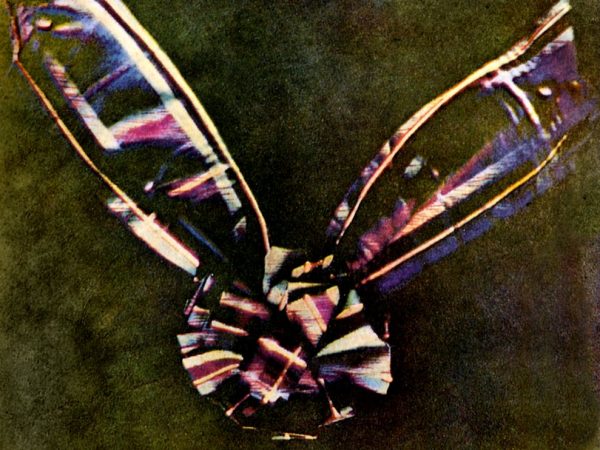
Behold the Very First Color Photograph (1861): Taken by Scottish Physicist & Poet James Clerk Maxwell

Since its ancient ori­gins as the cam­era obscu­ra, the pho­to­graph­ic cam­era has always mim­ic­ked the human eye, allow­ing light to enter an aper­ture, then pro­ject­ing an image upside down. Renais­sance artists relied on the cam­era obscu­ra to sharp­en their own visu­al per­spec­tives. But it wasn’t until photography—the abil­i­ty to repro­duce the obscu­ra’s images—that the rudi­men­ta­ry arti­fi­cial eye began evolv­ing the same com­plex struc­tures we rely on for our own visu­al acu­ity: lens­es for sharp­ness, vari­able aper­tures, shut­ter speeds, focus con­trols…. Only when it began to seem that pho­tog­ra­phy might vie with the oth­er fine arts did the devel­op­ment of cam­era tech­nol­o­gy take off. And it moved quick­ly.

Between the time of the first pho­to­graph in 1826 by Joseph Nicéphore Niépce and 1861, pho­tog­ra­phy had advanced suf­fi­cient­ly that physi­cist James Clerk Maxwell—known for his “Maxwell’s Demon” thought experiment—produced the first col­or pho­to­graph that did not imme­di­ate­ly fade or require hand paint­ing (above).

The Scot­tish sci­en­tist chose to take a pic­ture of a tar­tan rib­bon, “cre­at­ed,” writes Nation­al Geo­graph­ic, “by pho­tograph­ing it three times through red, blue, and yel­low fil­ters, then recom­bin­ing the images into one col­or com­pos­ite.” Maxwell’s three-col­or method was intend­ed to mim­ic the way the eye process­es col­or, based on the­o­ries he had elab­o­rat­ed in an 1855 paper.


Maxwell’s many oth­er accom­plish­ments tend to over­shad­ow his col­or pho­tog­ra­phy (and his poet­ry!). Nonethe­less, the poly­math thinker ush­ered in a rev­o­lu­tion in pho­to­graph­ic repro­duc­tion, almost as an aside. “It’s easy to for­get,“ writes BBC pic­ture edi­tor, Phil Coomes, “that not long ago news agen­cies were trans­mit­ting their wire pho­tographs as colour sep­a­ra­tions, usu­al­ly cyan, magen­ta, and yellow—a process that relied on Clerk Maxwell’s dis­cov­ery. Indeed, even the lat­est dig­i­tal cam­era relies on the sep­a­ra­tion method to cap­ture light.” And yet, com­pared to the usu­al speed of pho­to­graph­ic advance­ment, the process took some time to ful­ly refine.

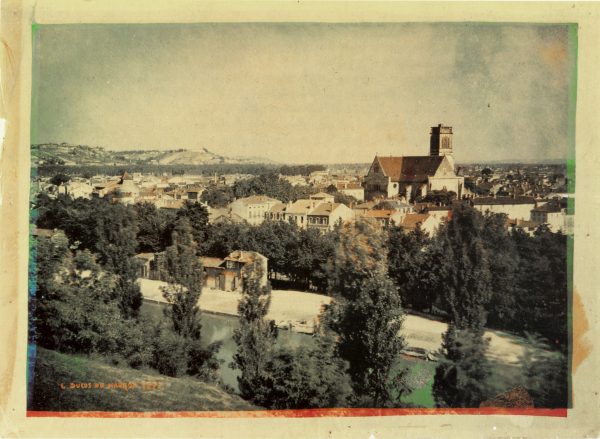
Maxwell cre­at­ed the image with the help of pho­tog­ra­ph­er Thomas Sut­ton, inven­tor of the sin­gle lens reflex cam­era, but his inter­est lay prin­ci­pal­ly in its demon­stra­tion of his col­or the­o­ry, not its appli­ca­tion to pho­tog­ra­phy in gen­er­al. Six­teen years lat­er, the repro­duc­tion of col­or had not advanced sig­nif­i­cant­ly, though a sub­trac­tive method allowed more sub­tle­ty of light and shade, as you can see in the 1877 exam­ple above by Louis Ducos du Hau­ron. Even so, these nine­teenth-cen­tu­ry images still can­not com­pete for vibran­cy and life­like­ness with hand-col­ored pho­tos from the peri­od. Despite appear­ing arti­fi­cial, hand-tint­ed images like these of 1860s Samu­rai Japan brought a star­tling imme­di­a­cy to their sub­jects in a way that ear­ly col­or pho­tog­ra­phy did not.


It wasn’t until the ear­ly 20th century—with the devel­op­ment of col­or process­es by Gabriel Lipp­man and the Sanger Shep­herd company—that col­or came into its own. Leo Tol­stoy appeared ear­ly in the cen­tu­ry in bril­liant full col­or pho­tos. Paris came alive in col­or images dur­ing WWI. And Sarah Angeli­na Acland, a pio­neer­ing Eng­lish pho­tog­ra­ph­er, took the image above in 1900 using the Sanger Shep­herd method. That process—patented, mar­ket­ed, and sold—thoroughly improved upon Maxwell’s results, but its basic oper­a­tion was near­ly the same: three images, red, green, and blue, com­bined into one.

Note: An ear­li­er ver­sion of this post appeared on our site in 2016.

Relat­ed Con­tent:

The First Pho­to­graph Ever Tak­en (1826)

Hand-Col­ored 1860s Pho­tographs Reveal the Last Days of Samu­rai Japan

The First Col­or Por­trait of Leo Tol­stoy, and Oth­er Amaz­ing Col­or Pho­tos of Czarist Rus­sia (1908)

Venice in Beau­ti­ful Col­or Images 125 Years Ago: The Rial­to Bridge, St. Mark’s Basil­i­ca, Doge’s Palace & More

Josh Jones is a writer and musi­cian based in Durham, NC. Fol­low him at @jdmagness

The Only Time Prince & Miles Davis Jammed Together Onstage: Watch the New Year’s Eve, 1987 Concert

A too-pre­cious genre of inter­net meme depicts depart­ed pub­lic fig­ures who did not know each oth­er in life meet­ing in heav­en with hugs, high-fives, and winc­ing­ly earnest exchanges. These sen­ti­men­tal vignettes are almost too easy to par­o­dy, a kitschy ver­sion of the “what if” game, as in: what if two cre­ative genius­es could col­lab­o­rate in ways they nev­er did before they died?

What if John Lennon had formed a band with Eric Clap­ton—as Lennon him­self had once pro­posed? Or what if a Jimi Hendrix/Miles Davis col­lab­o­ra­tion had come off, as Hen­drix envi­sioned the year before his death? More than just fan­ta­sy base­ball, the exer­cise lets us spec­u­late about how musi­cians who influ­enced each oth­er might evolve if giv­en the chance to jam indef­i­nite­ly.

When it comes to Miles, there are few who haven’t been influ­enced by the jazz great, whether they know it or not. Prince Rogers Nel­son knew it well. The son of a jazz pianist, Prince grew up with Miles’ music. Although he “grav­i­tat­ed to the worlds of rock, pop, and R&B,” writes pianist Ron Dro­tos, Prince “seems to have seen jazz as a way to express him­self in a broad­er way than he could through more com­mer­cial styles alone.”

Prince was so inter­est­ed in explor­ing jazz—and Davis’ par­tic­u­lar form of jazz—in the 80s that he formed a band anony­mous­ly, called Mad­house (actu­al­ly just him and horn play­er Eric Leeds), and released two albums of fusion instru­men­tals. The influ­ence went both ways. “Miles con­sid­ered Prince to have the poten­tial to become anoth­er Duke Elling­ton and even mod­eled his own 1980s music part­ly on Prince’s style,” with 1986’s Tutu stand­ing out as an exam­ple. What if the two musi­cians had worked togeth­er? Can you imag­ine it?

They did not—to our knowl­edge, although Prince’s vault is vast—collaborate on an album, but they did cre­ate one stu­dio track togeth­er, “Can I Play With U?” And the two vir­tu­oso com­posers and musi­cians jammed togeth­er onstage, once, at Pais­ley Park, on New Year’s Eve, 1987. The con­cert was a ben­e­fit for the Min­neso­ta Coali­tion for the Home­less and the last time Prince per­formed the Sign O’ the Times stage show. At the tail end of the con­cert, Davis steps onstage for “an ice-cold appear­ance,” Okay­play­er notes. “As a com­pan­ion to the release of a deluxe edi­tion” of the album, “the late icon’s estate has relin­quished the full two-hour-plus set.”

Watch the con­cert at the top (trust me, don’t just skip ahead to see Davis at 1:43:50). Just above, you can see an hour­long “pre-show” taped with Maya Rudolph, “life­long Prince devo­tee,” Emmy-win­ning come­di­an, and daugh­ter of Min­nie Riper­ton. Oth­er guests include Prince’s long­time side­man and col­lab­o­ra­tor on his jazz project, Eric Leeds. “If you’re here, then you’re cool, like me,” Rudolph jokes, “and you know a lot about Prince.” Or maybe you don’t. Let Rudolph and her guests fill you in, and imag­ine Prince and Davis mak­ing celes­tial jazz-funk for­ev­er, between high-fives, in the Great Beyond.

If you would like to sign up for Open Culture’s free email newslet­ter, please find it here. It’s a great way to see our new posts, all bun­dled in one email, each day.

If you would like to sup­port the mis­sion of Open Cul­ture, con­sid­er mak­ing a dona­tion to our site. It’s hard to rely 100% on ads, and your con­tri­bu­tions will help us con­tin­ue pro­vid­ing the best free cul­tur­al and edu­ca­tion­al mate­ri­als to learn­ers every­where. You can con­tribute through Pay­Pal, Patre­on, and Ven­mo (@openculture). Thanks!

Relat­ed Con­tent:

In 1969 Telegram, Jimi Hen­drix Invites Paul McCart­ney to Join a Super Group with Miles Davis

John Lennon Writes Eric Clap­ton an 8‑Page Let­ter Ask­ing Him to Join the Plas­tic Ono Band for a World Tour on a Cruise Ship

When Miles Davis Dis­cov­ered and Then Chan­neled the Musi­cal Spir­it of Jimi Hen­drix

The Night When Miles Davis Opened for the Grate­ful Dead (1970)

Josh Jones is a writer and musi­cian based in Durham, NC. Fol­low him at @jdmagness

How Ancient Greek Technology Was Used to Sculpt Mount Rushmore

Design­ing their new repub­lic, the Found­ing Fathers of the Unit­ed States of Amer­i­ca looked back to ref­er­ence points in clas­si­cal antiq­ui­ty. That instinct con­tin­ued to shape Amer­i­can endeav­ors long there­after, and not just polit­i­cal ones. Take the exam­ple of Mount Rush­more, one of the coun­try’s most pop­u­lar tourist attrac­tions. Orig­i­nal­ly con­ceived in the ear­ly nine­teen-twen­ties as a moun­tain sculp­ture of Amer­i­ca’s wild-west heroes, a means of rais­ing the sta­tus of the fledg­ling state of South Dako­ta, it was soon changed into a stone trib­ute to four pres­i­dents: Found­ing Fathers George Wash­ing­ton and Thomas Jef­fer­son as well as Abra­ham Lin­coln and Theodore Roo­sevelt.

Mount Rush­more’s sculp­tor Gut­zon Bor­glum sug­gest­ed the switch from region­al fig­ures to nation­al ones, and it would­n’t be the last good idea he would bring to the table. As explained in the Pri­mal Space video above, he also fig­ured out how to repli­cate his ini­tial sculp­ture of the four pres­i­dents, made at one-twelfth-scale, on a 500-foot-tall cliff edge.

Build­ing all the nec­es­sary infra­struc­ture on and around the moun­tain con­sti­tut­ed a major project in and of itself. But when the work­ers got into their har­ness­es, how would they know where to direct their jack­ham­mers into the rock? To guide them, Bor­glum adapt­ed a mechan­i­cal tech­nique used by ancient Greeks to copy stat­ues, a “point­ing machine” that could “mea­sure spe­cif­ic points on a sculp­ture rel­a­tive to a ref­er­ence point,” mak­ing a three-dimen­sion­al shape trans­fer­able from one sculp­ture to anoth­er.

Bor­glum designed a large-scale point­ing machine that could be installed atop the moun­tain and posi­tioned to show work­ers where and how deep to drill. Though the sys­tem worked well, the team could only make progress so fast: after four­teen years, Mount Rush­more remained incom­plete when Bor­glum’s death and World War II put a stop to it alto­geth­er. Yet enough had been fin­ished to give it the icon­ic appear­ance that has made it rec­og­niz­able the world over, if not always by name. When I recent­ly gave a talk about Amer­i­can his­to­ry to some young stu­dents in South Korea, where I live, one of them iden­ti­fied a pho­to of Mount Rush­more as Mount Olym­pus — and, in a civ­i­liza­tion­al sense, maybe she was on to some­thing.

Relat­ed Con­tent:

Behold Ancient Egypt­ian, Greek & Roman Sculp­tures in Their Orig­i­nal Col­or

The Met­ro­pol­i­tan Muse­um of Art Restores the Orig­i­nal Col­ors to Ancient Stat­ues

How Ancient Greek Stat­ues Real­ly Looked: Research Reveals Their Bold, Bright Col­ors and Pat­terns

3D Scans of 7,500 Famous Sculp­tures, Stat­ues & Art­works: Down­load & 3D Print Rodin’s Thinker, Michelangelo’s David & More

How Mon­u­ment Val­ley Became the Most Icon­ic Land­scape of the Amer­i­can West

Based in Seoul, Col­in Marshall writes and broad­casts on cities, lan­guage, and cul­ture. His projects include the Sub­stack newslet­ter Books on Cities and the book The State­less City: a Walk through 21st-Cen­tu­ry Los Ange­les. Fol­low him on the social net­work for­mer­ly known as Twit­ter at @colinmarshall.

Why Ancient Romans Paid a Fortune for the Color Purple — More Than Even Silver

Pur­ple may not be one of the most pop­u­lar col­ors in the appar­el of our age, but if you want it — as cer­tain cul­tur­al fig­ures have amply demon­strat­ed — you can get as much of it as you like, even if you don’t belong to the aris­toc­ra­cy. That was­n’t the case in antiq­ui­ty, as explained by ancient-his­to­ry YouTu­ber Gar­rett Ryan in the new video from his chan­nel Told in Stone above. Back then, long before the inven­tion of syn­thet­ic dyes, human­i­ty had to get all its col­ors from nature, and some of those nat­ur­al sources were more abun­dant and acces­si­ble than oth­ers. To pro­duce splen­did “Tyr­i­an pur­ple” required the mucus of sea snails, and not just any sea snails: only three species, col­lec­tive­ly referred to as murex, would do.

This par­tic­u­lar pur­ple, as Ryan explains, “was vir­tu­al­ly immune to wash­ing and weath­er­ing,” unlike the veg­etable dyes com­mon­ly used in antiq­ui­ty, and per­haps that strength inspired the leg­end that it was dis­cov­ered by Her­cules him­self.

Though its recipe has nev­er quite been repli­cat­ed in moder­ni­ty, it seems to have required a near­ly Her­culean labor to exe­cute, with each batch of ten thou­sand snails pro­duc­ing a sin­gle gram of dye. Even ancient Roman sen­a­tors got just one pur­ple stripe each on their togas; full pur­ple was reserved for tri­umph­ing gen­er­als and emper­ors. In some ages, under emper­ors like Nero, pur­ple — at least in its most lux­u­ri­ant shades — was for­bid­den to the com­mon peo­ple.

Not that most of them could have afford­ed it any­way, in Rome or oth­er ancient civ­i­liza­tions. “In clas­si­cal Athens, a pur­ple cloak cost three minas, or 300 drach­mas, when a fam­i­ly of four could live com­fort­ably for a year on 200,” Ryan explains. “The finest pur­ple cloth was worth its weight in sil­ver, and an espe­cial­ly rich gar­ment could cost two tal­ents: 12,000 drach­mas.” Dur­ing the reign of Augus­tus, when impe­r­i­al legionar­ies earned 900 ses­ter­tii a year, “a cloak of sec­ond-rate pur­ple” might sell for 10,000. Cal­cu­lat­ing from Dio­cle­tian’s Price Edict, you could the­o­ret­i­cal­ly trade a few pounds of pur­ple silk for 75,000 pints of beer, 7,500 “suc­cu­lent sow udders,” 750 pheas­ants, “a sin­gle first-class male lion,” and 150 law­suits: the mak­ings of quite a high time in Ancient Rome.

Relat­ed con­tent:

How the Ancient Greeks & Romans Made Beau­ti­ful Pur­ple Dye from Snail Glands

Behold Ancient Egypt­ian, Greek & Roman Sculp­tures in Their Orig­i­nal Col­or

Dis­cov­er Harvard’s Col­lec­tion of 2,500 Pig­ments: Pre­serv­ing the World’s Rare, Won­der­ful Col­ors

Why Most Ancient Civ­i­liza­tions Had No Word for the Col­or Blue

Prince Gets an Offi­cial Pur­ple Pan­tone Col­or

Based in Seoul, Col­in Marshall writes and broad­casts on cities, lan­guage, and cul­ture. His projects include the Sub­stack newslet­ter Books on Cities and the book The State­less City: a Walk through 21st-Cen­tu­ry Los Ange­les. Fol­low him on the social net­work for­mer­ly known as Twit­ter at @colinmarshall.

David Lynch’s Weird Espresso Maker Gets Taken for a Test Drive

David Lynch loved his cof­fee. For decades, the film­mak­er let cof­fee fuel his cre­ativ­i­ty, drink­ing five, six, even sev­en cups per day at Bob’s Big Boy. Famous­ly, Lynch cel­e­brat­ed cof­fee in Twin Peaks (remem­ber the line, “That’s a damn fine cup of cof­fee!”), and lat­er direct­ed a whole mini-sea­son of Twin Peaks in the form of Japan­ese cof­fee com­mer­cials. Then, in 2006, the direc­tor launched his own line of organ­ic cof­fee, sold at Whole Foods.

When the film­mak­er died this past Jan­u­ary, he left behind no short­age of cof­fee paraphernalia—ranging from a high-end La Mar­zoc­co espres­so machine to some run-of-the-mill devices. Take, for exam­ple, a fair­ly ordi­nary “Mr. Cof­fee” cof­fee mak­er that sold at auc­tion for $4,550. Or a 1970s elec­tric espres­so mak­er made of met­al and orange plas­tic. Above, the cof­fee con­nois­seur James Hoff­mann takes the orange machine for a test dri­ve. (He paid near­ly $2,000 for it, after all.) As for the ver­dict — no spoil­ers here. You’ll have to see for your­self.

If you would like to sign up for Open Culture’s free email newslet­ter, please find it here. It’s a great way to see our new posts, all bun­dled in one email, each day.

If you would like to sup­port the mis­sion of Open Cul­ture, con­sid­er mak­ing a dona­tion to our site. It’s hard to rely 100% on ads, and your con­tri­bu­tions will help us con­tin­ue pro­vid­ing the best free cul­tur­al and edu­ca­tion­al mate­ri­als to learn­ers every­where. You can con­tribute through Pay­Pal, Patre­on, and Ven­mo (@openculture). Thanks!

Relat­ed Con­tent 

When David Lynch Direct­ed a Mini-Sea­son of Twin Peaks in the Form of Japan­ese Cof­fee Com­mer­cials

How to Make Cof­fee in the Bialet­ti Moka Pot: The “Ulti­mate Techique”

The Birth of Espres­so: How the Cof­fee Shots The Fuel Our Mod­ern Life Were Invent­ed

An Espres­so Mak­er Made in Le Corbusier’s Bru­tal­ist Archi­tec­tur­al Style: Raw Con­crete on the Out­side, High-End Parts on the Inside

One-in-70-Trillion: An Evolutionary Biologist Explains the Mind-Bending Probability of Our Existence

At a 1998 con­fer­ence on tech­nol­o­gy and life, The Hitch­hik­er’s Guide to the Galaxy author Dou­glas Adams once pro­posed the notion of a sen­tient pud­dle. Imag­ine it “wak­ing up one morn­ing and think­ing, ‘This is an inter­est­ing world I find myself in — an inter­est­ing hole I find myself in — fits me rather neat­ly, does­n’t it? In fact, it fits me stag­ger­ing­ly well, must have been made to have me in it!’ ” No mat­ter how much intel­li­gence it may some­how have attained, this pud­dle does­n’t real­ize that its shape was dic­tat­ed by its envi­ron­ment, not the oth­er way around. Nor does it seem to real­ize on just how many fac­tors its very exis­tence is con­tin­gent; to its mind, this is a pud­dle’s world, and the rest of us are just liv­ing in it.

Of course, the rest of us are in just the same sit­u­a­tion. In the 70-minute Big Think video above, evo­lu­tion­ary devel­op­men­tal biol­o­gist Sean B. Car­roll puts our pres­ence on Earth in per­spec­tive, begin­ning with the var­i­ous fac­tors that hap­pened to con­verge to make com­plex life pos­si­ble on this plan­et at all. “A huge num­ber of things had to go right for our species to exist, and for each of us indi­vid­u­al­ly to exist,” he says, and that’s true on “the cos­mo­log­i­cal scale, the geo­log­i­cal scale, and the bio­log­i­cal scale.”

One impor­tant event is the aster­oid impact that “reset” life on Earth 66 mil­lion years ago, which trig­gered a grad­ual cool­ing of the plan­et, and anoth­er was the tec­ton­ic move­ment that pushed togeth­er what we now know as Asia and the Indi­an sub­con­ti­nent. A result of these and oth­er unlike­ly occur­rences was the “bios­phere” in which we and all oth­er extant species live today.

What about you and me in par­tic­u­lar? Nei­ther of us, as Car­roll tells it here and in his book A Series of For­tu­nate Events: Chance and the Mak­ing of the Plan­et, Life, and You, should feel that our place was guar­an­teed. In human repro­duc­tion, when two par­ents get togeth­er and “that one lucky sperm makes it and com­bines with that one egg at that moment, that’s about a one-in-70-tril­lion event, genet­i­cal­ly speak­ing.” This can be dif­fi­cult to inter­nal­ize, since our own exis­tence is all we’ve ever known, in the man­ner of Adams’ sen­tient pud­dle. Even “as the sun ris­es in the sky and the air heats up and as, grad­u­al­ly, the pud­dle gets small­er and small­er,” it con­tin­ues “fran­ti­cal­ly hang­ing on to the notion that every­thing’s going to be alright, because this world was meant to have him in it, was built to have him in it.” There’s a les­son for human­i­ty in that sto­ry, and one that has­n’t become any less urgent in the past 27 years.

Relat­ed Con­tent:

Dis­cov­er “Jour­ney of the Uni­verse,” a Mul­ti­me­dia Project That Explores Humanity’s Place in the Epic His­to­ry of the Cos­mos

The His­to­ry of the Earth (All 4.5 Bil­lion Years) in 1 Hour: A Mil­lion Years Cov­ered Every Sec­ond

Big His­to­ry: David Chris­t­ian Cov­ers 13.7 Bil­lion Years of His­to­ry in 18 Min­utes

An Astronaut’s Guide to Life on Earth by Com­man­der Chris Had­field: The Viral Book Trail­er

Who’s Out There?: Orson Welles Nar­rates a Doc­u­men­tary Ask­ing Whether There’s Extrater­res­tri­al Life in the Uni­verse (1975)

Carl Sagan Presents a Mini-Course on Earth, Mars & What’s Beyond Our Solar Sys­tem: For Kids and Adults (1977)

Based in Seoul, Col­in Marshall writes and broad­casts on cities, lan­guage, and cul­ture. His projects include the Sub­stack newslet­ter Books on Cities and the book The State­less City: a Walk through 21st-Cen­tu­ry Los Ange­les. Fol­low him on the social net­work for­mer­ly known as Twit­ter at @colinmarshall.


« Go BackMore in this category... »
Quantcast