See Vermeer’s Girl with a Pearl Earring in 3D in a New 108-Gigapixel Scan

You may believe that you’ve had a close enough view of Johannes Ver­meer’s Girl with a Pearl Ear­ring. You may have gone to The Hague and seen the paint­ing in per­son at the Mau­rit­shuis. You may have zoomed into the ten bil­lion-pix­el scan we fea­tured here on Open Cul­ture in 2021. But if you haven’t spent time with the new 108 bil­lion-pix­el scan, can you real­ly claim to have seen Girl with a Pearl Ear­ring at all?

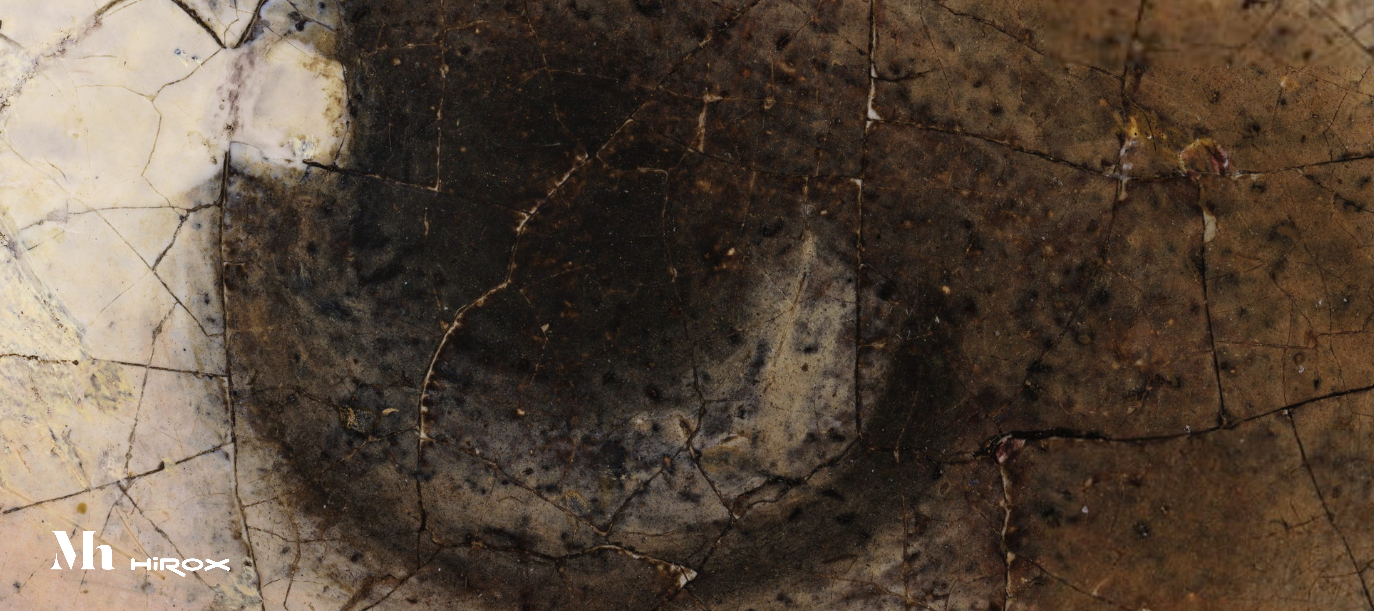
At that 108-gigapix­el res­o­lu­tion, notes Jason Kot­tke, “each pix­el is 1.3 microns in size — 1000 microns is 1 mil­lime­ter.” You can learn more about the tech­nol­o­gy behind the project in this mak­ing-of video pro­duced by Hirox Europe, the local branch of the Japan­ese dig­i­tal micro­scope com­pa­ny respon­si­ble for both the ten bil­lion-pix­el scan and this 108 bil­lion-pix­el one, which neces­si­tat­ed 88 hours of non-stop scan­ning this rel­a­tive­ly small can­vas of 15 inch­es by 17.5 inch­es, a process that result­ed in 41,000 3D images.

Yes, 3D images: though Girl with a Pearl Ear­ring, known as “the Mona Lisa of the North,” may be known far and wide in flat rep­re­sen­ta­tions on pages, screens, posters, and T‑shirts, it is, after all, a work of oil on can­vas.

Ver­meer achieved his ultra-real­is­tic effects not just by putting the right col­ors in the right places, but apply­ing them at the right thick­ness­es and with the right tex­tures — all of which have been repli­cat­ed in a “mega-sized” phys­i­cal 3D print, 100 times larg­er than the orig­i­nal work, com­mis­sioned by the Mau­rit­shuis for its Who’s that Girl? exhi­bi­tion.

You can per­form your own topo­graph­i­cal exam­i­na­tion of sec­tions of the paint­ing — the eyes, the lips, a fold of the tur­ban, the ear­ring, and even the reflec­tion on the ear­ring — by click­ing the “3D” but­ton at the bot­tom of the scan’s view­ing inter­face.  A look this close reveals much about how Ver­meer cre­at­ed this world-famous image, as well as how it’s weath­ered the past 360 years. It does not reveal, of course, the answers to such long-stand­ing mys­ter­ies as the iden­ti­ty of the sub­ject or the moti­va­tions behind her strik­ing pre­sen­ta­tion. Whether or not the girl with the pearl ear­ring even exist­ed, we can, at this point, be sure of one thing: she must feel seen. Enter the new 108 bil­lion-pix­el scan here.

via Kot­tke

Relat­ed con­tent:

Based in Seoul, Col­in Marshall writes and broad­casts on cities, lan­guage, and cul­ture. His projects include the Sub­stack newslet­ter Books on Cities and the book The State­less City: a Walk through 21st-Cen­tu­ry Los Ange­les. Fol­low him on the social net­work for­mer­ly known as Twit­ter at @colinmarshall.

Hear the First Recording of the Human Voice (1860)

When inven­tor Édouard-Léon Scott de Mar­t­inville sang a nurs­ery rhyme into his phonoau­to­gram in 1860, he had no plans to ever play back this record­ing. A pre­cur­sor to the wax cylin­der, the phonoau­to­gram took inputs for the study of sound waves, but could not be turned into an out­put device. How amaz­ing then, that 150 or so years lat­er, we can hear the voice of Scott in what is now con­sid­ered the first ever record­ing of human sound.

What you will hear in the above video are the var­i­ous stages of recon­struct­ing and reverse engi­neer­ing the voice that sang on that April day in 1860, until, like wip­ing away decades of dirt and soot, the orig­i­nal art is revealed.

Scott had looked to the inven­tion of pho­tog­ra­phy and won­dered if some­thing sim­i­lar could be done with sound waves, focused as he was on improv­ing stenog­ra­phy. And so the phonoau­to­gram took in sound vibra­tions through a diaphragm, which moved a sty­lus against a rotat­ing cylin­der cov­ered in lamp­black. What was left was a wig­gly line in a con­cen­tric cir­cle.

But how to play them back? That was the prob­lem. Scott’s inven­tion nev­er turned a prof­it and he went back to book­selling. The inven­tion and some of the paper cylin­ders went into muse­ums.

In 2008, Amer­i­can audio his­to­ri­ans dis­cov­ered the scrib­bles and turned to the Lawrence Berke­ley Nation­al Lab­o­ra­to­ry and a soft­ware called IRENE. The soft­ware was designed to extract sounds from wax cylin­ders with­out touch­ing the del­i­cate sur­faces, and the first pass revealed what they thought at first was a young woman or child singing “Au Clair de la lune,” the French nurs­ery rhyme (not the Debussy piano work).

How­ev­er, a fur­ther exam­i­na­tion of Scott’s notes revealed that the record­ing was at a much slow­er speed, and it was a man—most prob­a­bly Scott—singing the lul­la­by.

The video shows the stages that brought Scott back to life: Denois­ing a lot of extra­ne­ous sound; stretch­ing the record­ing back to nat­ur­al time; “tun­ing and quantizing”–correcting for imper­fec­tions in the human-turned cylin­der; clean­ing up har­mon­ics; and final­ly adding fur­ther har­mon­ics, reverb and a stereo effect.

The result is less an unrec­og­niz­able ghost sig­nal and more a touch­ing sound of human­i­ty, desir­ing some­how to have their voice live on.

Note: An ear­li­er ver­sion of this post appeared on our site in 2019.

Relat­ed Con­tent:

The Old­est Voic­es That We Can Still Hear: Hear Audio Record­ings of Ghost­ly Voic­es from the 1800s

Down­load 10,000 of the First Record­ings of Music Ever Made, Cour­tesy of the Uni­ver­si­ty of Cal­i­for­nia-San­ta Bar­bara 

Opti­cal Scan­ning Tech­nol­o­gy Lets Researchers Recov­er Lost Indige­nous Lan­guages from Old Wax Cylin­der Record­ings

Hear Singers from the Met­ro­pol­i­tan Opera Record Their Voic­es on Tra­di­tion­al Wax Cylin­ders

400,000+ Sound Record­ings Made Before 1923 Have Entered the Pub­lic Domain

Ted Mills is a free­lance writer on the arts. You can read his oth­er arts writ­ing at tedmills.com and/or watch his films here.


Was William Shakespeare’s Marriage Closer—and Less Estranged—Than We Thought?: A 17th-Century Letter Changes What We Know About the Bard’s Life.

Image via Here­ford Cathe­dral and Here­ford Map­pa Mun­di Trust

At this point, every aspect of William Shake­speare’s life has pro­duced more spec­u­la­tion than any of us could digest in a life­time. That goes for his pro­fes­sion­al life, of course, but also his even more scant­i­ly doc­u­ment­ed per­son­al life. As far as his mar­riage is con­cerned, the known facts are these: on Novem­ber 27th, 1582 a mar­riage license was issued in Worces­ter to the 18-year-old William Shake­speare and the approx­i­mate­ly 26-year-old Anne Hath­away. Six months lat­er came the first of their three chil­dren, Susan­na. For most of his pro­fes­sion­al life, William lived in Lon­don, while Anne — willed only her hus­band’s “sec­ond-best bed” — remained in his home­town of Strat­ford-upon-Avon.

Accord­ing to one com­mon inter­pre­ta­tion, the Shake­spear­es’ was a shot­gun wed­ding avant la let­tre, moti­vat­ed less by romance than expe­di­en­cy. That would cer­tain­ly explain their appar­ent choice to live apart, though William’s career would prob­a­bly have brought him to Lon­don any­way, and with­out a good rea­son to be in the city, it was­n’t a bad idea to keep the kids out of plague range. (As for his best bed, it would cus­tom­ar­i­ly have been reserved for guests.) But accord­ing to a new inter­pre­ta­tion of an old doc­u­ment by the Uni­ver­si­ty of Bris­tol pro­fes­sor Matthew Steggle, the cou­ple could not only have remained in com­mu­ni­ca­tion, but also lived togeth­er in the cap­i­tal for a time.

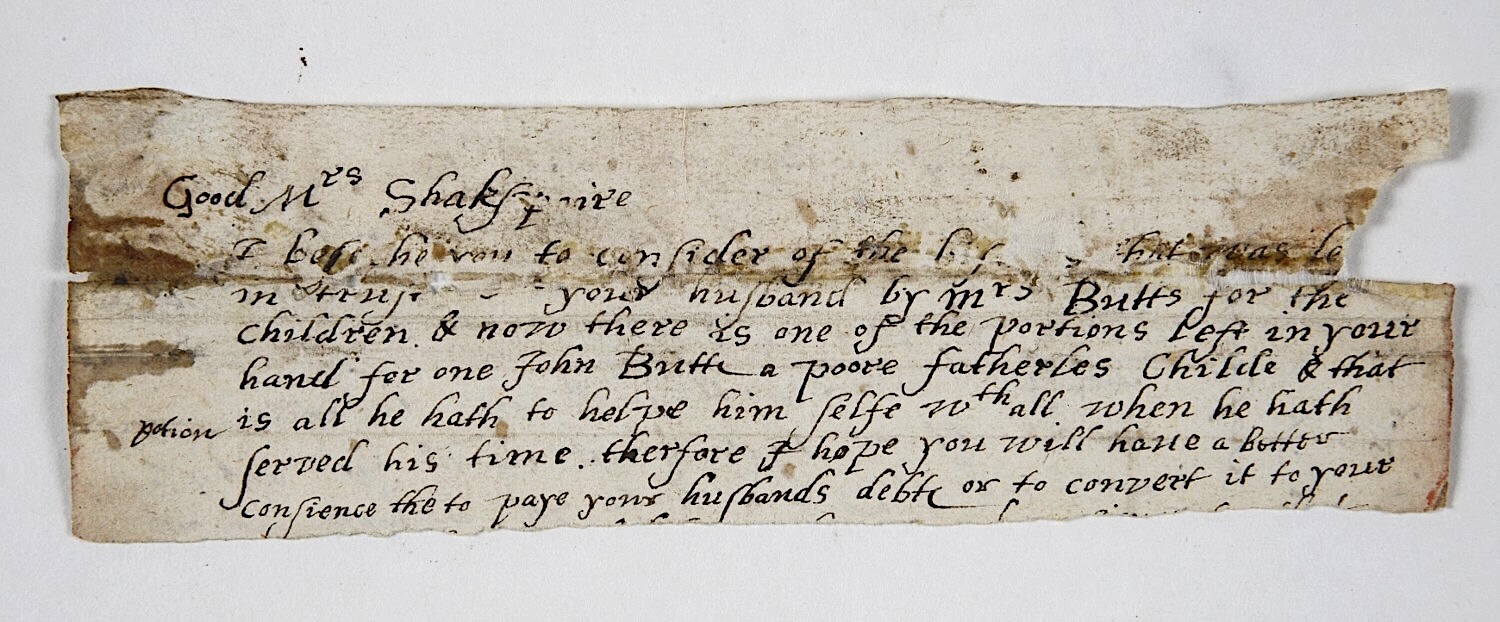
“Here­ford Cathe­dral Library holds a frag­men­tary sev­en­teenth-cen­tu­ry let­ter addressed to a ‘Mrs Shak­spaire,’ con­cern­ing her husband’s deal­ings with a father­less appren­tice,” writes Steggle in his research paper recent­ly pub­lished in the jour­nal Shake­speare. “Of the Shake­spear­es record­ed in Lon­don, William Shake­speare is the only viable can­di­date to fit with the letter’s details.” In Steggle’s analy­sis, it “paints a pic­ture of William and Anne Shake­speare togeth­er in Lon­don, and liv­ing, per­haps around 1599–1603, in Trin­i­ty Lane. It fur­ther sug­gests an Anne Shake­speare who is not absent from her husband’s Lon­don life, but present and engaged in his finan­cial and social net­works.”

The New York Times’ Ephrat Livni quotes Steggle as say­ing that “this let­ter, if it belongs to them, offers a glimpse of the Shake­spear­es togeth­er in Lon­don, both involved in social net­works and busi­ness mat­ters, and, on the occa­sion of this request, pre­sent­ing a unit­ed front against impor­tu­nate requests to help poor orphans.” This, Livni adds, would “lend some heft to fem­i­nist read­ings of Shakespeare’s life,” as well as to the pop-cul­ture trend of “rethink­ing the mar­riage and Hathaway’s role in it.” Each era thus con­tin­ues to cre­ate the Shake­speare for whom it feels the need — and the Mrs. Shake­speare as well.

Relat­ed con­tent:

Free Course: A Sur­vey of Shakespeare’s Plays

Why Should We Read William Shake­speare? Four Ani­mat­ed Videos Make the Case

Behold Shakespeare’s First Folio, the First Pub­lished Col­lec­tion of Shakespeare’s Plays, Pub­lished 400s Year Ago (1623)

The Only Sur­viv­ing Script Writ­ten by Shake­speare Is Now Online

Did Shake­speare Write Pulp Fic­tion? (No, But If He Did, It’d Sound Like This)

Did Bach’s Wife Com­pose Some of “His” Mas­ter­pieces? A New Doc­u­men­tary Says Yes

Based in Seoul, Col­in Marshall writes and broad­casts on cities, lan­guage, and cul­ture. His projects include the Sub­stack newslet­ter Books on Cities and the book The State­less City: a Walk through 21st-Cen­tu­ry Los Ange­les. Fol­low him on the social net­work for­mer­ly known as Twit­ter at @colinmarshall.

How Eyes Evolved: A Fascinating Tour Through the Animal Kingdom

Above, Lars Schmitz, a pro­fes­sor at Clare­mont McKen­na Col­lege, guides us “through a giant tree of life map­ping the evo­lu­tion of eyes in the ani­mal king­dom: how they work, why they’ve tak­en the form they have, and the evo­lu­tion­ary advan­tages they’ve unlocked across species.” The video comes cour­tesy of Wired. It’s 36 min­utes and down­right fas­ci­nat­ing.

If you would like to sign up for Open Culture’s free email newslet­ter, please find it here. It’s a great way to see our new posts, all bun­dled in one email, each day.

If you would like to sup­port the mis­sion of Open Cul­ture, con­sid­er mak­ing a dona­tion to our site. It’s hard to rely 100% on ads, and your con­tri­bu­tions will help us con­tin­ue pro­vid­ing the best free cul­tur­al and edu­ca­tion­al mate­ri­als to learn­ers every­where. You can con­tribute through Pay­Pal, Patre­on, and Ven­mo (@openculture). Thanks!

Relat­ed Con­tent 

Ani­mals Laugh Too: UCLA Study Finds Laugh­ter in 65 Species, from Rats to Cows

16,000 Pages of Charles Darwin’s Writ­ing on Evo­lu­tion Now Dig­i­tized and Avail­able Online

Carl Sagan Explains Evo­lu­tion in an 8‑Minute Ani­ma­tion

Free Online Biol­o­gy Cours­es

Stream Online Monty Python and the Holy Grail Free on Its 50th Anniversary

This year, YouTube cel­e­brat­ed its twen­ti­eth anniver­sary, prompt­ing younger users to won­der what life could have been like before it. The fifti­eth anniver­sary of Mon­ty Python and the Holy Grail, which pre­miered in April of 1975, has inspired sim­i­lar reflec­tion among com­e­dy enthu­si­asts. It can be dif­fi­cult, at this point, to imag­ine one­self back in a cul­ture not yet dis­rupt­ed by Mon­ty Python’s rig­or­ous­ly absurd log­ic, scat­ter­shot satire, and delib­er­ate break­ing of nar­ra­tive and social con­ven­tion — a cul­ture, indeed, where that sort of thing could be feared too dan­ger­ous for tele­vi­sion and film.

It was their BBC sketch series Mon­ty Python’s Fly­ing Cir­cus that intro­duced this comedic sen­si­bil­i­ty first to Britain, and then to the world. Between that show’s third and fourth sea­sons, the Pythons — Gra­ham Chap­man, John Cleese, Eric Idle, Ter­ry Jones, Michael Palin, and Ter­ry Gilliam — took on the side project of cre­at­ing their own cin­e­mat­ic re-inter­pre­ta­tion of Arthuri­an leg­end.

With a mod­est bud­get fur­nished by Led Zep­pelin, Pink Floyd, Jethro Tul­l’s Ian Ander­son, and oth­er investors con­nect­ed to the music world, they plunged them­selves into a grimy, unglam­orous vision of the Mid­dle Ages, punc­tu­at­ed by inex­plic­a­ble anachro­nism and sat­u­rat­ed with an icon­o­clas­tic dis­re­gard for received wis­dom and trumped-up glo­ry.

There the Pythons told a sto­ry that, while per­haps lack­ing in nar­ra­tive struc­ture — to say noth­ing of his­tor­i­cal real­ism — more than com­pen­sates in sheer com­ic momen­tum. By all accounts, it holds up half a cen­tu­ry on, even for those view­ers who’ve already seen it so many times as to have invol­un­tar­i­ly com­mit­ted every joke to mem­o­ry. In cel­e­bra­tion of its anniver­sary, the film has become avail­able to stream free (albeit not in all regions of the world) on the offi­cial YouTube Movies & TV chan­nel, where the lat­est gen­er­a­tions of Mon­ty Python fans first dis­cov­ered their work. Even if lines like “I fart in your gen­er­al direc­tion” no longer raise any trans­gres­sive fris­son, there’s still lit­tle on that plat­for­m’s uni­verse of con­tent to match Mon­ty Python and the Holy Grail’s mul­ti­lay­ered silli­ness, whose place in the annals of com­e­dy leg­end has long since been assured.

Relat­ed con­tent:

Ter­ry Gilliam’s Lost Ani­ma­tions from Mon­ty Python and the Holy Grail Are Now Online

Mon­ty Python’s Eric Idle Breaks Down His Most Icon­ic Char­ac­ters

Mon­ty Python and the Holy Grail Cen­sor­ship Let­ter: We Want to Retain “Fart in Your Gen­er­al Direc­tion”

Mon­ty Python and the Holy Grail Re-Imag­ined as an Epic, Main­stream Hol­ly­wood Film

Mon­ty Python’s Best Phi­los­o­phy Sketch­es

Based in Seoul, Col­in Marshall writes and broad­casts on cities, lan­guage, and cul­ture. His projects include the Sub­stack newslet­ter Books on Cities and the book The State­less City: a Walk through 21st-Cen­tu­ry Los Ange­les. Fol­low him on the social net­work for­mer­ly known as Twit­ter at @colinmarshall.

Marvin Gaye’s Classic Vocals on ‘I Heard It Through the Grapevine’: The A Cappella Version

It’s hard to believe, but Mar­vin Gaye’s clas­sic 1967 record­ing of “I Heard It Through the Grapevine” was orig­i­nal­ly reject­ed by his record label.

The song, about a man’s grief over hear­ing rumors of his lover’s infi­deli­ty, was writ­ten by the leg­endary Motown Records pro­duc­er Nor­man Whit­field and singer Bar­rett Strong. Smokey Robin­son and the Mir­a­cles first record­ed the track in 1966, but that ver­sion got nixed by Motown founder Berry Gordy dur­ing a week­ly qual­i­ty con­trol meet­ing. Then, Whit­field record­ed the song with Gaye in ear­ly 1967, but for some rea­son Gordy did­n’t like that ver­sion either. So Whit­field changed the lyrics a bit and record­ed it with Gladys Knight and the Pips. The fast-tem­po arrange­ment, influ­enced by Aretha Franklin’s “Respect,” was released as a sin­gle in Sep­tem­ber of 1967 and rose to num­ber one on the Bill­board R&B chart.

Gaye’s ver­sion might have been for­got­ten had it not been includ­ed in his 1968 album, In the Groove, where it soon became noticed. “The DJs played it so much off the album,” Gordy said lat­er, “that we had to release it as a sin­gle.”

Gaye’s record­ing of the song became a crossover hit. It rose not only to the top of the R&B charts, but also spent sev­en weeks at the top of the Bill­board Pop Sin­gles chart. It was Motown’s biggest-sell­ing sin­gle up to that time, and the In the Groove album name was soon changed to I Heard It Through the Grapevine.

Gaye was known for his sweet-sound­ing tenor voice, which he could mod­u­late from a bari­tone to a silky high falset­to. Dur­ing the “Grapevine” ses­sions, the singer report­ed­ly quar­reled with Whit­field over the pro­duc­er’s insis­tence that he sing the song in a high rasp. Whit­field pre­vailed, and Gaye’s per­for­mance is one of the great­est of the Motown era. You can hear his clas­sic vocals “a cap­pel­la” in the video above. And for a reminder of Whit­field­’s clas­sic arrange­ment, with its puls­ing elec­tric piano intro­duc­tion and shim­mer­ing strings, see the video below. The Funk Broth­ers, the leg­endary Motown back­ing group, played on the track, as did the back­ing vocal group The Andantes and the Detroit Sym­pho­ny Orches­tra.

Note: An ear­li­er ver­sion of this post appeared on our site in 2013.

Relat­ed Con­tent 

Revis­it­ing Mar­vin Gaye’s “What’s Goin’ On,” and the Album That Opened R&B to Resis­tance: Revis­it­ed 50 Years Lat­er

Zoo Hires Mar­vin Gaye Imper­son­ator to Help Endan­gered Mon­keys “Get It On”

Hear Grace Slick’s Hair-Rais­ing Vocals in the Iso­lat­ed Track for “White Rab­bit” (1967)

Fred­die Mer­cury & David Bowie’s Iso­lat­ed Vocals for Queen’s “Under Pres­sure” (1981)

by | Permalink | Make a Comment ( 1 ) |

The Heavy-Metal Band Disturbed Covered Simon & Garfunkel’s “The Sound of Silence” Ten Years Ago, and It’s Still Topping the Charts

“The Sound of Silence” Is the Most Met­al Song of the Past Decade”: imag­ine that head­line, and the con­trar­i­an cul­ture piece prac­ti­cal­ly writes itself. Not so long ago, Slate was noto­ri­ous for pub­lish­ing that kind of thing, but it seems they’ve now put that sen­si­bil­i­ty behind them — or at least most­ly behind them. “If you’re in the mood for an under­dog sto­ry,” writes that site’s Luke Winkie, “I rec­om­mend perus­ing Bill­board­’s Hard Rock Dig­i­tal Song Sales chart. It is home to, gen­uine­ly, one of the most sub­stan­tial feats of endurance in the his­to­ry of pop­u­lar music, and it shows no sign of slow­ing down any­time soon. I speak, of course, of Dis­turbed’s cov­er of the Simon & Gar­funkel clas­sic ‘The Sound of Silence,’ which has been at, or near, the apex of that chart since 2015.”

While you almost cer­tain­ly know Simon & Gar­funkel, you may not know Dis­turbed, who’ve been steadi­ly pop­u­lar in the met­al world since the release of their debut album The Sick­ness in 2000. Lis­ten to that album’s big sin­gle “Down with the Sick­ness,” and you’re instant­ly trans­port­ed back to the turn of the mil­len­ni­um, when the exag­ger­at­ed­ly rhyth­mic and aggres­sive sub­genre of “nu met­al” reigned supreme.

Enter­tain­ing though the sheer incon­gruity of a nu-met­al ver­sion of “The Sound of Silence” would be, that move­ment had long since flamed out by 2015, when Dis­turbed record­ed their cov­er of Simon & Gar­funkel’s sig­na­ture song. Instead, they take the haunt­ing aus­ter­i­ty of the orig­i­nal in a grand­ly mourn­ful direc­tion, dri­ven by piano, strings, and the kind of cav­ernous sen­si­tiv­i­ty in which met­al acts occa­sion­al­ly indulge.

“Simon & Garfunkel’s ver­sion is best suit­ed for The Grad­u­ate,” writes Winkie, “while Dis­turbed’s take seems tuned for the end-cred­its scroll of a Trans­form­ers flick.” Inclu­sion in a Hol­ly­wood block­buster might have explained the song’s decade-long dom­i­nance of the afore­men­tioned Hard Rock Dig­i­tal Song Sales chart: a minor are­na in itself, but one in which this per­pet­u­al vic­to­ry reflects a wider cul­tur­al phe­nom­e­non. Though young peo­ple may nev­er have heard Dis­turbed’s “The Sound of Silence” — or indeed Simon & Gar­funkel’s — it’s drawn intense and abid­ing enthu­si­asm from lis­ten­ers in their six­ties, sev­en­ties, and eight­ies, for whose approval met­al bands haven’t con­ven­tion­al­ly angled. Nev­er­the­less, it had to mark a high point in Dis­turbed’s career when, after per­form­ing the song on Conan, they received high praise from one par­tic­u­lar­ly dis­tin­guished mem­ber of that demo­graph­ic: a cer­tain Paul Simon.

via Slate

Relat­ed con­tent:

Watch Simon & Gar­funkel Sing “The Sound of Silence” 45 Years After Its Release, and Just Get Haunt­ing­ly Bet­ter with Time

Paul Simon Tells the Sto­ry of How He Wrote “Bridge Over Trou­bled Water” (1970)

Paul Simon Decon­structs “Mrs. Robin­son” (1970)

Fred Armisen & Bill Hader’s Comedic Take on the His­to­ry of Simon and Gar­funkel

Who Invent­ed Heavy Met­al Music?: A Search for Ori­gins

Based in Seoul, Col­in Marshall writes and broad­casts on cities, lan­guage, and cul­ture. His projects include the Sub­stack newslet­ter Books on Cities and the book The State­less City: a Walk through 21st-Cen­tu­ry Los Ange­les. Fol­low him on the social net­work for­mer­ly known as Twit­ter at @colinmarshall.

A Stylish 2,000-Year-Old Roman Shoe Found in a Well


When the Romans pushed their way north into the Ger­man provinces, they built (cir­ca 90 AD) the Saal­burg, a fort that pro­tect­ed the bound­ary between the Roman Empire and the Ger­man­ic trib­al ter­ri­to­ries. At its peak, 2,000 peo­ple lived in the fort and the attached vil­lage, and it remained active until around 260 AD.

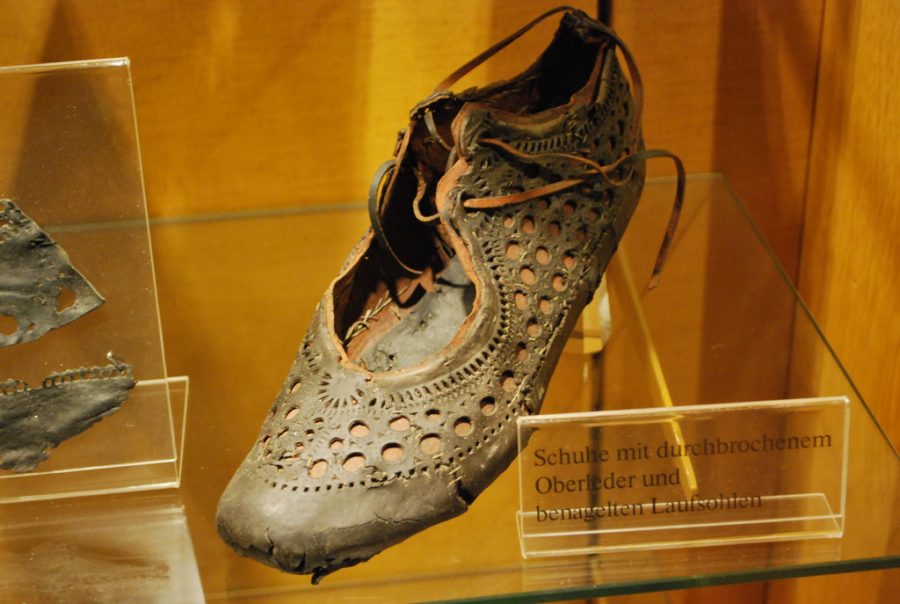
Some­time dur­ing the 19th cen­tu­ry, the Saal­burg was redis­cov­ered and exca­vat­ed, then lat­er ful­ly recon­struct­ed. It’s now a UNESCO World Her­itage site and hous­es the Saal­burg Muse­um, which con­tains many Roman relics, includ­ing a 2,000-year-old shoe, appar­ent­ly found in a local well.

If you think the Ital­ians have mas­tered the craft of mak­ing shoes, well, they don’t have much on their ances­tors. Accord­ing to the site Romans Across Europe, the Romans “were the orig­i­na­tors of the entire-foot-encas­ing shoe.” The site con­tin­ues:

There was a wide vari­ety of shoes and san­dals for men and women. Most were con­struct­ed like mil­i­tary cali­gae, with a one-piece upper nailed between lay­ers of the sole. Many had large open-work areas made by cut­ting or punch­ing cir­cles, tri­an­gles, squares, ovals, etc. in rows or grid-like pat­terns. Oth­ers were more enclosed, hav­ing only holes for the laces. Some very dain­ty women’s and children’s shoes still had thick nailed soles.

The image above, which puts all of the Romans’ shoe-mak­ing skill on dis­play, comes to us via Red­dit and imgur.

Note: An ear­li­er ver­sion of this post appeared on our site in 2016.

If you would like to sign up for Open Culture’s free email newslet­ter, please find it here. It’s a great way to see our new posts, all bun­dled in one email, each day.

If you would like to sup­port the mis­sion of Open Cul­ture, con­sid­er mak­ing a dona­tion to our site. It’s hard to rely 100% on ads, and your con­tri­bu­tions will help us con­tin­ue pro­vid­ing the best free cul­tur­al and edu­ca­tion­al mate­ri­als to learn­ers every­where. You can con­tribute through Pay­Pal, Patre­on, and Ven­mo (@openculture). Thanks!

Relat­ed Con­tent:

The Ancient Romans First Com­mit­ted the Sar­to­r­i­al Crime of Wear­ing Socks with San­dals, Archae­o­log­i­cal Evi­dence Sug­gests

Archae­ol­o­gists Dis­cov­er an Ancient Roman San­dal with Nails Used for Tread

How Wear­ing Ridicu­lous­ly Long Point­ed Shoes Became a Medieval Fash­ion Trend

A Huge Scale Mod­el Show­ing Ancient Rome at Its Archi­tec­tur­al Peak (Built Between 1933 and 1937)

Exquis­ite 2300-Year-Old Scythi­an Woman’s Boot Pre­served in the Frozen Ground of Siberia

by | Permalink | Make a Comment ( 2 ) |

« Go BackMore in this category... »
Quantcast