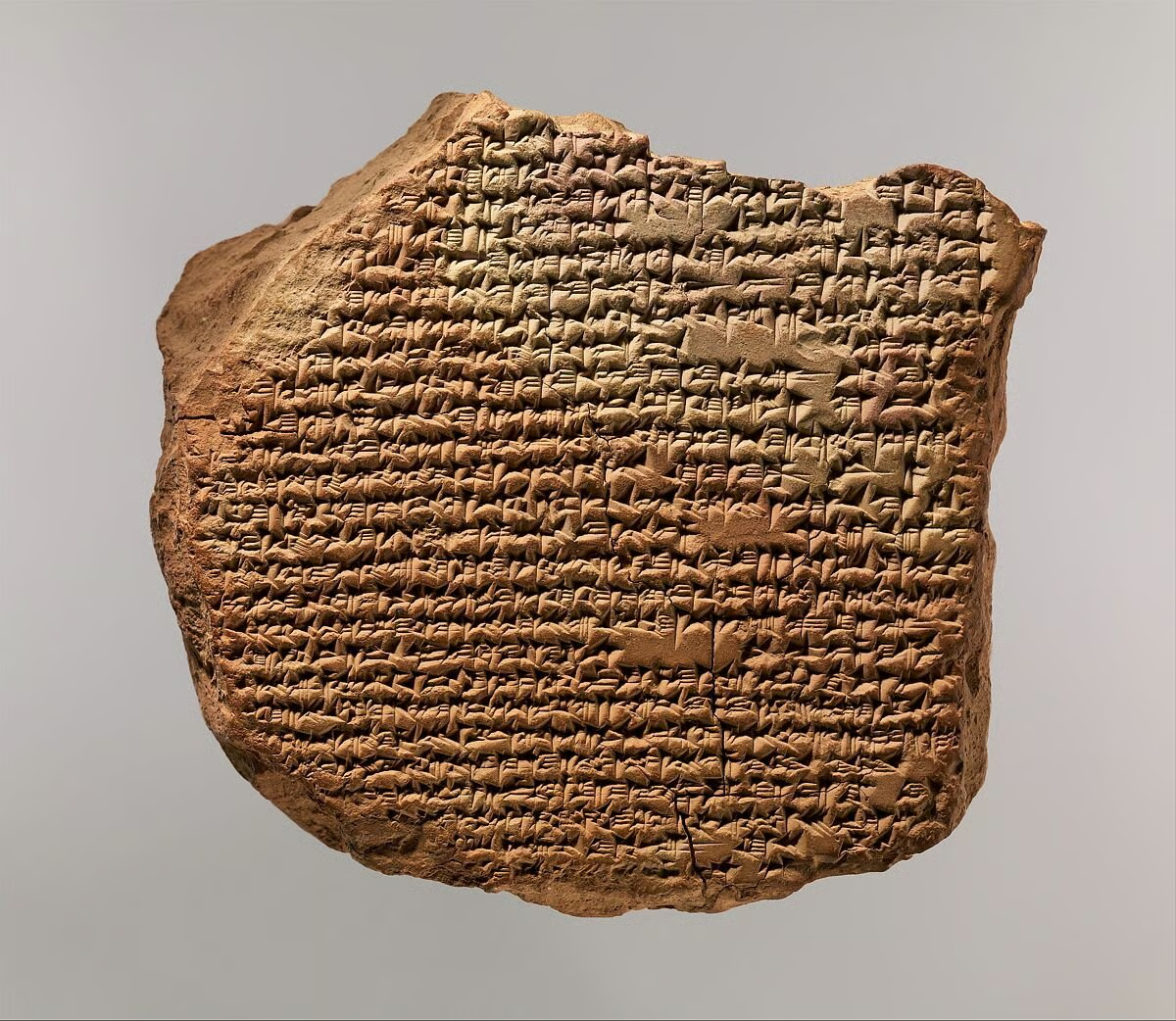
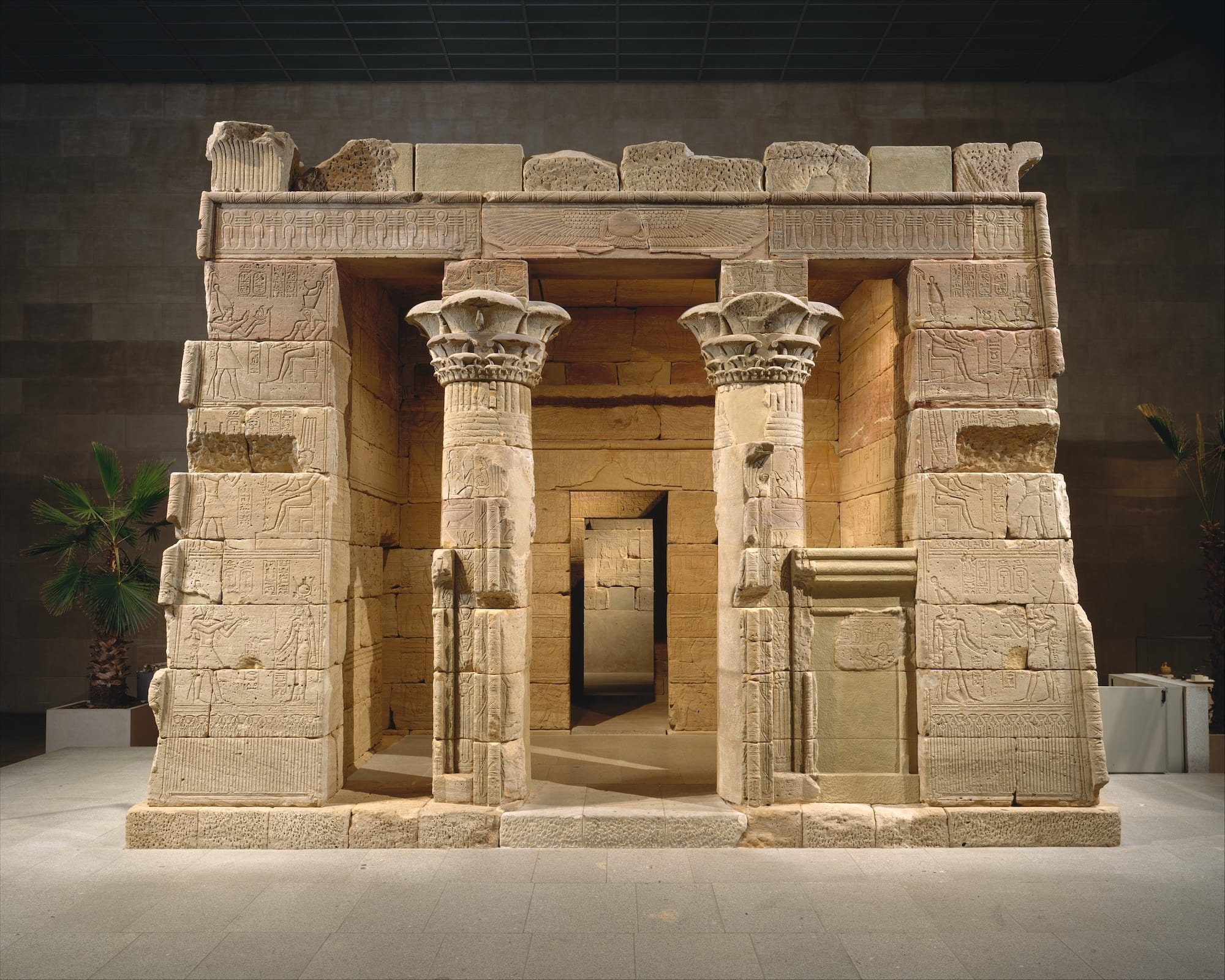
We can go through most of our lives holding out hope of one day seeing in reality such works as van Gogh’s Sunflowers, Monet’s Haystacks, a clay tablet containing actual cuneiform writing with our own eyes, or the ancient Egyptian Temple of Dendur. We can actually come face to face — or rather, face to surface — with all of them, temple included, at New York’s Metropolitan Museum of Art, which contains all those and more artifacts of human civilization than any of us could hope to examine closely in a lifetime. But even if we did, we might only feel tempted to look at them more closely still, even to touch them. That may be an improbable hope, but we can at least get closer than ever now thanks to the Met’s new archive of high-definition 3D scans.
“Viewers can zoom in, rotate, and examine each model, bringing unprecedented access to significant works of art,” says the Met’s official announcement. “The 3D models can also be explored in viewers’ own spaces through augmented reality (AR) on most smartphone and VR headsets, as a resource for research, exploration, and curiosity.”
Highlights include “a marble sarcophagus with lions felling antelope (3rd century); a statue of Horus as a falcon protecting King Nectanebo II (360–343 BCE); Kano Sansetsu’s Old Plum (1646); and a house model by Nayarit artist(s) (200 BCE–300 CE).” Or perhaps you’d prefer an intimate view of an eighteenth-century tile depiction of Mecca, a nineteenth-century marble sculpture of Perseus with the head of Medusa, or a suit of armor belonging to King Henry II of France?
Browsing this archive of more than 100 digitized historical objects, you’ll also notice pieces from Japan like seventeenth-century screens by the artists Kano Sansetsu and Suzuki Kiitsu. These must have been priorities for the Met’s institutional partner in this project, the Japanese television network NHK. It all came about “as part of the public broadcaster’s initiative to produce ultra-high definition 3D computer graphics of national treasures and other important artworks,” with “further educational programming and potential content using these cutting-edge, best-in-class models” in the offing. For now, though, the archive offers us more than enough to behold from any possible angle. To do so, just click the “View in 3D” button below the image on the page of your artifact or artwork of choice. It may not be the same as holding the object in your hands, but it’s as close as you’re going to get — unless, of course, you find yourself inspired to pursue the dream of becoming a curator at the Met.
via Colossal
Related content:
Take a New Virtual Reality Tour of the Metropolitan Museum of Art
See Vermeer’s Girl with a Pearl Earring in 3D in a New 108-Gigapixel Scan
OpenVertebrate Presents a Massive Database of 13,000 3D Scans of Vertebrate Specimens
The Earth Archive Will 3D-Scan the Entire World & Create an “Open-Source” Record of Our Planet
Based in Seoul, Colin Marshall writes and broadcasts on cities, language, and culture. He’s the author of the newsletter Books on Cities as well as the books 한국 요약 금지 (No Summarizing Korea) and Korean Newtro. Follow him on the social network formerly known as Twitter at @colinmarshall.




Leave a Reply