Jazz on the Tube: An Archive of 2,000 Classic Jazz Videos (and Much More)

What is the cur­rent state of jazz, you ask? You might ask genre-bend­ing musician/producer/rapper Stephen Elli­son, aka Fly­ing Lotus, who also hap­pens to be the nephew of John and Alice Coltrane. In a recent inter­view, Elli­son lament­ed “it’s all gone quite stale over the past 20 years” and imag­ined that if Miles Davis “came back to Earth and heard a lot of these jazz cats, he’d be mad. He’d lit­er­al­ly be mad, and he’d just go back to where he was dead at.” Giv­en Miles’ infa­mous tem­per and dis­dain for the con­ven­tion­al, this isn’t hard to imag­ine at all. But whether you could call today’s jazz “ele­va­tor music” is a point I leave to oth­ers to debate.

Ah, but what is the state of dig­i­tal jazz preser­va­tion? Now, that is a ques­tion I can answer, at least in some small part, by point­ing you toward Jazz on the Tube. This online resource bills itself as three won­der­ful things in one: “a search­able data­base of thou­sands of care­ful­ly hand picked and anno­tat­ed jazz videos”; “free Video-of-the-Day ser­vice”; and “up-to-date direc­to­ry of jazz clubs, jazz fes­ti­vals, and jazz orga­ni­za­tions world-wide.” You’ll also find there pod­casts and world­wide list­ings of jazz radio sta­tions. But as its title implies, its most ful­some ser­vice offers a list of 2,000 videos from an A‑Z of sev­er­al hun­dred artistsAbbey Lin­coln to Zoot Sims.

Fan­cy some of that nev­er-com­pla­cent Miles Davis mag­ic? Check him out at the top doing “Sanctuary/Spanish Key” in 1970 at the Fill­more (open­ing for Santana—he also opened for Neil Young and the Grate­ful Dead that year). Dig some clas­sic hard bop? Check out the Thelo­nious Monk Quar­tet in Poland, 1966. Like that N’Orleans’ sound? Do not miss Bunk John­son below.

Whether it’s the avant-funk jazz stylings of con­tem­po­rary trio Medes­ki, Mar­tin & Wood or the trad big band swing of Cab Cal­loway you seek, at Jazz on the Tube, you will most sure­ly find them. The breadth of artists, styles, and peri­ods rep­re­sent­ed demon­strates the incred­i­ble range and adapt­abil­i­ty of jazz. If it’s tru­ly gone stale these days, I think we may antic­i­pate that jazz will even­tu­al­ly find new forms its wor­thy ances­tors approve of.

Per­haps you will fall in love with Jazz on the Tube. Per­haps you may find that it’s exact­ly what you need. If so, you should know that they also need you. Although their impres­sive archive of con­tent is “all free to you,” it is not free for them to pro­duce and main­tain. They are cur­rent­ly ask­ing help in the form of month­ly mem­ber­ships or one-time dona­tions. Giv­en the amount of cura­to­r­i­al work they’ve put into this dig­i­tal jazz data­base, and how much enjoy­ment it’s like­ly to bring you, it seems only fair to give back to what they proud­ly describe as a “labor of love.”

Relat­ed Con­tent:

The Great­est Jazz Films Ever Fea­tures Clas­sic Per­for­mances by Miles, Dizzy, Bird, Bil­lie & More

The Cry of Jazz: 1958’s High­ly Con­tro­ver­sial Film on Jazz & Race in Amer­i­ca (With Music by Sun Ra)

1959: The Year that Changed Jazz

The Night When Miles Davis Opened for the Grate­ful Dead in 1970: Hear the Com­plete Record­ings

Jazz Leg­end Jaco Pas­to­rius Gives a 90 Minute Bass Les­son and Plays Live in Mon­tre­al (1982)

Josh Jones is a writer and musi­cian based in Durham, NC. Fol­low him at @jdmagness

Science Journal Nature Will Make Its Archives Free to View Online (Kind of), Dating Back to 1869

A quick note: Nature announced yes­ter­day that it will make all of its arti­cles free to view, read, and anno­tate online. That applies to the his­toric sci­ence jour­nal (launched in 1869) and to 48 oth­er sci­en­tif­ic jour­nals in Macmillan’s Nature Pub­lish­ing Group (NPG). Oth­er titles include Nature Genet­ics, Nature Med­i­cine and Nature Physics.

But there are a whole lot of caveats. The press release reads:

All research papers from Nature will be made free to read in a pro­pri­etary screen-view for­mat that can be anno­tat­ed but not copied, print­ed or down­loaded… The con­tent-shar­ing pol­i­cy … marks an attempt to let sci­en­tists freely read and share arti­cles while pre­serv­ing NPG’s pri­ma­ry source of income — the sub­scrip­tion fees libraries and indi­vid­u­als pay to gain access to arti­cles.

But wait, there are a few more caveats. The archives will be made avail­able to sub­scribers (e.g., researchers at uni­ver­si­ties) as well as 100 media out­lets and blogs, and they can then share the arti­cles (as read-only PDFs) with the rest of the world.  This is all part of a one-year exper­i­ment.

To learn more about this ini­tia­tive, read the press release here.

Not the purest form of Open Cul­ture, I know, but it’s hope­ful­ly worth the quick men­tion.

Relat­ed Con­tent:

Intro­duc­ing Ergo, the New Open Phi­los­o­phy Jour­nal

Read 700 Free eBooks Made Avail­able by the Uni­ver­si­ty of Cal­i­for­nia Press

Exten­sive Archive of Avant-Garde & Mod­ernist Mag­a­zines (1890–1939) Now Avail­able Online

by | Permalink | Make a Comment ( 1 ) |

16,000 Pages of Charles Darwin’s Writing on Evolution Now Digitized and Available Online

Darwin Tree of Life

The Dar­win­ian the­o­ry of evo­lu­tion is an amaz­ing sci­en­tif­ic idea that seems, at least to a layper­son like me, to meet all the cri­te­ria for what sci­en­tists like Ian Glynn praise high­ly as “elegance”—all of them per­haps except one: Sim­plic­i­ty. Evo­lu­tion­ary the­o­ry may seem on its face to be a fair­ly sim­ple expla­na­tion of the facts—all life begins as sin­gle-celled organ­isms, then changes and adapts in response to its envi­ron­ment, branch­ing and devel­op­ing into mil­lions of species over bil­lions of years. But the jour­ney Dar­win took to arrive at this idea was hard­ly straight­for­ward and it cer­tain­ly didn’t arrive in one eure­ka moment of enlight­en­ment.

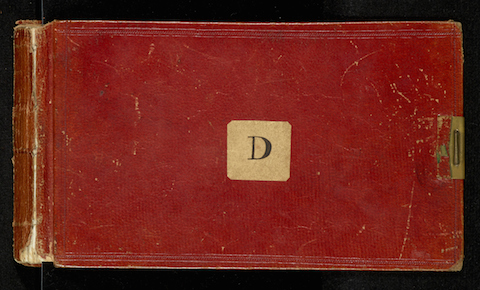
darwin Notebook D

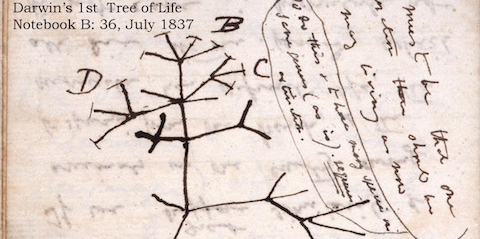
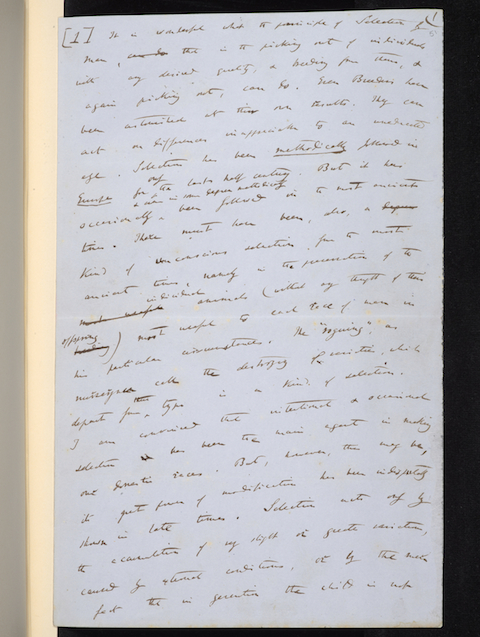
The process for him took over two decades, rep­re­sent­ed by the hun­dreds of pages of notes he left behind, all of which will be freely avail­able online at the Dar­win Man­u­scripts Project at the Amer­i­can Muse­um of Nat­ur­al His­to­ry in 2015. This means 30,000 dig­i­tized doc­u­ments, like the naturalist’s first “Tree of Life” at the top of the page, from a July 1837 note­book entry, and Trans­mu­ta­tion Note­book D above, the first note­book in which Dar­win began work­ing on the the­o­ry of nat­ur­al selec­tion.

The Muse­um has cur­rent­ly announced that it is a lit­tle over the halfway point, with just over 16,000 dig­i­tized doc­u­ments that cov­er, they write, “the 25-year peri­od in which Dar­win became con­vinced of evo­lu­tion; dis­cov­ered nat­ur­al selec­tion; devel­oped expla­na­tions of adap­ta­tion, spe­ci­a­tion, and a branch­ing tree of life and wrote the Ori­gin [of Species].” Direc­tor of the project David Kohn describes that lat­ter famous work as “the mature fruit of a pro­longed process of sci­en­tif­ic explo­ration and cre­ativ­i­ty that began toward the end of his Bea­gle voy­age… and that con­tin­ued to expand in range and deep­en in con­cep­tu­al rig­or through numer­ous well-marked stages.”

mdb56

Now his­to­ri­ans of sci­ence can trace those stages as though they were a fos­sil record, start­ing with that famous H.M.S. Bea­gle voy­age, in which the young Dar­win sailed from South Amer­i­ca to the Pacif­ic Islands—stopping at numer­ous sites, includ­ing the Gala­pa­gos Islands of course, and col­lect­ing sam­ples and mak­ing obser­va­tions. The jour­ney pro­duced a live­ly account, 1839’s Voy­age of the Bea­gle, pre­lude to the ful­ly devel­oped the­o­ry pre­sent­ed 20 years lat­er in On the Ori­gin of Species. Look­ing into the Bea­gle voy­age sec­tion, you’ll find hun­dreds of pages of notes, like that above on Gala­pa­gos mock­ing­birds. Darwin’s hand­writ­ing will present a chal­lenge, which is why, Hyper­al­ler­gic tells us, the project is “adding tran­scrip­tions and a schol­ar­ly struc­ture to its high-res­o­lu­tion images.”

darwin Children's drawing

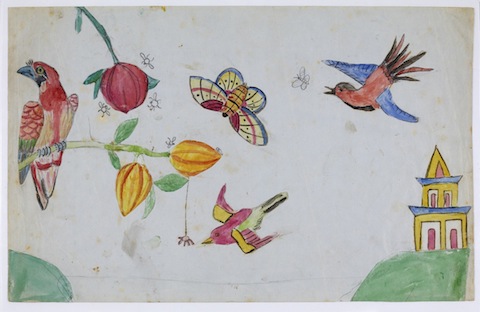
Hyper­al­ler­gic also sums up the remain­ing con­tents of the huge archive, which in addi­tion to the Bea­gle mate­r­i­al will fea­ture every­thing “from the rest of his life, which he spent defend­ing his work.” This means “scrib­blings in books he stud­ied, abstracts, his own book drafts, arti­cles and their revi­sions, jour­nals he read, and his note­books on trans­mu­ta­tion.” You’ll also find “some charm­ing odd­i­ties” like draw­ings by the scientist’s chil­dren (above) on the back of orig­i­nal Ori­gin man­u­script pages. Learn much more about the archive, and Darwin’s life­long work, at the Amer­i­can Muse­um of Nat­ur­al History’s Dar­win Man­u­script Project site.

via io9/Hyper­al­ler­gic

Relat­ed Con­tent:

What Did Charles Dar­win Read? See His Hand­writ­ten Read­ing List & Read Books from His Library Online

Read the Orig­i­nal Let­ters Where Charles Dar­win Worked Out His The­o­ry of Evo­lu­tion

Trace Darwin’s Foot­steps with Google’s New Vir­tu­al Tour of the Gala­pa­gos Islands

New Ani­mat­ed Web Series Makes the The­o­ry of Evo­lu­tion Easy to Under­stand

Josh Jones is a writer and musi­cian based in Durham, NC. Fol­low him at @jdmagness

Behold a Beautiful Archive of 10,000 Vintage Cameras at Collection Appareils

Photosphere

Dig­i­tal pho­tog­ra­phy has bestowed many gifts, and some few hor­rors: self­ies, nat­u­ral­ly, as well as even less dig­ni­fied self-por­traits, of the sort cer­tain politi­cians send out; mass sur­veil­lance, as well as the abil­i­ty of aver­age cit­i­zens to pro­duce impor­tant pieces of evi­dence and to doc­u­ment his­to­ry; hard times for pro­fes­sion­al pho­tog­ra­phers, as well as the full democ­ra­ti­za­tion of the medi­um. What it has almost ren­dered obso­lete is the mech­a­nism that enabled pho­to­graph­ic images in the first place. In place of cam­eras, we have smart­phones, the hat­ed Glass… maybe some­time in the future no exter­nal device at all. Giv­en this tra­jec­to­ry, it’s entire­ly under­stand­able that all sorts of people—steampunks, anti­quar­i­ans, Lud­dites, ana­log fetishists, mid­dle-age hip­sters, etc.—would grow nos­tal­gic not only for the cracked, stri­at­ed mono­chrome pati­na of vin­tage pho­tographs, but also for the boxes—large and small, sim­ple and high­ly complicated—that pro­duced them.

Argus A

And what won­der­ful box­es they were! Before the onslaught of iden­ti­cal, cheap con­sumer point-and-shoots and (gasp!) dis­pos­ables, or the util­i­tar­i­an bricks of pro­fes­sion­al gear, the cam­era was very often a work of art in its own right. Today, we bring you a sam­pling of these objets—ele­gant, intri­cate, stream­lined, and down­right adorable. These are but a tiny frac­tion of the vin­tage cam­era trea­sures you’ll find rep­re­sent­ed at Col­lec­tion Appareils, an online ref­er­ence of 10,000 ana­log cam­eras run by Syl­vain Hal­gand, a French­man sore­ly afflict­ed with the “insid­i­ous dis­ease” of col­lect­ing.

Wit­ness at the top the Pho­to­s­phere No. 1, man­u­fac­tured by the Com­pag­nie Fran­caise de Pho­togra­phie in 1899—a tru­ly beau­ti­ful arti­fact. No less styl­ish, but far more cam­era-like to our eyes, see the Argus A above. Made in the U.S. between 1936 and 1941, this may have been the most pop­u­lar 35mm of all time. Though not as well known as the Leica A, “it’s a safe bet that Argus sold more cam­eras in their first twen­ty years than Leica has sold in their first 70 years.”

Gap Box

Above, we have the first “point and shoot,” the Gap Box 6x9, a curi­ous­ly attrac­tive device made in France in 1950. This cam­era “played a very impor­tant role by mak­ing pho­tog­ra­phy acces­si­ble to the gen­er­al pub­lic,” allow­ing “any­one to take pic­tures at the low­est price and in the most sim­ple way.”

The Compass

Then there are the styl­ized and the stream­lined. Just above, see a very fine machine called The Com­pass, man­u­fac­tured by Swiss watch­mak­er Le Coul­tre between 1937 and 1940. And below, gaze upon the grace­ful Haneel Tri-Vision, made in Los Ange­les in 1946.

Tri-Vision

Almost equal­ly appeal­ing in their design sim­plic­i­ty are the irre­sistibly cute minia­ture cam­eras, such as the “Mick­ey Mouse” below. Man­u­fac­tured in Ger­many in 1958, these tiny things—despite the “copy­right” notice on the lens—may have dis­ap­peared quick­ly “due to them not actu­al­ly being sanc­tioned by the Dis­ney Cor­po­ra­tion.” They were, how­ev­er, sold with a “large card­board Mick­ey Mouse that ‘held’ the cam­era.”

Mickey Mouse

See also the Coro­net Midget. Made in Eng­land in 1934, this 5‑shilling cam­era “must be one of the most pop­u­lar of all small cam­eras to col­lect.” The com­pa­ny mar­ket­ed its own 6‑exposure film for the Midget, which came in a choice of five col­ors.

Coronet Midget

Coronet Midget 2

From the cou­ture to the high-tech to the quirky and inven­tive (like the Lark “Sar­dine Can” below), the French vin­tage cam­era archive makes avail­able a visu­al his­to­ry of the cam­era that may exist nowhere else. It is the his­to­ry of an object that defined the 20th cen­tu­ry, and that may ful­ly dis­ap­pear some­time soon in the 21st. And while we can spend sev­er­al hours a day mar­veling over the prod­ucts of these fine devices, it’s a rare treat to see the things them­selves in such an aston­ish­ing vari­ety of shapes, sizes, col­ors, and degrees of design inge­nu­ity. Take some time to get acquaint­ed with the evo­lu­tion of the hand­held cam­era before dig­i­tal tech­nol­o­gy final­ly ren­ders it extinct.

Lark Sardine

Via Laugh­ing Squid/ Messy Nessy Chic/PetaPix­el

Images cour­tesy of Col­lec­tion Appareils.

Relat­ed Con­tent:

Yale Launch­es an Archive of 170,000 Pho­tographs Doc­u­ment­ing the Great Depres­sion

Design­ers Charles & Ray Eames Cre­ate a Pro­mo­tion­al Film for the Ground­break­ing Polaroid SX-70 Instant Cam­era (1972)

Alfred Stieglitz: The Elo­quent Eye, a Reveal­ing Look at “The Father of Mod­ern Pho­tog­ra­phy”

Josh Jones is a writer and musi­cian based in Durham, NC. Fol­low him at @jdmagness

Partisan Review Now Free Online: Read All 70 Years of the Preeminent Literary Journal (1934–2003)

partisan review

Found­ed by William Phillips and Philip Rahv in Feb­ru­ary of 1934, left­ist arts and pol­i­tics mag­a­zine Par­ti­san Review came about ini­tial­ly as an alter­na­tive to the Amer­i­can Com­mu­nist Party’s pub­li­ca­tion, New Mass­es. While Par­ti­san Review (PR) pub­lished many a Marx­ist writer, its pol­i­tics diverged sharply from com­mu­nism with the rise of Stal­in. Per­haps this turn ensured the magazine’s almost 70-year run from ’34 to 2003, while New Mass­es fold­ed in 1948. Par­ti­san Review nonethe­less remained a venue for some very heat­ed polit­i­cal con­ver­sa­tions (see more on which below), yet it has equal­ly, if not more so, been known as one of the fore­most lit­er­ary jour­nals of the 20th cen­tu­ry.

PR first pub­lished James Baldwin’s “Sonny’s Blues” in Sum­mer 1957 and two of T.S. Eliot’s Four Quar­tets in 1940, for exam­ple, as well as Del­more Schwartz’s bril­liant sto­ry “In Dreams Begin Respon­si­bil­i­ties” in a 1937 issue that also fea­tured Wal­lace Stevens, Edmund Wil­son, Pablo Picas­so (writ­ing on Fran­co), James Agee, and Mary McCarthy. “More a lit­er­ary event,” writes Robin Hem­ley at The Believ­er, “than a lit­er­ary mag­a­zine,” even issues six­ty or more years old can still car­ry “the punch of rev­e­la­tion.”

Now you can assess the impact of that punch by access­ing all 70-years’ worth of issues online at Boston University’s Howard Gotlieb Archival Research Cen­ter. BU began host­ing the mag­a­zine in 1978 after it moved from Rut­gers, where found­ing edi­tor William Phillips taught. Now the uni­ver­si­ty has fin­ished dig­i­tiz­ing the entire col­lec­tion, in hand­some scans of vin­tage copies that read­ers can page through like an actu­al mag­a­zine. The col­lec­tion is search­able, though this func­tion is a lit­tle clunky (all links here direct you to the front cov­er of the issue. You’ll have to nav­i­gate to the actu­al pages your­self.)

In a post on the Gotlieb Cen­ter project, Hyper­al­ler­gic points us toward a few more high­lights:

In art, Par­ti­san Review is per­haps best known as the pub­lish­er of Clement Green­berg, who con­tributed over 30 arti­cles from 1939 to 1981, most notably his Sum­mer 1939 essay enti­tled “Avant-Garde and Kitsch.” (Green­berg even made a posthu­mous appear­ance in the Spring 1999 issue.) Beyond Greenberg’s vol­u­ble lega­cy we encounter such land­mark texts as Dwight Macdonald’s “Mass­cult and Mid­cult,” from the Spring 1960 issue, and Susan Sontag’s “Notes on ‘Camp’” from Win­ter 1964, as well as the sem­i­nal pop­u­lar-cul­ture crit­i­cism of Robert Warshow (his essay on the Krazy Kat com­ic strip in the Novem­ber-Decem­ber 1946 issue is espe­cial­ly great) and the work of Hilton Kramer, the con­ser­v­a­tive icon­o­clast who went on to found The New Cri­te­ri­on.

Par­ti­san Review also served as an out­let for George Orwell, who lam­bast­ed left­ist pacifists—calling them, more or less, fas­cist sympathizers—in his series of arti­cles between Jan­u­ary 1941 and the sum­mer of 1946, which he called “Lon­don Let­ters.” Orwell did not hes­i­tate to name names; he also report­ed in 1945 of the “most enor­mous crimes and dis­as­ters” com­mit­ted by the Sovi­ets, includ­ing “purges, depor­ta­tions, mas­sacres, famines, impris­on­ment with­out tri­al, aggres­sive wars, bro­ken treaties….” These things, Orwell remarked “not only fail to excite the big pub­lic, but can actu­al­ly escape notice alto­geth­er.”

Par­ti­san Review, how­ev­er, was not aimed at “the big pub­lic.” Its “rar­i­fied prin­ci­ples,” writes Sam Tanen­haus of Slate—who calls PR “Trot­sky­ist” for its inter­ven­tion­ist boosterism—“attracted only 15,000 sub­scribers at its peak.”PR began in the age of the “lit­tle mag­a­zine,” a “term of hon­or” for the small jour­nals that nur­tured the high cul­ture of their day, and which seem now so anti­quat­ed even as belea­guered pub­lish­ers keep push­ing them out to pre­cious­ly small cliques of devot­ed read­ers. But charges of elit­ism can ring hol­low, and giv­en all we have to thank “lit­tle mag­a­zines” like Par­ti­san Review for, it would prob­a­bly behoove to pay atten­tion to their suc­ces­sors. Enter the archive here.

h/t Hyper­al­ler­gic

Image via Book/Shop

Relat­ed Con­tent:

Exten­sive Archive of Avant-Garde & Mod­ernist Mag­a­zines (1890–1939) Now Avail­able Online

Lis­ten to Audio Arts: The 1970s Tape Cas­sette Arts Mag­a­zine Fea­tur­ing Andy Warhol, Mar­cel Duchamp & Many Oth­ers

Josh Jones is a writer and musi­cian based in Durham, NC. Fol­low him at @jdmagness.

178,000 Images Documenting the History of the Car Now Available on a New Stanford Web Site

revs2

The Revs Pro­gram at Stan­ford, ded­i­cat­ed to pro­duc­ing schol­ar­ship about the past, present and future of the auto­mo­bile, recent­ly advanced its cause by launch­ing a new web­site fea­tur­ing 178,000 images of cars. Divid­ed into 12 col­lec­tions, the Revs Dig­i­tal Library fea­tures lots of race cars, and then some more race cars. But there are some more every­day mod­els too — like the Bee­tle, Cit­roën, Corvette, Mini and even the Grem­lin. You won’t find, how­ev­er, any trace of the much-maligned Edsel.

revs1

The images came to Stan­ford as a gift from the Revs Insti­tute for Auto­mo­tive Research, locat­ed in Naples, Flori­da. If you’d like a quick primer on find­ing and gath­er­ing infor­ma­tion about vin­tage cars in the archive, watch the intro­duc­to­ry video below. It’ll teach you how to sift through the dig­i­tal library in rapid fash­ion.

The images above come from the Revs Dig­i­tal Library.

via Stan­ford News/Coudal

Relat­ed Con­tent:

Yale Launch­es an Archive of 170,000 Pho­tographs Doc­u­ment­ing the Great Depres­sion

UC San­ta Cruz Opens a Deadhead’s Delight: The Grate­ful Dead Archive is Now Online

Young Robert De Niro Appears in 1969 AMC Car Com­mer­cial

Yale Launches an Archive of 170,000 Photographs Documenting the Great Depression

dorothea langeDur­ing the Great Depres­sion, The Farm Secu­ri­ty Administration—Office of War Infor­ma­tion (FSA-OWI) hired pho­tog­ra­phers to trav­el across Amer­i­ca to doc­u­ment the pover­ty that gripped the nation, hop­ing to build sup­port for New Deal pro­grams being cham­pi­oned by F.D.R.‘s admin­is­tra­tion.

Leg­endary pho­tog­ra­phers like Dorothea Lange, Walk­er Evans, and Arthur Roth­stein took part in what amount­ed to the largest pho­tog­ra­phy project ever spon­sored by the fed­er­al gov­ern­ment. All told, 170,000 pho­tographs were tak­en, then cat­a­logued back in Wash­ing­ton DC. The Library of Con­gress became their even­tu­al rest­ing place.

walker evans

We first men­tioned this his­toric project back in 2012, when the New York Pub­lic Library put a rel­a­tive­ly small sam­pling of these images online. But today we have big­ger news.

Yale Uni­ver­si­ty has launched Pho­togram­mar, a sophis­ti­cat­ed web-based plat­form for orga­niz­ing, search­ing, and visu­al­iz­ing these 170,000 his­toric pho­tographs.

arthur rothstein

The Pho­togram­mar plat­form gives you the abil­i­ty to search through the images by pho­tog­ra­ph­er. Do a search for Dorothea Lange’s pho­tographs, and you get over 3200 images, includ­ing the now icon­ic pho­to­graph at the bot­tom of this post.

Pho­togram­mar also offers a handy inter­ac­tive map that lets you gath­er geo­graph­i­cal infor­ma­tion about 90,000 pho­tographs in the col­lec­tion.

And then there’s a sec­tion called Pho­togram­mar Labs where inno­v­a­tive visu­al­iza­tion tech­niques and data exper­i­ments will grad­u­al­ly shed new light on the image archive.

Accord­ing to Yale, the Pho­togram­mar project was fund­ed by a grant from the Nation­al Endow­ment for the Human­i­ties (NEH). Direct­ed by Lau­ra Wexler, the project was under­tak­en by Yale’’s Pub­lic Human­i­ties Pro­gram and its Pho­to­graph­ic Mem­o­ry Work­shop. You can learn more about the gen­e­sis of the project and its tech­ni­cal chal­lenges here.

rothstein 3
Top image: A migrant agri­cul­tur­al work­er in Marysville migrant camp, try­ing to fig­ure out his year’s earn­ings. Tak­en in Cal­i­for­nia in 1935 by Dorothea Lange.

Sec­ond image: Allie Mae Bur­roughs, wife of cot­ton share­crop­per. Pho­to tak­en in Hale Coun­ty, Alaba­ma in 1935 by Walk­er Evans.

Third image: Wife and chil­dren of share­crop­per in Wash­ing­ton Coun­ty, Arkansas. By Arthur Roth­stein. 1935.

Fourth image: Wife of Negro share­crop­per, Lee Coun­ty, Mis­sis­sip­pi. Again tak­en by Arthur Roth­stein in 1935.

Bot­tom image: Des­ti­tute pea pick­ers in Cal­i­for­nia. Moth­er of sev­en chil­dren. Age thir­ty-two. Tak­en by Dorothea Lange in Nipo­mo, Cal­i­for­nia, 1936.

lange bottom

h/t @pbkauf

Relat­ed Con­tent:

Found: Lost Great Depres­sion Pho­tos Cap­tur­ing Hard Times on Farms, and in Town

Down­load for Free 2.6 Mil­lion Images from Books Pub­lished Over Last 500 Years on Flickr

The Get­ty Adds Anoth­er 77,000 Images to its Open Con­tent Archive

The Fin­land Wartime Pho­to Archive: 160,000 Images From World War II Now Online

by | Permalink | Make a Comment ( 18 ) |

Foodie Alert: New York Public Library Presents an Archive of 17,000 Restaurant Menus (1851–2008)

Met Hotel

To be a New York­er is to be a gourmand—of food carts, local din­ers, super­mar­kets, out­er bor­ough mer­ca­dos, what­ev­er lat­est upscale restau­rant sur­faces in a giv­en sea­son.… It is to be as like­ly to have a menu in hand as a news­pa­per, er… smart­phone…, and it is to notice the design of said menus. Well, some of us have done that. Often the added atten­tion goes unre­ward­ed, but then some­times it does. Now you, dear read­er, can expe­ri­ence well over one-hun­dred years of star­ing at menus, thanks to the New York Pub­lic Library’s enor­mous dig­i­tized col­lec­tion. Fan­cy a time warp through din­ing halls abroad? You’ll not only find sev­er­al hun­dred New York restau­rants rep­re­sent­ed here, but hun­dreds more from all over the world. With a col­lec­tion of 17,000 menus and count­ing, a per­son could eas­i­ly get lost.

You may notice I used the word “gour­mand,” and not “food­ie” above. While it might be a gross anachro­nism to call some­one a “food­ie” in 1859, the year the menu for the Met­ro­pol­i­tan Hotel (above) was print­ed, it might also import a cos­mopoli­tan con­cept of din­ing that didn’t seem to exist, at least at this estab­lish­ment. More than any­thing, the menu resem­bles the var­i­ous descrip­tions of pub food that pop­u­late Joyce’s Ulysses. Though much of it was deli­cious, I’m sure, for heavy eaters of meat, eggs, pota­toes, and bread, you won’t find a veg­etable so much as men­tioned in pass­ing. The fare does include such hearty sta­ples as “Hashed Fish,” “Stale Bread,” and “Break­fast Wine.” The design mar­ries flow­ery Vic­to­ri­an ele­ments with the kind of font found in Old West type­sets.

Maison Prunier Cover

1939 was a good year for menus, at least in Europe. While New York insti­tu­tions like the Wal­dorf Asto­ria prac­ticed cer­tain design aus­ter­i­ties, the Mai­son Prunier, with loca­tions in Paris and Lon­don, spared no expense in the print­ing of their full-col­or fish­er­mans’ slice of life paint­ing on the menu cov­er above and the ele­gant typog­ra­phy of its exten­sive con­tents below. A ver­sion was print­ed in English—though The New York Pub­lic Library (NYPL) doesn’t seem to have a copy of it dig­i­tized. One Eng­lish phrase stands out at the bot­tom, how­ev­er: the trans­la­tion of “Tout Ce Qui Vient De La Mer–Everything From the Sea.” Oth­er menus for this restau­rant show the same kind of care­ful atten­tion to design. Click­ing on the pages of many of the NYPL menus—like this one from a 1938 Mai­son Prunier menu—brings up an inter­ac­tive fea­ture that links each dish to close-up views.

Maison Prunier Page 1

In a post on the NYPL menu col­lec­tion, Buz­zfeed specif­i­cal­ly com­pares New York menus of today with those of 100 years ago, not­ing that prices quot­ed sig­ni­fy cents, not dol­lars. A 1914 Del­moni­co “Rib of Roast” would run you .75 cents, for exam­ple, while a 2014 rib eye there sells for 58 big ones. Of course then, as now, many restau­rants con­sid­ered it gauche to print prices at all. See, for exam­ple, the din­ner menu at New Orleans’ St. Charles Hotel from 1908 below. We may have an all-inclu­sive feast here since this comes from a New Years Eve bill, which also includes a “Musi­cal Pro­gram” in two parts and a list of local “Amuse­ments” at such places as Blaney’s Lyric The­atre, Tulane, Dauphine, “French Orera” (sic), and the 2:00 pm races at City Park. Mati­nees and 8 o’clock shows every day except Sun­day.

St Charles Hotel

The six­ties gave us an explo­sion of menus that par­al­lel in many cas­es the break­out designs of mag­a­zine and album cov­ers. See two stand­outs below. The North Ger­man Lloyd, just below, went with a funky chil­dren’s book-cov­er illus­tra­tion for its 1969 menu cov­er, though its inte­ri­or main­tains a min­i­mal­ist clar­i­ty. Below it, see the strik­ing first page of a menu for John­ny Garneau’s Gold­en Spike from that same year. The cov­er boasts a nos­tal­gic head­line sto­ry for Promon­to­ry News: “Gold­en Spike is Dri­ven: The last rail is laid! East meets West in Utah!” Put it on the cov­er of a  Band or CSNY album and no one bats an eye.

North German Lloyd

Golden Spike

See many, many, many more menus at the NYPL site. With the steady growth of food schol­ar­ship, this col­lec­tion is cer­tain­ly a boon to researchers, as well as curi­ous gour­mands, food­ies, and rabid din­ers of all stripes.

via Buz­zfeed

Relat­ed Con­tent:

What Pris­on­ers Ate at Alca­traz in 1946: A Vin­tage Prison Menu

Howard Johnson’s Presents a Children’s Menu Fea­tur­ing Kubrick’s 2001: A Space Odyssey (1968)

Exten­sive Archive of Avant-Garde & Mod­ernist Mag­a­zines (1890–1939) Now Avail­able Online

Josh Jones is a writer and musi­cian based in Durham, NC. Fol­low him at @jdmagness

« Go BackMore in this category... »
Quantcast