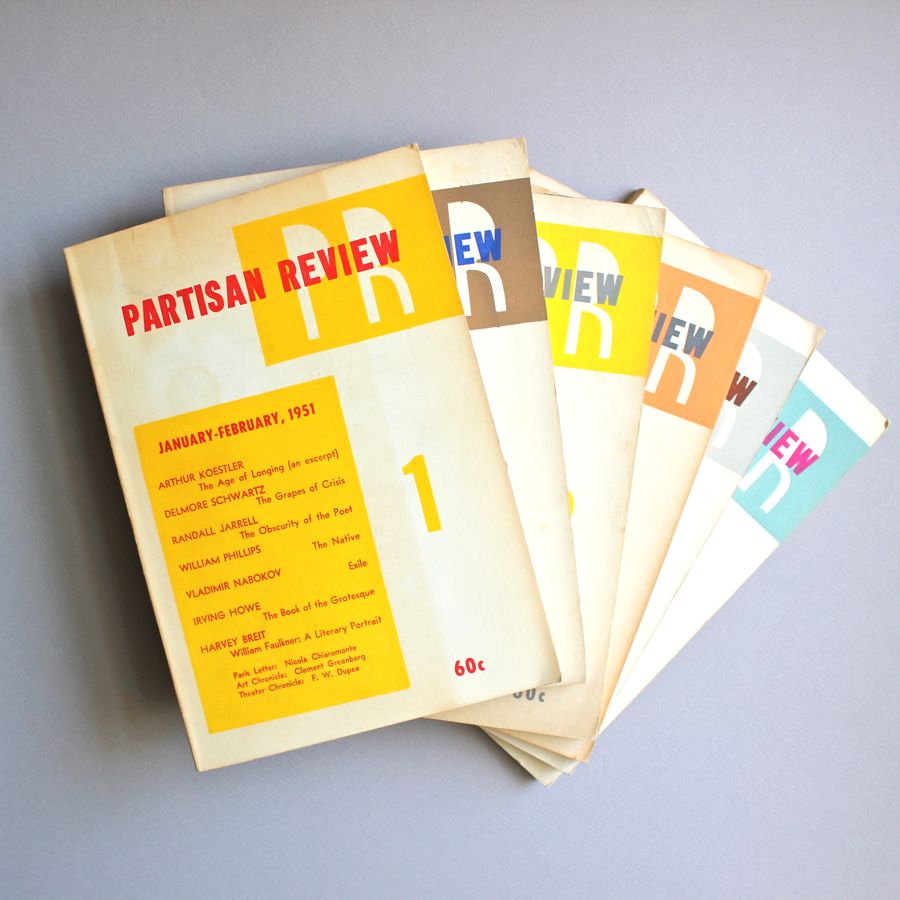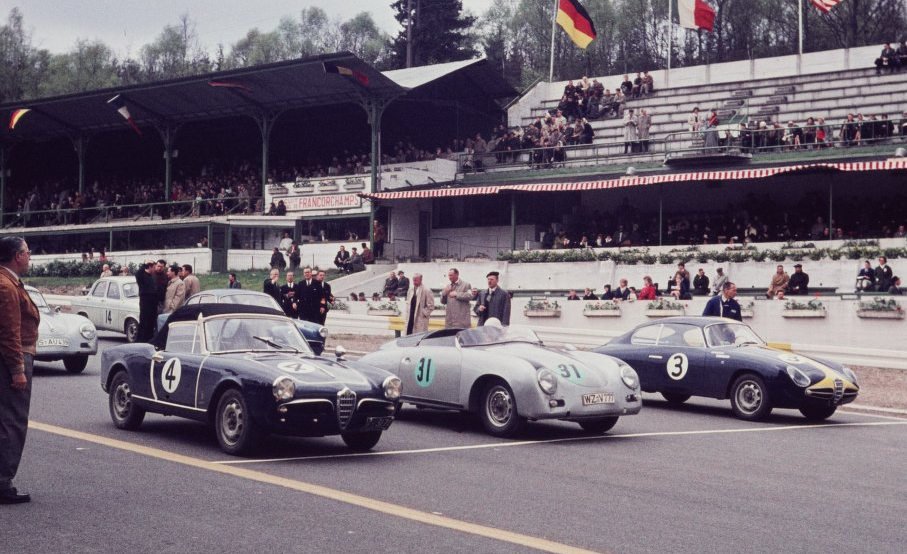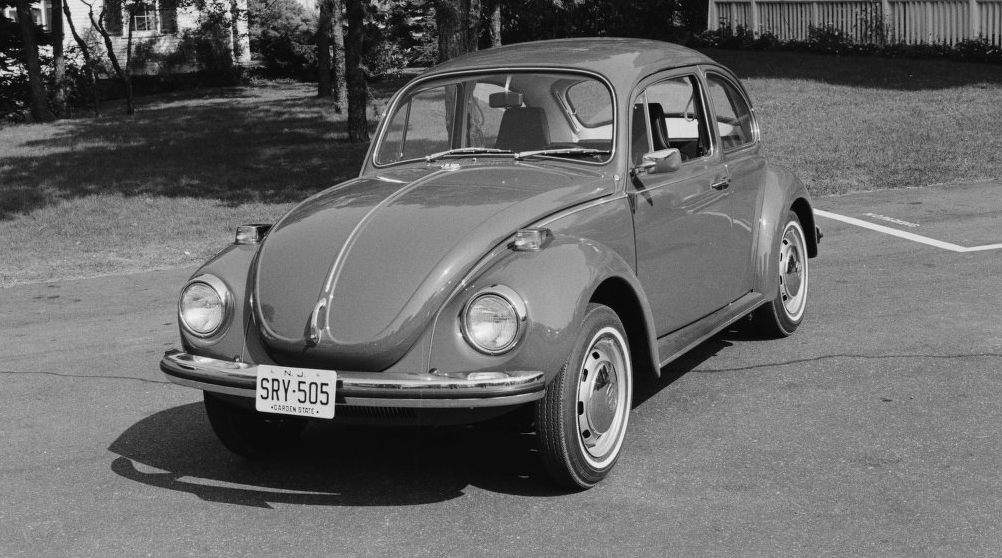
The images came to Stanford as a gift from the Revs Institute for Automotive Research, located in Naples, Florida. If you’d like a quick primer on finding and gathering information about vintage cars in the archive, watch the introductory video below. It’ll teach you how to sift through the digital library in rapid fashion.
The images above come from the Revs Digital Library.
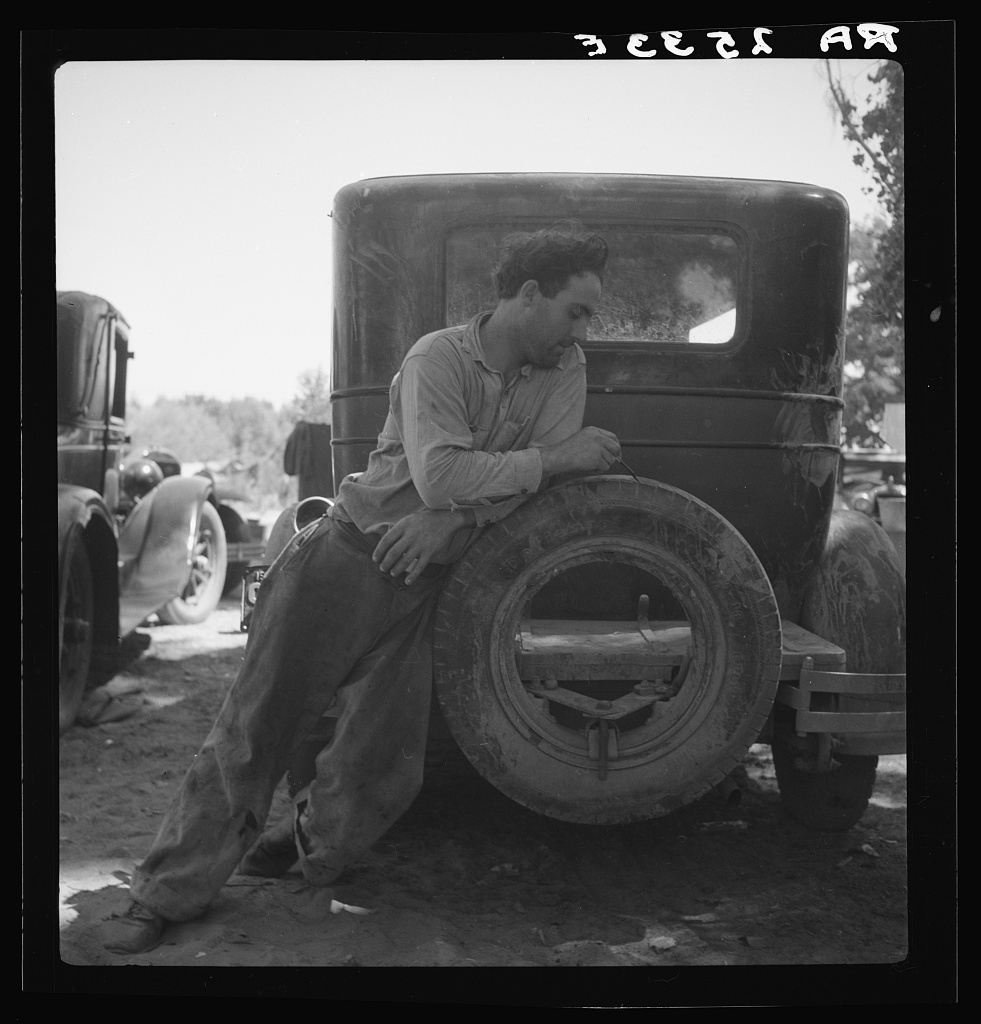
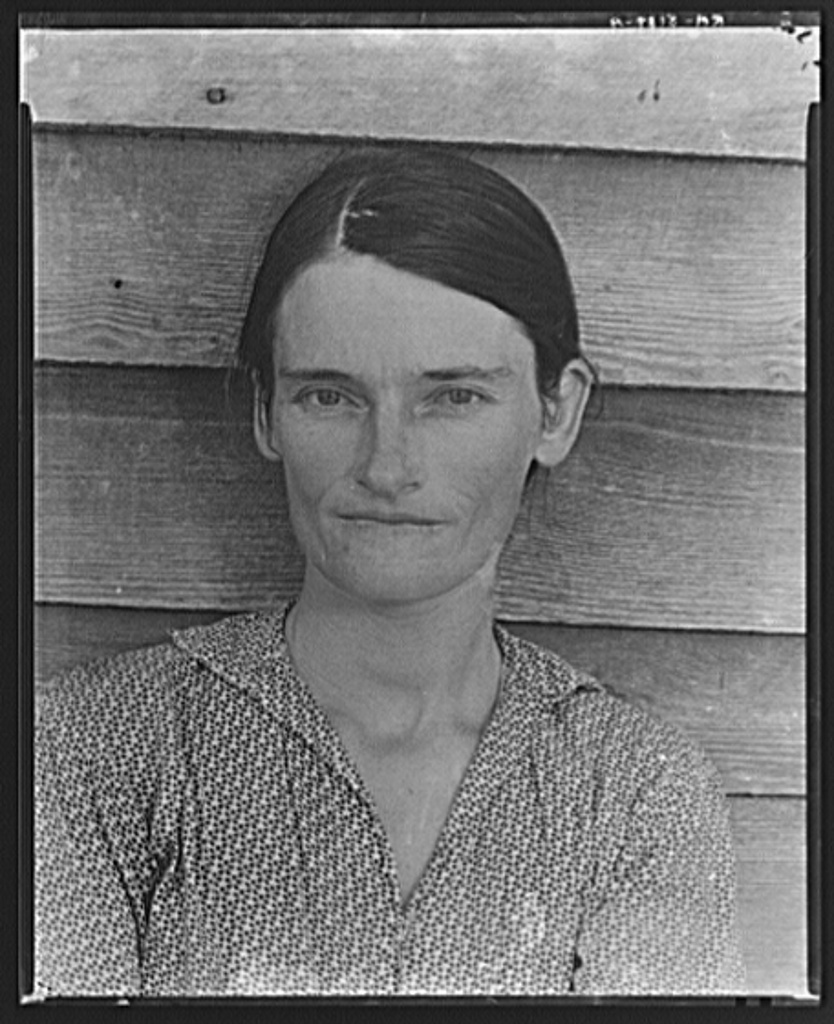
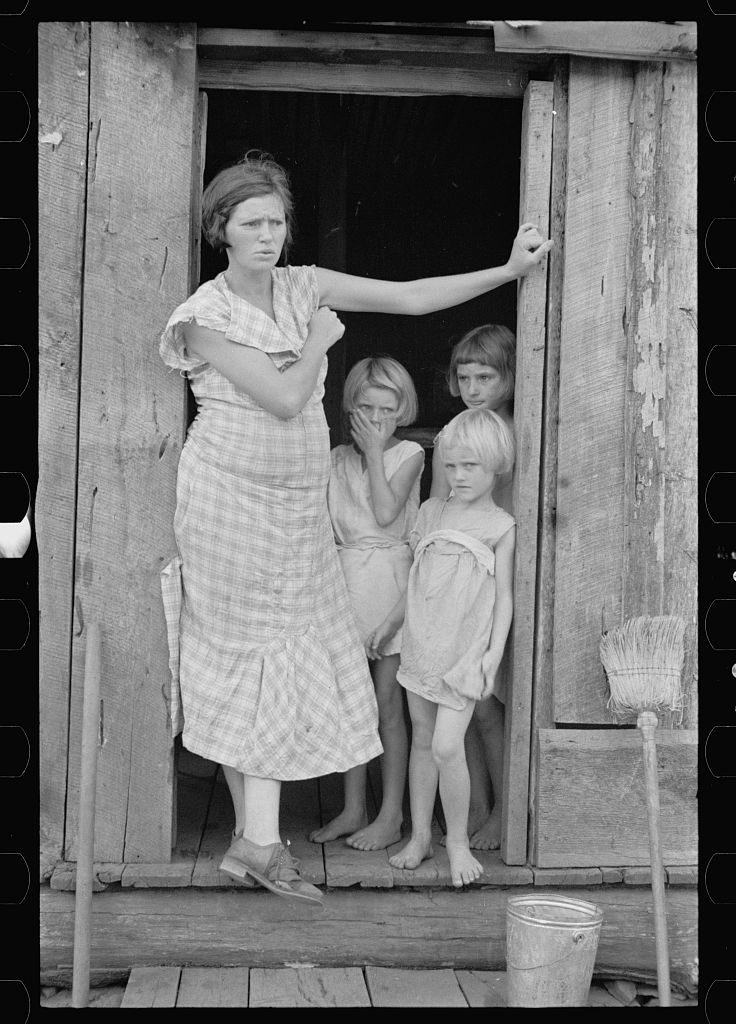
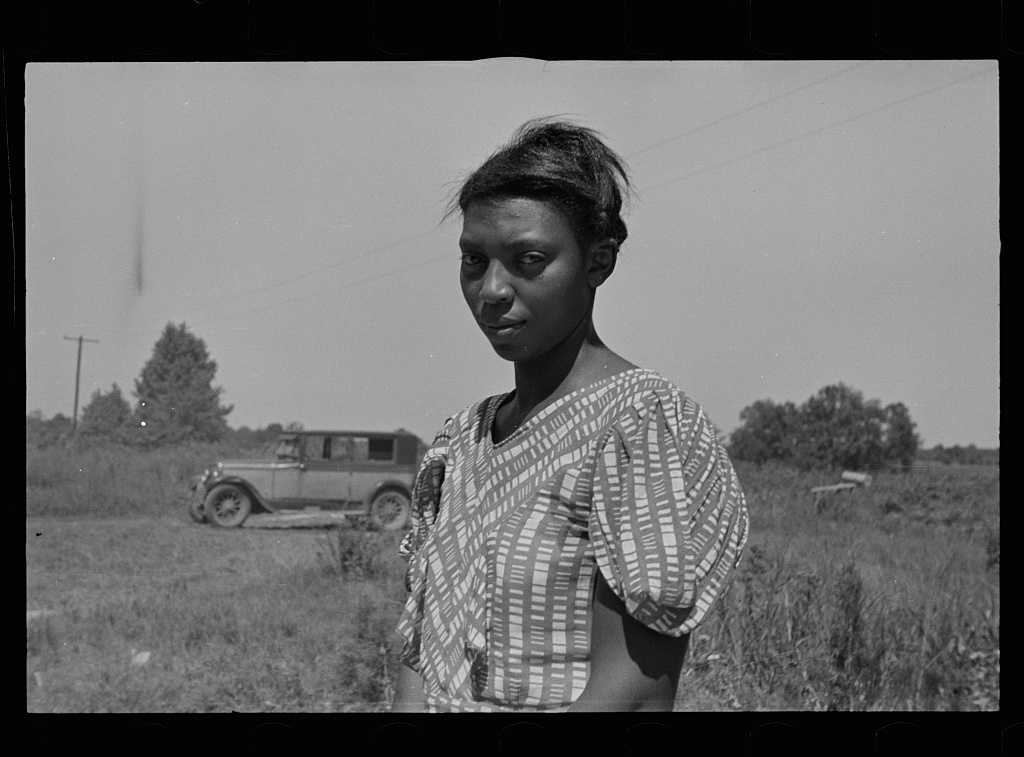
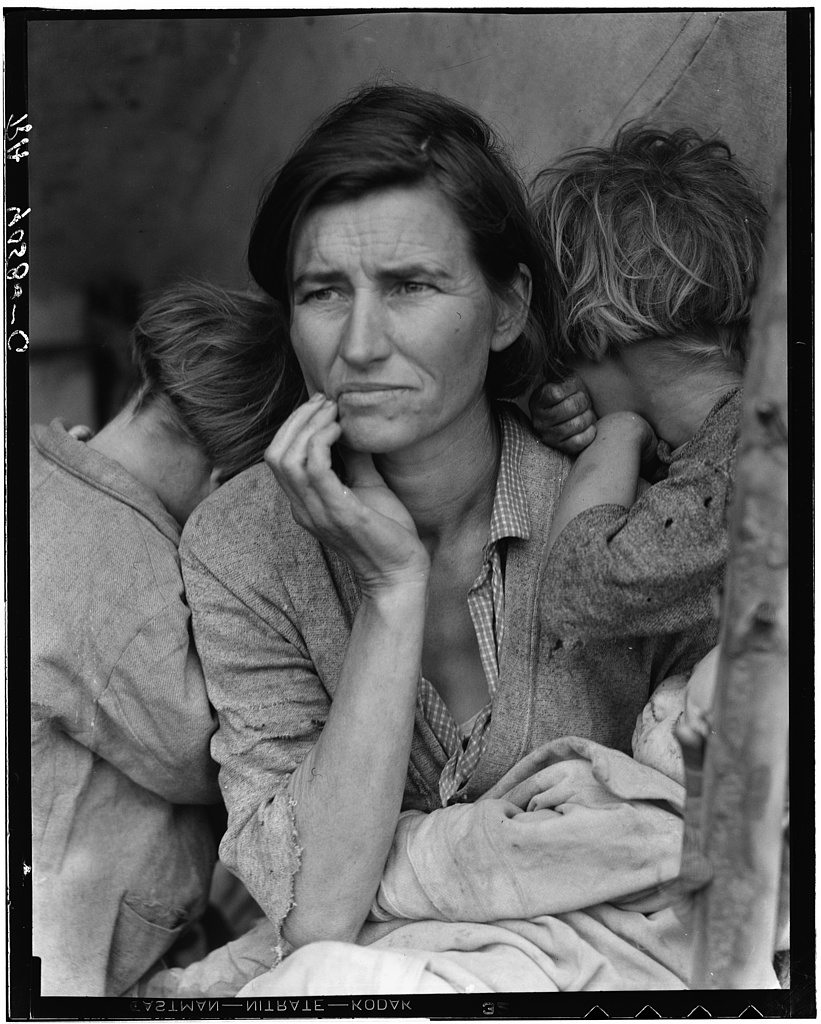
During the Great Depression, The Farm Security Administration—Office of War Information (FSA-OWI) hired photographers to travel across America to document the poverty that gripped the nation, hoping to build support for New Deal programs being championed by F.D.R.‘s administration.
Legendary photographers like Dorothea Lange, Walker Evans, and Arthur Rothstein took part in what amounted to the largest photography project ever sponsored by the federal government. All told, 170,000 photographs were taken, then catalogued back in Washington DC. The Library of Congress became their eventual resting place.
Yale University has launched Photogrammar, a sophisticated web-based platform for organizing, searching, and visualizing these 170,000 historic photographs.
Photogrammar also offers a handy interactive map that lets you gather geographical information about 90,000 photographs in the collection.
And then there’s a section called Photogrammar Labs where innovative visualization techniques and data experiments will gradually shed new light on the image archive.
Top image: A migrant agricultural worker in Marysville migrant camp, trying to figure out his year’s earnings. Taken in California in 1935 by Dorothea Lange.
Second image: Allie Mae Burroughs, wife of cotton sharecropper. Photo taken in Hale County, Alabama in 1935 by Walker Evans.
Third image: Wife and children of sharecropper in Washington County, Arkansas. By Arthur Rothstein. 1935.
Fourth image: Wife of Negro sharecropper, Lee County, Mississippi. Again taken by Arthur Rothstein in 1935.
Bottom image: Destitute pea pickers in California. Mother of seven children. Age thirty-two. Taken by Dorothea Lange in Nipomo, California, 1936.
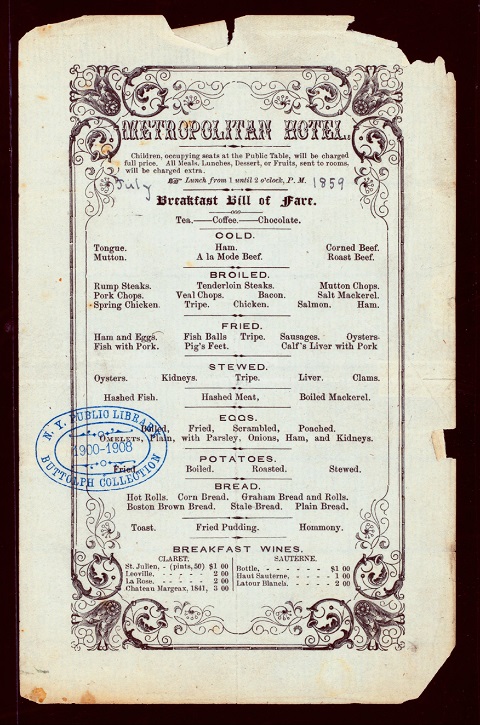
To be a New Yorker is to be a gourmand—of food carts, local diners, supermarkets, outer borough mercados, whatever latest upscale restaurant surfaces in a given season.… It is to be as likely to have a menu in hand as a newspaper, er… smartphone…, and it is to notice the design of said menus. Well, some of us have done that. Often the added attention goes unrewarded, but then sometimes it does. Now you, dear reader, can experience well over one-hundred years of staring at menus, thanks to the New York Public Library’s enormous digitized collection. Fancy a time warp through dining halls abroad? You’ll not only find several hundred New York restaurants represented here, but hundreds more from all over the world. With a collection of 17,000 menus and counting, a person could easily get lost.
You may notice I used the word “gourmand,” and not “foodie” above. While it might be a gross anachronism to call someone a “foodie” in 1859, the year the menu for the Metropolitan Hotel (above) was printed, it might also import a cosmopolitan concept of dining that didn’t seem to exist, at least at this establishment. More than anything, the menu resembles the various descriptions of pub food that populate Joyce’s Ulysses. Though much of it was delicious, I’m sure, for heavy eaters of meat, eggs, potatoes, and bread, you won’t find a vegetable so much as mentioned in passing. The fare does include such hearty staples as “Hashed Fish,” “Stale Bread,” and “Breakfast Wine.” The design marries flowery Victorian elements with the kind of font found in Old West typesets.
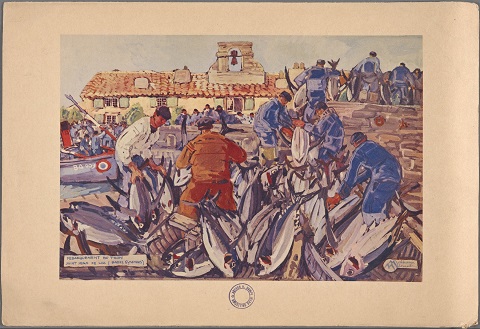
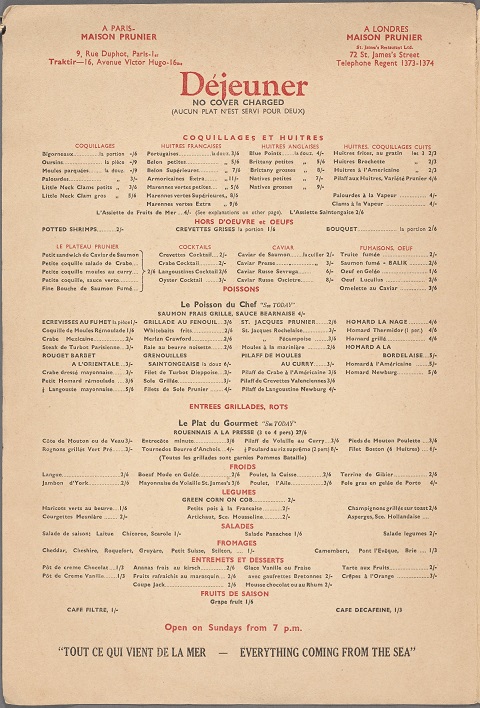
1939 was a good year for menus, at least in Europe. While New York institutions like the Waldorf Astoria practiced certain design austerities, the Maison Prunier, with locations in Paris and London, spared no expense in the printing of their full-color fishermans’ slice of life painting on the menu cover above and the elegant typography of its extensive contents below. A version was printed in English—though The New York Public Library (NYPL) doesn’t seem to have a copy of it digitized. One English phrase stands out at the bottom, however: the translation of “Tout Ce Qui Vient De La Mer–Everything From the Sea.” Other menus for this restaurant show the same kind of careful attention to design. Clicking on the pages of many of the NYPL menus—like this one from a 1938 Maison Prunier menu—brings up an interactive feature that links each dish to close-up views.
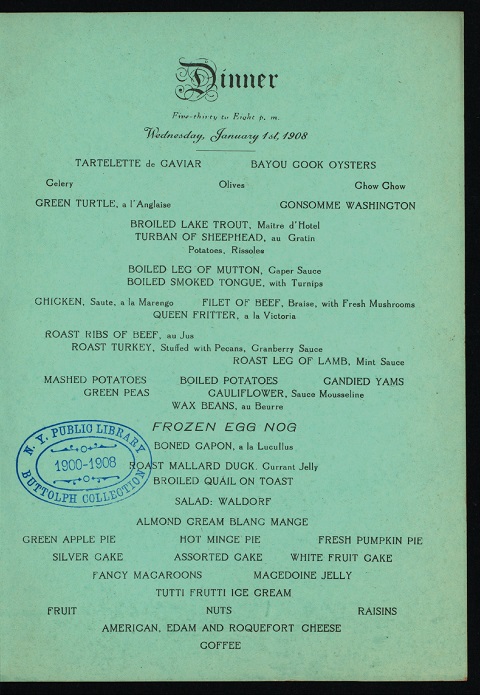
In a post on the NYPL menu collection, Buzzfeed specifically compares New York menus of today with those of 100 years ago, noting that prices quoted signify cents, not dollars. A 1914 Delmonico “Rib of Roast” would run you .75 cents, for example, while a 2014 rib eye there sells for 58 big ones. Of course then, as now, many restaurants considered it gauche to print prices at all. See, for example, the dinner menu at New Orleans’ St. Charles Hotel from 1908 below. We may have an all-inclusive feast here since this comes from a New Years Eve bill, which also includes a “Musical Program” in two parts and a list of local “Amusements” at such places as Blaney’s Lyric Theatre, Tulane, Dauphine, “French Orera” (sic), and the 2:00 pm races at City Park. Matinees and 8 o’clock shows every day except Sunday.
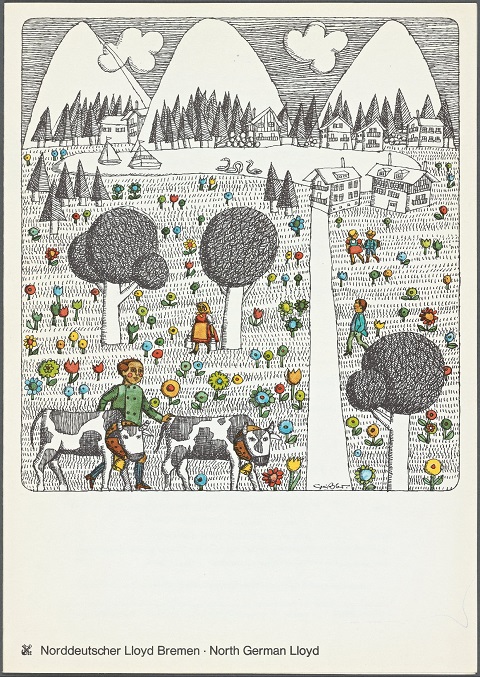
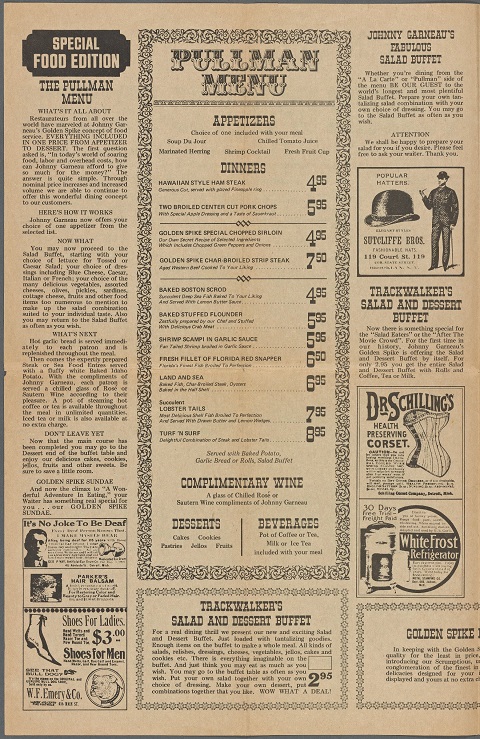
The sixties gave us an explosion of menus that parallel in many cases the breakout designs of magazine and album covers. See two standouts below. The North German Lloyd, just below, went with a funky children’s book-cover illustration for its 1969 menu cover, though its interior maintains a minimalist clarity. Below it, see the striking first page of a menu for Johnny Garneau’s Golden Spike from that same year. The cover boasts a nostalgic headline story for Promontory News: “Golden Spike is Driven: The last rail is laid! East meets West in Utah!” Put it on the cover of a Band or CSNY album and no one bats an eye.
See many, many, many more menus at the NYPL site. With the steady growth of food scholarship, this collection is certainly a boon to researchers, as well as curious gourmands, foodies, and rabid diners of all stripes.
Having once been involved in the founding of an arts magazine, I have experienced intimately the ways in which such an endeavor can depend upon a community of equals pooling a diversity of skills. The process can be painful: egos compete, certain elements seek to dominate, but the successful product of such a collaborative effort will represent a living community of artists, writers, editors, and other masters of technique who subordinate their individual wills, temporarily, to the will of a collective, creating new gestalt identities from conceptual atoms. As Monoskop—“a wiki for collaborative studies of art, media and the humanities”—points out, “the whole” of an arts magazine, “could become greater than the sum of its parts.” Often when this happens, a publication can serve as the platform or nucleus of an entirely new movement.
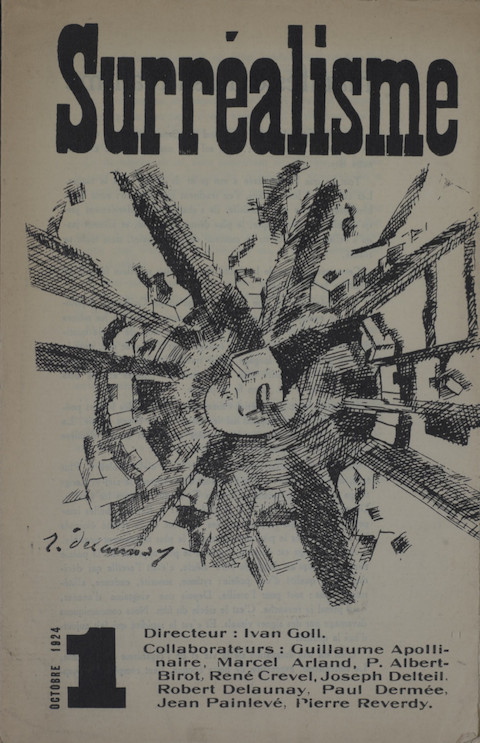
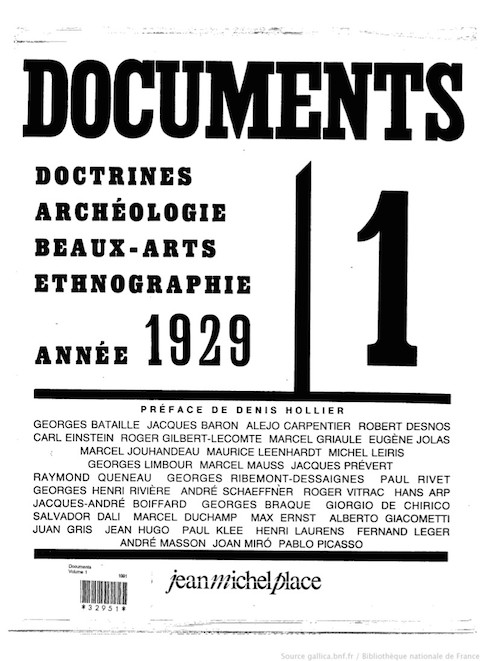
Monoskop maintains a digital archive of printed avant-garde and modernist magazines dating from the late-19th century to the late 1930s, published in locales from Arad to Bucharest, Copenhagen to Warsaw, in addition to the expected New York and Paris. From the latter city comes the 1924 first issue of Surrealisme at the top of the post.
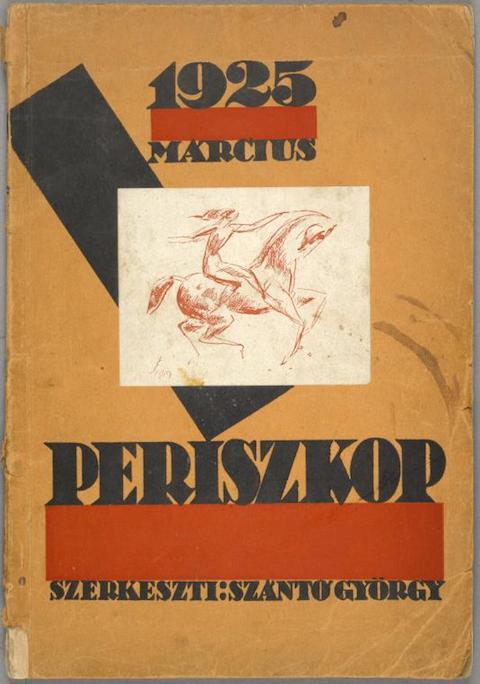
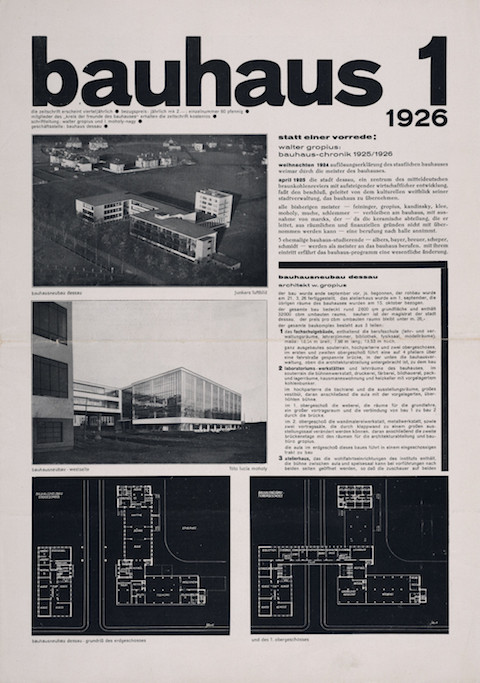
From the much smaller city of Arad in Romania comes the March, 1925 issue 1 of Periszkóp above, published in Hungarian and featuring works by Picasso, Marc Chagall, and many lesser-known Eastern European artists. Just below, see another Paris publication: the first, 1929 issue of Documents, a surrealist journal edited by Georges Bataille and featuring such luminaries as Cuban novelist Alejo Carpentier and artists Georges Braque, Giorgio De Chirico, Salvador Dali, Marcel Duchamp, Paul Klee, Joan Miro, and Pablo Picasso. Further down, see the first, 1926, issue of the Bauhaus journal, vehicle of the famous arts movement founded by Walter Gropius in 1919.
The variety of modernist and avant garde publications archived at Monoskop “provide us with a historical record of several generations of artists and writers.” They also “remind us that our lenses matter.” In an age of “the relentless linearity of digital bits and the UX of the glowing screen” we tend to lose sight of such critically important matters as design, typography, layout, writing, and the “techniques of printing and mechanical reproduction.” Anyone can build a website, fill it with “content,” and propagate it globally, giving little or no thought to aesthetic choices and editorial framing. But the magazines represented in Monoskop’s archive are specialized creations, the products of very deliberate choices made by groups of highly skilled individuals with very specific aesthetic agendas.
A majority of the publications represented come from the explosive period of modernist experimentation between the wars, but several, like the journal Rhythm: Art Music Literature—first published in 1911—offer glimpses of the early stirrings of modernist innovation in the Anglophone world. Others like the 1890–93 Parisian Entretiens politiques et littéraires showcase the work of pioneering early French modernist forebears like Jules Laforgue (a great influence upon T.S. Eliot) and also André Gide and Stéphane Mallarmé. Some of the publications here are already famous, like The Little Review, many much lesser-known. Most published only a handful of issues.
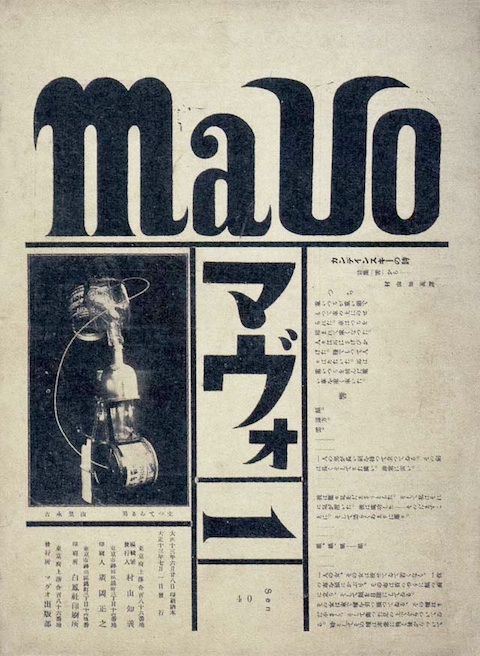
With a few exceptions—such as the 1923 Japanese publication MAVO shown above—almost all of the journals represented at Monoskop’s archive hail from Eastern and Western Europe and the U.S.. While “only a few journals had any significant impact outside the avant-garde circles in their time,” the ripples of that impact have spread outward to encompass the art and design worlds that surround us today. These examples of the literary and design culture of early 20th century modernist magazines, like those of late 20th century postmodern ‘zines, provide us with a distillation of minor movements that came to have major significance in decades hence.
Over the years, I’ve met with several foreign speaking partners. Through conversation, I learn their language — Spanish, Korean, Japanese — and they learn mine — English. Many of them first got serious about their study of that more-or-less-international tongue with the goal of completely eliminating their native accent which, while demonstrably possible, takes so much additional effort as an adult that I’ve always advised them to just spend that time learning another language (or two) instead. Many, of course, come to that conclusion themselves, realizing that English speakers all over the world have created a legitimate culture of speaking English in all kinds of different ways, with all kinds of different accents, whether or not they learned the language from childhood. But it still makes one wonder: how many different accents do people speak it in? And what do they all sound like? Wonder no longer, for we have The Speech Accent Archive, created by Steven H. Weinberger of George Mason University’s Linguistics department, who introduces it in the video above.
The site, “established to uniformly exhibit a large set of speech accents from a variety of language backgrounds,” collects audio samples of native and non-Native English speakers all reading the same paragraph. This lets the user “compare the demographic and linguistic backgrounds of the speakers in order to determine which variables are key predictors of each accent,” demonstrating that “accents are systematic rather than merely mistaken speech.” You can browse by the speaker’s native language, by their region, or (presumably exciting for the linguists) by their “native phonetic inventory.” You’ll find English as spoken by native speakers of everything from French and Chinese to Urdu and Chaldean Neo Aramaic. Here in Seoul, South Korea, where I write this post, I certainly do meet people who sound just like this sample speaker, a 19-year-old woman from the city who began learning English at 17 and spent a few months studying in America. The page describes her accent as characterized by, among other things, “final obstruent devoicing,” “vowel shortening,” and “obstruent deletion.” But don’t let the site’s linguistics jargon deter you; the salute to the Speech Accent Archive just above will give you an idea of just how much fun you can have there. You can enter the The Speech Accent Archive here.
Back in 2012, we told you about how the Library of Congress launched the Joe Smith Collection, an audio archive featuring 200+ interviews with legendary music artists, all recorded during the 1980s by Joe Smith while researching and writing his book Off the Record. The audio collection, still available on the web, has now been brought to iTunesU. And the iTunes collection has a virtue that the web archive doesn’t — it lets you download instead of stream the audio files.
If you’re a music junkie, you won’t want to miss the longform interviews with legendary figures like Dave Brubeck, Lou Reed, Paul McCartney, Joan Baez, Herbie Hancock, David Bowie, George Harrison, Yoko Ono, James Brown, Bo Diddley, Jerry Garcia, Christine McVie, Mick Jagger, Linda Ronstadt and more. Each interview runs 30–60 good minutes. You can enter the archive here.
Featuring a collection of glass plate, nitrate and acetate negatives, the living archive tells “the story of San Francisco, its transition from a stretch of sand dunes to an internationally acclaimed city, it’s rise from the rubble of the devastating earthquake of 1906 and the vital role public transportation played and continues to play in revitalizing the city.” The archive contains nearly 5,000 images, all neatly divided into 14 collections. You can enter the archive and start perusing here.
Last summer we told you that the J. Paul Getty Museum launched its Open Content Program by taking 4600 high-resolution images from the Getty collections, putting them into the public domain, and making them freely available in digital format. We also made it clear — there would be more to come.
Yesterday, the Getty made good on that promise, adding another 77,000 images to the Open Content archive. Of those images, 72,000 come from the Foto Arte Minore collection, a rich gallery of photographs of Italian art and architecture, taken by the photographer and scholar Max Hutzel (1911–1988).
All images in the Getty Open Content program — now 87,000 in total — can be downloaded and used without charge or permission, regardless of whether you’re a scholar, artist, art lover or entrepreneur. The Getty only asks that you give them attribution.
You can start exploring the complete collection by visiting the Getty Search Gateway. Images can also be accessed via the Museum’s Collection webpages. Be sure to look for the “download” link near the images.
For more information on the Open Content program, please visit this page. For more open content from museums, see the links below.
We're hoping to rely on loyal readers, rather than erratic ads. Please click the Donate button and support Open Culture. You can use Paypal, Venmo, Patreon, even Crypto! We thank you!
Open Culture scours the web for the best educational media. We find the free courses and audio books you need, the language lessons & educational videos you want, and plenty of enlightenment in between.