BALTIC’s website provides some context for the current installation, a series of nine model buildings in various architectural styles, festooned with Murray’s face and other visual indicators from his considerable oeuvre:
Bill Murray is always authentic. He is consistently ‘BILL MURRAY’. His singularity breaks into irreducible ambiguities and contradictions – Bill the global superstar, the guy-next-door, anti-brand brand, irrepressible lothario, dignified clown and droll philosopher. This exhibition takes these and many other characteristics as an approach, turning them into a fantasy caricature and a poetic tableau of scaled down architecture and collections.
The five minute talk above had the opposite effect.
I’d like to propose a reshoot, starring Bill Murray. Imagine what his particular comic genius could bring to the transcript above?
Saint Bill has demonstrated that he is willing to work below scale when he believes in a project. Perhaps he would accept an exhibition t‑shirt in return for livening up this limp artistic statement.
(Might be what the artist was angling for all along…)
Needless to say, before the development and widespread use of photography in mass publications, illustrations provided the only visual accompaniment to religious texts, novels, books of poetry, scientific studies, and magazines literary, lifestyle, and otherwise. The development of techniques like etching, engraving, and lithography enabled artists and printers to better collaborate on more detailed and colorful plates. But whatever the media, behind each of the millions of illustrations to appear in manuscript and print—before and after Gutenberg—there was an artist. And many of those artists’ names are now well known to us as exemplars of graphic art styles.
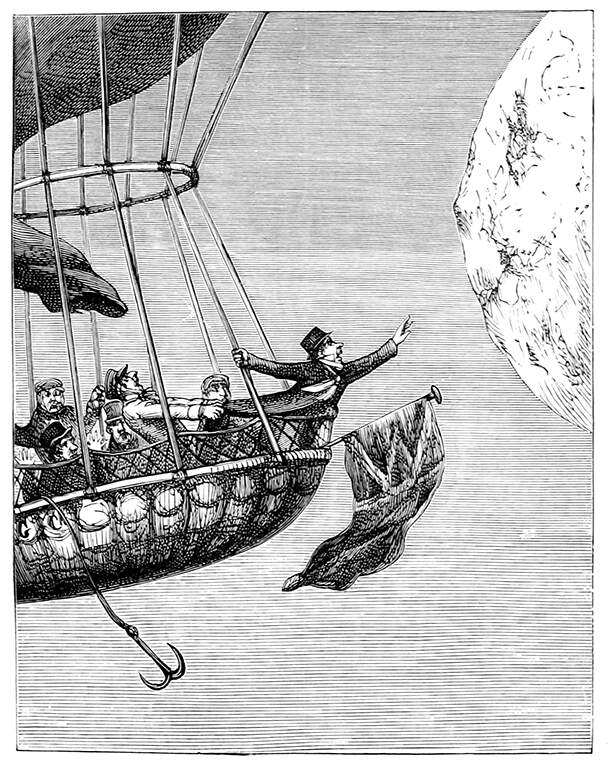
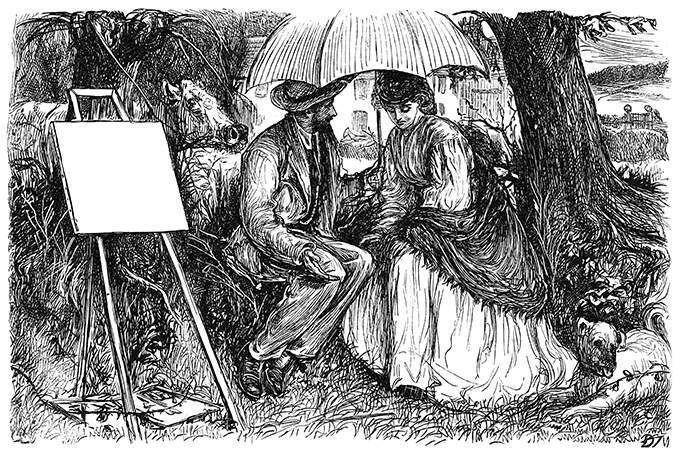
It was in the 19th century that book and magazine illustration began its golden age. Illustrations by artists like George Cruikshank (see his “’Monstre’ Balloon” above”) were so distinctive as to make their creators famous. The hugely influential English satire magazine Punch, founded in 1841, became the first to use the word “cartoon” to mean a humorous illustration, usually accompanied by a humorous caption. The drawings of Punch cartoons were generally more visually sophisticated than the average New Yorker cartoon, but their humor was often as pithy and oblique. And at times, it was narrative, as in the cartoon below by French artist George Du Maurier.
The lengthy caption beneath Du Maurier’s illustration, “Punch’s physiology of courtship,” introduces Edwin, a landscape painter, who “is now persuading Angelina to share with him the honours and profits of his glorious career, proposing they should marry on the proceeds of his first picture, now in progress (and which we have faithfully represented above).” The humor is representative of Punch’s brand, as is the work of Du Maurier, a frequent contributor until his death. You can find much more of Cruikshank and Du Maurier’s work at Old Book Illustrations, a public domain archive of illustrations from artists famous and not-so-famous. You’ll find there many other resources as well, such as biographical essays and a still-expanding online edition of William Savage’s 1832 compendium of printing terminology, A Dictionary of the Art of Printing.
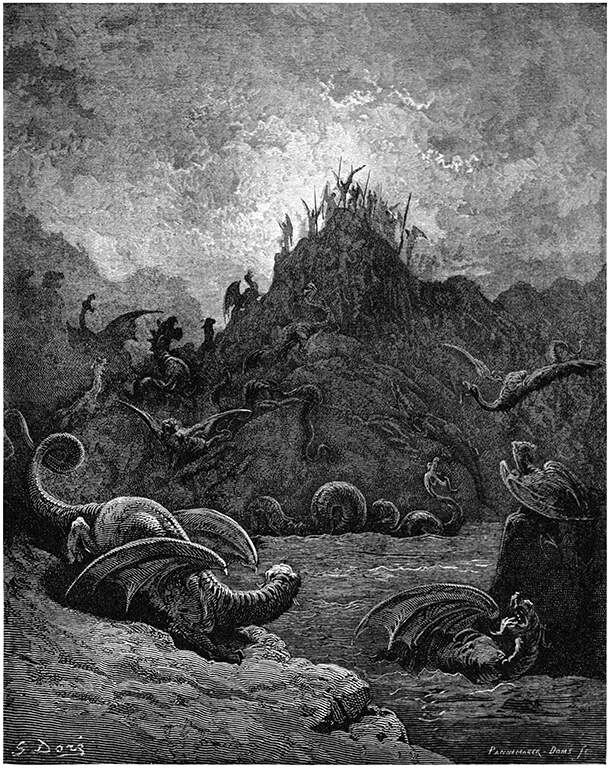
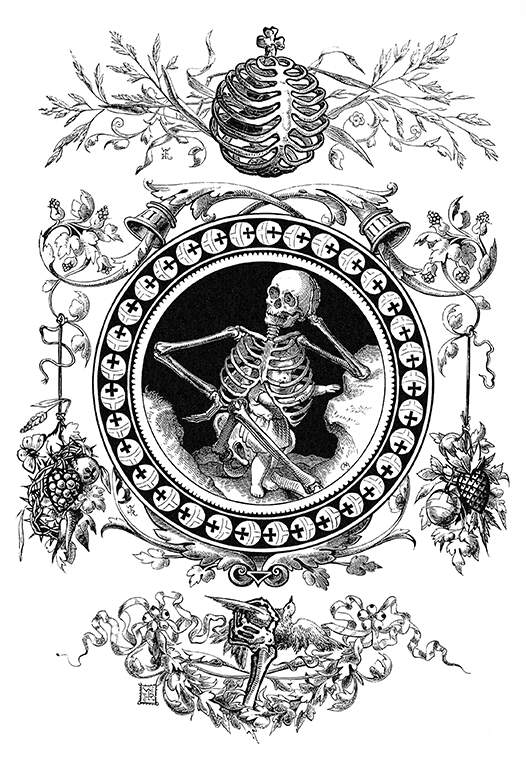
Old Book Illustrations allows you to download high resolution images of its hundreds of featured scans, “though it appears,” writes Boing Boing, “the scans are sometimes worse-for-wear.” Most of the illustrations also “come with lots of details about their original creation and printing.” You’ll find there many illustrations from an artist we’ve featured here several times before, Gustave Doré (see “Gorgons and Hydras” from his Paradise Lost edition, above). As much as artists like Cruikshank and Du Maurier can be said to have dominated the illustration of periodicals in the 19th century, Doré dominated the field of book illustration. In a laudatory biographical essay on the French artist, Elbert Hubbard writes, “He stands alone: he had no predecessors, and he left no successors.” You’ll find a beautifully, and morbidly, 19th century illustrated edition of 17th century poet Francis Quarles’ Emblems, with pages like that below, illustrating “The Body of This Death.”
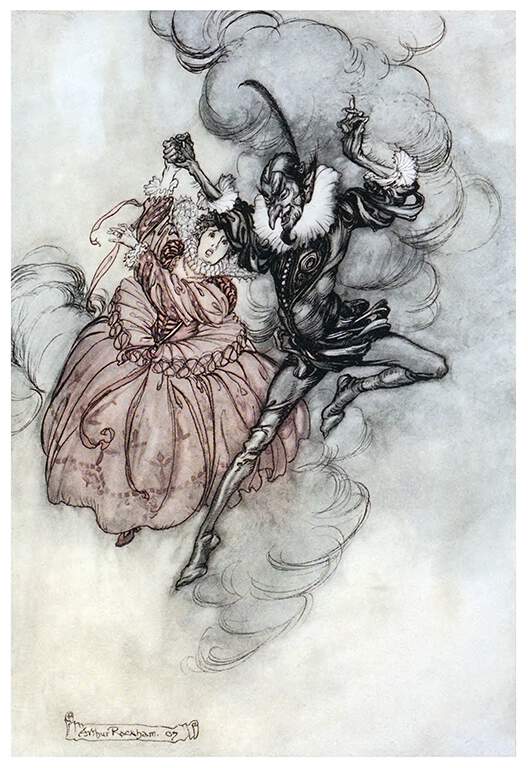
Not all of the illustrations at Old Book Illustrations date from the Victorian era, though most do. Some of the more striking exceptions come from Arthur Rackham, known primarily as an early 20th century illustrator of fantasies and folk tales. See his “Pas de Deux” below from his edition of The Ingoldsby Legends. These are but a very few of the many hundreds of illustrations available, and not all of them literary or topical (see, for example, the “Science & Technology” category). Be sure also to check out the OBI Scrapbook Blog, a running log of illustrations from other collections and libraries.
Jean Giraud, better known as Mœbius, may have passed away in 2012, but he gave his many fans glimpses into his unparalleled artistic imagination right up until the end. In 2010 and 2012, the Fondation Cartier pour l’Art Contemporain put on Mœbius-Transe-Forme, the first major exhibition in Paris devoted to his work, and one that, at Mœbius’ request, explored “the theme of metamorphosis, a leitmotif that runs throughout his comics, drawings, and film projects” and that presented his work in a variety of ways that even some of his most avid readers, used to experiencing his work only on the page, would never have seen before.
One such way took the form of The Dancing Line, a series of videos which capture Mœbius drawing live on a graphic tablet, offering an artist’s-eye-view into how he transformed a blank digital canvas into a window on the world he spent his career creating. Here we have three selections from the series: at the top we have Mœbius filling in the details on the face of Malvina from The Airtight Garage.
Just above, he draws the title character from his even better known comic series Blueberry, the unconventional Western he created with Jean-Michel Charlier. Below, you can watch the creation of a piece called “Inside Mœbius” — not a self-portrait, exactly, but a portrait of the sort of artist that exists in Mœbius’ world drawing a portrait of Mœbius himself.
“Staying alive for an artist means to always be in an unknown part of himself, to be out of himself,” Mœbius told the Los Angeles Times in 2011. “The exhibition in Paris, the theme was transformation. Art is the big door but real life is a lot of small doors that you must pass through to create something new. You don’t always need to go far.” Nobody, artist or otherwise, stays alive forever, but Mœbius knew how, in the time he had, to stay as alive as possible by constantly seeking out those unknown parts. The Dancing Line videos show us how he felt his way through that terra incognita, pointing the way with the expansive body of work he left behind toward all those small doors we, too, must pass through to create something new of our own.
The BBC is getting ready to air a documentary, Secrets of the Mona Lisa, which will delve into the research of French scientist Pascal Cotte. Using an innovative imaging technique, Cotte has managed to probe the paint layers beneath the surface of da Vinci’s sixteenth-century masterpiece. And, lo and behold, he’s found hidden paintings, including what he believes is an original, “real” portrait of Lisa del Giocondo (the subject of da Vinci’s painting).
The host of the documentary, art historian Andrew Graham-Dixon, announced, “I have no doubt that this is definitely one of the stories of the century.” Other art historians are not getting carried away. Martin Kemp, Emeritus Professor of the History of Art at the University of Oxford, said in an interview: “They [Cotte’s images] are ingenious in showing what Leonardo may have been thinking about. But the idea that there is that picture as it were hiding underneath the surface is untenable. I do not think there are these discrete stages which represent different portraits. I see it as more or less a continuous process of evolution. I am absolutely convinced that the Mona Lisa is Lisa.” Or, put differently, there are not different portraits on da Vinci’s canvas, just stages of the same portrait that now hangs in the Louvre today.
Of the rare and extraordinary times in U.S. history when the U.S. government actively funded and promoted the arts on a national scale, two periods in particular stand out. There is the CIA’s role in channeling funds to avant-garde artists after the Second World War as part of the cultural front of the Cold War—a boon to painters, writers, and musicians, both witting and unwitting, and a strange way in which the intelligence community used the anti-communist left to head off what it saw as more dangerous and subversive trends. Most of the highly agenda-driven federal arts funding during the Cold War proceeded in secret until decades later, when long-sealed documents were declassified and agents began to tell their stories of the period.
Of a much less covertly political nature was the first major federal investment in the arts, begun under Franklin Delano Roosevelt’s New Deal and championed in large part by his wife, Eleanor. Under the 1935-established Works Progress Administration (WPA)—which created thousands of jobs through large-scale public infrastructure projects—the Federal Project Number One took shape, an initiative, write Don Adams and Arlene Goldbard, that “marked the U.S. government’s first big, direct investment in cultural development.” The project’s goals “were clearly stated and democratic; they supported activities not already subsidized by private sector patrons… and they emphasized the interrelatedness of culture with all aspects of life, not the separateness of a rarefied art world.”
Thousands more whose names have gone unrecorded were able to fund community theater productions, literary lectures, art classes and many other works of cultural enrichment that kept people in the arts working, engaged whole communities, and gave ordinary Americans opportunities to participate in the arts and to find representation where they otherwise would be overlooked or ignored. Federal One not only “put legions of unemployed artists back to work,” writes George Washington University’s Eleanor Roosevelt Papers Project, “but their creations would invariably entertain and enrich the larger population.”
“If FDR was only lukewarm about Federal One,” GWU points out, “his wife more than made up for it with her enthusiasm. Eleanor Roosevelt felt strongly that American society had not done enough to support the arts, and she viewed Federal One as a powerful tool with which to infuse art and culture into the daily lives of Americans.”
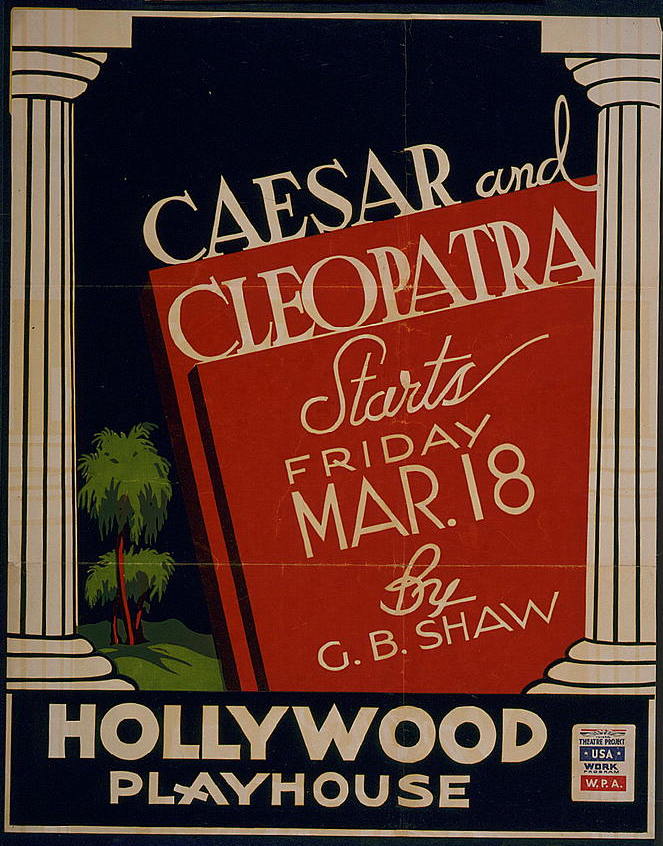
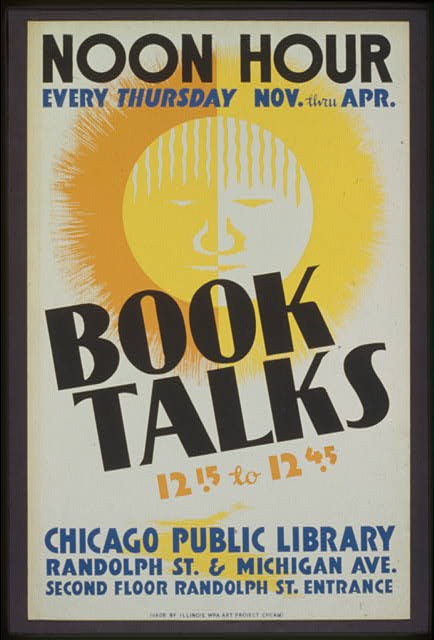
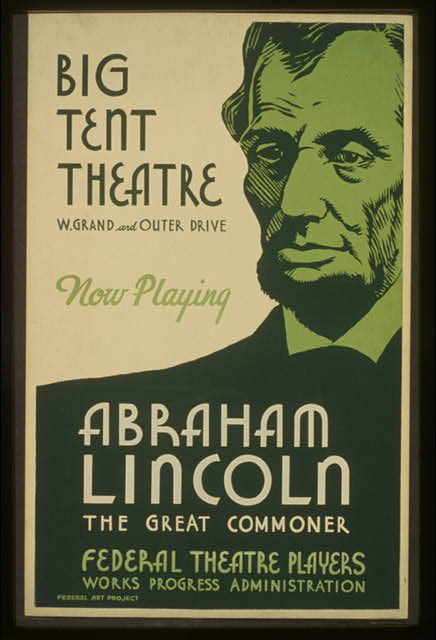
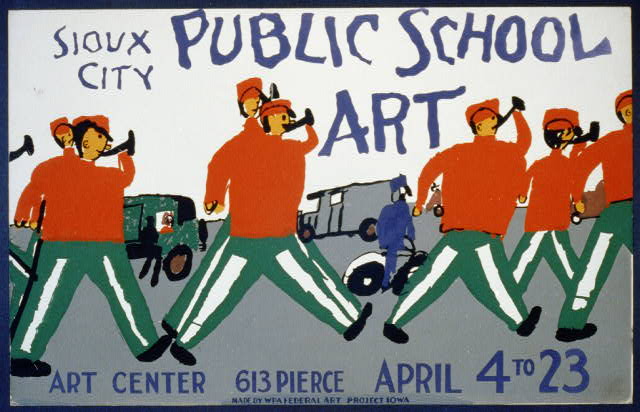
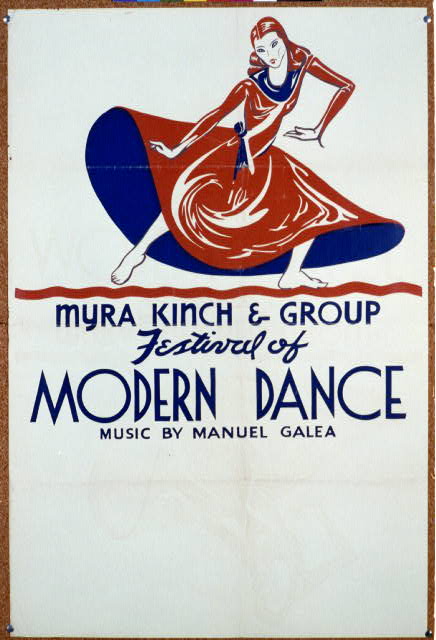
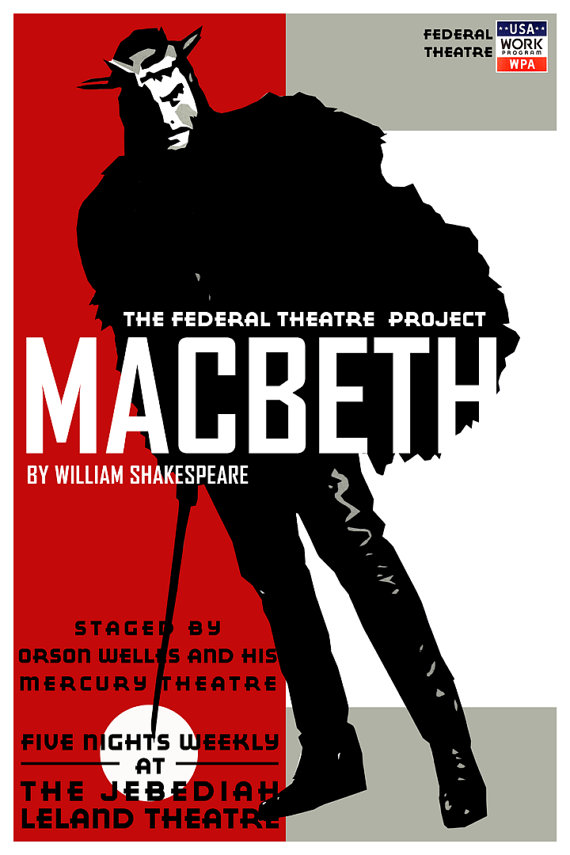
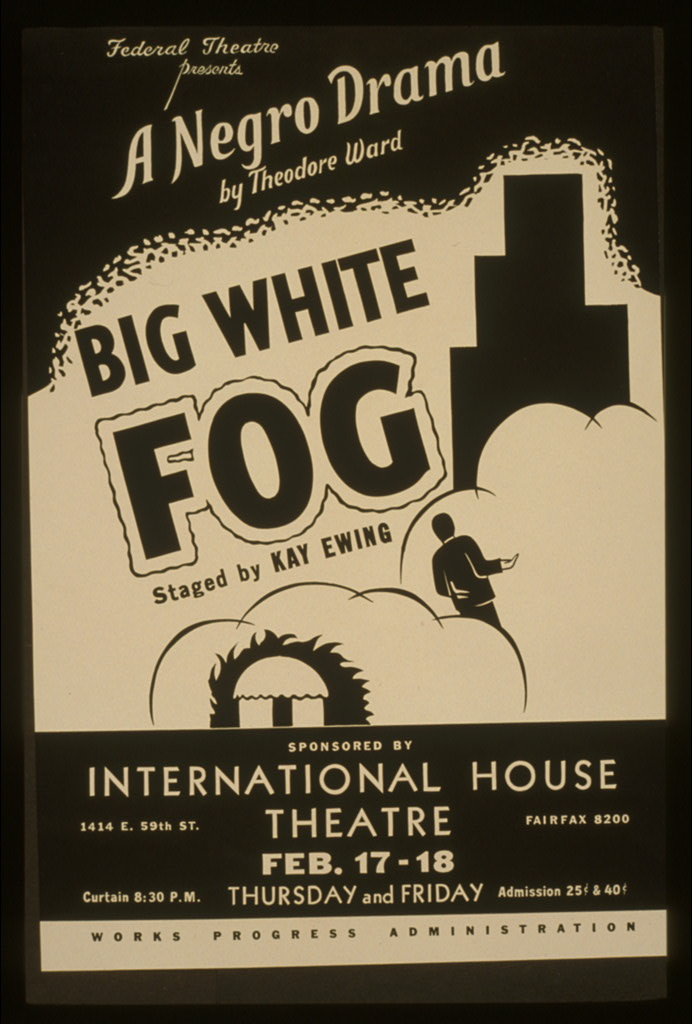
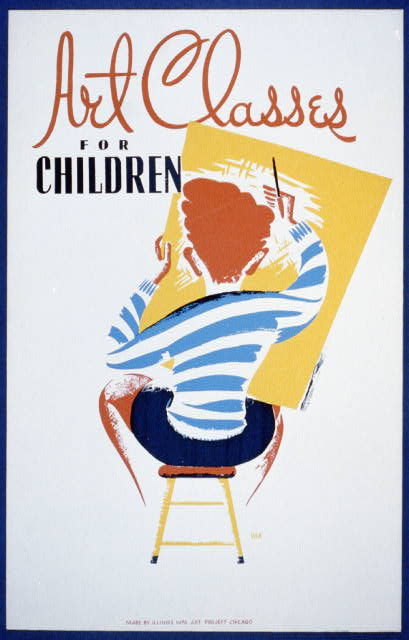
Now, thanks to the Library of Congress, we can see what that infusion of culture looked like in colorful poster form. Of the 2,000 WPA arts posters known to exist, the LoC has digitized over 900 produced between 1936 and 1943, “designed to publicize exhibits, community activities, theatrical productions, and health and education al programs in seventeen states and the District of Columbia.”
These posters, added to the Library’s holdings in the ‘40s, show us a nation that looked very different from the one we live in today—one in which the arts and culture thrived at a local and regional level and were not simply the preserves of celebrities, private wealth, and major corporations. Perhaps revisiting this past can give us a model to strive for in a more democratic, equitable future that values the arts as Eleanor Roosevelt and the WPA administrators did. Click here to browse the complete collection of WPA arts posters and to download digital images as JPEG or TIFF files.
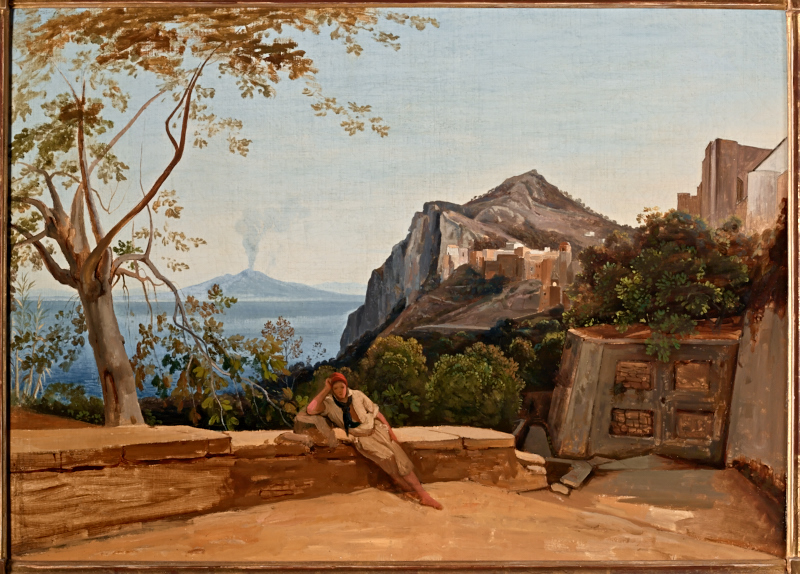
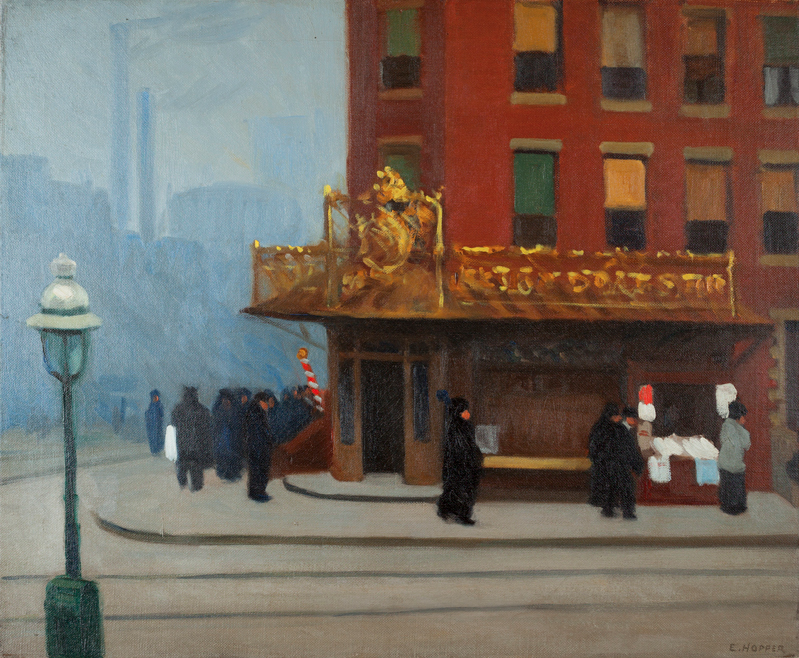
But this hardly happened at a stroke. The short video above gives a look behind the scenes — or rather, museum walls, or perhaps digital museum walls — to reveal some of the effort that went into the six-year project that has culminated in the opening of the Cantor Arts Center’s online collections.
The endeavor required no small amount of physical work, not just to re-photograph everything in their collections (only five percent of which goes on display at any one time), but to perform a whole new inventory, the first complete one the museum had done since 1916. (As a recent move reminded me, there’s nothing like having to move all your stuff from one place to another to give you the clearest possible sense of exactly what you have.)
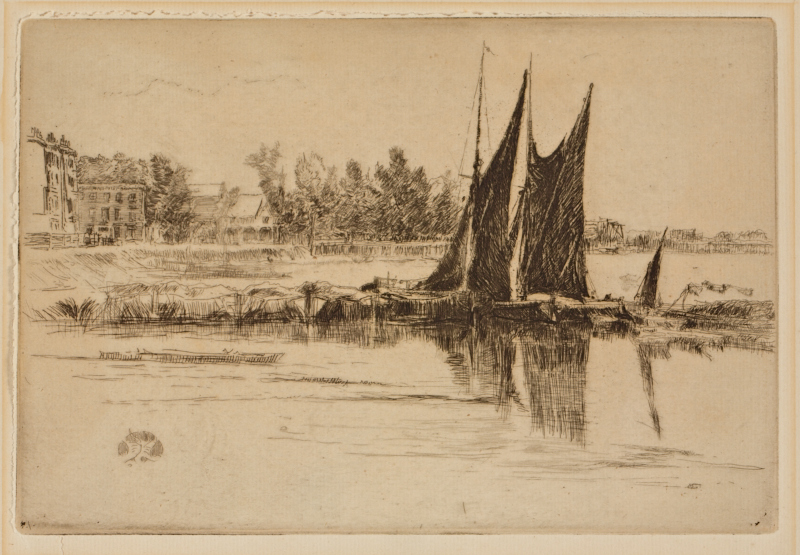
But to get a sense of the full scope of the geographic, historical, aesthetic, and formal variety of the art the Cantor has made viewable anywhere and any time, you’ll want to follow the instructions provided by one of our readers, Robin L: “Go to this search gateway. If you enter in an artist (I tried Whistler), you will get a list of all of the collections’ images with small images and some basic information. Then click on the specific piece that you want. And that one will open up with a small-medium image and some description of the piece. If you click on the image again, it will enlarge.”
Originally, “The Dresser” was a live performance piece that Herscher performed in Charlotte, NC. He spent a year building the contraption, then 2 months testing it, before staging it for audiences. (Watch a short documentary on the live performance here.) Now, thankfully, he brings the quirky device to the web, for the rest of us to see. Somewhere Rube Goldberg is smiling.
Follow Open Culture on Facebook and Twitter and share intelligent media with your friends. Or better yet, sign up for our daily email and get a daily dose of Open Culture in your inbox. And if you want to make sure that our posts definitely appear in your Facebook newsfeed, just follow these simple steps.
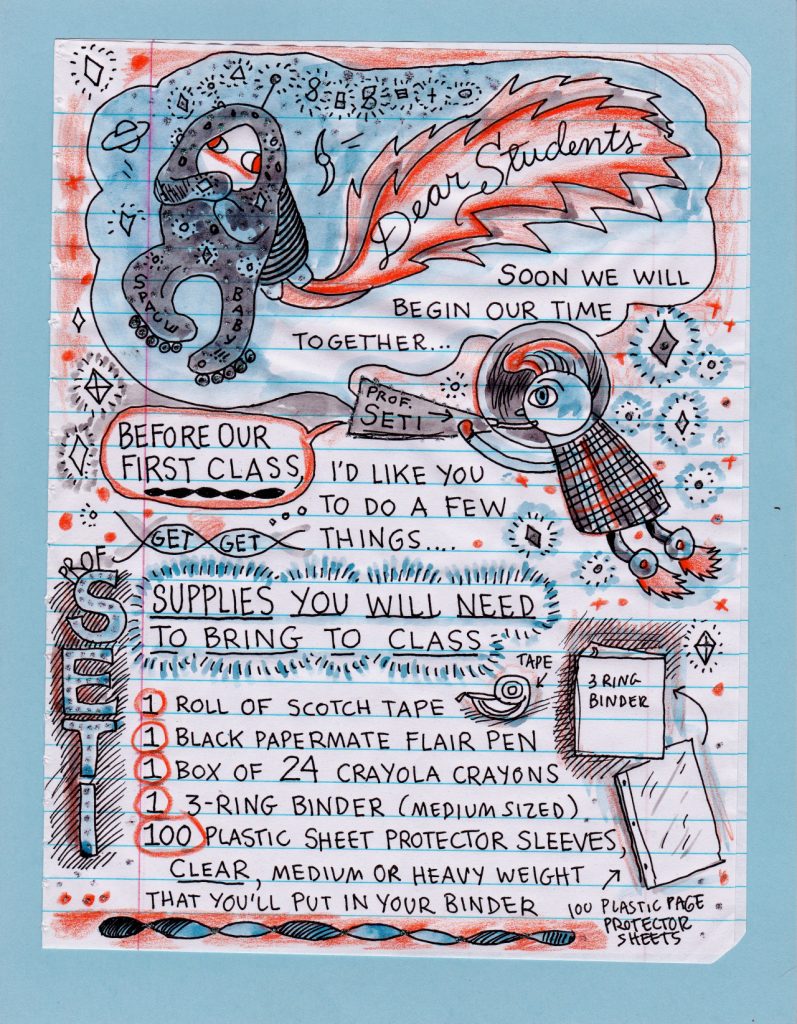
Cartoonist turned educator Lynda Barry is again permitting the world at large to freely audit one of her fascinating University of Wisconsin-Madison classes via her Tumblr. (To get to the start of the class, click here and then scroll down the page until you reach the syllabus, then start working your way backwards.)
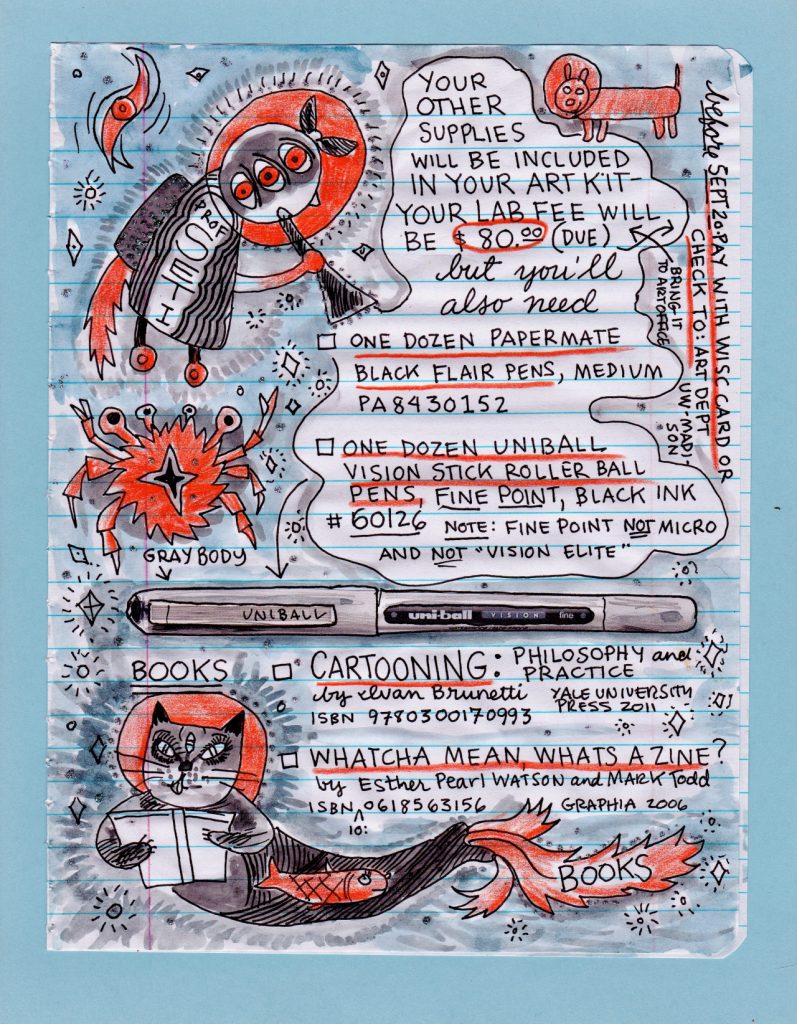
As in previous classes, the syllabus, above, spells out a highly specialized set of required supplies, including a number of items rarely called for at the college level.
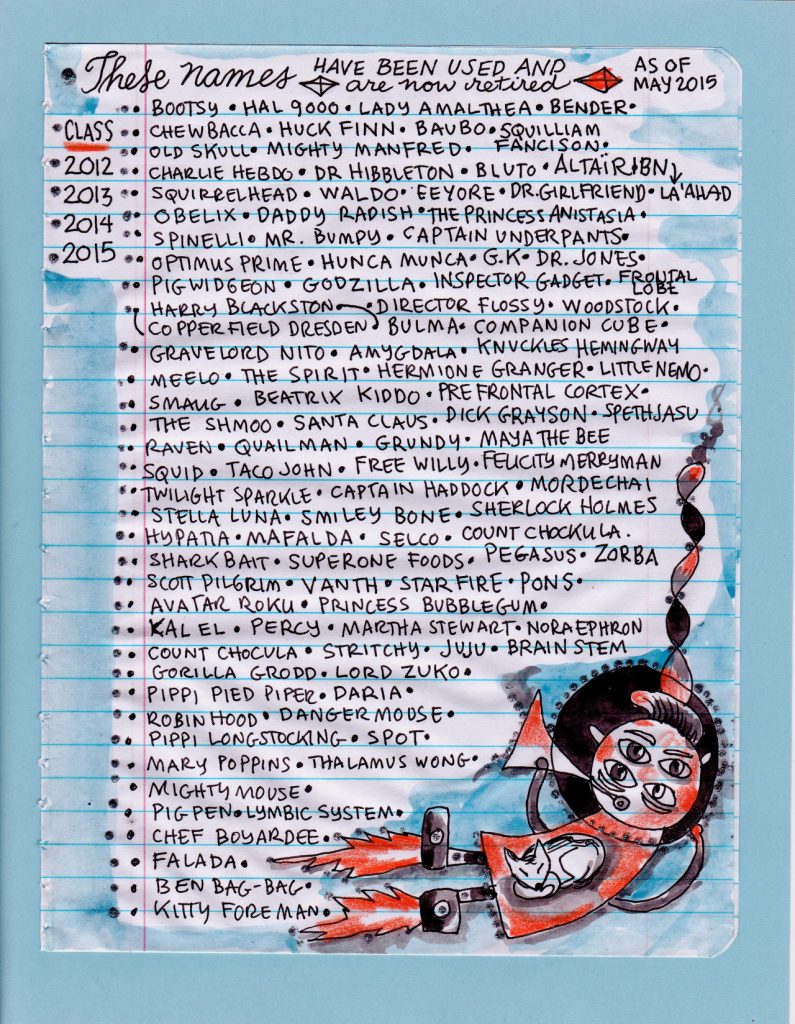
It’s become a time honored tradition for Barry’s students to adopt new names by which to refer to each other in-class, something they’ll enjoy hearing spoken aloud. For “Making Comics,” Barry is flying under the handle Professor SETI (as in “search for extraterrestrial intelligence”), telling the class that “images are the ETI in SETI.”
The students have responded with the following handles: Chef Boyardee, Ginger, Lois Lane, Rosie the Riveter, Regina Phalange, Arabella, Snoopy, Skeeter, Tigger, Arya Stark, Nala, Nostalgia, Akira, Lapus Lazuli, The Buffalo,Mr. November, The Short Giraffe, Nicki Minaj, Neko, Vincent Brooks, Regular Sized Rudy, and Zef.
(Sounds like a rough and ready crew. What name would you choose, and why?)
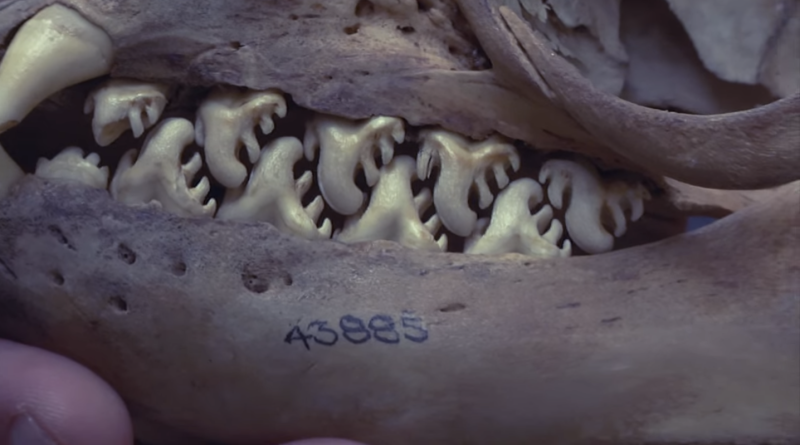
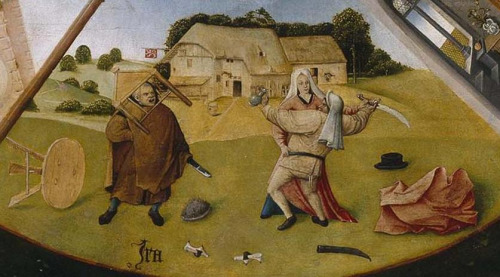
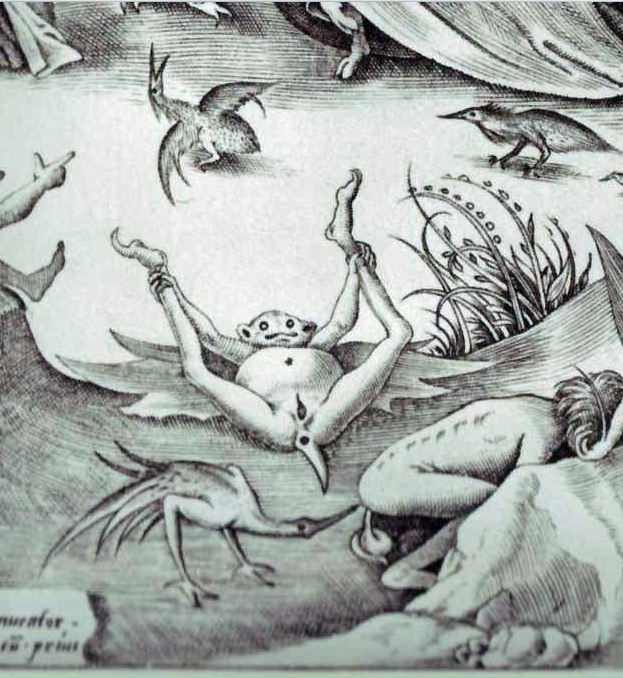
As usual, Barry draws inspiration from the dizzying bounty of images available on the net, bombarding her pupils with findings such as the lobed teeth of the crab-eater seal, above.
What to do with all of these images? Draw them, of course! As Barry tells her students:
Drawing is a language. It’s hard to understand what that really means until you’ve ‘spoken’ and ‘listened’ to it enough in a reliable regular way like the reliable regular way we will have together this semester.
That’s an important definition for those lacking confidence in their drawing abilities to keep in mind. Barry may revere the inky blacks of comics legend Jaime Hernandez, but she’s also a devotee of the wild, unbridled line that may be a beginner’s truest expression. (Stick figures, however, “don’t cut it.”) To her way of thinking, everyone is capable of communicating fluently in visual language. The current crop of student work reveals a range of training and natural talent, but all are worthy when viewed through Barry’s lens.
The teacher’s philosophy is the binding element here, but don’t fret if you are unable to take the class in person:
We rarely speak directly about the work we do in our class though we look at it together. We stare at it and sometimes it makes us laugh or we silently point out some part of it to the classmate beside us. To be able to speak this unspoken language we need to practice seeing (hearing) the way it talks.
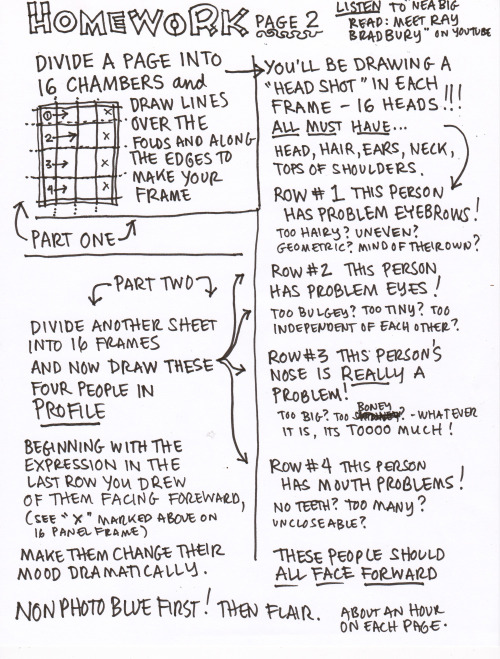
That earlier-alluded-to rigor is no joke. Daily diary comics, 3 minute self portraits on index cards, pages folded to yield 16 frames in need of filling, and found images copied while listening to prescribed music, lectures, and readingsare a constant, non-negotiable expectation of all participants. Her methodology may sound goose‑y but it’s far from loose‑y.
In other words, if you want to play along, prepare to set aside a large chunk of time to complete her weekly assignments with the vigor demanded of non-virtual students.
Those who aren’t able to commit to going the distance at this time can reconstruct the class later. Barry leaves both the assignments and examples of student work on her Tumblr for perpetuity. (You can see an example here.) For now, try completing the 20 minute exercise using the assigned image above, or by choosing from one of her “extra credit” images, below:
Set timer for three minutes and begin this drawing using a yellow color pencil. Try to draw as much of the drawing as you can in three minutes. You can draw fast, and in a messy way, The important thing is to get as much covered as you can in three minutes. You can color things in if you like. Look for the darkest areas of the photo and color those in.
Set a timer for another three minutes and using your non-dominant hand, draw with orange or color pencil to draw the entire drawing again, drawing right on top of the first drawing layer. The lines don’t have to match or be right on top of each other, you can change your mind as you add this layer. You can move a bit to the right rather than try to draw directly onto the first set of lines.
Set a timer for another 3 minutes and use a red pencil and draw it again, using you dominant hand, adding another layer to the drawing. Again, you don’t have to follow your original lines. Just draw on top of them.
Set a timer for another 3 minutes and use a dark green pencil to draw the entire drawing one more time on top of all the others.
Set a timer for 8 minutes and use a dark blue pencil to draw it one more time.
Spend the last 8 minutes inking the image in with your uniball pen. Remember that solid black is the very last thing you’d do given your time limit. You want to make sure to draw all the parts of the picture first.
We're hoping to rely on loyal readers, rather than erratic ads. Please click the Donate button and support Open Culture. You can use Paypal, Venmo, Patreon, even Crypto! We thank you!
Open Culture scours the web for the best educational media. We find the free courses and audio books you need, the language lessons & educational videos you want, and plenty of enlightenment in between.