If you would like to support the mission of Open Culture, consider making a donation to our site. It’s hard to rely 100% on ads, and your contributions will help us continue providing the best free cultural and educational materials to learners everywhere. You can contribute through PayPal, Patreon, and Venmo (@openculture). Thanks!
Fifteen years ago, a young construction worker named Andrew Price went in search of free 3d software to help him achieve his goal of rendering a 3D car.
He stumbled onto Blender, a just-the-ticket open source software that helps users with every aspect of 3D creation—modeling, rigging, animation, simulation, rendering, compositing, and motion tracking.
Price describes his early learning style as “playing it by ear,” sampling tutorials, some of which he couldn’t be bothered to complete.
Desire for freelance gigs led him to forge a new identity, that of a Blender Guru, whose tutorials, podcasts, and articles would help other new users get the hang of the software.
But it wasn’t declaring himself an expert that ultimately improved his artistic skills. It was holding his own feet over the fire by placing a bet with his younger cousin, who stood to gain $1000 if Price failed to rack up 1,000 “likes” by posting 2D drawings to ArtStation within a 6‑month period.
(If he succeeded—which he did, 3 days before his self-imposed deadline—his cousin owed him nothing. Loss aversion proved to be a more powerful motivator than any carrot on a stick…)
In order to snag the requisite likes, Price found that he needed to revise some habits and commit to a more robust daily practice, a journey he detailed in a presentation at the 2016 Blender Conference.
Price confesses that the challenge taught him much about drawing and painting, but even more about having an effective artistic practice. His seven rules apply to any number of creative forms:
Andrew Price’s Rules for an Effective Artist Practice:
Practice Daily
A number of prolific artists have subscribed to this belief over the years, including novelist (and mother!) JK Rowling, comedian Jerry Seinfeld, autobiographical performer Mike Birbligia, and memoirist David Sedaris.
If you feel too fried to uphold your end of the bargain, pretend to go easy on yourself with a little trick Price picked up from music producer Rick Rubin: Do the absolute minimum. You’ll likely find that performing the minimum positions you to do much more than that. Your resistance is not so much to the doing as it is to the embarking.
Quantity over Perfectionism Masquerading as Quality
This harkens back to Rule Number One. Who are we to say which of our works will be judged worthy. Just keep putting it out there—remember it’s all practice, and law of averages favors those whose output is, like Picasso’s, prodigious. Don’t stand in the way of progress by splitting a single work’s endless hairs.
Steal Without Ripping Off
Immerse yourself in the creative brilliance of those you admire. Then profit off your own improved efforts, a practice advocated by the likes of musician David Bowie, computer visionary Steve Jobs, and artist/social commentator Banksy.
Educate Yourself
As a stand-alone, that old chestnut about practice making perfect is not sufficient to the task. Whether you seek out online tutorials, as Price did, enroll in a class, or designate a mentor, a conscientious commitment to study your craft will help you to better master it.
Give yourself a break
Banging your head against the wall is not good for your brain. Price celebrates author Stephen King’s practice of giving the first draft of a new novel six weeks to marinate. Your break may be shorter. Three days may be ample to juice you up creatively. Just make sure it’s in your calendar to get back to it.
Passion projects are the key to creative longevity and pleasurable process. Don’t cater to a fickle public, or the shifting sands of fashion. Pursue the sorts of things that interest you.
Implicit in Price’s seven commandments is the notion that something may have to budge—your nightly cocktails, the number of hours spent on social media, that extra half hour in bed after the alarm goes off… Don’t neglect your familial or civic obligations, but neither should you shortchange your art. Life’s too short.
Read the transcript of Andrew Price’s Blender Conference presentation here.
Critical theorists like Theodor Adorno may have overreached in claiming that all mass culture is mediocre, mechanized propaganda made to justify the status quo. But that doesn’t mean they were entirely wrong. Over and over we see even the most subversive art, literature, film, and music has a way of being tamed and Bowdlerized. Global mega-corporate industries don’t need to censor what they don’t like; they only need to buy it, rebrand it, or price it out of reach.
So what? Why do we need challenging, independent art when we have endless entertainment? Is the concept a nostalgic, elitist, Eurocentric idea? Artists have justified the need for art since antiquity, with poetic and logical arguments of every kind. But Dada artists of the early 20th century broke ranks, building their movement on the insight that no defense could possibly mean anything when it came to art’s purpose, especially in the face of the technocratic slaughter of World War I.
When the hyperrationalism of modernity led to mass death and destruction, the only humane response was to declare war on rationalization—to “destroy the hoaxes of reason,” as French artist Jean Arp put it. “For the disillusioned artists of the Dada movement,” the Museum of Modern Art explains, “the war merely confirmed the degradation of social structures that led to such violence: corrupt and nationalist politics, repressive social values, and unquestioning conformity of culture and thought.”
Dada took a combative stance against, for one thing, the insistence that art justify its existence to win establishment approval. “All activity is vain,” declared poet Tristan Tzara in his 1918 “Dada Manifesto,” including the “monetary system, pharmaceutical product, or a bare leg advertising the ardent sterile spring…. The beginnings of Dada were not the beginnings of art, but of disgust” with the ossified culture of the “nice, nice bourgeois,” who would preserve at any cost “the possibility of wallowing in cushions and good things to eat.”
“And so Dada,” wrote Tzara, “was born of a need for independence, of a distrust toward unity.” Such declarations aside, the movement was decidedly unified in its aims. “For us, art is not an end in itself,” poet Hugo Ball wrote. “It is an opportunity for the true perception and criticism of the times we live in.” This critique required new experimental techniques that deformed and repurposed the technologies of mass culture.
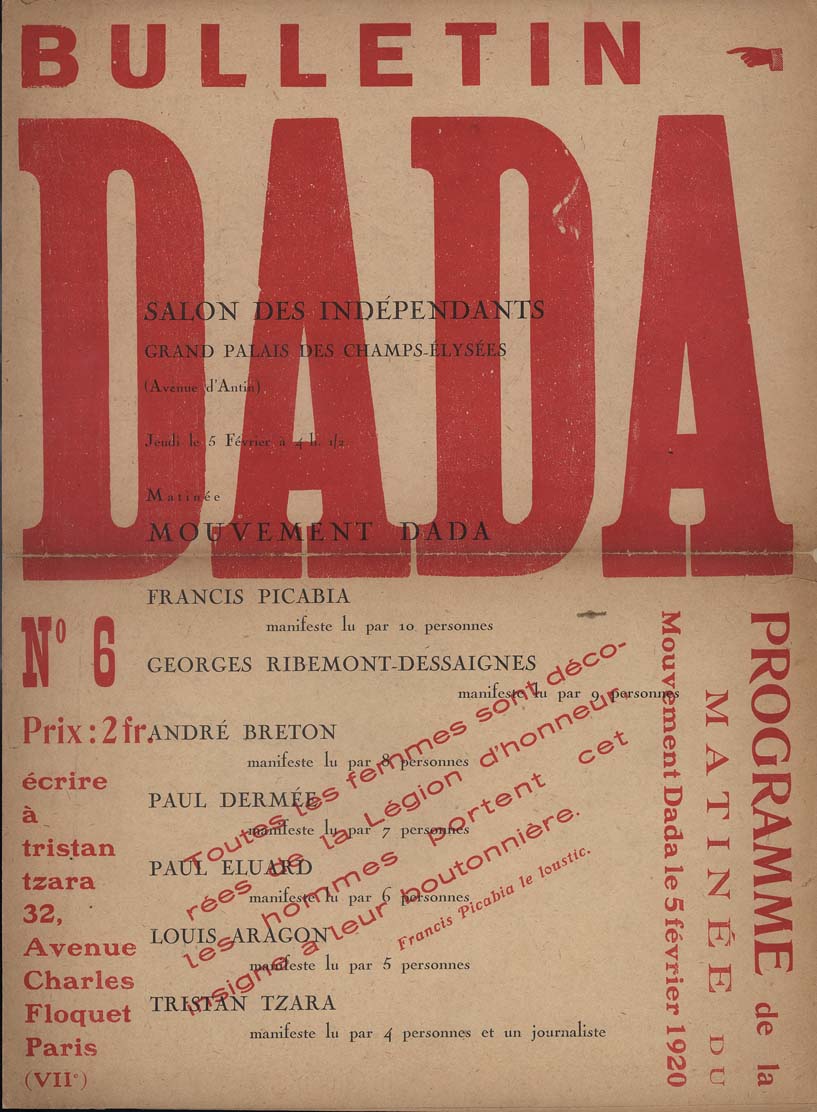
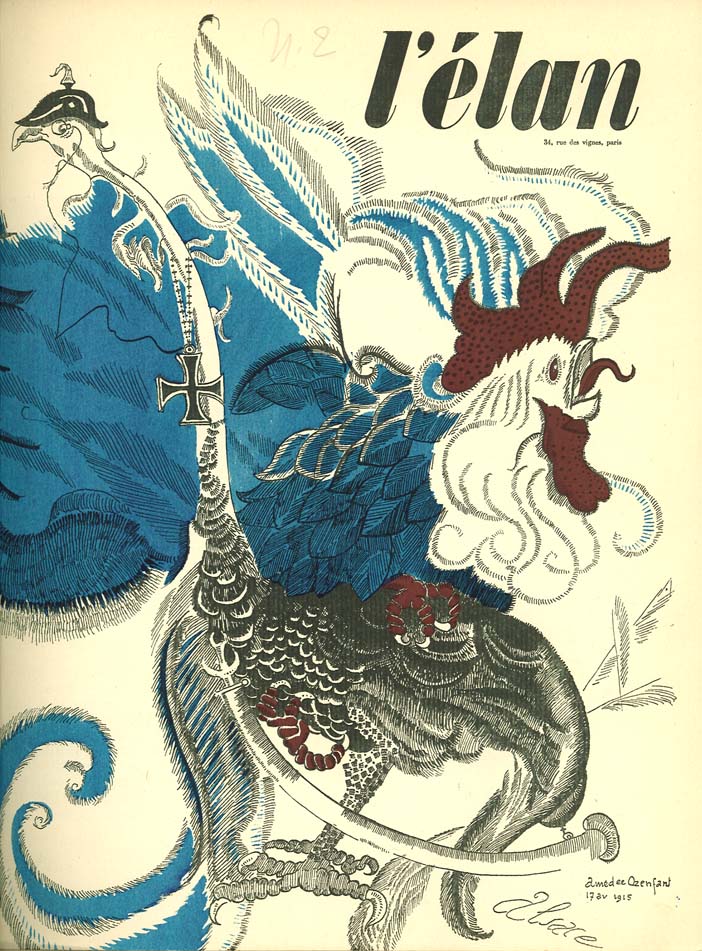
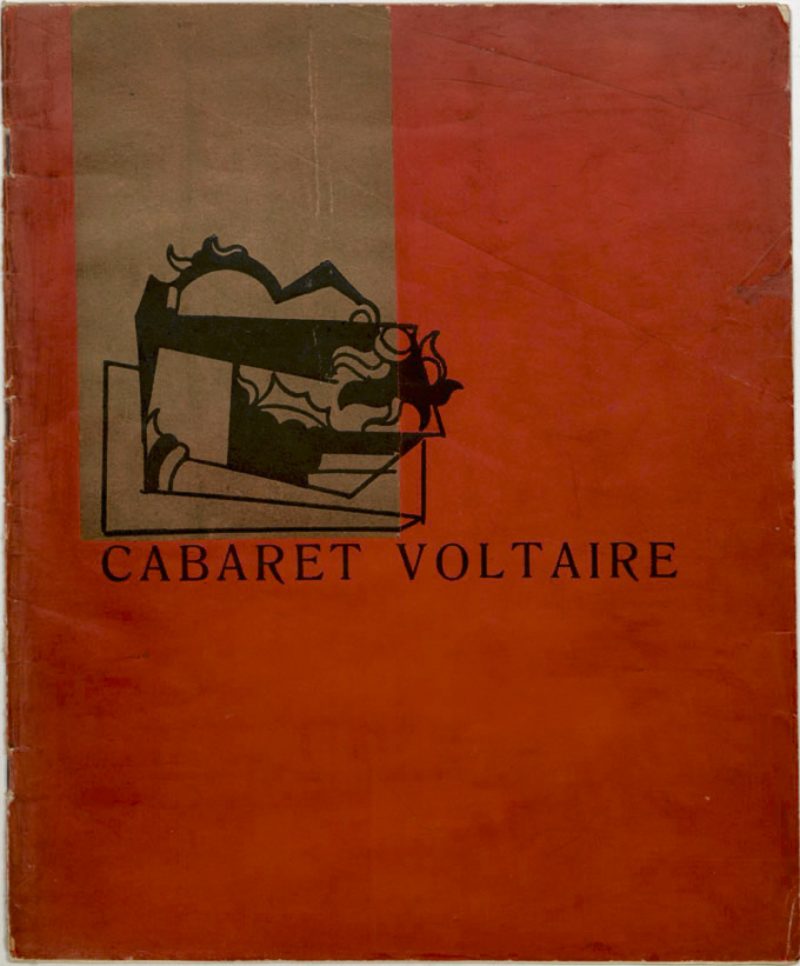
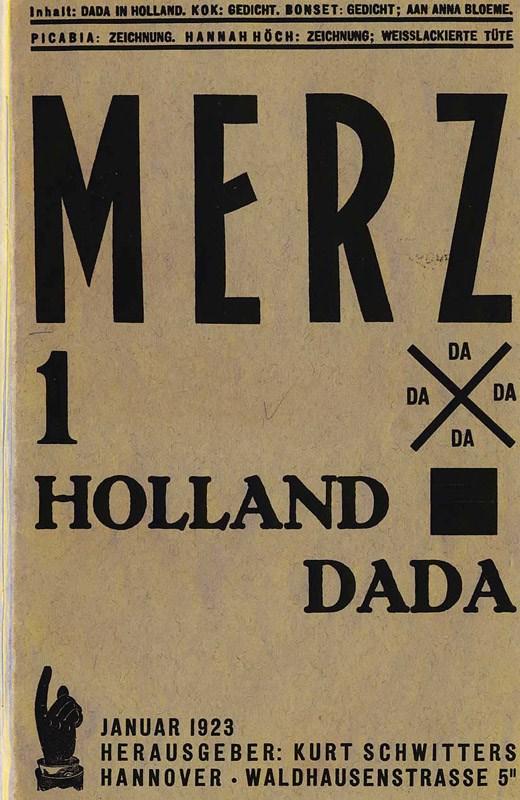
The undertaking would not have been possible without a Dada publishing wing that turned out scores of journals, magazines, books, leaflets, essays, manifestos, etc., written, designed, edited, illustrated, photographed, and controlled by the artists themselves. They might find no small amount of irony in the fact that their productions have received the ultimate institutional sanction: housed in “nice, nice bourgeois” museums, libraries, and universities around the world.
The University of Iowa’s International Dada Archive has amassed a considerable number of Dada publications and offers a wealth of high-quality scanned images of the originals on their site. “The first section” of their Digital Library “includes some of the major periodicals of the Dada movement from Zurich, Berlin, Paris, and elsewhere.” These are not always complete runs, though the library has included “reprints of issues for which we do not own originals” to make up for missing items in the collection.
The second section of the site “includes books by some of the participants in the Dada movement, as well as some of the more ephemeral Dada-era publications, such as exhibiton catalogs and broadsides.” You’ll find writings by all of the artists mentioned above, as well as other well-known names like Max Ernst, Paul Eluard, George Grosz, Man Ray, Francis Picabia, and more.
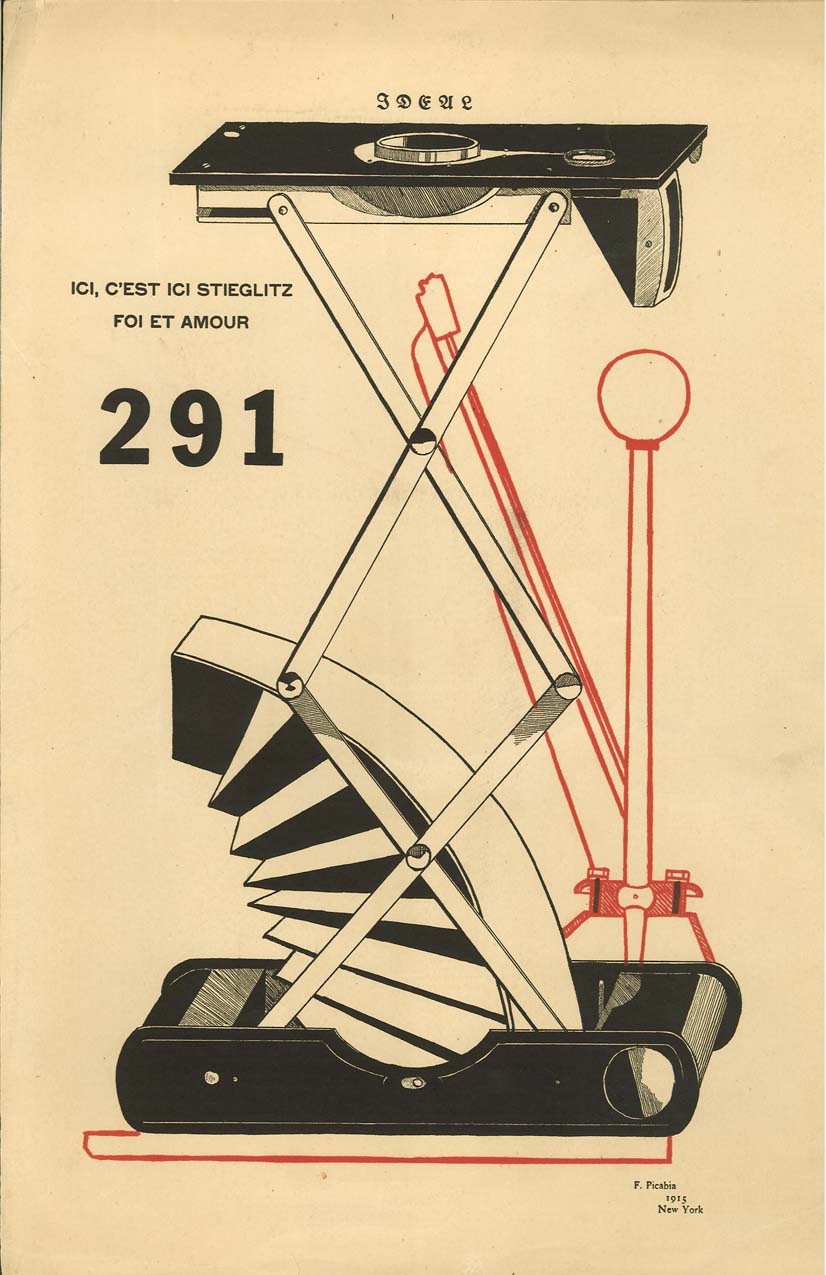
All of these publications are, of course, in their original European languages, though you can find translations of many documents online. The most influential Dada magazine in English, Alfred Stieglitz’s 291, will give monolingual readers a flavor of the larger scene. Published in New York between 1915 and 1916, the short-lived journal included many of the major European names. Its first issue covered experiments like “simultanism,” “sincerism,” and “idiotism,” and introduced visual poetry to American readers. Issue 5–6 featured on its cover one of the weird, nonsensical machines of Francis Picabia.
Dada splintered into other movements before its artists were forced out of Europe or hounded into obscurity by the Nazis. Their unified attempt to fragment and disrupt the dominance of mass culture was itself fragmented and disrupted by a horrific new war machine. But while their ideas may have been co-opted, their spirit may yet live on. Inspired by their work, perhaps a new generation will take up the Sisyphean task of making radical, critical, experimental art to subvert the homogenizing juggernaut of the culture industry.
Enter the University of Iowa’s Digital Dada Library here.
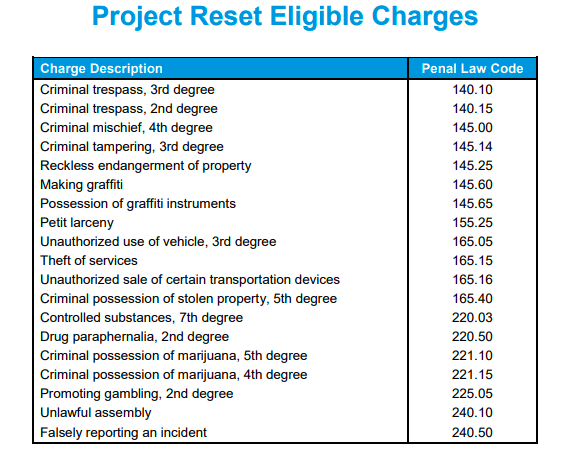
Art saves lives, and art can also save an individual from the stigma of an arrest record, provided that the arrest is for one of 15 non-violent misdemeanors.
Project Reset, a museum-based early diversion program in three of New York City’s five boroughs, aims to reframe the way youthful (and not so youthful) offenders see themselves, by considering an artwork via a collective interpretive process, before using it as the inspiration for a collage or oil pastel-based project of their own.
The stakes are higher and far more personal than they are on the average public school field trip. Upon completion of a class ranging from 2.5 to 4 hours, the participant’s record is wiped clean and their assigned court date is rendered moot.
Rather than being herded through a number of galleries, participants zero in on a single work.
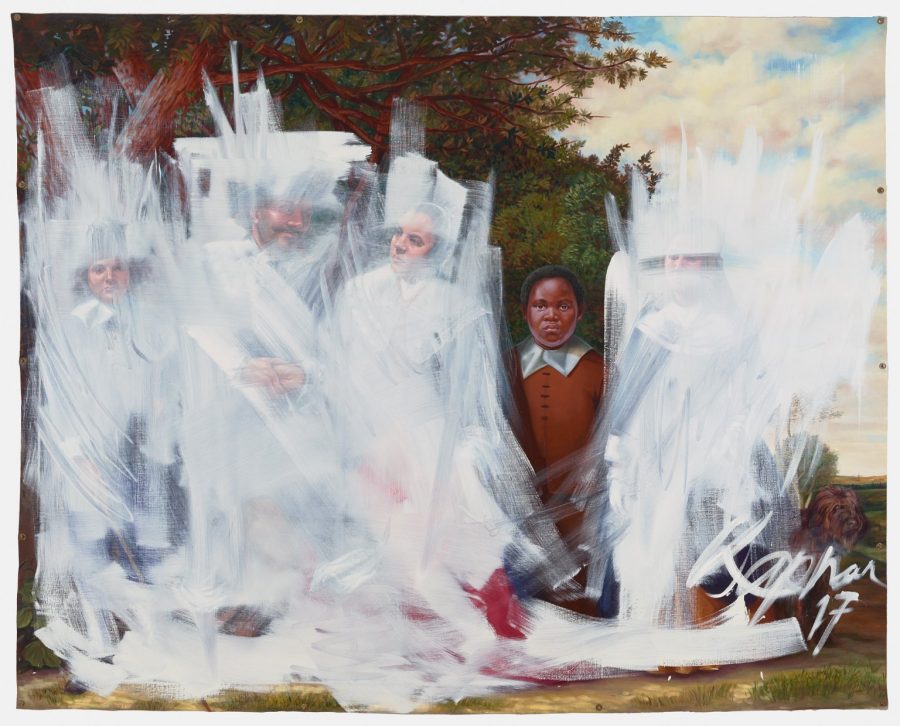
At the Brooklyn Museum, participants in the under-25 age range get a crash course in Shifting the Gaze, Titus Kaphar’s intentional palimpsest, in which all the figures in a replica of Frans Hals’ Family Group in a Landscape are whited out so viewers may focus in on the only character of color, a young boy who appears to be a family servant.
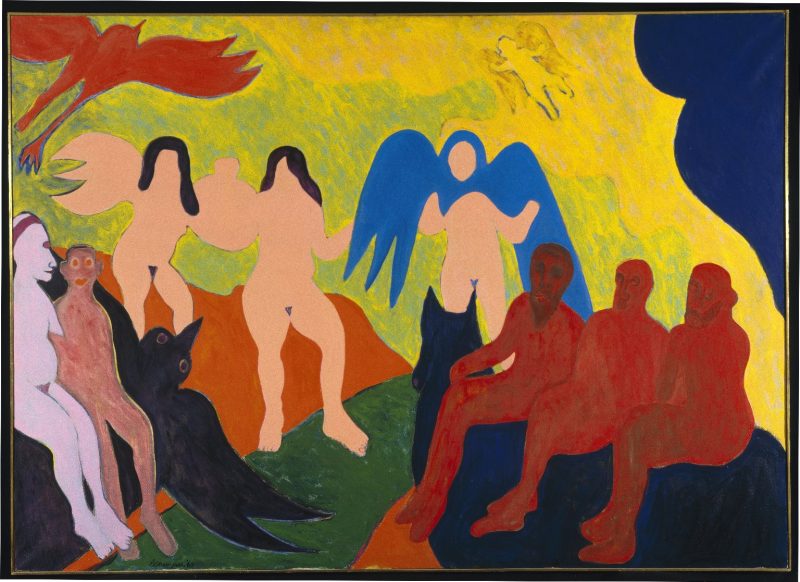
Older participants undertake a similarly deep dive on The Judgement by Bob Thompson, an African American artist who was inspired by the constant interplay between good and evil.
While this may strike some as a cushy punishment, it’s a legitimate attempt to acquaint participants with the very real impact their actions could have on future plans—including college admissions and job applications.
Manhattan District Attorney, Cyrus Vance Jr., one of Project Reset’s architects, shared a non-partisan fiscal take with City Lab’s Rebecca Bellan that may persuade naysayers who feel the program rewards budding criminals by giving them an easy out:
If you jump subway turnstiles in Manhattan, you never go to jail. You can do it 100 times and no court is ever going to send you to jail. So we spend about $2,200 to process a theft of services arrest for a $2.75 fare. Our justice system falls most heavily on communities of color, and we really need to rethink how we approach these cases, both to get better outcomes, but also to reduce the impact which is very often viewed as targeted and unfair on particular communities.
Above is a list of the non-violent misdemeanors that can channel first timers toward the aptly named Project Reset.
“Whatever you find weird, ugly, or nasty about a medium will surely become its signature,” writes Brian Eno in his published diary A Year with Swollen Appendices. “CD distortion, the jitteriness of digital video, the crap sound of 8‑bit — all these will be cherished as soon as they can be avoided.” Eno wrote that in 1995, when digital audio and video were still cutting-edge enough to look, sound, and feel not quite right yet. But when DVD players hit the market not long thereafter, making it possible to watch movies in flawless digital clarity, few consumers with the means hesitated to make the switch from VHS. Could any of them have imagined that we’d one day look back on those chunky tapes and their wobbly, muddy images with fondness?
Anyone with much experience watching Youtube has sensed the lengths to which its creators go in order to deliberately introduce into their videos the visual and sonic artifacts of a pre-digital age, from VHS color bleed and film-surface scratches to vinyl-record pops and tape hiss. “Why do we gravitate to the flaws that we’ve spent more than a century trying to remove from our media?” asks Noah Lefevre, creator of the Youtube channel Polyphonic, in his video essay “The Beauty of Degraded Media.” He finds examples everywhere online, even far away from his platform of choice: take the many faux-analog filters of Instagram, an app “built around artificially adding in the blemishes and discolorations that disappeared with the switch to digital photography.”
Lefevre even traces humanity’s love of degraded media to works and forms of art long predating the internet: take now-monochromatic ancient Greek statues, which “were originally painted with bold, bright colors, but as the paints faded, the art took on a new meaning. The pure white seems to carry an immaculate beauty to it that speaks to our perception of Greek philosophies and myths centuries later.” He likens what he and other digital-media creators do today to a kind of reverse kintsugi, the traditional Japanese art of repairing broken pottery with conspicuous gold and silver seams: “Instead of filling in flaws in imperfect objects, we’re creating artificial flaws in perfect objects.” Whether we’re streaming video essays and vaporwave mixes or watching VHS tapes and spinning vinyl records, “we want our media to feel lived in.”
Or as Eno puts it, we want to hear “the sound of failure.” And we’ve always wanted to hear it: “The distorted guitar is the sound of something too loud for the medium supposed to carry it. The blues singer with the cracked voice is the sound of an emotional cry too powerful for the throat that releases it. The excitement of grainy film, of bleached-out black and white, is the excitement of witnessing events too momentous for the medium assigned to it.” This leads into advice for artists, something that Eno — who has made as much use of deliberate imperfection in his role as a producer for acts like U2 and David Bowie as he has in his own music and visual art — has long excelled at giving: “When the medium fails conspicuously, and especially if it fails in new ways, the listener believes something is happening beyond its limits.” It was true of art in the 90s, and it’s even truer of art today.
Based in Seoul, Colin Marshall writes and broadcasts on cities, language, and culture. His projects include the book The Stateless City: a Walk through 21st-Century Los Angeles and the video series The City in Cinema. Follow him on Twitter at @colinmarshall or on Facebook.
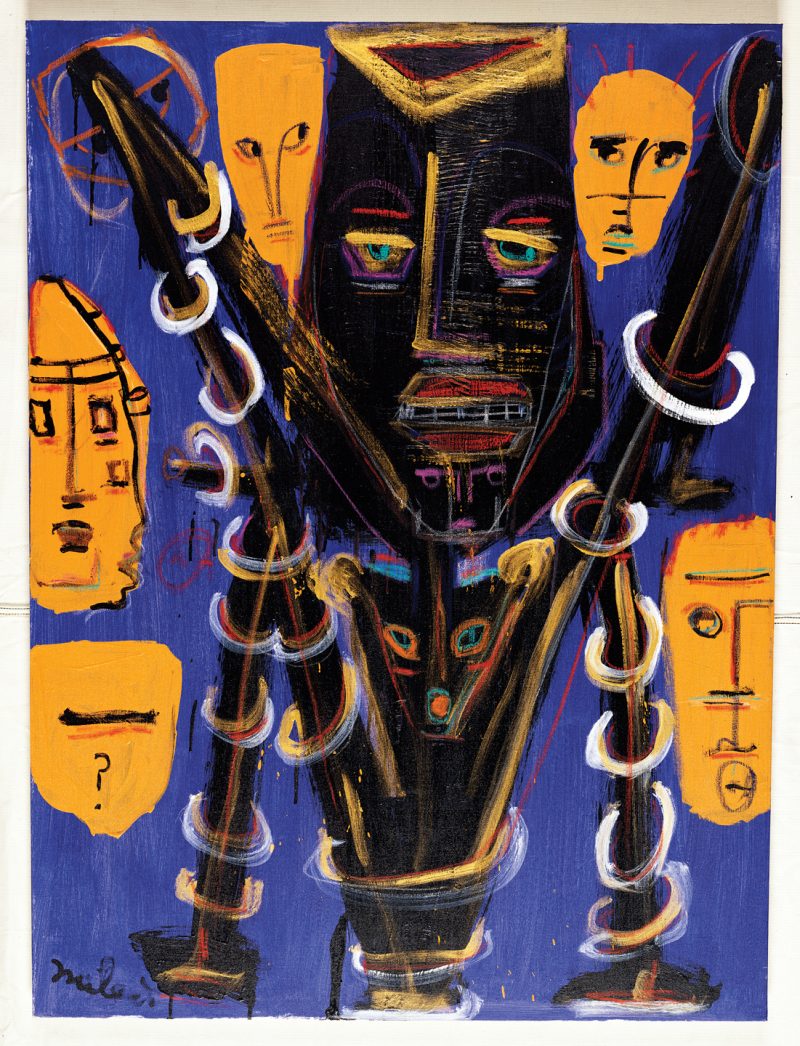
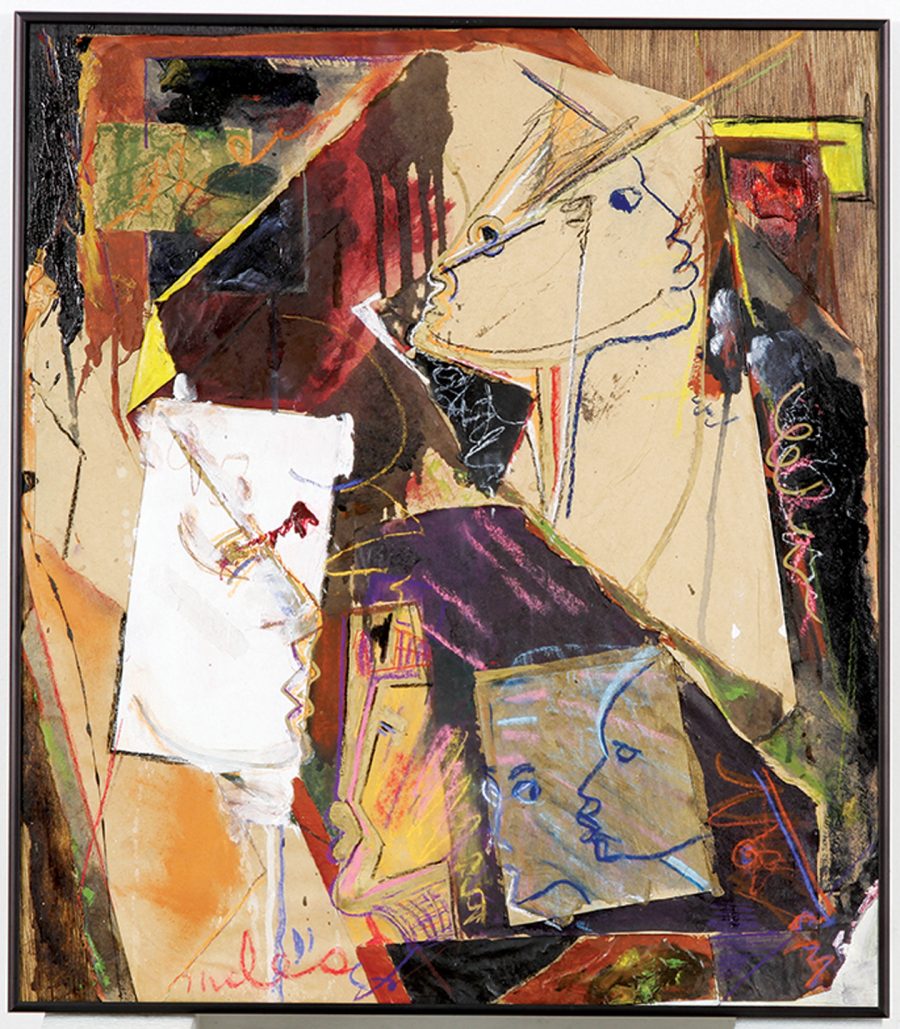
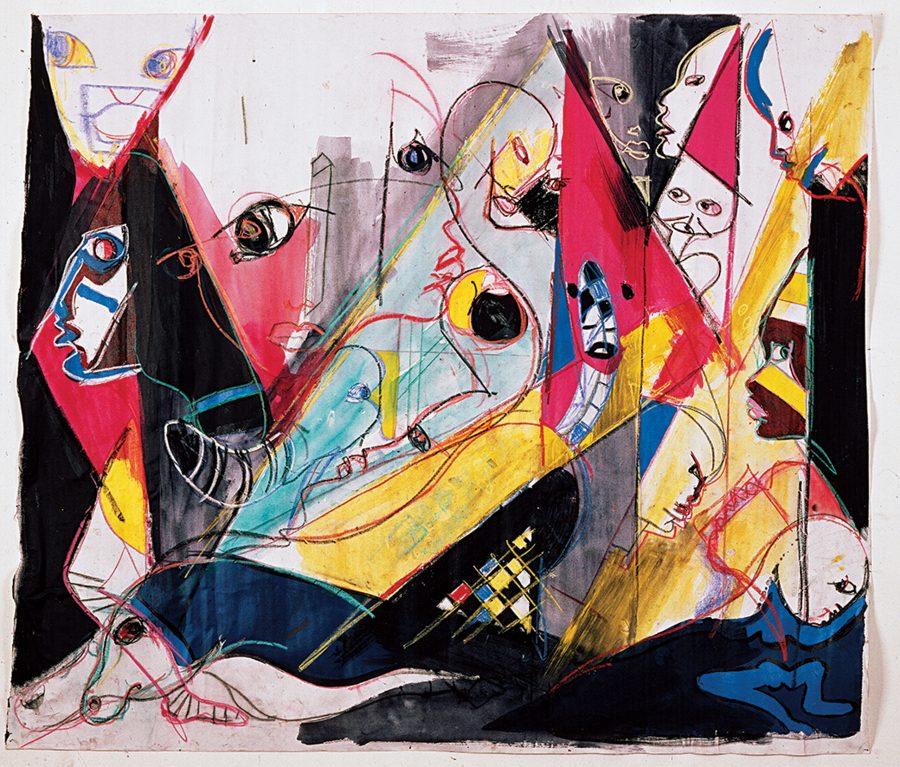
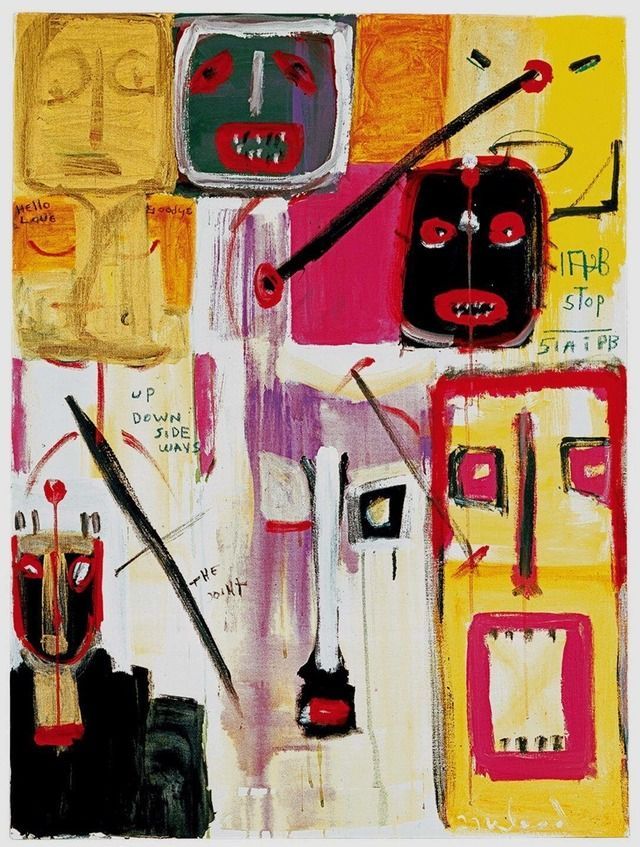
Few artists have lived as many creative lifetimes as Miles Davis did in his 65 years, continuing to evolve even after his death with the posthumous release of a lost album Rubberband earlier this year. The album’s cover, featuring an original painting by Davis himself, may have turned fans on to another facet of the composer/bandleader/trumpeter’s artistic evolution—his career as a visual artist, which he began in earnest just a decade before his 1991 death.
“During the early 1980s,” writes Tara McGinley at Dangerous Minds, Davis “made creating art as much a part of his life as making music…. He was said to have worked obsessively each day on art when he wasn’t touring and he studied regularly with New York painter Jo Gelbard.” Never one to do anything by half-measures, Davis turned out canvas after canvas, though he didn’t exhibit much in his lifetime.
He painted mainly for himself. “It’s like therapy for me,” he said, “and keeps my mind occupied with something positive when I’m not playing music.” Being the intimidating Miles Davis, however, it wasn’t exactly easy for him to find artistic peers with whom he could commune. When he first approached Gelbard, the artist says, “I was scared to death! I could barely speak.”
The two lived in the same New York building and Gelbard eventually relaxed enough to give Davis lessons, then later became his girlfriend, collaborating with him on work like the cover of the 1989 album Amandla. As she characterizes his style:
The way Miles painted was not the way he played or the way he sketched. He was so minimal and light-handed in his sound, in his walk. His body was very light; he was a slight man, a delicate kind of guy. His sketches are light and airy and minimal, but when he took his brush and paint, he was deadly – he was like a child with paints in kindergarten. He would pour it on and mix it until it got too muddy and over-paint. He just loved the texture and the feel. It got all over his clothes and his hands and his hair and it was just fun for him…
Miles also found a peer in fellow painter Joni Mitchell. She describes how he called her one day and said, “Joni, I like that painting that you did. Nice colors. I want to come over and watch you paint.” Davis, her musical hero, wouldn’t record with her (though she found out later that he owned all her records). “He would talk painting but he wouldn’t talk music with me.”
Davis’ paintings are rough and expressionistic, a counterpoint to the formal discipline of his music. (McGinley succinctly describes them as a “sharp, bold and masculine mixture of Kandinsky, Jean-Michel Basquiat, Picasso and African tribal art”.) He didn’t make inroads in the art world, but painting did become “a profitable sideline,” noted the L.A. Times in ’89. Friends and fellow musicians like Lionel Richie and Quincy Jones bought his work. “A magazine called Du in Zurich bought some of my sketches for a special edition they’re putting out on me,” he said.
In 2013, a hardcover edition of his collected paintings appeared, with a foreword by Jones, perhaps the most avid of Miles Davis collectors. There are many other voices in the book, including author Steve Gutterman—who interviewed Davis before his death and writes an introduction—and various family members who contribute personal stories. Miles sums up his own “refreshingly unpretentious attitude” toward his artwork in one brief statement: “It ain’t that serious.”
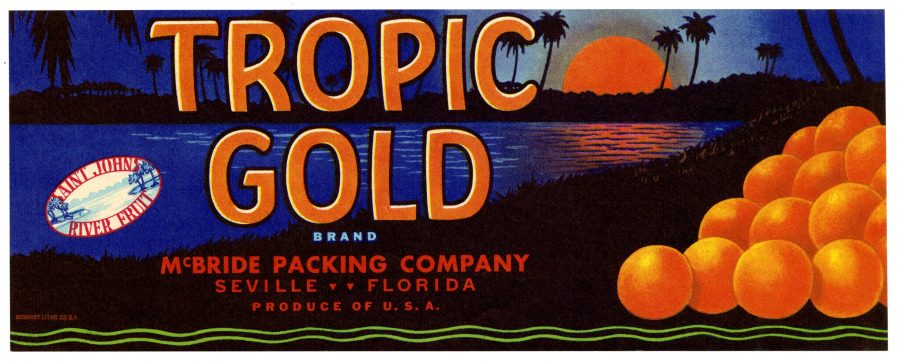
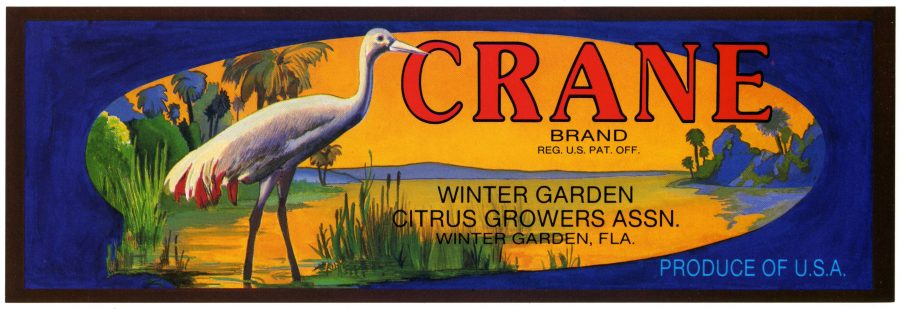
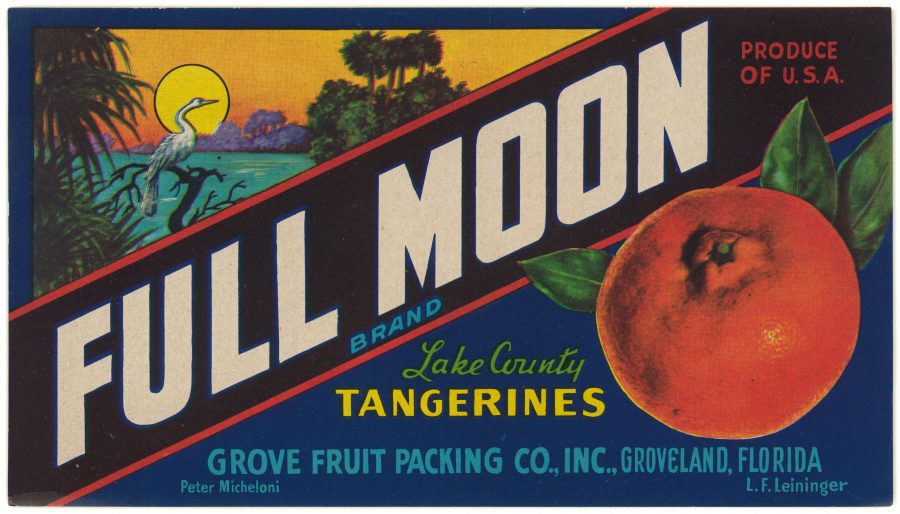
Tourists began flocking to it in earnest once the railroads expanded in the late 19th century, drawn by visions of sunset beaches, graceful palms, and plump citrus fruit in a warm weather setting.
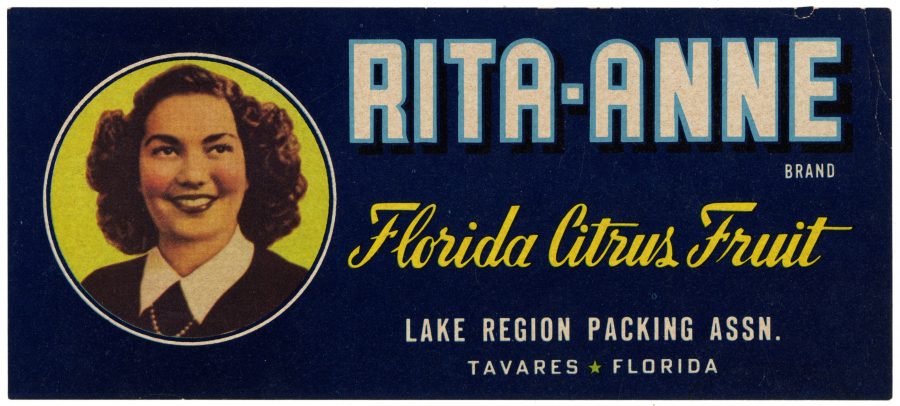
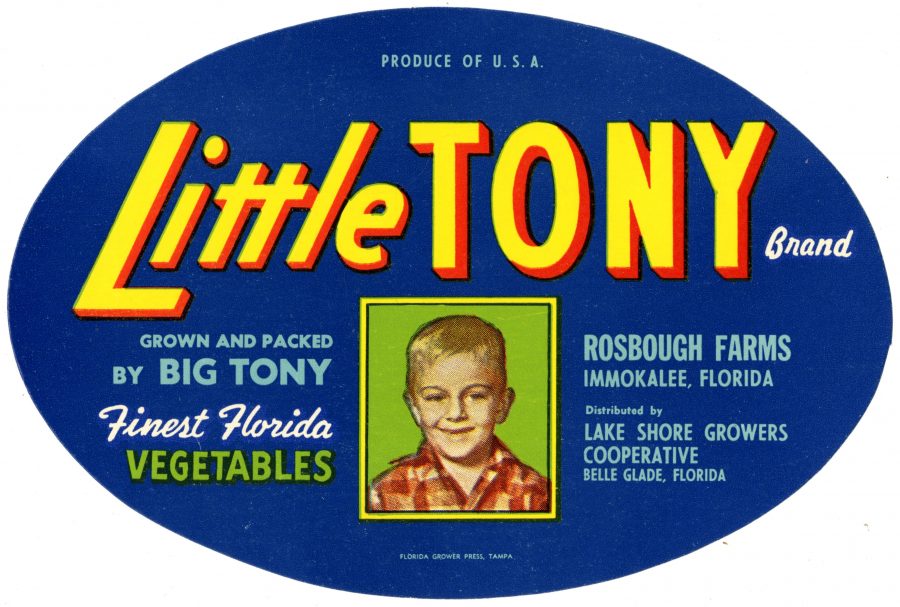
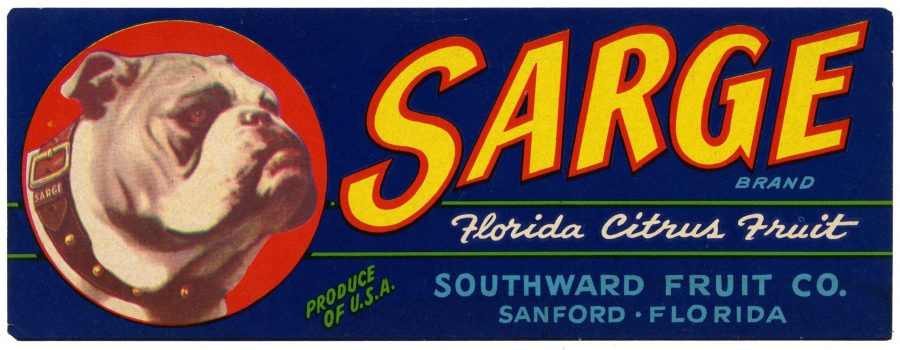
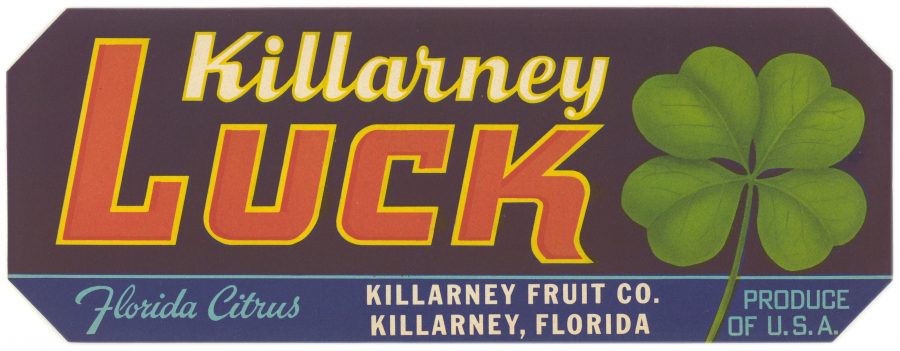
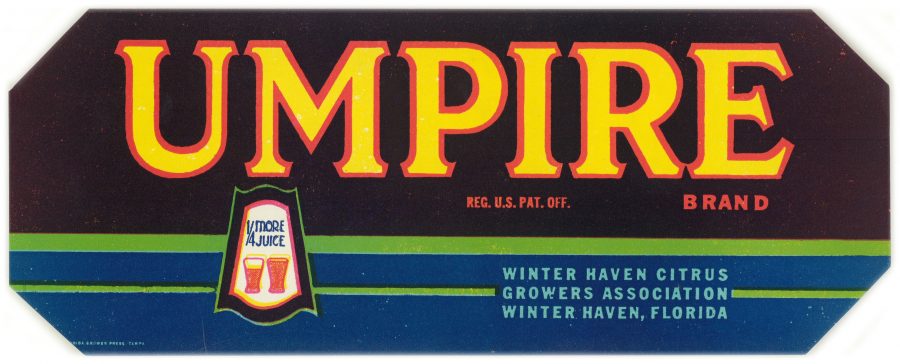
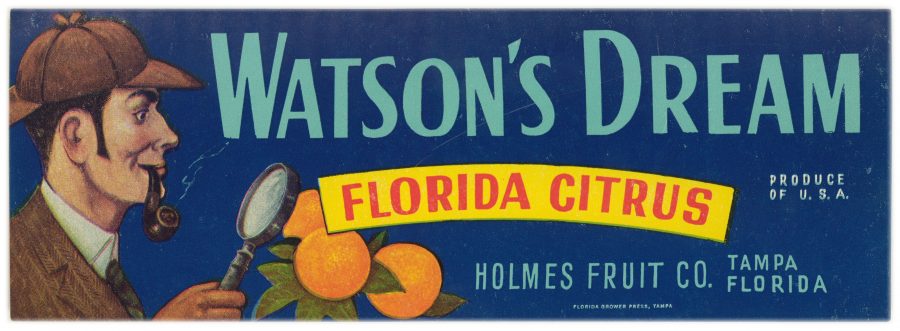
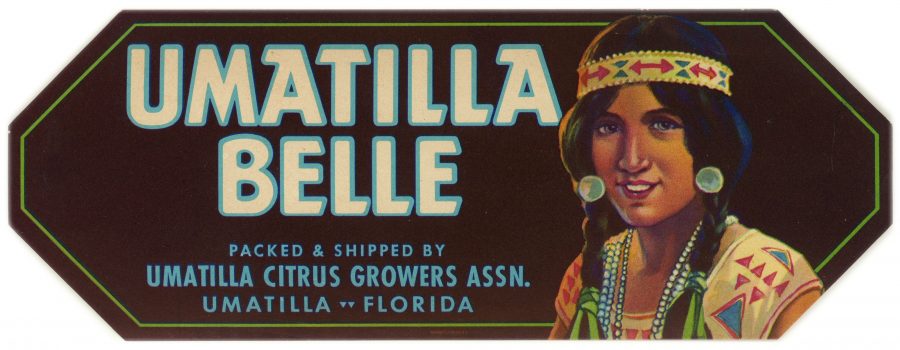
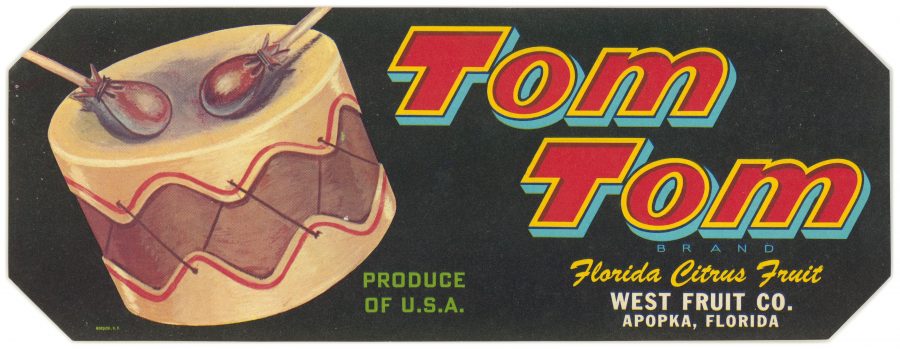
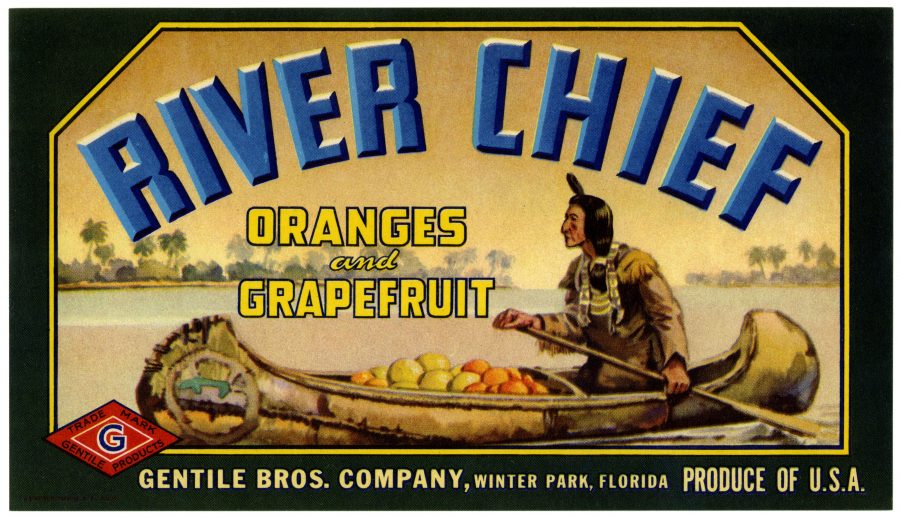
The fantasy gathered steam in the 1920s when citrus growers began affixing colorful labels to the fruit crates that shipped out over those same railroad lines, seeking to distinguish themselves from the competition with memorable visuals.
These labels offered lovers of grapefruit and oranges who were stuck in colder climes tantalizing glimpses of a dreamy land filled with Spanish Moss and graceful long-legged birds. Words like “golden” and “sunshine” sealed the deal.
The State Library of Florida’s Florida Crate Label Collection has amassed more than 600 examples from the 1920s through the 1950s, many of which have been digitized and added to a searchable database.
While the majority of the labels peddle the sunshine state mythos, others pay homage to growers’ family members and pets.
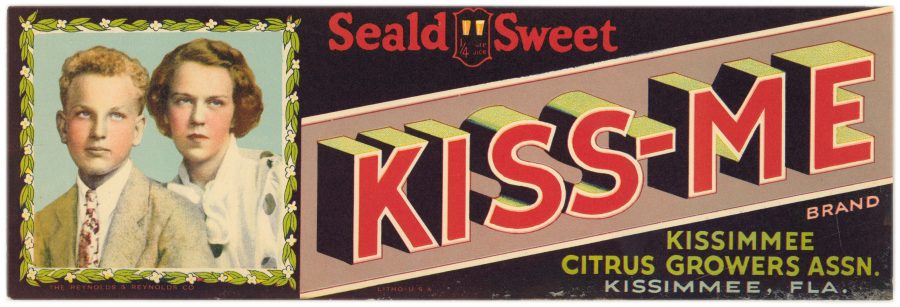
Others like Killarney Luck, Umpire, Sherlock’s Delight, and Watson’s Dream built brand identity by playing on the grove’s name or location, though one does wonder about the models for the deliciously dour Kiss-Me label. Siblings, perhaps? Maybe the Kissimmee Citrus Growers Association disapproved of the PDA their name seems so ripe for.
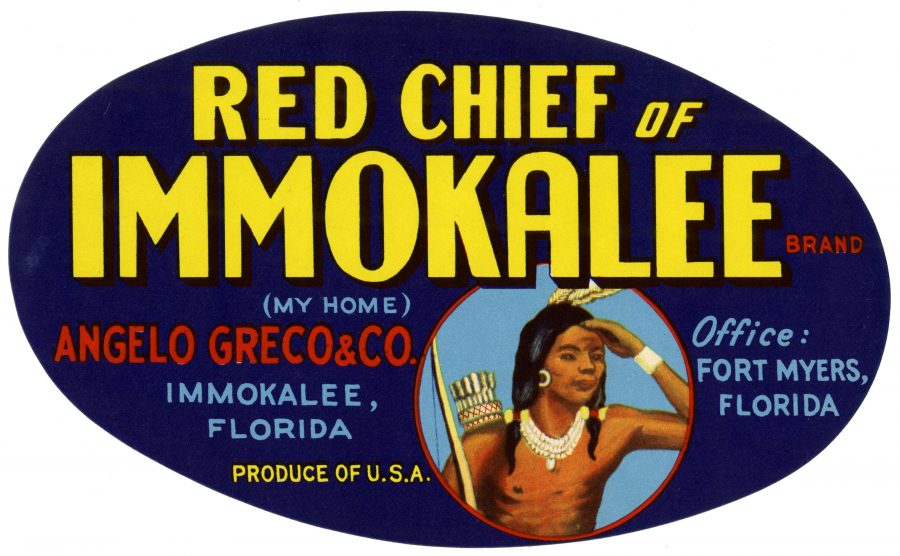
Native Americans’ prominent representation likely owed as much to the public’s fascination with Westerns as to the state’s tribal heritage, evident in the names of so many locations, like Umatilla and Immokalee, where citrus crops took root.
Meanwhile, Mammy, Aunty, and Dixieland brands relied on a stereotypical representation of African-Americans that had a proven track record with consumers of pancakes and Cream of Wheat.
The vibrantly illustrated crate labels were put on hold during World War II, when the bulk of the citrus crop was earmarked for the military.
By the mid-50s, cardboard boxes on which company names and logos could be printed directly had become the industry standard, relegating crate labels to antique stores, swap meets, and flea markets.
Ayun Halliday is an author, illustrator, theater maker and Chief Primatologist of the East Village Inky zine. Join her in NYC on Monday, November 4 when her monthly book-based variety show, Necromancers of the Public Domain celebrates Louise Jordan Miln’s “Wooings and Weddings in Many Climes (1900). Follow her @AyunHalliday.
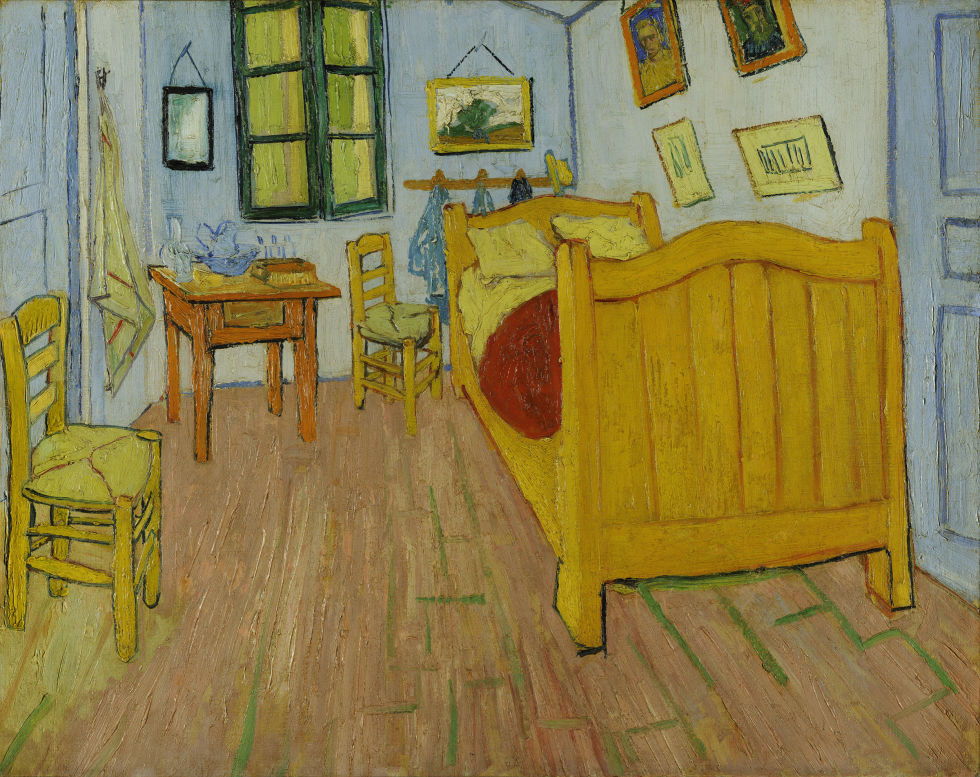
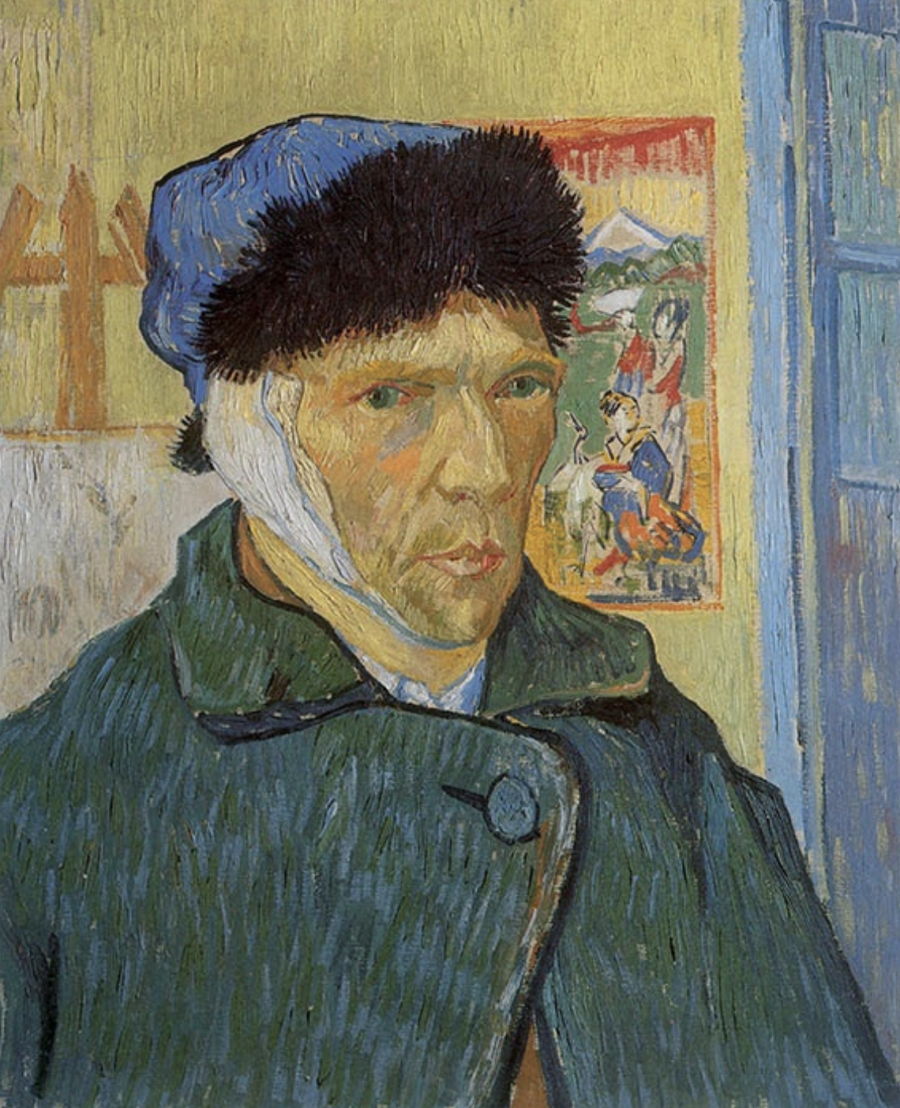
Readers will receive no prizes for guessing what they’ll find, broadly speaking, at the Van Gogh Museum. But they may well be surprised by the full scope of the Van Gogh and Van Gogh-related work and information on offer for their free perusal at the Van Gogh Museum’s online collection. Naturally, you can view and learn about all of the paintings and drawings by Vincent van Gogh in the collection, including some of his best-known pieces like The Potato Eaters, a scene of “the harsh reality of country life” the artist deliberately chose for its difficulty; The Bedroom (or Bedroom in Arles), with its bright colors “meant to express absolute ‘repose’ or ‘sleep’”; and, painted between 1886 and 1889, no fewer than 21 self-portraits, including Self-Portrait with Bandaged Ear, the face we think of when we think of van Gogh himself.
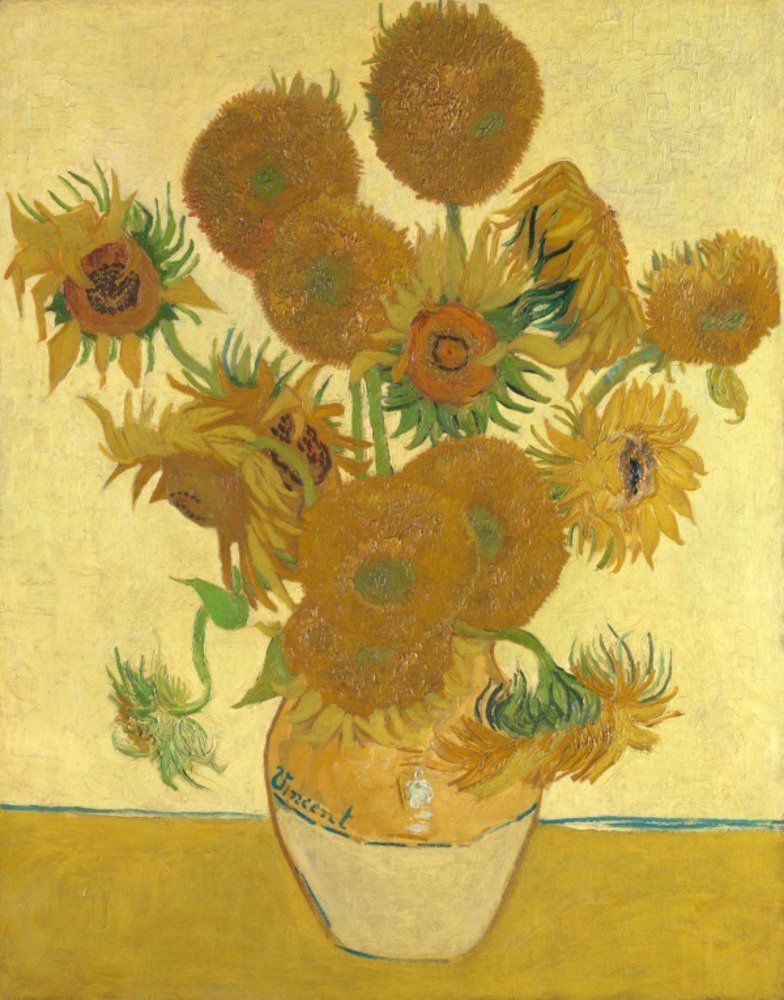
For van Gogh’s most famous series of floral still-life paintings the Van Gogh Museum’s online collection goes much deeper, offering an entire section of its site dedicated to “everything about Sunflowers.”
Online or off, collections dedicated to the work of a single artist sometimes suffer tunnel vision, providing a wealth of detail about the life and the masterpieces, but little in the way of context. The Van Gogh Museum doesn’t, having put on view not just van Gogh’s work, but also that of the Japanese woodblock makers from whom he drew inspiration (previously featured here on Open Culture) as well as that of more recent artists who have drawn their own inspiration from van Gogh: Britain’s Jason Brooks, China’s Zeng Fanzhi, and the Netherlands’ own Pieter Laurens Mol, to say nothing of the likes of Edvard Munch and Francis Bacon. Elsewhere you can even explore “the Parisian print world of the 19th century,” a “period of artistic innovation and decadence” that did more than its part to shape van Gogh’s sensibility. As the Van Gogh Museum clearly understands, to know an artist requires immersing yourself not just in their work, but in their world as well. Enter the van Gogh online collection here.
Based in Seoul, Colin Marshall writes and broadcasts on cities, language, and culture. His projects include the book The Stateless City: a Walk through 21st-Century Los Angeles and the video series The City in Cinema. Follow him on Twitter at @colinmarshall or on Facebook.
We're hoping to rely on loyal readers, rather than erratic ads. Please click the Donate button and support Open Culture. You can use Paypal, Venmo, Patreon, even Crypto! We thank you!
Open Culture scours the web for the best educational media. We find the free courses and audio books you need, the language lessons & educational videos you want, and plenty of enlightenment in between.