Jocelyn Bell Burnell Discovered Radio Pulsars in 1974, But the Credit Went to Her Advisor; In 2018, She Gets Her Due, Winning a $3 Million Physics Prize

Say you made a Nobel-wor­thy sci­en­tif­ic dis­cov­ery and the prize went to your the­sis super­vi­sor instead. How would you take it? Prob­a­bly not as well as Joce­lyn Bell Bur­nell, dis­cov­er­er of the first radio pul­sars, to whom that very thing hap­pened in 1974. “Demar­ca­tion dis­putes between super­vi­sor and stu­dent are always dif­fi­cult, prob­a­bly impos­si­ble to resolve,” she said a few years lat­er. “It is the super­vi­sor who has the final respon­si­bil­i­ty for the suc­cess or fail­ure of the project. We hear of cas­es where a super­vi­sor blames his stu­dent for a fail­ure, but we know that it is large­ly the fault of the super­vi­sor. It seems only fair to me that he should ben­e­fit from the suc­cess­es, too.”

But now, 44 years lat­er, Bell Bur­nel­l’s achieve­ment has brought a dif­fer­ent prize her way: the Spe­cial Break­through Prize in Fun­da­men­tal Physics, to be pre­cise, and the $3 mil­lion that comes with it, all of which she will donate “to fund women, under-rep­re­sent­ed eth­nic minor­i­ty and refugee stu­dents to become physics researchers.” “Like the stars of Hid­den Fig­ures and DNA researcher Ros­alind Franklin, Bell Burnell’s per­son­al sto­ry embod­ies the chal­lenges faced by women in sci­en­tif­ic fields,” write the Wash­ing­ton Post’s Sarah Kaplan and Anto­nia Noori Farzan. “Bell Bur­nell, who was born in North­ern Ire­land in 1943, had to fight to take sci­ence class­es after age 12.”

Reject­ing an expect­ed life of cook­ery and needle­work, Bell Bur­nell “read her father’s astron­o­my books cov­er to cov­er, teach­ing her­self the jar­gon and grap­pling with com­plex con­cepts until she felt she could com­pre­hend the uni­verse. She com­plained to her par­ents, who com­plained to the school, which ulti­mate­ly allowed her to attend lab along with two oth­er girls. At the end of the semes­ter, Bell Bur­nell ranked first in the class.” Still, by the time she arrived at Cam­bridge Uni­ver­si­ty for grad­u­ate school, she “was cer­tain some­one had made a mis­take admit­ting her.” Her sub­se­quent work there on one of “the most impor­tant astro­nom­i­cal finds of the 20th cen­tu­ry,” which you can see her talk about in the clip above, should have dis­pelled that notion.

But as Josh Jones wrote here on Open Cul­ture last month, Bell Bur­nell was a vic­tim of the “Matil­da effect,” named for suf­frag­ist and abo­li­tion­ist Matil­da Joslyn Gage, which iden­ti­fies the “denial of recog­ni­tion to women sci­en­tists” seen through­out the his­to­ry of sci­ence. The new gen­er­a­tion of prizes like the Break­through Prize in Fun­da­men­tal Physics, found­ed in 2012 by physi­cist-entre­pre­neur Yuri Mil­ner, have the poten­tial to coun­ter­act the Matil­da effect, but many oth­er Matil­das have yet to be rec­og­nized. “I am not myself upset about it,” as Bell Bur­nell put it in 1977 when asked about her non-recep­tion of the Nobel. “After all, I am in good com­pa­ny, am I not!”

Relat­ed Con­tent:

“The Matil­da Effect”: How Pio­neer­ing Women Sci­en­tists Have Been Denied Recog­ni­tion and Writ­ten Out of Sci­ence His­to­ry

Read the “Don’t Let the Bas­tards Get You Down” Let­ter That Albert Ein­stein Sent to Marie Curie Dur­ing a Time of Per­son­al Cri­sis (1911)

Marie Curie Attend­ed a Secret, Under­ground “Fly­ing Uni­ver­si­ty” When Women Were Banned from Pol­ish Uni­ver­si­ties

Pop Art Posters Cel­e­brate Pio­neer­ing Women Sci­en­tists: Down­load Free Posters of Marie Curie, Ada Lovelace & More

Based in Seoul, Col­in Mar­shall writes and broad­casts on cities and cul­ture. His projects include the book The State­less City: a Walk through 21st-Cen­tu­ry Los Ange­les and the video series The City in Cin­e­ma. Fol­low him on Twit­ter at @colinmarshall or on Face­book.

Discover “Journey of the Universe,” a Multimedia Project That Explores Humanity’s Place in the Epic History of the Cosmos

Today we know what no pre­vi­ous gen­er­a­tion knew: the his­to­ry of the uni­verse and of the unfold­ing of life on Earth. Through the aston­ish­ing achieve­ments of nat­ur­al sci­en­tists world­wide, we now have a detailed account of how galax­ies and stars, plan­ets and liv­ing organ­isms, human beings and human con­scious­ness came to be.

With this knowl­edge, the ques­tion of what role we play in the 14-bil­lion-year his­to­ry of the uni­verse impos­es itself with greater poignan­cy than ever before. In ask­ing our­selves how we will tell the sto­ry of Earth to our chil­dren, we must inevitably con­sid­er the role of human­i­ty in its his­to­ry, and how we con­nect with the intri­cate web of life on Earth.

In Jour­ney of the Uni­verse–a mul­ti­me­dia edu­ca­tion­al project that fea­tures a book, film and free online courses–evolutionary philoso­pher Bri­an Thomas Swimme and his­to­ri­an of reli­gions Mary Eve­lyn Tuck­er pro­vide an ele­gant, sci­ence-based nar­ra­tive to tell this epic sto­ry, lead­ing up to the chal­lenges of our present moment. The authors describe the ori­gins of humans on Earth, how we devel­oped a sym­bol­ic con­scious­ness, and how our abil­i­ty to com­mu­ni­cate using sym­bols make humans a “plan­e­tary pres­ence.”

We are now faced with a new dynamic—one where the sur­vival of the species and entire ecosys­tems depend pri­mar­i­ly on human activ­i­ty, and the choic­es humans make.

Weav­ing togeth­er the find­ings of mod­ern sci­ence togeth­er with endur­ing wis­dom found in the human­is­tic tra­di­tions of the West, Asia, and indige­nous peo­ples, the authors explore cos­mic evo­lu­tion as a pro­found­ly won­drous process based on cre­ativ­i­ty, con­nec­tion, and inter­de­pen­dence, and they envi­sion an unprece­dent­ed oppor­tu­ni­ty for the world’s peo­ple to address the daunt­ing eco­log­i­cal and social chal­lenges of our times.

Devel­oped over sev­er­al decades, and inspired by the authors’ long col­lab­o­ra­tion with Thomas Berry, Jour­ney of the Uni­verse boasts an impres­sive ros­ter of sci­ence advi­sors includ­ing Ursu­la Good­e­nough, Craig Kochel, and Ter­ry Dea­con.

Jour­ney of the Uni­verse is a mul­ti­me­dia edu­ca­tion­al project that includes:

1.) The Jour­ney of the Uni­verse: A Sto­ry for Our Time Spe­cial­iza­tion avail­able on Cours­era, cre­at­ed by Yale.  This is a col­lec­tion of three Mas­sive Online Open Cours­es that take stu­dents through the sci­en­tif­ic and cul­tur­al cos­mol­o­gy found through­out Jour­ney of the Uni­verse, as well as deep into its lin­eage with cul­tur­al his­to­ri­an and cos­mol­o­gist Thomas Berry:

Course 1: Jour­ney of the Uni­verse: The Unfold­ing of Life

Course 2: Jour­ney of the Uni­verse: Weav­ing Knowl­edge and Action

Course 3: The World­view of Thomas Berry: The Flour­ish­ing of the Earth Com­mu­ni­ty

2) The Jour­ney of the Uni­verse Film, win­ner of the 2012 San Francisco/Northern Cal­i­for­nia Emmy® Award for best doc­u­men­tary. You can watch the trail­er for the film above

3) The Jour­ney of the Uni­verse Book, pub­lished by Yale Uni­ver­si­ty Press. Trans­lat­ed into French, Ital­ian, Span­ish, Ger­man, Turk­ish, Chi­nese, Kore­an, Indone­sian.

4) The Jour­ney of the Uni­verse Con­ver­sa­tion Series, a twen­ty-part edu­ca­tion­al series inte­grates the per­spec­tives of the sci­ences and the human­i­ties into a retelling of our 13.7 bil­lion year sto­ry. In a series of one-on-one inter­views, sci­en­tists, his­to­ri­ans, and envi­ron­men­tal­ists explore the unfold­ing sto­ry of the uni­verse and Earth and the role of the human in respond­ing to our present chal­lenges.

Devin O’Dea lives in San Fran­cis­co where he serves as the man­ag­er of the Jour­ney of the Uni­verse project: a col­lab­o­ra­tive, mul­ti­me­dia con­ver­sa­tion that draws togeth­er sci­en­tif­ic dis­cov­er­ies with human­is­tic insights con­cern­ing the nature of the uni­verse.  Devin wel­comes all inter­ests and feed­back to Jour­ney mate­ri­als at devin@journeyoftheuniverse.org.

NASA Creates a Visualization That Sets Breathtaking Footage of the Moon to Claude Debussy’s “Clair de Lune” (Moonlight)

From NASA’s Ernie Wright comes “Moon­light (Clair de Lune),” a visu­al­iza­tion that takes beau­ti­ful images of the lunar ter­rain and sets them to Claude Debussy’s 1905 com­po­si­tion, Clair de Lune (1905). Here’s how Wright describes the project:

This visu­al­iza­tion attempts to cap­ture the mood of Claude Debussy’s best-known com­po­si­tion, Clair de Lune (moon­light in French). The piece was pub­lished in 1905 as the third of four move­ments in the com­poser’s Suite Berga­masque, and unlike the oth­er parts of this work, Clair is qui­et, con­tem­pla­tive, and slight­ly melan­choly, evok­ing the feel­ing of a soli­tary walk through a moon­lit gar­den. The visu­als were com­posed like a nature doc­u­men­tary, with clean cuts and a most­ly sta­tion­ary vir­tu­al cam­era. The view­er fol­lows the Sun through­out a lunar day, see­ing sun­ris­es and then sun­sets over promi­nent fea­tures on the Moon. The sprawl­ing ray sys­tem sur­round­ing Coper­ni­cus crater, for exam­ple, is revealed beneath reced­ing shad­ows at sun­rise and lat­er slips back into dark­ness as night encroach­es. The visu­al­iza­tion was cre­at­ed to accom­pa­ny a per­for­mance of Clair de Lune by the Nation­al Sym­pho­ny Orches­tra Pops, led by con­duc­tor Emil de Cou, at the Kennedy Cen­ter for the Per­form­ing Arts in Wash­ing­ton, DC, on June 1 and 2, 2018, as part of a cel­e­bra­tion of NASA’s 60th anniver­sary. The visu­al­iza­tion uses a dig­i­tal 3D mod­el of the Moon built from Lunar Recon­nais­sance Orbiter glob­al ele­va­tion maps and image mosaics. The light­ing is derived from actu­al Sun angles dur­ing lunar days in 2018.

Enjoy…

via Aeon

Relat­ed Con­tent:

Hear Debussy Play Debussy: A Vin­tage Record­ing from 1913

Pianist Plays Beethoven, Bach, Chopin, Rav­el & Debussy for Blind Ele­phants in Thai­land

Watch Clas­si­cal Music Come to Life in Art­ful­ly Ani­mat­ed Scores: Stravin­sky, Debussy, Bach, Beethoven, Mozart & More

by | Permalink | Make a Comment ( 1 ) |

Carl Sagan Returns to His Old Sixth-Grade Classroom to Turn a New Generation of Kids On To Science

All through­out his career, Carl Sagan cit­ed the events in his for­ma­tive years that set him on the road to becom­ing, well, Carl Sagan: the intro­duc­tion to “skep­ti­cism and won­der” pro­vid­ed by his par­ents; his vis­it to the 1939 New York World’s Fair; his first trips to the pub­lic library, the Amer­i­can Muse­um of Nat­ur­al His­to­ry, and the Hay­den Plan­e­tar­i­um; his dis­cov­ery of Astound­ing Sci­ence Fic­tion Mag­a­zine and its fan­tas­tic visions under­gird­ed by gen­uine knowl­edge. That last hap­pened around the same time he entered the sixth grade at David A. Boody Junior High School, where he would even­tu­al­ly return, decades lat­er, to teach the les­son seen in the video above.

“As a child, it was my immense good for­tune to have par­ents and a few teach­ers who encour­aged my curios­i­ty,” Sagan says in voiceover. “This was my sixth-grade class­room. I came back here one after­noon to remem­ber what it was like.” Any­one watch­ing him hand­ing out the “breath­tak­ing pic­tures of oth­er worlds that had been radioed back by the Voy­ager space­craft” and address­ing the excit­ed stu­dents’ ques­tions will under­stand that, in addi­tion to his for­mi­da­ble hunger for knowl­edge and deep under­stand­ing of his sub­jects, Sagan also pos­sessed a qual­i­ty rare in the sci­en­tif­ic com­mu­ni­ty: the abil­i­ty and will­ing­ness to talk about sci­ence clear­ly and engag­ing­ly, and trans­mit his excite­ment about sci­ence, to absolute­ly any­one.

The clip also pro­vides a sense of what it was like to learn direct­ly from Sagan. In the inter­view clip above, no less a sci­ence guy than Bill Nye talks about his own expe­ri­ence tak­ing Sagan’s class­es at Cor­nell in the 1970s. “If you saw his series Cos­mos — the orig­i­nal Cos­mos — his lec­tures were like those tele­vi­sion shows,” says Nye. He goes on to tell the sto­ry of meet­ing Sagan again, at his ten-year class reunion. “I said I want to do this show about sci­ence for kids. He said, ‘Focus on pure sci­ence. Kids res­onate to pure sci­ence.’ That was his verb, res­onate.” And so, when Bill Nye the Sci­ence Guy debuted a few years lat­er, it spent most of its time not on the fruits of sci­ence — “bridges, dams, and civ­il engi­neer­ing works and gears” and so on — but on sci­ence itself.

Carl Sagan co-found­ed the Plan­e­tary Soci­ety in 1980. Nye, drawn by its mis­sion of “empow­er­ing the world’s cit­i­zens to advance plan­e­tary sci­ence and explo­ration,” joined that same year. After speak­ing at Sagan’s memo­r­i­al a decade and a half lat­er, Nye found him­self on its board of direc­tors. Then he became Vice Pres­i­dent, and then “there was a din­ner par­ty, there was wine or some­thing, and now I’m the CEO.” In that way and oth­ers, Nye con­tin­ues Sagan’s lega­cy, and Nye hard­ly counts as Sagan’s only suc­ces­sor. “This is how we know nature,” as Nye puts Sagan’s view of sci­ence. “It’s the best idea humans have ever come up with.” That view, whether expressed in Sagan’s own work or that of the count­less many he has direct­ly or indi­rect­ly influ­enced, will sure­ly con­tin­ue to inspire gen­er­a­tions of learn­ers, inside or out­side the class­room.

Relat­ed Con­tent:

Carl Sagan Presents a Mini-Course on Earth, Mars & What’s Beyond Our Solar Sys­tem: For Kids and Adults (1977)

Carl Sagan’s Syl­labus & Final Exam for His Course on Crit­i­cal Think­ing (Cor­nell, 1986)

Carl Sagan’s Under­grad Read­ing List: 40 Essen­tial Texts for a Well-Round­ed Thinker

Bill Nye, The Sci­ence Guy, Says Cre­ation­ism is Bad for Kids and America’s Future

Based in Seoul, Col­in Mar­shall writes and broad­casts on cities and cul­ture. His projects include the book The State­less City: a Walk through 21st-Cen­tu­ry Los Ange­les and the video series The City in Cin­e­ma. Fol­low him on Twit­ter at @colinmarshall or on Face­book.

The Ancient Astronomy of Stonehenge Decoded

The sum­mer sol­stice draws nigh, and many of us will spend it bemoan­ing the fact that we have yet again failed to make it to Stone­henge to view the sun ris­ing over its mas­sive Heel Stone.

Don’t beat your­self up too bad­ly.

Accord­ing to Vox’s Senior Edi­to­r­i­al Pro­duc­er Joss Fong, above, it’s like­ly that the win­ter sol­stice was actu­al­ly a far big­ger deal to the Neolith­ic builders who engi­neered the site.

While much of it is now in ruins, arche­ol­o­gists, his­to­ri­ans, astronomers, and oth­er experts have been able to recon­struct what the ancient mon­u­ment would have looked like in its hey­day. The place­ment of the mas­sive stones in care­ful­ly arranged con­cen­tric cir­cles sug­gest that its feats of astron­o­my were no acci­dent.

As Fong points out, the builders would not have known that the earth trav­els around the sun, nor that it tilts on its ver­ti­cal axis, thus effect­ing where the sun’s rays will strike through­out the year.

They would, how­ev­er, have had good cause to mon­i­tor any nat­ur­al phe­nom­e­na as it relat­ed to their agri­cul­tur­al prac­tices.

The sum­mer sol­stice would have come at the height of their grow­ing sea­son, but if this year’s sun­rise cel­e­brants spin 180 degrees, they will be fac­ing in the same direc­tion as those ancient builders would have when they arrived to cel­e­brate the win­ter sol­stice with a sun­set feast.

These days, the win­ter sol­stice attracts a siz­able num­ber of tourists, along with neo-druids, neo-pagans, and Wic­cans.

Bun­dle up and join them, take a vir­tu­al tour, or at the very least, try your hand at assem­bling the nifty Aedes-Ars Stone­henge Mod­el Kit Fong glues togeth­er like a pro.

Relat­ed Con­tent:

An Artist Vis­its Stone­henge in 1573 and Paints a Charm­ing Water­col­or Paint­ing of the Ancient Ruins

Vis­it Pom­peii (also Stone­henge & Ver­sailles) with Google Street View

Lis­ten to the Old­est Song in the World: A Sumer­ian Hymn Writ­ten 3,400 Years Ago

Ayun Hal­l­i­day is an author, illus­tra­tor, the­ater mak­er and Chief Pri­ma­tol­o­gist of the East Vil­lage Inky zine.  Her solo show Nurse!, in which one of Shakespeare’s best loved female char­ac­ters hits the lec­ture cir­cuit to set the record straight opens June 12 at The Tank in New York City. Fol­low her @AyunHalliday.

Carl Sagan’s “The Pale Blue Dot” Animated

Back in 1990, Voy­ager 1 snapped a pho­to of plan­et Earth from a record dis­tance – 3.7 bil­lion miles away. And there we saw it, our home, Plan­et Earth, a small blue dot almost swal­lowed by the vast­ness of space. This image inspired the title of Carl Sagan’s 1994 book, The Pale Blue Dot: A Vision of the Human Future in Spacewhich cap­ti­vat­ed mil­lions of read­ers then, and still many more now.

A quar­ter cen­tu­ry lat­er, The Pale Blue Dot con­tin­ues to give cre­ative inspi­ra­tion to many, includ­ing film­mak­ers who have pro­duced ani­ma­tions that sync with Sagan’s nar­ra­tion of a famous pas­sage from his book. The lat­est ani­ma­tion comes from a class of stu­dents at the Rin­gling Col­lege of Art and Design, locat­ed in Sara­so­ta, Flori­da. Give it a watch. It will help you put every­thing in per­spec­tive.

If you would like to sup­port the mis­sion of Open Cul­ture, con­sid­er mak­ing a dona­tion to our site. It’s hard to rely 100% on ads, and your con­tri­bu­tions will help us con­tin­ue pro­vid­ing the best free cul­tur­al and edu­ca­tion­al mate­ri­als to learn­ers every­where. You can con­tribute through Pay­Pal, Patre­on, and Ven­mo (@openculture). Thanks!

Relat­ed Con­tent:

The Won­der, Thrill & Mean­ing of See­ing Earth from Space. Astro­nauts Reflect on The Big Blue Mar­ble

Carl Sagan Presents a Mini-Course on Earth, Mars & What’s Beyond Our Solar Sys­tem: For Kids and Adults (1977)

Carl Sagan Presents His “Baloney Detec­tion Kit”: 8 Tools for Skep­ti­cal Think­ing

Carl Sagan Explains Evo­lu­tion in an Eight-Minute Ani­ma­tion

Carl Sagan Issues a Chill­ing Warn­ing to Amer­i­ca in His Final Inter­view (1996)

NASA Lets You Download Free Posters Celebrating the 40th Anniversary of the Voyager Missions

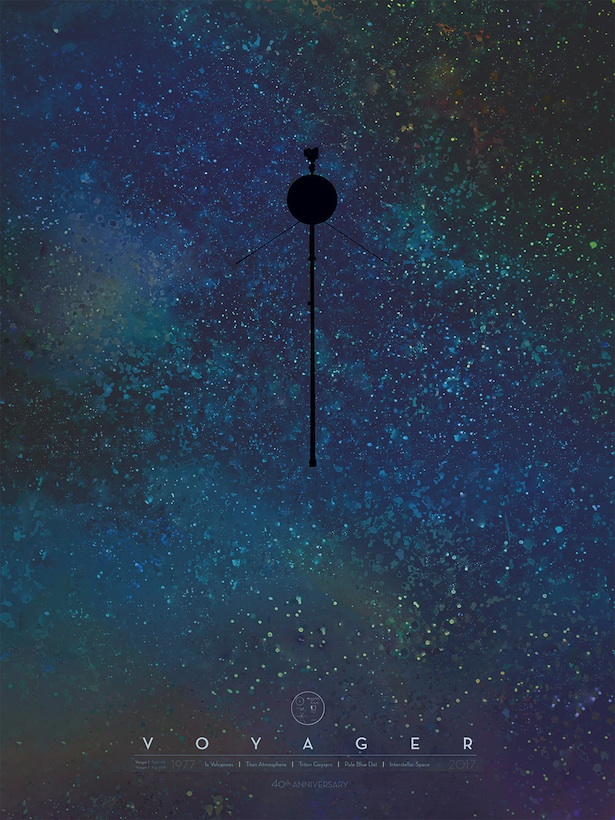
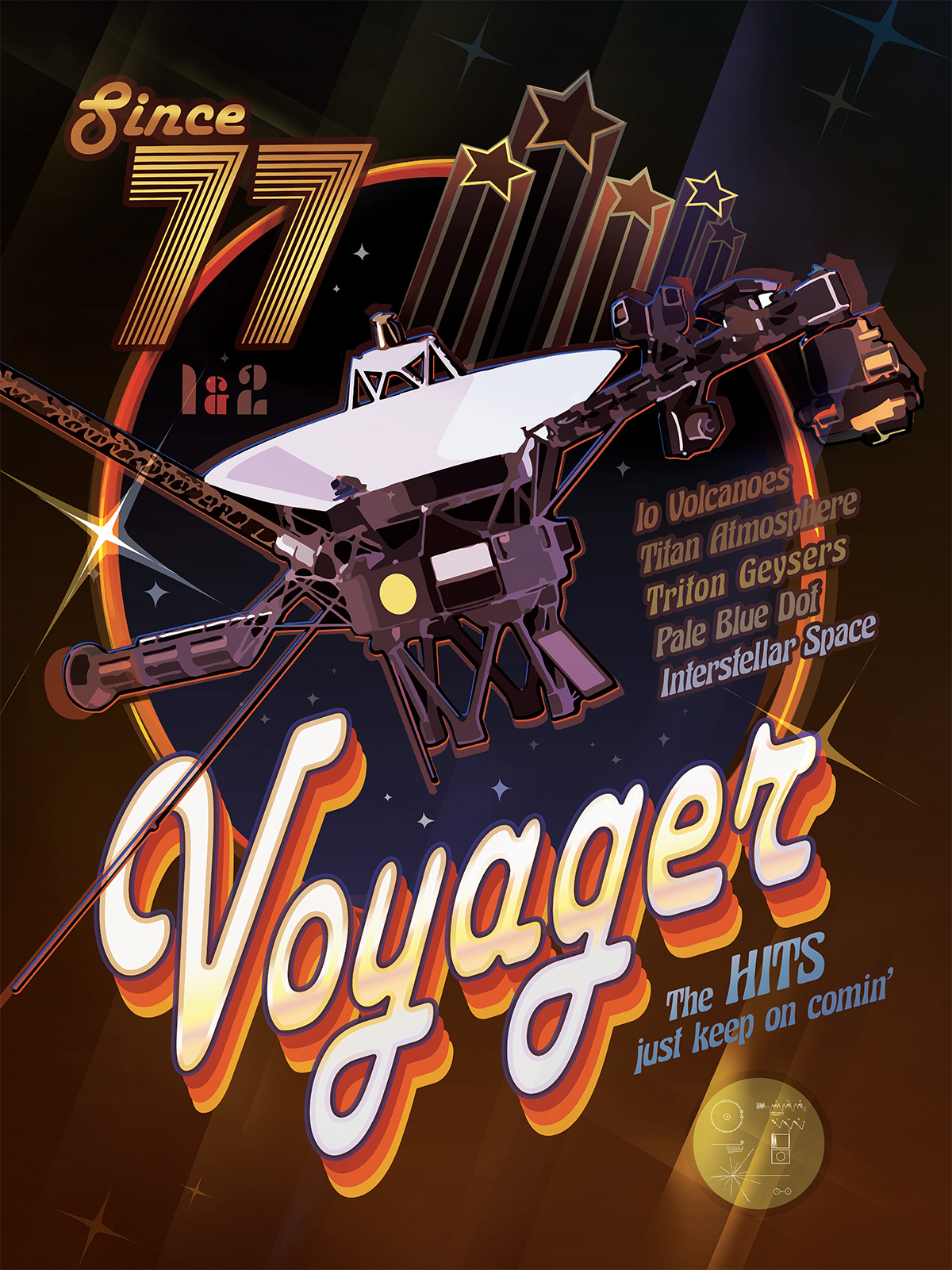
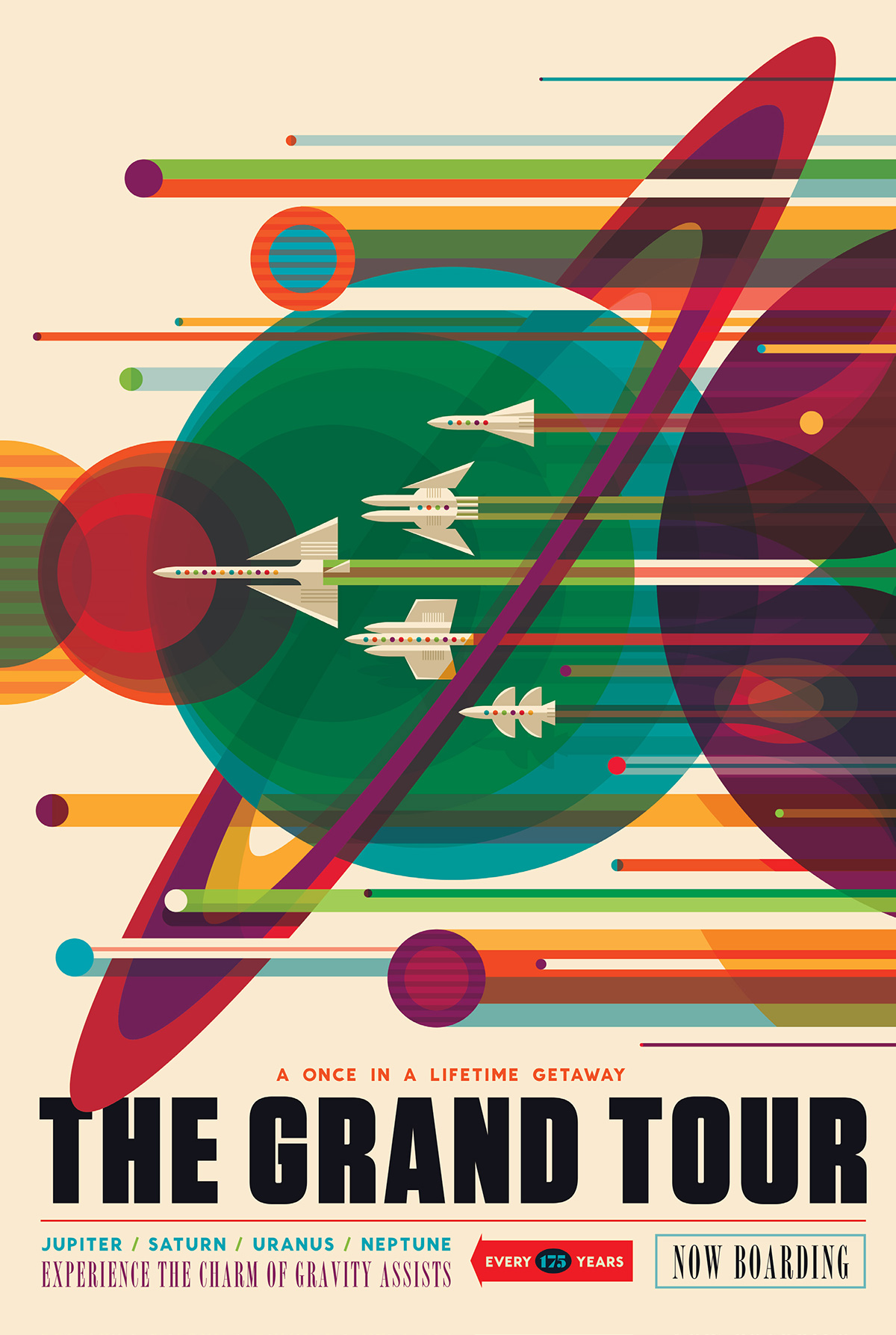
A quick fyi: Last year, NASA released 14 Free Posters That Depict the Future of Space Trav­el in a Cap­ti­vat­ing­ly Retro Style. Now, on the 40th anniver­sary of the Voy­ager mis­sions (Aug. 20 and Sept. 5, 1977), the space agency has issued three attrac­tive new posters to cel­e­brate our “ambas­sadors to the rest of the Milky Way.” All are free to down­load and print here. Writes Space.com: “One of the Voy­ager posters is an image of a star­ry night sky [see above], and anoth­er adver­tis­es the mis­sion using the flam­boy­ant design style of the 1970s, the decade when the probes launched. A third poster hon­ors the probes’ ‘grand tour’ of the plan­ets, on their way to the edge of the solar sys­tem.” Hap­py down­load­ing!

If you would like to sup­port the mis­sion of Open Cul­ture, con­sid­er mak­ing a dona­tion to our site. It’s hard to rely 100% on ads, and your con­tri­bu­tions will help us con­tin­ue pro­vid­ing the best free cul­tur­al and edu­ca­tion­al mate­ri­als to learn­ers every­where. You can con­tribute through Pay­Pal, Patre­on, and Ven­mo (@openculture). Thanks!

Relat­ed Con­tent:

How the Icon­ic 1968 “Earth­rise” Pho­to Was Made: An Engross­ing Visu­al­iza­tion by NASA

NASA Archive Col­lects Great Time-Lapse Videos of our Plan­et

Ray Brad­bury Reads Mov­ing Poem on the Eve of NASA’s 1971 Mars Mis­sion

NASA Presents “The Earth as Art” in a Free eBook and Free iPad App

NASA Sends Image of the Mona Lisa to the Moon and Back

Free Inter­ac­tive e‑Books from NASA Reveal His­to­ry, Dis­cov­er­ies of the Hub­ble & Webb Tele­scopes

Leonard Nimoy Nar­rates Short Film About NASA’s Dawn: A Voy­age to the Ori­gins of the Solar Sys­tem

The Best of NASA Space Shut­tle Videos (1981–2010)


Neil deGrasse Tyson is Creating a New Space Exploration Video Game with the Help of George R.R. Martin & Neil Gaiman

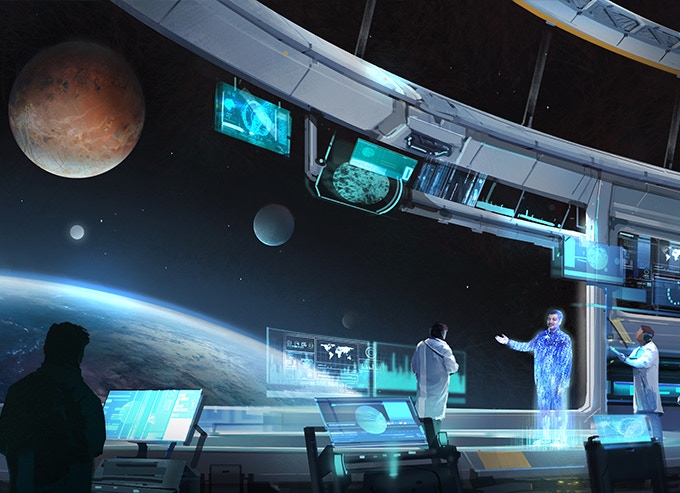
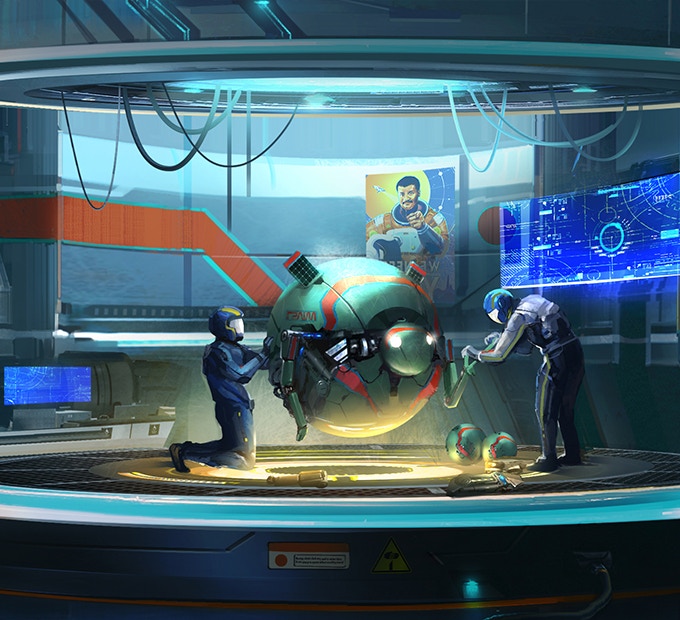
Although Neil deGrasse Tyson is some­what hes­i­tant to go in on plans to ter­raform and col­o­nize Mars, that doesn’t mean he doesn’t like a good ol’–yet science-based–video game. Sev­er­al out­lets announced recent­ly that the videogame Space Odyssey, spear­head­ed by deGrasse Tyson–one of America’s main defend­ers of log­ic and Enlightenment–has sur­passed its Kick­starter fund­ing goal. The game promis­es to send play­ers on “real sci­ence-based mis­sions to explore space, col­o­nize plan­ets, cre­ate and mod in real time.”

In the game, accord­ing to deGrasse Tyson, “you con­trol the for­ma­tion of plan­ets, of comets, of life, civ­i­liza­tion. You could maybe tweak the force of grav­i­ty and see what effect that might have.” It will be, he says, “an explo­ration into the laws of physics and how they shape the world in which we live.”

The game has been form­ing for sev­er­al years now, and most impor­tant­ly to our read­ers, has called in sev­er­al sci-fi and fan­ta­sy writ­ers to help cre­ate the var­i­ous worlds in the game, as they have apt­ly demon­strat­ed their skills in doing so on the print­ed page. That includes George R.R. Mar­tin, cur­rent­ly ignor­ing what­ev­er HBO is doing to his cre­ation Game of Thrones; Neil Gaiman, who cre­ates a new uni­verse every time he drops a new nov­el; and Len Wein, who has had a hand in cre­at­ing both DC’s Swamp Thing and Marvel’s Wolver­ine. Also on board: deGrasse Tyson’s bud­dy Bill Nye, for­mer NASA astro­naut Mike Mas­simi­no, and astro­physi­cist Charles Liu.

The idea of world/­galaxy-build­ing is not new in video games, espe­cial­ly recent­ly. No Man’s Sky (2015) fea­tures “eigh­teen quin­til­lion full-fea­tured plan­ets” and Minecraft seems lim­it­less. But Space Odyssey (still a tem­po­rary title!) is the first to have deGrasse Tyson and friends work­ing the con­trols in the back­ground. And a game is as good as the vision­ar­ies behind it.


Accord­ing to the Kick­starter page, the raised funds will go into “the abil­i­ty to have this com­mu­ni­ty play the game and engage with it while the final build is under­way. As the Kick­starter gam­ing com­mu­ni­ty begins to beta test game-play and pro­vide feed­back, we can begin to use the funds raised via Kick­starter to incor­po­rate your mod­ding, map­ping and build­ing sug­ges­tions, togeth­er build­ing the awe­some gam­ing expe­ri­ence you helped to cre­ate.”

DeGrasse Tyson will be in the game him­self, urg­ing play­ers onward. There’s no indi­ca­tion whether Mr. Mar­tin will be pop­ping up, though.

Relat­ed Con­tent:

Neil deGrasse Tyson: “Because of Pink Floyd, I’ve Spent Decades Undo­ing the Idea That There’s a Dark Side of the Moon”

David Byrne & Neil deGrasse Tyson Explain the Impor­tance of an Arts Edu­ca­tion (and How It Strength­ens Sci­ence & Civ­i­liza­tion)

Are We Liv­ing in a Com­put­er Sim­u­la­tion?: A 2‑Hour Debate with Neil Degrasse Tyson, David Chalmers, Lisa Ran­dall, Max Tegmark & More

Ted Mills is a free­lance writer on the arts who cur­rent­ly hosts the artist inter­view-based FunkZone Pod­cast and is the pro­duc­er of KCR­W’s Curi­ous Coast. You can also fol­low him on Twit­ter at @tedmills, read his oth­er arts writ­ing at tedmills.com and/or watch his films here.

« Go BackMore in this category... »
Quantcast