The Breathtaking Courage of Harriet Tubman: An Animated History Lesson Speaks to Her Place on the $20 Bill

I was a con­duc­tor on the Under­ground Rail­road, and I can say what many oth­ers can­not. I nev­er ran my train off the track, and I nev­er lost a pas­sen­ger.  —Har­ri­et Tub­man

Remem­ber how one of the Oba­ma administration’s final ini­tia­tives was to redesign the $20 bill, ban­ish­ing Andrew Jack­son, a slave­hold­er, to a minor role on the back of the bill, in favor of abo­li­tion­ist Har­ri­et Tub­man, who was born into slav­ery?

The announce­ment arrived on the heels of a con­tro­ver­sy, after then-Trea­sury Sec­re­tary Jacob J. Lew enraged Amer­i­can women by going back on a promise to install a woman on the face of a new­ly designed $10 bill.

The deci­sion to keep Alexan­der Hamil­ton, archi­tect of our finan­cial sys­tem and the country’s first Trea­sury Sec­re­tary, in place is rumored to owe rather a lot to his sta­tus as the sub­ject of a cer­tain hit musi­cal that had opened ear­li­er in the year.

The offi­cial design of the Tub­man bill was to have been unveiled in 2020, to coin­cide with the hun­dredth anniver­sary of the 19th Amend­ment, which guar­an­teed a wom­an’s right to vote. Had all gone accord­ing to plan, it would have been in wide cir­cu­la­tion lat­er this decade.

At the time Lew was untrou­bled by the pos­si­bil­i­ty that the incom­ing admin­is­tra­tion might kill off the pro­posed makeover:

I don’t think somebody’s going to prob­a­bly want to do that — to take the image of Har­ri­et Tub­man off of our mon­ey? To take the image of the suf­frag­ists off?

It seems, how­ev­er, that some­one did want to do that.

In 2016, pres­i­den­tial can­di­date Don­ald Trump told NBC that replac­ing Jack­son with Tub­man was “pure polit­i­cal cor­rect­ness,” sug­gest­ing instead that a place might be found for Tub­man on the $2 bill… which is no longer print­ed.

He also report­ed­ly remarked to for­mer White House advis­er Omarosa Mani­gault New­man, “You want me to put that face on the twen­ty-dol­lar bill?”

The Trea­sury Depart­ment website’s revi­sion in the wake of the 2016 elec­tion scrubbed all ref­er­ences to planned changes to the cur­ren­cy.

Lew’s replace­ment, Trea­sury Sec­re­tary Steven Mnuchin, final­ly announced that the new $20 bill wouldn’t be ready until 2028, and that the fin­ished design might not include Tub­man at all. He attrib­uted this to tech­ni­cal rea­sons relat­ing to secu­ri­ty fea­tures, though a Trea­sury Depart­ment employ­ee told The New York Times that the engrav­ing plate for it was com­plet­ed “as recent­ly as May 2018” and that the design “appeared to be far along in the process.”

Cer­tain­ly, there were big­ger sto­ries in 2020 than the absence of the promised Har­ri­et Tub­man $20 bill, but the obfus­ca­tion and delay were mad­den­ing giv­en every­thing Tub­man, a woman of action, was able to accom­plish well over a hun­dred years ago.

Most of us are famil­iar with her promi­nence on the Under­ground Rail­road, which led to the sobri­quet “Moses of her peo­ple,” but there are sev­er­al things in the above ani­mat­ed TED-Ed les­son by Janell Hob­son, Depart­ment Chair of Wom­en’s, Gen­der and Sex­u­al­i­ty Stud­ies at SUNY Albany, that may come as news to you.

Of par­tic­u­lar note, Tub­man was the first woman in US his­to­ry to plan and lead a mil­i­tary raid, result­ing in the lib­er­a­tion of near­ly 700 enslaved per­sons in South Car­oli­na.

Her sec­ond hus­band, Nel­son Davis, also born into slav­ery, had been a Union sol­dier, which enti­tled her to a pen­sion of $8 as a mil­i­tary wid­ow.

She fought hard for an increase on the basis of her own ser­vice to the Union Army, enlist­ing var­i­ous friends and sup­port­ers to lob­by on her behalf, includ­ing Lincoln’s Sec­re­tary of State, William Seward, who said, “I have known her long as a noble high spir­it, as true as sel­dom dwells in the human form.”

Final­ly, in 1899, her pen­sion was increased to $20 a month.

Pro­fes­sor Hob­son, whose les­son pre­dates Mnuchin’s announce­ment of the stall, called the denom­i­na­tion “a fit­ting twist of fate.”

As is the rub­ber stamp that artist Dano Wal cre­at­ed to help dis­gust­ed Amer­i­cans con­vert Jack­sons into Tub­mans with­out the help of the Trea­sury Depart­ment:

Who we choose to hon­or as a soci­ety affects the moral atti­tudes that are baked into us as we grow up. The impact that see­ing the face of Har­ri­et Tub­man star­ing back at you from a $20 bill should not be under­es­ti­mat­ed. This sort of rep­re­sen­ta­tion can sub­tly but deeply affect some­one’s con­cep­tion of them­selves and their place in soci­ety. The slight­ly sub­ver­sive nature of it being cur­ren­cy that’s been hand-stamped by anoth­er human makes a dis­cov­ery of one of these bills all the more joy­ous.

Good news looms on the hori­zon. Less than a week into the Biden admin­is­tra­tion, the Trea­sury Depart­ment con­firmed that the agency is “explor­ing ways to resume” putting Har­ri­et Tub­man on the bill, as well as ways to has­ten their release. She will be the first female and first Black Amer­i­can to be fea­tured on our fold­ing mon­ey.

TED-Ed has a list of addi­tion­al resources for those who’d like to delve deep­er into Tubman’s life and lega­cy, as well as a dis­cus­sion as to whether putting Tubman’s face on the $20 bill is a fit­ting hon­or.

Relat­ed Con­tent: 

Design­er Cre­ates a 3D-Print­ed Stamp That Replaces Andrew Jack­son with Har­ri­et Tub­man on the $20 Bill

What the Text­books Don’t Tell Us About The Atlantic Slave Trade: An Ani­mat­ed Video Fills In His­tor­i­cal Gaps

The Names of 1.8 Mil­lion Eman­ci­pat­ed Slaves Are Now Search­able in the World’s Largest Genealog­i­cal Data­base, Help­ing African Amer­i­cans Find Lost Ances­tors

Ayun Hal­l­i­day is an author, illus­tra­tor, the­ater mak­er and Chief Pri­ma­tol­o­gist of the East Vil­lage Inky zine.  Fol­low her @AyunHalliday.

MIT’s Introduction to Microeconomics: A Free Online Course

From MIT comes a free intro­duc­to­ry under­grad­u­ate course on Micro­eco­nom­ics. Taught by Pro­fes­sor Jonathan Gru­ber, the 26-lec­ture course cov­ers the fun­da­men­tals of micro­eco­nom­ics, includ­ing “sup­ply and demand, mar­ket equi­lib­ri­um, con­sumer the­o­ry, pro­duc­tion and the behav­ior of firms, monop­oly, oli­gop­oly, wel­fare eco­nom­ics, pub­lic goods, and exter­nal­i­ties.” Watch the lec­tures above (or on YouTube). Find the syl­labus and lec­tures notes on MIT’s site. Cours­era also offers a host of oth­er econ cours­es.

Prin­ci­ples of Micro­eco­nom­ics will be added to the Eco­nom­ics sec­tion of our meta list, 1,700 Free Online Cours­es from Top Uni­ver­si­ties.

If you would like to sign up for Open Culture’s free email newslet­ter, please find it here. It’s a great way to see our new posts, all bun­dled in one email, each day.

If you would like to sup­port the mis­sion of Open Cul­ture, con­sid­er mak­ing a dona­tion to our site. It’s hard to rely 100% on ads, and your con­tri­bu­tions will help us con­tin­ue pro­vid­ing the best free cul­tur­al and edu­ca­tion­al mate­ri­als to learn­ers every­where. You can con­tribute through Pay­Pal, Patre­on, and Ven­mo (@openculture). Thanks!

Relat­ed Con­tent:

Free Online Eco­nom­ics & Finance Cours­es

Eco­nom­ics 101: Hedge Fund Investor Ray Dalio Explains How the Econ­o­my Works in a 30-Minute Ani­mat­ed Video

An Intro­duc­tion to Great Econ­o­mists — Adam Smith, the Phys­iocrats & More — Pre­sent­ed in New MOOC

by | Permalink | Make a Comment ( 2 ) |

The UN’s World Happiness Report Ranks “Socialist Friendly” Countries like Finland, Norway, Denmark, Iceland & Sweden as Among the Happiest in the World

One of the most per­ni­cious, “dan­ger­ous, anti-human and soul-crush­ing” myths in the busi­ness world, writes Liz Ryan at Forbes, is the “idi­ot­ic nos­trum” that has also crept into gov­ern­ment and char­i­ta­ble work: “If you can’t mea­sure it, you can’t man­age it.” The received wis­dom is some­times phrased more cyn­i­cal­ly as “if you can’t mea­sure it, it didn’t hap­pen,” or more pos­i­tive­ly as “if you can’t mea­sure it, you can’t improve it.”

But “the impor­tant stuff can’t be mea­sured,” says Ryan. Don’t we all want to believe that? “Can’t Buy Me Love” and so forth. Maybe it’s not that sim­ple, either. Take hap­pi­ness, for exam­ple. We might say we dis­agree about its rel­a­tive impor­tance, but we all go about the busi­ness of try­ing to buy hap­pi­ness any­way. In our hearts of hearts, it’s a more or less an unques­tion­able good. So why does it seem so scarce and seem to cost so much?  Maybe the prob­lem is not that hap­pi­ness can’t be mea­sured but that it can’t be com­mod­i­fied.

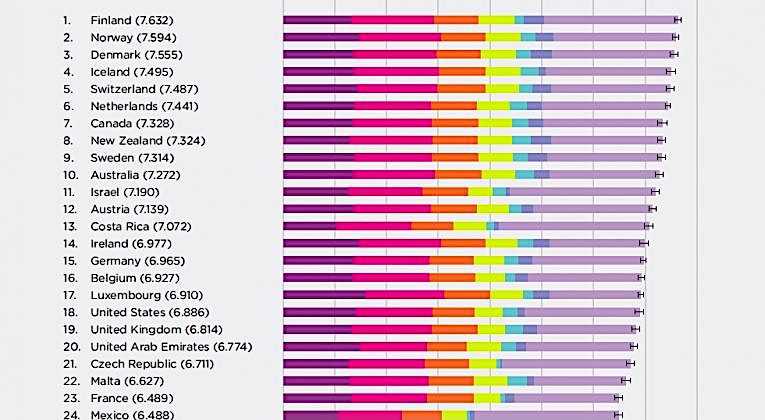
Bud­dhist economies like Bhutan, for exam­ple, run on a GHI (Gross Nation­al Hap­pi­ness) index instead of GDP, and pose the ques­tion of whether the issue of nation­al hap­pi­ness is one of pri­or­i­ties. In oth­er words, “you get what you mea­sure.” In March, Lau­ra Beg­ley Bloom cit­ed the 20 hap­pi­est coun­tries in the world at Forbes, using the UN’s 2020 World Hap­pi­ness Report, “a land­mark sur­vey of the state of glob­al hap­pi­ness,” as the report’s web­site describes it, “that ranks 156 coun­tries by how hap­py their cit­i­zens per­ceive them­selves to be.”

Hap­pi­ness is mea­sured across urban and rur­al envi­ron­ments and accord­ing to envi­ron­men­tal qual­i­ty and sus­tain­able devel­op­ment met­rics. The report uses six rubrics to assess happiness—levels of GDP, life expectan­cy, gen­eros­i­ty, social sup­port, free­dom and cor­rup­tion, and income. Their assess­ment relied on self-report­ing, to give “a direct voice to the pop­u­la­tion as opposed the more top-down approach of decid­ing ex-ante what ought to mat­ter.”  The last chap­ter attempts to account for the so-called “Nordic Excep­tion,” or the puz­zling fact that “Nordic coun­tries are con­stant­ly among the hap­pi­est in the world.”

Maybe this fact is only puz­zling if you begin with the assump­tion that wealthy cap­i­tal­ist economies pro­mote hap­pi­ness. But the top ten hap­pi­est coun­tries are wealthy “social­ist friend­ly” mixed economies, as Bill Maher jokes in the clip at the top, say­ing that in the U.S. “the right has a hard time under­stand­ing we don’t want long lines for bread social­ism, we want that you don’t have to win the lot­to to afford brain surgery social­ism.” This is com­e­dy, not tren­chant geo-polit­i­cal analy­sis, but it alludes to anoth­er sig­nif­i­cant fact.

Most of the world’s unhap­pi­est coun­tries and cities are for­mer­ly col­o­nized places whose economies, infra­struc­tures, and sup­ply chains have been desta­bi­lized by sanc­tions (which cause long bread lines), bombed out of exis­tence by wealth­i­er coun­tries, and destroyed by cli­mate cat­a­stro­phes. The report does not ful­ly explore the mean­ing of this data, focus­ing, under­stand­ably, on what makes pop­u­la­tions hap­py. But an under­ly­ing theme is the sug­ges­tion that hap­pi­ness is some­thing we achieve in real, mea­sur­able eco­nom­ic rela­tion with each oth­er, not sole­ly in the pur­suit of indi­vid­u­al­ist ideals.

Relat­ed Con­tent:  

How Much Mon­ey Do You Need to Be Hap­py? A New Study Gives Us Some Exact Fig­ures

Cre­ativ­i­ty, Not Mon­ey, is the Key to Hap­pi­ness: Dis­cov­er Psy­chol­o­gist Mihaly Csikszentmihaly’s The­o­ry of “Flow”

Albert Camus Explains Why Hap­pi­ness Is Like Com­mit­ting a Crime—”You Should Nev­er Admit to it” (1959)

Josh Jones is a writer and musi­cian based in Durham, NC. Fol­low him at @jdmagness

Ted Turner Asks Carl Sagan “Are You a Socialist?;” Sagan Responds Thoughtfully (1989)

Social­ism should not be a scare word in the U.S. Were it not for social­ists like Eugene V. Debs and the labor move­ments orga­nized around his pres­i­den­tial cam­paigns in the ear­ly 20th cen­tu­ry, reforms like the 8‑hour work­day, work­er safe­ty pro­tec­tions, women’s suf­frage, min­i­mum wage, the abo­li­tion of child labor, and vaca­tion and sick time would like­ly nev­er have made it into a major party’s plat­form. The lega­cy of this strain of social­ism in the U.S. endured, Jill Lep­ore writes at The New York­er, “in Pro­gres­sive-era reforms, in the New Deal, and in Lyn­don Johnson’s Great Soci­ety,” all wide­ly sup­port­ed by self-described lib­er­als.

Yet while social­ist poli­cies are broad­ly pop­u­lar in the U.S., the word may as well be a writhing, high-volt­age wire in main­stream dis­course. The same was true in the Rea­gan 80s, when so many pro­gres­sive reforms were undone: mil­i­tary spend­ing bal­looned, social spend­ing was cut to the bone, and home­less­ness became a major cri­sis, exac­er­bat­ed by the A.I.D.S. epi­dem­ic the admin­is­tra­tion mocked and ignored. In 1989, at the end of the president’s two terms, Ted Turn­er lobbed the charge of “social­ism” at Carl Sagan in a CNN inter­view. The astro­physi­cist and famed sci­ence com­mu­ni­ca­tor refused to take the bait.

Rather than denounc­ing or dis­tanc­ing him­self from social­ists, he made it clear that the label was less impor­tant to him than the mate­r­i­al con­di­tions under which mil­lions of peo­ple suf­fered as a result of delib­er­ate pol­i­cy choic­es that could be oth­er­wise. “I’m not sure what a ‘social­ist’ is… I’m talk­ing about mak­ing peo­ple self-reliant, peo­ple able to take care of them­selves,” he says, in an echo of Debs’ praise of the virtue of “sand.” But this sort of self-reliance is not the same thing as the kind of myth­ic, Old West rugged indi­vid­u­al­ism of con­ser­vatism.

Sagan acknowl­edges the real­i­ty that self-reliance, and sur­vival, are impos­si­ble with­out the basic neces­si­ties of life, and that the coun­try has the means to ensure its cit­i­zens have them.

I believe the gov­ern­ment has a respon­si­bil­i­ty to care for the peo­ple…. There are coun­tries which are per­fect­ly able to do that. The Unit­ed States is an extreme­ly rich coun­try, it’s per­fect­ly able to do that. It choos­es not to. It choos­es to have home­less peo­ple.

Sagan men­tions the U.S. infant mor­tal­i­ty rate, which then placed the coun­try at “19th in the world” because of a refusal to spend the mon­ey on health­care need­ed to save more infant lives. “I think it’s a dis­grace,” he says. Instead, bil­lions were allo­cat­ed to the mil­i­tary, espe­cial­ly the Strate­gic Defense Ini­tia­tive, called Star Wars: “They’ve already spent some­thing like $20 bil­lion dol­lars on it, if these guys are per­mit­ted to go ahead they will spend a tril­lion dol­lars on Star Wars.”

Is object­ing to a vast waste of the country’s resources and human poten­tial “social­ism”? Sagan doesn’t care what it’s called—the word doesn’t scare him away from point­ing to the facts of inequal­i­ty. The prob­lems have only wors­ened since then. Mil­i­tary spend­ing has grown to an obscene amount—more than the next ten coun­tries com­bined. The fig­ure usu­al­ly giv­en, $705 bil­lion, is actu­al­ly more like $934 bil­lion, as Kim­ber­ly Amadeo explains at The Bal­ance.

“Monop­o­lies have risen again,” writes Lep­ore, “and income inequal­i­ty has spiked back up to where it was in Debs’ life­time.” Newsweek reports that in 2018, “America’s Health Rank­ings found that the U.S. was ranked 33rd out of the 36 Orga­ni­za­tion for Eco­nom­ic Co-oper­a­tion and Devel­op­ment coun­tries for infant mor­tal­i­ty.” We have only just begun to reck­on with the dev­as­tat­ing pol­i­cy out­comes exposed by the coro­n­avirus. As Sagan would say, these prob­lems are not acci­den­tal; they are the result of delib­er­ate choic­es. We could have a very dif­fer­ent society—one that invests its resources in peo­ple instead of weapons, in life instead of death. And we could call it what­ev­er we want­ed.

See the full Sagan-Turn­er inter­view here.

Relat­ed Con­tent:

Watch a Young Carl Sagan Appear in His First TV Doc­u­men­tary, The Vio­lent Uni­verse (1969)

Carl Sagan Pre­dicts the Decline of Amer­i­ca: Unable to Know “What’s True,” We Will Slide, “With­out Notic­ing, Back into Super­sti­tion & Dark­ness” (1995)

Carl Sagan’s “Baloney Detec­tion Kit”: A Toolk­it That Can Help You Sci­en­tif­i­cal­ly Sep­a­rate Sense from Non­sense

Josh Jones is a writer and musi­cian based in Durham, NC. Fol­low him at @jdmagness

The Massive Harrods Catalogue from 1912 Gets Digitized: Before Amazon, Harrods Offered “Everything for Everyone, Everywhere”

A cou­ple years ago, obit­u­ar­ies began appear­ing online for the depart­ment store Sears after the 130-year-old Amer­i­can com­pa­ny announced its bank­rupt­cy. Many of the trib­utes focused on Sears, Roe­buck & Co’s cat­a­log, and for good rea­son. Their mas­sive mail-order busi­ness, the Ama­zon of its day, trans­formed the U.S., sell­ing gui­tars to Delta blues and rock and roll musi­cians and ship­ping thou­sands of build-it-your­self hous­es to rur­al home­stead­ers and sub­ur­ban­ites. The sheer reach and scope of the Sears’ cat­a­log can seem over­whelm­ing…. That is, until we turn to the 1912 Har­rods for Every­thing.

This 1,525-page cat­a­logue from London’s world-famous depart­ment store, Har­rods, does seem to mean every­thing, with over 15,000 prod­ucts avail­able for pur­chase at the store’s loca­tion, by mail, or by phone (“any­thing, at any time, day or night”).

You can see the enor­mous mon­u­ment to com­merce for your­self at Project Guten­berg. The cat­a­logue took 13 years to scan. “Some idea of the vast quan­ti­ty of items that Har­rods stocked or had avail­able can be tak­en from the gen­er­al index,” notes Eric Hut­ton, one of the vol­un­teer edi­tors on the project, “which runs for 68 pages, five columns to a page.”

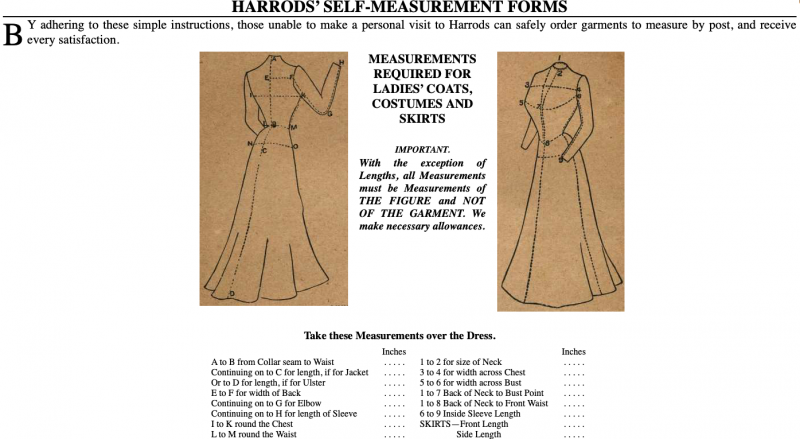
Men and women could order cus­tom-tai­lored cloth­ing, fine jew­el­ry, clocks, watch­es, fur­ni­ture. Nat­u­ral­ists and hunters could have their tro­phies dressed and mount­ed. Police­men and, well, any­one, could order pis­tols, “knuck­le dusters,” and hand­cuffs. “You could also hire bands or musi­cians, plus tents or mar­quees for out­door gath­er­ings. You could rent steam, elec­tric, or petrol launch­es to go down a riv­er, or, if you set your sights fur­ther afield, there were ‘explor­ing, sci­en­tif­ic and shoot­ing expe­di­tions… com­plete­ly equipped and pro­vi­sioned for any part of the world”… per­haps the Edwar­dian British ver­sion of the Sears House.

A MetaFil­ter user points out how much glob­al­iza­tion and empire play into the mar­ket­ing. These are “not just lux­u­ry goods but com­modi­ties. I noticed wheat could come from at least three con­ti­nents…. Over and over it explains how Har­rods will out­fit any­one abroad who needs a social or mil­i­tary or explorato­ry uni­form: tele­graph Har­rods for shoe buck­les appro­pri­ate to your sta­tions.” Har­rods also repeat­ed­ly empha­sizes they will ship any­where in the world. Colo­nial offi­cials in India or Ugan­da could live like kings. We must con­fess, we doubt this mer­chan­dise was tru­ly meant for every­one.

This was also a time when mir­a­cle cures and var­i­ous unsci­en­tif­ic treat­ments abound­ed. “You could buy things like chlo­ro­form or throat pastilles in dozens of vari­eties,” notes Hut­ton, “even those con­tain­ing cocaine!”

A few of the com­modi­ties fea­tured in Har­rods for Every­thing are a lot hard­er to come by these days. Some of them, like the pages of guns, are easy to get in the US but not so read­i­ly avail­able in the UK and many of its for­mer colonies. (Though you can find cat­a­logues for just about any­thing if you look hard enough.)

But aside from cer­tain obvi­ous his­tor­i­cal dif­fer­ences, the cat­a­logue isn’t that much dif­fer­ent from the pages of online retail­ers who will also sell you almost any­thing, at any time of day, and ship it to you any­where in the world. What we thought of as unprece­dent­ed inno­va­tion was com­mon­place in the days of Queen Vic­to­ria, only ship­ping took a lot longer. Har­rods’ uni­ver­sal­iz­ing Latin mot­to even sounds par­tic­u­lar­ly mod­ern, in Eng­lish, at least: Omnia Omnibus Ubique, or “every­thing for every­one, every­where.” Yet much, too, has changed. Har­rods, out­fit­ter of the British Empire, is now owned by the state of Qatar.

See the ful­ly scanned 1,525-page Har­rods for Every­thing cat­a­logue at Project Guten­berg.

Relat­ed Con­tent:

Sears Sold 75,000 DIY Mail Order Homes Between 1908 and 1939, and Trans­formed Amer­i­can Life

How the Sears Cat­a­log Dis­rupt­ed the Jim Crow South and Helped Give Birth to the Delta Blues & Rock and Roll

What It Cost to Shop at the Gro­cery Store in 1836, and What Goods You Could Buy

Josh Jones is a writer and musi­cian based in Durham, NC. Fol­low him at @jdmagness

When John Maynard Keynes Predicted a 15-Hour Workweek “in a Hundred Year’s Time” (1930)

Image by IMF, via Wiki­me­dia Com­mons

That which stands first, and is most to be desired by all hap­py, hon­est and healthy-mind­ed men, is ease with dig­ni­ty.

—Cicero, Pro Ses­tio, XLV., 98

There is much to admire in Roman ideas about the use of leisure time, what Michel Fou­cault referred to as “the care of the self.” The Latin words for work and leisure them­selves give us a sense of what should have pri­or­i­ty in life. Negotium, or busi­ness, is a nega­tion, with the lit­er­al mean­ing of “the nonex­is­tence of leisure” (otium). The Eng­lish word—considered in its parts as “busy-ness”—doesn’t real­ly sound much more appeal­ing.

The notion that every­one, not just a prop­er­tied elite, how­ev­er, should be enti­tled to leisure time came about only rel­a­tive­ly recently—mostly advo­cat­ed by rad­i­cals and trade union­ists. In the U.S., anar­chists and strik­ing work­ers in Chica­go fought against police in 1886 dur­ing the Hay­mar­ket Affair to achieve “Eight Hours for Work, Eight Hours for Rest, Eight Hours for What We Will.” In 1912, women-led immi­grant strik­ers chant­ed “Bread and Ros­es” in Lawrence, Mass­a­chu­setts, pro­claim­ing their right to more than bare sur­vival.

After the achieve­ment of the 40-hour work­week, paid vaca­tions, and oth­er labor con­ces­sions, many influ­en­tial fig­ures believed that egal­i­tar­i­an access to leisure would only increase in the 20th cen­tu­ry. Among them was econ­o­mist John May­nard Keynes, who fore­cast in 1930 that labor-sav­ing tech­nolo­gies might lead to a 15-hour work­week when his grand­chil­dren came of age. Indeed, he titles his essay, “Eco­nom­ic Pos­si­bil­i­ty for our Grand­chil­dren.”

Writ­ing at the start of the Great Depres­sion, Keynes finds rea­son for opti­mism. “We are suf­fer­ing,” he writes, “not from the rheumat­ics of old age, but from the grow­ing-pains of over-rapid changes, from the painful­ness of read­just­ment between one eco­nom­ic peri­od and anoth­er.” Keynes’ essay con­cerns what he calls the “eco­nom­ic prob­lem,” which is not only the prob­lem of mass unem­ploy­ment but also, in his esti­ma­tion, the abil­i­ty of cap­i­tal­ism to pro­vide a decent stan­dard of liv­ing for every­one. He did not see its fail­ure to do so as evi­dence of a more fun­da­men­tal dys­func­tion:

[T]his is only a tem­po­rary phase of mal­ad­just­ment. All this means in the long run that mankind is solv­ing its eco­nom­ic prob­lem. I would pre­dict that the stan­dard of life in pro­gres­sive coun­tries one hun­dred years hence will be between four and eight times as high as it is to-day. There would be noth­ing sur­pris­ing in this even in the light of our present knowl­edge. It would not be fool­ish to con­tem­plate the pos­si­bil­i­ty of afar greater progress still.

Many econ­o­mists shared Keynes’ opti­mism through the 1970s, “a time when rev­o­lu­tion­ary change still seemed like an immi­nent pos­si­bil­i­ty,” writes John Quig­gan, pro­fes­sor of eco­nom­ics at the Uni­ver­si­ty of Queens­land.” Utopi­an ideas were every­where, exem­pli­fied by the Sit­u­a­tion­ist slo­gan of 1968: ‘Be real­is­tic. Demand the impos­si­ble.’” Cult fig­ures like Buck­min­ster Fuller explained, as had Keynes decades ear­li­er, how tech­nol­o­gy could free every­one from the tyran­ny of the labor mar­ket and the scourge of “use­less jobs.”

Keynes and oth­ers made a “case for leisure, in the sense of free time to use as we please, as opposed to idleness”—a dis­tinc­tion that draws from the ancient philoso­phers. “But Keynes offered some­thing quite new: the idea that leisure could be an option for all, not mere­ly for an aris­to­crat­ic minor­i­ty.” He was, obvi­ous­ly, mis­tak­en. “At least in the Eng­lish-speak­ing world,” Quig­gan writes, “the seem­ing­ly inevitable progress towards short­er work­ing hours has halt­ed. For many work­ers it has gone into reverse.”

That has cer­tain­ly been the case for the major­i­ty of work­ers in the U.S., at least before the nov­el coro­n­avirus led to mass lay­offs and reduced hours. What hap­pened? For one thing, the ascen­sion of neolib­er­al eco­nom­ics in the late 1970s, and the elec­tions of Ronald Rea­gan and Mar­garet Thatch­er, began a long slow decline of orga­nized labor. “Employ­ers have had increas­ing desire for work­ers to work long hours,” says Juli­et Schor, pro­fes­sor of soci­ol­o­gy at Boston Col­lege. “And work­ers haven’t had the pow­er to resist that upward pres­sure.”

Keynes’ pre­dic­tions res­onat­ed with NPR’s David Kesten­baum, who inter­viewed some of Keynes’ descen­dants, the clos­est thing he had to grand­chil­dren, in a short seg­ment on Plan­et Mon­ey in 2015. One Keynes rela­tion points out the irony that the man him­self “died from work­ing too hard.” How can those of us who aren’t glob­al­ly famous econ­o­mists help end the tyran­ny of over­work? Maybe a lot more strik­ing work­ers mak­ing demands; maybe a uni­ver­sal basic income or some­thing like Bhutan’s “gross domes­tic hap­pi­ness” index?

Keynes may have erred in his pre­dic­tions of the future (though he seems to have under­stood the needs of his moment well enough), but he may not have been wrong to view the eco­nom­ic tur­moil of his time as a rad­i­cal oppor­tu­ni­ty for utopi­an change and bet­ter liv­ing for every­one. Over­turn­ing the dire con­di­tions of the present for our own grand­chil­dren will require not only hard work, but the leisure to do some vision­ary futur­ist think­ing. Read Keynes’ full essay here.

via Aeon

Relat­ed Con­tent:

An Ani­mat­ed Intro­duc­tion to Econ­o­mist John May­nard Keynes

Buck­min­ster Fuller Rails Against the “Non­sense of Earn­ing a Liv­ing”: Why Work Use­less Jobs When Tech­nol­o­gy & Automa­tion Can Let Us Live More Mean­ing­ful Lives

The Case for a Uni­ver­sal Basic Income in the Time of COVID-19

Josh Jones is a writer and musi­cian based in Durham, NC. Fol­low him at @jdmagness

The Case for a Universal Basic Income in the Time of COVID-19

The idea of Uni­ver­sal Basic Income (UBI) has been the sub­ject of much debate in the past few years. The can­di­da­cy of Andrew Yang for U.S. Pres­i­dent brought the issue to nation­al promi­nence, where it has remained dur­ing the spread of COVID-19. What is UBI? Put sim­ply, it pro­pos­es that the gov­ern­ment give every cit­i­zen a cer­tain amount of mon­ey each month to cov­er, at the least, basic liv­ing expens­es. As the video above by YouTube chan­nel Kurzge­sagt explains, those cit­i­zens are then free to live their lives as they like.

Unlike most wel­fare state mod­els, UBI usu­al­ly does not involve any means test­ing. In most schemes, every cit­i­zen, no mat­ter their cur­rent wealth or income, receives the ben­e­fit. (Though most stud­ies of the pro­gram have only giv­en it to poor or unem­ployed ben­e­fi­cia­ries.) Those who do not need the mon­ey can do what­ev­er they want with it, but so too can those who need it. UBI ensures that peo­ple do not have go home­less or hun­gry if they lose their liveli­hood, and that they can sur­vive with­out pater­nal­ist state agen­cies breath­ing down their necks.

UBI is not a new idea but dates back at least to Thomas Paine, whose Com­mon Sense inspired the Amer­i­can Rev­o­lu­tion and whose Rights of Man defend­ed the French a few years lat­er. As Paine argued in anoth­er, lit­tle-read, pam­phlet, Agrar­i­an Jus­tice, no one could be tru­ly free if they had no means of sub­sis­tence. Since cap­i­tal­ism had placed most of those means under pri­vate own­er­ship, he rea­soned, cit­i­zens should be com­pen­sat­ed for being deprived of resources that belonged to them by nat­ur­al right as much as to any­one else.

This philo­soph­i­cal jus­ti­fi­ca­tion doesn’t always enter into the con­ver­sa­tion, which is often framed in more prag­mat­ic terms as a polit­i­cal and eco­nom­ic expe­di­ent in times of cap­i­tal­ist cri­sis: in times, for exam­ple, like the present moment. The COVID-19 cri­sis has inten­si­fied calls for a UBI, as mil­lions of lay­offs point toward the inevitabil­i­ty of a depres­sion. Push­ing peo­ple back to work dur­ing the pan­dem­ic seems to be the only thing the U.S. gov­ern­ment plans to do, but no amount of coer­cion can stop the virus from forc­ing clo­sures all over again.

Even the famous­ly lib­er­tar­i­an econ­o­mist Mil­ton Fried­man once embraced a ver­sion of UBI—as an alter­na­tive to the lib­er­al social pro­grams he loathed. Under Richard Nixon, of all peo­ple, such a pol­i­cy almost came into being in 1969. Nei­ther Fried­man nor Nixon believed in the nat­ur­al right of all cit­i­zens to a share in the prof­its of a state’s nat­ur­al resources. But they could see the wis­dom of ensur­ing mil­lions of U.S. cit­i­zens weren’t rel­e­gat­ed to liv­ing in des­ti­tu­tion.

The pro­gram required test­ing, so the admin­is­tra­tion set up a tri­al run. “Tens of mil­lions of dol­lars were bud­get­ed to pro­vide a basic income for more than 8,500 Amer­i­cans” in five states across the coun­try, writes Rut­ger Breg­man at The Cor­re­spon­dent. Researchers want­ed to know: 1. if those who received a basic income would work sig­nif­i­cant­ly less, 2. if the pro­gram would be too expen­sive, and 3. if it would prove “polit­i­cal­ly unfea­si­ble.” The find­ings? “No, no, and maybe.”

The chief objec­tion, idle­ness, held no water. As the chief data ana­lyst for the Den­ver exper­i­ment put it at the time, “The ‘lazi­ness’ con­tention is just not sup­port­ed by our find­ings.” The two groups who did cut back on hours, 20-some­things and moth­ers of young chil­dren, were peo­ple who most need­ed the mon­ey so they could go to col­lege or devote time to their kids. Oth­er­wise, recip­i­ents did not quit their jobs and lay around watch­ing TV.

Yet there remains a pow­er­ful species of human busy­body who can­not rest until they’re sure everyone’s work­ing. Such peo­ple con­tin­ue to object—whether in good faith or not—that “just giv­ing peo­ple mon­ey” will turn every­one into a slack­er, as though most peo­ple were only moti­vat­ed by the threat of star­va­tion. And so, tri­als con­tin­ue decades lat­er. Researchers at the Uni­ver­si­ty of Helsin­ki recent­ly con­duct­ed a two-year study in Fin­land with a ran­dom selec­tion of 2,000 unem­ployed peo­ple across the coun­try. Each par­tic­i­pant was giv­en €560 (about $607) a month to ease their bur­den, and received the funds whether or not they sought or found a job.

“The scheme was not strict­ly speak­ing a uni­ver­sal basic income tri­al because the recip­i­ents came from a restrict­ed group and the pay­ments were not enough to live on,” points out Guardian cor­re­spon­dent Jon Hen­ley. Nonethe­less, the researchers found that recip­i­ents were sig­nif­i­cant­ly less stressed than a con­trol group—and that they could make dif­fer­ent choic­es than they might oth­er­wise. “Some said the basic income allowed them to go back to the life they had before they became unem­ployed,” the study authors write. “While oth­ers said it gave them the pow­er to say no to low-paid inse­cure jobs, and thus increased their sense of auton­o­my.”

Oth­er find­ings also showed how UBI could rad­i­cal­ize our rela­tion­ship to work. “Free­lancers and artists and entre­pre­neurs had more pos­i­tive views on the effects of the basic income, which some felt had cre­at­ed oppor­tu­ni­ties for them to start busi­ness­es.” Peo­ple pro­vid­ing unpaid care for oth­ers felt their time was more val­ued. “The secu­ri­ty of the basic income allowed them to do more mean­ing­ful things, as they felt it legit­imized this kind of care work.” The find­ings are being tak­en seri­ous­ly by many Euro­pean gov­ern­ments.

In Spain, Scot­land, and else­where, lead­ers are propos­ing or con­sid­er­ing some form of UBI to com­bat mas­sive unem­ploy­ment due to the pan­dem­ic. While the idea may have lit­tle polit­i­cal future in the U.S. at the moment, where pri­or­i­ties are to use the country’s wealth to fur­ther enrich the wealthy, UBI is becom­ing tremen­dous­ly pop­u­lar else­where. (A recent poll found sup­port among 71% of Euro­peans sur­veyed.) No one believes UBI is a panacea for the world’s ills, but as the Wired video above argues, there may be no bet­ter time than now to make the case for it.

Relat­ed Con­tent:

Hear Alan Watts’s 1960s Pre­dic­tion That Automa­tion Will Neces­si­tate a Uni­ver­sal Basic Income

Buck­min­ster Fuller Rails Against the “Non­sense of Earn­ing a Liv­ing”: Why Work Use­less Jobs When Tech­nol­o­gy & Automa­tion Can Let Us Live More Mean­ing­ful Lives

To Save Civ­i­liza­tion, the Rich Need to Pay Their Tax­es: His­to­ri­an Rut­ger Breg­man Speaks Truth to Pow­er at Davos and to Fox’s Tuck­er Carl­son

Josh Jones is a writer and musi­cian based in Durham, NC. Fol­low him at @jdmagness

Watch 21 Animated Ideas from Big Thinkers: Steven Pinker, Carol Dweck, Philip Zimbardo, David Harvey & More

The Roy­al Soci­ety for the Encour­age­ment of Arts, Man­u­fac­tures and Com­merce, bet­ter known as the Roy­al Soci­ety for the Arts, and best known sim­ply as the RSA, was found­ed in 1754. At the time, nobody could have imag­ined a world in which the peo­ple of every land, no mat­ter how far-flung, could hear the same talks by well-known schol­ars and speak­ers, let alone see them ani­mat­ed as if on a con­fer­ence-room white­board. Yet even back then, in an era before the inven­tion of ani­ma­tion and white­boards, let alone com­put­ers and the inter­net, peo­ple had an appetite for strong, often coun­ter­in­tu­itive or even con­trar­i­an ideas to diag­nose and poten­tial­ly even solve social prob­lems — an appetite for which the RSA Ani­mate series of videos was made.

We can’t under­stand what goes right and what goes wrong in our soci­eties with­out under­stand­ing how we think. To that end the RSA has com­mis­sioned ani­mat­ed videos based on talks by psy­chi­a­trist Iain McGilchrist on our “divid­ed brain,” for­mer polit­i­cal strate­gist (and cur­rent RSA Chief Exec­u­tive) Matthew Tay­lor on how our left and right brains shape our pol­i­tics, psy­chol­o­gist Steven Pinker on lan­guage as a win­dow into human nature, philoso­pher-soci­ol­o­gist Rena­ta Sale­cl on the para­dox­i­cal down­side of choice, psy­chol­o­gist Philip Zim­bar­do on our per­cep­tion of time, “social and eth­i­cal prophet” Jere­my Rifkin on empa­thy, philoso­pher Roman Krz­nar­ic on “out­ro­spec­tion,” jour­nal­ist Bar­bara Ehren­re­ich on “the dark­er side of pos­i­tive think­ing,” and behav­ioral-eco­nom­ics researcher Dan Ariely on dri­ve and dis­hon­esty.

Eco­nom­ics is anoth­er field that has pro­vid­ed the RSA with a sur­feit of ani­mat­able mate­r­i­al — even of the kind “econ­o­mists don’t want you to see,” as the RSA pro­motes econ­o­mist Ha-joon Chang’s talk on “why every sin­gle per­son can and SHOULD get their head around basic eco­nom­ics” and “how eas­i­ly eco­nom­ic myths and assump­tions become gospel.”

Freako­nom­ics co-authors Steven Levitt and Stephen Dub­n­er make an appear­ance to break down altru­ism, and “eco­nom­ic geo­g­ra­ph­er” David Har­vey attempts to envi­sion a sys­tem beyond cap­i­tal­ism. And on the parts of the intel­lec­tu­al map where eco­nom­ics over­laps pol­i­tics, the RSA brings us fig­ures like Slavoj Žižek, who “inves­ti­gates the sur­pris­ing eth­i­cal impli­ca­tions of char­i­ta­ble giv­ing.”

As, in essence, an edu­ca­tion­al enter­prise, RSA Ani­mate videos also look into new ways to think about edu­ca­tion itself. Edu­ca­tion­al­ist Car­ol Dweck exam­ines the issues of “why kids say they’re bored at school, or why they stop try­ing when the work gets hard­er” by look­ing at what kind of praise helps young stu­dents, and what kind harms them.

Edu­ca­tion and cre­ativ­i­ty expert Sir Ken Robin­son explains the need to change our very par­a­digms of edu­ca­tion. And accord­ing to the RSA’s speak­ers, those aren’t the only par­a­digms we should change: Microsoft Chief Envi­sion­ing Offi­cer Dave Coplin argues that we should re-imag­ine work, and tech­nol­o­gy crit­ic Evge­ny Moro­zov argues that we should rethink the “cyber-utopi­anism” that has exposed harm­ful side-effects of our dig­i­tal world.

httvs://www.youtube.com/watch?v=zDZFcDGpL4U&list=PL39BF9545D740ECFF&index=11&t=0s

But it is in this world that the RSA pro­motes “21st-cen­tu­ry enlight­en­ment,” a con­cept fur­ther explored in anoth­er talk by Matthew Tay­lor — and one of which you can get a few dos­es, ten min­utes at a time, on the full RSA Ani­mate Youtube playlist. Watch the com­plete playlist of 21 videos, from start to fin­ish, below.

Relat­ed Con­tent:

The Decline of Civilization’s Right Brain: Ani­mat­ed

Dan Ariely’s Ani­mat­ed Talk Reveals How and Why We’re All Dis­hon­est

The Pow­er of “Out­ro­spec­tion” — A Way of Life, A Force for Social Change — Explained with Ani­ma­tion

The His­to­ry of Music Told in Sev­en Rapid­ly Illus­trat­ed Min­utes

48 Ani­mat­ed Videos Explain the His­to­ry of Ideas: From Aris­to­tle to Sartre

Based in Seoul, Col­in Mar­shall writes and broad­casts on cities, lan­guage, and cul­ture. His projects include the book The State­less City: a Walk through 21st-Cen­tu­ry Los Ange­les and the video series The City in Cin­e­ma. Fol­low him on Twit­ter at @colinmarshall or on Face­book.

« Go BackMore in this category... »
Quantcast