W.H. Auden’s 1941 Literature Syllabus Asks Students to Read 32 Great Works, Covering 6000 Pages

Auden Syllabus

Accord­ing to Freud, neu­rotics nev­er know what they want, and so nev­er know when they’ve got it. So it is with the seek­er after flu­ent cul­tur­al lit­er­a­cy, who must always play catch-up to an impos­si­ble ide­al. William Grimes points this out in his New York Times review of Peter Boxall’s obnox­ious 1001 Books You Must Read Before You Die, which “plays on every read­er’s lin­ger­ing sense of inad­e­qua­cy. Page after page reveals a writer or a nov­el unread, and there­fore a demer­it on the great report card of one’s cul­tur­al life.” Then there are the less-ambi­tious peri­od­i­cal reminders of one’s lit­er­ary insuf­fi­cien­cy, such as The Tele­graph’s “100 nov­els every­one should read,” The Guardian’s “The 100 great­est nov­els of all time: The list,” the Mod­ern Library’s “Top 100,” and the occa­sion­al, pre­ten­tious Face­book quiz etc. based on the above.

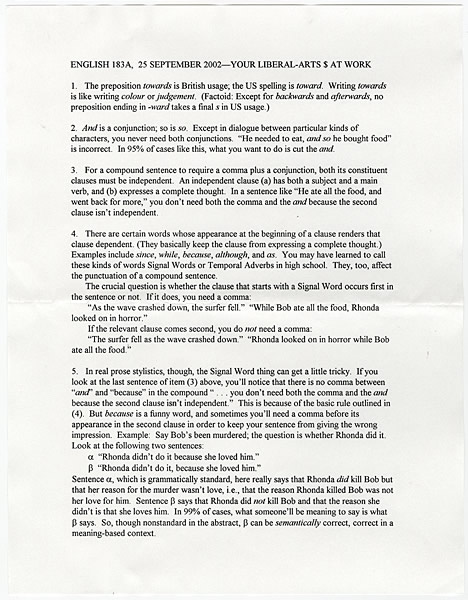
Grimes’ ref­er­ence to a report card is rel­e­vant, since what we’re dis­cussing today is the instruc­tion in grand themes and “great books” rep­re­sent­ed by W.H. Auden’s syl­labus above for his Eng­lish 135, “Fate and the Indi­vid­ual in Euro­pean Lit­er­a­ture.” Grant­ed, this is not an intro lit class (although I imag­ine that his intro class may have been pun­ish­ing as well), but a course for juniors, seniors, and grad­u­ate stu­dents. Taught dur­ing the 1941–42 school year when Auden was a pro­fes­sor at the Uni­ver­si­ty of Michi­gan, his syl­labus required over 6,000 pages of read­ing in just a sin­gle semes­ter (and for only two cred­its!). Find all of the books at the bot­tom of this post.

While a few days ago we post­ed a syl­labus David Fos­ter Wal­lace cre­at­ed around sev­er­al seem­ing easy reads—mass mar­ket paper­backs and such—Auden asks his stu­dents to read in a semes­ter the lit­er­ary equiv­a­lent of what many under­grad­u­ate majors cov­er in all four years. Four Shake­speare plays and one Ben Jon­son? That was my first col­lege Shake­speare class. All of Moby Dick? I spent over half a semes­ter with the whale in a Melville class. And then there’s all of Dante’s Divine Com­e­dy, a text so dense with obscure four­teenth cen­tu­ry Ital­ian allu­sions that in some edi­tions, foot­notes can take up half a page. And that’s bare­ly a quar­ter of the list, not to men­tion the opera libret­ti and rec­om­mend­ed crit­i­cism.

Was Auden a sadis­tic teacher or so com­plete­ly out of touch with his stu­dents that he asked of them the impos­si­ble? I do not know. But Pro­fes­sor Lisa Gold­farb of NYU, who is writ­ing a series of essays on Auden, thinks the syl­labus reflects as much on the poet’s own pre­oc­cu­pa­tions as on his stu­dents’ needs. Gold­farb writes:

“What I find fas­ci­nat­ing about the syl­labus is how much it reflects Auden’s own over­lap­ping inter­ests in lit­er­a­ture across gen­res — dra­ma, lyric poet­ry, fic­tion — phi­los­o­phy, and music.… He also includes so many of the fig­ures he wrote about in his own prose and those to whom he refers in his poet­ry…

“By includ­ing such texts across dis­ci­plines — clas­si­cal and mod­ern lit­er­a­ture, phi­los­o­phy, music, anthro­pol­o­gy, crit­i­cism — Auden seems to have aimed to edu­cate his stu­dents deeply and broad­ly.”

Such a broad edu­ca­tion seems out of reach for many peo­ple in a life­time, much less a sin­gle semes­ter. Now whether or not Auden actu­al­ly expect­ed stu­dents to read every­thing is anoth­er mat­ter entire­ly. Part of being a seri­ous stu­dent of lit­er­a­ture also involves learn­ing what to read, what to skim, and what to total­ly BS. Maybe anoth­er way to see this class is that since Auden knew these texts so well, his course gave stu­dents the chance to hear him lec­ture on his own jour­ney through Euro­pean lit­er­a­ture, to hear a poet from a priv­i­leged class and bygone age when “read­ing Eng­lish Lit­er­a­ture at Uni­ver­si­ty” meant, well, read­ing all of it, and near­ly every­thing else as well (usu­al­ly in orig­i­nal lan­guages).

If that’s the kind of eru­di­tion cer­tain anx­ious read­ers aspire to, then they’re sunk. Increas­ing­ly few have the leisure, and the claims on our atten­tion are too man­i­fold. At one time in his­to­ry being ful­ly lit­er­ate meant that one read both languages—Latin and Greek. Now it no longer even means mas­ter­ing only “Euro­pean lit­er­a­ture,” but all the world’s cul­tur­al pro­duc­tions, an impos­si­ble task even for a read­er like W.H. Auden. Who could retain it all? Instead of chas­ing van­ish­ing cul­tur­al ideals, I con­sole myself with a para­phrase from the dim mem­o­ry of my last read­ing of Moby Dick: why read wide­ly when you can read deeply?

Find all of the books on Auden’s syl­labus list­ed below:

Required Read­ing

Dante — The Divine Com­e­dy
Aeschy­lus — The Agamem­non (tr. Louis Mac­Ne­ice)
Sopho­cles — Antigone (tr. Dud­ley Fitts or Fitzger­ald)
Horace — Odes
Augus­tine — Con­fes­sions
Shake­speare — Hen­ry IV, Pt 2
Shake­speare — Oth­el­lo
Shake­speare — Ham­let
Shake­speare — The Tem­pest
Ben Jon­son — Volpone
Pas­cal — Pensees
Racine — Phe­dre
Blake — Mar­riage of Heav­en and Hell
Goethe — Faust, Part I
Kierkegaard — Fear and Trem­bling
Baude­laire — Jour­nals
Ibsen — Peer Gynt
Dos­to­evsky — The Broth­ers Kara­ma­zov
Rim­baud — A Sea­son in Hell
Hen­ry Adams — Edu­ca­tion of Hen­ry Adams
Melville — Moby Dick
Rilke — The Jour­nal of My Oth­er Self
Kaf­ka — The Cas­tle
TS Eliot — Fam­i­ly Reunion

OPERA LIBRETTI:
Orpheus (Gluck)
Don Gio­van­ni (Mozart)
The Mag­ic Flute (Mozart)
Fide­lio (Beethoven)
Fly­ing Dutch­man (Wag­n­er)
Tris­tan und Isol­de (Wag­n­er)
Göt­ter­däm­merung (Wag­n­er)
Car­men (Bizet)
Travi­a­ta (Ver­di)

RECOMMENDED CRITICAL READING:
Pat­terns of Cul­ture — Ruth Bene­dict
From the South Seas — Mar­garet Mead
Mid­dle­town — Robert Lynd
The Hero­ic Age — Hec­tor Chad­wick
Epic and Romance — W.P. Ker
Pla­to Today — R.H.S. Cross­man
Chris­tian­i­ty and Clas­si­cal Cul­ture — C.N. Cochrane
The Alle­go­ry of Love — C.S. Lewis

via New York Dai­ly News

Relat­ed Con­tent:

W.H. Auden Recites His 1937 Poem, ‘As I Walked Out One Evening’

David Fos­ter Wallace’s 1994 Syl­labus: How to Teach Seri­ous Lit­er­a­ture with Light­weight Books

Nabokov Reads Loli­ta, Names the Great Books of the 20th Cen­tu­ry

The Har­vard Clas­sics: A Free, Dig­i­tal Col­lec­tion

Josh Jones is a writer, edi­tor, musi­cian, and lit­er­ary neu­rot­ic based in Wash­ing­ton, DC. Fol­low him @jdmagness

Download Eight Free Lectures on The Hobbit by “The Tolkien Professor,” Corey Olsen

The name Corey Olsen may already be famil­iar to some readers—or at least those read­ers who ven­er­ate the lit­er­ary accom­plish­ments of one J.R.R. Tolkien. And if you don’t know Olsen by his real name, you may know him as “The Tolkien Pro­fes­sor,” his inter­net moniker since 2009, when Olsen, an Eng­lish Pro­fes­sor at Wash­ing­ton Col­lege and life­long stu­dent of Tolkien’s writ­ing, decid­ed to share his own schol­ar­ly work with a pub­lic “eager to be includ­ed in thought­ful, lit­er­ary con­ver­sa­tion” about The Hob­bit and The Lord of the Rings tril­o­gy.

For the past four years, Olsen has pub­lished specif­i­cal­ly online lec­tures about Tolkien’s work, as well as record­ings of his Wash­ing­ton Col­lege sem­i­nars on Tolkien’s fic­tion and aca­d­e­m­ic work. He has most recent­ly found­ed Signum Uni­ver­si­ty, an online, non-prof­it Lib­er­al Arts col­lege that aims to open the expe­ri­ence of high-qual­i­ty high­er ed to every­one, regard­less of their means or their loca­tion. Signum has, in turn, spawned the Myth­gard Insti­tute, which seems (as the name implies) more exclu­sive­ly focused on the fan­ta­sy and sci­ence fic­tion gen­res that are Olsen’s méti­er. (There are also col­lege prep options in Signum and Myth­gard Acad­e­mies).

So, Pro­fes­sor Olsen is busy, and he’s hap­py to be shar­ing his wealth of Tolkien knowl­edge with a very recep­tive pub­lic. His most recent course, an eight-part lec­ture series on The Hob­bit, is now avail­able on his site. (iTunes U also has it as of Jan­u­ary 31st. Watch the pro­mo for the course above. We also have the class list­ed in our col­lec­tion of 650 Free Cours­es Online.) The course comes via the Myth­gard Insti­tute and begins at the begin­ning in a lec­ture enti­tled “Took & Bag­gins” focused on The Hob­bit’s first chap­ter, “An Unex­pect­ed Par­ty.” Record­ed before the release of Peter Jackson’s first install­ment of his tril­o­gy of Hob­bit films, the lec­ture starts with Olsen’s spec­u­la­tions about what those films might look like. He says:

From the begin­ning, I have thought this was a mis­take… a big mis­take to go back­wards. It seems to me that an audi­ence famil­iar with the epic grandeur of Peter Jackson’s tril­o­gy is going to bring expec­ta­tions to a new Tolkien movie that’s going to set a Hob­bit film up for one of two very like­ly fail­ures. Either the movie is going to try tell Bilbo’s sto­ry in the mode and reg­is­ter of the Lord of the Rings, and there­fore strip the sto­ry of the light-heart­ed­ness and whim­si­cal­i­ty that makes it so delight­ful, or it’s going to try to be true to the tone and spir­it of the book, and will there­fore seem kind of sil­ly and child­ish to an audi­ence hop­ing for a suc­ces­sor to Peter Jackson’s films.

This is a very can­ny pre­dic­tion, and such can­ni­ness dis­tin­guish­es Olsen’s approach to every­thing Tolkien. He is attuned not only to all of the schol­ar­ly minu­ti­ae that dis­tin­guish­es aca­d­e­m­ic Tolkien stud­ies, but he is also well-aware of issues of audi­ence recep­tion and the ever-evolv­ing role of Tolkien’s work in pop­u­lar cul­ture. As his first lec­ture con­tin­ues, Pro­fes­sor Olsen makes it quite clear that The Hob­bit was delib­er­ate­ly writ­ten as a children’s sto­ry, and the suc­ces­sive books were meant to be as well. The Lord of the Rings books became more adult, dark­er and more fraught with heavy the­o­log­i­cal and myth­i­cal sig­nif­i­cance, as Tolkien com­posed them. This hap­pened in part because Tolkien was writ­ing with his own chil­dren in mind as his read­ers, and as he wrote, his kids grew up.

Tolkien, Olsen points out, was by train­ing a philologist—a schol­ar who spe­cial­izes in the study of languages—so he thought about not only what words mean, but where they come from and when. As such, he intend­ed The Hob­bit to pos­sess a “lin­guis­tic play­ful­ness,” mix­ing ancient and mod­ern words and usages, mak­ing up words a la Lewis Car­roll, to cre­ate a light­heart­ed and com­ic atmos­phere from the begin­ning of the nov­el. Olsen pro­vides us with sev­er­al exam­ples of this method in his first lec­ture. Over­all, his analy­sis is a thor­ough eval­u­a­tion of the nov­el in the terms of its lan­guage, its com­po­si­tion, its many lay­ers of genre and style—drawing from Tolkien’s explic­it­ly artic­u­lat­ed the­o­ries of narrative—and its his­tor­i­cal and lit­er­ary allu­sions. All pre­sent­ed in a very enthu­si­as­tic and acces­si­ble style that is aimed at every adult read­er and lover of Tolkien, not just fel­low schol­ars, who tend to speak a spe­cial­ized lan­guage that excludes near­ly every­one out­side their nar­row coterie.

In the video above—a TED talk Olsen deliv­ered at TEDx Chester Riv­er—he dis­cuss­es how the world of acad­eme, that spe­cial­ized world that excludes almost every­one, had become a sti­fling and rather mean­ing­less place for him when he decid­ed to become the online Tolkien Pro­fes­sor.  Olsen had what he calls an exis­ten­tial cri­sis about acad­e­mia and schol­ar­ly publishing—What’s the point?, he thought. Who’s going to read it? Since most peo­ple can’t access schol­ar­ly pub­li­ca­tions even if they want­ed to, and since he was writ­ing on Tolkien, one of the world’s most pop­u­lar authors, he felt dou­bly irrel­e­vant as a clois­tered aca­d­e­m­ic, since Tolkien fans are every­where. Then he dis­cov­ered some­thing every­body else already knew about the internet—it’s an ide­al medi­um for pub­lish­ing and dis­sem­i­nat­ing any kind of infor­ma­tion, and it’s crowd­ed with peo­ple des­per­ate to learn about and dis­cuss the lib­er­al arts. As more and more aca­d­e­mics dis­cov­er this as well, more also cure their exis­ten­tial malaise by open­ing up their work to every­one online, becom­ing resources, not gate­keep­ers, for knowl­edge.

Relat­ed Con­tent:

Lis­ten to J.R.R. Tolkien Read a Lengthy Excerpt from The Hob­bit (1952)

Lis­ten to J.R.R. Tolkien Read Poems from The Fel­low­ship of the Ring, in Elvish and Eng­lish (1952)

Fan­tas­tic BBC Footage of J.R.R. Tolkien in 1968

Free Audio: Down­load the Com­plete Chron­i­cles of Nar­nia by C.S. Lewis

Josh Jones is a writer, edi­tor, and musi­cian based in Wash­ing­ton, DC. Fol­low him @jdmagness

Father Guido Sarducci Pitches “The Five Minute University”

If you expe­ri­enced the hey­day of Sat­ur­day Night Live, you’ll almost cer­tain­ly remem­ber Father Gui­do Sar­duc­ci, the chain-smok­ing, sun­glass-wear­ing priest who worked (rather implau­si­bly) as a rock crit­ic for the Vat­i­can news­pa­per L’Osser­va­tore Romano. The Sar­duc­ci char­ac­ter was the brain­child of Don Nov­el­lo, a come­di­an who first began play­ing with the char­ac­ter in the ear­ly 1970s, when he bought a mon­signor’s out­fit for $7.50 at a thrift shop. Nov­el­lo took “Sar­duc­ci” from the San Fran­cis­co night­clubs, to The Smoth­ers Broth­ers Show, to Sat­ur­day Night Live in 1977. The irrev­er­ent priest often appeared on the “Week­end Update” seg­ment and even once opened the show. And then, lat­er, Nov­el­lo brought Sar­duc­ci onto the Amer­i­can com­e­dy cir­cuit where he pitched audi­ences on the “Five Minute Uni­ver­si­ty,” a con­cept you’ll want to con­sid­er in case that MOOC thing does­n’t quite work out. Appar­ent­ly it now has VC fund­ing too.

If you would like to sign up for Open Culture’s free email newslet­ter, please find it here. It’s a great way to see our new posts, all bun­dled in one email, each day.

If you would like to sup­port the mis­sion of Open Cul­ture, con­sid­er mak­ing a dona­tion to our site. It’s hard to rely 100% on ads, and your con­tri­bu­tions will help us con­tin­ue pro­vid­ing the best free cul­tur­al and edu­ca­tion­al mate­ri­als to learn­ers every­where. You can con­tribute through Pay­Pal, Patre­on, and Ven­mo (@openculture). Thanks!

Relat­ed Con­tent:

Pope John Paul II Takes Bat­ting Prac­tice in Cal­i­for­nia, 1987

John Belushi’s Impro­vised Screen Test for Sat­ur­day Night Live (1975)

The Mak­ing of The Blues Broth­ers: When Belushi and Aykroyd Went on a Mis­sion for Com­e­dy & Music

by | Permalink | Make a Comment ( 2 ) |

Join Cartoonist Lynda Barry for a University-Level Course on Doodling and Neuroscience

lyndabarry

Car­toon­ist Lyn­da Bar­ry, who has helped legions of adults grope their way back to the unself­con­scious cre­ativ­i­ty of child­hood, is teach­ing at the uni­ver­si­ty lev­el. Bar­ry’s Unthink­able Mind course is designed to appeal to stu­dents of the human­i­ties.  Also hard­core sci­ence majors, the sort of lab-coat­ed spec­i­mens the first group might refer to as “brains.” The instruc­tor describes her Uni­ver­si­ty of Wis­con­sin spring semes­ter offer­ing thus:

A writ­ing and pic­ture-mak­ing class with focus on the basic phys­i­cal struc­ture of the brain with empha­sis on hemi­spher­ic dif­fer­ences and a par­tic­u­lar sort of insight and cre­ative con­cen­tra­tion that seems to come about when we are using our hands (the orig­i­nal dig­i­tal devices) —to help us fig­ure out a prob­lem.

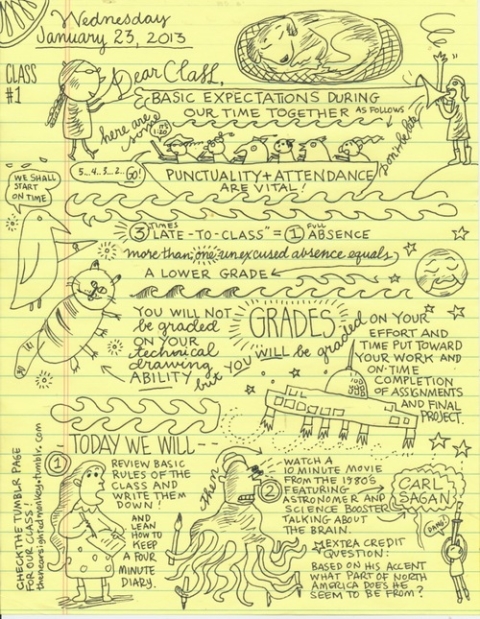
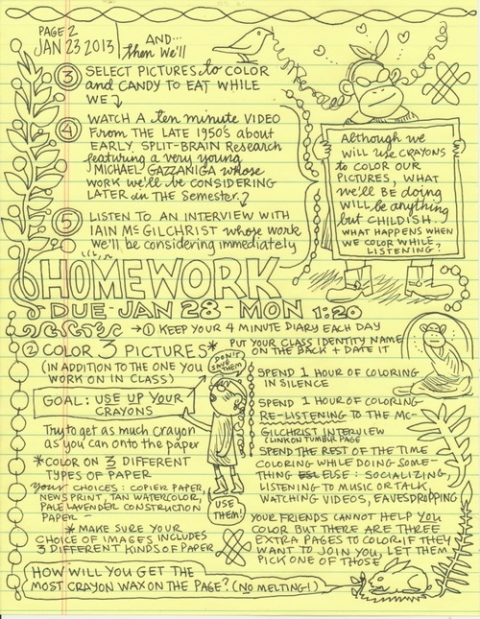
The twen­ty-one grads and under­grads accept­ed into Pro­fes­sor Bar­ry’s course have been warned, via the illus­trat­ed let­ter above,  hand­writ­ten on legal paper, that the work­load will be heavy.

lyndabarry2

You should be warned as well, if you elect to audit this course from home. Enroll­ment is not nec­es­sary. Pro­fes­sor Bar­ry will be post­ing her week­ly assign­ments and cur­ricu­lum mate­ri­als on her tum­blr, a forum where her abid­ing inter­est in sci­ence is as appar­ent as her devo­tion to undi­rect­ed doo­dling. Your first assign­ment, post­ed above, requires a box of crayons, the col­or­ing pages of your choice, down­loaded to four types of paper, and a sig­nif­i­cant chunk of time set aside for brain-relat­ed arti­cles and vin­tage videos star­ring Cog­ni­tive Neu­ro­sci­en­tist Michael Gaz­zani­ga and astronomer Carl Sagan. You should also be com­mit­ted to keep­ing a four-minute diary and serv­ing as your own guinea pig.

Who’s in?

A big H/T @kirstinbutler

Relat­ed Con­tent

Car­toon­ist Kate Beat­on Plays on Lit­er­ary Clas­sics — The Great Gats­by, Julius Cae­sar & More

Steven Pinker Explains the Neu­ro­science of Swear­ing (NSFW)

Carl Sagan’s Under­grad Read­ing List: From Pla­to and Shake­speare, to Hux­ley and Gide

- Ayun Hal­l­i­day ‘s most recent book is Peanut.

The ABC of Architects: An Animated Flipbook of Famous Architects and Their Best-Known Buildings

As a new-ish par­ent, I’ve been inun­dat­ed with alpha­bet books from well-mean­ing friends and fam­i­ly, and I am most grate­ful for them all. But I’m espe­cial­ly glad for a set that uses images from the Met­ro­pol­i­tan Muse­um of Art to illus­trate each let­ter. My daugh­ter gets lost in the paint­ings, prints, etch­ings, etc., and you know what? So do I. It’s that rare meet­ing of adult high art and kid for­mat­ting that keeps us both engaged.

The above video, while not strict­ly for chil­dren, could cer­tain­ly work as well. A con­cept of the Argen­tine group Ombu Archi­tec­ture and graph­ic design­er Fed­eri­co Gon­za­lez, “The ABC of Archi­tects” is a vin­tage flip­book trib­ute to the last 100 years or so in inter­na­tion­al archi­tec­ture, set to a jaun­ty, gold­en-age-of-radio score by Eugene C. Rose and George Ruble (which you can down­load for free here).

With the kind of quaint globe-hop­ping (but with­out the passé racism) of a Tintin com­ic, “The ABC of Archi­tects” skips through its list of twen­ty-six revered names from almost as many countries–from Fin­ish Alvar Aal­to to Iraqi-British Zaha Hadid. There are many names I don’t know and many famil­iar favorites. I can imag­ine this appeal­ing to preschool­ers or seri­ous stu­dents, and for some of the same rea­sons. While the cre­ators express grief at hav­ing to leave out so many artists, “The ABC of Archi­tects” is noth­ing less than joy­ous and inspir­ing.

via Dooby­Brain

h/t Jim­my Askew

Relat­ed Con­tent

The His­to­ry of West­ern Archi­tec­ture: From Ancient Greece to Roco­co (A Free Online Course)

Ice Cube & Charles Eames Rev­el in L.A. Archi­tec­ture

Archi­tec­ture in Motion

Josh Jones is a writer, musi­cian, and muse­um-hop­ping father.

Introducing KA Lite: An Offline Version of the Khan Academy That Runs on Almost Anything

Salman Khan’s mod­el for free online edu­ca­tion hinges on the micro lecture—brief tuto­ri­als on near­ly every sub­ject under the sun—delivered through YouTube. Launched in 2006, the Khan Acad­e­my now has a library of 3000 videos. That’s not bad, espe­cial­ly for a site with the ele­vat­ed goal of pro­vid­ing a “free world-class edu­ca­tion for any­one any­where.” With the help of hun­dreds of vol­un­teers, the site’s con­tent is acces­si­ble in 18 lan­guages. But even with all of that effort, Khan does­n’t achieve the glob­al reach that it promis­es. The fact is that only 35 per­cent of the world’s pop­u­la­tion has access to the inter­net, which puts the idea of online learn­ing behind a vir­tu­al fire­wall for many peo­ple.

Enter Khan Acad­e­my Lite, oth­er­wise called KA Lite. This new ser­vice tries to work around that fire­wall. Soft­ware devel­op­er Jamie Alexan­dre and a team from UCSD devel­oped an offline ver­sion of Khan’s learn­ing mod­el that can run on just about any­thing. Once you down­load the KA Lite soft­ware and install it on a Lin­ux or Win­dows serv­er, stu­dents can start watch­ing Khan videos and exer­cis­es on computers/devices as tiny and cheap as the $35 Rasp­ber­ry Pi. Actu­al­ly, the whole serv­er can be run on the Rasp­ber­ry Pi!

You can down­load the soft­ware here and find instal­la­tion instruc­tions here. Jamie Alexan­dre offers his own intro­duc­tion to KA Lite here.

Khan Acad­e­my Lite sits nice­ly along­side the free apps released for the iPhone, iPad, and iPod Touch ear­li­er this year. Be sure to check them out.

Find more K‑12 Resources in our col­lec­tion of 200 Free Kids Edu­ca­tion­al Resources: Video Lessons, Apps, Books, Web­sites & More

Kate Rix writes about dig­i­tal media and edu­ca­tion. Read more of her work at and thenifty.blogspot.com.

Schoolhouse Rock: Revisit a Collection of Nostalgia-Inducing Educational Videos

Some­times a tune lives in your head and you hum it now and again with­out any rec­ol­lec­tion of where it orig­i­nal­ly came from. Chances are, if you grew up in the Unit­ed States watch­ing Sat­ur­day morn­ing car­toons, that tune came from School­house Rock.

Like so many of its biggest fans, School­house Rock is now offi­cial­ly in its 40s. This year marks the 40th anniver­sary of the pilot seg­ment, Three is a Mag­ic Num­ber, whose melody and lyrics ooze the type of hip­pie Sun­shine Fam­i­ly whole­some­ness so abun­dant in ‘70s children’s pro­gram­ming.

Man and a woman had a lit­tle baby,

Yes they did.

They had three in the fam­i­ly.

And that’s a mag­ic num­ber

Fol­low that up with School­house Rock’s win­ning for­mu­la: sim­ple, hum­ma­ble tunes mixed with math fact lyrics.

3–6‑9, 12–15-18, 21–24-27, 30.
3–6‑9, 12–15-18, 21–24-27, 30.

School­house Rock start­ed out as an adver­tis­ing ven­ture on ABC, dreamed up by an exec­u­tive whose son was strug­gling to mem­o­rize his mul­ti­pli­ca­tion tables. But it grew into the most pop­u­lar inter­sti­tial pro­gram­ming (short vignettes shown between TV seg­ments) in mod­ern tele­vi­sion.

One of the most mem­o­rable melodies is Blos­som Dearie’s sweet and melan­choly Fig­ure Eight, broad­cast in Feb­ru­ary, 1973. This one was cov­ered by Eliot Smith in a decid­ed­ly less upbeat ver­sion.

With­out a doubt these three-minute ani­ma­tions (by Loonie Tunes ani­ma­tor Chuck Jones) are some of the best mod­ern edu­ca­tion­al videos around. Whose social stud­ies teacher didn’t show this tune­ful expla­na­tion of the leg­isla­tive process dur­ing class?

And this one about the Con­sti­tu­tion, well I have to admit that it still chokes me up.

The man behind the vast major­i­ty of the music is Bob Dor­ough, a pianist who worked with Miles Davis and Allen Gins­berg before becom­ing the voice and main com­pos­er for School­house Rock.


The series took on near­ly every sub­ject, from mul­ti­pli­ca­tion and gram­mar to sci­ence and Amer­i­can gov­ern­ment. Today’s edu­ca­tion­al soft­ware devel­op­ers would kill to make gram­mar as fun as Con­junc­tion Junc­tion and Lol­ly, Lol­ly, Lol­ly Get Your Adverbs Here.  The pro­duc­ers didn’t shy away from more weighty issues either. Take a lis­ten to this lit­tle dit­ty on the theme of Amer­i­can ter­ri­to­r­i­al expan­sion.

The series took a break dur­ing the 1980s but picked up again in the mid-’90s with Mon­ey Rock. In 2009 came Earth Rock. Both fea­tured a more gloom-and-doom feel than the inspir­ing tone of the ear­li­er School­house Rock iter­a­tions.

Some­times the orig­i­nal real­ly is the best.

You can pur­chase the com­plete set of School­house Rock videos on Ama­zon. We’ve also added a link to this post in our new col­lec­tion: 200 Free Kids Edu­ca­tion­al Resources: Video Lessons, Apps, Books, Web­sites & More

Kate Rix writes about dig­i­tal media and edu­ca­tion. Read more of her work at and thenifty.blogspot.com. 

New MOOC Introduces You to the Wonderful World of Infographics & Data Visualization

Hans Rosling, a pro­fes­sor of glob­al health at Sweden’s Karolin­s­ka Insti­tute, became some­thing of an inter­net celebri­ty because of his knack for pre­sent­ing data in extreme­ly imag­i­na­tive ways. As you’ll see above, he’s the mas­ter of data visu­al­iza­tion. Now, thanks to a new MOOC from the Knight Cen­ter for Jour­nal­ism in the Amer­i­c­as at the Uni­ver­si­ty of Texas at Austin, you can devel­op some of these skills your­self. The free course, Intro­duc­tion to Info­graph­ics and Data Visu­al­iza­tion, begins on Jan­u­ary 12th and runs 6 weeks. The course is not taught by Rosling (sigh), but the cur­rent ver­sion of the course has drawn more than 2,000 peo­ple from 109 coun­triesIntro­duc­tion to Info­graph­ics and Data Visu­al­iza­tion has been added to our col­lec­tion of our Com­plete List of MOOCs and Cer­tifi­cate Cours­es.

by | Permalink | Make a Comment ( 3 ) |

« Go BackMore in this category... »
Quantcast