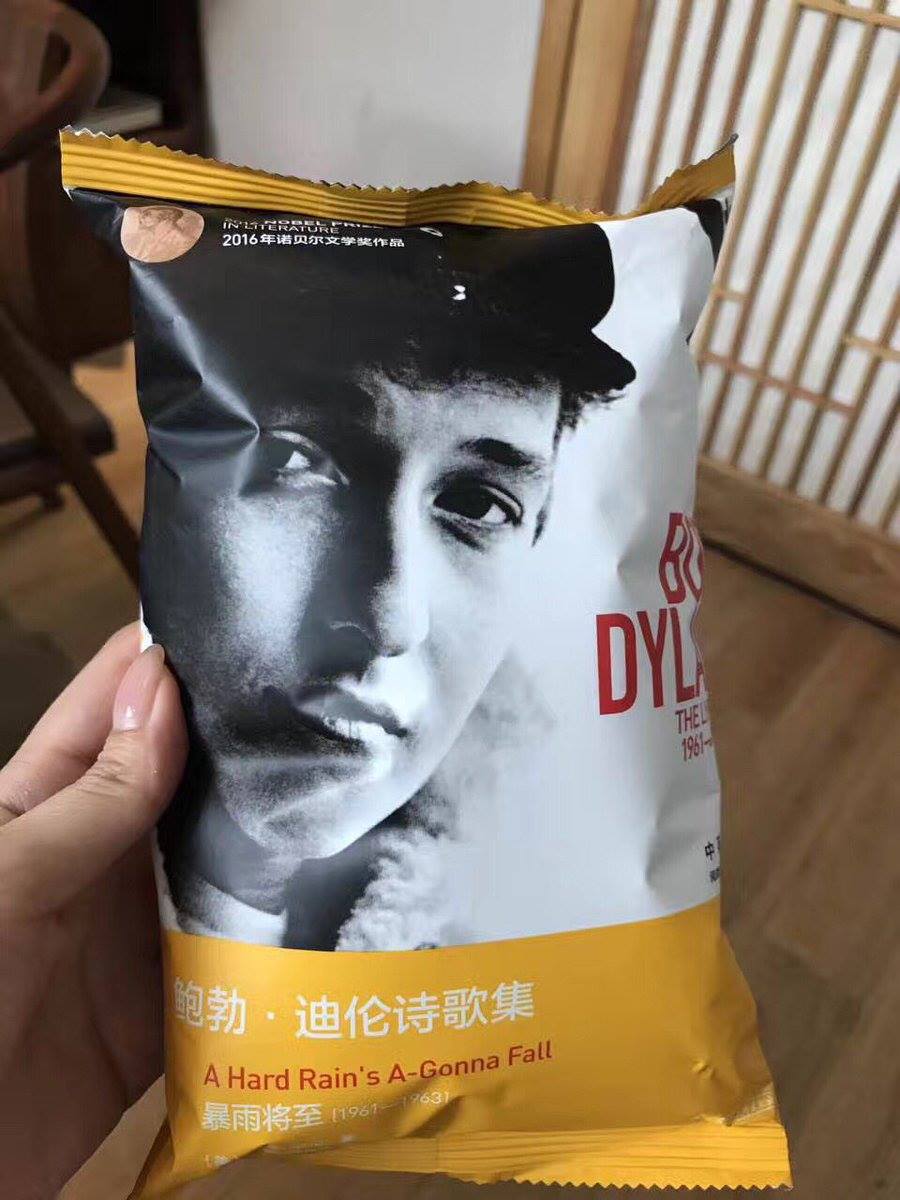
They sound tasty. The rub? You have to travel to China to get them.
And now a question for any readers fluent in Chinese. Can you translate the text on the bag? We would be curious to know what’s the pitch for these chips. Feel free to put any translations in comments section below.
If you would like to support the mission of Open Culture, consider making a donation to our site. It’s hard to rely 100% on ads, and your contributions will help us continue providing the best free cultural and educational materials to learners everywhere. You can contribute through PayPal, Patreon, and Venmo (@openculture). Thanks!
Self proclaimed tea geek, Shunan Teng’s knowledge of her chosen subject extends well beyond the proper way to serve and prepare her best-loved beverage.
Her recent TED-Ed lesson on the History of Tea, above, hints at centuries of bloodshed and mercenary trade practices, discreetly masked by Steff Lee’s benign animation.
Addiction, war, and child labor—the last, a grim ongoing reality…. Meditate on that the next time you’re enjoying a nice cup of Darjeeling, or better yet, matcha, a preparation whose Western buzz is starting to approximate that of the Tang dynasty.
Ayun Halliday is an author, illustrator, theater maker and Chief Primatologist of the East Village Inky zine. She’ll be appearing onstage in New York City this June as one of the clowns in Paul David Young’s Faust 3. Follow her @AyunHalliday.
Most healthy people practice at least some form of what we call these days “self-care,” whether it be yoga, meditation, running, writing, art, music, therapy, coloring books, or what-have-you. And if you’re functioning tolerably well in the madness of our times, you’re probably dipping regularly into the well of at least one restorative discipline, in addition to whatever larger beliefs you may hold.
But perhaps you feel at loose ends—unable to find the time or money for yoga classes or painting, feeling too restless to sit motionless for half an hour or more a day.… The activities that sustain our psyches should not feel unattainable. One need not be a yogi, Zen monk, marathoner, or Impressionist to find regular fulfilment in life. Perhaps regular, ordinary activities have the power to make us just as happy.
Recent research suggests that tasks such as “knitting, crocheting and jam-making” can “work wonders for wellbeing,” writes Tom Ough at The Telegraph, as can other creative practices like “cooking, baking, performing music, painting, drawing, sketching, digital design and creative writing.” All may have profound effects on emotional health. This list might expand indefinitely to include any hands-on activity with measurable results, from woodworking to beekeeping.
A 2016 study of 658 students at New Zealand’s Otago University found that engaging in small creative pursuits on a daily basis produces enthusiasm and feelings of “flourishing”—“a mental health term describing happiness and meaning.” The results of, say, making a loaf of bread or a scarf, don’t simply benefit us in the moment, but carry over into the future. As the study’s lead author Tamlin Connor notes, “engaging in creative behaviour leads to increases in well-being the next day, and this increased well-being is likely to facilitate creative activity on the same day.”
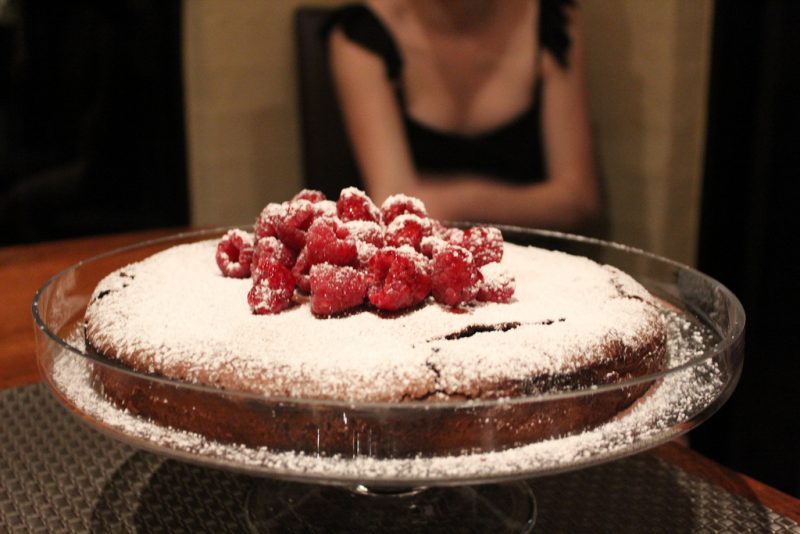
The more we bake, the more we’ll want to bake, the happier we’ll feel.
Does focusing our attention on small, achievable daily tasks lead to the kind of metaphysical fulfilment most people seem to crave—what Viktor Frankl called “man’s search for meaning”? Not necessarily, no. “Recent research suggests,” notes Daisy Grewal at Scientific American, “that while happiness and a sense of meaning often overlap, they also diverge in important and surprising ways.” Frankl may not be wrong about the need for meaning, but even he admitted that seeking it out is not identical to the pursuit of happiness.
In a 2013 study published in The Journal of Positive Psychology, Roy Baumeister, Kathleen Vohs, Jennifer Aaker, and Emily Garbinsky found that happiness, “flourishing,” or emotional well-being correlate strongly with “satisfying one’s needs and wants” as well as with “being a giver rather than a taker.” Philosophy, politics, religion, and art may seek truth or coherence, but while “concerns with personal identity and expressing the self contributed to meaning,” they have little lasting effect on happiness, as many a philosopher, priest, or poet may tell you. On the other hand, while having comfortable economic means does measurably improve happiness, it does not contribute significantly to a sense of larger purpose (that which, Frankl argued strenuously, can save our lives in times of crisis).
Baumeister and his colleagues obtained their findings by surveying around 400 American adults over a period of three weeks, during which time the participants monitored a variety of daily activities. In one reading of the Otago University study, Daisy Meager at Vicefocuses specially on baking as a means to ward off a “shitty mood.” It may be a matter of taste—some may prefer making sauces to cakes. The effects are the same, “a common cure,” writes Danny Lewis at Smithsonian, “for stress or feeling down.”
Further arguing, however, for baking as a special form of “flourishing,” Julie Thomson at HuffPodescribes the act as “a productive form of self-expression and communication” and consults with experts like Ohana and Donna Pincus, associate professor of psychological and brain sciences at Boston University, who told Thomson, “Baking has the benefit of allowing people creative expression.” People who may not be natural artists, writers, or musicians. Yet baking is also a kind of problem-solving as well as a creative act, and “actually requires a lot of full attention.”
You have to measure, focus physically on rolling out dough. If you’re focusing on smell and taste, on being present with what you’re creating, that act of mindfulness in that present moment can also have a result in stress reduction.
The reference to mindfulness is apt. (Go ahead and read about a course on “Breaditation,” make fun of it, then try it at home.) I know not a few people who swear they cannot meditate to save their lives, but who will happily spend a couple hours on a Saturday evening baking brioche or plates of cookies. But there’s more to it than the meditative absorption that comes from mindful activity. Baking, says Pincus—and cooking in general—is a form of altruism. “The nice thing about baking,” she ways, “is that you have such a tangible reward at the end and that can feel very beneficial to others.”
So the research suggests that—whatever activities one gravitates toward—finding happiness on a daily basis involves more than using Pinterest boards and magazines to craft a cozy, stylish new life. Though any sustained creative activity may do the trick, we approach closer to lasting happiness as well as greater fulfillment—to meaning—when we direct activity to a “connection with other people” through generosity.
Every time I go to Japan, I marvel at the artificial sandwiches, omelets, bowls of noodles, and parfaits displayed outside even the humblest shopping-arcade cafés, all made to give the customer a more vivid sense of the dishes on offer than would any two-dimensional photograph. But while those fake foods, made to scale with polyvinyl chloride and other inedible materials, do reflect Japan’s long tradition of high-quality hand-craftsmanship, they don’t reflect some of the culture’s other virtues: the advanced Japanese skills of miniaturization (remarked upon by even the earliest Western visitors to the once-closed country), not to mention the deliciousness of actual Japanese food.
At a stroke, the Youtube channel Miniature Space combines all of those into a single project: its creators replicate a variety of classic Japanese, Western, and Japanese-Western dishes like shrimp tempura, curry, and okonomiyaki on video, all at what seems an impossibly small scale. Not only that, but they use only miniature kitchen tools, right down to wee knives, spatulas, and rolling pins as well as tea candle-powered stoves.
Some of these, writes iDigitalTimes’ ND Medina, “come from Re-Ment, a Japanese company noted for the impressive detail of its miniatures. However, many of the tools used have long been out of production, like anything by Konapun, a brand which made fun miniature cooking sets for kids to experience the joys of cooking.”
Miniature cooking at this level of rigor requires not just considerable manual dexterity but a certain knack for creative substitution: toothpicks instead of standard skewers, quail eggs instead of chicken eggs, special shrimp from the aquarium supply store small enough to fit inside one’s thimble-sized cooking pot. Though aesthetically satisfying on many levels and technically edible to boot, these mini-meals wouldn’t satisfy any normal human appetite. Nevertheless, watching enough Miniature Space videos in a row will almost certainly get you hungering for a regular-sized grill of yakitori, bowl of spaghetti, or plate of pancakes — and leave you with some of the know-how needed to make such dishes, even in a non-miniature kitchen.
The Finnish coffee company, Paulig, has been around for a good long while–since 1876, to precise. But only in 2017 did they get around to doing this–enlisting Helsinki designer Lucas Zanotto “to make the smallest cup of coffee, out of 1 bean.” Zanotto doesn’t need much more than a nail file, candle, and thimble-sized cup to produce that tiny cup of joe. Conceptually, it’s a neat exercise in efficiency and conservation. But, practically speaking, will it get you through the day?
If you would like to support the mission of Open Culture, consider making a donation to our site. It’s hard to rely 100% on ads, and your contributions will help us continue providing the best free cultural and educational materials to learners everywhere. You can contribute through PayPal, Patreon, and Venmo (@openculture). Thanks!
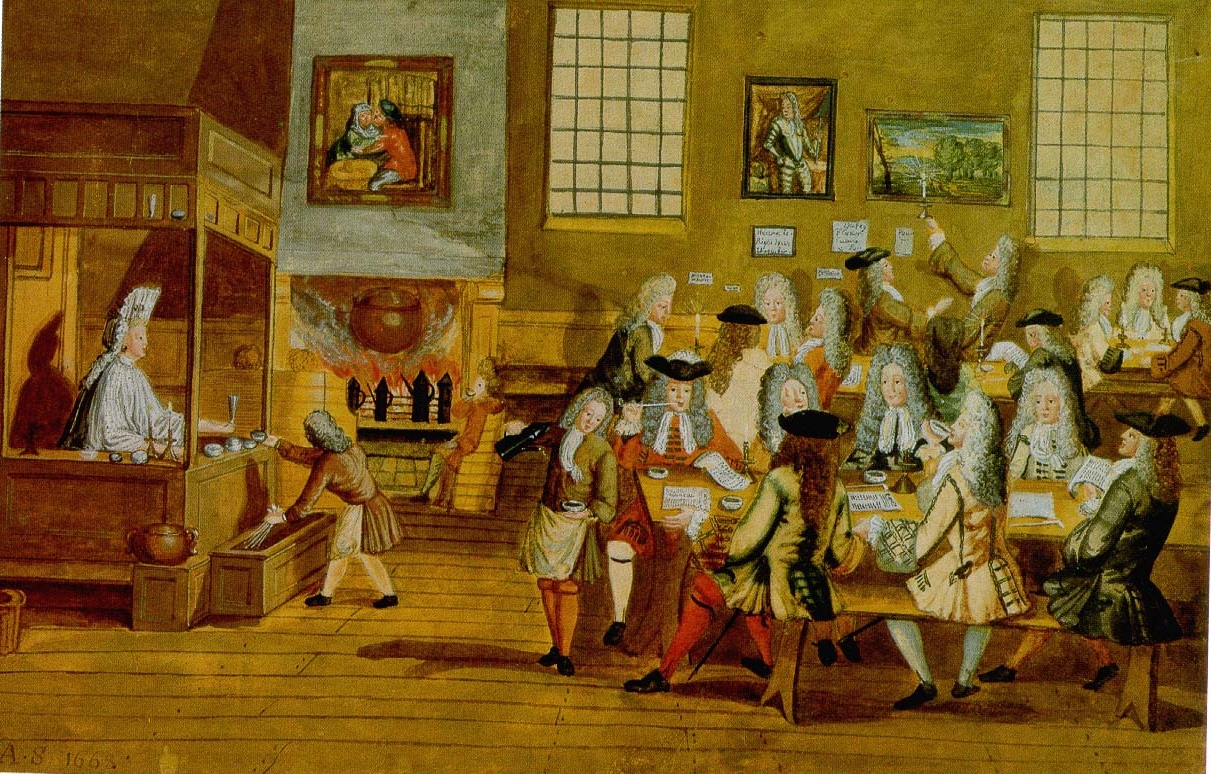
We denizens of the craft-roasting, wi-fi-connected 21st century know well how to drink voluminous quantities of coffee and argue our opinions. In 17th-century London, however, such pursuits could look shocking and dangerous, especially since they happened in coffee houses, the new urban spaces where, according to Res Obscura’s Benjamin Breen, you could “bet on bear fights, warm your legs by the fire, witness public dissections (human and animal), solicit prostitutes (male and female), buy and sell stocks, purchase tulips or pornographic pamphlets, observe the activities of spies, dissidents, merchants, and swindlers, and then read your mail, delivered directly to your table.”
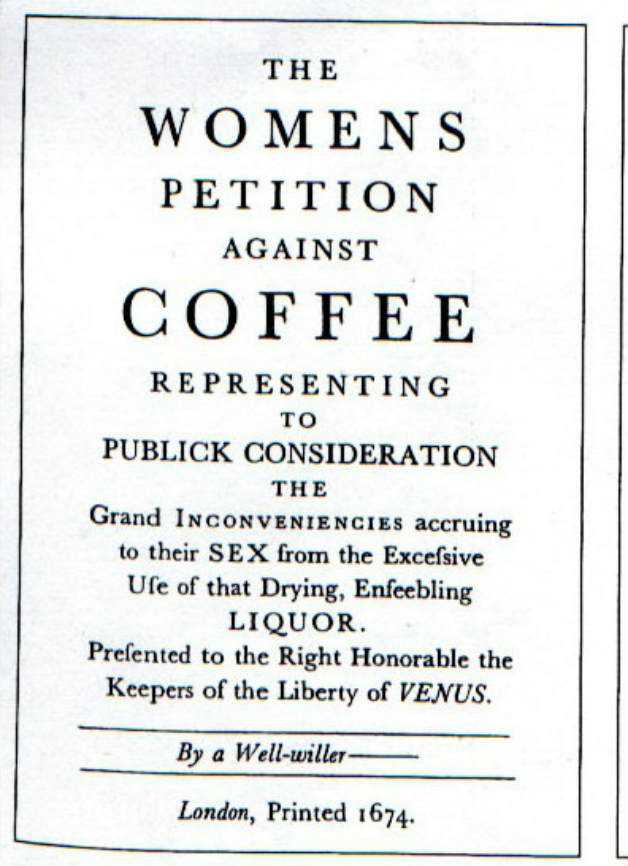
The patrons, while engaging in all that, partook of “a new drug from the Muslim world—black, odiferous, frightening, bewitching — called ‘coffee.’ ” Quickly finding itself subject to a great deal of scientific research and everyday argument as to its merits and demerits, the drink set off the satirical “Coffee Revolt of 1674,” which began that year with a pamphlet called “The Womens Petition Against Coffee,” purporting to offer “The Humble Petitions and Address of Several Thousands of Buxome Good-Women, Languishing in Extremity of Want.”
It seems that England, once “a Paradise for Women” thanks to “the brisk Activity of our men, who in former Ages were justly esteemed the Ablest Performers in Christendome,” had, for the non-coffee-drinking sex, become a deeply unsatisfying place:
The dull Lubbers want a Spur now, rather than a Bridle: being so far from dowing any works of Supererregation that we find them not capable of performing those Devoirs which their Duty, and our Expectations Exact. The Occasion of which Insufferable Disaster, after a furious Enquiry, and Discussion of the Point by the Learned of the Faculty, we can Attribute to nothing more than the Excessive use of that Newfangled, Abominable, Heathenish Liquor called COFFEE, which Riffling Nature of her Choicest Treasures, and Drying up the Radical Moisture, has so Eunucht our Husbands, and Cripple our more kind Gallants, that they are become as Impotent as Age, and as unfruitful as those Desarts whence that unhappy Berry is said to be brought.
Coffee, so insist the Buxome Good-Women, renders the men of England “as Lean as Famine, as Rivvel’d as Envy, or an old meager Hagg over-ridden by an Incubus. They come from it with nothing moist but their snotty Noses, nothing stiffe but their Joints, nor standing but their Ears.” These charges drew a response in the form of the “Mens Answer to the Womens Petition Against Coffee, Vindicating Their own Performances, and the Vertues of that Liquor, from the Undeserved Aspersions lately cast upon them by their SCANDALOUS PAMPHLET.” In it, the “men” ask the “women,” among other questions,
Why must innocent COFFEE be the object of your Spleen? That harmless and healing Liquor, which Indulgent Providence first sent amongst us, at a time when Brimmers of Rebellion, and Fanatick Zeal had intoxicated the Nation, and we wanted a Drink at once to make us Sober and Merry: ‘Tis not this incomparable settle Brain that shortens Natures Standard, or makes us less Active in the Sports of Venus, and we wonder you should take these Exceptions, since so many of the little Houses, with the Turkish Woman stradling on their Signs, are but Emblems of what is to be done within for your Conveniencies, meer Nurseries to promote the petulant Trade, and breed up a stock of hopeful Plants for the future service of the Republique, in the most thriving Mysteries of Debauchery; There being scarce a Coffee-Hut but affords a Tawdry Woman, a wonton Daughter, or a Buxome Maide, to accommodate Customers; and can you think that any which frequent such Discipline, can be wanting in their Pastures, or defective in their Arms?
“The extravagant claims for coffee made by men’s-health handbills exposed the commodity to satire,” writes Markman Ellis, author of The Coffee-House: A Cultural History, but “that coffee might have a deleterious effect on male virility was a theory accorded considerable scientific respect.” Still, pamphlets like the “Womens Petition” took as their target less the biological effects of coffee than “the new urban manners of masculine sociability that coffee represents. The satirist accuses coffee-house habitués of being ‘effeminate’ because they spend their time talking, reading, and pursuing their business rather than carousing, drinking, and whoring.” If any women of the 21st century would really prefer that men go back to those old ways — well, it would at least make for an interesting argument.
Drink our coffee. Or else. That’s the message of these curiously sadistic TV commercials produced by Jim Henson between 1957 and 1961.
Henson made 179 ten-second spots for Wilkins Coffee, a regional company with distribution in the Baltimore-Washington D.C. market, according to the Muppets Wiki: “The local stations only had ten seconds for station identification, so the Muppet commercials had to be lightning-fast–essentially, eight seconds for the commercial pitch and a two-second shot of the product.”
Within those eight seconds, a coffee enthusiast named Wilkins (who bears a resemblance to Kermit the frog) manages to shoot, stab, bludgeon or otherwise do grave bodily harm to a coffee holdout named Wontkins. Henson provided the voices of both characters.
Up until that time, TV advertisers typically made a direct sales pitch. “We took a different approach,” said Henson in Christopher Finch’s Of Muppets and Men: The Making of the Muppet Show. “We tried to sell things by making people laugh.”
The campaign for Wilkins Coffee was a hit. “In terms of popularity of commercials in the Washington area,” said Henson in a 1982 interview with Judy Harris, “we were the number one, the most popular commercial.” Henson’s ad agency began marketing the idea to other regional coffee companies around the country. Henson re-shot the same spots with different brand names. “I bought my contract from that agency,” said Henson, “and then I was producing them–the same things around the country. And so we had up to about a dozen or so clients going at the same time. At the point, I was making a lot of money.”
If you’re a glutton for punishment, you can watch many of the Wilkins Coffee commercials above. And a word of advice: If someone ever asks you if you drink Wilkins Coffee, just say yes.
If you would like to support the mission of Open Culture, consider making a donation to our site. It’s hard to rely 100% on ads, and your contributions will help us continue providing the best free cultural and educational materials to learners everywhere. You can contribute through PayPal, Patreon, and Venmo (@openculture). Thanks!
FYI: Courtesy of Penguin Random House, you can download The Book Lover’s Guide to Coffee. This free guide–a “celebration of ideas that make coffee and literature inseparable”–features:
6 authors on coffee’s cultural significance ;
The rituals of 7 famous coffee-obsessed authors;
Infographics rich with caffeinated, bookish data;
Tips on taking the perfect coffee;
Brewing guides from Birch Coffee.
You can download the coffee guide here. (They do require an email address.) Meanwhile, find more good coffee items in the Relateds below.
We're hoping to rely on loyal readers, rather than erratic ads. Please click the Donate button and support Open Culture. You can use Paypal, Venmo, Patreon, even Crypto! We thank you!
Open Culture scours the web for the best educational media. We find the free courses and audio books you need, the language lessons & educational videos you want, and plenty of enlightenment in between.