The Best Commercial Ever? James Brown Sells Miso Soup (1992)

Most stars are under­stand­ably choosy about what prod­ucts, if any, they’re will­ing to endorse. Seri­ous artists are mind­ful about their rep­u­ta­tions.

The late great God­fa­ther of Soul James Brown lent his prodi­gious tal­ents to McDon­alds (for a price), but it’s worth not­ing that most of the heavy lift­ing was done by a cast of unknowns play­ing tick­et hold­ers for­ti­fy­ing them­selves before a hot­ly antic­i­pat­ed con­cert. Brown arrives at the end, to bedaz­zle every­one in the restau­rant with his fan­cy foot­work, sequined suit, and sheer prox­im­i­ty.

Clear­ly, the Hard­est Work­ing Man in Show Busi­ness had stan­dards.

(Since his death in 2006, his hits have been used to sell ath­let­ic wear, gin, beer, and pork ten­der­loin, proof that these things are hard­er to con­trol from beyond the grave.)

Japan­ese tele­vi­sion is one are­na where many West­ern celebri­ties are will­ing to relax their usu­al poli­cies. The prospect of an enor­mous pay­check for so lit­tle work is hard to beat, though in the age of Youtube, there’s a far greater like­li­hood that their core fans will see the results.

Youtube was not a con­cern in 1992, when Brown filmed the above 15-sec­ond spot for Nissin Cup Noo­dles. No one can accuse him of phon­ing it in. He dances, lip synchs soup-cen­tric Japan­ese lyrics to the tune of Sex Machine, and even—in a longer ver­sion on a kitchen set—pours boil­ing water into the cup, just like mil­lions of bud­get-con­scious artists and stu­dents the world over.

What he doesn’t do is “bite and smile,” a sta­ple of com­mer­cial act­ing. He rais­es a fork­ful of prod­uct to his mouth with an oblig­ing grin, but doesn’t ingest so much as a noo­dle.

For that, we must turn to for­mer body­builder and Gov­er­nor of Cal­i­for­nia Arnold Schwarzeneg­ger, who sup­ple­ment­ed his movie career as Nissin Cup Noo­dles’ pre­vi­ous Japan­ese TV pitch­man. Not only did he con­sent to fun­ny cos­tumes, he pile dri­ves that ramen like a World Record in Com­pet­i­tive Eat­ing depends on it. None of that clown­ing for Brown!

Read­ers, we invite you to con­tribute to our schol­ar­ship of West­ern celebs’ Japan­ese TV com­mer­cials in the com­ments sec­tion below.

Relat­ed Con­tent:

James Brown Gives You Danc­ing Lessons: From The Funky Chick­en to The Booga­loo

David Bowie Sells Ice Cream, Sake, Coke & Water: Watch His TV Com­mer­cials from the 1960s Through 2013

Jim Henson’s Vio­lent Wilkins Cof­fee Com­mer­cials (1957–1961)

Ayun Hal­l­i­day is an author, illus­tra­tor, the­ater mak­er, and Chief Pri­ma­tol­o­gist of the East Vil­lage Inky zine.  Her play Zam­boni Godot is open­ing in New York City in March 2017. Fol­low her @AyunHalliday.

How to Break Open a Big Wheel of Parmesan Cheese: A Delightful, 15-Minute Primer

It takes a year to age a wheel of fine parme­san cheese. And about 4 min­utes, of good hard work, to break it open. Above, cheese expert Car­lo Guf­fan­ti walks us through the process. The first inci­sion comes at the 3 minute mark. Var­i­ous knives come into play. Until we reach the sev­en minute mark, when the wheel of cheese final­ly breaks open. All the while, Guf­fan­ti talks about the cheese as if it’s a liv­ing, breath­ing per­son with voli­tion and feel­ings. Maybe that’s what hap­pens when you spend your life mak­ing fine cheeses. Or, maybe he’s just trans­lat­ing Ital­ian expres­sions direct­ly into Eng­lish. Either way, it’s endear­ing.

Note: Accord­ing to The Cheese Chan­nel, which pro­duced this video, what we’re actu­al­ly see­ing is “a wheel of Trent­in­grana – a parme­san-style cheese that’s from Trenti­no. The qual­i­ty of Trent­in­grana is tight­ly con­trolled by appel­la­tion law, which states that it can only be made with raw milk from cows graz­ing on pas­tures or hay (silage is banned).” View more of The Cheese Chan­nel’s videos here.

If you would like to sign up for Open Culture’s free email newslet­ter, please find it here. It’s a great way to see our new posts, all bun­dled in one email, each day.

If you would like to sup­port the mis­sion of Open Cul­ture, con­sid­er mak­ing a dona­tion to our site. It’s hard to rely 100% on ads, and your con­tri­bu­tions will help us con­tin­ue pro­vid­ing the best free cul­tur­al and edu­ca­tion­al mate­ri­als to learn­ers every­where. You can con­tribute through Pay­Pal, Patre­on, and Ven­mo (@openculture). Thanks!

Relat­ed Con­tent:

MIT Teach­es You How to Speak Ital­ian & Cook Ital­ian Food All at Once (Free Online Course)

Leo Tolstoy’s Fam­i­ly Recipe for Mac­a­roni and Cheese

Sal­vador Dalí’s 1973 Cook­book Gets Reis­sued: Sur­re­al­ist Art Meets Haute Cui­sine

Take UC Berkeley’s Free “Edi­ble Edu­ca­tion 101” Lec­ture Course, Fea­tur­ing a Pan­theon of Sus­tain­able Food Super­stars


by | Permalink | Make a Comment ( 1 ) |

Salvador Dalí’s 1973 Cookbook Gets Reissued: Surrealist Art Meets Haute Cuisine

dali-1

The skilled chef has always held a place of hon­or amongst gour­mands and the fine din­ing elite. But it took tele­vi­sion to bring us the celebri­ty chef: Julia Childs and Jacques Pepin; Dom DeLuise and Paul Prud­homme. Those were the good old days, before real­i­ty TV turned cook­ing into a com­pet­i­tive sport. Still, we’ve got many qual­i­ty cooks on the tube, enter­tain­ing and huge­ly infor­ma­tive: Alton Brown, Antho­ny Bour­dain, Gor­don Ram­say, Jamie Oliv­er…. Many of us who take cook­ing seri­ous­ly have at one time or anoth­er appren­ticed under one of these food gurus.

My per­son­al favorite? Well, I’m a fan of haute cui­sine as fash­ioned by Sal­vador Dalí. Sure, the sur­re­al­ist painter and all-around weirdo has been dead since 1989, and nev­er had any­thing approach­ing a cook­ing show in his life­time (though he did make a few TV ads and an appear­ance on What’s My Line?). Nor is Dalí known for his cook­ing. As you might guess, there’s good rea­son for that.

Dish­es like “Veal Cut­lets Stuffed with Snails,” “Thou­sand Year Old Eggs,” and “Tof­fee with Pine Cones” were nev­er going to catch on wide­ly. But when it comes to food as art—as an espe­cial­ly strange and imag­i­na­tive form of art—it’s hard to beat Dalí’s rare, leg­endary 1973 cook­book Les Din­ers de Gala, just reis­sued by Taschen.

dali-2

The book, writes This is Colos­sal, rep­re­sent­ed “a dream ful­filled” for Dalí, “who claimed at the age of 6 that he want­ed to be a chef.” As is some­times the case when a life’s goal goes unmet—it is per­haps for the best that the Span­ish painter nev­er seri­ous­ly attempt­ed to inter­est the gen­er­al pub­lic in his some­times ined­i­ble con­coc­tions. He did, how­ev­er, enter­tain his coterie of admir­ers, friends, and celebri­ty acquain­tances with “opu­lent din­ner par­ties thrown with his wife Gala.” As the cook­book sug­gests, these events “were almost more the­atri­cal than gus­ta­to­ry.” In addi­tion to the bizarre dish­es he and Gala pre­pared, the guests “were required to wear com­plete­ly out­landish cos­tumes and an accom­pa­ni­ment of wild ani­mals often roamed free around the table”…..

dali-3

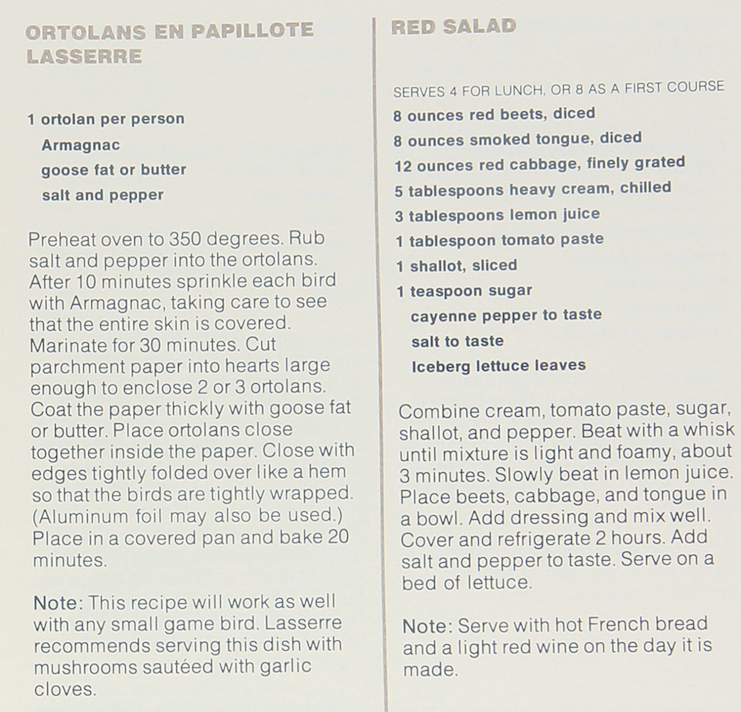
If only Dalí had lived into the age of the Kar­dashi­ans. Like­ly he would have leapt at the chance to turn these art par­ties into great TV. Or maybe not. In any case, we can now recon­struct them our­selves with what design site It’s Nice That calls “a deli­cious com­bi­na­tion of elab­o­rate­ly detailed oil paint­ings and kitsch 1970s food pho­tog­ra­phy.” Along the way, Dalí drops apho­risms like “the jaw is our best tool to grasp philo­soph­i­cal knowl­edge” (recall­ing Nietzsche’s pre­oc­cu­pa­tion with diges­tion). And despite the absur­di­ty of many of these dishes—and paint­ings like that above which make the tur­duck­en look like casu­al fare—many of the actu­al recipes, This is Colos­sal notes, “orig­i­nat­ed in some of the top restau­rants in Paris at the time includ­ing Lasserre, La Tour d’Argent, Maxim’s, and Le Train Bleu.”

dali-5

How­ev­er, even as far back as 1973, home cooks had begun to fret about the health­i­ness of their food. Dalí gives such peo­ple fair warn­ing; Les Din­ers de Gala, he writes, “is unique­ly devot­ed to the plea­sures of Taste. Don’t look for dietet­ic for­mu­las here.”

We intend to ignore those charts and tables in which chem­istry takes the place of gas­tron­o­my. If you are a dis­ci­ple of one of those calo­rie-coun­ters who turn the joys of eat­ing into a form of pun­ish­ment, close this book at once; it is too live­ly, too aggres­sive, and far too imper­ti­nent for you.

As if you thought Dalí would bow to some­thing as quo­tid­i­an as nutri­tion. See many more sur­re­al­ly sen­su­al food illus­tra­tions and quotes from the book at Brain Pick­ings, where you’ll also find the full, extrav­a­gant recipe for “Con­ger of the Ris­ing Sun.” You can order Les Din­ers de Gala online.

If you would like to sign up for Open Culture’s free email newslet­ter, please find it here. It’s a great way to see our new posts, all bun­dled in one email, each day.

If you would like to sup­port the mis­sion of Open Cul­ture, con­sid­er mak­ing a dona­tion to our site. It’s hard to rely 100% on ads, and your con­tri­bu­tions will help us con­tin­ue pro­vid­ing the best free cul­tur­al and edu­ca­tion­al mate­ri­als to learn­ers every­where. You can con­tribute through Pay­Pal, Patre­on, and Ven­mo (@openculture). Thanks!

Relat­ed Con­tent:

Sal­vador Dalí’s Tarot Cards Get Re-Issued: The Occult Meets Sur­re­al­ism in a Clas­sic Tarot Card Deck

Sal­vador Dalí Takes His Anteater for a Stroll in Paris, 1969

Sal­vador Dalí Goes Com­mer­cial: Three Strange Tele­vi­sion Ads

Sal­vador Dalí’s Melt­ing Clocks Paint­ed on a Lat­te

Josh Jones is a writer and musi­cian based in Durham, NC. Fol­low him at @jdmagness

400 Ways to Make a Sandwich: A 1909 Cookbook Full of Creative Recipes

Good news for any­one look­ing to escape the tired old sar­dine sand­wich rut — The Up-To-Date Sand­wich Book: 400 Ways to Make a Sand­wich, above, boasts no few­er than ten vari­a­tions, plus a hand­ful of canapés.

The omega-3-rich fish­es may be swim­ming their way back onto trendy 21st-cen­tu­ry lunch menus, but back in 1909, when The Up-To-Date Sand­wich Book was pub­lished, con­vinc­ing din­ers to order them wasn’t such an uphill bat­tle.

Oth­er pop­u­lar ingre­di­ents of the peri­od include tongue, Eng­lish wal­nuts, flow­ers, and of course, cheese, with nary an avo­ca­do in sight.

Author Eva Greene Fuller had a clear pref­er­ence for spread­able con­sis­ten­cies, an insis­tence on “per­fect bread in suit­able con­di­tion” and an eye for detail, evi­dent in such sug­gest­ed gar­nish­es as smi­lax and maid­en­hair fern.

Nat­u­ral­ly, there are some mis­fires amid the 400, at least as far as mod­ern palates and sen­si­bil­i­ties are con­cerned.

The Mex­i­can Sand­wich calls for a spoon­ful of baked beans mixed with cat­sup and but­ter, served atop a large square crack­er.

The Ori­en­tal Sand­wich fea­tures a spread made of cream cheese, maple syrup, and sliced maraschi­no cher­ries.  

The Dys­pep­tic Sand­wich is the only one to use gluten-free bread… sprin­kled with brown bread crumbs. 

The Pop­corn Sand­wich sounds quite tasty except for the tit­u­lar ingre­di­ent, which is passed through a meat chop­per and com­bined with sar­dines, pri­or to being spread with Parme­san and slid under the broil­er.

As for peanut but­ter, it’s a mix-your-own affair, using chopped peanuts and the cook’s choice of may­on­naise, sweet­ened whipped cream, sher­ry or port wine.

And chil­dren are sure to approve of the School Sand­wich, a sim­ple con­coc­tion of but­tered white bread and brown sug­ar.

Below is a taste to get you start­ed, though all 400 recipes can be browsed above. The ini­ti­at­ed may also be inter­est­ed in the ety­mol­o­gy of the word “sand­wich” on the Pub­lic Domain Review, who brought this cook­book to our atten­tion, 

Can­ni­bal Sand­wich

Chop raw beef and onions very fine, sea­son with salt and pep­per and spread on light­ly but­tered brown bread.

Bum­mers Cus­tard Sand­wich

Take a cake of Roque­fort cheese and divide in thirds; moist­en one third with brandy, anoth­er third with olive oil and the oth­er third with Worces­ter­shire sauce. mix all togeth­er and place between split water bis­cuits toast­ed. Good for a stag lunch. 

Aspic Jel­ly Sand­wich

Soak one box (two ounces) of gelatin in one cup of chick­en liquor until soft­ened; add three cup­fuls of chick­en stock sea­soned with a lit­tle pars­ley, cel­ery, three cloves, a blade of mace and a dash of salt and pep­per. Strain into a dish and add a lit­tle shred­ded breast of chick­en; set in a cold place to hard­en; when cold, slice in fan­cy shaped and place on slight­ly but­ter whole wheat bread. Gar­nish with a stick of cel­ery.  

Vio­let Sand­wich

Cov­er the but­ter with vio­lets over night; slice white bread thin and spread with the but­ter. Put slices togeth­er and cov­er with the petals of the vio­lets.

via Pub­lic Domain Review

Relat­ed Con­tent:

An Archive of 3,000 Vin­tage Cook­books Lets You Trav­el Back Through Culi­nary Time

Food­ie Alert: New York Pub­lic Library Presents an Archive of 17,000 Restau­rant Menus (1851–2008)

The New York Times Makes 17,000 Tasty Recipes Avail­able Online: Japan­ese, Ital­ian, Thai & Much More

Ayun Hal­l­i­day is an author, illus­tra­tor, the­ater mak­er and Chief Pri­ma­tol­o­gist of the East Vil­lage Inky zine.  She will serv­ing as both emcee and ref­er­ee in this weekend’s Brook­lyn Book Fes­ti­val Illus­tra­tor Smack­down. Fol­low her @AyunHalliday.

Watch Akira Kurosawa & Francis Ford Coppola in Japanese Whiskey Ads from 1979: The Inspiration for Lost in Translation

Fran­cis Ford Cop­po­la wasn’t the first or last West­ern celebri­ty to hawk booze in a Japan­ese com­mer­cial, but if you’re look­ing for the seed that sprout­ed into the fun­ni­est scene in his daugh­ter Sophi­a’s Lost in Trans­la­tion, here are the series of five ads in all their glo­ry, in which the direc­tor shares a glass with one of his idols, Aki­ra Kuro­sawa.

The year is 1979, and Cop­po­la is deep in post-pro­duc­tion for Apoc­a­lypse Now. While he is strug­gling with reels and reels from a trou­bled pro­duc­tion, Aki­ra Kuro­sawa, despite his stature in the world of cin­e­ma, is strug­gling with finances. His two films of the 1970s, Dodeskaden and Der­su Uza­la, had been flops, despite some crit­i­cal acclaim. At some point he had been so despon­dent won­der­ing if he’d ever direct again, he had attempt­ed sui­cide and was a heavy drinker.

But George Lucas and Cop­po­la, learn­ing of the direc­tor’s sad con­di­tion, con­vinced 20th Cen­tu­ry Fox to put up the mon­ey for Kage­musha: The Shad­ow War­rior, Kurosawa’s return to the samu­rai films of his clas­sic peri­od. At the same time, Cop­po­la agreed to be in a com­mer­cial for Sun­to­ry Whiskey along­side Kurosawa–who had shot some ads for them in 1976–just to get the direc­tor some more mon­ey. (Kurosawa’s fee was $30,000. And Cop­po­la didn’t drink.)

For Sun­to­ry, the old­est dis­till­ing com­pa­ny in Japan, this meet­ing of East and West was a metaphor for their desire to break into the West­ern whiskey mar­ket. Using Amer­i­can celebri­ties like Sam­my Davis Jr. estab­lished authen­tic­i­ty in the mind of the Japan­ese con­sumer, but this was a new lev­el of pres­tige.

The series of ads above also show glimpses of Kuro­sawa in the midst of film­ing Kage­musha, shoot­ing epic bat­tles fea­tur­ing samu­rai on horse­back. The voice over is unsur­pris­ing­ly (for this sophis­ti­cat­ed mar­ket) pre­ten­tious:

“The world’s gaze is fixed on these two men right now as on nobody else. There’s no stronger friend­ship than that between these two men.” (The impact of that trans­la­tion, you could say, is lost.)

Unlike Bill Murray’s char­ac­ter in Sophia Cop­po­la’s film, Fran­cis Ford Cop­po­la real­ly didn’t have to do much except show up, but no doubt the expe­ri­ence was re-told many times to his daugh­ter over the years. And after the come­back of Kage­musha, Kuro­sawa went on to direct one of his best films, the King Lear-inspired Ran.

We’ll raise a glass to that.

Relat­ed Con­tent:

The Best Japan­ese Com­mer­cial Ever? James Brown Sells Miso Soup

David Lynch Directs a Mini-Sea­son of Twin Peaks in the Form of Japan­ese Cof­fee Com­mer­cials

David Bowie Sells Ice Cream, Sake, Coke & Water: Watch His TV Com­mer­cials from the 1960s Through 2013

Ted Mills is a free­lance writer on the arts who cur­rent­ly hosts the artist inter­view-based FunkZone Pod­cast. You can also fol­low him on Twit­ter at @tedmills, read his oth­er arts writ­ing at tedmills.com and/or watch his films here.

Paul McCartney Shows You How to Make Mashed Potatoes (1998)

10 min­utes of Mac­ca mak­ing mash. That’s what’s on the menu today.

The clip above was shot back in Decem­ber 1998, only eight months after Paul McCart­ney lost his wife Lin­da to breast can­cer. Dev­as­tat­ed by the loss, McCart­ney stayed out of the lime­light for most of that year. And only with this show did he start enter­ing pub­lic life again. A chance to remem­ber Lin­da, an oppor­tu­ni­ty to exper­i­ment with this new thing called the inter­net, the show let Paul field ques­tions from fans world­wide, rem­i­nisce about Lin­da, and make a recipe from her veg­e­tar­i­an cook­book, Lin­da McCart­ney on Tour: Over 200 Meat-Free Dish­es from Around the World. The demo is pret­ty hands-on. He’s not afraid to get his hands dirty. It’s also com­i­cal and a joy to watch. And watch, you will.

Relat­ed Con­tent:

Watch Glass Walls, Paul McCartney’s Case for Going Veg­e­tar­i­an

David Lynch Teach­es You to Cook His Quinoa Recipe in a Weird, Sur­re­al­ist Video

MIT Teach­es You How to Speak Ital­ian & Cook Ital­ian Food All at Once (Free Online Course)

Sci­ence & Cook­ing: Har­vard Profs Meet World-Class Chefs in Unique Online Course

by | Permalink | Make a Comment ( 1 ) |

Pizza Box Becomes a Playable DJ Turntable Through the Magic of Conductive Ink

Turns out Piz­za Hut is good for some­thing…

They’ve teamed up with the print­ed elec­tron­ics com­pa­ny Novalia to turn card­board piz­za box­es into playable turnta­bles. Spe­cial­iz­ing in tech­nol­o­gy that adds touch and con­nec­tiv­i­ty to every­day sur­faces, Novalia has cre­at­ed two scratch­able decks, each with con­trols that let you fine-tune the vol­ume, pitch, play­back, and cross­fad­ing. And it’s all done with the mag­ic of con­duc­tive ink.

Accord­ing to Live for Music, “the bat­tery-pow­ered box can be hooked up to a com­put­er or phone through Blue­tooth, then con­nect­ed to any DJ soft­ware like Ser­a­to or DJ Pro.” Right now, the playable piz­za box is only avail­able at a few Piz­za Hut loca­tions in the UK. Above, DJ Vec­tra offers a primer on using the new gad­get.

via Live for Music

If you would like to sign up for Open Culture’s free email newslet­ter, please find it here. It’s a great way to see our new posts, all bun­dled in one email, each day.

If you would like to sup­port the mis­sion of Open Cul­ture, con­sid­er mak­ing a dona­tion to our site. It’s hard to rely 100% on ads, and your con­tri­bu­tions will help us con­tin­ue pro­vid­ing the best free cul­tur­al and edu­ca­tion­al mate­ri­als to learn­ers every­where. You can con­tribute through Pay­Pal, Patre­on, and Ven­mo (@openculture). Thanks!

Relat­ed Con­tent:

Lis­ten to Tree Rings Get­ting Played on a Turntable and Turned into Music

How to Clean Your Vinyl Records with Wood Glue

Postage Stamps from Bhutan That Dou­ble as Playable Vinyl Records

The “Amen Break”: The Most Famous 6‑Second Drum Loop & How It Spawned a Sam­pling Rev­o­lu­tion

Replica of an Algerian City, Made of Couscous: Now on Display at The Guggenheim

couscous

If you head over to The Guggen­heim in New York City, you’re bound to spend time immers­ing your­self in the Moholy-Nagy exhib­it that’s now on dis­play. It’s well worth your time. You can also take a side trip through a small­er exhi­bi­tion fea­tur­ing the work of Mid­dle East­ern and North African artists. And there you’ll dis­cov­er the work of Kad­er Attia, a French-Alger­ian artist whose work “reflects on the impact of West­ern soci­eties on their for­mer colo­nial coun­ter­parts.” Above, we have Atti­a’s repli­ca of an Alger­ian city (Ghardaïa) made out of cous­cous. The Tate explains the con­cep­tu­al thrust of the piece as fol­lows:

The instal­la­tion presents a mod­el of the Alger­ian town Ghardaïa made from cous cous, shown along­side pho­tographs of the Swiss-born archi­tect Le Cor­busier and the French archi­tect Fer­nand Pouil­lon, and a print of the UNESCO dec­la­ra­tion that the town is a World Her­itage site. Dur­ing the nine­teenth cen­tu­ry Ghardaïa was colonised by France, but the build­ings were not altered dur­ing this peri­od and remain char­ac­ter­is­tic of Moz­abite archi­tec­ture. Le Cor­busier vis­it­ed Ghardaïa in 1931, just three years after becom­ing a French cit­i­zen, and made sketch­es of the build­ings. These strong­ly resem­ble the style of mod­ernist archi­tec­ture he sub­se­quent­ly espoused in his trea­tise on urban plan­ning, La cité radieuse.

That a not­ed French archi­tect should take inspi­ra­tion from an Alger­ian town may not seem sig­nif­i­cant, how­ev­er, as Attia notes, ‘archi­tec­ture has first to do with pol­i­tics, with the polit­i­cal order.’ As Attia is a child of Alger­ian immi­grants and grew up part­ly in a Parisian ban­lieue, this state­ment seems par­tic­u­lar­ly res­o­nant. The use of cous cous as the mate­r­i­al to ‘build’ the mod­el is appro­pri­ate as it will pro­vide an approx­i­ma­tion of the town’s decay over time through­out the exhi­bi­tion, while rep­re­sent­ing one of the region’s most pop­u­lar foods – now a sta­ple of Euro­pean cui­sine.

By repli­cat­ing the town as an archi­tects’ mod­el in this way Attia shows the impact of his native cul­ture, which had oper­at­ed as a non-pow­er­ful host to colo­nial France, on their old colonis­ers, who went on to play host to the artist and his fam­i­ly. As well as high­light­ing the cul­tur­al impact of the colonised onto the colonis­er, revers­ing the nor­mal­ly report­ed direc­tion of influ­ence, this also reveals the com­plex­i­ty of hos­pi­tal­i­ty between peo­ple and nations which often relates to dis­pos­ses­sion and re-appro­pri­a­tion…

Atti­a’s cous­cous instal­la­tion is also on dis­play at The Tate. If you’re in Lon­don, pay them a vis­it.

If you would like to sign up for Open Culture’s free email newslet­ter, please find it here. It’s a great way to see our new posts, all bun­dled in one email, each day.

If you would like to sup­port the mis­sion of Open Cul­ture, con­sid­er mak­ing a dona­tion to our site. It’s hard to rely 100% on ads, and your con­tri­bu­tions will help us con­tin­ue pro­vid­ing the best free cul­tur­al and edu­ca­tion­al mate­ri­als to learn­ers every­where. You can con­tribute through Pay­Pal, Patre­on, and Ven­mo (@openculture). Thanks!

Relat­ed Con­tent:

The Guggen­heim Puts Online 1600 Great Works of Mod­ern Art from 575 Artists

Rijksmu­se­um Dig­i­tizes & Makes Free Online 210,000 Works of Art, Mas­ter­pieces Includ­ed

The Nation­al Gallery Makes 25,000 Images of Art­work Freely Avail­able Online

Down­load 448 Free Art Books from The Met­ro­pol­i­tan Muse­um of Art

« Go BackMore in this category... »
Quantcast