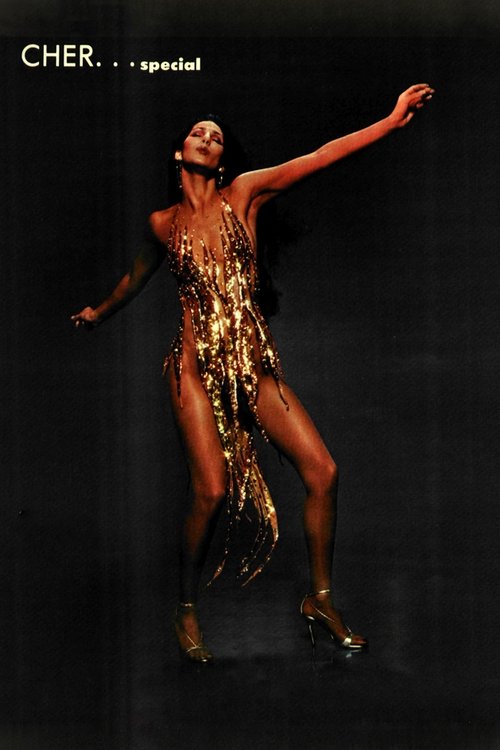
Cher, the mononymous Goddess of Pop, gifted the small screens of the 70s with a lot of over-the-top glamour.
Her work ethic, comedic flair and unapologetic embrace of camp helped her stand out from the crowd, conferring the fame she had longed for since childhood, when she commandeered her 5th grade classmates for an unofficial, and, from the sounds of it, all-female production of Oklahoma, covering the male roles herself when the boys declined to participate.
Some twenty years later, she was a household name — one that was no longer appended to that of ex-husband Sonny Bono, co-host of the popular eponymous variety hour in which they sang, hammed their way through goofy skits, and busted each other’s chops to the delight of the live studio audience.
The 1978 television event Cher…special found her bringing many of those same talents to bear, along with country star Dolly Parton, rocker Rod Stewart, outré glam band, The Tubes, and the crowd-pleasing array of spangled, skin-baring Bob Mackie designs that defined her look.
More shocking than any of Mackie’s creations or the Musical Battle to Save Cher’s Soul, a set piece wherein Parton and a gospel choir endeavor to coax the diva from a kinky disco hellscape, is the star’s 12-and-a-half minute solo version of West Side Story, above.
This is no mere medley. Cher puts the big pot in the little, donning multiple wigs, a facsimile of the chaste white party dress Natalie Wood wore to the dance at the gym, and flats (!) to embody Tony, Maria, Anita, Bernardo and various Jets, sans irony.
Vocally, she makes a more convincing Jet than she does the ingenue, Maria.
(Speaking of which, let’s not forget that that’s ghost singer Marni Nixon, not Wood, as Maria on the 1961 film’s soundtrack…)
Why West Side Story?
Why not Godspell or Jesus Christ Superstar? Wouldn’t those fit better thematically with the portion of the special that has Dolly and a white-robed chorus battling the denizens of Satan’s sexy playpen?
Two words:
1. Variety. That’s what Cher was peddling in the 70s.
I remember dancing around my living room to West Side Story (1961). I would sing all the parts and dance every single dance, when there was no one else around.
That admission helps us reframe the cringe factor. Before ye cast the first stone, think: hast thou never stood before a mirror singing into a hairbrush?
And if, by some chance, you’re unfamiliar with West Side Story’s dramatis personae and plot, don’t look to Cher for clarification.
It was the opinion voiced most loudly by the popular boys.
Dissenters pushed back at their own peril.
I didn’t know what YMCA was about, and I’m not convinced the ski jacketed, puka-necklaced alpha males at my school did either.
(My father, who sang along joyfully whenever it came on the car radio, definitely did.)
Disco’s been dead for a long time now.
In the four plus decades since disgruntled Chicago radio DJ Steve Dahl commandeered a baseball stadium for a Disco Demolition Night where fans tossed around homophobic and racist epithets while destroying records, there’s been notable social progress.
This progress is the lens that makes Noah Lefevre’s Polyphonic video essay The Untold History of Disco, and other investigations into the racial and sexual underpinnings of disco possible.
I certainly never heard of Stonewall as a kid, but many contemporary viewers, coming of age in a country that is, on the whole, much more LGBTQ-friendly than the world of their parents and grandparents, are familiar with it as a gay rights milestone.
Lefevre ties the birth of disco to the 1969 Stonewall Uprising, and a subculture born of necessity, wherein gay men improvised underground dance clubs where they could cut freely loose with same sex partners.
Instead of live dance music, these venues boasted DJs, crate diggers open to any groove that would keep the party going on the dance floor: psychedelic, classic soul, progressive soul, jazz fusion, Latin American dance music, African pop…
You can hear it in Jimmy Nolen’s chicken scratch lead guitar for James Brown and session drummer Earl Young’s open high hat and four-to-the-floor beat on Harold Melvin and the Blue Notes’ The Love I Lost.
It was supposed to be a secret, but I don’t know how secret it could have been when faggots and lesbians can come out of a church from midnight till sunrise.
As discotheque DJs began driving the record charts, mainstream producers took note, opening the gates for such monster hits as the Barry White-helmed Love Unlimited Orchestra’s Love’s Theme, Donna Summer’s Love to Love Ya, and Chic’s Le Freak.
A glitter-bedecked nude man rode a white horse into Bianca Jagger’s birthday party at Studio 54 on the stroke of midnight, while hinterland squares did The Hustle at their local Holiday Inns.
By the time celebs like the Rolling Stones and Rod Stewart starting horning in on the act, disco had already reached its tipping point.
(An unexpected pleasure of Lefevre’s video is seeing all those familiar record labels spinning just the way they did on our precious stereos — Atlantic! Casablanca! Polydor! RSO! Somebody pass me a Dr. Pepper and a yellow plastic insert!)
Radio DJ Rick Dees’ novelty hit with Disco Duck seemed so harmless at the time, but it was surely music to the mainstream “disco sucks” crowd’s ears. (Good luck to any punk who betrayed a fondness for Disco Duck )
Disco’s reign was brief — Lefevre notes that its end coincides with the beginning of the AIDS crisis — but its impact has been greater than many assume at first blush.
Disco’s emphasis on turntables and long play versions influenced hip hop and electronic dance music.
Nearly half a century after discomania seized the land, its deep connection to Black, Latino and LGBTQ history must not be tossed aside lightly.
Watch more of Noah Lefevre’s Polyphonic video essays here.
It’s bittersweet whenever a pioneering, long overlooked female scientist is finally given the recognition she deserves, especially so when the scientist in question is a person of color.
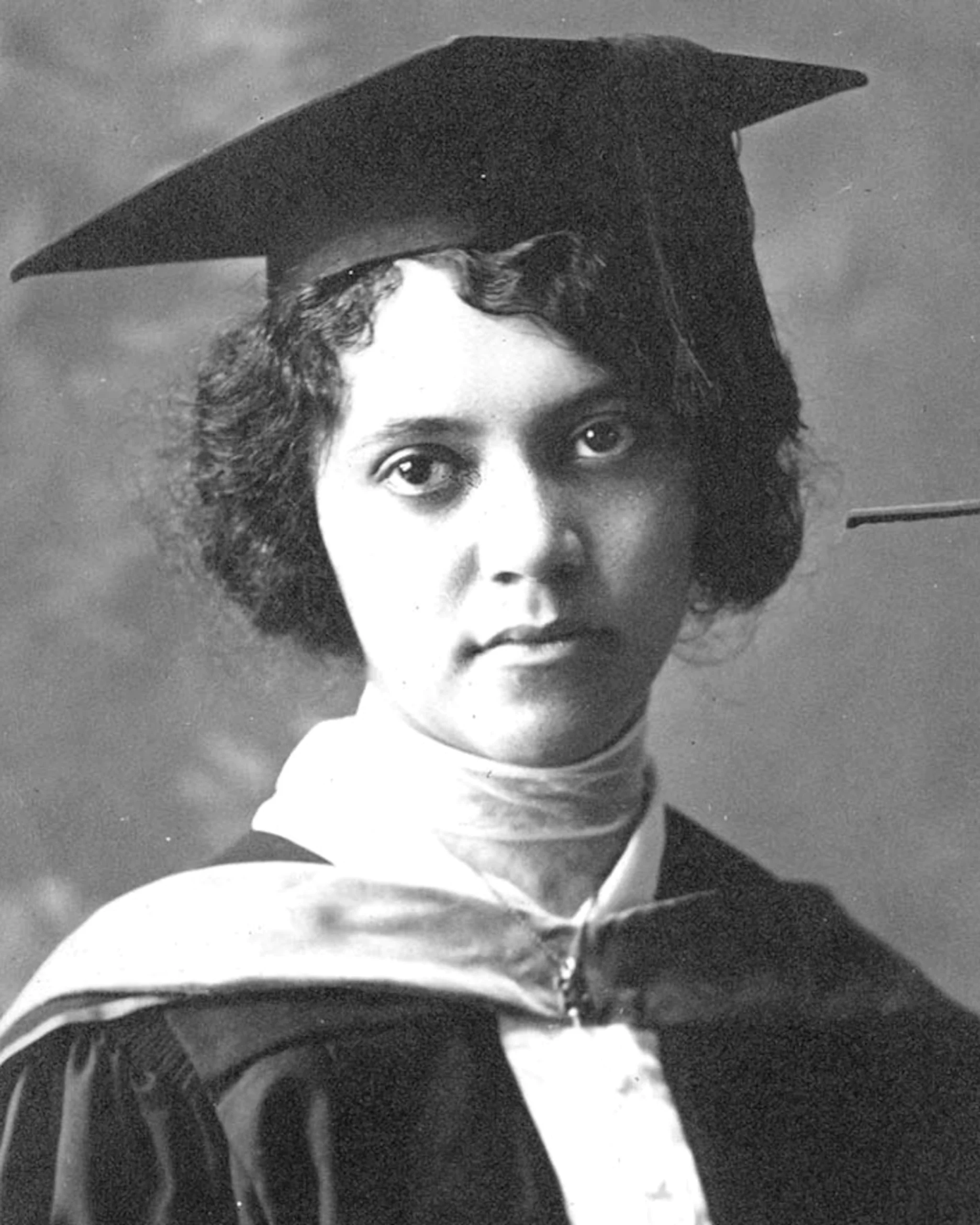
Chemist Alice Ball’s youth and drive — just 23 in 1915, when she discovered a gentle, but effective method for treating leprosy — make her an excellent role model for students with an interest in STEM.
But in a move that’s only shocking for its familiarity, an opportunistic male colleague, Arthur Dean, finagled a way to claim credit for her work.
We’ve all heard the tales of female scientists who were integral team players on important projects, who ultimately saw their role vastly downplayed upon publication or their names left off of a prestigious award.
But Dean’s claim that he was the one who had discovered an injectable water-soluble method for treating leprosy with oil from the seeds of the chaulmoogra fruit is all the more galling, given that he did so after Alice Ball’s tragically early death at the age of 24, suspected to be the result of accidental poisoning during a classroom lab demonstration.
Not everyone believed him.
Ball, the University of Hawaii chemistry department’s first Black female graduate student, and, subsequently, its first Black female chemistry instructor, had come to the attention of Harry T. Hollmann, a U.S. Public Health Officer who shared her conviction that chaulmoogra oil might hold the key to treating leprosy.
After her death in 1916, Hollmann reviewed Dean’s publications regarding the highly successful new leprosy treatment then referred to as the Dean Method and wrote that he could not see “any improvement whatsoever over the original [method] as worked out by Miss Ball:”
After a great amount of experimental work, Miss Ball solved the problem for me by making the ethyl esters of the fatty acids found in chaulmoogra oil.
Type “the Dean Method leprosy” into a search engine and you’ll be rewarded with a satisfying wealth of Alice Ball profiles, all of which go into detail regarding her discovery of what became known as the Ball Method, in use until the 1940s.
Kathleen M. Wong’s article on this trailblazing scientist in the Smithsonian Magazine delves into why Hollmann’s professional efforts to posthumously confer credit where credit was due were insufficient to secure Ball her rightful place in science history.
That began to change in the 1990s when Stan Ali, a retiree researching Black people in Hawaii, found his interest piqued by a reference to a “young Negro chemist” working on leprosy in The Samaritans of Molokai.
Ali teamed up with Paul Wermager, a retired University of Hawaii librarian, and Kathryn Waddell Takara, a poet and professor in the Ethnic Studies Department. Together, they began combing over old sources for any passing reference to Ball and her work. They came to believe that her absence from the scientific record owed to sexism and racism:
During and just after her lifetime, she was believed to be part Hawaiian, not Black. (Her birth and death certificates list both Ball and her parents as white, perhaps to “make travel, business and life in general easier,” according to the Honolulu Star-Bulletin.) In 1910, Black people made up just 0.4 percent of Hawaiʻi’s population.
“When [the newspapers] realized she was not part Hawaiian, but [Black], they felt they had made an embarrassing mistake, forgetting about it and hoping it would go away,” Ali said. “It did for 75 years.”
Their combined efforts spurred the state of Hawaii to declare February 28 Alice Ball Day. The University of Hawaii installed a commemorative plaque near a chaulmoogra tree on campus. Her portrait hangs in the university’s Hamilton Library, alongside a posthumously awarded Medal of Distinction.
(“Meanwhile,” as Carlyn L. Tani dryly observes in Honolulu Magazine, “Dean Hall on the University of Hawai‘i Mānoa campus stands as an enduring monument to Arthur L. Dean.)
Further afield, the London School of Hygiene and Tropical Medicine celebrated its 120th anniversary by adding Ball’s, Marie Sklodowska-Curie’s and Florence Nightingale’s names to a frieze that had previously honored 23 eminent men.
And now, the Godmother of Punk Patti Smith has taken it upon herself to introduce Ball to an even wider audience, after running across a reference to her while conducting research for her just released A Book of Days.
Things have really changed. I think we are living in a very beautiful period of time because there are so many female artists, poets, scientists, and activists. Through books especially, we are rediscovering and valuing the women who have been unjustly forgotten in our history. During my research, I came across a young black scientist who lived in Hawaii in the 1920s. At that time, there was a big leper colony in Hawaii. She had discovered a treatment using the oil from the seeds of a tree to relieve the pain and allow patients to see their friends and family. Her name was Alice Ball, and she died at just 24 after a terrible chemical accident during an experiment. Her research was taken up by a professor who removed her name from the study to take full credit. It is only recently that people have discovered that she was the one who did the work.
(Yes, you are allowed to pick more than one favorite.)
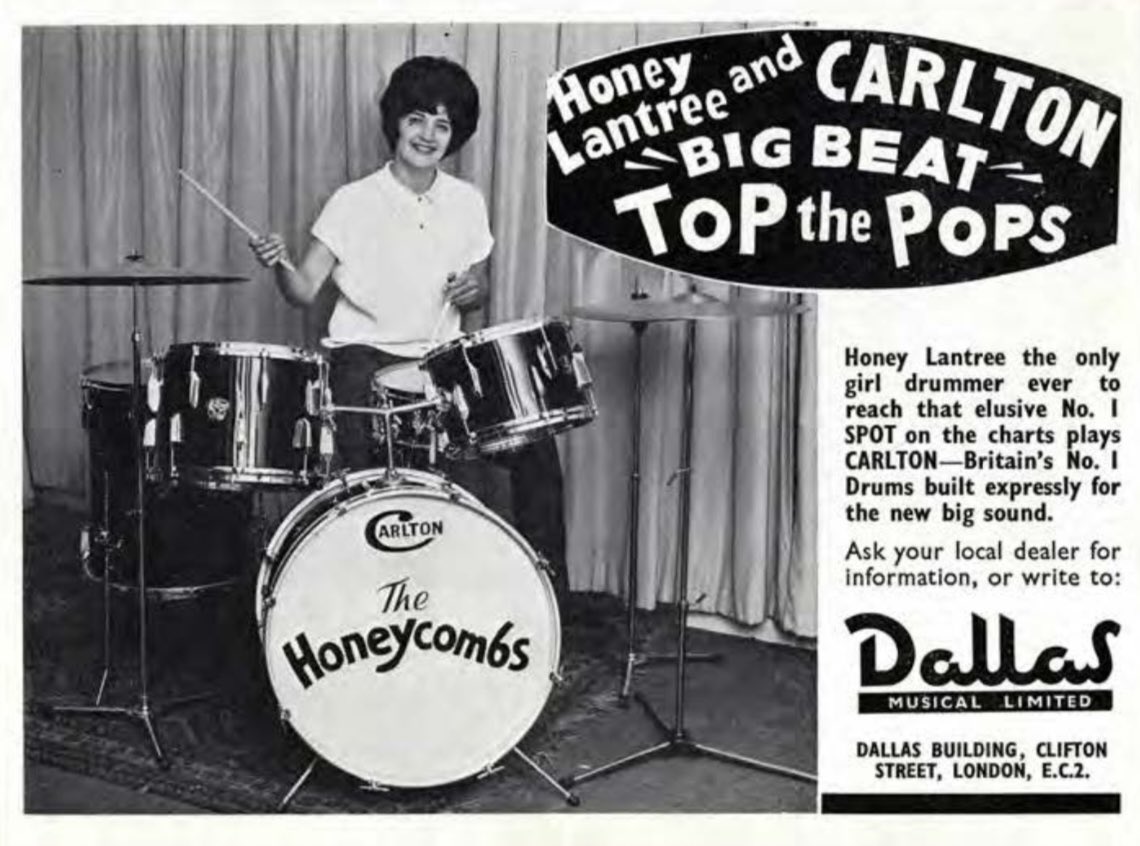
Things were decidedly different when drummer Honey Lantree, the only female member of the 60s British Invasion group the Honeycombs, took up the sticks.
Drums were not her original instrument. Her boyfriend, employer, and eventual bandmate Martin Murray was giving her a guitar lesson when she asked if she could take a whirl at his kit.
Murray recalled his surprise when she started whaling away like a vet:
She was just a born, natural drummer; she hadn’t played before and just went for it. I was aghast, staring at her, and said, “All right, you’re our new drummer.”
Lantree’s gender helped the Honeycombs secure press.
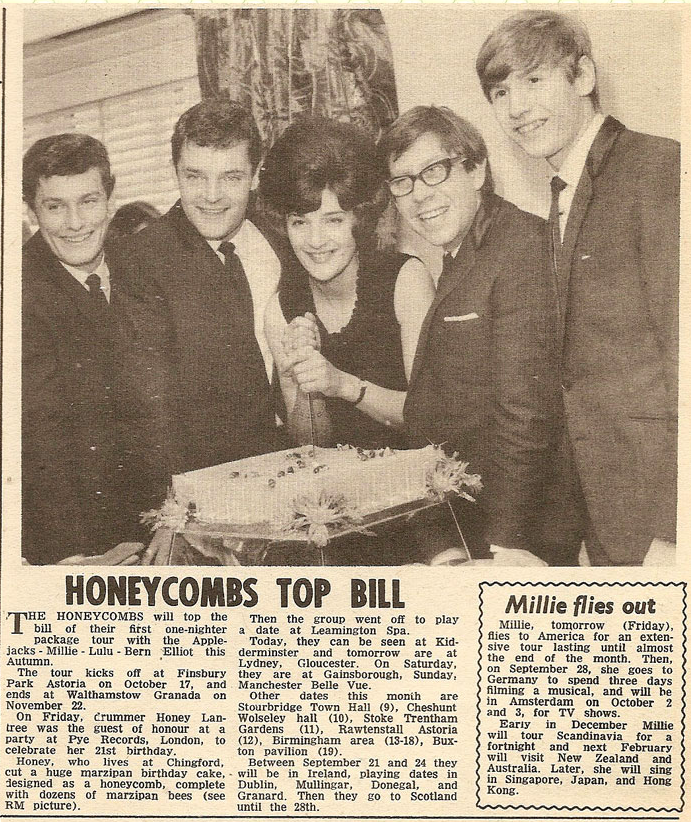
She snagged a celebrity endorsement for Carlton drums and turned 21 with a cake festooned with marzipan bees, and, more importantly, a #1 single, “Have I the Right.”
Of course, her gender also ensured that most of the coverage would focus on her appearance, with scant, if any mention of her musical talent.
Lantree was not the only member of the Honeycombs to find this galling.
As lead singer Denis D’Ell told the Record Mirror in 1965:
How can it be a gimmick just because we have a girl, Honey, on drums? Honey plays with us purely and simply because she is the right drummer for the job. If she wasn’t any good, she wouldn’t hold down the job.
On tour, we don’t have any troubles by having a girl with us. We just operate as a group. Perhaps it is that the novelty has worn off — we hope that fans soon will forget all about this so-called gimmick.
The following year, he quit, along with lead guitarist Alan Ward and Peter Pye, who had replaced Murray on rhythm guitar. Lantree and her brother, Honeycombs’ bassist John, soldiered on with new personnel until the 1967 death of producer Joe Meek.
Still, for a brief period, the Honeycombs’ recordings, tours, television appearances, and yes, press coverage made Lantree the most famous female drummer in the world.
Admittedly, the field was not particularly crowded. Just challenging in ways that outstripped the disproportionate focus on figures, boyfriends, and beauty tips.
Male fans dragged Lantree offstage during a concert in Cornwall, leading her to remark, “You expect this sort of thing but it’s still terrifying.”
Around the same time, another British band, the all-female Liverbirds, were invited to cross the pond for a coveted gig in Las Vegas…provided they’d play it topless. “Can you imagine me on the drums playing topless,” Sylvia Saunders, who shortly thereafter was forced to choose between the drums and a high risk pregnancy, gasped.
Although she is said to have inspired a number of young female musicians, including Karen Carpenter, Lantree, who died in 2018 at the age of 75, rarely shows up on curated lists of notable female drummers.
In a strange way, that spells progress — there are many more female drummers today than there were in the mid 60s, and mercifully more opportunities for them to be taken seriously as musicians.
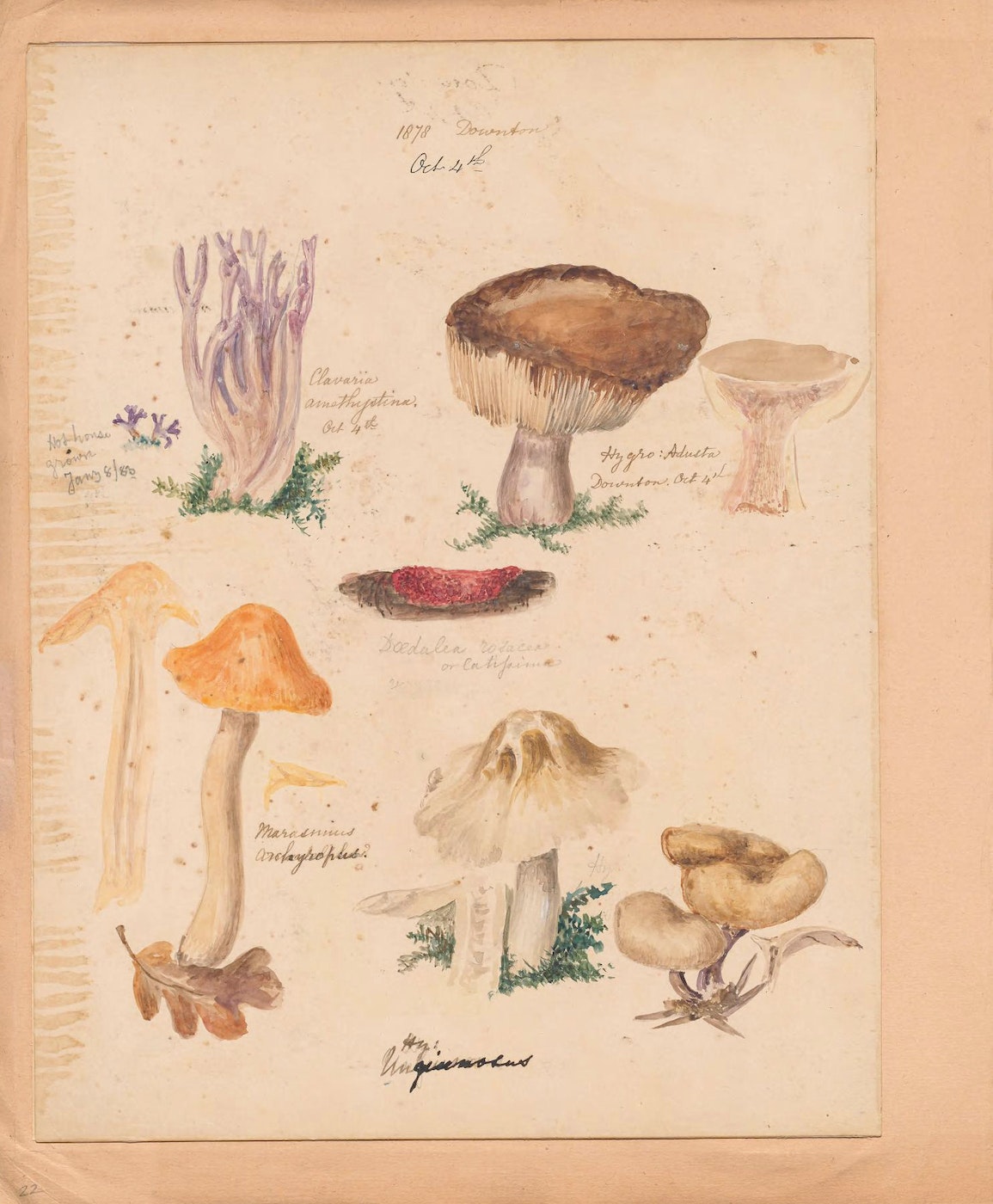
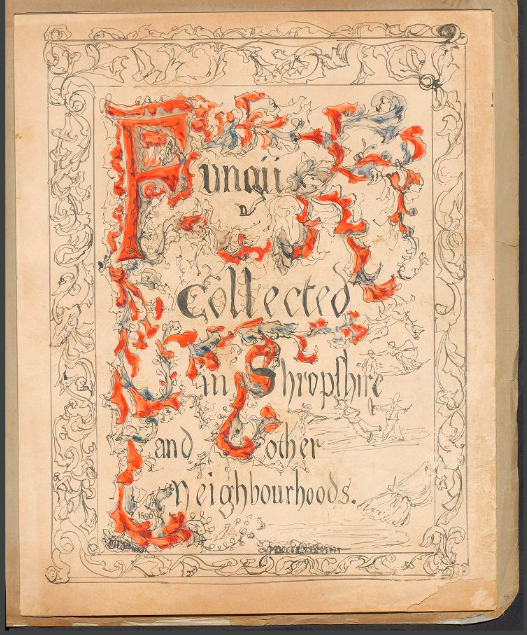
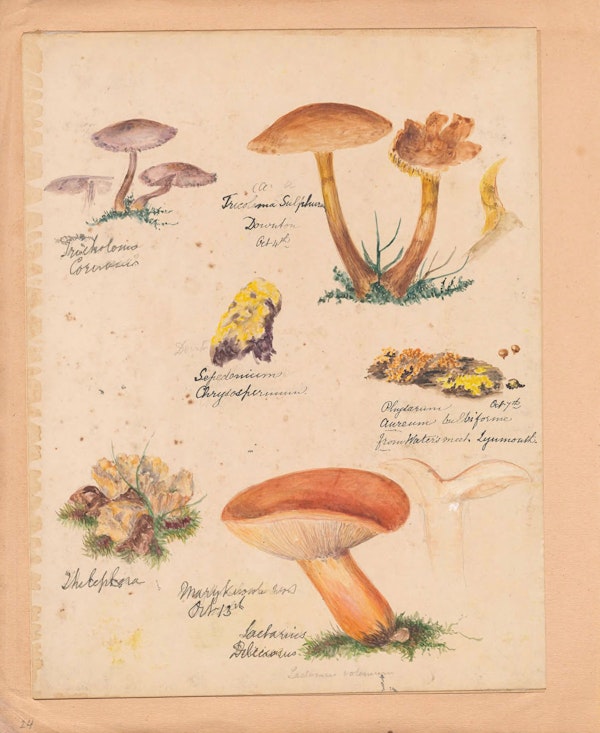
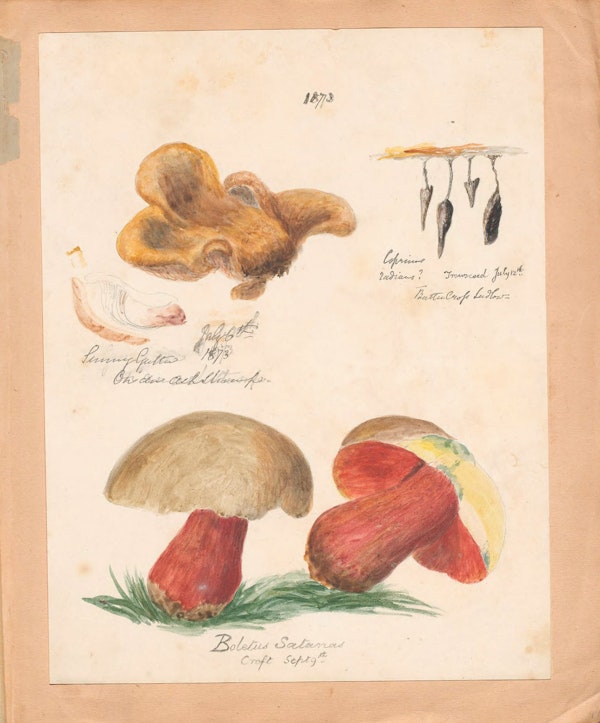
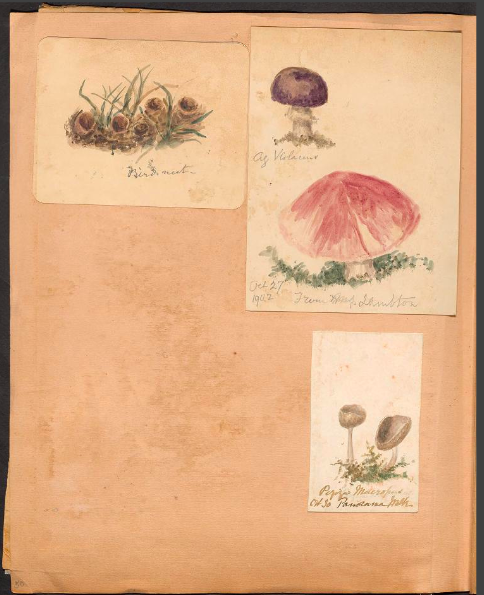
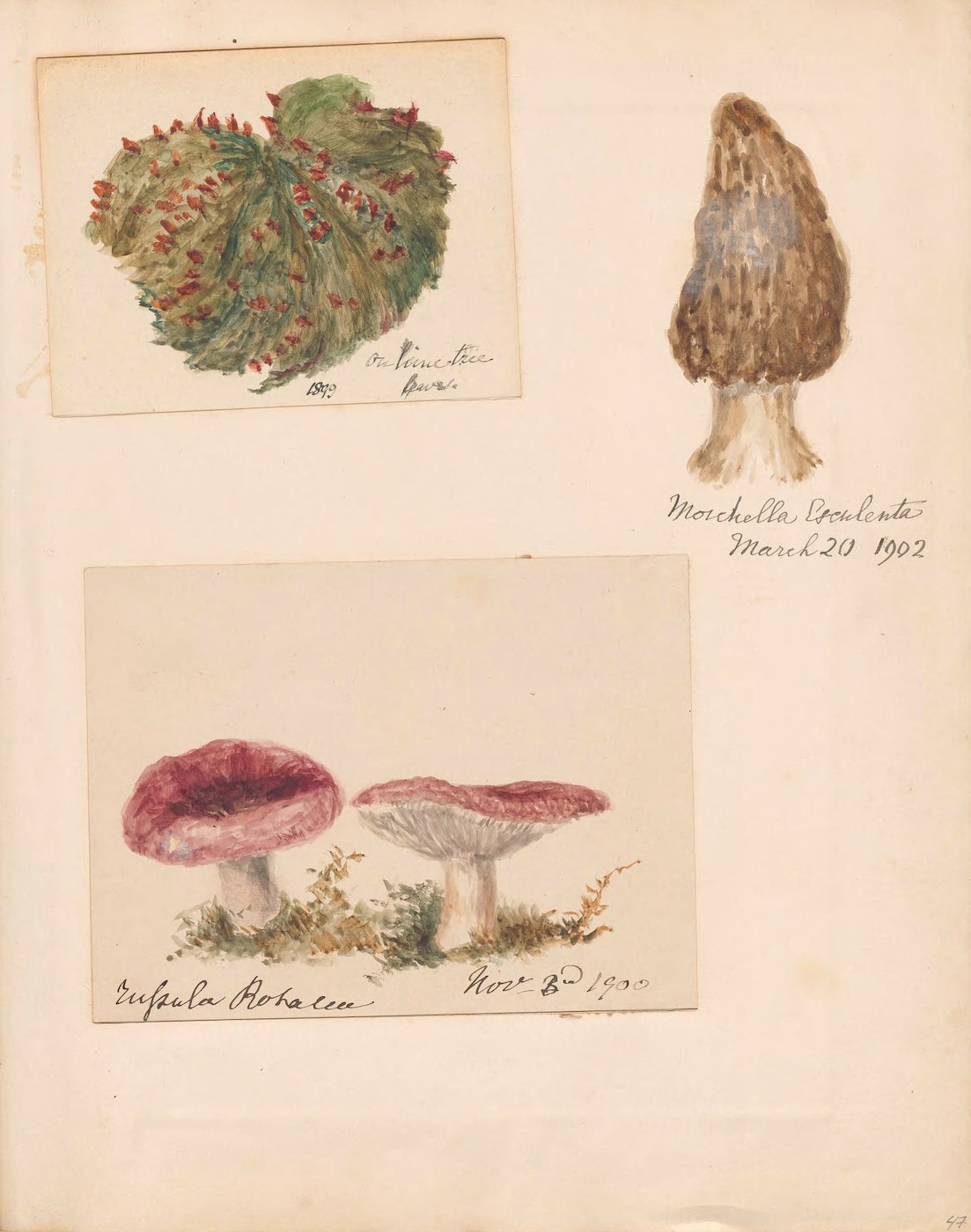
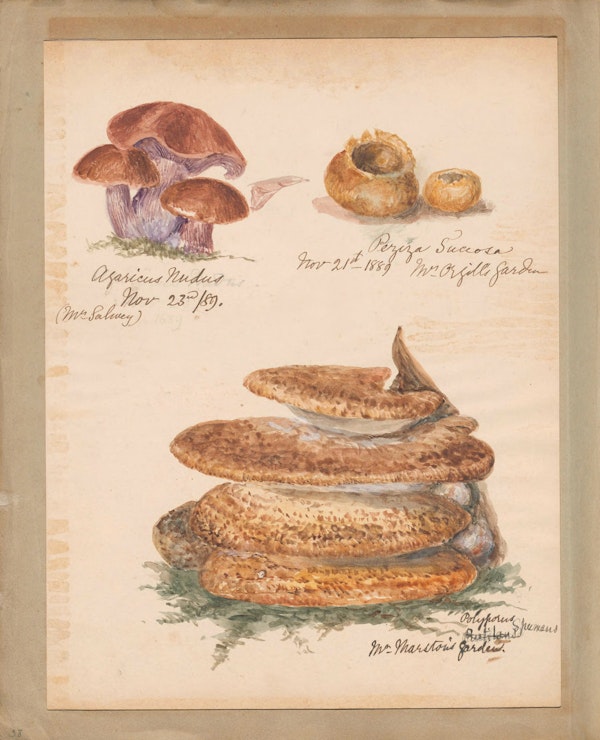
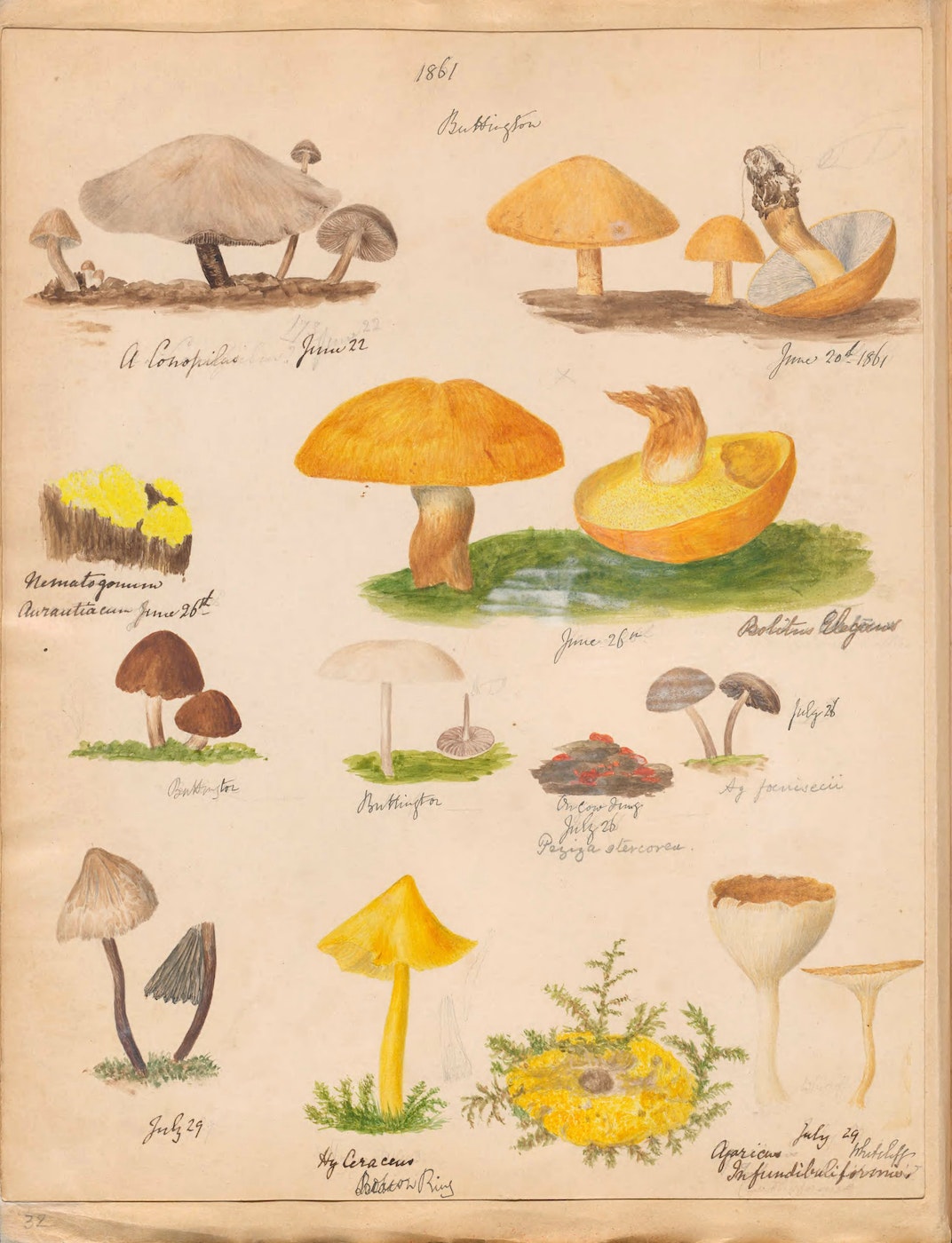
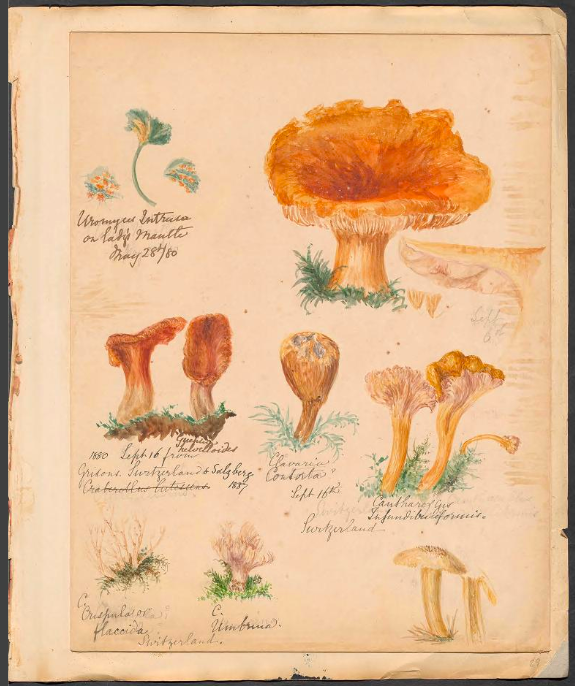
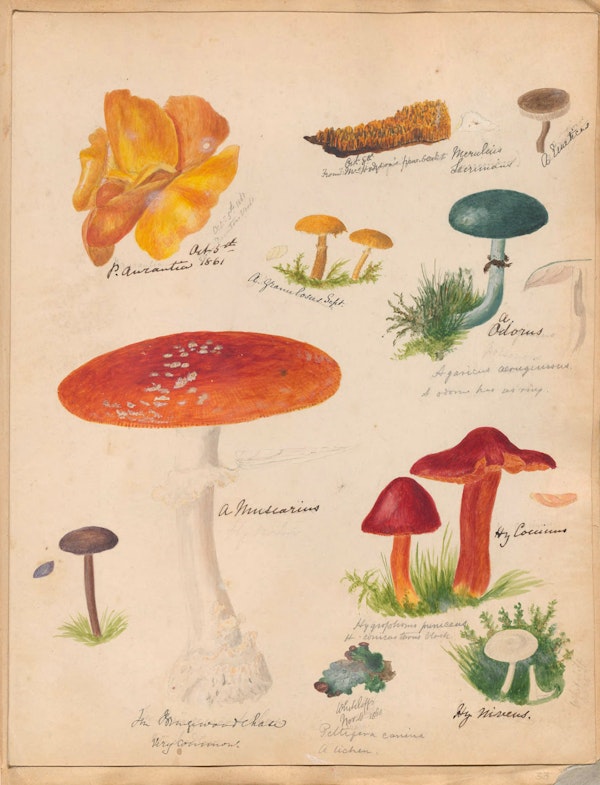
Miss Lewis, a talented artist with an obvious passion for mycology spent over 40 years painstakingly documenting the specimens she ran across in England’s West Midlands region.
Each drawing or watercolor is identified in Miss Lewis’ hand by its subject’s scientific name. The location in which it was found is dutifully noted, as is the date.
The hundreds of species she captured with pen and brush between 1860 and 1902 definitely constitute a life’s work, and also an unpublished one.
Cornell University’s Mann Library, where the only copy of this precious record is housed, has managed to truffle up but a single reference to Miss Lewis’ scientific mycological contribution.
English botanist William Phillips, writing in an 1880 issue of the Transactions of the Shropshire Archaeological and Natural History Society, noted that he been “permitted to look over [a work] of very much excellence executed by Miss M. F. Lewis, of Ludlow”, adding that “several rare species [of fungi] are very artistically represented.“
The historical significance of Miss Lewis’ work extends beyond the fungal realm.
As Sage writes in Missing Misses in Mycology, a post on the Mann Library’s Tumblr celebrating Miss Lewis and her contemporary, English mycologist and illustrator, Sarah Price, women’s work was often omitted from the official scientific record:
While we’re now seeing considerable effort to rectify the record, the discovery of untold stories to fill in the blanks can be tricky business. It’s not that the stories never happened — the field of botany, for one, is replete with some pretty spectacular evidence of women’s (often unacknowledged) engagement with scientific inquiry, embodied in the detailed illustrations that captured the insights of observations from the natural world. But the published historical record is often woefully scant when it comes to closer detail on the lives and careers of the women who have helped carry modern science forward.
We may never learn anything more about the particulars of Miss Lewis’ training or personal circumstances, but the care she took to preserve her own work turned out to be a great gift for future generations.
Leaf through all three volumes of Miss M.F. Lewis’ Fungi collected in Shropshire and other neighborhoods on the Internet Archive:
The works will speak for themselves. — Artemisia Gentileschi
The praise Baroque painter Artemisia Gentileschi garnered during her lifetime is astonishing.
Not because the work isn’t deserving of the attention, but rather, because she was a young woman in 17th-century Florence.
The first female to be accepted into Florence’s prestigious Accademia delle Arti del Disegno, she was collected by the Medicis and respected by her peers — almost all of them male.
Her style was as dramatic as the subjects she depicted.
One of her most compelling ones, covered in Allison Leigh’s animated TED-Ed lesson, above, comes from an apocryphal book of the Old Testament. It concerns Judith, a comely Jewish widow who, assisted by her maidservant, beheaded the loutish Assyrian general Holofernes, whose forces threatened her town.
Artemisia visited Judith and Holofernes several times throughout her career.
Her first attempt, at around the age of 19 or 20, features two healthy-looking young women, their sleeves sensibly rolled so as not to dirty their bright dresses, a prospect that seems much more likely than it does in Caravaggio’s version, painted some 15 years early.
Caravaggio’s Judith is brave, but maidenly, a bit reticent in her snowy frock.
Artemisia’s is a bad ass, sword casually balanced on her shoulder as she checks that the coast is clear before escaping with a basket containing her victim’s head. Although she prayed for the success of her endeavor, this is a woman who might not have needed god’s help to “crush the enemies” arrayed against her people.
Things get even more visceral in Artemisia’s third depiction, painted perhaps 10 years later, after she had married and moved to Florence.
Gentileschi shows Judith gripping the head and wielding the sword with a ferocity of concentration as she applies herself to the grisly but necessary task, like a practical housewife gutting a fish (there is none of that one stroke and it’s off, beloved of the male painter. The maid might feel qualms, not Judith… The horrified face of the butchered male is balanced by the grimly composed face of the butchering female.
Several years further on, Artemisia again imagined Judith’s flight, in a scene so theatrical, it could be a production still.
It’s easy to imagine that Artemisia’s talent was carefully cultivated by her artist father, Orazio Gentileschi, but when it comes to the ferocity of her depictions, the speculation tends to take on a darker cast.
The TED-Ed lesson brings up her rape as a teenager, at the hands of her father’s friend, fellow painter Agostono Tassi. Leigh also provides legal and societal context, something that is often missing from more sensational allusions to this traumatic event.
Combining irresistibly sex, violence, and genius, like the story of Heloise and Abelard, the rape of Artemisia Gentileschi has been retold many times. So often indeed, and with such relish that this episode overshadows much discussion of the painter and has come to distort our vision of her. In the past as well as in the recent renewal of interest in Artemisia, biographers and critics have had trouble seeing beyond the rape. In her case, the old-fashioned notion that women are defined essentially by their sexual histories continues to reign, as if a girl who suffers assault must be understood as thereafter a primarily sexual creature.
Explore a gallery of Artemisia Gentileschi’s paintings here.
As long as I live I will have control over my being. — Artemisia Gentileschi
Anyone who’s ever walked the red carpet or posed for a high fashion shoot would count themselves lucky to create the sort of impression made by John Singer Sargent’s iconic portrait of Madame X.
Though not if we’re talking about the sort of impression the painting made in 1884, when the model’s haughty demeanor, plunging bodice, and unapologetic use of skin-lightening, possibly arsenic-based cosmetics got the Paris Salon all riled up.
Most scandalously, one of her gown’s jeweled straps had slipped from her shoulder, a costume malfunction this cool beauty apparently couldn’t be bothered to fix, or even turn her head to acknowledge.
Virginie Amélie Avegno Gautreau, the New Orleans-born Paris socialite (social climber, some would have sniffed) so strikingly depicted by Sargent, was horrified by her likeness’ reception at the Salon. Although Sargent had coyly replaced her name with an ellipses in the painting’s title, there was no doubt in viewers’ minds as to her identity.
John Sargent, Evan Charteris’ 1927 biography, shows Madame Gautreau very little mercy when recounting her attempts at damage control:
A demand was made that the picture should be withdrawn. It is not among the least of the curiosities of human nature, that while an individual will confess and even draw attention to his own failings, he will deeply resent the same office being undertaken by someone else. So it was with the dress of Madame Gautreau. Here a distinguished artist was proclaiming to the public in paint a fact about herself she had hitherto never made any attempt to conceal, one which had, indeed, formed one of her many social assets. Her resentment was profound.
Sargent, distraught that his portrait of the celebrated scenemaker had yielded the opposite of the hoped-for positive splash, refused to indulge her request to remove the painting from exhibition.
His friend, painter Ralph Wormeley Curtis, wrote to his parents of the scene he witnessed in Sargent’s studio when Madame Gautreau’s mother rolled up, “bathed in tears”, primed to defend her daughter:
(She) made a fearful scene saying “Ma fille est perdu — tout Paris se moque d’elle. Mon genre sera forcé de se battre. Elle mourira de chagrin” etc.
(My daughter is lost — all of Paris mocks her. My kind will be forced to fight. She will die of sorrow.)
John replied it was against all laws to retire a picture. He painted her exactly as she was dressed, that nothing could be said of the canvas than had been said of her appearance dans le monde etc. etc.
Defending his cause made him feel much better. Still we talked it all over till 1 o’clock here last night and I fear he has never had such a blow. He says he wants to get out of Paris for a time. He goes to Eng. in 3 weeks. I fear là bas he will fall into Pre‑R. Influence wh. has got a strange hold of him, he says since Siena.
As Charlotte, creator of the Art Deco YouTube channel, points out in a frenetic overview of the scandal, below, Sargent came out of this fiasco a bit better than Madame Gautreau, whose damaged reputation cost her friends as well as her queen bee status.
(In her essay, Virginie Amélie Avegno Gautreau: Living Statue, art historian Elizabeth L. Block corrects Charlotte’s assertion that the painting “destroyed Madame Gautreau’ life”. Contrary to popular opinion, within three years, she was making her theatrical debut, hosting parties, and was hailed by the New York Times as a “piece of plastic perfection.”)
Sargent did indeed decamp for England, where he found both creative and critical success. By century’s end, he was widely recognized as the most successful portrait painter of his day.
The portrait of Madame Gautreau remained enough of a sore spot that he kept it out of the public eye for more than twenty years, though shortly after its disastrous debut at the Salon, he did take another swipe at it, repositioning the suggestive shoulder strap to a more conventionally acceptable location, as the below photo, taken in his studio in 1885 confirms.
In 1905, he finally allowed it to see the light of day in a London exhibition, with subsequent engagements in Berlin, Rome and San Francisco.
In 1916, when the portrait was still on display in San Francisco, he wrote his friend Edward “Ned” Robinson, Director of The Metropolitan Museum of Art, offering to sell it for £1,000, saying, “I suppose it is the best thing I have done.”
“By the way,” he added, “I should prefer, on account of the row I had with the lady years ago, that the picture should not be called by her name.”
Even though Madame Gautreau had died the previous year, Robinson obliged, retitling the painting Portrait of Madame X, the name by which it and its glamorous model are famously known today.
Read about the discoveries Metropolitan Museum of Art conservationists made during X‑radiography and infrared reflectography of the portrait here.
These women’s contributions to the movement were considerable, but Krasner and deKooning spent much of their careers overshadowed by celebrated husbands — fellow Abstract Expressionists Jackson Pollock and Willem de Kooning.
The New York-based Abstract Expressionism deposed Paris as the center of the art world, and was the most macho of movements. Krasner, Frankenthaler, and Elaine de Kooning often heard their work described as “feminine”, “lyrical”, or “delicate”, the implication being that it was somehow less than.
Hans Hofmann, an Abstract Expressionist who ran the 8th Street atelier where Krasner studied after training at Cooper Union, the Art Students League, and the National Academy of Design, and working for the WPA’s Federal Art Project, once praised one of her canvases by saying, “This is so good you would not believe it was done by a woman.”
Payne and Shurvell detail how the sociable Krasner, already established in the NYC art scene, shared important contacts with Pollock, with whom she became romantically entangled shortly after their work was shown alongside Picasso’s, Matisse’s , and Georges Braque’s in the pivotal 1942 French and American Painting exhibition at the McMillen Gallery.
She was an energetic promoter of his work, and a cheerleader when he flagged.
They married and moved to Long Island in an unsuccessful bid to put the kibosh on his drinking and extracurricular affairs. He commandeered a barn on the property for his studio, while she made do with a bedroom.
While Pollock ranged around large canvases laid on the barn floor, famously splattering, Krasner produced a Little Image series on a table, sometimes applying paint straight from the tube.
MoMA’s description of an untitled Little Image in their collection states:
Krasner likened these symbols to Hebrew letters, which she had studied as a child but could no longer read or write. In any case, she said, she was interested in creating a language of private symbols that did not communicate any one specific meaning.”
After Pollock died in a car crash while driving under the influence — his mistress survived — Krasner claimed the barn studio for her own practice.
It was a transformative move. Her work not only grew larger, it was informed by the full-body gestures that went into its creation.
Ten years later, she got her first solo show in New York, and MoMA gave her a retrospective in 1984, six months before her death.
In a wildly entertaining 1978 interview on Inside New York’s Art World, below, Krasner recalls how early on, her gender didn’t factor into how her work was received.
I start in high school, and it’s only women artists, all women. Then I’m at Cooper Union, woman’s art school, all women artists and even when I’m on WPA later on, there’s no — you know, there’s nothing unusual about being a woman and being an artist. It’s considerably later that all this begins to happen, specifically when the seat moves from Paris, which was the center, and shifts into New York, and I think that period is known as Abstract Expressionism, where we now have galleries, price, money, attention. Up ’til then it’s a pretty quiet scene. That’s when I’m first aware of being a woman and “a situation” is there.
Elaine de Kooning was an abstract portraitist, an art critic, a political activist, a teacher, and “the fastest brush in town”, but these accomplishments were all too often viewed as less of an achievement than being Mrs. Willem de Kooning, the female half of an Abstract Expressionist “it couple.”
Great Art Cities Explained suggests that the twenty year period in which she and Willem were estranged — they reconciled when she was in her late 50s — was one of personal and artistic growth. She took inspiration from the bullfights she witnessed on her travels, turned a lusty female gaze on male subjects, and was commissioned to paint President Kennedy’s official portrait:
All my sketches from life as he talked on the phone, jotted down notes, read papers, held conferences, had to be made very quickly, catching features and gestures, half for memory, even as I looked, because he never sat still. It was not so much that he seemed restless, rather, he sat like an athlete or college boy, constantly shifting in his chair. At first this impression of youthfulness was a hurdle, as was the fact that he never sat still.
Like Krasner and Elaine de Kooning, Helen Frankenthaler was also part of an Abstract Expressionist golden couple, but fortune decreed she would not play a distant second fiddle to husband Robert Motherwell .
This surely owes something to her pioneering development of the “soak-stain” technique, wherein she poured turpentine-thinned oil paint directly onto unprimed canvas, laid flat.
Soak-stain pre-dated her marriage.
After a visit to Frankenthaler’s studio, where they viewed her landmark Mountains and Sea, above, abstract painters Kenneth Noland and Morris Louis also adopted the technique, as well as her penchant for broad, flat expanses of color — what became known as Color Field Painting.
Like Pollock, Frankenthaler scored a LIFE Magazine spread, though as Art She Says observes, not all LIFE artist profiles were created equal:
The dialogue between these two spreads appears to be a tale of socially-determined masculine energy and feminine composure. Though Pollock’s dominant stance is a key part of his artistic praxis, the issue is not that he is standing while she is sitting. Rather, it is that, with Pollock, we are allowed to glimpse into the intimate sides of his tortured and groundbreaking practice. In stark opposition, Parks’ images of Frankenthaler reinforce our need to see women artists as highly curated, polished figures who are as complete as the masterpieces that they produce. Even if those works appear highly abstracted and visceral, each stroke is perceived, at some level, to represent a calculated, perfected moment of visual enlightenment.
We're hoping to rely on loyal readers, rather than erratic ads. Please click the Donate button and support Open Culture. You can use Paypal, Venmo, Patreon, even Crypto! We thank you!
Open Culture scours the web for the best educational media. We find the free courses and audio books you need, the language lessons & educational videos you want, and plenty of enlightenment in between.